To say that Zack Snyder is a controversial filmmaker would be an understatement. People seem to either love his ultrastylish films or they hate them. Myself, I was not a fan of Man of Steel and I’m still laughing about the “Why did you say Martha!?” scene from Batman v Superman. At the same time, I also think that Zack Snyder is responsible for one of the greatest (and most underrated) films of the past ten years, 2011’s Sucker Punch. Though the film may be under appreciated today, Sucker Punch is one of those films that’s destined to eventually be rediscovered and appreciated by a new generation of film students.
And, after you’ve read the review, check out this scene that I love. From Sucker Punch, it’s Babydoll’s battle with the giant samurai. Like almost all great action movie scenes, it’s both ludicrous and brilliant at the same time.
Well, here we are. It’s the end of February and tomorrow, March begins. That also means that it’s time to end Love on the Shattered Lens, our series of reviews of films about the wonders of love. Tomorrow, it’ll be time to start reviewing films about Spring Break and paranoia, two topics that go together like Danny Zuko and Sandy Olsson. Perhaps Love on the Shattered Lens will return next February. It’s always hard to say what the future will hold but, by this time, our regular readers should know how much I love tradition.
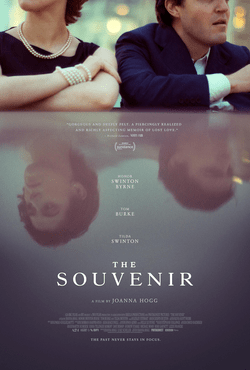
With all that in mind, our final entry in Love on the Shattered Lens is a film that I personally considered to be the best film to be released last year, The Souvenir.
Taking place in the early 1980s, this independent British film tells the story of Julie (Honor Swinton Byne, the daughter of Tilda Swinton) and Anthony (Tom Burke). Julie is a film student who hopes to make a documentary about a family living in a slum. She’s very idealistic and very much concerned about the state of the world. Though it’s not obvious at first, she’s also extremely naive and rather innocent about the world that she wants to document. For all of her desire to capture reality on film, there’s much that she had yet to experience.
Anthony is older than Julie, though not too much older. He’s a handsome, charming man who is always well-dressed and who has what would appear to be an exciting and interesting job with the Foreign Office. It’s not long after first meeting that Julie and Anthony become lovers. After her roommates abandon her, Anthony even moves into Julie’s flat. He seems like he’s perfect, even though observant viewers will automatically have some questions about him. For instance, if he’s so successful, why is he so quick to move into Julie’s flat? Why is he always so vague about the details of his job? He disappears, for one week, to Paris and when he returns, he brings the gift of lingerie. He claims to have purchased it for her in Paris but was that really where he was? Later, when Julie notices some strange marks on his arms, Anthony is intentionally vague about what they are. (Of course, most people people watching the movie will immediately realize that they’re a sign that Anthony is a heroin addict.) When the flat is broken into and Julie’s jewelry is stolen, we know what’s actually happened even if Julie doesn’t.
Just reading the paragraph above, you’re probably imagining that it’s very easy to hate Anthony but that’s not the case. Every sign tells Julie that she should get him out her life and yet, it’s not as easy as it seems. Even after Julie learns the truth about him, she still finds it difficult to just push him aside. For all of Anthony’s flaws, he’s got the addict’s gift for manipulation and, at times, his love for her does seem to be real, even if it will always be second to his addiction and his need to get a fix. Much like Julie, the viewer find themselves occasionally falling into the trap of thinking, “If only Anthony wasn’t a drug addict, he would be the perfect for her.” Of course, the point of the matter is that Anthony is a drug addict and no amount of wishful thinking or fantasizing is going to change that.
The Souvenir is a rather low-key film. Whenever you expect the film to go for easy drama or a showy shouting match, The Souvenir surprises you by going the opposite direction. Instead of being a traditional “drugs-are-bad” type of film, it’s a character study of two people dealing with their addictions. Anthony is addicted to heroin and lying while Julie finds herself addicted not so much to Anthony but instead to the fantasy that Anthony sans drugs represents. By the end of the film, Julie is sadder but she’s wiser and, if nothing else, she’s a better artist than she was at the start of things. If nothing else, she’s been forced to start dealing with reality. The film’s title comes from a painting by Jean-Honoré Fragonard. Julie thinks that the girl in the painting looks sad while Anthony says that she looks determined. By the end of the film, Julie is both sad and determined, just like the subject of The Souvenir.
Director Joanna Hogg has described The Souvenir as being semi-autobiographical. That said, you don’t have to be an aspiring filmmaker to relate to Julie. Everyone has had the equivalent of an Anthony in their life, that one thing that you seemingly can’t give up even though you know that you should. Tom Burke is both charming and heart-breaking as Anthony while Honor Swinton Byrne (in only her second film and her first starring role) gives a fearless performance as Julie. At times, it seems like it’s impossible not to want Julie and Anthony to find some sort of happiness. At other times, it seems like it’s just as impossible to forgive them for their flaws. You get angry at Anthony when he falls back into his addictions and you also get angry at Julie for her inability to accept who Anthony truly is. But, at the same time, you always feel empathy for them. You always hope the best for them. You always wish that they could have met under different circumstances, that things could have been different.
Though the film may be too low-key for some, the quietly powerful The Souvenir is my favorite film of 2019.
Of splendour in the grass, of glory in the flower;
We will grieve not, rather find
Strength in what remains behind…
— “Ode: Intimations of Immortality from Recollections of Early Childhood” by William Wordsworth
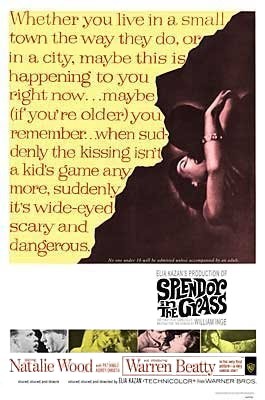
The 1962 film, Splendor in the Grass, takes place in Kansas shortly before the start of the Great Depression. Deanie (Natalie Wood) and Bud (Warren Beatty) are two teenagers in love but, as we learn, youthful love does not always translate into adult happiness.
Bud and Deanie are idealistic and in love but they’re from different social classes. Bud is the son of a boisterous oilman named Ace (Pat Hingle) and Ace acts much like you would expect a millionaire named Ace to behave. Bud’s parents are determined that he attend Yale and that he marry someone else from a wealthy family. They don’t want him to turn out like his older sister, Ginny (Barbara Loden), who drinks, smokes, and is rumored to have recently had an abortion. Meanwhile, Deanie is repeatedly told by her mother that she must always remain a “good girl” and not give in to the temptation to have premarital sex with either Bud or any other boy. If she does, she’ll be forever branded a bad girl and she’ll pretty much end up with a reputation like Ginny’s.
(Interestingly enough, Ace doesn’t have any problem with Bud finding himself a bad girl, nor does he have a problem with taking his son to a speakeasy later in the film. As far as society in concerned, being “good” and following the rules only applies to women.)
Needless to say, things don’t work out well for either Deanie or Bud. Bud is so frustrated that Deanie won’t have sex with him that he dumps her and then has the first of several breakdowns. When Deanie’s attempt to win Bud back by acting more like Ginny fails, she ends up going out with a classmate named Toots Tuttle (Gary Lockwood). Nothing good ever comes from going out on a date with someone named Toots Tuttle. That’s certainly the case here as Deanie and Bud both struggle with the demands of a hypocritical society that expects and encourages Bud to behave in a certain way but which also condemns Deanie for having desires of her own. And, of course, the entire time that Bud and Deanie’s drama is playing out, we’re aware that the clock is ticking and soon the stock market is going to crash and change everyone’s lives forever.
It’s kind of a depressing film, to be honest. I’ve always found it to be rather sad. When we first meet them, Deanie and Bud seem as if they’re perfect for each other but, throughout the entire film, the world seems to be conspiring to keep them apart. By the end of the film, they’ve both found a kind of happiness but we’re painfully aware that it’s not the happiness that either one was expecting while they were still in school. The film suggests that type of happiness might be impossible to attain and a part of growing up is realizing that there is no such thing as perfection. Instead, there’s just making the best of wherever you find yourself.
There’s a scene in this film where Natalie Wood nearly drowns and it always freaks me out, both because of my own fear of drowning and the fact that it foreshadows what would eventually happen to Natalie in 1982. (The fact that Natalie Wood and Robert Wagner’s yacht was called “Splendour” doesn’t help.) Natalie herself was also deeply scared of drowning and just filming the scene undoubtedly took a lot of courage on Natalie’s part. But then again, Natalie Wood’s entire performance is courageous. Natalie Wood gives an emotional and intense performance as Deanie, holding nothing back and it’s impossible not to get emotional while watching her. Making his film debut, Warren Beatty is a bit of a stiff as Bud, though he’s certainly handsome and you can tell why Deanie would have found him attractive. (In high school, you always assume that the boring, handsome guys actually have more depth than they let on.) By the end of the film, you understand that Deanie deserved better than Bud. Then again, Deanie deserved better than just about everything life had to offer her. But Deanie survived and endured and made the best of what she was given because, really, what else could she had done? What other choice did she have?
For her performance in Splendor in the Grass, Natalie Wood received her second Oscar nomination for Best Actress. She lost to Sophia Loren for Two Women and …. well, actually, Loren deserved the award. But so did Wood. 1961 would have been a great year for a tie.
Today is the birthday of Italian actress Ania Pieroni.
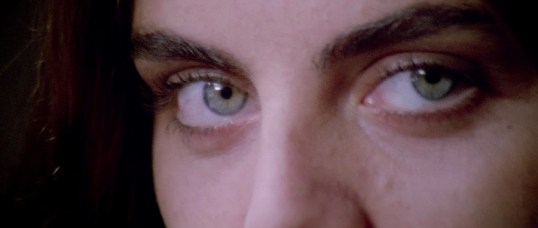
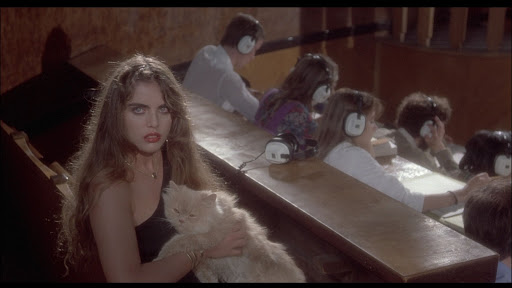
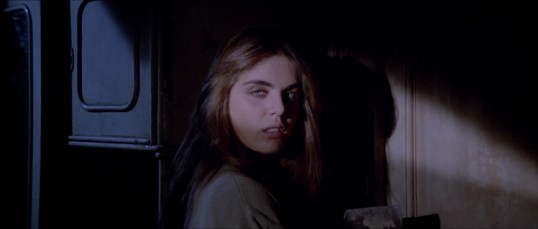
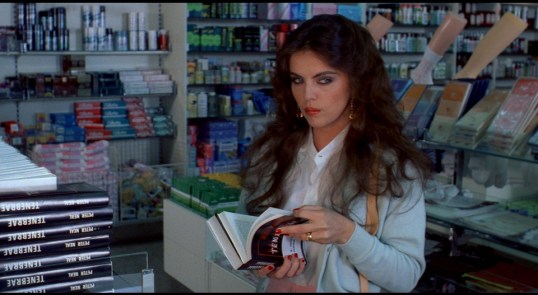
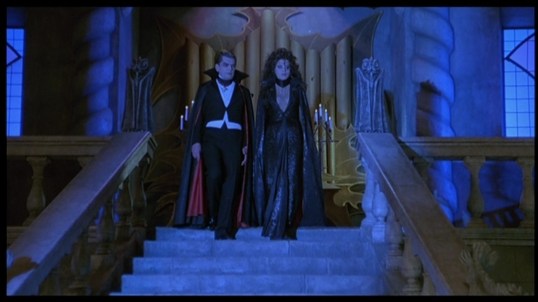
You may not recognize the name but, if you’re a fan of Italian horror, chances are that you’ve seen Ania Pieroni at least once. Even though she only has 11 credits listed on the imdb and apparently made her last film over 30 years ago, Ania Pieroni achieved screen immortality by playing key roles in three of the greatest Italian films ever made.
In Dario Argento’s Inferno, she was the first actress to play the mysterious Mother of Tears.
In Lucio Fulci’s The House By The Cemetery, she played the mysterious housekeeper and nanny who, in one of the film’s most memorable scenes, nonchalantly mops up a huge pool of blood before subsequently losing her head in the house’s basement.
And then, in Argento’s Tenebre, she played the unfortunate shoplifter who pays a steep price for not paying for Peter Neal’s latest novel.
Today, the Shattered Lens wishes a happy birthday to Ania Pieroni with….
4 Shots From 4 Films
Inferno (1980, dir by Dario Argento)
The House By The Cemetery (1981, dir by Lucio Fulci)
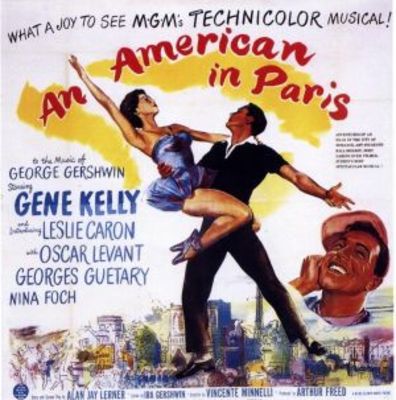
Today is the 117th birthday of the great director, Vincente Minnelli!
While Minnelli actually made films in several different genres, he’s best remembered for his many musicals. It’s been said that Minnelli was one of the directors for whom technicolor was invented and his musicals certainly prove the truth of that statement. Minnelli made films that not only celebrated music and dancing but which left audiences wanting to sing and dance themselves.
Several of Minnelli’s films were honored by the Academy. Two of his films won the Oscar for Best Picture and today’s scene that we love comes from the first one to do so, 1951’s An American In Paris. In this scene …. well, the why is not important. What’s important is the way the Gene Kelly and Leslie Caron move and the way that Minnelli captures and celebrates every movement.
In today’s music video of the day, the Albanian rapper Mozzik goes to prison and it turns out that prison in Albania is just as tedious and soul-destroying as prison in America. Fortunately, he can always escape to his dreams.
Or, at least, that’s what I assume is happening in this video. I don’t speak a word of Albanian. But one of the great things about both music and the visual arts is that sometimes, you don’t have to speak the language. You just have to open up your mind to the emotions and the images.
This video was directed by Mozzik himself and he did quite a good job! I especially like the surreal scenes of Mozzik thinking about being free.
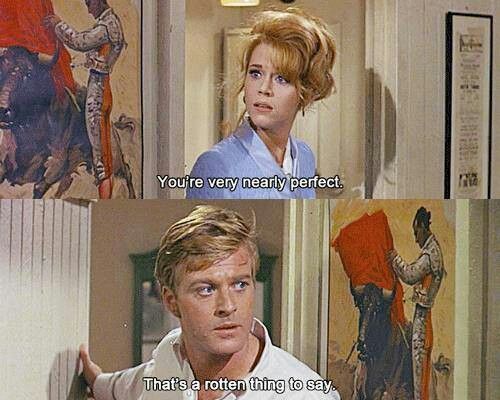
The 1967 film, Barefoot in the Park, tells the story of two newlyweds.
Paul Bratter (Robert Redford) may have a terrible last name (seriously, Bratter?) but he’s an up-and-coming lawyer with a bright future. He’s a little bit uptight and doesn’t seem to have the greatest understanding of human nature but he’s handsome and he’s charming and he means well. Paul has just recently married Corie (Jane Fonda). Corie is a free spirit who cringes at the idea of conformity. Having been raised by a judgmental mother who has always told her that she will never be good enough to make it on her own, Corie has decided to murder Paul and steal all of his money by insisting that they live in a drafty apartment that’s on the fifth floor of an New York apartment building that doesn’t have an elevator. If climbing up the stairs doesn’t kill Paul, the fact that the skylight has hole in it probably will. Helping Corie with her plan is her eccentric neighbor, Victor Velasco (Charles Boyer). When Paul comes home one day to discover Victor lifting up his lingerie-clad wife, Victor says, “We are heating up the apartment.” Corie assures Paul that they’re just trying to get the radiator to start working but we know the truth….
Okay, that’s actually the Lifetime version of Barefoot in the Park. The real Barefoot in the Park is a charming, lighter-than-light adaptation of Neil Simon’s famous play. (If I’m biased towards the play, it’s because I once played Corie in a heavily edited version of the play that we put on in high school. I was the perfect Corie, if I may say so myself.) As played by Robert Redford, Paul is charming but uptight and, as played by Jane Fonda, Corie is a free spirit who doesn’t really seem to have much common sense about the realities of living in New York City. (Running barefoot in Central Park? Probably not a good idea in 1967.) They do end up living on the fifth floor and there are a lot of jokes (in fact, there’s probably too many jokes) about people getting out of breath from having to climb all of the stairs. There’s also a broken skylight, which is a problem since it snows in New York. However, Corie never deliberately plots to kill Paul. Instead, she tries to set her mom (played, in an Oscar-nominated performance, by Mildred Natwick) up with Victor.
Barefoot in the Park is probably one of those films that seemed semi-daring when it was originally released in 1967 (“Look! A honeymoon sex joke! Look! Corie’s walking around in Paul’s shirt! Look! Paul looks like he’s about to say a forbidden word!”) but today, it seems like an old-fashioned but likable fantasy about what’s like to be a newlywed in New York. The city’s beautiful and full of romance. The dialogue is witty and zippy. (Zippy’s a word, isn’t it?) Charles Boyer overacts in the most charming way possible and Mildred Natwick has some good moments as Corie’s mom. (To appreciate Natwick’s peformance, it helps to imagine what the film would have been like if Shelley Winters had played the role.) Most importantly, Robert Redford and Jane Fonda have got an amazing chemistry and, as they were both young in 1967 and considerably less weather-beaten than they are today, it’s hard to imagine a more beautiful couple. Though Gene Saks’s direction is visually flat and, cinematically, the film never quite breaks out of its stage-bound origins, the chemistry of Redford and Fonda and Boyer and Natwick carry you through the occasional rough patch.
4 Shots From 4 Films is just what it says it is, 4 shots from 4 of our favorite films. As opposed to the reviews and recaps that we usually post, 4 Shots From 4 Films lets the visuals do the talking!
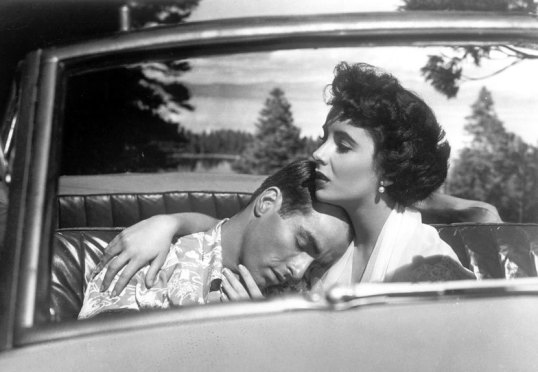
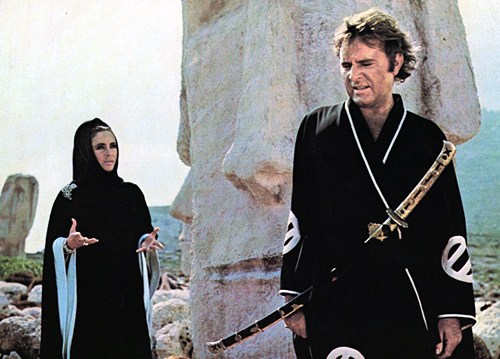
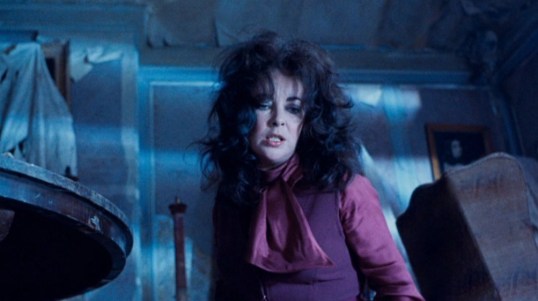
Today is the birthday of one of the greatest films stars ever, Elizabeth Taylor! And you know what that means. It’s time for….
4 Shots From 4 Elizabeth Taylor Films
A Place in the Sun (1951, dir by George Stevens)
Suddenly, Last Summer (1959, dir by Joseph L. Mankiewicz
2019’s Long Shot is a film that truly took me by surprise.
I have to admit that, when I first saw the trailer for Long Shot, I had my concerns. First off, it was an American political comedy and it’s been a while since there’s really been a good one of those. There’s been many attempts, especially after Donald Trump was elected in 2016. But, for the most part, the American films are always at their weakest when they try to be overly political. There’s always a disturbing lack of self-awareness that, when mixed with the type of strident tone that can only be maintained by people who have never seriously had their ideas challenged, tends to make for a very boring viewing experience. And, no, don’t you dare say, “What about Vice?” because Vice was freaking terrible.
Secondly, the trailer emphasized that Charlize Theron was playing the Secretary of State and that she was running to become the first woman elected President. This led me to suspect that the film might essentially be Hillary Clinton fanfic. Over the past few years, there’s actually been quite a few films and television show that have featured idealized versions of Hillary Clinton — i.e., all of the accomplishments without the albatross of her husband or the reputation for being casually corrupt. (For six seasons, there was a TV show called Madam Secretary that basically only existed to present an idealized version of Hillary.) Hillary fanfic, with its attempt to rehabilitate the image of a candidate so inept that she actually lost to Donald Trump, is always cringey.
Finally, as much as I hate to admit it, I was concerned that the film not only starred but was produced by Seth Rogen. And don’t get me wrong. I love Seth Rogen. Seth Rogen is literally my favorite stoner. I think that, with the right material, he can be one of the funniest performers around. The problem is that, in the past, Seth Rogen has always been brilliant as long as he wasn’t talking about politics. Whenever he started talking politics, he just turned into every other wealthy and rather self-righteous progressive. While Rogen’s political tweets were never as banal as the thoughts of uberboomer Stephen King, there was still nothing about them that suggested that Rogen would be capable of producing one of the funniest and most good-hearted political comedies to come out in the past few years.
And so, like a lot of people, I skipped Long Shot when it was playing in theaters. I waited until it was released on video to watch Long Shot and you know what? It turned out that almost everything that I had assumed about Long Shot was incorrect.
Yes, it’s a very political movie but it’s also far more self-aware than I was expecting it to be. Seth Rogen apparently knows that he has a reputation for being a very loud, knee-jerk leftie because he actually does a very good job of poking fun at his own image. Rogen plays Fred Flarsky, a loud and crude journalist who quits his job when he discovers that the underground newspaper that he was working for has been purchased by Parker Wembley (Andy Serkis, playing a not-at-all disguised version of Rupert Murdoch). Fred is about as far to the Left as one can be and he tends to assume that all of his associates agree with him, even though he never bothers to ask them. One of the best scenes in the film comes when his best friend, Lance (O’Shea Jackson, Jr.), reveals to a stunned Fred that he’s not only a Republican and a Christian but that he’s been one the entire time that he’s known Fred. Fred never caught on because he just assumed that Lance, being black, would naturally be a Democrat. When Lance asks Fred why he thought Lance wore a cross around his neck, a befuddled Fred can only reply that he thought it was “cultural.” It’s a great scene and one that’s wonderfully played by Rogen and Jackson and it works precisely because it remains true to what we’ve seen of both characters. Almost everything that Lance says over the course of the movie does reflect a traditionally conservative mindset but, like Fred, we don’initially don’t notice because Lance is being played by Ice Cube’s son. When Fred discovers that Lance is a Republican, it doesn’t change Fred’s mindset but it does teach him that progressives can be just as guilty as conservatives when it comes to making assumptions about people based on where they’re from or what they look like. As a stunned and chastened Fred puts it, “I’m a racist, you’re a Republican, I don’t know what the fuck’s going on.”
Secondly, the film’s romance is incredibly charming. Charlize Theron plays Charlotte Field, the Secretary of State who used to be Fred’s babysitter. After they run into each other at a reception, Charlotte hires Fred to work as a speech writer for her nascent presidential campaign. You would not expect Charlize Theron and Seth Rogen to have a ton of romantic chemistry but they do. Theron is an underrated comedic actress and there’s a lot of fun to be had in just listening to her and Rogen bounce lines off of each other. In fact, as funny as Rogen is, I’d have to say that Charlize Theron is even funnier. One of the highlights of the film is when Fred and Charlotte sneak away to a club, where they dance and end up taking ecstacy. Over course, as soon as the drugs kick in, a major diplomatic crisis breaks out and an extremely high Charlotte has to deal with a hostage crisis. Theron appears to be having a ball with the role and really, this is the film for which she should have been Oscar nominated. Theron convinces us that 1) she’s a masterful diplomat, 2) that she could be elected President of the United States, and 3) that she could fall in love with someone as messy as Fred without sacrificing her own ambitions.
Long Shot has its flaws, of course. Andy Serkis is a bit too over-the-top in his villainy and the film has a 125-minute running time, which is way too long for what is essentially a fairly simple romantic comedy. Some of the scenes of Fred and Charlotte traveling around the world probably could have been cut without harming the story. There’s an environmental subplot that feels a bit too obvious and there’s a joke about Fred accidentally ejaculating on his own face that’s never as funny as the film seems to think that it is.
That said, Long Shot is often a surprisingly charming film. (I know what some of you are saying: “Yes. Lisa Marie, Seth Rogen ejaculating on his beard sounds really charming.” I know, I know. But the majority of the film is charming.) If you missed it when it came out the first time, give it another chance.
I remember, when I was like 14, I got up early in the morning and I woke up my sisters by shouting, “It’s Ash Wednesday, bitches!” My mom was not amused. That said, Ash Wednesday is one of my favorite days. I just love the ritual of it all. Of course, I also usually wash my forehead fairly early in the day. That’s allowed, by the way.
Now, before anyone leaves any snarky comments, I fully understand that David Bowie’s Ashes to Ashes is not actually about Ash Wednesday nor are the ashes mentioned in the song literal ashes. I understand that but hey, this is a good song and David Bowie certainly does look happy in this clip. Around the two minute mark, he takes the time to praise the backup singers, which is a pretty classy move.