In 1995 Sylvester Stallone put up on the big-screen a film adaptation of a sci-fi property that has a fan following as rabid as any sci-fi franchise there is. I am talking about the character of Judge Dredd which calls the British comic book anthology series 2000 A.D. it’s home for the past 35 years and counting. The Stallone production was just awful from start to finish.
It’s now 2012 and we have what one can only call a reboot of the Judge Dredd film from 1995 but with screenwriter Alex Garland (28 Days Later, The Beach) writer the script and Pete Travis behind the director’s chair. Instead of Stallone reprising the role of the iconic Judge Dredd the job goes to genre vet Karl Urban (Lord of the Rings trilogy, Bourne Supremacy, Star Trek). We even get Lena Headey as the film’s main antagonist in drug crimelord of Mega-City One called simply by the moniker of Ma-Ma.
The first trailer shows some interesting design choices that veers away from the neogothic dystopian look of the comics and the overly comic book feel of the Stallone production. The look of Mega-City One and the film in general seems to be more akin to District 9. Another good thing the trailer shows and hopefully the film will follow through on is Urban never once taking off the Judge helmet his character wears in the film. Never once has Judge Dredd removed his helmet in the comics and if there was ever one heresy fans of the property would cry foul over it’s the character being seen helmet-less.
Here’s to hoping that this grittier take on the Judge Dredd property goes a long way in erasing the abomination that was the Stallone production.
Dredd 3Dis set for a September 21, 2012 release in the UK and soon after everywhere else.
In 2010 Stallone released his love letter to all things 80’s action with his ensemble actioner The Expendables. The film was a modest success, but not the huge one some thought it would be considering it’s cast was made up of action stars of the past 20-30 years. Yet, it’s box-office numbers made the studio heads at Lionsgate happy enough that they greenlit a sequel.
This sequel, The Expendables 2, finally gets it’s official trailer and it looks to be more of the same as the previous film, but to a new level. The previous comes back with expanded roles for Bruce Willis and Arnold Schwarzenneger who had brief cameos in the first film. This sequel also adds Chuck Norris to the cast and Jean-Claude Van Damme in the role of the film’s villain. There’s really no need to explain the plot of the film. What audiences should expect is lots of gunfire, explosions, testosterone-laced interaction between the actors and more explosions.
Stallone backs off the director’s chair this time around and hand’s over to veteran action director Simon West.
The Expendables 2is set for an August 17, 2012 release date.
After two weeks of speculation, Catching Fire (the sequel to The Hunger Games) has a director and the winner is…
Francis Lawrence!
Francis Lawrence is known for directing music videos, Constantine, I Am Legend, and Water For Elephants.
I’ve never seen Constantine, I thought I am Legend was boring, and I enjoyed Water For Elephants but it’s hard not to feel that, after considering names like David Cronenberg, Alfonso Cuaron, Bennett Miller, and Duncan Jones, Lionsgate selected the most generic candidate in the mix.
I’m sure that there will be a lot of people complaining about the selection but, to be honest, it’s not like Gary Ross was all that inspiring a director before Hunger Games. In the end Catching Fire’s success is going to be more about Jennifer (as opposed to Francis) Lawrence.
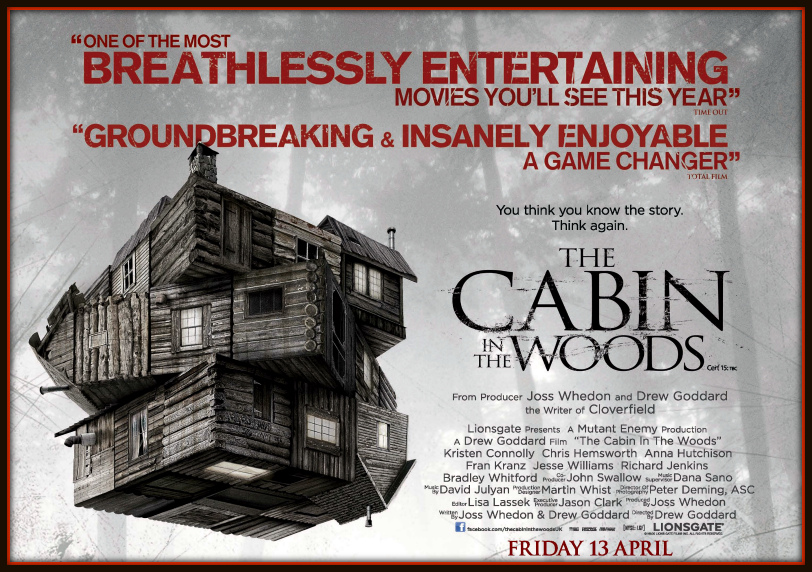
If there was one thing the meltdown and subsequent bankruptcy of MGM ended doing it was shelving the Drew Goddard and Joss Whedon horror film The Cabin in The Woodsfor almost three years. The film was directed by Goddard who also helped co-write the screenplay with Joss Whedon and what we get is one of the smartest and most innovative horror films to come in over a decade. For fans of the tv shows Buffy: The Vampire Slayer and Angel (not to mention Dollhouse) this horror film just reinforces the notion that Joss Whedon knows how to write smart dialogue and premises without ever getting too self-referential and deconstructionist (I’m looking at you Kevin Williamson) or too smart-talky (a stank-eye at you Aaron Sorkin).
There’s really no way to properly review The Cabin in The Woods without spoiling the films many different surprises and twists and turns. I will say that the film does a peculiar opening that focuses not on the five college students headed to the cabin in the woods of the film’s title, but on two men (Richard Jenkins and Bradley Whitford) in your typical office attire doing the walk and talk about family home life and the like. We see that they’re technicians in an unnamed industrial facility that wouldn’t look out of place in one of the many governmental facilities we often see in film. The film will return to these two men and their facilities and other people working within often in addition to telling the story of the five college students and the growing danger they find themselves in as night falls in the woods.
To say anymore would definitely be a spoiler.
I will continue on and say that for a horror film written to self-reference other horror film conventions and tropes what Goddard and Whedon have ultimately done was celebrate the genre itself and how much of an impact it has had in society. Unlike films like the Screamfranchise, The Cabin in the Woodsdoesn’t knowingly wink at the audience about how cool it is for pointing out all the horror cliches and stereotypes we’ve come to expect in the horror genre. Instead the film actually treats its audience to be smart enough to see the homage to past horror films both good and bad without ever drawing attention to the fact that they’re pointed out.
Another thing which makes this film so fun to watch is how much every character in the film comes across as fully realized individuals. Even the college students who we first think of as your typical horror film stereotypes (the jock, the slut, the virgin, the brain and the stoner) end up being more than we’re led to believe. All of this actually occurs right in the beginning and this helps the audience join in on the fun that both Goddard and Whedon are having in turning the horror genre on its head right up to it’s surprising conclusion. It helps that the cast did quite a great job realizing their characters. As the film progresses we even begin to get a sense that who the villains in the film may or may not be who we think.
There’s a sense of fun and the darkly comic to the film as well. Every one-liner and comedic beats we get throughout the film doesn’t have a sense of the cynical to them. It comes across through dialogue and actions by both groups in the film in such a natural way that they never make those saying the lines break the fourth wall. Most films that try to deconstruct genre films tend to get too cutesy with the breaking the fourth wall gimmick that the audience can’t help but be pulled out of the suspension of disbelief they’ve put themselves in. This has a way of making such genre films less fun and celebratory and more of making fun of the people who enjoy such things.
The Cabin in The Woodsmanages that rare accomplishment of being a horror film that retains not just the horrific aspect of the genre but also add such a darkly comic sense to the whole proceeding with such a deft touch from Goddard and Whedon that we don’t know whether to call it straight horror or a horror-comedy. Some might even see the film as an entertaining treatise on the nature of the horror film genre of the last quarter-century. Both Goddard and Whedon have already called this film as their answer to the current trend of the “torture porn” that was popularized with the help of such recent horror franchises like Hostel, Sawand those made by Rob Zombie. Where those films celebrated the concept of inflicting pain not just on the characters on the screen but those who watch them with The Cabin in The Woodswe finally get a reminder why we love the horror films of the past. It’s through the sense of that adrenaline rush that a tension build-up leading to a horror money shot but without becoming overly gratuitious and reveling in the pain of the horror.
Some have said that The Cabin in The Woodsis the best horror film of 2012. I won’t even argue with that statement since it is true. I will put it out there that Cabin in The Woodsmight just be one of the best films of 2012. The film is just that fun, smart and, overall, just plain awesome.
[I usually attach a trailer to reviews but this time doing it could spoil some of the surprises in the film]
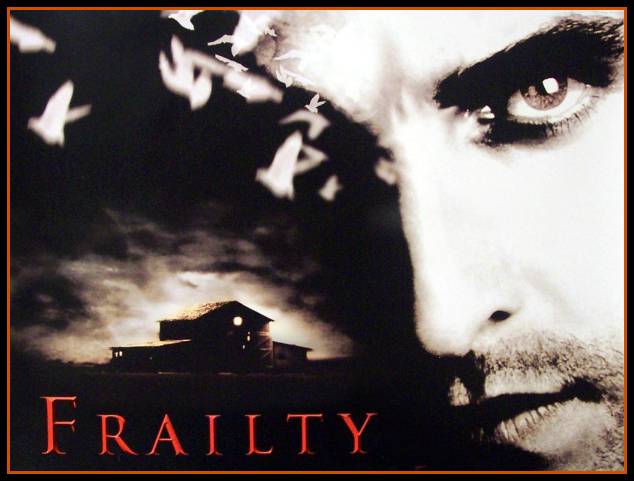
Every year there are always films of every genre and stripe which fly under the radar of most film-goers. Every film fan knows of several such films and always like to believe they were one of the few who actually saw it in the theaters when it came and went. In 2002, one such film was the psychological thriller/horror film Frailty by veteran actor Bill Paxton. This was to be his directorial debut on a feature-length film and for a first time it was a home run right from the start.
Frailty was done mostly through flashbacks as told to an FBI special agent by a man (Matthew McConaughey) and how this man knows the true identity of a particular serial killer around the Texas region who has dubbed himself the “God’s Hand”. It’s through this man’s retelling of the origins of the “God’s Hand” that we see the lives of a father raising two young boys as best he can until a sudden “vision” of divine nature changes their lives forever. The father begins to believe that he has been given a divine purpose to find and destroy demons who have taken on human form. To do this deed he has an axe he’s dubbed “Otis” to assist him. The reaction of the two young boys differ as their father goes about his new work. The older brother in Fenton Meiks believes what his father is doing to be illegal and makes him a murderer. On the other hand, the younger brother in Adam Meiks has taken on seeing their father as the hero that he sees him and supporting him in his new endeavor.
The film doesn’t inundate the viewer with much gore and violence. This is not say that the film lacked for killings. The father finds and “destroys” the demons given to him on what he calls “God’s list”, but the film doesn’t linger on these scenes of violence. It instead focuses on the reactions of the father’s two sons and the growing rift which gradually begins to grow between the three. It would be this rift which plants the seed of who would ultimately become the “God’s Hand” killer.
The film also manages to turn the theme of a father’s love for his sons and vice versa become a taut and disturbing study on the concept of faith. The film also does a great way of twisting the story in a way that we never know who the “God’s Hand” killer was until very close to the end despite everything being told by the man to the FBI pointing to specific individual. This was one of the few films which used the twist to the narrative properly and not as a crutch to make the film better than the source.
It’s this source, the screenplay in other words, which makes Frailty such an under-appreciated and great film. There’s rarely any instances where the story takes on leaps of logic that would break the audience from the world they’ve become invested in. In fact, I would say that the film was quite traditional in how it handled the story and characters. There’s wasn’t any special character and narrative quirks to make them stand out from the rest of the other roles. It’s from the performances by all involved, especially the very convincing ones from the two young actors playing the young Fenton (Matt O’Leary) and young Adam (Jeremy Sumpter), that sells the film. Matthew McConaughey as the man telling the story of the Meiks does a great job in a role that others might have gone overboard with. His restrained performance in concert with the young actors in the film would be another reason why Frailty became such a great film.
Performances, as great as they were in this film, required for a filmmaker to have a deft handle on his cast and the screenplay. This film was lucky enough to have a first-time filmmaker in Bill Paxton who played to the strength of the screenplay and trust in his actors. He didn’t try to be too cute or direct like someone with something to prove. I know that saying one directed a film with efficiency would be seen as a negative. In this instance I’d say that Paxton’s efficient direction helped the film stay focused on the story and the characters instead of trying to be flashy.
Frailty was, and still is, a film that seems to fly under most people’s radars, but it’s also a film that has gained quite a loyal following since it’s initial 2002 release. It’s a rare film that has continued to live up to it’s growing cult status not because of what people might have heard of it, but because it’s a rare film that stand on it’s quality. A film which, from top to bottom, made for a smart thriller with some horror aspects through in that didn’t try to fool it’s audience (even the twist in the story was a true genuine surprise instead of a story cop-out). If there ever was a film that needed to be seen by more people it’s definitely Frailty.
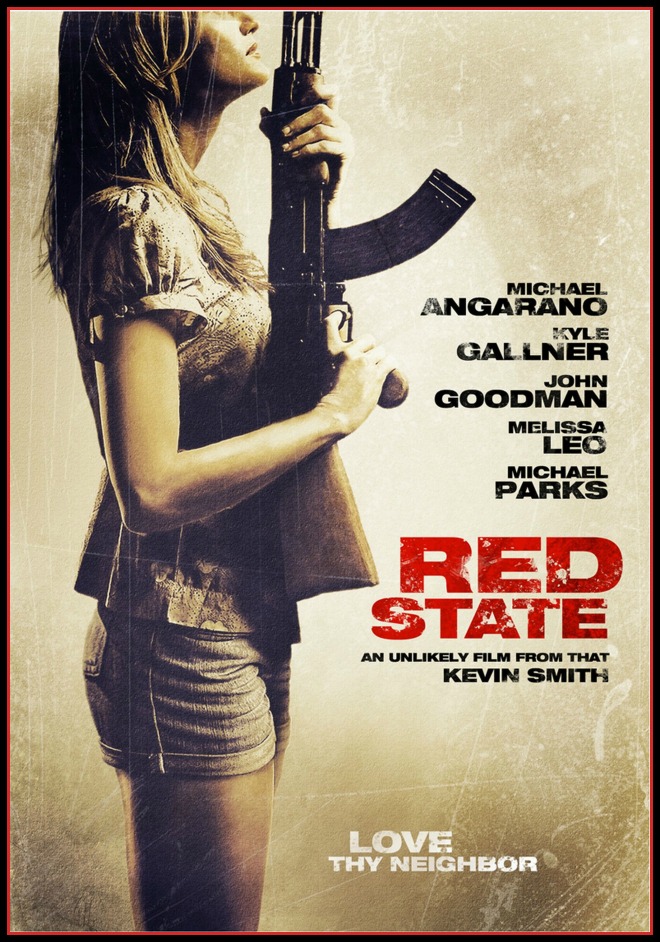
Kevin Smith’s 2011 film was a major departure for him. It wasn’t the usual comedy (his last one being the very awful buddy-cop comedy, Cop Out) but instead his first foray into one of film’s earliest film genre: the horror film. Say what you want or feel about Kevin Smith (and there’s a huge range of people who either love the man or hate him like the second coming of the Antichrist) but when he decides to make a film he puts everything of himself on display and he wears his emotions on his sleeves when it comes to his films. It’s this aspect of Smith’s personality which has gained him such a loyal following, but has also earned him the scorn and, for some, hate of film bloggers who now constitute the bulk of film criticism in the digital age. This first horror film for Kevin Smith would be called Red State and it would be a film that would continue to expand the gulf between those who hate him and those who support him. Lost in this playground-like tiff was whether the film would be a return to form for Smith or just a continuation of some very bad films in the last half-decade.
Red State could almost be called a coming-of-age story since the film begins with three high school boys joining together to travel to a neighboring town where they hope to engage in some sexual extracurricular activities. It’s also in this very town that we learn very early on in the film that the Five Points Church calls home. This church and it’s congregation has one Pastor Abin Cooper (Michael Parks) as it’s leader with it’s membership either related by blood to Cooper or by way of marriage. In this picture would arrive an ATF task force led by Special Agent Keenan (John Goodman) to investigate the illegal doings of Cooper and his flock. It’s between these two groups that the three teenage boys would find themselves in a horrific situation with their lives in the balance.
Let’s just say that this film had much potential in it’s plot and how it’s initially set-up. The character of Pastor Abin Cooper and his flock was definitely patterned after the Westboro Baptist Church led by Fred Phelps who’re infamous for picketing funerals of soldiers and for being outright homophobic in their teachings and ideology. The ATF group with Keenan in command looks to be set-up to represent the Federal government and it’s police agencies run amok in their attempt to fight terrorism since Sept. 11, 2001. Then Smith drops in three horny teenage boys in the mix and it sure must’ve read like a surefire story with horror and action.
What we get instead was a film which didn’t seem to know how to proceed with the initial set-up. The film began and played out like something similar to Hostel and films of a similar vein. Unsuspecting teens lured by sex to be made an example of by a group of people extreme in their passions and ideas. If the film had continued with just those two groups as the core of the film’s story then it could’ve made for a decent survival horror film, but the addition of the ATF task force and how they impacted the dynamics between the congregation and the teens unbalanced everything. Now what was suppose to be a horror film turned into an action-drama.
The performances by the cast was also inconsistent. This could be due to the weakness of the screenplay which tried too hard to push Cooper and his people as batshit crazy through overly long sermons. Sermons by Abin Cooper that was delivered by Michael Parks in convincing fashion at times and then mumbled incoherently at others. The three teens were also a problem in that they weren’t sympathetic by any means. Even knowing what awaited them didn’t lessen the fact that these three teens were obnoxious and vulgar to the point that we didn’t care if Cooper and his people tortured and killed them.
One would expect that the addition of John Goodman as the ATF special agent and Kevin Pollak as his assistant would at least bring some serious acting chops to the proceedings, but their characters were so thinly-written and their dialogue so forced that one couldn’t believe them as real characters. It’s a shame that the film’s overall screenplay couldn’t provide the necessary foundation for a cast that had a very good veteran ensemble which included Melissa Leo, James Parks and Stephen Root.
Red State really failed in the very thing that was suppose to make this film the beginning of a shift in Kevin Smith’s career. It failed as a horror film in the most general sense. There was never any true feeling of horror to be had throughout the film. Even the first death of an unnamed homosexual kidnapped by the congregation to be used as an example during one of Cooper’s sermons failed to elicit any form of horror. This was a film which had much potential for some horrific sequences but it never explored it. The film doesn’t even work as a thriller which would be the closest this film ever got to be. Even the ending of the film which tried to inject a semblance of the supernatural didn’t even work as it turned out to be a major bait-and-switch that didn’t come off as creative once it was explained.
Does the film justify some of the venom hurled at it from Kevin Smith’s detractors?
I would say no in that the film wasn’t the worst thing he has made by a long shot. It did have some moments that hinted at something special could’ve been made if someone else was involved or if the film had more time to be worked on. I do believe that if Red State was made by anyone else other than Kevin Smith it would be considered average to good. But having such a polarizing figure as it’s creator and marketer might have blinded some in actually watching this film with an open-mind.
Does this mean Red State was actually a good film?
I would say no with the reasoning I’ve mentioned above. But I will say that the film wasn’t dull or boring. As unnecessary as the ATF task force to the story as a whole their arrival and the subsequent reaction of the congregation to them made for some exciting few minutes. Even Michael Park’s performance was quite good despite some of his line deliveries coming off as incoherent mumblings.
If Red State was to be Kevin Smith’s attempt to try and move away from his history of making comedies then it was a failed one. While it was a failure I wouldn’t mind him going back to the genre to hone his skills in doing more horror. If Uwe Boll could continue making even worst materials then surely Smith could be given another chance to make another and fix the very things which he did wrong with Red State with another horror film project. One thing for sure he would not be lacking in actors wanting to work with him.
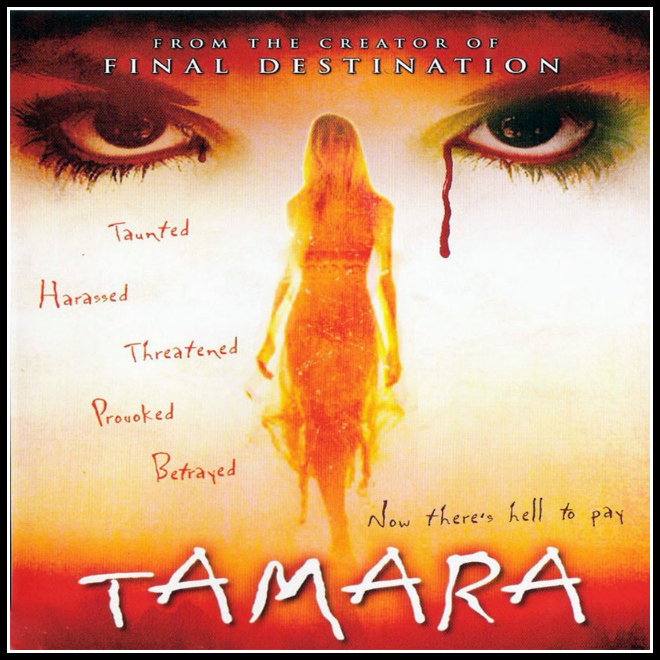
Tamara was a good entertaining horror/teenage angst movie in the same vein as De Palma’s Carrie and pretty much most of the teenage revenge/slasher flicks of the late 70’s and early 80’s. Such horror films involved the high school jocks and popular cliques getting their comeuppance by way of the nerdy student who has had enough. This time around the nerd in question is one Tamara whose shy, bookish and frumpy nature makes her an easy mark for every other kid in school.
Newcomer and extremely hot Jenna Dewan plays the title role and she does a very good job pulling off the dual personality role the film requires from her. The first half of the film has Dewan as very believable as the mousy and nerdy student whose low self-esteem adds to keeping her ostracized from the rest of the student population. It doesn’t help that she begins to misread one of her teacher’s (played by Matthew Marsden) attempts to help her as some sort of loving attention she so craves. There’s a small bit of a bright side to her daily existence in the form Chloe (played by Katie Stuart), she of the popular girl with a heart-of-gold role. Tamara’s life soon turns for the worst as her attempts to show her love for her helpful teacher gets rebuffed and her published article about drug-use in athletics puts her in the crosshairs of a couple of jocks with much to lose.
Typical of such teenage revenge horror films, the cruel jocks and popular kids concoct a plan to humiliate and embarrass Tamara, but just like those past films their plans backfire and the target of their plans gets killed during the the prank. The filmmaker really don’t add something new to this tried and tested formula. Instead of calling for the authorities to report the accidental death of their schoolmate, the kids decide, through the bullying by the alpha-male in the group, to bury Tamra instead and forget anything ever happened. This plan probably would’ve worked if Tamara wasn’t dabbling in witchcraft as ostracized teenagers are wont to do. Tamara’s spell prior to the prank to spellbind her teacher backfires as its activated by the spilling of her blood and to the surprise of the students who did her harm she returns alive, healthy and completely different the start of the new school week.
To say that Tamara returns utterly different in more ways than one would be an understatement. Ms. Dewan does a vampy, sometimes campy, job portraying the new and improved Tamara. Dewan goes from nerdy, plain-jane Tamara to ultra-sexy, barely there skirt wearing teen seductress whose touch does more than seduce those she has targeted for revenge. Jenna Dewan as the reborn Tamara steams up the screen with her overt sexuality and she practically saves the film from just being an ok, by-the-numbers horror film. Tamara was Ms. Dewan’s film from beginning to end and she does a very good job of keeping the story interesting even if it meant just being on the screen.
This film doesn’t break new ground in the realm of teen horror. In fact, it’s a mish-mash of alot of past teen horror flicks of the past that one could see the many influences in its story. Tamara was part Carrie, Black Christmas, The Craft and, more recently, Diablo Cody’s Jennifer’s Body. The direction was adequate at best and that’s really all one could hope for in a genre film like Tamara. What makes this film entertaining and worth watching was the joy of discovering the new scream queen talent in Jenna Dewan. Tamara might not be a great horror film, but Ms. Dewan sure more than tries to make it more than it’s B-movie pedigree.
In 1982 the duo of John Milius (director) and Arnold Schwarzenneger (actor) brought to the big-screen the first film adaptation of the classic, pulp character of Conan the Cimmerian by Robert E. Howard. The Milius-Schwarzenneger Conan the Barbarian was an instant hit and classic. It also made Schwarzenneger into an A-list superstar who would rule the 80’s and 90’s. This film was followed up by a lesser quality, though fun in its own way, sequel in 1984 with Conan the Destroyer. Milius saw this franchise as a trilogy with the third and final film to be called Conan the Conqueror. But a sort of blacklisting of Milius as a filmmaker and Schwarzenneger moving onto other projects killed the planned third film. The start of the new millenium saw an interest in restarting the third film, but after countless delays and changes in filmmakers and stars the project was once again shelved.
In 2010, the franchise which launched an Austrian-bodybuilder into superstardom was finally greenlit, but this time around it would be a reboot of the series with the film hewing coser to Robert E. Howard’s creation and world-building than the Milius version of 1982. To bring Conan the Cimmerian to life would be Hawaiian-Irish Jason Momoa (of Stargate Atlantis and Game of Thrones fame) with German-filmmaker Marcus Nispel taking on the directing reins. The film’s trio of writers (Thomas Dean Donnelly, Joshua Oppenheimer and Sean Hood) would literally take the world of the Hyborian Age which Howard had meticulously created for his Conan character and use that as the basis for this reboot.
Conan the Barbarian begins with a surprising introductory narration of the world of the Hyborian Age by none other than Morgan Freeman. This narration was one clue that while this film wouldn’t and shouldn’t be seen as thought-provoking and award-season fare it looks to try anything and everything to make it fun and relevant. The film succeeds in this respect in its own way. As we see Conan come into the world as a baby born of battle in the most literal way. It’s not often we see on the big-screen a pregnant mother delivering her child by way of battlefield C-section. From this moment forward this film will wallow in the bloody carnage and machismo-fueled world of Robert E. Howard to the nth degree.
The film’s Conan as played by Leo Howard as the younger version then to Jason Momoa as the adult version looks to be different than the Schwarzenneger one. While Momoa was still quite the physical specimen on the screen he also exuded a sense of fluid, athleticism like that of a sleek jungle cat whereas Arnold’s Conan was more of the big cat of the savannah. The stand out performance in the film comes from both Leo Howard (quite ferocious as the young Conan) and Momoa. The film lives or dies on whether we believe these two actors as the characters they inhabit. Not once during the near 2-hour running time do we not believe these two as Conan.
Conan the Barbarian as a film does have several weaknesses which could derail it for me. For one, the story itself is quite cliched as we see the typical hero’s journey coinciding with the goal of saving the world from an almost cartoonish villain (Stephen Lang clearly having fun as the warlord Khalar Zym) with an equally cartoonish sidekick (Rose McGowan who seemed out of place as Zym’s witch-daughter Marique). The story’s plot seems more geared like a video game where each sequence was there to put Conan in the best way possible to do what he does best and that’s kill enemies by the score and do it with bloody panache.
While the film will definitely not score very well with many people I think they will do so as they compare it to the original Milius film. I think the mistake they also will use as an excuse to not like the film is that it’s dumb and loud. I, for one, thought I would feel the same, but as I watched the film I acknowledged those very same criticisms, saw the flaws, but in the end I still enjoyed the film for what it was: an almost gleeful, throwback to the 80’s sword-and-sorcery exploitation film that tried to cash in on the success of the original Conan the Barbarian.
Nispel’s film may not stand the test of time as the original, but in the end he made a film that actually stayed true to the pulpy origins of the character (Robert E. Howard was never known as a subtle writer and this film reveled in his blunt-way of writing). This Conan the Barbarian was several steps above the usual sword-and-sorcery stuff which the SyFy Channel seems to churn out by the dozen each year and it’s steps below that of the original. What it does share with the 1982 film is a sense of fun even if it’s at the expense of story and character and at times I’m fine with that. Not everything has to be Inception or Pride and Prejudice.
If there was ever a Marvel Comics character who was perfectly suited to star in a grindhouse film it would be Frank Castle aka The Punisher. He’s a character who takes the term anti-hero past its limits and who makes other film vigilantes seem like sissy, choir boys. In December 2008 Lionsgate released a sort of reboot of The Punisher by Jonathan Hensleigh and starring Thomas Jane in the titular role. This time around the role of Frank Castle goes to Ray Stevenson (The Other Guys, Thor, Kill the Irishman) with German-filmmaker Lexi Alexander taking on the director’s reins.
Punisher: War Zone takes much of the characters in the film from story-arcs found in the Marvel Knight’s Punisher MAX series which took the character and his stories into a darker realm of violence. This latest film definitely owes much of it’s darker and more violent tone from that comic book line while at the same time creating a look which brings to mind the garish and over-the-top grindhouse action films of the early 80’s. The film quickly establishes who the Punisher is and what motivates him to take on and kill (heavy emphasis on kill) the criminal underworld of the city. In an opening sequence that probably out-violences every other film released in 2008, the Punisher wipes out a gathering of mobsters in every bloody way as possible. Blood and gore flows and splatters a-plenty in the first 10-15 minutes of this film.
There’s a semblance of a story which involves Castle mistakenly killing an undercover FBI agent which causes him a momentary crisis of conscience, but it really doesn’t last too long as there are more criminals to kill, main and blow up. If there’s one thing the Punisher knows how to do best it’s those three things. Ray Stevenson in the title role doesn’t get to emote much, but does a great job in showing the characters ice-cold ruthlessness paired with a sort of dead-man walking persona which rings true to how the Punisher has been written up of late. His Frank Castle is dead inside and only when he’s the Punisher does he even show any sort of life (even if it’s the barest hint). His foil this time around brings one of the Punisher’s earliest arch-enemies in the disfigured mobster (caused by the Punisher) Jigsaw (played with over-the-top campy relish by Dominic West). Where Castle is deadly serious to the point of morbidity his opposite was all garish with a liberal dose of crazy.
Punisher: War Zone really dispenses with any complexities to it’s plot and just finds reasons and excuses for the Punisher to go on another killing spree against criminals that for some it might not be enough. As a lover of grindhouse and exploitation films what this film offers was enough and really goes a long way in entertaining in such an 80’s fashion. It’s a film that revels in its violent absurdities and campy storytelling. Even the acting by all in the film passes the line of campy and into a sort of Looney Tunes level which makes the extreme violence and gore of the killings more cartoonish than realistic. This was a film that celebrated it’s grindhouse roots from the actors, the filmmakers all the way down to it’s cinematographer and art directors. It’s disposable entertainment and it knows it so doesn’t bother to try and hide that fact and just tries to entertain in every manner possible and then some.
To say that I am a huge fan of Canadian auteur and all-around genius filmmaker David Cronenberg would be the understatement of the decade. I count him as one of the greatest filmmakers of the last 30 years. Seen his style go from grindhouse video nasties type of horror to the sublime. He’s one filmmaker who has never had to compromise his filmmaking style to suit the audience. You either accept what he has crafted or not.
The last 5-6 years has seen his stock rise amongst the film community as films like A History of Violence and Eastern Promises has gotten him recognition from the Academy voters, Film Circles and others in the film elite community. At the same time these films have been widely regarded by film fans as some of the best of the past decade. It helps that he seems to have found a partner-in-crime in another auteur with actor Viggo Mortensen who played lead in both those films.
Now for 2011 the two partner up again for the third time for Cronenberg’s film adaptation of the stage play “The Talking Cure” which itself was adapted from the non-fiction book, A Most Dangerous Method. The film is called A Dangerous Method and stars Viggo Mortensen as Sigmund Freud, Michael Fassbender as Carl Jung and Keira Knightley as Sabina Spielrein. These three become the focal point of a sort of relationship triangle as the friendship between Freud and his younger apprentice in Jung becomes even more complicated when young Sabina get’s between the two men who would give rise to the study of psychoanalysis.
That brief synopsis doesn’t make this film very interesting at first glance, but this is Cronenberg who never picks projects and stories to tell unless it appealed to him. I wouldn’t be surprised if the film wasn’t just a story about three individuals and their relationships towards each other, but something even more abstract as Cronenberg’s bound to explore the early days of psychoanalysis itself.
Here’s to hoping A Dangerous Method delivers on everything fans of Cronenberg have come to expect from him…or not expect as the man has a tendency to surprise with each new film.


 Through the Shattered Lens