Guilty Pleasure No. 92: Brewster’s Millions (dir. by Walter Hill)


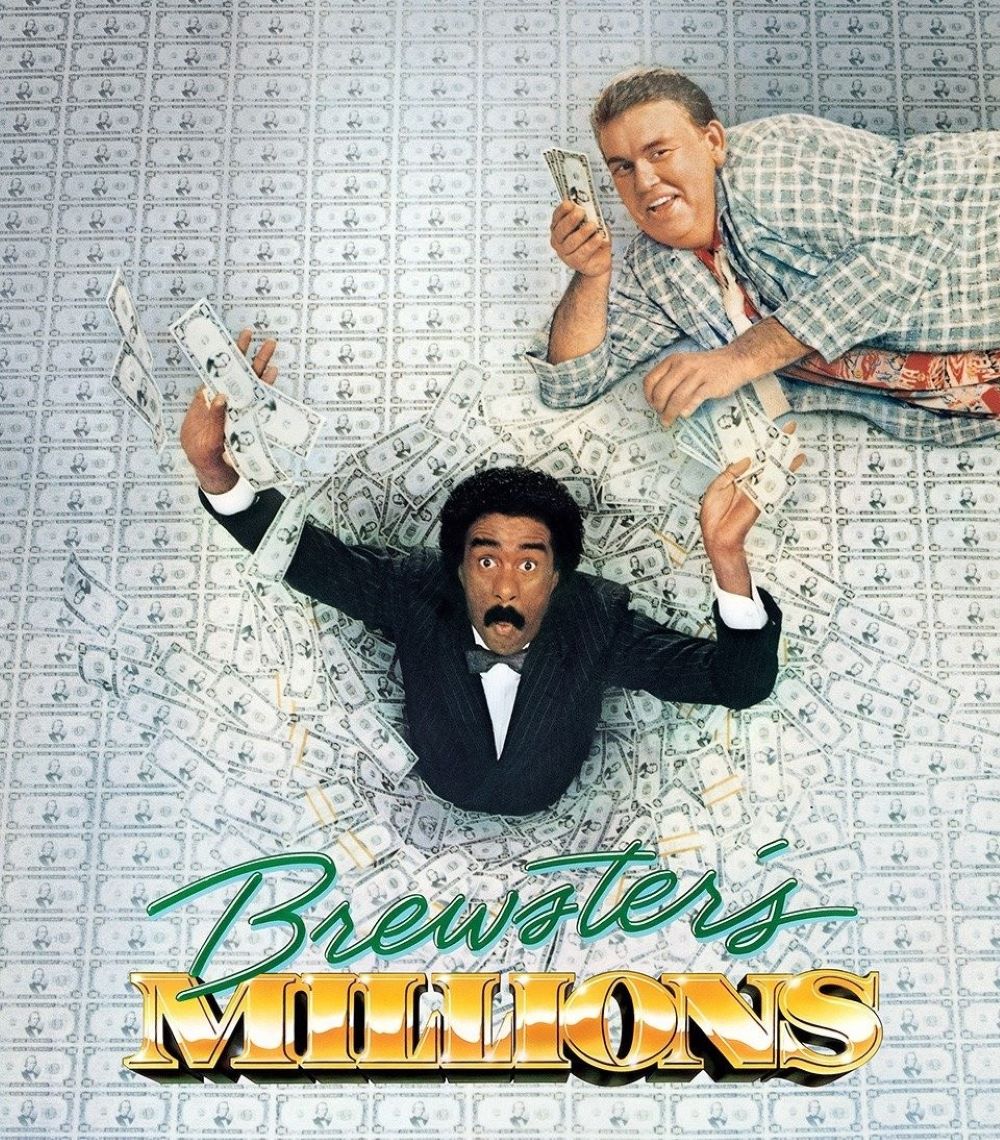
Walter Hill’s Brewster’s Millions (1985) isn’t a perfect movie by any stretch, but it’s the kind of film that sneaks up on you. It may not be sharp enough to qualify as great satire or consistent enough to hit every comedic note, but it has an undeniable charm that pulls you in regardless. It’s loud, uneven, and often ridiculous, yet few comedies from the 1980s are as weirdly entertaining when they’re firing on all cylinders. For many movie fans, it’s that quintessential “guilty pleasure”—a film you know has problems, but that somehow feels impossible to turn off once it starts. And in many ways, that’s exactly where Brewster’s Millions finds its lasting appeal.

The setup alone is too fun to resist. Richard Pryor stars as Montgomery Brewster, a minor league baseball pitcher who unexpectedly inherits the opportunity of a lifetime—to claim a $300 million fortune from a distant relative. The catch? Before he can get it, he has to spend $30 million in 30 days under a bizarre set of conditions that make financial ruin easier said than done. He can’t give the money away, can’t destroy it, can’t buy assets or investments that retain value, and can’t tell anyone why he’s doing it. Fail, and he gets nothing. Succeed, and he becomes one of the richest men alive. It’s the sort of gleefully absurd premise that could only have come from Hollywood in the 1980s, and it’s immediately clear that the film wants audiences to sit back, grab some popcorn, and watch Pryor tear through cash in increasingly funny and desperate ways.

Richard Pryor is, without doubt, the heart and soul of the movie. He imbues Montgomery Brewster with equal parts manic energy and human frustration, giving the character a real emotional arc beneath all the comic spectacle. Pryor’s talent for blending humor with exasperation makes Brewster’s predicament believable, even when it’s insane. Watching him scramble to lose money while the world keeps rewarding him is strangely satisfying. Pryor understood how to play ordinary men caught in extraordinary circumstances, and that quality grounds the film when it could have easily spiraled into total silliness. In scenes where he loses his patience with accountants, schemes wild spending sprees, or watches his good intentions backfire, Pryor’s comic timing keeps the chaos enjoyable.

John Candy adds another layer of charm as Brewster’s best friend and teammate, Spike Nolan. Candy brings warmth, loyalty, and that unmistakable good-heartedness that made him one of the decade’s most beloved comedic actors. The chemistry between Pryor and Candy keeps the film buoyant even through its weaker stretches. Their friendship defines the film’s tone—it’s loose, goofy, and full of bro-ish camaraderie. Without Candy’s infectious energy, the movie’s more hollow comedic beats might have hit the floor with a thud. Together, they create a dynamic that feels real, even inside a premise that’s totally absurd.

As a director, Walter Hill feels like an odd fit for this kind of broad comedy, but that’s part of what makes Brewster’s Millions interesting. Hill, better known for tough, kinetic action films like The Warriors and 48 Hrs., approaches this farce with a surprising amount of structure and visual precision. The film looks slicker and sharper than most comedies of its kind, which gives the excess on-screen an unintentionally epic flair. Hill’s direction keeps the story moving, and though he’s not naturally a comedic filmmaker, his grounded style adds a peculiar edge to all the craziness. It’s chaos with discipline—an aesthetic that somehow works in the movie’s favor.

Still, Brewster’s Millions can’t quite escape its shortcomings. The pacing is uneven, especially in the middle, where the film loses some steam as Brewster cycles through increasingly repetitive spending gimmicks. The story flirts with satire but rarely commits, brushing up against deeper commentary on wealth, politics, and capitalism before retreating to the comfort of broad comedy. The “Vote None of the Above” subplot, where Brewster’s money-wasting political campaign taps into voter cynicism, is one of the smartest parts of the film—but it’s introduced and resolved too quickly to leave a mark. And while the movie is full of lively energy, not every gag lands; a few supporting performances veer into caricature, and some jokes feel very much of their time.

Yet these flaws are partly what make Brewster’s Millions such a delightful guilty pleasure. It’s the cinematic equivalent of junk food—high on calories, low on nutritional value, but deeply enjoyable all the same. Pryor’s constant exasperation, the sheer absurdity of trying to “waste” money legally, and the exaggerated set pieces (like the overblown parties or his failed attempts to lose at gambling) make for irresistible entertainment. Even when the humor dips into predictable territory, the concept keeps pulling you back in. There’s a giddy satisfaction in watching Brewster try—and fail—to lose money, especially because the universe just won’t let him.

The romance subplot with Lonette McKee’s character, Angela Drake, adds just enough heart to balance the absurdity. McKee gives a grounded, intelligent performance that prevents the love story from feeling tacked on, even if it never fully takes center stage. Her presence keeps Brewster tethered to some kind of reality, and the moral through-line—learning that not everything valuable can be bought—lands gently rather than preachily. It’s not profound, but it fits the breezy tone perfectly.

As a comedy of excess, Brewster’s Millions is very much a product of its time. The slick suits, the gaudy parties, the blind faith in wealth, and the Reagan-era optimism about money’s moral neutrality all ooze from every frame. That time-capsule quality is part of its modern appeal. Watching it today, you can’t help but smile at how on-the-nose it feels—a movie from the “greed is good” decade that accidentally ends up mocking the very mindset it sprang from. It’s self-aware only in flashes, but those flashes are enough to make you recognize the movie’s satirical edge hiding beneath its loud surface.

In the end, that’s what makes Brewster’s Millions endure as a lovable guilty pleasure. It has flaws you can’t ignore—uneven pacing, scattershot tone, underdeveloped ideas—but none of them outweigh its charm. Pryor’s comic genius makes even the weakest joke land better than it should. Candy’s warmth keeps the film light. And Hill’s straightforward direction infuses the lunacy with just enough realism to make it believable. The result is a movie that’s too silly to take seriously but too fun to dismiss. You watch it, laugh at its audacity, shake your head at the logic gaps, and yet somehow come away smiling.

Brewster’s Millions may not be a comedy classic, but it’s easy to see why people keep revisiting it. It’s comfort food cinema—lighthearted, clumsy, and endlessly watchable. And like all the best guilty pleasures, it doesn’t need to be perfect to make you happy. Sometimes, seeing Richard Pryor outsmart the meaning of money for two hours is more than enough.

Previous Guilty Pleasures

  1. Half-Baked
  2. Save The Last Dance
  3. Every Rose Has Its Thorns
  4. The Jeremy Kyle Show
  5. Invasion USA
  6. The Golden Child
  7. Final Destination 2
  8. Paparazzi
  9. The Principal
  10. The Substitute
  11. Terror In The Family
  12. Pandorum
  13. Lambada
  14. Fear
  15. Cocktail
  16. Keep Off The Grass
  17. Girls, Girls, Girls
  18. Class
  19. Tart
  20. King Kong vs. Godzilla
  21. Hawk the Slayer
  22. Battle Beyond the Stars
  23. Meridian
  24. Walk of Shame
  25. From Justin To Kelly
  26. Project Greenlight
  27. Sex Decoy: Love Stings
  28. Swimfan
  29. On the Line
  30. Wolfen
  31. Hail Caesar!
  32. It’s So Cold In The D
  33. In the Mix
  34. Healed By Grace
  35. Valley of the Dolls
  36. The Legend of Billie Jean
  37. Death Wish
  38. Shipping Wars
  39. Ghost Whisperer
  40. Parking Wars
  41. The Dead Are After Me
  42. Harper’s Island
  43. The Resurrection of Gavin Stone
  44. Paranormal State
  45. Utopia
  46. Bar Rescue
  47. The Powers of Matthew Star
  48. Spiker
  49. Heavenly Bodies
  50. Maid in Manhattan
  51. Rage and Honor
  52. Saved By The Bell 3. 21 “No Hope With Dope”
  53. Happy Gilmore
  54. Solarbabies
  55. The Dawn of Correction
  56. Once You Understand
  57. The Voyeurs 
  58. Robot Jox
  59. Teen Wolf
  60. The Running Man
  61. Double Dragon
  62. Backtrack
  63. Julie and Jack
  64. Karate Warrior
  65. Invaders From Mars
  66. Cloverfield
  67. Aerobicide 
  68. Blood Harvest
  69. Shocking Dark
  70. Face The Truth
  71. Submerged
  72. The Canyons
  73. Days of Thunder
  74. Van Helsing
  75. The Night Comes for Us
  76. Code of Silence
  77. Captain Ron
  78. Armageddon
  79. Kate’s Secret
  80. Point Break
  81. The Replacements
  82. The Shadow
  83. Meteor
  84. Last Action Hero
  85. Attack of the Killer Tomatoes
  86. The Horror at 37,000 Feet
  87. The ‘Burbs
  88. Lifeforce
  89. Highschool of the Dead
  90. Ice Station Zebra
  91. No One Lives

Horror Review: Event Horizon (dir. by Paul W. S. Anderson)


“You know nothing. Hell is only a word. The reality is much, much worse.” — Dr. Weir

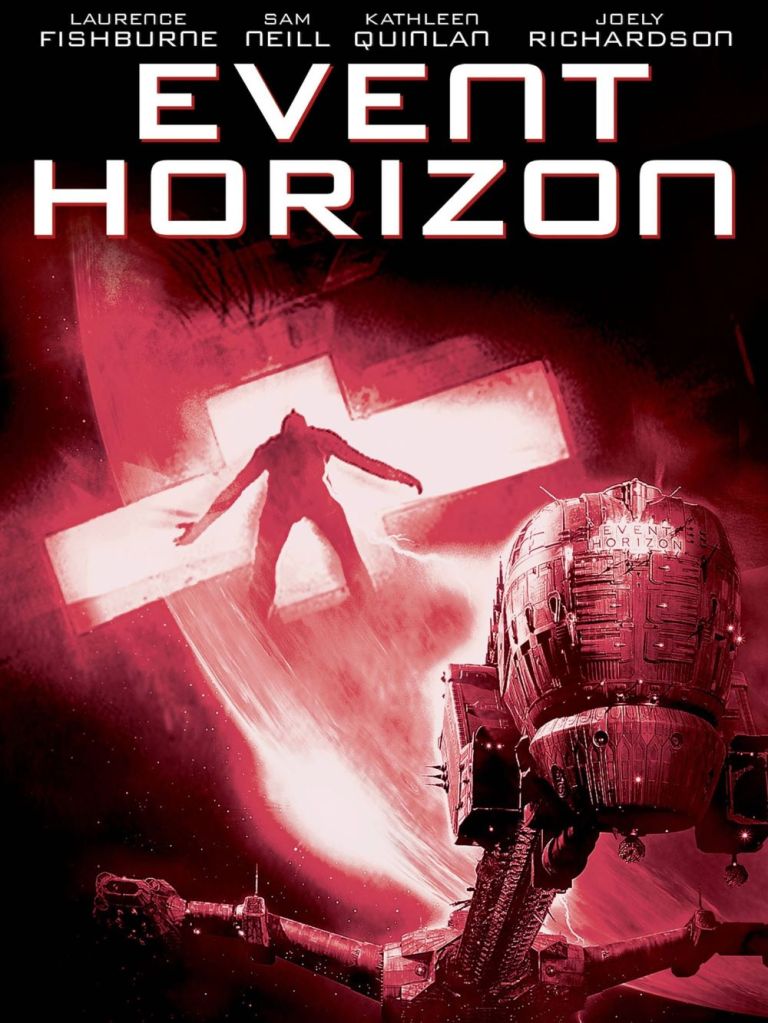
Paul W.S. Anderson’s 1997 film Event Horizon stands out as a memorable mix of science fiction and horror, remembered for its gripping atmosphere and disturbing visuals. The story is set in 2047: a rescue crew aboard the Lewis and Clark is sent out to recover the long-missing spaceship Event Horizon, a vessel built to test a new kind of faster-than-light travel. Onboard with them is Dr. William Weir, the Event Horizon’s creator, who explains that the ship vanished after first activating its “gravity drive,” which can fold space to allow for instant travel across vast cosmic distances.

Soon after reaching the drifting Event Horizon, the crew discovers signs of mass violence and horror. They recover a disturbing audio message and realize something traumatic happened to the original crew. As they search for survivors, they experience intense and personal hallucinations—memories and fears brought to life by the ship. It becomes clear that the Event Horizon didn’t just jump through space; it traveled to a place outside reality, a nightmarish interdimensional realm resembling hell.

What makes Event Horizon particularly unique is its concept of hell as an alternate dimension that can infect and corrupt whatever or whoever crosses into it. The ship’s gravity drive doesn’t simply facilitate faster travel—it accidentally opens a gateway to this chaotic, malevolent place. This portrayal of hell as a dangerous interdimensional reality that preys on minds and bodies echoes the idea found in the massive gaming property Warhammer 40K, where hell is depicted as the Warp, a dimension of chaos that corrupts and drives people insane. Like the Warp, the film’s hell is an unpredictable, hostile realm where sanity and physical form break down, infecting and warping everything that comes into contact.

Visually, the film relies on claustrophobic corridors, flickering lights, and unsettling sounds to keep the audience off-balance. The design of the ship itself—part gothic cathedral, part industrial nightmare—adds to the sense of unease and dread throughout. The use of practical effects and detailed sets grounds the sci-fi terror in something tangible, making it all feel more immediate and believable.

Event Horizon also hints at bigger philosophical questions: how far should science go, and what happens when the drive for knowledge is unchecked by ethics or humility? The gravity drive is a technological wonder, but it’s treated with little caution by its inventor, and the catastrophic results suggest that some discoveries may be better left unexplored. The ship becomes both a literal and figurative vehicle for exploring the limits of human ambition and the dangers of pushing beyond them.

As the movie builds toward its climax, the rescue crew faces increasingly desperate odds. The possessed Dr. Weir, now an outright villain, sees the hellish dimension the gravity drive visited as the next step for humanity—a place of chaos and suffering. Multiple characters die in gruesome ways, and the survivors have to fight their own fears and the haunted ship itself. The ending is chilling and ambiguous, leaving open the possibility that the ship’s evil has not been fully contained.

At release, Event Horizon divided critics and audiences. Some found the violence and nightmare imagery too intense or the story too messy to follow. Others praised its ambition and the way it blends psychological horror with cosmic sci-fi. Over the years, the film has developed a cult reputation, frequently cited as one of the more effective and original space horror movies. Its legacy can be seen in later media, especially in video games that tackle similar haunted spaceship scenarios.

However, the film is not without flaws. Many viewers and critics point out uneven pacing, especially in the second half where tension sometimes drains away. The characters often act inconsistently or make choices that feel unrealistic for trained astronauts, which undermines the suspense. The script’s tonal shifts—from serious psychological drama to moments that unintentionally verge on camp—can jolt the viewer out of the experience. The use of jump scares is sometimes predictable, and the film’s heavy reliance on loud, chaotic sequences instead of quiet suspense can feel overwhelming. Some CGI effects haven’t aged well, contrasting with the otherwise impressive practical effects and set design. Acting performances are mixed too; while Sam Neill and Laurence Fishburne are strong, some supporting cast members lack conviction, making emotional engagement uneven.

Importantly, Event Horizon represents Paul W.S. Anderson at his most subtle and effective in directing. Compared to many of his later films, where his style often becomes frenetic and unchecked—possibly due to a lack of producer control—Event Horizon is more controlled, atmospheric, and haunting. This balance between style and substance makes it one of Anderson’s better directorial works, if not his best to date. The film showcases his interest in spatial geography, the use of negative space, and claustrophobic production design, all elements he would expand on in his later work but never as effectively deployed as here. The haunting visual touches, combined with his ability to direct actors and maintain tension, set Event Horizon apart from his more bombastic, less focused later entries.

Despite its flaws, Event Horizon remains gripping and memorable. Its strengths lie in combining deeply personal psychological horror with the vast, terrifying unknown of space and alternate realities. The film explores not just external threats, but also how guilt, fear, and trauma can be weaponized by forces beyond human understanding. For viewers seeking more than a standard haunted spaceship story, Event Horizon offers a disturbing, thought-provoking glimpse into the dark frontier of science, faith, and madness. It stands as a cult classic of sci-fi horror that continues to inspire discussion about the dangers of pushing too far into the unknown.

Review: Predator 2 (dir. by Stephen Hopkins)


Predator 2

Like any successful genre film, Predator would remain in the consciousness of filmgoers during the late 80’s. The film was that popular and successful. This also meant that the studio who produced and released the film were more than happy to try and replicate what made them a lot of money.  So, a sequel was quickly greenlit within the halls of 20th Century Fox.

Yet, despite the success the first film was able to garner despite some major production problems, this time around luck wasn’t with Predator 2. The follow-up film would have different production issues than the first but they would affect the film in the long run.

First off, John McTiernan wouldn’t be on-board to direct the sequel. His back-to-back successes with Predator and Die Hard has suddenly made him a coveted action director. His schedule would keep him from directing Predator 2 as his slate was already full with The Hunt for Red October being his next film. In comes Stephen Hopkins to helm the sequel.

Yet, the biggest blow to the production would be not being able to get Arnold Schwarzenegger to return in the role of Dutch, the sole survivor of the elite rescue team from the first film. As with most stars and sequels, this time it would be over a salary dispute that would keep Arnold from returning so in comes Danny Glover to take on the sequel’s lead role.

Now, Danny Glover has more than pulled his own action film weight with two Lethal Weapon films already under his belt, but in terms of on-screen charisma he would be a major downgrade from the presence Schwarzenegger provided the first film. But Glover was more than game to take on the role of Lt. Harrigan of the LAPD as the setting for the sequel moves from the steaming jungle canopy of Central America to the blistering asphalt and concrete jungle of gang-ridden Los Angeles.

This change in location made for an interesting take as it helped establish some world building that showed these Predators have visited Earth many times in the past and not just in the faraway jungles but more towards areas and places rife with conflict. We learn that it hunts those who have survived the conflicts of the area they’re in. Only the strongest for these extraplanetary hunters.

Unlike, the original film, Predator 2 fails in not having a cast of characters that the audience could empathize and root for. This follow-up is mostly about action and even more gore than the first. Even the opening sequence tries to one-up the jungle shooting scene from the first film, yet instead of shock and awe the sequence just seems loud and busy,

Predator 2 suffers from a lot of that as the film feels more than just a tad bit bloated. The Thomas brothers (Jim and John) who wrote the original film return for the sequel but were unable to capture lightning in a bottle a second time around. Where the first film was very minimalist in it’s narrative and plot, the sequel goes for the throw everything in but the kitchen sink approach. We have warring drug gangs, inept police leadership, secretive government agencies with their own agendas.

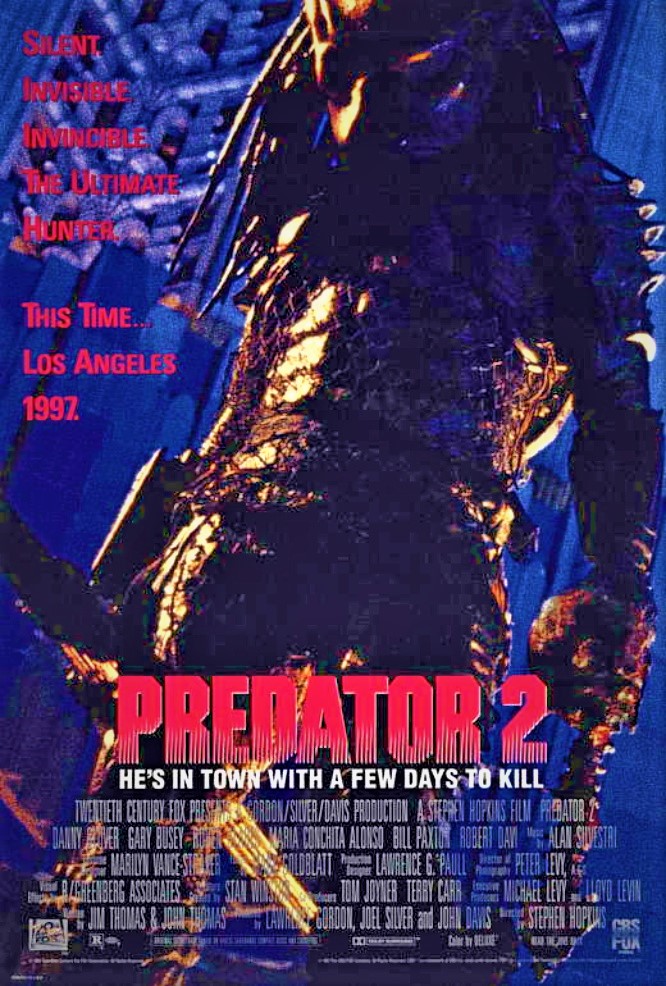
What does work with Predator 2 and has made it into a cult classic as years passed was the very worldbuilding I mentioned earlier. We learn a bit more of this predator-hunter. While some comes as exposition from Gary Busey’s special agent role Peter Keyes, the rest comes from just seeing the new look of this particular Predator courtesy of special effects master Stan Winston.

The biggest joy for fans of the films comes in an all-too-brief scene showcasing the trophy case of the Predator inside it’s spacecraft. Within this trophy case are the skulls of the prey it’s hunted and killed. One skull in particular would ignite the imagination of scifi action fans worldwide. It’s a skull of a xenomorph from the Alien franchise. It made fans wonder if the two films were part of a larger tapestry. Both properties were owned by 20th Century Fox, so there was a chance and hope that the two meanest and baddest alien creatures on film would crossover together.

It would be many, many years before such a team-up would happen. Even when it finally did fans of the franchises would be let down with what they get after waiting for over a decade.

Predator 2 could be seen as trying to make lightning hit the same patch twice or it could be seen as a quick cash grab by a studio seeing a potential franchise. Both are true and without its two biggest stars, Arnold Schwarzenegger and John McTiernan, returning to reprise their roles for the sequel the film was already behind the eight-ball before filming began.

While the follow-up had some interesting new ideas that helped round out the Predator as one of film’s greatest onscreen villains, it also failed to capitalize on those ideas in a creative way. There’s some good in Predator 2, but way too much baggage and too much bad to have it live up to the success and popularity of the original.