Horror Review: Event Horizon (dir. by Paul W. S. Anderson)


“You know nothing. Hell is only a word. The reality is much, much worse.” — Dr. Weir

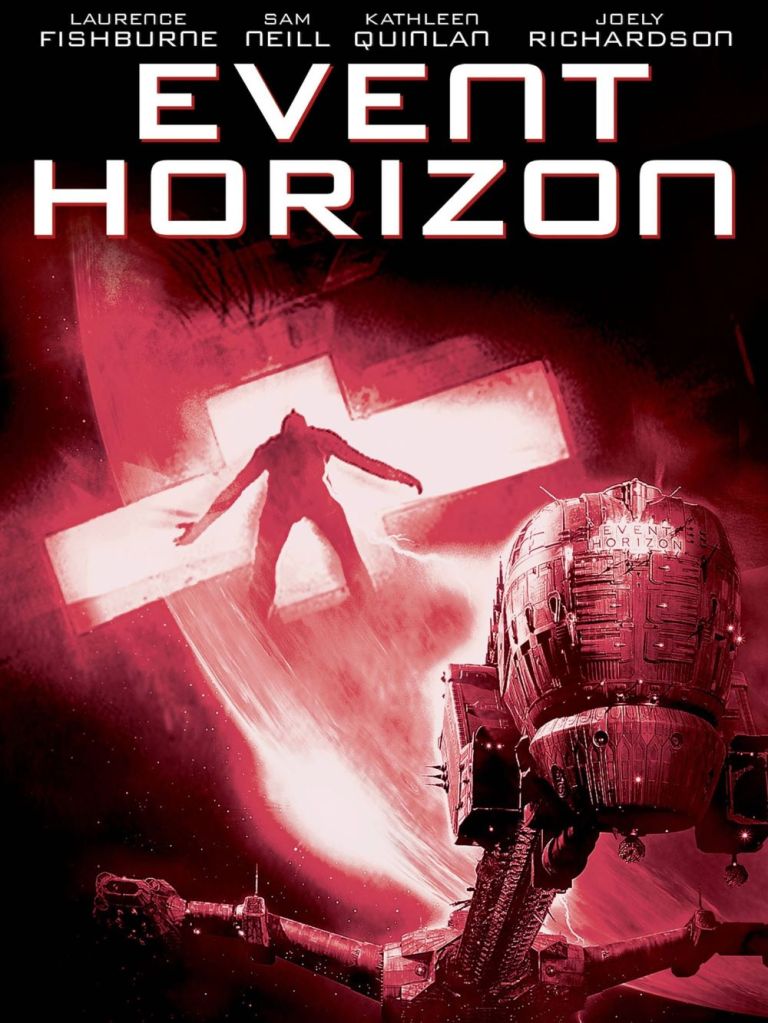
Paul W.S. Anderson’s 1997 film Event Horizon stands out as a memorable mix of science fiction and horror, remembered for its gripping atmosphere and disturbing visuals. The story is set in 2047: a rescue crew aboard the Lewis and Clark is sent out to recover the long-missing spaceship Event Horizon, a vessel built to test a new kind of faster-than-light travel. Onboard with them is Dr. William Weir, the Event Horizon’s creator, who explains that the ship vanished after first activating its “gravity drive,” which can fold space to allow for instant travel across vast cosmic distances.

Soon after reaching the drifting Event Horizon, the crew discovers signs of mass violence and horror. They recover a disturbing audio message and realize something traumatic happened to the original crew. As they search for survivors, they experience intense and personal hallucinations—memories and fears brought to life by the ship. It becomes clear that the Event Horizon didn’t just jump through space; it traveled to a place outside reality, a nightmarish interdimensional realm resembling hell.

What makes Event Horizon particularly unique is its concept of hell as an alternate dimension that can infect and corrupt whatever or whoever crosses into it. The ship’s gravity drive doesn’t simply facilitate faster travel—it accidentally opens a gateway to this chaotic, malevolent place. This portrayal of hell as a dangerous interdimensional reality that preys on minds and bodies echoes the idea found in the massive gaming property Warhammer 40K, where hell is depicted as the Warp, a dimension of chaos that corrupts and drives people insane. Like the Warp, the film’s hell is an unpredictable, hostile realm where sanity and physical form break down, infecting and warping everything that comes into contact.

Visually, the film relies on claustrophobic corridors, flickering lights, and unsettling sounds to keep the audience off-balance. The design of the ship itself—part gothic cathedral, part industrial nightmare—adds to the sense of unease and dread throughout. The use of practical effects and detailed sets grounds the sci-fi terror in something tangible, making it all feel more immediate and believable.

Event Horizon also hints at bigger philosophical questions: how far should science go, and what happens when the drive for knowledge is unchecked by ethics or humility? The gravity drive is a technological wonder, but it’s treated with little caution by its inventor, and the catastrophic results suggest that some discoveries may be better left unexplored. The ship becomes both a literal and figurative vehicle for exploring the limits of human ambition and the dangers of pushing beyond them.

As the movie builds toward its climax, the rescue crew faces increasingly desperate odds. The possessed Dr. Weir, now an outright villain, sees the hellish dimension the gravity drive visited as the next step for humanity—a place of chaos and suffering. Multiple characters die in gruesome ways, and the survivors have to fight their own fears and the haunted ship itself. The ending is chilling and ambiguous, leaving open the possibility that the ship’s evil has not been fully contained.

At release, Event Horizon divided critics and audiences. Some found the violence and nightmare imagery too intense or the story too messy to follow. Others praised its ambition and the way it blends psychological horror with cosmic sci-fi. Over the years, the film has developed a cult reputation, frequently cited as one of the more effective and original space horror movies. Its legacy can be seen in later media, especially in video games that tackle similar haunted spaceship scenarios.

However, the film is not without flaws. Many viewers and critics point out uneven pacing, especially in the second half where tension sometimes drains away. The characters often act inconsistently or make choices that feel unrealistic for trained astronauts, which undermines the suspense. The script’s tonal shifts—from serious psychological drama to moments that unintentionally verge on camp—can jolt the viewer out of the experience. The use of jump scares is sometimes predictable, and the film’s heavy reliance on loud, chaotic sequences instead of quiet suspense can feel overwhelming. Some CGI effects haven’t aged well, contrasting with the otherwise impressive practical effects and set design. Acting performances are mixed too; while Sam Neill and Laurence Fishburne are strong, some supporting cast members lack conviction, making emotional engagement uneven.

Importantly, Event Horizon represents Paul W.S. Anderson at his most subtle and effective in directing. Compared to many of his later films, where his style often becomes frenetic and unchecked—possibly due to a lack of producer control—Event Horizon is more controlled, atmospheric, and haunting. This balance between style and substance makes it one of Anderson’s better directorial works, if not his best to date. The film showcases his interest in spatial geography, the use of negative space, and claustrophobic production design, all elements he would expand on in his later work but never as effectively deployed as here. The haunting visual touches, combined with his ability to direct actors and maintain tension, set Event Horizon apart from his more bombastic, less focused later entries.

Despite its flaws, Event Horizon remains gripping and memorable. Its strengths lie in combining deeply personal psychological horror with the vast, terrifying unknown of space and alternate realities. The film explores not just external threats, but also how guilt, fear, and trauma can be weaponized by forces beyond human understanding. For viewers seeking more than a standard haunted spaceship story, Event Horizon offers a disturbing, thought-provoking glimpse into the dark frontier of science, faith, and madness. It stands as a cult classic of sci-fi horror that continues to inspire discussion about the dangers of pushing too far into the unknown.

Lisa Marie Reviews An Oscar Nominee: Apocalypse Now (dir by Francis Ford Coppola)


1979’s Apocalypse Now reimagines the Vietnam War as pop art.

Jim Morrison sings The End in the background as slow-motion helicopters pass in front of a lush jungle.  The jungle erupts into flame while in a dingy hotel room, Captain Benjamin Willard (Martin Sheen) gets drunks, practices his karate moves, and smashes a mirror before collapsing to the floor in tears.  The next morning, the hung-over and bandaged Willard ends up at a U.S. military base where he has a nice lunch with Lt. General Corman (G.D. Spradlin) and Col. Lucas (Harrison Ford) and a nearly silent man wearing an undone tie.  Willard is asked if it’s true that he assassinated an enemy colonel.  Willard replies that he did not and that the operation was classified, proving that he can both lie and follow military protocol.  Willard is told that a Col. Walter Kurtz (Marlon Brando) has gone rogue and his mission is to go into Cambodia and terminate his command with “extreme” prejudice.  It’s a famous scene that features G.D. Spradlin delivering a brilliant monologue about good and evil and yet it’s often missed that Willard is getting his orders from Roger Corman and George Lucas.

(Roger Corman was the mentor of director Francis Ford Coppola while the pre-Star Wars George Lucas was Coppola’s business partner.  Indeed, Apocalypse Now was originally somewhat improbably planned to be a George Lucas film.)

Up the river, Willard heads on a patrol boat that is populated with characters who could have come out of an old World War II service drama.  Chief (Albert Hall) is tough and no-nonsense.  Lance (Sam Bottoms) is the goofy comic relief who likes to surf.  Clean (Laurence Fishburne) is the kid who is obviously doomed from the minute we first see him.  Chef (Fredric Forrest) is the overage, tightly-wound soldier who just wants to find mangoes in the jungle and who worries that, if he dies in a bad place, his soul won’t be able to find Heaven.  The Rolling Stones are heard on the boat’s radio.  Soldiers on the other patrol boats moon the boat and toss incendiary devices on the roof.  It’s like a frat prank war in the middle of a war.

Colonel Bill Kilgore (Robert Duvall) is a badass calvary officer whose helicopter raids are legendary amongst the enemy and a dedicated surfer who tries to turn every night into the equivalent of an AIP Beach Party film.  He’s a brilliant warrior who speaks with Malibu accent (“Charlie don’t surf!”) and who doesn’t flinch when a bomb goes off near him.  “I love the smell a napalm in the morning,” he says and, for a few moments, you really wish the film would just abandon Willard so we could spend more time with Kilgore.  “Some day this war is going to end,” he says with a reassuring nod, showing a non-neurotic attitude that is the opposite of Kurtz’s.  Willard says that he could tell Kilgore was going to get through the war without even a scratch and it’s true.  Kilgore doesn’t try to rationalize or understand things.  He just accepts the reality and adjusts.  He’s a true surfer.

The film grows progressively more surreal the closer the boat heads up the river and gets closer to Cambodia.  A USO show turns violent as soldiers go crazy at the sight of the Playboy Bunnies, dressed in denim outfits and cowboy hats and twirling cap guns like the love interest in a John Wayne western.  A visit to a bridge that is built every day and blown up every night is a neon-lit, beautiful nightmare.  Who’s the commanding officer?  No one knows and no one cares.

The closer Willard gets to Kurtz, the stranger the world gets.  Fog covers the jungles.  A tiger leaps out of nowhere.  Dennis Hopper shows up as a photojournalist who rambles as if Billy from Easy Rider headed over to Vietnam instead of going to Mardi Gras.  Scott Glenn stands silently in front of a temple, surrounded by dead bodies that feel as if they could have been brought over from an Italian cannibal film.  Kurtz, when he shows up, is an overweight, bald behemoth who talks in riddles and who hardly seem to be the fearsome warrior that he’s been described as being.  “The horror, the horror,” he says at one point in one of the few moments that links Apocalypse Now to its inspiration, Joseph Conrad’s Heart of Darkness.

Directed by near-communist Francis Ford Coppola and written by the unapologetically right-wing John Milius, Apocalypse Now is actually less about the reality of Vietnam and more about how the images of the war shaped pop culture the world over.  It’s a reminder that Vietnam was known for being the first television war and that counterculture was not just made up of dropouts but also of writers, actors, and directors.  Kurtz may say that Willard’s been sent by grocery store clerks but actually, he’s been sent by the B-movie producers who first employed and mentored the directors and the actors who would eventually become the mainstays of the New Hollywood.  The film subverts many classic war film cliches but, at the same time, it stays true to others.  Clean dying while listening to a tape recording of his mother telling him not to get shot and to come home safe is the type of manipulative, heart-tugging moment that could have appeared in any number of World War II-era films.  And while Coppola has always said the film was meant to be anti-war, Col. Kilgore remains the most compelling character.  Most viewers would probably happily ride along with Kilgore while he flies over Vietnam and plays Wagner.  The striking images of Vietnam — the jungle, the explosions, the helicopters flying through the air — stay in the mind far more than the piles of dead bodies that appear in the background.

It’s a big, messy, and ultimately overwhelming film and, while watching it, it’s hard not to get the feeling that Coppola wasn’t totally sure what he was really trying to say.  It’s a glorious mess, full of stunning visuals, haunting music, and perhaps the best performance of Robert Duvall’s legendary career.  The film is too touched with genius to not be watchable but how one reacts overall to the film will probably depend on which version you see.

The original version, which was released in 1979 and was nominated for Best Picture, is relentless with its emphasis on getting up the river and finding Kurtz.  Willard obsesses on Kurtz and really doesn’t have much to do with the other people on the boat.  It gives the story some much-needed narrative momentum but it also makes Kurtz into such a legendary badass that it’s hard not to be disappointed when Willard actually meets him.  You’re left to wonder how, if Kurtz has been living in the jungle and fighting a brutal and never-ending guerilla war against the communists, he’s managed to gain so much weight.  Brando, who reportedly showed up on set unprepared and spent days improvising dialogue, gives a bizarre performance and it’s hard to view the Kurtz we meet as being the Kurtz we’ve heard about.  As strong as the film is, it’s hard not to be let down by who Kurtz ultimately turns out to be.

In 2001 and 2019, Coppola released two more versions of the film, Redux and The Final Cut.  These versions re-inserted a good deal of footage that was edited out of the original cut.  Most of that footage deals with Willard dealing with the crew on the boat and it’s easy to see why it was cut.  The scenes of Willard bonding with the crew feel out of character for both Willard and the rest of the crew.  A scene where Willard arranges for Clean, Lance, and Chef to spend time with the Playboy bunnies seems to go on forever and features some truly unfortunate acting.  Worst of all, Redux totally ruins Kilgore’s “I love the smell of napalm in the morning” monologue by having Willard suddenly steal his surf board.  Again, it’s out of character for Willard and it actually feels a bit disrespectful to Duvall’s performance to suddenly turn Kilgore into a buffoon.

But then there are moments that do work.  I actually like the lengthy French Plantation scene.  By the time Willard, Lance, and Chef stumble into the plantation,  the journey upriver has gotten so surreal that it makes a strange sort of sense that they would run into a large French family arguing politics while a clown tries to keep everyone distracted.  The new versions of the film are undeniably disjointed but they also shift the focus off of finding Kurtz and place it more on Willard discovering how weird things are getting in Vietnam.  As such, it’s less of a disappointment when Kurtz actually shows up.  Much as with the French Plantation scene, the journey has become so weird that Kurtz being overweight and pretentious feels somehow appropriate.

What all the versions of the film have in common is that they’re all essentially a neon-lit dream of pop cultural horror.  Is Apocalypse Now a horror film?  Critic Kim Newman argued that it owed a lot to the genre.  Certainly, that’s the case when Willard reaches the temple and finds himself surrounded by corpses and and detached heads.  Even before that, though, there are elements of horror.  The enemy is always unseen in the jungle and, when they attack, they do so quickly and without mercy.  In a scene that could almost have come from a Herzog film, the boat is attacked with toy arrows until suddenly, out of nowhere, someone throws a very real spear.  Until he’s revealed, Kurtz is a ghostly figure and Willard is the witch hunter, sent to root him out of his lair and set his followers on fire.  If the post-60s American horror genre was shaped by the images coming out of Vietnam then Apocalypse Now definitely deserves to be considered, at the very least, horror-adjacent.

Apocalypse Now was controversial when it was released.  (It’s troubled production had been the talk of Hollywood for years before Coppola finally finished his film.)  It was nominated for Best Picture but lost to the far more conventional Kramer vs Kramer.  Robert Duvall was the film’s sole acting nominee but he lost the award to Melvyn Douglas’s turn in Being There.  Douglas was very good in Being There and I imagine giving him the Oscar was also seen as a way of honoring his entire career.  That said, Duvall’s performance was amazing.  In his relatively brief screen time, Duvall somehow managed to take over and ground one of the most unruly films ever made.  The Oscar definitely should have gone to him.

As for the film itself, all three versions, flaws and all, are classics.  It’s a film that proves that genius can be found in even the messiest of productions.

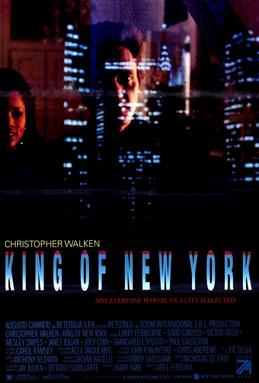
King of New York (1990, directed by Abel Ferrara)


Drug kingpin Frank White (Christopher Walken) has been released from prison and is again on the streets of New York City.  Frank might say that he’s gone straight but, as soon as he’s free, he’s  partying with his old crew (including Laurene Fishburne, Steve Buscemi, Giancarlo Esposito, and others).   While Frank’s agent (Paul Calderon) goes to all of the other city’s gangsters and explains that they can either get out of Frank’s way or die, three detectives (Victor Argo, David Caruso, and Wesley Snipes) make plans to take Frank out by any means necessary.  Meanwhile, Frank is donating money to politicians, building hospitals, and presenting himself as New York’s savior.

King of New York is the epitome of a cult film.  Directed by Abel Ferrara, the dark and violent King of New York was originally dismissed by critics and struggled to find an audience during its initial theatrical run.  (It was lumped in with and overshadowed by other 1990 gangster films like Goodfellas and Godfather Part III.)  But it was later rediscovered on both cable and home video and now it’s rightly considered to be a stone cold crime classic.  Walken gives one of his best performances as Frank White and that’s not a surprise.  The film was clearly made to give Walken a chance to show off what he could do with a lead role and Walken captures Frank’s charisma and humor without forgetting that he’s essentially a sociopath.  Walken gives a performance that feels like James Cagney updated for the end of the 80s.  What’s even more impressive is that all of the supporting characters are just as memorable as Walken’s Frank White.  From Laurence Fishburne’s flamboyant killer to David Caruso’s hotheaded cop to Paul Calderon’s slippery agent to Janet Julian’s morally compromised attorney, everyone gives a strong performance.  (I’m usually not a Caruso fan but he’s legitimately great here.)  They come together to bring the film’s world to life.  Everyone has their own reason for obsessing on Frank White and his return to power.  I’ve always especially appreciated Victor Argo as the weary, veteran detective who finds himself trapped by Caruso and Wesley Snipes’s impulsive plan to take down Frank White.  Frank White and the cops go to war and it’s sometimes hard to know whose side to be on.

Director Abel Ferrara has had a long and storied career, directing films about morally ambiguous people who are often pushed to extremes.  Personally, I think King of New York is his best film, a portrait of not just a criminal but also of a city that combines the best and the worst of human nature.  The action is exciting, the cast is superb, and Frank’s justifications for his behavior sometimes make a surprising amount of sense.  Thought there’s occasionally been speculation that it could happen, there’s never been a sequel to King of New York and it doesn’t need one.  King of New York is a film that tell you all that you need to know about Frank White and the city that he calls home.


Scene That I Love: Christopher Walken in King of New York


Today’s scene is from Abel Ferrara’s 1990 gangster epic, King of New York.  Featuring Christopher Walken and a host of familiar faces, it’s one of those scenes that simply just has to be seen.

Catching Up With The Films of 2024: Megalopolis (dir by Francis Ford Coppola)


It’s hard to know where to really start with Megalopolis.

Directed, written, produced, and financed by Francis Ford Coppola, Megalopolis takes place in an alternate version of the United States of America.  In this alternative world, New York is called New Rome and it is dominated by a handful of wealthy families.  Former District Attorney Franklyn Cicero (Giancarlo Esposito) has been elected mayor.  Everyone seems to hate Cicero and the character tends to come across as being a bit whiny so you really do have to wonder how he got elected in the first place.

Cicero is obsessed with the powerful Crassus-Catallina family, which is headed by banker Hamilton Crassus III (Jon Voight).  Hamilton’s nephew is Cesar Catallina (Adam Driver), a brilliant architect who won a Nobel Prize for inventing a type of invisible material.  Ever since Cesar’s wife vanished under mysterious circumstances, a cloud of scandal has hung over Cesar’s name and with that scandal has come popularity with both the masses and the tabloid press.  When Cesar was tried for murder, the prosecutor was Franklin Cicero.  Cesar was acquitted but he now spends his time drinking and mourning his wife.  Cesar also has the power to stop time for everyone but him.  Why he has this power and how he came to possess it is never made clear, though Cesar compares it to the way that a great painter or writer can capture one moment for eternity.

Cesar is driven through the rainy streets of New York by his chauffeur, Fundi Romaine (Laurence Fishburne).  Fundi also serves as the film’s narrator, ruminating about how the Roman Empire eventually became a victim of its own decadence.  Just in case the viewer somehow doesn’t pick up on the fact that the movie is comparing modern America to ancient Rome, Fundi informs us of this fact.  Thanks, Fundi!

After Cesar publicly denounces Cicero’s plans to turn New Rome into a casino, Cicero’s daughter Julia (Nathalie Emmanuel) decides to take a break from decadent partying to follow Cesar around and try to discover whether or not he actually murdered his wife.  Julia discovers that Cesar is not only still mourning his wife but she also witnesses him stopping time.  Soon, Julia is working for Cesar’s design firm.  At some point, she and Cesar become lovers.

Meanwhile, Cesar’s former lover, Wow Platinum (Aubrey Plaza), has married Crassus and is plotting to take control of his bank.  Working with Wow is Cesar’s buffoonish cousin, Clodio Pulcher (Shia LaBeouf), who organizes the angry citizens of New Rome into a mob that threatens the safety and power of both Cicero and Cesar.  “Make Rome Great Again,” a sign reads at one of Clodio’s rallies, just in case anyone was missing Coppola’s point.

Clodio is obsessed with destroying Cesar.  First, he frames Cesar for deflowering New Rome’s vestal virgin, the singer Vesta Sweetwater (Grace VanderWaal).  Then, he sends a 12 year-old assassin after Cesar.  Cesar fears that he’s lost his ability to stop time.  Julia falls more and more in love with him.  Cicero gets booed everywhere he goes and, after his fixer (Dustin Hoffman) is mysteriously killed, he finds himself helpless against Clodio’s mob.  Can Cesar be convinced to abandon his self-pity long enough to stand up to Clodio?

And what about the Russian spy satellite that just crashed into New Rome?  Who will rebuild the city?

And …. well, let’s just say that there’s a lot going on in New Rome.

Francis Ford Coppola originally came up with the idea for Megalopolis in 1977 and he spent decades trying to bring the film to the big screen.  Eventually, Coppola ended up producing and financing the film himself.  From 2023 to the the day of the film’s Cannes premiere, the trade papers were full of stories about how difficult the production had been, with the underlying theme being that everything was Francis Ford Coppola’s fault and that the movie would be an unmitigated disaster.  (In the coverage found in both Variety and The Hollywood Reporter, there seemed to be a good deal of hostility directed at Coppola’s decision to work outside of the Hollywood system.)  Disgruntled members of the crew complained that Coppola was an undisciplined director who spent most of the production high.  A half-baked attempt to generate a #MeToo scandal around the film made it obvious that Coppola had burned a lot of bridges with both Hollywood and the media.  The film was released to critical derision and poor box office returns.  Coppola is 85 years old and it’s entirely possible that Megalopolis will be his final film.

Critics be damned, I liked the majority of Megalopolis.  Though the film may be thematically and narratively incoherent, it is a feast for the eyes and it’s hard not to respect the fact that, in this age of overwhelming conformity, Coppola brought his own unique vision to the screen.  There are a few moments of genuinely macabre beauty to be found in the film.  When the Russian satellite crashes into New York, we don’t see the impact but, on the city walls, we do see the shadows of people screaming in fear.  When a drunk Cesar is driven through New Rome, he sees gigantic statues stepping off of their bases and slumping to the ground, exhausted with being on display.  Coppola films New Rome like a beautiful, open-air prison.  It’s an amazing view but don’t even think about trying to escape.  The scenes in New Rome’s Coliseum are filled with an epic yet seedy grandeur.  At times, the film’s scenes seem to be almost randomly assembled, leaving us to wonder if we’re seeing the past, the present, or maybe just something that Cesar is imagining in his head.

What is the film actually about?  It’s not always easy to say.  Even in his best films, Coppola has had a tendency to be self-indulgent.  Sometimes, that self-indulgence pays off.  Though few would admit it now, The Godfather Part II is one of the most self-indulgent films ever made.  But it’s also brilliant so it doesn’t matter.  However, with Megalopolis, it’s hard not to feel that this film was such a passion project for Coppola that he didn’t stop to consider whether or not he really had anything new to say.  Megalopolis is hardly the first film to compare the supposed decline of America to the fall of the Roman Empire.  As much as I enjoyed the film’s visuals, I cringed at the film’s ending.  One can only imagine how a past Coppola collaborator like John Milius would have reacted to a bunch of children reciting a pledge to take care of the “one Earth.”

It’s a random film, one in which plot points are raised and often quickly abandoned.  At one point, Cesar starts to recite Hamlet’s famous “to be or not to be” soliloquy.  The cast is huge and everyone seems to be acting in a different movie.  Surprisingly enough, neither Esposito nor Adam Driver are particularly believable in their roles, though I think that has more to do with the film’s loose narrative structure than anything else.  Shia LaBeouf is convincingly feral as Clodio while Jon Voight seems to be having fun as the wealthy and crude Crassus.  The best performance in the film comes from Aubrey Plaza, who plays her role like a vampish femme fatale who has somehow found herself in a science fiction story.  Plaza holds nothing back with her performance and she actually manages to bring some genuine human emotion to Coppola’s surreal epic.

Megalopolis is a monument to self-indulgence but it’s always watchable.  Coppola may not know what he’s trying to say but he captures the surreal beauty that comes from getting trapped in one’s own imagination.  Megalopolis is not a film for everyone but I’m glad it exists.  At a time when artistic freedom seems to be under constant attack, it’s hard not to be happy that Coppola did things his way.

DEATH WISH II – Bronson wears a beanie!


I’m on Day 2 of my discussion of Charles Bronson’s DEATH WISH series in chronological order. This series has brought me countless hours of entertainment over the last 40 years, so enjoy and let me know your thoughts!

Charles Bronson returns as vigilante Paul Kersey in DEATH WISH II. In this installment, Kersey is trying to get his life back on track in Los Angeles with his daughter Carol, who’s still traumatized from the events of the first film, and with his new lady friend Geri Nichols (Jill Ireland). One day when he takes these two out for a fun day of shopping and ice cream, Kersey runs afoul of a group of young thugs who take his wallet. They use the wallet to find Kersey’s address, stand outside his house and make a plan like they’re diagramming a back yard football play, and then break in and rape his housekeeper. They set up shop to wait on Kersey to come home. When Kersey and his daughter finally arrive, the thugs knock out Kersey and kidnap his daughter. They take her back to their warehouse / hideout, where they rape her and she then falls to her death trying to escape. After this series of horrific events, Paul Kersey again turns vigilante to hunt down and kill every person responsible. 

DEATH WISH II (1982) came along at a time in Charles Bronson’s career when he needed a box office hit. His prior three movies, DEATH HUNT, BORDERLINE & CABOBLANCO, had barely made a dent at the box office. Around the same time that Bronson needed a hit, the infamous Cannon Films, recently purchased by cousins Menahem Golan & Yoram Globus, was also looking to make a big splash in the American movie market. Cannon decided that a sequel to DEATH WISH was just what they needed, and with a big paycheck, they were able to convince Bronson to come along for the ride. Director Michael Winner was also hired to direct. The resulting film was a big success, earning back eight times its production budget at the box office alone. Its success also started a relationship between Bronson & Cannon Films that lasted for a total of eight films all the way to the end of the 1980’s. 

Now that we’ve discussed how important DEATH WISH II was to extending Charles Bronson’s leading man career and providing Cannon Films a needed hit, let’s talk about the movie itself. I’m just going to say upfront that it’s my least favorite of the DEATH WISH series. Even though it presents itself as a serious film, it’s more of an exploitative retread of the 70’s classic than a realistic continuation of the Kersey character. And the first thirty minutes is hard to watch. Not content with just allowing Kersey to lose a beloved family member, Winner has crafted two graphic rape and murder sequences. These scenes are rough. While they do make sure we want to see Paul Kersey get his revenge, they leave a bad taste in our mouth that doesn’t go away as the creeps are being dispatched one by one. Vincent Gardenia returns as Frank Ochoa, the New York detective who investigated the original vigilante killings in DEATH WISH. Gardenia was so good in the original, but he’s not given much to do here. Jill Ireland doesn’t really add much either as his new lady friend. 

This is a Charles Bronson film though, so there are definitely some things about DEATH WISH II that I really do like. First, I think Bronson looks like a total badass in his beanie that he wears when he’s hunting down the creeps on the mean streets of LA. It’s a classic 80’s Bronson look. Second, Kersey has some cool sayings as he dispatches the bad guys. The “Do you believe in Jesus” exchange is the best example. Third, it’s fun seeing a young Laurence Fishburne show up as one of the creeps, extending the franchise’s ability to cast future big stars as horrific rapists. Jeff Goldblum had that distinction in DEATH WISH. And finally, Led Zeppelin guitarist Jimmy Page composed the music for DEATH WISH II. It’s a memorable soundtrack that’s different than just about anything I’ve ever heard. It’s the most unique thing about the entire movie! 

The bottom line is that I would watch Charles Bronson read a phone book, so I will always find something to enjoy about his films. Well, maybe every one but LOLA. DEATH WISH II isn’t as fun as most Bronson movies, even if it does have some good moments. I’m glad DEATH WISH 3 went a completely different direction with Kersey’s character.

BONUS: Robert “Bobby” Lyons had a part in DEATH WISH II. On our THIS WEEK IN CHARLES BRONSON PODCAST, my partner Eric Todd and I interviewed Bobby about his time on DEATH WISH II and a whole bunch of other topics. He has some interesting stories to tell about working with Charles Bronson, as well as clashing on the DEATH WISH II set with Michael Winner. Give it a listen if you get a chance!

Retro Television Review: Miami Vice 3.4 “Walk-Alone”


Welcome to Retro Television Reviews, a feature where we review some of our favorite and least favorite shows of the past!  On Mondays, I will be reviewing Miami Vice, which ran on NBC from 1984 to 1989.  The entire show can be purchased on Prime!

This week, it’s a rare Tubbs episode!

Episode 3.4 “Walk-Alone”

(Dir by David Jackson, originally aired October 17th, 1986)

As Switek puts it, Tubbs has been walking on air for two weeks.  He’s got a new girlfriend, a waitress at a hot Miami restaurant.  Unfortunately, a shoot-out at that restaurant leaves her dead.  Though Crockett thinks that Tubbs is still too close to the case to be trusted to investigate, Tubbs insists on being involved and Castillo agrees.  (Castillo, at times, just seem to automatically do the opposite of whatever Crockett suggests.)

The shoot-out happened as a result of a drug deal that went down in the state prison.  Using the name Cubero, Tubbs goes undercover as a recently transferred prisoner.  He enters the prison as his usual cool and collected self.  He’s promptly beaten up by the Aryan Nations.  Fortunately, since this is a television show and not The Shawshank Redemption, beating him up is the only thing the Aryans do to Tubbs.

Tubbs is being targeted by all the prisoners, from the Aryans to the Muslims.  But when words get out that he’s a big-time drug dealer, Commander Fox (Keven Conway) makes a deal with him.  If Tubbs keeps Fox and his men supplied with drugs, Tubbs (or Cubero) will be kept safe.

Unfortunately, when Switek, Zito, and Trudy go the prison to see Tubbs, a prisoner recognizes them.  Tubbs’s cover is blown.  Crockett wants to go into the prison to save him but Castillo points out that everyone in the prison knows that Crockett is a cop.  (Tubbs has been Crockett’s partner for three years now so why did Castillo assume no one in the prison would be able to make him?)  Castillo goes into the prison to save Tubbs from both the guards and the prisoners.  The episode ends with Castillo gunning down a few guards and saving Tubbs’s life.  Way to go, Castillo!  The main lesson here seems to be that Castillo would rather risk of his own life than depend on Crockett for anything.

This was …. well, this episode was okay.  The plot was nothing special.  For all the talk about how Florida’s state prison was the most dangerous place in the world, it actually came across as being a rather mild place.  Tubbs got beaten up and he got threatened but he didn’t get shanked and or any of the other things that one tends to associate with prison.  The prison guards were not the most intimidating or interesting villains to appear on Miami Vice, even though one of them is played by a young Laurence Fishburne.

(This episode all features a youngish Ron Perlman, playing a good guy who I kept expecting to turn out to be a bad guy because he was being played by Ron Perlman.)

In the end, this episode was a bit forgettable, though it did allow the often-underused Philip Michael Thomas a chance to have the spotlight for once.  He does a good job, even if he doesn’t get to bust out his fake Caribbean accent.

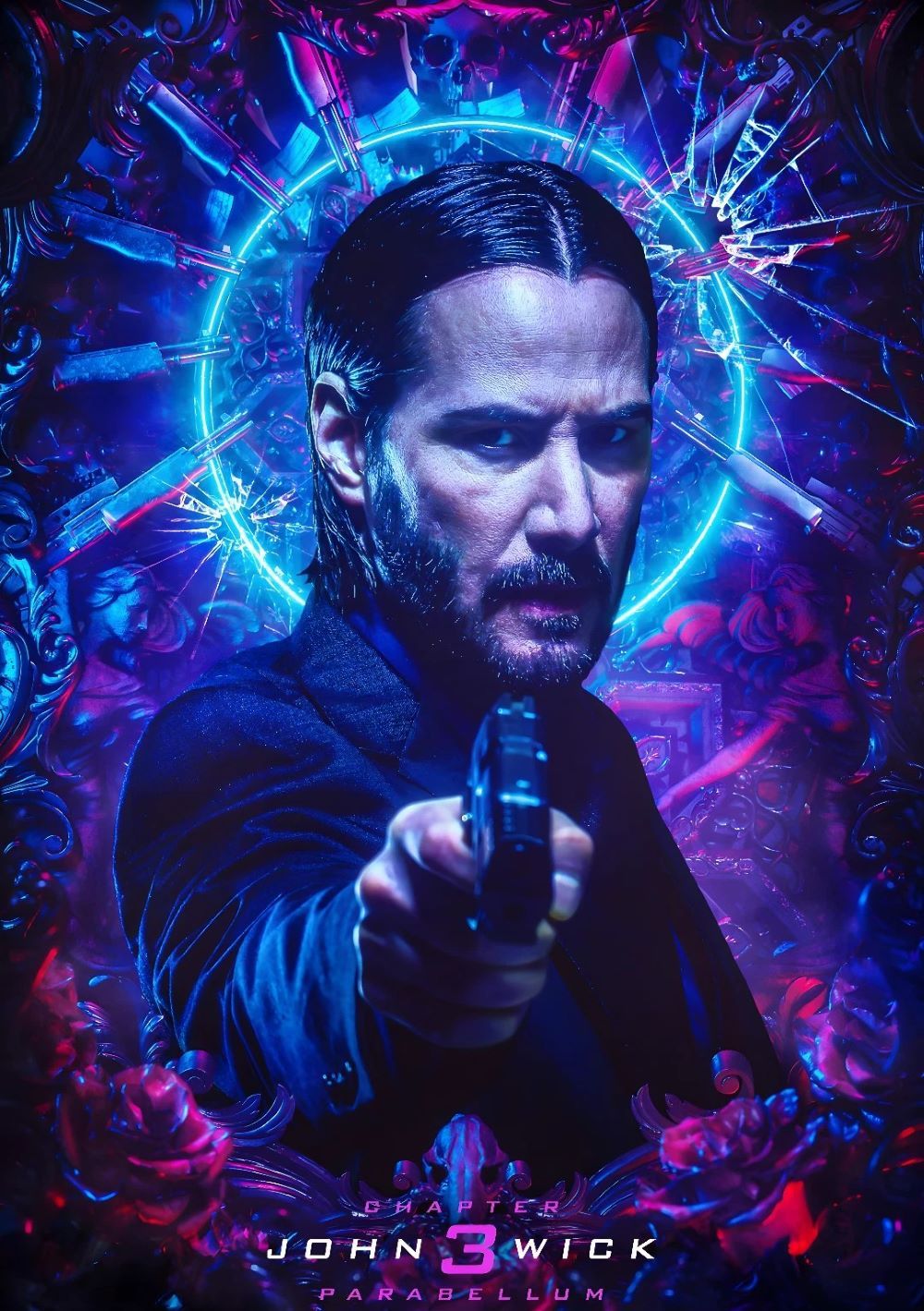
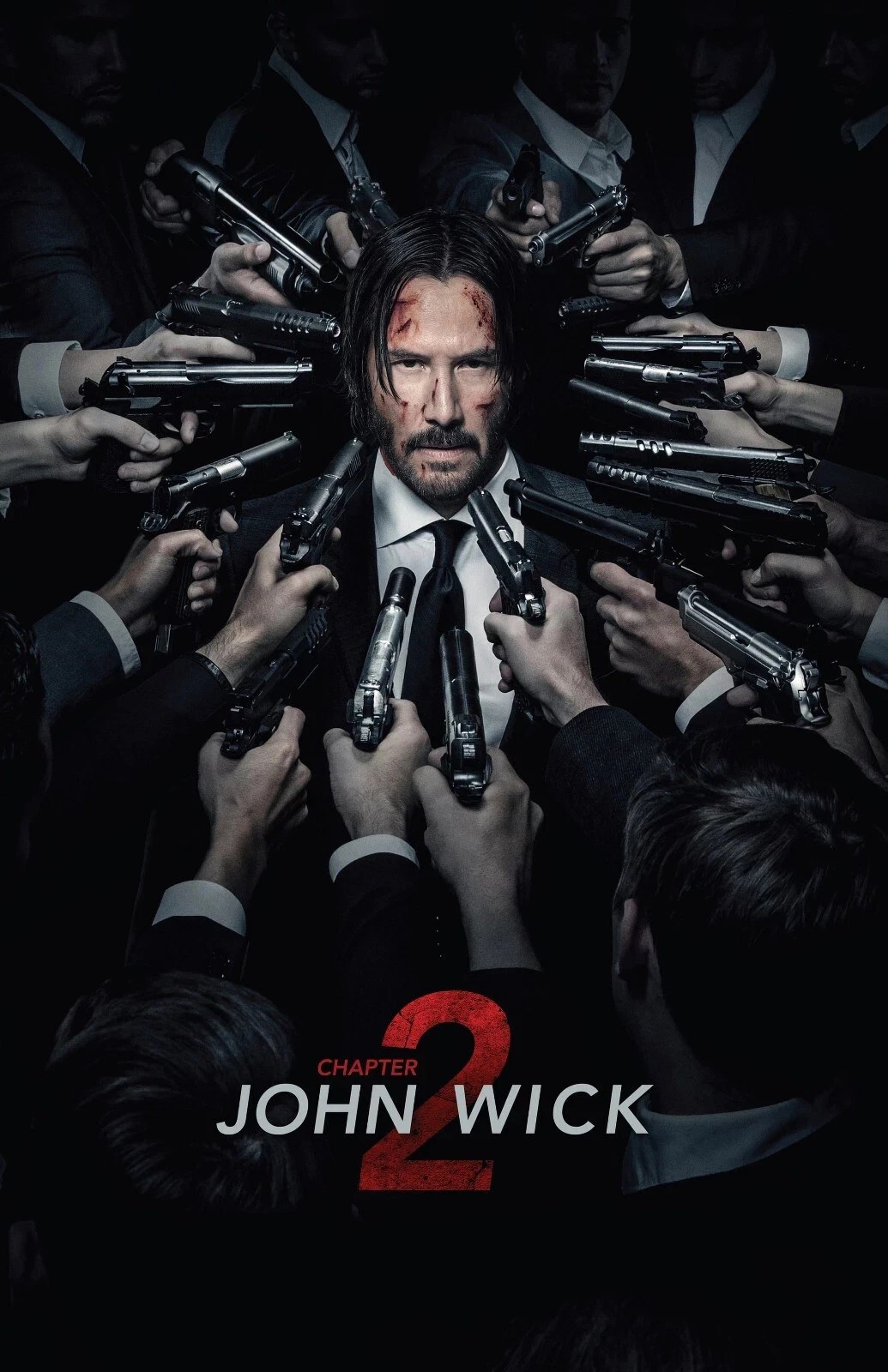
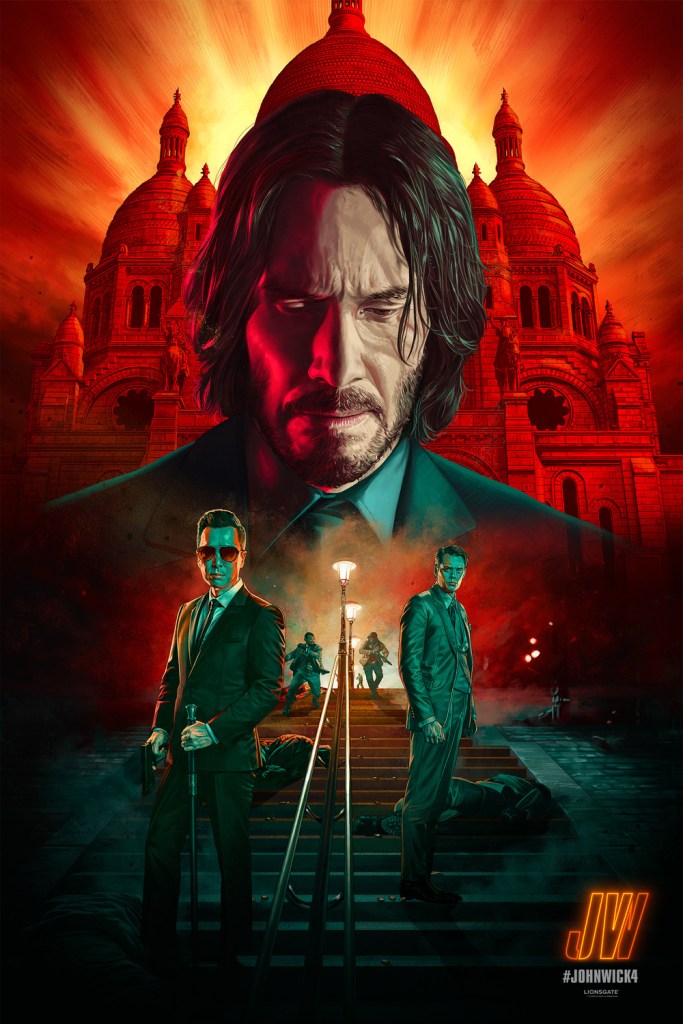
Film Review: John Wick: Chapter Four (dir by Chad Stahelski)


Yesterday, I finally watched the hit film of March 2023, John Wick: Chapter Four.  It left me overwhelmed and I mean that in the best possible way.

The film picks up where the last film left off.  John Wick (Keanu Reeves), the dog-loving, formerly retired professional hit man, is still traveling the world and killing the leaders of the High Table.  As becomes apparent from the start of the film, it’s a bit of a fool’s errand as killing one leader only leads to another leader being installed.  When John travels to Morocco to kill the leader known as “The Elder,” he discovers that the Elder he knew is gone and has been replaced with a new Elder.  He still kills the new Elder because that’s what John Wick does.  He kills people.  He’s a literal killing machine, one who audiences like because he loves dogs, is still mourning for his dead wife, and he’s played by Keanu Reeves.  On paper, the relentless and ruthless character of John Wick is horrifying.  But, when he’s played by Keanu Reeves, he becomes the killing machine that audiences can’t help but love.

The arrogant and brilliantly named Marquis Vincent Bisset de Gramont (Bill Skarsgard, giving a wonderfully hissable performance) is currently in charge of the efforts to track down and kill John.  The Marquis establishes himself as being evil by not only killing Charon (Lance Reddick) but also blowing up the Continental.  Upset by the murder of Charon and the destruction of his business, Winston (Ian McShane, playing his role with the perfect amount of wounded dignity) tells John that he can end his entire war with the High Table by challenging the Marquis to a duel.  Unfortunately, to do that, John has to convince another criminal organization to sponsor him and just about criminal organization on the planet wants John did.  To make things even more difficult, the Marquis has brought the blind assassin, Caine (the incredible Donnie Yen), out of retirement to track down John.  Caine and John are old friends but Caine knows that his daughter will be killed unless he kills John.

Clocking in at 169 minutes, John Wick: Chapter Four is a big, flamboyant, and at times overwhelming production.  John Wick travels across the world and every country in which he finds himself is home to someone who wants him dead.  And since everyone that John Wick knows seems to have a unlimited supply of guards and henchmen, the fights are nonstop and the violence is over the top but the film is so energetic and cheerfully excessive that it’s never boring.  Each fight scene feels like it could be a separate film on its own, with each member of the cast getting a chance to show off what they can do.  The water-filled fight in a Berlin night club is the film’s best moment but it’s closely followed by an extended combat sequence that’s set in a hotel in Japan.  With its vivid cinematography and ornate production design and its spectacular stunts, John Wick Chapter 4 is a work of pure cinema, an thrill ride of glorious excess.  Along with providing an ending to John Wick’s story, it also pays tribute to everything that audiences love about action cinema.  It’s a film for people who love action and, even more importantly, it’s film that has as much love for its audience as it does for itself.

The film ends on a note of apparent finality, one that becomes more ambiguous the more that one examines it.  This may be the last chapter of John Wick’s story or it may not.  (Considering the film’s box office and critical success, I suspect that it will not be the last.)  John Wick Chapter Four serves as a fitting (if perhaps temporary) end to the saga and also a tribute to both the action aesthetic and Keanu Reeves’s innate likability. 

Keanu Reeves returns in the John Wick 4 Trailer!


The High Table would like a word with John Wick.

I’m surprised there’s anyone left to fight, but on hand, we have Natalia Tena (Game of Thrones), Bill Skarsgard (Barbarian), Hiroyuki Sanada (The Wolverine), Scott Adkins (Accident Man), Clancy Brown (Thor: Ragnarok) and the legendary Donnie Yen (Ip-Man, Rogue One). They join the original cast that includes Keanu Reeves, Laurence Fishburne, Lance Reddick, & Ian McShane.

John Wick: Chapter 4 is set to release in theatres on March 24, 2023.

Band of the Hand (1986, directed by Paul Michael Glaser)


This place is Florida.  The time is the 80s.  Five juvenile delinquents have been given a chance to earn their freedom.  All they have to do is go down to the Everglades and train with Indian Joe (Stephen Lang), a no-nonsense Vietnam veteran who is determined to teach them not only survival sills but also how to work together as a team.  But Joe is interested in more than just reforming a group of youthful troublemakers.  He wants to turn them into a crime-fighting team who can help clean up the most dangerous neighborhood in Miami.  When Joe and delinquents move into and refurbish a previously condemned building, they get the attention of both the local drug kingpin (James Remar) and his main enforcer (Laurence Fishburne).

Band of the Hand is very much a film of its time, not only in its fashion and music choices but also in its full-on embrace of the war on drugs and the idea that the best way to clean up the streets is for vigilantes to do it on their own.  The film was produced by Michael Mann and, as directed by former Starsky and Hutch star Paul Michael Glaser, the film has the look of an episode of Miami Vice.  That might be because the film itself was originally meant to be a pilot for a television show.  When the networks passed on it, it was released to theaters instead and advertised as being “from the maker of Miami Vice.”    The movie never escapes its television origins.  Things start strong in the Everglades, with Lang proving himself to be a master of glowering and the young delinquents struggling to not only survive Lang’s training but also resist the temptation to kill each other.  It’s less interesting once the action moves to Miami and it becomes Death Wish 3 without the blood or Charles Bronson.  The scenes with the young men goofing around are an awkward fit with the scenes of Remar and Fishburne terrorizing the neighborhood.

Band of the Hand is still worth watching if you want to see some familiar faces early in their careers.  John Cameron Mitchell and Leon both score early roles as two of the delinquents-turned-crime fighters and Lauren Holly plays the romantic interest who is inevitably ends up with the bag guys.  James Remar was always a good villain and Laurence Fishburne channels both his previous performance in Death Wish II and his future performance in King of New York.  It’s a good cast, even if no one really breaks free from the production’s television origins.

The idea of creating a show about a special unit of young crime fighters who battle drug pushers was one that Mann didn’t abandon.  The final episode of Miami Vice was essentially an unsold pilot that followed many of the same plot beats as Band Of the Hand.  (It also didn’t lead to a television series, though some might argue that 21 Jump Street took the same idea and ran with it.)  As for director Paul Michael Glaser, he would later do a much better job with The Running Man.