Never Nominated: 16 Actresses Who Were Never Nominated For An Oscar


The late actress Deborah Kerr was nominated for six Oscars over the course of her distinguished career.  She never won and, in fact, she currently holds the record for the most Best Actress nominations without a victory.

But, at least, Deborah Kerr was nominated!

The 16 actresses below have never been nominated for an Oscar, despite some excellent and compelling performances.  10 of them still have a chance to be nominated.  Sadly, 6 of them are no longer with us.
  1. Emily Blunt

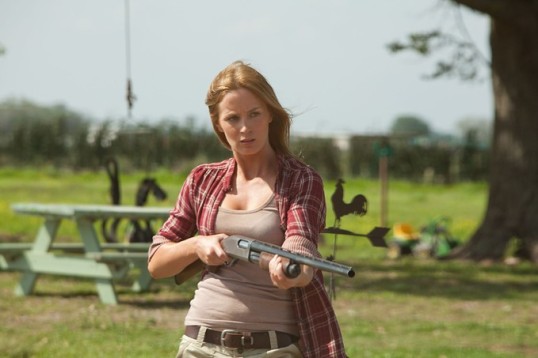
Emily Blunt came close this year.  She received a SAG nomination for her performance in Girl On The Train and some of the critics groups also honored her work.  However, when the Oscar nominations were announced, Meryl Streep was nominated for a film nobody saw and Emily Blunt was nowhere to be seen.  This year, she’s in good company, as neither Amy Adams nor Annette Bening picked up expected nominations either.  Personally, I didn’t care much for Girl on the Train.  I would have much rather seen Blunt nominated for Looper, Sicario, or even Edge of Tomorrow.  Blunt will be nominated eventually.

2. Dale Dickey

You may not know Dale Dickey’s name but you’d recognize her if you saw her.  She usually plays characters who are strong, outspoken, and occasionally a little scary.  You never want to get on the bad side of someone played by Dale Dickey.  To date, Dickey’s most award-worthy role was in Winter’s Bone.  She also had a memorable (if small) role in Hell or High Water, playing the bank teller who, when asked if the men who robbed her were black, replies, “Their skin or their souls?”
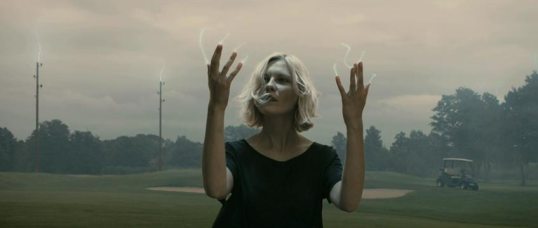
Melancholia

3. Kirsten Dunst

As a result of Bring It On, Dunst is often thought of as being the ideal cheerleader.  But, by far, her most award-worthy turn was in a film that was about as different from Bring It On as possible, Melancholia.  Dunst was just twelve when she was first mentioned, for her performance in Interview With A Vampire, as a potential nominee.  She was also very good in Marie Antoinette and the overlooked Crazy/Beautiful.  Dunst fell off the radar for a while but she’s been quietly making a comeback.

4. Greta Gerwig

Greta Gerwig is my spirit animal.  She deserved a nomination for Francis Ha and for Damsels in Distress before that.  She’ll be nominated some day.

5. Rebecca Hall

Rebecca Hall received some Oscar buzz last year for Christine.  I haven’t seen Christine but I think that her performances in 2008’s Vicky Christina Barcelona and especially 2010’s Please Give were criminally overlooked.
6. Katharine Isabelle

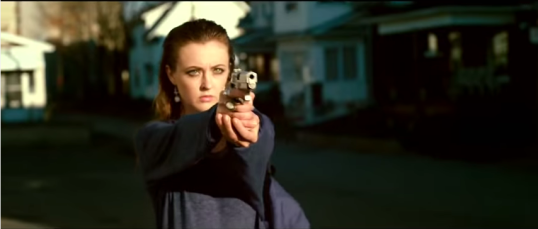
Though Isabelle is best known for Ginger Snaps, I think she deserved a nomination for last year’s underrated 88.  One of the best actresses working today, Isabelle will hopefully get a role worthy of her talents.

Film Review Under the Skin

7. Scarlett Johansson

It’s a bit of a shock that Scarlett Johansson has yet to be nominated.  Her work in Lost in Translation was just as important to that film’s success as Bill Murray’s.  And her performance in Under the Skin remains one of the bravest pieces of acting to ever be put on screen.

8. Ashley Judd

Unfortunately, Ashley Judd now seems to be more concerned with political activism than acting.  It’s been a while since she’s appeared in a really great role (and no, the Divergent movies don’t count).  Judd’s best work came in the 90s, when she gave award-worthy performances in Ruby in Paradise, Heat, and especially Normal Life.

9. Kelly MacDonald

Scottish actress Kelly MacDonald doesn’t make enough movies but it’s still hard not to feel that she’s been overlooked by the Academy.  Not only did she hold her own in Trainspotting but her performance in No County For Old Men provided that otherwise cold film with a much-needed heart.

Kristen Stewart

10. Kristen Stewart

Kristen Stewart managed to survive the Twilight films and has emerged as a consistently interesting actress.  Her work in Clouds of Sils Maria won her a Ceasar but was overlooked by the Academy.  Before that, Stewart did excellent work in Into the Wild, Adventureland, Still Alice and Welcome to the Rileys.

Sadly, these six unnominated actresses are no longer with us:

  1. Rita Hayworth

That the wonderful Rita Hayworth was never nominated — not even for Gilda — is nothing less than mind-blowing.

2. Myrna Loy

Myrna Loy was an actress who was such a natural that she made it look easy.  Perhaps that’s why she wasn’t even nominated for The Thin Man.

Marilyn

3. Marilyn Monroe

Perhaps one of the most tragic actresses in the history of Hollywood, Monroe was never nominated despite giving some of the most iconic performances in film history.  I would even make the case that she deserved a nomination for her tiny cameo in All About Eve.

4. Maureen O’Hara

Despite great performances in classic films like The Quiet Man and Miracle on 34th Street, Maureen O’Hara was never nominated for the Oscar she deserved.
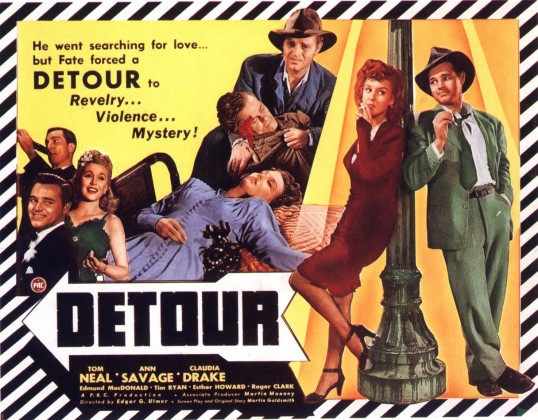
detour1

5. Ann Savage

You may not recognize the name but if you’ve ever seen Detour, you know Ann Savage.  Savage largely appeared in low-budget noirs and she always gave performances that were just as fierce as her last name.

Edie!

Edie!

6. Edie Sedgwick

Sadly, Edie never got a chance to play a truly award-worthy role.  Actually, since almost all of her films were underground Andy Warhol movies, it’s debatable whether she ever played a role at all.  During the 1960s, as one of the top models in New York (a so-called “youthquaker”), Edie was best known for being herself.  But, whenever I see Edie in an old Warhol film like Vinyl or even in something like Ciao! Manhattan, I see what a great actress she could have been if she’d only been given the chance.

Edie Sedgwick (1943 -- 1971)

Edie Sedgwick (1943 — 1971)

Cleaning Out The DVR Yet Again #25: Marie Antoinette (dir by Sofia Coppola)


(Lisa recently discovered that she only has about 8 hours of space left on her DVR!  It turns out that she’s been recording movies from July and she just hasn’t gotten around to watching and reviewing them yet.  So, once again, Lisa is cleaning out her DVR!  She is going to try to watch and review 52 movies by the end of Tuesday, December 6th!  Will she make it?  Keep checking the site to find out!)

marie-antoinette_poster

On November 12th, I recorded 2016’s Marie Antoinette off of Starz.

Before I review Marie Antoinette, I think it’s important that you know that I am an unapologetic Sofia Coppola fan.  I love every film that she’s made and I look forward to her upcoming remake of The Beguiled.  At the same time, I can also understand why some people feel differently.  Sofia Coppola’s films are not for everyone.  For one thing, almost all of her films deal with rich people.  The existential angst of the wealthy and/or famous is not a topic that’s going to fascinate everyone.  When you watch a Sofia Coppola film, you never forget that you’re watching a film that’s been directed by someone who largely grew up in the spotlight and who knows what it’s like to have money.  An ennui born out of having everything and yet still feeling empty permeates almost every scene that Sofia Coppola has ever directed.  (If you have to ask what ennui is, you’ve never experienced it.)  Many viewers look at Sofia Coppola’s filmography and they ask themselves, “Why should we care about all these materialistic people?”

However, while Sofia Coppola may not know what’s it’s like to be poor (or even middle class for that matter), she does understand what it’s like to feel lonely.  Her filmography could just as easily be called “the cinema of isolation.”  It doesn’t matter how much money you may have or how famous you may or may not be, loneliness is a universal condition.  A typical Sofia Coppola protagonist is someone who has everything and yet still cannot connect with the rest of the world.  More often that not, they turn to excessive consumption in order to fill the void in their life.  To me, the ultimate Sofia Coppola image is not, regardless of how much I may love them, Bill Murray and Scarlett Johansson in Lost in Translation.  Instead, it’s Stephen Dorff (playing a far less likable version of Bill Murray’s Translation character) standing alone in the desert at the end of Somewhere.

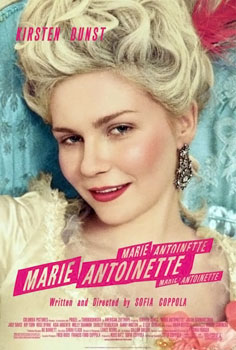
Marie Antoinette, which was Sofia’s follow-up to Lost in Translation, is technically a historical biopic, though it makes little effort to be historical or accurately biographical.  Kirsten Dunst plays Marie Antoinette, the final queen of France before the French Revolution.  It was Marie Antoinette was accused of dismissing starving French peasants by announcing, “Let them eat cake!”  (For the record, it’s probable that Marie Antoinette never said that.  It’s certainly never heard in Coppola’s film.)

Marie Antoinette opens with the title character arriving in France at the age of 14.  She’s an Austrian princess who has been sent to marry the future king of France, Louis XVI (Jason Schwartzman).  From the minute we meet her, Marie Antoinette is portrayed as being a pawn.  Her mother arranges the marriage as a way to seal an alliance with France.  The king of France (played by Rip Torn) expects Marie Antoinette to get produce an heir to the throne as quickly as possible.  Meanwhile, her new husband is an infantile and immature fool who doesn’t even know how to make love.  Marie Antoinette finds herself isolated in a strange country, expected to be all things to all people.

And so, Marie Antoinette does what I always do whenever I’m feeling unsure of myself.  She hangs out with her girlfriends.  She throws expensive parties.  She gambles.  She flirts.  She shops.  She has fun, regardless of whether it’s considered to be proper royal behavior or not.  Occasionally, she is warned that she is losing popularity with the French people but she’s not concerned.  Why should she be?  She doesn’t know anything about the French people.  All she knows about is the life that she was born into.  She didn’t choose to be born in to wealth and power but, since she was, why shouldn’t she have a good time?

The French Revolution doesn’t occur until near the end of Marie Antoinette and when it does happen, it happens quickly.  And yet, the shadow of the revolution hangs over the entire film.  We watch the knowledge that neither Marie Antoinette nor her husband possess: eventually, they are both going to be executed.  And knowing that, it’s hard not to cheer Marie Antionette on.  She may be destined for a tragic end but at least she’s having a little fun before destiny catches up with her.

Kirsten Dunst makes no attempt to come across as being French or Austrian but then again, neither does anyone else in the film.  After all, this is a movie where Rip Torn plays the King of France without once trying to disguise his famous Texas accent.  Coppola isn’t necessarily going for historical accuracy.  Instead, in this film, Marie Antoinette serves as a stand-in for countless modern celebrities.  In the end, Marie Antoinette is portrayed as not being much different from Paris Hilton or Kardashian.  Meanwhile, the people who eventually show up outside the palace, carrying torches and shouting threats, are the same as the viewers who loudly condemn reality television while obsessively watching every episode of it.

Coppola’s stylized direction results in a film that is both thought-provoking and gorgeous to look at and which is also features several deliberate anachronisms.  (In many ways, Marie Antoinette blatantly ridicules the very idea that history can be accurately recreated.)  Perhaps because it was following up the beloved Lost In Translation, Marie Antoinette has never got as much praise as it deserves but I think it’s a film that is totally deserving of a reevaluation.

(Sidenote: Fans of Italian horror should keep an eye out for Asia Argento, who has a small but very important supporting role.)

Shattered Politics #64: Dick (dir by Andrew Fleming)


Theatricalposterdick

I wouldn’t necessarily say that I love Dick but I still think it’s a pretty good film.  (Ha ha, see what I did there?)  Of course, to really appreciate this 1999 comedy, it helps to know a little something about political history.  For instance, it helps to know that the Dick of the title is President Richard Nixon (played here by a hilariously paranoid Dan Hedaya).  In 1973, as the result of his attempt to cover up White House involvement of a burglary at the Watergate Hotel, Nixon became the first President to resign from office.

A lot of the credit for Nixon’s downfall was given to two reporters for the Washington Post, Bob Woodward and Carl Bernstein (played, in this film, by Will Ferrell and Bruce McCulloch).  While Woodward and Bernstein investigated the Watergate break-in, they were reportedly fed information by a highly placed informant who was referred to as being Deep Throat.  For years, the identity of Deep Throat was a closely held secret.  Countless books were written that speculated as to who Deep Throat may have been.  (In the film All The President’s Men, he was played by Hal Holbrook.)  Finally, in 2005, it was revealed that Deep Throat was a FBI agent named Mark W. Felt, who was upset because he was passed over for a promotion.

And, quite frankly, that’s kind of a disappointing solution.  When you think about someone who brought down the government, you hope that he or she will turn out to be something more than just a disgruntled employee whose previous work consisted on running counter intelligence operations against domestic political activists.

In fact, it’s hard not to wish that, perhaps, Deep Throat could have been two 15 year-old girls who just happened to stumble across one of the biggest political scandals in American history.

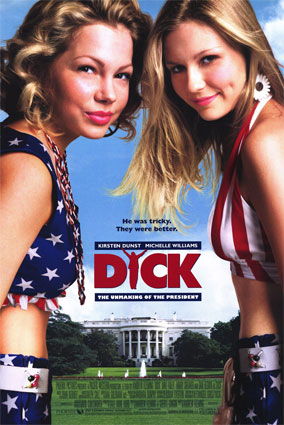
Well, fortunately, this is the theory proposed in Dick.  Betsy (Kirsten Dunst) and Arlene (Michelle Williams) are two friends who, one night in 1972, sneak out of Arlene’s apartment so that they can mail a fan letter to singer Bobby Sherman.  While doing so, they happen to stumble across the Watergate burglars and get a good look at White House aide G. Gordon Liddy (Harry Shearer).

The next day, while on a field trip to the White House, the two girls are spotted by Liddy.  Liddy arranges for them to be pulled to the side and questioned by chief-of-staff H.R. Haldeman (Dave Foley), who determines that the girls barely know who Nixon is and that they don’t understand what they witnessed.  However, before Haldeman can send the girls on their way, Nixon himself enters the office and complains about how poorly planned the break-in was.

This leads to an unlikely relationship between Nixon and Betsy and Arlene.  Hoping to win their loyalty (and their silence), Nixon arranges for them to be his official dog walkers.  Betsy and Arlene, meanwhile, still don’t have the slightest idea of what’s going on.  They accidentally bring pot cookies to the White House (which Nixon particularly enjoys) and Arlene even develops a mad crush on Nixon.

But, of course, Nixon eventually shows his true colors and Betsy and Arlene take down the government….

In many ways Dick is a one-joke film, in which Betsy and Arlene regularly find themselves blissfully unaware while history literally unfolds around them.  But it’s actually a pretty clever joke and it’s also a very plausible one.  People are often unaware that anything important is happening when it’s actually happening.  Often times, it’s only in retrospect that historical moments are seen to be truly historical.  And, ultimately, Watergate itself is such a bizarre scandal that it’s the perfect moment in history to be reinterpreted as a comedy.

Dick is ridiculous enough to be funny but plausible enough to be memorable.

Back to School #76: The Bling Ring (dir by Sofia Coppola)


Bling-Ring-large

The Bling Ring was one of the more divisive films of 2013.  As often seems to happen with the work of Sofia Coppola, viewers either loved it as a stylish look at America’s self-destructive love affair with fame or else they felt that it was a shallow celebration of the very lifestyle that it claimed to be satirizing.  Personally, I felt it was both, which is one reason why I enjoyed The Bling Ring.

The Bling Ring is based on the true story of a bunch of California teenagers who made headlines by breaking into the mansions of their idols.  Over the course of several months, they burglarized everyone from Paris Hilton to Lindsay Lohan to Orlando Bloom.  While they may have been smart enough to use social media to discover when their targets would be out of town, they weren’t smart enough to not use social media to brag about their crimes.  Eventually, they were arrested and, for a brief period of time, they were as famous as the people they robbed.  One of them even got her own reality show out of the whole thing.  I watched an episode or two.  It wasn’t very good.

Though the names have been changed, Coppola pretty much tells the story as it happened.  New kid in school Marc (Israel Broussard) meets Rebecca (Kate Chang), who is obsessed with celebrities.  Rebecca is also something of an obsessive thief and soon, she and Marc are breaking into the houses of their rich neighbors and acquaintances, stealing money, and going on shopping sprees.  Their thievery allows them to leave a lifestyle where every day is just another makeover montage from a romantic comedy.  Eventually, they are joined by Nicki (Emma Watson), Sam (Taissa Farmiga), and Chloe (Claire Julien).

One thing that quickly becomes clear is that the members of the Bling Ring are not exactly the smartest group of thieves around.  Along with getting increasingly reckless while committing their crimes, they also make the mistake of showing off stolen jewelry at parties and posting pictures of Facebook.  When the police eventually do track them down, Marc is a convenient scapegoat, Rebecca is hiding out in Las Vegas with her father, and Nicki becomes a minor celebrity as she and her mother exploit her newfound notoriety for all the publicity that they can get.

I liked The Bling Ring.  It’s stylish, all of the actors look good and they’re all wearing beautiful outfits, and I loved seeing all of the houses that they broke into.  (Some of the film was shot in the actual residences that were burglarized.)  On the one hand, it doesn’t really dig too deeply into the nature of fame in America but, on the other hand, does it really need to?  We all know the culture that we live in and, at its best, The Bling Ring forces us to ask whether we would rather be one of the people on the outside looking in or if we would want to be one of the people who broke in by any means necessary.

Add to that, it has a great soundtrack!

(Now, as I said, not everyone agrees with me about The Bling Ring.  For an opposite reaction to The Bling Ring, check out Ryan The Trash Film Guru’s review.)

The-Bling-Ring-Wallpapers

Back to School #60: Crazy/Beautiful (dir by John Stockwell)


Oh, memories!

I don’t know if I can describe how much my girlfriends and I loved Crazy/Beautiful when it first came out in 2001.  We saw it in the theaters, we rewatched it when it came on cable, and after I bought it on DVD, we watched it at my house.  We loved the movie because we all dreamed of having a sensitive, hot boyfriend like Carlos Nunez (played by Jay Hernandez), who would love us no matter how obnoxious or bratty we may have been.  Even if we sometimes got annoyed with her, we still all related to out-of-control Nicole (Kirsten Dunst), who everyone in the world had given up on but who ultimately just wanted her father to pay as much attention to her as he did to his new wife and his new baby.  We liked the film because we wanted to be both crazy and beautiful.

And, of course, there was all the sex, all of it filmed in beautiful soft-focus with the camera always suggesting that it was showing more than it actually was.  Crazy/Beautiful was one of those films that made you feel grown up while still being very careful not to lose its PG-13 rating.

Yes, back in the day, I loved Crazy/Beautiful.

And you know what?

It may just be the nostalgia talking but I still love it.  I recently rewatched Crazy/Beautiful and, despite the fact that I was now watching as a “critic” as opposed to a 15 year-old with issues, I quickly fell under the film’s spell.  There’s just something about Crazy/Beautiful that I simply cannot resist.

It’s a beautiful film.  Director John Stockwell has made a career out of making movies about pretty people hanging out on pretty beaches and Crazy/Beautiful has a lot of both.  When Carlos, a responsible high school senior who lives in East Los Angeles and who is hoping to attend the U.S. Navy Academy, first meets Nicole, she’s doing community service by picking up trash on the beach.  What Carlos doesn’t find out until later is that Nicole is the daughter of U.S. Rep. Tom Oakley (played, somewhat inevitably, by Bruce Davison).  Nicole is haunted by her mother’s death and feels that her well-meaning but ineffectual father has abandoned her.  At first, her relationship with Carlos seems to be yet another part of her rebellion but soon, both she and Carlos are madly in love.

Can Carlos save Nicole from herself?  Can Nicole love Carlos without leading him down the path of self-destruction?  Will Nicole and her father ever reconnect?  Will … oh, who cares?  You already know the answers.  Crazy/Beautiful is less about the story and more about how the story is told.  Stockwell keeps the story moving along and fills the screen with colorful and romantic images that make Crazy/Beautiful into the perfect teenage daydream.  He also makes perfect use of the undeniable chemistry between Jay Hernandez and Kirsten Dunst.  Both of the stars give such good performances that you really do come to care about the characters that they are playing and hope that things work out for them.  Kirsten Dunst, in particular, gives a brave performance and doesn’t shy away from playing up Nicole’s abrasiveness.  It takes courage to play a character who can be unlikable.  It takes talent to make that unlikable character sympathetic and, fortunately, Kirsten Dunst shows a lot of both in Crazy/Beautiful.

CrazyBeautiful


Back to School #59: The Virgin Suicides (dir by Sofia Coppola)


the-virgin-suicides-the-virgin-suicides-189395_1020_576

For the past three and a half weeks, I’ve been taking a chronological look at some of the best, worst, most memorable, and most forgettable teen and high school films ever made.  We started with two films from 1946, I Accuse My Parents and Delinquent Daughters.  Therefore, it seems somewhat appropriate that we close out both the 90s and the 20th Century by taking a look at a film about both delinquent daughters and accusatory parents.  That film is Sofia Coppola’s 1999 directorial debut, The Virgin Suicides.

Much like Wes Anderson, Sofia Coppola seems to divide viewers and, in many ways, for the exact same reasons.  You either get her films about upper class ennui or you don’t.  Everyone seems to love Lost in Translation but viewers and critics seem to be far more polarized when it comes to rest of her films.  It seems the people either love them or hate them.  Well, you can count me among those who love her films.  (Yes, even Somewhere.)  To me, Sofia Coppola is one of the most consistently interesting filmmakers working today and the dismissive reaction that many (mostly male) critics have towards her films has little do with her talent and much more to do with her gender and her last name.

So there.

In The Virgin Suicides, Coppola tells the story of the five Lisbon sisters.  They live in an upper middle class suburbs in the 1970s.  Their parents — math teacher Ronald (James Woods) and his wife (Kathleen Turner) — are devoutly Catholic and very protective.  The Lisbon sisters are rarely allowed to leave the house and, as a result, the neighborhood boys are obsessed with them.  (Though the film centers on four unnamed boys, there’s only one narrator, voiced by Giovanni Ribisi,  who continually refers to himself as being “we,” as if all four boys are telling the story in the same voice.)  When the youngest Lisbon daughter commits suicide, Ronald and his wife become even more protective.

At the start of the school year, the oldest daughter, Lux (Kirsten Dunst), meets and starts to secretly date the wonderfully named Trip Fontaine (Josh Hartnett).  Lux is even allowed to attend the homecoming dance with Trip but, after she breaks curfew, Mrs. Lisbon reacts by pulling Lux and her sisters out of school and basically making them prisoners in their own home.

(In one of the film’s best moments, we flash forward to see present day Trip talking about his date with Lux. Needless to say, Trip did not age well.)

With the Lisbon sisters even more isolated, the neighborhood boys become even more obsessed with them.  One day, the boys get a note from the girls, asking for their help in escaping.  The boys go to meet the girls, leading the film to its haunting conclusion…

Full of themes of sin, sexuality, repression guilt, redemption, and martyrdom, The Virgin Suicides is one of those films that you don’t have to be Catholic to appreciate but it probably helps.  James Woods, Josh Hartnett, and Kirsten Dunst all give good performances while Sofia Coppola fills the movie with dream-like and sensual images, all designed to challenge the viewer’s perception of whether or not we’re watching reality or just the idealized memories of someone still struggling to comprehend a mystery from the past.

The Virgin Suicides is the perfect movie to end with the 90s on.

1

Here’s Your Chance To Tell Lisa Marie What To Watch!


So, guess what I did this morning?  That’s right — I put on a blindfold, a stumbled over to my ever-growing Blu-ray, DVD, and even VHS collection and I randomly selected 12 films!

Why did I do this?

I did it so you, the beloved readers of Through the Shattered Lens, could once again have a chance to tell me what to do.  At the end of this post, you’ll find a poll.  Hopefully, between now and next Monday (that’s March 24th), a few of you will take the time to vote for which of these 12 films I should watch and review.  I will then watch the winner on Tuesday and post my review on Wednesday night.  In short, I’m putting the power to dominate in your hands.  Just remember: with great power comes great … well, you know how it goes.

Here are the 12 films that I randomly selected this morning:

The Baader Meinhof Complex (2008) — This German film was nominated for Best Foreign Language Film.  It tells the true life story of the left-wing German terrorist group, The RAF.

The Cat’s Meow (2001) — From director Peter Bogdonavich, this film speculates about the events that led to the shooting of silent film director Thomas H. Ince.  Starring Kirsten Dunst as Marion Davies, Edward Herrmann as William Randolph Hearst, and Eddie Izzard as Charlie Chaplin.

Heavenly Creatures (1994) — The close relationship between two teenage girls (Melanie Lynesky and Kate Winslet) leads to both a vibrant fantasy world and real-life murder.  Directed by Peter Jackson.

In A Lonely Place (1950) — In this film noir from director Nicholas Ray, Humphrey Bogart plays a screenwriter who may (or may not) be a murderer.

Liquid Sky (1983) — In this low-budget, independent science fiction film, an alien lands in New York and soon several members of the city’s underground art scene are vaporized.  Not surprisingly, it all has to do with heroin.

Made in Britain (1983) — A very young Tim Roth makes his debut in this British film.  Roth plays Trevor, a Neo-Nazi who — despite being intelligent and charismatic — also seems to be intent on destroying himself and everything that he sees.

Much Ado About Nothing (2013) — In between The Avengers and Agents of SHIELD, Joss Whedon found the time to direct this adaptation of Shakespeare’s play.

Peyton Place (1957) — In this Oscar-nominated film, the sordid secrets of an outwardly idyllic New England town are exposed.

Pretty Poison (1968) — Having just been released from a mental institution, Dennis (Anthony Perkins) finds himself involved with teenager Sue Anne (Tuesday Weld), who — despite her wholesome appearance — is actually psychotic.

Troll 2 (1990) — A family moves to Nilbog, a small town that is populated by vegetarian goblins.  This movie is widely considered to be one of the worst ever made.

Walkabout (1971) — In this visually stunning Nicolas Roeg film, a teenage girl and her younger brother find themselves stranded and left for dead in the Australian outback.  They try to survive with the help of an Aborigine.

Zabriskie Point (1970) — In this 1970 film, the great Italian director Michelangelo Antonioni takes a look at the 60s counter-culture.  Airplanes are stolen, buildings explode, and orgies magically materialize in the middle of the desert.

The poll will be open until Monday, March 24th.

Happy voting!

44 Days of Paranoia #16: Wag the Dog (dir by Barry Levinson)


For today’s entry in the 44 Days of Paranoia, we’re taking a look at Barry Levinson’s 1997 political satire, Wag The Dog.

Wag the Dog opens with a White House in crisis.  With two weeks to go until the Presidential election, it’s been discovered that the incumbent President has had a brief dalliance with a girl scout.  Up until the scandal became public, the President was enjoying at 17 point lead in the polls.  Now, that lead is about to evaporate unless something can be done to keep the American public from thinking about the President’s personal life.

Significantly, the President himself never appears on-screen.  We never learn his position on the issues.  We never hear about anything he’s done during his first term.  We don’t even know what political party he belongs to.  (However, his opponent is played by Craig T. Nelson so I’m going to assume that the President is a Democrat.  Because, seriously, it’s hard for me to imagine Nelson being anything other than a Republican…)  The President remains a shadowy and insubstantial figure who, in the end, represents nothing.

Instead of getting to know the President, we instead spend the film with the aides who have to clean up after his mess.  One of those aides, Winifred Ames (Anne Heche), calls in a legendary (and rather sinister) political PR man, Conrad Bean (Robert De Niro).  Conrad announces that the only way to save the campaign is to distract the American public with a quick and totally fake war with Albania.  Why Albania?  According to Conrad, Albania has a sinister name and nobody knows anything about it.

To help create this fake war, Conrad recruits Hollywood film producer, Stanley Motts (a hilariously manic Dustin Hoffman).  Much as Conrad is a legend in politics, Stanley is a legend in Hollywood.  Stanley enthusiastically jumps into the project of creating a fake war of Albania, manufacturing everything from fake war footage to patriotic songs to anything else necessary to rally the American public.  Denis Leary shows up as a mysterious figure known as the Fad King and schemes how to make war with Albania the latest trend.  Willie Nelson sings a song to stir the spirit of every patriotic American.  A very young Kirsten Dunst is recruited to play a terrified orphan in staged Albanian atrocity footage.  A shell-shocked vet (Woody Harrelson) is cast as the Albanian War’s first hero.  Stanley greets every problem with an enthusiastic exclamation of, “This is nothing!”

Along the way, a rather odd friendship develops between the secretive Conrad and the overly verbose Stanley.  However, when Stanley, who often laments that he’s never won an Oscar, starts to complain about the fact that he’s never going to get any recognition for his “greatest production,” Conrad finds himself forced to reconsider their relationship.

Wag the Dog was first released in 1997 and, thanks to David Mamet’s darkly comedic script and Barry Levinson’s brisk direction, the film feels incredibly prophetic.  Indeed, all the film needs is for someone to mention making the war a trending topic and it would be impossible to tell that it was made 16 years ago.  Wag the Dog accomplishes the best thing that any political satire can hope to accomplish: it makes you question everything.  Whenever one watches a news report triumphantly bragging about the latest done strike, it’s hard not to feel that Stanley Motts would approve.

Other entries in the 44 Days Of Paranoia:

  1. Clonus
  2. Executive Action
  3. Winter Kills
  4. Interview With The Assassin
  5. The Trial of Lee Harvey Oswald
  6. JFK
  7. Beyond The Doors
  8. Three Days of the Condor
  9. They Saved Hitler’s Brain
  10. The Intruder
  11. Police, Adjective
  12. Burn After Reading
  13. Quiz Show
  14. Flying Blind
  15. God Told Me To

What Lisa and Erin Watched Last Night #63: Bring It On (dir. by Peyton Reed)


Last night, my sister Erin Nicole (a.k.a. Dazzling Erin) and I watched the classic 2000 cheerleading movie Bring It On on AMC.

Why Were We Watching It?

Seriously, how can you not watch Bring It On?

Back in high school, while I was doing my goth ballerina thing, Erin Nicole was a cheerleader and, though she denies it, she pretty much was Kirsten Dunst back then.  Anyway, Erin usually refuses to watch Bring It On because she says she had already had to sit through it a few hundred times by the time she turned 17.  For this reason, I always make it a point to let Erin know when Bring It On is on TV and to try to trick her into watching it with me.

But last night, to my surprise, she was the one who saw the movie listed in the guide and started watching it because, according to her, there was nothing else on.  (Personally, I think Erin was feeling nostalgic but she denies it.)  I joined her shortly after the movie started and, according to Erin, I spent the next two hours jumping around and acting all hyper.  That’s not quite the way I remember it but Erin’s the cheerleader so I’ll take her word for it.

What’s It About?

Torrance (played by Kirsten Dunst) is the new captain of her high school’s cheerleading squad and is determined to lead them to yet another national title.  However, Missy (Eliza Dushku), a new member of the squad, reveals that the squad only won those titles by stealing routines from an inner city cheerleader squad.  Torrance now has to create an original routine while dealing with her cheating boyfriend (Richard Hillman) and flirting with Missy’s brother (Jesse Bradford), who looks a lot like Paul Rudd and is skeptical about whether cheerleading’s really all that important in the grand scheme of things.

What Worked?

Let’s just come right out and say it: Bring It On is one of the greatest high school movies ever made.  It’s fun, it’s funny, and best of all, it’s real.  The film’s director, Peyton Reed, the film’s writers, Jessica Bendinger and Stephen White, and the film’s cast all perfectly capture just how important the little dramas are when you’re a teenager.  The film even manages to say something very important about issues like race and economic inequality.

Plus, as Erin and I both agreed last night, Jesse Bradford is HOT!

According to Erin, she has flashbacks and starts laughing uncontrollably  whenever she hears the line “These are spirit fingers!”

What Didn’t Work?

It all worked.  Seriously, if you can be critical of a film like Bring It On then you’re probably taking life too seriously.

“OH MY GOD!  Just like Erin!” Moments

Last night, I finally got Erin to admit that she liked Bring It On because it reminded her of her cheerleading days but Erin added, “But I wasn’t as bouncy as Kirsten Dunst is in this movie.”  To that, I can only smile and say, “Whatever,” because, as everyone knows, the Bowman Girls are always bouncy.  That’s a part of our charm.

Lessons Learned

If you’re going do it, then bring it!

Trailer: On The Road


Here’s the trailer for the film that will probably end up dominated my twitter timeline when it’s eventually released.  I follow a lot of big Kerouac fans (and I think Big Sur is one of the great American novels) and I’ll be interested to see what they think of the long-delayed film version of On The Road.  For now, I’ll just say that it’s rarely a good sign when the film version of an iconic novel is full of star cameos and I have a hard time imagining the dependably dull Garrett Hedlund as Dean Moriarty.

(Already, I can hear people complaining about the prominence of Kristen Stewart in the film’s trailer….)