Playing Catch-Up With 6 Mini-Reviews: Amy, Gloria, Pitch Perfect 2, Sisters, Spy, Trainwreck


Amy_Movie_Poster

Amy (dir by Asif Kapadia)

Amy opens with brilliant and, in its way, heartbreaking footage of a 14 year-old Amy Winehouse and a friend singing Happy Birthday at a party.  Even though she’s singing deliberately off-key and going over-the-top (as we all tend to do when we sing Happy Birthday), you can tell that Amy was a star from the beginning.  She’s obviously enjoying performing and being the center of attention and, try as you might, it’s impossible not to contrast the joy of her Happy Birthday with the sadness of her later life.

A star whose music touched millions (including me), Amy Winehouse was ultimately betrayed by a world that both wanted to take advantage of her talent and to revel in her subsequent notoriety.  It’s often said the Amy was self-destructive but, if anything, the world conspired to destroy her.  By focusing on footage of Amy both in public and private and eschewing the usual “talking head” format of most documentaries, Amy pays tribute to both Amy Winehouse and reminds us of what a great talent we all lost in 2011.

Gloria_(2014_Film_Poster)

Gloria (dir by Christian Keller)

The Mexican film Gloria is a musical biopic of Gloria Trevi (played by Sofia Espinosa), a singer whose subversive songs and sexual image made her a superstar in Latin America and challenged the conventional morality of Catholic-dominated establishment.  Her manager and lover was the controversial Sergio Andrade (Marco Perez).  The movie follows Gloria from her first audition for the manipulative Sergio to her arrest (along with Sergio) on charges of corrupting minors.  It’s an interesting and still controversial story and Gloria tells it well, with Espinosa and Perez both giving excellent performances.

Pitch_Perfect_2_poster

Pitch Perfect 2 (dir by Elizabeth Banks)

The Bellas are back!  As I think I’ve mentioned a few times on this site, I really loved the first Pitch Perfect.  In fact, I loved it so much that I was a bit concerned about the sequel.  After all, sequels are never as good as the original and I was dreading the idea of the legacy of the first film being tarnished.

But the sequel actually works pretty well.  It’s a bit more cartoonish than the first film.  After three years at reigning ICCA champions, the Bellas are expelled from competition after Fat Amy (Rebel Wilson) accidentally flashes the President.  The only way for the Bellas to get the suspension lifted is to win the World Championship of A Capella.  The plot, to be honest, really isn’t that important.  You’re watching the film for the music and the interplay of the Bellas and, on those two counts, the film totally delivers.

It should be noted that Elizabeth Banks had a great 2015.  Not only did she give a great performance in Love & Mercy but she also made a respectable feature directing debut with Pitch Perfect 2.

Sisters_movie_poster

Sisters (dir by Jason Moore)

It’s interesting how opinions can change.  For the longest time, I really liked Tina Fey and I thought that Amy Poehler was kind of overrated.  But, over the past two years, I’ve changed my opinion.  Now, I like Amy Poehler and Tina Fey kind of gets on my nerves.  The best way that I can explain it is to say that Tina Fey just seems like the type who would judge me for wearing a short skirt and that would get old quickly, seeing as how I happen to like showing off my legs.

Anyway, in Sisters, Tina and Amy play sisters!  (Shocking, I know.)  Amy is the responsible one who has just gotten a divorce and who wants to make everyone’s life better.  Tina is the irresponsible one who refuses to accept that she’s no longer a teenager.  When their parents announce that they’re selling the house where they grew up, Amy and Tina decide to throw one last party.  Complications ensue.

I actually had two very different reactions to Sisters.  On the one hand, as a self-declared film critic, it was easy for me to spot the obvious flaw with Sisters.  Tina and Amy should have switched roles because Tina Fey is simply not believable as someone who lives to have fun.  Sometimes, it’s smart to cast against type but it really doesn’t work here.

However, as the youngest of four sisters, there was a lot of Sisters that I related to.  I saw Sisters with my sister, the Dazzling Erin, and even if the film did not work overall, there were still a lot of little scenes that made us smile and go, “That’s just like us.”  In fact, I think they should remake Sisters and they should let me and Erin star in it.
Spy2015_TeaserPoster

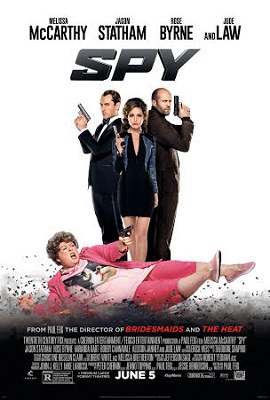
Spy (dir by Paul Feig)

There were a lot of very good spy films released in 2015 and SPECTRE was not one of them.  In fact, the more I think about it, the more disappointed I am with the latest Bond film.  It’s not so much that SPECTRE was terrible as there just wasn’t anything particular memorable about it.  When we watch a film about secret agents saving the world, we expect at least a few memorable lines and performances.

Now, if you want to see a memorable spy movie, I suggest seeing Spy.  Not only is Spy one of the funniest movies of the year, it’s also a pretty good espionage film.  Director Paul Feig manages to strike the perfect balance between humor and action.  One of the joys of seeing CIA employee Susan Cooper (Melissa McCarthy) finally get to enter the field and do spy stuff is the fact that there are real stakes involved.  Susan is not only saving the world but, in the film’s best scenes, she’s having a lot of fun doing it and, for that matter, McCarthy is obviously having a lot of fun playing Susan and those of us in the audience are having a lot of fun watching as well.

Spy also features Jason Statham as a more traditional action hero.  Statham is hilarious as he sends up his own macho image.  Seriously, who would have guessed that he could such a funny actor?  Here’s hoping that he, McCarthy, and Feig will all return for the inevitable sequel.

Trainwreck_poster

Trainwreck (dir by Judd Apatow)

There’s a lot of great things that can be said about Trainwreck.  Not only was it the funniest film of 2015 but it also announced to the world that Amy Schumer’s a star.  It was a romantic comedy for the 21st Century, one that defied all of the conventional BS about what has to happen in a romcom.  This a film for all of us because, let’s just be honest here, we’ve all been a trainwreck at some point in our life.

But for me, the heart of the film was truly to be found in the relationship between Amy and her younger sister, Kim (Brie Larson).  Whether fighting over what to do with their irresponsible father (Colin Quinn) or insulting each other’s life choices, their relationship is the strongest part of the film.  If Brie Larson wasn’t already guaranteed an Oscar nomination for Room, I’d demand that she get one for Trainwreck.  For that matter, Amy Schumer deserves one as well.

Seriously, it’s about time the trainwrecks of the world had a film that we could truly call our own.
Shattered Politics #74: The Aviator (dir by Martin Scorsese)


The_Aviator_Poster

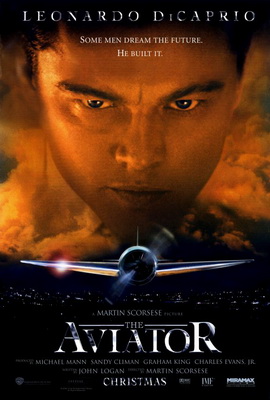
“The way of the future.” — Howard Hughes (Leonardo DiCaprio) in The Aviator (2004)

As I recently rewatched the 2004 best picture nominee, The Aviator, I realized that, in the film’s scheme of things, Ava Gardner was far more important than Katharine Hepburn.  (Or, perhaps it would be more appropriate to say that Kate Beckinsale’s Ava Gardner was far more important than Cate Blanchett’s Katharine Hepburn.)

Over the course of the film, both Hepburn and Gardner are involved with billionaire-turned aviator-turned film director Howard Hughes (Leonardo DiCaprio).  Throughout the film, Katherine is portrayed as being flighty, pretentious, and overdramatic.  There’s a lot of dark humor to the scene where Katherine breaks up with Howard, largely because Katharine is incapable of not acting as if she’s making a film.  Her every word is so carefully rehearsed that you have to agree when Howard says that she’s incapable of not giving a performance.  Ava, on the other hand, is always direct.  She has a sense of humor.  She has no trouble telling Howard off.  Whereas Katharine put on airs of being an incurable romantic, Ava tells Howard flat out that she doesn’t love him and is only using him to forward her career.

But, while Katharine Hepburn gets more screen time, it’s Ava Gardner who actually saves Howard’s business.  Towards the end of the film, after Howard has had a nervous breakdown and has locked himself in a hotel room, it’s Ava who suddenly shows up, cleans him, and dresses him.  She’s the one who gives Howard the strength to leave his room and to face down the corrupt senator (Alan Alda) who is investigating his business.

Of course, Howard Hughes is best known for once being the world’s richest recluse.  In the 1960s, Howard locked himself away in a hotel room in Las Vegas and spent the next decade laying naked in bed and watching television.  The Aviator doesn’t deal with this period of Howard’s life but it’s full of scenes where we catch glimpses of Howard’s future.  Throughout the film, we watch as Howard obsessively washes his hands.  We watch as he gives precise instructions on how even the simplest of tasks are to be accomplished.  We watch as he grows increasingly paranoid about the germ-filled outside world.  The film suggests that Howard’s obsessive compulsive disorder both served to make him a great engineer and a great filmmaker while, at the same time, ultimately destroying him.

The Aviator was the second film that DiCaprio made with Scorsese.  And, as bad as DiCaprio may have been in Gangs of New York, he’s absolutely brilliant in The Aviator.  As a character, Howard Hughes has so many quirks and tics that it would have been easy for DiCaprio to go overboard.  Instead, he gives a surprisingly subtle performance.  And, even more importantly as far as I’m concerned, he actually sounds authentically Texan when he speaks.

In many ways, much of The Aviator reminds me of Gangs of New York.  Both films are gorgeously produced period epics that try to cover a lot of material.  Both films are absolute cat nip for history nerds like me.  But, whereas Gangs of New York leaves one feeling vaguely dissatisfied, The Aviator actually improves with subsequent viewings.  Whereas the action in Gangs had no center, The Aviator revolves around Howard and the actor playing him.

While the Aviator starts off with Howard making movies and romancing Katharine Hepburn, it’s at its best when Howard appears before a committee chaired by Sen. Owen Brewster (Alan Alda) and passionately defends both himself as an engineer and a businessman and the right of innovators everywhere to freely pursue their passion.  The film suggests that Brewster was bribed by Howard’s main business rival, Juan Trippe (Alec Baldwin, in unapologetic villain mode), and it’s hard not to applaud when Howard stands up for himself.

Speaking of which, it’s odd, so soon after reviewing Alan Alda in The Seduction of Joe Tynan, to see Alda playing a far less ethical politician in The Aviator.  That said, Alda’s corrupt performance in The Aviator is a hundred times better than his cutesy work in Joe Tynan.  If anything, Alda gives a performance here that will remind everyone of why they don’t care much for their congressman.

The Aviator was nominated for best picture but it lost to the far more low-key Million Dollar Baby.  Scorsese would have to wait until the release of The Departed for one of his films to finally win best picture.

A Few Very Late Thoughts On Wes Anderson’s The Grand Budapest Hotel


grand-budapest-hotel

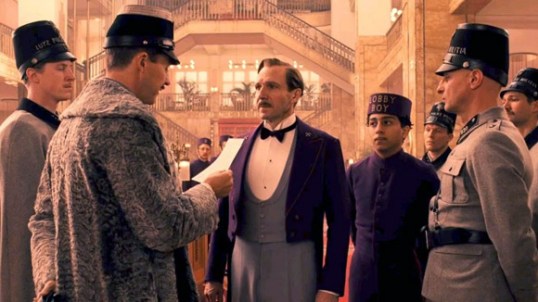
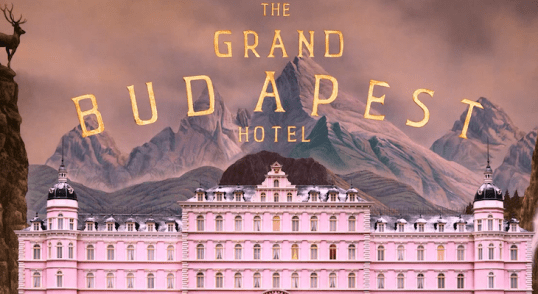
It took me a while to come around to appreciating The Grand Budapest Hotel.

When I first saw Wes Anderson’s latest film, way back in March, I have to admit that I was somehow both impressed and disappointed.  The film’s virtues were obvious.  Ralph Fiennes gave a brilliant lead performance as Gustave, the courtly and womanizing concierge of the Grand Budapest Hotel.  As played by Fiennes, Gustave came to represent a certain type of old world elegance that, I’m assuming, died out long before I was born.  As is typical of Anderson’s film, The Grand Budapest Hotel was visual delight.  Even when the film’s convoluted storyline occasionally grew self-indulgent, The Grand Budapest Hotel was always interesting and fun to watch.

At the same time, I had some issues with The Grand Budapest Hotel.

One of the major ones — and I will admit right now that this will seem minor to some of you — is that halfway through the film, a cat is killed.  The evil Dimitri Desgoffe von Taxis (Adrien Brody) is attempting to intimidate a nervous lawyer, Kovacs (Jeff Goldblum).  Kovacs’s owns a cat and, at one point, Dimitri’s henchman, Jopling (Willem DaFoe), tosses the cat out of a window.  Kovacs runs to window and sees his dead cat splattered on the sidewalk below…

And this is when the audience in the theater laughed and I got very angry.

To me, there was nothing funny about killing that man’s cat.  But the more I’ve thought about it, the more that I’ve come to realize that my reaction had more to do with the audience than the film.  The film was not saying that the cat’s death was funny.  The film was saying that Dimitri and Jopling were evil and dangerous, as their actions throughout the film would demonstrate.  It was the audience that decided, since Grand Budapest Hotel is full of funny moments and has the off-center style that one has come to expect from Wes Anderson, that meant every scene in the film was meant to be played strictly for laughs.  The fact of the matter is that a typical Wes Anderson film will always attract a certain type of hipster douchebag.  They were the ones who loudly laughed, mostly because they had spent the entire movie laughing loudly in order to make sure that everyone around them understood that they were in on the joke.

But that’s not the fault of the film.  Despite what you may have heard and what the Golden Globes would have you believe, The Grand Budapest Hotel is not a comedy.  For all the deliberately funny and quirky moments, The Grand Budapest Hotel is actually a very serious film.  For all of the slapstick and for all of Ralph Fiennes’s snarky line readings, The Grand Budapest Hotel ultimately ends on a note of deep melancholy.

When I first saw The Grand Budapest Hotel, it seemed like it was almost too quirky for its own good.  And, to be honest, I could still have done without some of Anderson’s more self-indulgent touches.  The sequence at the end, where Gustave, who has been framed for murder, gets help from a series of his fellow hotel concierges started out funny but, as everyone from Bill Murray to Owen Wilson put in an appearance, it started to feel less like the story of Gustave and more like the story of all of Wes Anderson’s famous friends.

However, the more I’ve thought about it (and The Grand Budapest Hotel is a film that I’ve thought about a lot over the past year), the more I’ve realized that the quirkiness is only a problem if you made the mistake of thinking that the film is meant to be taken literally.

The more I thought about it, the more obvious it became that the most important scenes in The Grand Budapest Hotel were to be found at the beginning and the end of the film.

The film opens with a teenage girl sitting in front of the grave of a great author.  She opens a book and starts to read.

As soon as the girl starts to read, we flashback 29 years to 1985 where the author (Tom Wilkinson) sits behind his office desk and starts to talk about the time that he visited the Grand Budapest Hotel.  

We flashback again to 1969, where we see how the author (now played by Jude Law) met the owner of the Grand Budapest Hotel, a man named Zero (played by F. Murray Abraham).  Over dinner, Zero tells the author the story of how he first came to the Grand Budapest and how he eventually came to own the hotel.

And again, we go back in time, this time to 1932.  We see how the young Zero (Tony Revolori) first met and came to be the protegé of Gustave (Ralph Fiennes).  We see how Gustave taught Zero how to be the perfect concierge.  Eventually, Gustave would be framed for murdering a guest, Zero would meet and fall in love with Agatha (Saoirse Ronan), and then Zubrowska (the fictional Eastern European country in which this all takes place) would be taken over by fascists who would eventually claim the hotel as their own.

After the story of Gustave, Zero, and Agatha has been told, we suddenly flash forward to the author talking to Zero and then to the old author telling the story to his grandson and then finally back to the teenage reader sitting in the cemetery.

In other words, the Grand Budapest Hotel may be the story of Zero but we’re experiencing it through the memories of the author as visualized by the reader.  Gustave, Zero, and the entire Grand Budapest Hotel are not just parts of a story.  Instead, they become symbols of an old way of life that, though it may have been lost, still exists in the memories of old travelers like the author and the imaginations of young readers like the girl in the cemetery.

As I said at the start of this, I was vaguely disappointed with The Grand Budapest Hotel when I first saw it but, perhaps more than any other movie that I saw last year, this has been a film that I haven’t been able to get out of my mind.  Having recently rewatched the film on HBO, I can also attest that both The Grand Budapest Hotel and Ralph Fiennes’s performance not only hold up on a second viewing but improve as well.

I still stand by some of my original criticisms of The Grand Budapest Hotel.  I still wish that cat had not been thrown out the window, even though I now understand that Anderson’s main intent was to show the evil of Dimitri and Jopling.  And I still find some of the cameos to be jarring, precisely because they take us out of the world of the film.

But you know what?

Despite those flaws, The Grand Budapest Hotel is still a unique and intriguing film.  When I sat down tonight and made out my list of my top 26 films of 2014, I was not surprised that Grand Budapest Hotel made the list.  But I was a little bit surprised at how high I ended up ranking it.

But then I thought about it and it all made sense.

The-Grand-Budapest-Hotel-580


Lisa Marie’s Favorite Film of 2012: Anna Karenina (dir by Joe Wright)


For the most part, 2012 was a bland year as far as cinema is concerned.  The most acclaimed films of the year (Argo and Lincoln being two obvious examples) were well-made and often entertaining but they were hardly revolutionary.  2012 was the year that the establishment told us what we should enjoy and, for the most part, film critics slavishly hopped on the bandwagon.  As you can probably guess, 2012 was not my favorite year as far as the movies are concerned.  That said, there were a few films that gave me hope.  As the year ends, despite being underwhelmed by most of the films that were released, there are a few that I truly did love.

My favorite film of 2011 was a criminally underappreciated film from director Joe Wright.  That name of that film was Hanna.  My favorite film of 2012 is another criminally underappreciated film from director Joe Wright.  The name of this film?  Anna Karenina.*

History has a way of repeating itself.

Anna Karenina is, of course, based on the classic novel by Leo Tolstoy.  Anna Karenina (played, quite brilliantly, by Kiera Knightley) is the wife of the noble (but somewhat boring and judgmental) Russian statesman Alex Karenin (Jude Law, who is also quite brilliant and rather tragic in a role that, in lesser hands, could have become a stock villain).  When Anna’s good-for-nothing brother (played in a wonderfully comedic performance by Matthew MacFayden) is caught cheating on his wife, Anna leaves her safe home in St. Petersburg and travels to Moscow where she helps to save her brother’s marriage and meets Count Vronsky (Aaron Taylor-Johnson).

Among the members of the Russian high society, it is well-known that Vronsky is pursuing the hand of the young and beautiful Kitty (Alicia Vikander, who generates a lot of sympathy for a character who, at the start of the film, could easily have been portrayed as just a spoiled brat).  However, at the ball where it is widely expected that Vronsky will ask Kitty to marry him, Vronsky creates a scandal by dancing with Anna instead.

Vronsky loses interest in Kitty and instead, he now obsessively pursues the married Anna.  Though Anna is resistant at first, she finally gives in and embarks on an adulterous affair with Vronsky, resulting in scandal and tragedy.

Again, history repeats itself.  The story of Anna Karenina is a familiar one that has been told repeatedly over the ages.  That’s one reason why Tolstoy’s novel has remained one of the greatest novels ever written and why it has been adapted into so many other mediums.  Director Joe Wright begins Anna Karenina with the assumption that the majority of the people in his audience already know the story of Anna’s ill-fated love affair with Vronsky.  As such, he puts less emphasis on the story itself and more on how the story is told.

Anna Karenina is a masterpiece of style.  When the film opens, Wright has his actors literally performing on a stage.  When Anna travels to Moscow, a miniature train is seen rolling across the stage.  When the scene changes from a factory to a high society ball, the factory workers walk backstage, change costumes, and then step back onstage, suddenly transformed into noblemen.  At one point, we even see a janitor nonchalantly cleaning up the now-empty theater while the story continues to play out on the stage in front of him.  When Anna and Vronsky dance for the first time, the other actors freeze in place and a spotlight shines down on the dancing couple.  It’s an amazingly romantic moment, one to which anyone who has ever been infatuated will be able to relate.  Finally, a door opens onstage and the characters (and the viewing audience) are able to step out into the “real” world but, throughout the film, we occasionally return to that stage.  While several critics have criticized this aspect of the film, I thought it was brilliant.  By literally putting his actors on stage, Wright both acknowledges that this is a story that may be familiar but can be interpreted in many different ways and he also drives home the point that, ultimately, we are all just actors on a stage, being observed and judged by a society that is often hostile to any sign of individual desire or unpredictable  emotion.

Needless to say, the film’s extreme stylization is not for everyone.  That’s actually one of the reasons that I love this version of Anna Karenina so much.  In a year that was almost excessively safe, Joe Wright took a risk and, as a result, encouraged us to look at a familiar story in a different way.  For that reason, Anna Karenina is my favorite film of 2012.

—-

* For the record, my second favorite film of 2012 was The Cabin In The Woods.

Film Review: Sherlock Holmes: A Game of Shadows (dir. by Guy Ritchie)


One of my favorite films of 2009 was Guy Ritchie’s Sherlock Holmes.  I saw the first (of probably many) sequels to that film this weekend.  Now, I have to admit that I was kinda worried about Sherlock Holmes: A Game of Shadows.  As much as I loved the first film, it definitely had the feeling of being a happy accident.  There were so many obvious ways to screw the film up that I found myself suspecting that that’s exactly what would happen with the sequel and I worried that a bad sequel would make it impossible for me ever to really enjoy the first film.  Well, having seen Game of Shadows, I can see that no, it’s not as good as the first film.  However, it’s still  pretty good.

Game of Shadows picks up the story a bit after the end of the first film.  Sherlock Holmes (Robert Downey, Jr.) is still doing cocaine and solving mysteries in London.  Dr. Watson (Jude Law) is still his best friend and is still planning on getting married and, not surprisingly, Holmes is still not happy about the idea of losing him.  Holmes is also still investigating the mysterious criminal mastermind, Dr. James Moriarty (Jared Harris).  Holmes discovers that Moriarty is behind a series of world-wide anarchist bombings and, with the world on the verge of war, Holmes and Watson attempt to both figure out why and to thwart Moriarty’s scheme.  While I haven’t read enough Sherlock Holmes to say for sure (I read the Hound of the Baskervilles in high school and that’s about it), I get the feeling that, plotwise, this film was probably more James Bond than traditional Sherlock Holmes.  But no matter, it’s an intriguing enough plot and director Ritchie wisely doesn’t spend too much time trying to hammer home that similarities between Moriarty’s scheme and certain modern-day conspiracy theories.

If the first Sherlock Holmes was a comedy with some action scenes, this sequel is definitely an action film with a lot of comedic relief.  Whether or not this increases or diminishes your enjoyment of the sequel really depends on how you feel about the action genre in general.  To be honest, most big budget action films bore me several shades of silly and Game of Shadows pulls out all the usual tricks — slow motion explosions, fist fights full of jump cuts so quick that it becomes impossible to really keep track of who is actually fighting who, and the whole zooming into the barrel of a gun just as the trigger is pulled routine.  And yet these action sequences didn’t inspire my usual eye rolling, if just because it was obvious that the film itself understood just how over-the-top and silly all of it was.  The film has the decency not to demand that I take it seriously and for that, I’m more willing to accept the predictable parts than I would be with a film like Battle L.A.

Besides, even with the increased emphasis on action, the filmmakers still understand that what made the first Sherlock Holmes work was the chemistry between Robert Downey, Jr. and Jude Law.  Seriously, Downey and Law have some of the strongest chemistry in the movies today.  Certainly, there a more believable couple than Natalie Portman and Ashton Kutcher.  (It’s probably not a coincidence that the film, very early on, establishes that Watson is getting married and that Holmes is still mourning Rachel McAdams from the previous film.)  You buy their friendship and it’s just fun to watch these two actors bouncing lines off of each other.  Downey still comes across more like Robert Downey. Jr. than Sherlock Holmes (and that’s just fine with me) but Jude Law actually gets a chance to act in this film and he brings a lot of life to a character who, on paper, would just seem to be the prototypical sidekick. 

Joining the cast in this installment as Jarded Harris as the evil Dr. Moriarty and Noomi Rapace as the gypsy fortune teller who gets caught up in Moriarty’s latest scheme.  Now, you may be surprised to hear this with the current efforts to brainwash us all into being Rooney Mara-compliant but Rapace was the original Girl With the Dragon Tattoo and, regardless of the film establishment’s attempts to revise history, she is the one who made Lisbeth Salander into an icon.  Unfortunately, Rapace doesn’t get to do much here but I was happy to see her if just to know that the Hollywood establishment hadn’t succeeded in erasing her from history.  As Moriarty, Jared Harris doesn’t have a lot of scenes but he still totally dominates the entire film.  Harris’s Moriarty is truly serpent-like, outwardly smooth and calm but, on the inside, always ready to strike.  He makes Moriarty into such a memorable, genuinely threatening villain that he ends up giving the film an extra dimension that otherwise wouldn’t be there.  It’s a great performance and hopefully, when the inevitable third Sherlock Holmes film is made, Moriarty will be back and Harris will be playing him.

Quick Review: Contagion (dir. by Steven Soderbergh)


Note that this isn’t the only review for Contagion.

Arleigh has an in-depth review of the film, which is also available to see, whereas this is more of a summary. As it’s for the same film, I’ve used the same tags that were in Arleigh’s post.

Before I start, I have to say that I haven’t had a theatre be so quiet during a film since I went to see Mirrors, and that was because there was no one there. My showing for Contagion was packed, but no one made a sound throughout the film. I coughed twice (because I had to), and you wouldn’t believe how many heads turned in my general direction. If nothing else, it shows that the movie had some impact to the audience, and that’s always (okay, usually) interesting to see. By the time the movie is over, you will probably pay attention to how many times you touch your face or the objects around you.

If there’s one thing I can give director Steven Soderbergh, it’s that he has a great ability to work with ensemble casts. He did a great job in getting everyone to work together on the Oceans Eleven remake and sequels. He also walked away with a Best Director Oscar for Traffic. His films have the ability to avoid having his stars chew up enough screen time that they appear to be an actual center character. Catherine Zeta-Jones’ had a character who’s story was just as strong as Benecio Del Toro’s.

On this, Contagion is no different. In essence, it’s almost like watching cameos in a miniseries.

Although the film is peppered with various actors, no one person can be considered the main character of the film. Soderbergh is able to get them all to play their roles well. He and Scott Z. Burns – one of the writers on The Bourne Ultimatum and a collaborator with Soderbergh – give us a number of perspectives for this story and damn, the whole thing is very tight overall. The movie has very little wasted space.

Like the story itself, the movie moves at a great pace, opening with Elizabeth Emhoff (Gwenyth Paltrow) on her second day after exposure to the virus after returning from a trip to Hong Kong. This eventually escalates to other infections reported in other areas around the world. In an effort to contain and understand what they’re dealing with, the Center for Disease Control starts an investigation. Lead by Dr. Ellis Cheever (Lawrence Fishburne), he sends Dr. Erin Mears (Kate Winslet) to Minnesota to determine the scale of the problem.

In addition to the CDC’s efforts, the World Health Organization also gets involved, sending their own field agent to Hong Kong, played by Marion Cotillard. Both doctors come up with information that appear to be helpful for the overall investigation in various ways.

The other two angles in the film are through a conspiracy theory blogger / investigative reporter played by Jude Law and Mitch Emhoff (Matt Damon), who has to deal with the impact of his wife’s sickness. Enrico Colantoni, Brian Cranston, Sanaa Lathan, Elliot Gould and Jennifer Ehle round out the cast. It should be noted that Ehle is the daughter of Kenneth Branaugh’s Hamlet actress Rosemary Harris, who looks remarkably like her mother. That’s just something that caught my eye.

In terms of the Kid Factor, I would be hesitant to take kids to see this unless they had a pretty clear handle on death or getting sick. Teens and adults could probably handle the film, but anyone under than that may freak out a little. Mind you, there’s very little gore in this film. When I think about it, there’s not even a whole lot of blood. There is some violence though as the story escalates and humanity goes wild, but it’s not that far a cry from many zombie movies. It’s up to the parents discretion on whether their kids should see this.

I should also point out that the music in this film is also very good. Cliff Martinez, who also worked on the score for Drive (also out this month) did an impressive job with an electronic score that sits in the background of the film, but also fits the pacing of the film well. It’s worth giving it a listen if at all possible. This quick review was actually written to the Contagion score.

Contagion is definitely worth seeing, easily recommended, but if you happen to be particular about germs, note that this may not be the most comfortable film to watch. Don’t be shocked if you end up hugging yourself while watching this in the theatre. With Soderbergh moving away from film directing to pursue other interests, Contagion is a nice final bow to his career.

Review: Contagion (dir. by Steven Soderbergh)


In a world where almost every season news media both traditional and on-line warn the population of what could be an outbreak of a new super-virus that could cause a new pandemic similar to the Spanish Flu of 1918. This was a pandemic which occurred before transcontinental travel was the norm and the virus still managed to kill 1% of the world’s population. Now, it’s 2011 and with warnings of swine flu, bird flu, Ebola, SARS and any number of infectious diseases still in the public’s consciousness we get a new film from filmmaker Steven Soderbergh which seriously explores a world discovering a new deadly disease and how the world responds and deals with the crisis.

Contagion begins with a simple “Day 2” caption as we see one Beth Emhoff (Gwyneth Paltrow) awaiting her flight to board in O’Hare at Chicago. There’s a bit of character building about this character who we see as already in the early stages of what looks to be the flu. From there Soderbergh does an interesting bit where he lets the camera linger for just a split second longer whenever Beth touches something. Soderbergh does this many times that the audience will soon get used to it and forget the significance of the act. We see Beth get a ride home from a colleague back to her home where she’s welcomed home by her husband Mitch and her young son Clark who runs to her and gives her a big hug.

The story really hits the ground running as Beth and soon those she has come into contact with begin to show similar symptoms and quickly die. The CDC and it’s head administrator, Dr. Ellis Cheever (Laurence Fishburne), soon begin to see a pattern to the deaths and the similarity to their symptoms. We soon see another aspect of the story begin with the arrival of Dr. Erin Mears whose job is to investigate the circumstance which seems to be leading into a cluster case starting with Beth and the area she lives in.

The third aspect of this film throws in internet news blogger Alan Krumwiede (Jude Law) who begins to suspect that several deaths around the world looks to be interconnected in someway and that the government, the CDC and the WHO (World Health Organization) are trying to hide these disturbing facts from the general public. Krumwiede becomes the purveyor of unfiltered news which seems to do more harm than good as more and more people begin to believe his conspiracy theories about what looks to be a growing global pandemic cause by an unknown virus every expert brought in to help cannot seem to figure out.

Let me just first say that to call Contagion a thriller in the traditional sense would be flimsy at best. Soderbergh and the film’s writer, Scott Z. Burns, have made a thriller but in a sense that it skews heavily on using realism and an almost docudrama style to push the film’s narrative. The thriller aspect comes from the notion that this film’s plot is not far off from actually becoming a real event. There’s no usage of dramatic tropes from past disaster and apocalyptic films to manipulate the audience. The film as a thriller would be quite mundane when stacked up against films like Outbreak and The Andromeda Strain. It’s the realness of the story, the events taking place on the screen which gives the film it’s dramatic heft.

We begin to see what Soderbergh is trying to accomplish with this film. How transcontinental travel which took weeks during the 1918 Spanish Flu pandemic now can spread a highly infectious disease in a manner of less than a day’s plane flight over one ocean. The film shows in disturbing detail just how easily we as a people can spread a disease just by doing the most innocuous thing like absently touching one’s face many times a minute then transferring whatever we had to any surface we touch. Contagion definitely will add to the paranoia of those who already have an unhealthy habit of disinfecting everything before they even touch it.

The film doesn’t just touch upon the medical side of solving the growing crisis, but also explores how the governmental response and sociological reaction to the epidemic. For the former we see how protocols and the need to slowly disseminate information to the public only adds to the public’s mistrust of the very agencies created to help them in case of such an event. Soderbergh doesn’t condemn or praise these agencies for their bureaucracy. We see the reason why places like the CDC take their time to finally inform the public as we get the unfiltered and manipulative news blog side of the news media in the form of Krumwiede’s blog. While he does dare to ask the questions other more traditional news organizations fail to ask he also becomes too enamored with how many people read his blog that he’s willing to manipulate the news itself in order to gain more followers.

Contagion hits the second half of the film with the world in full crisis mode and the film taking on a more apocalyptic tone. We see streets in San Francisco full of garbage bags as agencies who used to pick them up have either gone on strike or have stopped their daily runs in fear of infection. Then there are the riots at pharmacies and stores as interstate commerce grounds to a halt and no new supplies of goods and sundries make it to stores. Society itself begin to devolve as everyone and every group start to look after their own and begin to turn on others for the dwindling supplies.

It’s here in the second half that we see the film take on some of the more traditional aspects of a thriller, but even here Soderbergh doesn’t seem to want to linger on the more sensational side of the story. He continues, for good or ill, on the narrative style he began with and that’s to see the epidemic from beginning to conclusion in as clinical a manner as possible. It’s for this reason that at times the more intimate and personal side of the film’s story involving the Emhoff family seemed like it was from a different film. The Emhoff’s end up becoming the heart of the film, but it’s this emotional center that never seemed to fit with the sterile and cold narrative style Soderbergh chose to tell the film’s story.

The performances by the star-studded cast was quite good, but no one person really stood out. If I had to choose one it would have to be Kate Winslet’s Dr. Mears who goes out into the field early in the crisis investigating the early stages of the epidemic. We see her frustration at having to deal with local governmental agencies who fear the hit a quarantine would put on local economies (as if people dying in droves wouldn’t be a bigger hit) and the very danger of contracting the disease itself since having no knowledge of how it works she must use means of protection that may or may not protect her. While her story-arc in the film was just one of several it was her’s which really showed a major impact at how impersonal can be and how no one is truly safe.

Contagion is a film that tells a story about the possibility of such an event occurring and does it well, if not in a very clinical way, but it also shows just how unprepared we truly are when it comes to the smallest of creatures who sees us as nothing more than living forms of intercontinental travel. It’s exploration of such a global crisis in all it’s aspects (medical, research, governmental, media and sociological) makes it seem more like a docudrama more at home in the Discovery Channel, The Science Channel and the like instead of a cinema multiplex. It’s all due to Soderbergh’s storytelling skills that he’s able to pull off such a non-traditional thriller and make people more afraid about their surroundings coming out of the film than they were going into it. It’s not one of Soderbergh’s best films, but it’s a strong offering from him and one of the better films to come out in 2011.

Trailer: Contagion (Official)


If there’s one type of genre film I always will end up watching (sometimes to my regret if they turn out to be awful) it will be the apocalyptic-themed film. It doesn’t matter if the apocalypse about to hammer down on the planet in the film is nuclear war, some cosmic event, zombies, the Rapture, etc. As long as the world is in the brink of snuffing out I will watch it.

To find out last year that Steven Soderbergh was going to make his next big project just such an apocalyptic film was exciting. He was to take the worldwide, multi-subplot storyline and a huge cast like he did with Traffic and substitute an lethal pandemic virus for the drug war. It’s cast was to include Matt Damon, Marion Cotillard, Kate Winslet, Gwyneth Paltrow, Laurence Fishburne, John Hawkes and Jude Law to name a few. The film was going to be filmed around the world to truly give it that international feel to it.

Contagion will have a release date of September 16, 2011 and if any film really could benefit from a really great viral marketing it would be this.

Trailer: Sherlock Holmes: A Game of Shadows (Official)


In 2009, we saw the first film in what Warner Bros. hoped would be the start of a new film franchise in Guy Ritchie’s Sherlock Holmes starring Robert Down, Jr. in the titular role with Jude Law playing his intrepid assistant, Dr. Watson. The film did quite well in the box-office that a sequel was greenlit right away and here we are just five months from the premiere of the follow-up film, Sherlock Holmes: A Game of Shadows.

The first film introduced the character of Sherlock Holmes to the public who really didn’t know much of the iconic character. That film also introduced the one person who would become Holmes equal in intellect and deductive reasoning but without the moral center: Dr. James Moriarty. This arch-foil for Holmes is to be the main antagonist for the sequel and whoever decided to cast Jared Harris in the role of the good Dr. Moriarty should get a raise. Harris has always been one of those character actors who disappears into his roles in every film he has done but never seem to get any glory. Hopefully, once people have seen him in A Game of Shadows, this will change and he joins the likes of Mark Strong, Anthony Hopkins and others who toiled in relative obscurity until finally hitting it big as a charming villain in a major film.

New to the sequel will be Noomi Rapace just fresh off of her stand-out role as Lisbeth Salander in the film adaptation trilogy of Stieg Larsson’s Millenium Trilogy. Also, joining the returning cast is Stephen Fry as Sherlock’s brother Mycroft Holmes. The film, as shown in the trailer, looks to ramp up the action and bring Holmes and Watson on a whirlwind tour of Europe.

Sherlock Holmes: A Game of Shadows is set for a December 16, 2011 release date.

Review: Repo Men (dir. by Miguel Sapochnik)


In the beginning of 2010 a scifi-horror film arrived in the theaters to much internet hype. This film showed a future world where a massive societal change and the resulting health crisis following it was described in detail. It was a film which cleverly built a world so different from out very own yet still very similar in its foundation. This film was Daybreakers and for all the wonderful world-building it did to establish a foundation for the story being told the film couldn’t find it’s way to having the film’s plot match what the filmmakers’ established in the beginning. I say this because it is now late March 2010 and another film has done another wonderful job of establishing a future world so very different and yet so very similar in many ways. Where the Spierig Brothers failed in more ways than one to have the rest of Daybreakers live up to the world established in the beginning and a premise that was quite new, Miguel Sapochnik did a much better job — albeit still flawed — in allowing the plot for Repo Men live up to the world established in the opening minutes of the film.

In the near future of Repo Men medical science and technology has advance far enough that most organs and parts of the human body can be artificially replaced when they failed. While this detail of the film sounds like the makings of a future utopia it’s actually much closer to our own reality in that these organs, despite being mass-produced, are still only affordable to the rich. Artificial organs (artiforgs in this film’s vocabulary) sold to the rich like luxury items. Those not-so-rich, but desperate to try and find a way to change a fatal health situation, also offered these artiforgs on a monthly payment plan suitable to their current expense situation. It’s mostly these payment plan artiforg owners who experience the skill sets of the so-called “repo men.” These are individuals employed by the artiforg company called The Union who sell the products. When someone misses too many payments on their artiforgs and goes delinquent on their payment plan then the repo men will be knocking on their door to take back the synthetic organ. It’s similar to banks repossessing cars and homes when payments are not made.

The film’s told in the point of view of one of these repo men. Jude Law’s character Remy is one of The Union’s top repo men who we see enjoys his work despite the ultimate consequence of what he does to the people whose artiforgs he takes back. His partner is Jake (played with childish glee by Forest Whitaker). The two have been friends since grade school and both share a similar sense of sociopathy when it comes to violence. To say that they’re like brothers minus the shared genetics won’t be too far off. The first third of Repo Men shows the audience these two organ repossessors in their element as they hunt down those delinquent in their plan and those who have turned to the black market for their artiforgs. The film’s touches upon the current public hysteria of the two sides in the health care debate. While the film touches upon this current debate it does so without being too broad or preachy. It’s done subtly and without having it distract the audience from the film’s story.

The film does sing and move at an entertaining pace during the first third, but inevitably it does reach a point where the conflict of the story shows itself to add a dramatic ingredient to the film. It’s during what was to be Remy’s final repo mission before he heads over to a less paying, but safer job as sales in The Union that he goes from the repossesser to potential possessee. The switch in roles soon has Remy unable to do what he’s been so good at as cutting into someone delinquent on their artiforg when he himself now has one keeping him alive. It’s a common storytelling telling idea of the insider getting a taste of their own medicine and seeing how the other side lives. Avatar used it late last year and Daybreakers did it clumsily earlier this year.

This second third of the film has some character development flaws which could be attributed to some of the script’s weakness. While Remy’s sudden inability to do his job as a repo man after his own artiforg surgery makes sense the one-note characterization of his wife (played by the Black Book‘s Carice von Houten) who leaves him during this crisis of faith adds an unnecessary factor to his problems. In actuality the roles of the wife and Remy’s son could’ve easily been left off the film and just had the story be about Remy and his long-time friend and fellow repo man Jake. This would’ve been enough conflict and drama to power the rest of the film. This is where less would’ve definitely more and keep the story lean, mean and definitely more efficient. But even with this misstep in the film’s script it doesn’t sink the film. This could be attributed to some strong performances from Jude Law who manages to credibly transition from what amounts to be a paid serial killer to one having his eyes opened to the devastation he has wrought on individuals and families. Even the scene-chewing done by Whitaker as Jake doesn’t diminish Law’s performance and instead just shows that despite some of the horrible things Remy’s done he’s actually the sanest person in the film w/ everyone else close around him playing certain caricatures whose roles are to push him one way or another to picking a side on the issue of artiforgs and their repo issues.

It is in the beginning of the third act which may make or break the film for those who have stayed with it through the first acts. A particular even happens which transitions act to three which ramps up the action to it’s bloodiest and, at times, quite Cronenbergian level. It is this third act which pays homage to several great action-thrillers of the past decade. One scene in particular tries to emulate the classic hallway fight scene from Oldboy. This time around more weapons are used from knives, guns and all the way to a medical hacksaw. This scene leads up to another which pays homage to another Jude Law film of the past with a Cronenberg pedigree. While bloodier than similar scenes in eXistenZ there’s no denying that Sapochnik sure loves his Cronenberg. The climactic finish to the film before a sort of epilogue of a twist just builds and builds throughout the third act. For some the epilogue’s reveal may and will ruin the rest of the film as it seems like a cop-out of a plot twist, but I thought it was actually well done and gives a new meaning to the conventional Hollywood happy ending to an action-thriller.

As a first-time feature-film director Miguel Sapochnik has a deft and keen eye for visuals. The artistic design of the near-future world of Repo Men shows influences from the consumeristic dystopian future of Blade Runner up to the grounded in futurist science of Spielberg’s Minority Report. He’s quite adept at blocking and handling the many action setpieces which helped keep the film from being bogged down by flaws in the script and some uninspired characters. Sapochnik does need to get a better feel for how his cast interacts with each other. As stated earlier with the exception of Law’s Remy character and Liev Schrieber’s delicious turn as a gleefully amoral example of corporate evil at its best, the rest of the cast seem uninspired from von Houten’s role as Remy’s wife right up to Alice Braga’s performance as Beth, the artiforg addicted singer Remy hooks up with halfway through the film.

Repo Men could’ve easily gone highbrow in addition to keeping to it’s genre trappings the way the Spierig Brothers tried to do with Daybreakers. Fortunately, Sapochnik w/ writers Eric Garcia and Garrett Lerner kept things focused on Remy’s journey from hunter to prey to “savior” without trying to overly explain his motivations. While they weren’t subtle in all things they tried to tell with the story they gamely tried to stick to the rule of showing and not telling everything. For his directing debut Sapochnik does a good job despite he flaws and shows promise.

In the end, Repo Men is a very good scifi action-thriller which delivers on its title. Despite missteps in the writing and some uninspired characters the film still turned out to be quite entertaining. It was a fast-paced film with several bloody, gore-filled action setpieces timed to pick up the film when dialogue and exposition starts to drag it down. Miguel Sapochnik’s debut feature-film could easily have turned off the rails and went in so many different directions but he kept things on the straight and narrow. While for some the ending will infuriate and negate what fun they were having through most of the film it also would be seen by others as an inspired take on the Hollywood happy ending. Repo Men won’t be mistaken as the next Brazil and Sapochnik won’t be mistaken as the next Cronenberg or Park Chan-wook, but both filmmaker and film is better than it should be and wholly entertaining from start to finish.