The first season of The Punisher on Netflix ended up being better than what had been advertised. The series and it’s ultraviolent tone became a divisive factor in how the show was scene.
Some saw it as the true adaptation of the titular character and his anti-hero status within the Marvel Cinematic Universe. Others saw it as poor taste considering the rash of mass shootings and gun violence that’s plagued the country the last couple of years.
There was no disagreement in that Jon Bernthal owned and seemed born to play the role of vengeance-fueled and grief-stricken Marine veteran Frank Castle. His portrayal not just of Frank Castle but his vigilante alter-ego, The Punisher, was like watching a force of nature on screen.
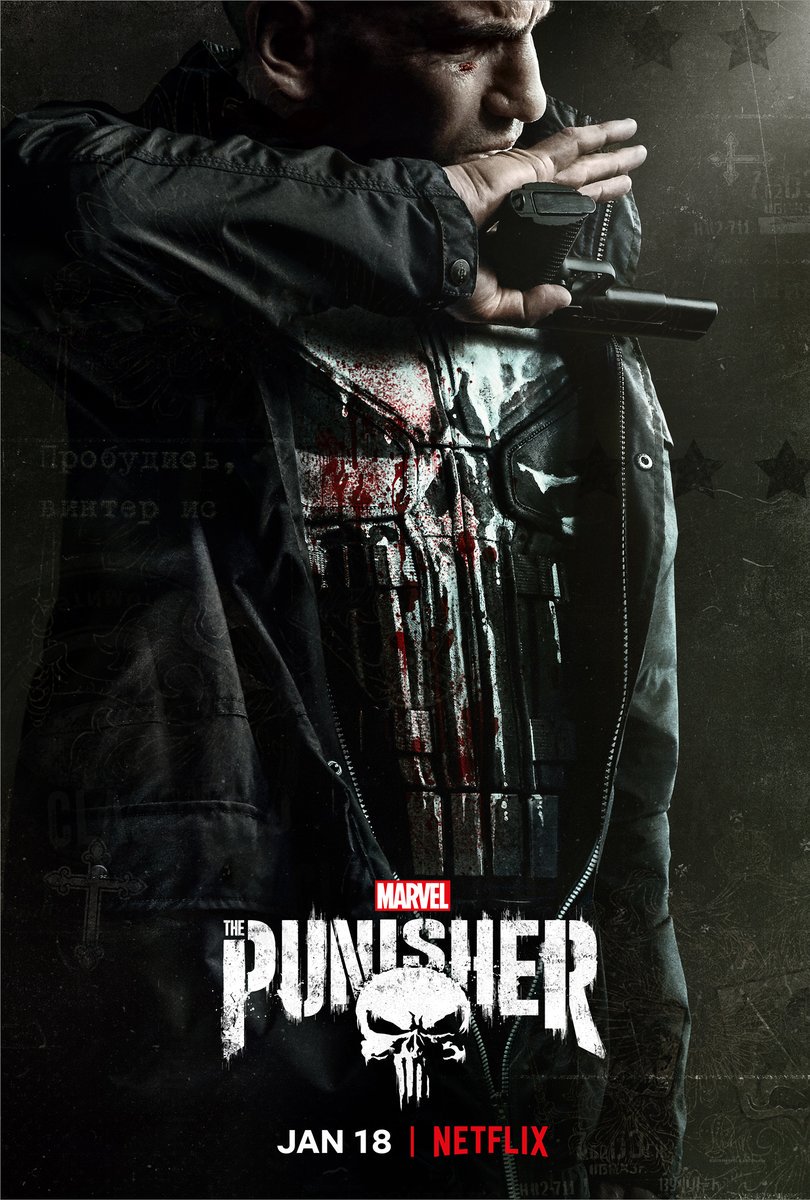
It was a no-brainer that a second season of the series would be set into production and Netflix didn’t hesitate. It’s a bit bittersweet knowing that no matter how good season 2 turns out there’s a high probability that this will be the final season of The Punisher on Netflix as every Netflix-produced Marvel show has been cancelled the past year with only the upcoming seasons of The Punisher and Jessica Jones left.
Season 2 is set of a January 18, 2019 release date on Netflix worldwide.
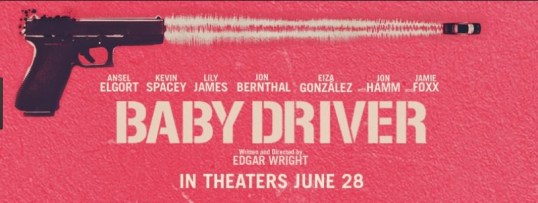
Baby Driver, the new film from director Edgar Wright, is awesome!
That’s the succinct way of putting it and, if you really want to fully enjoy this film, I suggest that you stop reading this review now. There’s no way that a review cannot, to a certain extent, spoil a movie. Baby Driver is a kinetic blend of action, comedy, romance, and music and it is a movie that you should see without any preconceived notions and expectations. It’s a movie that earns the right to surprise you with just how good and entertaining it is. It’s a movie that you should experience fresh.
So, go see the movie. Seriously, go right now. GET OUT OF HERE AND SEE THE MOVIE! This review will still be waiting for you when you get back. Who knows? Maybe, while you’re watching the movie, I’ll actually correct some of the typos. Or maybe not.
Anyway, go away. I’ll wait for you to return.
la dee da la dee da…
Okay, did you see the movie? It’s really great, isn’t it?
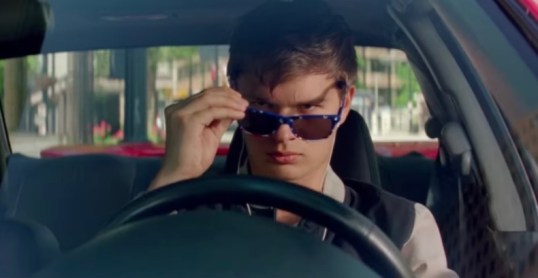
As a result of the childhood car accident that killed his parents, Baby (Ansel Elgort) has been left with a permanent case of tinnitus. He uses music to drown out the constant ringing in his ears. There’s almost never a time that Baby isn’t listening to his ipod. When we first see Baby, he’s sitting behind the wheel of a car, singing along with Jon Spencer and the Blues Explosion. The second time that we see him, he’s getting coffee while listening to Harlem Shuffle. In a delirious homage to Singin’ In The Rain (and in a scene that puts the opening traffic jam of La La Landto shame), Baby literally dances across the streets of Los Angeles. For Baby, every day is a musical.
Of course, Baby doesn’t just use music to block out the ringing. He also uses the music (and an ever-present pair of sunglasses) to keep the world out. He rarely speaks or even makes eye contact and, as long as he’s listening to his ipod, he has an excuse not to interact. He doesn’t have to explain the small scars around his eyes or how he makes his money. The few times that he does speak to people, it’s to record their voices, which he then turns into music. Music and the driving are the only two ways this orphan can express his feelings.
When the movie begins, Baby appears to be close to only two men. One is his deaf foster father, Joseph (CJ Jones). Baby lives with Joseph, in an apartment where Baby regularly stashes thousands of dollars. Joseph always watches in disapproval as Baby hides the money under the floorboards. Joseph signs at Baby that he deserves better than the life he’s leading. Baby always signs back that he’s only a few jobs away from being done.
Baby’s other father figure is Doc (Kevin Spacey). Doc is a rich and connected man. At times, he seems to sincerely care about Baby but there are other times when Doc is just as quick to threaten to kill him and everyone that he loves. Doc plans bank robberies for a living. Doc may change associates from robbery to robbery but one thing always remains consistent. Baby is always his driver because Baby is the best. As Doc explains it, the first time he saw Baby, he was stealing Doc’s Mercedes. Baby drives for Doc as a way of paying off his debt to the older man but you still believe Baby’s sincerity when he tells Doc, “We’re a team.” (One the film’s best throw-away jokes is the line where Doc reveals that he knows where Baby got the idea to say that.)
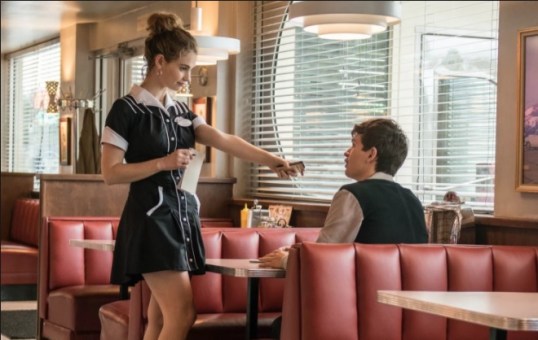
Things start to change for Baby when he meets Debora (Lily James), a waitress who appears to love music just as much he does. For Baby and Debora, it’s love at first sight but Doc has one more job that he needs Baby for. It’s their most dangerous job yet and, making thing even more complicated, are the three people who Doc has recruited to work with Baby. Buddy (Jon Hamm) is a former wall street banker who is eager to prove what a badass he is. Darling (Eiza Gonzalez) is his wife, who enjoys talking about how many of their former partners have died. And finally, there’s Bats (Jamie Foxx), a complete and total psycho who brags about never telling a single story that doesn’t end with someone getting killed.
Baby Driver is a propulsive blast of pure adrenaline, perhaps the closest that we will ever get to a genuine pulp musical. The action scenes left me literally breathless. I saw the movie at the Alamo Drafthouse and, before the film started, there was a clip of Edgar Wright listing his favorite car chases. He listed all of the usual suspects, Bullitt, The French Connection, Mad Max: Thunder Road. The chases scenes in Baby Driver can proudly be listed next to all of those scenes. This is genuinely exciting crime film, featuring wonderfully over-the-top turns from Foxx, Hamm, and especially Spacey.
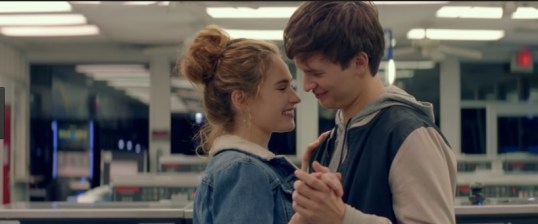
But you know what? Baby Driver may be a great action film but what makes it special is that it’s also a film with a heart. Rather bravely, Edgar Wright has not only made an action musical but he’s also mixed in a very sincere and unabashedly sentimental love story. You never doubt for a second that Baby would give up everything — music, driving, even his life — for Debora. The scenes between Baby and Debora are almost deliriously romantic. Ansel Elgort and Lily James both share a very likable and very real chemistry. You want things to work out for Debora and Baby. You feel like they belong together and, when it looks like either Baby or Debora might be in danger, you worry for both of them. As exciting as the film’s action sequences were, it was the ending that brought tears to my eyes and that was almost totally due to the performances of Elgort and James.
Baby Driver is one of the best films that I’ve seen so far this year. See it this weekend! If you’ve already seen it, see it again! This film deserves to be rewarded.
Continuing my look back at the films of 2016, here are four mini-reviews of some films that really didn’t make enough of an impression to demand a full review.
2016 was a mixed year for Ben Affleck. Batman v. Superman may have been a box office success but it was also such a critical disaster that it may have done more harm to Affleck’s legacy than good. If nothing else, Affleck will spend the rest of his life being subjected to jokes about Martha. While Ben’s younger brother has become an Oscar front runner as a result of his performance in Manchester By The Sea, Ben’s latest Oscar effort, Live By Night, has been released to critical scorn and audience indifference.
At the same time, Ben Affleck also gave perhaps his best performance ever in The Accountant. Affleck plays an autistic accountant who exclusively works for criminals and who has been raised to be an expert in all forms of self-defense. The film’s plot is overly complicated and director Gavin O’Connor struggles to maintain a consistent tone but Affleck gives a really great performance and Anna Kendrick reminds audiences that she’s capable of more than just starring in the Pitch Perfect franchise.
I really wanted to like Carnage Park, because it was specifically advertised as being an homage to the grindhouse films of the 1970s and y’all know how much I love those! Ashley Bell plays a woman who gets kidnapped twice, once by two bank robbers and then by a psycho named Wyatt (Pat Healy). Healy chases Bell through the desert, hunting her Most Dangerous Game-style. There are some intense scenes and both Bell and Healy are well-cast but, ultimately, it’s just kind of blah.
The Choice was last year’s Nicholas Sparks adaptation. It came out, as all Nichols Sparks adaptations do, just in time for Valentine’s Day and it got reviews that were so negative that a lot of people will never admit that they actually saw it. Benjamin Walker and Teresa Palmer play two people who meet, fall in love, and marry in North Carolina. But then Palmer is in a car accident, ends up in a coma, and Walker has to decide whether or not to turn off the life support.
As I said, The Choice got terrible reviews and it’s certainly not subtle movie but it’s actually better than a lot of films adapted from the work of Nicholas Sparks. Walker and Palmer are a likable couple and, at the very least, The Choice deserves some credit for having the courage not to embrace the currently trendy cause of euthanasia. That alone makes The Choice better than Me Before You.
The Legend of Tarzan (dir by David Yates)
Alexander Skarsgard looks good without his shirt on and Samuel L. Jackson is always a fun to watch and that’s really all that matters as far as The Legend of Tarzan is concerned. It’s an enjoyable enough adventure film but you won’t remember much about it afterward. Christoph Waltz is a good actor but he’s played so many villains that it’s hard to get excited over it anymore.
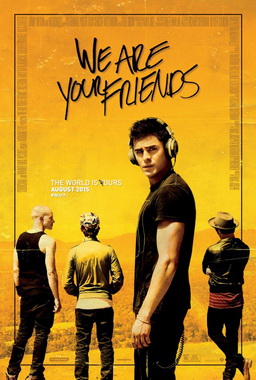
So, this morning, I read some of the harsh reviews that mainstream critics have given the new film We Are Your Friends and I have to admit that I’m starting to get a little ticked off.
That’s not to say that We Are Your Friends is a very good movie. I saw it last night with my BFF Evelyn and we enjoyed it but mostly, that was because we talked through almost the entire movie. And yes, I know that it’s rude to talk through a movie but seriously, the theater was nearly deserted. When we bought our tickets, there was a huge crowd of people gathered outside the theater but it turns out that they were all buying tickets for War Room.
Anyway, We Are Your Friends tells the story of Cole (Zac Efron), a DJ who lives with three idiot friends (who are so identical to the group from Entourage that one of them is even named Squirrel). He spends his days working at a mortgage company and his nights DJing. Then he meets James (Wes Bentley), a formerly great DJ who is on his way down. James takes Cole under his wing and mentors him and teaches him how to get a room dancing. But, Cole ends up falling in love with James’s abused girlfriend, Sophie (Emily Ratajkowski), which leads to… well, it leads to exactly what you think it’s going to lead to. Storywise, We Are Your Friends is not going to win any points for originality.
While we were watching the movie, Evelyn and I agreed that Zac Efron is a strange actor. I mean, yes, he’s hot and yes, he’s talented enough that he can walk while delivering his lines but, at the same time, his dramatic performances always feel oddly empty. You watch him and you get the feeling that he’s still trying way too hard to prove that there’s more to him than just High School Musical. He’s like the guy who you have crush on until you actually get to know him and discover that, beyond his looks, he’s really not that interesting. Efron always seems to be putting in a lot of effort but, whenever you watch one of his performances, you get the feeling that there’s not much going on underneath the beautiful surface. For all intents and purposes, Zac Efron is the anti-Gosling.
And some movies have made good use of Efron’s limits. He was perfectly cast in Me and Orson Welles, for instance. And he’s good in comedies, where he can play against his good looks. But in a film like We Are Your Friends, where you’re actually supposed to have some sort of emotional stake in his hopes and dreams, Efron just feels miscast.
That said, I still enjoyed We Are Your Friends and I think that a lot of the reviews have been a bit too harsh. Why did I enjoy the movie? It all comes down to the music and the dancing. If you love EDM, you’ll find a lot to enjoy in We Are Your Friends. And if you’re not into EDM — well, then fuck off. I could sit here and write another 500 words about how clichéd the storyline is but, ultimately, that’s not what the film is about. The film is about the music. The film is about the ecstasy of dancing all night and then waking up with the beats still playing in your head. At its best, that’s what this film captures. It’s not a great film. A month from now, I have a feeling that it’ll be a struggle to remember much about We Are Your Friends. But I’ll probably still be listening to the soundtrack.
That’s what a lot of the harsh reviews are missing but then again, most mainstream film reviews are written by people who are too old to appreciate EDM in the first place. EDM is music for people who are young and who are still capable of enjoying the present and dreaming about the future. Boring old mainstream critics will never get it and that’s why the reviews of We Are Your Friends feel so condescending. The critical consensus on Rotten Tomatoes reads: “We Are Your Friends boasts magnetic stars and glimmers of insight, but they’re lost in a clichéd coming-of-age story as programmed as the soundtrack’s beats.” Now I know how those Christians who went to see War Room feel whenever a reviewer thinks he’s being clever when he says that one of their films “doesn’t have a prayer.” It’s all so condescending and cutesy.
Listen, We Are Your Friends is not a particularly good film. But it’s not as bad as you might think. The plot is bad but the music is good and really, isn’t that the point?
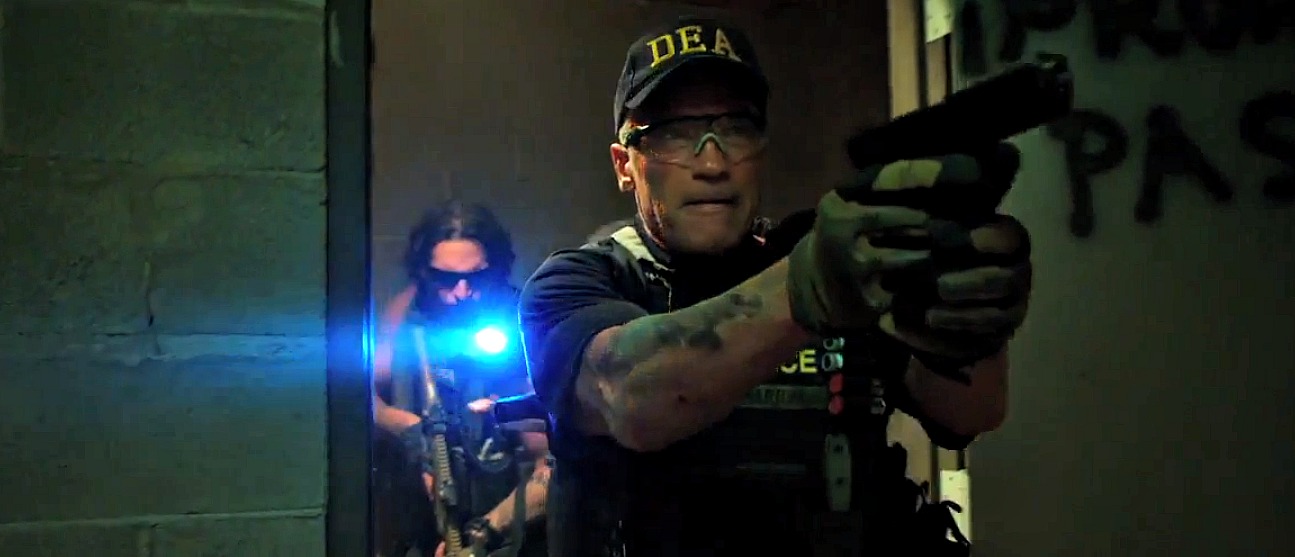
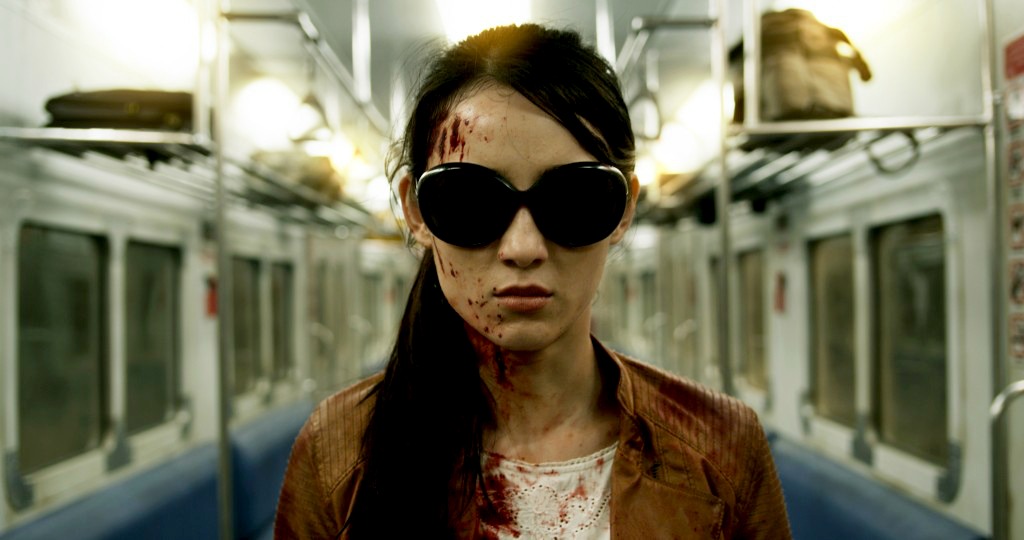
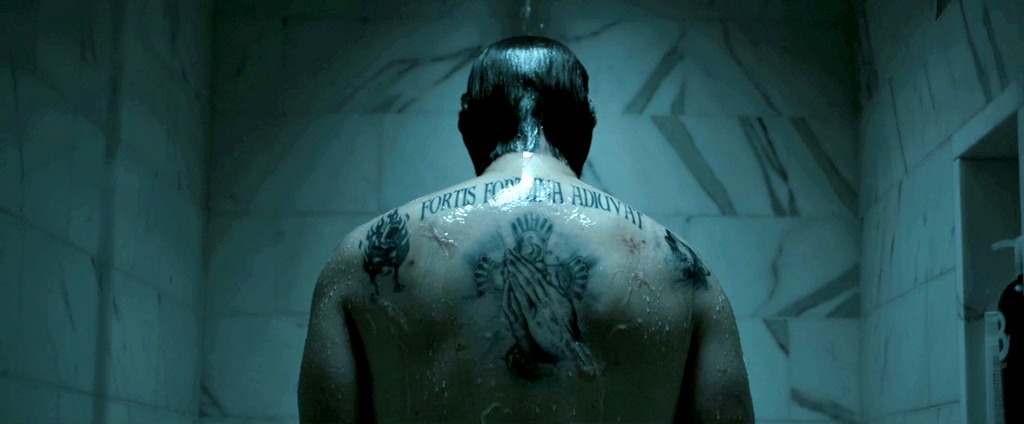
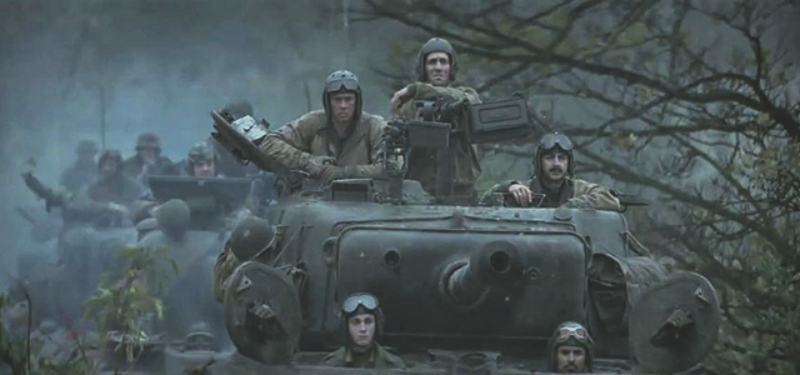
2014 had it’s share of very good action films and here are four that I was particularly drawn to. While the film themselves were of varying degrees of quality in terms of storytelling. These 4 films all had one thing that I enjoyed despite their films’ flaws. They all had action scenes that I thought were quite excellent.
You have gritty present-day action thriller, an operatic gangster epic, a revenge thriller and a war film. One stars an aging action star back from playing politician. Another a foreign film whose filmmaker and star have set the bar for all action films for years to come. Then there’s the stunt coordinators and 2nd unit directors finally making their mark with their first feature-length film. Lastly, a war film that brings the brutality of World War II tank warfare to the forefront.
In honor of Jon Bernthal being cast as the latest in a line of Frank Castles aka the Punisher for Marvel’s Daredevil series on Netflix, I thought I’d share with all my favorite scene from the only Punisher film worth the name. The film this scene is from was Punisher: War Zone by Lexi Alexander.
While the casting of Jon Bernthal looks to be a near perfect stunt-casting by Marvel for Daredevil‘s upcoming second season on Netflix, I thought Ray Stevenson’s portrayal as the psychotic antihero in Punisher: War Zone was the best one comic book fans have gotten. Dolph Lundgren was the first Punisher and the less said about him the better. Then Thomas Jane took a stab on portraying the character to some success though still not doling out enough punishing in my book.
With Ray Stevenson we got a Frank Castle who was well into his vigilante killing-spree of the criminal underworld. This was a man possessed to kill in as brutal and efficient manner every violent criminal he comes across. The film itself was so over-the-top that too many thought it was too campy in a violent sense when Lexi Alexander actually tapped into what made the Punisher tick and put it up on the screen. It also helped that Ray Stevenson owned the role he was given.
Jon Bernthal has some big shoes to fill, but with the success of Daredevil the series I do believe he has a chance to make the character his own.
In the 2010 film The Ghost Writer, Ewan McGregor plays a character known as the Ghost. We never actually learn the name of his character and that’s perhaps appropriate. The Ghost has made his living by being anonymous. He’s a ghost writer. He’s the guy who is hired to help inarticulate and occasionally illiterate celebrities write best-selling biographies.
The Ghost has been given a new assignment. He is to ghost write the memoirs of former British Prime Minister Adam Lang (Pierce Brosnan). Despite the fact that Adam is one of the most famous men in the world, the Ghost is not initially enthusiastic about working with him.
First off, there’s the fact that Adam and his wife, Ruth (Olivia Williams), are currently hiding out in America because America is one of the few countries that will not extradite him to be prosecuted for war crimes at the International Criminal Court. It seems that Adam (much like Tony Blair) is a controversial figure because of some of the actions he may have authorized as a part of the war on terror. Not only does the Ghost have political objections to working with Adam but he has to leave his London home and go to Massachusetts in order to do so.
Secondly, there’s the fact that, once the Ghost arrives in America, he discovers that — for such a controversial figure — Adam is actually rather boring and seems to have very little knowledge about anything that he did while he was prime minister. Instead, he seems to be more interested in spending time with his mistress (Kim Cattrall, giving the film’s one bad performance). Ruth seems to be the political (and smart) one in the marriage.
And finally, there’s the fact that the Ghost is actually the second writer to have worked with Adam. The previous writer mysteriously drowned. While that death was ruled to be an accident, the Ghost comes to suspect that it was murder and that the motive is hidden in the first writer’s manuscript…
The Ghost Writer is a favorite of mine, a smart and witty political thriller that features great performances from Ewan McGregor, Olivia Williams, and Pierce Brosnan. Brosnan especially seems to be having a lot of fun sending up his dashing, James Bond image. Roman Polanski directs at a fast pace and maintains a perfect atmosphere of growing paranoia throughout the entire film. In the end, The Ghost Writer proudly continues the tradition of such superior paranoia films as The Conversation, Three Days of the Condor, and the Parallax View.
Incidentally, I have a theory that Adam Lang was also the unseen Prime Minister who was featured in Into the Loop. Watching The Ghost Writer, it’s hard not to feel that Adam really feel apart without Malcolm around to help him out.
1998 saw the release of Steven Spielberg’s Saving Private Ryan.
Prior to this most films depicted World War II as a noble endeavor that needed to be done to help rid the world of Hitler and the horror he was inflicting upon Europe (beyond if given the chance). It gave birth to the “Greatest Generation” that people still look up to even to this day. These were young men who volunteered for a conflict that would change history and for the millions involved. Yet, World War II films were always cut and dried. It was always the good guys (American, British, Canadian, etc…) fighting against the nameless and efficient Nazi war machine.
In time, so many of these films followed the same formula that character stereotypes came about. We always had the cynical, older veteran who becomes a sort of father figure to a hodge-podge group of young, untested soldiers. What these films also had in common was the fact that they remain bloodless despite the nature of the story being told. Some filmmakers would try to buck this time-tested formula (Sam Fuller being the most prominent), but it would take 1998’s Saving Private Ryan to set a shift in how we saw World War II.
Spielberg lifted the rose-colored glasses from the audience and dared to show that while noble, World War II was still war and it still had the horror and brutality that all wars have. 2014’s Fury by David Ayer would continue this exploration of the last “Good War” in it’s most gritty and blood-soaked detail.
The film shows the last gasp of the German war machine as Hitler gives one of his final orders for the German people to repel the invading Allies. It was to be a scorched earth defense. Whether by choice or forced into this desperate tactic, every man, woman and child was to take up arms to their last breath to defend the Fatherland. It’s in this nightmare scenario that we find the veteran Sherman tank crew led by Don “Wardaddy” Collier trying to survive these final days til war’s end. Their home for the last two and a half years since North Africa has been a modified Sherman tank they call Fury. It’s a crew that’s been battle tested from the sands of North Africa, the maze-like hedgerows of France’s bocage and now the countryside of Germany itself.
We can see right from the start that this crew has been through hell and back many times and already resigned to going through hell many more times before they can eveb think of getting back home. It’s a crew that’s already lost one of it’s own minutes into the film. Wardaddy (Brad Pitt) looms over his crew like a weary father figure. This ragtag group consists of Bible (Shia LaBeouf) as the born-again Christian who sees their survival battle after battle as a sign that God’s grace is upon Fury and her crew. Then we have Gordo (Michael Peña) who has been so traumatized by the war and what he has had to do to survive that he has numbed himself from these memories by being in a constant state of drunkenness. Lastly, we have the tank’s loader Grady (Jon Bernthal) whose misanthropic attitude comes as a crude and brutish counterpoint to Bible’s religious fervor. Into this misanthropic soup of a crew comes in the replacement to their recently killed comrade.
Logan Lerman’s character, the young and naive clerk typist Norman Ellison, becomes the audience’s eyes in the brutal world of Fury and her crew. We’re meant to see the war’s brutality and horror not through the jaded and cynical eyes of Wardaddy and his men, but through a young man who has never killed an enemy or even fired a weapon in anger. Norman becomes the surrogate through which we determine and decide whether there is such a thing a nobility and honor in war.
Honor and nobility have always been used by those always willing to go to war to convince the young and impressionable to follow them into the breach. Fury takes these two words and what they represent and muddies them through the muck and gore left behind with each passing battle and tries to see if they remain unchanged on the other side. Norman is a literal babe in the woods as he must adapt or die in a war nearing it’s end but also becoming even more deadly and dangerous than ever. His very naivete quickly becomes a hindrance and a real danger to Wardaddy and his crew. He’s not meant for this world but has had it thrust upon him.
The film treats Norman’s humanity as a liability in a war that strips it from everyone given enough time. We see Wardaddy attempt to speed up the process during a tense sequence where Norman’s being forced to shoot a German prisoner. It’s a sequence of events that’s both unnerving and disturbing as we see the veteran soldiers encircling Norman and Wardaddy cheering or looking on with indifference in their eyes. They’ve all been in something similar and one can only imagine what they had to do to make it this far.
Fury straddles a fine line between showing and explaining it’s themes to the audience. It’s to David Ayer’s skill as a writer that the film’s able to use some finely choreographed scenes both violent and peaceful to make a point about war’s effect on it’s participants both physically and mentally. Whether it’s through several well-choreographed battle scenes to a sequence of tense and quiet serenity in the apartment of two German women that bring back the plantation segment from Coppola’s Apocalypse Now Redux, the film does a great job in showing how even when stripped down close to the bone, Wardaddy and his veteran crew still has semblance of humanity and the honor and nobility they all began the war with.
As a war film, Fury brings a type of combat to the bigscreen that has rarely been explored and never in such a realistic fashion as we watch tank warfare at it’s most tactical and most horrific. Ayer doesn’t fall for the jump cut style that many filmmakers nowadays sees as a way to convey the chaos of battle. Ayer and cinematographer Roman Vasnayov have planned every sequence to allow the audience to keep track of the two opposing sides and their place in the battle’s geography. And just like Spielberg’s own Saving Private Ryan, Fury shows the very ugly and bloody side of World War II. There’s a lot of bodies being blown apart and torn to chunks of meat yet they never seem to come off as gratuitous. Every bloody moment makes a point on the horrors of war and the level of inhumanity that another man inflicts on another man.
If there’s something that Fury does lag behind on it would be some of the narrative choices dealing with Norman’s character. The film takes place literally over a day’s time and the quick change in Norman’s mentality about the war seem very sudden and abrupt. While this day in the life of Fury and her crew worked well in Ayer’s past films (both as writer or director) here it puts Ayer stuck in a corner that made it difficult to fully justify Norman’s sudden change of heart from babe in the woods to hardened Nazi-killer. We can see throughout the film that the war is affecting him in ways that could lead up to this change, but to have it happen in just under a day really stretches it’s believability to the breaking point.
Yet, despite this the film is able to stay on course and recover from this misstep on the strength of Ayer’s direction and the performances of the ensemble cast. Brad Pitt has been the focus of the media campaign leading up to the release of Fury, but every actor who comprises the crew of Fury leave their own mark in the film. Shia Labeouf has had a tough past year both professionally and personally, but one has to admit that performances like the one he had in Fury is a reminder that he’s a damn fine good actor. Whether this film has become the path to his redemption in the eyes of the public is irrelevant. One doesn’t need to like the man to respect the talent he’s able to put up on the screen.
Awards season is in full swing as Fall 2014 arrives and Fury makes it’s case known that genre films (and make no mistake this is a genre film) can more than hold it’s own with the more dramatic life-exploring films that critics tend to put on the pedestal as examples of great filmmaking. While Fury is not perfect it is a very good film full of great performances that just misses being great.
I must admit that World War II films are a favorite of mine. Even bad ones I tend to enjoy. Whether it’s alternate fantasy fares like Tarantino’s Inglourious Basterds or something that combines historical accuracy with dramatic license like Spielberg’s Saving Private Ryan, the World War II genre always manage to hit straight and true to my film wheelhouse.
This October there looks to be another World War II film that seems almost tailor-fit for me. I’m talking about David Ayer’s follow-up to his underappreciated film End of Watch. This follow-up is Fury and tells the story of an American tank crew in the waning days of World War II in Europe. Just from the two trailer released I already know that I’m seeing this. Ayer looks to be exploring the bond of a tank crew that has seen war from the deserts of Africa and now to the urban and forested landscapes of Germany.
The film is already getting major buzz as a major contender for the upcoming awards season and I, for one, hope that it’s a well-deserved buzz. Even with Shia LaBeouf being part of the cast is not dampening my excitement for this film. Even if it doesn’t live up to the hype I know that I’ll probably still end up enjoying it.
This trailer looks to be selling the utter brutality and carnage of World War II’s final days in Europe when German forces were literally fighting for their homeland and that makes for a desperate enemy (who still had weapons and soldiers that were still hands down better than what the Allies had one-on-one).
On a side note, I like the fact that the tracers in the film actually look like tracers which means they look like freakin’ laser blasts. That’s how tracers behave.
Fury is set to hit theaters on October 17, 2014 in the United States and October 22, 2014 internationally.
Fans of the comic book that The Walking Dead is based on have either been excited or up in arms about the major changes and deviations the show has taken from the source material. It’s a major point of contention that probably has lost some of the hardcore fans of the comic book. I can understand why they would bail on the show. They love the comic book with such a passion that any changes made from pages-to-screen is seen as a betrayal for their hard-earned loyalty through almost a decade of reading the series. On the other side of the equation I do believe that the changes have been a good thing for the tv series. It’s kept things unpredictable to the point that long-time readers cannot predict what will happen as the show moves forward. It’s this know knowing aspect of the tv series over the comic book source material that should keep things fresh for everyone.
“Better Angels” is the penultimate episode for season 2 and it’s another good step towards rewarding the show’s fans for sticking with the show despite a first half to the season that’s been called very slow. It’s cold opening was a nice balance of the quieter moments that the first half had been mostly about as Rick and the group buries Dale and the rest of their dead. Balancing this is a montage of Shane leading a hunting party driving around the outskirts of the farm to destroy those zombies who are too close for comfort to the farm. It’s an opening that will lead the two men the cold opening focused on to finally hash out their differences by episode’s end.
Glen Mazzara (the show’s new showrunner after the firing of Frank Darabont halfway this season) co-wrote this episode with Evan Reilly and it’s going to go down as one of the best episode of this season, if not one of the best in this series’ short history, so far. The first half of the episode shows how some have been dealing with Dale’s death in the previous episode. We get Carl feeling more than just a bit guilty about his role in getting the group’s moral compass killed to Glenn and Andrea exchanging some fond memories of the old coot as they try to fix and start Dale’s old RV. Even Daryl looks to have been affected by Dale’s death as he becomes much more helpful in this episode as if he understands that the group may be broken, but it won’t be because of what he didn’t provide.
If there was ever a reason to believe that this show has turned a corner in terms of storytelling since Darabont left the show then this episode just strengthened this second half as an almost reboot to the season. It closed off one major story arc as the showdown between Rick and Shane finally came to a head in the last ten minutes of the episode, but it also went a long way into finally answering just what exactly Dr. Jenner whispered into Rick’s ear at the CDC at the end of the last season. It puts a whole new set of problems for these survivors and also adds a new level of anxiety to the series. The fact that just dying even when not bit by a zombie will cause a recently dead person to come back to life adds to the hopelessness echoed by Jenner at last season’s finale.
With just the season finale left the series has quite a bit of storylines to deal with. The episode ends with Rick and his son Carl over the body of the former’s best friend and the latter’s surrogate father and as the camera pans into a wide shot we see that just beyond the crest and unknown to father and son was a herd of zombies emerging from the nearby woods. We also have the lingering danger of the dangerous group of survivors that may be camped just a few miles from the farm who may pose a much bigger danger to the group than the zombies themselves. No matter how the season ends it looks like the group’s time at the farm may be coming to an end and that’s as welcome a turn as the speed by which Mazzara and his writers have changed the pacing of the story.
Notes
Just have to say that tonight’s episode had some great scenes from the wide shot of Rick and Shane at the top of a crest with a very large looking moon back-lighting the pair.
Interesting how Rick voices the one thing many people have been complaining about Dale’s character during his eulogy over his grave. Yes, Dale got under the skin of not just fans of the show, but it would seem the others characters in the show itself.
The cold opening of the group giving Dale and the others the group has lost (both Sophia and the friends and family of the Greene’s in the barn) was paralleled by Shane, Andrea, T-Dog and Daryl driving around the farm’s perimeter destroying the zombies they come across. This was something that was long overdue and it was great to see just well this group destroyed the zombies when they had the upper hand and weren’t outnumbered. This is a major point of topic for zombie lore fans who know that when it small numbers zombies are pretty easy to avoid and/or fight when one keeps a cool-head.
That final zombie before it got the top of it’s head smashed open by a shovel strike from Shane got a very cathartic beatdown from everyone. It’s as if these four were taking out their frustrations on this last zombie.
It looks like Hershel and his family have finally seen the light and allowing Rick’s group
Great scene (brief as it was) between Rick and Daryl early in the episode. We’re seeing just how much Rick appreciates Daryl for doing what needed to be done with Dale at the end of the last episode. Even Daryl is starting to figure out how much of the “heavy-lifting” Rick has been doing since he joined the group. No matter what Shane fans may think about him being the only one who made the hard decisions I think Daryl would think differently as he sees Rick as the one who was the true leader even if he didn’t agree with everything Rick said or do.
Speaking of Shane, it looks like Dale’s death may have finally pushed him over the edge. Seeing the one person who was all about keeping the group from losing their humanity die not because of the group’s descent into amorality but because of the very danger that has no use for high principles and moral high grounds. Shane finally sees that he’s been right all along and it doesn’t help that Lori looks to be trying to make amends with him.
We see that Lori as a character continuing her turn as the Lady MacBeth of the series as she continues to try and manipulate the situation between Rick and Shane to her advantage. Whether she prefers Rick or Shane becomes even more cloudy.
In this episode we’re seeing Rick beginning to lose more and more of his need to hold onto the world before he woke up in this zombie apocalypse. The quiet scene between him and Carl in the hayloft was a good example of this. Rick knows that Carl will not be able to grow up in a world where children have a chance to act like kids. Him handing Daryl’s gun back to Carl is the first step in Carl finally losing that youthful innocence. Whether Chandler Riggs can pull off a Carl that’s becoming more and more adult at such a young age would be determined in the coming episodes and seasons.
We finally get the Randall story-arc ended as he becomes the excuse for Shane to get Rick alone with him and solve the problem his best friend poses.
The revelation that just dying without being bit or scratched by a zombie has now changed everything for the worst for the group. Even the escape of non-zombie death doesn’t stop one from coming back and joining the innumerable legions already roaming the countryside. It’s another acknowledgement that The Walking Dead has been following the zombie lore rules set down by the grandfather of the subgenre, George A. Romero himself.
With Shane and Dale both gone it will be interesting to see just who will replace their roles in the new season. I can see The Governor (David Morrissey cast in the role) taking on the villanous role that Shane occupied this season, but Dale’s voice of reason may just be a much harder one to replace.
T-Dog actually got more than just a cursory cameo appearance in this episode real early in the episode. He also got more than just one line. He was actually part of a real conversation. Maybe there’s hope for him yet (doubt it).