Song of the Day: Everybody’s Talkin’, performed by Harry Dean Stanton, Johnny Depp, and Kris Kristofferson


This was filmed in 2016.  Not only do we have Harry Dean Stanton, Kris Kristofferson, and Johnny Depp but David Lynch puts in an appearance early on in the video as well.

Scenes That I Love: Johnny Depp in Ed Wood


Today, the Shattered Lens wishes a happy birthday to Johnny Depp!

Today’s scene that I love comes from 1994’s Ed Wood.  In this scene, Depp plays the infamous director as he first meets his future collaborator, Vampira (played by Lisa Marie).

(What a great name!)

Film Review: Public Enemies (dir by Michael Mann)


2009’s Public Enemies is a portrait of the battle for the soul and imagination of America.

The films take place during the Great Depression.  With Americans struggling to pay their bills and many citizens out-of-work and feeling desperate, a new breed of folk hero has emerged.  Men like my distant relative Pretty Boy Floyd (Channing Tatum) and Alvin Karpis (Giovanni Ribisi) may be criminals who make their living by robbing banks but, to a nation of angry people who feel like they’ve been forgotten by the government and betrayed by the wealthy, they’re rebels who are challenging the system.  They are viewed as being modern-day Robin Hoods, even though very few of them actually bother to give the money that they steal back to the poor.

John Dillinger (Johnny Depp) is perhaps the most famous of the criminals who have been declared a “public enemy” by the FBI.  The handsome and charismatic Dillinger becomes almost a living legend, the man who cannot be captured by law enforcement.  He becomes a folk hero but with the twist that his own death seems inevitable.  Dillinger lives by his own set of rules and the press loves him even as they hungrily anticipate his violent end.

Pursuing Dillinger and the other so-called public enemies is a young FBI agent named Melvin Purvis (Christian Bale).  Purvis’s job is not only to capture or eliminate men like Dillinger.  It’s also to somehow figure out a way to replace them in the public’s imagination.  Through the use of what was then-considered to be revolutionary techniques (like fingerprinting and phone taps), Purvis tracks down one public enemy after another and soon, he’s becoming as much of a folk hero as the people that he’s pursuing.  If Dillinger and his cohorts represent the ultimate rebellion against an ineffectual system, Purvis and his success suggest that maybe the system actually can get something accomplished.  Unfortunately, for Purvis, he not only has to deal with the challenge of capturing Dillinger but also with the growing jealousy of his publicity-hungry boss, J. Edgar Hoover (Billy Crudup).  As is typical of the heroes of Michael Mann’s film, Dillinger and Purvis may be on different sides of the law but they have more in common than they realize.  Neither one can trust the people that they’re working with.

I remember that I was really excited about Public Enemies when it was first released in 2009.  I’m fascinated by the Depression-era outlaws and Dillinger’s story is certainly an interesting one.  (I’ve always enjoyed the theory that Dillinger faked his death, even though I don’t believe it for a second.)  Michael Mann seemed like the perfect director for the material and Johnny Depp seemed like ideal casting.  I have to admit that I was a little bit disappointed in the film itself, which was poorly paced and stuck so closely to the facts of the case that it led me to realize that Dillinger will always be more interesting as a legend than an actual person.  (I’ll concede that was probably the film’s point.)  There were moments of brilliance in the film.  The scene where Dillinger escaped from custody was wonderfully done.  Stephen Graham’s unhinged performance as Baby Face Nelson was excellent.  Johnny Depp had the right look for Dillinger but I have to admit that I found myself a little bit bored with Christian Bale’s Melvin Purvis.

Looking back today, though, the film feels almost prophetic.  That may seem like an odd thing to say about a film set in the past but Public Enemies portrait of an America caught between celebrating the rule of law and the excitement of rebellion feels very relevant to what’s happening today.  In retrospect, Public Enemies is a portrait of the contradiction at the heart of America, a country with a culture of both rebellion and loyal patriotism.  Public Enemies portrays a battle the continues to this day.

Public Enemies (2009, dir by Michael Mann, DP: Dante Spinotti)

Lisa Marie Reviews An Oscar Winner: Platoon (dir by Oliver Stone)


One of my favorite scenes from TV’s King of the Hill occurs in an episode in which Hank and Peggy are celebrating their wedding anniversary.  They’ve sent Bobby and Luanne away for the weekend.  They have the house to themselves but, after their anniversary party, Peggy is feeling depressed.  She tells Hank that, for the first time ever, she feels old and she regrets all the dreams that she had that have yet to come true, like inventing and selling her own barbecue sauce.

Trying to cheer her up, Hank says, “C’mon, Peg.  We got the house to ourselves for weekend …. and I rented an R-rated movie!”

Peggy looks up, briefly hopeful that Hank did something romantic.  “What movie?” she asks.

Hank hesitates, glances down at the floor, and says, “Uhmm …. Platoon.”

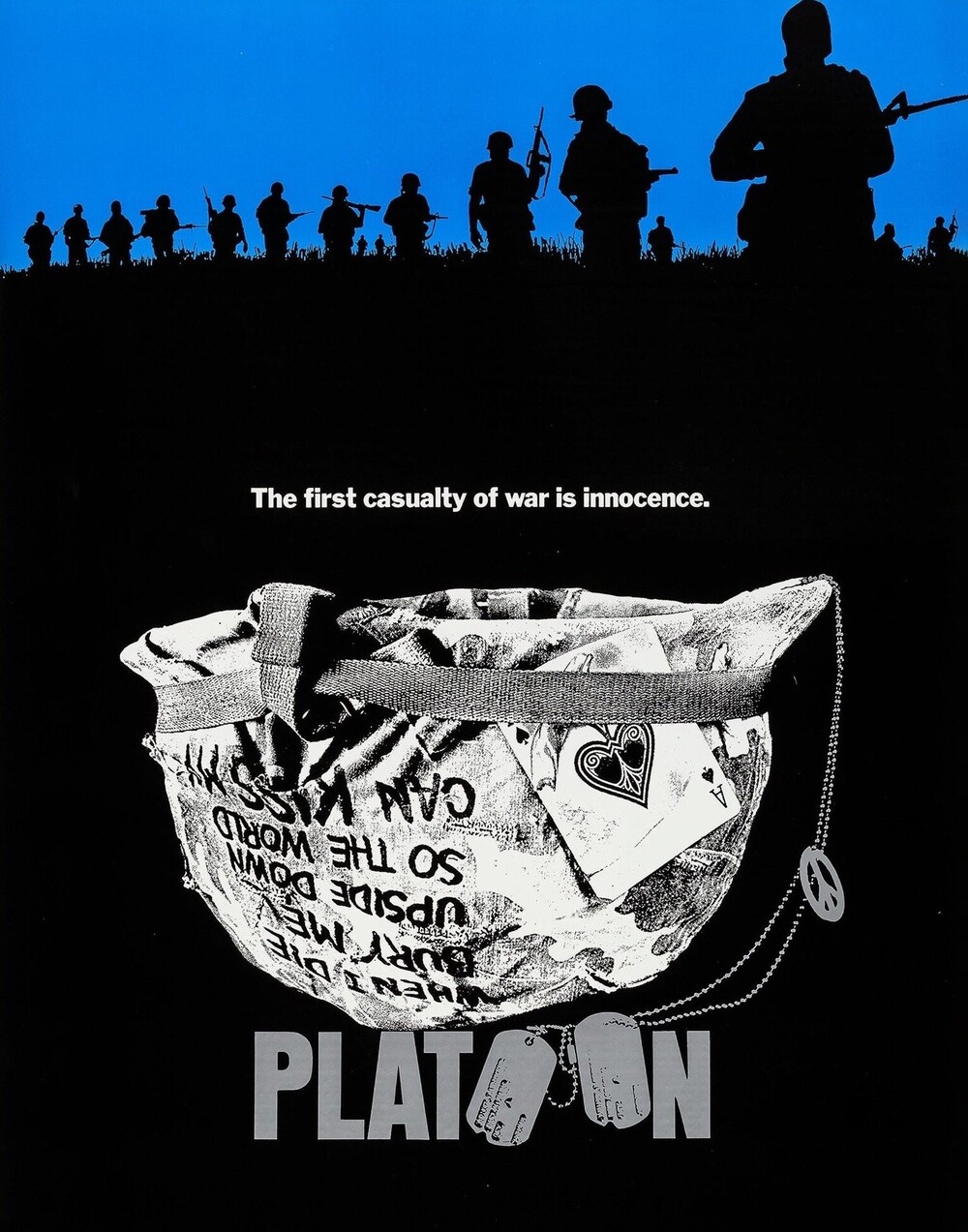
It’s funny because it’s true.  Just about every man that I know loves Platoon.  First released in 1986 and reportedly based on Oliver Stone’s own experiences as an infantryman in Vietnam, Platoon is often cited as being one of the greatest war films ever made.  Oddly enough, the film has an anti-war and anti-military message but, in my experience, those who love it talk more about the battle scenes than any message that Stone may have been trying to impart about the futility of war.  Pauline Kael once wrote that Oliver Stone had left-wing politics but a right-wing sensibility and I think you can definitely see that in Platoon.  Despite all of the characters talking about how pointless the war is and how much they resent being forced to risk their lives for no apparent purpose, the film’s energy comes from the scenes of Chris Taylor (Charlie Sheen) stalking through the jungle and, towards the end, losing his mind and giving himself completely over to the adrenaline that comes from being trapped in the middle of a battle.  Throughout the film, we hear Taylor’s rather pedantic thoughts on the military and his fellow soldiers but it’s hard not to notice that his actions and his dialogue are usually far less eloquent.  Taylor may be a rich intellectual (and wow, is Charlie Sheen ever unconvincing when it comes to portraying that part of Taylor’s personality) but when he’s in the jungle, he’s just fighting for survival.

The film’s plot centers around the conflict between two sergeants, the peace-loving Elias (Willem DaFoe) and the war-loving Barnes (Tom Berenger).  Taylor has to decide which one of the two to follow.  The pot-smoking Elias loves his men and goes out of his way to protect them.  The beer-drinking Barnes has a much harsher view of the world but, at the same time, he’s the type of scarred warrior who seems immortal.  One gets the feeling that he’ll never be defeated.  The rest of the platoon is full of familiar faces, with everyone from John C. McGinley to Francesco Quinn to Tony Todd to Forest Whitaker to Johnny Depp to a baby-faced Kevin Dillon showing up.  (Dillon is especially frightening as a psycho who has, for some reason, been nicknamed Bunny.)  The majority of the platoon is dead by the end of the film.  Even with the leadership of Elias and Barnes, the soldiers are stuck in a winless situation.  As Taylor points out, the Americans aren’t just fighting the enemy.  They’re also fighting each other.

Platoon is certainly not my favorite of the film nominated in 1986.  I would have gone with A Room With A View.  (Blue Velvet, which is as influential a film as Platoon, was not even nominated.)  That said, I can’t deny the power of Platoon‘s combat scenes.  Though Stone’s script is didactic and Taylor’s narration is awkwardly deployed throughout the film, Stone’s direction definitely captures the fear and dread of being in a strange place with no idea of whether or not you’re going to survive.  Stone is critical of the military (at one point, an officer calls an air strike on his own men) but seems to love the soldiers, even the ones who have pushed over to the dark side.

Platoon was not the first Best Picture nominee to be made about the Vietnam War.  The Deer Hunter, Coming Home, and Apocalypse Now were all released first.  But both The Deer Hunter and Apocalypse Now are surreal epics that seem to take place in a dream world.  Coming Home, which has a script that somehow manages to be even more didactic than Platoon‘s, focuses on the war back home.  Platoon is far more gritty and personal film.  Watching Platoon, you can smell the gunpowder and the napalm and feel the humidity of the jungle.  I can understand why it won, even if I prefer to watch Helena Bonham Carter and Julian Sands fall in love.

Monday Live Tweet Alert: Join Us For Live Wire and Edward Scissorhands!


As some of our regular readers undoubtedly know, I am involved in hosting a few weekly live tweets on twitter.  I host #FridayNightFlix every Friday, I co-host #ScarySocial on Saturday, and I am one of the five hosts of #MondayActionMovie!  Every week, we get together.  We watch a movie.  We tweet our way through it.

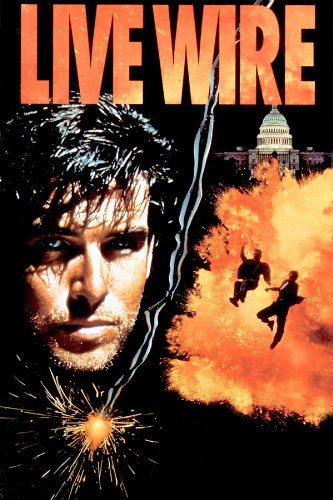
Tonight, for #MondayActionMovie, the film will be 1992’s Live Wire!  Selected and hosted by @BunnyHero, Live Wire is a thriller that stars a pre-James Bond Pierce Brosnan dealing with people who have been programmed to literally explode. The movie starts at 8 pm et and it is available on YouTube.


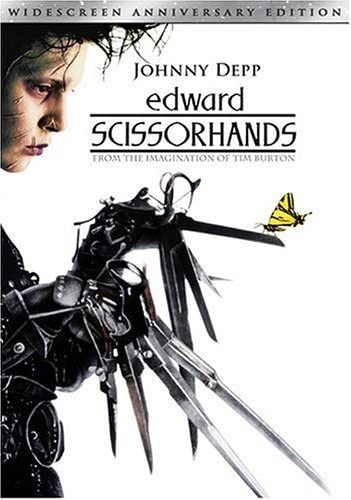
Following #MondayActionMovie, Brad and Sierra will be hosting the #MondayMuggers live tweet.  Tonight’s movie, starting at 10 pm et, will be 1990’s Edward Scissorhands, the Tim Burton classic that stars Johnny Depp as a boy who has scissors for hands!  The film is available on Prime!


It should make for a night of intense viewing and I invite all of you to join in.  If you want to join the live tweets, just hop onto twitter, start Live Wire at 8 pm et, and use the #MondayActionMovie hashtag!  Then, at 10 pm et, switch over to prime, start Edward Scissorhands and use the #MondayMuggers hashtag!  The live tweet community is a friendly group and welcoming of newcomers so don’t be shy.  And reviews of these films will probably end up on this site at some point over the next few weeks. 

Film Review: Minamata (dir by Andrew Levitas)


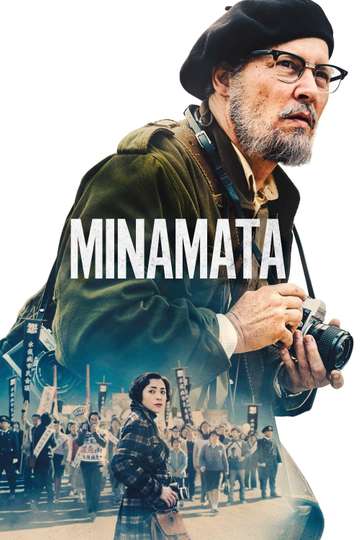
In Minamata, Johnny Depp plays Eugene Smith, a real-life photographer who found fame taking pictures for Life Magazine.  Taking place in 1971, the film opens with Smith famous but burned out.  He spends most of his time in his run-down apartment or walking the streets of New York.  His camera is always with him, a tool of both his art and a symbol of his detachment.  Smith can capture the world in a photograph but he’s still not sure that he wants to be a part of it.  Smith is outspoken, eccentric, and ultimately a bit of an idealist who hides behind a cloak of cynicism.

When Smith is asked to come to the Japanese city of Minamata so that he can photograph the effects of Mercury poisoning on the citizens, he agrees to do so.  Armed with only his camera and aided only by his translator, Aileen (Minami), Smith discovers a community that has been ravaged by environmental pollution.  Smith tries to bring the story of Minamata to the world, despite the efforts of one of Japan’s largest corporations to silence him.

As far as films go, Minamata isn’t bad.  It feels a lot like a throwback to the old social problem films of the late 70s and the early 80s.  Watching the film, it was easy to draw comparisons to similar films like The China Syndrome, Silkwood, A Civil Action, Erin Brockovich, and even Promised Land.  Like the characters at the heart of those films, Eugene Smith is an unlikely crusader but when he sees a heartless corporation destroying lives, he feels that he has no choice but to act.  The film’s narrative momentum occasionally sputters and there are a few too many scenes of Smith haranguing his editor but the film’s heart is in the right place.  Johnny Depp gives a surprisingly sincere performance as Eugene Smith, playing him as someone who is a bit of a natural screw-up but who still wants to make the world a better place.  The film’s best scenes are the ones in which Smith tries to convince the camera-shy villagers to allow him to document what’s happening to them.  Minamata is at its best when it just allows Depp (as Smith) to interact with other people.

Of course, by this point, Minamata is probably best known for the drama that went on behind-the-scenes.  Minamata was filmed in 2019 and made its debut at the Berlin International Film Festival in February of 2020.  Distribution rights were eventually purchased by MGM and it was originally slated to be released in 2021.  However, after Amber Heard accused Depp of domestic abuse, MGM took the film off of its schedule.  Due to the bad publicity surrounding Depp, it appeared that the film would be buried.  Depp’s fans reacted by voting for Minamata to win the Oscars Fan Favorite contest.  Though Minamata ultimately came in third place, that’s a good showing for a film that hardly anyone had seen and which hadn’t even been distributed in the United States.  The victory of the Snyder Cut may have gotten all the attention but Minamata‘s strong showing served to remind Hollywood that, despite the accusations, Johnny Depp still had a strong fanbase.

It’s tempting to say that Minamata got its release due to the outcome of the Depp/Heard libel trial.  It was actually released on Hulu while the trial was still going on.  Though Minamata is probably destined to be mostly remembered as a footnote in Oscar history, it is a film that shows that Johnny Depp can still give a good performance when he has the right material.

Music Video Of The Day: God’s Gonna Cut You Down (2006, dir by Tony Kaye)


This is a case where I like the song more than the music video.  This video was actually filmed three years after Johnny Cash’s death.  As far as “official” music videos are concerned, I always feel like a musician should have some sort of say into how their music is visually interpreted.  Obviously, Johnny Cash wasn’t around to have anything to say about the video for God’s Gonna Cut You Down.

Since Cash wasn’t available, director Tony Kaye filled the video with cameos from other actors and musicians, a few of whom (though not many) were previous Cash collaborators.  Among the celebs who make an appearance in this video: David Allan Coe, Patricia Arquette, Travis Barker, Peter Blake, Bono, Sheryl Crow, Johnny Depp, the Dixie Chicks, Flea, Billy Gibbons, Whoopi Goldberg, Woody Harrelson, Dennis Hopper, Terrence Howard, Jay-Z, Mick Jones, Kid Rock, Anthony Kiedis, Kris Kristofferson, Amy Lee, Adam Levine, Shelby Lynne, Chris Martin, Kate Moss, Graham Nash, Busy Philipps, Iggy Pop, Lisa Marie Presley, Q-Tip, Corinne Bailey Rae, Keith Richards, Chris Rock, Rick Rubin, Patti Smith, Sharon Stone, Justin Timberlake, Kanye West, Brian Wilson, and Owen Wilson.  Some of the celebs — like Dennis Hopper and Kris Kristofferson — seem like they naturally belong there.  Others seem so out-of-place that you’ll want to throw something.  You know how that works,

God’s Gonna Cut You Down is a traditional folk song.  I’ve heard countless versions of it.  I prefer Cash’s version to the more traditional gospel arrangement but, then again, I tend to find gospel music to be dull in general.  Cash’s arrangement brought new life to an old song.

Enjoy!

Here’s The Trailer For The Professor!


Johnny Depp’s is Richard, a college professor who has been diagnosed with a terminal illness.

During his final days….

….HE SOLVES CRIMES!

No, not really.  instead, it looks like he decides to live life to his fullest and do all the wild stuff that he put off doing earlier in his life.  I have to admit that I’m not a huge fan of the whole “being diagnosed with cancer was the best thing that ever happened to me” genre of films.  There’s been a few good ones but, far too often, they descend into clichés of seizing the day and all that stuff.

(One thing that you’ll notice about these films is that most of them are about people who actually have enough money that they can afford to seize the day while also dealing with a terminal illness.)

That said, Johnny Depp can be a very good actor when he wants to be so I’ll be curious to see if this is one of those times.  The Professor will be released on May 17th.

Horror Movie Review: A Nightmare On Elm Street (dir by Wes Craven)


Damn, this is a scary movie.

That may seem like an obvious point to make when talking about the original A Nightmare On Elm Street but it’s still one that needs to be made.  I always seem to forget just how scary the original is.  I mean, there’s been so many sequels.  And there was that kind of silly movie where Freddy Krueger fought Jason Vooerhees.  And then there was the fairly forgettable reboot.  Freddy Krueger is something of a cultural icon.  Even people who have never watched any of the movies knows who Freddy Krueger is.  Freddy has become so well-known for his quips and his puns and his bad jokes that it’s easy to forget that the reason he put razors on his gloves was so he could kill children.

Despite the fact that Jackie Earle Haley took over the role in the reboot, Freddy Krueger will always be associated with the actor who first played him, Robert Englund.  What’s interesting is that, whenever you watch or read an interview with Englund, he comes across as being literally the nicest guy in the world.  (His autobiography is one of the most cheerful Hollywood memoirs that I’ve ever read.)  Before he was cast as Freddy, Englund was a fairly busy character actor.  It’s always a little odd when he pops up in some old movie on TCM because, inevitably, he’s always seems to be playing a nice and often kinda shy guy.  Supposedly, when Englund auditioned for the role of Freddy, he darkened his lower eyelids with cigarette ash and he purposefully said very little while meeting with director Wes Craven.  Craven, who based Freddy Krueger on a childhood bully, was impressed enough to cast this very likable actor as one of the most evil killers in the history of horror cinema.

And make no mistake about it.  In the first film, Freddy Krueger is terrifying.  He’s not the joker that he would become in later installments of the franchise. When he does laugh, it’s because he’s taunting his latest victim.  This Freddy isn’t quite as quick-witted as the Freddy who showed up in Dream Warriors and other films.  This Freddy keeps things simple, popping up in your nightmares, chasing you, and, once he catches you, killing you.  It’s not just his glove and his burned faced that makes Freddy terrifying in this film.  It’s how determined and relentless he is.  He’s not going to stop until he catches you and, seeing as how he’s already dead, there’s really not much you can do to slow him down.  Englund plays Freddy as being the ultimate bully.  The only joy he gets is from tormenting the rest of us.  It’s a testament to the strength of Englund’s performance that memories of Freddy dominate our thoughts when it comes to A Nightmare of Elm Street, despite the fact that Freddy is only onscreen for seven minutes.

It’s an effective film, not just because of the nightmare scenes but also because of the scenes that take place in the waking world.  The majority of the film follows Nancy (Heather Langenkamp), Glen (Johnny Depp), Tina (Amanda Wyss), and Rod (Jsu Garcia, who is credited as Nick Corri in this film) as they try not to die.  And let’s be honest.  None of these characters are particularly deep.  Rod’s the bad boy.  Tina’s the rebellious Catholic.  Glen’s the nice guy.  Nancy’s the good girl.  They’re archetypes that should be familiar to anyone who has ever seen a slasher film.  And yet, you really do care about them, especially Nancy and Glen.  (Admittedly, everyone that I’ve ever talked to about this film seems to care about Rod the least.)  Langenkamp, Depp, and Wyss all give such likable performances that you really do find yourself worrying about what will happen to them when and if they fall asleep.

I rewatched A Nightmare on Elm Street last night and I was shocked to discover that, even though I knew what was coming, the movie still scared me.  The sight of Freddy straining against the wall over Nancy’s head was still unbelievably creepy.  The gory scene where Freddy attacks Tina still frightened me, as did the famous geyser of blood scene.  Even the much-parodied scene where Freddy’s glove rises up between Nancy’s legs while she sleeps in the bathtub still made me shudder.

It’s easy to take for granted just how good and scary the original Nightmare on Elm Street actually is.  For horror fans, it’s a film that deserves to be watched this October season.  Just don’t fall asleep afterwards.

Music Video of the Day: I’ll Bite Your Face Off by Alice Cooper (2011, directed by ????)


To quote Alice Cooper himself:

“This is my tip-of-the-hat to early Rolling Stones.  Like in 1964/65 when their songs were very Chuck Berry orientated. They just feel so good, in the pocket. This song was begging to be in the live show. We’ve done it in four different continents now and no one had ever heard it. By the second chorus, the whole audience is singing ‘I’ll Bite Your Face Off.’ It’s the perfect little 3 minute hit single.”

I’ll Bite Your Face Off was the first single to be released off Welcome 2 My Nightmare, Alice Cooper’s 26th studio album and a follow-up to Cooper’s 1975 album, Welcome To My Nightmare.  Each song represents a different aspect of a bad dream.  In I’ll Bite Your Face Off, Alice dreams about being introduced to the devil.

The video was filmed at several different live venues.  One of these performances was at the 100 Club in London, where actor Johnny Depp joined the band on guitar.