INDICTMENT: THE MCMARTIN TRIAL (1995)


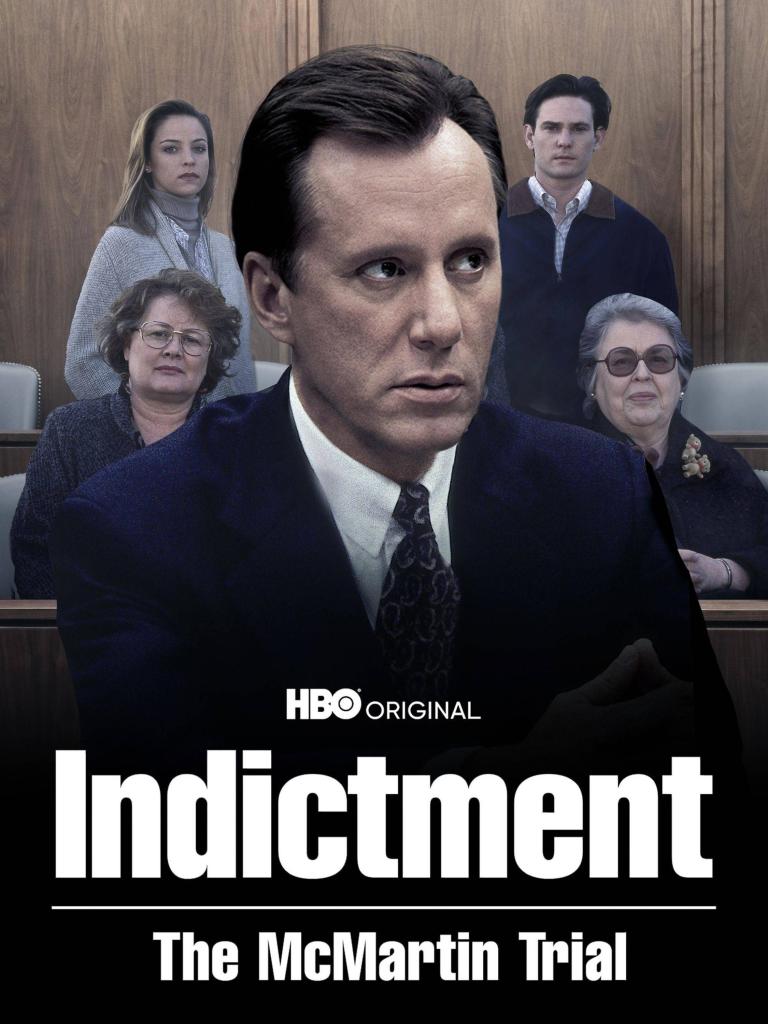
Actor James Woods is great at portraying attorneys. Whether it be as the real life Assistant D.A. Bob Tanenbaum in the excellent T.V. Movie BADGE OF THE ASSASSIN (1985), the crusading hippie Eddie Dodd in TRUE BELIEVER (1989) or the namesake of the excellent TV series SHARK (2006-2008), Woods knows how to play that unique combination of intelligence, shrewdness, and sneakiness to perfection. In 1995, he further applied those skills when he portrayed real life attorney Danny Davis in the HBO movie INDICTMENT: THE MCMARTIN TRIAL. This movie is based on the McMartin day care sexual abuse case that began with horrific allegations in 1983 and ended in 1990 with zero convictions and all charges dropped. During that time, the McMartin Trial became the longest and most expensive series of criminal trials in American history. 

I’ll just go ahead and challenge any person to watch INDICTMENT: THE MCMARTIN TRIAL and not get filled with righteous anger about the complete failure of our judicial system. Add to that failure the complete breakdown of our media to cover events in a fair and impartial fashion with even the smallest shred of objectivity. Does any of this sound familiar? As good as James Woods is in the central role, the star of this film is the true story itself. We watch as various people in positions of authority and power act completely out of self interest, including Davis himself at first, with the pursuit of the truth or justice not even the slightest consideration no matter what the evidence suggests. In actuality, the truth was hidden by the prosecution in pursuit of convictions that never came. The shit that this family was put through with coerced evidence that had no chance of standing up to the slightest bit of scrutiny is disgraceful. It’s one of the most infuriating films I’ve ever seen and it’s just as relevant in 2025 as it was in 1995. The performances are spot on, beginning with Woods’ central performance as Danny Davis and moving on to Shirley Knight in a Golden Globe winning portrayal of Peggy McMartin Buckey, Mercedes Ruehl as prosecutor Lael Rubin, Lolita Davidovich as child therapist Kee MacFarlane, Sada Thompson as matriarch Virginia McMartin, and Henry Thomas as the odd but innocent Ray Buckey. Produced by Oliver Stone and directed by Mick Jackson (THE BODYGUARD, VOLCANO), this button pushing, thought provoking film would win both the Primetime Emmy and Golden Globe awards for best Made for Television Movie in 1995. It’s truly an excellent film and should be seen by any person interested in a fair judicial system or unbiased media.

Scenes I Love: James Woods and Eric Roberts In The Specialist


Since both Eric Roberts and James Woods are celebrating a birthday today, it seems only appropriate that today’s scene of the day should feature both of them.  In this scene from 1994’s The Specialist, Woods, Roberts, and Rod Steiger all compete to see who can steal a relatively simple conversational scene.

4 Shots From 4 Films: The James Woods Edition!


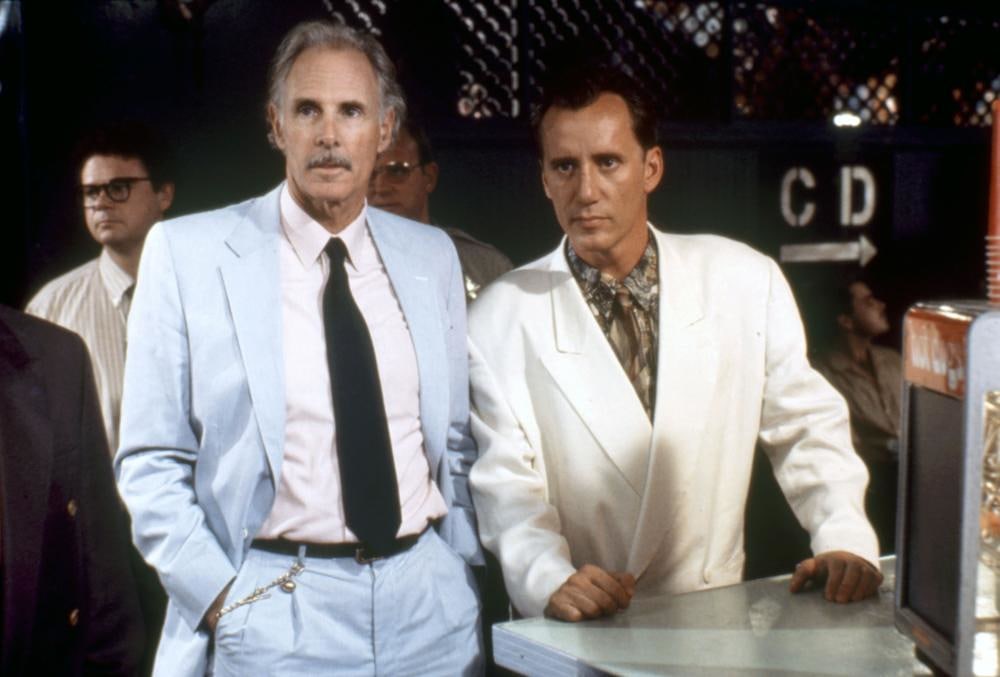
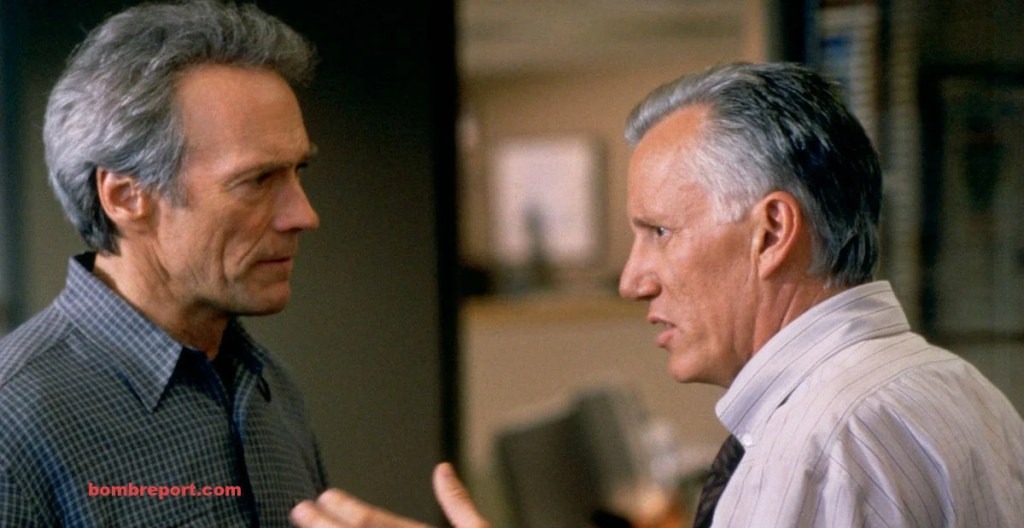
Today is the 78th birthday of James Woods, one of the great actors of his generation. Capable of completely disappearing into his roles, Woods is known for his unmatched intensity and diversity. He can play anything from a badass action hero to the most evil scum of society, from a mentally handicapped adult to the most intelligent man in the room. He’s been one of my favorite actors since I first discovered him in the late 80’s in the movie BEST SELLER (1987). While he’s won multiple Emmy awards and Golden Globes, the fact he’s never won an Oscar for his acting skills is beyond my comprehension. As he was an Executive Producer of OPPENHEIMER (2023), I particularly enjoyed that film’s Oscar success! Happy Birthday Mr. Woods! Thanks for the countless hours of entertainment you’ve brought into my life! 

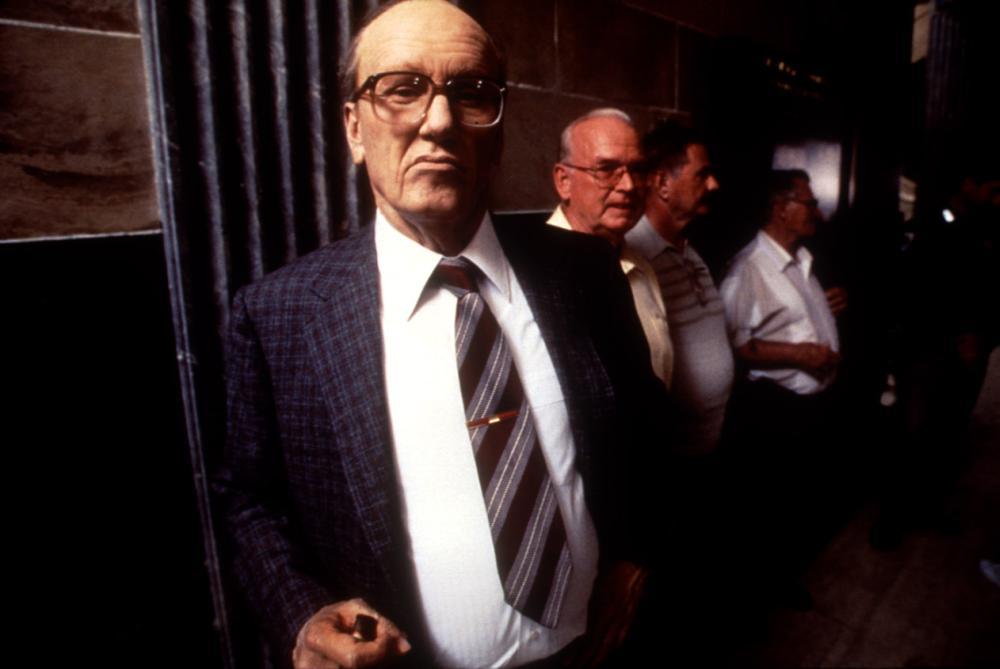
ONCE UPON A TIME IN AMERICA (1984)

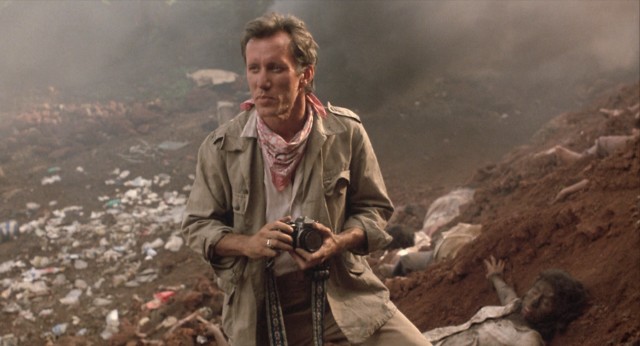
SALVADOR (1986)

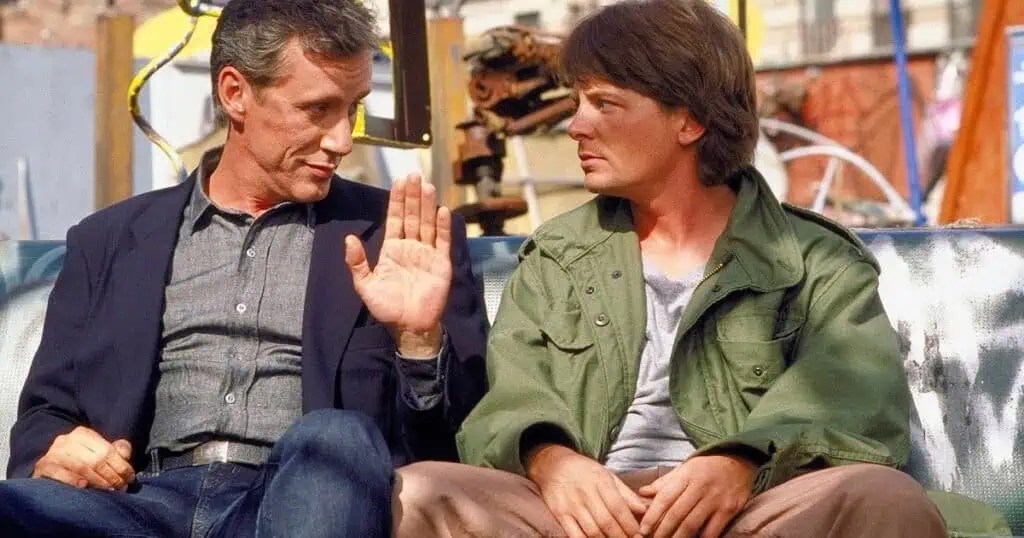
THE HARD WAY (1991)

GHOSTS OF MISSISSIPPI (1996)

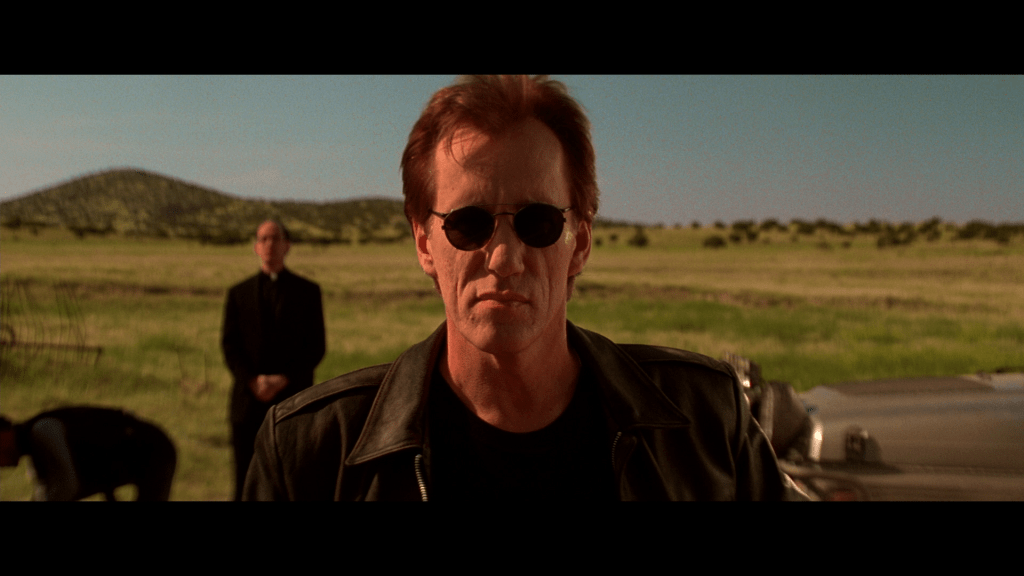
VAMPIRES (1998) – Happy Birthday, John Carpenter!


In celebration of the 77th birthday of the great Director John Carpenter, I decided to watch his 1998 film VAMPIRES, starring one of my favorite actors in James Woods. I specifically remember the first time I ever read that this movie was being made and that it would star Woods. It was 1996, and I had just been hired to work for a company called Acxiom Corporation in Conway, Arkansas. It was at this job that I first had access to this new thing called the Worldwide Web. As far as I know, it was the first time I had ever looked at the internet. Of course, I immediately started completing searches on some of my favorite actors, including James Woods, when I came across VAMPIRES as a movie currently in production. These were the first times in my life that I was able to find out about new film projects without looking in a magazine or watching shows like Entertainment Tonight.

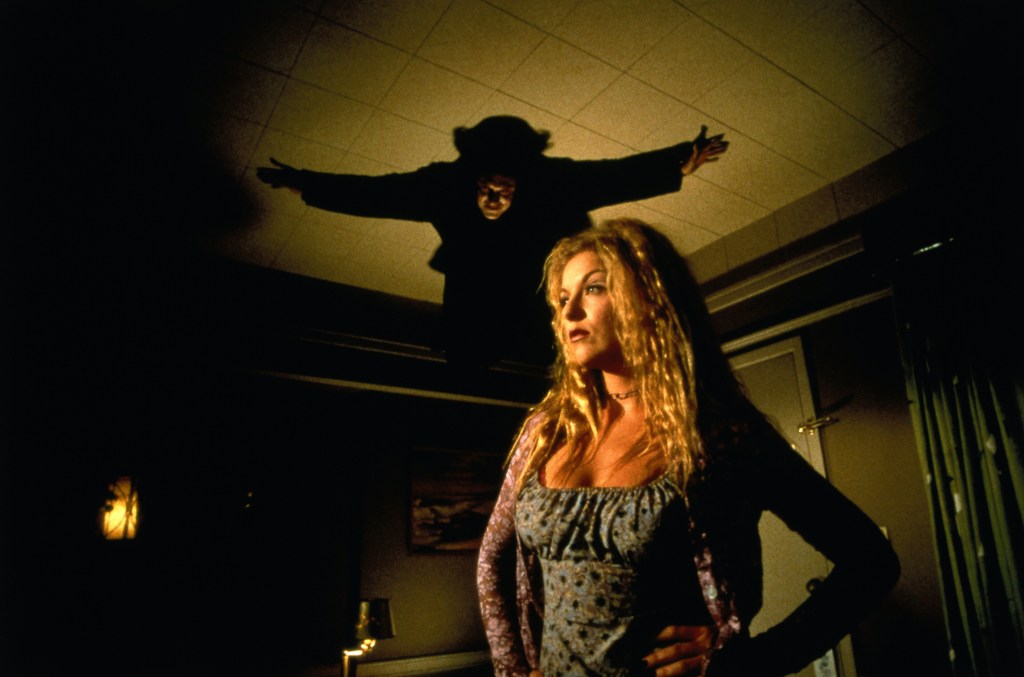
In VAMPIRES, James Woods stars as Jack Crow, the leader of team of vampire hunters who get their funding from the Vatican. We’re introduced to the team when they go into a house in New Mexico and proceed to impale and burn a nest of vampires. While the rest of the team celebrates the mission that night in a hotel filled alcohol, drugs, and whores, Jack can’t escape the feeling that something isn’t right, as he doesn’t believe they got the “master vampire” of the group. Unfortunately, Jack is right to worry. As they’re partying, the master vampire Valek (Thomas Ian Griffith) interrupts the fun and proceeds to kill everyone there, with the exception of Jack, his partner Tony (Daniel Baldwin), and Katrina (Sheryl Lee), a prostitute he decided to just bite on. Valek isn’t just a regular old master vampire, either. As it turns out, he’s the original vampire, and he’s on a quest to find the Berziers Cross, an ancient Catholic relic, that will allow him and other vampires to walk in the daylight. Against this backdrop, Jack, Tony, and a priest named Adam (Tim Guinee) use Katrina, who now has a psychic link with Valek, to try to kill the ultimate master vampire Valek, his cleric accomplice Cardinal Alba (Maximillian Schell), and just hopefully, save mankind in the process!

I know that VAMPIRES is not the most well-known or beloved John Carpenter film. He’s done so many great movies, but VAMPIRES is special to me as it was the first of his films that I ever saw in the movie theater. And the opening 30 minutes of the film is as badass as it gets. Carpenter is a master of the set-up. There’s lots of slow motion as Carpenter’s guitar riffs rock the soundtrack and the camera moves in on James Woods, with his cool sunglasses and black leather jacket, just before his team goes in and destroys a vampire nest at the beginning of the film. I also think the set-up of Thomas Ian Griffith as Valek is awesome, as he strolls up to the hotel room while the vampire hunters celebrate, completely unaware of the carnage about to befall them. Griffith has never looked cooler than he did in his long black coat and long hair, both blowing in the wind. These were awesome moments that illustrated Carpenter’s ability to project a sense of visual cool and power that I was mesmerized with. I wanted to see what happens next. And as a 25-year-old man at the time of VAMPIRE’s Halloween release in 1998, I also gladly admit that I really enjoyed the beauty of a 31-year-old Sheryl Lee. I would have definitely done everything I could do to save and protect her. The remainder of the film may have not been able to keep the same momentum as those first 30 minutes, but it’s a solid, enjoyable film, buoyed by the intense performance of Woods!

Vampires (1998) Directed by John Carpenter Shown: Thomas Ian Griffith, Sheryl Lee

There are several items of trivia that interest me about VAMPIRES:

  1. John Carpenter had a good working relationship with James Woods on the set, but they had a deal: Carpenter could film one scene as it is written, and he would film another scene in which Woods was allowed to improvise. The deal worked great, and Carpenter found that many of Woods’ improvised scenes were brilliant.
  2. VAMPIRES was John Carpenter’s only successful film of the 1990’s. Its opening weekend box office of $9.1 million is the highest of any John Carpenter film.
  3. The screenplay for VAMPIRES is credited to Don Jakoby. Jakoby has some good writing credits, including the Roy Scheider film BLUE THUNDER (1983), the Cannon Films “classic” LIFEFORCE (1985), and the Spielberg produced ARACHNAPHOBIA (1990). The reason Don Jakoby interests me, however, is the fact that he had his name removed from the film I’ve seen more than any other, that being DEATH WISH 3 (1985), starring Charles Bronson. Even though Jakoby provided the script for DEATH WISH 3, due to the drastic number of changes, Jakoby insisted his name be removed. The script is credited to the fake “Michael Edmonds” instead.
  4. As I was typing up my thoughts on VAMPIRES today, I learned of the death of the director David Lynch. This brings special poignancy to the fact that John Carpenter cast Sheryl Lee after seeing her on Lynch’s T.V. series TWIN PEAKS (1990).
  5. Frank Darabont, who directed one of the great films of all time, THE SHAWSHANK REDEMPTION (1994), has a cameo as “Man with Buick.” Fairly early in the film, after Crow, Montoya, and Katrina crash their truck escaping the hotel massacre, they encounter the man at a gas station and forcefully take the Buick. This is a strong sign of just how respected John Carpenter was by other great filmmakers at the time.

John Carpenter has directed some absolute classics like ASSAULT ON PRECINCT 13 (1976), HALLOWEEN (1978), ESCAPE FROM NEW YORK (1981), THE THING (1982), and BIG TROUBLE IN LITTLE CHINA (1986). There’s no wrong way to celebrate a man who has brought such joy into our lives through his work. Today, I’m just thankful that he has been given the opportunity to share his talents with us!   

FAST-WALKING – James Woods and Kay Lenz light up the screen!


One of the first movies I ever watched starring James Woods is COP. It’s a 1988 action thriller about a police detective on the trail of a serial killer. I really enjoyed the movie, which was directed by James B. Harris. Harris is a producer and director whose various credits include THE KILLING (1956), PATHS OF GLORY (1957), LOLITA (1962) and TELEFON (1977, with Charles Bronson). Harris also directed James Woods in a movie from 1981 called FAST-WALKING. 

FAST-WALKING is about a prison guard named Frank “Fast-Walking” Minniver. He loves to smoke pot and dream about a future life in a beautiful part of Oregon. In order to make that move, though, he needs to make some money. When a black revolutionary named William Galliot is transferred to his prison, he finds himself with some options, as he receives offers of money from two different sides. On one side is his cousin Wasco, a prison trustee who offers Fast-Walking $25,000 to kill the revolutionary as part of a staged prison race riot. On the other side is Galliot’s own people who offer him a bag of money containing $50,000 if he’ll help Galliot escape. The biggest obstacle to taking the bigger payday is that Wasco threatens to kill Fast-Walking’s lady love Moke, if he doesn’t make the right choice.

The cast is phenomenal in FAST-WALKING beginning with James Woods as the title character. In his best roles, Woods is somewhat morally ambiguous, and we hope he makes the right decisions at the end. This definitely fits that mold. Kay Lenz was sexy as hell as Moke. We’re not supposed to be sure if she’s just using Fast-Walking or if she truly loves him. She plays that balance well. In a surprising turn of events, M. Emmet Walsh gives the most memorable performance of his career, and it doesn’t have a thing to do with his acting. Rather, he does a full frontal nude scene. I’d like to forget this performance, but it’s burned into my psyche at this point. Tim McIntire was the revelation to me, though, as Fast-Walking’s inmate cousin Wasco. This is the only role I really know him from, and he absolutely nails it. The fate of his character is one of the most satisfying parts of the entire film. Unfortunately, McIntire would suffer from drug and alcohol addiction and would pass away a few years after completing his role in FAST-WALKING. I can’t help but think there could have been more great performances if his career would have been longer. 

I recommend FAST-WALKING. It’s not a perfect film, but James Woods, Kay Lenz, and Tim McIntire all make it worth watching. 

TRUE BELIEVER -James Woods & Robert Downey, Jr. take on the system!


I’ve been going through my movies and re-watching some of my favorites. A movie that clearly falls into that category is TRUE BELIEVER starring James Woods and Robert Downey, Jr. I became a fan of James Woods around 1988 primarily based on the strength of two action films that he worked on around that time, those being BEST SELLER (1987) and COP (1988). I spent hours combing through the rental selections at our local Hastings Entertainment store and I remember both of these movies being in the “New Release” section at the same time. They’re both hard hitting, violent films, and Woods is especially good in both. Being an obsessive completist, I found myself searching out the prior work of the star for some more good movies. It was during this time that TRUE BELIEVER was released to the theaters in February of 1989. I enjoy courtroom dramas, and knowing the intensity that Woods brings to his films, I had no doubt I would like it.

The story revolves around Eddie Dodd (Woods), an attorney who used to fight for the cause of the little guy, but now mostly finds himself protecting drug dealers from the law. Enter Roger Baron (Downey Jr.), a recent law school graduate who idolizes Dodd, and is now disappointed to see his legal hero reduced to his current cynical state. When a Korean mother comes into the law offices one day and says her son, Shu Kai Kim, has spent 8 years in prison for a crime he didn’t commit, cynical Dodd doesn’t want to take the case. Young Baron shames him into it though, and soon the two men find themselves taking on the New York District Attorney himself Robert Reynard (Kurtwood Smith) as they try to prove Shu Kai Kim’s innocence and help him taste freedom once more!

Often when people ask me to name my favorite James Woods film, I’ll quickly answer TRUE BELIEVER even though there are many good films to choose from. There are a few reasons for that. First, even though the film is a serious legal thriller with many dark undertones, director Joseph Ruben has given his movie a dark sense of humor. Woods and Downey, Jr. are able to find the humorous elements inherent in their characters and that brings some fun to the otherwise serious proceedings. Second, I really enjoy the story of underdogs taking on the big, bad system. Shu Kai Kim is an underdog who maintains his innocence when all the evidence appears flawlessly stacked against him. Eddie Dodd, the once feared civil rights lawyer who is now a hopeless burnout, is an underdog who appears to be out of his league as he goes up against the most powerful attorney in New York. These underdog story lines give us something to really root for as the story plays out. And finally, the performances are phenomenal from top to bottom. James Woods, an actor known for his electric intensity, is at the top of his game and Kurtwood Smith is a great adversary. Robert Downey, Jr. brings a bright-eyed enthusiasm to the role that compliments the cynical Woods nicely. And Yuji Okumoto as Shu Kai Kim shows us quite a transformation from a man who goes from almost being dead inside as a result of his eight years in prison, to a man who allows a glimmer of hope to seep in for a second chance. I think Okumoto is great in the role. The story takes many twists and turns and I enjoy every moment as it plays out.

TRUE BELIEVER is definitely one of my favorites!

Scenes That I Love: Prohibition’s Funeral From Once Upon A Time In America


Once Upon A Time In America (1984, dir by Sergio Leone, DP: Tonino Delli Colli)

Change comes with a new year.  That’s just an inevitable fact of life.  Sometimes, it’s good chance and sometimes, it’s bad change and sometimes, it’s change that is both good and bad.  That’s certainly the case with today’s scene that I love.

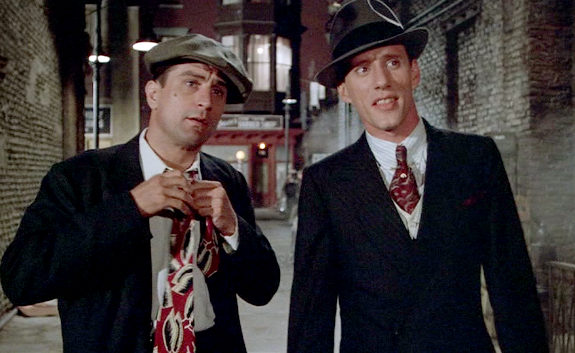
In Serigo Leone’s 1984 masterpiece, Once Upon A Time In America, 1933 brings with it the end of prohibition.  While the nation celebrates the right to once again legally drink, gangsters like the ones played by James Woods and Robert De Niro mourn the loss of their business and try to figure out a new way to pay their bills.

In this scene, Prohibition — that law that was hated by so many — is given a send-off by the people that it made very rich.

Film Review: Cop (dir by James B. Harris)


First released in 1988, Cop stars James Woods as Lloyd Hopkins, a homicide detective who does not …. wait for it …. GO BY THE BOOK!

Actually, has there ever been a movie about a homicide detective who always made sure to go by the book?  I’m sure there has been but I really can’t think of any off the top of my head.  Whenever a homicide detective shows up as the main character of a movie, you can be sure that he’s going to drink too much, carouse too much, and get yelled at by his superiors.  If the movie involves a serial killer, you can be sure that the detective and the killer are going to be mirror images of each other, two renegades who have found differing ways to work out their issues with the world.

As much as we talk about the cliché of the cop who does it his way, would we really want to see a movie about a cop who plays by the rules?  I mean, most people dread having to deal with cops.  It’s not just that cops usually bring bad news.  It’s also that dealing with a cop means having to spend a lot of time while they slowly and methodically go through all of their procedures.  There have been so many times that I’ve been pulled over speeding and I’ve just wanted to yell, “Just write the ticket!”  Most people agree that we need some sort of police force, regardless of what the Defund folks say.  But most people also hate following the rules, especially when those rules feel rather arbitrary.  That’s the appeal of the renegade cop.  The renegade cop fills a purpose in society but, at the same time, he dislikes dealing with all of the usual cop nonsense as much as the rest of us.

As for Lloyd Hopkins, he’s hyperactive, jittery, sleazy, and a terrible father and husband.  He cheats on his wife.  He tells his daughter all about the gory details of his job.  (His daughter, it should be noted, seems to enjoy hearing them.)  He obsesses on the crimes that he investigates and he pursues murderers with a fanaticism that suggests that Lloyd knows that he’s just one bad life choice away from becoming one of them himself.  (And, indeed, Lloyd kills quite a few people over the course of Cop, even allowing one person to get into another room and get a shotgun just so Lloyd will have an excuse to shoot him.)  Lloyd is someone who is dangerous to know but, at the same time, he’s also probably the only person who can stop the killer who is seemingly committing random murders in Los Angeles.

The plot is typical of films about obsessive detectives pursuing faceless killers but Cop stands out due to the director of James B. Harris and the lead performance of James Woods.  Harris creates an atmosphere of continual unease, one in which the viewers gets the feeling that anyone could become the killer’s next victim at any moment.  James Woods, meanwhile, plays Lloyd as being a live wire, someone who simply cannot stop thinking and talking because he knows that the minute he does, he’s going to have to take a serious look at the wreck of his life and his own less-than-stable behavior.  Lloyd may be a self-destructive bastard but he’s a compelling self-destructive bastard and, in this film’s version of Los Angeles, he’s about as close as one can get to avenging angel.  The film is full of good actors, like Charles Durning, Lesley Ann Warren, and Raymond J. Barry, but it is ultimately James Woods’s show.  Lloyd gets the film’s final line and it’s a killer but it works because, by the time he utters it, the viewer feels as if they have gotten to know Lloyd.

Cop is based on Blood on the Moon, a novel by James Ellroy.  I have not read that novel so I don’t know how closely Cop sticks to Ellroy’s original plot.  Nor do I know how James Ellroy felt about Cop, which was the first movie to be based on his work.  That said, Ellroy’s writing and Harris’s film share a dark vision of humanity and a subversive sense of humor.  Ellroy has often declared himself to be the world’s great crime novelist and, from what I’ve read of his work, I would tend to agree.  Cop is certainly not the greatest crime movie ever made (nor is it the best film to ever be adapted from Ellroy’s writing) but it’s still pretty damn good.

Live Tweet Alert: Join #FridayNightFlix for Diggstown!


As some of our regular readers undoubtedly know, I am involved in a few weekly live tweets on Twitter and Mastodon.  I host #FridayNightFlix every Friday, I co-host #ScarySocial on Saturday, and I am one of the five hosts of #MondayActionMovie!  Every week, we get together.  We watch a movie.  We tweet our way through it.

Tonight, at 10 pm et, #FridayNightFlix has got 1992’s Diggstown!  When James Woods teams up with Lou Gossett, Jr., it’s time for boxing action!

If you want to join us this Friday, just hop onto twitter, start the movie at 10 pm et, and use the #FridayNightFlix hashtag!  It’s a friendly group and welcoming of newcomers so don’t be shy.

Diggstown is available on Prime and Tubi!  See you there!

Retro Television Reviews: A Great American Tragedy (dir by J. Lee Thompson)


Welcome to Retro Television Reviews, a feature where we review some of our favorite and least favorite shows of the past!  On Sundays, I will be reviewing the made-for-television movies that used to be a primetime mainstay.  Today’s film is 1972’s A Great American Tragedy!  It  can be viewed on YouTube!

Brad Wilkes (George Kennedy) had a good career, working as an aerospace engineer.  He was able to buy a nice house.  With his wife, Gloria (Vera Miles), he was able to raise a good family.  He was even able to buy a sailboat, one that is the pride of the entire marina.  But then, one day, he’s told that the company is letting him go.

Returning to his home, Brad tells Gloria that he’s lost his job but that everything’s going to be okay because not only does he have a $10,000 pension but he’s sure he can find a new job.  “Of course, I might not be making $35,000 a year….” he says.

(Watching at home, I said, “Pfffft!  I make more than that!”  But, of course, Brad is talking about $35,000 in 1972 money, which would be the equivalent of a quarter of a million today.)

However, Brad soon discovers that getting a new job will not be as easy as he assumed.  It turns out that there are a lot of people out there looking for work and most of them are younger, cheaper, and better educated than Brad.  The bills start to pile up.  His former boss (Robert Mandan) informs Brad that his pension is going to be $7,000 less than he thought.  Brad forces himself to go down to the unemployment office so that he can collect $25 a week and then suffers the humiliation of being offered a loan by his well-meaning son-in-law (played by a youngish James Woods).  Gloria gets a job at the same clothing store where she used to shop and her lecherous boss (Kevin McCarthy) starts to hit on her.

For Brad, the final humiliation comes when he has to sell the boat.  A younger boat owner (Tony Dow, with a huge mustache) puts Brad in contact with a woman named Paula (Natalie Trundy).  Paula wants to buy the boat and, after they take it out on the water, Brad finds himself tempted to cheat on his wife.  It all gets to be too much for Brad and soon, he’s on a plane to Nevada where hopefully one good night at the craps table will be enough to pay his bills….

Watching this film, I found myself feeling very sorry for Brad while, at the same time, becoming very frustrated with him.  On the one hand, his company tossed him out after years of loyal service and then tried to screw him out of his pension.  On the other hand, Brad spent almost the entire movie in denial about how bad things actually were.  It’s one thing to be proud and it’s another to just be stubborn.  Knowing that he has next to no money, Brad still insists on throwing his annual 4th of July party and he even invites his former boss to come over and celebrate.  Brad simply cannot bring himself to admit that his old life is over but really, who can blame him?  He’s not the one who chose to be fired.

A Great American Tragedy was directed by J. Lee Thompson, who also did Cape Fear, The Guns of Navarone, the Planet of the Apes sequels, and several Charles Bronson films.  There are no fight scenes to be found in A Great American Tragedy but Thompson does get good performances from his cast and the film makes great use of George Kennedy’s likability.  The viewer remains sympathetic to Brad, even when he makes mistake after mistake.  A film about a formerly secure family suddenly discovering just how much the economy sucks, A Great American Tragedy remains just as a relevant today as when it was first made.