Ready or Not 2: Here I Come (dir. by Matt Bettinelli-Olpin & Tyler Gillett) Review


“You call it tradition. I call it rich people practicing murder.” — Grace

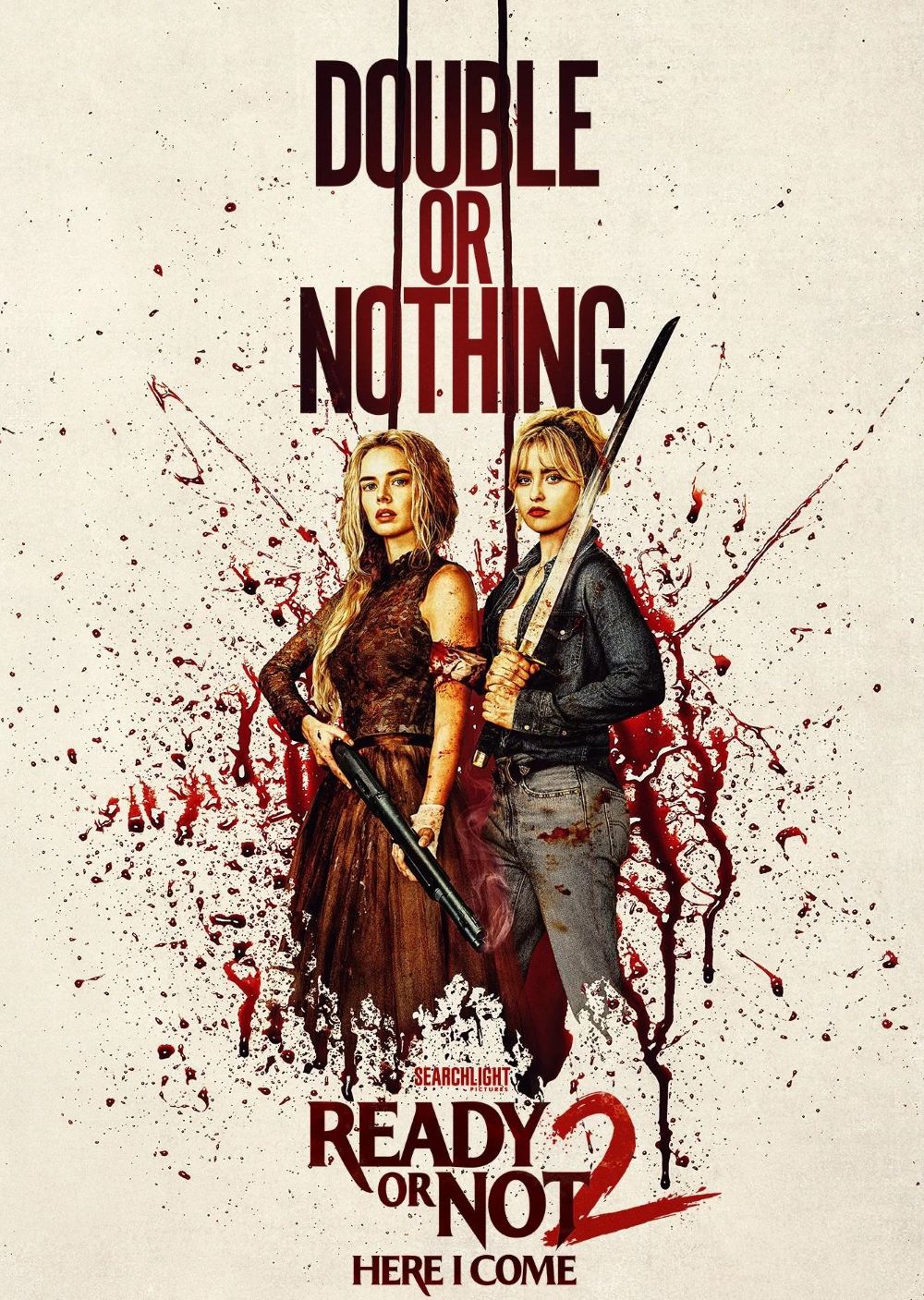
Ready or Not 2: Here I Come returns to the savage, high‑class dystopia of the Le Domas bloodline with a more manic, more crowded, and far bloodier version of the original’s “game‑night‑from‑hell” premise. Picking up years after the events of Ready or Not (2019), the film keeps Samara Weaving’s Grace at the center but expands the stakes beyond one family’s cursed estate into a loose oligarchy of ultra‑rich cultists, each with their own warped sense of tradition and entitlement. The result is a horror‑comedy that feels less like a slow‑burn ambush and more like a running, blood‑slicked marathon, where the line between satire and spectacle blurs but rarely collapses.

What distinguishes Ready or Not 2: Here I Come from many sequels is how deliberately it both leans into and pushes past the formula that made the first film such a cult hit. Rather than replay a single night of hide‑and‑seek in a shuttered mansion, this chapter sends Grace and her newly introduced estranged sister Faith (played by a suitably frazzled and sardonic Kathryn Newton) hurtling through multiple estates, country clubs, and private compounds, each governed by its own set of sadistic rules. The “game” is no longer a one‑family ritual but a broader network of wealthy families that have weaponized occult tradition as a way to justify their casual cruelty. This widening of the universe gives the film a more sprawling, almost procedural feel, as if the audience is being dragged through a gauntlet of different flavors of rich‑person depravity.

The script’s decision to pair Grace with another female lead is one of the film’s stronger creative choices. The strained sibling dynamic between Grace and Faith mirrors the original’s examination of family, but through a more grown‑up, emotionally messy lens. Their bickering and reluctant cooperation prevents Grace from simply repeating the same resilient‑final‑girl schtick; instead, she becomes a kind of worn‑out mentor forced to drag someone else into the nightmare she barely survived. The sisters’ chemistry—equal parts snark, vulnerability, and grudging solidarity—stops the film from devolving into pure nihilism and keeps the audience invested in their survival, even when the body count around them threatens to overwhelm the narrative.

Visually, Ready or Not 2 leans harder into its gore‑buff aesthetic than the first film did. The kills are more elaborate, more inventive, and frankly more grotesque, with set‑pieces involving everything from industrial kitchen equipment to ritualized animal sacrifice and spiked pits. Director Matt Bettinelli‑Olpin and Tyler Gillett, collectively known as Radio Silence, understand that the franchise’s appeal lies as much in its darkly comic carnage as in its social commentary, and they lean into that balance with gusto. The camera lingers on the absurdity of seeing millionaires in bespoke suits and designer gowns being dismantled in grotesque, almost slapstick fashion, which heightens the film’s “eat‑the‑rich” subtext without feeling like a lecture. The horror is still visceral, but it’s also frequently absurd, which fits the tone they’ve established since the original.

The escalation of violence, however, is also the film’s most obvious point of tension. Some of the more extreme set‑pieces verge on the gratuitous, and the pacing occasionally stumbles when the movie pauses between massacres to re‑establish lore or introduce new cult families. Not every supporting antagonist lands with the same impact as the original Le Domas clan; a few of the new patriarchs and matriarchs feel more like walking punchlines than genuinely threatening presences. The film compensates by front‑loading its energy with early, high‑impact kills and goofy one‑liners, but there are stretches where the plot feels like it is waiting for the next big set‑piece rather than organically building toward it.

One of the more interesting additions to the cast is Sarah Michelle Gellar, who pops up in a mid‑film role that taps into genre‑fan nostalgia while also deepening the film’s exploration of complicity and corruption. Gellar’s character is not the altruistic hero she personified in earlier horror‑adjacent roles; instead, she embodies a kind of jaded, self‑interested survivor who has learned to weaponize the same systems of privilege that the Le Domas exploited. Her presence calls attention to the cyclical nature of abuse and privilege in the film’s world: evil tendencies don’t disappear with one family’s downfall; they simply migrate to the next generation of the wealthy and powerful. This commentary on systemic rot is not subtle, but it also doesn’t feel out of place in a franchise that has always mixed political anger with slapstick brutality.

Where Ready or Not 2 arguably falters is in its structural confidence. The original film’s strength lay in its tight runtime and single‑location claustrophobia; the sequel’s sprawling geography and ensemble of killers make it feel looser and more episodic. The middle section in particular risks feeling like a series of vignettes tied together more by tone than by forward momentum. Some of the attempted twists and revelations toward the end rush past the audience before they can fully land, and there is at least one late‑stage development that feels less like a surprise and more like a contractual obligation to franchise‑building. The film clearly wants to set up a possible trilogy, but in doing so it occasionally sacrifices the emotional and narrative payoff that would make its closing sequences truly memorable.

Even with these flaws, the core appeal of Ready or Not 2: Here I Come remains intact. Samara Weaving continues to command the screen with a mix of physical toughness and wounded intelligence, and she’s paired here with a credible foil in Kathryn Newton who pushes her character into new emotional territory. The film also maintains the sharply satirical DNA of its predecessor, using its murderous rituals as a funhouse‑mirror reflection of real‑world conversations about wealth, inheritance, and generational trauma. The kills are over‑the‑top, the politics are broad, and the pacing is uneven, but the movie never loses sight of what it wants to be: a darkly comic splatterfest that lets audiences cheer for the underdog while watching the decadent one percent spectacularly implode.
Review: Ready or Not (dir. by Matt Bettinelli-Olpin & Tyler Gillett)


“This is some Lord of the Rings bullshit!” — Grace

Ready or Not is a sharp, nasty, and often very funny horror-comedy that turns a nightmare wedding into a vicious class satire. It works best when it embraces its wild premise with full confidence, even if some of its deeper ideas are only lightly explored.

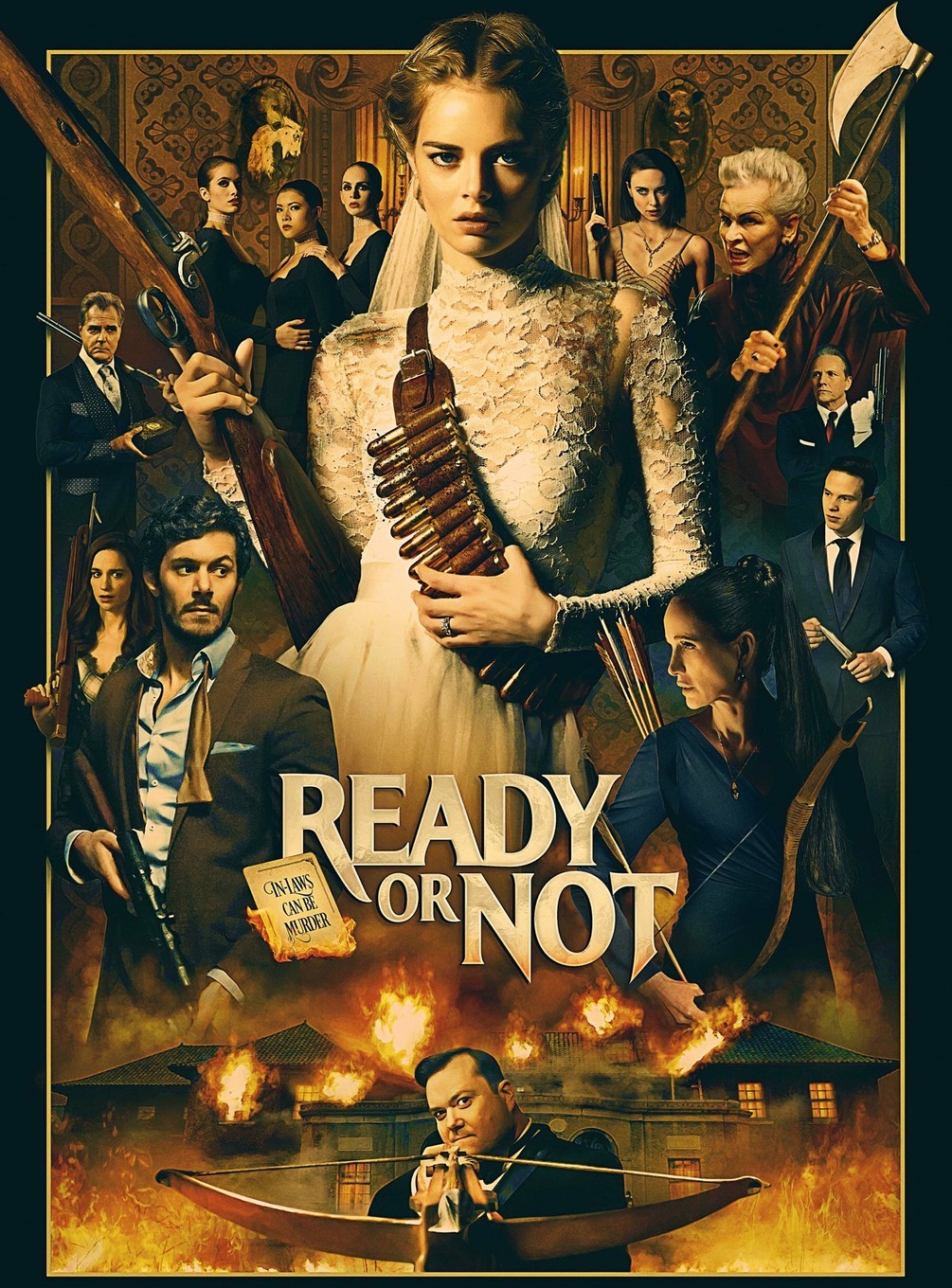
Directed by Tyler Gillett and Matt Bettinelli-Olpin, the film follows Grace, played by Samara Weaving, on what should be the happiest night of her life, only for her new in-laws to force her into a lethal game of hide-and-seek. That setup is simple, but it gives the movie a strong engine: one part survival thriller, one part dark comedy, and one part social commentary about money, power, and inherited privilege. The elegance of the concept is that it does not need much explanation to be effective, because the rules are clear, the stakes are immediate, and the movie wastes little time before letting the chaos begin.

The biggest strength of Ready or Not is Samara Weaving’s performance. Grace is written as someone who feels believable under pressure, which matters because the film asks her to go through absurd, increasingly brutal scenarios while still retaining her humanity. Weaving handles the tonal balancing act extremely well, moving between fear, frustration, disbelief, and darkly comic determination without losing the character’s core. She gives the film an emotional anchor, and without that, the movie would risk becoming just another splatter-heavy genre exercise.

The supporting cast also deserves credit because the Le Domas family is not just rich, but memorably awful in different ways. Adam Brody, Andie MacDowell, Henry Czerny, and the rest of the ensemble help create a household that feels polished on the surface and rotten underneath. Their performances are broadly heightened, but that fits the movie’s tone. The family’s panic, incompetence, and stubborn devotion to tradition become part of the joke, and the film gets a lot of mileage out of watching these people unravel while trying to appear dignified.

Tonally, the movie is strongest when it leans into the tension between horror and comedy. The violence is graphic, but the film rarely treats gore as the whole point; instead, it uses bloodshed as part of a larger joke about entitlement and ritual. That gives the movie a mischievous energy. It wants you to laugh at the absurdity of the situation while still feeling the danger, and for the most part it succeeds. The pacing is also a real asset, since the film avoids spending too long on setup and gets to the conflict quickly. Once the game begins, it keeps finding new ways to escalate the mayhem.

Thematically, Ready or Not is clearly aiming at class resentment and inherited wealth, and that angle gives the film bite. The Le Domas family represent old money, secrecy, and self-preserving tradition, and the movie uses their ridiculous customs to expose how fragile that world really is. There is a satirical edge to how the film portrays privilege as both absurd and dangerous, especially when the family’s traditions are treated with near-religious seriousness. At the same time, the movie is not especially subtle about this, and that can be either a strength or a limitation depending on what you want from it.

That lack of subtlety is one of the film’s few weaknesses. The “eat the rich” angle is easy to understand, but it is not always developed with much nuance, and some viewers may wish the script pushed its social ideas further. The mythology behind the family’s tradition is also deliberately loose, which helps the movie stay nimble but can make the lore feel less important than the film suggests it should be. In addition, the third act gets increasingly outrageous, and while that is part of the fun, not every twist lands with the same force. A few viewers may find the ending more satisfying than the logic that gets it there.

Even so, the film’s swagger largely carries it through those rough spots. Ready or Not understands that tone is everything in a movie like this, and it keeps its balance surprisingly well for something so gleefully chaotic. It is gory without becoming tedious, funny without undercutting the danger, and mean-spirited without losing sympathy for its lead. That is not an easy combination to pull off, and the filmmakers deserve credit for making the material feel brisk and controlled rather than sloppy or overextended.

What makes Ready or Not memorable is that it knows exactly what kind of movie it is. It is not trying to be profound in the heavy, prestige-drama sense, but it is smarter than a simple bloodbath and more disciplined than a pure shock machine. Its pleasures come from its energy, its attitude, and its willingness to let a ridiculous premise keep escalating without apology. The result is a horror-comedy with enough style, bite, and performance power to remain entertaining even when its thematic ambitions are a little broader than deep.

In the end, Ready or Not is a highly watchable genre piece with a terrific lead performance, a savage sense of humor, and a premise that stays potent from beginning to end. It is not perfect, and its satire can feel a little blunt, but it delivers exactly what it promises: a tense, bloody, darkly funny ride through a family dinner from hell.

Insomnia File #21: Truth (dir by James Vanderbilt)


What’s an Insomnia File? You know how some times you just can’t get any sleep and, at about three in the morning, you’ll find yourself watching whatever you can find on cable? This feature is all about those insomnia-inspired discoveries!

If, last night, you found yourself awake at three in the morning, you could have turned over to Starz and watched the 2015 film, Truth.

I can’t say for sure whether or not Truth would have put you to sleep.  It kept me awake, largely because I was in a state of shock that any movie could be as bad as what I was watching.  Without running the risk of hyperbole, I can say that Truth is one of the worst fucking movies that I’ve ever seen in my entire life.  It’s not just that the film is poorly scripted, inconsistently acted, and directed in the most heavy-handed way possible.  No, the problems with Truth went far beyond mere execution.  Truth is a film with an agenda, one that I kind of agree with, but it’s such a total misfire that it ends up doing more damage to its cause than good.  Truth is meant to be a defense of the much maligned mainstream media but it’s so poorly put together that it’s easy to imagine it being one of Donald Trump’s guilty pleasures.  Remember how all of us musical theater nerds used to hatewatch Smash?  I imagine that the White House staff does the same thing with Truth.

Truth is ostensibly based on a true story.  In 2004, veteran anchorman Dan Rather (played by Robert Redford) reported a story that then-President George W. Bush got preferential treatment while he was serving in the Air National Guard.  This story was considered to be especially big because 1) the Iraq War was deeply unpopular, 2) Bush was in a tight race for reelection, 3) his opponent, John F. Kerry, didn’t have much to offer beyond having served in Vietnam, and 4) questions were being raised about what Kerry actually did in Vietnam.

One of the most important pieces of evidence in Rather’s story were four memos that had been provided by a retired Lieutenant Colonel from the Air National Guard, a veteran Bush-hater named Bill Burkett (played, in the film, by Stacy Keach).  Shortly after the story aired, conservative bloggers claimed that the memos were obvious forgeries.  After spending weeks defending the story and haughtily dismissing anyone who didn’t collect an eight-figure paycheck from CBS, Rather admitted on air that the authenticity of the memos could not be verified.  In the wake of the scandal, Rather’s longtime producer, Mary Mapes (Cate Blanchett), was fired.  Rather retired a year earlier than expected and went on to become one of those reliably dull commentators who occasionally emerges to complain about how the world hasn’t been the same since Adlai Stevenson died.  Mapes later wrote a book, which argued that 1) the memos were authentic and 2) it didn’t actually matter whether they were authentic, even though they like so totally were.

With all the current talk about fake news and whether both the media and Hollywood exist in a bubble, Truth is a film that should be especially relevant but, as previously stated, it’s so clumsy and heavy-handed that it actually does more harm than good.  About halfway through the film, there’s a hilarious scene in which literally the entire country is shown watching 60 Minutes with awe-struck expression on their face.  Children are watching.  Customers in a bar are watching.  The cooking staff in the kitchen pauses in their work to watch the report.  Heroic music rises on the soundtrack.  This scene, with all of its self-important grandeur, pretty much sums up everything that’s wrong with Truth.  It’s one thing to argue that the news media does, should, and must play an important role in American life.  It’s another thing to make your argument by constructing a fantasy world where the entire country plots their lives around watching 60 Minutes.  But that’s the way Vanderbilt directs the entire film.  He’s so high on the fumes of his good intentions that he doesn’t realize his film basically comes across like a parody of those intentions.

Especially in the second half of the film, there’s a lot of speeches about why journalism is important.  And those speeches may actually make a great point but the problem is that none of them convince us that Mary Mapes and Dan Rather didn’t get fooled by some painfully obvious forgeries.  In its laudable effort to defend journalism, Truth makes the mistake of excusing shoddy journalism. When, towards the end of the film, Mapes exclaims that the memos were only a minor part of the overall story and not necessary to prove that Bush got preferential treatment, you want someone to ask her, “If you could prove the story without them, then why did you include these unverifiable documents in the first place, especially considering that they were received from a questionable source?”  But nobody does because none of the film’s saintly characters have been written or portrayed with the nuance necessary to be able to survive a question like that.   Truth‘s problem is that it wants to have it both ways.  “It doesn’t matter that this story was based on obviously fake documents,” Truth says, “And, because Mary Mapes and Dan Rather were sent by God to tell the truth, the obviously fake documents were completely real.”

And then there’s the film’s performers.  Stacy Keach is great as Burkitt and his eccentric performance suggests the film that Truth could have been if it wasn’t so concerned with trying to portray its lead characters as saints.  But then there’s Robert Redford, whose portrayal of Dan Rather has all the nuance and personality of a wax figure.  (Redford wears suspenders.  That’s the extent of his performance.)  As Mary Mapes, Cate Blanchett is totally wasted.  She doesn’t really have a character to play, beyond her male director’s conception of what a professional woman is supposed to be like.  (She also has a traumatic back story of abuse, which the film trots out in such a klutzy manner that it’s actually incredibly insulting to real-life abuse victims.)  Dennis Quaid, Topher Grace, and Elisabeth Moss all show up as members of Mapes’s team.  Quaid is playing a military man so he gets to salute in slow motion.  Grace is playing a hipster with a beard so he gets this embarrassing scene where he rants about how he’s being targeted not because of sloppy reporting but because of a corporate conspiracy.  (This was obviously meant to be a huge applause moment but, like a lot of the movie, it doesn’t explain how the progressive cause is helped by shoddy journalism.)  Moss doesn’t get to do anything, other than sit in the background.  To waste a cast of this quality is a crime.

So why did this mostly terrible film get respectful reviews?  Why did Sasha Stone and Jeff Wells insist that Truth was destined to be an Oscar contender?  Call it confirmation bias.  Truth plays to mainstream liberals (which includes the majority of film reviewers) in much the same way that God’s Not Dead 2 plays to Christians.  But just because you agree with a film’s ideology, that doesn’t make it an example of good filmmaking.  While artistic films are often political, it’s rare that political films are ever art.  If every anti-Bush film was an artistic masterpiece, we would be living in a cinematic golden age.

Here’s the thing.  We live in a time when the media is under attack and being used a convenient scapegoat for every bad thing in America. Donald Trump largely won in 2016 by portraying the media as being biased and that’s a charge that will undoubtedly be repeated many times over the next four years.  A heavy-handed mess like Truth doesn’t help anything.

truth_2015_poster

Previous Insomnia Files:

  1. Story of Mankind
  2. Stag
  3. Love Is A Gun
  4. Nina Takes A Lover
  5. Black Ice
  6. Frogs For Snakes
  7. Fair Game
  8. From The Hip
  9. Born Killers
  10. Eye For An Eye
  11. Summer Catch
  12. Beyond the Law
  13. Spring Broke
  14. Promise
  15. George Wallace
  16. Kill The Messenger
  17. The Suburbans
  18. Only The Strong
  19. Great Expectations
  20. Casual Sex?

Super Bowl Trailer: The Amazing Spider-Man 2 “Enemies Unite”


1024px-Amazing-spider-man-2-poster

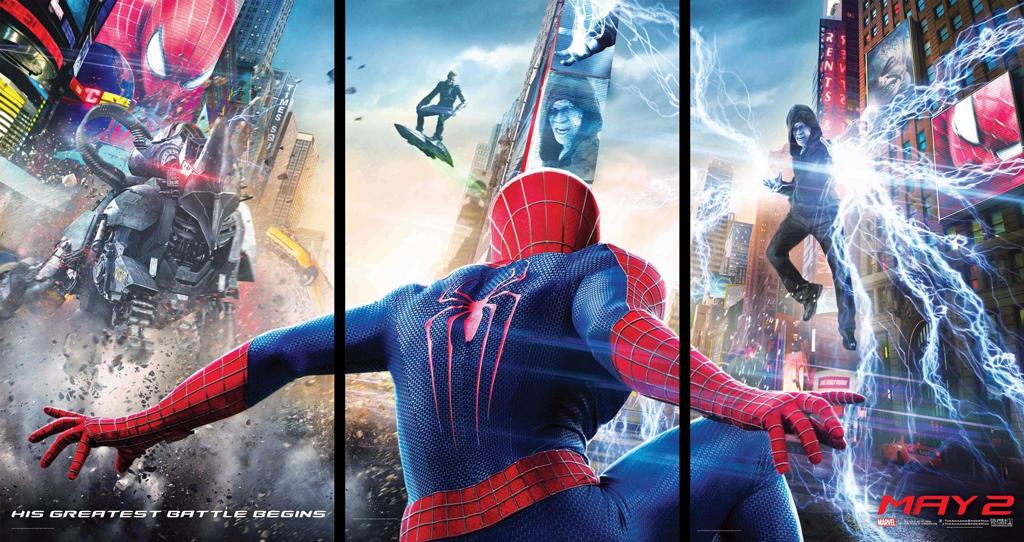
The Amazing Spider-Man 2 continues the reboot Sony began with the Spider-Man franchise minus Sam Raimi and Tobey Maguire. While The Amazing Spider-Man did quite well in the box-office when it came out in 2012 the general consensus with fans and critics alike was that it was just another origins tale that rehashed events from the Peter Parker story that was already well-known to comic book and non-comic book fans alike.

This sequel will now bring in villains and some plot points that fans have been waiting for since the franchise first began in the early 2000’s. We have Jamie Foxx and Paul Giamatti as the villains Electro and Rhino finally appearing on film with hints that other iconic Spider-Man villains such as the Vulture and the Hobgoblin probably having a cameo. This sudden flood of villains looks to be Sony’s attempt to set-up a Sinister Six film that would be the studio’s way to counter the success of Marvel’s and Disney’s success with The Avengers.

Time will tell if this gamble will end up paying off for Sony and many comic books wish it won’t since there’s a chance it would return Spider-Man to Marvel Studios thus making him available to appear in future films as an Avenger.

Sony went to unprecedented lengths to make sure people knew about the new trailer arriving on Super Bowl Sunday. We had a teaser teasing the trailer for the Super Bowl. Then we had the brief teaser shown during the Super Bowl. Below is the full 3-minute plus trailer that was shown on-line soon after.

The Amazing Spider-Man 2 is set for a May 2, 2014 release date.

Trailer: Total Recall (Official)


Paul Verhoeven’s 1990 scifi classic, Total Recall, remains one of Arnold Schwarzenneger’s better films. The film was an adaptation of the Philip K. Dick novellete, We Can Remember It for You Wholesale, and in 2012 it will once again go up on the big-screen as a Len Wiseman remake.

Wiseman’s film looks to take the basic premise of Dick’s novellete and some of the changes made for the Verhoeven production. What looks to have been changed in this upcoming remake is the absence of Mars as the backdrop for the character Douglas Quaid who believes he is actually a secret agent working to free Mars from the tyrannical rule of one Cohagen. This time around the setting is instead a dystopian future Earth where the planet has been split into two super-factions the rule planet. There’s Euroamerica which combines the North American and European Union into one sovereign entity and it’s rival in New Shanghai which puts together the economic powerhouses of China and the nations of South East Asia.

It is in this new backdrop that Colin Farrell’s Quaid must run from the forces of Cohaagen (played by Bryan Cranston) and help the freedom fighters trying to change things for the better. The trailer itself shows less of the cheesy look of the Verhoeven film and instead goes for a much slicker art design that some people have called the Mass Effect-look. I must admit that the fully-armored forces chasing after Quaid look like Blue Suns mercenaries from that BioWare scifi rpg.

I will say that the trailer does a great job in referencing similar scenes and sequences from the original Verhoeven film while adding in new touches to give the film it’s very own unique look. For one of this summer season’s last films before fall season begins this one looks like a must-see.

Total Recall is set for an August 3, 2012 release date.