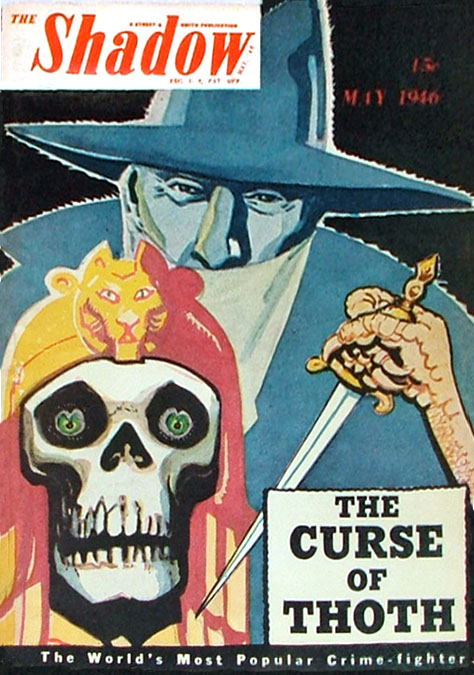
by Charles Coll
This is from 1946. I’m using it in 2026 to get a head start on October!
by Charles Coll
This is from 1946. I’m using it in 2026 to get a head start on October!
Today, the Shattered Lens celebrates what would have been the 72nd birthday of the great Italian actor (and my friend), Giovanni Lombardo Radice!
I’ve shared this scene before but I’ll happily share it again. In Ruggero Deodato’s The House On The Edge of the Park, Giovanni Lombardo Radice shows a bunch of rich jerks how he can dance. Dancing with Radice is his frequent co-star, Lorraine De Selle. Wearing the yellow suit is the equally iconic David Hess.

I love the opening of Dario Argento’s 1971 giallo, Four Flies On Grey Velvet. This was Argento’s third film as a director and it tells the story of an American drummer who gets caught up in a gruesome murder. In the opening credits, we watch as Michael Brandon drums away and finds time to take care of a distracting fly. In just a matter of minutes, Argento tells us everything we need to know about our hero and the role that he’ll be playing in this film. Like the best drummers, he holds everything together and that’s a good skill to have because, in typical Argento fashion, his entire life is about to fall apart.
From Four Flies on Grey Velvet:
(Only ten days to go until Horrorthon!)
It’s Been A While
It’s been two months since I last did one of these. With October approaching and horror movies demanding my attention, I decided to get at least one essay in here before the ghosts and the goblins take over for a month. Fair warning: This is not one of my happier editions of Thoughts On The Culture (and some of the earlier drafts were even angrier!) but these are some things that I’ve been trying to say for a few years now. If not now, when?
25 Years Ago
Every September 11th I decide I am going to write about the anniversary, and almost every year I give up after a few sentences. After the first few sentences, I always find myself getting too angry to continue.
There were 2,977 official victims of 9/11. And then there are the people who died in the days, months, years, and decades afterward, some from illnesses related to the toxic dust at the scene, some from the depression and anxiety that followed the attacks, and many in the wars that were fought after the attack. The world changed that morning. That is a difficult thing to deal with in one essay.
I know that a lot of my friends who are a bit more on the Left than me get upset with the patriotic rituals that surround the anniversary. That is because 9/11 sits badly with their preferred narrative, the idea that America is always at fault, that terrorists are simply activists trying to be heard, and that a capitalist society like this one is always one disaster away from collapse.
9/11 showed something else. I do not care if you dislike American foreign policy. That does not justify killing nearly three thousand innocent people. Subsequent investigations did not reveal saintly militants with a message. They revealed a crew of men whose ideas about sex and morality looked to be permanently stuck in early adolescence. And America did not collapse. That day is full of stories of heroism and sacrifice from the kind of ordinary Americans who usually don’t get much respect from our leaders. A society in which people have individual freedom does not come apart because of a disaster. Meanwhile, to take two countries long beloved by the anti-American Left, Venezuela couldn’t survive the loss of Hugo Chavez and Cuba’s power grid cannot even handle a visit from Hasan Piker.
Heroism
Actor Steve Buscemi was an FDNY firefighter with Engine 55 from 1980 to 1984. The day after the attacks, Buscemi put on his old uniform and worked 12-hour shifts for days on end. He did not have his people alert the media. He did not brag about it later. He did it because he thought it was his duty. A lot of other people, who were not famous, did the same. Father Mychal Judge, a fire department chaplain, died while praying over the bodies of those who had crashed down to the streets. The passengers of UA 93 fought back and, at the cost of their own lives, prevented one of the planes from crashing into the U.S. Capitol. That was America on September 11th.
A Few Words From My Father
My dad thought the attacks showed how weak the terrorists actually were. As he put it, flying a plane into a building does not take a genius. It just takes someone willing to do it. He was not intimidated. He took the lack of immediate follow-up attacks to mean the whole operation was sloppier than it looked on television. He thought the terrorists had gotten lucky, and that their leaders would be blown to oblivion soon enough. At the time, everyone assumed he was wrong. “Well, not many people agree with you on that,” one of my cousins said. It turned out my father was largely right.
Who Is More Traumatized?
This week, on Twitter or X or whatever you want to call it, a lot of Zoomers have been complaining that 9/11, an event which they were not even around for, is getting too much attention, and that the COVID years were actually the worst trauma.
The trauma from 9/11 came from not knowing what the future held, and from the feeling that another attack could come at any moment. On 9/11, even those of us who did not live in New York watched the attacks unfold on television. I saw people jumping to their deaths. I saw, and heard, the towers fall. Those images have never left. On that day, they were in the whole country’s head. As for COVID, how traumatized you were depended a great deal on which state you were living in. Not everyone was set free from the lockdowns at the same time.
The weird thing, to me, is this attitude that trauma is a competition. Nothing seems to scare certain people more than the fact that not everyone looks at the world the same way they do.
Is It Okay To Lighten The Mood?
It’s always okay to lighten the mood. In fact, I think there are times when writers have a duty to lighten the mood. Sometimes, I think it’s too tempting (and perhaps too easy) to simply obsess on the bad at the expense of the good. It’s easy to focus on the darkness but we need to be willing to accept that there are reasons to be happy as well. For instance, Big Brother is nearly over. Seriously, this has been a very frustrating season of the show that I love to moderately dislike. This season hasn’t so much been bad as it’s just been overwhelmingly bland. It’s not good enough to get excited about but it’s not really bad enough to hate. Fortunately, it’ll all be over on October 1st, just in time to celebrate the scary season!
Admittedly, this is mostly good news for me and my friend Jim. I introduced him to Big Brother last season and I don’t think he’s ever going to forgive me.
On a Happier Note
Let’s end this edition on a hopeful note. I am already busy watching and reviewing films for this year’s Horrorthon. October is my favorite time of the year, and I look forward to celebrating it with all of you!
4 Shots From 4 Films is just what it says it is, 4 shots from 4 of our favorite films. As opposed to the reviews and recaps that we usually post, 4 Shots From 4 Films lets the visuals do the talking.
We’re halfway through July, which means that it’s time for me to get ready for October! (Seriously, who cares about August and September?) Here to inspire are….
4 Shots From 4 Horror Movies
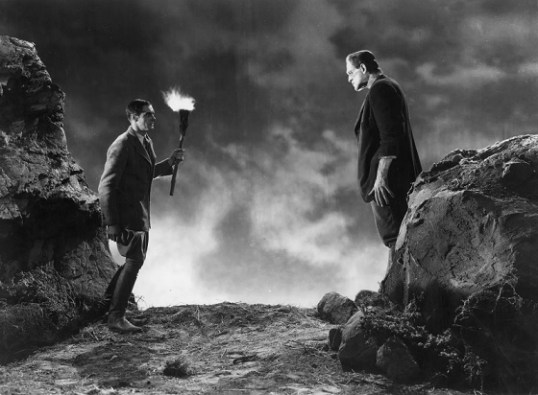
Frankenstein (1931, dir by James Whale, DP: Arthur Edeson)
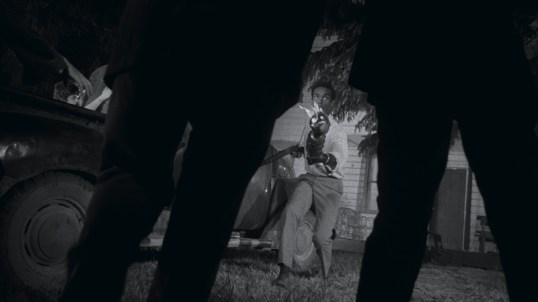
Night of the Living Dead (1968, dir by George Romero)
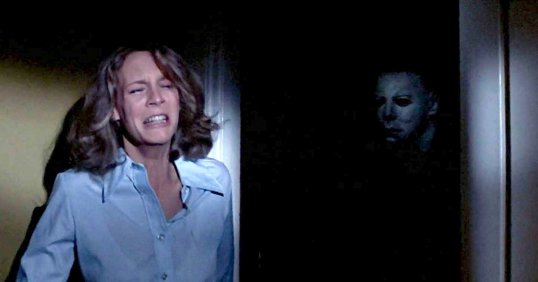
Halloween (1978, dir by John Carpenter, DP: Dean Cudney)

Inferno (1980, dir by Dario Argento, DP: Romana Albano)
4 Shots From 4 Films is just what it says it is, 4 shots from 4 of our favorite films. As opposed to the reviews and recaps that we usually post, 4 Shots From 4 Films is all about letting the visuals do the talking.
Today, on what would have been his birthday, the Shattered Lens remembers director Herschell Gordon Lewis. It’s time for…..
4 Shots From 4 Herschell Gordon Lewis Films
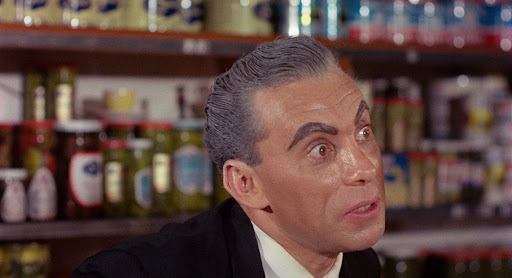
Blood Feast (1963, dir by Herschell Gordon Lewis, DP: Herschell Gordon Lewis)
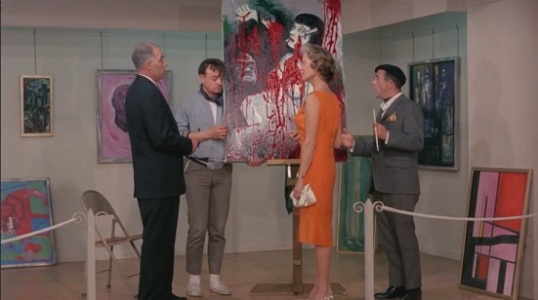
Color Me Blood Red (1965, dir by Herschell Gordon Lewis, DP: Herschell Gordon Lewis)
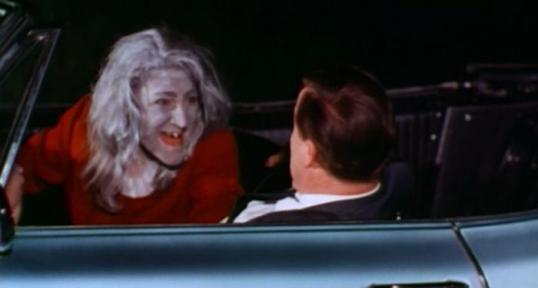
Something Weird (1967, dir by Herschell Gordon Lewis, DP: Andy Romanoff)
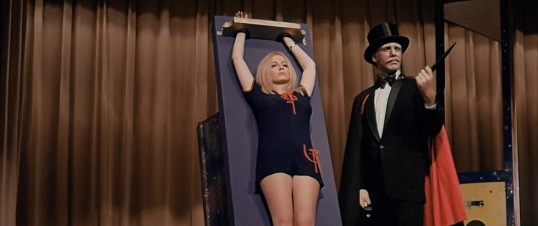
The Wizard of Gore (1970, dir by Herschell Gordon Lewis, DP: Alex Ameri and Daniel Krogh)
Originally, I thought this song was about possums. Possums are wonderful creatures by the way, even if they do kind of smell bad. They don’t get rabies, they eat tics and roaches, and they’re basically very shy and timid. And they’re severely myopic!
Unfortunately, this song is not about Possums. Instead, the song was named after Possum Kingdom Lake, which is a real lake down here in Texas.
For a while, I thought it was about a vampire. Then I had my best friend Evelyn listen to it and she thought it was about a serial killer. We were both wrong. According to the lead singer of the Toadies, the song was actually about a ghost who was inviting someone to join him in the netherworld.
This video was shot in Dallas. Woo hoo! Overall, it’s a good song, though the “so help me, Jesus” stuff feels a bit forced. And it’s a good video, full of atmosphere and menace. It’s a perfect video for the second Friday the 13th of 2026!
Enjoy!
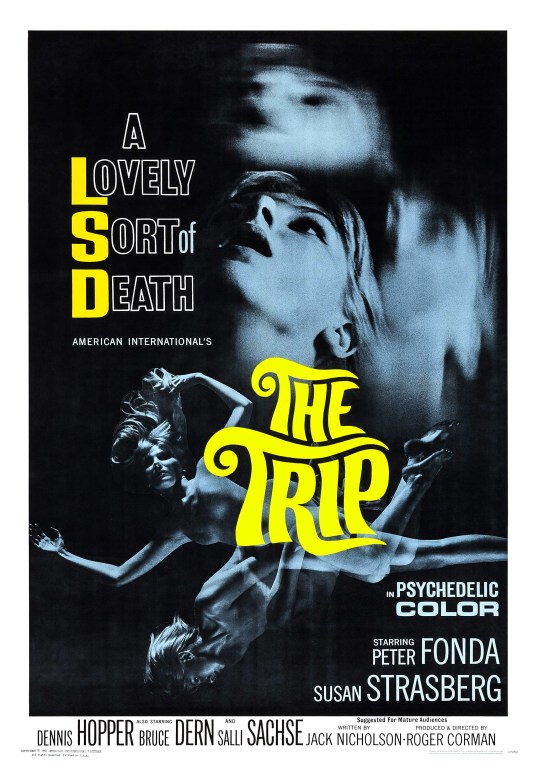
Today would have been Peter Fonda’s 86th birthday.
This scene is from Roger Corman’s 1967 film, The Trip. Corman dropped acid himself before filming Peter Fonda doing the same thing in this film. Regardless of how one views Corman’s cinematic recreation of Fonda’s experience with acid, The Trip is considered to be one of the first nuanced drug films. While it doesn’t endorse drug use, it also doesn’t descend into the hysterics of a film like Reefer Madness. Interestingly enough, the script was written by Jack Nicholson.
Here is Peter Fonda, exploring the city on LSD, in The Trip:
Today’s scene that I love is from the 1961 Roger Corman-directed Edgar Allan Poe adaptation, The Pit and The Pendulum!
Not only is that pendulum nightmarish as Hell but check out that set design! One can see that Corman definitely took some inspiration from the work being done in the UK by Hammer. Watching this scene, it is easy to see why Corman devoted so much of the early 60s to directing Vincent Price in various Edgar Allan Poe adaptations.
Enjoy!

The brilliance of this scene is that it pretty much speaks for itself. It doesn’t need to be overanalyzed. It doesn’t need to be carefully explained. It works because it captures what almost everyone has always suspected, even if they didn’t necessarily have the courage to say so aloud.
From John Carpenter’s 1988 film They Live:

