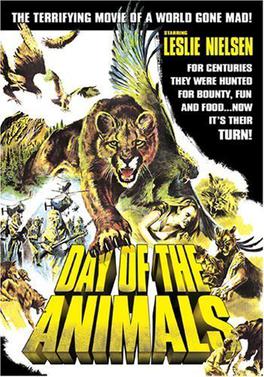
A Horror Insomnia File #29: Day of the Animals (dir by William Girdler)


What’s an Insomnia File? You know how some times you just can’t get any sleep and, at about three in the morning, you’ll find yourself watching whatever you can find on cable? This feature is all about those insomnia-inspired discoveries!

Last night, if you were having trouble sleeping around 2:30 in the morning, you could have turned on your television, changed the station to Movies TV, and watched the 1977 nature-goes-crazy horror film, Day of the Animals!

Now, I should admit that I was not suffering from insomnia last night.  Jeff and I are currently up at beautiful Lake Texoma and we just happened to be up late last night and flipping through the stations.  I should also admit that, unlike most of the other movies reviewed for this feature, Day of the Animals was not one of “those insomnia-inspired discoveries.”

No, we had both seen Day of the Animals before.  The thing with Day of the Animals is that it’s one of those films that, if you see that it’s on TV, you simply have to stop what you’re doing and watch it.  Considering that the man had a long career in the movies and I haven’t seen every film that he made, I could be wrong on this but I am fairly certain that Day of the Animals is your only opportunity to see Leslie Nielsen wrestle a grizzly bear.

Leslie Nielsen plays Paul, a businessman who is part of a group of hikers.  Shortly before he wrestles with the bear, Paul stands, bare-chested, in the middle of a rainstorm and attempts to taunt God.  “Melville’s God, that’s the God I believe in!” Paul shouts, “You want something!?  YOU TAKE IT!”  Then he turns to one of the hikers and says, “I know what I want and I’m taking it!  I killed a man for you!”

Now, at this point, I should probably make it clear that Day of the Animals is not a comedy, though it’s always inspired a lot of laughter whenever I’ve watched it.  Day of the Animals attempts to be a very serious horror movie.  It even has an environmental message.  Because of the hole in the ozone layer, solar radiation is driving all of the mountain animals crazy.  Mountain lions attack campers.  A grizzly bear wrestles Leslie Nielsen.  A group of rats attempt to kill a policeman.  German shepherds tear a man apart.  And it’s not just the wild animals that are being affected.  Leslie Nielsen goes crazy too.

Of course, Leslie Nielsen isn’t the only hiker.  Genre vet Christopher George plays the leader of the tour and Lynda Day George is along for the ride as well.  If you’ve seen the movie Pieces, you’ll remember Christopher George as the tough cop and Lynda Day George as the tennis pro who, at one point, dramatically screams “BASTARD!” into the wind.  Susan Backlinie, who was the first victim in Jaws, also has a role in this film and that seems appropriate.  Director William Girdler found quite a bit of success in ripping off Jaws.  Before Day of the Animals, he directed Grizzly.

But good ole Leslie Nielsen is pretty much the entire show here.  He tries really, really hard to give an intense and frightening performance.  In fact, he tries so hard that you almost feel guilty for laughing at times.  But then you see that head of perfect silver hair and you hear that deadpan voice saying, “Come here, you little punk!” and you just can’t help yourself.

Anyway, Day of the Animals may be bad but I defy anyone not to watch it.
Previous Insomnia Files:

  1. Story of Mankind
  2. Stag
  3. Love Is A Gun
  4. Nina Takes A Lover
  5. Black Ice
  6. Frogs For Snakes
  7. Fair Game
  8. From The Hip
  9. Born Killers
  10. Eye For An Eye
  11. Summer Catch
  12. Beyond the Law
  13. Spring Broke
  14. Promise
  15. George Wallace
  16. Kill The Messenger
  17. The Suburbans
  18. Only The Strong
  19. Great Expectations
  20. Casual Sex?
  21. Truth
  22. Insomina
  23. Death Do Us Part
  24. A Star is Born
  25. The Winning Season
  26. Rabbit Run
  27. Remember My Name
  28. The Arrangement

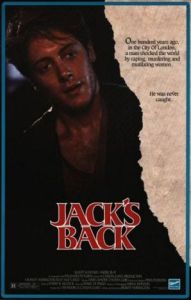
A Movie A Day #282: Jack’s Back (1988, directed by Rowdy Herrington)


When med student Rick Westford (James Spader) is found hung at the free clinic where he worked, the police say that he committed suicide.  Rick’s estranged twin brother, John (James Spader), does not agree and launches an investigation of his own.  With the help of Rick’s co-worker, Chris (Cynthia Gibb), John discovers that Rick may have learned the identity of a serial killer who has been copying the crimes of Jack the Ripper and murdering prostitutes in Los Angeles.  However, the killer knows that John is getting close to discovering his identity so the killer sets out to frame John not only for the prostitute murders but for the murder of his brother as well.
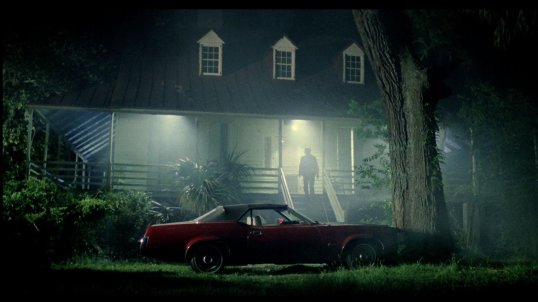
Jack’s Back is a movie that deserves to be better known than it is.  James Spader gives two great performances, as both Rick and John.  He and Cynthia Gibb make a good team and Jack’s Back actually does some unexpected things with their relationship.  Jack’s Back was directed by Rowdy Herrington, who is best known for Roadhouse and Gladiator.  Jack’s Back is part murder mystery, part action thriller, and part horror movie and Herrington does a good job of switching back and forth through Jack’s Back constantly shifting tone.  Because this is a low-budget movie with a small cast, there really are not enough suspects to make the murderer’s identity a surprise but Spader, Herrington, and Gibb always keep things interesting.

This is a film that really does deserve to be better known.

Horror Scenes That I Love: The Chase Sequence from Jean Rollin’s La Vampire Nue


Today’s horror scene that I love comes from 1970’s La Vampire Nue.  This film was directed by the brilliant French surrealist, Jean Rollin.

What is this scene about?  To be honest, what it’s about is less important than how it looks and how it makes you feel.  As a director, Jean Rollin specialized in bringing dreams and nightmare to cinematic life.  (That said, as surreal as this scene may be, it’s actually one of the more straight forward moments to be found in Rollin’s filmography.)

4 Shots From 4 Films: The Special Lucio Fulci Edition!


4 Shots From 4 Films is just what it says it is, 4 shots from 4 of our favorite films. As opposed to the reviews and recaps that we usually post, 4 Shots From 4 Films is all about letting the visuals do the talking.

This October, I am going to be using our 4 Shots From 4 Films feature to pay tribute to some of my favorite horror directors, in alphabetical order!  That’s right, we’re going from Argento to Zombie in one month!

Today’s director?  The master of Italian horror himself, Lucio Fulci!

4 Shots From 4 Films

Zombi 2 (1979, dir by Lucio Fulci)

The City of the Living Dead (1980, dir by Lucio Fulci)

The Beyond (1981, dir by Lucio Fulci)

The House By The Cemetery (1981, dir Lucio Fulci)

Horror on the Lens: Frankenstein Meets The Space Monster (dir


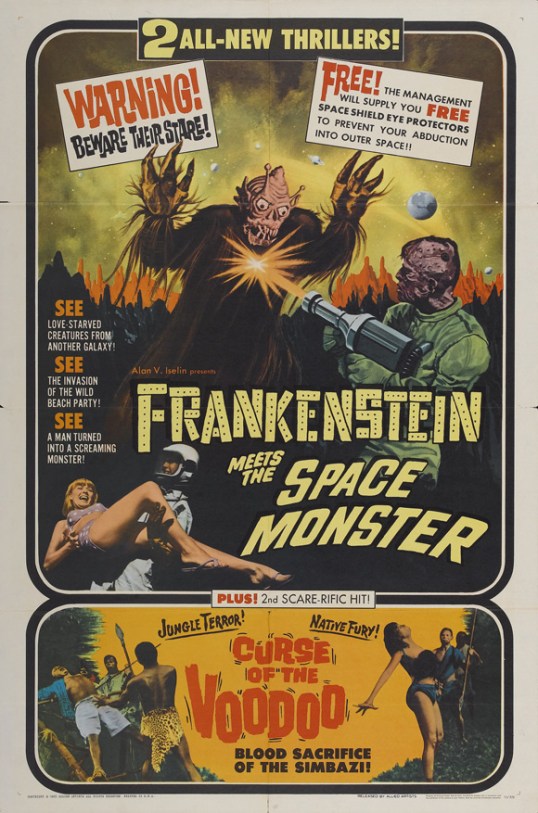
For today’s selection of horror on the lens, we offer up the odd 1965 horror/sci-fi/beach movie hybrid, Frankenstein Meets The Space Monster.  Despite the movie’s title, it’s not about Frankenstein.  Instead, it’s about an astronaut named Frank who is actually an android.  When his latest mission into space goes wrong, Frank ends up crashing in Puerto Rico.  Now malfunctioning, Frank causes some major chaos.  Can his creator, Dr. Adam Steele (played by character actor James Karen, who years later would appear in Return of the Living Dead), track Frank down and put an end to his reign of terror?

And what about the Martians?  Android Frank isn’t the only threat in Puerto Rico.  A group of Martians have landed and are determined to kidnap any girl wearing a bikini so that they can use them to repopulate their race.  We’re told that every woman on Mars — with the apparent exception of Princess Marcuzan, played with evil haughtiness by Marilyn Hanold — has been killed as the result of an atomic war.  Assisting Princess Marcuzan is Dr. Nadir (Lou Cutell), a short, bald Martian with pointy ears.

One of the oddest things about Frankenstein Meets The Space Monster is that, despite being a standard — if wonderfully nonsensical — low-budget B-movie, it features a great soundtrack!

Enjoy!

Horror Film Review: It (dir by Andy Muschietti)


Here’s something that Leonard Wilson and I have often pondered here at the TSL offices:

Why is it sometimes easier to write about a film that you hate than a film that you love?

Seriously, whenever I watch a film that I hate, the review is practically written in my head before the end credits have even finished.  Take Wolves At The Door, for instance.  It took me 15 minutes to write that review, largely because I hated the movie and I knew exactly why.  Perhaps it’s because the films that we hate are usually films that have absolutely nothing going on beneath the surface.  It’s a lot easier to write a review when you don’t have to consider things like nuance or subtext.

But, whenever I see a film that I absolutely love, it always takes me longer to write the review.  It’s intimidating to try to explain why you loved a film.  After all, if you loved it then you want everyone else to love it too.  And you want to be able to explain yourself with something more than just: “This was a really good movie.”

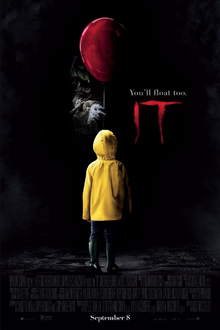
Take It, for instance.  It opened last month.  I saw it on opening weekend.  I thought it was a great movie, one that worked in almost every way possible.  I thought it was well-acted.  I thought Andy Muschietti did an excellent job directing it.  I thought that the film’s screenwriters did a wonderful job adapting a challenging novel.  When It was scary, it made me scream.  When It was funny, it made me laugh.  Most importantly, when It was dramatic, it brought tears to my eyes.  It was not just a brilliant horror movie but it was a brilliant movie period, one of the best of the year so far.

And yet, it’s taken me a month to write the 300 words that you just read.  Fortunately, back in September, Ryan C. posted a review of his own.

I assume that most of our readers have already seen It or, at the very least, they’re familiar with what the film is generally about.  It’s based on the famous novel by Stephen King, a work that many feel is King’s best.  It follows a group of 12 year-old outcasts, the so-called Losers Club, as they spend the summer of 1989 trying to avoid both local bullies and Pennywise the Dancing Clown (played by Bill Skarsgard), the cannibalistic demon who lives in the sewers and who awakens every 27 years so that it can feed.  Pennywise has already killed George, the younger brother of Bill Denborough (Jaeden Leiberher), the unofficial leader of the Losers Club.

Now, don’t get me wrong.  Pennywise is terrifying.  If horror films actually get Oscar nominations, Bill Skarsgard would, at the very least, be in the running for best supporting actor.  But what’s interesting is that Pennywise is not necessarily the scariest thing about the film.  As both outcasts and children, the members of the Losers Club are in the unique position to be able to understand that, despite its placid surface, Derry would be a scary place even without a killer clown.  Much like the town of Twin Peaks, there is much going on underneath the surface.

Overweight Ben Hanscom (Jeremy Ray Taylor) is attacked by bully Henry Bowers (a terrifying Nicholas Hamilton), who proceeds to try to carve his name into Ben’s stomach.

Hypochondriac Eddie Kaspbrak (Jack Dylan Glazer) is literally held prisoner by his domineering mother.

African-American Mike Hanlon (Chosen Jacobs) and Jewish Stan Uris (Wyatt Oleff) spend their days being targeted over their skin color and religion.

Beverly Marsh (Sophia Lillis) lives in poverty with her sexually abusive father.

Ever since the disappearance of George, Bill Denborough has watched his family fall apart.

Richie Tozier (Finn Wolfhard) tells jokes because making people laugh is the only way he can convince them not to beat him up.

Even the fearsome Henry Bowers lives with an abusive father who has obviously passed down his twisted worldview to his son.

And yet, despite all of that, It is not a relentlessly grim movie.  In some ways, it’s one of the most hopeful horror films that I’ve ever seen.  This may be a horror film but it’s also a celebration of friendship.  The members of the Losers Club may be outcasts but at least they have each other.  It may be a horror film but it’s also a coming-of-age story, an adventure of growing up that the members of the Losers Club will never forget.  (Except, of course, they will…but not until the sequel…)  All of the child actors are natural and believable in their roles.  Since he gets the funniest lines, Finn Wolfhard is an obvious audience favorite but really, the entire ensemble does a good job.

Between Get Out at the start of the year and It in September, this has been a very good year for horror.  It is one of the best films of 2017 so see it.

Horror on TV: Thriller 1.7 “The Purple Room” (dir by Douglas Heyes)


For tonight’s televised horror, we have The Purple Room, an episode of Thriller!  This was an anthology series, which was hosted by Boris Karloff.  Admittedly, Thriller was not always a horror show.  Several of the episodes were crime stories that had a diabolical twist.  But anything hosted by Boris Karloff is perfect for October viewing.

The Purple Room is the story of what happens when a skeptic (played by a young Rip Torn) learns that he must spend a year living in a house that may or may not be haunted.  This episode is enjoyably creepy and, of course, it has a twist.

This episode originally aired on October 25th, 1960.

Horror Film Review: It (dir by Tommy Lee Wallace)


Last month, before I saw the latest film version of Stephen King’s It, I watched the 1990 miniseries version.

This was my first time to watch the It miniseries, though I had certainly heard about it.  Most of the reviews that I had read seemed to be mixed.  Everyone seemed to agree that Tim Curry was the perfect choice for the role of Pennywise the Dancing Clown.  However, many other reviewers complained that the program’s television origins kept It from being as effective as it could be.  “Not as scary as the book,” everyone seemed to agree.  The actors who played the members of the Loser Clubs as children all seemed to receive general acclaim but not everyone seemed to be as enamored with the adult cast.  And everyone, even those who liked the miniseries as a whole, complained about the show’s finale, in which Pennywise took the form of a giant spider.

Well, I have to agree about the giant spider.  That spider looked painfully fake, even by the standards of 1990s television.  Not only does the spider look too fake to truly be scary but, once that spider showed up, that meant that Tim Curry disappeared from the film.  Curry deserved every bit of acclaim that he received for playing the role of Pennywise.

All that said, the miniseries was still a lot better than I had been led to believe.

Certainly, it’s not as frightening as the book or the movie.  Considering that the It miniseries was produced for network television, that’s not surprising.  As opposed to the movie, the miniseries attempts to cover King’s entire novel.  That’s a lot of material, even when you have a five hour running time.  Obviously, a good deal of the story had to be cut and there are a few scenes in the miniseries that feel a bit rushed.  Characters like Audrey Denbrough and Stanley Uris, who were compelling in the novel, are reduced to being mere bystanders.  Some of the novel’s most horrific scenes — like Henry Bowers cutting Ben — are either excised or heavily toned down.  If the novel was as much about the hypocrisy of the adults of Derry as the paranormal horror of Pennywise, that theme is largely left out of the miniseries.

That said, It still had its share of memorable moments.  The image of a clown standing on the side of the road, holding balloons, and waving is going to be creepy, regardless of whether it’s found in a R-rated film or on ABC.  The death of little George Denbrough is horrific, regardless of whether you actually the bone sticking out of his wound or not.  Even the library scene, in which a grown-up Richie Tozier deals with a balloon filled with blood, was effectively surreal.

As for the actors who played the members of the Losers Club, the results were occasionally uneven.  The actors who played them as children were all believable and had a credible group chemistry.  You could imagine all of them actually being friends.  As for the adults, some of them I liked more than others.  Harry Anderson, Dennis Christopher, and Tim Reid gave the best performances out of the group.  John Ritter and Annette O’Toole were somewhere in the middle.  Richard Thomas was absolutely awful and I found myself snickering whenever he was filmed from behind and I saw his pony tail.  Richard Masur, unfortunately, wasn’t around long enough to make much of an impression one way or the other.

Ultimately, though, the miniseries (much like the book) suffers because the adults are never as interesting as Pennywise.  Tim Curry dominates the entire movie and, when he’s not onscreen, his absence is definitely felt.  Watching the miniseries made me appreciate why the film version kept Pennywise’s screen time to a minimum.  Pennywise is such a flamboyant and dominant character that, if not used sparingly, he can throw the entire production out of balance.

Despite its flaws, I liked the miniseries.  Yes, it’s uneven.  Yes, it’s toned down.  Yes, it works better in pieces than as a whole.  But, taken on its own terms, It was effective.  Director Tommy Lee Wallace creates a suitably ominous atmosphere and the child actors are all properly compelling.  And, finally, that damn clown is always going to freak me out.

Just for fun, here’s a trailer for It, recut as a family film:

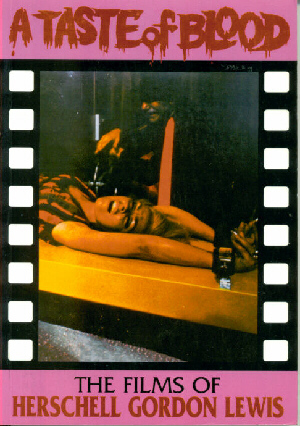
Horror Book Review: A Taste of Blood: The Films of Herschell Gordon Lewis by Christopher Curry


Remember the movie Juno?

I can remember when Juno first came out, a lot of people were shocked when the character of Mark (played by Jason Bateman) suddenly started to come on to Juno (Ellen Page).  (For the record, as a result of that one scene, I’ve always had a hard time watching Jason Bateman in practically anything.)  Myself, I knew Mark no good long before he asked Juno what she thought of him.

Remember the scene where Mark asked Juno who her favorite horror director was?  Juno, being intelligent, replied, “Dario Argento.”  Mark smirked and replied that Herschell Gordon Lewis was better.  As soon as Mark said that, I knew he was no good.

Now, I should make clear that’s nothing against Herschell Gordon Lewis, who was one of the pioneers of independent American cinema.  Though I don’t think that there’s any way you can compare him to Argento, Lewis played an important and often undervalued role in the development of horror as a genre.  Lewis may not be a household name but Blood Feast and 2,000 Maniacs are two of the most influential films ever made.  Something Weird was one of the first films to feature an acid trip and it’s title inspired Something Weird Video.  Speaking of Something Weird Video, the clip that they always play before their films — the one of the bald man shouting that “you’re damaged merchandise and this is a fire sale!” — was taken from Lewis’s Scum of the Earth.  And finally, Lewis’s political satire — The Year of the Yahoo — pretty much predicted the current state of American politics.

If you want to find out more about the life and career of Herschell Gordon Lewis, the 1999 book, A Taste of Blood: The Films of Herschell Gordon Lewis, is a good place to start.  The author, Christopher Curry, admits from the start that he is an unapologetic fan of Mr. Lewis’s.  As such, don’t expect the book to be too critical of any of Lewis’s films.  That said, A Taste of Blood contains not only interviews with the always articulate Lewis and some of his collaborators but it also contains a synopsis of every single Lewis film that had been released up until that point.  As such, the book is not just a tribute to Lewis but also a fascinating record of what it was like to work outside of the mainstream Hollywood establishment in the 1960s.  For that reason alone, it’s a valuable resource.

Now, it should be remembered that A Taste of Blood was written in 1999.  At the time that it was written, Lewis had retired from filmmaking.  Lewis, who passed away in 2016, would return to make three more films after the publication of A Taste of Blood.  As a result, A Taste of Blood is not a complete look at Lewis’s film career.  But it is a good place to start!

Finally, I bought my copy of A Taste For Blood at Recycled Books in Denton, Texas.  As far as I know, it’s out of print but, as always, there are still copies to be found online.