Anime You Should Be Watching: Ghost in the Shell


“Man is an individual only because of his intangible memory. But memory cannot be defined, yet it defines mankind.” — Puppet Master

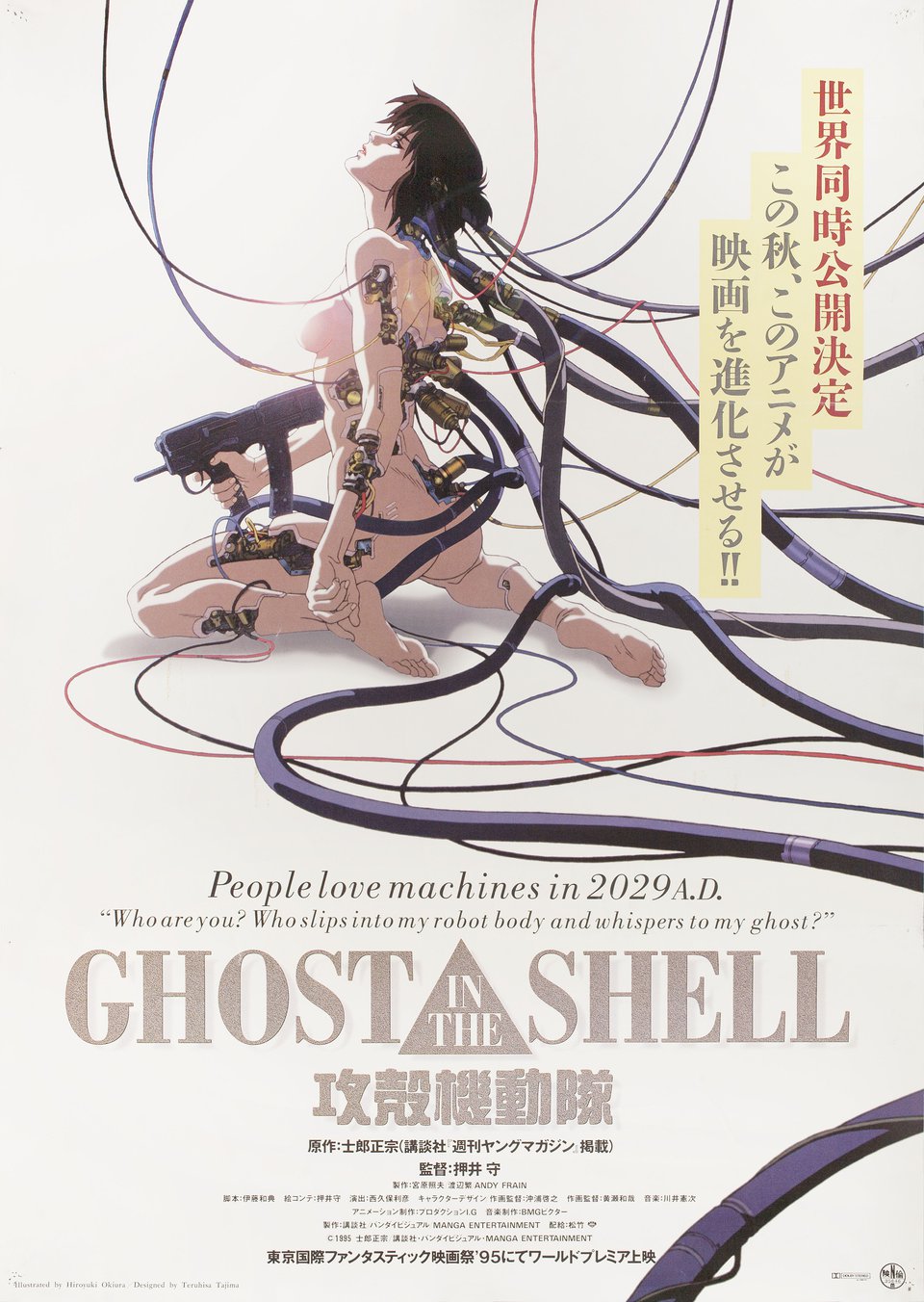
f you are putting together an initial “watch-list” of anime as someone new to the medium, Ghost in the Shell is an absolute must-have. Even if you aren’t a newbie, if you haven’t watched Mamoru Oshii’s 1995 masterpiece, you’ve definitely felt its ripple effects whether you realize it or not. Adapted from the original manga by Masamune Shirow, this movie is one of those rare pieces of art that didn’t just participate in the cyberpunk genre—it practically rewrote the rulebook for it. Coming out in the mid-nineties, it arrived at a time when the internet was still a weird, dial-up mystery to most people, yet here was this incredibly dense, visually stunning anime predicting a hyper-connected future where the line between human and machine was hopelessly blurred. It’s wild to look back at it now, not just because of how well it holds up, but because you can practically trace the DNA of modern science fiction directly back to this single film.

The world Oshii builds is just unbelievably immersive. We’re dropped into Newport City in the year 2029, a sprawling, rain-soaked metropolis that feels like Hong Kong cranked up to eleven. The visual design is insanely detailed, packed with glowing neon signs, crowded waterways, and gritty urban decay that makes you feel the humidity and smog seeping through the screen. But it’s not just a pretty backdrop; the city feels like a living, breathing organism heavily reliant on an omnipresent electronic network. It’s the kind of world-building that doesn’t spoon-feed you exposition. Instead, it just lets you exist in this space, observing the bizarre fusion of ultra-high-tech and crumbling everyday life, making you feel like a total stranger in a familiar yet alien world.

At the center of all this is Major Motoko Kusanagi, a cyborg operative working for a government anti-terror squad called Section 9. The plot kicks off when they’re tasked with hunting down the Puppet Master, a notorious hacker who can rewrite people’s ghosts—the anime’s term for a soul or consciousness—making them do whatever he wants. On the surface, it plays out like a solid futuristic police procedural, but it never stays there for long. Kusanagi is a fascinating protagonist because she’s essentially a human brain floating in a robotic shell, and as she gets closer to the Puppet Master, the movie pivots from chasing down a bad guy to asking some incredibly heavy questions about identity, memory, and what it actually means to be alive.

And that’s really the core of why Ghost in the Shell sticks with you long after the credits roll. It’s deeply philosophical, but it never feels pretentious about it. The movie constantly returns to this idea of the “ghost” versus the “shell.” If your entire body—your face, your arms, your internal organs—is synthetic, and your memories can be digitized and altered, what is left of you? Kusanagi’s existential dread is palpable. She looks at the world through mechanical eyes, wondering if she even has a soul anymore or if she’s just a highly advanced machine running a simulation of a person. It’s a heady concept that could easily crash and burn in the hands of a lesser director, but Oshii balances the cerebral musings with incredible action and atmosphere so you never feel like you’re just sitting through a lecture.

Speaking of the action, the animation is absolutely top-tier. We’re talking about traditional, hand-drawn animation that moves with a fluidity and weight that still puts a lot of modern CGI to shame. The famous thermoptic camouflage sequence, where Kusanagi turns invisible to take out a guy in a flooded alley, is legendary for a reason. The way the light refracts through her invisible form, the brutal efficiency of the combat, and the haunting silence of the scene are just perfection. Add in Kenji Kawai’s iconic soundtrack, which blends traditional Japanese chanting with eerie synthesizers, and you get a movie that has a vibe unlike anything else. It’s moody, it’s contemplative, and it has a strange, melancholic beauty that makes you want to pause the movie just to soak in the backgrounds.

But you really can’t talk about Ghost in the Shell without talking about the absolute monolith of an impact it had on pop culture. When it hit Western shores, it was a massive wake-up call. It completely shattered the perception that animation was just for kids or goofy comedies, proving it could be a mature, complex medium. Its influence on the cyberpunk and sci-fi landscape of the late 90s and beyond—spanning films, books, video games, and television—is so massive that it’s almost impossible to fully quantify. It felt like the missing link between the old-school cyberpunk printed novels of the eighties and the new wave of millennium-era sci-fi literature that was trying to figure out what the World Wide Web was going to do to human intimacy and identity. Suddenly, everyone in Hollywood, the publishing world, and the gaming industry was looking at this anime and realizing the potential of the themes and visuals it presented.

The most famous example of this, of course, is The Matrix by the Wachowskis, which was heavily influenced by it. The directors have been super open about how they showed Ghost in the Shell to producer Joel Silver to explain the exact vibe they were going for. When you look at The Matrix, the DNA is undeniable. The green digital rain cascading down the screen? That’s lifted straight out of the opening credits of Oshii’s film. The concept of jacking into a virtual reality, the ports in the back of the neck, the slow-motion bullet dodges, and the deep-dive into what constitutes reality—all of it feels directly born from the groundwork laid by Kusanagi’s journey. The Matrix might have brought these concepts to the mainstream blockbuster crowd, but Ghost in the Shell was the incubator where those ideas were refined.

The ripple didn’t stop at movies, though; it bled heavily into video games and television as well. If you’ve ever played the Metal Gear Solid games by Hideo Kojima, you’ve experienced the ghost of Oshii’s vision. Kojima is a massive anime fan, and the influence of Ghost in the Shell is smeared all over that franchise. The concept of the cyborg ninja, the deep philosophical codec conversations about the information age, genetics, and the nature of consciousness, and even the stealth camo mechanics feel directly pulled from Section 9’s playbook. On the TV side, you can see its shadow hanging over shows like Serial Experiments Lain and even the cyberpunk elements of Cowboy Bebop, which adopted a similar visual grit and thematic melancholy about living in a high-tech, low-life future.

What’s really crazy is how far that influence reached, touching directors and creators you might not immediately associate with anime. Take Steven Spielberg’s own A.I. film, for instance. While it’s rooted in classic Spielberg sentimentality and the legacy of Stanley Kubrick, the core premise of a synthetic being yearning to be “real” and grappling with the concept of a soul in a machine feels deeply informed by the philosophical path Kusanagi walked. Even James Cameron’s Avatar film series owes a subtle debt to Shirow and Oshii’s creation. The entire mechanic of the avatar program—where a human consciousness is remotely downloaded into a genetically engineered biological shell to interact with the world—is essentially the exact inverse of Kusanagi’s situation, exploring the same disconnection between the mind and the body, and what happens when your “ghost” inhabits a “shell” that isn’t your original form.

Looking back at Ghost in the Shell almost thirty years later, it’s amazing not just how influential the anime has been, but how shockingly prescient it is about the way our world actually operates now. The movie casually presents a reality where the lines between the government, the military-industrial complex, and tech firms have blurred so completely that it’s difficult to see where one starts and where the other ends. In the film, they’ve become all intertwined to control the data that runs the world and rely on the algorithm that eerily predicts our future. Back in 1995, that seemed like far-flung dystopian fiction, but fast forward to today, and we’re watching mega-corporations and defense contractors practically sharing the same bed, hoarding our personal data to feed into predictive algorithms that dictate everything from what we buy to who we vote for. Oshii didn’t just predict the technology; he predicted the terrifying socio-political monopoly on information itself.

Yet, despite all these technological and societal shifts we’ve experienced since 1995, the movie hasn’t aged a bit. It still looks gorgeous, the questions it asks are still terrifyingly relevant, and the emotional weight of Kusanagi’s journey still hits like a ton of bricks. Whether you’re watching it as a hardcore sci-fi fan, an animation buff, or just a movie lover trying to understand where half of modern pop culture came from, it remains an absolute must-watch. It’s not just a great anime; it’s a cornerstone of modern science fiction.

Anime You Should Be Watching

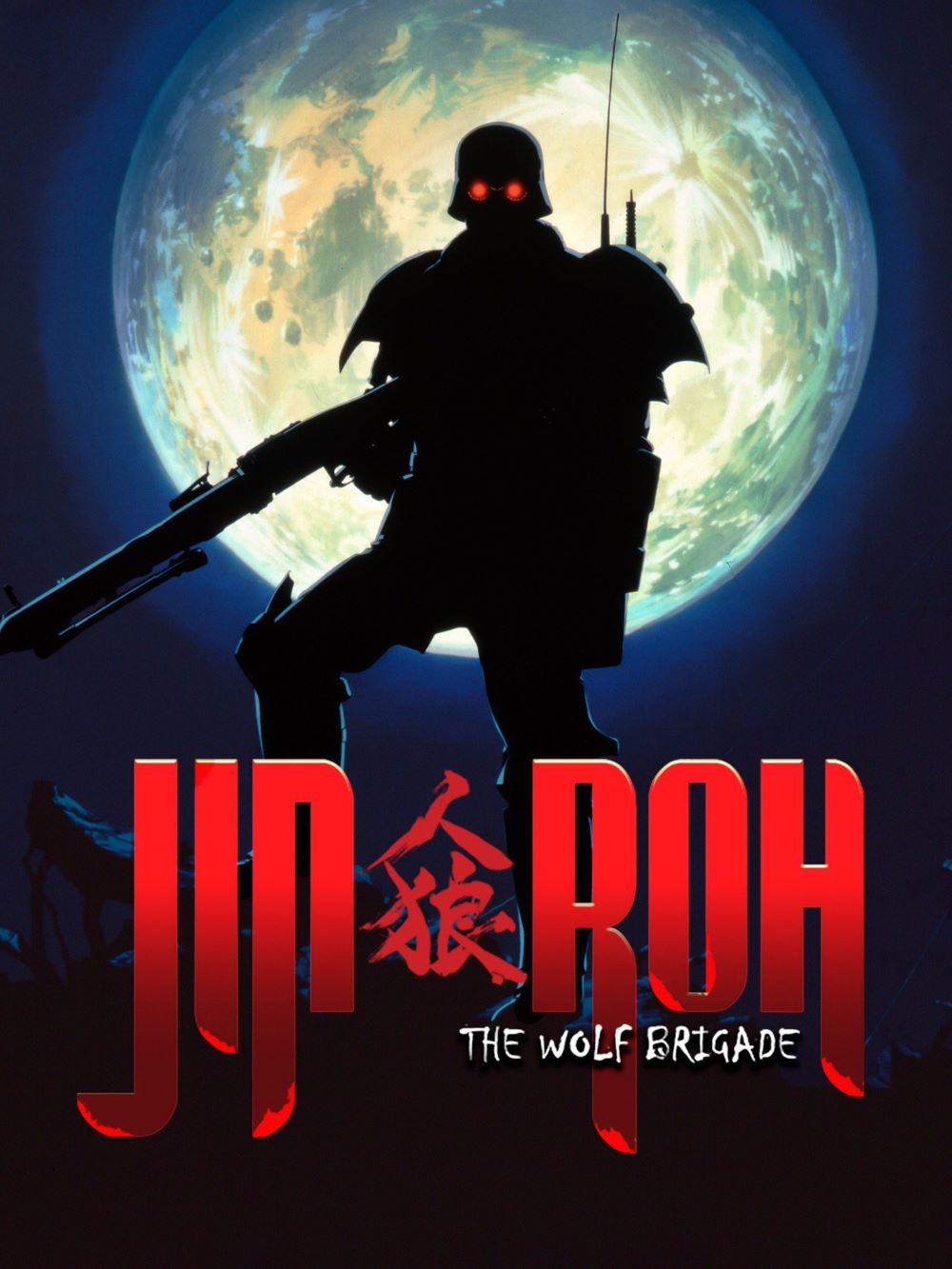
Anime You Should Be Watching: Jin-Roh


“We are not men disguised as dogs. We are wolves disguised as men.” — Hachiro Tohbe

Jin-Roh: The Wolf Brigade stands out as a gripping 1999 anime film that blends political intrigue, psychological depth, and haunting visuals into something truly unforgettable. Directed by Hiroyuki Okiura with a screenplay by Mamoru Oshii, it drops you into an alternate post-WWII Japan where the Allies lost, Nazi influence lingers, and society teeters on chaos from endless terrorist attacks and brutal crackdowns. This isn’t your typical high-octane anime romp; it’s a slow-burn character study wrapped in a thriller that forces you to confront the monsters we become in times of fear and division, making it an absolute must-watch for anyone craving mature storytelling in animation.

Right from the opening scenes, the film hooks you with its oppressive atmosphere. We meet Kazuki Fuse, a stoic member of the Kerberos Panzer Cop (KPC), an elite anti-terror unit decked out in powered exoskeletons called Protect Gear that make them look like armored wolves prowling the streets. Fuse chases a young female terrorist from the far-left Sect group into the sewers. She’s just a scared girl clutching a bomb, and when he has her dead to rights, he hesitates—can’t pull the trigger. She blows herself up instead, leaving him shell-shocked and questioning everything. That moment alone is a gut-punch, setting up Fuse’s arc as a man caught between duty and his fraying humanity. The animation captures it perfectly: shadows swallow the damp tunnels, rain-slicked streets reflect flickering neon, and every footstep in those heavy suits echoes like doom approaching.

What elevates Jin-Roh is its alternate history setup, which feels eerily plausible. Japan never got nuked or occupied by the U.S.; instead, it’s a pressure cooker of failed U.S. aid, communist uprisings, and a government unleashing paramilitary forces to keep control. The Capital Police clash with regular cops and intelligence agencies like Public Security, all vying for power amid riots and bombings. It’s not just backdrop—it’s the beating heart of the story, mirroring real-world tensions like Cold War paranoia or modern insurgencies without ever feeling preachy. Fuse gets sidelined to “re-education” after his hesitation, where he’s grilled by superiors and hauntedJin-Roh: The Wolf Brigade stands out as a gripping 1999 anime film that blends political intrigue, psychological depth, and haunting visuals into something truly unforgettable. Directed by Hiroyuki Okiura with a script from Mamoru Oshii, it crafts an alternate history where Japan never fully shakes off authoritarian shadows after a failed U.S. occupation, making it a slow-burn thriller that demands your attention from the first frame.

The story kicks off in a dystopian 1950s Tokyo gripped by unrest, where the government deploys the elite Kerberos Panzer Cops—think heavily armored stormtroopers in powered exosuits—to combat the far-left Sect, a terrorist group using young girls as human bombs. Our protagonist, Kazuki Fuse, is one of these wolfish enforcers, a guy hardened by the grind of urban warfare. Early on, he chases a teenage Sect courier, Nanami Agawa, into rain-slicked sewers. She’s got a bomb vest strapped on, and point-blank, he hesitates to pull the trigger. She blows herself up instead, leaving Fuse shell-shocked and facing a psych evaluation that sidelines him from the force.

This hesitation isn’t just a plot device; it’s the spark that ignites Fuse’s unraveling. Reassigned to retraining, he bumps into an old academy buddy, Izaki Henmi, now with Public Security, the sneaky intel arm plotting to dismantle Kerberos in favor of subtler tactics. Henmi feeds Fuse details on Nanami, stirring guilt that pulls him to her makeshift grave. There, he meets Kei Amemiya, who claims to be Nanami’s big sister. She’s soft-spoken, cooks him hearty meals like beef stew in her cramped apartment, and slowly cracks through his armored exterior. Their bond feels genuine amid the paranoia—nights reading Little Red Riding Hood, her teasing him about his wolfish instincts—but it’s laced with unease as factions clash in bloody street riots.

What elevates Jin-Roh is how it weaves the fairy tale of Little Red Riding Hood into its core. Fuse embodies the wolf, disguised in human skin but driven by primal loyalties. Kei plays Red, vulnerable yet complicit, her red hood symbolizing the Sect’s cloaked threats. The film flashes back to Fuse’s dreams of this story, narrated in a chilling child’s voice, mirroring his internal war: Can a wolf become a man, or is he doomed to devour what he loves? This allegory sharpens the political knife—Kerberos as fascist wolves protecting the state, Public Security as scheming hunters, the Sect as radical prey fighting back with desperate ferocity.

Visually, it’s a knockout. Production I.G.’s animation captures a gritty, oppressive Tokyo with meticulous detail: foggy streets lit by harsh sodium lamps, the clank of Protect Gear suits echoing like mechanized doom, sewers dripping with menace. No flashy mecha battles here; action hits hard but sparse—a riot scene with cops mowing down protesters in slow-motion chaos, bullets sparking off armor. The color palette stays muted, grays and blues amplifying isolation, while intimate moments glow warmer, like candlelit dinners that hint at fragile humanity. Sound design seals it: muffled gunfire, pounding rain, a sparse score by Shigeto Saegusa that lets silence breathe tension.

Thematically, Jin-Roh doesn’t pull punches on loyalty’s cost. Fuse grapples with betrayal at every turn—Henmi’s double-dealing, Kei’s true role as a Public Security plant coerced into luring him out. Deeper still, it probes dehumanization: soldiers conditioned to kill become liabilities if empathy creeps in. The film’s climax in a foggy junkyard twists the knife—Fuse, reinstated by the shadowy Jin-Roh (a rogue Kerberos splinter), faces an impossible order. Kei recites the fairy tale’s climax, embracing him as he fires, her death echoing Red’s fate. No heroes triumph; just wolves feasting in the dark.

Pacing might test casual viewers—it’s deliberate, more mood piece than adrenaline rush, clocking 99 minutes of brooding buildup. Voice acting shines, especially Fuse’s quiet torment from Hideo Sakaki and Kei’s wistful edge from Yurika Hino. Supporting cast, like the stone-cold Kerberos captain, adds layers without stealing focus. Influences nod to Oshii’s Patlabor and Ghost in the Shell, but Okiura’s touch feels more personal, less cyberpunk flash.

So why is Jin-Roh: The Wolf Brigade a must-watch? First, its prescience. Released amid late-’90s stability, it nails endless cycles of terror and counterterror, loyalty tests, and institutional rot—echoes in today’s headlines that make it feel ripped from 2026 newsreels. Alternate history aside, the human core endures: hesitation as rebellion, love as trap, violence as identity. It’s “grown-up anime” that trusts you to connect dots, rivaling Akira in ambition but surpassing in emotional gut-punch.

Second, technical mastery holds up flawlessly. In an era of CGI slop and quippy spectacles, Jin-Roh‘s hand-drawn grit reminds why anime conquered global imaginations. Every frame rewards rewatches—spot the wolf motifs in shadows, the Red hoods in crowds. It’s not fan service; it’s artistry that lingers, haunting like a bad dream.

Third, it challenges easy morals. No side’s clean: Sect kids are pawns, cops brutal zealots, intel weasels manipulative. Fuse’s arc forces you to question: Is mercy weakness in a wolf’s world? Or the last spark of manhood? This ambiguity sparks debates, perfect for film buffs dissecting authoritarianism or trauma’s scars. Pair it with Patlabor 2 for the full Kerberos saga—it’s expanded universe done right, sans MCU bloat.

Critics rave for reason: 7.3/10 on IMDb, cult status among cinephiles. If you dig thrillers like Children of Men or The Lives of Others, this bridges anime and live-action prestige. Stream it on Crunchyroll or Blu-ray for that crisp transfer—worth every penny. Skip if you crave explosions; dive in if mature stories with fangs appeal.

Ultimately, Jin-Roh argues we’re all wolves under pressure, cloaked in civility until the hood slips. Fuse’s tragedy warns that in fractured states, personal redemption crumbles against systemic hunger. It’s not hopeful—ending on solemn wolf howls—but that’s its power: a mirror to our baser selves, urging vigilance. Must-watch for anyone serious about anime’s potential beyond tropes. It’ll chew you up and spit out questions that stick.

Anime You Should Be Watching

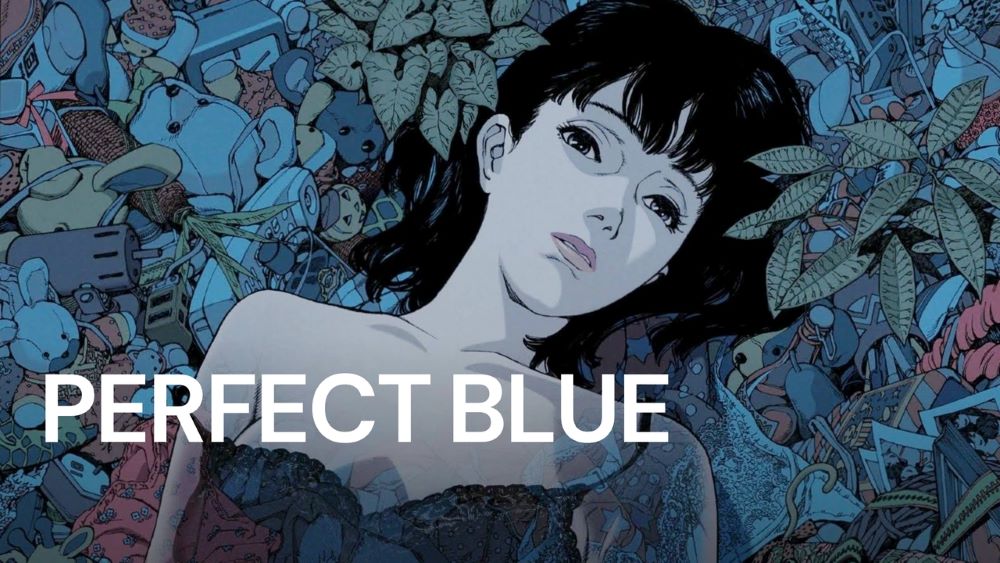
Anime You Should Be Watching (Horror Edition): Perfect Blue (dir. by Satoshi Kon)


Satoshi Kon’s 1998 psychological thriller Perfect Blue remains a striking and influential work nearly three decades after its release. Despite being an animated film, it evokes the unsettling style and tension found in the classic Italian giallo thrillers of the 1970s and ’80s—films by directors like Dario Argento and Mario Bava—and melds them admirably with elements of 1970s Eurotrash exploitation and arthouse psychological thriller reminiscent of Brian De Palma. Kon’s debut feature is a haunting exploration of fractured identity, blending show-business satire, Hitchcockian suspense, and surreal nightmare imagery into a profoundly relevant story in today’s age of parasocial fandom and digital voyeurism.

The film centers on Mima Kirigoe, a member of the bubblegum J-Pop group “CHAM!” who decides to leave the idol world to pursue a career in serious acting. This choice, rooted in her desire for personal growth and artistic expression, sets off devastating consequences. For her managers and many fans, Mima’s break from the manufactured idol persona is viewed as betrayal—a dissolution of a carefully crafted image designed for maximum market appeal. The pristine, innocent figure worshipped by fans begins to crumble, replaced by the complicated reality of adulthood and the harsh glare of fame.

To fully grasp the horror underpinning Perfect Blue, it’s important to understand the nature of Japanese idol culture. These idols are not merely singers or performers—they are highly managed brands. Every lyric, outfit, choreographed move, and public appearance is tightly controlled to project purity and accessibility. This system bears close resemblance to the meticulously produced Western pop acts of the late 1990s and early 2000s like Britney Spears and the Backstreet Boys. Both rely on constructing polished, artificial personas that maximize commercial appeal, often at the expense of genuine selfhood. When an idol deviates from this script, it frequently provokes obsession, confusion, and even violent reactions from a subset of fans unable to reconcile the constructed image with evolving reality.

Mima’s transition from ingénue pop star to serious actress thrusts her into an intense psychological crucible. Her first major acting role requires her to perform a deeply disturbing rape scene, one that blurs lines between professional obligation and personal violation. Kon lingers on Mima’s shocked expression—a powerful mask of confusion and repressed trauma. This sequence sets the tone for the film: a world where performance, identity, and exploitation intertwine irrevocably, creating a landscape where self and roles imposed by society become indistinguishable.

As Mima’s public persona shifts, darker forces emerge. An eerie fan website titled “Mima’s Room” chronicles her life with disturbing accuracy but is clearly authored by an unknown party. Even more threatening is an obsessed fan fixated on the idol version of Mima, stalking her and insisting that the “real” Mima no longer exists. This duality—between reality and imitation, self and construct—becomes the film’s thematic centerpiece. The narrative loops and fractures, cutting between dreams, televised drama, and supposed reality until neither Mima nor the viewer can be sure what is authentic. This masterful ambiguity immerses us in the protagonist’s psychological collapse.

The horror in Perfect Blue operates on two deeply intertwined levels. First, it is a psychological portrait of a young woman’s unraveling, echoing themes explored in Roman Polanski’s Repulsion and Darren Aronofsky’s Black Swan—films focused on fragile female psyches under immense pressure. While Aronofsky has publicly denied that Black Swan was directly inspired by Perfect Blue, the similarities in theme and specific visual motifs suggest otherwise. Both films explore the disintegration of identity in a young woman caught between innocence and adult roles, with dreamlike, unsettling sequences blurring reality and hallucination. The parallels in their portrayal of psychological breakdown, stalking, and the pressure of performance are striking, though Aronofsky’s work is set in the world of ballet rather than pop music and acting.

Second, Perfect Blue channels the lush, stylized dread characteristic of giallo cinema. Kon borrows Argento’s fascination with voyeuristic camera angles, saturated color palettes, and the interplay of beauty and violence. Like Argento’s heroines trapped in a hall of mirrors, Mima finds herself caught in a labyrinth where surreal horror becomes tangible and murder might be just another staged act in a disturbing performance.

Yet unlike Suspiria’s occult grotesques, Kon’s horror resides not in supernatural forces but within the mind and media itself. Animation becomes a revelatory choice—rather than softening violence, it frees Kon from physical constraints, allowing reality to fracture visually with startling fluidity. Identities shift from frame to frame, reflections move independently of their sources, and timelines collapse and fragment like psychic glitches. The medium’s flexibility intensifies the film’s psychological disorientation, blurring fact and fantasy in ways live-action cinema would struggle to capture so viscerally.

Kon’s prescient understanding of media obsession resonates more strongly than ever today. Long before social media reshaped how identity is constructed and perceived, Perfect Blue envisioned the internet as a distorting mirror that erases the line between self and performance. The “Mima’s Room” website serves both as diary and prison—a disturbing precursor to the carefully curated digital personas that dominate social media platforms now. As Mima reads falsified diary entries that resemble her life more “truthfully” than her own memory, she grows alienated from reality. The omnipresent gaze of fans, stalkers, and producers merges into an oppressive force she cannot escape.

This taps into a modern phenomenon: parasocial relationships. These one-sided emotional bonds fans develop with celebrities or fictional characters foster a dangerous illusion of intimacy and knowledge, often masking boundaries between admiration and entitlement. In Perfect Blue, the deranged fan believes he “knows” Mima in a way that justifies controlling her, even committing violence to preserve the image he idolizes. This mirrors the darker side of parasocial dynamics today, where fans demand absolute authenticity or control over public figures’ identities, sometimes leading to harassment or stalking. Kon’s film foreshadows how internet culture can exacerbate these fragile boundaries, blurring realities and fueling destructive obsession.

The film’s editing amplifies this psychological suffocation. Kon intercuts scenes from Mima’s TV drama—ironically titled Double Bind—with moments from her “real” life until one blurs imperceptibly into the other. Viewers are drawn deeper into uncertainty: are we witnessing actual events, staged fiction, or yet another deceptive layer? This deliberate manipulation creates unease without relying on cheap jump scares or graphic violence. The horror is existential—losing trust not only in others but in one’s own mind.

This theme has become exponentially more relevant with the rise of social media influencers and online streaming personalities. Today, countless individuals cultivate personal brands that blend their private lives with public personas online, often with blurred or deliberately ambiguous boundaries. The intense fan interaction, constant scrutiny, and expectation of accessibility echo the pressures Mima faces. As social media blurs the line between “real” self and online performance, the risks of losing grip on one’s identity—as Mima does—feel more immediate and widespread than ever.

It is extraordinary that Perfect Blue was Kon’s first feature film. His command of cinematic language is masterful—harnessing animation as a means to probe psychological depths rather than as mere escapism. His subsequent works—Millennium ActressTokyo GodfathersPaprika—build on themes of identity, memory, and the fluid borders of reality, but Perfect Blue remains his rawest and most unsettling contribution. His untimely death from pancreatic cancer in 2010 at just 46 left the film community mourning a visionary whose full promise was tragically unfulfilled.

One of Perfect Blue’s greatest achievements is rejecting outsider stereotypes about anime. It is neither childish fantasy nor gratuitous erotica, though it fearlessly explores sexual anxiety, trauma, and performance under intense scrutiny. Kon’s film proves that animation can tackle mature themes—mental illness, societal pressure, gender identity—with subtlety and emotional gravitas usually reserved for live-action cinema. It challenges the misinformed Western association of adult anime with “hentai,” affirming animation’s capacity as a serious art form.

Kon’s film also critiques fandom’s darker impulses, asking difficult questions about ownership and identity. How much of a celebrity’s life belongs to the public? How much of one’s self must be sacrificed under the weight of expectation? In today’s hyperconnected online world, Kon’s portrayal of obsessive fans demanding idealized idols is uncannily relevant and urgent.

Ultimately, Perfect Blue transcends genre and era. It is not merely a psychological thriller or celebrity critique but a mirror held to an increasingly performative world. Long before social media dissolved the lines between private and public selves, Kon foresaw how image can consume reality. The result is a masterful fusion of paranoia, empathy, and stunning visual style—a giallo-inspired fever dream painted in blood-red and neon blue. For animation, it remains a landmark in artistic maturity; for cinema as a whole, it stands as one of the most chilling and insightful portraits of fame’s corrosive gaze and the dark side of parasocial obsession.

Anime You Should Be Watching