Horror Film Review: The Mummy (dir by Karl Freund)


220px-the_mummy_1932_film_poster

Did H.P. Lovecraft enjoy movies?  I’d love to think that he did but in all probability, he didn’t.  After all, Lovecraft frequently wrote, in both his fiction and his personal correspondence, that he found the modern world to be “decadent.”  He was not a fan of technological development, viewing it as being the source of civilization’s decline.

In all probability, Lovecraft did not enjoy the movies.  When The Mummy was first released in 1932, it’s probable that Lovecraft did not rush out to a local Providence movie theater and buy a ticket.

And, really, that’s a shame.  Of the many horror films released by Universal Pictures in the 1930s, The Mummy was perhaps the most Lovecraftian.  The bare bones of the film’s plot could have easily been lifted from one of Lovecraft’s stories: a group of rational and educated men are confronted with an ancient evil that defies all reason.  When the title character is brought back to life by a man foolishly reading from the fictional Scroll of Thoth, one is reminded of not only the Necronomicon but also of the dozens of other fictional-but-plausible texts that have appeared in the works of both Lovecraft and his successors.  Just the sight of the Mummy coming back to life causes one man to have an immediate nervous breakdown, a fate shared by almost every Lovecraft protagonist who was unfortunate enough to learn about Cthulhu, Azathoth, and the truth concerning man’s insignificant place in the universe.

The story of The Mummy goes something like this:  In ancient Egypt, a priest is caught trying to bring his dead lover back to life and, as punishment, he is mummified alive and locked away in a tomb.  Centuries later, a group of explorers discover the tomb.  The mummy comes back to life and, ten years later, he abducts the woman (played by the very beautiful Zita Johann) whom he believes to be the reincarnation of his former love.

I’ve watched The Mummy a few times and one thing that always surprises me is how little we actually see of the Mummy as a mummy.  After he’s accidentally resurrected by Ralph Norton (Bramwell Fletcher), the Mummy steps out of his sarcophagus and stumbles out into the streets of Cairo, leaving a now insane Norton to giggle incoherently about how the mummy just stepped outside for a walk.  That is pretty much the last time that we ever see the Mummy wrapped up in bandages.  When we next see the Mummy, he’s going by the name Ardath Bey and he bears a distinct resemblance to Boris Karloff.

Karloff gives one of his best performance as the sinister and calculating Bey.  Of all the horror films that were released by Universal in the 1930s, The Mummy is perhaps the only one that can still be considered to be, at the very least, disturbing.  That’s largely due to the fact that, as played by Karloff, Bey is the epitome of pitiless and relentless evil.  I’m always especially shaken by the scene in which Bey uses his magical powers to make a man miles away die of a heart attack.  It’s not just the fact that Bey has the power to do something like this.  It’s that Bey seems to get so much enjoyment out of it.  There’s a sadistic gleam in Karloff’s eyes during these scenes and his expression of grim satisfaction is pure nightmare fuel.

Just compare Bey to the other Universal monsters: The Invisible Man was driven insane by an unforeseen side effect of his formula.  Frankenstein’s Monster was destructive because he didn’t know any better.  The Wolf Man spent five movies begging people to kill him and put him out of his misery.  And while Dracula was certainly evil, he had as many limitations as he had power.  He couldn’t go out in daylight.  He was easily repelled by both crosses and garlic.  He often didn’t do a very good job of hiding his coffin.  Ardath Bey, on the other hand, was not only evil but apparently unstoppable as well.

The rest of the cast is pretty much overshadowed by Karloff but fans of the old Universal horror movies will enjoy picking out familiar faces.  They’ll recognize David Manners from Dracula.  Edward Van Sloan also shows up here, fresh from playing Van Helsing in Dracula and Dr. Waldman in Frankenstein.  But ultimately, it is Karloff who dominates the film and that’s the way it should be.  There’s a reason why Boris Karloff could get away with only his last name appearing in the credits.  He was an icon of both cinema and horror and The Mummy reminds us why.

For a film that was first released 84 years ago, The Mummy holds up surprisingly well.  There have been countless movies about homicidal mummies over the years but none have yet to match the original.

4 Shots From Horror History: The Cabinet of Dr. Caligari, Haxan, Nosferatu, The Hands of Orlac


This October, I’m going to be doing something a little bit different with my contribution to 4 Shots From 4 Films.  I’m going to be taking a little chronological tour of the history of horror cinema, moving from decade to decade.

Today, we take a look at the first half of the 1920s.

4 Shots From 4 Films

The Cabinet of Dr. Caligari (1920, dir by Robert Wiene)

The Cabinet of Dr. Caligari (1920, dir by Robert Wiene)

Haxan (1922, dir by Benjamin Christensen)

Haxan (1922, dir by Benjamin Christensen)

Nosferatu (1922, dir by F.W. Murnau)

Nosferatu (1922, dir by F.W. Murnau)

The Hands of Orlac (1924, dir by Robert Wiene)

The Hands of Orlac (1924, dir by Robert Wiene)

Horror On The Lens: Time Walker (dir by Tom Kennedy)


Today’s horror on the lens is 1982’s Time Walker!

Time Walker tells the story of what happens when a mummy that’s actually an alien awakens on a college campus.  As you might guess, mayhem and bad fashion choices ensue.  To be honest, Time Walker is not the best horror film ever made.  In fact, it’s actually pretty bad.  However, it is definitely a time capsule of the era in which it was produced and it has one of those WTF endings that you kind of have to see for yourself.

Enjoy!

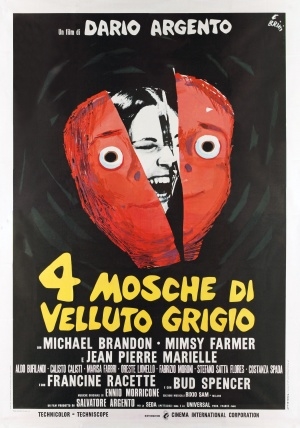
The Films of Dario Argento: Four Flies On Grey Velvet


quattro_mosche

After the good but somewhat generic Cat o’Nine Tails, Dario Argento returned to form with his third film, 1971’s Four Flies on Grey Velvet.

It’s not particularly easy to describe the plot of Four Flies because, much like The Bird With The Crystal Plumage, the storyline is less important than the way that Argento tells it.  The film tells the story of Roberto Tobias (Michael Brandon), a drummer with an up-and-coming rock band in Rome.  In many ways, Roberto is a typical drummer.  He’s the guy who, even though he’s often obscured in the background, keeps things balanced.  He has a loving wife, Nina (Mimsy Farmer), a nice house, and worldly, politically woke friends who smoke weed and praise art.  Admittedly, one of those friends does tell a rather gruesome story about witnessing a beheading in Saudi Arabia which leads to Roberto having a reoccurring nightmare but otherwise, Roberto would appear to have a great life.

(Incidentally, Roberto’s nightmares are Argento at his best.)

So, why is this stable and easy-going guy suddenly being followed by a mysterious man in a suit?  And why, when Roberto confronts the man, does he discover that there’s yet another mysterious figure — this one wearing a mask — following him and taking pictures?

That’s the mystery that opens Four Flies on Grey Velvet but it’s not the only mystery to be found in the film.  In fact, this movie finds Argento at both his most macabre and his most playful.  At times, he literally seems to be seeing just how far he can push and how complicated he can make things before totally losing his audience.  The film may start with Roberto being followed and having nightmares but eventually, it comes to involve everything and everyone from Nina’s enigmatic cousin, Dalia (Francine Racette) to a beatnik named God (played by none other than spaghetti western mainstay, Bud Spencer) to a flamboyant private investigator (Jean-Pierre Marielle).  (By today’s standards, the portrayal of the gay detective has a few cringey moments but you have to remember that Four Flies On Grey Velvet was made in 1971.  It was nothing less than revolutionary for an Italian film of that era to portray an openly gay contemporary character in any type of positive light.)  To top it all off, the solution to the film’s main mystery is discovered through optography, the long-since discredited idea that an eye will “save” the last image seen before death.  It’s ludicrous but Argento pulls it off with a cheerfully over-the-top style that perfectly matches the film’s twisted plot.  After the toned down Cat o’Nine Tails, Four Flies was Argento’s way of reminding viewers of who he truly was as a filmmaker.

The film’s brilliant opening sets the tone for the entire film.  Watch it below and thank me later:

It’s rare that anyone every really discusses the acting in an Argento film.  Argento has himself admitted that he doesn’t worry much about actors and many of his films have been released in badly dubbed versions, which often makes it difficult to fairly judge any of the performances.  That said, Roberto Tobias is one of my favorite Argento protagonists and it’s all due to Michael Brandon’s performance.  Brandon makes Roberto into such a nice guy and does such a good job of capturing his descent into paranoia that it’s impossible not to get caught up in his story.  (I would even argue that the long-haired and politically concerned Roberto is almost an autobiographical stand-in for Argento himself.)  Though I can’t really explain why without running the risk of spoiling a major part of the movie, Mimsy Farmer is also excellent.  Reportedly, Argento originally wanted to cast Mia Farrow and you can imagine a post-Rosemary’s Baby pre-Woody Allen Farrow in the role.  But I’m glad that Argento couldn’t get her because Mimsy Farmer gives a close to perfect performance.

Four Flies was the third and final part of Argento’s “animal trailer,” and, at the time, Argento declared that Four Flies would also be his final giallo film.  He followed up Four Flies with The Four Days, a historical comedy that was considered to be such a failure that, after its release, Argento returned to the safety of the giallo genre and gave the world one of his greatest triumphs, Deep Red.  However, if The Four Days had been a success and Four Flies had been Argento’s final giallo film, it would have been a triumphant note to go out on.

Here’s the very misleading trailer that was used for Four Flies On Grey Velvet‘s American release.

And here’s the even more obscure European trailer!

Horror Film Review: Ghost Story (dir by John Irvin)


ghoststory

A Fred Astaire horror movie!?

Yes, indeed.  Ghost Story is a horror movie and it does indeed star Fred Astaire.  However, Fred doesn’t dance or anything like that in Ghost Story.  This movie was made in 1981 and Fred was 82 years old when he appeared in it.  Fred still gave an energetic and likable performance and, in fact, his performance is one of the few things that really does work in Ghost Story.

Fred Astaire isn’t the only veteran of Hollywood’s Golden Age to appear in Ghost Story.  Melvyn Douglas, John Houseman, and Douglas Fairbanks, Jr. all appear in the movie as well.  They play four lifelong friends, wealthy men who have formed an informal little club called The Chowder Society.  They gather one a week and tell ghost stories.  Myself, I’m wondering why these four intelligent and accomplished men (one is a lawyer, another a doctor, another a politician, and another is Fred Astaire) couldn’t come up with a better name than Chowder Society.

(But I guess that’s something that people do up north.  Harvard has something called the Hasty Pudding Club, which just sounds amazingly annoying.)

Unfortunately, the members of the Chowder Society have a deep, dark secret.  Way back in the 1930s, the boys listening to too much jazz and they all ended up lusting after the mysterious and beautiful Eva Galli (Alice Krige).  As Astaire explains it, “We killed her, the Chowder Society.”

(Of course, there’s more to the story.  It was more manslaughter than murder but either way, it was pretty much the fault of the Chowder Society.)

And now, decades later, a woman named Alma (Alica Krige, again) has mysteriously appeared.  When she sleeps with David (Craig Wasson), the son of a member of the Chowder Society, David falls out of a window and ends up splattered on the ground below.  David’s twin brother, Don (also played by Craig Wasson), returns to their childhood home and attempts to make peace with his estranged father.

However, now the member of the Chowder Society are starting to die.  One falls off a bridge.  Another has a heart attack in the middle of the night.  Fred Astaire thinks that Eva has come back for revenge.  John Houseman is a little more skeptical…

I pretty much went into Ghost Story with next to no knowledge concerning what the film was about.  I thought the plot desription sounded intriguing.  As a classic film lover, I appreciated that Ghost Story was not only Fred Astaire’s final film but the final film of Douglas and Fairbanks as well.  Before he deleted his account, I had some pleasant interactions with Craig Wasson on Facebook.   I was really hoping that Ghost Story would be a horror classic.

Bleh.

Considering all the talent involved, Ghost Story should have been great but instead, it just fell flat.  Alice Krige is properly enigmatic as both Alma and Galli and really, the entire cast does a pretty good job.  But, with the exception of exactly three scenes, the film itself is never that scary.  (Two of those scary scenes involve a decaying corpse and it’s not that hard to make decay scary.  The other is a fairly intense nightmare sequence.)  Largely due to John Irvin’s detached direction, you never really feel any type of connection with the characters.  I mean, obviously, you don’t want to see the star of Top Hat die a terrible death but that has more to do with the eternal charm of Fred Astaire than anything that happens in Ghost Story.

Add to that, Ghost Story‘s special effects have aged terribly.  There are two scenes in which we watch different characters fall to their death and both times, you can see that little green outline that always used to appear whenever one image was super imposed on another.  It makes it a little hard to take the movie seriously.

Sadly, Ghost Story did not live up to my expectations.  At least Fred Astaire was good…

4 Shots From Horror History: Frankenstein, Dr. Jekyll and Mr. Hyde, The Student of Prague, Eerie Tales


This October, I’m going to be doing something a little bit different with my contribution to 4 Shots From 4 Films.  I’m going to be taking a little chronological tour of the history of horror cinema, moving from decade to decade.

Today, we take a look at the 1910’s.

4 Shots From 4 Films

Frankenstein (1910, dir by J. Searle Dawley)

Frankenstein (1910, dir by J. Searle Dawley)

Dr. Jekyll and Mr. Hyde (1913, dir by Herbert Brenon)

Dr. Jekyll and Mr. Hyde (1913, dir by Herbert Brenon)

The Student of Prague (1913, dir by Stellan Rye and Paul Wegener)

The Student of Prague (1913, dir by Stellan Rye and Paul Wegener)

Eerie Tales (1919, dir by Richard Oswald)

Eerie Tales (1919, dir by Richard Oswald)

Horror On The Lens: House On Haunted Hill (dir by William Castle)


I was actually planning on waiting until closer to Halloween before I posted this film but … well, why save the best for last?  Seriously, it’s always a good time watch the original House on Haunted Hill.  Be sure to check out Gary’s review by clicking here!

Now, I will admit that I previously shared this film two Halloweens ago.  However, the YouTube video that I embedded in that post no longer exists.  So, I figured, why not post it again?

Below is what I wrote the previous time that I shared this movie:

“Released in 1959, House On Haunted Hill tells the story of how an eccentric millionaire (played by Vincent Price, of course) rented out a “haunted” mansion for a party. invited over five guests, and offered each of them $10,000 on the condition that they manage to spend the entire night in the house.  Along for the ride is Price’s unhappy wife (Carol Ohmart) and the house’s wonderfully neurotic caretaker (played by Elisha Cook, Jr, who played a lot of neurotic caretakers over the course of his long career).

House on Haunted Hill remains one of the classic B-movies.  This is largely because of Price’s wonderfully over-the-top lead performance and William Castle’s equally over-the-top direction.

Back in 1959, theaters were equipped so that a plastic skeleton would appear to fly over the heads of the audience during some of the film’s more shocking moments.  So, grab yourself a skeleton, take a seat, and enjoy House on Haunted Hill!”


The TSL’s Daily Horror Grindhouse: Werewolf Woman (dir by Rino Di Silvestro)


hqdefault

Since I earlier reviewed The Wolf Man, it only made sense to me that tonight’s entry in daily horror grindhouse should be the 1976 Italian horror film, Werewolf Woman.  I’d had Werewolf Woman on DVD for a while now but I had yet to get around to watching it.  I actually knew next to nothing about it.  The only reason why I bought the DVD was because of the title.

So, last night, I watched the movie and I quickly discovered that, in the best tradition of grindhouse cinema, Werewolf Woman‘s title actually had very little do with the actual film.  The title character may go around ripping out throats with her teeth but it’s not because Daniella Neseri (Annik Borel) is a werewolf.  Instead, it’s just because she’s gone insane.

When Daniella was thirteen years old, she was raped by a family friend.  She has now grown up to be a young woman who fears sex and rarely leaves her family’s decaying estate.  Her aging father, Count Neseri (Tino Carraro), is extremely protective of Daniella but, at the same time, he also tells her stories about how one of her ancestors was rumored to be a werewolf so you really have to wonder how good of a father he actually is.

When Daniella’s younger sister, Elena (Dagmar Lassander), comes home with her fiancée, Daniella hides out in the hallway and listens while they make love.  Later that night, Daniella is wandering around outside when she runs into the fiancée.  She proceeds to rip out his throat with her teeth and then leave him for dead.  The police are convinced that he was murdered by a wild animal but Elena and Count Neseri both believe that Daniella was responsible.

So, Daniella ends up in an insane asylum but it takes more than just four walls and a locked door to hold Daniella prisoner.  One of her fellow patients is a predatory lesbian (yes, this is very much a 70s movie) who tries to seduce Daniella.  Unfortunately, any and all sexual thoughts cause Daniella to mentally (if not physically) transform into a werewolf.  Soon, the patient has had her throat ripped out and Daniella has escaped.

The rest of the film follows Daniella as she makes her way across the Italian countryside, stopping to kill anyone who causes her to become aroused or to even think about sex.  Or, at least, that is until she meets Luca (Howard Ross), who is a sensitive man and lover.  Daniella and Luca have a falling in love montage.  They make love without Daniella feeling the urge to rip out his throat.  Things are going to be okay, right?

Nope.  Inevitably, a biker gang shows up and violently destroys their happiness.  In the spirit and style of I Spit On Your Grave, it’s up to Daniella to get revenge.

Now, when talking about a movie like Werewolf Woman — one that links lycanthropy with both sexual repression and a sexual awakening — it’s easy to read too much into the plot.  I’ve been tempted to do just that while writing this review.  Whether it was what the director’s intended it or not, there is a potentially intriguing theme running through Werewolf Woman, in which Daniella imagines herself as a werewolf because it’s the only way that she can survive in a world that is determined to sexually exploit, demean, and oppress her.  Daniella’s mental transformation is ultimately the result of her own repressed emotions and fears and I’m sure that many would argue that Werewolf Woman, in the tradition of Repulsion and Ms. 45, is taking a stand against a patriarchal and repressive society (never mind that Daniella ultimately kills almost as many women as men).

And you know what?  If this was a Jess Franco film, I’d give it the benefit of the doubt.

But ultimately, Werewolf Woman is no Ginger Snaps.  Instead, it’s a somewhat slow soft core flick that doesn’t really add up to much.  (Any and all subtext is definitely present by accident only.)  That said, Annik Borel does a good job in the lead role and loves of Euroshock will enjoy seeing familiar faces like Howard Ross and Dagmar Lassander in the cast.  Add to that, I always enjoy any film the features a woman getting bloody revenge on misogynists, even if this film ultimately left me feeling more icky than empowered.

Late Night Cable Movie Review: Model For Murder (2016, dir. Dean McKendrick)


vlcsnap-2016-09-30-15h39m26s936

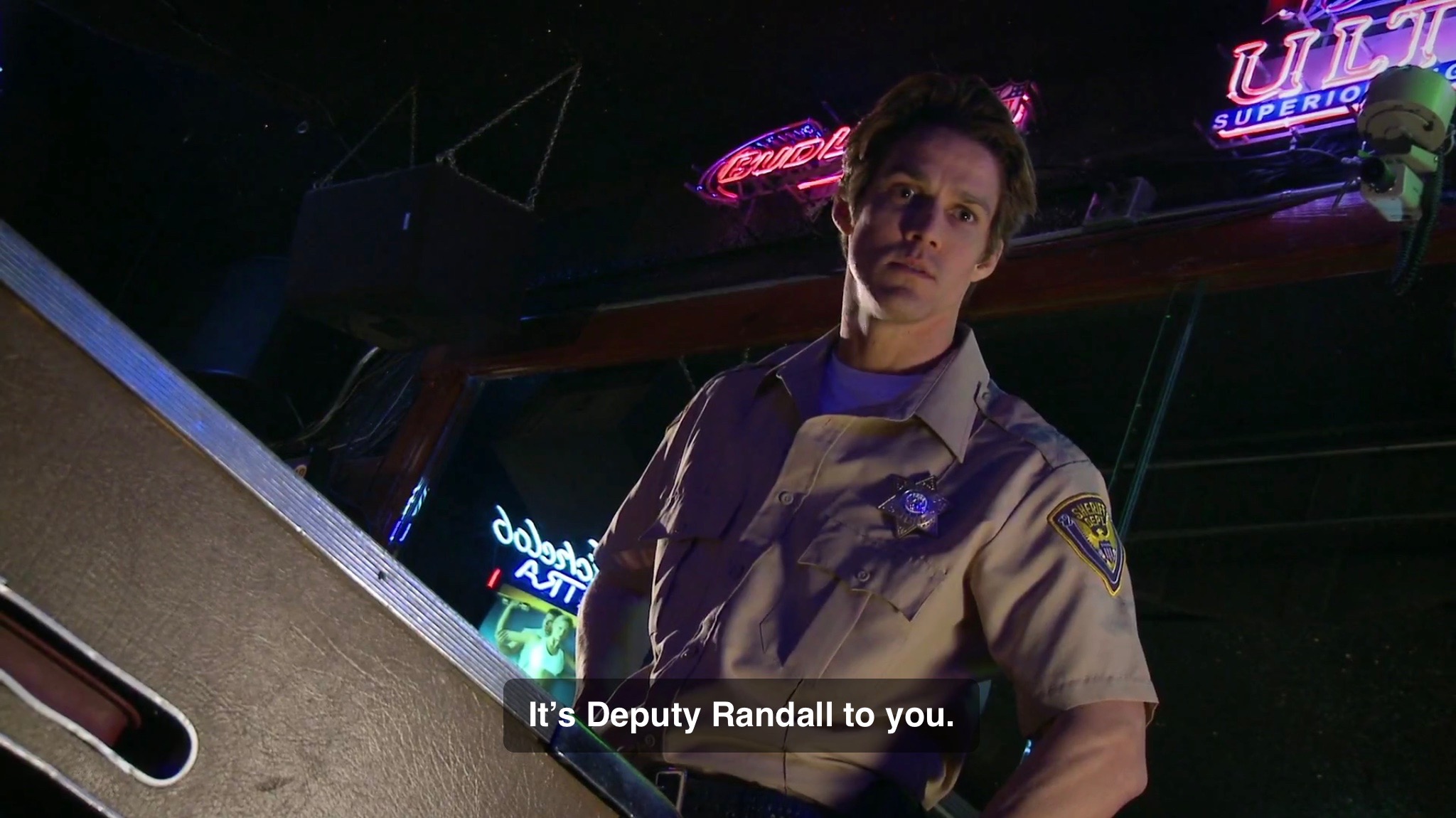
I am not sure why McKendrick didn’t just make this a sequel to Deadly Pickup (2016). I can take a guess and say that he knows HBO likes to rotate up films from Cinemax, which could cause one of the two to be brought up there, and leave viewers confused. Still, it’s shot in the same area. It has Billy Snow basically playing the same character as Deputy Randall. Sarah Hunter is back. Jon Fleming who played Rick in Deadly Pickup is also back. Sal V. Miers himself even makes a small appearance in the film having been the producer of both this and Deadly Pickup. Also, it is once again a procedural to find a killer while injecting sex here and there into the story.

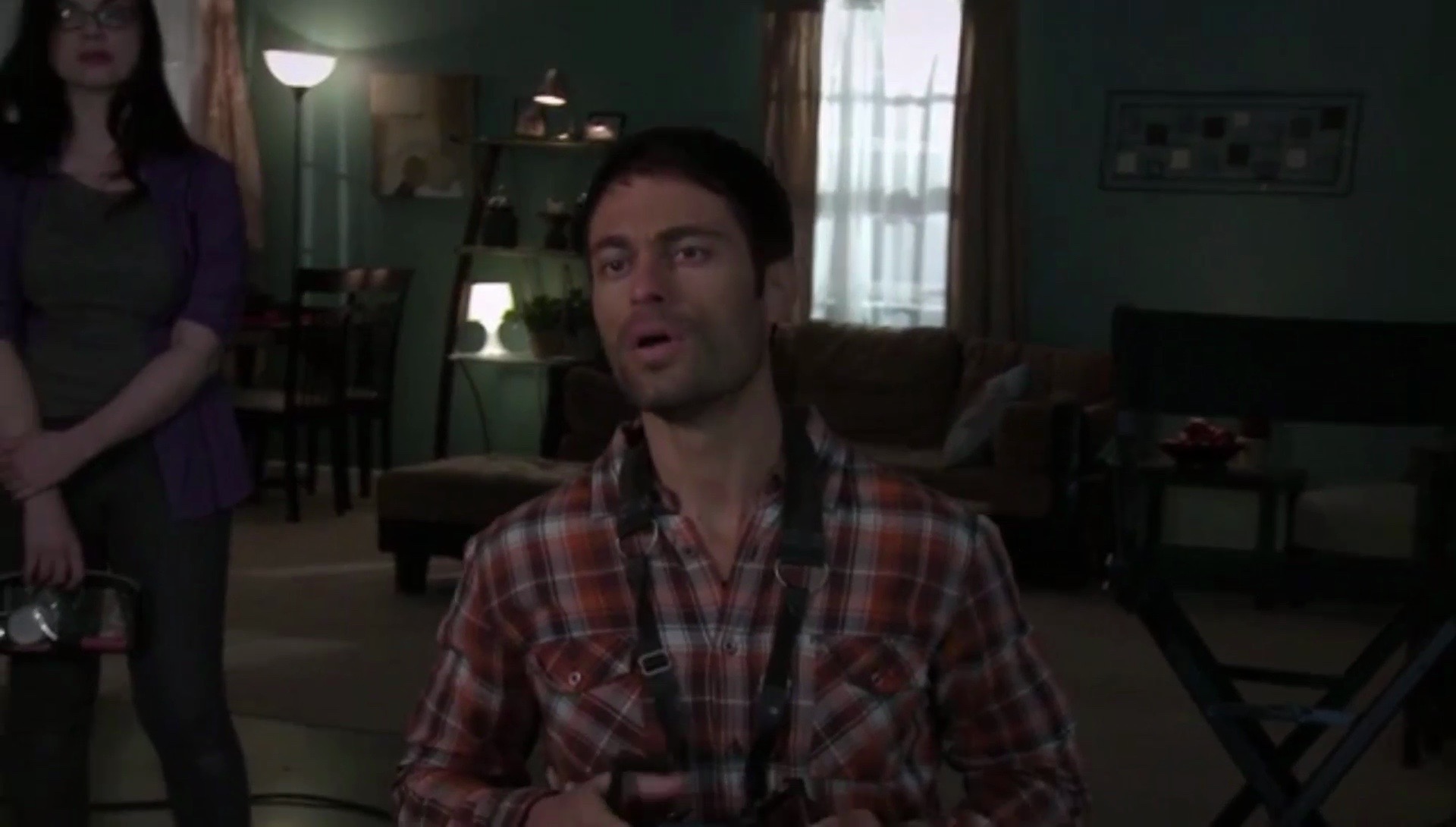
The movie starts off…and welcome back to the world of the living, Rick!

vlcsnap-2016-09-30-15h39m30s852

Meanwhile, Sarah Hunter is standing in the background giving away the ending of the movie by looking very disapproving of this photo shoot. It’s not Rick’s fault the credits didn’t want to be placed over shots of the beach and birds flying this time around. That still doesn’t stop Hunter from getting a great look on her face.

vlcsnap-2016-09-30-15h53m41s945

That’s the look someone who is into you gives when you basically ask them to leave so you can have sex with someone else.

After that is completed, we cut to…whoa, whoa, whoa…

vlcsnap-2016-09-30-16h07m33s892

I’m pretty sure this is where you got killed by Carter Cruise in Deadly Pickup, Rick.

Deadly Pickup (2016, dir. Dean McKendrick)

Deadly Pickup (2016, dir. Dean McKendrick)

Hmmm…I would say that Sarah Hunter resurrected Rick, but she was also killed off in Deadly Pickup. This completely breaks the continuity of the Dean McKendrick movies since I am pretty sure Sarah Hunter was killed off in Erotic Vampires of Beverly Hills (2015) too. I guess when all else fails, just blame Frankie Dell for creating another one of his mystery concoctions that brought Hunter and Rick back to life between movies.

During the photo shoot, Rick uses the excuse that the lighting isn’t right anymore, so they will have to shoot down on the beach a little later. This does not sit well with the model named Audrey (August Ames) who is already jealous of the other model named Jocelyn (Christiana Cinn), and was just arguing with her own manager David (Justin Berti) about it.

vlcsnap-2016-09-30-16h13m35s642

She proceeds to walk along the beach when it cuts to a seagull.

vlcsnap-2016-09-30-16h18m14s760

We know what that means.

vlcsnap-2016-09-30-16h21m09s290

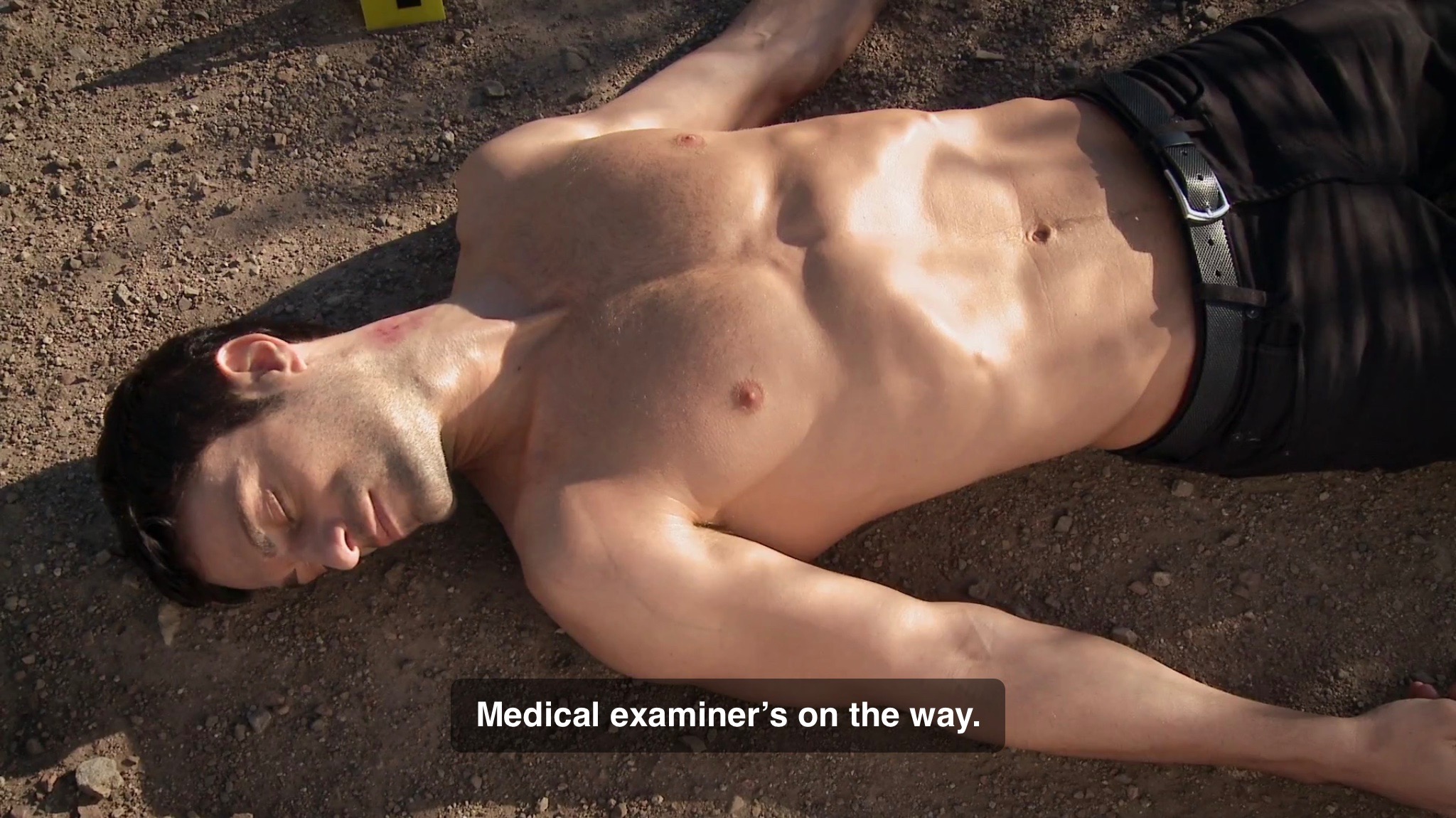
Killed by a phallic shaped rock.

vlcsnap-2016-09-30-16h21m21s143

That’s when our heroes show up on the scene.

vlcsnap-2016-09-30-16h19m24s014

Deputy Randall got a promotion to Detective and has been partnered with Erika Jordan. They are legitimately good in this movie together. I could go for a series of movies where the two of them hunt down killers.

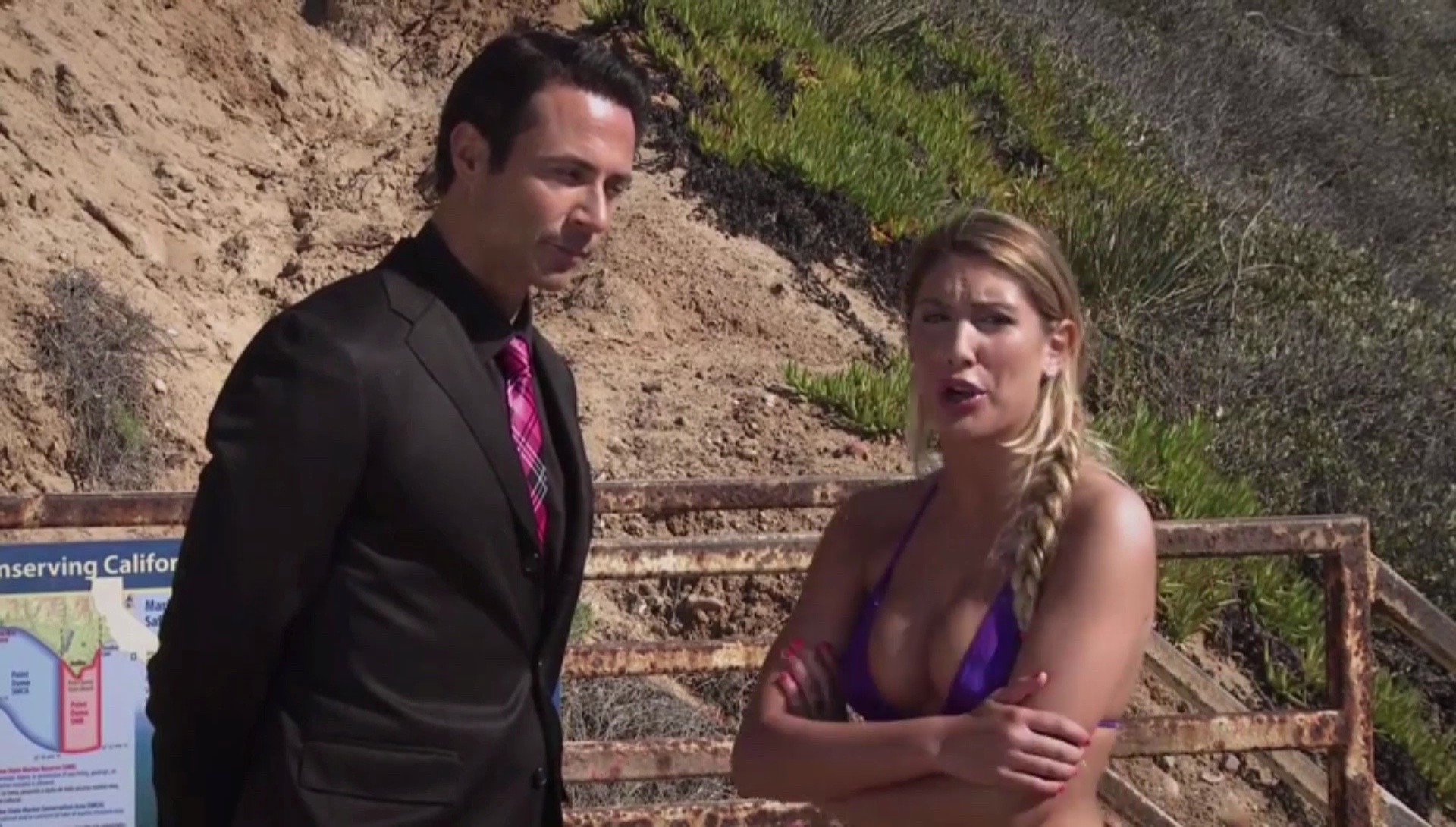
Considering this manager was arguing with Audrey next to a sign about “Conserving California’s Coastal Treasures”,…

vlcsnap-2016-09-30-16h08m32s612

that means we need Detective Randall and Erika Jordan to uncover a sex scene with Audrey from his past.

vlcsnap-2016-09-30-16h27m46s107

After the standard procedural scene of people standing around talking to each other, it’s time for Randall and Jordan to go check in with the producer–Sal V. Miers–about the body.

vlcsnap-2016-09-30-16h47m29s299

This is when Jordan makes sure to mention information that a woman could have killed Audrey.

Now we cut to Sarah Hunter trying to drop less than subtle hints to Rick that she is in to him. Then Jocelyn comes in to make Sarah Hunter leave, and comfort Rick by sticking one of her heels high in the air.

Once that is over, the good acting brigade shows up to question Rick as Jocelyn sneaks out the back-way. Hunter tells them that Audrey knew some things about Jocelyn that could hurt her modeling career, such as being a stripper on the side.

vlcsnap-2016-09-30-17h02m49s047

Now it’s off to the Mötley Crüe soundalike strip club so that Jocelyn can point suspicion back at the red herring of the shady manager from earlier. They also make sure to say that Detective Randall is having a bad break up with his wife. That way they have an excuse for a sex scene later.

Now our dynamic duo go and confront the sleazy manager at the house of the couple from Deadly Pickup.

vlcsnap-2016-09-30-17h19m36s830

They acquired enough evidence between scenes to arrest him just in time for Sarah Hunter to take a shower. After that, Hunter and Rick agree to meet later on, before we cut to Detective Randall drinking when Erika Jordan comes in to see him.

vlcsnap-2016-09-30-17h29m35s923

I’m amazed Detective Randall would want to return to the bar where he had to put down Carter Cruise.

Deadly Pickup (2016, dir. Dean McKendrick)

Deadly Pickup (2016, dir. Dean McKendrick)

She takes him home since he is drunk, and they have sex. This one felt genuine like their characters had real feelings for each other. That was nice.

Now we go to Rick’s place where Sarah Hunter is in her best red dress. They have sex of course, but since Rick is suicidal, he essentially tries to kick her to the curb afterwards. Rick isn’t the brightest of people.

vlcsnap-2016-09-30-17h52m14s257

Lucky for Rick, our detectives get a hit that Sarah Hunter’s DNA was on the rock. You’d think Hunter would get Rick in the end, but she didn’t count on Detective Randall.

vlcsnap-2016-09-30-17h52m44s953

vlcsnap-2016-09-30-17h53m30s989

No one gets the final shot, but Detective Randall! Well, Erika Jordan gets in a shot too. I can’t think of any way to tie that in with Hunter playing Jade Empress in Bikini Avengers (2015). I’ve failed you.

Let’s wrap this up, Sal!

Detective Randall and Erika Jordan tell Sal the backstory on Hunter before getting a call for another case. Hunter was obsessive, which is what led her to become so attached to Rick that she killed to have him for herself.

“Pleasant dreams, my dear.”

vlcsnap-2016-09-30-17h55m13s199

This isn’t one of the best of these late night cable movies floating around. However, if you have to choose between this and Deadly Pickup, then this is definitely the one to watch. Billy Snow, Erika Jordan, and Sarah Hunter are three of the best actors in this movie. They carry the film. Deadly Pickup is dragged down by Carter Cruise trying to play a ditz when it really doesn’t seem to be in her wheelhouse. It’s noteworthy that this movie contains no girl-on-girl sex scenes. I was surprised. They always seem to find some way of working that in. I’m glad they didn’t though because it wouldn’t have made sense in this film, and they really do try to have a coherent story. The flashback sex scene is the only thing that stood out at me as not being necessary. You also get to see Jon Fleming do some acting instead of just showing up as a walking dead meat puppet in Deadly Pickup.

Still, I am waiting for one of these crime late night cable movies to measure up to Carnal Wishes (2015). Deadly Pickup is at the bottom, Wicked Deeds (2016) is in the middle, and this is the closest so far that I have seen.

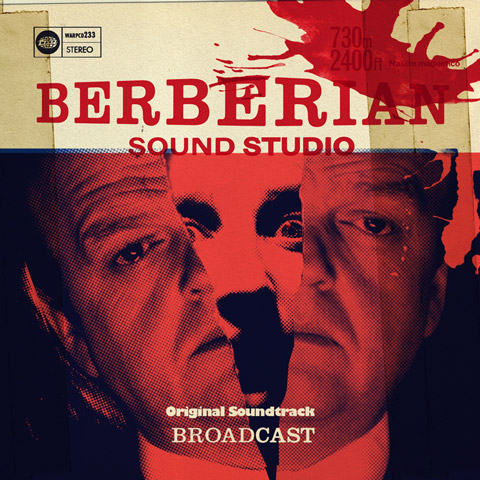
Review of Berberian Sound Studio, ALT Title: Huh? I mean, Huh?


bsstudio

I was considering posting this review later in the month because I didn’t want to do two negative reviews in a row. I’m starting to feel like an old curmudgeon with a sciatica issue, but here we are.  I didn’t write, direct, or produce this steaming pile of shit, but again… here we are.  I’m not writing that every film should have three distinct acts that are easily defined and understood, but this film sure could have used some structure or a beginning, a middle, or (if they really felt wild) an ending.

We open with Gilderoy (Tobey Jones) starting a job as a foley artist for a Giallo film.  He is immediately shocked at the graphic nature of the film that he will be looping.  This is where the movie grinds to a halt – minute 7.  Either through a lack of budget or imagination, the film takes place in the sound studio, his apartment, and a hallway – that’s it.  You’d think that this would establish tension…nope; no more than sitting in the DMV for 90 minutes establishes tension.  There are no subtitles and everyone’s speaking Italian and screaming a lot to loop the spooky film that you never see.  Again, you’d think that perhaps this would create tension or alienation because we don’t know what’s being said in 85% of the film….nope; no more than watching Raiuno (Italian Basic Cable).   Keep in mind, I’m very proud of my very sexy Italian roots, but not everything we make is a winner- even our towers lean over sometimes.

Gilderoy proceeds to obsess over getting reimbursed for his travel and when he doesn’t get reimbursed, he mopes … a lot and smashes fruit to mimic bludgeoning sounds. At one point he does get upset about it, but then goes back to doing what he does best – moping and fruit smashing.  There are two producers Francesco and Santini who spend the majority of the film bullying Gilderoy around and just when you think he’ll snap, he doesn’t because his moping around and fruit smashing won’t get done by itself.

Gilderoy slowly makes a quasi-friendship with Elena a voiceover artist who hints at something sinister being afoot, but it never materializes. Snore.  Later in the film, Santini sexually assaults her off-screen and she wrecks the studio this is also off-screen.  Since all of the action takes place off-camera, it really makes you wonder if they ever wanted to film a movie.  Elena’s departure necessitates the need to hire new voiceover actress to replace her.

This is where the film takes an absurdist left turn – Gilderoy starts speaking Italian.  As someone who has taken some formal Italian language instruction- it’s a challenging language, but not for Gilderoy because he just starts spouting it – damn it!  Then, Elena’s replacement tries to kill Gilderoy, but he manages to kill her.  He then wanders into the sound studio and for some reason he sees the self-defense killing on the screen.  This causes the need for yet another voiceover actress to be hired and he uses mild sound torture to get a better performance out of her – it’s both weird and stupid because she could just take the headphones off, but she doesn’t.  She does quit and we don’t have to see them go to Central Casting again.  Maybe they get a stamp on a card for every voiceover actress they hire?  If so, they are all due a free sammich!!!  The movie ends.  Yep, that’s it.

This film proved that there are two big losers in Giallo pictures: voiceover actresses and fruit!  Enjoy the horror month!  My next review will be one of my favorite movies of ALL TIME: Ginger Snaps!  Ginger Snaps is a werewolf movie that is an allegory for a girl’s menarche! Tagline: They don’t call it the curse for nothing!  It’s awesome!