Lisa Reviews An Oscar Nominee: Atlantic City (dir by Louis Malle)


(With the Oscars scheduled to be awarded on March 4th, I have decided to review at least one Oscar-nominated film a day.  These films could be nominees or they could be winners.  They could be from this year’s Oscars or they could be a previous year’s nominee!  We’ll see how things play out.  Today, I take a look at the 1981 best picture nominee, Atlantic City!)

Welcome to Atlantic City, New Jersey!

It’s a city with a storied past and an uncertain future.  It’s a place where old men on street corners can tell you stories about meeting Bugsy Siegel in the lobby of an old hotel that’s just been demolished.  The decrepit remains of old Atlantic City co-exists next to half-completed luxury casinos and hotels.  It’s a place where business deals are celebrated in the Frank Sinatra Suite and where a woman trying to make a very important phone call might find herself being serenaded by Robert Goulet.

It’s also the home of Lou (Burt Lancaster).  From the minute we first see Lou, it’s obvious that he’s a man past his time.  He walks up and down the worst streets of Atlantic City, dressed in a gray suit and trench coat.  With his white mustache and his coolly professional manner, he looks like he belongs in an old movie and not hanging out in his shabby apartment or drinking in the local bar.  When Lou was younger, he was acquainted with all of the big names: Siegel, Luciano, Costello, Lansky.  Of course, he wasn’t ever much of a mobster.  He used to run numbers.  If pressed, he’ll tell some interesting stories but it’s not difficult to tell that he’s lying.  (At one point, it’s mentioned that Lou’s Mafia nickname was Numbnut.)  Now, Lou is an old man.  Much like a condemned Atlantic City hotel, he’ll soon be due for demolition.  He spends most of his time taking care of Grace (Kate Reid), the widow of a mobster.  When he’s not responding to Grace’s demands, he watches his neighbor, Sally (Susan Sarandon).

Sally is originally from Canada.  She came to America looking for a better life and ended up working as a waitress.  Under the strict tutelage of Joseph (Michel Piccoli), Sally is learning how to be a blackjack dealer.  Someday, she hopes that she’ll be able to move out of her apartment and into a communal house on the beach.  Until then, she works hard every day and then returns to her apartment, little realizing that she’s being watched by Lou.

And then David shows up.

David (played by Canadian character actor Robert Joy) is Sally’s estranged husband.  Sally knows that David can’t be trusted but she reluctantly allows him and his pregnant girlfriend (Hollis McLaren) to stay with her for a few days.  David has stolen a large amount of cocaine from the Philadelphia mob.  David wants to sell it but he quickly discovers that no one in Atlantic City is willing to deal with someone who they don’t know.  Fortunately, for David, he runs into Lou.  Lou, looking for a chance to be a real gangster and also wanting a chance to get closer to Sally, agrees to help David sell the cocaine.  Unfortunately, for David, two hit men from Philadelphia have traced him to Atlantic City and are determined to not only get their cocaine back but to also kill David as well.

It may sound like the set up for a standard crime thriller but Atlantic City is actually a thoughtful meditation on getting older, falling in love, and dealing with the fact that things change.  Lou is a relic of the past, looking for one last chance to make his mark before, like the older buildings on the boardwalk, he’s demolished and forgotten about.  Sally and David are the dreamers, hoping to build a future in America.

Louis Malle directs at a leisurely pace.  Those looking for a hyperkinetic gangster film will be disappointed.  There’s only two acts of violence in Atlantic City and Malle presents both of them in a low-key, matter-of-fact fashion.  Instead, Malle focuses on exploring the lives and dreams of the film’s characters and Burt Lancaster rewards that attention with an absolutely outstanding performance as a dignified man who knows his best days are behind him but who still refuses to give in to defeat.  It’s one of Lancaster’s best performances and he was rewarded with an Oscar nomination for best actor.

Atlantic City was nominated for best picture but lost to Chariots of Fire.
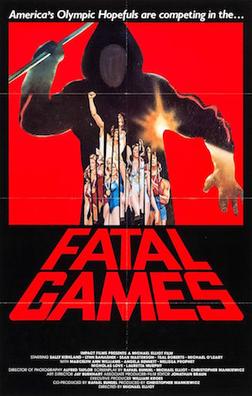
An Olympic Horror Film Review: Fatal Games (dir by Michael Elliot)


Like all good people, I am currently obsessed with the Winter Olympics!  As a result, over the past two weeks, I’ve been watching and reviewing a lot of Olympic-themed films.  Today, I watched the 1984 slasher film, Fatal Games!

If you look at the poster above, you’ll see that Fatal Games was advertised as being a film about “America’s Olympic hopefuls … competing in the Fatal Games!”  That’s kind of true.  The Olympics are frequently mentioned throughout Fatal Games but technically, no one in the movie is actually a member of the Olympic team.  At least not yet.  Instead, they’re all students at a special athletic academy.  Apparently, it’s supposed to be a high school, though we don’t ever see anyone taking a math test or attending English class or anything like that.  Instead, it appears that everyone at the school spends all day practicing gymnastics, swimming, or running.  In fact, it appears that there’s only 20 students at the school and, at most, 5 members of the faculty.  Maybe it’s meant to be like that school that all of the clones attended in Never Let Me Go.  Either that or it’s just an indication that Fatal Games was an extremely low-budget film.

Anyway, seven of the students have just won some sort of regional competition and now they’re getting ready for nationals!  And, if they win at nationals, they’ll get to go to the Olympics.  However, they might not even make it to nationals.  Someone is stalking the blandly likable athletes and using a javelin to pick them off, one-by-one.

Interestingly, it takes people a while to notice that the number of potential Olympians is steadily dwindling.  Instead, people say stuff like, “Hey, have you seen Nancy?”  “Not for a few days.”  “Hey, have you seen Sue Ellen?”  “Didn’t she got to San Francisco to see her boyfriend?”

Well, I guess it’s understandable.  It’s not like anyone in the film is going to school to develop their critical thinking skills.  They’re athletes.  Who cares about all of the people mysteriously disappearing?  They have athletic stuff to worry about!

Fatal Games is pretty much a typical mid-80s slasher.  Interestingly enough, it’s structured like a giallo.  The murderer dresses in black and we get all of the required close-ups of the killer’s gloved hands.  The film introduces several potential suspects but doesn’t reveal the killer’s identity until the final ten minutes.

Is it the overly critical track coach?

Is it the creepy doctor?

Is it the nurse who is worried that the athletes are being injected with too many hormones?  (Obviously, she’s seen Goldengirl.)

Is it the swim coach?

Or is it her girlfriend, the swimmer who didn’t qualify for nationals?

Is it the gymnast whose grades are slipping?

Could it be the other gymnast who is always telling jokes?

Or the runner who has father issues?

Or is it Joe, the token weird guy?

They’re all given a scene or two to establish that they have a potential motive for wanting the seven aspiring Olympians dead.  When the killer and the killer’s motive is finally revealed, it’s so over-the-top and stupid that you can’t help but admire the film for actually going there.  The filmmakers obviously said, “Forget trying to make sense.  WE’RE GOING FOR IT!”

Anyway, the main problem with Fatal Games is that the murderer uses a javelin and, as a result, there’s a lot of scenes of the killer running through narrow school hallways, carrying this goofy-looking javelin.  Don’t get me wrong.  Javelins are sharp and scary and I wouldn’t want one thrown at me.  But still, when someone spends more than five minutes running down a narrow hallway while carrying a javelin, it just looks silly.  Let’s not even think about the logistics of using a javelin to kill someone in broad daylight without anyone else noticing.

That said, as silly and predictable as Fatal Games may have been, there were a few moments of inspired lunacy.  I already mentioned the ending, which is so over-the-top and silly that you can’t help but admire it.  But there’s also a few shots that are genuinely effective.  A scene where the killer suddenly appears in a doorway was handled well.  There’s also an oddly dream-like sequence in which a swimmer practices in the pool, little realizing that the killer is floating underneath her.  How did the killer get in the pool, with the javelin, without anyone noticing?  Who knows?  It’s still an effective scene.

Finally, I have to mention that Fatal Games opens with a song called “Take It All The Way,” which is so generically 80s that it’s oddly brilliant.  It’s almost as good as Graduation Day‘s “The Winner.”

Fatal Games is currently available for viewing on YouTube.

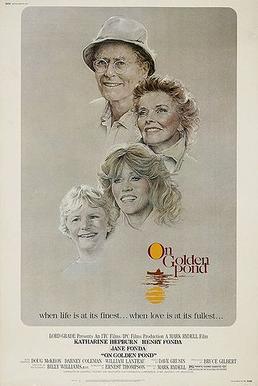
Lisa Reviews An Oscar Nominee: On Golden Pond (dir by Mark Rydell)


(With the Oscars scheduled to be awarded on March 4th, I have decided to review at least one Oscar-nominated film a day.  These films could be nominees or they could be winners.  They could be from this year’s Oscars or they could be a previous year’s nominee!  We’ll see how things play out.  Today, I take a look at the 1981 best picture nominee, On Golden Pond!)

On Golden Pond takes place in a cottage that’s located on a lake called Golden Pond.  Hence, the title.  As far as title’s go, it’s not a bad one.  It’s a film about an elderly couple who spends every summer in that cottage.  They’re in their golden years so I guess it makes sense that they would feel an affinity for Golden Pond.

That said, I think that an even better title for the film would be Everything Annoys Norman.

Norman Thayer, Jr. (Henry Fonda) is a cantankerous old man.  He’s 79 and not particularly looking forward to celebrating his 80th birthday.  He’s a retired college professor.  His wife claims that the last time Norma was really happy was when Franklin Roosevelt was elected president.  Norman likes to fish and still brags about the time he caught a legendary trout named Walter.

What Norman doesn’t like is having to deal with the world.  When he stops to get gas, he loudly complains that, “in his day,” gas only cost eighty-five cents.  When he’s told that there’s another “middle-aged” couple on the lake, he says that, unless he’s going to live to be 150, he’s not middle-aged.  He gets frustrated because his memory isn’t as good as it used to be.  When he goes out for a walk in the woods, he forgets where the path is and he has to return to the house.  Sometimes, he calls people by the wrong name.  At one point, he struggles to use a landline phone.  (I can only imagine how annoyed Norman would be if he was alive today.)  Norman doesn’t like to deal with anyone other than his wife.

Ethel (Katharine Hepburn) is Norman’s wife.  She loves him.  When she hears Norman referred to as being “a son of a bitch,” she replies, “That son of a bitch is my husband.”  Ethel is used to Norman and his ways.  As she puts it, she understands that he’s like a “lion” who has to roar just to remind himself that he still can.  Ethel is … well, basically, she’s Katharine Hepburn.

Ethel has invited their daughter, Chelsea (Jane Fonda), to celebrate Norman’s birthday with them.  Norman and Chelsea have a strained relationship.  It’s implied that Norman was an emotionally distant and overly critical father and that Chelsea has never been able to forgive him.  When she shows up with her new boyfriend, Bill Ray (Dabney Coleman) and his 13 year-old son, Billy Ray (Doug McKeon), Norman barely bothers to acknowledge her.  With Bill and Chelsea planning on vacation in Europe, they ask if Billy can stay at the cottage with Norman and Ethel.  Ethel agrees.  Norman acquiesces.

On Golden Pond is a film that I wanted to like more than I actually did.  After all, the film features two classic actors, Henry Fonda and Katharine Hepburn, appearing in their only film together.  (Both Henry Fonda and Hepburn won Oscars for their work here.)  Henry Fonda gives a good performance as a strong-willed man who is struggling to deal with his own mortality.  As for Hepburn, it’s not a great performance, largely because Ethel is a thinly written role, but she’s Katharine Hepburn so it doesn’t matter.  But almost everything about the film — from the tasteful music to the pretty but not overwhelming cinematography — feels more like something you’d expect to find in a television production instead of a feature film.  On Golden Pond was based on a play and, with almost all of the action set in that cottage, it really doesn’t escape its theatrical origins.  That said, it’s a sweet movie.  The love between Norman and Ethel feels real.  If nothing else, the film gave the great Henry Fonda his only Oscar.

On Golden Pond was nominated for Best Picture but lost to Chariots of Fire.
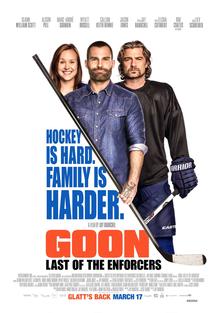
A Winter Game Film Review: Goon: Last of the Enforcers (dir by Jay Baruchel)


Here at the Shattered Lens, Leonard Wilson is our resident hockey expert.  He can tell you all about the in and outs of the game in general and the New York Rangers in specific.

Myself, I know very little about hockey.  Here’s what I do know:

  1. It’s played on the ice and with a puck.
  2. There are a lot of fights.
  3. All of my Canadian friends love it.
  4. It’s a sport that is mentioned many times on Degrassi.
  5. Two hockey players won the 22nd season of The Amazing Race.
  6. Back in 2011, I followed Arleigh’s suggestion and watched a hockey movie called Goon.  Surprisingly, I really, really liked it.

Six years ago, I started my review of Goon by admitting that I didn’t know anything hockey so not much has changed.  However, while I still may not know much about hockey, I am currently obsessed with the Winter Olympics.  And, of course, hockey is a big part of the Winter Games.  Since I’m currently watching movies about winter sports, today seemed like the perfect time to watch 2016’s Goon: The Last of The Enforcers and get caught up on the story of Doug Glatt.

Who is Doug Glatt?  As played by Seann William Scott, Doug Glatt is probably one of the nicest guys that you could ever hope to meet.  He’s not particularly smart.  He’s the type who responds to almost comment with a slightly confused smile.  He tend to take things literally.  But he’s a genuinely sweet guy and it’s impossible not to like him.

Except, of course, when he’s on the ice.  Doug is a semi-pro hockey player, playing for the Halifax Highlanders.  Even his biggest fans will admit that Doug isn’t the best hockey player of all time.  However, no one can throw a punch like he can.  Doug’s an enforcer.  His specialty is beating up the opposing team.  When his coach (Kim Coates) needs to intimidate the other team, he sends Doug out with orders to beat someone up.  Doug has no problem breaking someone’s nose but he usually apologizes afterward.  He’s known as The Thug.

Doug is married to Eva (Allison Pill), who loves hockey but, now that she’s pregnant, she worries about Doug getting seriously injured.  These worries come true when Doug gets into a fight with Anders Cain (Wyatt Russell), a fearsome enforcer on another team.  (Anders just happens to be the son of the owner of the Highlanders.)  Cain not only leaves Doug crumpled up on the ice but he also injures Doug’s right shoulder, making it difficult for Doug to throw a punch with his right hand.  It appears that Doug’s playing days are over.  Doug ends up working in the storage room of an insurance company while the Highlanders continue on without him.  Adding insult to injury, Anders is soon signed by the Highlanders and given Doug’s old position as team captain.

As much as Doug tries to move on, he keeps finding himself drawn back to hockey.  When he runs into a former rival, Ross Rhea (Liev Schreiber), who is now making a living as a glorified gladiator, Doug realizes that he can learn how to fight with his left fist.  But with Eva not wanting him to fight anymore, Doug is forced to decide which team he’s going to play for, the Highlanders or his family?

Especially when compared to the first Goon, Goon: Last of the Enforcers is an extremely busy film.  Beyond Doug trying to adjust to life off the ice, the film also deals with Anders Cain’s relationship with his father, the locker room shenanigans of the Highlanders, Ross Rhea’s attempt to make a comeback, and the antics of obnoxious sports reporter Chad Bailey (T.J. Miller).  That’s a lot for one film to deal with and it’s not surprising that the end result is an uneven mishmash of raunchy comedy and sports-themed melodrama.  Whereas the first Goon worked because it kept things simple and sincere, Goon: Last of the Enforcers is way too complicated for its own good.

That said, as played by Seann William Scott, Doug is just as likable as he was in the first film and Scott and Allison Pill still make for an adorable couple.  In fact, the entire cast does a pretty good job, especially Wyatt Russell and Liev Schreiber.  The film doesn’t really work but, for fans of the first film, it’s still enjoyable enough.  If nothing else, it’s nice to see how things work out for Doug Glatt.

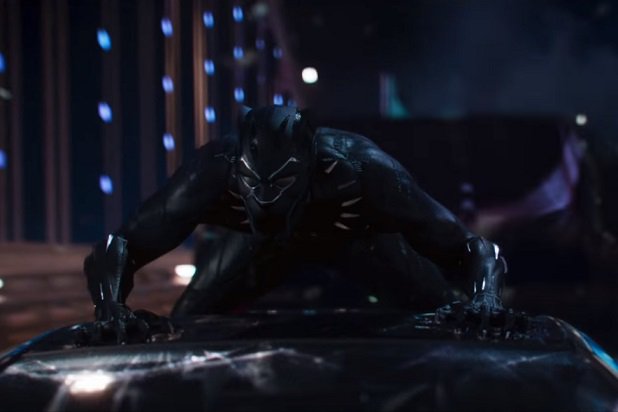
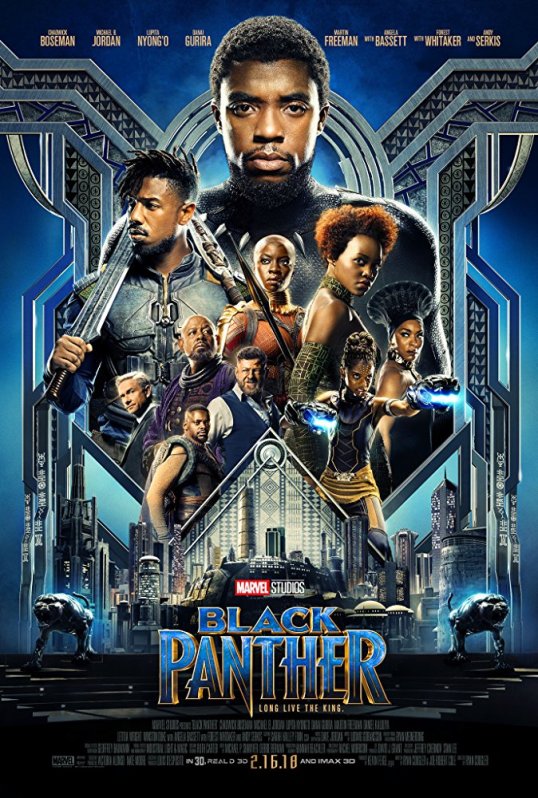
“Black Panther” : Hail To The King


Let’s be honest — as was the case with last year’s Wonder Woman (in fact probably to an even greater degree), Black Panther was a cultural phenomenon before it was even released, and in future it will be examined as such. As something more than a movie. As something that resonated within, and reverberated throughout, the zeitgeist. Its trajectory in that regard is largely unwritten to this point, but can be predicted with a fair amount of certainty : near-universal praise will come first, followed by the inevitable backlash, followed by an almost apologetic, “ya know, maybe we were too hard on this thing that we loved at first” sort of acceptance. If we could just skip all that, and take it as a given, it would save us all a lot of time and effort — but it’s on the way, so tune in or out of all that as you see fit. My concerns here are considerably more prosaic : to talk about the movie as what it began “life” as, to wit — “just” a movie.

For what it’s worth (which may not be much), I’m tempted to agree, to an extent, with those who are pointing out that simply seeing this flick is in no way an act of “resistance” in and of itself : after all, if the fact that the first thing that runs in theaters before the film starts is a commercial for Lexus cars featuring Chadwick Boseman in full Panther gear isn’t enough to clue you in to the reality that, at the end of the day, this is much more about profits than it is about politics, then the product placement within the film itself should do the job — and at the end of the day, one of the largest corporations in the world, founded by noted racist Walt Disney, is still the one making all the money off it. If, then, shelling out ten or fifteen bucks to watch Black Panther is an inherently defiant or dissident act (and I’m not saying it is), then it’s a highly commodified and co-opted one.

All that being said, when a film is released out into the world, particularly a film with as much fanfare attached to it as this one, there are gonna be ripples that emanate out from it — and among the millions of kids, in particular, who watch this flick, the seeds of an interest in African culture are sure to be sown, and the more they follow the metaphorical stalks that grow and flower from those seeds, the more they’ll discover things like historical resistance to colonialism, exploitation, capitalism, and the like. So while Black Panther may not be a radical (or even a particularly political) work in and of itself, it may inspire some radicalism in the future — one can only hope, at any rate.

But that’s pure speculation at this point, so let’s talk about what we know for certain.

One thing anyone who follows this site, or my work anywhere else, absolutely knows is that I’m no fan of Marvel Studios product in general. Unlike, apparently, most people, I find the overwhelming majority of Marvel flicks to be hopelessly redundant, formulaic, lowest-common denominator fare directed in a flat and lifeless “house style” with no particular visual flair, no particularly standout performances, no particular vision to do anything but get audiences keyed up for the next one. They exist as a self-perpetuating celluloid organism, one with no distinct personality but a lot of business sense and promotional muscle. This has been going on for so long, and with so much box office success, that I went into flick essentially expecting more of the same — sure, I knew it had a predominantly-black cast, and was set in Africa (albeit in a fictitious country), but that doesn’t mean that director Ryan Coogler was going to break the mold in any appreciable way. Hell, it doesn’t even mean that he would be allowed to do so. Happily, my pessimism was turned on its ear almost from word the word “go” here.

Black Panther looks different, feels different, because it is different. Coogler and co-screenwriter Joe Robert Cole certainly capture the dynamism, the energy, the Afro-futurism that has been a part of King T’Challa’s backstory since Jack Kirby created the character and his world (nope, we don’t lay any credit at Stan Lee’s feet around these parts, but I’m not getting into the “whys and wherefores” of that right now because, shit, I don’t have all night), but advance it all considerably, absorbing the extra layers added onto the mythos by the likes of Don McGrregor, Billy Graham, Christopher Priest, Reginald Hudlin, and Ta-Nehisi Coates over the years, and coming out with something uniquely suited to cinema and very much of the “now.” There’s a hard-driving and kinetic sense of energy to this film that the so-called “MCU” has been missing since it inception, and if you’re among the small number of those who agree with my assessment that most of these flicks play out more like two-hour TV episodes than proper movies, you can relax : this is as bold, brash, and big as it gets. This is blockbuster fare not only in name, but in execution, with visual effects that amaze, sets that inspire awe, cinematography that commands attention, action that sizzles, a script that charges forward, and music that slicks that trajectory along. This is arresting cinema that doesn’t even give you the option to leave your seat.

But what of the acting, you ask? It ranges from good to great, and thankfully the great includes the key players : Chadwick Boseman is regal yet human, fallible, relatable in the film’s central role: Forest Whitaker embodies aged wisdom tinged with regret as high priest Zuri; Michael B. Jordan is the first truly formidable villain, crucially one with a compelling backstory and some entirely valid philosophical viewpoints, as Killmonger; Martin Freeman not only reprises, but considerably expands, his already-extant “MCU” role of CIA agent Everett K. Ross with heart, humor, and brains; Sterling K. Brown makes the most of limited but significant screen time as T’Challa’s late uncle, N’Jobu; Andy Serkis — as a human this time! — chews up the screen with dangerous charm as Ulysses Klaue (or “Klaw,” as the comics would have it). These guys are all tops, really. And yet —

It is the women that carry this film. Whether we’re talking about Lupita Nyong’o as T’Challa’s love interest Nakia, a determined, fiercely independent, and soulful force that isn’t just her partner’s “equal,” but his conscience; Danai Gurira as General Okoye, head warrioress of the Dora Milaje, who embodies martial discipline and loyalty with the controlled fury of a hurricane ready to strike at any moment; Angela Basset as Queen Mother Ramonda, a living embodiment of grace, stature, and tradition; or Letitia Wright as younger sister Shuri, part “Q” to T’Challa’s “Bond,” part grounding and humanizing influence, part Moon Girl-style intellectual prodigy — as in life, it is the women that both make this movie’s men what they are, while also being complete and fully-realized in and of themselves. African history is far less patriarchal than is commonly believed, and in Wakanda that proud matriarchal lineage is exemplified, modernized, magnified — and honored.

Most films reflect the moment. Others define the moment. Black Panther goes one further by creating the moment. It’s as near to flawless as big-budget blockbusters get and eschews the too-common-flaw that movies made on this scale have of dumbing things down to appeal to the masses. Coogler and company instead trust those same masses to be intelligent enough to meet them on their level, and to respond to being talked “up,” rather than “down,” to. By believing that the world was not just ready, but eager, for something that goes far beyond mere spectacle — something that challenges the intellect while speaking to the heart — they have woken what could very well be a sleeping giant.

Now, let’s just keep our fingers crossed they’ve spurred that giant to do something more than simply go out and buy luxury cars.

Hell’s Kitty: ChainSaw Kitty Video


Y’all remember when I previewed Hell’s Kitty: Movie Preview, Review and Trailer Well, we got a bit more to see!

Actually, there is a terrifying music video to go a long with it!

ABOUT THE SONG – CHAINSAW KITTY

The writer / director Nicholas Tana (Sticky: A (Self) Love Story), who also appears in the film, worked closely with the Hell’s Kitty composer, Richard Albert (Losing Touch), to create music for the film that properly reflects the movie’s antagonist, Angel. Angel is a cute and loving cat with an evil, jealous side to her often onerous personality, both supernatural and schizophrenic. CHAINSAW KITTY, was written, performed, and recorded by Richard Albert(Losing Touch) with lyrics by Nicholas Tana (Sticky: A (Self) Love Story). The song was originally intended for a scene with Lou Ferrigno (The Incredible Hulk), in which the cat’s claws turned into chain saws. Though that particular scene was never shot, the creators, Nicholas Tana, and producer Denise Acosta, loved the music enough to include it in another scene involving Ashley C. Williams (The Human Centipede) and Barbara Nedeljakova (Hostel), rocking out to it on all fours! *via press release

Here, you can see this awesomely terrifying video:


BTW: Puuurrchase this movie as soon as you can! 

“Hell’s Kitty” will be available on VOD March 13th and on DVD March 27th!

Something You Should also know:

To kick of the movie release and to share their love for cats, the creators behind the film teamed with HOLLYSHORTS MONTHLY SCREENINGS and the TLC CHINESE THEATER recently hosted a premiere at the legendary theatre to raise money for FixNation.org. FixNation provides a free, full-time spay/neuter clinic with two full-time veterinarians capable of sterilizing as many as 100 cats per day. They also help hundreds of cats find suitable homes. For more info on the cause click here!  http://fixnation.org/

Lisa Reviews An Oscar Nominee: Working Girl (dir by Mike Nichols)


(With the Oscars scheduled to be awarded on March 4th, I have decided to review at least one Oscar-nominated film a day.  These films could be nominees or they could be winners.  They could be from this year’s Oscars or they could be a previous year’s nominee!  We’ll see how things play out.  Today, I take a look at the 1988 best picture nominee, Working Girl!)

Welcome to the 80s!

Yes, Working Girl is definitely a film of its time.  It’s a film that’s obsessed with big things: big dreams, big offices, big money, and big hair.  It’s a movie where the heroes talk about hostile takeovers and where everyone’s dream is to eventually to be an executive on Wall Street.  You know all of those people who claim that The Big Short is the greatest movie ever made?  I can guarantee that the majority of them would totally hate every character in Working Girl.  Working Girl is such a film of the past that it even features Alec Baldwin doing something other than bellowing at people.  In fact, Baldwin’s actually sexy in Working Girl.  It was strange to see him in this film and realize that he was the same actor who currently spends all of his time picking fights on twitter and defending James Toback.

Of course, Alec Baldwin has a relatively small role in Working Girl.  He plays Mick Dugan, the type of blue-collar guy who gives his girlfriend lingerie for her birthday (“I just wish you would get me something that I could wear outside,” she says as she tries it on) and who then proceeds to cheat on her while she’s off at work.  From the minute we first meet Tess McGill (Melanie Griffith), we know that she deserves better than Mick.

Tess is a professional administrative assistant.  She’s just turned 30 but she’s not ready to give up her dreams and settle for a life of fighting off coke-snorting executives and coming home to some guy like Mick.  (Speaking of early performances from infamous actors, one of the coke-snorting executives is played by Kevin Spacey.)  Tess has got a bachelor’s degree in Business.  As she puts it, she has a “mind for business and a bod for sin.”

She’s also got a new boss, an up-and-coming executive named Katharine Parker (Sigourney Weaver).  It turns out that Katherine is 29 years old.  (“I’ve never worked for someone younger than me before,” Tess says as Katherine gives her a condescending smile.)  Katharine encourages Tess to think of her as being a mentor.  If Tess has any ideas for investments, she should feel free to bring them to Katharine.  Of course, when Tess does so, Katharine claims that her bosses shot the idea down.  It’s only after Katharine breaks her leg in a skiing accident and is laid up in Europe that Tess discovers that Katharine has actually been stealing her ideas and not giving her any credit for them.

What is Tess to do?  Well, she does what any of us would do.  She passes herself off as an executive and presents her idea to Jack Trainer (Harrison Ford) herself.  Jack is impressed with the idea but he’s even more impressed with Tess.  Of course, complicating things is that Jack was once in a relationship with Katharine and Katharine still thinks that she’s going to eventually marry Jack.  And, of course, there’s the fact that Tess is lying about actually being an executive…

Working Girl is a frequently amusing film, elevated by performances of Melanie Griffith and, in the role of Tess’s best friend, Joan Cusack.  Add to that, Harrison Ford is remarkable non-grouchy as Jack Trainer and Sigourney Weaver appears to be having the time of her life playing a villain.  Even as I laughed at some of the lines, here was a part of me that wished that the film had a bit more bite.  At times, Working Girl tries too hard to have it both ways, both satirizing and celebrating Wall Street culture.  In the end, the film works best as a piece of wish-fulfillment.  It’s a film that says that not only can you win success and Harrison Ford but you can get your bitchy boss fired too.

Despite being a rather slight (if likable) film, Working Girl was nominated for Best Picture of 1988.  However, it lost to Rain Man.

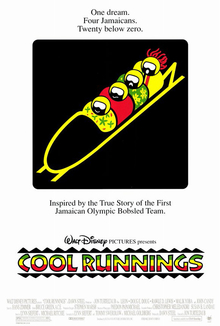
An Olympic Film Review: Cool Runnings (dir by Jon Turtletaub)


Like all good people, I am currently obsessed with the Winter Olympics.  Earlier this week, I asked some of my closest friends if they could recommend some good films about the Winter Games.  Almost everyone who replied recommended that I check out Cool Runnings, a film from 1993.

So, I did.

And I’m glad that I did.

Cool Runnings is one of those sports movies that’s based on a true story, though I imagine it’s probably a very loose adaptation.  Jamaica is a country with a long and proud Olympic history.  Since the 1948 Summer Olympics, Jamaican athletes have won a total of 77 medals, the majority of them in individual and relay sprinting events.  However, Jamaica didn’t compete in the Winter Olympics until 1988, when the Jamaican Bobsled Team made their debut.  According to contemporary news reports, the Jamaicans were folk heroes at the ’88 Winter Games and other teams would frequently help them out by lending them equipment.  Though the Jamaicans were never really a medal contender, they were personally popular and everyone was upset when their bobsled crashed during one of their qualifying runs.

That, of course, isn’t exactly the story that’s told in Cool Runnings.  In Cool Runnings, the Jamaican bobsled team is ridiculed by all of the snobs on the other teams, with the Germans especially going out of their way to be condescending.  Their first run is a disaster but their second run puts them into medal contention and causes people all over the world to spontaneously break into applause.  It’s a sports film, after all.  For a sports film to work, there has to be adversity before there can be victory.  Cool Runnings does stick close enough to the real story that the Jamaicans do end up crashing their sled.  However, in the film version, the team proudly carries their bobsled over the finish line while, again, people all around the world applaud.  Even a woman with a Russian flag claps.  And yes, it’s all pretty hokey but who cares?  It made me cry.

It’s a well-done film, one that is unapologetically sentimental and all the better for it.  Before I watched the film, I didn’t know anything about how the bobsled worked, beyond the fact that it involved four people and that everyone had to jump into the sled after launching it.  But, ultimately, it didn’t matter that I didn’t know much about bobsledding.  From the moment that film started, with scenes of aspiring Olympians running across sunny Jamaica, it had my attention.

When the film starts, Derice Bannock (Leon Robinson) is hoping to compete in the Summer Olympics but, at the qualifying trial, Derice and another runner, Yul Brenner (Malik Yorba), end up tripping over yet another runner, the likable and enthusiastic Junior Bevil (Rawle D. Lewis).  Out of contention for the Summer Olympics, Derice decides to try to find a way to go to the Winter Olympics.  Fortunately, there’s a former Olympic bobsledder, Irv Blitzer (John Candy), living nearby and Derice’s best friend, Sanka (Doug E. Doug) is a champion push cart racer.

The film follows Irv and the four Jamaicans on their unlikely journey to Canada.  It’s a comedy with a dramatic heart.  Yes, Sanka may need help getting his helmet over his hair (“Thanks, coach,” he says whenever Irv pounds down the helmet) but the film also takes the time to explore why it’s so important for these four to compete in the first place.  It might be tempting to make fun of Yul Brenner when he talks about how he wants to live in Buckingham Palace but the film makes clear just how important this improbable dream is for Yul and everyone else.  No one may give the Jamaican bobsled team a chance but Jamaica never stops believing in them.

It’s an incredibly sweet little movie, featuring likable performances and a heart-warming story.  I highly recommend it to anyone looking for a good sports story.

A Kind of Olympic Film Review: Cloud 9 (dir by Paul Hoen)


Technically, 2014’s Cloud 9 is not an Olympics film.  Though it is a sports film and deals with a big competition and features a lot of talk about winning gold medals and all that good stuff, the film doesn’t take place at the Olympics.  Instead, it takes place at the annual “Fire and Ice” snowboarding competition in Summit Valley.

But let’s be honest.  Would I have watched this movie if not for the fact that I’m currently obsessed with the Winter Olympics?  Probably not.  Would the film have been made in the first place if not for the 2014 Sochi Games?  Again, probably not.  Cloud 9 may not take place during the Olympics but it might as well.

Cloud 9 was made for the Disney Channel, with everything that suggests.  It’s not a dramatic or realistic examination of the world of competitive snowboarding but then again, it never claims to be.  Instead, it’s a cute little romantic comedy about falling in love, pursuing your dreams, and not allowing your life to be determined by an overbearing parental figure.

Kayla Morgan (Dove Cameron) is a part of the Swift snowboarding team.  Since the Swift Team is known as the best in Summit Valley, that therefore makes Kayla the best.  At least, that’s what Kayla believes.  Of course, a lot of other people believe that Kayla isn’t that good and the only reason she’s been given a place on the team is because her father (Patrick Fabian) owns the local resort.

Kayla is also dating Nick Swift (Mike C. Manning), the son of Coach Sebastian Swift (Jeffrey Nordling).  Coach Swift is about as evil as you would expect someone named Sebastian Swift to be.  He believes in victory at all costs and he relentlessly pushes his son to be the best.  Coach Swift has reached the conclusion that the Swift Team will never be the best as long as Kayla is a member.  He tells his son to take care of it…

OH MY GOD, IS NICK GOING TO MURDER KAYLA!?

No, don’t worry.  Things never go that far.  Instead, Nick and the members of Team Swift frame Kayla for destroying an old sign.  When the sign collapses, it also manages to destroy a sled belonging to Will (Luke Benward).  Will used to be a champion snow boarder, until he attempted to pull off a new move called the Cloud 9.  Not only did Luke fail to pull off that move but he also broke his leg and ended up as the star of a YouTube video called “Epic Fail.”  Now, Will works at his family’s dog kennel.

And soon, Kayla is working at the dog kennel as well!  Her parents are willing to pay for the sign but Kayla is going to have to replace the sled herself.  Even worse, she gets kicked off the Swift Team…

So, what do you think happens?  Do you think Kayla eventually learns humility as a result of having to take care of a bunch of dogs?  Do you think Nick dumps Kayla?  Do you think Kayla and Will are going to fall in love and then form their own team to compete in the Fire and Ice competition?

Well, yes, all of that happens.  Of course, it does.  There’s not a single surprising moment to be found in Cloud 9 but it’s a sweet-natured movie and Dove Cameron and Luke Benward make for a cute couple.  Some of the snowboarding footage is impressive.  It was a nice and inoffensive way to spend 90 minutes.  When it comes to a movie like this, that’s all you can really ask for.

The TSL’s Grindhouse: No Way Back (dir by Fred Williamson)


Jesse Crowder’s back!

You may remember Jesse Crowder as the super cool and unflappable private detective from Death Journey.  Jesse was a Los Angeles cop but now he works independently.  There’s literally nothing that Jesse can’t do.  Ride a horse?  Ride a motorcycle?  Slow motion kung fu?  Jesse can do it all and he usually do it without bothering to button up his shirt.  Jesse is such a badass that he can kill more people in the time it takes for him to light a cigar than most people will kill in their entire lifetime.

The 1976 film No Way Back is the second Jesse Crowder film.  Once again, Fred Williamson both directs and stars as Jesse.  Williamson is in almost every scene of the film and when he’s not killing bad guys or having sex or just posing with his shirt off, he’s listening to people talk about what a badass he is.  In short, No Way Back is a vanity project but it’s a vanity project with a sense of humor.  Watching the film, you get the feeling that Williamson knows that No Way Back is kind of silly but, at the same time, he’s having fun and he wants everyone watching to have fun too.

No Way Back‘s plot involves a missing man and a lot of money.  Henry Pickens (Charles Woolf) worked at a bank but, one day, he grabbed a briefcase full of money, jumped in a car driven by his girlfriend (Tracy Reed), and disappeared.  Everyone was shocked but you know who was really shocked?  His wife!  Mildred Pickens (Virginia Gregg) and Henry’s brother both want to know to where Henry has vanished.  They hire Jesse, perhaps finding solace in his catch phrase: “You pay the bill, I’ll deliver it.  Legal, illegal, moral or otherwise.”

Not surprisingly, it doesn’t take long for Jesse to figure out that Perkins is in San Francisco.  Jesse lights his cigar and heads for the Bay City.  However, Jesse isn’t the only one looking for Henry Pickens.  There’s also a gangster named Bernie (Stack Pierce) who is determined to get the money for himself.  Much as in Death Journey, it doesn’t matter where Jesse goes or how he gets there.  As soon as he arrives, he people are trying to kill him.  Unfortunately, for them, no one can kill Jesse Crowder.

It all leads to a savage gun battle in the desert.  Fred Williamson jumps up on a horse, unbuttons his shirt, and rides across the screen.  People are betrayed.  People get shot.  Fortunately, no one can touch Jesse Crowder…

Anyway, No Way Back doesn’t really make any sense.  If you happen to watch this film (and I saw it on YouTube), just try to keep track of why Henry stole all of that money in the first place.  However, the plot isn’t really that important.  This film is all about Fred Williamson beating up gangsters and walking around without a shirt on.  It’s a dumb action movie but it never pretends to be anything different and the film’s total lack of pretension is enjoyable.  That’s always a good thing.