The Films of 2025: Laws of Man (dir by Phil Blattenberger)


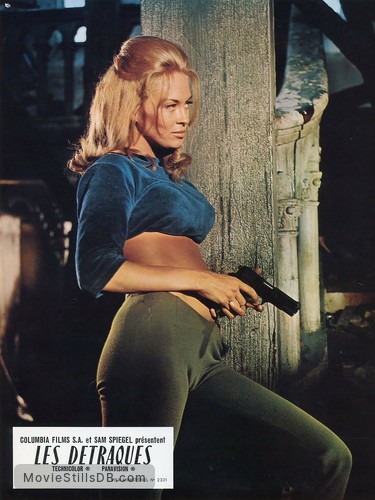
Laws of Man opens with two U.S. marshals driving through the desert of Utah.  Tommy Morton (Jackson Rathbone) is young and impulsive, a Korean war vet who is quick to open fire.  Frank Fenton (Jacob Keohane) is older and more cautious.  He also served in the military, though his service was during World War II.  Frank is haunted by flashbacks to a particularly gruesome battle.  Tommy and Frank may spend most of their time wearing black suits in the desert but neither one breaks a sweat.

The year is 1963.  Kennedy is in the White House.  The communists are on the move.  And Tommy and Frank are busy executing arrest warrants in the most desolate part of the country.  An attempt to arrest Mormon cult leader Crash Mooncalf (Ricard Brake) leads to a bloody shootout that leaves Mooncalf and his followers dead.  Their next assignment leads them to a small town in Nevada, where Bill Bonney (Dermot Mulroney) and his violent family is suspected of killing local ranchers and stealing their land.

From the minute that Tommy and Frank arrive in Nevada, something feels off.  They stay at a cheap motel, where Tommy picks up a woman named Dinah (Ashley Gallegos) and Frank spends his time talking to a bartender named Callie (Kelly Lynn Reiter).  An old rancher named Don Burgess (Forrie J. Smith) shows off his gun and says that he would rather suffer a violent death than give up his land.  A traveling preacher named Cassidy Whitaker (Harvey Keitel) approaches Frank in the parking lot and starts talking about sin and redemption.  Meanwhile, FBI agent Galen Armstong (Keith Carradine) appears to be curiously unconcerned with the Bonneys and their reign of violence.  As for the sheriff (Graham Greene), he spending his time sitting outside a burned-out ranch house.  The charred bodies of the owners are still inside, seated around the dinner table.

An attempt to arrest Bill Bonney at his home leads to a violent shootout, one in which no one is killed but Bill is still not happy about having a bunch of bullet holes in his roof.  Tommy and Frank attempt to serve the arrest warrant, just to discover that it’s not going to be as easy as they thought.  Frank, whose World War II flashbacks are getting more and more intense, wants to leave town.  Tommy, however, is obsessed with discovering what exactly everyone is hiding.

And, through it all, people who know their history will notice that the film is taking place in November of 1963 and the 22nd is rapidly approaching….

Laws of Man gets off to a strong start but begins to meander about halfway through.  Luckily, the film’s final third features a wonderfully insane twist that recaptures the viewer’s attention.  No matter what you may think is going on in the film, it can’t prepare you for just how weird things eventually get.  Laws of Man is an entertaining film, one that is occasionally a bit too self-consciously quirky for its own good but which ultimately works.  Jackson Rathbone and Jacob Keohane both give strong performances in the lead roles and the familiar faces in the film’s supporting cast all do their best to bring the film’s often surreal world to life.  Dermot Mulroney and Keith Carradine give especially strong performance while Harvey Keitel appears to be having fun as the offbeat preacher.

Laws of Man managed to truly take me by surprise.  For fans of paranoid cinema, it’s definitely worth making time for.
 

Lisa Marie Reviews An Oscar Nominee: Alice Adams (dir by George Stevens)


Katharine Hepburn was famous for both her relationship with Spencer Tracy and the films that she made with him.  They were such frequent co-stars and so associated with each other that “Hepburn-Tracy” became a film genre in and of itself, one that promised a bit of comedy, a bit of drama, and some sharp-witted romance.  That said, I have to admit that one of my favorite of Katharine Hepburn’s film is one that she made not with Spencer Tracy but instead with Fred MacMurray.  Alice Adams is a Tracy-Hepburn film without Tracy.

First released in 1935 and based on a novel by Booth Tarkington (who was quite a big deal back in the day even if, like Arrowsmith‘s Sinclair Lewis, he’s somewhat forgotten today), Alice Adams stars Hepburn as the title character.  Alice is the daughter of Virgil Adams (Fred Stone) and his wife, who is only referred to as being Mrs. Adams (Anne Shoemaker).  Virgil is a sickly man who has worked as a clerk at a glue factory for several years.  Despite living in a rather large house and having a maid named Malena (Hatti McDaniel), the Adams family is not wealthy.  However, Mrs. Adams desperately wants the family to be rich and Alice carries herself with the airs of a wealthy woman, despite the fact that everyone in town knows that she’s not.  Alice love her family and is loyal to them, even if her younger brother (Frank Albertson, who later played Sam “Hee Haw” Wainwright in It’s A Wonderful Life) appears to be addicted to gambling and her mother is constantly browbeating her father for not being more ambitious.  Her family may embarrass her but we know she wouldn’t trade them for all the money in the world.  That’s why we like Alice, even if she does sometimes act like a snob.

However, when Alice meets and falls for the wealthy Arthur Russell (Fred MacMurray), she lies about her social background and tries to present herself as being just as rich as him.  When she invites Arthur and his parents to her house for a dinner party, she frantically tries to keep up the charade of being wealthy.  Meanwhile, Virgil finds himself wrongly accused of stealing from his boss (Charley Grapewin) and, as a result, the family’s financial future is put in jeopardy.

Alice Adams is a mix of screwball comedy and social drama.  On the one hand, Alice’s desperate attempts to throw the perfect party are frequently very funny.  Katharine Hepburn was always at her best when she played a flighty character and the contrast between Alice’s sophisticated airs and Alice’s actual personality makes me laugh every time that I watch the film.  At the same time, there’s a definite undercurrent of melancholy to the film.  Alice and her mother are both so desperate to be rich that they’ve both been blinded to just how wonderful their lives really are.  Alice may like Arthur and Arthur definitely likes Alice but one never forgets that a part of Alice’s attraction to Arthur is that Arthur can give her the life to which she aspires.

Alice Adams features one of Hepburn’s best performances and it’s a rare Hepburn performance to which anyone watching should be able to relate.  At some point in our lives, we’ve all felt like Alice.  We’ve all been Alice, even if we don’t want to admit it.  Fred MacMurray’s natural likability serves him well as Arthur.  He comes across like a genuinely nice guy and we definitely want him and Alice to end up together.

Alice Adams was nominated for Best Picture but it lost to a much bigger production, Mutiny on the Bounty.  Bette Davis beat Katharine Hepburn for Best Actress.  Davis later said that she felt Hepburn should have won.

Song of the Day: The Happening by The Supremes


Today is Faye Dunaway’s birthday and today’s song of the day is The Happening, which was the theme song of Dunaway’s first movie, 1966’s The Happening!  Faye played a hippie who, with George Maharis and Michael Parks, kidnapped Anthony Quinn.  The film wasn’t a hit but the song was.

Here are The Supremes with The Happening.

Hey, life, look at me
I can see the reality
‘Cause when you shook me, took me out of my world
I woke up
Suddenly I just woke up to the happening
When you find that you left the future behind
‘Cause when you got a tender love
You don’t take care of
Then you better beware of the happening

One day you’re up, then you turn around
You find your world is tumbling down
It happened to me, and it can happen to you

I was sure, I felt secure
Until love took a detour
Yeah, riding high on top of the world
It happened, suddenly it just happened
I saw my dreams fall apart
When love walked away from my heart
And when you lose that precious love you need
To guide you
Something happens inside you, the happening

Now I see life for what it is
It’s not all dreams, ooh, it’s not all bliss
It happened to me and it can happen to you

Once
Ooh, and then it happened

Is it real, is it fake
Is this game of life a mistake?
‘Cause when I lost the love I thought was mine
For certain, suddenly I started hurting
I saw the light too late
When that fickle finger of fate
Yeah, came and broke my pretty balloon
I woke up
Suddenly I just woke up to the happening

So sure, I felt secure
Until love took a detour
‘Cause when you got a tender love you don’t
Take care of, then you better beware of

Songwriters: Alex Mungo / David Taylor / Jasper John Nielson Stainthorpe / Mark Robert Tiplady / Rob Downes / Stephen Wren

4 Shots From 4 Films: Assassin Edition


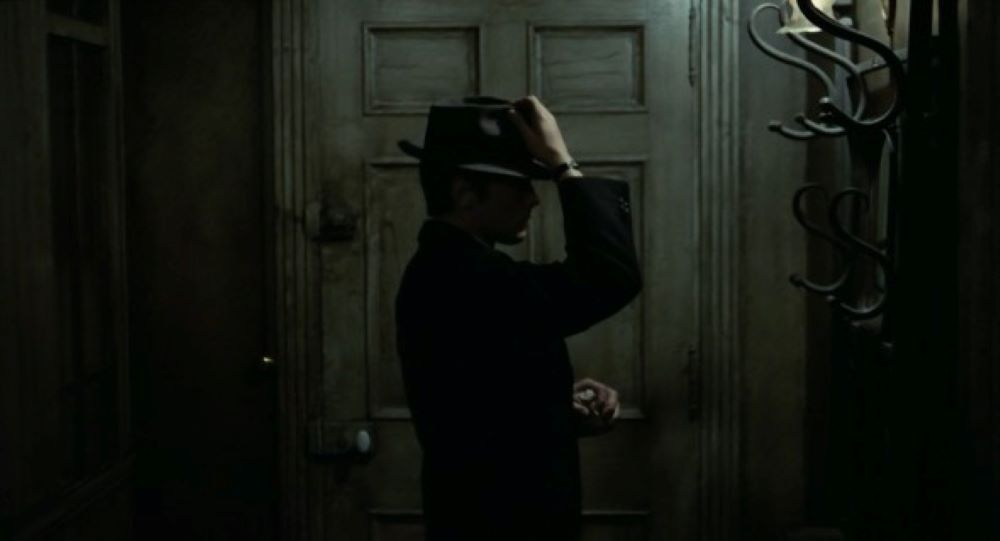
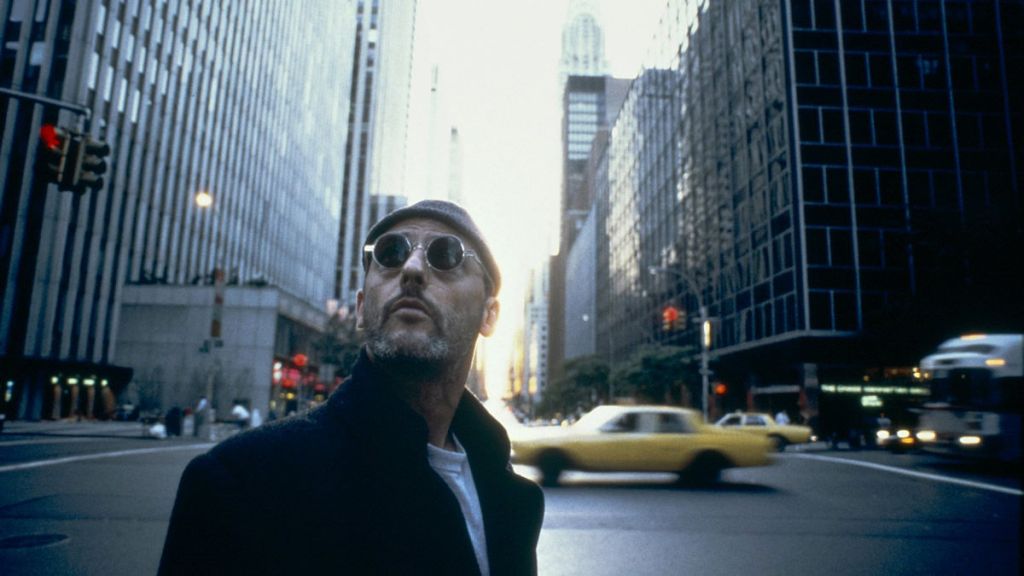
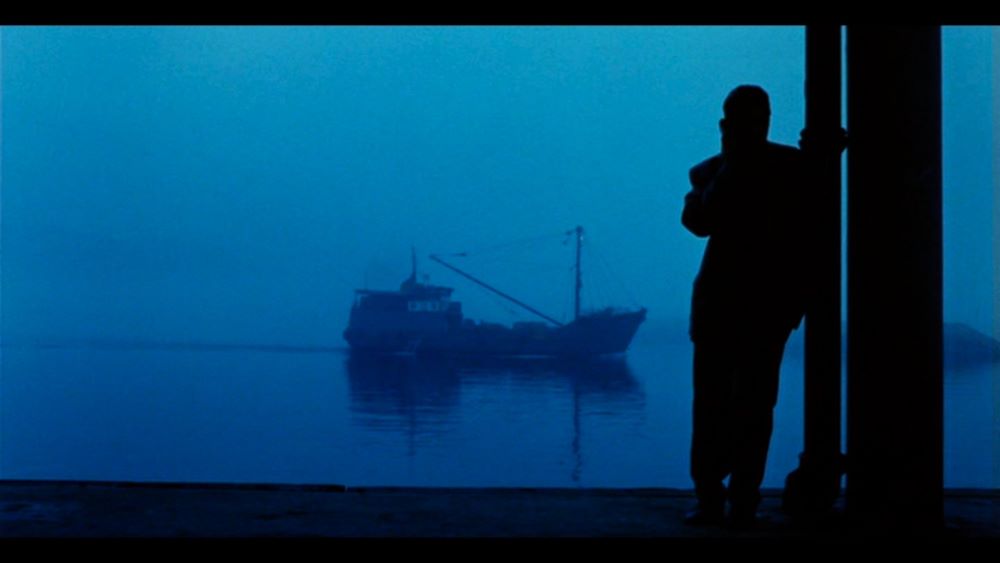
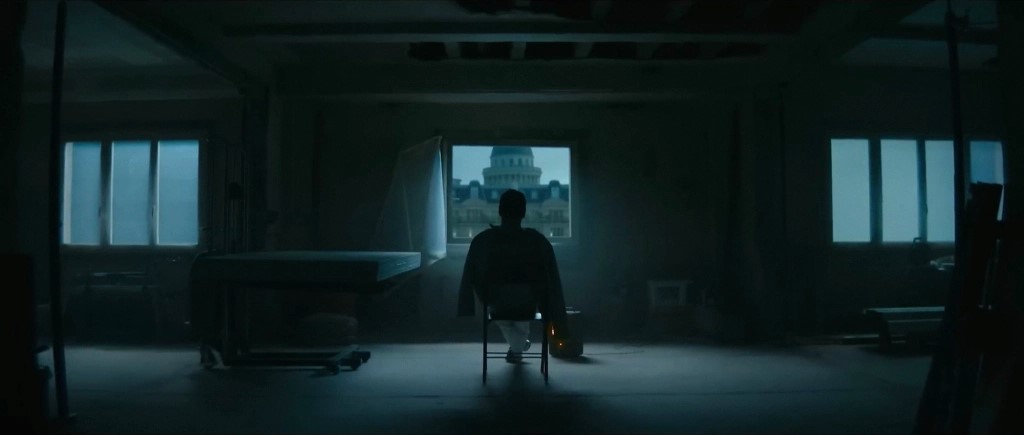
4 Shots From 4 Films is just what it says it is, 4 shots from 4 of our favorite films. As opposed to the reviews and recaps that we usually post, 4 Shots From 4 Films is all about letting the visuals do the talking.

4 Shots from 4 Assassin Films

Le Samourai (1967, dir. by Jean-Pierre Melville, DP: Henri Decaë)
Léon: The Professional (1990, dir. by Luc Besson, DP: Thierry Arbogast)
The Killer (1989, dir. by John Woo, DP: Peter Pau and Wong Wing-Hang)
The Killer (2023, dir. by David Fincher, DP: Erik Messerschmidt)

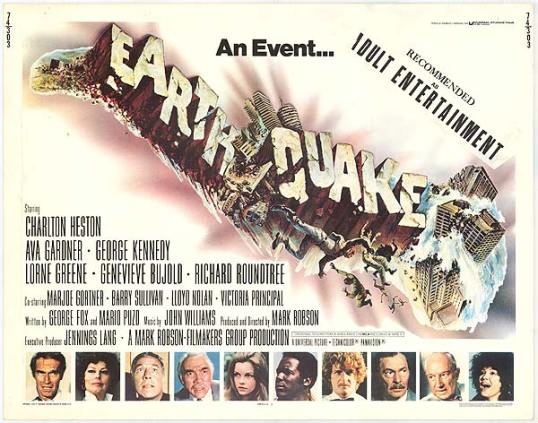
Scenes That I Love: Marjoe Gortner in Earthquake


Today is Marjoe Gortner’s 81st birthday!

The former child evangelist-turned-whistleblower-turned-recording-artist-turned-golf-tournmanet-organizer appeared in some of the most memorable exploitation films of the 70s and 80s, usually playing villains.  (Personally, I’ve always liked his heroic performance in Starcrash.)

In today’s scene, from 1974’s Earthquake, Marjoe gives au unforgettably creepy performance as the type of character who, today, would probably be called an incel.  Usually, no one takes him serious but, when an earthquake hits, he puts on his uniform and becomes a mini-tyrant.  Few actors were as effective at playing crazy as Marjoe Gortner.


The Films of 2025: Alone In Venice (dir by Jules East)


Venice is my favorite city in Italy.

I mean, it’s such a cliché, isn’t it?  Tourists always fall in love with Venice, even though the majority of us really don’t know much about the city beyond the canals and the gondolas.  I spent a summer in Italy and Venice was definitely the city that had the most American visitors.  Sadly, the majority of them didn’t do a very good job representing the U.S. in Europe.  One night, a bunch of drunk frat boys approached me, all wearing University of Texas t-shirts.  One of them asked, “Are you from Texas?”

“No,” I lied.

“You sound like you’re from Texas!” his friend said.

“No, ah’m not from Texas,” I said, “Sorry, y’all.”

That’s not something that would have happened in Florence or even Naples!  In Rome, handsome men on motor scooters gave me flowers.  In Venice, on the other hand, I had to deal with the same jerks that I dealt with back home!

I still fell in love with Venice.  And yes, it did happen while riding in a gondola.  At that moment, I felt like I was living in a work of art.  I can still remember looking over the side of the gondola and watching as a small crab ran across someone’s front porch.  That’s when I realize that, by its very existence, Venice proved that anything was possible.

It is said that Venice is slowly sinking.  That Venice has a reputation as being a dying city would probably have come to a surprise to the drunk Americans who were just looking for a girl from Texas that summer.  And yet, Venice has always been associated with death.  Just consider Thomas Mann’s Death in Venice and the subsequent film adaptation from Luchino Visconti.  Consider the controversial Giallo in Venice and Don’t Look Now.

Venice is a city that is beautiful at day and ominous and menacing at night.  That’s certainly something that’s captured in Alone in Venice.

Made for an obviously low-budget but featuring some stunning shots of its title city, Alone In Venice tells the story of Saul Larson (Apollo Luce), a young actor who has spent the last year in Venice.  He says that he was told to stay in the city by a Chinese film director who is in love with him.  He says that he’s waiting for her to come out to Venice to join him.  At one point, he says that she has even arranged for him to be classified as a permanent resident of the city so that he doesn’t have to worry about his visa expiring.  How she did that is never really explained, though its implied that, while she’s arranged for him to stay in Venice forever, she’s also trapped him there.  He can live in Venice but he can’t leave it.

A friend from America (played by Lisa Jacqueline Starrett) visits him and tells him that she thinks that he’s being used.  She points out that he’s living in a crummy apartment that doesn’t even have a good view and that the director is 1) married and 2) hasn’t contacted him in months.  A man named Tommaso (Luca Rosini) invites Saul back to his place and it’s implied that the two have a brief affair, though Saul continues to obsess  over the director and her love of orchids.  When the prostitute who lives down the hall offers herself to Saul for free, Saul appears to have a panic attack.  Saul insists that the director exists and that she will be coming for him in just a few days.

The majority of the film is made up of scenes of Saul walking around and sometimes running through Venice.  The city is the main attraction here.  At day, the city is vibrant and full of life.  At night, the city is full of shadows and a frightening clown makes an appearance.  There’s more than few shots that owe a debt to Don’t Look Now and its sequences of Donald Sutherland chasing after the figure in the red raincoat.

What does it all mean?  The film largely leaves that up to the viewer.  Whether or not the film works will depend on how much tolerance the viewer has for open-ended storytelling and unanswered questions.  (As you may have guessed, neither one is particularly an issue for me.)  Saul is committed to believing that his director is coming for him and occasionally, there’s something a bit disturbing about his obsession with her.  Throughout the film, he’s given plenty of opportunities to move on, whether it’s returning to America with his friend or pursuing a new relationship.  Instead, he chooses again and again to be alone in Venice.


CONVICTION (2010) – Hilary Swank and Sam Rockwell star in the real-life story of a sister who saves her brother from a wrongful conviction!


My wife and I love movies based on real-life stories. We were looking for something to watch this afternoon on the MAX app and came across their “Real Life Dramas” section. One of the movies we saw listed was CONVICTION (2010) starring 2-time Oscar winner Hilary Swank. My wife loves Hilary Swank so we decided to give it a spin.

Betty Anne Waters (Hilary Swank) watches as her brother Kenny (Sam Rockwell) is convicted of the murder of Katherine Brow on May 21st, 1980 in Ayer, Massachusetts and sentenced to life in prison. Even though she knows he’s a troublemaker, Betty Anne is convinced that he’s not a murderer, so she gives up everything in her life to try to prove his innocence, especially after she learns that he tried to kill himself while in custody. Her husband (Loren Dean) divorces her and takes their kids with him. This doesn’t stop her. She goes back to school, eventually making her way to law school for the sole purpose of helping to exonerate her brother. In a positive turn of events, Betty Anne realizes that the new field of DNA testing could be the key to overturning her brother’s conviction. She contacts attorney Barry Scheck (Peter Gallagher) from the “Innocence Project” who assists those who believe DNA testing can help overturn previous convictions. Will Betty Anne finally be able to prove Kenny’s innocence, or will he have to spend the rest of his life in jail for a crime she doesn’t think he’s capable of committing?

Movies like CONVICTION are such an interesting watch for me, especially since we can know how these stories play out with a simple google search. When I see a movie is based on a real story, I purposefully avoid the facts of the actual events so I can see the events depicted on screen without my own internal bias taking front and center. I enjoyed watching how the events unfolded in CONVICTION. Hilary Swank and Sam Rockwell are such good actors, and I appreciate the work they put in here. I don’t pretend that everything depicted on screen is exactly how it was in real life, but I do believe that the actors portray the essence of truth, and I must admit to a tear in my eye when that truth is finally acknowledged for Kenny Waters at the end of the film. I also enjoyed telling my wife that the director of CONVICTION is Tony Goldwyn, the bad guy in the blockbuster film, GHOST. I just thought that was kind of cool, and so did she.

The real truth of Betty Anne Waters and Kenny Waters is ultimately bittersweet, but their story is both a testament to, and an indictment of, the American judicial system. As a person who truly loves our country, I think it’s important to realize that things aren’t always perfect, even in the United States of America!

See the trailer for CONVICTION below:

Lisa Reviews An Oscar Nominee: Gravity (dir by Alfonso Cuaron)


Remember Gravity?

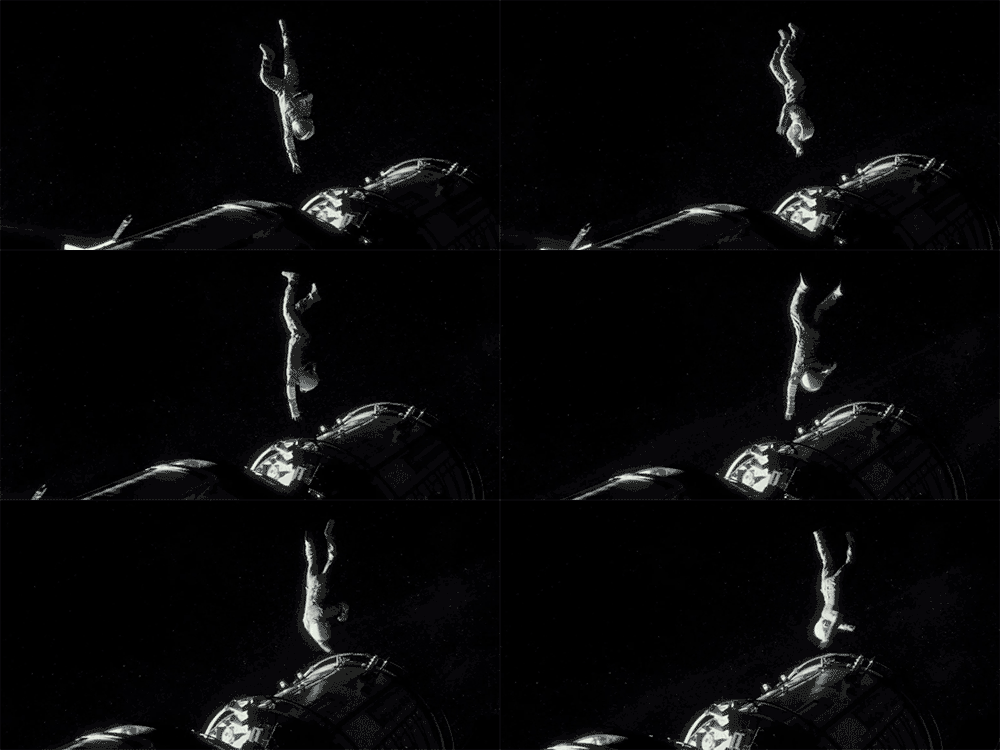
Released in 2013, Gravity is largely a two-person film.  There are a few other characters who appear at the start of the film and we hear different voices throughout the movie (including the voice of Ed Harris, cast once again as the voice of NASA) but, for the most part, this film centers on George Clooney and Sandra Bullock floating through space.  Clooney is Kowalski.  Bullock is Stone.  They’re two astronauts who are in space trying to fix the Hubble Telescope when their shuttle is struck by a wave of space debris.  When the shuttle inoperable and the rest of the crew dead, Kowalski and Stone try to figure out how to get back down to Earth.

Space, it turns out, is not as empty as we tend to assume.  Along with the space debris that caused them to get stranded in space in the first place, there’s also a lot of abandoned equipment and outposts that they can use to get back to Earth.  Unfortunately, they’ve got limited oxygen and limited time with which to reach any of that equipment and, even if they do reach it, there’s no guarantee that they’ll be able to get any of it to work.  After Kowalski sacrifices himself to help Stone reach the International Space Station, Stone alone must find a way to return to Earth before the space debris complete their orbit and again threaten to send her hurtling into space.

Gravity is one of those films that demands to not only be seen on the big screen but also to be seen in 3D.  (I say this as someone who was not exactly a fan of the post-Avatar 3D boom.  Too often, 3D felt like a distraction.  In Gravity, it feels like a key part of the story.)  The film not captures the terror of being alone in the emptiness of space but, at the same time, it also captures the beauty of having the entire universe in front of you.  It’s a visually stunning and beautiful film.  Kowalski says, at one point, that he has a hell of a view and it’s hard not to agree with him.  Space may be deadly but it’s beautiful as well.  Stone finds herself tempted to simply allow herself to spend the rest of eternity floating lifelessly in space but ultimately, she embraces life.  She refuses to give up and the film refuses to give up on her or, by extension, the rest of humanity.  Gravity celebrates the beauty of space and creation while also showing that life on Earth has its own beauty as well.  By the film’s end, one can argue that Stone has literally been reborn.

It’s a powerful film, one that is well-acted by both Bullock and George Clooney, both of whom have the star power necessary to hold our interest even when the overwhelming grandeur of space threatens to steal our attention.  (I would argue that Bullock’s performance here is far superior to her Oscar-winning turn in The Blind Side.)  Gravity received ten Oscar nominations and it won seven of them, including the Best Director award for Alfonso Cuaron.  However, it lost Best Picture to another powerful film, 12 Years A Slave.

Monday Live Tweet Alert: Join Us For Nemesis and Wanted: Dead or Alive!


As some of our regular readers undoubtedly know, I am involved in hosting a few weekly live tweets on twitter and occasion ally Mastodon.  I host #FridayNightFlix every Friday, I co-host #ScarySocial on Saturday, and I am one of the five hosts of Mastodon’s #MondayActionMovie!  Every week, we get together.  We watch a movie.  We snark our way through it.

Tonight, for #MondayActionMovie, the film will be 1992’s Nemesis, from director Albert Pyun!

Then, on twitter, #MondayMuggers will be showing 1986’s Wanted: Dead or Alive, starring Rutger Hauer!  The film is on Prime and it starts at 10 pm et!

It should make for a night of fun viewing and I invite all of you to join in.  If you want to join the live tweets, just hop onto Mastodon, pull up Nemesis on YouTube, start the movie at 8 pm et, and use the #MondayActionMovie hashtag!  Then switch over to twitter, pull Wanted: Dead or Alive up on Prime, and use the #MondayMuggers hashtag! 

Enjoy!


Scenes That We Love: Robert Stack in Airplane!


106 years ago today, actor Robert Stack was born in Los Angeles, California.

Though Stack found his greatest success on television and as the original host of Unsolved Mysteries, he also had an active film career.  Here he is in 1980’s Airplane!, demonstrating how to provide encouragement and build up confidence.