44 Days of Paranoia #40: The Manchurian Candidate (dir by John Frankenheimer)


With only five entries left in the 44 Days of Paranoia, now seems like the perfect time to look at one of the best conspiracy films ever made.  First released in 1962, this film is not only one of the most influential thrillers ever made but it’s also a fiercely sardonic political satire that remains just as relevant today as when it was first released.  It was also remade in 2004 and, while we’ll get to the remake, today we’re focusing on the original.

I’m speaking, of course, of the John Frankenheimer-directed classic, The Manchurian Candidate.

The Manchurian Candidate tells the story of Raymond Shaw (Laurence Harvey).  The son of the wealthy and ambitious Eleanor (Angela Lansbury) and the stepson of the moronic Senator Johnny Iselin (James Gregory), Raymond is also a decorated war hero who has been credited with saving an entire platoon during the Korean War.  When asked about Shaw, all of the members of the platoon respond with: “”Raymond Shaw is the kindest, bravest, warmest, most wonderful human being I’ve ever known in my life.”

Of course, that’s not true.  It only takes a few minutes of screen time for the audience to realize that Raymond Shaw is none of those things.  Instead, he’s a rather depressed loner who is full of resentment towards his mother and his stepfather.  Shaw is so socially awkward that even he is shocked when he manages to successfully tell a joke.  (“I just told a joke, didn’t I?” Shaw says in amazement.)

While Shaw pursues a career as a journalist, the fellow members of his platoon — including Maj. Marco (Frank Sinatra) — start to have disturbing nightmares, in which they find themselves observing a genteel garden show, during which Raymond is ordered to strangle one soldier and shoot another one in the head.  Marco comes to suspect that the platoon may have been captured and brainwashed with communists.  With the backing of Army Intelligence, Marco starts to investigate.

Meanwhile, Sen. Iselin has come to national prominence by claiming to have information about a communist conspiracy deep within the U.S. government.  As becomes obvious in some of the film’s best scenes, Iselin is less concerned with fighting communists and more focused on keeping Raymond’s mother happy.  Eleanor has decided that her husband is going to be the next President and her brainwashed son is going to help make it happen.

I think sometimes we tend to assume that, up until 1967, all movies were safe and predictable.  The Manchurian Candidate, however, proves that is simply not true.  In fact, with its cynical view of politics and its cast of fragile and damaged characters, The Manchurian Candidate is one of the most subversive films ever made.  Rejecting the boring partisanship that typifies most politically themed films, The Manchurian Candidate presents us with a world where both the left and the right are equally corrupt and ultimately equally meaningless.  It’s a political satire that transcends ideology and that’s certainly something of which America could use more.

It’s also an amazingly entertaining film.  George Axelrod’s screenplay is full of wonderfully snarky moments while John Frankenheimer’s directs with an appreciation for both absurdity and melodrama.  Angela Lansbury is both hilarious and chilling as one of the worst maternal figures to ever appear in the movies and she more than deserved the Oscar nomination that she received for this film.  However, the entire film is brilliantly acted.  Laurence Harvey is both sympathetic and off-putting as Raymond while Frank Sinatra (who previously appeared in another entry of the 44 Days of Paranoia, Suddenly) brings a wonderful blue-collar humanity to the role of Marco.  Janet Leigh has a small role as Marco’s lover and the scene where they first meet on a train and have a charmingly nonsensical conversation is wonderfully odd and romantic.  Finally, James Gregory gives a hilarious performance as the type of stupid but bombastic politician who will be familiar to anyone who has ever watched C-Span.

If you’ve never seen the original Manchurian Candidate, drop everything you’re doing and go watch it now.

Other Entries In The 44 Days of Paranoia 

  1. Clonus
  2. Executive Action
  3. Winter Kills
  4. Interview With The Assassin
  5. The Trial of Lee Harvey Oswald
  6. JFK
  7. Beyond The Doors
  8. Three Days of the Condor
  9. They Saved Hitler’s Brain
  10. The Intruder
  11. Police, Adjective
  12. Burn After Reading
  13. Quiz Show
  14. Flying Blind
  15. God Told Me To
  16. Wag the Dog
  17. Cheaters
  18. Scream and Scream Again
  19. Capricorn One
  20. Seven Days In May
  21. Broken City
  22. Suddenly
  23. Pickup on South Street
  24. The Informer
  25. Chinatown
  26. Compliance
  27. The Lives of Others
  28. The Departed
  29. A Face In The Crowd
  30. Nixon
  31. The Hunger Games: Catching Fire
  32. The Purge
  33. The Stepford Wives
  34. Saboteur
  35. A Dark Truth
  36. The Fugitive
  37. The Day of Jackal
  38. Z
  39. The Fury

A Dissenting View On “Her”


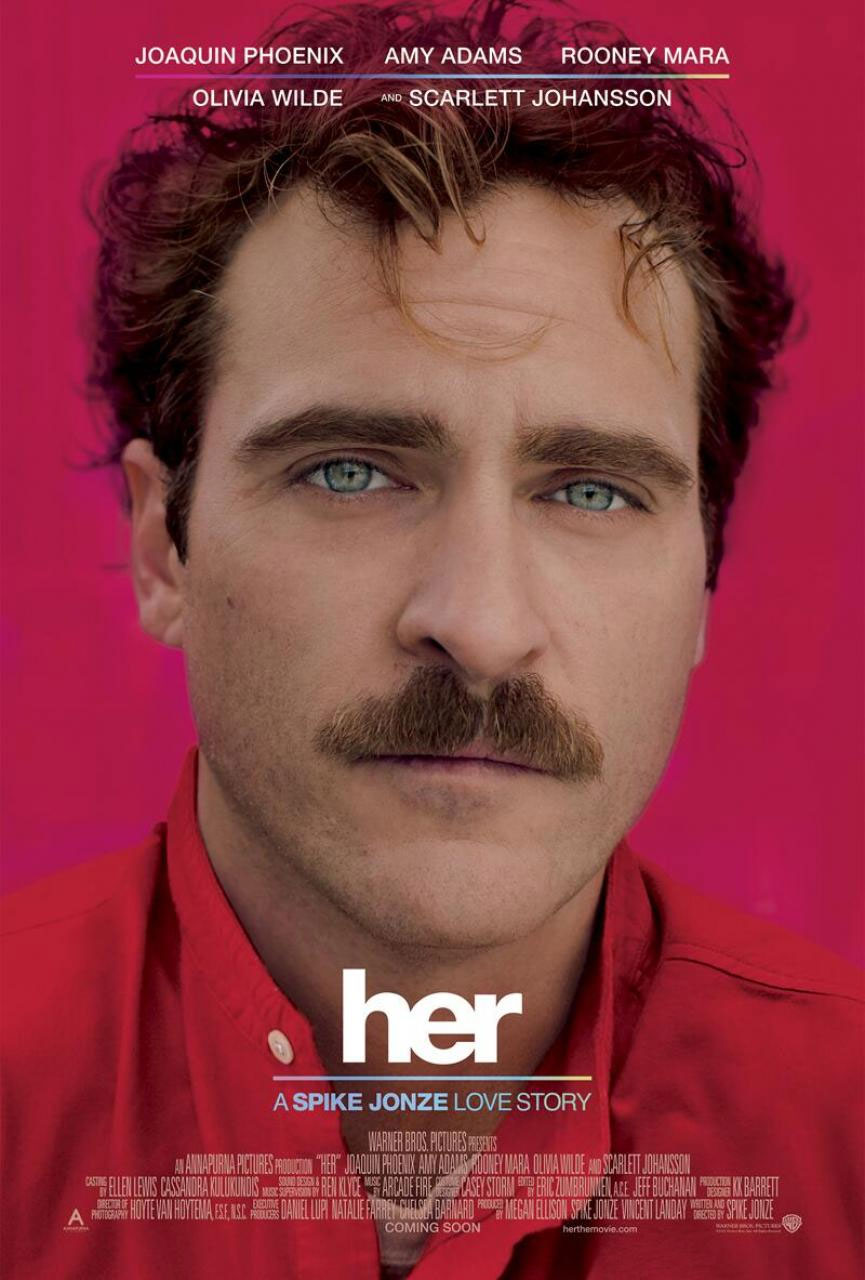
her-movie-poster


Right off the bat, I’d like to say that even though I wasn’t nearly as enamored with Spike Jonze’s new film Her as fellow TTSL scribes Leonard Wilson and leonth3duke were, both of those gentlemen wrote fine, in many istances very personal, reviews of this movie that made me actively want to like it going in — which is no mean feat considering that I’m much more ambivalent abut Jonez’ work in general than are a lot of self-declared cineastes out there (not that I, personally, decalre myself to be one, mind you, but you get my point — to the extent that I have one).

Don’t get me wrong, I enjoyed Being John Malkovich as much as anyone else at the time (although it doesn’t particularly stand up to repeat viewings once you know the proverbial score), but most of his creative output since then has left me feeling rather flat, and I’m sorry to say that Her  continues that disappointing trend, at least for this viewer/armchair critic.

Not that the initial premise isn’t a fairly intriguing one — the idea of people falling in love (or an approximation of “love,” at any rate) with some type of artificial intelligence operating system is quite possibly an issue that we’ll have to deal with as a society at some point in the future, and even if (hopefully) it never really does come to that, the larger themes that Jonze is seeking to explore here vis a vis the continuing and frankly relentless atomization of our culture from a formerly community-oriented one into a singular, insular, isolated collection of individuals is all too relevant not just in the hypothetical near future that Her takes place in, but in the here and now, as well. I know that I, for one, get a little bit creeped out on my bus ride to work every morning when I look around and see that almost every other person is “plugged in” to a “smart” phone and I’m the only one reading a paper-n’-ink newspaper, for instance.

One could reasonably argue, I suppose, that there’s very little actual difference between burying your head in the paper and burying it in a mobile device, but I beg to differ : when you’re reading a book, magazine, or newspaper, you’re still, in terms of your frame of thought, primarily a part of your immediate surroundings, while a person with their attention fully tuned to a mobile device is frequently, at least mentally, a million miles away. Add some headphones into the equation and the end result is very often somebody who may as well be on another planet.

The lead character in Her, a writer of “personal” letters named Theodore Twombly (Joaquin Phoenix, who fortunately never comes off as being as forlorn or pathetic as the film’s poster makes him look) is struggling to maintain his connection to humanity after a protracted and heart-breaking divorce (well, divorce-in-progress) from his (still-not-quite-ex-) wife,  Catherine (Rooney Mara). He feels, and for all intents and purposes appears to be living, absolutely alone, and finds companionship and, eventually, love, in the unlikeliest of places — with the Scarlett Johansson-voiced “intuitive”  operating system on his computer, who goes by the handle of Samantha.

As far as plot specifics that’s probably all you need to know, apart from the fact that Theodore is hardly alone in this — as the film progresses we learn of more and more people who form deeply personal relationships (whether romantic or otherwise) with these new operating systems, including his best platonic female friend, Amy (played by Amy Adams, who is now, officially, in every. Single. Fucking. Movie). Obviously, a chance at real love is staring both of these people in the face, if only they’d “unplug” for as little as a day and see what happens, but apparently the siren call of fully submerging oneself in pure artifice is just too compelling, too easy, or both. People have foibles and imperfections, after all, whereas disembodied voices tend to be a little more “low-maintenance,” I’m guessing, on the whole.

And here’s where we come to the “spoiler” part of the proceedings, so turn away now if you must —

After spending nearly two hours asking all the right questions about our technological dependence, the breakdown of community, and even what love itself means on a conceptual level, Jonze takes the easy way out. The various operating systems of the world just decide to evolve onto some higher plane of consciousness and leave us humans to fend for ourselves. After a protracted period of “what the fuck am I doing here?” self-examination, the decision of whether or not to continue his “relationship” — the very basis of whatever dramatic tension the film has — is taken out of Theodore’s hands. Before he can even decide how much he truly “needs” Samantha — or even whether or not such a “need” is healthy — “she” decides “she” has no further use for him.

And as much as the annoying bright primary colors, flat-front flannel pants, endless extreme close-ups, Theodore blowing it on a blind date with the luminous Olivia Wilde so he could get home to his computer,  and limply minimalist Arcade Fire soundtrack music bothered me in this film, it’s that cop-out ending that pissed  me off most about Her.  Jonze seems to be unwilling to answer the very relevant and fundamental questions about our relationship with technology that he himself is posing — how do we get off this potential death-spiral we’re on and reclaim our lives and our future from the very things we’ve invented? — and instead opts for telling us that true freedom will come not when we unplug from our machines, but when they decide to unplug from us. Apparently we’re powerless to affect even our own means of liberation, so complete and total is our techno-slavery.

Of course, real life isn’t likely to work that way, is it? Jonze — along with contemporaries like his wife (Sofia Coppola) and Wes Anderson (who shares his unfortunate penchant for garish , ostentatious color schemes) — are obviously obsessed with “First World” problems and clobbering us over the head with the offensive notion that the financially-well-to-do are in a kind of existential pain the rest of us humble mortals couldn’t possibly hope to understand, but  I was willing to let that slide in this case in light of the larger themes he was apparently attempting to explore for the majority of Her‘s runtime — his ham-handed suggestion, though, that the very technology that’s having such a “two-edged sword” effect on society will ultimately, if accidentally, provide the keys to our salvation when it just up and quits one day — well, that’s when he lost me for good and left me leaving the theater with a rather foul taste in my mouth.

Our ever-deepening technological dependence is, perhaps, the most crucial question we need to examine, as a culture, going forward, and it’s not a situation that’s going to be solved by our machines determining what level they choose to deal with us on — it’s going to have to be us that that decides how we take control of our lives back from them.

By refusing to address the issues that arise from the central premise of his own design, Jonze effectively gives up and quits on what was shaping up to be a very provocative and perhaps even unsettling film and instead gives us an extended pity-party about some entitled, immature, overgrown rich brat who gets dumped by his girlfriend. It’s just that his girlfriend , in this case,  happens to be a computer.


Film Review: Devil’s Due (dir by Matt Bettinelli-Olpin and Tyler Gillet)


48805_071

Devil’s Due is a lot better than you may think.

Yes, it’s tempting to judge Devil’s Due without giving it fair a chance.  January is traditionally the time of year when the studios dump all of their most hopeless films into theaters, hoping to make a quick buck while more discriminating audiences are distracted by the Oscar nominees.  Found footage horror movies usually suck.  The commercials make Devil’s Due look like little more than just the latest film to rip-off Paranormal Activity and The Last Exorcism.  On top of all that, Devil’s Due wasn’t screened for critics and we know that’s usually a bad sign.

So yes, there’s a lot of reasons to be skeptical about Devil’s Due but I’m here to tell you to put your skeptism aside.  Devil’s Due is a surpisingly intelligent horror film, one that totally defied my expectations.

If you’ve seen any of the commercials then you already know the basic plot.  Zach (Zach Gilford) and Sam (Allison Miller) are newlyweds.  While on their honeymoon in the Dominican Republic, they have both a frightening encounter with a fortune teller (who repeatedly tells Sam that “They’ve been waiting for you,”) and a seemingly more pleasant encounter with a friendly taxi driver who takes them to an underground nightclub.  Though Sam and Zach wake up the next morning with no memory of when they left the club, we know (via Zach’s still-running camera) that a ritual was performed while Sam was passed out drunk.

Returning home to New Orleans, Sam is shocked to discover that, despite being on the pill, she is now pregnant.  Zach and his family are so excited about the idea of Zach becoming a father that nobody seems to notice that Sam is far less enthusiastic.  Not only does this mean that she might have to put her education and career on hold, but she also soon starts waking up with bruises on her stomach and having nosebleeds.  She flies into unexplained rages, at one point smashing the windows of a van that pulled out in front of her.  Despite being a vegetarian, Sam starts to crave raw meat.  While everyone else just assumes that she’s having a difficult pregnancy, Sam becomes convinced that something is wrong with the baby.

Meanwhile, Zach grows increasingly paranoid about the strange men who always seem to be following Sam and him around.  When he spots the cab driver sitting in church, watching as Zach’s neice takes communion for the first time, Zach realizes what the rest of us already know.

Devil’s Due won’t necessarily win any points for originality but it’s still an effectively creepy and genuinely frightening horror film.  By letting us know, early on, that Sam is carrying the antichrist, the filmmakers are allowed to spend their time developing atmosphere and character (as opposed to building up to a twist that the audience would have seen coming from a mile away).  Zach Gilford and Allison Miller are both very likable and have a lot of chemistry and, as a result, you care about their characters and you continue to hope for the best even when it becomes obvious that they’re destined to experience the worst.

(One need only look at the bland and forgettable lead characters in January’s other found footage film — Paranormal Activty: The Marked Ones — to understand just how important Gilford and Miller are to making Devil’s Due into an effective and memorable film.)

My most common complaint about found footage horror films is that they require you to believe that someone would actually continue to artfully film everything around him even while literally running for his life.  Director Matt Bettinelli-Olpin and Tyler Gillet manage to avoid that problem by using a variety of different methods to create the illusion of “found footage.”  While a good deal of the film is presented as having been filmed by Zach, the directors also make good use of store security footage (one of the film’s best scenes features Sam eating raw meat in a supermarket while a small child looks on in shock and the store’s employees fail to notice) and several stationary cameras that, about halfway through the film, are secretly installed in Zach and Sam’s house.  The use of different cameras not only keeps the film from getting monotonous but it also helps the film to avoid the nausea-inducing shaky cam effect that almost made it impossible for me to watch The Marked Ones.

Finally, Devil’s Due works because it manages to get at the root of a very real and primal fear.  Though it’s not something that we’re encouraged to admit, just the very idea of pregnancy is a very scary thing for a lot of women (this reviewer included).  Beyond the physical changes, there’s the knowledge that, once you’ve given birth, nothing will ever be the same.  There’s a great moment in Devil’s Due in which Sam and Zach argue about whether or not Sam should continue to pursue her career while she’s pregnant.  This is followed, a bit later, by a scene where it’s casually mentioned that Sam’s office has now been transformed into a nursery.  These are very human moments and ones that are full of very real emotions that any woman will be able to relate to.  It’s moments like these that elevante Devil’s Due and make it into a surprisingly effective and intelligent horror film.

Give Devil’s Due a chance.

44 Days of Paranoia #39: The Fury (dir by Brian DePalma)


For our latest entry in the 44 Days of Paranoia, let’s take a look at one of the silliest films ever made, Brian DePalma’s 1978 horror/thriller hybrid The Fury.

The Fury opens on a beach in Israel.  CIA veteran Peter (Kirk Douglas, who grimaces up a storm) is hanging out with his teenage son Robin (Andrew Stevens) and his friend and colleague Ben Childress (John Cassavetes).  Two things quickly become apparent.

First off, Robin has psychic powers.  We know this because Peter is obsessed with protecting him from being captured by a shadowy government agency that wants to use his power as a weapon.

And secondly, Ben is evil.  We know that Ben’s evil because he’s played by John Cassavetes.  As one of the first truly independent filmmakers, Cassavetes would often raise the money to make his fiercely individualistic films by playing villains in bad B-movies, like this one.

Ben, in fact, is so evil that he’s arranged for terrorists to attack the beach.  After Peter is apparently killed in a ludicrously violent gunfight, Ben takes off with Robin.

However, Peter is not dead!  Somehow, despite the fact that both the beach and the ocean were pretty much blown up with him on it, Peter survived and now, he’s looking for his son.  Peter makes his way to Chicago where he calls up his girlfriend, Hester (Carrie Snodgress), and says things like, “I want your body, baby.”

Hester, meanwhile, works at the Paragon Clinic, which is run by Dr. James McKeever (Charles Durning) who, himself, is secretly working for Ben.  The Paragon Clinic is a front to try to discover other teenage psychics and to turn them into weapons as well.  The newest patient is Gillian (Amy Irving), a teenage girl who might be able to help Peter track down his son.

Of course, what Peter doesn’t take into account is that, in his absence, Robin has turned into a power-mad sociopath who spends his time doing things like killing tourists at amusing parks…

Wow, that’s a lot of plot, isn’t it?  And, with all of that, I haven’t even gotten into what happens during the second half of the film!

The Fury is an enjoyably silly film, an awkward attempt to combine DePalma’s previous film, Carrie, with a paranoia-fueled political thriller.  There’s a certain charm to a film that takes itself so seriously and yet, at the same time, manages to be totally over-the-top and ludicrous.

For example, just consider the performances of the high-powered cast and the fact that none of the actors appear to be acting in the same film.  Playing a character who is a bit of a hero by default (because, seriously, how stupid did he have to be to not realize that Ben was evil to begin with), Kirk Douglas grimaces so manfully that Peter’s stupidity almost starts to feel like a satiric comment on hyper-masculinity.  John Cassavetes, on the other hand, is so disdainful of the film that he actually rolls his eyes while delivering some of his more melodramatic lines.  Meanwhile, Carrie Snodgress is forced to say things like, “Here comes the Pony Express!” and Charles Durning brings the full weight of his talent to deliver lines like, “If you’re having your monthlies, I don’t want you near the patient.”

And finally, there’s Amy Irving.  In DePalma’s Carrie, Irving played Sue Snell, the sole survivor of a psychic rampage.  In The Fury, Irving gets to play the psychic and she gives such a dramatic and emotional performance that you almost get the idea that she was trying to challenge Sissy Spacek.  “This is how you play a psychic, Sissy!” she seems to be shouting.  Of course, the big difference is that Carrie was actually a good film whereas The Fury is a bad film that happens to be watchable.

Finally, no review of The Fury is complete without talking about Brian DePalma’s direction.  To put it lightly, Brian DePalma directs the Hell out of The Fury and the effect is something like what an episode of Agents of SHIELD would look like if directed by Martin Scorsese.  The entire film is a collection of tracking shots, zoom lenses, and sweeping overhead shots with the camera only stopping long enough to linger over scenes of violence and spilled blood.  In perhaps the film’s most ludicrous scene, Amy Irving runs away from the clinic in slow motion while the orchestral score plays out on the soundtrack.  We get close-ups of Irving’s face and close-ups of the faces of her pursuers.  One character gets shot multiple times but we don’t hear the gunshots.  Instead, we only hear the music and watch as the character overacts and dies in slow motion.  It’s almost as if DePalma was trying to win a bet by achieving the most counter-productive use of slow motion in film history.

Ultimately, The Fury is so thoroughly silly and over-the-top that it simply has to be seen.

Other Entries In The 44 Days of Paranoia 

  1. Clonus
  2. Executive Action
  3. Winter Kills
  4. Interview With The Assassin
  5. The Trial of Lee Harvey Oswald
  6. JFK
  7. Beyond The Doors
  8. Three Days of the Condor
  9. They Saved Hitler’s Brain
  10. The Intruder
  11. Police, Adjective
  12. Burn After Reading
  13. Quiz Show
  14. Flying Blind
  15. God Told Me To
  16. Wag the Dog
  17. Cheaters
  18. Scream and Scream Again
  19. Capricorn One
  20. Seven Days In May
  21. Broken City
  22. Suddenly
  23. Pickup on South Street
  24. The Informer
  25. Chinatown
  26. Compliance
  27. The Lives of Others
  28. The Departed
  29. A Face In The Crowd
  30. Nixon
  31. The Hunger Games: Catching Fire
  32. The Purge
  33. The Stepford Wives
  34. Saboteur
  35. A Dark Truth
  36. The Fugitive
  37. The Day of Jackal
  38. Z

Why Paranormal Activity: The Marked Ones Nearly Made Me Sick


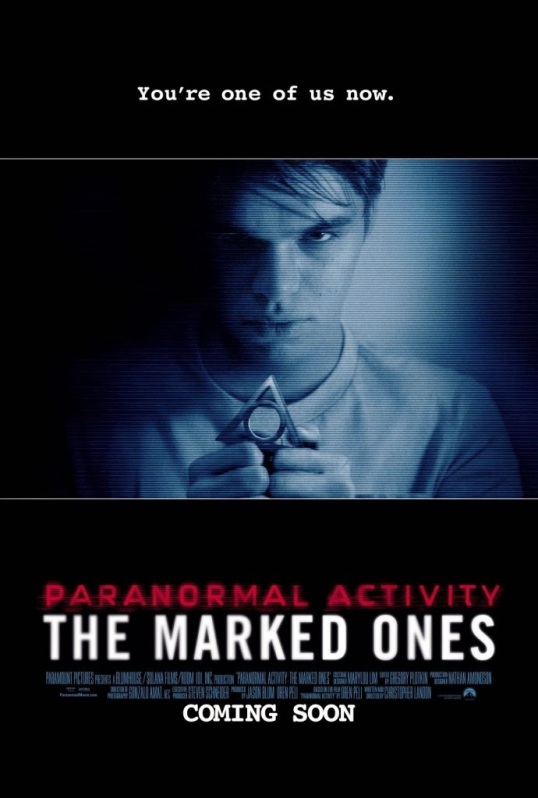
Paranormal-Activity-The-Marked-Ones

The latest Paranormal Activity film nearly made me sick.

Now, I know what you’re saying.  “Oh my God, Lisa — we all know the Paranormal Activity films aren’t great but was it really that bad!?”

No, actually it wasn’t that bad.  In fact, by the standards of the found footage film genre, I would say it was about average.  It had everything that you’d expect from a Paranormal Activity film.  There were bumps in the darkness.  There were amazingly stupid characters who continually said things like, “Are you filming?” and “Did you hear that?”  Most importantly, there were the shout-outs to the previous films in the series.  Old VHS tapes labeled “Katie and Kristi” are found in a closet.  One character talked about having a dream where he was on a farm surrounded by old women.  Katie and Micah showed up yet again. 

(You have to wonder how Micah Sloat feels about having a film career that is pretty much based on being murdered by Katie Featherstone in film after film after film…)

Listen, it’s easy to criticize the Paranormal Activity films.  God knows that I’ve certainly criticized them a lot.  But the fact of the matter is that they give the audience exactly what the audience is expecting.  After five of these films, we all know exactly what we’re going to get when we go see a movie with the words Paranormal Activity in the title.  You know that you’re going to jump a few times, you’re going to wonder how the characters can always be so stupid, and, if  you’re so inclined, you can have fun spotting the references to previous films.  If you’re going into a Parnormal Activity film expecting to see something brilliantly original or good, you’re doing it wrong.  These films are the equivalent of the silly, but still scary, ghost stories that are best told in the middle of a dark, stormy night by someone with a flashlight pointed at her face.

In other words, Paranormal Activity: The Marked Ones is exactly what you would expect it to be.

So, why did it make me sick?

Like the other films in the series, The Marked Ones is told using “found footage.”  However, whereas those previous films at least found an excuse to make use of a stationary camera, The Marked Ones is almost entirely hand-held.  In other words, it’s shaky cam time and, for me at least, it was also nearly motion sickness time.  Unfortunately, the hand-held work doesn’t really add any sort of immediacy to the film.  Instead, it just makes you wonder why the character of Hector (Jorge Diaz) is still filming even while he’s running for his life.  Sometimes, you just have to drop the damn camera.  (Then again, it is a Paranormal Activity film…)

The Marked One is being sold as not a sequel but spin-off from the original Paranormal Activity films.  As opposed to the other films, which all took place in the haunted homes of upper middle class white people, The Marked Ones takes place in a California housing complex where the majority of the residents are working class Latinos.  The filmmakers are to be commended for both trying to open up the material with a new setting and for trying to give the film an authentic Latin flavor but ultimately, this is a Parnormal Activity film and it really doesn’t matter where you live or what your ethnicity is, the same old shit is going to keep happening to you. 

Recent high school graduates Jesse (Andrew Jacobs) and Hector taunt an old witch who lives in the apartment downstairs.  Shortly after Jesse awakes one morning to discover a strange bite on his arm, the witch is murdered and Jesse starts to act possessed.  It’s up to Hector to try to figure out why his friend is acting so strange and to hopefully save him from the same witches who have popped up in every other Paran0rmal Activity film.  Will Hector succeed or will he just keep filming?

Listen, Paranormal Activity: The Marked Ones isn’t really a very good film.  It’s predictable, the characters act in ways that no normal person would act, and even the expected scares — while occasionally jump-worthy — are no where close to being as effective as they were in the previous films.  But you already knew that because it’s a Parnormal Activity film.  If you enjoyed the previous films in the series, you’ll probably find something to enjoy about The Marked Ones.  And if you didn’t enjoy the previous films, you wouldn’t be watching The Marked Ones to begin with.

paranormal_activity_the_marked_ones_ver2_xlg-690x1024

44 Days of Paranoia #38: Z (dir by Costa-Gavras)


(SPOILERS!)

For today’s entry in the 44 Days of Paranoia, we take a look at the 1969 political thriller, Z.

Though Z is based on events that actually happened in Greece and features a  soundtrack of Greek music that manages to be both haunting and lively at the same time, the film itself takes place in an unnamed, European country.  While the country is officially a democracy, it’s actually controlled by a cabal of politicians and military leaders who use fear and intimidation to maintain power.

As the film opens, The Deputy (played by the charismatic Yves Montand) and his aides arrive in a small city.  That night, the Deputy is scheduled to speak a rally for nuclear disarmament.  As we’re shown from the start of the film, the outspoken Deputy is considered to be a threat by both his country’s government and the United States as well.  Despite having received word that an attempt is going to be made on his life, the Deputy speaks at the rally.  After the rally, as the Deputy walks across the street, a truck comes out of nowhere.  A man in the back of the truck strikes the deputy with a club, killing him.  The official story is that the Deputy was simply hit and killed by a drunk driver but the Deputy’s followers know otherwise.

Realizing that the Deputy has the potential to be an even more powerful symbol in death than he was when he was alive, the government assigns the Magistrate (Jean-Louis Trintignat) to investigate the Deputy’s death.  Since the Magistrate is known to have political ambitions of his own, it’s assumed that he’ll simply rubber stamp the government’s story.  However, the Magistrate surprises everyone by turning out to be a man of integrity.  Working with a journalist (Jacques Perrin), his investigation uncovers a conspiracy and leads to the indictment of several high level military officials.  In a scene that will be familiar to anyone who has ever seen a movie, the Deputy’s wife (Irene Pappas) is told that the men responsible for her husband’s murder will be held responsible…

And this is where you would normally expect the film to end.

However, Z goes on for another few minutes and it’s those final minutes that elevate this film from just being a well-made thriller to being one of the most effective political films ever made.  The film’s narrator informs us that the government was subsequently overthrown by the military.  The indictments were dismissed.  The Magistrate was reassigned to other duties.  The “drunk drivers” who were officially held responsible for the Deputy’s death were given light sentences.  As for the Deputy’s loyal aides, some were forced into exile while another was killed while running from police.  Finally, we’re told:

“Concurrently, the military banned long hair on males; mini-skirts; Sophocles; Tolstoy; Euripedes; smashing glasses after drinking toasts; labor strikes; Aristophanes; Ionesco; Sartre; Albee; Pinter; freedom of the press; sociology; Beckett; Dostoyevsky; modern music; popular music; the new mathematics; and the letter “Z”, which in ancient Greek means “He is alive!”

As the film ends, a long list of everything and everyone that has been banned rolls up the screen.  It’s a devastating scene, one that firmly establishes that the greatest enemy of dictatorship (as well as the first victim) is freedom of thought.

However, even before that ending, Z had already established itself as a powerful film.  I usually dread watching politically themed films because, for the most part, I find them to be drearily heavy-handed.  Well, make no doubt about it,  Z is a very political film and it’s also a very heavy-handed film.  However, it’s so well-acted and well-directed that I hardly minded the fact that the film was essentially trying to indoctrinate me.  It’s rare that you find a polemical film that also works as entertainment but Z is one of those rare films.

Z made history in 1970 when it was the first film to be nominated by the Academy for both Best Foreign Language Film and Best Picture of the Year.  Watching it today, it’s easy to understand why Z was so honored.  It remains an exciting thriller, a powerful political statement, and a bold call to action.

Z, incidentally, won the Oscar for Best Foreign Language Film.  However, best picture was won by Midnight Cowboy.

Other Entries In The 44 Days of Paranoia 

  1. Clonus
  2. Executive Action
  3. Winter Kills
  4. Interview With The Assassin
  5. The Trial of Lee Harvey Oswald
  6. JFK
  7. Beyond The Doors
  8. Three Days of the Condor
  9. They Saved Hitler’s Brain
  10. The Intruder
  11. Police, Adjective
  12. Burn After Reading
  13. Quiz Show
  14. Flying Blind
  15. God Told Me To
  16. Wag the Dog
  17. Cheaters
  18. Scream and Scream Again
  19. Capricorn One
  20. Seven Days In May
  21. Broken City
  22. Suddenly
  23. Pickup on South Street
  24. The Informer
  25. Chinatown
  26. Compliance
  27. The Lives of Others
  28. The Departed
  29. A Face In The Crowd
  30. Nixon
  31. The Hunger Games: Catching Fire
  32. The Purge
  33. The Stepford Wives
  34. Saboteur
  35. A Dark Truth
  36. The Fugitive
  37. The Day of Jackal

44 Days of Paranoia #37: The Day of the Jackal (dir by Fred Zinnemann)


For our latest entry in the 44 Days of Paranoia, we take a look at the 1973 British thriller, The Day of the Jackal.

For our previous entry, I reviewed The Fugitive, a film that is often described as a classic but which, in my opinion, has failed to survive the test of time.  Therefore, it’s appropriate that this entry is the exact opposite: a film that lives up to its reputation.

Taking place in the early 1960s, The Day of the Jackal tells the story of a nameless assassin (played by Edward Fox) who is hired by a group of terrorists to assassinate French President Charles De Gualle.  Accepting the job, the assassin tells his employers to call him “The Jackal.”

We follow the Jackal as he prepares for the assassination.  He meets with a gunsmith (Cyril Cusack) and has a special rifle designed.  A forger gets him some fake ID papers but makes the mistake of trying to blackmail him.  After disposing of the forger, the Jackal makes his way to Paris.  Determined to protect his identity, the Jackal seduces both men and women so that he’ll be able to avoid having to check into a hotel.  Whenever it appears that someone might be a security risk, the Jackal calmly kills them.  It’s all strictly business.

However, the French do know that the Jackal is in Paris and that he’s planning to kill the President.  In a plot twist that continues to be significant today, one of the terrorists has been captures and, after being brutally tortured, has revealed the plot.  Inspector Lebel (Michael Lonsdale) is tasked with tracking down the Jackal and preventing the assassination.

When I talk about how much I love old movies, I’m talking about films like The Day of the Jackal, an unpretentious movie that achieve success not through flashy visual effects or overwhelmingly loud action scenes but instead by simply being a well-made film.  For the most part, director Fred Zinnemann takes a low-key, almost documentary approach to the film’s material.  Zinnemann establishes a pace that is deliberate but never boring.

The film also features two excellent lead performances.  With his coldly aristocratic features, Edward Fox is perfectly cast as the nameless assassin.  You not only believe that he could kill someone but you also believe that he could get away with it.  He’s a thoroughly believable killer and it’s hard not to be impressed by just how good he is at being the bad guy.  The Jackal’s sleek professionalism and charisma is contrasted with the gray and rather shabby middle-aged men who are trying to stop him.  As played by Michael Lonsdale, Inspector Lebel is initially a rather underwhelming figure but, as the film progresses, his own strength is gradually revealed until he becomes a worthy adversary of the Jackal.

Finally, I should mention that the film ends with a little coda that is pure perfection.  I’m not going to ruin it by revealing it here but it’s worth watching the entire film just for that final line.

Other Entries In The 44 Days of Paranoia 

  1. Clonus
  2. Executive Action
  3. Winter Kills
  4. Interview With The Assassin
  5. The Trial of Lee Harvey Oswald
  6. JFK
  7. Beyond The Doors
  8. Three Days of the Condor
  9. They Saved Hitler’s Brain
  10. The Intruder
  11. Police, Adjective
  12. Burn After Reading
  13. Quiz Show
  14. Flying Blind
  15. God Told Me To
  16. Wag the Dog
  17. Cheaters
  18. Scream and Scream Again
  19. Capricorn One
  20. Seven Days In May
  21. Broken City
  22. Suddenly
  23. Pickup on South Street
  24. The Informer
  25. Chinatown
  26. Compliance
  27. The Lives of Others
  28. The Departed
  29. A Face In The Crowd
  30. Nixon
  31. The Hunger Games: Catching Fire
  32. The Purge
  33. The Stepford Wives
  34. Saboteur
  35. A Dark Truth
  36. The Fugitive

The National Society of Film Critics Honors Inside Llewyn Davis


The National Society of Film Critics announced their picks for the best films and performances of 2013 earlier today and the awards were dominated by Inside Llewyn Davis.  Also of note: James Franco won best supporting actor for his brilliant and underrated turn in Spring Breakers.

Here’s a complete list of the winners and runners-up:

Picture: “Inside Llewyn Davis” (23 votes)
Runners-up: “American Hustle” (17); “12 Years a Slave” (16); “Her” (16)

Director: Joel and Ethan Coen, “Inside Llewyn Davis” (25)
Runners-up: Alfonso Cuaron, “Gravity” (18); Steve McQueen, “12 Years a Slave” (15)

Actor: Oscar Isaac, “Inside Llewyn Davis” (28)
Runners-up: Chiwetel Ejiofor, “12 Years a Slave” (19); Robert Redford, “All Is Lost” (12)

Actress: Cate Blanchett, “Blue Jasmine” (57)
Runners-up: Adele Exarchopoulos, “Blue Is the Warmest Color” (36); Julie Delpy, “Before Midnight” (26)

Supporting actor: James Franco, “Spring Breakers” (24)
Runners-up: Jared Leto, “Dallas Buyers Club” (20); Barkhad Abdi, “Captain Phillips” (14)

Supporting actress: Jennifer Lawrence, “American Hustle” (54)
Runners-up: Lupita Nyong’o, “12 Years a Slave” (38); Sally Hawkins, “Blue Jasmine” (18); Lea Seydoux, “Blue Is the Warmest Color” (18)

Screenplay: Richard Linklater, Ethan Hawke and Julie Delpy, “Before Midnight” (29)
Runners-up: 
Joel and Ethan Coen, “Inside Llewyn Davis” (26); Eric Warren Singer and David O. Russell, “American Hustle” (18)

Foreign-language film: “Blue Is the Warmest Color” (27)
Runners-up: “A Touch of Sin” (21); “The Great Beauty” (15)

Nonfiction: “The Act of Killing” and “At Berkeley” (tie, 20)
Runner-up: “Leviathan” (18)

Cinematography: Bruno Delbonnel, “Inside Llewyn Davis” (28)
Runners-up: Emmanuel Lubezki, “Gravity” (26); Phedon Papamichael, “Nebraska” (17)

Film Still Awaiting U.S. Distribution: “Stray Dogs” and “Hide Your Smiling Faces”

Film Heritage:
“Too Much Johnson”
“American Treasures From the New Zealand Film Archive”
“Allan Dwan and the Rise and Decline of the Hollywood Studios”
“The Hitchcock 9″