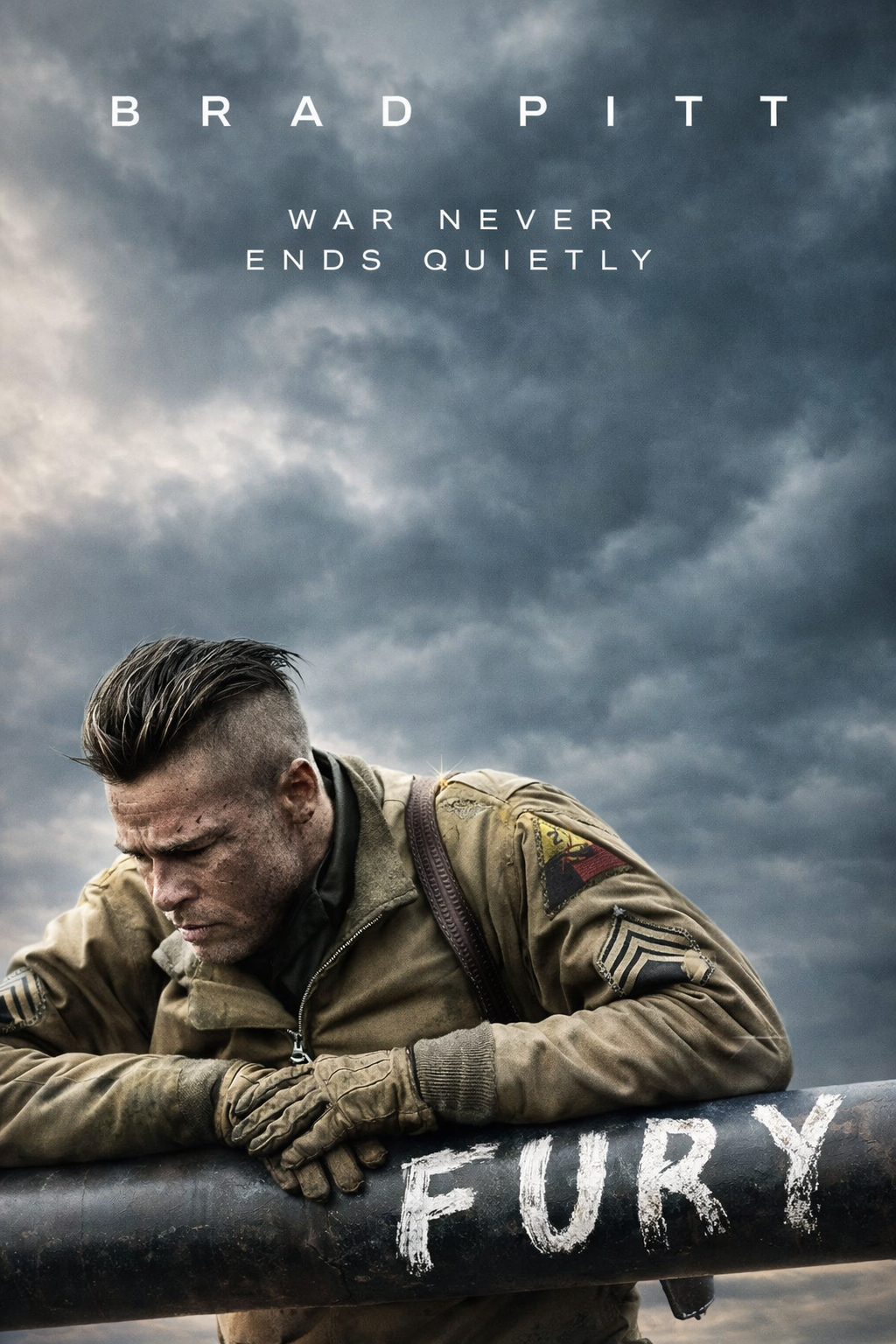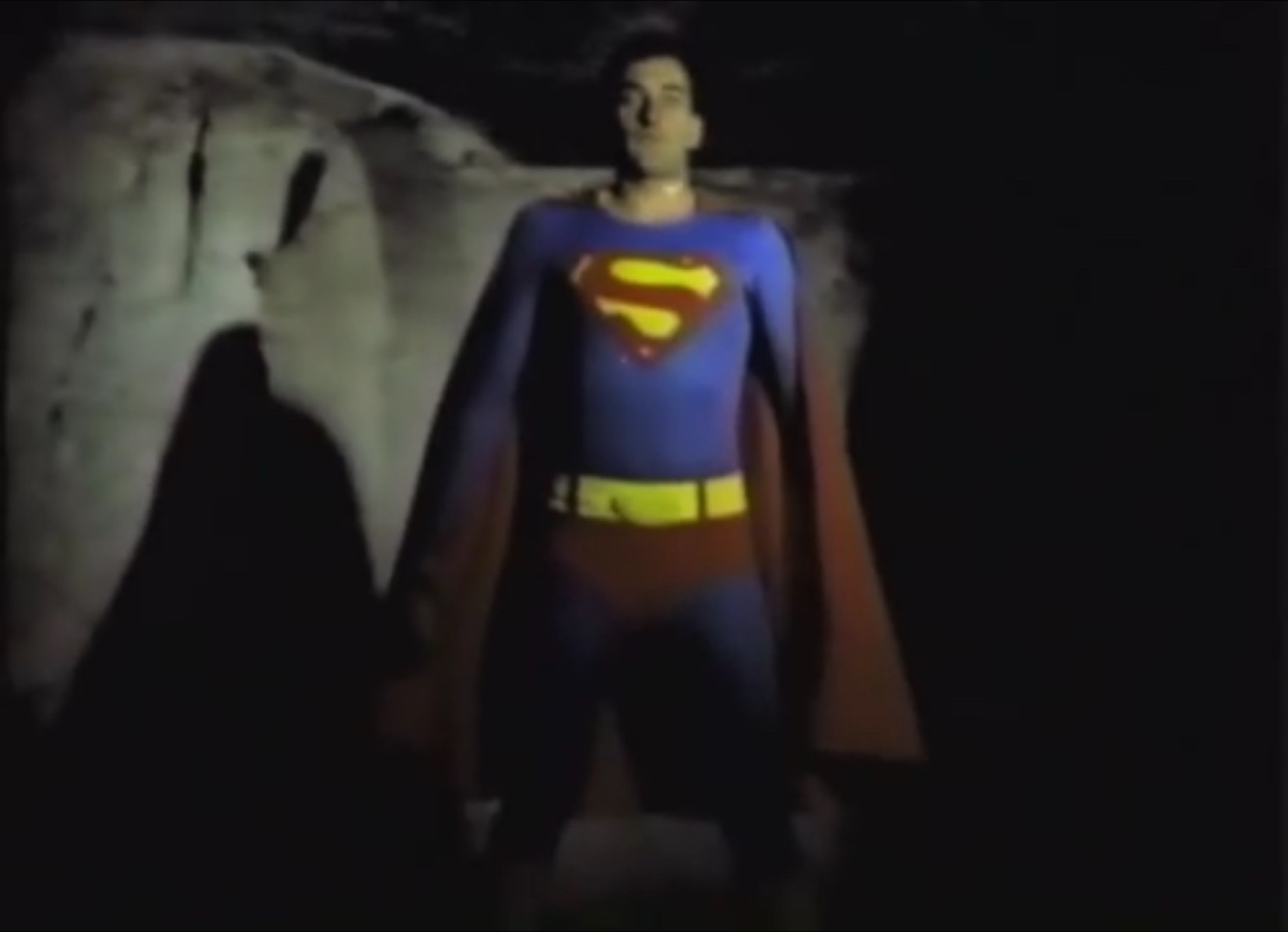
Review: Ghetto Freaks (dir. by Robert J. Emery)


During my freshman year of college, my roommate Kim often used to tell me that we were born several decades too late.  If only, she often lamented, we could have grown up in the 1960s and been part of that legendary counter-culture.  Her logic was that we both considered ourselves to be anti-establishment, we both felt society needed to be changed, and we both liked to get high on occasion.

I can see her point but honestly, I would never had made it as a hippy or, for that matter, even as a quasi-hippy.  For one thing, I hate being outdoors.  I’ve got too many allergies and crickets freak me out.  While I support free love, I don’t support practicing it with people who don’t shower on a regular basis.  I’m not going to argue with any woman who feels the need to burn her bra but quite frankly, I don’t want to wake up one day and discover that I can touch my boobs with my big toe.  Actually, that whole idea of running around day after day without any underwear on is just gross.  I don’t even want to think about it.

So, no, I could never have been a member of the 60s counter-culture.  But that doesn’t mean that I can’t watch the hundreds of films — some well-known but most incredibly dated and obscure — that have been made about and during that era.  Indeed, whatever knowledge I have the 1960s pretty much comes from my movie collection and movies like Ghetto Freaks.

The production history of Ghetto Freaks is rather obscure.  Just to judge from the clothes and the dated lingo, it was originally filmed in 1969 or 1970.  The film, which is nearly plotless, was shot in Cleveland, Ohio.  I’ve never been to Cleveland (or Ohio, for that matter) and Ghetto Freaks — with its cold and gray urban landscape — hardly makes it look inviting.  Still, the fact that it was shot on location and that no attempt was made to hide the decay there, does bring an unexpected rawness to the movie.  Whether it was by intention or just the result of a low budget, director Robert Emery does manages to make the film’s ugliness oddly compelling.

The movie opens up with a bunch of hippies talking to a bunch of older people.  If you’ve seen any of the protest films of the 60s or 70s then you’ve already seen this scene a hundred times.  The hippies are told to get haircuts.  The hippies make the standard response about Jesus having long hair.  Fortunately, the cops arrive before the scene turns into the 2nd act of Bye Bye Birdie

This is the 1st of many awkward, predictable scenes in Ghetto Freaks.  Fortunately, this movie was smart enough to follow its bad scenes with good ones.  So, once the pigs have released him, the head of the hippies (a ruggedly handsome former drug dealer named Sonny) spends his night hanging out at a rather dingy club.  

How to describe the Club Sequence?  Well, you really have to see it to understand why I can’t get it out of my head but it all comes down to the a rather hyperactive singer who performs at the club.  This singer performs two songs.  The first features the immortal lyrics “My name is Mousey and I feel lousy.”  The second is an odd cover of the MC 5’s seminal “Kick Out The Jams,” (though, in the film, the song is kicked off by the singer shouting “Kick out the jams, brothers and sisters!” as opposed to the actual “Kick out the jams, motherfucker!”)  The two musical performances are energetic and — as opposed to the earlier “protest” scene — entertaining to watch and the singer’s flamboyance contrasts interestingly with the club’s drabness.

Of course, there’s more going on in the bar than just the music.  Sonny talks to the other members of his hippy commune.  He also turns down a chance to return to his old career of dealing drugs on the street.  These conversations have a rather nice, breezy air to them.  For the most part, the actors all give surprisingly natural performances and the dialogue — no longer full of platitudes — is occasionally even memorable.

One other important thing happens at the bar.  Sonny spots a pretty young woman named Diane who is fighting with her obviously upper class parents.  Sonny finds the time to invite her to drop by the old commune before she is dragged away by mom and dad.

Later that night, Diane makes her way to the hippie pad currently occupied by Sonny and 14 other hippies.  She and Sonny have a long talk about why Sonny and friends live the way that they do.  And I do mean long.  The conversation seems to drag on forever and it doesn’t help that everything Sonny says is a platitude along the lines of “War is bad for children and other living things.”  Fortunately, this scene is made barely tolerable by the fact that Sonny and Diane are both played by likable performers.  Sonny’s has a rugged charisma about him and Diane comes across as sincerely nice.  I haven’t ever seen either one of these actors (or for that matter, anyone in Ghetto Freaks) in any other movies and that’s a shame because the movie does boast some memorable performances.

Anyway, even as Sonny explains his world view to her, Diane is dropping acid for the first time.  Naturally this leads to a huge orgy in which the members of the commune dance around naked while Sonny and Diane make love on the floor.

(I have to admit I got a little bit jealous of Diane here because, back when I used to do that sort of thing, I never had a trip that resulted in an orgy.  I saw my face melting occasionally but never an orgy.  It makes me wish I had a “I Dropped Acid and All I Got Was A Lousy Flashback” t-shirt.)

As you might guess, the Ghetto Freaks orgy is the film’s best known scene.  Along with all the nude hippies dancing (and, credit to the film, all the hippies are seen nude and not just the females), we also get a lot of dark blue lighting and psychedelic music playing the background.  While undeniably erotic, there’s also something rather disturbing about the whole scene.  First off, with all the weird camera angles and nude onlookers, the scene immediately made me think about the Satanic “dream” sequence from Rosemary’s Baby.  Secondly, seen today, it’s painfully obvious that the film’s hero is essentially taking the virginity of a girl who has been drugged. 

Oh, there’s one other interesting thing about the orgy sequence.  Are you wondering yet why this movie about a bunch of white hippies is called Ghetto Freaks?  Well, it’s because of what happens towards the end of the orgy.  Suddenly, we’re no longer watching Sonny rape Diane while a bunch of nude hippies dance.  Instead, we’re confronted with the image of a tall, glowering black man who handles a knife while several women we’ve never seen before parade past him.  I don’t know how to explain just how odd and jarring this two-minute sequence is.  Beyond the fact that we’ve never seen any of these characters before (and we won’t see them after), the scene itself is obviously shot on completely different film stock from the rest of the movie.  The only thing that connects it to anything we’ve seen before is that droning orgy music which continues to play (albeit in rather muted form) in the background.  Yes, this sequence was inserted into the movie after it had already been filmed.  The producers, obviously wondering how they’d ever make their money back, inserted this scene featuring this unnamed black man so that they could then market this nearly entirely white film as a blaxploitation film.  That man and his “followers” are the Ghetto Freaks of the title and they’re in the film for all of two minutes.

Following the orgy, we are treated to a day in the life of a hippy commune.  Diane accompanies Sonny, Mousey, and the whole gang on a day full of passing out an underground newspaper, panhandling, and getting harassed by the pigs.   Meanwhile, the neighborhood drug dealers, angry that Sonny won’t agree to push their drugs, are plotting their own revenge on our counter-culture Adonis.  If you think all of this eventually leads to a tragedy you can see coming from miles away, you’re right.

Even though it’s hard (actually impossible) to top a drug-induced orgy sequence, the second part of the film does feature two memorable scenes.  The 1st one features the members of the commune (what should one call them?  Communers, maybe?  Communists?) standing out in the street, trying to convince people to give them money for copies of a free, underground paper.  Shot in a documentary,cinéma vérité -style, this scene is appears to unscripted and features the cast interacting with actual human beings.  As such, the reactions (most negative but some surprisingly positive) are authentic as opposed to idealized.  The cast themselves turn out to be surprisingly skilled at improvisation and this sequence features the film’s best dialogue (which could be considered back-handed praise when you consider that the scene was unscripted).  It helps that the scene was obviously shot on a very cold day and the cast was obviously suffering for their “art.” (Diane, in a surprisingly endearing moment, keeps asking people to look at how blue her frozen hands are.)  I’m not a big fan of panhandlers in general but this film does succeed in making it look like very hard work.

The 2nd sequence occurs at the end of the film, even as the end credits are rolling.  If the panhandling sequence represents the best of Ghetto Freaks, this 2nd sequence represents, perhaps, the worst.  Following the film’s sudden violence of the movie’s “tragic” conclusion, the actors suddenly go from grim-faced to smiling like a bunch of Broadway understudies who have just learned that the entire cast of the latest Grease revival was aboard a plane that crashed while landing.  They start hugging each other (except, of course, for the character who dies at the end of the film.  She just keeps lying there on the sidewalk) and giving each other high fives as the camera pulls back to reveal — yes, you guessed it! — the movie’s director and his crew.  There’s a forced whimsy to this and it’s hard not to imagine the director smirking as he talks about how much he loves Jean-Luc Godard.  Reminding the audience that they’re actively watching a movie (as opposed to reality) was, of course, one of the French New Wave’s major contributions to the language of cinema.  Unfortunately, in Ghetto Freaks, it just feels like a forced attempt at trendiness.  (If Ghetto Freaks was made today, it would be in 3-D.)

As I stated previously, my entire knowledge of the 60s counter-culture pretty much comes from how it was depicted in the movies of the era.  One of the things that I’ve always found interesting about these movies is that, regardless of whether the movie is a classic like Easy Rider or a big budget misfire like Getting Straight or even a Roger Corman B-movie like Psych-Out, they are all essentially so middle class in their attitude towards women.  Again and again, the message of many of these films seems to be that everyone should be allowed to “do their own thing” as long as they don’t have a vagina.  However, those of us who do were continually portrayed in much the same way that we were portrayed in almost every film released before and after 1967.  To be female means that you can either be worshipped or you can be punished but never dare to be an individual.  (For the most obvious example of this, check out Getting Straight, a film in which activist Elliott Gould pretty much spends two hours screaming at Candice Bergen for daring to have opinions of her own.)

This is a trend that continues in Ghetto Freaks.  For all the talk about how Sonny and his commune are all about freedom and allowing people to be themselves, it doesn’t change the fact that the female members are pretty much there to be pretty and sexually available to whoever wants them for the night.  Diane is accepted into the group not because she rejected the values of society but because she has sex with Sonny.  Add to this a scene earlier in the film in which our hero Sonny jokes about how his best friends “big-titted” sister was raped by a black man (“She was asking for it,” Sonny assures her brother who eventually agrees) and you end up with a very contradictory message.  I don’t necessarily have problem with the characters themselves being sexists.  To be honest, I prefer an honest sexist to a liberated liar.  What’s annoying is that this movie, like a lot of other so-called “counter-culture” films, does not seem to be aware of the double standard.

In true exploitation film-tradition, Ghetto Freaks was released and re-released under several different names.  Seeing as how much of the film plays out like a community theater production of Hair, the film originally had the much more appropriate title of The Age of Aquarius.  When that title didn’t exactly work wonders, the film was retitled The Love Commune.  Again, this was an appropriate (if rather banal) title that failed to attract an audience.  Finally, the film’s producers spliced that footage into the middle of the orgy scene and, hoping to appeal to the blaxploitation audience, renamed the movie Ghetto Freaks.

And it worked.

When it comes to exploitation, freaks will beat lovers any day.

Ghetto Freaks was released on DVD by one of my favorite companies, Something Weird Video.  As is typical with SWV, the DVD is actually a double feature.  The second movie is an earlier, drug-centered movie called Way Out.  Technically, it’s a far better movie than Ghetto Freaks but it’s also a lot less fun.

Review: Evilspeak (dir. by Eric Weston)


I first came across Evilspeak a few months ago when I was browsing through the selection of used DVDs at the Movie Trading Company in Plano, Texas.  Why did I feel so compelled to buy this movie that I had previously never heard of?  Of course, a lot of it was due to the fact that Evilspeak was a horror movie.  I have to admit that the vagueness of the title intrigued me.  I’ve long been planning on writing the ultimate slasher film and giving it the similarly vague title of Deathurge.  It also helped that the Evilspeak DVD was released by Anchor Bay and that it only cost $1.99.

A few nights ago, I sat down and watched Evilspeak for the first time.    It turned out to be, in many ways, typical of the horror films that were released in the early 80s.  (Evilspeak came out in 1981.)  However, thanks to a strong lead performance from Clint Howard and a few surprisingly dark touches on the part of director Eric Weston, Evilspeak turns out to be an oddly compelling little horror film.

Evilspeak opens with a lengthy prologue in which we see a Satanist named Esteban beheaded, along with several of his followers, by the Spanish Inquisition.  Jump forward several hundred years to a soccer game being played by teams representing two separate military academies.  The players are all typical jocks except for one pudgy, awkward fellow named Stanley Coopersmith (played by a very young Clint Howard).  Coopersmith manages to lose the game for his team.  The team’s angry response establishes that 1) this is not the 1st game that Coopersmith has lost and 2) all of his teammates are apparently psychotic.  His fellow players complain to their coach about Coopersmith’s lack of ability.  The coach replies that school policy requires that Coopersmith be allowed to play but if Coopersmith were to suffer some sort of injury (hint, hint) then they wouldn’t have to worry about school policy.  Seriously, has anything good ever come from soccer?

In many ways, Stanley Coopersmith might seem typical of the horror movie pariahs who always seem to end up asking Satan to kill their peers.  However, there are a few things that set Stanley apart.

First of all, he has one of the best last names in film history.  Coopersmith.  Just say it five times straight and see if it doesn’t get stuck in your head.  I’ve known plenty of Coopers and more than a few Smiths but I’ve never known a Coopersmith.  At first, I thought that maybe Stanley had one of those really cool hyphenated names and I was instantly jealous.  I’ve always wished my mom had done that when she got married so I could introduce myself as “Lisa Marie Marchi-Bowman.”  Of course, it’s probably for the best that she didn’t because if she had, I would have become obsessed with finding a mate with a hyphenated last name of his own just to see how long I could eventually make my last name.  But I digress.  Even though the film clearly establishes that there is not hyphen in Coopersmith, it’s still a great name.  When Stanley’s classmates insist on calling him “Cooperdick,” it just makes them all the more loathsome because not only are the insulting Stanley but they’re failing to recognize the beauty of a good name.

The other thing that sets Stanley apart from other movie outcasts is that he actually looks like an outcast.  He’s not a teen idol wearing a bad wig and prop glasses.  This is largely because Stanley Coopersmith is played by Clint Howard (as opposed to Ron Howard).  Pudgy with visible acne and a somewhat whiny voice, Clint Howard transforms Stanley Coopersmith into every kid that you ever felt sorry for but never dared to befriend.  Watching the movie, you feel sorry for Stanley but you never quite like him.  You’re on his side because every other character in the movie appears to be subhuman.

The film follows Stanley as he is continually attacked and humiliated by basically everyone else in the entire movie.  Now, as someone who did time at more than one Catholic school, I have personally experienced the fact that private schools really are a world of their own.  That said, however, Evilspeak’s military academy appears to be less a school and more some sort of elaborate and sadistic sociological experiment.  Seriously, is there anyone at this school who isn’t obsessed with tormenting Stanley?  (Actually, Stanley does have one friend but he’s kinda useless.)

Of course, one of the school’s problems might be that it has apparently been built on land that was once owned by — you guessed it — Esteban!  As the film opens, Coopersmith has found himself assigned to clean up the school’s chapel as part of a “punishment detail.”  While doing this, Coopersmith happens to stumble upon Esteban’s tomb and, in that tomb, he finds a lot of candles, what appears to be a fetus in a jar, and a black book that happens to have a Satanic symbol on the cover.  Intrigued, Coopersmith steals the book despite the fact that it’s written in Latin.

Luckily, this school has a computer!  Admittedly, Evilspeak came out four years before I was born so perhaps I’m not capable of understanding what the world was like in the early 80s.  Still, I’m always amazed to see the awe that computers were apparently regarded with back then.  Apparently, at the time, a personal computer was the ultimate elite status symbol.  All one needed to rule the world apparently was one bulky computer.  Fortunately, Coopersmith doesn’t want to rule the world.  He just wants to read his book.  He does this by typing the latin phrases into the computer and magically getting an English translation in response.  Thanks to his magic computer, Coopersmith discovers that the book was written by Esteban and  that Esteban worshipped Satan.

Coopersmith, of course, is amazed to discover this but we, the viewers are not.  After all, we’ve already sat through the entire prologue.  Unfortunately, it takes Coopersmith almost the entire movie to catch up to where we are from the beginning.  Fortunately, Clint Howard gives a good enough performance to keep the movie vaguely interesting even when it starts to drag.

Fortunately, after Coopersmith gets his translation, the action starts to pick up a bit.  For one thing, the book is stolen by the headmaster’s secretary (who, in an amusingly odd moment, smiles to herself as she listens to the headmaster paddling Coopersmith in his office).  For another thing, Coopersmith decides to get back at his enemies by conducting a black mass.  He does this by turning on his computer (which has now somehow been moved down to the tomb) and asking what he needs for a black mass.  Naturally enough, the computer tells him because it’s a computer and it knows everything.

But before Coopersmith can perform his black mass, he still has to be humiliated a few hundred more times by his classmates.  He also has to deal with a drunk janitor (played by R.G. Armstrong).  On top of that, he adopts a puppy.  Unfortunately, since Coopersmith is the school outcast, that also means that the puppy is fair game too.  After one night of heavy drinking, Coopersmith’s classmates (led by a kid named Bubba, so you know he’s evil) find his hideaway in the tomb and, for reasons that don’t quite make sense, they sacrifice his puppy.

(At this point, I was wondering if maybe it would turn out that the military academy was actually an insane asylum.  I mean, seriously —  on which level of Hell is this place located?)

Meanwhile, you remember that sadistic secretary that stole Coopersmith’s book?  Well, for whatever reason, she is obsessed with trying to pry that Satanic symbol off the cover.  Unfortunately, since she’s the only prominent female in an early 80s horror movie, this can only mean that she’s destined to meet a bloody end while taking a shower.  Which, in this movie’s best known scene, is exactly what happens.  However, she doesn’t meet her end at the hands of a knife-wielding psycho.  Instead, she’s attacked and ripped to pieces by a bunch of rampaging pigs.  And yes, the whole thing is faintly ludicrous and yes, the low-budget gore effects are undeniably crude, but it’s still an undeniably effective sequence.  Perhaps its due to the fact that pigs, in general, are filthy.  Don’t even get me started on pigs.  However, it must also be admitted that, though his direction is often time uninspired, Eric Weston shows an undeniable talent for capturing chaos.  I am not ashamed to admit that I had pig-related nightmares after seeing this movie.

Following the death of the secretary, the book mysteriously reappears in Esteban’s tomb.  Coopersmith finds it the next morning along with the corpse of his puppy.  Obviously, this is all it takes for Coopersmith (with the help of his computer) to carry out his black mass and to finally take his revenge.

Of course, the whole point of a Nerd-With-Powers movie is the finale where that nerd takes vengeance on his tormentors.  If this scene is pulled off with even the slightest amount of panache, it can make up for almost everything that’s come before it.  The prom inferno from Carrie pretty much set the standard by which all others are judged.  Personally, it’s hard for me to think of any movie that could improve on the final house party massacre in The Rage: Carrie 2.  After all, how can you top a blinded Rachel Blanchard accidentally shooting the oldest Home Improvement kid in the balls with a spear gun?

Evilspeak doesn’t quite reach those heights in its finale but it’s still pretty effective.  If nothing else, the sight of Clint Howard wielding a sword while flying above his tormentors is a lot more effective than you might think.  Over the next few minutes, spikes are drilled into foreheads, heads are chopped off, hearts are ripped out of chests, and those pigs show up again.  The gore effects here are undeniably crude but oddly effective.  This sequence (along with the previous pig shower attack) actually inspired a few nightmares the night after I saw Evilspeak.

In the end, Evilspeak is an odd little movie.  While the plot should be familiar to anyone who has ever seen a horror film, there’s a real nastiness at the core of Evilspeak that distinguishes it from other genre offerings that came out during the same period.  At times, Evilspeak almost feels like an Italian film which is probably why I found it to be so oddly compelling.

The Evilspeak DVD features a commentary track featuring both Clint Howard and the film’s director.  I always feel some trepidation before listening to a commentary track.  Too often, the track turns out to just be some jerk explaining how he financed the film for two hours while commenting not at all on the action on-screen.  (For the most part, if a commentary track features any anecdote that begins with, “We had the same lawyer…” you know you’re in trouble.)  However, the Evilspeak track is surprisingly enjoyable.  Clint Howard comes across as a surprisingly likable, levelheaded guy and its interesting to contrast his odd wholesomeness with the action onscreen.

In the end, Evilspeak may be a piece of junk but it’s an enjoyable piece of junk.

A Second Review of The Losers (dir. by Sylvain White)


Usually, I’m not a big fan of action movies.  If you see me in the audience of an action movie, it means that I’m either 1) on a date with a guy who really doesn’t care if I’m bored out of my skull, 2) the movie is actually a film with action as opposed to an action film, or 3) there’s absolutely nothing else playing.  It was because of that third reason that yesterday afternoon, I could be found at the Regal Keystone, watching The Losers.

Surprisingly enough, however, I ended up enjoying The Losers.

Why?

Six words: Idris Elba, Jason Patric, and teddy bear.

Idris Elba.  Oh God, where to start?  I think Idris Elba may be one of the best actors working today.  If you’ve seen him in The Wire then you’ve seen him as an intimidator.  (And, admit it, The Wire was never as good after Stringer Bell got killed.)  If you’ve seen him on The Office than you know that Elba can also be unexpectedly funny.  In the Losers, Elba gets to be both scary and funny at the same time.  (And incredibly sexy though I doubt that’s going to be a big selling point for this film’s target audience.)  Idris Elba manages to look convincing while both blowing things up and, during one of the film’s many postmodern moments, commenting, “Wow, this is sleazy.”

Elba plays Rocque, the second-in-command of a paramilitary group known as the Losers.  Much like the A-Team and the Expendables (both of which will be coming along later this year), the Losers are betrayed by their government and wrong declared dead.  They — a glowering Elba included — find themselves stranded in Bolivia where they pass the time working in a doll factory, betting on cockfights, and plotting vengeance against Max.

Who is Max?  This question is at the center of The Losers and it’s never really answered (perhaps it will be in the sequel).  It’s insinuated throughout the film that he’s involved with the CIA, that he’s a terrorist, or that he’s just a patriotic businessman.  Of course, the answer is that Max is actually Jason Patric (a.k.a. the son of Father Damien Karras). 

I have to admit that, in  the past, Patric has never really impressed me much as an actor.  In the past, he’s always seemed a bit stiff and humorless.  Patric plays Max as a man who is not only a comic book villain but who is totally aware of it as well.  You can tell that Max is having a lot of fun being evil and that Patric is having fun playing evil.  Patric’s over-the-top but compelling villainy let’s the audience know that this movie has no pretensions beyond entertainment.  It makes both Patric and the film enjoyable to watch.

And this leads us to the teddy bear.

At the start of the movie, the Losers are rescuing a bunch of children who are being held hostage by some random bad guy in Bolivia.  As they load the thankful children into a waiting helicopter, an angelic little boy attempts to hand over his teddy bear as a thank you gift.

“No,” Col. Clay (Jeffrey Dean Morgan) replies, “you keep it.  It will bring you luck.”

The angelic child smiles and clutching his teddy bear, he goes into the helicopter.  The helicopter then lifts up into the air and promptly explodes.  As the Losers stare at the burning wreckage, the camera zooms in on the only thing that apparently wasn’t incinerated in the explosion. 

Yes, it’s the teddy bear.

And as soon as I saw that, I knew that the Losers was going to work.  I soon as I saw that teddy bear, I knew that this was a film that felt no shame at being a work of pure pulp fiction.  In this age when every studio film is trying to feel independent and when most filmmakers would be too self-consciously hip to actually do something as shameless as show that little bear among the wreckage, the Losers went for it.  The Losers said, “We don’t care if it’s an obvious move and thoroughly illogical for a teddy bear to survive — with just a few burns — an explosion that so totally incinerated 25 people that not a single body part is seen among the wreckage.  We’re showing the damn bear!”

That’s when the Losers won me over.

A few more random thoughts on The Losers:

1) As Arleigh pointed out in his review, one of the film’s biggest strengths is the chemistry of the Losers themselves.  As opposed to most ensemble action films, all of the Losers are given clearly definable personalities, all of them are given something important to do, and most importantly, you believe that these guys would actually choose to hang out together.  When one of the Losers is eventually revealed to be a traitor, you feel the entire group’s shock and pain.  This adds an extra layer to the film that, for whatever reason, I suspect we won’t be seeing with The A-Team.

2) The Losers is yet another film that demonstrates the importance of not only walking in slow motion but having something to throw to the side while doing so.  It just looks incredibly cool on-screen though people tend to get annoyed when you attempt to do the same thing in real life.

3) Throughout the movie, we are continually told that The Losers are waging war on the CIA and the American establishment in general.  The audience I was with loved this.  Once again, this validates my theory that the best reflection of the times can usually be found in contemporary pulp.

4) Zoe Saldana is in this film too as a mysterious woman who helps the Losers track down Max.  In the style of Carrie-Ann Moss and the Girl with the dragon tattoo, she gets a chance to kick a lot of ass and I have to admit that I found this so inspiring that, once I got home, I stripped down to my undies, stood in front of my bedroom mirror, and attempted to execute a few flying kicks of my own.  The lesson I learned from this is that I’m not Zoe Saldana.  That and, regardless of how soft the carpet is, it still hurts when you end up falling flat on your ass.

In the end, The Loser is the perfect definition of stupid fun.  I’ll take stupidly fun over funny stupidity any day.

10 Reasons Why I Hated Avatar


(The opinions in this review are mine and mine alone.  They reflect the feelings of Lisa Marie Bowman and not the feelings of any other editor on this site.  To prove that the opinions below are solely mine, check out this very positive review of Avatar that was posted on this very site last December.)

In case you didn’t already know this from my previous reviews, I’m going to confess something here.  I hated Avatar.  It was probably my least favorite film of 2009.  How much did I hate Avatar?  Well, I didn’t care much for The Hurt Locker either but I still cheered when it won best picture because it meant that Avatar didn’t. 

Most of my friends and family loved Avatar and, I’m proud to say, that none of them have allowed our difference of opinion to effect our relationship.  Indeed, most Avatar fans have been very tolerant of my dissenting views.  However, there’s always an exception.  From the 1st time I ever openly admitted to disliking Avatar, I have had to deal with a small but vocal group of people who not only disagree but apparently feel that I’ve committed a crime against humanity.  So, why bring it up now?  Because on Thursday, Avatar is going to be released on DVD and Blu-ray.  In honor of that event, here are 10 reason why I personally hated Avatar

1) Ironically enough, most people who love Avatar will probably agree with the majority of my criticisms.  They’ll argue that yes, the story is predictable and yes, James Cameron is heavy-handed as both a writer and a director but none of that matters because of all the brilliant visual effects.  They’ll argue that Cameron made a whole different world, Pandora, come to life.  To a certain extent, they’re right.  Cameron does manage to make Pandora believable and wow, Pandora certainly turns out to be a boring planet.  Seriously, does that jungle cover the entire freaking planet?  However, regardless of my personal feelings about Pandora, James Cameron is hardly the 1st director to make an alien world believable.  Peter Jackson did it with his Lord of the Rings trilogy and the same can, arguably, be said of the Narnia films.  Even earlier, Mario Bava did it with Planet of the Vampires and he did it with a lot less money.  Of course, none of these films were in 3-D but so what?  Just because the mundane appears to be inches in front of your nose doesn’t make it any less mundane.

2) Speaking of mundane, wouldn’t you be let down if, when you first met the members of a totally alien race, they all turned out to be a bunch of movie stereotypes?  The Na’vi appear to have developed their entire culture as the result of a steady diet of Hollywood westerns, New Age self-help books, and some 16 year-old’s half-assed understanding of what it means to be a Pagan.  I remember when I first saw Avatar, it was impossible for me not to compare it unfavorably with District 9, a film that addressed many of the same themes and issues as Avatar but did it with a much lower budget and a much more intelligent script.  This was especially evident when one compares Avatar’s Na’vi with District 9’s prawns.  While the prawns were believable as both individual characters and as representatives of a totally alien race, the Na’vi are essentially the reflections of James Cameron’s sophomoric noble savage fantasies.

3) District 9 wasn’t the only great science fiction film to come out in 2009.  There was also Moon, which featured a great performance by Sam Rockwell and excellent direction from Duncan Jones.  When /Film asked Jones for his opinion of Avatar, Jones replied, “…at which point in the film did you have any doubt what was going to happen next?”  It’s a good question. 

In all honesty, I’m a horror girl.  I haven’t seen much science fiction and therefore, I’m not as well acquainted with the genre’s clichés as I am with horror.  However, I can still say that, at no point, did anything that happened in Avatar take me by surprise.

Of course, some of my favorite movies were (and are) very predictable.  Georges Polti argued that there were really only 36 basic plots available to use in fiction so its understandable that you’re going to come across the same one used several times.  However, a predictable plot can be forgiven if maybe that plot features at least a few interesting characters or maybe an occasional unexpected line of dialogue.  Avatar, however, can’t even manage this.  Our hero is an impulsive man of action.  The villains are all evil because … well, they just are.  In the manner of most oppressed races in American film, the Na’vi are noble savages who require a white guy to come save them.  The only lines of dialogue that I remember are the ones that made me roll my eyes.  I’m talking about stuff like a bunch of 22nd century marines being greeted with “You’re not in Kansas anymore.”  Well, that and “I see you,” which was apparently included in the script so that it could serve as the title of a syrupy theme song.

4) Strangely enough, even though the movie took absolutely no narrative risks, it was still full of plot holes and things that just didn’t make much sense. 

For instance, why does Quaritich promise to give Jake back his legs (“your real ones”)?  I mean, does Quaritich have them sitting in a freezer somewhere? 

As part of his deal with Quaritich, Jake agrees to make videos about the Na’vi.  Oddly enough, it appears that he’s still making the videos even after he turns against Quaritich and you have to wonder exactly why.  Also, Jake records many of these videos in an isolated, apparently one-room outpost occupied by him and two other scientists yet the scientists are later shocked and outraged when told that Jake was making the videos.  Okay, what did they think he was doing all that time?  Were they just not listening to what he was saying? 

What exactly was the backstory of Sigourney Weaver’s character and when exactly did she join Sully in the Na’vi camp?   And why were the Na’vi willing to let her into their tribe when they would only grudgingly accepted Sully even after the Goddess selected him?  I mean, if Weaver already had such a great relationship with the Na’vi, it seems like she could have saved a lot of time by just taking Sully straight to them.  (Editor’s Note: According to the comments below, this issue actually was addressed in the film. — LMB)

Sully, after the final battle, decides to stay on Pandora and he might as well since the Tree of Souls (good God!) transferred his soul into his Na’vi body.  But what’s in it for Max and Norm?  We seem them at the end (though really, Norm should be dead) standing there pointing guns at all the humans that are leaving.  Norm, at least, could still probably hang out in his avatar but what about Max?  Why is Max, who has had nothing to do with Na’vi, so quick to join the revolution?

I’m sure a lot of this is because scenes were edited out and I know that Cameron has a reputation for reinserting those scenes once his movies come out on DVD and blu-ray.  Well, more power to him.

5) The film suffers from a really bad case of the white man’s burden disease.  This is another one of those films where a caucasian character befriends an oppressed minority and, with remarkably little dissent, manages to appoint himself as the leader of that minority.  It’s a fantasy, one in which members of the bourgeoisie (like James Cameron) can live out their childhood fantasies of being outlaws without having to worry about  (unlike actual “outlaws,”) being punished for taking their stand.

Once again, it’s hard not to compare Avatar with District 9.  Both of them feature lead characters who are transformed into aliens.  The difference is that, with the exception of one brief scene, Jake Sully accomplishes the transformation rather easily and quickly becomes the best Na’vi there is while in District 9, poor Sharlto Copley is terrified by the process and, even though it does lead to him understanding the prawns (and ironically, learning how to show a little humanity), the movie never pretends that Copley isn’t losing his own individuality in the process of transforming.

6) The lead character is named Jake Sully.  Did James Cameron get frustrated and just use a Random Generic Movie Hero Name Generator to come up with that?  I wonder if Nick Sully was Cameron’s 2nd choice.  It’s not that there’s anything wrong with either name.  It’s just that it feels so generic.  Of course, the leader character is going to be named Jake and, of course, he’s not going to be an intellectual and, of course, Sigourney Weaver’s going to spend the whole movie making sarcastic comments about how stupid he is.  Speaking of which…

7) Sigourney plays Dr. Grace Augustine.  Her character and her performance are typical of a rather annoying Hollywood tradition, that of portraying any “strong” female as a total and complete bitch.  If you want the audience to know they’re supposed to take a woman seriously, have that woman spend the entire movie pissed off about something, as if the only way a woman can be strong is by sacrificing anything that might make her unique.  Now, there’s a lot I could say about why, from a cultural perspective, American movies often seem to be so conflicted about how to portray any woman who is neither an Eve nor a Lillith.  But in the case of Avatar, its hard not to feel that it comes down to screenwriter Cameron’s inability to make any of his characters interesting unless something nearby is exploding.

8 ) And while we’re on the subject of misunderstood women…okay, let’s say you discover a planet and this planet is a lush, beautiful paradise.  Why the Hell would you then call it Pandora?  Yes, I understand that newly discovered planets are usually named after mythological figures.  But there’s still usually some sort of vague logic behind the names.  For instance, Mars was named after the God of War because of its red hue.  Venus was often considered to be the most beautiful star in the sky.  Mercury has the fastest orbit.  Jupiter’s the biggest planet.  Pluto (before it got downgraded) was considered the darkest and coldest of the planets.  Pandora, however, was the woman who opened up the jar that released everything terrible, evil, and destructive into the world.  Why would anyone name a planet after her?  It’s possible, of course, that all the good names were taken.  Of course, it’s also possible that this is just another example of how thuddingly obvious Avatar is in its symbolism and subtext.

9) Speaking of obvious, what about the villain played by Stephen Lang?  More specifically, what about that accent?  It’s true that Cameron doesn’t exactly encourage his villains to be subtle.  Just check out Billy Zane in Titanic.  Zane, however, at least appeared to be having a little fun at his director’s expense.  He, alone among the cast, seemed to realize that Titanic was a silly melodrama and so he gave something of a silly performance.  It’s no great secret that it’s often more important to have a good villain than to have a good hero.  A good villain usually has some sort of motivation beyond just being the villain.  This is something that Cameron has never seemed to be able to grasp.  Whenever I see a military figure show up in a James Cameron movie, I get the same feeling that I get whenever a preacher shows up in a Stephen King novel.  Automatically I know that they’re going to turn out to be evil and I find myself dreading having to even waste the time with the “shocking” discovery of that evil. 

10) Perhaps most importantly, this is a movie that wants to preach peace but celebrate war.  Avatar contains all the trendy environmental messages that you’d expect from a Hollywood film but — even though director Cameron seems to be in a state of denial about it — the film’s heart is with its villanous soldiers.  Much as how Titanic, for all the rhetoric about the passengers in third class, was really only interested in portraying the lives (and deaths) of those in first class, Avatar spends a lot of time talking about trees but is much more interested in blowing them up with the destruction of the Home Tree serving as the money shot.

To be honest, I don’t mind a little hypocrisy when it comes to movies.  Most exploitation films celebrate hypocrisy.  The filmmakers knew it and, for the most part, the audiences knew it.  The fact that a movie like Child Bride could be advertised as “an important movie every parent must see!” became something of a shared joke between the filmmaker and his audience.  Rather than being hypocritical, the exploitation filmmaker is simply inviting his audience to join in a conspiracy against the forces of dullness.

Unfortunately, Avatar is not an exploitation film.  If Avatar was simply a B-movie, none of the my previous complaints would matter.  They would add to the film’s rogue charm.  Avatar, however, is too expensive to be considered an exploitation film.  And James Cameron, as he proved when he went ballistic over Kenneth Turan’s negative review of Titanic and as he has continued to prove with his recent comments regarding global warming, does not have the sensibility of a B-movie maker.  Arguably, he once did.  This is a man who, after all, did the special effects for Galaxy of Terror and made his directorial debut with Piranha IIThe Terminator was a great B-movie, right down to the accusations of plagiarism from Harlan Ellison.  However, as he’s become the most financially succesful director in history, Cameron has lost that B-movie sensibility. 
In other words, James Cameron takes himself seriously now and that, ultimately, is the main reason I hated Avatar.  It just takes itself too damn seriously.

Yes, I’ve read quite a few favorable reviews that have argued that Avatar‘s sole purpose is to entertain and that people like me who occasionally expect unique characters and an interesting story should just lie back and enjoy it.  I’ve seen the term “popcorn epic” used in quite a few reviews. 

I’m sorry but I’m not buying it.  If Avatar was truly setting out to be a “popcorn epic,” than I’d be a lot more willing to cut it some slack.  However, when the script contains lines about how on Earth, humans have “destroyed all the green,” and when the villains are accused of launching a “shock and awe” campaign, it’s ludicrous to then argue that Avatar isn’t setting itself up to be judged by a higher standard. 

It becomes hard to escape the fact that Cameron, regardless of how well he handles the special effects, has essentially made a stupid movie about deep issues.

As I said before, the majority of the people I know love Avatar.  I don’t hold it against them or think any less of them because, ultimately, movies are a subjective experience.  Whether or not a movie is good has less to do with the actual movie and more to do with the person watching it.

It would be nice to have the same courtesy extended to me .  Since I first revealed my opinion of Avatar on a non-Avatar related message board, I have found myself frequently attacked by little fanboys who apparently cannot handle the fact that one human being didn’t enjoy Avatar.  I’ve been told that, as a female, I can’t be expected to understand Avatar.  I’ve been accused of being “unimaginative,” “a snob,” “a bitch,” and my personal favorite “the type of cunt who cried at the end of the Blind Side.” 

I realize the risk I’m taking by openly admitting my dislike of Avatar but then again, movies are supposed to inspire conversation and not just pavlovian agreement.  So, in conclusion, I’ll just admit that yes, I am female and yes, I did cry at the end of The Blind Side, and yes, I hated Avatar.

Review: Rats: Night of Terror (dir. by Bruno Mattei)


Can one scene make an otherwise thoroughly useless movie worth seeing?

That’s the question that I’m pondering right now as I attempt to write this review of 1984‘s Rats: Night of Terror.

Rats: Night of Terror opens in the 23rd century.  As the result of a nuclear war, Earth has been transformed into a barbaric wasteland.  While the majority of humankind has retreated underground, small bands of scavengers occasionally get dressed up like a New Order tribute band before coming to the surface and driving around on their motorcycles. The movie follows one group of survivors as they scavenge for food, come across a deserted ghost town, and eventually end up getting attacked by hundreds of rats.

For the most part, that’s the movie.  None of the characters are all that memorable and the so-called rats appear to be bored.  For the most part, the film wouldn’t even be worth reviewing except for the Scene.  After 90 minutes of languid mayhem, Rats: Night of Terror comes up with one scene that manages to be odd, brilliant, and numbingly stupid all at the same time.  The Scene simply has to be seen to be believed.

Director Bruno Mattei often said that Rats: Night of Terror was his personal favorite out of the countless number of exploitation films that he directed.  While it’s generally agreed that Mattei was responsible for making some of the worst films in history, I’ve always had a sneaky admiration for him.  It’s hard not to love someone who defies the odds while pursuing his dream.  Mattei’s dream was to make movies and he never let a thing like budget or talent to stand in his way.  While Mattei is best known for taking over the direction of Zombi 3 after Lucio Fulci walked off the set, he was a prolific director who dabbled in every genre.  Rats: Night of Terror is his contribution to the post-apocalyptic genre.

For a brief period in the 1980s, Italian exploitation filmmakers moved away from cannibals, gialli, and zombies and instead concentrated on making movies about post-apocalyptic bikers.  For the most part, I’ve never been a huge fan of these Italian versions of The Road.  There’s an overwhelming blandness to them.  If the underlying goal of Italian exploitation cinema was to make movies that could pass for American studio productions, then the postapocalyptic genre is the closest the Italians came to accomplishing that goal.  As opposed to the zombie films or the gialli, the only thing that was obviously Italian about the majority of these films was George Eastman.

Rats: Night of Terror, strangely enough, does not feature George Eastman.  What it does feature is a lot of gerbils.  We’re continually told, throughout the movie, that these gerbils are actually rats but no, they’re gerbils and they’re pretty obviously not only gerbils but cute gerbils too!

 I’m sure I’m not the only person out there who has a strong phobia of rats.  I can still remember when I was 12 years old and visiting my grandad’s farm in Arkansas.  I was exploring an old barn with my older sister, Erin.  The barn, which already smelled like death, was also full of hay and, within a few minutes of stepping inside, I stared to have trouble breathing.  I stepped outside, used my inhaler, and leaned up against the barn’s wall.  As I caught my breath, I heard a very distinct squeaking coming from inside the wall.  I jumped away from the wall, spun around, and realized that I had been resting my head against a small hole.  Staring contemptuously at me from inside that hole was a really ticked-off looking rat.  No matter how many times I washed my hair that day (and, believe me, I washed and rewashed it a lot), I could not stop imagining the feeling of germ-ridden rodents running across the back of my head.

Ever since that day, whenever I’ve seen a rat in a movie (or, God forbid, real life), I’ve remembered that feeling and it still makes me shudder.  It’s a reminder that, in the end, we’re all going to end being devoured by the same scavengers.
On the other hand, whenever I see a gerbil, I’m reminded of that episode of South Park where Mr. Garrison, attempting to get fired, makes Mr. Slave his new teaching assistant.

And whenever I see Rats: Night of Terror, I’m reminded of the Pandemic episodes of South Park because the gerbils in this film appear to be about as naturally aggressive as a bunch of guinea pigs dressed up like pirates.

Pirates!

 Yes, Rats: Night of Terror has a lot going against it.  The characters are boring, the rats are gerbils, and the director is Bruno Mattei.  It would be easy to dismiss this film if not for the Scene.  Oh, how I wish I could tell you something about the Scene without giving the whole thing away.  I wish there was some way I could safely expand on just how weird and silly and oddly wonderful the Scene is.

Tell you what.  My e-mail address is LisaMarieBowman@live.com.  Or you can talk to me on twitter where I’m @LisaMarieBowman.  If you’ve seen this movie or if you see the movie after reading this review, contact me and tell me what you thought when you saw the Scene.  Seriously, it’s something that has to be discussed.

If you haven’t seen the film, I’ll give you a clue about the Scene.  It happens at the end of the movie.  It makes absolutely no sense and it is so extremely odd that it actually makes you wonder if maybe the entire film was meant to be somehow satiric.  What’s especially odd is that most viewers usually guess what the Scene is going to be halfway through the film before then thinking, “No, no way.  There’s no way that’s going to happen.”

So, to a return to the original question, can one scene make an entire film worth seeing?

In the case of Rats: Night of Terror, the answer is yes.

Review: A Blade In The Dark (dir. by Lamberto Bava)


If you’re lucky, you remember your first time.  I know I do.  I was 17 years old and I was trying very hard to convince myself that I was an adult.  It had been less than a year since I was first diagnosed as being bipolar and I was still struggling to understand what that truly meant about me.  My days were spent wondering if I was crazy or if I was just misunderstood.  In the end, I just desperately wanted to be loved.  As for the event itself, I remember being more than a little anxious and, once things really got going, pleasantly surprised.  However, the main thing I remember is thinking to myself, “Wow, that’s a lot of blood.”

Yes, everyone should remember the experience of seeing their first giallo as clearly as I do.

Over the years, I’ve read a lot of different definitions of what a giallo is and none of them have really managed to capture what makes this genre of film so strangely compelling.  The simplest and quickest definition is that a giallo is an Italian thriller.  Typically (though not always), the film features a protagonist who witnesses and then proceeds to investigate a series of increasingly gory murders.  Often times, solving the murders means uncovering some dark and sordid sin of the past and, just as often, the film’s “hero” turns out to be as damaged a soul as the killer.  However, the plot is rarely the important in a giallo film.  What’s important is how the director chooses to tell the story.  When I watch the classic giallo films of the 60s and 70s, I get a sense of a small group of directors who were all competing to say who could come up with the most startling camera angle, who could pull off the bloodiest death scene, and who could pull off the most audacious tracking shot.  Giallo is a uniquely Italian genre of film, an unapologetic opera of mayhem and murder.  For the most part, the films seems to have a polarizing effect on viewers.  You either get them or you don’t.  (From my own personal experience, I think it helps if you come from a Catholic background but, again, that’s just my opinion.)

My first giallo was Lamberto Bava’s 1983 shocker, A Blade in the Dark.

The protagonist of A Blade in the Dark is Bruno, a popular young composer who has been hired to score a horror movie.  The film’s director has arranged for Bruno to stay in an isolated villa while he works.  Every night, Bruno sits in front of his piano and searches for the perfect note.  Occasionally, his actress girlfriend calls him from the other side of Italy and demands to know if he’s cheating on her.  He’s not despite the fact that he has two attractive neighbors who tend to come by at the most inconvenient of times and who make cryptic comments about the woman who lived at the villa before him.  Bruno would probably be even more frustrated if he knew that, on most night, he’s being watched by someone outside hiding outside the villa.  One night, Bruno listens to the movie’s soundtrack and hears a menacing voice whispering on the recording.  Meanwhile, the mysterious watcher begins to brutally murder anyone who has any contact with Bruno.

(Despite all these distractions, Bruno continues to vainly try to create the perfect score.  Much like Kubrick’s Shining, A Blade in the Dark is as much about the horrors of the artistic process as it is about anything else.)

As it typical of most giallo films, the plot of A Blade in the Dark makes less and less sense the more that you think about it.  However, this is a part of the genre’s charm.  One doesn’t watch a giallo for the story.  One watches to see how the story is told and that is where A Blade in the Dark triumphs.  Wisely, director Lamberto Bava keeps things simple.  Working with a small cast and one main set, Bava fills every scene with a palpable sense of dread and uneasiness.  As Bruno finds himself growing more and more paranoid, so does the audience.  Watching the movie, you feel that anyone on the screen could die at any moment and, for the most part, that turns out to be the case.

A Blade in the Dark is probably best known for the brutality of its violence.  Even after repeat viewings, the murders are still, at times, difficult to watch. In the most infamous of them, one of Bruno’s neighbors is killed while washing her hair over a sink.  The violence here is so sudden and so much blood is spilled (and spurted) that its easy to miss just how well-directed and effectively shocking this scene really is.  In this current age of generic cinematic mayhem, the violence of A Blade In The Dark still packs a powerful punch.

(The scene is so effective that, for quite some time after seeing it, I actually got uneasy whenever I found myself standing in front of a sink.  A Blade in the Dark does for the bathroom sink what Psycho did for showers.)

Bruno is played by Andrea Occhipinti, an actor whose non-threatening, Jonas Brotheresque handsome earnestness was used to great effect by Lucio Fulci in the earlier New York Ripper.  Since I’ve only seen the dubbed version, it’s difficult to judge his performance here.  He’s never quite believable as a great composer though you could easily imagine him writing whatever syrupy ballad that James Cameron chooses to play at the end of his next blockbuster.  However, Occhipinti does have a likable enough presence that you don’t want to see him killed and that’s all that the film really requires anyway.

A far more interesting presence in the cast is that of Michele Soavi.  Soavi plays Bruno’s landlord and, even with limited screen time and even with his dialogue dubbed into English, Soavi is such a charismatic presence that he dominates every scene that he’s in.  Before being cast, Soavi was already serving as Bava’s assistant director on Blade in the Dark and, of course, he later went on to have a significant directorial career of his own.  Soavi is perhaps best known for directing one of the greatest films of the 1990s, Dellamorte Dellamore.

While Soavi would go on to great acclaim, the same cannot be said of this movie’s director.  Among fans of Italian horror, it’s become somewhat fashionable to be dismissive of Lamberto Bava.  It’s often pointed out that the majority of his filmography is actually made up of cheap knock-offs that he made for Italian television (and, admittedly, A Blade in the Dark started life as a proposed miniseries).  Most of the credit for Bava’s most succesful film — Demons — is usually given to producer Dario Argento.  Perhaps the most common complaint made about Lamberto Bava is that he isn’t his father, Mario Bava.  With films like Blood and Black Lace, Lisa and the Devil, Black Sabbath, and Bay of Blood, Mario Bava developed a deserved reputation for being the father of Italian horror and Lamberto is often accused of simply trading in on his father’s reputation.

It’s true that Lamberto Bava is no Mario Bava but then again, who is?  Blade in the Dark was Lamberto’s second film (as a director) and its a tightly constructed, quickly paced thriller.  Bava makes good use of the vila and creates a truly claustrophobic atmosphere that keeps the viewer on edge throughout the entire film.  Even when viewed nearly three decades after they were filmed, the film’s murders are still shocking in both their violence and their intensity.  There’s a passion and attention-to-detail in Bava’s direction here that, sadly, is definitely lacking in his later films.  If most of Bava’s film seem to be the work of a disinterested craftsman, A Blade in the Dark is the  work of an artist.

Review: The Black Waters Of Echo’s Pond (dir. by Gabriel Bolongna)


I’m going to start this review with a disclaimer.  Yesterday, I nearly died trying to see this movie.  As I was driving to the theater, I nearly collided with another car.  One of us (okay, it me) wasn’t paying attention and ran a stop sign.  We handled the near accident with the usual mix of car horns and profanity and, my heart still racing, I drove on to the theater and saw The Black Waters of Echo’s Pond.

As a result of my near death experience, I sat through this movie with one thought in my head: was seeing it worth losing my life?  While there are some movies (Suspiria, Beyond the Darkness, Zombi 2, and the Living Dead Girl, for example) that I would happily sacrifice a few years in order to see on the big screen, Black Waters is not one of them.

The film actually starts out well with a 9-minute prologue.  An archeological expedition in Turkey discovers an ancient tomb.  Inside the tomb, they find a map that is somehow linked to the Greek God Pan.  For nine minutes, we’re treated to clunky exposition (“Why, it’s what we’ve been here looking for!”  “Professor, do you mean that it’s the ancient map of Pan’s Arcadia?”  “Yes, the same Pan who was the Greek God of fertility and…”) and it seems like this movie might actually turn out to be a fun, cheerfully stupid take on the old Mummy movies that Hammer Studios released in the late 60s.

No such luck.  All the members of the expedition are promptly killed off-screen.  We jump forward to the “present day” and the entire movie quickly goes downhill.

In the present day, nine college friends get together to spend a weekend in an isolated mansion on an even more isolated island.  Why they would want to do this is never really addressed nor do you ever believe that any of the characters have a shared history or would actually be friends if not for the fact that the film demands it.  While there are some talented actors in the cast, they have absolutely no chemistry when they’re on screen together.  Since the rest of the film is pretty much dependent upon us believing that these people are all old friends, this lack of chemistry pretty much dooms the entire movie. 

(Add to that, the men in this group all appear to be having the worst bad hair day in recorded history.)

Once they’re in the mansion, the power promptly dies.  While attempting to find a fuse box, one of the friends instead discovers a board game.  Our group proceeds to play the game and soon, they’re seeing visions of murder, illicit sexual activity, and a big-horned demon.  However, none of them find this to be all that curious because they are 1) stoned and 2) incredibly stupid.

As I watched them play this cursed Jumanji death game, I found myself wondering if nobody in this film had ever seen a horror movie before.  Surely, if they had, they would realize that getting together in an isolated location, joking about sex, smoking weed, and then playing with the mysterious game that was previously walled up in the cellar is a good way to guarantee that you’re not going to be alive in the morning. 

To a certain extent, you have to be willing accept a lot of stupidity on the part of the characters in a horror film.  After all, we all know that our poor victims are always going to end up running up a flight of stairs in order to escape the killer (as opposed to going out the front door) and we forgive them for that because we know that if their actions were logical, then there would not be a movie.  However, the victims of the Black Waters of Echo’s Pond simply require us to forgive too much. 

Anyway, the game quickly starts to get weird as everyone draws cards that require them to answer increasingly personal questions.  Old resentments boil up to the surface.  One guy admits to wanting to have sex with both his girlfriend and her sister while the token responsible girl finds herself compelled to flirt with the token slut.  All of this goes on until finally, one member of the group snaps and, while everyone else is busy getting it on, proceeds to cut his best friend in half with a chainsaw.  (And no, nobody in the house hears the screams or the chainsaw because, as I mentioned earlier, they’re all incredibly stupid.)

Once that first murder is committed, everyone is soon trying to kill everyone else.  In this regard the film is remarkably similar to Mario Bava’s classic Bay of Blood (a.k.a. Twitch of the Death Nerve).  However, the constant carnage in the Bava film worked because Bava made it clear that his many murderers were all working independently from each other with just their own greed to motivate them.  Whereas in Black Waters, it is made clear from the start that everyone has been possessed by Pan.  In short, the murders have nothing to do with the people being killed or those who do the killing.  And while the murders are nicely brutal and bloody (I hate bloodless horror films), they don’t have any meaning beyond the mechanics of the film.

Pan (or at least I assume that its meant to Pan because it looks more like a Minotaur than anything else) shows up fairly early in the movie and he is an impressive creature with a goat’s head that features glowing eyes and long, dirty talons at the end of his fingers.  Still, I think it was a mistake on the part of the filmmaker’s to reveal him as early (and as often) as the film does.  Once Pan shows up, the movie loses all of its mystery.  We now know, for sure, that all the ensuing mayhem is the result of Pan’s supernatural malevolence.  By revealing Pan as early as it does, the film sacrifices whatever chance it may have had to be truly scary.  Instead Pan, just becomes another faceless killer and the movie, which has been advertised as a “psychological thriller,” loses its edge.

Outside of Pan, the cast is largely forgettable and they’re certainly not helped by how unlikable the majority of the characters are.  A few members of the cast do occasionally manage to offer up a few good (or, at least, memorable) moments but their efforts are sabotaged by some of the most leaden dialogue I’ve ever heard.  (It’s not a good sign that the film feels like it was dubbed into English even though it’s not.) 

The Babysitter twins from the Planet Terror segment of Grindhouse show up for instance and, even though their characters are wildly inconsistent, they both bring a lot of energy to their roles.  Incidentally, one of them gets the worst the line of the dialogue in the entire film when she says, “Shakespeare is Shakespeare!  B-movies are porn!”

Robert Patrick plays Pete, the grizzled old-timer who gets to do the whole “Some people say the killer is still out there…” thing.  It’s not much of a role but Patrick has fun with it.

Speaking of horror film tropes, Mircea Monroe plays Veronique, the token slut.  From the minute she shows up on-screen, you know she’s doomed because she’s flirtatious, openly bisexual, and likes to show off her boobs.  (Come to think of it, if I ever find myself in a slasher film, I am fucked!)  It’s a thankless role but Monroe does her best with it and actually give Veronique a personality that goes beyond the puritan stereotype of the slasher film slut.  Her best scene is her last.  The look of mournful resignation on her face make her final fate rather sad and suggests the type of film that Black Waters could have been.

The two nominal leads are played Danielle Harris and James Duval and they both occasionally manage to transcend the shallowness of their roles.  Harris, of course, is a horror film veteran who could play her role in her sleep.  To her credit, she doesn’t.  James Duval is best known for playing Frank the Bunny in Donnie Darko.  Here, he plays ne’er-do-well Rick.  If for no other reason, the movie is worth seeing just for the way Duval delivers the line “Shit!  We’re fucked!”  It’s a line that he repeats several times and he says it with just the right combination of genuine frustration and stoner pathos.

In many ways, Black Waters On Echo’s Pond feels a lot like one Lucio Fulci’s post-Manhattan Baby efforts.  You have no doubt that the movie was made by talented people and you keep wanting it to be better than it actually is.  You find yourself clinging onto the few isolated moments that are actually effective and hoping that maybe they’ll carry you to the light at the end of the tunnel.  Unfortunately, by the end of the movie, you realize that the light was actually the train that’s just bisected you because you were too stupid to jump off the tracks.

Ultimately, the main problem with The Black Waters of Echo’s Pond is that it just is not a scary movie.  I can usually forgive a lot from a horror movie as long as there’s a handful of shocking “jump” moments.  Unfortunately, Black Waters doesn’t feature a single one.  While the gore effects are occasionally impressive, it takes more than blood to make a horror movie.  All the material was there for this to be a fun little B-movie (and not a porno, regardless of what that Babysitter Twin claims) but it just doesn’t happen.

I recently posted some of my feelings about this film over on a message board.  I quickly received a reply from a gentleman who disagreed with me.  He informed me that not only did I not have the slightest idea how difficult it is to make a movie but by criticizing this film, I was failing to support “independent film.”  “Why don’t you just go spend more of your money on Avatar again?” he asked.  Well, for the record, I hated Avatar and I do support independent film.  Just because this movie was made outside of the studios, that doesn’t make it a good film.  If you want to see a good, independent horror and/or fantasy film, go track down Baghead or Primer.  Leave the Black Waters of Echo’s Pond undisturbed.

Review: Night of The Hunted (dir. by Jean Rollin)


When, at that age of 22, I first saw Jean Rollin’s Night of the Hunted, I cried as much as the first time I saw Titanic at the age of 12.  In both cases, the tears were inspired by a “doomed” love story.  The main difference between the two films is that I don’t cry over Titanic anymore.  But Night of Hunted still brings me to tears every time I see it.

The film opens with the image of a terrified young woman (Brigitte Lahaie) running through a dark forest until she eventually reaches a highway.  She’s picked up by a young man (Vincent Gardere) who, being a guy, proceeds to take her back to his apartment in Paris.  She confesses that she can’t remember who she is, why she was running, or even being picked up by the young man in the first place.  Saying that she needs some sort of memory to fill the emptiness, she proceeds to make love to Gardere.  Gardere, being a guy, doesn’t object.

However, he does make the mistake of later leaving Lahaie alone in the apartment afterwards.  As soon as Gardere leaves, Lahaie forgets ever meeting him and why she’s even in the apartment in the first place.  Even as she tries to figure out what’s going on, the apartment is visited by a doctor who tells Lahaie that she is his patient and that she needs to go with him to a “clinic” where he can treat her.  No longer remembering her encounter with Gardere, Lahaie agrees.

Needless to say, the “clinic” turns out to be what Lahie was so desperately trying to escape just a few hours before.  We learn that Lahie is merely one of several hundred people who, months earlier, were exposed to a biological warfare experiment gone wrong.  Now, as a result, her brain is slowly dying one cell at a time.  The clinic is actually a government-run prison where she and her fellow victims have been sent to be forgotten about and to eventually die.  Lahie finds herself surrounded by men and women who, as they slowly lose everything that made them unique, revert back to their most primal instincts.  While Gardere tries to find her, Lahie struggles to survive just one final night in both the clinic and in the prison of her own fading mind.

Director Jean Rollin is best known for his sexually-themed vampire films but the Night of the Hunted is not as huge a departure for him as it may first seem.  One of Rollin’s reoccurring themes is the importance of our memories, no matter how idealized they may sometimes be and this theme is present in every frame of Night of the Hunted.

The lead role is played by Rollin’s frequent muse and collaborator, Brigitte Lahaie.  Because the majority of Lahaie’s career has been spent making adult films, she’s never gotten the due she deserves as an actress.  Playing a difficult role here, Lahaie is the movie’s greatest strength.  She brings a real sincerity and empathy to her role and its impossible to imagine this movie working without her.  If nothing else, this movie is a wonderful display of Lahaie’s often underrated talent. 

Rollin made the film for very little money and used a cast made up almost entirely of nonprofessionals and French adult film veterans.  So, yes the film does sometimes have a grainy look and the editing is definitely jagged.  When the characters shoot at each other, it is obvious that they’re firing toy cap guns.  To me, however, this works in the film’s favor.  The raw quality of the film perfectly mirrors that constant fear and confusion that Lahaie and her fellow prisoners live in.  No, the film is not technically perfect but a flawed masterpiece is preferable to uninspired technical perfection any day.

Despite working with a miniscule budget, Rollin captures some haunting images in this film.  Never has Paris looked as desolate as in this movie.  One of Rollin’s trademarks has always been his own fascination with architecture and, as a result, the cold skyscraper where Lahaie is held prisoner almost becomes a character itself.  I’ve always considered Jean Rollin to be horror cinema’s equivalent to Jean-Luc Godard and, with its images of a sterile city run by passionless autocrats, Night of the Hunted brings to mind Godard’s Alphaville.

 The film’s most haunting image comes at the end and it is this image that brings tears to my eyes every time.  Whatever flaws the film may have, Night of the Hunted has one of the best final shots in the history of cinema.  Even if everything preceeding it had been worthless, this movie would be worth sitting through just for the stark beauty of the final shot.  Night of the Hunted ends on a note that manages to be darkly sad and inspiringly romantic at the same time.  It’s an ending that makes Night of the Hunted one of the most romantic films of all time.

Night of the Hunted was released in 1980 and, like the majority of Rollin’s films, was never released in the States.  Redemption, however, has released it on DVD (which is how I first saw it in 2008.)   While the transfer is undeniably rough, that actually gives the movie a documentary-like quality that works in its favor.  The film is in French with English subtitles.   As is so often the case with subtitles, a lot of the film’s nuance is sacrificed in translation.  Fortunately, the combination of Rollin’s visual sense and Lahaie’s lead performance more than makes up for it.

Review: The Girlfriend Experience (dir. by Steven Soderbergh)


“Sometimes clients think they want the real you, but at the end of the day, they say they don’t. They want what you want to be.” — Chelsea

In between his larger projects (the Che biopic) and studio work (Ocean’s 11 through 13), Steven Soderbergh has kept busy with low-budget, experimental films like Bubble and Full Frontal. His latest entry in this HD-shot, minimalist phase is The Girlfriend Experience. When it was first announced in 2008, much of the buzz centered on Soderbergh’s decision to cast real-life porn star Sasha Grey in the lead role. From that point through its festival run, discussion of the film fixated heavily on that choice. Yet The Girlfriend Experience is ultimately a more intriguing work than its casting gimmick suggests, attempting to draw parallels between the high-end sex industry and the power structures of modern capitalism.

First off, Sasha Grey is not the film’s weak link, despite expectations tied to her background. While her performance can be uneven, there are several moments where she displays clear presence and control. What some have interpreted as a flat or vacuous screen persona actually aligns closely with the character. Chelsea is a $10,000-a-night escort whose clientele consists of wealthy, powerful men—people accustomed to buying whatever and whoever they want. What they purchase from Chelsea is the illusion of intimacy: the “girlfriend experience.”

One of the earliest scenes illustrates this perfectly, as Chelsea spends time with a client in what initially appears to be a normal relationship between a successful man and a poised, younger partner. That illusion, however, defines the entire film. Chelsea is not simply selling sex; she is selling the performance of a perfect relationship. On the surface, everything appears polished and authentic, but beneath it lies something transactional and deeply artificial.

Grey captures this duality effectively. Where some may see a performer out of her depth, her detachment instead feels intentional—part of the character’s constructed identity. It becomes difficult to distinguish where Grey ends and Chelsea begins. Whether this translates into a long-term mainstream acting career is uncertain, but with the right material and direction, she shows potential beyond the limitations of typecasting.

Despite its subject matter, The Girlfriend Experience is less about sex than it is about the commodification of fantasy. Even Chelsea’s boyfriend, Chris (played by Chris Santos), participates in this economy of illusion as a personal trainer selling physical transformation and confidence. The film avoids sentimentality, and when it briefly leans in that direction, it feels out of step with its otherwise clinical tone. Its strength lies in exposing how fragile these constructed realities are once stripped away.

Chelsea herself embodies this contradiction. She is savvy and business-minded, clearly aware of how to leverage her work into future opportunities, yet she clings to a lingering naivete. As competition emerges and her client base becomes less secure, her vulnerability surfaces. Despite operating within a world of calculated transactions, she remains susceptible to the same power dynamics that define her clients’ world.

Shot quickly during the financial collapse of 2008–2009, the film subtly mirrors that instability. Soderbergh draws a parallel between Chelsea’s profession and the broader economic system—both built on selling aspirational illusions. Just as consumers were sold the dream of prosperity they couldn’t afford, Chelsea sells emotional intimacy that isn’t real. In both cases, the illusion eventually collapses, revealing a harsher truth underneath.

Soderbergh’s direction may be challenging for some viewers. The film unfolds in a non-linear, fragmented style typical of his more experimental work. Those familiar with his filmography will likely adjust, but audiences expecting something closer to his mainstream efforts may find it disorienting. Still, his continued experimentation with HD cinematography is notable. The image is strikingly crisp—sometimes to the point of artificiality—which reinforces the film’s thematic focus on surface versus reality. Beneath that clean exterior lies something far more complicated and unpolished.

Of Soderbergh’s work in this digital format, The Girlfriend Experience stands as his strongest effort so far. It is far from perfect—at times it feels visually and emotionally restrained for a filmmaker of his caliber—but it carries an unmistakable French New Wave influence, particularly reminiscent of Jean-Luc Godard. The film is unlikely to earn major accolades, and it may ultimately be remembered as a curious crossover moment for Sasha Grey. Still, its very existence speaks to a willingness—on both the director’s and the actor’s part—to take risks outside conventional boundaries.

In an industry often driven by safety and predictability, that alone makes The Girlfriend Experience worth noting. Whether or not it succeeds by traditional standards is almost beside the point; the film exists, invites interpretation, and leaves its audience to decide its value on their own terms.