“We’re not saints. But we are gonna win this fucking war and I’d rather have you on the winning side.” — Marcus Fenix
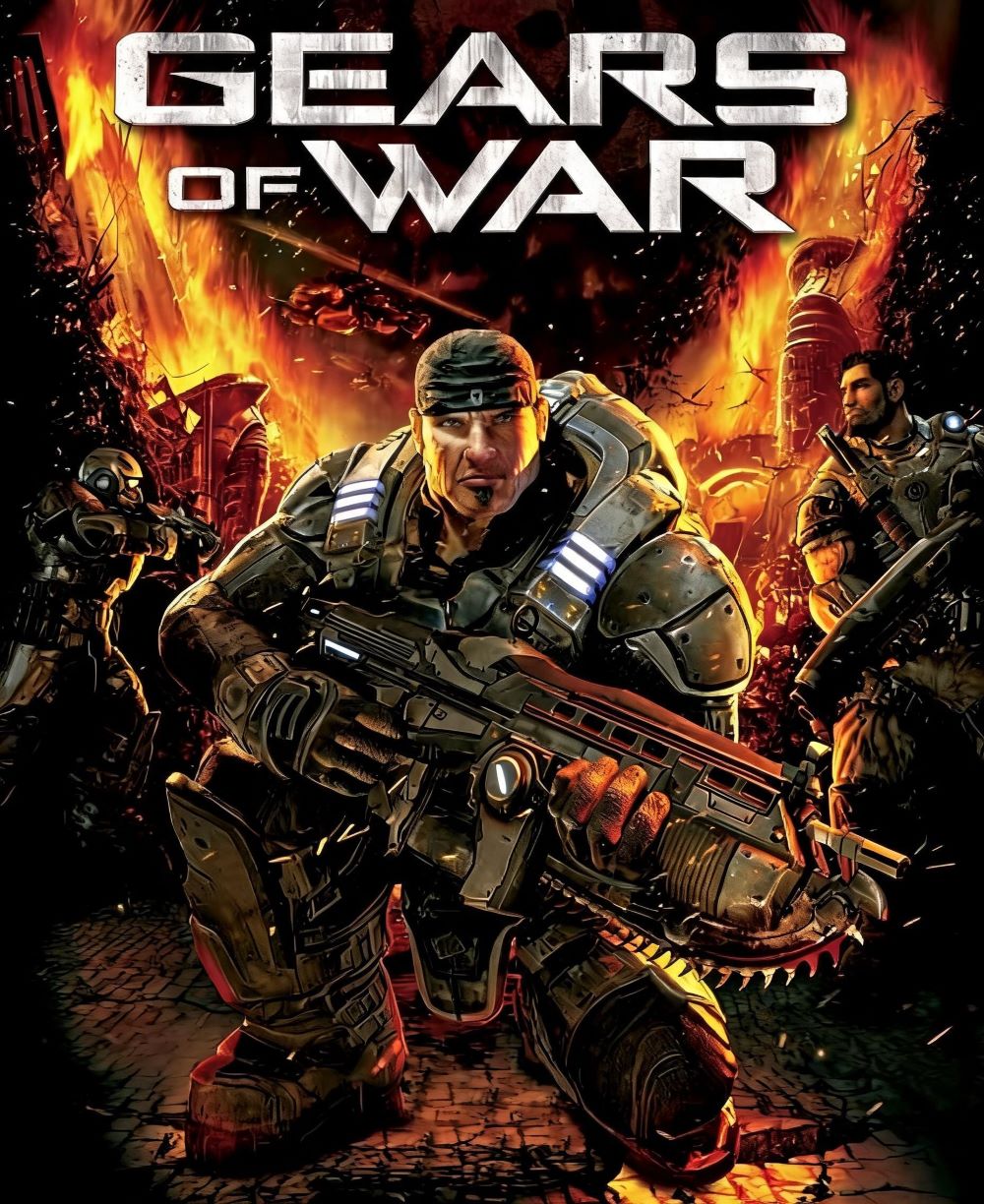
Let’s be real for a second: trying to play Gears of War from 2006 right after a session of Fortnite or Call of Duty: Modern Warfare III is a genuine shock to the system. You forget how heavy games used to feel. In an era where every shooter has slide-canceling, wall-running, and zero sprint-out times, going back to Marcus Fenix is like trying to run a marathon in steel-toed boots. The Xbox 360 classic, now almost two decades old, exists in this weird purgatory of retro gaming. It’s too young to be nostalgic pixel art, but it’s definitely too old to feel modern. And yet, here’s the thing: Gears of War still matters. Not in spite of its clunkiness, but because of it. When you revisit the ruined planet of Sera today, you realize that the “slowness” we now criticize was actually a specific design philosophy that current games have largely abandoned. It’s a fascinating time capsule—a game that feels like a rusty chainsaw, awkward to start, but terrifyingly effective once you get it going.
The first thing a modern player will notice is the speed—or total lack of it. In 2024, if your character takes a full second to slide into cover, players call it “input lag.” Back in 2006, we called it “weight.” The A-button roadie run is iconic, but compared to the fluidity of something like The Last of Us Part II or Gears 5 itself, the original feels like wading through molasses. You can’t vault over cover while shooting. You can’t cancel out of an animation. When you rev that Lancer chainsaw, you are committed to that animation, and if a Locust sneezes on you, you stagger. This should feel archaic. And honestly, sometimes it does. The middle third of the campaign, dragging through the same gray-brown mine shafts, feels repetitive by 2006 standards, but by today’s standards, it’s almost meditative in its simplicity. There’s no open world checklist. No battle pass. No weapon skins to grind for. You just shoot, move up, and shoot again. For a retro palate cleanser, that linear focus is weirdly refreshing.
Visually, Gears of War is a museum piece for a very specific era of game design: the “Real is Brown” movement. When it launched, Unreal Engine 3 was a miracle. Today, those same textures look like wet concrete. The color palette is aggressively desaturated—mixing grays, browns, and the occasional blood splatter. Current games like Ratchet & Clank: Rift Apart or Horizon Forbidden West are explosions of neon and particle effects. Going back to Gears feels like turning off HDR and watching a DVD on a 4K TV. But here’s the retro magic: the art direction survives the technical decay. The ruined architecture, the massive Locust fortresses, the silhouette of a Berserker breaking through a wall—those aren’t reliant on high polygon counts. They’re reliant on good composition. Jerry O’Flaherty’s vision of “destroyed beauty” still holds up because modern horror-shooters like Scorn or Remnant II are essentially borrowing that same heavy, bio-mechanical aesthetic. You can see the pixelation, sure, but you can also see the blueprint for an entire decade of gaming.
Gameplay is where the retro vs. modern debate gets interesting. The cover system—sticky, magnetic, and automatic—was revolutionary in 2006. By 2024, it’s considered “sticky” in a bad way. Modern shooters prefer contextual cover or manual crouch systems because we hate being glued to walls. Yet, playing Gears today reveals that its combat rhythm is actually more tactical than most modern cover shooters. In The Division 2 or Outriders, you can tank a few hits, heal, and move. In retro Gears on Hardcore difficulty, three bullets kill you. You have to respect the geometry. You have to wait for the Locust to reload. That “stop-and-pop” gameplay feels slow, but it also feels deliberate. Current games are terrified of boring the player, so they constantly throw movement abilities at you. Gears forces you to breathe. It’s almost a horror game in disguise—especially the Berserker fight, where you can’t hurt her from the front. A modern game would put a waypoint marker on her head. Gears just lets you panic and run to the next door. That’s retro charm at its finest: trusting the player to figure it out without a glowing UI.
The weapon design remains timeless, even after all these years. The Lancer with the chainsaw bayonet is one of the few mechanics from the 2000s that still feels fresh because no one else has successfully copied it. Pulling off a saw execution in 2024—even with the stiff animation and the camera glitch—is still cathartic in a way that modern “finishing moves” in Warzone aren’t. The Gnasher shotgun, infamous for its inconsistent pellet spread, is a retro nightmare. Veterans will argue that “host advantage” and “wall bouncing” were skill gaps. New players will argue it just feels broken. Both are correct. That’s the beauty of this game as a retro artifact: the multiplayer is janky, unbalanced, and ruled by veteran roadies who never stopped playing. The active reload mini-game—pressing R to stop a moving bar for a damage boost—remains a tiny stroke of genius that modern games like State of Decay borrowed but never improved.
Now, let’s talk about something that happened outside the actual game but became just as legendary as anything Marcus Fenix did with a shotgun. Before Gears of War even launched, Microsoft and Epic set out to make a commercial that would break every rule of game advertising. They initially approached legendary director David Fincher (Fight Club, Zodiac, Se7en) to helm the project—a massive get for a video game tie-in. But when Fincher had to bow out due to a scheduling conflict, a relatively unknown young director named Joseph Kosinski stepped in. You know Kosinski now as the guy who directed Top Gun: Maverick, the $1.5 billion sequel that made the world fall in love with fighter jets again, as well as Tron: Legacy and the Formula One film F1. But back in 2006, he was a visual effects artist and commercial director taking his first big swing. And boy, did he connect. The resulting sixty-second spot fundamentally rewrote the rules of game advertising. Instead of loud rock and explosion montages—the tired template of every shooter ad before 2006—Kosinski showed Marcus Fenix walking alone through a ruined city in the rain, set to Gary Jules’ haunting, melancholy cover of “Mad World.” The ad barely showed coherent gameplay, yet it sold grief, loneliness, and the weight of a lost world. A commercial for a rated-M shooter about chainsaw guns had no catchphrase, no high-fives, no announcer yelling “Are you ready?” Just a broken man trudging through the rain while a piano played.
It was a gamble that paid off so massively that it broke the industry’s advertising brain. Within a year, Halo 3’s “Believe” diorama ads—also influenced by Kosinski’s work—traded action for elderly veterans remembering a war. Dead Island’s infamous reverse-trailer showed a child’s death set to a mournful song. The Last of Us Part II, Cyberpunk 2077, and Death Stranding all followed with slow, emotional piano or vocal covers over solitary heroes walking through beautiful desolation. Even today, when a new trailer drops with a slowed-down pop cover and a hero looking sad in the rain, you’re watching the ghost of Joseph Kosinski’s twenty-year-old masterpiece. The actual game itself is full of cheesy banter and over-the-top gore—Cole Train yelling “Wooooo!”—but that ad sold a tone the game only occasionally delivered. And in doing so, it proved that video games could be marketed as art, not just adrenaline. You don’t just remember the headshots. You remember the rain. And you remember the name of the director who made that rain matter.
So, how does Gears of War hold up as a retro recommendation in 2024? You have to adjust your expectations. This is not a pick-up-and-play title. It’s a history lesson. The story is still barebones (Locust bad, blow up resonator, Dom’s wife is in another castle), but the vibe is immaculate. The lack of a mission select screen is annoying by modern standards, and the vehicle sections (yes, the infamous “sitting on a turret while riding a train” finale) feel painfully scripted. But the co-op? That’s the secret sauce. Playing split-screen Gears today with a friend is arguably better than playing most modern co-op shooters because the game isn’t trying to sell you anything. No loot boxes. No battle pass. Just two beefy space marines sharing one box of ammo and a lot of terrible one-liners. The influence this game had—and it’s impossible to overstate—is the DNA you see in Uncharted, The Last of Us, and even God of War (2018)’s over-the-shoulder camera. Every AAA third-person shooter from the last fifteen years owes its cover mechanic to this clunky, brown, brilliant fossil.
In the end, calling Gears of War “retro” isn’t an insult. It’s a badge of honor. It is the perfect representation of the Xbox 360 era: ambitious, janky, gray-brown, and completely unwilling to apologize for its weight. A modern shooter would buff your movement speed, add a grappling hook, and turn the Locust into loot piñatas. Gears doesn’t care. It wants you to struggle against the controls for a minute, then laugh as you chainsaw a Grub in half. And somewhere in the back of your mind, as you do it, you might hear a soft piano cover. That contrast—grief and gore, slowness and spectacle—is what makes revisiting Gears of War in 2024 so weirdly worthwhile. It is a slow, heavy, dated, and utterly essential piece of gaming history. Take cover. Wait for the reload. And for the love of God, remember to pick up the Torque Bow. You’ll be fine. Just don’t expect to sprint.