Ray Mercer (Peter Weller) has just gotten out of prison and already, he and his wife Rebecca (Tia Carrere) are heading to Nevada for a quicky divorce. However, a stopover in Las Vegas leads to Ray having a run of luck in a casino owned by Charles Atlas (Dennis Hopper). Ray and Rebecca start to reconsider their divorce but their reconciliation is temporarily put on hold when the casino is robbed by a bunch of thieves led by Martin Kove. Because of Ray’s criminal history, the police (led by David Alan Grier) consider Ray to be the number one suspect. Ray and Rebecca try to escape from the casino and clear Ray’s name, leading to a night on nonstop action and an explosive climax at the Hoover dam.
One thing that you can say about Top of the World is that it certainly isn’t boring. The action starts earlier and lasts nonstop until the end of the movie. No sooner has Ray escaped from one scrape than he finds himself in another. Despite the low-budget, the action scenes are often spectacularly staged and exciting to watch. Another thing that you can say about Top of the World is that, for a B-movie, it certainly has a packed cast. Along with Weller, Carrere, Hopper, Grier, and Kove, the movie also finds room for Peter Coyote, Joe Pantoliano, Ed Lauter, Gavan O’Herlihy, Eddie Mekka, Cary-Hiroyuki Tagawa, and even Larry Manetti of Magnum P.I. fame. This movie paid off a lot of mortgages and probably funded more than a few vacations.
One thing you can’t say about Top of the World is that it makes any sense. It doesn’t. There are so many holes in the plot that you could fly a helicopter through them and that’s exactly what this film does. But with the nonstop action and the entertaining cast, most people won’t mind. I certainly didn’t!
I’ve been thinking a lot about Gene Hackman as he recently celebrated his 95th birthday. He’s an incredible actor who has been a part of my life since I first really discovered my love of movies beginning in the mid-80’s. I’ve also been writing about Rutger Hauer every Sunday here on the Shattered Lens. Hackman and Hauer made a movie together back in 1983 called EUREKA, and to be honest, I almost forgot about it. It’s a movie I watched a long time ago and hadn’t watched again until today. It seemed like the perfect time for a revisit.
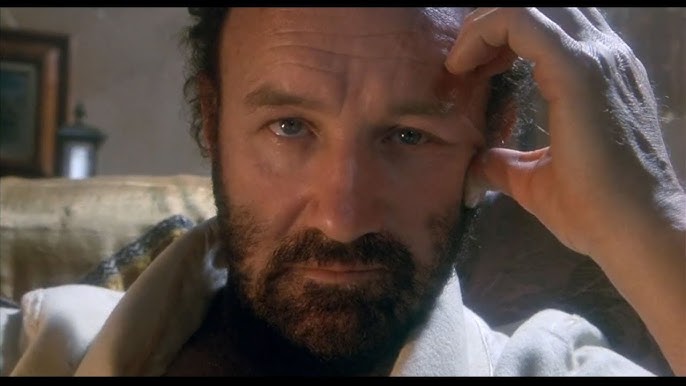
EUREKA opens with a stunning aerial shot that descends upon obsessed gold prospector Jack McCann (Gene Hackman) who’s fighting with a man on a snow-covered mountain in the Yukon territory. The man has asked Jack to partner with him in their search for gold, and Jack makes it clear that he will never “make a nickel on another man’s sweat.” Next, we see Jack as he’s walking through a nearly deserted town. In another unforgettable shot, Jack watches a man, who’s clearly gone mad, commit suicide just outside of the local “Claims office.” Before watching again today, that was the only scene that I could remember from my initial viewings of the film so many years ago. Next, we see Jack lying down below a tree at night, in windy, frigid temperatures, just about to freeze to death. Three hungry wolves have even approached ready for dinner. And this is where things get strange. Out of the blue, this clairvoyant madam (Helena Kallianiotes) from a local brothel sees him in her crystal ball, as a mysterious stone falls right next to him, starting a fire that warms him and drives away the wolves. He goes to see the madam at the brothel where she tells him that he will strike gold, but he “will be alone now.” Jack leaves the next morning and finds gold, rivers of gold. It’s another stunning sequence showing the obsessed man, who’s been searching for gold for 15 long and hard years, finally finding the object of his obsession.
Cut to 20 years in the future, where Jack is now the richest man on earth, living on his own Caribbean island. It also appears he may also be the unhappiest man on earth. He has all the money in the world, but there is no peace in his heart or soul. His wife Helen (Jane Lapotaire), who he was once deeply in love with, is now detached and addicted to alcohol. His daughter Tracy (Theresa Russell) has fallen in love and married Claude Maillot Van Horn (Rutger Hauer). Jack cannot stand Claude as he suspects that he seduced and married Tracy so he could get to his money. His best friend Charles (Ed Lauter) has somehow gotten mixed in with Miami mobsters, led by a guy named Mayakofsky (Joe Pesci) and his lawyer Aurelio D’Amato (Mickey Rourke), who want to force Jack to sell them land on his island so they can build a casino. Jack feels like everybody just wants a piece of him and his money. He has lost the joy in his life. The rest of the film plays out against this backdrop as Jack tries to separate Tracy from Claude, and as the mobsters try to force Jack to sell to them by any means necessary.
EUREKA is not a film that everyone will love, but I enjoyed watching it again after so many years. Director Nicolas Roeg, who also directed PERFORMANCE (1970), DON’T LOOK NOW (1973) and FULL BODY MASSAGE (1995), creates some truly amazing and brutal images that once seen are not easily forgotten. The scene where Jack McCann finds his huge vein of gold is so beautiful, but there are alternatively horrific scenes of brutal violence that play out almost to the point of overkill. The movie also takes some surprising twists and turns in the third act that you may not see coming. I always like it when a movie surprises me. It’s a melodramatic film that doesn’t have a lot of likable characters, but with a cast this good, I’m willing to go along with the filmmakers. In addition to the excellent work of Gene Hackman and Rutger Hauer, Theresa Russell has the important role as the daughter stuck between the man she loves and the dad who adores her. Her acting style exemplifies the melodrama of Roeg’s vision, so it works well in the context of this film. Jane Lapotaire has a couple of strong moments as Hackman’s alcoholic wife who yearns for days long gone when they were so in love. We were quite spoiled in the early 80’s when a movie could round out its already impressive cast with actors like Joe Pesci, Mickey Rourke, Ed Lauter, Corin Redgrave and Joe Spinell.
Nicolas Roeg appears to be trying to make deep statements about the meaning of life in EUREKA. I’m not a person who generally consumes films for deep meaning, but I thought it might be fun to at least take a surface-level view of some of the items I noticed while watching the movie. Jack spouts a lot of profound things throughout the movie, things that he feels describe him as a person. I mentioned one earlier when Jack tells the competing prospector prior to finding gold that, “I’ll never make a nickel off of another man’s sweat.” He will continue to use this saying throughout the film, even after he’s a rich, jaded, older man. The truth is that he would not have found the gold without the help of the clairvoyant madam, with her even passing away right after he hits the jackpot. In another scene at an extremely awkward dinner party, Jack tells his guests that the only rule that matters is the Golden Rule, “Do unto others as you would have them do unto you.” While I agree with the importance of this rule, Jack does not seem to follow the Golden Rule in any way that helps others or gives him any sense of peace or connection. Jack does not seem to understand the contradictions in his use of these phrases as played out in his own life, but I also think that his lack of understanding helps to illustrate a truth that plays out at times in many of our own lives. So often we’ll claim certain beliefs and values, but our lives as lived will be much more complex and often hypocritical. We can see them in Jack, but can we always see them in ourselves?
EUREKA also seems to be a movie that’s open to different interpretations based on who’s viewing the movie and where they are in life at that specific time. In a moment of clarity with his wife, Jack seems to recognize the hypocrisy in his life when he tells her “I once had it all… now I just have everything.” Jack is finally reflecting on the important things in his life, rather than dwelling on his current distrust of everyone around him. This final quote got me to thinking about my own life and just how different I am as a man in my early 50’s compared that naïve 20-year-old who first watched this film. I didn’t know what it was like to chase my dreams, catch them, and then try to figure out how to keep striving with a purpose. I didn’t know what it was like to be married with the responsibility of loving my wife and genuinely caring about her needs, through both the good times and the bad times. I didn’t know what it was like to be a dad who wanted nothing but true happiness for his children. Jack has lived through these specific opportunities in life, and we can see how he’s dealt with them. Each of these things have now played out in my own life. There have been times that I’ve failed, and there have been times that I’ve succeeded. I just keep reminding myself to try to focus on the things that matter and not get distracted by the things that don’t. Even now, it’s not always easy to do.
In 1989, having already won an Oscar for recreating his Vietnam experiences in Platoon, director Oliver Stone returned to the war with Born On The Fourth Of July.
Based on the memoir of anti-war activist Ron Kovic, Born on the Fourth of July stars Tom Cruise as Kovic. When we first meet Kovic, he’s growing up on Long Island in the 50s and 60s. He’s a clean-cut kid from a nice family. He’s on the school wrestling team and he’s got a lot of friends. When he was just 15, he heard John F. Kennedy telling people to ask what they can do for their country and he was inspired. He decided he wanted to join the Marines, despite the fact that his father (Raymond J. Barry) was still haunted by the combat that he saw in World War II. (In one of the film’s better scenes, a young Kovic notices that the elderly veterans marching in the Independence Day parade still flinch whenever they hear a firecracker.) He enlists in the Marines after listening to a patriotic speech from a recruiter (played by Tom Berenger). Ron runs through the rain to attend his prom and has one dance with Donna (Kyra Sedgwick), on whom he’s always had a crush. There’s nothing subtle about the way that Stone portrays Kovic’s childhood. In fact, one might argue that it’s a bit too idealized. But Stone knows what he’s doing. The wholesomenss of Kovic’s childhood leaves neither him nor the viewer prepared for what’s going to happen in Vietnam.
Vietnam turns out not to be the grand and patriotic adventure that Kovic thought it would be. After Sgt. Kovic accidentally shoots one of his own men in a firefight, he is ordered to keep quiet about the incident. After he is wounded and paralyzed in another firefight, Kovic ends up in a Hellish VA hospital, surrounded by men who will never fully recover from their mental and physical wounds. Kovic is eventually returns home in wheelchair. The film then follows Kovic as he goes from defending the war in Vietnam to eventually turning against both the war and the government. At one point, he ends up with a group of disabled vets in Mexico and there’s a memorable scene where he and another paraplegic (Willem Dafoe) attempt to fight despite having fallen out of their chairs. Eventually, Kovic returns to America and turns his anger into activism.
There’s nothing subtle about Born On The Fourth Of July. It’s a loud and angry film and Oliver Stone directs with a heavy-hand. Like a lot of Stone’s films, it overwhelms the viewer on a first viewing and it’s only during subsequent viewings that one becomes aware of just how manipulative the film is. Tom Cruise gives a good performance as Ron Kovic but his transformation into a long-haired, profane drunk still feels as if it happens a bit too abruptly. A good deal of the film centers on Kovic’s guilt about accidentally killing one of his men but the scene where he goes to the soldier’s family and asks them for forgiveness didn’t quite work for me. If anything, Kovic came across as being rather self-centered as he robs the man’s mother and father of the belief that their son had at least died heroically in combat as opposed to having been shot by his own sergeant. Did Kovic’s need to absolve himself really give him the right to cause this family more pain? Born on the Fourth Of July is an effective work of agitprop. On the first viewing, you’ll want to join Kovic in denouncing the military and demanding peace. On the second viewing, you’ll still sympathize with Kovic while also realizing that he really owes both his mother and father an apology for taking out his anger on them. By the third viewing, you’ll be kind of like, “Wow, I feel bad for this guy but he’s still kind of a jerk.” That said, when it comes to making an effective political film, Adam McKay could definitely take some lessons from Oliver Stone. Born On The Fourth of July is at its best when it simply captures the feeling of living in turmoil and discovering that the world is not as simple a place as you once believed. As idealized as the film’s presentation of Kovic’s childhood may be, anyone who has ever felt nostalgia for an earlier and simpler world will be able to relate.
Oliver Stone won his second Best Director Oscar for Born On The Fourth Of July. The film itself lost Best Picture to far more genteel version of the past, Driving Miss Daisy.
If you’re in Texas or Arkansas today, I hope you’re keeping as bundled up as Charles Bronson in DEATH HUNT. It’s cold out there people! Keep safe and stay home if at all possible! We don’t know how to drive in this weather!
Enjoy DEATH HUNT’s trailer below! Charles Bronson and Lee Marvin are as tough as it gets!
Welcome to Retro Television Reviews, a feature where we review some of our favorite and least favorite shows of the past! On Sundays, I will be reviewing Homicide: Life On The Street, which aired from 1993 to 1999, on NBC! It can be viewed on Peacock.
This week, Detective Munch takes a stand!
Episode 1.8 “And the Rockets’ Dead Glare”
(Dir by Peter Markle, originally aired on March 17th, 1993)
Is John Munch a stoner?
That’s the question that Stanley Bolander finds himself considering during this week’s episode of Homicide: Life On The Street. At a crime scene, Munch displays an encyclopedic knowledge of marijuana and later, while talking to a narcotics detective at the station house, both Munch and Bayliss argue that drugs should be legalized. That night, as they wait to bust a man who earlier killed a drug currier, Bolander flat out asks Munch if he gets high. Munch refuses to answer.
Of course, those of us watching already know. Of course, John Munch gets high! He’s played by Richard Belzer, the thin, middle-aged man who never takes off his sunglasses and who is continually rattling off trivial knowledge in a mellow tone of voice. Munch not only gets high but he was probably high through this entire episode. Whenever Munch appeared on another television show, he was probably high then. And when he eventually ended up on Law & Order: SVU, he was probably so stoned that I’m surprised Stabler didn’t put him in a headlock and start yelling about how he didn’t want Munch serving as a bad example for the youth of New York City.
There’s no surprise that Munch would be in favor of legalizing drugs. (It’s a bit more surprising that straight-laced Bayliss would agree but whatever.) What was surprising, to me, was how I reacted to his argument. There was a time when I was 100% enthusiastically in favor of legalizing all drugs, or at least leaving it up to individual states. As I’ve gotten older, I’ve come to realize that it’s not that simple. Legalizing drugs is not the societal cure-all that many of us assumed it would be. Then again, weed is kind of boring now that it’s socially acceptable so maybe the best way to keep people off of drugs is to broadcast nonstop YouTube commercials featuring middle-aged suburbanites talking about how much they love their edibles.
(To be honest, Munch and Bayliss’s sudden advocacy for drug legalization reminded me of one of the things that always makes me laugh about Law & Order, i.e. the tendency to have blue-collar cops, who are not exactly the most liberal of constituencies, suddenly start talking like MSNBC pundits.)
While Munch argued for drug legalization, Pembleton considered whether or not to accept a promotion, Kay testified in a murder trial and accepted the offer of a dinner date from State’s Attorney Ed Danvers (Zeljko Ivanek), and Corsetti and Lewis drove to Washington D.C. to investigate the murder of a Chinese dissident. Officially, they went to D.C. so that they could question the people at the Chinese embassy about the victim and the possibility that his murder was related to politics. However, the real reason they went to D.C. was so that Crosetti could visit some historical sites and expound on his theories about who really killed Abraham Lincoln. A somewhat sinister secret service agent (played by Ed Lauter) was happy to show them around in return for them not making trouble at the embassy. Crosetti was excited. Lewis was considerably less impressed. I enjoyed the DC storyline, if just because I’m both a history and a conspiracy nerd and, when Jeff and I last went to our nation’s capital, I got excited about seeing some of the same locations that Crosetti got excited about.
This episode was a day-in-the-life episode, with all of the detectives getting their share of attention. (Even Felton, who accompanied Kay to the courthouse, got a few moments to shine.) If the episode didn’t have the emotional impact of Night of the Dead Living, it still did a good job of portraying the comradery of a group of people who are linked by their knowledge of what it’s like to see others at their worst. In the end, Pembleton turns down the promotion and finally, joins his fellow detectives for an after-work drink. I’m glad he did. They’re good company.
I’m on Day 3 of my discussion of Charles Bronson’s DEATH WISH series in chronological order. This series has brought me countless hours of entertainment over the last 40 years, so enjoy and let me know your thoughts!
DEATH WISH 3 is a very important movie to me. I recently closed my celebration of Charles Bronson’s 103rd birthday movie marathon on November 3rd with another viewing of DEATH WISH 3, the film that turned me into the only Charles Bronson superfan in Toad Suck, Arkansas. After a day of celebratory viewings of CHATO’S LAND, 10 TO MIDNIGHT (on VHS), FROM NOON TIL THREE, COMBAT: HERITAGE (on VHS), THE SEA WOLF (on VHS), and the original DEATH WISH, I had no choice but to watch DEATH WISH 3, a movie I have watched well over 100 times over the course of my life. DEATH WISH 3 is one of only four Charles Bronson films that I have seen on the big screen, as I was able to watch it at the Mahoning Drive-In in Lehighton, PA in June of 2022.
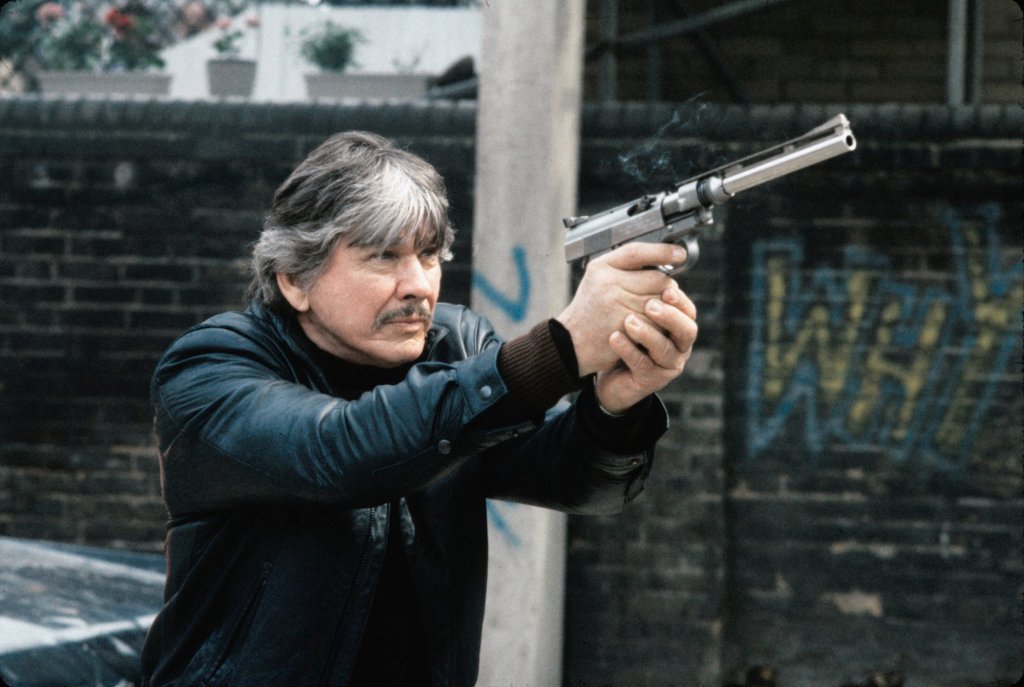
The third entry in the DEATH WISH franchise begins with Paul Kersey (Charles Bronson) riding a Go Big Red Trailways bus into New York City. Since this is an odd numbered DEATH WISH film, it takes place in New York. The even numbered films take place in Los Angeles. Kersey looks kind of grumpy as he rides into town. I would definitely avoid sitting next to him if I was a passenger on the same bus that day. We learn that Kersey’s coming into town to visit his old buddy, Charlie. Unfortunately, his arrival coincides with members of a violent street gang breaking into Charlie’s apartment and beating him to death. Just after the punks go running away from the scene of the crime, Kersey walks into Charlie’s apartment to find the man clinging to his last breath of life and asking Kersey to “take care of his things, until I get back.” Some of Charlie’s neighbors had called the police a little earlier, and they arrive just in time to find Kersey standing over the body, so they arrest him for his old buddy’s murder. This seems reasonable since Kersey is the only person wearing a sports jacket and button up shirt in this gang infested area. Kersey is taken to the police station where a group of cops commence to beating the crap out of him in hopes of getting a confession. After a few punches to the gut by the cops and the old “you can have water if you tell us what we want to know” routine, Lt. Richard Shriker (Ed Lauter) enters the room and promptly asks “Who’s this dude?” You see, Kersey is going under the alias Paul Kimble, but Shriker recognizes the dude as Paul Kersey, the vigilante from the original DEATH WISH. Shriker goes on to explain that he was with the New York PD the night they brought in a vigilante with a bullet in his leg who was out like a light. Having the vigilante in town again, light bulbs immediately go off over Shriker’s head and he quickly hatches a plan. It seems a gang of criminals, led by Mandy Fraker (Gavan O’Herlihy) has taken over the community and police have been powerless to stop them. First, it’s really hard to catch the gang members because some of them can run really fast, and second, when they finally do catch them, the gang members have lawyers who can get them off. Lt. Shriker decides he’ll let Kersey out of jail, but only if Kersey is willing to resume his vigilante ways, shoot some of the creeps, and even throw some street info the police department’s way so they can get a few busts. Paul Kersey immediately agrees even though he seems kind of tired. You can’t help but wonder if Kersey might be needing the release that only can be achieved through violence against creeps. In short order, Kersey sets up shop in his old buddy’s apartment so he can take care of his things, gets to know the local residents, waits for an arsenal of African big game pistols and rocket launchers to arrive via UPS, makes love to public defender Kathryn Davis (Deborah Raffin), and eats all sorts of local delicacies like stuffed cabbage and broiled chicken. As an added bonus, the neighborly Bennett (Martin Balsam) just happens to have a couple of Browning machine guns in his closet that he was somehow able to smuggle home from World War II. It’s against this backdrop that Kersey sets out to wage a one-man war against the violent gang that has turned the corner of Sutter and Belmont into hell on earth!
There’s not much I can say about DEATH WISH 3 that hasn’t already been said. It’s a wild, over the top action film that would mark the 6th and final film that Bronson would work on with director Michael Winner. It would also be Charles Bronson’s last film that would rise to #1 at the U.S. box office when it premiered on November 1st, 1985. It features some fun performances, especially from Ed Lauter as Lt. Shriker, Gavan O’Herlihy as gang leader Mandy Fraker, and Kirk Taylor as the gang member known as the Giggler who “can really move,” but who’s still not fast enough to outrun a bullet! A pre-Bill and Ted’s Alex Winter also plays a gang member named Hermosa, continuing the series tradition of casting actors as street creeps who would go on to be a bigger star a few years down the road. DEATH WISH 3 is not a great movie in the traditional sense, but it’s one of the most enjoyable movies ever made if you’re in the right frame of mind.
DEATH WISH 3 is the movie most responsible for my obsession with Charles Bronson. I received it as a Christmas present in 1986 when I was thirteen years old, and I proceeded to watch it almost daily for months. It was the only Bronson film I owned on VHS so I would watch it almost every night unless I had a basketball game, or I had been able to rent a different Bronson film from the video store. I know every line in the film and no other movie holds more nostalgic value in my life. DEATH WISH 3 is a 5-star movie in my book in so many ways that have nothing to do with critical acclaim. As long as I’m breathing, long live DEATH WISH 3!!!
BONUS: We completed a roundtable a few weeks back on the THIS WEEK IN CHARLES BRONSON PODCAST, where we spend the entire episode discussing what we love about DEATH WISH 3. I had a blast on the episode with my partner in crime Eric Todd, as well as fellow “Buchinsky Boys” Chris Manson & David Mittelberg. We even throw some love TSL’s way during the episode. Give it a listen if you get the chance!
Welcome to Retro Television Reviews, a feature where we review some of our favorite and least favorite shows of the past! On Mondays, I will be reviewing Miami Vice, which ran on NBC from 1984 to 1989. The entire show can be purchased on Prime!
This week, Crockett loses it!
Episode 3.6 “Shadows In The Dark”
(Dir by Christopher Crowe, originally aired on October 31st, 1986)
Crockett and Tubbs are assigned to work with Lt. Ray Gilmore (Jack Thibeau) in investigating a series of burglaries. The burglar has broken into several houses. Each time, he eats whatever meat is in the house, he draws a picture on the wall, and then he steals a pair of pants. Gilmore is convinced that the burglar is working his way towards doing something even more serious and deadly.
Crockett and Tubbs soon discover that Gilmore is suffering from intense burnout. Years spent getting inside the minds of burglars and working nights have left Gilmore angry and erratic. When Gilmore finally snaps and starts shooting an icebox, Crockett and Tubbs assume that the investigation is over. Instead, Castillo informs them that, with Gilmore now committed to a mental hospital, they will now be in charge of the investigation.
Soon, Crockett finds himself becoming just as obsessed as Gilmore. He starts staying up late. The few instances in which he does sleep, he’s woken up by intense nightmares. Crockett becomes obsessed with the mysterious burglar, to the extent that Castillo and the rest of the Vice Squad start to worry that he’s losing his mind. In the end, Crockett does manage to figure out what house the Shadow (Vincent Caristi) will be targeting next. Both the Shadow and Crockett break into the house at the same time, leaving the homeowner terrified as the two men fight.
“I’m a cop! I’m a cop!” a desperate and wild-eyed Crockett shouts at her while holding up his badge.
This was a dark episode, one that played out more like a mini-horror movie than a typical episode of Miami Vice. (Appropriately, this episode aired on Halloween and was clearly made with the scary season in mind.) While I do think Crockett’s descent into madness happened a bit too quickly, I can’t deny that Don Johnson did a great job as the unhinged Sonny Crockett. When he desperately yelled “I’m a cop!,” it was obvious that he was trying to convince himself as much as the poor woman who owned the house. Though this episode was definitely a showcase for Don Johnson, Edward James Olmos did get plenty of opportunities to employ the Castillo stare as Crockett grew more and more unstable. Finally, Vincent Caristi was truly frightening as the Shadow.
Interestingly enough, the episode’s plot is similar to Manhunter, which came out earlier that year. The episode even features a scene where Crockett, Tubbs, and Gilmore visit a former burglar so that they can get his insights on their current prey. (Manhunter, of course, was the first film to feature Dr. Hannibal Lecter being consulted about a serial killer.) MiamiVice‘s producer and creator, Michael Mann, directed Manhunter and, though he didn’t direct this episode, it’s clear that Shadow In The Dark was meant to be a bit of an homage to the film.
Season three has, so far, been a bit uneven but this was a good and offbeat episode.
There have been many disturbing ventriloquist’s dummies over the years but I don’t know if there’s ever been one who is quite as hateful as Fats, the dummy that is used by Corky Withers (Anthony Hopkins).
Corky and Fats are at the center of the 1978 film, Magic. When we first meet Corky, he’s an aspiring magician without a dummy. He’s a talented magician and it’s obvious that performing is one of the only things that brings Corky happiness. But, from the start, there’s something off about Corky. There’s a desperation to him and his performance. He craves the applause of the audience just a bit too much, as if he doesn’t know who he is unless people are clapping for him. (This performance, from a youngish Anthony Hopkins, is quite a contrast to the characters that Hopkins is today known for playing.) Corky is told that he needs to get a “gimmick” if he’s ever going to be a success and that gimmick turns out to be Fats, a ventriloquist dummy who is as confident as Corky is insecure. Whereas Corky often seems to be struggling to find the right thing to say, Fats always has the perfect comeback ready.
Of course, Fats is Corky. Fats is the self-absorbed and cocky “person” that Corky wishes he could be. When Fats tells Corky that he’s a useless loser, it’s actually Corky saying that to himself. When Corky argues with Fats, he’s arguing with himself. With Fats, Corky has found a way to express himself but he’s also sacrificed half of his identity as a result. Can Corky survive without Fats? He’s not sure but he does know that Fats is a hit with audiences.
When Corky’s agent (Burgess Meredith) announces that he has gotten Corky a network television special, Corky panics. Corky doesn’t want to take the medical or mental exams that the network would probably require before giving him a contract. He flees to the Catskills, where he grew up. (Corky’s obsession with performing makes sense when one realizes that he grew up in the Catskills, a region that played home to many aspiring comedians.)
Corky visits Peggy Ann Snow (Ann-Margaret), with whom Corky went to high school and who he had a huge crush on. (Imagining Anthony Hopkins in high school — especially an American high school — is not particularly easy.) Peggy is unhappily married to Duke (Ed Lauter) and she soon finds herself falling in love with Corky. Corky appears to finally have a chance for happiness but Fats has other plans. Murder follows and it says something about how well this film is done that we think of Fats as being the mastermind behind the murders even though we know that Fats is really just Corky talking to himself.
Magic is the definitive evil ventriloquist’s dummy film, one that is beautifully shot by Richard Attenborough and which features a great performance from Anthony Hopkins. It’s a sign of the strength of his performance that we still feel sorry for Corky, even though he ends up killing one of the most likable characters in the film. Of course, it’s a dual performance for Hopkins because he’s playing both Corky and Fats. He is excellent and frightening in both roles.
Welcome to Retro Television Reviews, a feature where we review some of our favorite and least favorite shows of the past! On Sundays, I will be reviewing the made-for-television movies that used to be a primetime mainstay. Today’s film is 1973’s Class of ’63! It can be viewed on YouTube!
It’s college reunion time! Alumni of all ages and from all over the country are returning to the place where they became adults and spent the best years of their lives.
Joe Hart (James Brolin), of the Class of ’63, returns to the campus but he immediately feels like a bit like an outsider. As opposed to his former classmates, many of whom are desperately trying to recapture their fading youth, Joe is quiet and sensitive and he’s aware of the passage of time. He hasn’t come back to college so that he can relive his carefree fraternity days. Instead, his main interest is whether or not his former fiancée will be there.
And it turns out that Louise Swerner (Joan Hackett) is there! She’s accompanied by her husband and fellow member of the Class 0f 63, Mickey Swerner (Cliff Gorman). From the minute that Mickey appears, it’s obvious that he has both a chip on his shoulder and a lot of insecurity. He is visibly annoyed when people fail to immediately recognize him. He and Louise have a strained marriage and he’s not particularly happy with how excited she is to see Joe again. While Mickey tries to convince everyone that he’s grown up to be a winner, Louise and Joe get reacquainted and it becomes obvious that they still love each other. Will Louise and Joe leave the reunion together and should they be more concerned with the fact that Mickey just happens to have a sniper rifle in his luggage? And what to make of Dave McKay (Ed Lauter), the former classmate who seems to be just a little bit too excited to see everyone?
It’s an interesting film and I have to say that it didn’t quite go the direction that I was expecting it to. Despite the presence of the rifle and Mickey’s obvious instability, the film is less a thriller and more a look at what it means to grow up and the difficulty of letting go of the past. None of the characters are caricatures. Joe and Louise may seem perfect together but the film makes clear that they’re also idealizing their time together. With neither one of them really happy with their current life, they’ve both fallen into the trap of wondering, “What if?” Meanwhile, Mickey may be flawed but it’s impossible not to have some sympathy for him. As hostile as Cliff can be, it’s obvious that the person that he hates the most is himself and Cliff Gorman does a good job of capturing Mickey’s raging insecurity. Gorman’s intensity provides a good balance to Brolin’s more laid back performance and, by the end of the film, one can understand why and how Louise was able to fall in love with two men who superficially seem to be so different.
Class of ’63 is a good drama, one that requires a little patience but which ultimately rewards the audience for sticking with it.
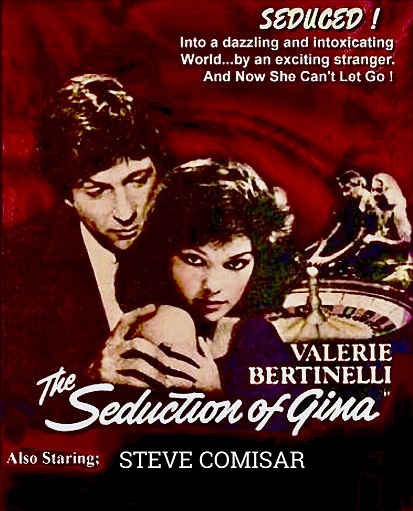
Welcome to Retro Television Reviews, a feature where we review some of our favorite and least favorite shows of the past! On Sundays, I will be reviewing the made-for-television movies that used to be a primetime mainstay. Today’s film is 1984’s The Seduction of Gina. It can be viewed on Tubi!
Gina (played by Valerie Bertinelli) is bored.
She’s a 20 year-old newlywed who spends her days going to college and her nights sitting in a tiny apartment and waiting for her husband, David (Fredric Lehne), to come home. David is an intern at a hospital. He works the nightshift and, as a result, he’s usually exhausted and not particularly communicative. Unlike her husband, Gina comes from a wealthy family and she’s due to inherit a good deal of money as soon as she turns 21. However, David stubbornly refuses to use any of Gina’s money to make either of their lives better. He gets angry when Gina even mentions the possibility. He’s prepared to spend the next ten years living in a crummy apartment and working terrible hours. Once he establishes himself as a doctor, he says that he and Gina can start to think about starting a family. Are you getting the feeling that David has control issues? Because that’s definitely the feeling that I got from him.
Bored and frustrated, Gina turns to gambling. Who can blame her? Not only is it a way to make some money and bring some excitement into her life but it’s also something that she’s really good at! She starts out just putting bets on horse races. (The owner of a nearby bodega is also a bookie.) She uses the money to buy a new television set, which David totally freaks out about. Soon, Gina is sneaking off to Lake Tahoe. While David works at the hospital, Gina hits the blackjack table and spins the roulette wheel. She even attracts the eye of Keith Sindell (Michael Brandon), a handsome lawyer who loans her money and obviously has an interest in her that goes beyond card games. Every morning, she jumps in her car and rushes back to San Francisco, arriving at her apartment before David gets home and lying to David about what she’s been doing all night.
It starts out well but this wouldn’t be a TV movie if there wasn’t a bit of drama. Unfortunately, Gina’s luck starts to change and she soon finds herself in debt. The owner of that bodega is a lot less nice when he’s demanding his money. And Keith might be willing to cheat on his wife with her but he still expects her to pay back the money that he’s given her. The world of gambling turns out to be harsh and unforgiving. Gina is forced to find ways to get the money. If that means lying to her husband, her father (played by Ed Lauter), and her accountant, so be it. She might even have to — gasp! — get a job as a cocktail waitress!
It’s obvious from the start that Gina is going to get into trouble, or at least it’s obvious to everyone but Gina. And really, isn’t that the way life is sometimes? Usually, the only person who can’t see the walls closing in is the person who is about to get crushed. The Seduction of Gina is melodramatic and predictable but Valerie Bertinelli is likable in the role of Gina and the scenes in casino are enjoyably gaudy and a little bit sordid. It’s an entertaining movie, a Lifetime film that came out before Lifetime. The film’s message is not to gamble but The Seduction of Gina makes winning look like so much fun that it probably inspired more people to hit the casinos than to stay at home and balance the checkbook. In the classic DeMille fashion, this film offers both sin and a hint of salvation but it understands that sin is more entertaining to watch.
 Ray Mercer (Peter Weller) has just gotten out of prison and already, he and his wife Rebecca (Tia Carrere) are heading to Nevada for a quicky divorce. However, a stopover in Las Vegas leads to Ray having a run of luck in a casino owned by Charles Atlas (Dennis Hopper). Ray and Rebecca start to reconsider their divorce but their reconciliation is temporarily put on hold when the casino is robbed by a bunch of thieves led by Martin Kove. Because of Ray’s criminal history, the police (led by David Alan Grier) consider Ray to be the number one suspect. Ray and Rebecca try to escape from the casino and clear Ray’s name, leading to a night on nonstop action and an explosive climax at the Hoover dam.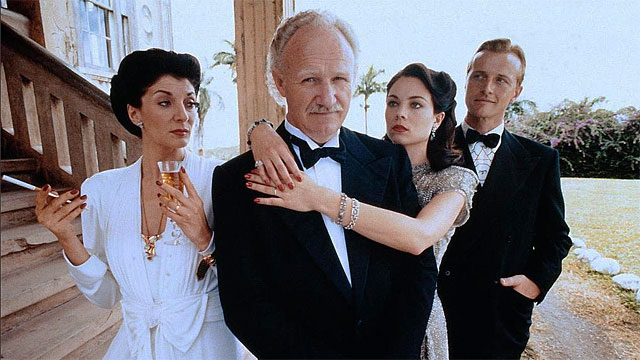



 Through the Shattered Lens