Live Tweet Alert: Join #FridayNightFlix For Coogan’s Bluff


As some of our regular readers undoubtedly know, I am involved in a few weekly live tweets on Twitter and Mastodon.  I host #FridayNightFlix every Friday, I co-host #ScarySocial on Saturday, and I am one of the five hosts of #MondayActionMovie!  Every week, we get together.  We watch a movie.  We tweet our way through it.

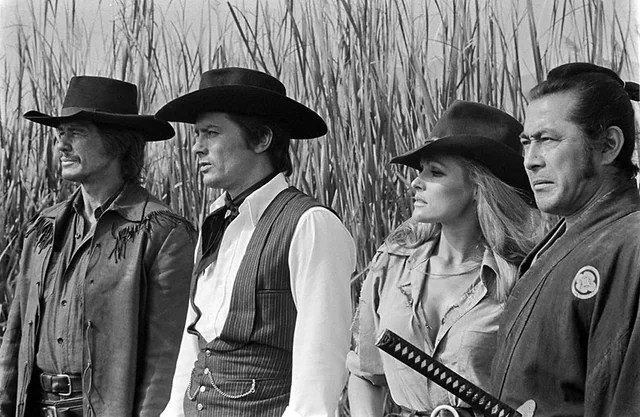
Tonight, at 10 pm et, #FridayNightFlix presents 1968’s Coogan’s Bluff, starring Clint Eastwood!

If you want to join us this Friday, just hop onto twitter, start the movie at 10 pm et, and use the #FridayNightFlix hashtag!  It’s a friendly group and welcoming of newcomers so don’t be shy.

Coogan’s Bluff is available on Prime and Tubi!  See you there!

4 Shots From 4 Best Picture Winners: The 1990s


4 Shots From 4 Films is just what it says it is, 4 shots from 4 of our favorite films. As opposed to the reviews and recaps that we usually post, 4 Shots From 4 Films lets the visuals do the talking!

Today, I’m using this feature to take a look at the history of the Academy Award for Best Picture.  Decade by decade, I’m going to highlight my picks for best of the winning films.  To start with, here are 4 shots from 4 Films that won Best Picture during the 1990s!  Here are….

4 Shots From 4 Best Picture Winners: The 1990s

The Silence Of The Lambs (1991, dir by Jonathan Demme, DP: Tak Fujimoto)

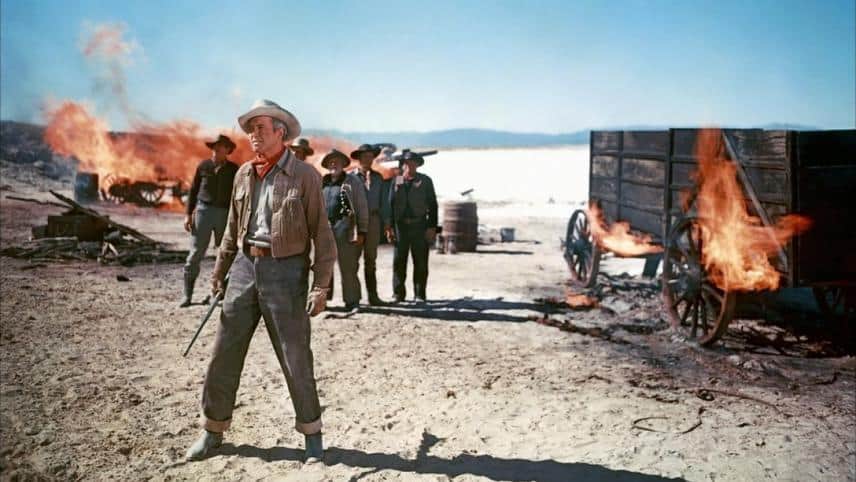
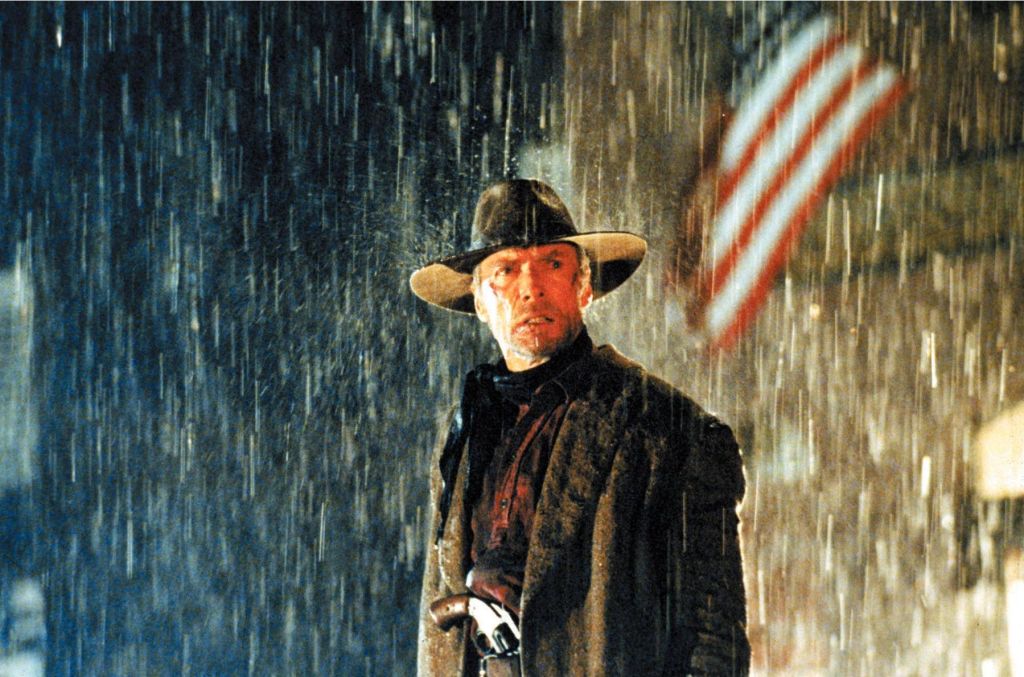
Unforgiven (1992, dir by Clint Eastwood, DP: Jack N. Green)

Schindler’s List (1993, dir by Steven Spielberg, DP: Janusz Kamiński)

Shakespeare In Love (1998, dir by John Madden, DP: Richard Greatrex)

Rest in Peace, David Soul


I just heard that actor David Soul passed away yesterday, at the age of 80.

Horror fans, of course, will always remember David Soul for playing Ben Mears in Tobe Hooper’s adaptation of Salem’s Lot.  Personally, I’ll remember him for his chilling performance as a vigilante motorcycle cop in 1973’s Magnum Force.

In the scene below, Soul and his fellow vigilantes confront Inspector Callahan in a parking garage.  Though he doesn’t get the scene’s best line (“All of our heroes are dead,” is delivered by Kip Nevin), Soul does get to explain why he and his fellow motorcycle cops are doing what they’re doing.

It takes a good actor to believably intimidate Clint Eastwood.

David Soul, R.I.P.

The Unnominated: Play Misty For Me (dir by Clint Eastwood)


Though the Academy of Motion Picture Arts and Sciences claim that the Oscars honor the best of the year, we all know that there are always worthy films and performances that end up getting overlooked.  Sometimes, it’s because the competition too fierce.  Sometimes, it’s because the film itself was too controversial.  Often, it’s just a case of a film’s quality not being fully recognized until years after its initial released.  This series of reviews takes a look at the films and performances that should have been nominated but were, for whatever reason, overlooked.  These are the Unnominated.

In 1971, Clint Eastwood made his directorial debut with Play Misty For Me.

Eastwood plays Dave Garver, a DJ at a Carmel-By-The-Sea jazz station who has ambitions to some day go national.  Every night, a woman named Evelyn (Jessica Walter) calls Dave and asks him to “Play Misty for me.”  Eventually, Dave meets Evelyn in a bar and he takes her home with him.  After sleeping with her, Dave tells Evelyn that he’s only interested in having a casual relationship.  Evelyn, however, reveals that she has a far different interpretation of casual.  Soon, Evelyn is dropping by Dave’s house unannounced and acting rather clingy, even appearing to attempt suicide when Dave tries to tell her that he’s not interested in having a serious relationship with her.

At first, it’s hard not to feel bad for Evelyn.  Yes, she’s obviously unstable.  Yes, she’s clingy.  Yes, the scene in which she intentionally ruins Dave’s interview for a national job is difficult to watch.  But there’s something so sincere and desperate about her need to have someone in her life that, again, it’s hard not to have sympathy for her.  When she claims that Dave took advantage of her when they first met, she’s got a point.  Dave obviously felt that Evelyn was a one-night stand that he would never have to see again.  Evelyn feels differently.

Things chance when Dave eventually runs into his former girlfriend, Tobie Williams (Donna Mills).  Dave and Tobie tentatively restart their relationship.  When Evelyn finds out, she goes from being clingy to be homicidal.  She goes from trashing Dave’s place to attacking Dave’s housekeeper to attacking Dave and Tobie themselves.

An assured directorial debut, Play Misty For Me shows that Eastwood had a strong directorial sensibility from the start.  (It also shows, during an extended sequence in which Dave and Tobie attend a jazz festival, that Eastwood was always capable of being rather self-indulgent.)  Eastwood uses the film to deconstruct his own confident persona, with Dave going from being a somewhat callous womanizer to ultimately being terrified for his life.  The film is dominated by Jessica Walter’s performance as Evelyn.  Walter is sad and terrifying, often in the same scene.  Though the film doesn’t dig into what happened in Evelyn’s past to drive her to such extremes, Jessica Walter’s performance leaves no doubt that she’s someone who has been hurt by the world and is now so desperate for love and protection that she’ll strike out at anyone who she feels is denying it to her.

As a horror movie that was directed by an actor who, at the time, was still not a favorite of the critics, it’s perhaps not surprising that the Academy ignored Play Misty For Me.  Still, it’s a shame.  If nothing else, Jessica Walter’s performance was far more memorable that Janet Suzman’s nominated turn in the painfully dull Nicholas and Alexandra.  It’s a brave performance and one that more than deserved to be honored.

Previous entries in The Unnominated:

  1. Auto Focus 
  2. Star 80
  3. Monty Python and The Holy Grail
  4. Johnny Got His Gun
  5. Saint Jack
  6. Office Space

Live Tweet Alert: Join #FridayNightFlix for Dirty Harry!


As some of our regular readers undoubtedly know, I am involved in a few weekly live tweets on Twitter and Mastodon.  I host #FridayNightFlix every Friday, I co-host #ScarySocial on Saturday, and I am one of the five hosts of #MondayActionMovie!  Every week, we get together.  We watch a movie.  We tweet our way through it.

Tonight, at 10 pm et, #FridayNightFlix has got 1971’s Dirty Harry, starring Clint Eastwood!

If you want to join us this Friday, just hop onto twitter, start the movie at 10 pm et, and use the #FridayNightFlix hashtag!  It’s a friendly group and welcoming of newcomers so don’t be shy.

Dirty Harry is available on Prime!  See you there!

Monday Live Tweet Alert: Join Us For Stone Cold 2 and The Mule!


As some of our regular readers undoubtedly know, I am involved in hosting a few weekly live tweets on twitter and occasion ally Mastodon.  I host #FridayNightFlix every Friday, I co-host #ScarySocial on Saturday, and I am one of the five hosts of Mastodon’s #MondayActionMovie!  Every week, we get together.  We watch a movie.  We snark our way through it.

Tonight, for #MondayActionMovie, the film will be 1997’s Stone Cold 2!  Selected and hosted by Rev. Magdalen, this movie features Brian Bosworth!  So, you know it has to be good!

Following #MondayActionMovie, Brad and Sierra will be hosting the #MondayMuggers live tweet.  We will be watching 2018’s The Mule, starring CLINT EASTWOOD!  The film is on Prime!

It should make for a night of fun viewing and I invite all of you to join in.  If you want to join the live tweets, just hop onto Mastodon, pull up Stone Cold 2 on YouTube, start the movie at 8 pm et, and use the #MondayActionMovie hashtag!  Then, at 10 pm et, switch over to Twitter and Prime, start The Mule, and use the #MondayMuggers hashtag!  The live tweet community is a friendly group and welcoming of newcomers so don’t be shy.   

10 Oscar Snubs From the 1970s


Ah, the 70s. The decade started with the collapse of the studio system and the rise of the so-called movie brats. For the first half of the decade, Hollywood was producing the type of challenging films on which they would never again be willing to take the risk. The 70s were indeed a second cinematic golden age, full of anti-heroes and dark endings. Then, in 1977, Star Wars changed all of that and ushered in the era of the blockbuster. The 1970s gave the world disco, The Godfather, and some of the best Oscar winners ever.  It also gave us more than a few snubs.

1971: Dirty Harry Is Totally Ignored

Dirty Harry may be one of the most influential films ever made but the Academy totally snubbed it.  My guess is that, with The French Connection coming out that same year, the Academy only had room for one morally amibiguous cop film in its heart.  Still, Dirty Harry has certainly held up better than the nominated Nicholas and Alexandra.  Both Clint Eastwood and Andrew Robinson gave performances that were award-worthy as well.  Say what you will about Eastwood’s range, I defy anyone not to smile at the way Harry snarls when he discovers that the man he’s talking to teaches a constitutional law course at Berkley.

1971: Gimme Shelter Is Not Nominated For Best Documentary Feature

Considering that Woodstock won the Documentary Oscar the previous year, it only seems appropriate the Gimme Shelter should have won the following year.  In the end, the Academy decided to celebrate the best of the 60s while snubbing the worst of it.

1972: Burt Reynolds Is Not Nominated For Deliverance

If you’ve ever seen Deliverance, you know how important a character Lewis Medlock (played by Burt Reynolds) was.  Not only was he the one who persuaded everyone to spend the weekend risking their lives on a canoeing trip but he also set the standard for “manlinness” that the rest of his friends tried to live up to.  When Lewis ends up getting a compound fracture and is forced to spend the rest of the film deliriously lying in a canoe, it’s a reminder that nature and fate don’t care how confident or outspoken you are.  Reynolds was perfectly cast.  1972 was a strong year with a lot of worthwhile nominations and, to be honest, there’s really not a bad or an unworthy performance to be found among the acting nominees.  Still, it’s hard not to feel that the Academy should have found some room for Burt Reynolds.

1974: John Huston Is Not Nominated For Chinatown

In the role of Chinatown‘s Noah Cross, John Huston gave one of the great villainous performances.  Cross represented pure avarice and moral decay, a man who committed terrible crimes but who, the film suggested, was also responsible for creating not only modern Los Angeles but also providing a home for Hollywood.  Admittedly, there were a lot of good performances to choose from and I certainly can’t complain that the Academy awarded the Oscar for Best Supporting Actor to Robert De Niro, who deserved it.  Still, in retrospect, John Huston’s evil turn was at least as strong as Fred Astaire’s likable (and nominated) turn in The Towering Inferno.

1974 and 1975: John Cazale Is Not Nominated For Best Supporting Actor

John Cazale had a brief but legendary career.  A noted stage actor, Cazale made his film debut in 1972 with The Godfather.  He played Fredo, the Corleone son who couldn’t get any respect.  He final film, released after his early death from cancer, was 1978’s The Deer Hunter.  Cazale appeared in a total of five films, every one of which was nominated for Best Picture.  That this talented actor was never nominated for an Oscar just doesn’t seem right.  But for which film should he have been nominated?

Godfather Part II received three nominations for Best Supporting Actor: Robert De Niro, Lee Strasberg, and Michael V. Gazzo.  Personally, I would probably replace Gazzo with Cazale.  Cazale’s performance as Fredo was one of the strongest parts of Godfather Part II.  Who can forget Fredo’s legendary meltdown about always being overlooked?  I would also say that Cazale deserved a nomination for his performance in Dog Day Afternoon, in which he played Sal and provided the film with some of its saddest and funniest moments.  Neither Fredo nor Sal survive their films and, in both cases, it’s impossible not to feel that they deserved better than the world gave them.

1975: Steven Spielberg Is Not Nominated For Jaws

Seriously, what the Heck?  Jaws totally reinvented the movies.  It received a deserved nomination for Best Picture but the true star of the film, Steven Spielberg, was somehow not nominated.

1976: Martin Scorsese is Not Nominates For Taxi Driver

Seriously, what the Heck?  Taxi Driver totally reinvented the movies.  It received a deserved nomination for Best Picture but the true star of the film, Martin Scorsese, was somehow not nominated.

1977: Harrison Ford Is Not Nominates For Star Wars

Harrison Ford, despite having had the type of career for which most actors would sacrifice their soul, has never had much success with the Oscars.  He’s been nominated exactly once, for Witness.  That he’s never won an Oscar just feels wrong.  The fact that he wasn’t even nominated for playing either Han Solo or Indiana Jones feels even more wrong.  In the role of Solo, Ford bring some much needed cynicism to Star Wars.  His decision to return and help the Rebels destroy the Death Star is one of the best moments in the film.

1978: National Lampoon’s Animal House Is Totally Ignored

This film deserved a nomination just for the scene in which John Belushi destroyed that annoying folk singer’s guitar.  Seriously, though, this is another film that, more or less, defined an era.  I’m not saying it deserved to win but it at least deserved a few nominations.

1979: Dawn of the Dead Is Not Nominated For Best Picture

Considering the Academy’s general resistance to honoring horror, it’s not really a shock that Dawn of the Dead was not nominated for Best Picture but still, it would have been nice if it had happened.

Agree?  Disagree?  Do you have an Oscar snub that you think is even worse than the 10 listed here?  Let us know in the comments!

Up next: The 80s arrive and the snubs continue!

Dawn of the Dead (1978, dir by George Romero)

Film Review: In The Line of Fire (dir by Wolfgang Petersen)


Earlier today, it was announced that director Wolfgang Petersen had passed away.  He was 81 years old and had been suffering from pancreatic cancer.  Though Petersen started his career making films in his native Germany (and his 1981 film, Das Boot, remains the most Oscar-nominated German film of all time), Petersen eventually relocated to Los Angeles and established himself as a very successful director of thrillers and star-filled action films.

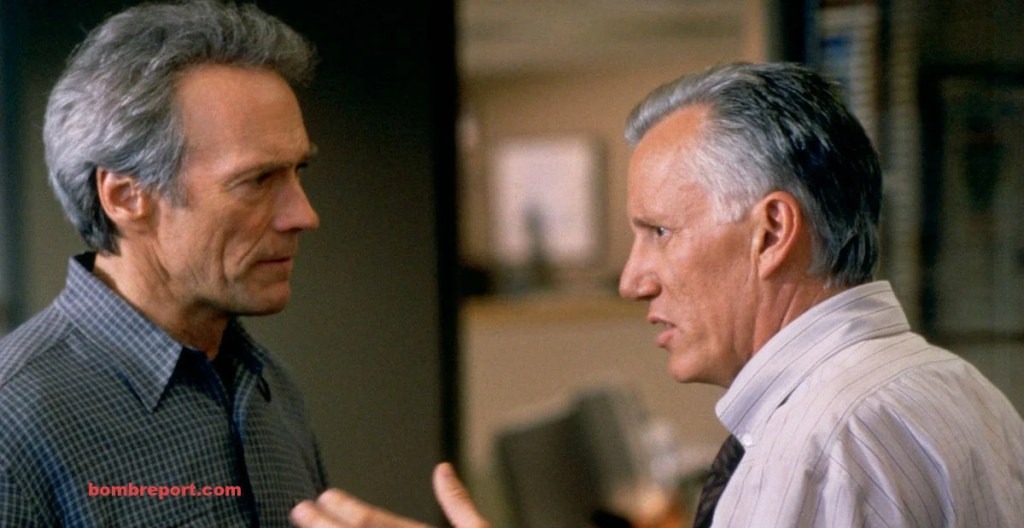
Last month, I watched one of Petersen’s films.  First released in 1993, In The Line of Fire stars Clint Eastwood as Frank Horrigan.  Frank is a veteran member of the Secret Service, still serving at a time when almost all of his colleagues have either retired or died.  When we first meet Frank, he and his new partner, Al (Dylan McDermott), are arresting a gang of counterfeiters and Frank (and the then 63 year-old Eastwood) is proving that he can still take down the bad guys.

But is Frank still up to protecting the President?  Of the agents that were with President Kennedy when he was assassinated in 1963, Frank Horrigan is the last one standing.  He’s the only active secret service agent to have lost a president and he’s haunted by what he sees as being his failure to do his job and the feeling that America has never recovered from Kennedy’s death.  Also obsessed with Frank’s history is a mysterious man who calls himself Booth.  Booth (played by John Malkovich, who received an Oscar nomination for his performance) starts to call Frank.  He informs Frank that he’s planning on assassinating the president, who is currently traveling the country as a part of his reelection bid.  Booth views Frank as being a worthy adversary and Frank, looking for redemption, requests to be returned to the Presidential Protective Division.

While Frank struggles to keep up with both the President and the younger agents, Booth slowly and methodically puts his plan in motion.  He builds his own wooden gun and tries it out on two hunters who are unfortunate enough to stumble across him.  Making a heart-breaking impression in a small role, Patrika Darbo plays the bank teller who, unfortunately, comes a bit too close to uncovering Booth’s secret identity.  Booth is friendly and sometimes apologetic and he quickly shows that he’s willing to kill anyone.  It’s a testament to both the skill of Malkovich’s performance and Petersen’s direction that the audience comes to believe that there’s a better than average chance that Booth will succeed.  He just seems to have such a strong belief in himself that the audience knows that he’s either going to kill the President or that he’s going to willingly die trying.

Meanwhile, no one believes in Frank.  The White House Chief of Staff (Fred Dalton Thompson, later to serve in the Senate and run for President himself) views Frank as being a nuisance.  The head of the detail (Gary Cole) thinks that Frank should be put out to pasture.  Only Lilly Raines (Rene Russo), another agent, seems to have much faith in Frank.  While Frank is hunting Booth, he falls in love with Lilly and she with him.  (Fortunately, even at the age of 63, Eastwood still had enough of his old Dirty Harry charisma that the film’s love story is credible, despite the age difference between him and Russo.)  The hunt for Booth reawakens something in Frank.  Just as Booth has a psychological need to be pursued and challenged, Frank needs an enemy to which he can re-direct all of his guilt and self-loathing.  Frank becomes a stand-in for everyone who fears that, because of one particular incident or tragedy, America will never regain the strength and promise that it once had.  (In Frank’s case, that strength is symbolized by his idealized memories of JFK.)  Defeating Booth is about more than just saving America.  It’s about redeeming history.

It all makes for an very exciting thriller, one in which Eastwood’s taciturn style of acting is perfectly matched with Malkovich’s more cerebral approach.  Just as the two characters are challenging each other, Eastwood and Malkovich also seem to challenge each other as actors and it leads to both men giving wonderful performances.  Wolfgang Petersen not only does a good job with the action scenes but also with generating some very real suspense.  The scene in which Malkovich attempts to assemble his gun under a table is a masterclass in directing and evidence that Petersen had not only watched Hitchcock’s films but learned from them as well.

As directed by Petersen and performed by Malkovich and Eastwood, In The Line of Fire emerges as a film that was more than just an exciting thriller.  It was also a mediation on aging, guilt, love, redemption, and the national traumas of the past.  It’s a film that stands up to multiple rewatches and as a testament to the talent of the man who directed it.

AMV of the Day: Clint Eastwood (Soul Eater)


Hey, it is Clint Eastwood’s birthday after all.

Anime: Soul Eater

Song: Clint Eastwood by Gorillaz

CreatorIgnis andVengeance (as always, please consider subscribing to this creator’s YouTube channel)

Past AMVs of the Day

Cleaning Out The DVR: Breezy (dir by Clint Eastwood)


1973’s Breezy tells the story of two seemingly different people.

Breezy (Kay Lenz) is a teenage girl who moves to California after she graduates high school.  Breezy is intelligent and free-spirited.  She’s also practically homeless, moving from bed to bed and never getting tied down to anyone.  Many people assume that Breezy is a runaway but her parents died a long time ago and her aunt approves of Breezy pursuing her own happiness.  Many people also assume that Breezy is a hippie but Breezy doesn’t consider herself to be one and doesn’t even smoke weed.  She may hang out with hippies and runaways but, for the most part, Breezy just wants to be herself, free of all of society’s labels and hang-ups.

Frank Harmon (William Holden) is a fifty-something real estate agent.  He drives a nice car.  He owns a lovely home.  He has money but he’s also freshly divorced and obviously in love with his best friend, Betty (Marj Dusay).  Most people would consider Frank to be a part of the establishment, though it soon becomes clear that he’s as disillusioned as any long-haired protestor.  Frank has reached the point of his life where he looks at everything that he has and he asks, “Is this all there is?”

Together …. they solve crimes!

No, actually, they fall in love.  Breezy ends up outside of Frank’s house after escaping a creepy man who had earlier offered her a ride.  When she sees that Frank is getting into his car and driving into the city, she decides that Frank can give her a ride too.  She also decides to keep hanging out near Frank’s house.  Though Frank is initially annoyed by Breezy’s presumptuousness, he still allows her to spend the night when a sudden storm comes up.  Frank and Breezy become unlikely friends and eventually, even more.  But Frank continues to worry about the difference in their ages, especially when his friends find out that Breezy is living with him.

Really, Breezy is a film that should not work and it does run the risk of turning into a typical midlife crisis fantasy, with Breezy having no concerns beyond keeping Frank happy.  That the film does work is largely a testament to the performances of William Holden and Kay Lenz and the sensitive and nonexploitive direction of Clint Eastwood.  When screenwriter Jo Heims first wrote the script for Breezy, she envisioned Eastwood in the role of Frank.  Reading the script, Eastwood said that he could relate to Frank’s disillusionment but that he felt he was too young for the role.  Instead, Eastwood directed the film and he cast William Holden as Frank.  Breezy was Eastwood’s third film as a director and the first in which he didn’t star.  It was also nobody’s idea of what a Clint Eastwood film would be and it struggled at the box office.  That said, it’s a film that has a legion of devoted fans.  Paul Thomas Anderson is one of those fans and even worked a few references to the film into Licorice Pizza.

Holden and Lenz both give excellent performances, with Lenz playing Breezy as being free-spirited but not foolish.  Holden, meanwhile, captures Frank’s boredom without giving a boring performance.  (It helped that, while Holden was the right age of the role, he still retained enough of his good looks and his movie star swagger that it was believable that Breezy would find him attractive.)  Wisely, the film doesn’t make the mistake of idealizing either Frank or Breezy.  They’re both complex characters, with their own individual flaws and strengths.  At the end of the film, one can be forgiven for having doubts about whether or not they’ll still be together in a year or two but one does definitely wish them the best, no matter what happens.

Though politically conservative, Breezy reveals that Clint Eastwood had some sympathy for the counter-culture.  Eastwood has always straddled the line between being a member of establishment and being a rebel.  Like Breezy and Frank, he belongs to both worlds.