We’re halfway through Oscar season and that means that it’s time for the Golden Globes to weigh in. To be honest, I think the Golden Globes are somewhat overrated as an Oscar precursor. For the most part, the Golden Globes usually honors the films that are on everyone’s radar and then they come up with one or two nominations that nobody was expecting. However, those surprise nominations rarely seem to translate into anything once it comes to time to announce the Oscar nominations.
So, while Salmon Fishing In The Yemen did receive a few surprise nominations (and those nominations were deserved, by the way), I doubt that we’ll see the movie mentioned on January 10th when the Oscar nominations are announced.
From the reaction that I’ve seen on the usual awards sites, a lot of the usual suspects are upset that Beasts of the Southern Wild was completely snubbed. Actually, they’re not just upset. They’re about as outraged about this as they were when The Social Network lost best picture to King’s Speech. The way they’re carrying on, you would think that someone had just informed them that David Fincher’s version of The Girl With The Dragon Tattoo was a thoroughly unneccessary rehash of an already brilliant film. Seriously, the facade of Stone has fallen and tears are being shed.
Myself, I’m more annoyed that neither The Cabin In The Woods nor Anna Karenina are getting the love that they deserve.
Anyway, with all that in mind, here are the Golden Globe nominations!
BEST DRAMA
“Argo”
“Django Unchained”
“Life of Pi”
“Lincoln”
“Zero Dark Thirty”
BEST DRAMA ACTOR
Daniel Day-Lewis, “Lincoln”
Richard Gere, “Arbitrage”
John Hawkes, “The Sessions”
Joaquin Phoenix, “The Master”
Denzel Washington, “Flight”
BEST DRAMA ACTRESS
Marion Cotillard, “Rust and Bone”
Jessica Chastain, “Zero Dark Thirty”
Helen Mirren, “Hitchcock”
Naomi Watts, “The Impossible”
Rachel Weisz, “The Deep Blue Sea”
BEST COMEDY/MUSICAL PICTURE
“The Best Exotic Marigold Hotel”
“Les Miserables”
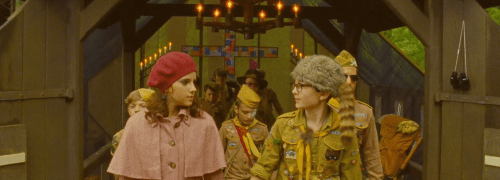
“Moonrise Kingdom”
“Silver Linings Playbook”
“Salmon Fishing in the Yemen”
BEST COMEDY/MUSICAL ACTOR
Jack Black, “Bernie”
Bradley Cooper, “Silver Linings Playbook,”
Hugh Jackman, “Les Miserables”
Ewan McGregor, “Salmon Fishing in the Yemen”
Bill Murray, “Hyde Park on Hudson”
BEST COMEDY/MUSICAL ACTRESS
Emily Blunt, “Salmon Fishing in the Yemen”
Jennifer Lawrence, “Silver Linings Playbook”
Judi Dench, “Best Exotic Marigold Hotel”
Maggie Smith, “Quartet”
Meryl Streep, “Hope Springs”
BEST SUPPORTING ACTOR
Alan Arkin, “Argo”
Philip Seymour Hoffman, “The Master”
Christoph Waltz, “Django Unchained”
Leonardo DiCaprio, “Django Unchained”
Tommy Lee Jones, “Lincoln”
BEST SUPPORTING ACTRESS
Anne Hathaway, “Les Miserables”
Helen Hunt, “The Sessions”
Amy Adams, “The Master”
Sally Field, “Lincoln”
Nicole Kidman, “The Paperboy”
BEST DIRECTOR
Ben Affleck, “Argo”
Ang Lee, “Life of Pi”
Steven Spielberg, “Lincoln”
Quentin Tarantino, “Django Unchained”
Kathryn Bigelow, “Zero Dark Thirty”
BEST SCREENPLAY
“Silver Linings Playbook”
“Argo”
“Django Unchained”
“Zero Dark Thirty”
“Lincoln”
BEST ORIGINAL SCORE
“Anna Karenina”
“Life of Pi”
“Argo”
“Lincoln”
“Cloud Atlas”
BEST ORIGINAL SONG
“For You” from “Act of Valor”
Music by: Monty Powell, Keith Urban Lyrics by: Monty Powell, Keith Urban
“Not Running Anymore” from “Stand Up Guys”
Music by: Jon Bon Jovi Lyrics by: Jon Bon Jovi
“Safe and Sound” from “The Hunger Games”
Music by: Taylor Swift, John Paul White, Joy Williams, T Bone Burnett Lyrics by: Taylor Swift, John Paul White, Joy Williams, T Bone Burnett
“Skyfall” form “Skyfall”
Music by: Adele, Paul Epworth Lyrics by: Adele, Paul Epworth
“Suddenly” from “Les Miserables”
Music by: Claude-Michel Schonberg Lyrics by: Alain Boublil, Claude-Michel Schonberg
BEST ANIMATED FILM
“Brave”
“Frankenweenie”
“Wreck-it Ralph”
“Rise of the Guardians”
“Hotel Transylvania”
BEST FOREIGN LANGUAGE FILM
“The Intouchables”
“Amour”
“A Royal Affair”
“Rust and Bone”
“Kon-Tiki”
In even more Oscar season news, the International Press Association announced their nominations for the Satellite Awards yesterday. Les Miserables led with 10 nominations.
If you’re like most people who don’t obsess over film awards then chances are that you’ve never heard of the International Press Association. And that’s okay. The main thing to know is that it’s Oscar season and that means that everyone’s giving out an award. The Satellites are a lot like the Golden Globes, just with less credibility. As far as serving as a precursor is concerned, a Satellite win can help a film maintain momentum but a loss doesn’t really hurt.
That said, for the past few years, I’ve always ended up agreeing more with the Satellite Nominations than with either the Oscars or the Golden Globes. For instance, back in 2010, the Satellites nominated Noomi Rapace for her performance in the original (and the best) version of The Girl With The Dragon Tattoo.
BEST PICTURE
“Argo”
“Beasts Of The Southern Wild”
“Life Of Pi”
“Lincoln”
“Les Misérables”
“Moonrise Kingdom”
“The Sessions”
“Silver Linings Playbook”
“Skyfall”
“Zero Dark Thirty”
BEST DIRECTOR
Ben Affleck, “Argo”
Steven Spielberg, “Lincoln”
Kim Ki-duk, “Pieta“
Ben Lewin, “The Sessions”
David O. Russell, “Silver Linings Playbook”
Kathryn Bigelow, “Zero Dark Thirty”
BEST ACTRESS
Laura Birn, “Purge”
Jessica Chastain, “Zero Dark Thirty”
Emilie Dequenne, “Our Children”
Keira Knightley, “Anna Karenina”
Jennifer Lawrence, “Silver Linings Playbook”
Laura Linney, “Hyde Park On Hudson”
Emmanuelle Riva, “Amour”
BEST ACTOR
Bradley Cooper, “Silver Linings Playbook”
Daniel Day-Lewis, “Lincoln”
John Hawkes, “The Sessions”
Hugh Jackman, “Les Misérables”
Joaquin Phoenix, “The Master”
Omar Sy, “The Intouchables”
Denzel Washington, “Flight”
BEST SUPPORTING ACTRESS
Amy Adams, “The Master”
Samantha Barks, “Les Miserables“
Judi Dench, “Skyfall”
Helene Florent, “Café De Flore”
Anne Hathaway, “Les Misérables”
Helen Hunt, “The Sessions”
BEST SUPPORTING ACTOR
Javier Bardem, “Skyfall”
Robert De Niro, “Silver Linings Playbook”
John Goodman, “Flight”
Philip Seymour Hoffman, “The Master”
Tommy Lee Jones, “Lincoln”
Eddie Redmayne, “Les Misérables”
BEST ORIGINAL SCREENPLAY
John Gatins, “Flight”
Eric Toledano and Olivier Nakache, “The Intouchables”
Paul Thomas Anderson, “The Master”
Roman Coppola and Wes Anderson, “Moonrise Kingdom”
Kim Ki-duk, “Pieta”
Mark Boal, “Zero Dark Thirty”
BEST ADAPTED SCREENPLAY
Tom Stoppard, “Anna Karenina”
Chris Terrio, “Argo”
David Magee, “Life Of Pi”
Tony Kushner, “Lincoln”
Ben Lewin, “The Sessions”
David O. Russell, “Silver Linings Playbook”
BEST FOREIGN LANGUAGE FILM
“Amour” (Austria)
“Beyond The Hills” (Romania)
“Caesar Must Die” (Italy)
“The Intouchables” (France)
“Kon-Tiki” (Norway)
“Our Children” (Belgium)
“Pieta” (South Korea)
“A Royal Affair” (Denmark)
“War Witch” (Canada)
BEST ANIMATED OR MIXED-MEDIA FILM
“Brave”
“Frankenweenie”
“Ice Age 4: Continental Drift”
“Madagascar 3: Europe’s Most Wanted”
“Paranorman”
“Rise Of The Guardians”
“Wreck-It Ralph”
BEST DOCUMENTARY FEATURE
“Ai Weiwei: Never Sorry”
“The Central Park Five”
“Chasing Ice”
“The Gatekeepers”
“Marina Abramovic: The Artist Is Present”
“The Pruitt-Igoe Myth”
“Searching For Sugar Man”
“West Of Memphis”
BEST CINEMATOGRAPHY
Seamus McGarvey, “Anna Karenina”
Ben Richardson, “Beasts Of The Southern Wild”
Claudio Miranda, “Life Of Pi”
Janusz Kaminski, “Lincoln”
Mihai Malaimare, Jr., “The Master”
Roger Deakins, “Skyfall”
BEST PRODUCTION DESIGN
Sarah Greenwood, Niall Moroney, Thomas Brown, Nick Gottschalk and Tom Still, “Anna Karenina”
Nathan Crowley, Kevin Kavanaugh, James Hambidge and Naaman Marshall, “The Dark Knight Rises”
Rick Carter, Curt Beech, David Crank and Leslie McDonald, “Lincoln”
David Crank and Jack Fisk, “The Master”
Eve Stewart and Anna Lynch-Robinson, “Les Misérables”
Niels Sejer, “A Royal Affair”
BEST COSTUME DESIGN
Jacqueline Durran, “Anna Karenina”
Kym Barrett and Pierre-Yves Gayraud, “Cloud Atlas”
Christian Gasc and Valerie Ranchoux, “Farewell, My Queen”
Paco Delgado, “Les Misérables”
Manon Rasmussen, “A Royal Affair”
Colleen Atwood, “Snow White And The Huntsman”
BEST FILM EDITING
Alexander Berner, “Cloud Atlas”
Jeremiah O’Driscoll, “Flight”
Chris Dickens, “Les Misérables”
Lisa Bromwell, “The Sessions”
Jay Cassidy, “Silver Linings Playbook”
Dylan Tichenor, “Zero Dark Thirty”
BEST ORIGINAL SCORE
Dario Marianelli, “Anna Karenina”
Alexandre Desplat, “Argo”
Dan Romer and Benh Zeitlin, “Beasts Of The Southern Wild”
John Williams, “Lincoln”
Jonny Greenwood, “The Master”
Thomas Newman, “Skyfall”
BEST ORIGINAL SONG
“Learn Me Right,” “Brave”
“Fire In The Blood/Snake Song” “Lawless”
“Love Always Comes As A Surprise,” “Madagascar 3: Europe’s Most Wanted”
“Suddenly,” “Les Misérables”
“Still Alive,” “Paul Williams: Still Alive”
“Skyfall,” “Skyfall”
BEST SOUND (EDITING AND MIXING)
“Flight”
“Les Misérables”
“Snow White And The Huntsman”
“Kon-Tiki”
“Life Of Pi”
“Prometheus”
BEST VISUAL EFFECTS
“Cloud Atlas”
“The Dark Knight Rises”
“Flight”
“Life Of Pi”
“Prometheus”
“Skyfall”
Oscar season continues! Just a few hours ago, the National Board of Review announced their picks for the best of 2012. Like the New York Film Critics Circle, the NBR named Zero Dark Thirty the best film of 2012 and Kathryn Bigelow best director.
I haven’t seen Zero Dark Thirty so I can’t judge whether it’s truly a great film or not. However, to be perfectly honest, I sincerely hope that it doesn’t win every single critics’ award out there because, seriously, that would be sooooooooooo boring! I mean, I know that all of you establishment film critics love to jump on the bandwagon but seriously, variety is the spice of life!
As much as I wish that the NBR had kept things interesting by choosing some out-of-nowhere pick for best picture, I am happy to see that they honored Bradley Cooper for his excellent work in Silver Linings Playbook.
Along with naming Zero Dark Thirty as best picture, the NBR also listed the 9 runner-ups. It’s interesting to note that The Dark Knight Rises does not appear anywhere on that list.
On a personal note, I’ll be posting my own picks for the best of 2012 during the first week of January and, trust me, my picks are going to be a lot more interesting than anything you’re going to get from the National Board of Review.
BEST PICTURE
“Zero Dark Thirty”
BEST DIRECTOR
Kathryn Bigelow (“”Zero Dark Thirty””)
BEST ACTOR
Bradley Cooper (“Silver Linings Playbook”)
BEST ACTRESS
Jessica Chastain (“Zero Dark Thirty”)
BEST SUPPORTING ACTOR
Leonardo DiCaprio (“Django Unchained”)
BEST SUPPORTING ACTRESS
Ann Dowd (“Compliance”)
BEST ORIGINAL SCREENPLAY
Rian Johnson (“Looper”)
BEST ADAPTED SCREENPLAY
David O. Russell (“Silver Linings Playbook”)
BEST ENSEMBLE
“Les Miserables”
BEST ANIMATED FEATURE
“Wreck-It-Ralph”
BEST FOREIGN LANGUAGE FILM
“Amour”
BEST DOCUMENTARY
“Searching for Sugar Man”
SPOTLIGHT AWARD
John Goodman
BREAKTHROUGH PERFORMANCES
Tom Holland (“The Impossible”)
Quvenzhane Wallis (“Beasts of the Southern Wild”)
DEBUT DIRECTOR
Benh Zeitlin (“Beasts of the Southern Wild”)
SPECIAL ACHIEVEMENT
Ben Affleck (“Argo”)
FREEDOM OF EXPRESSION
“Central Park Five”
“Promised Land”
BEST PICTURE NOMINEES (alphabetical)
“Argo”
“Beasts of the Southern Wild”
“Django Unchained”
“Les Miserables”
“Lincoln”
“Looper”
“The Perks of Being a Wallflower”
“Promised Land”
“Silver Linings Playbook”
BEST FOREIGN LANGUAGE NOMINEES (alphabetical)
“Barbara”
“The Intouchables”
“The Kid with a Bike”
“No”
“War Witch”
BEST DOCUMENTARY NOMINEES (alphabetical)
“Al Weiwei”
“Detropia”
“The Gatekeepers”
“The Invisible War”
“Only the Young”
BEST INDEPENDENT FILMS (alphabetical)
“Arbitrage”
“Bernie”
“Compliance”
“End of Watch”
“Hello, I Must Be Going”
“Little Birds”
“Moonrise Kingdom”
“On the Road”
“Quartet”
“Sleepwalk with Me”
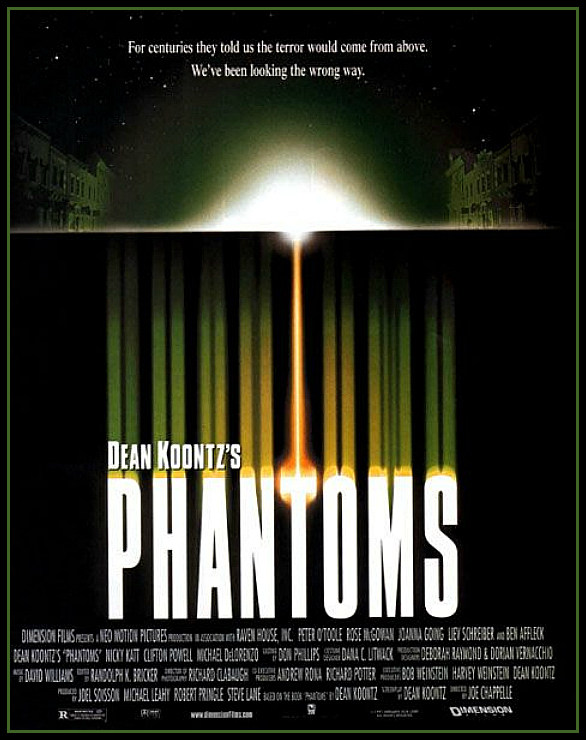
If there was ever an actor in the last twenty years who has suffered ridicule regarding his body of work it would be Ben Affleck. Nevermind the fact that he has actually done very good work as an actor. People tend to view his acting work through some very bad film projects which the online film bloggers (and trolls) have lambasted year after year. One such film which has gained a cult following for all the reasons is the 1998 horror film Phantoms which was adapted from the Dean Koontz horror novel of the same name. This was a film which came out of nowhere and which no one really saw when it first hit the theaters. There’s a reason for this and the main reason for this being that the film was really awful though not without some entertaining bits.
Phantoms starred Ben Affleck in a role that really seemed more suited for an older actor. His Sheriff Hammond in the novel was much older and fit the backstory told in both novel and film that never truly fit Affleck’s youthful appearance and mannerism. He’s joined in this Joe Chappelle production by classically-trained veteran actor Peter O’Toole (who must’ve really needed the money to sign up for this film) in the role of Dr. Exposition dump aka Timothy Flyte who ends up explaining to the surviving cast of characters the very danger facing them in the abandoned town of Snowfield. Rounding out the cast is Liev Schrieber as the creepy Deputy Stu Wargle who becomes a sort of plot device as the film moves forward. To add to this mix are Joanna Going and Rose McGowan as sisters who first discover that their town has just gone through a terrible event.
The novel this film was based on was pure scifi-horror pulp which stressed one’s suspension of disbelief, but was quite entertaining from beginning to end. Dean Koontz is like the generic fast-food version of Stephen King. This film adaptation borrows heavily from films such as Carpenter’s The Thing and the remake of The Blob. This wouldn’t have been a bad thing since the film’s story does bring into it an interesting concept of an ancient enemy which might or might not have been responsible for unexplained mass disappearances of people and animals throughout history going back to prehistoric times.
What Phantoms ends up doing which ruins the film as a whole was to rush through the narrative it was adapting it. The film pretty much goings through a checklist of all the major scenes in the novel, takes those scenes and truncates them to fit uncomfortably into a 90+ minute film. Some of these scenes could’ve been extended a few more minutes to add to a sense of grandiose to a film that needed it despite it’s B-movie foundation. One such scenes would be the arrival of a special Army unit designed to combat unexplained events, but the film treats this sequence from their arrival right up to their untimely demise in less than 15 minutes. I think in the hands of a much more capable filmmaker these scenes would’ve made the film much more entertaining.
Phantoms was a horror film that could’ve become a 90’s cult-classic if it had been given the proper time and effort from it’s producers, but seeing that it was the Weinsteins of Miramax and Dimension Films this final product was probably the best Joe Chappelle could’ve come up with. Weinsteins during the 1990’s were more concerned of pushing their Oscar-baiting film productions than actually giving time and effort to all their films. If there was any reason to see Phantoms it would be to see just why it kept being mentioned in Kevin Smith’s Jay and Silent Bob Strike Back. Other than that there’s really no reason to see it unless there’s nothing else on.
The Company Men is the first film to be directed by veteran television producer and writer John Wells. Previously, Wells worked on ER, The West Wing, Southland, Third Watch, and a whole host of other shows that I’d rather die than ever have to actually sit through. With The Company Men, Wells attempts to tell the story of the current economic recession and what its like to go from being a high-paid executive to just another unemployed statistic. The end result is a deeply uneven film that comes so very close to succeeding but ultimately fails.
The film opens in 2008 and indeed, most of the film takes place in ’08. It always amuses me how any film that comes out now that deals with either the economy or the wars in the Middle East (the Hurt Locker being an obvious example), the filmmakers always go out of their way to let us know that their movie is taking place during the Bush administration and not the Obama Administration. Some people would call that “ass kissing” but I just find it to be amusing.
Anyway, getting back on track here, the films follows three corporate executives who all work for a fictional company called GTX. There’s a rich, white guy played by Ben Affleck. And then there’s a richer, white guy played by Chris Cooper. And then finally, I guess to add some variety to the mix, there’s a white guy who is really, really rich and he’s played by Tommy Lee Jones. Anyway, Affleck, Cooper, and Jones are all cheerfully doing their thing until one day, the recession hits and boom! Suddenly, Affleck is told that he has become “redundant.” He’s given a severance package and sent off on his merry way. Meanwhile, Cooper worries that he’s about to face the same fate while Jones — who is one of the company’s vice presidents — tries to keep GTX’s satanic CEO from putting anyone else out of work.
It’s Affleck and his story that commands most of the film’s running time and, to his credit, Affleck actually gives a surprisingly good performance here as he starts out as smug and self-centered before eventually becoming desperate and insecure until finally, by the end of the film, he’s reached a state of acceptance. A lot of this has to do with the fact that he finally humbles himself into accepting a job with his blue-collar brother-in-law, a homebuilder played by Kevin Costner.
A word about Kevin Costner in this film: I could have done without him. First off, I understand his character is supposed to be a blue-collar, plain-spoken, salt-of-the-Earth type but honestly, he just comes across like a overlymacho asshole who probably voted for Lyndon LaRouche at some point in the past. I guess he’s supposed to be John Wells’ version of the noble savage or something.
But with that one glaring exception, The Company Men is a remarkably well-acted film. Even though Jones and Cooper are saddled playing predictable characters, they both bring a real unexpected poignancy to their portrayals. Cooper, especially, is strong and always sympathetic even though you know everything that’s going to happen to him from the minute he first shows up on-screen. Rosemarie DeWitt has the rather thankless role of being Affleck’s wife but she brings a lot of strength to a thinly written character and she and Affleck have a real chemistry. When they’re on-screen together, you believe in their marriage which is more than you can say for most screen couples.
The cast of The Company Men is such a strong ensemblethat you really find yourself hoping (and sometimes even believing) that the overall film will succeed as well. But, alas, the film fails and it manages to fail for all the obvious reasons. John Wells is best known for his work in television and The Company Men never really shakes that made-for-TV feeling. For every scene that offers up an unexpected insight or a subtle piece of characterization, there’s a hundred more that feel glib, smug, and ultimately forced. For every honest note, there’s a false one waiting right around the corner to pounce on it and beat it into submission. This is the type of movie where Tommy Lee Jones walks around a deserted shipyard and delivers a monologue about the way things use to be to a character who has absolutely no logical reason for being there beyond the fact that Wells needed to find an excuse for Jones to deliver the whole long speech to begin with. Don’t get me wrong — Jones delivers the words beautifully but so what? The scene still feels safe, predictable, and ultimately false.
And what’s the deal with Maria Bello in this film? She plays Sally Wilcox who is apparently in charge of “downsizing” at GTX. She’s also having an adulterous affair with Tommy Lee Jones despite the fact that all Jones ever does is criticize her for even existing. Never mind the fact, of course, that Jones is a part of the entire corporate culture that’s responsible for the Sally Wilcoxes of the world to begin with. It’s hard not to feel that her character is there to largely let Jones off the hook. It’s not Jones’s fault that everyone who works under him ends up unemployed and, in one really obvious plot development, dead. No, it’s that evil Sally Wilcox with her blonde hair and black lingerie. And what you can’t blame on Sally, put the blame on Jones’s wife and toss Cooper’s wife in there as well since they’re both portrayed as being heartless wenches (as opposed to DeWitt who is a good wife because she supports Affleck no matter what). The Company Men is full of sympathy for depressed, self-pitying white guys but it has next to none for the women who have to live with them.
Wells is obviously trying to say something about the Recession but what? Obviously, he lays a lot of the blame at the doorstep of greedy CEOs like the one played, in this film, by Craig T. Nelson. Unfortunately, you get the feeling that Wells seems to think that he’s the only person in the world who has managed to figure out that excessive corporate greed can be a bad thing. He may think that he’s educating but really all he’s doing is preaching and the only ones listening are the choir.
If someone just five years ago told me that Ben Affleck would turn out to be a director whose work has been some of the better crime drama/thrillers of the past decade then I would declare shenanigans on that individual. Ben Affleck might have won an Oscar for helping write the screenplay for Good Will Hunting, but his career since could be labeled as being one of a joke (Gigli) interspersed with huge paycheck projects (Armageddon) that showed his range as an actor.
This is not to say that Affleck has no talent in front of the camera. I just believe that early in his career after winning his Oscar he got fooled into thinking that everything else since would be Easy Street paved in gold (financially and critically). To say that it hasn’t turned out to be that way (though he did make a ton of money) would be an understatement. But one thing happened while Affleck’s acting career was heading nowhere but down. He got behind the camera as a director and his very first time directing a feature-length film he would make one of 2007’s best films. I speak of his film adaptation of the Dennis Lehane crime drama, Gone Baby Gone. He didn’t just direct the life out of that film, but he also the screenplay with the help of Aaron Stockard.
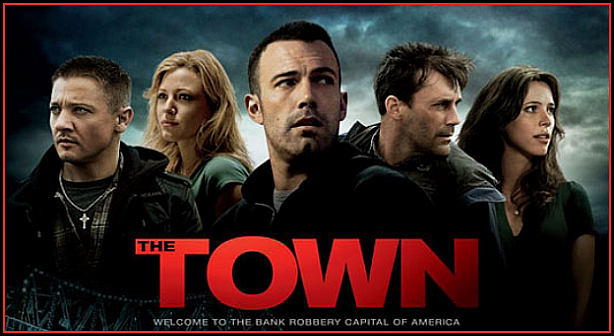
The two of the them would collaborate once again on Affleck’s latest Boston-based crime drama, The Town. He wrote the screenplay and directed the film and pulled in some wonderful performances from an ensemble cast which included Jeremy Renner, Jon Hamm, Rebecca Hall, Blake Lively, Titus Welliver and Pete Postlethwaite. Fellow site writer Lisa Marie already reviewed the film in detail and her review pretty much put down into words exactly what I thought of the film. I will say that I would swerve slightly away from what she considered some of the flaws in the film.
The Town was adapted from Chuck Hogan’s novel, Prince of Thieves. I would consider the screenplay and dialogue as a major strength of the film. While at times it did seemed to follow the step-by-step and by-the-numbers heist thriller story the screenplay itself didn’t ring false. I liken this film to another heist film which shared some themes and similarities. Michael Mann’s Heat also dealt with the cops-and-robbers foundation. Where Mann’s film had a much larger and epic scope to its storytelling it still boiled down to two groups of determined men playing a dangerous game of cat-and-mouse. The women in both film were written just enough that they had distinct personalities, but in the end they were motivations for the men in the film.
Affleck shows that he doesn’t just know how to direct, but continues is reputation as being one very good screenwriter. One just has to be reminded that he is now 3-for-3 when it comes to screenplays he has written which have turned out to be great ones. While he doesn’t have the same flair for words as Tarantino or Mamet when it comes to the screenplay. What he does well was to create an efficient script which flowed from scene to scene. Tarantino’s screenplays are great, but at times he does allow himself to overindulge his inner-film geek and create dialogue that might be Sorkin-like in execution. What I mean is that as great as the dialogue sound there’s no way people really spoke like this to each other. Affleck’s screenplay for The Town felt very natural and even with Jon Hamm’s less than great performance the film had a natural and genuine sound to it’s dialogue.
That’s one flaw pointed out by Lisa Marie that I would disagree with her on. The other two I can see her point, but it bothered me none. Though if I ever took on a life of crime I would hope I find someone just like Rebecca Hall’s Claire. Now there’s a woman who stands by her man no matter what.
I think in the long run this film might just be seen as one of the best of 2010 and some critics have already dubbed it so. While it’s prospects come awards season time is still up in the air I wouldn’t be surprised if it ends up nabbing one of the ten Best Picture nominations when the Oscar nominations get announced. It would be well-deserved and would just prove that Affleck’s career in the film industry might just be hitting its stride. Who would’ve thought it would be as a writer-director and not as an actor.
Before I get to my review, you should understand that I nearly didn’t see The Town last night. Earlier, on Friday morning, I had to leave work early because I was so sick and nauseous that I was on the verge of passing out. Once I got home, I had to 1) convince my aunt that I wasn’t pregnant (“Are you sure?” she said after I reassured her) and 2) had to convince myself that my appendix wasn’t about to burst (and it’s not so don’t worry). After all that, there was a part of me that said, “The Town can wait. I’ll go on Saturday or maybe even later in the week.”
But I ignored that part of me and I went and saw the movie anyway. Why? Well, I wanted to review it for this site. (That’s dedication for you!) Plus, I knew my friend Jeff wanted to see it with me and I wanted to see it with him and since when has a little thing like a ruptured appendix ever been an excuse not to have a good time? Last but not least, The Town is Ben Affleck’s second movie as a director. His first was 2007’s Gone, Baby, Gone. Personally, I think Gone, Baby, Gone is one of the best crime films ever made. It’s certainly one of my favorite. I was curious to see if The Town would be a worthy follow-up or would it just prove Gone, Baby, Gone to have been a fluke.
The Town takes place in the Charlestown section of Boston. At the opening of the film, we’re told that Charlestown apparently produces more professional armed robbers than any other place in the entire world. It’s a practice that is handed down from father-to-son. (Or, in the case of this movie, from Chris Cooper to Ben Affleck.)
Affleck plays Doug, a former hockey player who is now the head of a gang of Charlestown bank robbers. His second-in-command is Jem (played by Jeremy Renner). Over the course of the film, we learn Doug’s father (Chris Cooper) is a career criminal who is currently serving a life sentence in prison. When his father went to prison, Doug was taken in by Jem’s family. Doug even ended up dating Jem’s sister (Blake Lively) and might be the father of Lively’s daughter. For this reason, Doug and Jem are fiercely loyal to each other despite the fact that Doug is essentially a nice guy and Jem is not.
(As a sidenote, why is it in the crime films that people are always shocked when the psychotic supporting character ends up doing psychotic? I mean, have these people never gone to the movies before? Have they never checked out Goodfellas from Netflix? Did they miss the whole Joe Pesci “How am I funny?” thing?)
At the start of the film, Doug, Jem, and the gang rob a bank. Doug is a model of professionalism. Jem goes a little bit crazy and beats one bank employee nearly to death. This gives the bank manager, Clare (Rebecca Hall), just enough time to set off a silent alarm. Realizing that the police are on the way, Jem responds by taking Clare hostage as the gang flees. Clare is later released on a desolate beach.
However, there’s a problem. Before releasing her, Jem stole Clare’s ID. Looking at it after the robbery, he discovers that Clare lives in Charlestown and, as a result, there’s now a risk that she might simply see one of the gang on the street and identify him. Jem wants to kill her but Doug says that he’ll take care of her himself.
By “taking care of,” Doug means that he’ll follow her around town, eventually strike up a conversation with her, and then end up pursuing a romance with her (while declining, of course, to mention that he already knows her). Jem, however, was under the impression that “taking care of” meant to kill. So, needless to say, he’s a little bit miffed when he stumbles across Doug and Clare having a lunch date.
Soon, Doug finds himself trapped in the life he’s created for himself. In love with Clare but torn by his loyalty to the increasingly unstable Jem, Doug agrees to one more big job. All the while, he is pursued by two relentless FBI agents (Jon Hamm and Titus Welliver) and he has to deal with an Irish mob boss (Pete Postlewaite) who has an agenda of his own.
The Town works largely because Ben Affleck has, unexpectedly, turned out to be an intelligent, no-nonsense director. The movie features three robbery scenes and, in each one of them, Affleck creates genuine tension and excitement without ever once resorting to outlandish stunts or random slow motion. Unlike a lot of (bad) actors turned director, Affleck never seems to feel the need to toss in any showy (but ultimately empty) tricks to try to convince us that he’s a director. This is a confident movie that shows that Gone, Baby, Gone wasn’t a fluke. (That said, Gone, Baby, Gone remains the superior film for reasons that I’m getting to.)
Also, as with Gone, Baby, Gone, The Town benefits from Affleck’s obvious love for the city and people of Boston. Shot on location and featuring a number of local actors, The Town has a wonderful sense of place to it. By the end of it, you feel as if you know Charlestown even if, like me, you’re just a country girl from Texas.
Ben Affleck the director also manages to do something truly surprising — he gets a good performance out of Ben Affleck the actor. In the past, I’ve always enjoyed looking at Ben Affleck on-screen but I never really wanted to hear him talk. Because as soon as he would open his mouth, whatever appeal that Affleck possessed would immediately dissolve. In the past, as an actor, Affleck often epitomized that whole concept of “there’s no there there.” However, in this film, he gives a low-key, subtle performance that really helps to hold the entire film together. I still wouldn’t call Affleck a good actor. Instead, he’s one of those rare directors who (like fellow bad actor Quentin Tarantino) knows how to get good performances even from the most unlikely of performers.
Affleck is well-supported by Hall, Lively, and Renner. Hall has a difficult job because she’s not so much playing an actual human being as much as she’s playing an idealized concept. Her character really doesn’t have any purpose beyond offering Doug a chance at redemption and (this is obvious more in retrospect than during the actual film) really doesn’t have much of an identity beyond how her life touches Doug’s. Hall, however, is so vulnerable in the role that, while you’re watching the film, that none of this really becomes obvious until a few hours after the movie ends. Lively (better known for her role on Gossip Girl) is only in a few scenes and, in many ways, her character is even less developed than Hall’s. If Hall has to represent the Madonna part of the Whore/Madonna complex, guess what Lively represents. Still, Lively brings some much needed humor to the role and to the film. She’s having fun playing her drunken, drug-addled character and she steals almost every scene that she’s in.
However, the film is ultimately dominated by Jeremy Renner. With his angelic voice and deceptively soft voice, Renner is the psychopath that you can’t help but love. Movie psychos are a dime-a-dozen so when an actor comes along and actually finds something new to do with the role, it’s impossible not to be impressed.
So much works in The Town that I almost feel guilty talking about what doesn’t. For all its strengths, it also has three rather glaring flaws. As with all things, the final verdict on this film depends on just how willing the viewer is to overlook these flaws.
First off, Ben Affleck proves himself to be a better director than writer. The Town’s story is well told but the majority of it will still be awfully familiar to anyone who has ever seen a heist film. Unlike Quentin Tarantino, Martin Scorsese, or Michael Mann, Affleck doesn’t embrace the conventions in order to deconstruct them. Instead, he uses the conventional storyline as an excuse to explore the Charlestown culture. As a result, this flaw arguably works to the film’s advantage. Still, those viewers who are expecting to be surprised by the film’s plot should consider themselves warned.
As well acted as the movie is, there is one big exception in the cast and that is Mad Men’s Jon Hamm. Hamm plays the FBI agent who is determined to capture Affleck. He’s the Javert to Affleck’s Valjean. Unfortunately, as played by Jon Hamm, he’s also a cinematic black hole. Hamm may be an excellent television actor but, playing a key supporting role and surrounded by actual film actors, it’s obvious that Hamm has no idea how to act for the big screen. As a result, he never comes across as a worthy or even dangerous adversary and his pursuit of Affleck never becomes compelling nor do we ever worry that Affleck might not be able to outsmart him. There’s a scene, towards the end of the film, where Hamm yells something like, “Drop your weapon, asshole!” I have to admit that I stunned just about everyone in the theater when I burst into laughter at the sound of Hamm shouting “asshole” and sounding, more or less, like an overgrown kid on a playground.
(Hamm’s sidekick, by the way, is played by another tv actor, Titus Welliver. Welliver is probably best known for playing the Man In Black on the final season of Lost. Though he gets next to nothing to do, Welliver dominates every scene that he’s in. Unlike Hamm, he knows how to act on a big screen.)
The most glaring flaw with The Town, however, is that the entire plot pretty much depends on the viewer accepting that Hall’s character, just days after being traumatized by being held hostage and seeing one of her co-workers nearly beaten to death because he attempted to protect her, would so easily trust and open up her life to a stranger (even if that stranger is Ben Affleck). Never mind the fact that we are then expected to believe that she would stay loyal to Affleck even after learning the truth. Realistically, this would seem to indicate that the character’s something of a sadomasochist but the film really doesn’t explore that (or really anything else that might make Hall’s character anything more than just an idealized Madonna figure).
I mean, I’m always open to experimentation in a relationship. Different people enjoy different things and I’ve never been one to judge anyone else’s particular fetish. However, just speaking for myself, the day that you stick a gun in my face, put a blindfold over my eyes, and then abandon me out on the beach is the same day that I decide that there’s probably not going to be a long-term relationship there.
So, once again, it’s all a question of whether or not you can accept these flaws. I have to admit that, as I watched the film, I occasionally had a hard time doing so. If you can agree to overlook the flaws, however, then The Town is an entertaining, well-acted crime thriller with an authentic sense of place. And if you can’t overlook those flaws, than The Town is a good but imperfect movie that still indicates that Ben Affleck has got quite a future as a director.



 Through the Shattered Lens