Review: Kraven the Hunter (dir. by J. C. Chandor)


Kraven is Sony’s latest attempt to mine its Spider-Man-adjacent characters for cinematic gold, this time taking a stab at Sergei Kravinoff, better known as Kraven the Hunter. Even if you’re going in with rock-bottom expectations set by Morbius or the patchy Venom films, you might find yourself torn between mild intrigue and full-on indifference. The movie doesn’t bomb, but it certainly doesn’t soar either—it lands squarely in the “it’s fine, I guess” territory, buoyed by a handful of positive elements but weighed down by a laundry list of issues.

The film tries to position itself as a darker, grittier entry in Sony’s Spider-Man Universe but ultimately falls flat in several key areas. The movie follows Sergei Kravinoff (Aaron Taylor-Johnson), a man battling his toxic past and violent instincts, trying to define himself apart from his ruthless father, Nikolai (Russell Crowe). While Taylor-Johnson puts in a committed, physical performance and the action sequences deliver some visceral excitement—with brutal fight scenes and a snowy prison breakout standing out—the film struggles to transcend its predictable, shallow narrative.

One of the strongest aspects of Kraven is its commitment to visceral, intense action. The movie doesn’t shy away from bloody, fierce fights, embracing Kraven’s nature as a hunter rather than a hero. Physicality is a highlight here with Taylor-Johnson convincingly portraying the character’s power and agility. Some of the choreography—such as a snow-covered prison escape and a jungle chase—inject adrenaline into the movie, complemented by Russell Crowe’s imposing presence as the domineering father. Ariana DeBose’s Calypso and Alessandro Nivola’s Rhino provide interesting, if underdeveloped, counterparts that add flavor to the otherwise monochrome supporting cast.

However, the film is weighed down by a paint-by-numbers storyline that treads the well-worn path of antihero origin stories without adding fresh insight or emotional texture. The plot feels cliched and forgettable, with many moments so awkward and stilted that the dialogue and narrative flow could easily be accused of being AI-generated—and that accusation wouldn’t be out of place. This mechanical, artificial quality in the script creates a disconnect that makes characters seem like hollow archetypes rather than fully realized people. It’s as if the story was stitched together by a formula rather than human creativity, robbing the film of natural humor, depth, or emotional impact.

The biggest glaring example of this artificiality comes in the odd use of CGI for some of the characters’ facial movements. In particular, a scene with DeBose’s Calypso involved digital manipulation of her mouth and eyes to sync dialogue after filming, creating an uncanny, often distracting effect. This technique, reminiscent of the awkward, jarring movement of digitally animated mouths on still images, recalls the uncomfortable “Annoying Orange” vibe and highlights a troubling overreliance on technology rather than retakes or better production planning. It is a standout low point that further reinforces the impression of a rushed or overly engineered project.

The emotional core of Kraven revolves around the toxic father-son dynamic, which Crowe and Taylor-Johnson approach with convincing intensity, though the writing undermines their efforts with repetitive, obvious lines. The other characters, including Calypso, Rhino, and the Foreigner, suffer from limited screen time and one-dimensional arcs, often serving only to advance the plot mechanically rather than enrich the story. The film’s isolation from the broader Spider-Man universe also makes the stakes feel lower, leaving Kraven’s violent vendetta somewhat directionless and detached from broader consequences.

Visually, the film is inconsistent. While it nails gritty, physical action sequences, the CGI and digital alterations break immersion. The attempt at a darker, more grounded tone battles against these technical missteps and a narrative stuck in early-2000s superhero tropes.

Kraven offers some genuinely brutal action and committed performances but is hamstrung by a formulaic, AI-esque script and distracting technical glitches like the digital mouth-sync. It feels like a film caught between creative ambition and lazy execution, where flashes of potential are overwhelmed by awkward dialogue and uninspired plotting. For fans craving raw action or eager to see a Spider-Man villain on screen, it may be a mildly watchable diversion; for anyone seeking a fully fleshed-out, emotionally engaging story, Kraven is likely to disappoint.
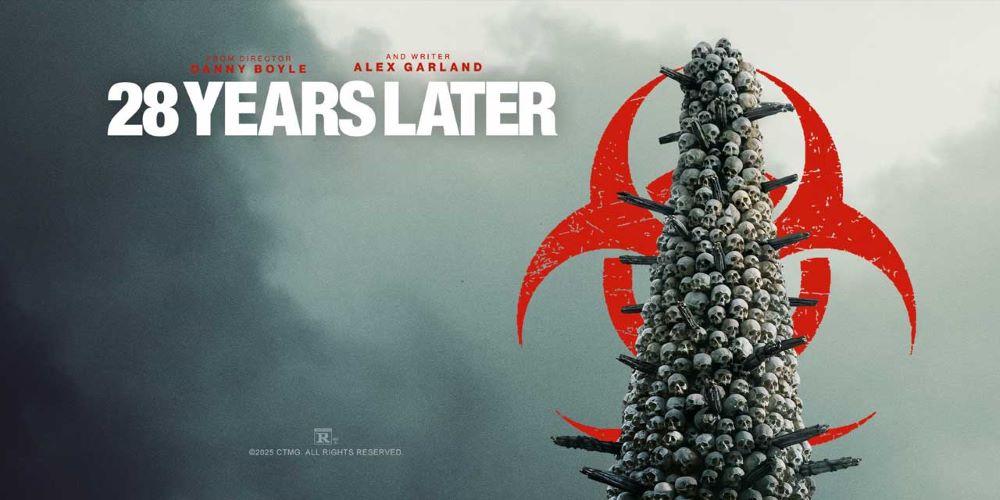
Horror Review: 28 Years Later (dir. by Danny Boyle)


Danny Boyle waited nearly two decades to return to the world he helped redefine with his groundbreaking 2002 film 28 Days Later, which reshaped the zombie subgenre by replacing the traditional, slow-moving undead with fast, feral infected that embody contagion, panic, and societal collapse. While purists continue to debate whether the creatures are technically zombies or infected, Boyle’s vision fundamentally changed how audiences engage with themes of epidemic, survival, and the breakdown of order on screen. The 2007 follow-up, 28 Weeks Later, directed by Juan Carlos Fresnadillo, expanded the Rage virus mythology and landscape but lacked the original’s haunting intimacy and innovation, leaving the franchise in a state of uncertainty until Boyle and writer Alex Garland reunited for 28 Years Later, a film that feels less like a conventional sequel and more like an elegy for a deeply changed world.

The film opens with a short, brutal prologue: young Jimmy Crystal’s family is consumed by the Rage virus while watching Teletubbies, and the boy flees to find safety only to discover his minister father welcoming the infected as a sign of apocalyptic judgment. This early scene deftly establishes the film’s unease, blending visceral horror with spiritual inquiry and foreshadowing a narrative caught between faith, grief, and chaos. Boyle reasserts his command of visceral set pieces while signaling that this film is more concerned with memory and ritual than with relentless terror.

Decades later, the British Isles have been sealed off; NATO forces enforce a quarantine and blockade, isolating the mainland as a toxic exclusion zone. On the tidal island of Lindisfarne, a small community clings to a fragile existence, protected by a causeway that floods at high tide—a detail that metaphorically underscores themes of isolation and dangerous connection. It is here that the emotional core emerges in Jamie and his son Spike, played by Aaron Taylor-Johnson and the remarkable newcomer Alfie Williams. Their spare, heartfelt relationship grounds what otherwise wanders into meditative and often surreal territory.

Alfie Williams emerges as one of the year’s most impressive new talents. His portrayal of Spike avoids the usual survivor archetype; instead, he presents a boy deeply shaped by inherited trauma and cautious curiosity. Boyle’s camera lingers on Williams’ face, capturing silent shifts of fear, wonder, and resilience, making his quiet moments as powerful as the film’s larger set pieces. Williams shines particularly in a sequence where Spike and his mother, portrayed with subtle grace by Jodie Comer, navigate a moss-covered village reclaimed by nature; Williams embodies awe and terror with a single glance. His encounters with the evolved infected—some sedentary and tree-like, others organized into predator packs—are charged with terrifying authenticity and emotional depth. Early reviews label Williams a breakout star, praising his ability to hold the screen alongside veteran actors.

Visually, Boyle and cinematographer Anthony Dod Mantle experiment with a striking mix of techniques, blending the use of iPhone 15 Pro Max cameras and drones with traditional film methods to create a language that oscillates between intimate human moments and sweeping, documentary-style landscapes. The Britain depicted is no longer a lifeless wasteland but an ecologically regrown terrain—lush, eerie, and indifferent. This verdant backdrop reflects the Rage virus’s own evolution. The infected have adapted in ways both terrifying and fascinating: some feed off the earth and fungus, becoming near-plantlike and sedentary, while others form packs ruled by alpha mutants, suggesting emergent social structures even after humanity’s collapse. This biological and ecological evolution amplifies the film’s central theme: survival transcending humanity.

Anchoring the film’s philosophical inquiry is Ralph Fiennes’s performance as Dr. Ian Kelson, a former general practitioner who has exiled himself to live among the infected. Fiennes crafts Kelson with haunting solemnity and layered ambiguity—part caregiver, part fanatic, part recluse—who has created the eponymous “Bone Temple,” a shrine assembled from bones and memories to honor the dead and the changed world they inhabit. The role requires quiet intensity, and Fiennes delivers; his interactions with Spike are charged with both menace and melancholy. Kelson’s reverence for the infected and his willingness to coexist with them challenge traditional survivalist narratives, injecting the film with a solemn meditation on loss, acceptance, and the possibility of new forms of life.

28 Years Later opts for a deliberately slower, more contemplative pace than its predecessors. Boyle and Garland invest their energy in exploring grief, adaptation, and collective memory. The infected become symbolic forces of transformation rather than mere antagonists, while survivors seek meaning through ritual and remembrance as a bulwark against despair. This approach has divided fans: some lament the absence of the unrelenting terror and pace that characterized the earlier films, while others welcome the franchise’s intellectual maturity and thematic depth.

Certain scenes—such as the stranded NATO patrol subplot and glimpses of emerging cult-like human factions—hint at a larger, more complex world but never overshadow the film’s intimate father‑son narrative. Jodie Comer complements Williams with a nuanced portrayal of Spike’s mother, and Taylor‑Johnson brings grounded emotional weight to Jamie, embodying a parent wrestling with how to protect the next generation in a broken world and dealing with his own inner demons.

The interplay between Williams and Fiennes forms the film’s core dynamic, uniting youthful vulnerability with somber reflection. Kelson’s philosophical acceptance of the apocalypse contrasts with Spike’s struggle for identity and belonging, producing compelling, often unsettling exchanges that elevate the narrative’s moral complexity.

Toward the film’s conclusion, a jarring tonal shift occurs with the sudden arrival of a grown-up Jimmy Crystal, whose unsettling presence and cult leadership drastically change the mood. The moment is so discordant that viewers are left questioning whether it is literal or a fevered hallucination—an ambiguity that effectively sets the stage for the sequel.

The upcoming follow-up, 28 Years Later: The Bone Temple, is set for release in January 2026 and will be directed by Nia DaCosta, with Alex Garland returning as screenwriter. This sequel is expected to explore the role of Kelson’s Bone Temple more deeply and develop the cult gathering led by Jack O’Connell’s Jimmy Crystal, expanding on the fractured post-apocalyptic world and the characters introduced in the current film.

Ultimately, 28 Years Later is a film about evolution—of species, storytelling, and filmmaking itself. It balances raw dread with haunting visuals and somber themes, anchored by Alfie Williams’s quietly compelling Spike and Ralph Fiennes’s enigmatic Dr. Ian Kelson. Boyle has not merely revived the franchise; he has transformed it into an unsettling, elegiac meditation on rage, loss, and the fragile hope that survives beyond apocalypse.

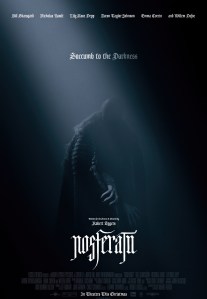
Film Review: Nosferatu (dir. by Robert Eggers)


I stepped out of the doors of the Regal Times Square yesterday, feeling giddy as a schoolkid. In my hands were a custom popcorn bucket and an Orlock Funko-Pop. I thoroughly enjoyed Robert Eggers Nosferatu and Christmas Morning was a delight. It was Film Euphoria. It was as if Halloween had one last gift to give, one final end of film zinger, and give it did.

At my early morning showing for Robert Eggers Nosferatu, we had at least one fellow who fell asleep and snored through the bulk of the film. Not loud enough to be disruptive, but it almost mimicked the strange purring sounds of the film’s antagonist. Granted, I understand. My showing was around 10a.m. on Christmas Morning and perhaps they partied hard the night before. Anything’s possible. Still, part of me likes to think that a person walking into a Robert Eggers film may have some expectations. With only three films under his belt – The Witch, The Lighthouse, and The Northman, regular audiences know that he has a taste for the macabre (perhaps even the unhinged), usually employs a slow burn when it comes to pacing and works with a great deal of light and shadow. If either of his previous films worked for you, Nosferatu‘s a near perfect fit for his style. If you’re not a fan of Eggers work, nor a fan of the previous renditions of Nosferatu, there’s little here that will make you change your mind (save for just a little more gore, perhaps). It’s a little hard to spoil a story that’s more than a century old, but Eggers makes enough changes to keep the film from being the exact note for note story as before. Is it scary? Yes. Is there blood? Sure, but none of it is in the ‘jumpscare every other second’ variety. If that’s what you’re looking or hoping for, none of the Nosferatu’s (including this one) will deliver that and you will be quite disappointed. This is a prime cut of wagyu beef, not your everyday sirloin.

As most know, Nosferatu was essentially stolen from Bram Stoker’s Dracula. The original – Nosferatu: A Symphony of Horror was a silent film released back in 1922 by F. W. Murnau. Although the story was written and changed to fit German audiences, elements were still very close to Stoker’s and the Stoker Family tried to get rid of it. Copies were burned, but like that Jumanji box, it managed to slither through the years, gaining popularity to the point of Canonization. If Film History is your thing, I highly recommend watching the 1922 film, if you haven’t already. It amazes me how most of what they did was accomplished (my favorite scene being Orlok prepping his coffins for his trip). At the time of this writing, the movie is currently available on Amazon Prime. For me, I love the 1979 update by Werner Herzog, Nosferatu The Vampyre. There are a few minor changes in the plot, but it’s just as powerful.

Thomas Hutter (Nicholas Hoult, Mad Max: Fury Road) is married to his lovely wife Ellen (Lily-Rose Depp, The King) in the town of Wisborg. Ellen suffers from fits of melancholia, which cause her to either spurt morbid tales or put her in convulsive fits. He’s looking for a way to improve his financial station with his bride while keeping her problems hushed, and has found a great opportunity from his boss, Herr Knock (Simon Burney, Mission Impossible: Rogue Nation). It appears a wealthy old man wishes to move to Wisborg and purchase an estate there. The only stipulation is that he is infirm and cannot make the journey. Thomas is charged with traveling to the Carpathian mountains, where he is to visit Count Orlock at his home with the deeds and contracts. During his trip, Thomas is warned of the dangers ahead, but proceeds full on, meeting the Count and his strange ways. Upon learning of Ellen and her beauty, the Count sets off a chain of events that will put all of Wisborg at risk. Can the Count be stopped in time?

There’s so much love in this production, it seems. It certainly has the atmosphere down. Cinematographer Jarin Blaschke, who worked on all of Eggers previous films, weaves some magic with light that in some scenes rival Alejandro Amenabar’s The Others. Lanterns and candles are blinding, while at the same time, you might find yourself squinting to see the figure in the shadows. I had a few “look around the screen” moments while watching it. There’s absolutely nothing to complain about from a visual standpoint, it’s just beautiful. It’s also quite dark in nature. We’re dealing with vampires, possession and the occult, which Eggers takes in a few extremes (particularly through Skarsgard, Depp and Burney). Ancient tomes? Check. Romani banishing the darkness with Garlic? Check. Consecrating the soil? Done. The sound design in the film is nice, particularly with the breathing and talking for Orlok, which felt like it travelled through the audience. Blood squelches, screams are crisp. There’s little more I can say there, really. I was entertained and transported.

The cast is wonderful. The only thing I’ve ever watched Lily-Rose Deep do was Yoga Hosers, and she’s come a long way from that. Ellen is a tortured character, and Deep rides this through – fits, convulsions and all – to a point where you may wonder if she was really okay on set. We follow Nicholas Hoult’s Thomas as he moves from quiet reservation to curious disbelief and then ultimately, just full on terrified. Even the smaller roles work. Simon Burney’s character becomes repulsive. Emma Corrin, who had a fun turn earlier this year in Deadpool & Wolverine has good moments, along with Aaron Taylor-Johnson (Kraven the Hunter). Then there’s Dafoe. It never hurts to have Willem Dafoe in your lineup. This is his third film with Eggers and he’s come something of a lucky charm as Prof. Ebenhart von Franz. As the Van Helsing of the story, Dafoe is a treat to watch on screen, especially when paired with Ralph Ineson from The Witch. I could watch the two of them as detectives solving Gothic/Victorian X-Files in their own series or movies.

As Orlock, Bill Skarsgard (John Wick 4) really melts into the role, giving the character a low near constant purr and a voice that enunciates every word. Perhaps it was just me, but I did have a bit of a problem figuring out what Orlock was saying at some points. It improved as the story went on, though. Orlock’s look does veer from the traditional, through. That’s a jolt in itself. While he looks more like the Draugr in Skyrim or in Eggers own The Northman, I found myself thinking of “Taserface” in Guardians of the Galaxy, Vol. 2. If you can get past that feeling, it still works. It’s a creepy character and Skarsgard does it justice, I felt.

Clocking in at about 2 hours and 12 minutes, it’s considered the longest Nosferatu film. I found this odd because were a number of sequences the original and remake had that Eggers missed (like the loading of the coffins). The film is cut pretty well, for what it’s worth, though I’m not sure what they could have removed to trim scenes down.

If the film has any faults, any problems, there was one. The one weird misstep in all of this is a sex scene that seemed just a little out of place. I understand why it happened, and how it was supposed to fuel the story, but it comes on so fast and fierce that I sat there in the audience whispering…”Wait…what’s happening…Whoa…now? Here? Why?” Mind you, this is coming from someone who watched Shame more than once when it was first released. That, if anything, might freak a few people out if they’re not ready for it. Either that, or I’m becoming prudish in my old age.

Overall, I loved Nosferatu. If it weren’t so expensive to get out to a theatre, I’d make another run at it. As a remake, it easily stands toe to toe with John Carpenter’s The Thing and Chuck Russell’s The Blob as one you can sit on the shelf next to those who came before it. It’s a worthy adaptation, with moments of sheer dread and some that may push a boundary or two.

The Films of 2024: The Fall Guy (dir by David Leitch)


In The Fall Guy, Ryan Gosling plays Colt Seavers.

When we first meet Colt, he’s a legendary and rather cocky stuntman.  While movie star Tom Ryder (Aaron Taylor-Johnson) takes all the credit and brags about doing his own stunts, Colt is the one who is actually jumping off of buildings and surviving car crashes.  Every day, Colt risks his life to make Tom look good and, even though Tom is a bit of a tool, Colt loves every minute of it.  Why shouldn’t he?  He’s good at his job and he’s in love with aspiring director Jody Moreno (Emily Blunt).

Or, at least, that’s case until one stunt goes mysteriously wrong and Colt ends up breaking his back.  Colt eventually recovers but he’s no longer willing to be a stuntman and he and Jody break up.  Colt ends up working as a parking valet in Los Angeles, retrieving cars and hoping that no one recognizes him.

When Colt gets a call from producer Gail Meyer (Hannah Waddingham) asking him to fly down to Australia and once again act as Tom’s stunt double in a science fiction epic called Metalstorm, Colt refuses.  But then Gail tells him that Jody is directing the film and the production is running behind schedule.  Jody herself wants Colt to come work on the film.  Colt finally agrees.  However, when he arrives in  Australia, he discovers that Gail lied.  Jody definitely does not want Colt working on the movie and, in fact, Metalstorm is her way of getting out all of her negative feelings about their relationship.

Gail explains that Tom is missing.  Colt agrees to track him down while working on both the film and his relationship with Jody.  However, it soon turns out that Tom isn’t just off on a drunken binge somewhere.  Colt soon finds himself caught up in a murder investigation, one in which Colt himself is the top suspect!

I liked The Fall Guy a lot more than I thought I would.  From the trailer and the commercials, I was expecting it to just be another dumb Hollywood action film.  And, indeed, there is a lot of action in The Fall Guy.  Appropriately enough for a film about stuntmen, the stunts in The Fall Guy are often spectacular to watch and the film serves as a tribute to the unnamed stunt players who make us believe that film stars can do just about anything.  I’m not going to speculate about who Tom Ryder might have been based on but it’s easy to see him as a stand-in for any number of spoiled movie stars who get all the credit for what we see onscreen despite the fact that it’s usually their stunt doubles doing the thing that we really remember.  The Fall Guy is also a surprisingly funny movie.  It’s smart enough not take itself too seriously and there’s a bit with a unicorn that made me laugh out loud.  As always, Ryan Gosling and Emily Blunt are charming and fun to watch.  I’ve been pretty critical of Aaron Taylor-Johnson in the past but I have to admit that he did a really good job as Tom.  The Fall Guy kept me entertained and there’s definitely something to be said for that.

Ryan Gosling is your Stuntman-for-Hire in The Fall Guy Trailer!


Back in the 1980s, nestled between shows like The A-Team, Miami Vice, Matt Houston and McGuyver, you had The Fall Guy. It starred Lee Majors (The Six Million Dollar Man) as a stunt man who worked part time as a bail bondsman to keep himself financially afloat. It was a great show growing up, and always showcased some wild stunt in the same fashion The Mission Impossible films have with a wild infiltration event.

So, imagine my surprise when I saw the trailer for a movie version of The Fall Guy, this time with Ryan Gosling and Emily Blunt. Directed by David Leitch (Deadpool 2), the movie changes the story a bit, with a major movie star (played by Bullet Train‘s Aaron Taylor-Johnson) going missing and Gosling searching for him. It already feels a bit like The Nice Guys, or perhaps I’m just hoping for too much. I’m really excited for this.

The film is due in theatres March of 2024.

Trailer: The King’s Man


I love the Kingsman series. It looks like we have a third installment to the series, with a prequel showcasing the origins of the secret agent organization. Ralph Fiennes, Tom Hollander, Aaron Taylor-Johnson (who also worked with director Matthew Vaughn in Kick-Ass), Gemma Arterton, Daniel Bruhl, Djimon Hounsou, Charles Dance, Matthew Goode, and Stanley Tucci are all on board.

The King’s Man is due out February of 2020.

Outlaw King Official Trailer


Outlaw King

Who here has seen Braveheart?

I’m quite sure that a huge number of people have seen Mel Gibson’s second film as director which won him two Oscars: for Best Director and Best Film. While his career has seen it’s major up’s and down’s, he still has done some great work behind the camera as a director.

Now, what does this all mean to this new Netflix Original film coming out this year called Outlaw King? The answer is not much other than both film share a particular historical character in the Scottish king Robert the Bruce. In Gibson’s film he’s a supporting character whose motivations could be seen as very pragmatic and bordering on the villainous.

Outlaw King, by Scottish director David MacKenzie (who directed the great Hell or High Water), will tell the story of the legendary Scottish king Robert the Bruce who won Scotland’s independence from England where William Wallace ultimately failed to do.

I am going on a hunch that Outlaw King will treat Robert the Bruce in a more sympathetic light than how Gibson’s film portrayed him. This time around we have Chris Pine in the role of Robert the Bruce.

As seen in the trailer, it looks like Netflix’s several billion dollar spending spree has come not just luring prominent filmmakers and producers to the streaming site but also allow them the resources to make a film as lush and beautiful as any made under the remaining big studios.

Let’s hope Outlaw King is more on the level of Mudbound and less like Bright.

Film Review: The Wall (dir by Doug Liman)


The Wall tells a very simple story.

Opening with a title card that informs us that “President Bush has declared victory,” The Wall takes place in Iraq in 2007.  Two soldiers — a sniper named Matthews (John Cena) and a spotter named Isaac (Aaron Taylor-Johnson) — have responded to a call for help that came from a pipeline construction site.  When they arrive, they see only dead contractors.  Matthews and Isaac spend a day watching the site, finally determining that it is safe to investigate.

Of course, as soon as Matthews approaches the site, shots ring out as a sniper opens fire on him.  Matthews falls while Isaac finds himself trapped behind a crumbling wall, shot in the right knee and slowly bleeding out.  As Isaac tends to his wound and tries to determine whether Matthews is alive or dead, his radio comes to life.  The voice, on the other end, initially claims to be an American soldier but Isaac eventually figures out that the voice actually belongs to the man who just shot him.  The sniper is an Iraqi who calls himself Juba.  He may or may not be a legendary and feared sniper that Matthews and Isaac were discussing mere minutes before being attacked.

And that’s pretty much the entire film right there.  For 81 minutes, Isaac tries not to die while Juba alternates between taunting him and demanding to know why he and the American forces have yet to leave Iraq.  Isaac claims that America is rebuilding Iraq.  Juba claims that the wall that Isaac is hiding behind used to be a part of a school.  Isaac tells Juba to fuck off.  Juba replies, “We are not so different, you and me,” revealing that, if nothing else, Al Qaeda snipers apparently appreciate a good cliché.  If anything, it reminded me a bit of The Shallows, except Blake Lively was now a soldier and the shark refused to stop talking.

I have to admit that I have mixed feelings about The Wall.

On the one hand, it’s a very well-made film.  Visually, the film captures the deadly heat of the desert and it makes good use of its limited setting.  It’s far more watchable than any movie that exclusively takes place behind a crumbling wall has any right to be.  From what I’ve read, it appears that The Wall‘s depiction of both combat and dying is fairly accurate and the film does a good job of putting you in Isaac’s boots, forcing you to try to desperately figure out where Juba could be hiding.

Also, Aaron Taylor-Johnson actually gives a good performance.  Since, with a few notable exceptions, Aaron Taylor-Johnon usually bores me to tears, I was shocked to see how good of a performance he gave as the country-accented Isaac.  It’s especially impressive since he’s on screen for almost the entire film.  It was hard for me to believe that the same actor who was so unbearably dull in Savages was suddenly so watchable in The Wall.  However, he definitely was.

And yet, The Wall is also one of the most thoroughly unpleasant films that I’ve ever sat through.  Admittedly, that’s probably the way it should be.  War films shouldn’t be pleasant and I don’t think anyone could ever accuse The Wall of romanticizing combat.  At the same time, the film itself doesn’t seem to be quite sure what it wants to say about war.  Juba and Isaac do briefly debate America’s role in the Middle East but their discussion has all the depth of a twitter fight between Bernie Sanders supporter and a Donald Trump voter.  Neither Isaac nor Juba are particularly deep thinkers.  They’re both fighting and potentially dying for the benefit of others.  Maybe that’s the point.  The problem is that the film itself doesn’t seem to be quite sure.

The Wall is one of those films where I respect the craftsmanship behind it while, at the same time, having no desire to ever sit through it again.

Here’s What Won At The Golden Globes!


Golden Globes Logo

Here’s what just won at the Golden Globes!  (For a full list of nominees, click here!)

Best Supporting Actor — Aaron Taylor-Johnson (a.k.a., the most boring actor on the planet) for Nocturnal Animals.  (I’m still in shock about this one.)

Best Original Score — Justin Hurwitz, La La Land

Original Song — “City of Stars,” La La Land

Best Supporting Actress — Viola Davis, Fences

Best Actor (Comedy) — Ryan Gosling, La La Land

Screenplay — Damien Chazelle, La La Land

Best Motion Picture, Animated — Zootopia

Best Motion Picture, Foreign Language — Elle

Special Award — Meryl Streep (YAWN)

Best Director, Motion Picture — Damien Chazelle, La La Land

Best Actress (Musical or Comedy) — Emma Stone, La La Land

Best Motion Picture (Musical or Comedy) — La La Land

Best Actor (Drama) — Casey Affleck, Manchester By The Sea

Best Actress (Drama) — Isabelle Huppert, Elle

Best Motion Picture (Drama) — Moonlight

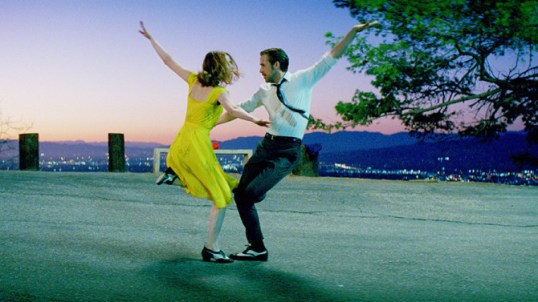
la-la-land

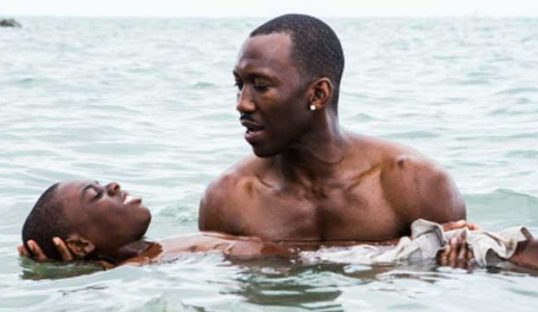
moonlight-620x360

Here Are The 74th Annual Golden Globe Nominations!


Oscar season continued today with even more precursors announcing their picks for the best of 2016!  Perhaps most importantly, the 74th Annual Golden Globe nominations were announced today!  Even though they rarely match up 100%, the Golden Globe nominations are considered to be one of the best precursors for what will be nominated for an Oscar in January.

So, should Silence be worried?  Martin Scorsese’s latest acclaimed film was totally snubbed by the Golden Globes.  That could be an ominous sign for a film that everyone seems to respect but which is still going to be a far harder sell at the box office than either The Wolf of Wall Street or Hugo.

But again, it’s never an exact match between the Globes and the Oscars and the Academy can nominate up to ten films for best picture.  Though it would certainly be interesting (and kinda neat) if it happened, I somehow doubt that the Academy is going nominate Deadpool over Silence.

(For that matter, I doubt Simon Helberg is going to pick up an Oscar nomination for Florence Foster Jenkins.  Just a feeling…)

Below are the Golden Globe film nominations!

(For the TV nominations, why not check out the list over at Awards Watch?)

MOTION PICTURES

Best Motion Picture – Drama
Hacksaw Ridge
Hell or High Water
Lion
Manchester by the Sea
Moonlight

Best Motion Picture – Musical or Comedy
20th Century Women
Deadpool
Florence Foster Jenkins
La La Land
Sing Street

Best Motion Picture – Animated
Kubo and the Two Strings
Moana
My Life as a Zucchini
Sing
Zootopia

Best Motion Picture – Foreign Language
Divines (France)
Elle (France)
Neruda (Chile)
The Salesman (Iran)
Toni Erdmann (Germany)

Best Performance by an Actress in a Motion Picture – Drama
Amy Adams, Arrival
Jessica Chastain, Miss Sloane
Isabelle Huppert, Elle
Ruth Negga, Loving
Natalie Portman, Jackie

Best Performance by an Actor in a Motion Picture – Drama
Casey Affleck, Manchester by the Sea
Joel Edgerton, Loving
Andrew Garfield, Hacksaw Ridge
Viggo Mortensen, Captain Fantastic
Denzel Washington, Fences

Best Performance by an Actress in a Motion Picture – Musical or Comedy
Annette Bening, 20th Century Women
Lily Collins, Rules Don’t Apply
Hailee Steinfeld, The Edge of Seventeen
Emma Stone, La La Land
Meryl Streep, Florence Foster Jenkins

Best Performance by an Actor in a Motion Picture – Musical or Comedy
Colin Farrell, The Lobster
Ryan Gosling, La La Land
Hugh Grant, Florence Foster Jenkins
Jonah Hill, War Dogs
Ryan Reynolds, Deadpool

Best Performance by an Actress in a Supporting Role in any Motion Picture
Viola Davis, Fences
Naomie Harris, Moonlight
Nicole Kidman, Lion
Octavia Spencer, Hidden Figures
Michelle Williams, Manchester by the Sea

Best Performance by an Actor in a Supporting Role in any Motion Picture
Mahershala Ali, Moonlight
Jeff Bridges, Hell or High Water
Simon Helberg, Florence Foster Jenkins
Dev Patel, Lion
Aaron Taylor-Johnson, Nocturnal Animals

Best Director – Motion Picture
Damien Chazelle, La La Land
Tom Ford, Nocturnal Animals
Mel Gibson, Hacksaw Ridge
Barry Jenkins, Moonlight
Kenneth Lonergan, Manchester by the Sea

Best Screenplay – Motion Picture
Hell or High Water
La La Land
Manchester by the Sea
Moonlight
Nocturnal Animals

Best Original Score – Motion Picture
Arrival
Hidden Figures
La La Land
Lion
Moonlight

Best Original Song – Motion Picture
“Gold,” Gold
“City of Stars,” La La Land
“How Far I’ll Go,” Moana
“Faith,” Sing
“Can’t Stop the Feeling,” Trolls

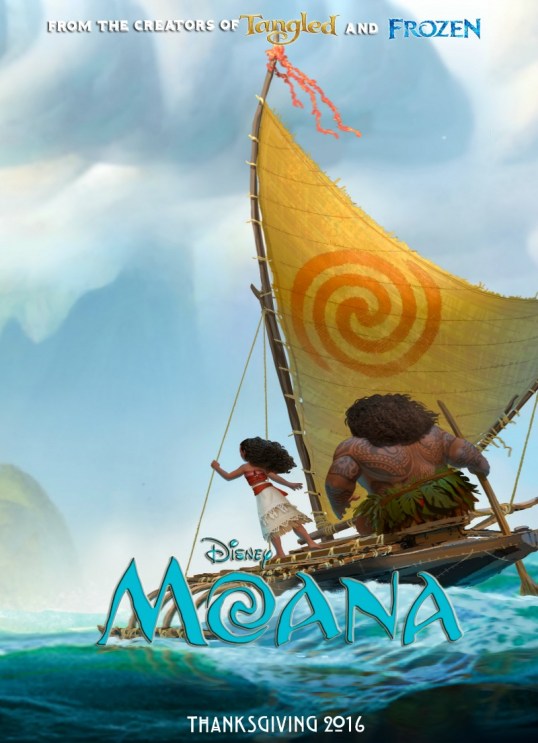
Moana