One of the greatest actors to come from the state of Arkansas was born in Hot Springs on August 4th, 1955. Sometimes called the “Hillbilly Olivier,” Billy Bob Thornton seems to be aging like fine wine!
Happy Birthday, Billy Bob. You’re the best!
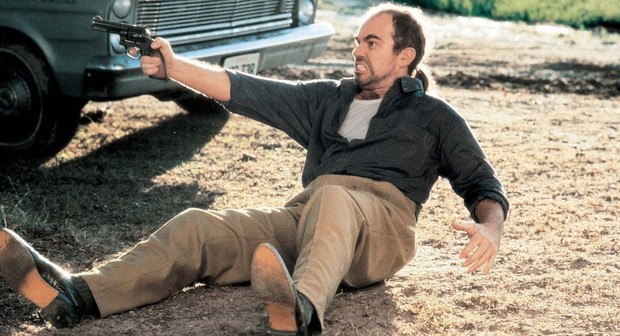
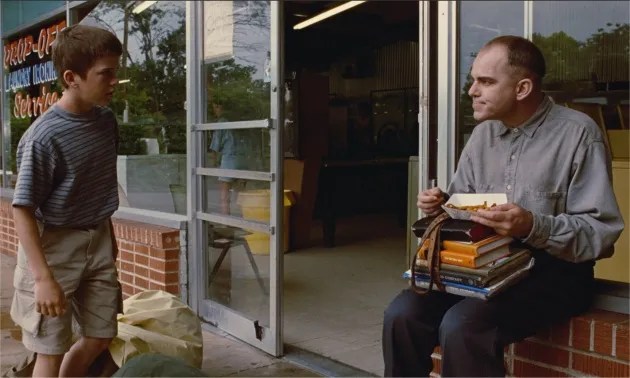
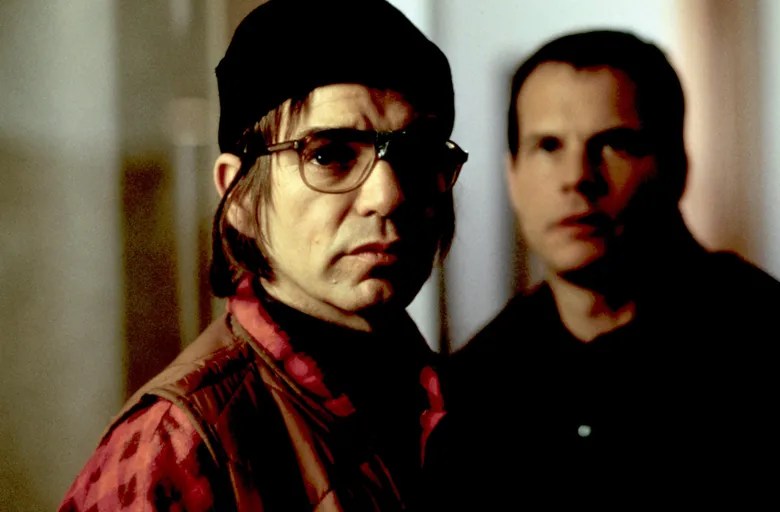
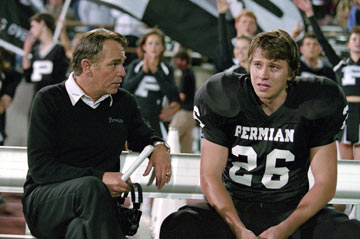
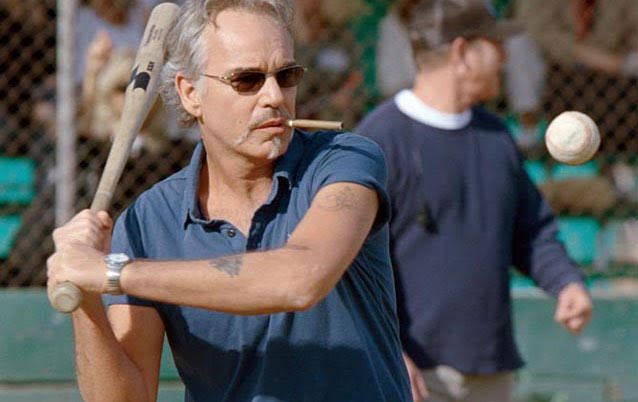
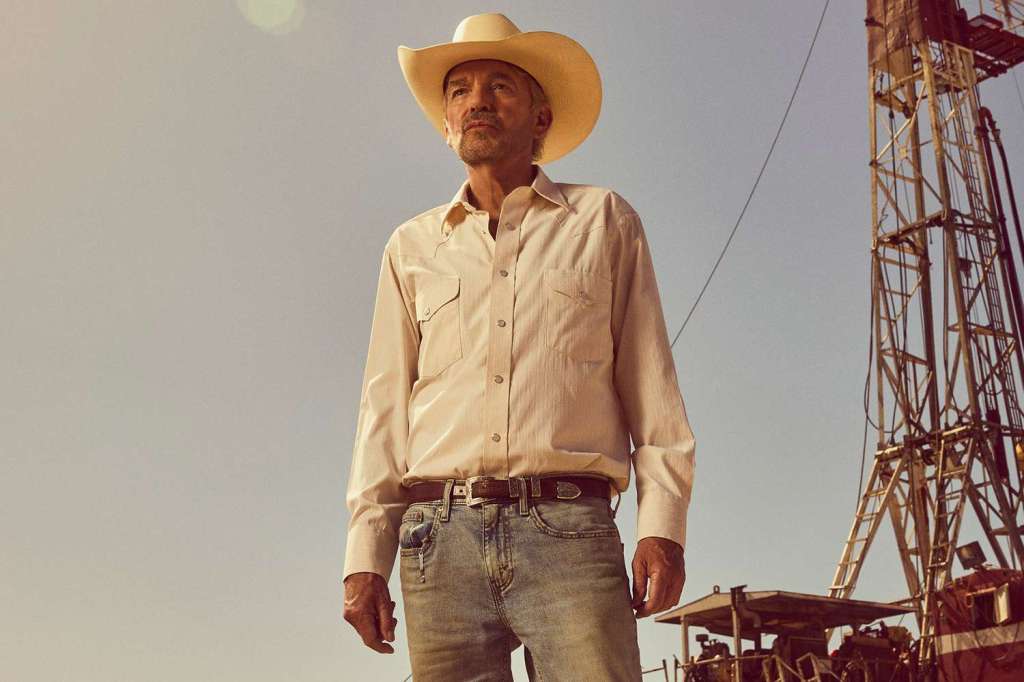
One of the greatest actors to come from the state of Arkansas was born in Hot Springs on August 4th, 1955. Sometimes called the “Hillbilly Olivier,” Billy Bob Thornton seems to be aging like fine wine!
Happy Birthday, Billy Bob. You’re the best!
She thinks she’s Brenda Starr/her nose job is real atomic….
I love this song. It makes me regret that I was born to late to experience New York in the 70s. “She’s do dull …. rip her to shreds,” is a favorite expression of mine, one that gets me strange looks from people who are not familiar with this song.
Oh well. I can live with the looks!
Today, the Shattered Lens wishes a happy birthday to Greta Gerwig! Let’s do the sambola!
Both the scene and the dance are from 2011’s Damsels in Distress.
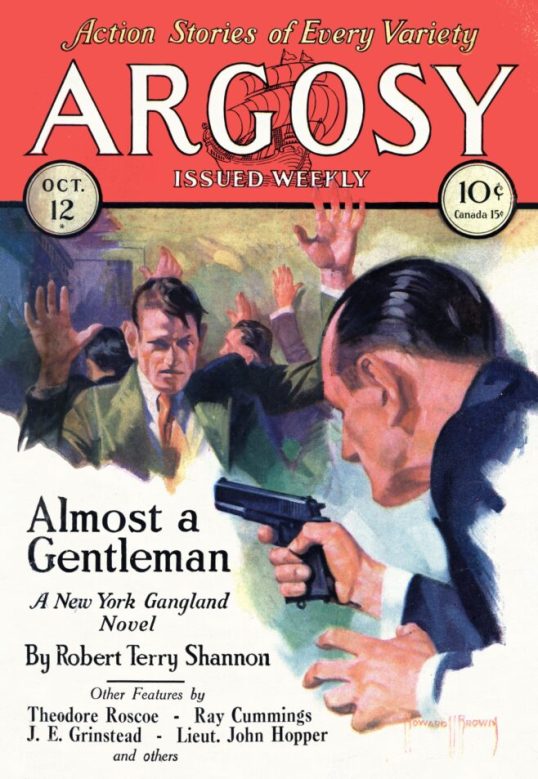
by Harold V. Brown
This cover is from 1929.
This is actually one of Def Leppard’s better songs but it had the misfortune to be released in 1996, after the band’s 80s heyday. Visually, the music video has more in common with the melancholy video style of 90s grunge than with the energetic and upbeat videos that we typically associate with Def Leppard.
This video was directed by photographer Matt Mahurin. Mahurin started directing videos in 1986 and has worked with everyone from U2, Queensrÿche, Metallica, and Dreams So Real to Tracy Chapman, Tom Waits, R.E.M., and Alice In Chains.
Enjoy!
Welcome to Late Night Retro Television Reviews, a feature where we review some of our favorite and least favorite shows of the past! On Mondays, I will be reviewing CHiPs, which ran on NBC from 1977 to 1983. The entire show is currently streaming on Prime!
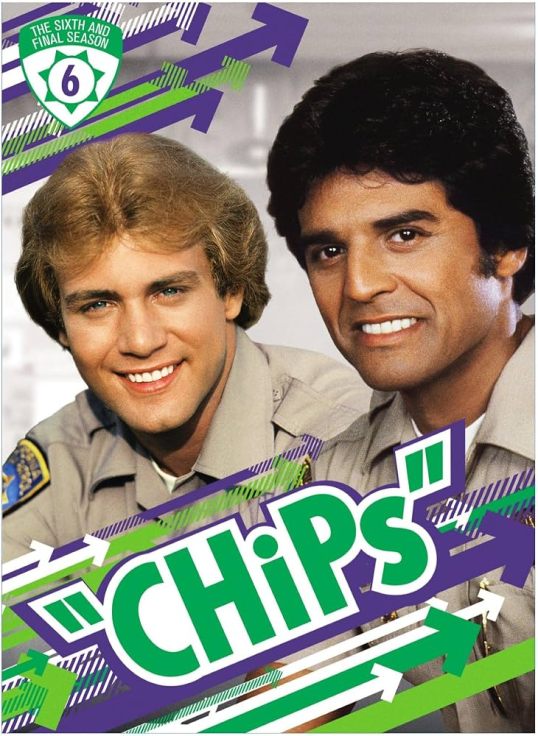
This week, Ponch becomes the Barcelona Man.
Episode 6.2 “Tight Fit”
(Dir by John Florea, originally aired on October 17th, 1982)
After Ponch and his new partner Bobby thwart an attempt to steal a lockbox of diamonds from a photo shoot, Ponch is invited to become a jeans model. In fact, he even gets to appear on a giant billboard and star in a commercial as the shirtless Barcelona Man.
Well, of course, he does. A lot of things may have changed last week but one thing remains the same. We all know what we’re watching.

These episodes featuring Ponch getting “discovered” are always a bit silly. Ponch always acts like he’s modest and kind of embarrassed to be at the center of attention but it’s never convincing because it’s obvious that Erik Estrada is loving it. All it takes is one look at that big grin to know that Estrada is more than happy to be the shirtless Barcelona Man.
Now, to make clear, Ponch and Bobby did solve some crimes. They caught a jewel thief who crashed his car in an attempt to hide his crimes. They also busted a fashion photographer (Michael Haynes) who was coercing his underage models to pose nude and attend wild sex parties. One of the models was played by Kim Richards. She gets a scene where she attempts to jump off a ledge. Can you guess which member of the Highway Patrol saves her? I’ll give you a hint. It’s not Bobby!
Much like last week, this episode highlighted the total lack of chemistry between Erik Estrada and his new partner, Tom Reilly. Reilly spent most of this episode looking somewhat dazed and confused. Unlike Larry Wilcox, who always came across as if he arrested people in his spare time, Tom Reilly was a very unconvincing cop. After two episodes, it appears that Reilly’s main contribution to the show is to make Estrada seem convincing by comparison.
Next week, the Ponch Show continues.
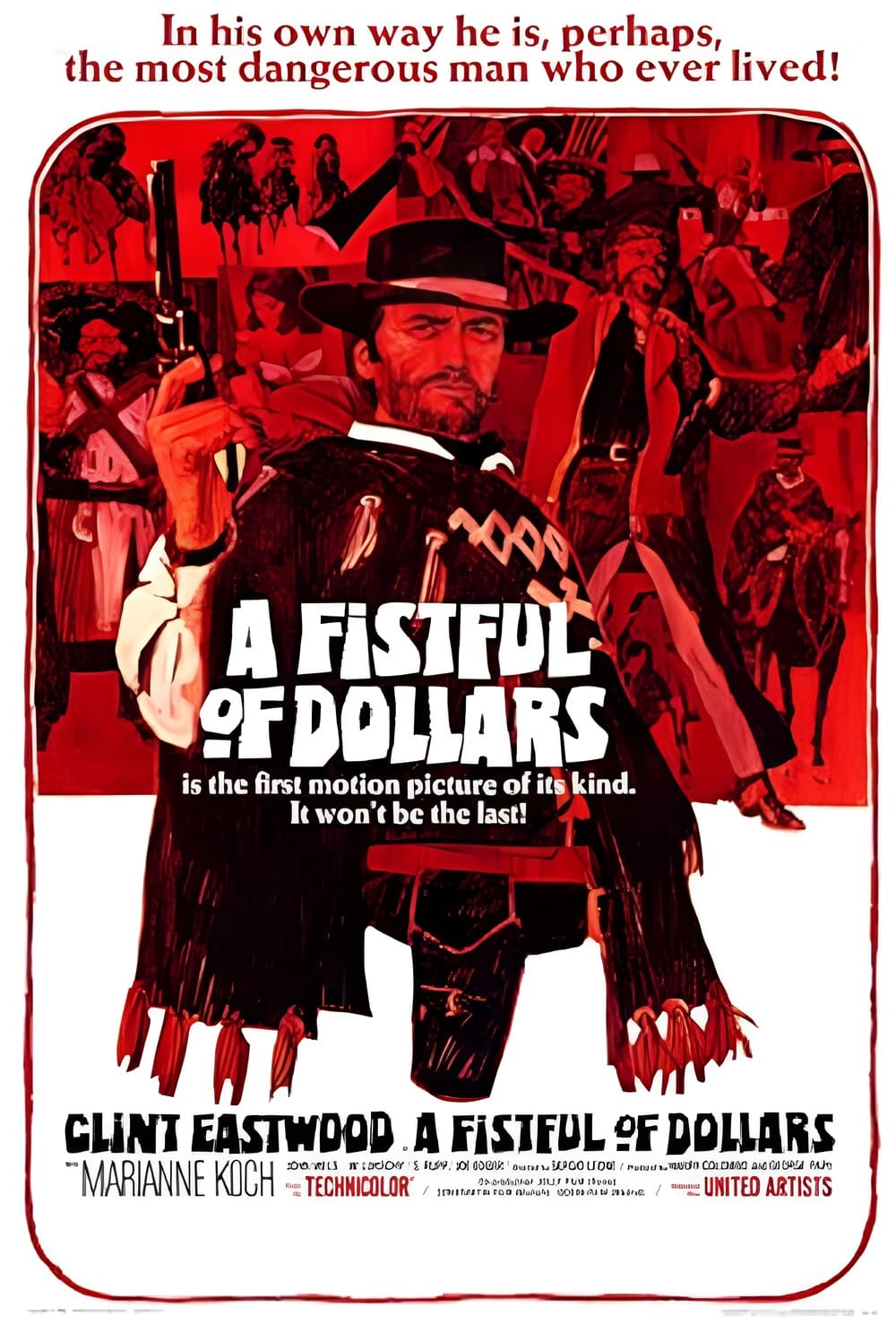
“When a man with a .45 meets a man with a rifle, you said, the man with a pistol’s a dead man. Let’s see if that’s true.” — Joe
When examining the films that fundamentally reshaped a genre, 1964’s A Fistful of Dollars stands as an undeniable cornerstone. Directed by Sergio Leone, this movie didn’t just accidentally stumble into creating a new genre; it grabbed the classic American western by the collar, dragged it into the mud, and spat on its shiny boots. This was the first leg of Leone’s “Dollar’s Trilogy,” and honestly, looking back at it now, it’s kind of crazy to think about how much of an underdog this production was. It was made on a shoestring budget, shot in Spain with a bunch of Italian and Spanish actors speaking different languages and then dubbed over, and it featured a lead actor who was mostly known for playing a lovable cowboy on a little American TV show called Rawhide. Nobody expected A Fistful of Dollars to become a massive international hit, but it did, and it permanently altered the cinematic landscape.
The story itself feels incredibly familiar today, but that’s only because it has been copied and homaged about a million times since. Unapologetically lifting the plot from Akira Kurosawa’s Yojimbo, the film follows a gritty, chain-smoking drifter who rides into a dusty, miserable border town called San Miguel. But the fun part about this cinematic lineage is that Yojimbo wasn’t entirely original either. Kurosawa openly borrowed the core concept from Dashiell Hammett’s hardboiled detective novels, specifically Red Harvest and The Glass Key. Both of those books featured a lone, cynical protagonist who manipulates warring criminal factions fighting it out for control of a corrupt town. So Leone was essentially taking a Japanese interpretation of an American noir trope, stripping it down, and repackaging it as a western. Once our drifter arrives in San Miguel, he quickly realizes the town is torn apart by two rival gangs: the Baxters, a family of American gun-runners, and the Rojos, a ruthless group of Mexican smugglers. Instead of playing the traditional white-hat hero who immediately picks a side and saves the day, our guy does the exact opposite. He decides to play both sides against each other, hiring himself out to the highest bidder, switching loyalties at the drop of a hat, and essentially bleeding the town dry for his own profit. It is a brilliantly cynical setup that completely subverted what western audiences were used to seeing at the time.
And then there is Clint Eastwood. Now, pop culture famously knows him as the Man with No Name, but that is actually the result of a very clever piece of US marketing. In A Fistful of Dollars, his character absolutely has a name: Joe. The American distributors thought the mysterious, anonymous angle sounded cooler for the posters, and the moniker stuck so hard over the decades that most people forget he literally introduces himself as Joe to the locals early on in the movie. Regardless of what you call him, when Leone cast Eastwood, American studios were apparently confused, wondering why an Italian director would want a TV actor to lead a movie. But Leone saw something in Eastwood’s squint, a kind of rugged, lazy menace that was perfect for this new brand of anti-hero. Joe isn’t a knight in shining armor. He’s greedy, he’s manipulative, and he kills people without losing a wink of sleep. But he has an undeniable coolness to him that is just magnetic. The costume design plays a massive part here too. The weathered brown poncho, the stubble, the short cigar clamped in his jaw, and that iconic hat all combined to create a look that felt lived-in and dangerous. Compared to the impeccably groomed, brightly dressed cowboys of the 1950s, Eastwood looked like he actually smelled like sweat, horse hair, and gunpowder.
Of course, a conversation about A Fistful of Dollars is totally incomplete without talking about the villains, because Leone knew how to cast bad guys who were genuinely terrifying. Gian Maria Volonté plays Ramón Rojo, the main antagonist, and he is absolutely phenomenal. Ramón isn’t just a cartoonish thug; he is smart, cold-blooded, and utterly devoid of mercy. There is a famous scene where Ramón is demonstrating the accuracy of his rifle by shooting at the heart of a man he has just murdered at long range, and Volonté plays it with such a creepy, casual indifference that it makes your skin crawl. The Baxters are mostly just pathetic pawns, but the Rojos feel like a legitimate, organized threat, which makes the stakes feel incredibly real. You genuinely believe that if Joe slips up even once, these guys will brutally torture and kill him without a second thought.
Visually, A Fistful of Dollars is an absolute masterclass in atmosphere. Leone was working with a limited budget, but he used what he had to create a style that felt massive. He employed these extreme, lingering close-ups of people’s eyes, sweaty faces, and flies buzzing around, which gave the film an almost unbearable tension. Then he would suddenly cut to these massive, sweeping wide shots of the barren Spanish desert, making the characters look like tiny, insignificant specks in a cruel, uncaring world. The violence was also shockingly graphic for the time. People didn’t just clutch their chests and fall over gracefully like they did in older westerns. They bled, they grimaced in agony, and the gunfights felt loud, chaotic, and messy. Leone stripped away the romanticism of the Wild West and replaced it with a gritty, dirty reality that felt much more authentic, even if it was entirely a fabricated Italian fantasy of America.
You also absolutely have to talk about Ennio Morricone’s legendary musical score. It is basically a character in the film itself. Before A Fistful of Dollars, western soundtracks were mostly made up of traditional orchestral arrangements and folksy songs. Morricone threw that playbook out the window. He used electric guitars, twanging banjos, screaming trumpets, whip cracks, choral chants, and even a bizarre, wailing coyote sound that sounds like a human having a mental breakdown. The main theme is so incredibly catchy and weird that it burrows into your brain and stays there for days. The music didn’t just support the action on screen; it told the audience exactly how to feel, ramping up the tension during the standoffs and giving Eastwood’s character a larger-than-life aura. Without Morricone’s score, the Spaghetti Western genre simply would not exist as we know it.
The pacing of the movie is something that modern audiences might need a minute to adjust to, but it is completely intentional. Leone was in absolutely no rush to get from point A to point B. He wanted to linger on the tension, letting scenes breathe and stretch out to almost uncomfortable lengths. When Eastwood is staring down a group of thugs in the street, Leone holds the camera on their faces for what feels like an eternity. You can see the sweat dripping, you can see the fear building, and by the time the first shot is finally fired, the release of tension is almost physical. It is a slow burn that requires a bit of patience, but it makes the eventual bursts of violence so much more impactful and satisfying. It is the exact opposite of the fast-paced, action-packed blockbusters we get today, and that deliberate slowness is a huge part of its strange, hypnotic charm.
Despite all of Joe’s outward greed and manipulation, there is a subtle emotional core to the film that keeps you totally invested. It comes in the form of Marisol, a woman who is being held captive by Ramón Rojo and used as leverage against her husband. When Eastwood sees the absolute misery of this family, his cold exterior cracks just a little bit. He risks his entire scheme, and his own life, to sneak Marisol and her son out of town in the middle of the night, giving them money to start over. It is a beautifully quiet, understated scene that proves there is still a shred of humanity left underneath all that grit and cynicism. He doesn’t make a big speech about it or ask for thanks; he just does it because it is the right thing to do. It gives the character a moral center without turning him into a traditional good guy, which is a really difficult balancing act that the film pulls off perfectly.
The climax of the film is where everything comes together in a spectacular display of style and sheer badassery. After getting brutally beaten by the Rojos, Eastwood escapes and returns for revenge, utilizing a makeshift iron chest plate hidden under his poncho. Watching him walk slowly down the empty street, taking bullet after bullet to the chest without flinching, while the electric guitar wails in the background is just pure, unadulterated cinema magic. He outdraws Ramón in a final, agonizingly tense standoff, proving that his wits and his nerve are just as deadly as his revolver. It is the perfect payoff to the slow build-up of the entire movie, cementing Joe as an absolute icon of pop culture.
And this endless game of cinematic telephone didn’t stop with Leone. Just as A Fistful of Dollars was heavily “inspired by Yojimbo“—which itself transplanted the 1920s pulp noir concept into the 1860 Edo period—it went on to inspire a whole new wave of imitators looking to put their own spin on the formula. The most obvious example is the 1996 action flick Last Man Standing starring Bruce Willis, which takes the exact same plot of warring factions and a lone drifter playing them against each other, but moves the action to a Prohibition-era Texas border town. It is wild to trace that DNA from a 1920s pulp novel to the 1860 Edo period, to a 1960s Italian western, and all the way to a 1990s Bruce Willis shoot-em-up, proving just how durable and universally cool this basic storyline really is.
Looking at A Fistful of Dollars today, it is easy to see the cracks in its foundation. The dubbing is notoriously clunky, some of the supporting performances are a bit wooden, and the fact that it is a direct rip-off of a Japanese masterpiece is impossible to ignore. But honestly, none of that really matters in the grand scheme of things. Leone took a great story and injected it with so much style, so much attitude, and so much raw energy that it became its own completely distinct entity. As the first leg of Leone’s “Dollar’s Trilogy,” it laid the foundational blueprint that he would later perfect with For a Few Dollars More and absolutely master with The Good, the Bad and the Ugly. But there is something special about this first outing. It has a rougher, scrappier, and more experimental vibe that is incredibly fun to watch. It is the movie that killed the old western and birthed the new one, and for that alone, it deserves every bit of its legendary status.
Welcome to Retro Television Reviews, a feature where we review some of our favorite and least favorite shows of the past! On Mondays, I will be reviewing Crime Story, which ran on NBC from 1986 to 1988. The entire show can be found on Tubi!
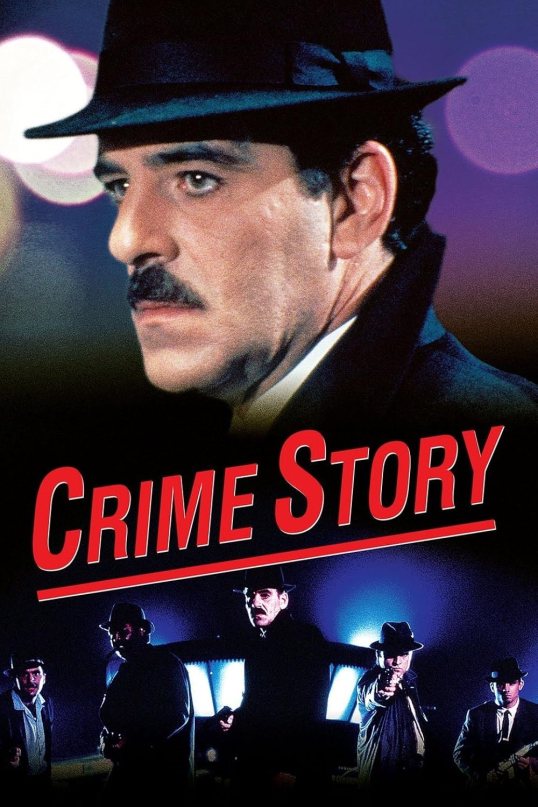
This week, Homan sings.
Episode 1.13 “Strange Bedfellows”
(Dir by Francis Delia, originally aired on December 26th, 1986)
Homan is in federal custody and he’s telling Breitel all that he knows about Luca and Bartoli. He’s also making up a story about Torello taking a bribe. Even though Homan’s Torello story is pretty shaky, Breitel is looking forward to taking down a crooked cop and launching his political career off of of the publicity.
Bartoli is not amused when he learns that he’s being indicted. However, Luca is able to convince Manny Weisbord to provide him with a top-level defense attorney. Manny also makes it clear that Luca no longer works for Phil. Instead, Luca works with Phil. Lucas has another reason to be happy. When he runs into David Abrams at a bar, he gets some free legal advice. Luca explains that Homan is lying about Torello. Abrams tells Luca that, if they can prove that Homan is lying about Torello, it will be easier to convince a jury that Homan is lying about Luca and Bartoli as well.
Torello, meanwhile, responds to his upcoming indictment by going to Las Vegas and playing some golf. He’s in a great mood until he sees that his indictment is one the front page of the newspaper.
Not much really happened in this episode of Crime Story. That’s not really a complaint. If anything, it was a bit of a nice change-of-pace. We got to watch the characters just be themselves. Luca, who rarely shows emotion, actually smiles when he hears that Torello is about to be indicted along with “his favorite people.” Luca actually has a sense of humor and an appreciation for irony. Who would have guessed? Meanwhile, Torello continues to be just a bit too intense for his own good. Even on vacation, he seems like he’s just one frustration away from snapping.
Will Torello snap next week? We’ll find out!
Hi, everyone! Tonight, on twitter, I will be hosting one of my favorite films for #MondayMania! Join us for Devious Nanny!
You can find the movie on Prime and then you can join us on twitter at 9 pm central time! (That’s 10 pm for you folks on the East Coast.) See you then!
I’m not even really a Led Zeppelin fan but I do like this song. Most Zeppelin songs go on too long for my ADHD brain but Kashmir always manages to hold my attention.

