Hero of the Day: Inspector “Tequila” Yuen Ho-yan (Hard Boiled)


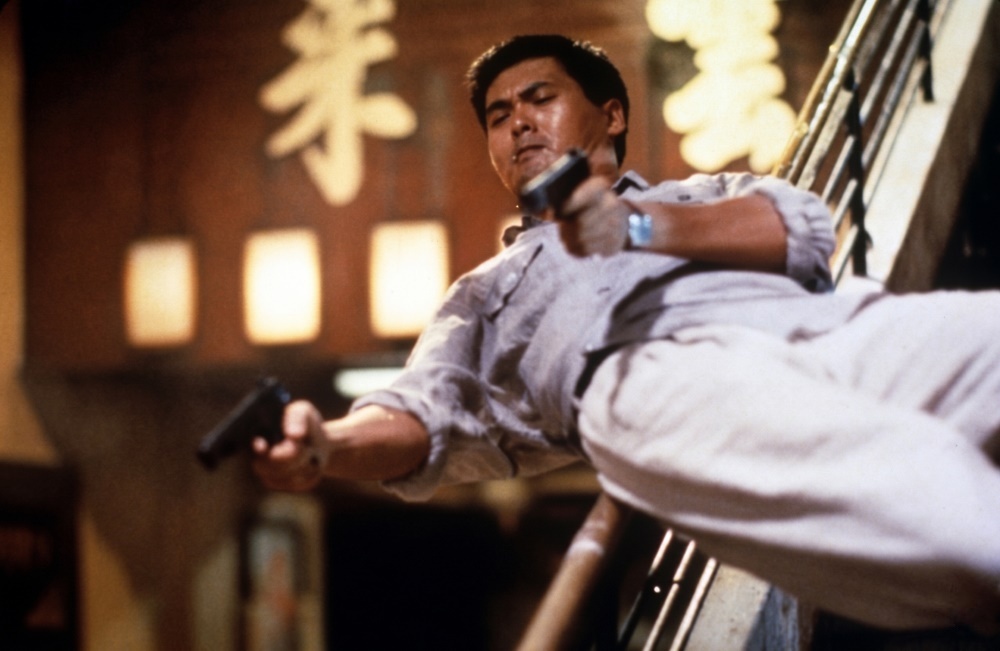
Inspector “Tequila” Yuen Ho‑yan is one of those action heroes who feels like a classic the second he steps on screen, but he also holds up under close character study. On the surface, he’s pure Hong Kong cool: trench coat, ever‑burning cigarette, toothpick, and twin Berettas, sliding through shootouts like they’re part of some stylish routine. But peel back the image and you see a cop haunted by his partner’s death, worn down by the violence he’s forced to perpetuate, and quietly desperate to protect the innocent. That mix of flashy exterior and inner weight is what makes him feel both mythic and grounded.

What gives Tequila his staying power is the way he maintains a clear moral center in a gray world. He’s not a squeaky‑clean officer; he disobeys orders, uses brutal methods, and sometimes plays fast and loose with the rules. But his core principles never waver: he won’t let the innocent get hurt, he won’t let murderers walk free, and he won’t let his own grief turn him into the kind of monster he’s chasing. He’s the kind of hero who makes you like him less for being perfect and more for being stubbornly decent in a system that doesn’t reward it.

His personality is also what makes him feel like more than a gun‑play machine. Tequila is playful, even charming, in the middle of chaos—tossing off lines, leaning casually on overturned tables, treating his shootouts like improvised performances. Yet there’s always a sadness in his eyes, a sense that he’s doing this because he has to, not because he enjoys it. That contrast—cocky and composed on the outside, burdened and sentimental on the inside—is exactly what keeps him from feeling like a generic action hero. He’s a guy you’d want to have a drink with, but also a guy you’d want backing you up in a firefight.

Visually and thematically, Tequila encapsulates Hong Kong action at its most operatic. His love of jazz, his quiet moments with his clarinet, and the way director John Woo frames his gunfights all suggest someone who sees his violence as a kind of performance art. He doesn’t just shoot to win; he shoots to make a point about honor, loyalty, and the cost of doing the right thing. That theatricality—turning street‑level crime into something almost mythic—is part of what makes him such an enduring icon rather than just another tough cop.

In the end, Tequila feels iconic because he’s so well‑balanced: cool but not smug, violent but not cynical, stylish but not shallow. He’s a character who appeals on a gut level—his looks, his moves, his one‑liners—while still giving you something to think about underneath. It helps that an equally charismatic actor like Chow Yun‑fat brings him to life, because his relaxed presence and natural magnetism make Tequila feel like the role he was born to play. It’s almost as if John Woo had written the part specifically for his go‑to actor, matching a perfectly crafted hero with the one performer who could sell every ounce of swagger, sorrow, and soul in the role.
Sicario: Day of the Soldado (dir. by Stefano Sollima) Review


“I mean, I wouldn’t take out a cartel leader. Turn one cartel into 50. Besides, killing kings doesn’t start wars, it ends them.” — Matt Graver

Sicario: Day of the Soldado is a tense, often entertaining follow-up that never quite reaches the same level of dread, complexity, or visual identity as the first Sicario. It’s a movie that knows how to hit hard in the moment, but it doesn’t linger in the mind the same way, and a big reason for that is how much it shifts from being a layered border thriller into something more like a blunt-force crime action movie.

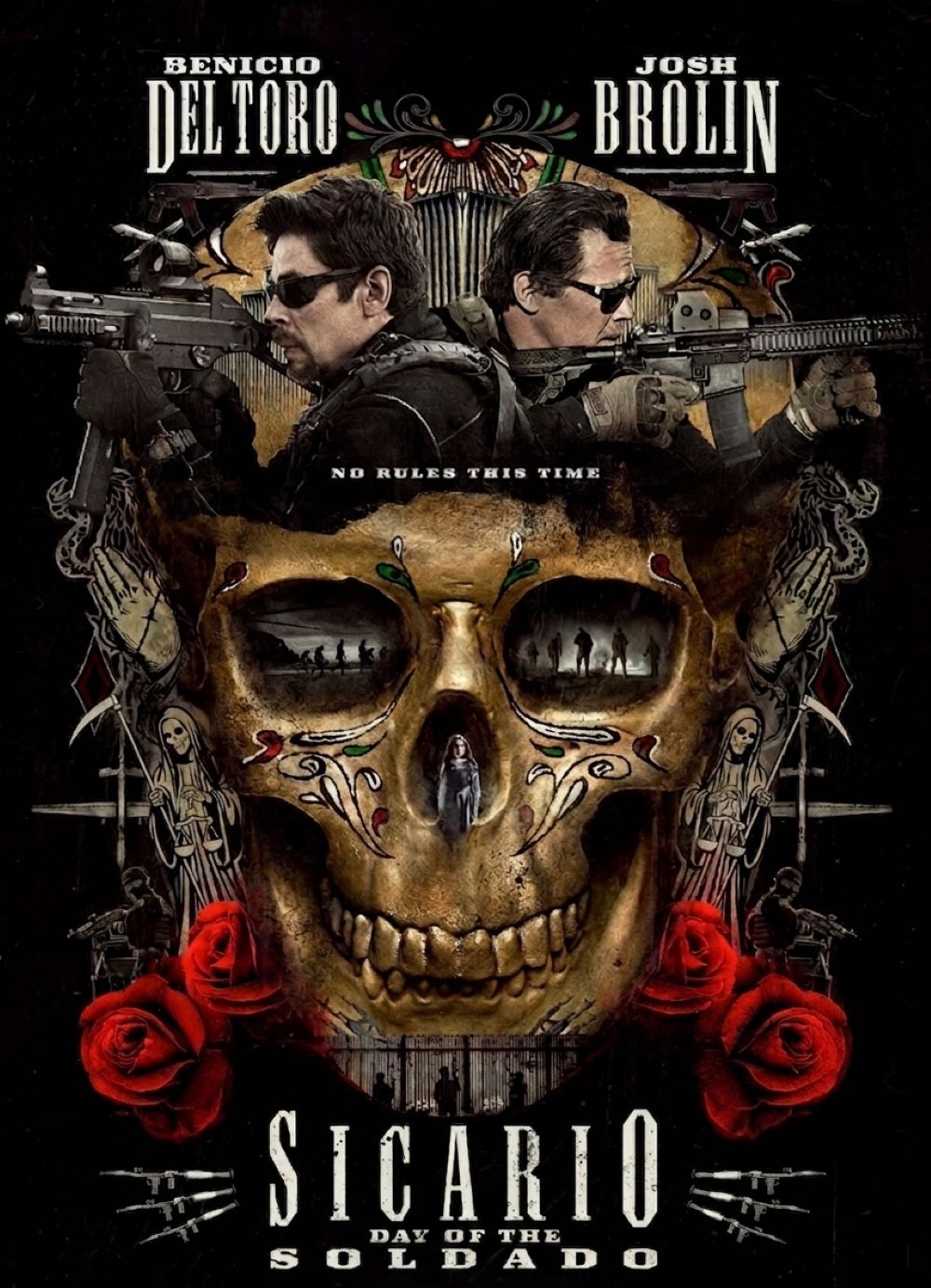
What stands out right away is that the film still has strong ingredients. Taylor Sheridan’s script gives Josh Brolin and Benicio Del Toro plenty of room to do what they do best, and both actors make this thing watchable even when the movie itself starts feeling thinner than it should. Brolin brings that loose, swaggering menace to Matt Graver, making him feel like the kind of guy who smiles while ordering something morally awful. Del Toro, meanwhile, gives Alejandro a cold, haunted intensity that fits the character perfectly. He doesn’t need much dialogue to sell the idea that this man is basically a weapon walking around in human form.

But that’s also where the movie’s biggest issue starts to show. For all the credit Sheridan deserves for keeping the world of Sicario alive, the absence of Denis Villeneuve in the director’s chair is obvious. The first film had this slow-burning, oppressive grip on you; every scene felt like it was pulling you deeper into a nightmare that had structure, purpose, and a real sense of moral unease. Here, that layered feeling is much weaker. The sequel becomes more interested in forward motion, shootouts, and tension-by-incident than in developing the deeper political and thematic weight that made the original so memorable.

That doesn’t mean Sicario: Day of the Soldado is empty. It just feels like it has less on its mind than the first film. The original Sicario was about systems, corruption, compromise, and the way law enforcement and criminal violence blur together until nobody gets to stay clean. This sequel touches on similar territory, but it often feels like the movie is more focused on creating a harsh atmosphere around its two lead men than on really digging into what all of it means. In that sense, it starts to feel like a vehicle for Brolin and Del Toro first, and a larger statement second.

Stefano Sollima does a solid job with the action, and to his credit, he understands that this world should feel mean, chaotic, and stripped of comfort. There’s a gritty professionalism to the violence that works well enough, and the film certainly doesn’t shy away from brutality. Still, the action doesn’t always carry the same weight as it did in the first movie because the buildup isn’t as rich. The tension is there, but the emotional and thematic buildup behind it is thinner, so some of the set pieces land more as effective genre beats than as moments that actually deepen the story.

The film’s biggest strength, beyond the performances, is its atmosphere of moral corrosion. Nobody in Day of the Soldado feels especially noble, and that’s part of what keeps it interesting. Brolin’s Graver is still the kind of operator who treats human lives like pieces on a board, while Del Toro’s Alejandro remains a deeply damaged figure who seems to exist somewhere between avenger, assassin, and ghost. Their relationship gives the movie a sharp edge, because you’re never really sure whether these guys are working together, manipulating each other, or simply following the same dark logic from different angles.

Still, the movie’s structure is less satisfying than the first one’s. It leans harder into a straightforward escalation of events, and once that happens, some of the mystery and suspense gives way to a more familiar crime-thriller rhythm. That isn’t automatically a bad thing, but it does mean the film loses some of the special quality that made Sicario feel so bracing. The sequel is darker in tone, sure, but not necessarily deeper. It’s more aggressive than observant, more kinetic than reflective.

A lot of this is why the movie works best when it keeps its focus on the two men at the center. Brolin and Del Toro are compelling enough to hold attention even when the screenplay starts feeling a little schematic. Their characters are so insulated by violence and secrecy that they almost seem to belong to a different kind of movie than everyone else around them. The downside is that this also makes the surrounding story feel less important. The first film balanced character and theme in a way that felt inseparable; this one often feels like it is using theme as a backdrop for the characters rather than letting the ideas shape the entire film.

Even so, Sicario: Day of the Soldado isn’t a failure. It’s a good-looking, well-acted, often tense sequel that knows how to stay nasty and efficient. It just doesn’t have the same confidence in its own ideas. The result is a film that is entertaining in a hard-edged, grim way, but also one that makes you think about what it could have been with a stronger directorial voice pulling everything together. Taylor Sheridan’s fingerprints are still all over it, but Villeneuve’s absence leaves a noticeable gap in the film’s pulse and perspective.

In the end, the movie feels like a solid but diminished return to a brutal world. It gives you Brolin and Del Toro doing sharp, controlled work inside a story that never fully rises to match them. That’s enough to make it worthwhile, but not enough to make it essential. Compared to the first Sicario, this one is more of a hard-nosed spin-off in spirit than a true continuation of the original’s power, and that difference is felt in almost every scene.

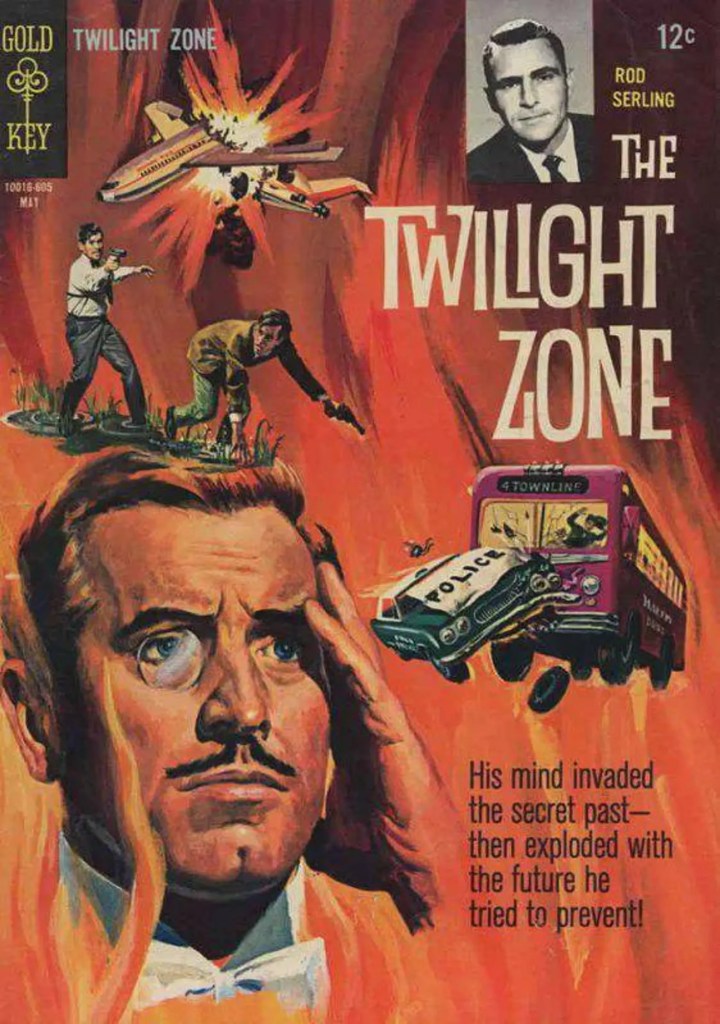
Song of the Day: The Twilight Zone Theme by Marius Constant


Technically, the French composer Marius Constant did not set out to write the theme song for The Twilight Zone.  In the 50s, CBS commissioned Constant to compose a number of short pieces for CBS stock music library, basically as musical stingers that could be used for radio shows.  In 1960, when The Twilight Zone needed a theme song, an enterprising CBS employee combined two of Constant’s composition to create the iconic Twilight Zone theme.

Enjoy our short but haunting song of the day.

4 Shots From 4 Films: Special Twilight Zone Edition


4 Shots From 4 Films is just what it says it is, 4 shots from 4 of our favorite films. As opposed to the reviews and recaps that we usually post, 4 Shots From 4 Films lets the visuals do the talking!

Today is Twilight Zone Day!  In honor of this site’s favorite anthology show, it’s time for….

4 Shots From The Twilight Zone

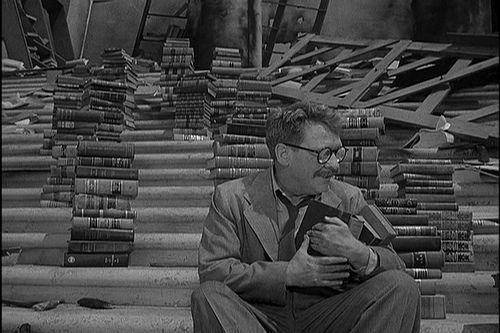
Twilight Zone 1.8 “Time Enough At Last” (1959, dir by John Brahm)

Twilight Zone 1.22 “The Monsters Are Due On Maple Street” (1960, dir by Ronald Winston)

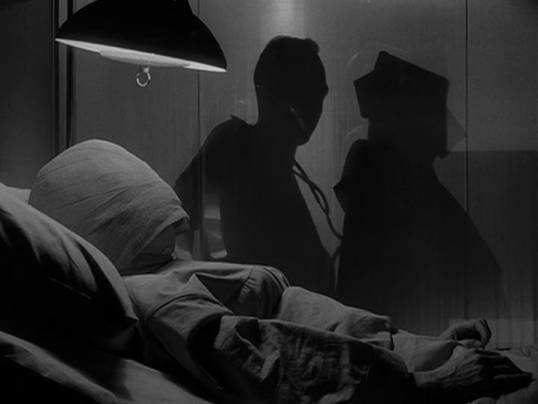
Twilight Zone 2.6 “Eye of the Beholder (1960, dir by Douglas Heyes)

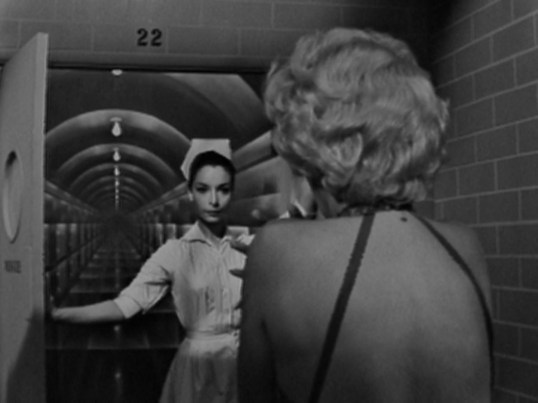
Twilight Zone 2.17 “Twenty-Two (1961, dir by Jack Smight)

Monday Live Tweet Alert: Join Us For The Sword and the Sorcerer!


As some of our regular readers undoubtedly know, I am involved in hosting a few weekly live tweets on twitter and occasionally Mastodon.  I host #FridayNightFlix every Friday, I co-host #ScarySocial on Saturday, and I am one of the five hosts of Mastodon’s #MondayActionMovie!  Every week, we get together.  We watch a movie.  We snark our way through it.

Tonight, for #MondayActionMovie, the film will be 1982’s The Sword and the Sorcerer!

It should make for a night of fun viewing and I invite all of you to join in.  If you want to join the live tweets, just hop onto Mastodon, find the movie on YouTube and hit play at 8 pm et, and use the #MondayActionMovie hashtag!  The  watch party community is a friendly group and welcoming of newcomers so don’t be shy.   

See you soon!

Late Night Retro Television Review: Degrassi: The Next Generation 2.16 “Message In A Bottle”


Welcome to Late Night Retro Television Reviews, a feature where we review some of our favorite and least favorite shows of the past!  On Sunday, I will be reviewing the Canadian series, Degrassi: The Next Generation, which aired from 2001 to 2015!  The series can be streamed on YouTube and Tubi.

This week, we have a very special episode of everyone’s favorite Canadian show.  Degrassi goes there!

Episode 2.16 “Message In A Bottle”

(Dir by Bruce McDonald, originally aired on August 1st, 2003)

The school’s basketball team is finally doing well and Jimmy decides to throw a party at his apartment to celebrate.  (As usual, Jimmy’s parents are out of town.)  Paige is having a spa weekend so she doesn’t come.  Ellie is too busy pretending to be Marco’s girlfriend to come.  J.T. and Toby?  Forget it.  This is so not their scene that they’re not even in this episode!

Ashley come to the party with Terri.  If nothing else, this reminds us that Terri is still a character on the show and she hasn’t suffered any school-ending brain damage at the hands of Rick Murray …. not yet, at least.  Jimmy is excited to Ashley.  However, romance will have to wait because Sean shows up drunk and accidentally breaks a liquor bottle.  Jimmy throws a fit.  That’s not a surprise.  Jimmy’s always upset about something.

For that matter, so is Sean.  Sean, however, has more reasons to be upset than Jimmy.  His parents are drunks.  His older brother, Tracker, cannot hold down a job, despite having a supercool name like Tracker.  In this episode, Emma tells Spike and Snake that Sean will be joining them for dinner without bothering to ask Sean beforehand.  Sean actually handles the first part of the dinner fairly well.  But then, during the second half of the dinner, he sneaks some alcohol and becomes convinced that Spike is talking down to him.  Myself, I’m more concerned about the fact that they ate a sushi dinner despite the fact that Spike is pregnant.

Emma comes to Jimmy’s party, looking for Sean after Sean storms out of dinner.  Emma assumes that it’s all her mom’s fault but Sean admits that he’s been drinking and he overreacted.  Sean is stunned when Emma calls her mom for a ride home.  Sean can’t imagine living with a parent who isn’t abusive.  That’s actually really, really sad.  Daniel Clark always did a great job as Sean and that’s certainly the case here.  Clark elevates this episode above being a typical anti-drinking episode.  I appreciated that the episode didn’t judge Sean and that it didn’t lecture him.  It’s as if the show understood that Sean felt bad enough without having every other character go off on him.  At least during the early seasons, that’s one thing that set Degrassi apart from other high school shows.

The episode ends with forgiveness, which was sweet.  Sean thinks Emma is going to dump him.  Emma tells him that everyone makes mistakes.  And that’s true!  This was a good episode.