Late Night Retro Television Review: Degrassi: The Next Generation 1.3 “Family Politics”


Welcome to Late Night Retro Television Reviews, a feature where we review some of our favorite and least favorite shows of the past!  On Sunday, I will be reviewing the Canadian series, Degrassi: The Next Generation, which aired from 2001 to 2015!  The series can be streamed on YouTube and Tubi.

It’s the first day of school!

Episode 1.3 “Family Politics”

(Dir by Anthony Browne, originally aired on April 1st , 2002)

It’s the first day of school at Degrassi Community School and — hey!  There’s all the folks we know.

Spinner (Shane Kippel) and Jimmy (Drake, then known as Aubrey Graham) make their first Degrassi appearance, demanding that Emma and Manny show them their hall passes and then laughing about how “Grade Sevens are such geeks.”  Emma and Manny are soon referring to Spinner as being “the jerk,” little aware that — in the far future — Emma will end up marrying Spinner.  As for Jimmy, he’s walking.  That’ll change in another few seasons.

There’s Liberty Van Zandt (Sarah Barrable-Tishauer), already showing herself to be one of the most annoying characters in Degrassi history by zealously running for student council secretary.

There’s Ms. Kwan (LinLyn Lue), the first of many English teachers who are destined to torment Spinner.

There’s Mr. Raditch (Dan Woods), promoted to principal!

There’s Paige (Lauren Collins), bragging about her clothes and her plans to start a school spirit squad.  Eventually, Spirit Squad drama will become one of the most enduring parts of Degrassi: The Next Generation.  In this episode, Paige is presented as being fashionable and shallow and nothing like the complex character she would become in later seasons.

Finally, we meet Toby’s stepsister, Ashley Kerwin (Melissa McIntyre) and Ashley’s loyal friend, the insecure Terri (Christina Schmidt).  Ashley is running for class president and struggling to get along with her new stepbrother.  I don’t have any brothers to compare him to but I still imagine that I would struggle to get along with Toby too.  At the start of the episode, Toby spots Ashley’s bra hanging in the bathroom and proceeds to put it on and run around the house.  “MOM!” Ashley yells as the episode segues into “Whatever it takes, I know I can make it through…..”

Annoyed with the fact that no one is running against Ashley for school president, Toby convinces JT to run a joke campaign.  “I’ll do what real politicians do,” JT says, “nothing!”  The students love him!  A poll comes out that shows JT beating Ashley.  Who conducted the poll?  Seriously, who polls a student election?  Degrassi never tells us and that’s the kind of thing that’s going to keep me up at night.

Ashley finally bribes JT to drop out of the election.  When Toby hears about the bribe, he threatens to expose Ashley to the school but, in the end, he doesn’t.  Ashley wins the election and she and Toby agree to try to get along.

Watching this episode, I was struck by two things.  First off, it was a less trampy remake of the first episode of Degrassi Junior High, with Ashley and Toby stepping into the roles previously filled by Stephanie Kaye and Arthur.  Secondly, it’s easy to forget how much the first season revolved around Ashley and Toby.  Much as happened with Stephanie and Arthur on Degrassi Junior High, both Ashley and Toby would become significantly less important after the first season as Degrassi shifted its attention to characters like Paige and Spinner.  This episode, however, is all Toby and Ashley.

Seen today, this episode is a good example of an episode that does what it needed to.  It introduced us to the main characters.  It had a few moments of humor that indicated Degrassi was going to be slightly more clever than the average teen show.  It established the hierarchy of the school.  That’s really all the episode had to do.  The entire student election subplot was pretty silly, as most student council storylines tend to be, regardless of which show might feature them.  On television, student councils are always absurdly powerful.  In real life, they’re just busy work.

Next week: It’s time for the first school dance!

Retro Television Review: Homicide: Life On The Street 4.4 “A Doll’s Eyes”


Welcome to Retro Television Reviews, a feature where we review some of our favorite and least favorite shows of the past!  On Sundays, Lisa will be reviewing Homicide: Life On The Street, which aired from 1993 to 1999, on NBC!  It  can be viewed on Peacock.

This week’s episode made me cry and cry.

Episode 4.4 “A Doll’s Eyes”

(Dir by Kenneth Fink, originally aired on December 1st, 1995)

Here in America, there’s recently been a lot of debate about how much of a problem crime actually is.  It’s a bit of an odd debate because much of it is based on telling people to ignore what they’re seeing and experiencing and to instead, just take comfort in abstract statistics and numbers.  “Actually,” we’re told, “crime is down from last year,” as if the claim that there’s slightly less of it being reported somehow negates the fact that it exists.

Those who say that crime is not a big deal often forget that crime is not just a matter of statistics and police reports.  Crime is something that happens to people.  It’s something that scars people.  It’s not something that most people can just shrug off.  Every crime is different and everyone reacts to being a victim in their own individual way but react, they do.  It’s easy to be dismissive of people’s concerns about crime when you’re not the one getting your house broken into or hearing gunshots in the night.  It’s easy to say “It was just a mugging,” when you’re not the one getting mugged and losing whatever trust you may have once had in the system. Seth Rogen once tweeted that he didn’t care that his car got broken into because he wasn’t into worrying about possessions.  That’s easy to say when you can just buy a new car whenever you feel like it.  For someone who can’t and is now stuck with the knowledge that they’re not even safe in their own car, it’s considerably more difficult to be so cavalier.   Crime is about more than just statistics and numbers.  For those who have been victimized, it’s about loss.  It’s about never feeling truly safe or secure again.

This week’s episode of Homicide fellows Pembleton and Bayliss as they investigate a shooting at a mall.  A young boy was caught in the crossfire and now, he’s on life support at the hospital.  For Pembleton and Bayliss, it starts out as another case.  Tracking down the shooters is not difficult.  Getting the shooters to confess is not difficult.  Pembleton and Bayliss aren’t dealing with master criminals here.

For the boy’s parents (played, in two heart-breaking performances, by Marcia Gay Harden and Gary Basaraba), the shooting of their son is the moment that their lives stopped.  They’re the one who eventually have to make the decision to take their son off of life support.  Hearing that their son’s organs were donated and are helping other people provides cold comfort.  Their only son is dead and, as this episode make clear, they’re not going to be okay.  Some would describe their son as just being another statistic, part of the count of how many people died in Baltimore during any given year.  For his parents, he’s Patrick, a 10 year-old who loved dinosaurs and science and whose life was ended because he was in the wrong place at the wrong time.  When Bayliss runs into the father of a girl who got an organ transplant as the result of the Patrick’s death, the girl’s father muses on how strange it is that one child died so that his girl could live.  It’s a powerful moment, one that really captures the humanity at the heart of this show’s best episodes.  Patrick’s parents will never recover but his murder has led to other people being saved.  Was it worth the cost?  The show is smart enough to leave the question for us to ponder.

This episode made me cry.  It reminded me a bit of season 2’s Bop Gun, with its mix of the family trying to deal with an unimaginable tragedy while, for Pembleton and Bayliss, it’s another day at work.  I would actually say this episode was superior to Bop Gun.  Bop Gun tried too hard to wrap things up.  A Doll’s Eyes understands that sometimes, this is no way to wrap things up.  Life just keeps moving.

Late Night Retro Television Review: Good Morning, Miss Bliss 1.7 “Save The Last Dance For Me”


Welcome to Late Night Retro Television Reviews, a feature where we review some of our favorite and least favorite shows of the past!  On Saturdays, I will be reviewing Good Morning, Miss Bliss, which ran on the Disney Channel from 1988 to 1989 before then moving to NBC and being renamed Saved By The Bell.  The entire show is currently streaming on Prime!

This week, the Eighth Grade Dance nearly turns violent!

Episode 1.7 “Save The Last Dance For Me”

(Dir by Gary Shimokawa, originally aired on January 25th, 1989)

Mikey (Max Battimo) wants to go to the Eighth Grade Dance with Shana (Alexondra Lee) but Shana wants to go with Mikey’s evil best friend, Zach Morris.  Zach agrees to go to the dance with Shana before he finds out that she’s the girl that Mikey was planning on asking.  But, once Zach does find out, he refuses to cancel his date with her.  Mikey gets upset.  Mikey, I should add, is totally in the wrong here.  Shana wants to go with Zach.  Deal with it, Mikey.

Mr. Belding is worried about a fight breaking out at the dance.  Fortunately, when Mikey tells Zach to meet him outside so they can fight, Zach apologizes and refuses to fight his friend.  All the students go, “Awwww!”  (That would not have been the reaction of the students at any school that I ever went to.)  Mr. Belding is relieved that the fight is cancelled.  Miss Bliss and her date Sherman (Lonnie Burr) bust out some disco moves.

This was a thoroughly predictable episode.  I will say that Max Battimo, who retired from acting after Good Morning Miss Bliss, gave a pretty good performance as Mikey.  Mikey may have been in the wrong as far as Shana was concerned but he was absolutely right to wonder why Zach always gets everything that he wants.  Mark-Paul Gosselaar almost sold the scene where he apologized to Mikey.  That’s not something that would ever happen in a real middle school but whatever.  It is something that used to happen pretty frequently on shows like Good Morning Miss Bliss.

The main problem with this episode was that it was overlit.  Zach’s hair was glowing so brightly that it actually hurt my eyes.  This was actually a frequent problem on Saved By The Bell.  The lighting was always way too harsh.  The whole school looked like it was about to burst into flames.

Retro Television Review: The American Short Story #13: Barn Burning


Welcome to Retro Television Reviews, a feature where we review some of our favorite and least favorite shows of the past!  On Saturdays, Lisa will be reviewing The American Short Story, which ran semi-regularly on PBS in 1974 to 1981.  The entire show can be purchased on Prime and found on YouTube and Tubi.

This week, we have an adaptation of a William Faulkner short story.

Episode #13: Barn Burning

(Dir by Peter Werner, originally aired in 1980)

The year is 1895 and everyone in Yoknapatawpha County, Mississippi knows that Abner Snopes (Tommy Lee Jones) is no good.  The taciturn and bitter Abner is notorious for burning down the barns of those who he feels have mistreated him.  When Abner is dragged into the Justice of the Peace’s courtroom (which also happens to be a general store), he’s only acquitted because the judge and the prosecutor realize it would be unfair to force Abner’s young son, Sartoris “Sarty” Snopes (Shawn Whittington), to testify against him.  Abner and his family are ordered to move to another town but Abner avoids any legal punishment.  Despite that, Abner still accuses Sarty of thinking about betraying him.

This episode follows Sarty as he tries to understand his abusive father, a man who is offended over being told to wash a rug that he intentionally damaged that he plots to burn down another barn.  (The owner of the rug is played by Jimmy Faulkner, the grandson of William Faulkner.)  Sarty wants his father’s love but it soon becomes clear that Abner is too angry and resentful to love anyone.  The story ends with a fire and an ambiguous tragedy, leaving both the fate of Abner and the future of Sarty unclear.

With his shifting viewpoints and his internalized style of narration, William Faulkner is not an easy writer to adapt to the screen.  With Barn Burning, director Peter Werner takes a straight-forward approach to Faulkner’s short story.  While Werner’s film might lack the nuance that was brought to the tale by Faulkner’s stream-of-consciousness style, it does work as a portrait of living with an angry man who is determined to let the world know that he’s not going to be pushed around anymore.  Tommy Lee Jones gives a strong, intimidating, and ultimately charismatic performance as Abner, a tyrant who only shows emotion when he feels that he’s been treated disrespectfully.  The story takes place in the ruins of the Old South and capture the struggle between the forced gentility of the old aristocracy and the crassness of the future, represented by Abner and his family.

This was a strong episode that truly did justice to William Faulkner’s short story.

Freddy’s Nightmares Late Night Retro Television Review: Freddy’s Nightmares 1.6 “Saturday Night Special”


GUEST REVIEWER ALERT!!! Welcome to Late Night Retro Television Reviews, a feature where we review some of our favorite and least favorite shows of the past! On Fridays, I will be reviewing Freddy’s Nightmares, a horror anthology show which ran in syndication from 1988 to 1990. The entire series can be found on Plex! 

This episode was really two storylines that had very little to do with one another; so, I’ll have to do like a story A and a story B. Story A shows Gordon (Scott Burkholder) and weird friend pining for a blonde bombshell ice skater. This entire scene is really creepy. Why? Neither of these guys went to the skating rink to skate or watch a game. They are literally just there to watch people. Yikes!

Super creepy Rob Lowe likes to go to the rec center and watch folks swim just like these guys who go to the rec center and watch people ice skate

Gordon has an OK job. He is not particularly handsome, but he’s not the worst. Anyway, he’s lonely. Gordon decides to use a dating service that has him lie on a video to get women. This could’ve been a cool plot line, if the dating service was run by the devil and he was selling his soul, but nope, it was just a dumb dating service. Then, out of nowhere, he was dead the whole time. So, huh?

Story B has an unattractive woman named Mary who gets convinced by her pretty coworker to get bizarre plastic surgery to be beautiful, but she’s actually not beautiful. It was so convoluted that it was really hard to follow.

The story B also had a sub plot that the real estate place where Mary worked was hiring pretty women to sleep with the clients to close deals. After Mary beautifies herself, she agrees to prostitute herself to close a real estate deal, but then the client thinks she’s ugly and she dies. Yep, the plot was schizophrenic. I was going to use a flow chart to follow it, but I can’t spend more time on story than the writers did.

Retro Television Review: St. Elsewhere 2.13 “In Sickness and In Health”


Welcome to Retro Television Reviews, a feature where we review some of our favorite and least favorite shows of the past! On Fridays, I will be reviewing St. Elsewhere, a medical show which ran on NBC from 1982 to 1988.  The show can be found on Hulu and, for purchase, on Prime!

This week, Victor gets married!

Episode 2.13 “In Sickness and In Health”

(Dir by Mark Tinker, originally aired on February 8th, 1984)

This week’s episode features three storylines.

The least interesting one features Joan Halloran’s father, Charlie Halloran (William Windom), being admitted to and eventually dying at St. Eligius.  The entire Halloran family comes out to visit Charlie and this is one of the storylines that would have worked better if I had the slightest bit of interest in Joan or her family.  For the most part, though, Joan is a boring character and her wealthy family is not that interesting.  I got the feeling this storyline was mostly included to remind us that Joan is a character on the show.  We really have seen much of her over the past few episodes.

Dr. Chandler trained for the Boston Marathon by running the route in the rain.  A car ran him off the road.  A dog chased him.  An attractive woman flirted with him.  (He is Denzel Washington, after all!)   And he finally reached the finish line and nearly collapsed while imagining everyone cheering for him.

Finally, Ehrlich married Roberta.  The wedding took place at Dr. Craig’s house.  Dogger (Kevin Scannell) was the best man and turned out to be just as crude as you might expect someone named Dogger to be.  Dr. Craig was disgusted by the whole thing.  Roberta got cold feet after her mother confessed to having never loved her father.  However, Dr. Craig’s abrasive mother-in-law (Lurene Tuttle) was there to order Roberta to take a chance and marry the man who she might eventually come to love.  This marriage is so obviously doomed.  I’m predicting Ehrlich will be divorced before the season ends.

This episode really didn’t work.  Dr. Chandler training for the Boston Marathon finally gave Denzel Washington something to do but the storyline excuse was mostly just an excuse to do some Boston location shooting.  The Halloran storyline didn’t work because the Hallorans themselves aren’t that interesting.  And, after all the build-up, the wedding was a bit anti-climatic.

They can’t all be winners.

Late Night Retro Television Review: Highway to Heaven 4.11 “In With The In Crowd”


Welcome to Late Night Retro Television Reviews, a feature where we review some of our favorite and least favorite shows of the past!  On Thursdays, I will be reviewing Highway to Heaven, which aired on NBC from 1984 to 1989.  The entire show is currently streaming on Tubi and several other services!
This week, Jonathan brings vengeance to a high school.

Episode 4.11 “In With The In Crowd”

(Dir by Michael Landon, originally aired on December 9th, 1987)

This week, Jonathan and Mark are cops, assigned to a ritzy private school where a student recently died of an overdose.  They’re working with Denise Kelly (Lar Park Lincoln), an undercover cop who is pretending to be a student in order to uncover the identity of and arrest the school’s main dealer.  Unfortunately, the dealer figures out that Denise is a cop and he orders another student (Tom Hodges) to testify that Denise seduced him to get information.  Suddenly, it looks like Denise might lose her job and even get charged with a crime herself!

Mark, feeling protective of Denise and also guilty that he stopped recording Denise’s conversation with the student who subsequently accused her, decides to go undercover himself.  He tells drug dealing student Ray Russo (Jason Oliver Lipsett) that he’s actually a dealer himself.  Ray, however, sees through the ruse and knocks Mark out before injecting him with pure cocaine.

Mark’s in coma.  Denise feels like there’s no point in fighting crime.  Seeking revenge, Jonathan calls a school assembly and specifically accuses Ray of being the school’s main dealer.  Ray pulls out a gun and then  runs out of the school.  He gets in his car and starts the engine.  As he’s speeding down the street, Ray sees that Jonathan is sitting in the passenger’s seat.  Ray shoots at him, twice.  Jonathan, untouched, says that Ray should look in the back seat.  Ray sees the spirit of the girl who died over an overdose.  The terrified Ray is so distracted that he crashes into a truck and his car explodes.

JONATHAN KILLED A GUY!

WOW!

That’s something I never thought I’d see on Highway to Heaven.

Now, to be clear, Ray was a very, very bad guy.  He tried to murder Mark.  He sold the drugs that killed the student.  He brought a gun to school.  There really wasn’t much hope that Ray would ever reform but still, Jonathan killing him seems to go against everything that Highway to Heaven was usually about.  Highway to Heaven usually emphasized the idea of redemption and that everyone — even the worst among us — could change their ways.  Part of the appeal of the show was that it was so unapologetically earnest.  Ray getting blown up may have been emotionally satisfying but it just seemed to go against everything that the show was about.

In the end, Mark wakes up and Denise is cleared of all the accusations against her.  Jonathan and Mark leave for their next assignment.  Who knows who Jonathan will kill next!

Retro Television Review: Decoy 1.1 “Stranglehold”


Welcome to Retro Television Reviews, a feature where we review some of our favorite and least favorite shows of the past!  On Thursdays, I will be reviewing Decoy, which aired in Syndication in 1957 and 1958.  The show can be viewed on Tubi!

This week, we start a look at Decoy, a show that will hopefully be a considerable improvement on Malibu CA!

Episode 1.1 “Stranglehold”

(Dir by Don Medford, originally aired on October 17th, 1957)

“There are 249 of us in the Department. We carry two things in common wherever we go – the shield, called a “pottsy”, and a .32 revolver. We’re New York’s finest …. we’re police women.”

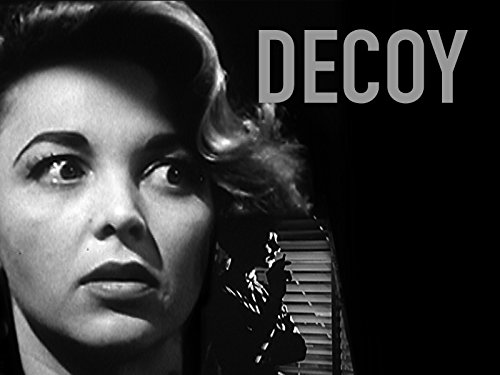
Those are the words that end the first episode of Decoy and they’re delivered by Casey Jones (Beverly Garland), a former ballet dancer who now works undercover as a member of the NYPD’s Department of Policewomen.  Casey holds up her revolver for the audience to see, leaving them no doubt that she’s telling the truth.  A woman who know how to handle a gun!?  Audiences in 1957 were no doubt stunned.

Of course, the audience had also just spent 25 minutes watching Casey work undercover.  After a merchant seaman is murdered and a woman named Molly Orchid (Joanne Linville) is caught with some of his jewelry, Casey is sent to live across the hall from Molly.  (Casey is also living in the dead man’s apartment.  Casey, a true New Yorker, comments that she’ll do anything to get a good apartment.)  After hiding her gun in a lighting fixture and hiding her badge under her blouse, Casey befriends Molly and tries to meet George, the mysterious boyfriend that Molly says gave her the jewelry.

Molly loves to talk about George but George never seems to be around.  Molly says that George is a musician and that he’s often out of town.  Casey comes to feel sorry for Molly, feeling that the emotionally vulnerable woman is being manipulated by George.  Whereas the male cops would just as soon shoot Molly than try to negotiate with her (this entire show is from the pre-Miranda era), Casey does her best to reason with Molly.  That is the difference between a policewoman and a policeman.

Of course, as you probably already guessed, there is no George.  Casey eventually figures it out after she realizes that Molly has been going to the movies alone as opposed to meeting up with George.  Molly, spotting Casey’s gun, grabs it and finally admits the truth.  The merchant seaman tried to assault her and Molly strangled him in self-defense.  George is a figment of her imagination, someone who she made up as a way to deal with her guilt.  A policeman barges into the apartment and points his gun at Molly but Casey steps in front of him and then manages to talk Molly down.

The first episode of Decoy was distinguished by some on-location shooting in New York City and the performances of Joanne Linville and especially Beverly Garland.  Garland’s empathetic but strong-willed performance dominates the show and it leaves us with little doubt that Casey Jones is the best at what she does.  Meanwhile, Linville, in the role of Molly, may be dangerous but she’s also sympathetic.  Her crime was initially one of self-defense and George was someone she created as her way of surviving in a world where no one was willing to look out for her.

Next week: Casey searches for a missing artist.

Late Night Retro Television Review: 1st & Ten 1.7 “Uneasy Lies The Head”


Welcome to Late Night Retro Television Reviews, a feature where we review some of our favorite and least favorite shows of the past! On Wednesdays, I will be reviewing 1st and Ten, which aired in syndication from 1984 to 1991. The entire series is streaming on Tubi.

This week, Coach Denardo has a bad dream and put the future of the Bulls in jeopardy.

Episode 1.7 “Uneasy Lies The Head”

(Dir by Bruce Seth Green, originally aired on January 6th, 1985)

After having a nightmare in which the members of the Bulls all appear as parts of his failing body and a demonic linebacker (Donald Gibb) and a saintly quarterback (Jeff East) tell him that he has to decide whether he wants to go to Heaven or Hell, Coach Denardo fears that his time is up.

At the next game, Denardo is distracted.  He calls the last time out, not realizing that he doesn’t have any left.  The clocks runs out while the Bulls are trying to get set up for field goal.  “Time out!  Time out!”  Denardo yells.  “You have no time left, coach,” the referee replies, which is maybe not the best way to speak to a man recovering from a heart attack.  As for the game, it’s a humiliating loss.  Denardo says that he might have to retire….

Yeah, that sounds about right.  I don’t know much about football but I can tell that Denardo made a lot of mistakes in the course of  just two minutes.  Get that old man out there!  Heck, just let Diane coach like she did last week….

Diane decides to trick Denardo into staying.  She rolls a really old computer out during practice and lets it call the plays.  Denardo gets angry.  No machine is going to replace Ernie Denardo!

Meanwhile, Bubba (Prince Hughes) upsets his mother-in-law.

Seriously, that’s the entire episode.  That’s all that happens.  I know it doesn’t sound like much but what can I tell you?  I sat through this and spent the whole time wondering when the episode’s actual story was going to start and it really didn’t.  Denardo had a bad dream.  Bubba upset his mother-in-law.  That’s it.

This episode was forgettable.  Diane should have fired Denardo after that loss.  I fear the Bulls aren’t going to make it to whatever this show’s version of the Super Bowl is.

Retro Television Review: The Love Boat 6.14 “Paroled to Love/First Impressions/Love Finds Florence Nightingale”


Welcome to Retro Television Reviews, a feature where we review some of our favorite and least favorite shows of the past!  On Wednesdays, I will be reviewing the original Love Boat, which aired on ABC from 1977 to 1986!  The series can be streamed on Paramount Plus!

Gavin MacLeod of the clan MacLeod declares (after the song number) “There can be only one!”, runs amok

This episode should be called- Lying Liars Who Lie!!!!

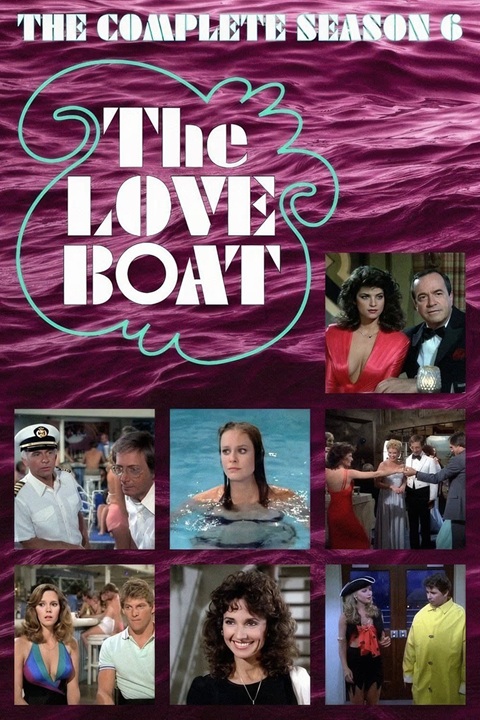
There are three stories all of which have pathological liars. The first story is “Paroled to Love” and it is beyond impossible. Gloria Baxter (Vicki Lawrence) is a criminal defense lawyer who just got a pardon for her embezzling client Eddie (Richard Kline). As the plot would have it, Eddie and Gloria love one another, but Eddie has a secret: he done did it and Gloria thought he was an innocent man!

Sidenote: as you may know, I was a criminal attorney for a number of years and in all of those cases, I can’t say that I had no innocent clients because I had one. One!

When I told my criminal defense attorney public defender friends that I had an actually innocent client, they told me to hold on because they needed to get recesses in the courthouse so that all of the PD’s could come out and hear this tale that sounded like lore! These attorneys had been doing criminal defense for decades and never had an innocent client! There was a crowd of over 70 attorneys, both public and private! They listened rapt to every detail of my story like I was Gandolf telling the stories of the rings!

I told them that I had documented proof that the police officer had not only lied, but falsified his police report, you could feel their goosebumps. Several of them begged me to just let them sit next to me as co-council or let them file a motion for me for free just so they could be part of this once in a career event. So, why in the world did Gloria not just presume that Eddie was not only guilty but a liar? Was this her first case? Was she hit on the head with something hard? Was her law school in Candyland?

Yes, Eddie lied to Gloria so she would get him a pardon when in fact, he was an embezzler, and she insists that to have her love he must go back to jail. At first, Eddie refuses, then she changes her mind, and Eddie decides to change his mind and go back to prison! It’s weird for many reasons: lawyers can’t date their clients and once a pardon is issued, it can’t be revoked! Once a pardon is accepted- It’s over.

The second story with a lying liar who lies is the Phyllis Faraday (Carole Cook) storyline. Phyllis wants to get a part playing of Florence Nightingale so decides to be a fake nurse for the Doc in order to get practice. Sadly, there was a shuffleboard accident and she did not set a compound fracture properly, the patient became septic, died, and the show was renamed The Death Boat. The show still had song and dance numbers, but they were all by Adele.

JK, she meets a guy who’s a rancher out of Wyoming, who thinks she’s an actual nurse and he falls in love with her after 24 hours because he thinks she’s a tenderhearted nurse. However, she is not a nurse and must confess this.

But did she really need to confess anything? I mean, this guy fell in love with her after 24 hours. How do you know that he won’t fall in love with the cab driver who picked them up for the ship and took them to their hotel or a cashier or anyone he meets for any period of time over 60 seconds?

The last storyline of lying liars who lie was probably the most weird, but it did allow them to have their required vaudeville acts of impressions and singing. Doris (Leia’s Mom) and Marsha (Marilyn Michaels) started a talent company with Julie. Gotta say, Julie seems agitated – I wonder why? Could it be????

Unfortunately, Doris and Marsha booked all of these celebrities to go on the cruise, but they sent them on the wrong cruise. They sent the stars on an Alaskan cruise and they didn’t bring any warm clothes which makes me wonder. Are they all dead? Is this like “Alive?” Why would that cruise ship take these stars aboard, when they were not on the manifest? What kind of a rogue cruise ship was this? Was it, in fact, a ship devoted to human trafficking? Are all these poor Hollywood stars now in some bizarre salt mine fighting to the death for the amusement of The Rumble on the infamous Money Plane???

I couldn’t find the “it’s rumble time”GIF

Doris and Marsha decide to do the most obvious thing: they pretend to be all these different Hollywood stars with OK impressions and then do a song number. Honestly, they might as well do that. It’s so hard for this show to contrive credible reasons for a song and dance number for every episode that I’ve seen so far; so, why not this?

I would describe this episode as OK.