Brad’s Thoughts on Season 1 of LANDMAN, Starring Billy Bob Thornton!


Taylor Sheridan has become a fairly big part of my life over the last decade. It started when I saw HELL OR HIGH WATER in the movie theater back in 2016. It was one of my favorite movies of the year, and it was written by a guy named Taylor Sheridan. Well, the next year brought us WIND RIVER, which was both written and directed by Taylor Sheridan, and it was one of my favorite movies of 2017. Then came the series YELLOWSTONE, which was created by Taylor Sheridan and began airing in 2018. I didn’t watch the first couple of seasons, but I thought it looked good and even bought the first season on DVD when I saw it for sale at Wal Mart. When my wife Sierra came home from performing her nursely duties at the hospital and told me that everyone was saying that we needed to watch YELLOWSTONE, I informed her that I just so happened to own Season 1 on DVD. So, we popped it in the DVD player, and we were soon obsessed with the world of the Duttons. My wife took special joy in the characters of Beth (Kelly Reilly) and Rip (Cole Hauser), while John Dutton (Kevin Costner) and Rip kept my attention. I’ll admit that it scared me a little bit that Sierra enjoyed Beth so much, and I’m glad to report that, up to this point, she has not started trying to emulate her actions in real life!

When YELLOWSTONE ended its run at the end of 2024, the Paramount network was putting a major marketing push into their latest “Taylor Sheridan” series, that being LANDMAN, which had started its first season around the same time YELLOWSTONE was wrapping up its final season. I’m a huge fan of actor Billy Bob Thornton, so the fact that he was headlining a series set in Texas oil country automatically piqued my curiosity. Not ready to commit to 10 hours’ worth of LANDMAN episodes quite yet, we put the show on the backburner for a bit, knowing that we could jump in and watch it whenever we wanted to. Well, this past weekend, we got snowed in here in Central Arkansas, so I asked Sierra if she’d like to watch a few episodes of LANDMAN. Needless to say, over the course of the day we watched every episode of Season 1. I really enjoyed the first season and decided to share some of my thoughts with you.

First off, if I’m going to commit to watching 10 hours’ worth of anything, I need to really like at least some of the characters. I don’t just like Billy Bob Thornton’s portrayal of the “Landman” of the title, his Tommy Norris is now one of my favorite characters that he’s ever played. He’s the ultimate realist, because no matter what situation he finds himself in, whether he’s dealing with the head of a drug cartel, the head of his oil company, or his ex-wife, he tackles every situation by uniquely framing the specific issues in a matter of moments and then providing solutions that appeal to his audience’s most base instincts. Alternatively hilarious, serious, heartbreaking and genius, Thornton gives a masterful performance that I don’t think anyone else could have pulled off any more effectively. His ex-wife Angela (Ali Larter) is probably the toughest of all for him to deal with as his own sense of self-preservation seems to go out the window whenever she’s around. Ali Larter’s performance as Angela is loud, brash, attention-seeking, hypersexual, and every so often, just vulnerable enough that you can kind of like her. I think she’s great, and quite sexy, in the role. Michelle Randolph and Jacob Lofland get a lot of screen time in the first season as their children, Ainsley Norris and Cooper Norris. Michelle is cute and spunky, definitely her mother’s daughter, but she also loves her dad so much. I like her. Lofland, who, like Thornton, is from my state of Arkansas, has a meatier role, having to deal with tragedy from the very beginning and then serious family drama as the season plays out. It’s not a showy role, but he does a solid job. The other performance that I really enjoy throughout season 1 comes from Jon Hamm as the head of the oil company, Monty Miller. I kept referring to him as J.R. Ewing as I watched because he’s the big boss. He’s the person that Tommy Norris calls when he can’t solve their problems. Unlike J.R. Ewing, although Miller is a tough businessman, he’s also a committed family man who tries to be there for his wife Cami (Demi Moore) and their daughters when they need him. He is as hard-nosed as it gets in his business dealings, though, and it’s easy to see why he had emerged as the main guy over Tommy. I did want to shout out the actors Colm Feore, James Jordan and Mustafa Speaks as various employees of the oil company who provide different elements of humor and toughness to the proceedings over the course of the season. Finally, as far as the primary cast, while prominently credited throughout the first season, Demi Moore has relatively little to do until the very end of season 1. If you’re a big fan of hers, just know that going in. Her character seems primed to be a big part of season 2, though, so it will be interesting to see where that goes.

Second, like with any popular dramatic TV series, LANDMAN Season 1 contains some storylines that I really enjoy, while there are some that I don’t really care for. Where LANDMAN really works for me is when it features Billy Bob Thornton’s Tommy Norris as a fixer of some sort. It was in these storylines that we get to see his ability to use his intelligence, communication skills, and understanding of human nature to come up with solutions that are best for everyone. It might not always be easy, and he might have to take a beating every now and then, but Tommy knows how to get things done, and the show is at its best when it’s focused on him. We see this throughout season 1 as Norris deals with a variety of cartel henchmen, hotshot attorneys, and unhappy leaseholders in order to advance his company, M-Tex’s interests. There are also a few badass moments when it becomes clear that talking won’t get the job done, and even more direct methods will have to be used to get his point across. This usually happens when Tommy’s feeling the need to protect his children. If there is a weakness to the show, for me, it’s the fact that when Tommy Norris isn’t part of the proceedings, I don’t like it nearly as much. For example, while scenes involving Jacob Lofland’s character, Cooper, and the recently widowed young mother Ariana (Paulina Chavez), whose husband was an employee of the company, ramp up the melodrama, they also take up a lot of time, and I don’t find them very appealing. The same can be said when Ali Larter’s character, Angela, and her daughter Ainsley, decide they’re going to volunteer at a nursing home, and then proceed to hook the residents up with alcohol and even take them to a strip club. While I smiled at some of the proceedings, they weren’t realistic and didn’t really add anything to the story. I even found myself worrying about some of the residents, I mean, I’m sure some of their medication was NOT compatible with tequila! I’m guessing that these quibbles really just come down to a matter of personal preference, as I’m sure there are some who enjoy these moments more than I do. I will admit that these scenes are well-acted and performed even if they’re not advancing my favorite parts of the story.  

Overall, I really enjoyed season 1 of LANDMAN, and I’m looking forward to jumping into season 2 soon, which is now streaming. The last couple of episodes of season 1 introduced or elevated some very interesting characters who will have more prominent roles moving forward (played by Andy Garcia and Demi Moore), and peaking ahead, season 2 also appears to have some interesting additions to the cast (I’m looking at you Sam Elliott). I’m looking forward to the next 10 hours of fun!

Miniseries Review: The Corner (dir by Charles S. Dutton)


Actor T.K. Carter died on January 9th.  He was 69 years old and his passing really didn’t get the notice that he deserved.

T.K. Carter may not have been a household name but I imagine that most people would recognize him if they saw him.  He appeared on a lot of television shows.  He did his share of movies.  He was usually cast in comedic roles, often playing the best friend who would inevitably provide some sort of gentle commentary on the problems of his friends or coworkers.  I just recently finished reviewing Good Morning, Miss Bliss, which featured Carter as Milo.  I’m not really sure what Milo did at John F. Kennedy Junior High but he was certainly more likable than Miss Bliss.

Carter appeared in some films as well.  Ironically, his two best-known films were not comedic at all.  He plays Nauls in John Carpenter’s The Thinga film that pretty much ends with Kurt Russell and Keith David freezing to death while wondering whether or not one of them is actually a killer alien.  And he also played Cribbs, a pot-smoking member of the National Guard who finds himself lost in the Louisiana bayou in Walter Hill’s Southern Comfort.  I have to admit that, after having watched both of those films more than once, it was a bit strange to see Carter exchanging jokes with Hayley Mills and Dennis Haskins on Good Morning Miss Bliss.

That said, if I had to pick Carter’s best performance, I would probably go with his work in the 2000 HBO miniseries, The Corner.  Based on a nonfiction book by David Simon, The Corner follows several characters over the course of one year in Baltimore.  Almost all of the characters are involved in the drug trade in some way or another.  DeAndre McCullough (Sean Nelson) is a fifteen year-old drug dealer who, despite his obvious intelligence, seems to be destined to become yet another statistic.  DeAndre’s parents are Fran (Khandi Alexander) and Gary (T.K. Carter).  At the start of the miniseries, both Fran and Gary are drug addicts and both of them make the effort to get clean.  Both have moments where their lives appear to be improving.  They both have moments where they relapse and have to start all over again.  Tragedy follows both of them.

The Corner is often described as being a forerunner to The Wire and indeed, there are definite similarities.  Like The Wire, The Corner was shot on location in Baltimore.  Like The Wire, The Corner emphasizes that futility of trying to wage a war on drugs.  As well, several members of The Corner‘s cast also appeared on The Wire.  Clarke Peters, Lance Reddick, Reg E. Cathey, Corey Parker Robinson, Delaney Williams, and Robert F. Chew are among the many Wire actors who appear in The Corner.  Interestingly enough, many of The Wire‘s cops and politicians appear as addicts in The Corner.  Clarke Peters and Reg E. Cathey play two long-time drug addicts who serve as a bit of a chorus for the neighborhood.  Lane Reddick appears as a recovering addict who tries to take advantage of Fran.

That said, The Corner doesn’t trust its audience in the same way that The Wire did.  That’s largely because The Corner was directed by Charles S. Dutton, who has never been a particularly subtle actor or director.  Dutton does a good job capturing the grit of Baltimore but he also includes “interviews” with various characters in which he asks questions while off-camera.  It feels a bit too on-the-nose, as if each episode of The Wire opened with a dramatic monologue from McNulty or Stringer Bell.  We don’t need the characters to look straight at the camera and tell us that things are bad.  We can see that for ourselves.

The entire cast does a good job but the best performance undoubtedly comes from T.K. Carter, who plays Gary as being an intelligent man, a good man, a hopeful man, but also a man who cannot escape his addiction.  With his gentle smile, his pleading eyes, and the almost shy way that he asks people to help him when he needs a fix, Carter gives a heart-breaking performance and one that shows that Gary truly is a prisoner of his addiction.  He doesn’t want to be an addict.  He wants to get clean.  But he also lives in a world where drugs are not only everywhere but they’re also the only escape that he and so many other people have from their oppressive existence.  With the government and the police treating the drug crisis as a war as opposed to a public health emergency, Gary’s two options really are either prison or the basement of his mother’s home.  The police view Gary as being nothing more than an criminal as opposed to someone with a sickness.  The dealers, meanwhile, view Gary as being a marketing opportunity.  T.K. Carter captures both Gary’s desperation and his sadness.  It’s a great performance and one that deserves to be remembered.  As played by T.K. Carter, Gary is the battered heart of The Corner.

T.K. Carter, RIP.


A Scene That I Love: John Belushi On The Weather


Today would have been the 77th birthday of the great John Belushi.

I was planning on watching and reviewing The Blues Brothers today but that was before the winter storm hit.  Instead, here’s Belushi on Saturday Night Live in 1976, talking about the weather.  John was 25 here and it’s hard to believe that, in just 6 years, he would be gone.


Review: Penny Dreadful – Seasons 1 thru 3 (by John Logan)


“There are things within a soul that can never be unleashed… They would consume us. We would cease to be, and another would exist in our place, without control, without limits.” — Vanessa Ives

Penny Dreadful remains one of the more distinctive horror dramas of the 2010s, its three-season run on Showtime from 2014 to 2016 offering a rare blend of lush literary homage, character-driven tragedy, and outright Grand Guignol spectacle. Expanding the lens season by season clarifies how the series evolves from a moody, experimental monster mash into a full-blown gothic epic, while also highlighting the structural flaws and uneven pacing that prevent it from being universally accessible, even as standout performances from its ensemble elevate every frame. What emerges is a show that grows richer the more time it spends with its characters—particularly through highlight turns like Eva Green’s ferocious Vanessa Ives, Rory Kinnear’s soul-wrenching Creature, and the magnetic supporting work from Timothy Dalton, Josh Hartnett, and Billie Piper—rewarding patient viewers even as its narrative sometimes strains under the weight of its own ambition.

Season one of Penny Dreadful functions as an origin point and a proof of concept, introducing viewers to a haunted ensemble bound together by secrets, sin, and supernatural forces, with performances that immediately set a bar for emotional and physical intensity. The central plot—Sir Malcolm Murray and Vanessa Ives recruiting American gunslinger Ethan Chandler and tortured scientist Victor Frankenstein to rescue Malcolm’s daughter Mina from a vampiric master—serves less as a conventional quest and more as a framework to explore broken people clinging to purpose, anchored by Timothy Dalton’s commanding Sir Malcolm, whose gravelly authority and haunted eyes convey a lifetime of imperial regrets and paternal failure. Eva Green’s Vanessa is the undeniable highlight here, her ferocious intensity in episodes like Séance and Possession—where glossolalia, contortions, and violent ecstasy erupt—turning demonic outbreaks into raw expressions of guilt, repression, and spiritual crisis, earning her a Golden Globe nomination for a debut season that demands Oscar-level physicality and vulnerability. Josh Hartnett’s Ethan Chandler provides a grounded counterpoint, his brooding sharpshooter evolving from reluctant hero to tormented beast with subtle shifts in posture and gaze that foreshadow his lycanthropic reveal.

The first season also lays the groundwork for the show’s thematic fascination with duality and monstrosity, especially through Harry Treadaway’s brittle Victor Frankenstein—whose twitching desperation humanizes god-like hubris—and Rory Kinnear’s breakout as the Creature, a shambling horror who quickly reveals literate eloquence and bitter pathos, his scarred visage and rumbling baritone making every plea for connection a gut-punch that redefines “monster” from the outset. Season one’s pacing can feel deliberately slow, even theatrical, as it lingers on candlelit rooms, whispered confessions, and philosophical exchanges, and some viewers may find this emphasis on mood over plot progression alienating. Yet that same deliberation allows the show to build a cohesive emotional atmosphere in which every prayer, séance, and bloodletting feels weighted with meaning, amplified by Dalton’s authoritative gravitas and Green’s transcendent torment. Critics generally responded favorably to this opening run, praising these performances and the atmosphere while noting that its heavy tone and self-seriousness would not be to every viewer’s taste.

Season two represents Penny Dreadful at its most confident and cohesive, expanding the mythology while tightening the emotional focus around Vanessa’s confrontation with a coven of witches led by Evelyn Poole, with Helen McCrory’s serpentine Madame Kali emerging as a highlight villain whose purring malice and intimate manipulations steal scenes. By reframing the central antagonist from a shadowy vampire figure to this fully articulated witch—who weaponizes intimacy, religious iconography, and psychological terror—the show raises the stakes, and Green’s Vanessa responds with even greater ferocity, her possession battles now laced with backstory from Patti LuPone’s earthy, heartbreaking Cut-Wife, whose single-episode arc showcases LuPone’s unparalleled ability to blend folk wisdom with maternal ferocity. This season’s central conflict positions Vanessa as the battleground for Lucifer’s desire, giving the main cast a unity of purpose that the first sometimes lacked.

Character work in season two deepens significantly, with Josh Hartnett elevating Ethan into a moral savage whose lupine rampages in No Beast So Fierce blend raw physicality and soul-searching remorse, while Billie Piper’s evolution from fragile Brona Croft to the defiant Lily Frankenstein becomes a revelation—her steely monologues on patriarchal violence delivered with fiery conviction that rivals Green’s intensity. Rory Kinnear’s Creature reaches new pathos pleading for a mate, his rejection scene opposite Treadaway’s increasingly unhinged Victor one of the series’ most devastating showcases of mutual ruin. Reeve Carney’s Dorian Gray adds hedonistic shimmer, though his arc pales next to these powerhouses. Moments like the group’s desperate defense of Sir Malcolm’s home or Ethan’s transformations achieve a rare balance of gore, suspense, and lyrical resolution, with Dalton’s weary patriarch holding the emotional center. Critics frequently cite season two as the show’s peak, with 100% Rotten Tomatoes scores reflecting near-universal praise for these heightened performances and tighter narrative.

Season three is where the series’ strengths and weaknesses collide most dramatically, as it scatters the core ensemble geographically and mythologically while hurtling toward an abrupt conclusion, yet the actors rise to the challenge with career-best work. Eva Green’s Vanessa deepens into despairing isolation, her therapy sessions with Patti LuPone’s returning Dr. Seward (a chilling pivot from folk healer to clinical cutter) and tender courtship by Christian Camargo’s suave Dracula yielding some of her most nuanced work—balancing fragility, resolve, and erotic pull in a finale self-sacrifice that cements her as TV’s ultimate gothic heroine. Josh Hartnett’s Ethan, now grappling with Apache mystic Kaetenay (Wes Studi’s dignified gravitas a welcome addition), delivers visceral Western showdowns that showcase his action-hero chops alongside soulful reckoning. Timothy Dalton’s Sir Malcolm, questing in Zanzibar, brings imperial weariness to poignant closure, his highlight a raw confrontation with past sins.

Standouts continue with Billie Piper’s Lily rallying a feminist uprising, her ideological fire clashing gloriously with Dorian’s jaded ennui in scenes of revolutionary fervor and betrayal that highlight Carney’s subtle decay. Harry Treadaway’s Victor, partnering with Shazad Latif’s oily Jekyll, spirals into ethical abyss with manic precision, while Rory Kinnear’s Creature—rediscovering his identity as John Clare—delivers the series’ most quietly devastating arc, his family reunion a masterclass in restrained grief that rivals Green’s flashier exorcisms for emotional wallop. These performances salvage the fragmented plotting, infusing global detours with humanity even as resolutions feel rushed.

Evaluated across all three seasons, Penny Dreadful delivers a rich, if imperfect, journey elevated by its highlight performances: Green’s transcendent Vanessa as the tormented soul; Kinnear’s Creature as the rejected heart; Dalton’s authoritative patriarch; Hartnett’s brooding beast; Piper’s fiery avenger; and LuPone’s dual folk icons—forming an ensemble that turns gothic pulp into profound tragedy. Season one constructs a dense foundation; season two refines it into peak artistry; season three reaches for epic finality with power even in haste. The end result succeeds more as character-driven gothic poetry than tidy thriller, its actors ensuring unforgettable resonance for horror fans craving depth. In a landscape of sanitized scares, these performances make Penny Dreadful a dark, enduring achievement.

Review: Fallout (Season 2, Episode 6 “The Other Player”)


“So, for our daughter, you would kill millions of people. Billions of people. Other-other mothers just like you. Other daughters just like our daughter!” — Copper Howard

Episode 6 of Fallout season 2, titled “The Other Player,” ramps up the tension as the series dives deeper into the messy origins of the apocalypse and the fragile illusions of control in its aftermath. This installment centers on power dynamics—who pulls the strings before the bombs fall, who grabs them afterward, and who dares to cling to ideals like justice in a wasteland that mocks them at every turn. It delivers some standout moments for key characters like Barb and Lucy, blending corporate horror with personal reckonings, though a few subplots in the irradiated wilds feel like they’re just treading water ahead of bigger payoffs.

Barb’s storyline takes the spotlight early, peeling back the pre-war curtain to reveal Vault-Tec’s chilling machinery of doom. Picture her navigating a day packed with boardroom horrors: pitches for vaults rigged to fail on purpose, exclusive escape routes for elite clients, and slick strategies to polish the end times into a marketable package. The satire bites hard, but things darken when she brushes up against the shadowy layers beneath the corporate facade, including a tense encounter that exposes the ruthless leverage being used against her family. By the time she’s cornered into advancing the nuclear launch herself, her shift from confident insider to reluctant pawn feels raw and human—someone who glimpses the abyss but steps closer anyway.

This arc shines because it doesn’t paint Barb as a cartoon villain or a blameless dupe; she’s stuck in that gray zone of complicity, making choices under duress that echo through centuries. Her eventual clash with Cooper, where he probes just how deep the rot goes, hits with real weight, forcing her to confront the fallout of her inaction. When she aids in a high-stakes extraction involving Hank, it’s a flicker of atonement laced with disaster, underscoring how good intentions in this universe always curdle. The episode leaves her arc hanging in a compelling limbo, hinting at ripple effects that could redefine loyalties as the Enclave’s shadow looms larger.

Lucy’s journey mirrors this theme of fractured morality, thrusting her into a reconstructed slice of her Vault 33 life that’s equal parts nostalgic trap and dystopian experiment. She stirs in a familiar setup, only to spot the mind-control collars on patrolling guards—Hank’s twisted vision of order, where impulses are leashed to forge a “civilized” society from savages. True to form, Lucy opts for due process over vengeance, collaring her dad for a trial back home, betting on the vault-bred rules that have crumbled around her. It’s a stubborn spark of optimism that the show handles with nuance, never letting it tip into naivety.

As she prowls Hank’s operation, Lucy witnesses the eerie results: former killers and cannibals reshaped into mundane workers, content in their programmed bliss. Her bid to liberate them backfires when some admit they’d rather stay subdued, posing the gut-punch question at Fallout‘s core—is peace worth the chains if it’s chosen? The episode’s visceral demo drives it home: a restrained brute turns feral, brutalizing a captive in a frenzy of violence until Lucy flips the override switch, transforming rage into rote camaraderie. Hank’s philosophy—that curbing free will is the ultimate mercy—creeps under the skin, challenging Lucy’s worldview without fully vindicating him.

Hank embodies the franchise’s archetype of the self-righteous tyrant, framing his atrocities as paternal duty. Shackling himself for “accountability” feels like calculated theater, a nod to Shady Sands’ destruction wrapped in protective bluster. Their father-daughter standoff crackles with unresolved pain, elevating what could be talky scenes into emotional tinder. He doesn’t dodge blame entirely, but his rationalizations muddy the waters just enough to keep Lucy—and viewers—wrestling with the cost of survival.

The wasteland threads, by contrast, deliver flashes of grit but lack the same punch. The Ghoul kicks off skewered and desperate, his radiation-fueled rasp devolving into pleas about lost family as he fights for his gear. A massive super mutant swoops in for the save, channeling that gravelly lore vibe with a uranium “cure” and whispers of an anti-Enclave uprising. It’s a thrilling nod to the games’ icons, yet the sequence fizzles by sidelining the mutant’s deeper motives and knocking Ghoul out cold too soon—cool on paper, but it whets the appetite without satisfying.

Maximus and Thaddeus fare worse, stuck in nomadic chit-chat mode. Ditching the traceable armor leads to debates over hawking their prize or gifting it to some vague “greater good,” laced with buddy-cop quips around the campfire. It’s breezy filler that humanizes them amid the heavier drama, and their eventual Ghoul rendezvous teases convergence, but it drags compared to the vault intrigue. These beats keep the ensemble breathing, yet they underscore how the episode prioritizes cerebral clashes over explosive action.

Down in the vaults, bureaucratic farce provides lighter relief: a support group devolves into snack-hoarding chaos until the overseer axes it over budget cuts. Reg’s defiant munching on pilfered treats captures that petty vault defiance, a microcosm of resistance against soul-crushing routine. Still, this undercurrent ties loosely to the topside stakes, feeling more like world-building seasoning than plot fuel.

Clocking in as a character-driven pivot, “The Other Player” excels at unpacking ethical quagmires—Barb’s pre-war slide, Lucy’s moral tightrope, Hank’s paternal authoritarianism—while teasing Enclave escalation. The super mutant tease and wasteland wanderings underwhelm in execution, marking time until the ensemble collides, but the thematic heft carries it. Season 2’s back half feels primed for chaos, with these personal fractures promising a powder keg payoff amid the radiation storms. If it balances the introspection with more wasteland fury, this episode will slot neatly as the calm before the irradiated storm.

Fallout Season 2 Episodes

  1. Episode 1: “The Innovator”
  2. Episode 2: “The Golden Rule”
  3. Episode 3: “The Profligate”
  4. Episode 4: “The Demon in the Snow”
  5. Episode 5: “The Wrangler”

Retro Television Review: Miami Vice 5.11 “Miami Squeeze”


Welcome to Retro Television Reviews, a feature where we review some of our favorite and least favorite shows of the past!  On Mondays, I will be reviewing Miami Vice, which ran on NBC from 1984 to 1989.  The entire show can be purchased on Prime!

This week, the British are coming!

Episode 5.11 “Miami Squeeze”

(Dir by Michelle Manning, originally aired on February 17th, 1989)

There’s a new drug lord in Miami.  He’s a British dandy named Sebastian Ross (Robert Joy) and it’s impossible to take him seriously as a legitimate threat.   The show continually tells us how dangerous Sebastian is.  When the son (Daniel Villarreal) of anti-drug Congresswoman Madeleine Woods (Rita Moreno) attempts to double-cross Sebastian, Sebastian blackmails the Congresswoman and also tries to make Castillo look like a dirty cop.  Castillo ends up getting shot, all as a result of Sebastian’s schemes.

And yet, despite all of that, it’s impossible to take Sebastian seriously.  He’s just a ridiculous character, a drug dealer who dresses like an Edwardian gentleman and who carries a can and who speaks with a remarkably bad British accent.  (Robert Joy is himself Canadian.  I should mention that Joy is also a very good character actor.  He’s just miscast here.)  As a character, Sebastian threw off the entire episode.  When you include Rita Moreno acting up a storm, this episode almost felt like a self-parody.

Joey Hardin (Justin Lazard),  the undercover cop from Line of Fire, returned in this episode.  Sonny recruited him to go undercover in order to infiltrate Sebastian’s organization.  Considering that Joey was a returning character and that there was a lengthy scene of Sonny asking if Joey felt confident enough to put his life on the line, it was kind of surprising that Joey didn’t really do much in this episode.  One got the feeling that perhaps this was meant to be a backdoor pilot for a show featuring Joey as an undercover cop who could pass for a teenager.  There’s nothing wrong with that, of course.  Who wouldn’t want to keep a franchise going?  But Joey ultimately felt like a red herring and a bit of a distraction.

This episode was a misfire.

Review: The Fall of the House of Usher (by Mike Flanagan)


“If pain and suffering were the kisses of Jesus, then he kissed the living fuck out of my mother.” — Roderick Usher

The Fall of the House of Usher delivers Mike Flanagan’s signature blend of gothic dread and modern moral reckoning, reimagining Edgar Allan Poe’s tales as a savage family implosion tied to corporate excess. This Netflix miniseries unfolds over eight taut episodes, framing the confessions of a pharmaceutical tycoon as his bloodline meets grisly, poetic ends. It balances sharp satire with emotional undercurrents, though its heavy-handed messaging and repetitive structure occasionally blunt the impact.

Roderick Usher, now a hollowed-out patriarch, recounts his empire’s collapse to a relentless prosecutor in the crumbling family mansion, flashing back to decades of ambition, betrayal, and supernatural intervention. His twin sister Madeline, the brains behind their Fortunato Pharmaceuticals fortune, shares equal narrative weight, their pact with a enigmatic figure sealing a curse that claims each heir in turn. The setup echoes Poe’s original story but explodes it into a sprawling anthology, with every installment riffing on a different work from the author’s macabre catalog. This structure keeps the momentum high, turning personal flaws into fatal traps, yet it risks formula once the pattern of vice-reveal-demise becomes predictable.

A standout early episode channels The Masque of the Red Death, where a debauched heir’s orgiastic gala spirals into carnage, blending excess with infectious horror in a sequence that’s equal parts thrilling and grotesque. Later, Goldbug skewers influencer wellness culture through a sibling’s pyramid-scheme downfall, its tech-glitch kills inventive and on-theme. These Poe-infused vignettes shine when they lean into visceral spectacle—impalements, immolations, animalistic frenzies—elevating routine family feuds into something operatic. However, weaker entries, like those fixated on lab accidents or courtroom paranoia, feel more procedural than poetic, diluting the supernatural menace amid procedural tangents.

Flanagan’s direction thrives in the atmospheric details: opulent sets that rot from within, shadows pooling like guilt, a score that swells with mournful strings underscoring inevitable doom. Performances anchor the excess, with Carla Gugino’s shape-shifting Verna stealing scenes as a devilish facilitator—charming one moment, apocalyptic the next. Bruce Greenwood lends Roderick a defeated majesty, his monologues on greed and legacy landing with gravitas despite their length. Mark Hamill’s fixer adds gravelly comic menace, a cold pragmatist navigating the Ushers’ moral sewer. The younger cast fares variably; some heirs pop as vicious caricatures—the coke-fueled playboy, the ruthless scientist—while others blur into interchangeable privilege.

Thematically, the series wields Poe’s obsessions—entombment, madness, retribution—against Big Pharma’s sins, drawing parallels to real-world opioid scandals without subtlety. Roderick and Madeline’s rise from rags via a addictive painkiller mirrors ethical shortcuts in pursuit of immortality, their “house” both literal estate and dynastic delusion. Verna embodies karmic balance, not mindless evil, her interventions exposing how wealth insulates sin until cosmic debt collectors arrive. This critique bites, especially in rants decrying humanity’s commodification of suffering, but preachy asides can halt the dread, turning horror into TED Talk territory. Flanagan fans will recognize his grief motifs, here twisted into generational poison rather than personal catharsis.

Pacing falters in the midsection, where flashbacks to the Ushers’ origin drag against the ticking present-day trial. The frame narrative, while elegant, withholds twists too long, making early hours feel like setup over payoff. Gorehounds get inventive set pieces, from pendulum blades to heart-pounding pursuits, but scares prioritize irony over outright terror—less Hereditary shocks, more Final Destination comeuppance. For a one-season arc, it wraps tightly, circling back to Poe’s raven as a symbol of unending loss, though the finale’s revelations feel more intellectually tidy than emotionally shattering.

As adaptation, it honors Poe’s spirit over fidelity, cherry-picking motifs from tales like The Tell-Tale HeartThe Black Cat, and The Pit and the Pendulum to fuel a contemporary revenge saga. Purists might chafe at the liberties—Poe’s claustrophobic intimacy traded for ensemble sprawl—but the result captures his misanthropy, updating crumbling aristocracy to cutthroat capitalism. It’s Flanagan’s angriest work, swapping supernatural melancholy for gleeful vengeance, yet retains his humanism: even monsters get poignant final beats, hinting at redemption’s flicker amid ruin.

The Fall of the House of Usher polarizes like much of Flanagan’s output—loved for audacity, critiqued for indulgence. Its ensemble and kills draw praise, but detractors note tonal whiplash between camp and sincerity. For horror enthusiasts craving literary flair over found-footage tropes, it’s a feast; casual viewers may tire of the lectures. Compared to Flanagan’s Hill House or Midnight Mass, it’s less introspective, more punitive, trading tears for dark laughs at the mighty’s tumble.​

Ultimately, the miniseries succeeds as pulpy prestige, a bloody valentine to Poe that indicts modern excess without fully escaping melodrama’s clutches. Its highs—Gugino’s tour de force, baroque deaths, thematic ambition—outweigh the bloat, making it binge-worthy for gothic fans. In Netflix’s crowded horror slate, it stands out for wit and wickedness, a flawed but ferocious reminder that some houses, and legacies, deserve to fall.

Late Night Retro Television Review: 1st & Ten 2.9 “A Family Affair”


Welcome to Late Night Retro Television Reviews, a feature where we review some of our favorite and least favorite shows of the past! On Wednesdays, I will be reviewing 1st and Ten, which aired in syndication from 1984 to 1991. The entire series is streaming on Tubi.

This week, the playoffs continue.

Episode 2.9 “A Family Affair”

(Dir by Burt Brinckerhoff, originally aired on January 13th, 1987)

A playoff game against Denver is approaching.  Denver is coached by a former protegee of Denardo’s and Denardo is obsessed with winning.  He’s so obsessed that he alienates the players and Coach Grier (Stan Kamber).  Grier is tempted to take a job as Houston’s head coach.  Denardo says he doesn’t care until Diane reveals that Grier has turned down several other jobs out of loyalty to Denardo.

As for the other assistant coach, T.D. Parker (OJ Simpson) has problems of his own.  His youngest son is acting out and the only thing that’s kept him out of juvenile detention is the fact that the cops are all fans of T.D. and the Bulls.  T.D. tells his son that he’s not allowed to leave the house.  When T.D.’s wife says that she thinks T.D. is being too strict, T.D. tells her to back off.  T.D. gets really mad in this episode but none of it is convincing because OJ Simpson was too amiable an actor to really come across as being threatening.  That’s something that would prove helpful to OJ in the years to come.

Meanwhile, the players all invest in the stock market.  The stock doesn’t do well.  The player who recommended the stock is chased out onto the field before the start of the big game against Denver.  Ha ha, those players are all broke now.  Good luck dealing with life after the game.

This show, I never know what to make of it.  Is it a comedy?  Is it a drama?  Why is it so oddly edited?  How many scenes were cut for syndication?  Why do storylines start and then just disappear?  For that matter, why do characters suddenly vanish?  Dr. Death was a huge part of the show during the first half of the second season but I haven’t seen him during the second half.  Did he get traded?  Did he get injured?  Seriously, what’s going on with this show?

I have no idea.  Football’s a confusing sport.

Retro Television Review: The Love Boat 7.3 “Bricker’s Boy/Lotions of Love/The Hustlers”


Welcome to Retro Television Reviews, a feature where we review some of our favorite and least favorite shows of the past!  On Wednesdays, I will be reviewing the original Love Boat, which aired on ABC from 1977 to 1986!  The series can be streamed on Paramount Plus!
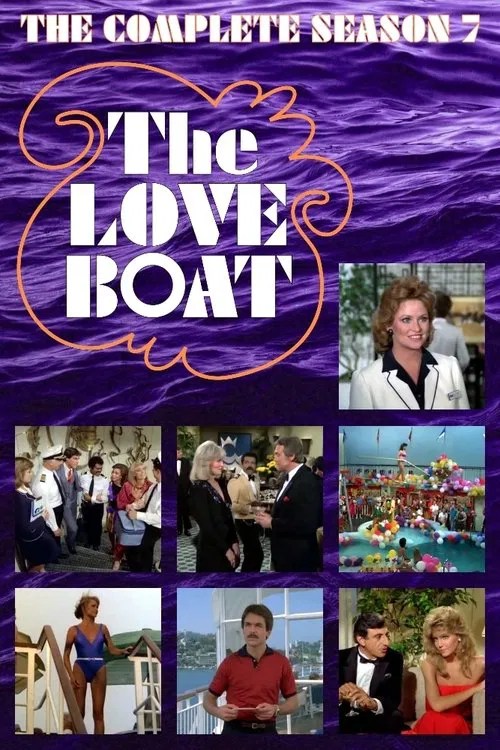
This week, Doc Bricker gets a surprise!

Episode 7.3 “Bricker’s Boy/Lotions of Love/The Hustlers”

(Dir by Jerome Courtland, originally aired on October 8th, 1983)

Doc Bricker has a son!

Well, actually, it’s more a case of David (Timothy Patrick Murphy) claiming to be Doc’s son.  It turns out that David’s mother was one of Doc’s ex-girlfriends.  By the end of the cruise, Doc has fully accepted David as his son but then David admits that he’s been lying the whole time.  Doc is not his father.  However, he wishes that Doc was his father.  So, Doc — who has got to be the most understanding guy on the planet — adopts him.  Vicki has a crush on the loser and Captain Stubing seems to be okay with that, despite the fact that David is a liar who took a cruise without even bothering to buy a ticket.  Seriously, I’m kind of worried about Vickie at this point.  She’s so bereft of friends her own age that she falls in love with every teenage boy who boards the ship.

While Vicki is busy making a bad decision, gigolo Gary Thomas (Ted McGinley) is traveling with his employer, Arlene (Vera Miles).  Gary falls for Fran (Constance Forslund), who is traveling with her sugar daddy, Roy (Chuck Connors).  Luckily, Arlene falls for Roy, which frees Gary up to date Fran.  Wow, what a sleazy story!  I mean, it’s probably as close to real life as this show ever got but still….

Finally, advertising executive Andy O’Neal (Brodie Greer) works on a perfume campaign and ends up falling in love with his client’s flighty daughter (Lydia Cornell).  Good for them!

Yeesh.  I usually love The Love Boat but this sure was a bland episode!  Not even Ted McGinley pretending to be a gigolo could liven this one up.  I will say that Bernie Kopell once again proved himself to be far better than the material that he had to work with.  But otherwise, this episode was pretty dull.

How coked up was Julie?  Obviously nowhere near enough.


Review: Fallout (Season 2, Episode 5 “The Wrangler”)


“Where I come from, which is America, the House always wins.” — Robert House

Episode 5 of Fallout Season 2 (“The Wrangler”) is the point where the show stops flirting with heartbreak and finally commits to it, using a brutally inevitable betrayal to crack open its core relationships while quietly escalating the bigger myth arc in the background. It is not the flashiest hour of the season, but it is one of the most emotionally coherent, and that focus is both its biggest strength and its main limitation.​

Most of the episode’s weight lands on the dynamic between Lucy and The Ghoul, and the writers lean hard into that “we knew this was coming” tension without turning it into a cheap twist. The Ghoul’s choice to hand Lucy over to Hank in exchange for the continued survival of his cryo-frozen family feels properly miserable: the kind of decision that is logically defendable and morally ugly at the same time. Watching Lucy slowly clock that she’s been a bargaining chip this whole time, right after she and Coop finally seemed to be in sync, gives the betrayal some sting beyond the spectacle of her Power Fist launching him out the window and onto a pole. The performances sell it; Ella Purnell plays Lucy’s hurt as a mix of disbelief and exhaustion, while Walton Goggins lets just enough regret bleed through the monster façade to make it clear that this is hurting him, too, even as he pulls the trigger on the plan.​

Structurally, the episode benefits from narrowing its scope to a few intersecting tracks instead of trying to cover the entire wasteland at once. On the Strip, Lucy’s Buffout fallout continues, sending her hunting for Addictol and instead into a mess involving price-gouging, a fake Sonny, and a very dead real Sonny in a bucket. That sequence walks the line between dark comedy and horror in a way that fits Fallout nicely, turning a simple “go buy meds” errand into a reminder that every familiar storefront can hide a fresh corpse and a new trauma. In parallel, The Ghoul drifts toward his fateful deal at the hotel bar, framed as a guy who has been running for two centuries and finally hits a wall he can’t brute-force his way through. The pacing is patient without feeling sluggish, and the way these threads converge in the final act makes the ending feel earned rather than engineered.​

The big lore bomb this week is less about who’s shooting whom in New Vegas and more about who actually ended the world and what Vault-Tec was really doing. Mr. House’s scenes with pre-Ghoul Cooper ramp up the paranoia by suggesting that Barb may not be the one who actually pushed the apocalypse over the edge, hinting at “another player at the table” tied to the creation of Deathclaws and bigger, unseen forces. It is classic Fallout conspiracy energy: corporations within corporations, shadow projects like FEV and “Future Enterprise Ventures,” and a corporate end-of-the-world plan that feels less like a singular villain’s choice and more like the outcome of a lot of self-interested people nudging the same disaster. The episode does not over-explain any of this, which is smart; it plants a few specific clues—like Norm’s discovery that Vault-Tec’s phase two revolves around genetic testing and forced evolution—and then lets your mind connect it to everything from Deathclaws to the vault experiments we have already seen.​

Norm’s storyline, which could easily feel like a cutaway from the “real” show, actually rebounds this week by giving the corporate plot teeth. His trip with the defrosted junior executives to Vault-Tec HQ mixes bleak humor—finding Janice’s corpse still at her desk, complete with coworkers sniping about her work ethic—with genuine dread as he starts to piece together that FEV is basically a “gene-altering agent for organism supercharging.” It is not subtle, but it works, especially when you realize how neatly it dovetails with what Hank is doing with that head-device in New Vegas: mind control, memory wiping, and turning humans into tools that fit Vault-Tec’s objectives better than their original personalities ever would. Norm getting choked out just as he starts to get real answers is a little on-the-nose as a cliffhanger, yet it keeps his thread from feeling aimless and promises that his office snooping will matter more than it might initially seem.​

On the spectacle side, the episode plays a funny trick: it teases what looks like a huge Deathclaw set piece on the Strip and then has Lucy and The Ghoul do what any sensible player has done in the games—run like hell and load into a different area. For anyone hoping for a full-on Deathclaw brawl, it is bound to be a letdown, especially since three of them are staged as this major escalation and then promptly sidestepped. That said, the choice is thematically on point; the show leans into the fear of the creatures rather than the mechanics of fighting them, and seeing The Ghoul genuinely terrified ties nicely back to his first encounter with one in Alaska two centuries ago. New Vegas itself feels more alive here, with Freeside looking busier and the Strip more dangerous, even if the action is more about near-misses and quick exits than big choreographed battles.​

The humor is hit-and-miss but usually lands on the right side of weird. The Snake Oil Salesman’s return, only to be drafted as Hank’s “voluntary” guinea pig for a head gadget that can pop skulls or wipe memories, leans into the show’s nastier comedic streak. His eagerness to forget a life full of sleaze says a lot about him in a single, darkly funny beat, while also underlining how casually Hank treats human minds as raw material. Not every gag works—some of the junior exec bits feel like they are chasing a joke about tech-bro sociopathy we have already seen before—but the episode keeps the comedy tightly woven into character and plot instead of dropping in random skits.​

If there is a legitimate knock against this episode, it is that the emotional gut-punch between Lucy and The Ghoul is so strong that almost everything else can feel like setup by comparison. The supposed “answer” about who dropped the bombs is really more of another mystery box, and viewers looking for a clearer reveal may feel strung along. The Deathclaw fake-out also risks feeling like the show talking a big game and then refusing to spend the budget to pay it off, even if the character beats that replace the fight are strong. And while Norm’s storyline is finally paying off, it still sometimes plays like a slower, less visceral series running parallel to the one in New Vegas, which might frustrate anyone hooked primarily on Lucy and The Ghoul’s arc.​

Still, as a midpoint episode, this is exactly where Fallout needs to hurt. The Ghoul’s betrayal is painful precisely because the show has spent so much time making Lucy good for him, setting her up as the one person who makes his humanity flicker back on—and then forcing him to choose the ghosts of his past over the partner standing right in front of him. Episode 5 might not deliver the biggest action of the season, but it gives the story a necessary emotional crash-out, sharpens the larger Vault-Tec conspiracy, and leaves nearly every character in a worse, more interesting place than they started.

Fallout Season 2 Episodes

  1. Episode 1: “The Innovator”
  2. Episode 2: “The Golden Rule”
  3. Episode 3: “The Profligate”
  4. Episode 4: “The Demon in the Snow”