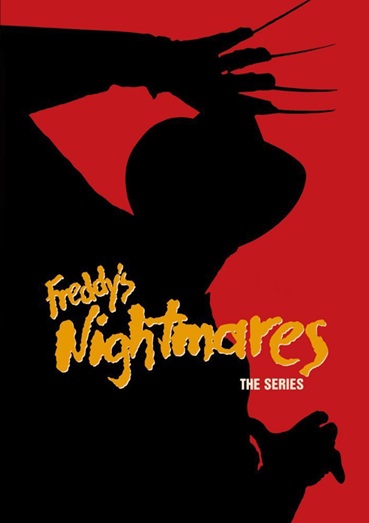
Late Night Retro Television Review: Freddy’s Nightmares 1.12 “The End of the World”


Welcome to Late Night Retro Television Reviews, a feature where we review some of our favorite and least favorite shows of the past! On Fridays, I will be reviewing Freddy’s Nightmares, a horror anthology show which ran in syndication from 1988 to 1990. The entire series can be found on Plex!

This week, dreaming saves the world.

Episode 1.12 “The End of the World”

(Dir by Jonathan R. Betuel, originally aired on January 15th, 1989)

Weird episode.

The first half of the episode featured Mary Kohnert as Amy Collins, a young woman who starts to have dreams about the past and discovers that she can change reality depending on what she does in her dream.  Most of the dreams center around the accidental death of her mother.  Amy sets about to save her mother’s life but she discovers that changing the past will always lead to unforeseen consequences.

Unfortunately, her psychiatrist (George Lazenby) rats her out to the CIA and Amy is soon being forced to work for the U.S. military.  When she senses that a soldier is planning on launching a nuclear attack and plunging the world into war, Amy is forced to do a mind-meld of sorts with him.  She watches as the army manages to break into his bunker and gun him down right before he launches the nukes.

I can’t complain about a show trying something different and I actually found it interesting how the two stories were totally different in style and tone.  The second story featured a dream about a nuclear war that was pretty disturbing.  On TV, Gumby and his horse melted from the atomic heat.  That said, this episode suffered from the same flaw as many of the episode of Freddy’s Nightmares, in that it really didn’t have the budget necessary to achieve what it was hoping to accomplish.

Still, who can forget the image of Freddy Krueger riding a nuclear missile in the style of Slim Pickens at the end of Dr. Strangelove?

Along with having an interesting premise, this one also had some interesting guest stars.  Along with George Lazenby and Gumby, Walter Gotell, Andrew Prine, and Albert Hall all made appearances.  I guess when Freddy Krueger invites you, you don’t say no.

Doctor Who — Robot (1974-1975, directed by Christopher Barry)


Robot, the first serial of Doctor Who‘s 12th season, introduced us to a new Doctor.  The Third Doctor has regenerated and in his place is a slightly younger and more eccentric man.  Robot was the first regeneration story to introduce the idea of the Doctor being disorientated after regenerating.  The Fourth Doctor (Tom Baker) wakes up without the Third Doctor’s pressing concern for Earth or the goings-on at UNIT.  At first, at least, he has the wanderlust of the First Doctor without the Third Doctor’s sense of duty.  He wants to get in his TARDIS and explore the universe.

The only thing that stops him from leaving are his companion, Sarah jane Smith (Elisabeth Sladen), and the Brigadier (Nicholas Courtney).  When they tell him that there have been some technology thefts and that they need his help to investigate, the Doctor agrees to stick around and help out.  Of course, before he investigates, he changes his costume.  Out are the Edwardian clothes that the Third Doctor favored.  In are wide-brimmed hats, trenchcoats, and scarves.  Very, very long scarves.

(His scarf in Robot is nowhere near as long as it would eventually get.)

When he was cast as the Doctor, Tom Baker was a character actor who has found some success (even receiving a Golden Globe nomination for his performance as Rasputin in Nicholas and Alexandra) but not enough to give up his part-time job as a construction worker.  When he wrote to the BBC asking for a job, the letter was forwarded to Doctor Who producer Barry Letts.  Letts, who was struggling to find someone to replace the popular Jon Pertwee, hired Baker for the role after watching Baker play a villain in The Golden Voyage of Sinbad.  (There’s a movie I might have to review before the month is over.)  Tom Baker would go on to have the longest run of any actor as the Doctor and, for years, he was consistently voted the most popular of the actors who have played the Doctor.  That’s not bad for someone who, before receiving the role, was tauntingly called “Sir Laurence” by his co-workers at the construction site.

Tom Baker was also the first Doctor that many Americans experienced.  When I was a kid and my local PBS station first started showing Doctor Who, they started with the Tom Baker years.  For many American, Tom Baker was the one who introduced them to things like the TARDIS, Daleks, and Cybermen.  Tom Baker’s Doctor, with the scarf and the sneaky smile and the eccentric humor, became an iconic figure the world over.

Considering how important Tom Baker would be to the show, it’s interesting that his first serial is nothing special.  The thefts are the work of a group of humans who want to construct a robot out of “living metal” so that they can steal Britain’s nuclear command codes and hold the world hostage.  An attempt to shoot the robot with a disintegrator gun causes the robot grows to supersize.  It develops a crush on Sarah Jane, and is destroyed by an early computer virus.  The giant robot special effects rival the dinosaurs from Invasion of the Dinosaurs for ineptitude.  The episode ends with asking Sarah Jane and UNIT’s Dr. Harry Sullivan (Ian Marter) to accompany him on a trip in the TARDIS.

The only thing that really stands out about this episode is Tom Baker’s performance as the Doctor.  I hesitate to say that anyone was ever destined to play a role but Baker is so confident from the start and seems like such a natural while interacting with veteran cast members like Nicholas Courtney, Elisabeth Sladen, and John Levene that it’s hard to believe that anyone other than Tom Baker was ever considered for the role of The Fourth Doctor.  From the start, Tom Baker just seems like be belongs there.

Robot may not have been classic Doctor Who but Tom Baker was the classic Doctor.

Retro Television Review: St. Elsewhere 2.19 “The Women”


Welcome to Retro Television Reviews, a feature where we review some of our favorite and least favorite shows of the past! On Fridays, I will be reviewing St. Elsewhere, a medical show which ran on NBC from 1982 to 1988.  The show can be found on Hulu and, for purchase, on Prime!

This week, St. Elsewhere tries something different.

Episode 2.19 “The Women”

(Dir by Bruce Paltrow, originally aired on March 28th, 1984)

Four women share a room at St. Eligius.

Evelyn Milbourne (Eva La Galliene) is elderly, headstrong, and rich.  She’s also about to lose her independence as it’s clear that she can no longer live on her own.

Rose Orso (Brenda Vacarro) is only in her 40s but is already showing signs of dementia.  She struggles to remember who she is.  Her husband is becoming a stranger.  At one point, she grabs some scissors.  At first, it seems like she might be planning on attacking one of the other women.  Instead, she cuts her hair and doesn’t do a very good job of it.

Paige (Blythe Danner) is in for a nose job and she tells a lot of stories about her glamorous life outside of the hospital.  Towards the end of the episode, she confesses that she’s actually a pathological liar who got her nose job because she didn’t have anything better to do.

The fourth woman never speaks.  She’s in a coma.  She dies in the middle of the night and is rolled out of the room with disturbing efficiency.

This episode was basically a play.  A few of the regulars got scenes of their own but, for the most part, the action stayed in that one hotel room and it focused on the four women.  When I first realized what this episode was going to be like, I really thought I was going to hate it.  It seemed like the sort of thing that would bring out the worst in the show’s writers.  Instead, it turned out to be a very well-done and extremely well-acted episode, one that reminded the viewer that every patient has their own story.  After spending most of this season focusing on the doctors, The Women announced that the patients matter too.

Late Night Retro Television Review: Highway to Heaven 4.17 “We Have Forever: Part One”


Welcome to Late Night Retro Television Reviews, a feature where we review some of our favorite and least favorite shows of the past!  On Thursdays, I will be reviewing Highway to Heaven, which aired on NBC from 1984 to 1989.  The entire show is currently streaming on Tubi and several other services!

This week, Jonathan loses his powers.

Episode 4.17 “We Have Forever: Part One”

(Dir by Michael Landon, originally aired on February 10th, 1988)

When Jonathan’s former wife (Dorothy McGuire) dies, Jonathan assumes that God will release him of his duties and bring him to Heaven to be with her.  Instead, Jonathan is told that he is still needed on Earth and that he has an assignment.  Jonathan gets upset and uses some language that one doesn’t always expect to hear from an angel.  God responds with thunder and lightning.

Long story short, Jonathan loses his angelic powers.  He becomes a human again.  But since Jonathan died 40 years ago, shouldn’t taking away his powers cause him to drop dead on the spot?  I’m a bit confused on how this works but then again, it’s also pretty obvious that God is trying to teach him a lesson as opposed to just punishing him.

Jonathan runs away from Mark, refusing to speak to him.  He sees a movie theater that is showing Heaven Can Wait and he proceeds to throw beer bottles at the marquee until all of the letters have fallen.  Jonathan ends up in jail but Mark manages to track him down and gets him released.  Jonathan borrows some money from Mark so that he can go get drunk.

Later, walking along the beach, Jonathan sees a young woman named Jennifer (Leann Hunley) who looks just like his wife did when they first got married.  Jennifer attempts to commit suicide by walking into the ocean.  Jonathan saves her life.  It turns out that Jennifer is suicidal because her boyfriend dumped her.  Jonathan tells her that her boyfriend isn’t going to care that she killed herself.  In fact, he’ll probably brag about it to all of his friends.

Long story short, it’s obvious that Jonathan and Jennifer are falling in love.  Meanwhile, Mark is looking for some way to occupy himself and considers accepting a job at the camp for the blind that he and Jonathan visited earlier in the season.  Finally, this is a two-parter so we’ll see how everything works out next week!

I will say that this was a nice change-of-pace for the series.  Seeing Jonathan finally get mad after four seasons of doing whatever he was assigned to do was interesting and Michael Landon’s anger and sadness felt very real.  Victor French also did a good job of portraying Mark’s sadness over not being able to help his best friend.  This was an episode where Highway to Heaven‘s unabashedly earnest and emotional approach really paid off.

Horror On TV: Hammer House Of Horror #9: Carpathian Eagle (dir by Francis Megahy)


Tonight’s episode of Hammer House of Horror is Carpathian Eagle.

Men are being murdered in bed by a woman who removes their heart.  Inspector Clifford (Anthony Valentine) investigates with the help of a true crime historian named Natalie (Suzanne Danielle).  Natalie tells the story of an ancient Carpathian countess who murdered men in the same way and suggests that the murders might be the work of a modern-day descendant.  The truth turns out to be a bit more complicated, if also a bit predictable.

This is not my favorite episode Hammer House of Horror but still, it’s worth watching to catch a young Pierce Brosnan in an early small role.  This episode originally aired on November 8th, 1980.

Doctor Who — Invasion of the Dinosaurs (1974, directed by Paddy Russell)


Fresh from defeating an attempt by a Sontaran to disrupt British history, the Third Doctor (Jon Pertwee) and his newest companion, reporter Sarah Jane Smith (Elisabeth Sladen), return to present-day London and discover that it has been transformed into a ghost town.  Dinosaurs are roaming the streets.  The Doctor teams up with UNIT to try to figure out who has been monkeying with time but what he doesn’t know is that the trusted Captain Yates (Richard Franklin) is working with the people responsible for the dinosaur invasion.

Invasion of the Dinosaurs was the second serial of the 11th season.  Like The Sea Devils, this was another case where I read the novelization long before I got a chance to see the actual serial.  Well-written by Malcolm Hulke, the novelization really got me excited to watch Invasion of the Dinosaurs.  It did not prepare me for how fake the dinosaurs would look.

It was to be expected, though.  Classic Doctor Who was never known for its wonderful special effects.  Instead, it was known for rubber monsters, torn costumes, and alien landscapes that were often made out of cardboard.  For many of us, that was a part of its charm.  The dinosaurs in this serial look like toys that have been unleashed on a still photo of London.  I’ve read that the serial was criticized for its bad dinosaur effects when it originally aired 1974 and that was long before Jurassic Park made everyone take the idea of seeing a realistic dinosaur for granted.


Despite the very fake dinosaurs, Invasion of the Dinosaurs still has one of the better scripts of the Pertwee era.  The villains aren’t the typical evildoers who usually showed up on Doctor Who.  Instead, they are people who have convinced themselves that the only way to save humanity is to dial back time to what they consider to be the “Golden Age,” before technology and industry blighted what they believe to be the ideal landscape.  Of course, they plan to take only the very best among the population to their golden age with them.  The villains are elitist environmentalists, convinced that they and only they know what is best.  This may be the first episode of Doctor Who where the main antagonist, Sir Charles Grover (Noel Johnson), is a member of Parliament.

Captain Yates’s betrayal of UNIT and the Doctor adds some emotional depth to this story.  While Yates was never as important a character as the Brigadier or Sgt. Benton, he was still present for almost all of the Third Doctor’s adventures and the small scenes where he would flirt with Jo Grant were some of the most awkward moments of the Pertwee era.  Captain Yates was a loyal member of the Third Doctor’s entourage and his betrayal was motivated not by greed or resentment but instead by a desire to make the world a better place.  The novelization made it clear that it was actually the terrible things that Yates saw as a member of UNIT that convinced him that time needed to be turned back.

This was the final Jon Pertwee story to be set entirely on Earth and, though Yates and the Brigadier would return for Pertwee’s final serial, it was the last true UNIT story of the Pertwee years.  Jon Pertwee had already decided that the 11th season would be his last.  The 12 season would feature a new Doctor.  And while the BBC considered actors like Graham Crowden, Bernard Cribbins, and Jim Dale for the role, the Fourth Doctor was ultimately be played by Tom Baker, an actor who was working as a construction worker when Invasion of the Dinosaurs first aired.

Doctor Who would never the same.

Retro Television Review: Decoy 1.7 “Deadly Corridor”


Welcome to Retro Television Reviews, a feature where we review some of our favorite and least favorite shows of the past!  On Thursdays, I will be reviewing Decoy, which aired in Syndication in 1957 and 1958.  The show can be viewed on Tubi!

This week, Casey goes to prison!

Episode 1.7 “Deadly Corridor”

(Dir by Teddy Sills, originally aired on November 25th, 1957)

A murder has occurred in the medium security wing of a woman’s prison.  The Warden (Agnes Young) and the District Attorney (John Newton) asks Casey to go in undercover to discover who killed a prisoner.  Casey will pretend to be a prisoner and only the Warden will know that she’s actually a cop.  Casey won’t have her gun, her badge, or her usual backup.  It’s a dangerous assignment but the medium security wing will be shut down if there’s another incident.  The District Attorney starts to explain the importance of rehabilitation.  Casey replies, “I’m a police woman, not a sociologist.”  Casey accepts the assignment because that’s her job.

Casey’s in jail!  She has a really nice cell.  It comes with a dresser, a vanity mirror, a bed, a lamp, and a desk!  She’s even allowed to wear makeup in prison.  Sign me up!  Casey comes to suspect that the murder was committed by the butch Taffy (Colleen Dewhurst) but instead, it turns out the killer was the mentally-fragile Lois (Lois Nettleton).  Lois is a kleptomaniac and killed the other prisoner after she ratted Lois out to the warden and caused Lois’s sentence to be lengthened.  Lois subsequently attacks Casey because she’s worried that Casey is also “a fink” and Lois doesn’t want to end up spending any more time in prison.  She wants to be released in three months so she can finally visit the grave of her baby.  (Awwww!)  Unfortunately, by the end of this episode, it’s looking like Lois will be lucky to escape the electric chair.

This episode has all of the usual women-in-prison cliches but they were all handed in a way so as to not upset the 1950s television viewing audience.  For instance, the episode never came out and said that Taffy was a lesbian but the way she stared at Casey and ordered her to “come and see me,” didn’t really leave much doubt.  When Taffy beats up Casey, she’s establishing her dominance and reminding the viewer that no one can walk away from a fight in prison.  When Casey snitches to the warden, it’s because she wants to get Taffy out of the way for 24 hours so that Casey can investigate the murder.  Casey can get away with that because she’s a cop and she can always just go to the Warden and ask to be released from the prison.  If Casey were an actual prisoner, being labeled a snitch (or a “fink” as they apparently put it back then) would be a fatal error.

This episode had its campy moments but Lois Nettleton and Colleen Dewhurst both gave excellent performances and the final confrontation between Casey and Lois was actually pretty suspenseful.  To my surprise, this turned out to be a good episode.

Late Night Retro Television Review: 1st & Ten 1.13 “Super Bull Sunday”


Welcome to Late Night Retro Television Reviews, a feature where we review some of our favorite and least favorite shows of the past! On Wednesdays, I will be reviewing 1st and Ten, which aired in syndication from 1984 to 1991. The entire series is streaming on Tubi.

This week, season one comes to an end with the Championship Game!

Episode 1.13 “Super Bull Sunday”

(Dir by Bruce Seth Green, originally aired on February 17th, 1985)

The Bulls make it to the Championship Game!

And lose!

In fact, they lose in spectacular fashion.  We don’t actually see much of the game but we do see the aftermath.  We learn that star running back Carl Witherspoon set a record for fumbles.  Star quarterback Bob Dorsey set a record for interceptions.  The offensive line set a record for letting their quarterback get sacked.  Coach Denardo blames himself but Diana announces to the press that the Bull will be back next year so …. “LOOK OUT!”

Admittedly, the big game only took up about 5 and a half minutes of screentime.  Most of this episode centered around a dumb plot to trick Diana into selling the Bulls to the Japanese so that her ex-husband (remember him?) could swoop in and buy back his team.  It was a pretty dumb plan that fell apart easily but, at the very least, it appears that it finally led to Diana firing her duplicitous general manager, Roger Barrow (Clayton Landey), something she should have done at the start of the season.

But let’s give the show some credit.  It would have been really easy to just have the Bulls pull off another last-minute victory.  Instead, season one ended with the agony of defeat and the actors actually did a really good job of playing up their depression.  It can’t be easy make it to the Championship Game and fail.

So, that’s it for season one.  It wasn’t really that good of a season but maybe I would feel differently if I was a football fan or if I was a dude.  This is very much a guy-centered show.  Next week, we’ll start season 2!

Horror On TV: Hammer House Of Horror #8: Children of the Full Moon (dir by Tom Clegg)


In Children of the Full Moon, a married couple on holiday has some car trouble.  They find a large house that is looked over by Ms. Ardoy (Diana Dors) and inhabited by a multitude of children, who may or may not be werewolves.  This episode starts out somewhat light but the tone eventually shifts and things end on a memorably dark note.  Diane Dors gives a wonderful performance as the mysterious Ms. Ardoy.  Be careful about where you take your vacation.

This episode originally aired on November 1st, 1980.

ALFRED HITCHCOCK PRESENTS (TV Series) – S1, E20: “And So Died Riabouchinska,” starring Claude Rains and Charles Bronson!


I’ve never been a rabid consumer of horror films, but I do love Alfred Hitchcock. And when you consider that Charles Bronson was featured three times in his TV series, ALFRED HITCHCOCK PRESENTS, you know I’m all in. Bronson first appeared in the season 1 episode, “And So Died Riabouchinska” which starred the Invisible Man himself, Claude Rains! I thought it would be fun to revisit this early episode from the classic TV series. 

When a juggler named Ockman is found dead in the basement of a vaudeville theater, Detective Krovitch (Charles Bronson), a no-nonsense police investigator, is on the case. The prime suspect quickly emerges to be John Fabian (Claude Rains), a ventriloquist whose act revolves around his beautiful female dummy, Riabouchinska, who we find out is modeled after a long, lost love. As Krovitch interrogates Fabian and all of those around him, including his embittered wife Alyce (Wynne Miller), and her lover, the shady manager Douglas, it becomes clear that the ventriloquist has a dark and dangerous past. We discover a Fabian who is lost in a world of obsession, self delusion and even perversion, a world that the now deceased Ockman was threatening to expose.  Without giving too much away, this episode blends psychological horror with police procedural and spits out an episode that still resonates loudly on the freaky-meter!

Adapted by Mel Dinelli from Ray Bradbury’s short story, “And So Died Riabouchinska” is an exceptional entry in Season 1 of the ALFRED HITCHCOCK PRESENTS TV series. Claude Rains is incredible as Fabian. It’s a thespian tour-de-force, with Rains creating a role that’s creepy, pathetic, and oddly relatable all at the same time. I haven’t seen many of Rains’ most notable works, but based on his performance here, I do know that he’s amazing. Charles Bronson, whose strong screen presence was as obvious as the nose on his face, even this early in his career, goes toe to toe with Rains (and Riabouchinska) and helps ground the episode in something resembling the real world. It’s not a showy role for the legendary tough guy, but he conveys the toughness and authority that would go on to define his career. Performances aside, the episode is truly set apart with an emotional storyline that plumbs the depths of the human psyche in a way that seems daring for 1956 television. There are parts of this episode that will definitely make you squirm in your seat! 

Overall, in my opinion, “And So Died Riabouchinska” is an essential episode of the ALFRED HITCHCOCK PRESENTS series. It’s a lot of fun seeing Hitchcock introduce the show at the beginning and wrap it up at the end, but the best part is the fact that the story that takes place in-between is creepy, clever, and compulsively re-watchable.