Retro Television Review: Homicide: Life On The Street 4.13 “I’ve Got A Secret”


Welcome to Retro Television Reviews, a feature where we review some of our favorite and least favorite shows of the past!  On Sundays, I will be reviewing Homicide: Life On The Street, which aired from 1993 to 1999, on NBC!  It  can be viewed on Peacock.

Ring ring.  “Homicide.”

Episode 4.13 “I’ve Got A Secret”

(Dir by Gwen Arner, originally aired on February 2nd, 1996)

This week, almost everyone has a secret.

For example, when Pembleton and Bayliss are called in about a man found dead in his car, they discover that, earlier in the day, he went to a local ER after being shot.  The gunshot wound, which was accidental, didn’t kill him.  Instead, it was the internal bleeding that the doctor either missed or intentionally ignored.  Dr. Kate Wystan (Mimi Kennedy) may come across as being a selfless doctor who has dedicated her life to helping the residents of Baltimore’s most crime-ridden neighborhood but Pembleton and eventually Bayliss come to suspect that her secret is that, because the victim was black and a known criminal, she didn’t give him the same standard of care that she gives to her other patients.  Pembleton considers this to be murder, though it sounds more like a case of malpractice than anything else.

Munch spots Kay kissing a man outside of police headquarters and he becomes obsessed with trying to figure out who the man is.  He’s always believed that Kay is happy being single and alone.  (Uhm, hello?  Munch?  Remember when she dated Ed Danvers?)  Kay’s secret is that apparently she has a life outside of Homicide.

Finally, Lewis and Kellerman spend the entre episode chasing a burly man who is wanted for killing both of his parents.  At first, this entire storyline feels almost like a parody of NBC’s request that the series start featuring more action.  Lewis and Kellerman spend the entire first half of the episode chasing this guy through allies and pool halls and every time, they fail to catch him.  There’s none of the badass heroics that we’ve come to expect from cop shows.  Eventually, Lewis reveals that his brother is in a mental institution.  When Lewis tries to visit his brother, he’s just turned away.  Lewis’s secret is that he actually cares about his brother.

This was an okay episode.  By this point in the series, Homicide had reached the point where it could do an episode where the true enjoyment came less from the storyline and more from just listening to the characters talk to each other.  I really didn’t care much about the crimes that they were investigating.  Instead, I just enjoyed listening to Pembleton and Bayliss talk and bounce ideas off of each other.  They’ve come along way since the day that Bayliss objected to Pembleton’s interrogation technique and Pembleton shouted that he would never have a partner.  By the same token, Kellerman and Lewis have their own unique chemistry that is fun to experience.  They’re like the sensitive frat cops.  As for Munch and Kay, they should just hook up already.  It’s obvious to everyone that they’re in love!

Maybe that’s their secret?

Late Night Retro Television Review: Saved By The Bell 1.3 “The Gift”


Welcome to Late Night Retro Television Reviews, a feature where we review some of our favorite and least favorite shows of the past!  On Saturdays, I will be reviewing Saved By The Bell, which ran on NBC from 1989 to 1993.  The entire show is currently streaming on Prime and Tubi!

This week, Zack exploits his best friend.

Episode 1.3 “The Gift”

(Dir by Dennis Erdman, originally aired on September 8th, 1989)

Screech gets stuck by lightning!

Wow, I guess he’s dead now.  Oh wait, this is Saved By The Bell.  People get struck by lightning all the time.  Screech isn’t dead.  Instead, he can now see into the future.  Zack is thrilled that his friend has a power that he can exploit and Screech is thrilled to be exploited.  (That’s actually kind of sad.)  It’s all fun and games when Zack uses Screech’s powers to trick Slater into losing his bomber jacket.  But then, when Zack attempts to use Screech to pass Terrible Testaverde’s history midterm, things fall apart.

Terrible George Testaverde (John Moschitta, Jr.) is supposed to be the most fearsome teacher at Bayside.  Everyone fears his superhard midterms.  From what we see of his class, he actually appears to be a surprisingly easy teacher, albeit one who talks extremely fast.  His midterm questions also don’t seem that tough.  Essentially, Zack and the Bayside crew are freaking out because they’re going to have write an essay on three basic questions about the American Revolution.  What a bunch of wimps.  Seriously, I could pass Testaverde’s midterm with my eyes closed.

Screech loses his powers after Zack accidentally spills a drink on him but still comes up with three questions that Testaverde might ask.  Zack sets up a study date with Kelly, one that is crashed by Jessie, Lisa, and Slater.  Zack assures them that he knows what the three questions will be.  Jessie says, “You would never lie to Kelly, would you, Zack?”

Screech later says that he’s seeing three different questions, which means that it’s time for another wacky plot!  Zack pretends to be Mr. Belding and calls Testaverde and tells him that the school is flooded.  Then, he pretends to be Testaverde and calls Belding and says that he has laryngitis and he needs Belding to administer his midterm.  Neither Belding nor Testaverde apparently notice that the person calling them sounds like he’s 14.

The plan nearly works.  Belding gives the class the three questions that Zack called him with.  But then Testaverde shows up, dress like a plumber.  “My school needs me!” he says.  Testaverde and Belding eventually figure out what happened.  (These aren’t the smarter public educators in the world.)  Testaverde administers the real midterm….

Jessie gets a C and faints.  Slater doesn’t seem to care about his grade, mostly because Slater’s a bad ass.  Zack gets an “F minus, for scamming.”  He also has to be Slater’s slave for a month.  (Slater has Zack order a pizza.  Zack asks for one with the “hottest peppers you can find.”)  Screech passes because he actually studied so Zack makes fun of him and the audiences goes wild….

Watching this episode, I realized that the appeal of Saved By The Bell was how incredibly amoral it was.  There was no right or wrong and there were no consequences.  Zack fails a midterm.  He lies to both a principal and a teacher.  He reacts to Screech getting struck by lightning by taking advantage of him (as opposed to calling an ambulance).  And, other than having to order a pizza for Slater, nothing bad really happens to him.  Most shows would make a big deal about the importance of getting good grades and caring about your friends.  Not Saved By The Bell!  Saved By The Bell takes place in a world where, even when Zack loses, he somehow wins.  I can understand why that would appeal to many viewers.

Next week, Kelly convinces Zack that she’s going to kill him.

Lisa Marie’s Week In Television: 10/26/25 — 11/1/25


This week was all about horror movies but here’s a few thoughts on what little of episodic television that I watched this week.

Abbott Elementary (Wednesday Night, ABC)

Why would they take the kids camping?  This episode made no sense to me.  I’m a little tired of hearing about Gregory’s “goofballs.”

Dragnet (YouTube)

I watched the “Night School” episode and the “Talk Show” episode.  They both made me smile.  I’ve seen them so many times that watching them automatically relaxes me.

Hell’s Kitchen (Thursday Night, F0x)

Will the Blue Team ever get it together?  I assume they will eventually.  The men always seem to start out weak before becoming unbeatable towards the end of the season.  Still, right now, I wouldn’t want any of these people making me anything to eat.

Law & Order (Thursday Night, NBC)

For the second week in a row, Maroun did not appear.  I don’t really have a problem with that, as Maroun was (is?) kind of an annoying character but it’s hard not to notice that now, neither Reid Scott nor Hugh Dancy are working with a partner.  I also noticed this week that Reid Scott, Hugh Dancy, and Tony Goldwyn all look way too similar.  Suddenly, Law & Order is dominated by sickly-looking white guys.

Retro Television Review: Baywatch 1.4 “Message In A Bottle”


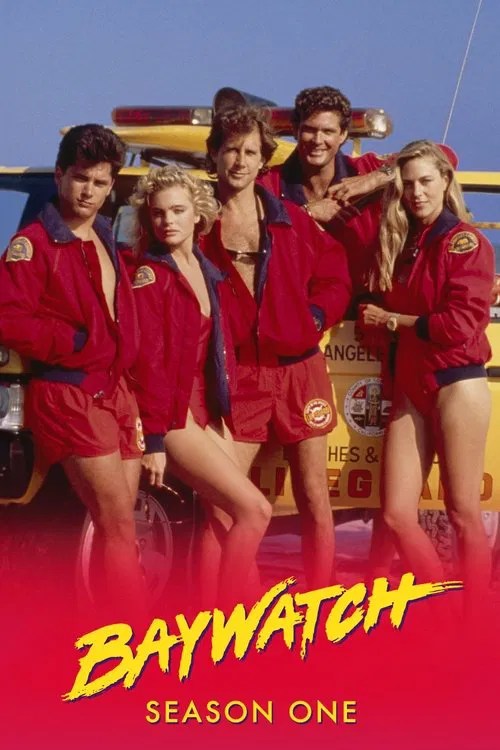
Welcome to Retro Television Reviews, a feature where we review some of our favorite and least favorite shows of the past!  On Saturdays, I will be reviewing Baywatch, which ran on NBC and then in syndication from 1989 to 2001.  The entire show can be viewed on Tubi.

Save me!

Episode 1.4 “Message In A Bottle”

(Dir by Kim Manners, originally aired on October 20th, 1989)

Hobie’s such a dumbass.

For the second time in like four episodes (and that’s not counting the pilot), the entire Baywatch team is mobilized to search for him after he goes missing.  This time, Hobie overhears Mitch and his ex-wife arguing over who should have custody of him so Hobie and two of his stupid little friends head off to an island that’s also being used by a couple of murderous modern-day pirates.

Seriously, Hobie — stuff like this isn’t going to look good when Craig is in court and trying to argue that you should stay in California with your Dad.  So far, Hobie has nearly been killed by a collapsing pier, he’s ended up getting chased by a murderer on a jet ski and, in this episode, he’s menaced by two other murderers.  It’s time to send Hobie to Indiana or some place else where there’s no ocean.

In other news, Shauni accidentally drives over Eddie’s foot so Mitch orders them to work the 24-hour shift together so that they can learn how to work as a team.  Truth be told, Eddie is  a bit of whiny punk and he definitely needs to learn how to work with other people.  That said, I think Mitch is overlo0king the fact that Shauni, a trained lifeguard, drove over someone’s foot.  (Shauni was apparently backing out and didn’t realize Eddie was behind her, which is even worse.)  Mitch finds the whole thing to be amusing and, later, Shauni has a good laugh when she nearly runs over Eddie a second time.  I don’t think any of these people should be anywhere near anyone who needs help.  Sometimes, people really should just stand in the darkness.

This episode was supposed to make me appreciate the efforts of the Baywatch lifeguards to protect the beach and to find missing kids like Hobie.  Instead, it just made everyone look incompetent and irresponsible.  Halfway through this episode, I wanted someone to get attacked by a shark.  It hasn’t happened yet but at least the show has given me something to which to look forward.

Late Night Retro Television Review: Freddy’s Nightmares 1.15 “School Daze”


Welcome to Late Night Retro Television Reviews, a feature where we review some of our favorite and least favorite shows of the past! On Fridays, I will be reviewing Freddy’s Nightmares, a horror anthology show which ran in syndication from 1988 to 1990. The entire series can be found on Tubi!

Earlier today, Robert Englund received a star on the Hollywood Walk of Fame!  Let’s get this episode of Freddy’s Nightmares out of the way so that we can celebrate!

Episode 1.15 “School Daze”

(Dir by Michael Klein, originally aired on February 12th, 1989)

Stupid episode this week.

Two high school friends worry about their future.  One of them hallucinates all of the adult authority figures in his life trying to brainwash him.  The other keeps having visions of how much his life is going to suck if he doesn’t get a good score on his SATs.  The premise really isn’t that bad but, as so often with Freddy’s Nightmares, it appears that the writers didn’t really dig into it.  Instead, they just wrote a very shallow episode in which both stories relied on the same overused twist that seems to show up in every episode.  Hey, it was all just a dream!  The biggest compliment that I can give this episode is that the second story did manage to capture some of the anxiety that comes along with college testing.  Some teachers really do overboard with that whole “This will determine the rest of your life” spiel.  Seriously, blow off the tests, go to a party school, and make friends with someone has money.  That’s really all you have to do.

Instead of fixating on a bad episode of Freddy’s Nightmares, let’s watch Robert Englund get his star on the Hollywood Walk of Fame.  This happened earlier today and, by most accounts, it couldn’t have happened to a nicer guy.  Robert Englund is living proof that you don’t have to a bad guy to play a monster.  Congratulations, Mr. Englund!

Horror On TV: Highway to Heaven 2.5 “The Devil and Jonathan Smith” (dir by Michael Landon)


On this, the final day of our annual Horrorthon, we offer you a final Horror on TV entry.

In this episode of Highway to Heaven, angel Jonathan Smith (Michael Landon) tries to defeat the devil for the soul of his friend Mark (Victor French).  This episode, a true Halloween episode, originally aired on October 30th, 1985, and it features guest turns from Anthony Zerbe and the great Michael Berryman.

We hope you have had a happy Halloween!

Doctor Who — The Leisure Hive, Meglos, Full Circle, State of Decay, Warrior’s Gate, The Keeper of Traken, Logopolis


The 18th season of Doctor Who started with the show getting a new producer, John Nathan-Turner.  Depending on who you ask, Nathan-Turner was either the best or the worst thing that ever happened to Doctor Who.  He pushed the series away from what he felt was the “silliness” of the previous season and, in doing so, he alienated both Tom Baker and Lalla Ward.  (Ward was close friends with Douglas Adams, whom Nathan-Turner blamed for turning the show silly.)  Nathan-Turner pushed for more serious stories and for better production values.  He also hated K-9, which upset a lot of younger viewers.  My personal feeling is that Nathan-Turner was not a good producer for Tom Baker’s Doctor but he was a great producer for Peter Davison’s interpretation of the character.  As for the Colin Baker and Sylvester McCoy years, let’s keep things cheery and not go there.

By the end of the 18th season, Tom Baker, Lalla Ward, and John Leeson (the voice of K-9) had left the show.  Completing my look back at Doctor Who, here are Tom Baker’s final serials.

The Leisure Hive (1980, directed by Lovett Bickford)

John Nathan-Turner hated K-9.  If there was any doubt about that, consider that his first serial as the show’s producer opens with the Doctor and Romana on holiday Brighton.  K-9, for some reason, rolls out to the ocean and explodes, taking him out of commission until the Doctor can rebuild him.

Personally, I would have been happy if this entire serial had just been Tom Baker and Lalla Ward on that beach in Brighton.  Nathan-Turner may not have been a fan of the Doctor and Romana working together by Baker and Ward but viewers like me definitely disagreed.  Alas, it is not to be.  Romana wants a real holiday (Brighton, in a reminder of just how British Doctor Who really was, doesn’t count) so she and the Doctor and the remains of K-9 go to the leisure planet of Argolis.  Unfortunately, Argolis is having financial problems and is at risk of being taken over by the Foamai.  When the Doctor is framed for a strangulation murder that was committed with a scarf, he is forced to stand trial and become an experimental test subject.

It’s an okay start for Season 18, though Tom Baker, for the first time since taking over the role of the Doctor, was starting to look disinterested.  John Nathan-Turner was eager to get away from the “silliness” of the previous season but, ironically, a story set on a leisure planet and featuring an intergalactic crime syndicate would have very much benefitted by Douglas Adams’s sense of humor.

Meglos (1980, directed by Terence Dudley)

The Doctor is asked to help broker a peace between two warring planets.  Unfortunately, Meglos — a sentient cactus — traps the TARDIS in a time loop and then plots to thwart the peace.

When viewers think of this serial, they usually remember Meglos taking on the form of the Doctor and Tom Baker wearing makeup that made him look like a humanoid cactus.  That’s because the plot is nothing special, though I do appreciate that we finally got to see what it’s like to be stuck in a time loop.  Jacqueline Hill, who played Barbara when the serial first began, appears as Lexa, a high priestess of the planet Tigella.

Full Circle (1980, directed by Peter Grimwade)

Having been ordered to return Romana to Gallifrey, the Doctor instead materializes on a swampy plant that is located where Gallifrey should be.  The TARDIS has slipped into E-Space, a small pocket universe.  As for the planet that they’ve landed on, it’s inhabited by swamp monsters, a group a humans who live around a crashed starliner, and a mad scientist.

The idea of E-Space was an interesting one and Lalla Ward gives one of her strongest performances of the series, as Romana is briefly possessed in this episode.  Unfortunately, this episode also introduced Adric (Matthew Waterhouse), an annoying child genius who became the Doctor’s newest companion.  Adric was one of the least popular of John Nathan-Turner’s additions to Doctor Who.  A few seasons later, Adric would be blown up while fighting the Cybermen and there would not be a dry eye in the house.

Tom Baker, unhappy with Nathan-Turner’s ideas and annoyed with Waterhouse decided to leave the role while filming this serial.  Waterhouse reportedly cursed at Baker while filming one scene.  They should have left the little punk behind just for doing that.

State of Decay (1980, directed by Peter Moffatt)

Still trapped in E-Space, The TARDIS materializes on a planet where the villagers live under the shadow of a dark tower. Ruled over by three cruel lords, Zargo, Camilla, and Aukon, the villagers are forced to regularly sacrifice their young to appease their rulers. The Doctor, Romana, K-9, and Adric investigate and discover that Zargo, Camilla, and Aukon are vampires! After being defeated by the Time Lords, the vampires retreated into E-Space, where they found a new planet to rule. Of course, that little tosser Adric wants to become a vampire. Why Romana and the Doctor didn’t leave Adric behind on the vampire planet, I’ll never understand.

Even the weaker seasons of Doctor Who usually featured at least one classic serial and, in the case of Season 18, it was State of Decay.  For all of the justified criticisms of John Nathan-Turner time as producer, he did make an attempt to improve the show’s production design and it paid off with this atmospheric serial that paid homage to the great vampire films while also retaining its Doctor Who identity.  Tom Baker seems to be rejuvenated by the clever script and he and Lalla Ward’s chemistry is allowed to shine.  K-9 even gets to do something other than getting kicked around.  State of Decay is a Doctor Who classic.

Warrior’s Gate (1981, directed by Paul Joyce and Graeme Haper)

Still trying to escape E-space, the TARDIS materializes on a similarly trapped spaceship that is run by Captain Rorvik (Clifford Rose).  Learning that the ship is carrying an enslaved race known as the Tharils, the Doctor set them free.  The Tharils help the Doctor reenter N-Space.  However, Romana decides to stay behind to help the Tharils.  The Doctor gives her K-9 and then leaves with Adric.  The Doctor should have left Adric behind too.

This was Lalla Ward’s final episode and both she and Romana deserved a better send-off.  Romana deciding to disobey the Time Lords, I can understand.  Leaving the Doctor, even to help the Tharils, doesn’t seem like something Romana would have done.  John Nathan-Turner finally got his wish, though.  K-9 stayed with Romana.  What are Romana and K-9 going to do in an alternative universe?  They don’t even have a TARDIS.

The only highlight of this episode was Clifford Rose’s manic performance as Captain Rorvik.  Otherwise, it was a forgettable send-off for two great companions.

The Keeper of Traken (1981, directed by John Black)

The Doctor and annoying Adric are summoned to the planet Traken, where the Master (Geoffrey Beevers) is attempting to capture a power source that will give him a new set of regenerations.  (The Master doesn’t look as badly decayed here as he did during The Deadly Assassin.)  With the help of the Keeper of Traken, Tremas (Anthony Ainley), and Tremas’s lovely daughter Nyssa (Sarah Sutton), the Doctor is able to stop the Master.  However, as soon as the Doctor leaves, the Master emerges from a long clock and somehow merges with Tremas’s body, giving him a new set of regenerations.

Despite the presence of Adric, this is not a bad story.  The Master makes his return and, in the final minutes of the serial, Anthony Ainley takes over the role.  Ainley would play The Master for the rest of the original show’s run.  While Ainley’s Master was always more cartoonishly evil than Roger Delgado’s, he still proved to be a worthy adversary for the Fourth, Fifth, Sixth, and Seventh Doctors.

Logopolis (1981, directed by Peter Grimwade)

This is it.  This is final serial to feature Tom Baker as the Doctor.  Things start with the Doctor materializing the Tardis around an actual police box in an effort to fix his chameleon circuit.  The Master then materializes his TARDIS around the Doctor’s.  It all fun and games until the universe starts to unravel and the Doctor sacrifices his life while literally holding space and time together.  Along the way, the Doctor gets two new companions, Nyssa (who has been traveling with the Master under the impression that he’s her father) and Teagan (Janet Fielding), an outspoken Australian flight attendant who entered the TARDIS thinking that it was a police call box.

Whatever else you might want to say about season 18, it gave Tom Baker a fitting send-off.  After seven years of saving civilizations and planets, the Fourth Doctor finally saved the entire universe.  Perhaps knowing how traumatized viewers would be to see the Fourth Doctor die, this episode featured Peter Davison (familiar to viewers as Tristan Sebring from All Creatures Great And Small) as the Watcher, a mysterious figure who merged with the Doctor at the end of the serial and turned out to be his Fifth Incarnation.

I had hoped to discuss some of the Fifth Doctor’s adventures this October but time has caught up with me.  (It’s a pity because Peter Davison more than made the role of the Doctor his own and several of his serials — Kinda, Snakedance, and Enlightenment to name just three — are worthy of being considered classics.)  For me, as someone who to watch Tom Baker’s Doctor on PBS while growing up, this does seem like the right place to stop.

For now.

Retro Television Review: St. Elsewhere 2.22 “Hello, Goodbye”


Welcome to Retro Television Reviews, a feature where we review some of our favorite and least favorite shows of the past! On Fridays, I will be reviewing St. Elsewhere, a medical show which ran on NBC from 1982 to 1988.  The show can be found on Hulu and, for purchase, on Prime!

This week, season two comes to an end.

Episode 2.22 “Hello, Goodbye”

(Dir by Linda Day, originally aired on May 16th, 1984)

Due to St. Eligius being structurally unsound, the first floor is temporarily closed.  The ER, which was the busiest part of the hospital, is no longer operative and Shirley Daniels is assigned to redirect any and all ambulances to Boston General.  As Joan explains it, either the first or the third floor had to be closed so that a team of engineers could strengthen the building.  The third floor is surgery, where all the money is made.  And so, it’s the ER that closes.  Joan, meanwhile, is designated as the scapegoat for all of the recent problems at St. Eligius.  She loses her job with the mayor’s office.

Fresh from interviewing a nervous Dr. Elliott Axelrod (Stephen Furst) for a position as a resident, Dr. Auschlander collapses.  Dr. Westphall fears that his old friend is going to die but finally, Auschlander wakes up and says that he’s not done fighting yet.  Neither is St. Eligius.

Luther finds a stuffed Cheshire cat for a young heart patient.  Dr. Craig finally starts to forgive his drug addict son, Stephen (Scott Paulin).  And Dr. Morrison takes his son on a walking tour of Boston and meets a college student named Clancy (a young Helen Hunt).  Even though Clancy label Morrison a “boomer,” she still spends the night with him.  Morrison finally takes off his wedding ring and appears ready to try to move on with his life.

The second season ends on a melancholy note.  Apparently, the show’s producers weren’t sure whether or not St. Elsewhere was going to be renewed for a third season and this episode was designed to work as both a season and a series finale.  Very few of the regular characters appear and the episode is dominated by Westphall and Morrison, both of whom tend to be rather somber.  In other words, this is a depressing episode but it’s not an episode without hope.  Auschlander does wake up.  Morrison does pursue a tentative relationship with Clancy.  Even with the hospital temporarily shut down, life goes on.  Unlike Wendy Armstrong, nobody gives up.  It’s sad but at least there’s a chance that things could get better.

Both this episode and the second season overall were a roller coaster, deftly mixing drama and comedy and giving the show’s ensemble cast a chance to shine.  Next week, we start season three!

Late Night Retro Television Review: Highway to Heaven 4.20 “Aloha”


Welcome to Late Night Retro Television Reviews, a feature where we review some of our favorite and least favorite shows of the past!  On Thursdays, I will be reviewing Highway to Heaven, which aired on NBC from 1984 to 1989.  The entire show is currently streaming on Tubi and several other services!

This week, Mark is a disappointed again.

Episode 4.20 “Aloha”

(Dir by Michael Landon, originally aired on March 2nd, 1988)

Jonathan gets Mark all excited by saying that their next assignment is a Hawaiian mission.  Mark says, “We’re going to Hawaii!”  He’s looking forward to it and who can blame him?  After a countless number of assignments that found him working in crummy jobs and depressing neighborhoods, Mark thinks that he’s going to be most beautiful place on Earth.

Nope, sorry, Mark.  You’re going to a rundown apartment complex called the Hawaiian Sands.  The complex is managed by Aulani (Mokihana), a singer who found fame in Hawaii but not in Los Angeles.  Instead, in L.A., she was hit by a truck and left in a wheelchair.  Now, she spends her days bitter, constantly yelling at her handyman and former partner, Alvin (Danny Ing).  Alvin loves Aulani and Aulani loves Alvin but she’s too angry and scared of opening up emotionally to admit it.  When Alvin learns that he doesn’t have much longer to live, he plans to return to Hawaii.  Aulani refuses to admit that she cares.  Luckily, her new tenant Jonathan is there to set her straight.

As I’ve often said, the main strength of this show was its nonstop earnestness.  Even at its most sentimental, it still worked because the show was just so dang sincere.  That’s ultimately the case here.  Danny Ing gives a very touching performance as Alvin.  Your heart breaks for him.  Mokihana overacts in the role Aulani, to the extent that she actually becomes pretty annoying.  But, despite that, the show itself was so sincere and well-intentioned that it was impossible not be touched by the end of this episode.

Add to that, Hawaii — there’s no place more beautiful to visit.  I wonder what Halloween is like in Hawaii.  Maybe I’ll find out next year!

Where Have All The Halloween Specials Gone?


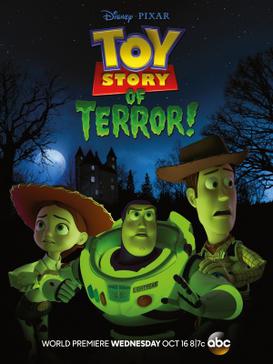
Is it just me or was there a stunning lack of Halloween specials this year?  This is the first time in 12 years that Toy Story of Terror wasn’t aired on television.  And, of course, It’s The Great Pumpkin, Charlie Brown has been an Apple TV exclusive for a while now.

It’s hard to explain why it bothers me so much.  Maybe I just don’t like change.  I know that all of the old Halloween specials that I enjoyed when I was younger can still be found streaming online.  I can watch them anytime that I want.  That’s not the point.  When I was growing up, there was something really special about gathering in front of the television with my family to watch those specials, even though I had seen all of them before.  They were an event.  They were something to look forward to.  The waiting and the knowing that everyone across the country would all be watching at the same time was part of what made them so special.  Now that you can just watch them whenever you want, it doesn’t feel as special.  There’s no anticipation.  There’s no thrill of the moment when it finally starts.  Worst of all, there’s no communal experience.  I could watch It’s The Great Pumpkin Charlie Brown in November if I wanted to.  I can watch A Charlie Brown Christmas Special in July.

I never thought I’d be sad over something like Toy Story of Terror not airing on television.  (This year, we watched it on Disney+.)  I am, though.  The world has become a little less fun and we no longer have something that used to bring the people together as a community.  I feel bad for a generation that’s never going to know the excitement of having to wait to see or get something instead of getting instant and empty gratification.  I worry that people don’t care as much about holidays and traditions anymore.  That’s a shame.

At least I’ll always have my holiday memories.