Horror Scenes That I Love: Lynda Day George Goes To Pieces


This scene comes from the 1982 film, Pieces.  It’s not easy find an appropriate scene to share from Pieces, or at least a scene that I can share without this site getting in trouble.  Just about every scene in the movie features either nudity or really bloody violence.  It’s probably nothing that would shock our wonderfully jaded readers but still….

But then there’s this scene right here.  Now, in order to understand what’s happening here, you should keep in mind that Lynda Day George is playing an undercover cop who also happens to be a tennis pro.  She’s been assigned to the local college.  Her job is to figure out who is using a chainsaw to kill all of the students.  Unfortunately, she sucks at her job so she has to get this kinda nerdy college student to help her out.

Anyway, after a fun-filled morning of playing tennis and not looking for the killer, they’ve just discovered a dead body in the showers.  Yes, the killer has struck again and …. well, it was really messy.  Speaking as someone who appreciates a clean house and a carefully organized day, I can relate to the reaction below.

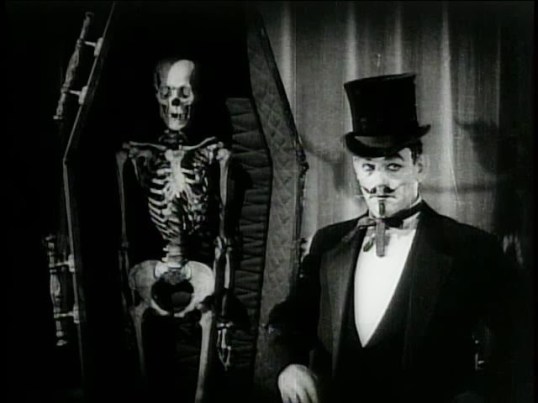
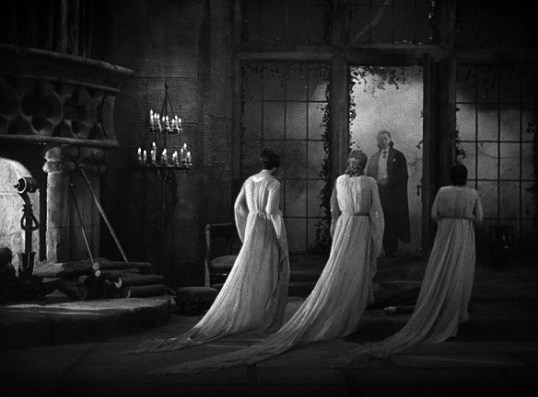
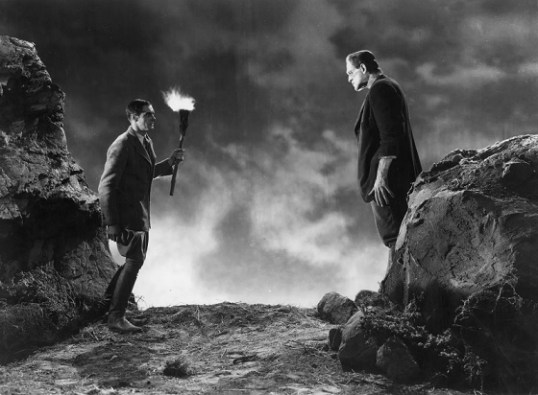
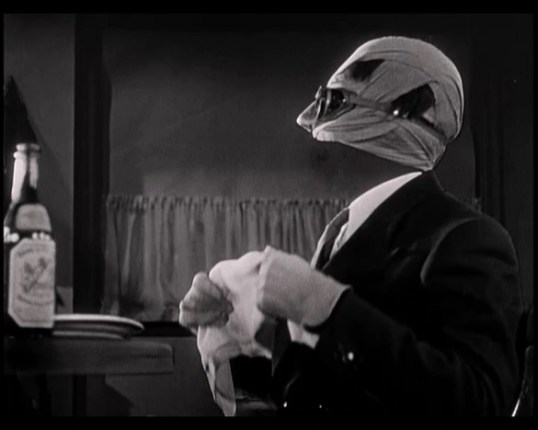
4 Shots From 4 Horror Films: October 8th


4 Or More Shots From 4 Or More Films is just what it says it is, 4 shots from 4 of our favorite films. As opposed to the reviews and recaps that we usually post, 4 Shots From 4 Films lets the visuals do the talking!

4 Shots From 4 Horror Films

West of Zanzibar (1928, dir by Tod Browning, DP: Percy Hilburn)

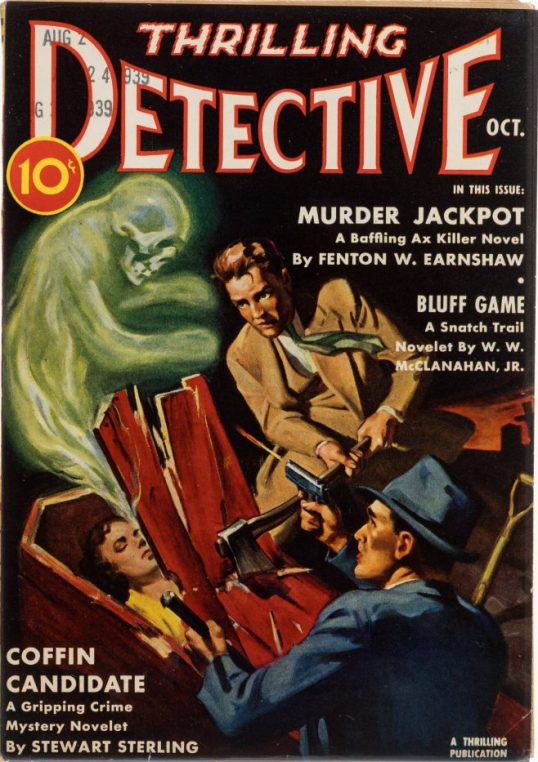
Dracula (1931, dir by Tod Browning. DP: Karl Freund)

Frankenstein (1931, dir by James Whale, DP: Arthur Edeson)

The Invisible Man (1933, dir by James Whale, DP: Arthur Edeson)

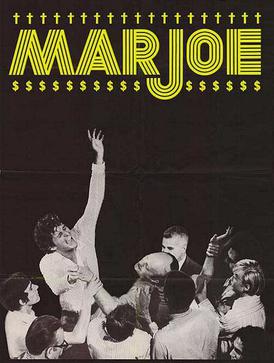
Documentary Review: Marjoe (dir by Howard Smith and Sarah Kernochan)


Before Marjoe Gortner was an actor, he was a preacher.

Actually, that might be a bit too glib on my part. According to Marjoe, he was never more of an actor than when he was standing under a tent and preaching.

The 1972 documentary Marjoe opens with footage of a four-year-old Marjoe Gortner wearing a white button-down shirt and a bow tie and preaching about how all the sinners are going to burn in Hell. We watch as young Marjoe performs a marriage. We see his parents beaming as Marjoe delivers a fire-breathing sermon. In a voice-over, an adult Marjoe Gortner explains that he was named after Mary and Joseph and that both of his parents were active on the Pentecostal revival circuit. His father was a preacher. At four years old, Marjoe became the world’s youngest ordained preacher. Marjoe talks about how the novelty of a child preacher drew in crowds. By the time he was 14, he had brought in over four million dollars to his family’s ministry. When crowds turned out to be less interested in a teenage preacher than they had been in a child preacher, Marjoe’s father left the family and took the money with him.

We cut to Marjoe Gortner at 27. He’s tall, a little bit gawky. He has curly hair and a beak-like nose. He’s not exactly handsome, but when he speaks, he still has the charisma that once made him a superstar in evangelical circles. He’s talking to a documentary crew who are about to follow him on what he says will be his final revival tour. Marjoe claims that, even as a child, he never really believed or even understood what he was preaching. He was raised to perform, and that’s what he did. Now, Marjoe says that he’s had a crisis of conscience. In public, he’s still a fire-and-brimstone preacher who claims to be able to heal the sick and whose rhythmic sermons cause people to dance, speak in tongues, and give away their money. (The money, Marjoe explains, is the important part.) He preaches against drugs and sin and anyone who believes differently than he does. In private, Marjoe is a pot-smoking beatnik (and indeed, beatnik would be the right term to use because Marjoe’s a bit too cynical to be considered a hippie) who enjoys hanging out with the same people that he condemns from the stage.

The documentary features a lot of footage of Marjoe at various revival meetings, preaching and showing off the moves that he says he copied from Mick Jagger. We watch as Marjoe has an awkward reunion with his estranged father, who shows up to preach under the same tent as his son. We watch as Marjoe repeatedly counts his money. Marjoe revels in being a showman and admits that he still loves the feeling of holding the emotions of his audience in the palm of his hand. As creepy as the footage sometimes is, there’s a definite elitism to the documentary crew, of which they don’t really seem to be aware. Of course, the film seems to be saying, this would happen in the South. We Northerners are too smart to fall for Marjoe’s act. And yet, just the fact that they’re filming him shows that they have fallen for his act. They just don’t realize it.
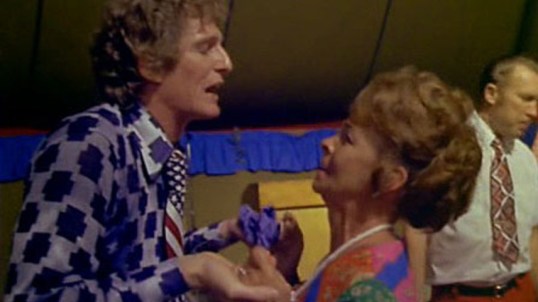
While the revival footage is indeed fascinating (one can really feel the audience getting swept up in Marjoe’s sermons), the film’s most interesting moments are when we see Marjoe talking to the documentarians. For all the talk about how he wants to finally be himself, Marjoe never stops performing. Even when he’s confessing and claiming to be telling the truth, Marjoe is acting. One gets the feeling that performing is all that Marjoe ever knew, and certainly it makes it easy to understand why, in the years following this documentary, he found success as a character actor. There’s never a moment in the documentary in which Marjoe isn’t “on.” In the end, one gets the feeling that he’s conning the documentarians just as easily as he’s conning the faithful. When Marjoe says that he is “bad but not evil,” it ultimately feels like another performance. Marjoe spends the documentary taking viewers behind the scenes, and yet he’s as much of an enigma at the end of the documentary as he was at the beginning. He’s a fascinating character, if only because it’s impossible to tell how much of anything is real to him.

(Indeed, watching Marjoe, I was reminded of Elizabeth Holmes’s disturbingly empty smile in the trailer for the upcoming documentary You Can See Everything.)

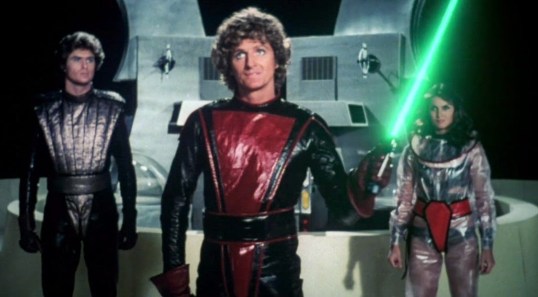
Released in 1972, Marjoe won the Oscar for Best Documentary. Marjoe Gortner, who passed away last week at the age of 82, had a lengthy acting career, one in which he often played con men and other outlaws. His final role was in 1995’s Wild Bill. He played a preacher.  My favorite Gortner role will always be as Akton in 1978’s Starcrash.
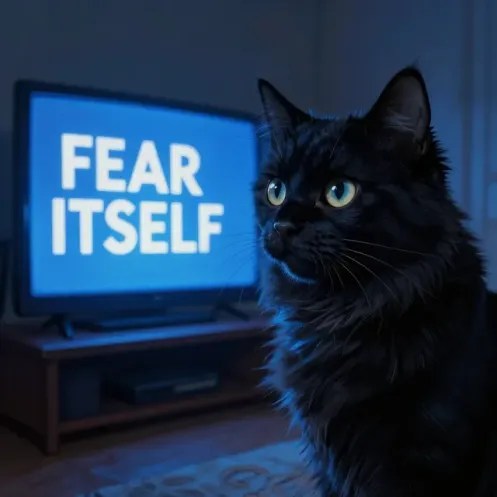
Horror On TV: Fear Itself 1.7 “Community” (dir by Mary Harron)


In tonight’s episode of Fear Itself, Bobby (Brandon Routh) and Tracy (Shiri Appleby) are a young couple who move to a gated community and learn that there are consequences to upsetting the HOA.  The story is familiar but Mary Harron does a good job of combining satire with chills.  Watching how Bobby and Tracy are pressured to conform to the rules of the community, it was hard not to be reminded of the excesses of the COVID era.

(Of course, the truly interesting thing about the COVID era was seeing how many self-styled nonconformists revealed their true selves once they were actually put in a position where taking a stand could have had consequences.  They know who they are.)

This episode originally aired on July 24th, 2008.  Mary Harron, of course, is best known for directing American Psycho.

The TSL Horror Grindhouse: House of the Damned (dir by Maury Dexter)


1963’s House of the Damned tells the story of an isolated mansion.  It’s a place that many people have tried to live in but no one has ever been willing to stick around for too long.  There are rumors that the mansion is haunted.  In fact, you could even make the claim that the mansion is a house of the damned!  Of course, we all know that there’s no such thing as ghosts, right?
Joseph Schiller (Richard Crane), the new owner of the mansion, calls architect Scott Campbell (Rob Foster) and tells him to go up to the house and check the place out.  Scott points out that he was planning on celebrating his anniversary with his wife, Nancy (Merry Anders).  Joseph say that there is no better way to celebrate an anniversary than to visit a house that might be haunted.  Scott and Nancy (who  is amazingly understanding) head for the house, where all sorts of strange things happen.

What type of strange things?  Keys disappear.  There are weird noises.  Sometimes, it seems like something or someone might be lurking in the shadows.  Could the house be haunted?  While Scott and Nancy try to figure out what’s going on, Joseph shows up with his wife, Loy (Erika Peters).  When Loy disappears, it becomes obvious that something is happening in the house of the damned!

House of the Damned is a briskly paced and occasionally effective haunted house story.  It was directed by Maury Dexter, who was a director who was so fast and so capable of stretching a low budget that, at his best, he gave Roger Corman a run for his money.  House of the Damned is only 63 minutes long and the film’s story isn’t particularly complex but Dexter still manages to create a properly ominous atmosphere and he does keep you guessing as to whether or not the house is actually haunted.  The house itself was the former estate of infamous gangster Bugsy Siegel.  Dexter reportedly spent ten days filming the movie at the Spiegel estate.  Hopefully, he was not bothered by Bugsy’s ghost.

None of the characters are particularly well-developed but they are well-cast and the actors are all likable.  The best performance comes from Erika Peters, who plays Loy as being slightly self-absorbed but ultimately good-hearted.  She also gets to wear a bathing suit that is simply to die for.  This film also features a very early performance from the great Richard Kiel, playing “The Giant.”  It’s always nice to see Richard Kiel in a movie.  Shortly before he passed away in 2014, Kiel visited my Alamo Drafthouse for a showing of The Spy Who Loved Me.  Though it was obvious that he wasn’t in great health, he still took time to answer questions and to show off a rather charming smile.  When a certain redhead told him that she loved him in a beloved 90s golf comedy, he smiled and said, “I believe that jacket belongs to Mr. Gilmore.”

House of the Damned was a nice surprise.  We need more 62-minute films.

Horror Game Review: Voodoo Castle (1979, Alexis Adams)


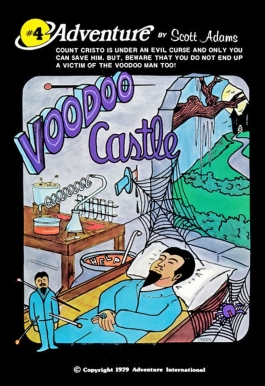
Count Christo has been cursed by his enemies and is currently in a coma.  Your job is to search his castle and gather together both the clues and the equipment necessary to reverse the spell.  If you take too long you might get hit by the curse as well.  So, don’t waste any time!

Sometimes, I miss the simple and innocent text-adventure games that used to be a mainstay for personal computers.  I’ll get nostalgic for the puzzles and the simple commands of “n, w, e, s.”  I miss the familiar pattern of: “Get object,”  “Look object,” and  “Inventory,” to make sure that you still had the object with you.  I’ll fondly remember when you could play and beat a game without having to spend hours sitting in front of a screen.

Then I’ll remember how frustrated I used to get with games like Voodoo Castle.  Like many of the early test adventures, Voodoo Castle takes a bare-bones approach to story-telling.  Later editions came with simple graphics but, even then, it never really made you feel as if you were actually a part of the story.  Searching the castle isn’t a problem.  Figuring out how to cast a spell when the game’s parser can only understand two words at a time is the bigger frustration.  There’s at least one puzzle where the game itself specifically tells you what to type and for that, I was thankful.  Good luck figuring out what to type to cast the spell necessary to awaken Count Christo, though.

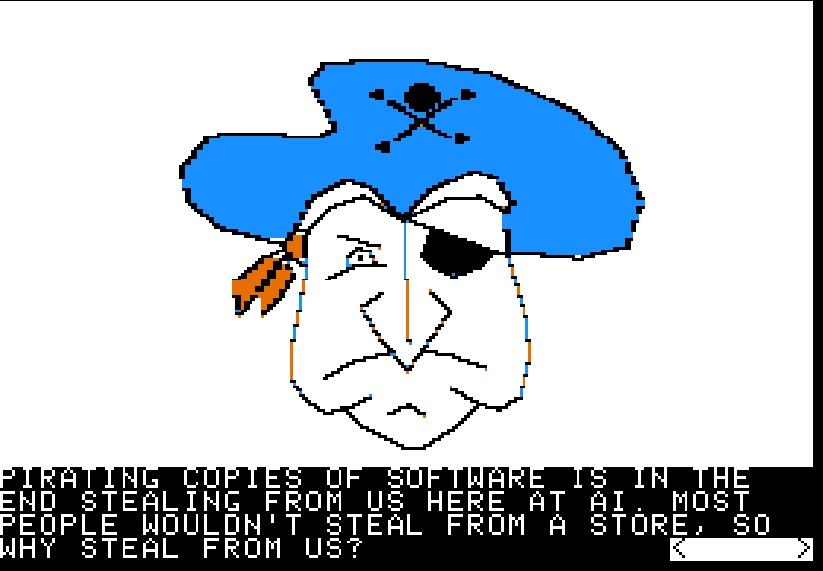
Voodoo Castle is available to download from a lot of abandonware sites.  There’s also a buggy version on the Internet Archive, which loads slowly and gets hit by errors.  The best thing about the version on the Archive is that it opens with an open letter from Scott Adams, the husband of the game’s author, in which he encourages you not to give the game to your friends.

Before anyone panics, this game is no longer for sale and Adventure International no longer exists so you can safely download Voodoo Castle or share it with friends if you wants.  I still wish I had seen this message when I was younger.  I had no idea I was a pirate.  I feel guilty now.

Great Moments In Comic Book History #47: Classic Comics Series Featuring #28


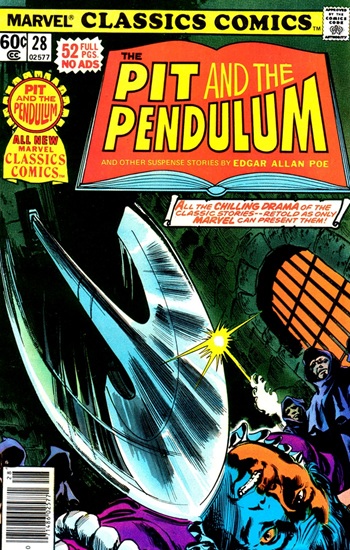
From 1976 to 1978, Marvel published a comic book with an unwieldy name.  Each issue of Classic Comics Series Featuring adapted a piece of classic literature.  In 1977, the #28 issue featured the work of Edgar Allan Poe.  Three stories were adapted: The Pit and the Pendulum, The Tell-Tale Heart, and The Cask of Amontillado.

In doing so, they gave us one of the best covers of the 1970s horror boom.

Credit for that goes to Gene Colan, Tom Palmer, and Danny Crespi.

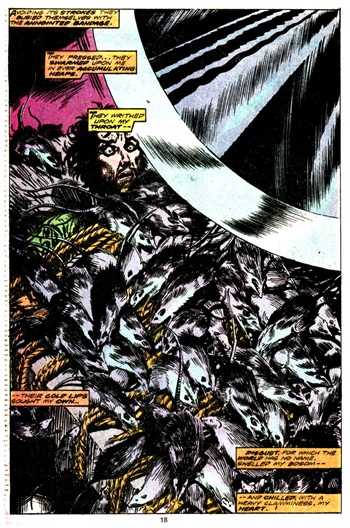
Inside the comic, readers would find this image of a man not only tied beneath the pendulum but also covered in hundreds of rats.

Credit for that memorable image goes to Rudy Messina.

Fredric Wertham was not available for comment.

Previous Great Moments In Comic Book History:

  1. Winchester Before Winchester: Swamp Thing Vol. 2 #45 “Ghost Dance” 
  2. The Avengers Appear on David Letterman
  3. Crisis on Campus
  4. “Even in Death”
  5. The Debut of Man-Wolf in Amazing Spider-Man
  6. Spider-Man Meets The Monster Maker
  7. Conan The Barbarian Visits Times Square
  8. Dracula Joins The Marvel Universe
  9. The Death of Dr. Druid
  10. To All A Good Night
  11. Zombie!
  12. The First Appearance of Ghost Rider
  13. The First Appearance of Werewolf By Night
  14. Captain America Punches Hitler
  15. Spider-Man No More!
  16. Alex Ross Captures Galactus
  17. Spider-Man And The Dallas Cowboys Battle The Circus of Crime
  18. Goliath Towers Over New York
  19. NFL SuperPro is Here!
  20. Kickers Inc. Comes To The World Outside Your Window
  21. Captain America For President
  22. Alex Ross Captures Spider-Man
  23. J. Jonah Jameson Is Elected Mayor of New York City
  24. Captain America Quits
  25. Spider-Man Meets The Fantastic Four
  26. Spider-Man Teams Up With Batman For The Last Time
  27. The Skrulls Are Here
  28. Iron Man Meets Thanos and Drax The Destroyer
  29. A Vampire Stalks The Night
  30. Swamp Thing Makes His First Cover Appearance
  31. Tomb of Dracula #43
  32. The Hulk Makes His Debut
  33. Iron Man #182
  34. Tawky Tawny Makes His First Appearance
  35. Tomb of Dracula #49
  36. Marvel Publishes Star Wars #1
  37. MAD Magazine Plays Both Sides
  38. The Cover of Green Lantern/Green Arrow #85
  39. LBJ Stands Up For The Hulk
  40. Chamber of Chills #2
  41. Tomb of Dracula #41
  42. Tomb of Dracula #27
  43. X-Men Meet Frankenstein’s Monster
  44. The Amazing Spider-Man #33
  45. The Red Skull Tempts Spider-Man To Sell Out America
  46. Godzilla Joins The Marvel Universe

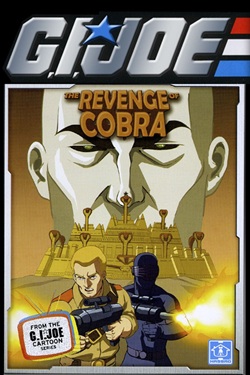
G.I. Joe: The Revenge of Cobra (1984, directed by Dan Thompson)


“G.I. Joe is the code name for America’s daring, highly trained special mission force. Its purpose: to defend human freedom against Cobra, a ruthless terrorist organization determined to rule the world!”

It’s good to see that some things never change. Land, sea, or air, G.I. Joe is there! If Cobra ceased to exist, would G.I. Joe be disbanded? It seems strange that G.I. Joe is apparently the only opponent Cobra has, especially when you consider that Cobra is an international organization. Is there a British version of G.I. Joe?

Those questions and a lot more were not answered in the second G.I. Joe animated five-episode miniseries, The Revenge of Cobra. This time, Cobra steals a special laser from G.I. Joe and uses it to power a weather machine. As usual, Destro does all the work, and then Cobra Commander ruins everything by pushing the machine too far. The machine breaks into three separate pieces, all of which land in different and very dangerous parts of the world and continue to create havoc. The Joes and Cobra fight to retrieve the three parts. Duke, meanwhile, gets captured again and ends up fighting in the arena of the Cobra Temple again.

It’s the same basic plot as G.I. Joe: A Real American Hero, just with more emphasis on showing off all of the toys that the audience could then demand their parents buy them. This episode features Zartan and his Dreadnoks, and whenever they’re on screen, they might as well have a price tag on their foreheads, because who wouldn’t want to be Cobra’s master of disguise?

In G.I. Joe terms, a five-part miniseries is the equivalent of a 90-minute film. There’s a lot of action packed into those 90 minutes, and there’s a cliffhanger every 18 minutes. The animation is sleeker than in A Real American Hero, but it’s still clunky in that ’80s way that will either make you feel nostalgic or bored. Snake Eyes is given next to nothing to do, which is a mistake, because everyone knows Snake Eyes and Scarlett were the only members of the team who really mattered. If you watch, be prepared to hear “Yo Joe!” every two minutes.

There are a lot of battles in The Revenge of Cobra, but no one ever dies or is even seriously injured. What would G.I. Joe and Cobra do without each other?

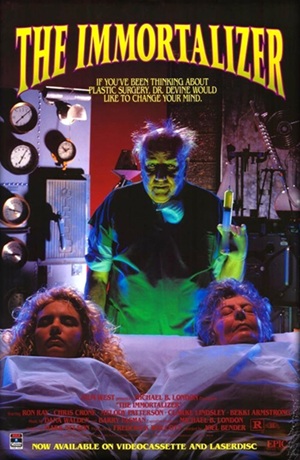
The Immortalizer (1989, directed by Joel Bender)


Dr. Divine Will See You Now!

Dr. Divine (Ron Ray) has a successful practice going in his heavily guarded clinic. The mixed-up mutants and rednecks who work for him go out into the city and bash attractive 20-year-olds on the head. They drag them back to the clinic, where old people pay a million dollars to have their brains put into younger bodies.

“If you’ve been thinking about plastic surgery, Dr. Divine would like to change your mind!”

Dr. Divine has a point. Why get plastic surgery when you can just pay a million dollars to have your brain scooped out of your skull and stuffed into someone else’s head? Laugh at the plot all you want. Jordan Peele won an Oscar for coming up with the same basic story. Of course, The Immortalizer doesn’t have any of the subtext of Get Out. In fact, it doesn’t have any subtext at all, beyond the fact that everyone wants a body that’s healthier than the one they’ve got.

Gregg (Chris Crone) is among those abducted. He manages to escape from the clinic, but he struggles to get anyone to take him seriously when he tells them about what’s happening. Eventually, he does get some help, but will it be in time to save his friends?

This is very much a direct-to-video, late-’80s horror film, complete with big hair, bad acting, and gratuitous nudity to go along with the lengthy shots of the brain surgery. The doctor worries about the bodies getting damaged, but he’s the one who is opening up people’s heads and moving brains around. That’s going to leave scars. It’s fun in the nonsensical way that most late-night Cinemax horror films were fun. It’s on Tubi, and it’s a nostalgia rush, even if the title does sound like the name of a minor Marvel comic villain.

Spider-Man vs. The Immortalizer? My money is on Spider-Man. He’s been around since 1962, and he’s still only in his 20s. Who needs brain surgery when you’ve got radioactive spiders?