Film Review: Blow Out (dir by Brian De Palma)


Before the shouting starts, allow me to say that I fully understand that 1981’s Blow Out is not a horror film .… or at least, it isn’t in the traditional way. It’s a conspiracy thriller starring John Travolta as Jack Terry, a Philadelphia sound technician. While recording outside sounds, he witnesses a car careen off a bridge and crash into a creek. Though the driver is killed in the crash, Jack is able to pull the car’s passenger, an escort named Sally (Nancy Allen), out of the water. Later, Jack learns that the driver was Governor George McRyan, a presidential candidate. And when Jack listens to his tapes of the crash, he becomes convinced that he can hear someone shooting out one of the tires.

So, yes, the film is definitely a conspiracy thriller, one that owes quite a bit to the lore surrounding the Kennedys. Jack’s sound tape and the later discovery that a sleazy guy with the unforgettable name of Manny Karp (Dennis Franz) filmed the accident bring to mind the Zapruder film and the ongoing debate about what it showed and didn’t show. (Watching the film, one is reminded that it took several years for people to acknowledge that a key moment in the Zapruder Tape was actually shown in reverse when it was first released to the public.) The crash into the creek brings to mind the night that Ted Kennedy drove off a bridge at Chappaquiddick and left Mary Jo Kopechne to die while he returned to his hotel and got some sleep. There were some conspiracy theorists who claimed that the accident was actually the result of an attempt on Ted’s life. (It’s always interesting how Chappaquiddick is described as being a Kennedy tragedy when, in actuality, Mary Jo Kopechne is the one who died and Ted was the one reelected to the Senate.) Just a year before Blow Out was released, Ted Kennedy ran for President and discovered that voters outside of Massachusetts actually did care about what he did at Chappaquiddick. Meanwhile, director Brian De Palma’s interest in the Kennedy assassination could be traced all the way back to Greetings and Gerrit Graham’s performance as a conspiracy-obsessed hipster.

That said, Blow Out is definitely horror-adjacent. The film opens with footage from a believably bad slasher film called Co-Ed Frenzy. The footage makes use of all the expected slasher tropes, from the prowling camera to the gratuitous nudity to the death of a voyeuristic extra. But it falls apart during the inevitable shower scene, when it turns out that the actress cannot scream. It’s a reminder that the violence in horror movies is not real. Instead, it’s carefully choreographed and edited to keep the viewer uneasy. Jack is ordered to record the perfect scream to fool viewers into thinking the horror is real. Jack manages to do so, but at a terrible cost. The scream works in the film. The spell that the film puts over the audience will not be broken. But Jack will never be able to listen to his work.
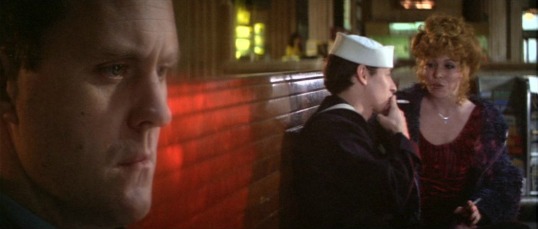
The film also features John Lithgow as Burke, one of the cruelest villains to be found in De Palma’s entire filmography. Burke knows that he has to kill Sally to cover up the assassination of Governor McRyan but, rather than just kill her, he first kills several women who resemble her so that Sally will be viewed as just being the latest victim of the Liberty Bell Strangler. John Lithgow is a terrifying murderer because he’s so casual about it. For him, it’s just a part of the job. Ever since I saw Blow Out for the first time, I automatically get uneasy whenever John Lithgow shows up in a movie. In a film full of good performances, John Lithgow is terrifying.

Blow Out is a stylish film, which should come as no surprise given that it was directed by Brian De Palma. De Palma goes as far as to create a fictional holiday—“Liberty Day”—so that he can fill the climax with red, white, and blue. The celebrations, which are meant to commemorate the ringing of the Liberty Bell, provide a joyous contrast to the darkness that defines the worlds of the film’s characters. Like the best conspiracy thrillers, Blow Out is drenched in an atmosphere of paranoia. No one can be trusted, and the scariest thing isn’t that people don’t know the truth. It’s that they don’t want to know. And while this theme was undoubtedly something that De Palma carried into the ’80s from the ’60s and the ’70s, it feels even more relevant today as we’re continually told that we shouldn’t still be thinking about the excesses and secrets of the COVID era.

So no, Blow Out is not a horror film.

But it’s definitely scary.
Horror Film Review: Psycho (dir by Alfred Hitchcock)


Just the thought of reviewing Psycho is intimidating.

In the past, I’ve reviewed all of the sequels. I even reviewed a few episodes of Bates Motel. But I’ve avoided reviewing the original 1960 film because I wasn’t sure that there was much left for me to really say about it. It’s one of those films that has been endlessly analyzed. It’s also one of those films that is so famous and which has been imitated so many times that even people who haven’t seen Psycho know what the film is about. Everyone knows about the shower scene. Everyone knows about the twists that took audiences and critics by surprise in 1960. No one is shocked by the revelation about the true nature of Norman Bates and his mother anymore. In fact, most people are more likely to be surprised by Simon Oakland’s hammy performance as the psychiatrist than they are by the ending.

And indeed, probably the best thing that we can say about Psycho is that it still works even when the big twists are no longer a surprise. Janet Leigh’s performance as Marion Crane still holds up as one of the best recorded on film. Even before she arrives at the Bates Motel, we’re scared for her. She spends the first half of the film fleeing Phoenix with an envelope full of stolen cash. Everyone she meets on her journey, from the suspicious highway patrolman (Mort Mills) to the too-eager car salesman (John Anderson), comes across as being a threat. Of course, the bigger threats are the voices in her head as she imagines how people are going to react to her actions. When we hear the patrolman interrogating the salesman, are we hearing an actual interrogation or are we just hearing what Marion fears is happening? We don’t really know and neither does Marion. As played by Janet Leigh, Marion is both a femme fatale (that black bra after she steals the money!) and a relatable and frustrated single woman wondering if she’s waited too long to live her own life (that hotel room with John Gavin’s Sam Loomis!). She’s not a master criminal. She’s someone who did something impulsive and fears she’ll be punished for it.

Ironically, Marion’s murder in the shower has nothing to do with the money. When Norman is cleaning up the motel room afterwards, he picks up the newspaper in which Marion hid the money and tosses it into the trunk of her car. Everyone who comes after Marion assumes that Norman knew about the money, but Norman has no idea what they’re talking about. The money itself seems like such a petty thing. The money was stolen from an oilman (Frank Albertson, who also played Sam Wainwright in It’s a Wonderful Life) who confesses that he has a lot more hidden away. Sam’s claim that he can’t marry Marion because he doesn’t have the financial resources feels more like an excuse than a reason. When private detective Milton Arbogast (Martin Balsam) disappears, the sheriff (John McIntire) initially assumes that he stole the money for himself. Marion’s sister Lila (Vera Miles) assumes that Norman stole the money because his motel was struggling. Norman doesn’t care about the money. He sends the money (and Marion’s car) to the bottom of a nearby swamp and he does so in such a casual manner that there’s little doubt it’s not the first time. All Norman cares about is protecting his mother. And all his mother cares about is protecting Norman….

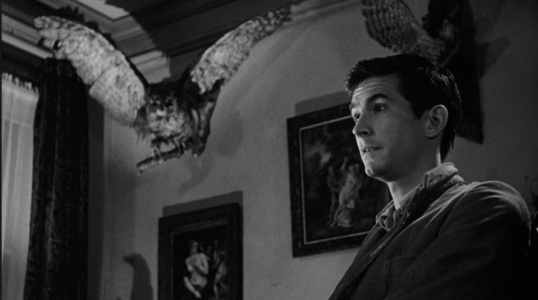
Everyone knows about the shower scene but what makes Psycho truly memorable are the little moments. I love Pat Hitchcock’s performance as Marion’s co-worker. “He was flirting with you. I guess he must have noticed my wedding ring,” is one of the best lines ever written and/or delivered. I love the taciturn sheriff and his oddly cheerful wife (Lurene Tuttle), the one who whispers “in bed.” I love the wonderfully passive-aggressive scenes between Arbogast and Norman. Martin Balsam and Anthony Perkins were two veterans of the New York stage and one can tell that they enjoyed bouncing lines off of each other. I even love John Gavin’s somewhat stiff performance as Sam Loomis. People tend to criticize Gavin but his stolid screen presence provides a nice contrast to Perkins’s nervous Norman. Psycho is a film that creates its own little world and Sheriff Chambers and Sam and Lila and Arbogast all come across as if they have (or, at least, had) lives outside of what we see in the film. Of course, Janet Leigh and later Anthony Perkins both dominate the film and indeed, Anthony Perkins, who had been a romantic lead up until Psycho, never escaped the shadow of Norman Bates. (Perkins was the first and really the only choice for the role, though Hitchcock was willing to offer it to Dean Stockwell if, for some reason, Perkins refused to play Norman.)

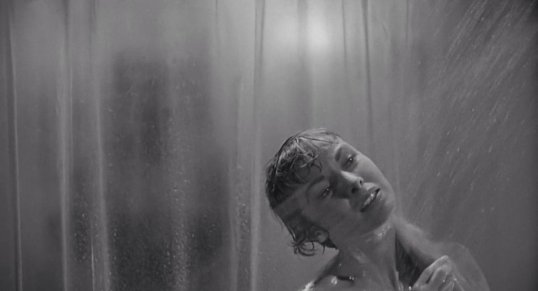
Oh, but the shower. You can’t talk about Psycho without talking about the shower, can you? It’s still a frightening scene, even when you know it’s coming. For Marion, the shower is more than just a shower and as someone who loves to take long showers, I always feel like I know exactly how she’s feeling. She’s decided to return to Phoenix and face the consequences. She’s washing away her guilt and her fear and, being in a motel room with a locked door, she has every reason to believe that she’s safe. But she’s not. We already know that she’s not because we’ve already seen Norman peeping in on her. (As disturbing as Norman’s peeping is, it’s not that much different from what the film’s audience was doing to Janet Leigh during the film’s opening scenes.) Marion discovers the danger too late. I find the scenes of Norman cleaning up the room to be even more unsettling, if just because he’s so professional about it. He knows exactly what to do, which lets us know that this isn’t the first time someone has died in that room. Marion, who we’ve just spent nearly an hour getting to know, is wrapped up in plastic and dumped in the back of her car and the audience is reminded that, when one’s physical life is over, it’s over.

66 years after it was first released, Psycho is still one of the greats.


Bonus Horror on the Lens: How To Make A Monster (dir by Herbert L. Strock)


You’ve seen I Was A Teenage Werewolf….

You’ve watched I Was A Teenage Frankenstein….

Now, it’s time to watch How To Make A Monster!

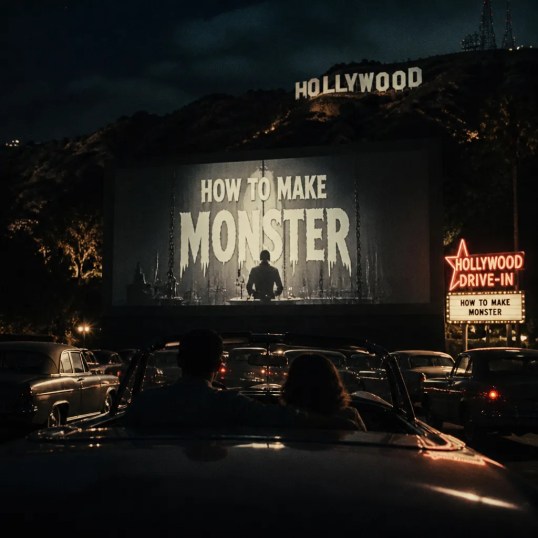
Released in 1958, How To Make A Monster is a clever little horror satire from American International Pictures in which the stars of Teenage Werewolf and Teenage Frankenstein are hypnotized into believing that they actually are the monsters that they played!  The main culprit is a movie makeup artist (Robert H. Harris) who has been deemed obsolete by the new bosses at AIP.

Be sure to watch for the finale, which features cameo appearances from several other AIP monsters!  And read my full review of the film by clicking here!

Bonus Horror On The Lens: I Was A Teenage Frankenstein (dir by Herbert L. Strock)


From 1957, it’s I Was A Teenage Frankenstein!

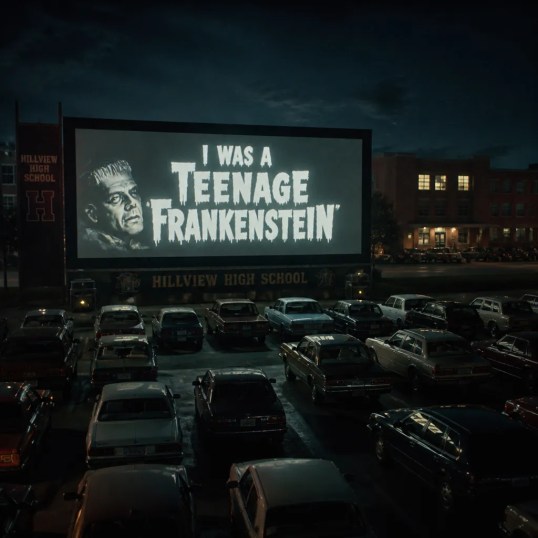
This film was produced as a direct result of the box office success of I Was A Teenage Werewolf.  Just as in Teenage Werewolf, Whit Bissell plays a mad scientist who makes the mistake of trying to play God.  (He also makes the mistake of keeping an alligator in his lab but that’s another story.)  The end result …. Teenage Frankenstein!

The makeup on the Teenage Frankenstein is probably the best thing about this film.  If nothing else, this film features a monster who actually looks like he was stitched together in a lab.

Enjoy and please be sure to read my full review!

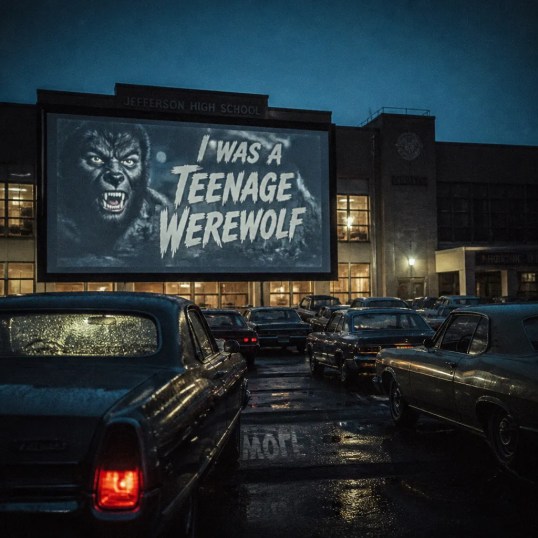
Horror On The Lens: I Was A Teenage Werewolf (dir by Gene Fowler, Jr.)


1957’s I Was A Teenage Werewolf combines two genres that were very popular in the late 50s.

On the one hand, it’s a film about a teenage rebel.  Tony Rivers (Michael Landon) is a teenager that means well but he keeps losing his temper.  If he can’t learn to control his anger, he could very well be looking at a life behind bars.

On the other hand, it’s also a horror film.  When Tony visits a hypnotist (Whit Bissell), the end result is Tony turning into a werewolf and going on a rampage, all while still wearing his letterman jacket.

All in all, this is a pretty fun little movie.  You can check out my review of it by clicking here.

And you can watch the movie below!

Join #MondayMania For The Perfect Nanny!


Hi, everyone!  Tonight, on twitter, I will be hosting one of my favorite films for #MondayMania!  Join us for 20oo’s The Perfect Nanny!

You can find the movie on Prime and then you can join us on twitter at 9 pm central time!  (That’s 10 pm for you folks on the East Coast.)  See you then!

Horror Song of the Day: Ave Satani by Jerry Goldsmith


Today’s horror song of the day is the only hymn to Satan to have been nominated for an Oscar.  From 1976’s The Omen, here is Ave Satani.  Don’t sing along as much as you may be tempted too.  We’ve all seen Hellraiser.

Composed by Jerry Goldsmith, this version of this song was performed by the Tenerife Film Orchestra and Choir.

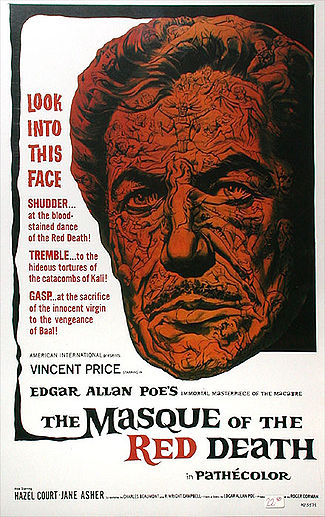
Horror Scenes That I Love: Vincent Price in Masque of the Red Death


Vincent Price always cited Roger Corman’s Edgar Allan Poe adaptations as being amongst his favorite of the horror films in which he appeared.  In this scene from 1964’s The Masque of the Red Death, Vincent Price delivers a monologue on the meaning of terror as only he could.

4 Shots From 4 Films: October 26th


4 Shots From 4 Films is just what it says it is, 4 shots from 4 of our favorite films.  As opposed to the reviews and recaps that we usually post, 4 Shots From 4 Films is all about letting the visuals do the talking.

4 Shots From 4 Films

Forbidden Photos Of A Lady Above Suspicion (1970, directed by Luciano Ercoli)

Forbidden Photos Of A Lady Above Suspicion (1970, directed by Luciano Ercoli)

Torso (1973, directed by Sergio Martino)

Torso (1973, directed by Sergio Martino)

Spasmo (1974, directed by Umberto Lenzi)

Spasmo (1974, directed by Umberto Lenzi)

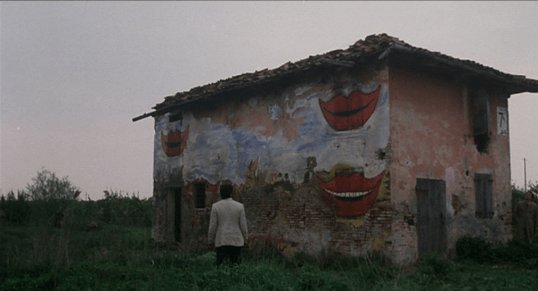
The House With Laughing Windows (1976, directed by Pupi Avati)

The House With Laughing Windows (1976, directed by Pupi Avati)

Monday Live Tweet Alert: Join Us for Psycho Scarecrow!


As some of our regular readers undoubtedly know, I am involved in hosting a few weekly live tweets on twitter and occasionally Mastodon.  I host #FridayNightFlix every Friday, I co-host #ScarySocial on Saturday, and I am one of the five hosts of Mastodon’s #MondayActionMovie!  Every week, we get together.  We watch a movie.  We snark our way through it.

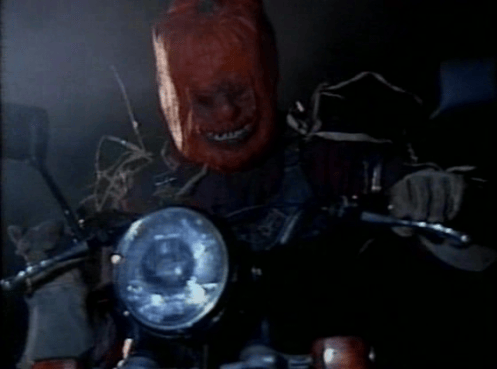
Tonight, for #MondayActionMovie, the film will be the SOV classic, Psycho Scarecrow!

If you want to join this watch party, just hop onto Mastodon, pull up Psycho Scarecrow on YouTube, start the movie at 8 pm et, and use the #MondayActionMovie hashtag!

Enjoy!