Retro Television Reviews: The Secret Night Caller (dir by Jerry Jameson)


Welcome to Retro Television Reviews, a feature where we review some of our favorite and least favorite shows of the past!  On Sundays, I will be reviewing the made-for-television movies that used to be a primetime mainstay.  Today’s film is 1975’s The Secret Night Caller!  It  can be viewed on YouTube!

Though the show pretty much guaranteed that he would forever be a part of the American pop cultural landscape, Robert Reed was not a fan of The Brady Bunch.  Onscreen, Reed played Mike Brady, the stern patriarch who always knew the right thing to do and who, as a result, was named father of the year by the local chamber of commerce.  (Of course, even though she was responsible for him getting the reward, Mike still grounded Marcia for sneaking out to mail in his nomination forms.)  Offscreen, Reed was notoriously difficult, complaining that the scripts for the show were juvenile and shallow.  Reed was correct and it should be noted that all of the actors who played the Brady kids have said that Reed never took out his frustration on the cast and actually became a bit of a surrogate father to all of them.  Still, you have to wonder what Reed was expecting when he signed up for a show that was created by the man responsible for Gilligan’s Island.

The Brady Bunch was cancelled in 1974, temporarily setting Robert Reed free from the burden of playing Mike Brady.  (Of course, he would later return to the role in The Brady Bunch Hour and we all know how that turned out.)  One of the first post-Brady movies that Reed starred in was The Secret Night Caller.   

In this film, Reed plays a seemingly mild-mannered IRS (booo!) agent named Freddy Durant.  Freddy has a good career and a nice home but he’s deeply unsatisfied.  He barely communicates with his wife, Pat (Hope Lange).  He freaks out over his teenage daughter, Jan (Robin Mattson), wearing a bikini.  He fantasies about hitting on almost every woman that he sees.  He hangs out at a strip club and, when he’s really feeling unsatisfied, he makes obscene phone calls!  Because this is a made-for-TV movie from the 70s, we never actually get to hear what Freddy says on the phone but he manages to disgust and/or horrify everyone who has the misfortune to answer his call.  He even calls a woman who works in his office, scaring Charlotte (Arlene Golonka) so much that she subsequently has an auto accident.  Unfortunately, for Freddy, one of his victims, a stripper named Chloe (Elaine Giftos), recognizes his voice and tries to blackmail him.  Freddy’s life is falling apart.  Can his psychiatrist (played by Michael Constantine) help him put it all back together again?

Freddy Durant is obviously meant to come across as being the exact opposite of Mike Brady.  (Of course, many of us who have seen The Brady Bunch have our suspicions about what Mike was actually doing in his office….)  Whereas Mike Brady was the perfect father, Freddy is cold, distant, and repressed.  Reed is convincingly uptight as Freddy and he’s surrounded by a fine supporting cast, including Sylvia Sidney as his disapproving mother-in-law.  That said, it’s still impossible to watch this show without thinking to yourself, “There’s Mike Brady making an obscene phone call.”  That’s the difficulty of typecasting unfortunately.  For all of his efforts to escape the shadow of the Brady Bunch, it’s impossible not to associate Robert Reed with the show, even when he’s talking dirty on the phone.
Live Tweet Alert: Watch Event Horizon with #ScarySocial


As some of our regular readers undoubtedly know, I am involved in a few weekly live tweets on twitter.  I host #FridayNightFlix every Friday, I co-host #ScarySocial on Saturday, and I am one of the five hosts of #MondayActionMovie!  Every week, we get together.  We watch a movie.  We tweet our way through it.

Tonight, for #ScarySocial, Tim Buntley will be hosting 1997’s Event Horizon!

If you want to join us on Saturday night, just hop onto twitter, start the film at 9 pm et, and use the #ScarySocial hashtag!  The film is available on Prime.  I’ll probably be there and I imagine some other members of the TSL Crew will be there as well.  It’s a friendly group and welcoming of newcomers so don’t be shy.

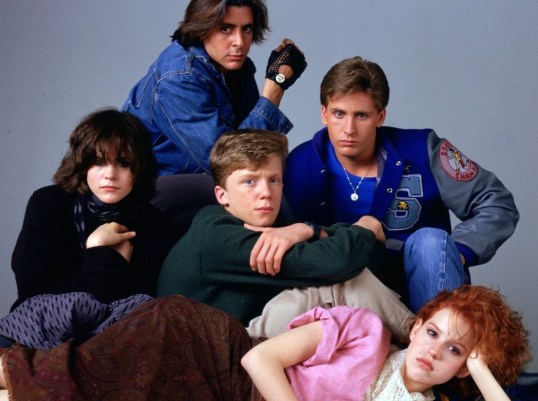
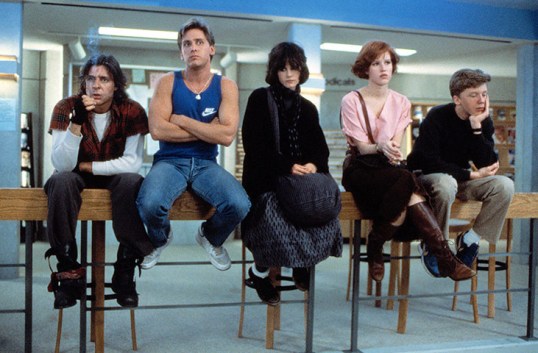
Live Tweet Alert: Join #FridayNightFlix for The Breakfast Club!


As some of our regular readers undoubtedly know, I am involved in a few weekly live tweets on twitter.  I host #FridayNightFlix every Friday, I co-host #ScarySocial on Saturday, and I am one of the five hosts of #MondayActionMovie!  Every week, we get together.  We watch a movie.  We tweet our way through it.

Tonight, at 10 pm et, #FridayNightFlix has got 1985’s The Breaskfast Club!

If you want to join us this Friday, just hop onto twitter, start the movie at 10 pm et, and use the #FridayNightFlix hashtag!  It’s a friendly group and welcoming of newcomers so don’t be shy.

The Breakfast Club is available on Prime!  See you there!


Here’s What’s Coming To The 2023 Cannes Film Festival


The initial line-up for the 2023 Cannes Film Festival was announced today.  Usually, films are added (and occasionally even withdrawn) after the initial announcement so this list will probably be added to in the days and weeks to come:

COMPETITION:

Club Zero, Jessica Hausner
Asteroid City, Wes Anderson
The Zone of Interest, Jonathan Glazer
Fallen Leaves, Aki Kaurismaki
Les Filles D’Olfa (Four Daughters), Kaouther Ben Hania
Anatomie D’une Chute, Justine Triet
Monster, Kore-eda Hirokazu
Il Sol Dell’Avvenire, Nanni Moretti,
La Chimera, Alice Rohrwacher,
About Dry Grasses, Nuri Bilge Ceylan,
L’Ete Dernier, Catherine Breillat,
The Passion of Dodin Bouffant, Tran Anh Hung,
Rapito, Marco Bellocchio,
May December, Todd Haynes,
Firebrand, Karim Ainouz,
The Old Oak, Ken Loach,
Perfect Days, Wim Wenders,
Banel Et Adama, Ramata-Toulaye Sy,
Jeunesse, Wang Bing,

OUT OF COMPETITION:

Killers of the Flower Moon, Martin Scorsese
The Idol, Sam Levinson
Cobweb, Kim Jee-woon
Indiana Jones and the Dial of Destiny, James Mangold
Jeanne du Barry, Maiwenn

MIDNIGHT SCREENINGS:

Omar la Fraise, Elias Belkeddar
Kennedy,” Anurag Kashyap
Acide, Just Philippot

SPECIAL SCREENINGS:

Retratos Fantasmas (Pictures of Ghosts), Kleber Mendonca Filho
Anselm, Wim Wenders
Occupied City, Steve McQueen
Man in Black, Wang Bing

CANNES PREMIERE:

Le Temps D’Aimer, Katell Quillevere,
Cerrar Los Ojos, Victor Erice,
Bonnard, Pierre et Marthe, Martin Provost,
Kubi, Takeshi Kitano

For Oscar watchers, the big news is probably that both Asteroid City and Killers of The Flower Moon will be premiering at Cannes.  Asteroid City is the latest from Wes Anderson and, to be honest, I have my doubts about it as an Oscar contender.  The trailer indicates that it’s very, very quirky.  While Anderson did receive some Oscar recognition for Grand Budapest Hotel, a good deal of that film’s success was due to Ralph Fiennes’s lead performance.  Fieness kept Grand Budapest rooted in a stylized reality.  I’m not sure if anyone in the cast of Asteroid City is going to perform the same duty.  If Asteroid City is going to become an Oscar contender, a good showing at Cannes would definitely help.

As for Killers of the Flower Moon, it’s being shown out of competition.  I can understand the logic.  With all of the high expectations that come along with being Martin Scorsese’s latest film (as well as being the first Scorsese film to feature both De Niro and Di Caprio), it’s best not to run the risk of being snubbed by the unpredictable Cannes jury.  The last thing anyone wants is for the narrative to shift from “sure-fire contender” to “late career disappointment.”

The Cannes Film Festival runs from May 16th to May 27th!

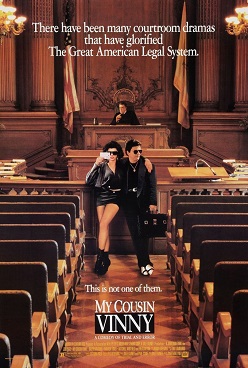
Film Review: My Cousin Vinny (dir by Jonathan Lynn)


In the 1992 film, My Cousin Vinny, two college students from New York City, Bill Gambini (Ralph Macchio) and Stan Rothstein (Mitchell Whitfield), make the mistake of driving through Alabama.  The two students stop off at a convenience store.  When the clerk is subsequently shot dead during a robbery, Bill and Stan are arrested for the crime.  The viewers know they’re innocent.  Bill and Stan know they’re innocent.  But the entire state of Alabama seems to be determined to send Bill and Stan to prison for life.

Fortunately, Bill’s cousin, Vinny (Joe Pesci, star of Half Nelson), is a lawyer.  Unfortunately, he just recently passed the bar exam and he has yet to actually try a case.  Still, Vinny and his fiancée, Mona Lisa Vito (Marisa Tomei), come down to Alabama.  Vinny takes the case, lying to the judge (Fred Gwynne) about his qualification as a trial attorney.  Vinny is momentarily impressed when the prosecutor (Lane Smith) shares with him all of the files about the case.  “It’s called disclosure, dickhead!” Lisa snaps at him, revealing that she actually has more common sense than Vinny.  That becomes increasingly important as Vinny tries to keep Bill and Stan from spending the rest of their lives in prison.

To be honest, considering how much I complain about stereotypical portrayals of the South, I really shouldn’t like My Cousin Vinny as much as I do.  Almost every character in the film is a stereotype to some extent or another, from the farmers and rednecks who take the witness stand to Fred Gwynne’s no-nonsense judge who rules that Vinny is in contempt of court because he’s wearing a leather jacket.  Fortunately, though, the Southern stereotypes don’t bother me because both Vinny and Lisa are New York stereotypes.  Just as the judge and the townspeople seem to confirm every prejudice that someone like Vinny would have against the South, Vinny seems to be the epitome of everything that people in the South dislike about the North.  When Vinny first shows up on the scene, he’s loud and brash and obnoxious.  But, as the film progresses, Vinny reveals himself to not only be a better attorney than anyone was expecting but he also calms down and adjusts to the more relaxed pace of life in the country.  Just as Vinny reveals himself to be not as bad as everyone originally assumed, both the Judge and the prosecutor are also allowed to reveal some hidden depths.  Neither one is the cardboard authority figure that viewers might expect.  The Judge does sincerely want justice to be done and the prosecutor sincerely wants to keep the county safe, even if he is prosecuting two innocent men.  Just as Vinny learns not to be too quick to judge them, they learn not to be too quick to judge Vinny.  The end message is that everyone is innocent until proven guilty and deserves a fair hearing, whether in a court of law or just in the courts of public and private opinion.  It’s not a bad message.  In fact, it’s one that more than a few people could still stand to learn today.

Of course, the best thing about the film is Marisa Tomei, who not brings a lot of energy to the film but whose hair is amazing and whose clothes are to die for.  Tomei won an Oscar for her performance in My Cousin Vinny, a victory that was so controversial that there were unfounded rumors that presenter Jack Palance had read the wrong name by mistake.  (As we all learned a few years ago when Warren Beatty and Faye Dunaway actually did read the wrong winner, the accountants aren’t going to let anyone get away with that.)  Watching the film last night, it was obvious to me that Tomei deserved that Oscar because Lisa is the heart of the film.  Pesci, Gwynne, and Lane Smith are all give good performances but, without Marisa Tomei’s performance, My Cousin Vinny would ultimately just be another culture clash comedy.  A lesser actress would have just played Lisa as being a stereotype.  But Tomei turned Lisa into the most believable and sincere character in the film.  While Lisa won the case, Tomei saved the movie.

(And needless to say, I’m a fan of any movie that features a Lisa saving the day.)

My Cousin Vinny holds up as an enjoyable film.  Watch it the next time you’re losing faith in humanity.

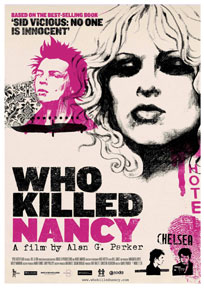
Who Killed Nancy? (2009, directed by Alan G. Parker)


On October 12th, 1978, a 20 year-old, heroin addict named Nancy Spungeon was discovered dead in the bathroom of her room at the Chelsea Hotel.  Nancy was best-known for being the girlfriend of Sid Vicious, the bassist of the Sex Pistols.  The police arrested Vicious and charged him with second degree murder.  Vicious initially said that he couldn’t remember what had happened the previous night because he had been knocked out on barbiturates.  While being interrogated, Vicious changed his story and said that he and Nancy had an argument during the night but that he hadn’t meant to kill her when he stabbed her.  Later, Vicious said that Nancy fell on the knife but Vicious was such a heavy drug user that many felt it was doubtful he had any real memory of anything that might have happened that night.  After pleading not guilty, Vicious was released on $50,000 bail but he was sent right back to Riker’s after assaulting Todd Smith (brother of Patti Smith) at a nightclub.  At Riker’s Vicious went through a detox program before being once again released on bail.  Vicious died of a heroin overdose the night after he was released.

Who Killed Nancy? is a documentary about Sid and Nancy’s relationship and Nancy’s death.  The film features interviews with friends and cotemporaries of the couple.  (Glen Matlock is the only former Sex Pistol to be interviewed, though Malcolm McLaren is heard in archival footage.)  Sid Vicious comes across as being a deeply damaged individual with no impulse control.  Listening to some of the things that Vicious did before finding fame as the sneering face of punk rock, it is easy to believe that, as much as he did love Nancy, he was also capable of losing his control and killing her.  Glen Matlock’s flatmate describes how he was traumatized for life by watching Sid strangle a stray cat.  Others describe Sid as being childlike and almost innocent, a shy virgin until he met Nancy.  But anyone who could strangle an animal has obviously got some screws loose.

However, the documentary also makes a convincing argument that, even if he was capable of impulsive violence, Vicious was so wasted on the night of Nancy’s death that he couldn’t have even lifted a knife, much less stabbed someone with it.  The documentary suggests that Nancy was murdered by one of the many drug dealers who were coming in-and-out of the couple’s hotel room.  Unfortunately, due to his own public image, it was easy for the press and the public to assume that Sid committed the crime and, suicidal after Nancy’s death, it was easy for Sid to convince himself that he must have been responsible.  If the documentary is correct about Sid’s innocence, at least one person got away with murder.  It’s an interesting documentary.  You do have to feel bad for Nancy.  Even in death, none of the interviewees seems to be willing to say anything nice about her.  After all these years, she is still being blamed for Sid Vicious’s downfall but, as this documentary makes clear, Sid was probably doomed whether or he met Nancy or not.

4 Shots From 4 Films: Special Uli Edel Edition


4 Or More Shots From 4 Or More Films is just what it says it is, 4 shots from 4 of our favorite films. As opposed to the reviews and recaps that we usually post, 4 Shots From 4 Films lets the visuals do the talking!

Today, the Shattered Lens wishes a happy 76th birthday to German director, Uli Edel!  It’s time for….

4 Shots from 4 Uli Edel Films

Christiane F. (1981, dir b Uli Edel, DP: Justus Pankau and Jürgen Jürges)

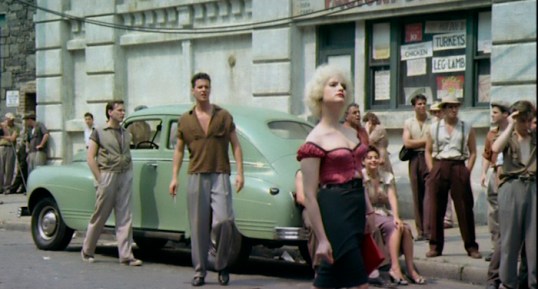
Last Exit to Brooklyn (1989, dir by Uli Edel, DP: Stefan Czapsky)

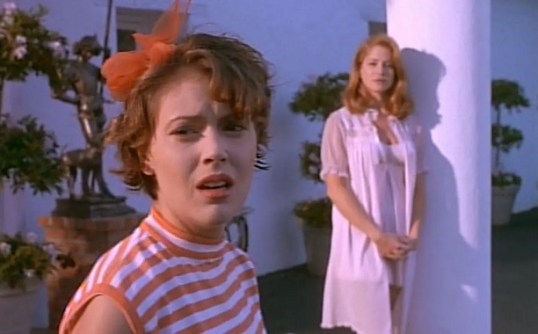
Confessions of a Sorority Girl (1994, dir by Uli Edel, DP: Jean de Segonzac)

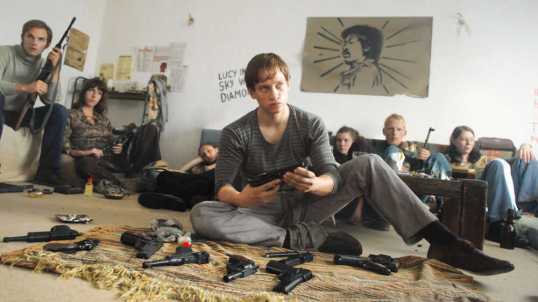
The Baader Meinhof Complex (2008, dir by Uli Edel, DP: Rainer Klausmann)

Scenes I Love: “Avenge Me!” from Red Dawn


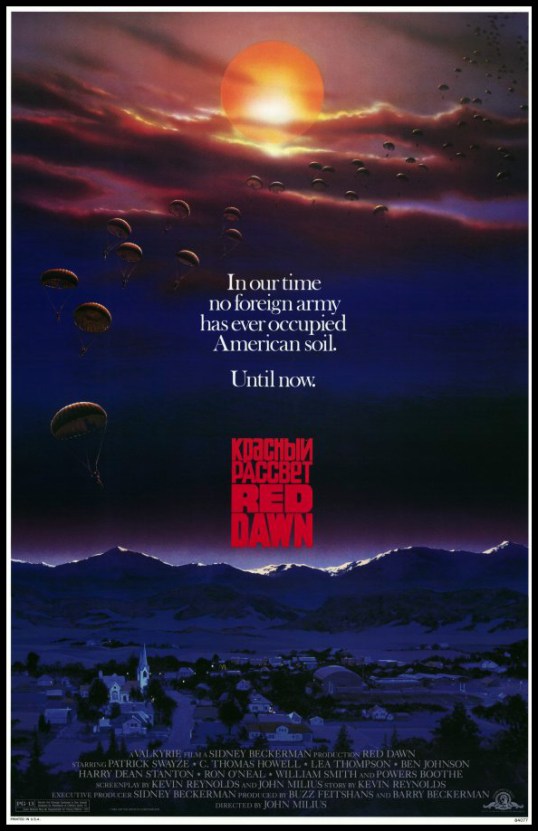
Today, the Shattered Lens wishes a happy birthday to a true Hollywood iconoclast, John Milius!  In honor of Milius and his career and his legacy, today’s scene that I love comes from Milius’s 1984 film, Red Dawn.

After their small town is taken over by a combination of Cuban and Russian soldiers, a group of teenagers flee to the hills.  After a few months, they sneak back into town.  In this scene, two brothers (Patrick Swayze and Charlie Sheen) discover that their father (Harry Dean Stanton) is one of the many townspeople who have been sentenced to a reeducation camp.  Their dad says a few final words to them, knowing that he’ll probably never see them again.  He leaves them with one final instruction: “AVENGE ME!”  Not even the propaganda film playing in the background can cover the sound of their father demanding vengeance.

And, of course, they do get their revenge, sacrificing their lives so that America might once again be free.  It’s a classic John Milius moment and an appropriate scene with which to celebrate his birthday.

Film Review: Hi, Mom! (dir by Brian De Palma)


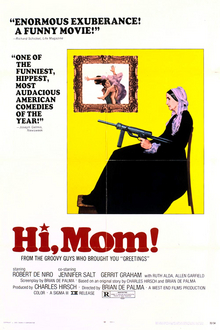
Released in 1970, Hi, Mom!, tells the story of Jon Rubin (played by a 26 year-old Robert De Niro).  The somewhat spacey and kind of creepy Jon has just returned to New York City from Vietnam.  After moving into a run-down apartment building and meeting the building’s superintendent (Charles Durning), Jon is hired to direct a pornographic film by producer Joe Banner (Allen Garfield).  Jon’s idea to simply point his camera at his building and to film his neighbors as they go about their day.  As quickly becomes apparent, Jon is mostly just looking for an excuse to watch and film Judy Bishop (Jennifer Salt).

Also living in the building is Gerrit Wood (Gerrit Graham), who is first seen triumphantly putting posters of Che Guevara and Malcolm X up in his apartment.  Gerrit is a freshly-minted political radical and the leader of a group of performance artists who put on a show called Be Black, Baby, in which the white audience members are forced to wear blackface and are then chased, attacked, and assaulted by black actors wearing whiteface.  (Gerrit himself is white.)  Jon is hired to play the police officer who beats and arrests the members of the audience at the end of the performance.  Of course, eventually, the real police show up….

An attempt at an episodic counter-culture comedy, Hi, Mom is definitely a product of the time in which it was made, both in its style and its thematic content.  Today, it’s best-known for being one of Brian De Palma’s early independent films and for featuring Robert De Niro in one of his first starring roles.  De Palma and De Niro aren’t exactly the first names that come to mind when one thinks about comedy and Hi, Mom shows that there’s a good reason for that.  As both a screenwriter who felt he had something important to say and a young director who was obviously eager to show off everything that he could do with a camera, Brian De Palma simply cannot get out of his own way.  Scenes are needlessly sped up.  Scenes are pointlessly slowed down.  The musical cues are obvious.  The dialogue is often so broad that it comes across as being cartoonish.  One gets the feeling that De Palma didn’t trust the audience to get the jokes so he went overboard to make sure everyone knew when to react.  All of the pointless camera trickery serves the same purpose that a laugh track would on an old sitcom.  Interestingly enough, the only sequence that really works as satire is the Be Black, Baby sequence and that’s because De Palma directs it in a semi-documentary fashion.  De Palma gets out of his own way and allow the sequence to develop a natural rhythm.  (Of course, seen today, the scene will bring to mind the upper class white liberals who pay money to have an activist lecture them about their privilege while having their friends over for dinner.)

As for Robert De Niro, he gives a typically nervy performance, one that feels like a dry run for his later work in Mean Streets, Taxi Driver, and King of Comedy.  Despite the reputation of those films, there are some genuinely funny moments to be found in all of them.  Most of them, like the classic Taxi Driver conversation between De Niro’s Travis and Peter Boyle’s Wizard, are funny because of how people react to De Niro’s obviously unhinged characters.  Both Taxi Driver and King of Comedy got mileage out of having normal people try to deal with De Niro’s unstable characters.  In Hi, Mom, everyone is equally wacky and, as such, De Niro doesn’t really have anyone to play off.  No one is really reacting to anything, De Niro-included.  (There is some spark to his scenes with Charles Durning and Allen Garfield but even those scenes seem to drag on forever.)

On the plus side, Hi, Mom! is was shot on the actual streets of New York City, guerilla-style.  (A “Re-Elect Mayor Lindsay” sign in the background confirms that the film was made on location in 1969.)  When De Palma isn’t getting in his own way with all of his fancy camera tricks, he manages to capture so memorably bleak images of New York City.  Hi, Mom! presents New York as being a dirty, crime-ridden, and menacing city but it also captures the odd grandeur of urban decay.  At its best, Hi, Mom! captures the love/hate relationship that many seem to have New York City.  The city feels both alive and dangerous at the same time.  Hi, Mom! is too uneven to work as a sustained satire but, as a documentary about New York at the end of the turbulent 60s, it’s worth watching.

I should mention that this was not the first time that De Palma and De Niro teamed up.  Indeed, De Niro was De Palma’s muse even before he met Martin Scorsese.  Hi, Mom! was a loose sequel to an earlier De Palma/De Niro film called Greetings.  (Like many of De Palma’s future films, both Greetings and Hi, Mom! were originally rated X but later re-rated R.)  De Palma and De Niro, of course, would both go onto have long Hollywood careers.  (They would later reunite for The Untouchables, a big-budget spectacle of a film that’s about as far from the grungy Hi, Mom! as one can get.)  De Palma’s career has had its ups and downs but, as of late, many of his films have been positively reevaluated.  As for De Niro, he can finally kind of play comedy.  That said, I’d rather watch Hi, Mom than Dirty Grandpa.

The Acid King (2019, directed by Dan Jones and Jesse B. Pollack)


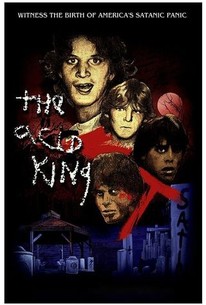
In 1984, a Long Island-based teenage drug dealer and wannabe gangster named Ricky Kasso murdered a childhood friend named Gary Lauwers, reportedly because he was angry that Gary had stolen some drugs from him.  While tripping on LSD, Ricky brutally stabbed Gary to death in the woods.  Ricky later said that he demanded that Gary say “I love Satan,” while killing him.  Ricky claimed to be a Satanist, though he never actually learned how to spell the name of his supposed Dark Lord and instead would tag walls with graffiti exhorting the viewer to “Hail Satin.”

Not being the smartest drug dealer/Satanist to ever grace the state of New York, Ricky spent the next two weeks bragging about the murder and taking his friends to view Gary’s corpse.  While none of the people who saw Gary’s body ever called the police, rumors started to spread about what had happened.  Acting on an anonymous tip, the police arrested Ricky and two of his friends.  Ricky Kasso, the self-described “Acid King,” committed suicide in his jail cell a month after murdering Gary Lauwers.  Supposedly, the other inmates in the jail egged Ricky on while he hanged himself.  No one liked the Acid King.

Ricky Kasso had been in-and-out of trouble for the majority of his short life and, at the time of the murder, he was living on the streets because his family had kicked him out of the house.  What set Ricky apart from other murderous drug dealers was that he claimed to be a Satanist and that he demanded that Gary declare that he loved Satan before killing him.  This played right into the burgeoning Satanic Panic of the 80s and, in death, Ricky became a symbol of the Satanic conspiracy that many were convinced had taken hold of the teenagers.  (Especially teenagers who, like Ricky, listened to AC/DC.)  A book called Say You Love Satan was written about Kasso and his crimes.  Though the book has since been discredited, it was a best seller when initially published.  (I can still remember, when I was a kid, coming across a copy in Waldenbooks and reading a few pages.)  Ricky Kasso became a cult figure, inspiring both filmmakers and bands.  Meanwhile, all of Ricky and Gary’s former friends had to deal with the burden of being branded as Satanists by the rest of America.  Heavy metal music was blames for leading kids like Ricky into Satanism.  Tipper Gore campaigned for the labeling of offensive music.  Satin would have been proud.

The Acid King is an eye-opening documentary about the case, featuring interviews with the people who knew both Ricky and Gary.  While criticizing the way the case was reported on by the press, The Acid King also makes it clear that Ricky Kasso was a twisted individual.  (More than one interview subject describes him as being evil.)  The documentary takes a look at how Ricky and his friends were essentially abandoned by their parents in their privileged community, leaving them with next to no guidance on how to deal with the real-life consequences of their actions.  Of course, for the media, it was much easier to blame Satanism and heavy mental music than it was to ask where the parents were while Ricky Kasso was plotting to kill Gary Lauwers.

The first half of the documentary deals with Ricky and Gary.  The second half features interviews with the horror filmmakers and the musicians who were inspired by the sordid media coverage of Ricky’s crimes.  Lori S, the lead singer of Acid King, took the name of the band from a passage in Say You Love Satan while director Jim VanBebber, while being totally dismissive of the book’s claim that Ricky was directly inspired by Satan, still directed a short film about Ricky Kasso.  The second half is a less interesting than the first, until you consider that none of these people would have heard about Ricky Kasso if not for the attempts of people like Tipper Gore to turn him into the poster child for her crusade against heavy metal music.  Instead of scaring people away, the Tipper Gores of the world made Ricky Kasso, a barely literate idiot, into a cult figure.  Again, Satin would be proud.

The Acid King provides a valuable service by separating the fact from the rumors, revealing that the mundane truth is even more disturbing than the sordid fiction.