Celebrate The 40th Anniversary of Jaws With Art!


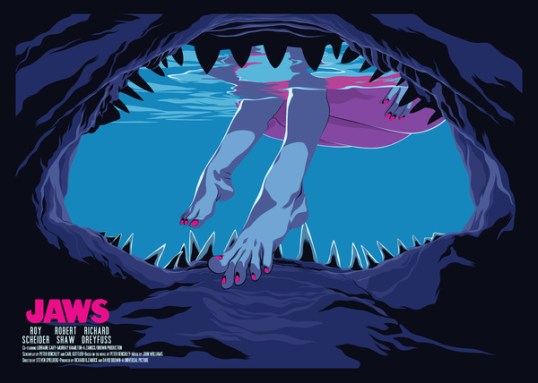
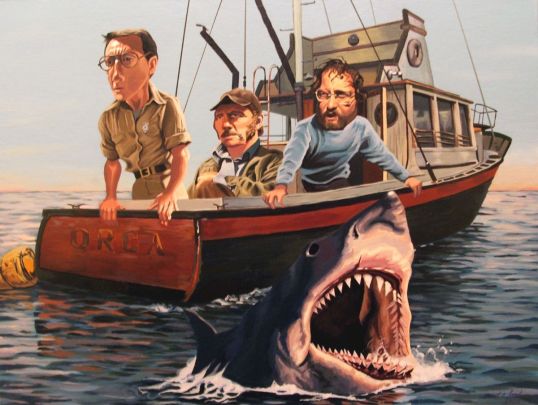
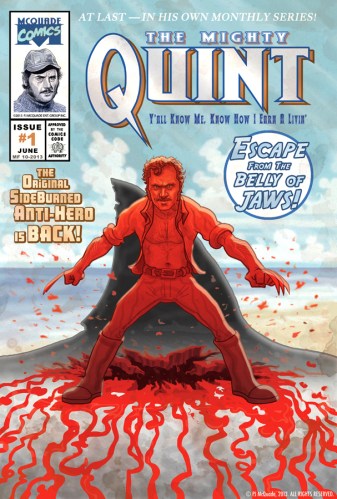
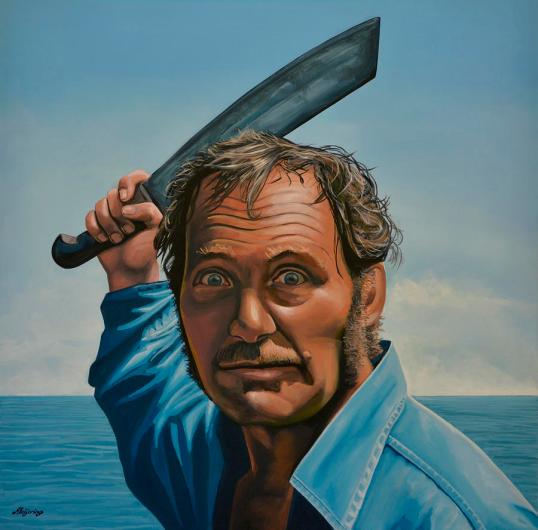
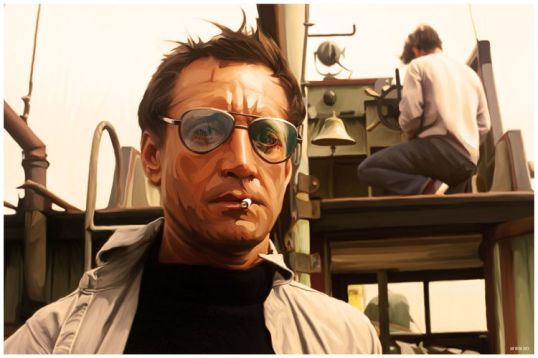
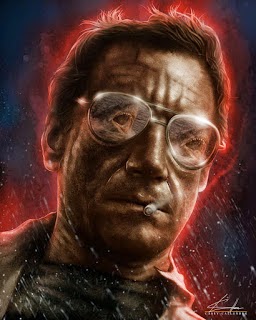
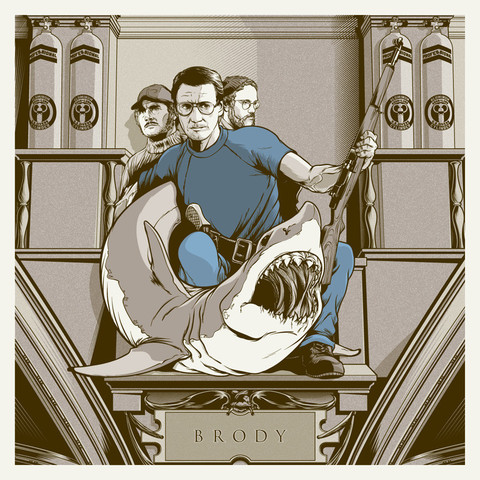
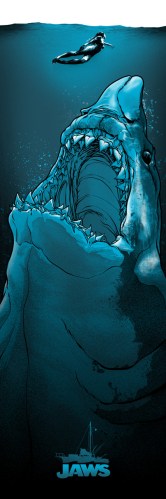
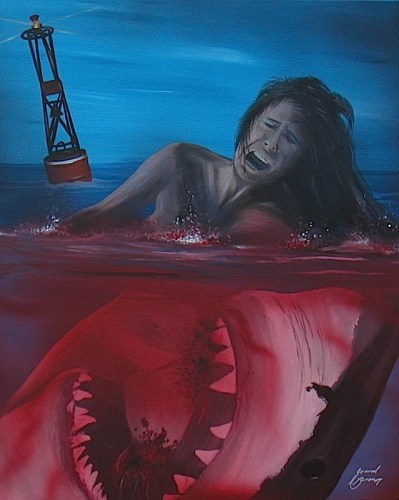
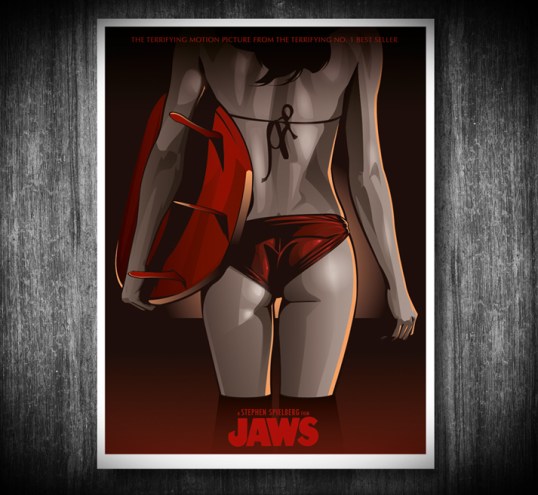
This week is the 40th anniversary of the release of Jaws.  Here’s some of the best Jaws tribute art that I’ve found online.

By Jerrod W. Brown

By Jerrod W. Brown

By Mark Reihell

By Mark Reihell

By Mike Wrobel

By Mike Wrobel

By Justin Reed

By Justin Reed

By PJ McQuade

By PJ McQuade

By Paul Meijering

By Paul Meijering

By Joe Vetoe

By Joe Vetoe

By Casey Callender

By Casey Callender

By Joshua Budich

By Joshua Budich

By Joshua Budich

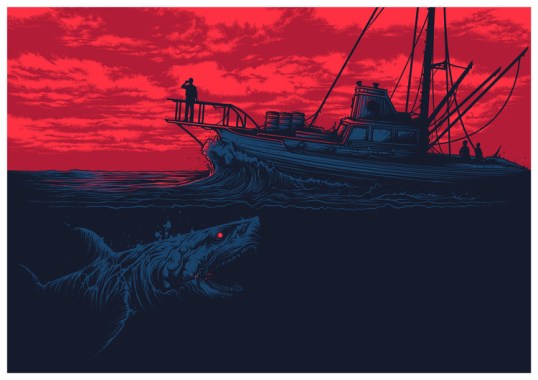
By Dan Mumford

By Dan Mumford

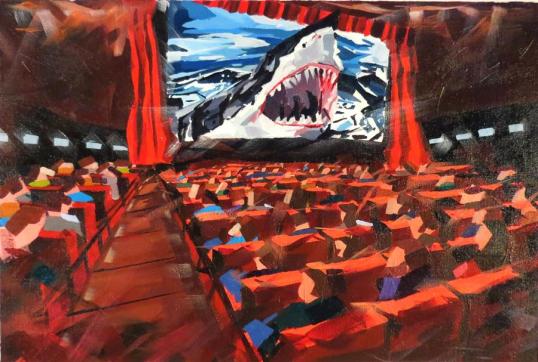
By Matthias Chistensen

By Matthias Chistensen

What if Peter Cushing Had Played The Doctor: A Look at Dr. Who And The Daleks


MV5BMjA5MDE3MDI5MV5BMl5BanBnXkFtZTcwNjU3NTgxMQ@@._V1_SY317_CR5,0,214,317_AL_When the long-running British science fiction show Doctor Who premiered over 50 years ago, it was originally envisioned as being a serialized educational program for children.  Each serial would see The Doctor (William Hartnell), his granddaughter Susan (Carole Ann Ford), and teachers Ian (William Russell) and Barbara (Jacqueline Hill) traveling via TARDIS to a different historical period and interacting with real-life figure like Marco Polo and the Emperor Nero.  The first serial, An Unearthly Child, featured the Doctor and his companions going back to prehistoric times and teaching cavemen how to make fire.

However, the show’s second serial forever changed the direction of the series.  Written by Terry Nation, The Daleks introduced viewers to a race of militaristic aliens who, because they had nearly destroyed their planet in a nuclear war, could only exist inside of a tank-like shell.  Devoid of all emotion except for hate, the Daleks were best known for their shrill battle cry of “EXTERMINATE!”  Despite being defeated and apparently destroyed at the end of the serial, The Daleks returned to face the Doctor many times and the show itself shifted its focus away from teaching history lessons and instead became the show that we all know and love today.

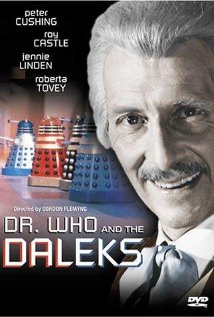
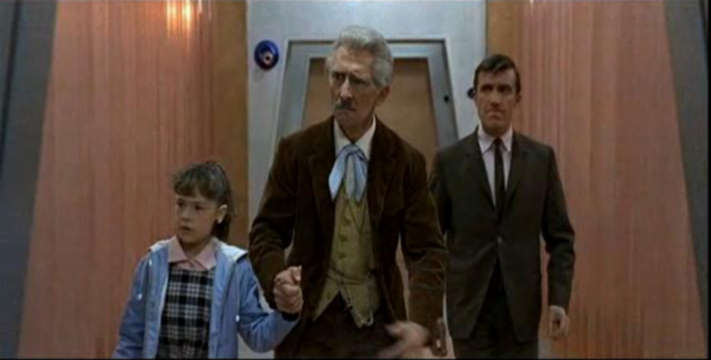
Dr-Who-and-the-Daleks-Poster-by-Tim-DoyleAt its height, the popularity of the Daleks rivaled that of the Doctor and his companions.  In 1965, when Amicus Productions produced the first Doctor Who feature film, it was a no-brainer that it would feature the Daleks.  With a few key changes (mostly to the character of the Doctor and his companions), Dr. Who and the Daleks recreates the plot of Terry Nation’s original serial.  The Doctor (played by Peter Cushing), his granddaughters, Barbara (Jennie Linden) and Susan (Robert Tovey), and Barbara’s boyfriend Ian (Roy Castle) go to the planet Skaro, where they help the peace-loving Thals battle the war-obsessed Daleks.

Beyond selling the rights to the story, the BBC had nothing to do with the film’s production.  Amicus obviously geared the film towards children, perhaps not understanding that, though Doctor Who may have started out as a kid’s show, the program itself had become much more adult as it grew in popularity.  Hoping to make a film that could appeal to a wider (read: American) audience than the original TV show, Amicus changed a few key details.  As a result,  for fans of the original show, Dr. Who and the Daleks is a true oddity.  It provides an alternative vision of what Doctor Who could have been.

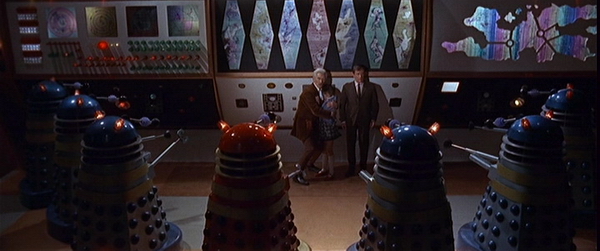
One change that did work is that, at a time when Doctor Who was still being broadcast in black-and-white, Dr. Who and the Daleks was in color.  Visually, the film has a pop art feel, full of primary color and featuring locations that feel like low-budget version of the villainous lairs that Ken Adam used to design for the James Bond films.  This was the first time that the Daleks had been seen in Technicolor and the show even appropriated the film’s Dalek color-scheme when color episodes started to air in 1970.

Dr-Who-The-Daleks-2

Other changes do not work quite as well.  The Daleks’ famous “EXTERMINATE” battle cry is never heard.  The show’s beloved theme music has been replaced with an uninspired score from veteran Amicus composer Malcolm Lockyer.  While the TARDIS still looks like a blue police box and is bigger on the inside than the outside, the sleek control console and the familiar grinding noise are both gone.  Instead, the inside of the TARDIS is a cluttered mess of loose wires and flashing lights.  The Doctor now has two granddaughters and, undoubtedly in order to appeal to children, Susan is much younger than she was in the television series.  As well, in the television series, Ian was a science teacher who had no fear of standing up to The Doctor.  The film’s Ian is clumsy and used mostly for broad comic relief.

Dr. Who & the Daleks films tillThe biggest change is to the character of the Doctor himself.  For fans of the series, there is no bigger pet peeve than when unfamiliar critics refer to the main character as being “Dr. Who.”  True fans know that the show’s title is a question and not a statement.  No one knows the Doctor’s true name or his exact age.  What they do know is that Doctor is a Time Lord from Gallifrey and that he stole his TARDIS.  Whenever the Doctor’s body suffers too much damage, he regenerates into a new body (and a different actor).

Of course, in 1965, the Time Lords had yet to be officially introduced.  The name “Gallifrey” had never been uttered on the television show.  The Time Meddler, which was the first serial to introduce another member of the Doctor’s race, only aired a month before the release of Dr. Who and the Daleks.  On the TV series, William Hartnell was still playing the First Doctor and it would be another two years before the character would regenerate for the first time.  When Dr. Who and the Daleks was released, all that was known of the Doctor was that he was an alien and no one knew his true name.

Even those two facts are ignored in Dr. Who and the Daleks.  Instead of being the abrasive alien that Hartnell played on the show, the film’s Doctor is portrayed as being a brilliant but absent-minded inventor who is very much a human being.  The film also establishes early that his last name really is Who, with Ian regularly addressing him as “Dr. Who.”  We never learn his first name.  Maybe it was Larry.

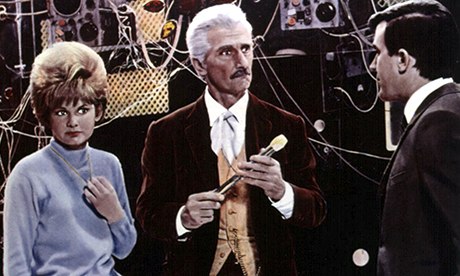
Dr-Who-and-the-Daleks-Dr-Who-4Dr. Who was played by Peter Cushing, who Amicus felt would be a bigger box office draw than William Hartnell.  Cushing does a good job playing his version of the character and it’s interesting to compare his kindly performance to both his better known work for Hammer and George Lucas and William Hartnell’s ruthless interpretation of the character.  Cushing regularly goes back to save the life of Castle’s cowardly Ian.  Hartnell would have just let him die.

Though the film bombed in North America (where, at the time, Doctor Who was still unknown) it did will enough in the UK to lead to a sequel, Daleks — Invasion Earth: 2150 A.D.  When the sequel failed at the box office, plans for future movies starring Peter Cushing as the Doctor were abandoned.  That was probably for the best.  If the Amicus films had been a success, they could have changed the direction of Doctor Who just as surely as Terry Nation did when he first introduced the Daleks.  Doctor Who could have reverted to being a show for children instead of becoming the show that it is today.

Still, it is hard not to wish that Peter Cushing could have gotten to play the Doctor in a “real” Doctor Who film.  After all, Christopher Lee would have made a great Master.

Dr Who and the Daleks (13)

4 Shots From 4 Films: Deadly Blessing, The Journey of Natty Gann, The New World, Cristiada


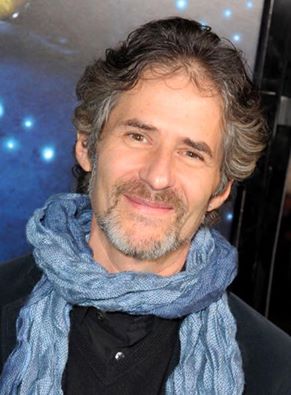
James Horner

4 Shots From 4 Films is just what it says it is, 4 shots from 4 of our favorite films.  As opposed to the reviews and recaps that we usually post, 4 Shots From 4 Films is all about letting the visuals do the talking.

Tonight, the film community is in shock following the news of the passing of award-winning composer James Horner.  Our latest installment of 4 Shots From 4 Films is dedicated to to the memory of this talented artist.

The four shots below all come from films that feature a score composed by the great James Horner.

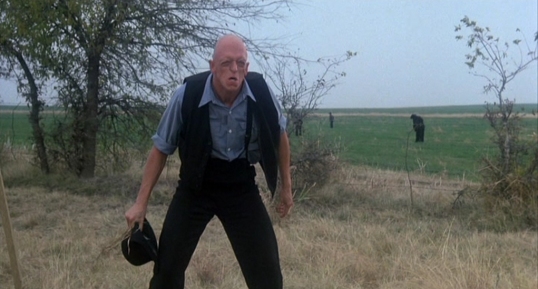
Deadly Blessing (1981, dir by Wes Craven)

Deadly Blessing (1981, dir by Wes Craven)

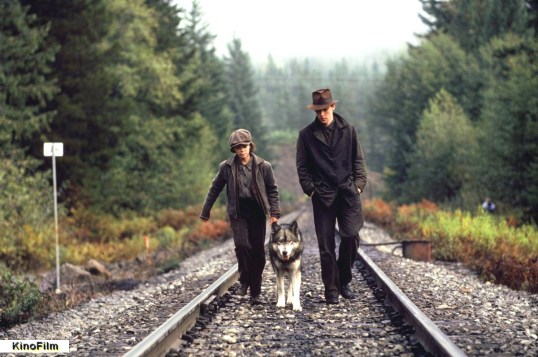
The Journey of Natty Gann (1985, dir by Jeremy Kagan)

The Journey of Natty Gann (1985, dir by Jeremy Kagan)

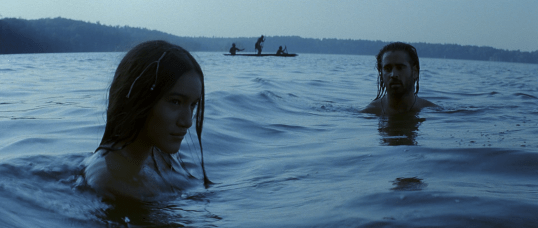
The New World (2005, dir by Terrence Malick)

The New World (2005, dir by Terrence Malick)

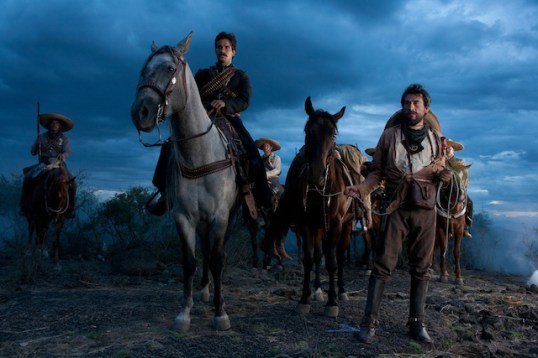
Cristiada, also known as For Greater Glory (2012, dir by Dean Wright)

Cristiada, also known as For Greater Glory (2012, dir by Dean Wright)


A Teasing Glimpse Into The Secret Life of Pets


TheSecretLifeofPets

Pixar and Dreamworks had been the only two big boys in the CG-animated block, but in the last couple years we’ve had another studio make some inroads into that very block. It’s the studio that brought to the world Despicable Me and Despicable Me 2. It is also set to release Minions (itself a spin-off from the Despicable Me franchise).

Illumination Entertainment has released the first teaser trailer for their 2016 offering: The Secret Life of Pets.

From the look of the trailer we may be looking forward to a sort of Toy Story-type narrative but instead of toys coming to life and behaving like their owners it’s pets standing in.

The Secret Life of Pets is set for a July 8, 2016 release date.

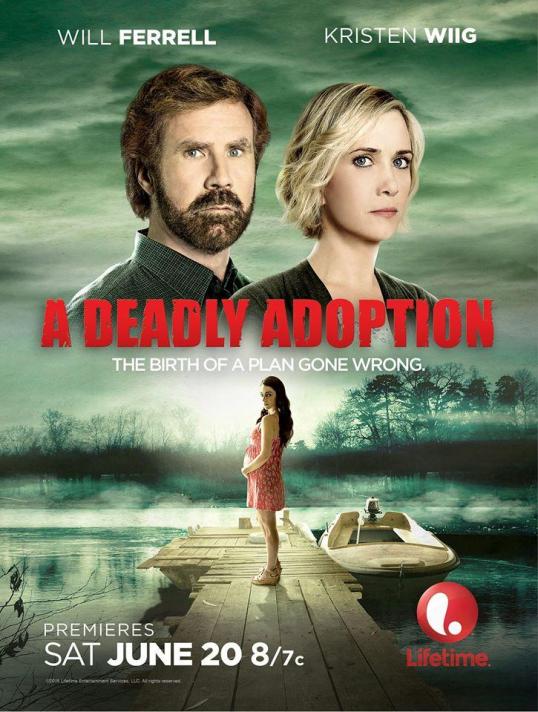
Yes, A Deadly Adoption Was A Comedy…


deadly-adoption

Last night, an article appeared on Mashable in which I was declared to be one of the  “20 people who totally get the ridiculousness of Will Ferrell and Kristen Wiig’s ‘A Deadly Adoption.”  At the time, I was incredibly flattered but also somewhat incredulous.  If I was one of the 20 people who understood that the latest Lifetime film, A Deadly Adoption, was meant to be a drier than dry comedy then that meant that there were presumably people out there who did not get the joke.

And how could that be!? I wondered.

In case you missed it, on April 1st, a story was leaked that Will Ferrell and Kristen Wiig were secretly making a film for Lifetime.  The title of that film was A Deadly Adoption and early reports indicated that it was going to be a serious Lifetime film.  Because the story came out on April Fools Day, a lot of us assumed it was a joke.

However, then Will Ferrell announced that no, it was not a joke.  But now that news of the film had been leaked, he was prepared to close down production and make sure that the film never saw the light of day.  Now, whether Will was being serious in his anger or not is debatable.  (It’s easier to imagine Ron Burgundy having that reaction than Will Ferrell.)  But, regardless, cooler heads prevailed and soon, Lifetime viewers like me were enjoying commercials that featured Jessica Lowndes pointing a gun at a very grim and bearded Will Ferrell.

deadly-adoption-trailer

As the premiere approached, critics and viewers alike wondered if A Deadly Adoption was meant to be a serious film or if it was going to be a comedy.  Those who felt that the film was meant to be serious pointed out that the commercials for the film contained absolutely no hint that it might be a comedy.  Those who thought it was a comedy simply said, “Will Ferrell and Kristen Wiig.”

As for me, I pretty much knew what A Deadly Adoption was going to be from the minute that I discover it was being produced by the same people behind Spoils of Babylon.  And, when I watched the film last night, my suspicions were confirmed.  A Deadly Adoption is a drier-than-dry satire, a film that mashes together every single Lifetime movie trope in order to create the ultimate Lifetime experience.  A Deadly Adoption gets its laughs by refusing to openly acknowledge that it’s gone totally over-the-top.  Will Ferrell and Kristen Wiig both give extremely serious performances, with the humor coming from the fact that they are, with extremely straight faces, delivering dialogue and dealing with situations that are both ludicrous and yet very familiar to anyone who has ever spent a weekend binging on Lifetime.  The end result is that A Deadly Adoption both satirizes and pays tribute to everything that we love about a good Lifetime film.

(Does that make A Deadly Adoption the Sharknado of Lifetime movies?  Technically, yes.  But let’s not say that too loudly because Mia Farrow might hear and decide to live tweet the next showing.)

As for the film itself, it tells the story of Robert (Will Ferrell) and his wife, Sarah (Kristen Wiig).  Robert is a financial author who is also a recovering alcoholic with anger management issues.  (Significantly, everyone always talks about how angry Robert is, despite the fact that we never actually see him lose his temper.)  We know that Robert is a writer because he skypes with his agent and tells her stuff like, “Let’s cut chapter four.”  Sarah, meanwhile, has a typical Lifetime movie career.  She sells organic food at the local farmer’s market.  And, like all Lifetime movie heroines, she has a token and obviously doomed gay best friend named Charlie (Bryan Safi).

Years ago, as the result of an accident on a dock, a pregnant Sarah nearly drowned and lost her baby.  As a result, Robert is incredibly protective of their other daughter, Sully (Aylvvia Alyn Lind). (As part of the A Deadly Adoption drinking game, take a drink every time Will Ferrell says, “She needs her medicine!”)  Robert is also now scared of going out on the water so you better believe that the film’s conclusion is going to involve Robert in a tiny boat.

Anyway, Robert and Sarah want to adopt the unborn child of Bridget (Jessica Lowndes) but what they don’t know is that Bridget has plans of her own.  Upon accepting their offer to live with them until she gives birth, Bridget starts to subtly disrupt the lives of Robert and Sarah.  That right, she’s obsessed!  And, of course, she’s got a redneck boyfriend (Jake Weary) who drives a pickup truck and has a lot of “dangerous” tattoos.  And…

Well, I could actually devote a few thousand words to telling you the plot of A Deadly Adoption.  A lot of stuff happens.  In fact, every single plot point from every single Lifetime film ever made gets used at some point.  Everything about this film — from the acting to the direction to the tasteful decor of Robert and Sarah’s house to the almost obsessive focus on Jessica Lowndes’s cleavage — is designed to make this film look like a typical Lifetime film.

The brilliance of it comes from the fact that Ferrell, Wiig, Lowndes, and Weary all deliver their increasingly ludicrous lines with such intense commitment and low-key seriousness.  (Kristen Wiig, in particular, is great.)  With the exception of one line about lighter fluid and a dance party at the end of the film, there’s nothing in A Deadly Adoption that plays for obvious laughs.  Instead, the film is a two-hour inside joke and, if you get the joke, you’re one of the cool kids.

Unfortunately, there are a lot of uncool kids out there and a lot of them did not get the joke.  If you check out the comments left on the film’s imdb page, you’ll discover that there’s still a lot of people out there who are wondering whether this was meant to be a serious film or not.

*Sigh*

To quote Ron Burgundy, “GREAT ODIN’S RAZOR!”

(Did he say that?  Sounds like something he would say.)

Anyway, to answer those who still do not know — yes, A Deadly Adoption was a comedy.

And it was a brilliant one at that!

This is what I feel like doing when people say they don't know if A Deadly Adoption was supposed to be funny.

This is what I feel like doing whenever people say they don’t know if A Deadly Adoption was supposed to be funny.
4 Shots From 4 Films: Akira, Perfect Blue, Madoka Magica Rebellion, Spirited Away


This column was a great idea since I’m a man of few words.

4 SHOTS FROM 4 FILMS

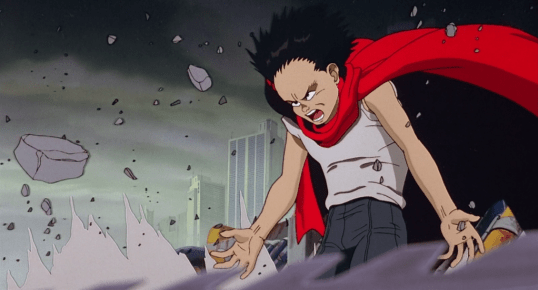
Akira (dir. by Katsuhiro Otomo - 1988)

Akira (dir. by Katsuhiro Otomo – 1988)

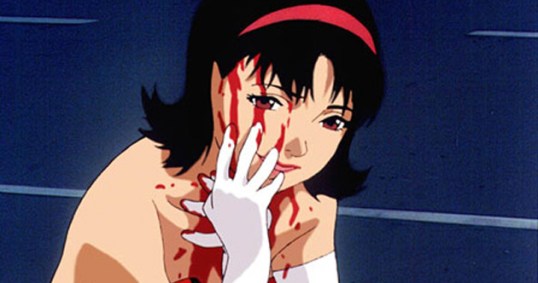
Perfect Blue (dir. by Satoshi Kon - 1998)

Perfect Blue (dir. by Satoshi Kon – 1998)

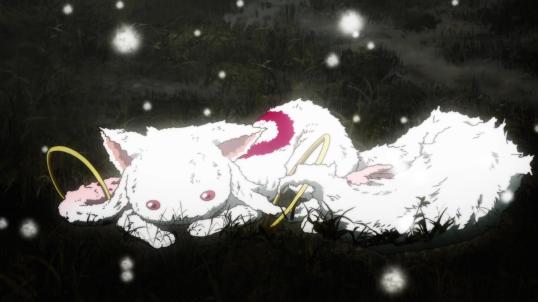
Puella Magi Madoka Magica Rebellion (dir. by Akiyuki Shinbo, Yukihiro Miyamoto - 2013)

Puella Magi Madoka Magica Rebellion (dir. by Akiyuki Shinbo, Yukihiro Miyamoto – 2013)

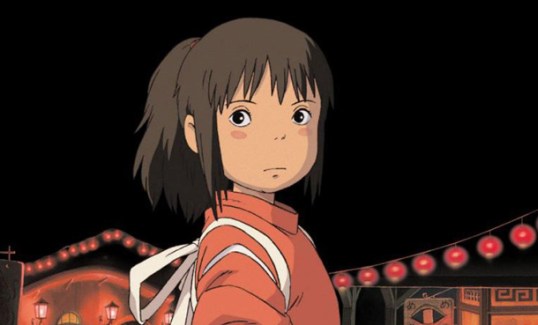
Spirited Away (dir. by Hayao Miyazaki - 2001)

Spirited Away (dir. by Hayao Miyazaki – 2001)


Harbinger Down Goes International


HarbingerDown

Kickstarter, GoFundMe, Indiegogo are just a couple of ways the general public have been able to crowdfund things they really like. Crowdfunding has even entered film production with a film set for release being one of my more anticipated films of 2015.

Harbinger Down is the brainchild of Practical FX artists Alec Gillis and Tom Woodruff, Jr. As more and more studios begin to rely heavily on CGI-effects for their films the practical effects and make-up FX industry has taken a major hit. We’ve already seen practical effects master Rick Baker announce his retirement from the industry and many smaller effects studios either close shop or sold to larger studios.

The film by Gillis and Woodruff, Jr. looks to bring back practical effects as not just a viable option for films looking to create fantastical creatures and effects, but also show that practical effects is an art form that lends a certain level of realism to those very fantastical ideas.

From the look of the trailer it looks like Harbinger Down takes some inspiration from two classic scifi horror films of the past with Alien and John Carpenter’s The Thing. With legendary genre veteran Lance Henriksen headlining the ensemble cast, Harbinger Down is something genre fans deserve.

Zombeavers Is The Best Zombie Beaver Film Ever!!!!


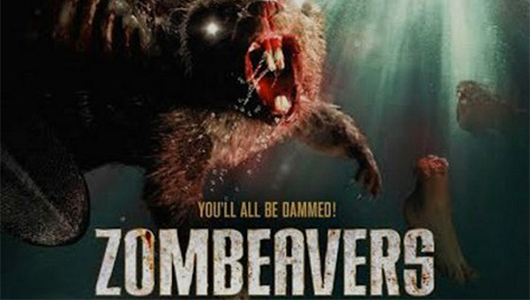
ZombeaversOf the many deliberately ludicrous and over-the-top nature-gone-made films to be released in the wake of Sharknado, Zombeavers is one of the most impressive.  Certainly, it’s probably the best film that will ever made about zombie beavers.

The film takes place in one of those isolated areas of rural America where cell phones don’t work, everyone drives a pickup truck, and nobody would dare be seen without a shotgun in his hands.  Of course, if you’ve ever seen a horror movie before than you know that any area this isolated is going to inevitably be ground zero in a mutant beaver attack.

Perhaps not surprisingly, it’s all John Mayer’s fault.  Yes, that’s right, John “Your Body Is A Wonderland” Mayer.  He makes his feature film acting debut here, playing a dumbass trucker who, after his truck collides with a deer, ends up losing a barrel of toxic waste.  That barrel rolls into a nearby lake where it turns the local beaver population into zombeavers!

(Whenever I watch anything on Netflix, I always turn on the closed captioning.  One of the joys of watching Zombeavers came from getting to read sentences like “Zombeavers growl,” at the bottom of the screen.)

Meanwhile, three sorority sisters are spending the weekend at a nearby cabin.  Jenn (Lexi Atkins) is depressed because she caught her boyfriend cheating on her.  Zoe (Cortney Palm) is sarcastic, uses “bitch” as a term of affection, and owns a puppy named Gosling.  (I related to Zoe, despite being a cat person.)  Mary (Rachel Melvin) owns the cabin and is determined to have the perfect girls weekend.  Unfortunately, those plans are ruined by both the surprise arrival of their boyfriends and a sudden zombeaver attack…

Fortunately, there is a potentially crazy but helpful hunter wandering around the woods.  His name is Smyth (“Smyth with a y,” he says upon introducing himself) and he’s played by veteran character actor Rex Linn.  Linn doesn’t get much dialogue but he still manages to make every line memorable as he gives a performance that strikes a perfect balance between drama and parody.  At one point, Linn delivers a monologue about how, in the 1970s, everyone in the county got “beaver fever.”  It’s  ludicrous and the joke is so obvious but Linn bring so much commitment to the monologue and to his performance that he sells it.

And really, the same can be said for Zombeavers as a movie.  It’s ludicrous.  It’s silly.  There’s not a single beaver joke that doesn’t, at some point, get made.  And yet, the film works.  It’s a parody that somehow manages to remain credible.  Yes, the zombeavers are intentionally designed to look fake but you still would not necessarily want to come across one at the foot of your bed in the middle of the night.  Yes, the characters say a lot of silly things but the cast delivers those lines with both a straight face and a lot of conviction.  (In fact, all three of the lead actresses are totally natural and convincing in their roles.)  Everyone involved with the film — from the cast to crew — is so committed to the material that it works even when it shouldn’t.

Zombeavers is currently available on Netflix and should be watched by anyone who loves insane monster movies.  It’s the best movie about zombie beavers ever made.

Pixar Does It Again With Inside Out


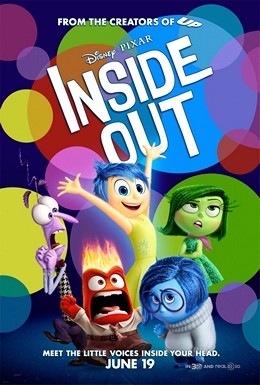
Inside_Out_(2015_film)_posterInside Out is the latest brilliant film from Pixar’s Pete Docter and it will remind you why you fell in love with Pixar in the first place.

There are no talking cars or lovable monsters in Inside Out.  Instead, it’s the story of a very normal 12 year-old girl named Riley (voiced by Kaitlyn Dias).  Or rather, it’s the story of what goes on in her head.  For most of the movie, Riley deals with experiences to which we can all relate: she moves to a new city, she struggles to relate to her well-meaning parents (voiced by Kyle MacLachlan and Diane Lane), and she tries to fit in at a new school.  Inside Out is a film about the small moments of life and how they all add up to create a bigger picture.

What sets Inside Out apart is the way that it tells its deceptively simple story.  Inside Out takes place almost entirely inside of Riley’s brain.  And it turns out that her mind is gigantic wonderland, one that is so big and complex that not even the characters who live there quite understand how it all works.  Bing Bong (Richard Kind), a pink half-elephant, half-cat, half-dolphin creature, spends his time wandering through the halls of memory and mournfully thinking back to when he was Riley’s imaginary friend.  Whenever Riley goes to sleep, the actors and directors at Dream Productions film a different nightly movie.  Meanwhile, Imagination Land is a fun place to visit but not a good place in which to live and past childhood traumass — like a gigantic stalk of broccoli and a terrifying birthday clown — are locked away deep in Riley’s subconscious, where they are guarded by officious policemen.   Zigzagging through this mental landscape is the literal Train of Thought.

And then, above it all, there’s Headquarters.  This is where five different emotions take turns “steering” Riley through life.  Fear (Bill Hader) is always nervous but, at the same time, keeps Riley safe.  Disgust (Mindy Kaling) prevents Riley from eating broccoli and hanging out with the wrong crowd.  Sadness, meanwhile, hasn’t had much to do over the past 12 years and, as a result, she spends most of her time standing in a corner and feeling … well, sad.  Sadness is voiced by Phyllis Smith, best known for playing Meredith on The Office.  Smith proves herself here to be a strong and empathetic voice artist.

Their unquestioned leader is Joy (Amy Poehler).  As befits her name and job, Joy is always positive, always upbeat, and always optimistic.  For 12 years, Joy has been in charge of steering Riley’s life but that all changes when Riley and her family move to San Francisco.  Suddenly, Joy finds it more difficult to keep Riley permanently happy.  Memories that were formerly color-coded yellow for happy start to turn blue.

When both Joy and Sadness are accidentally expelled from the Headquarters, it’s up to the three remaining emotions to try to keep Riley well-balanced until they can return.  However, the journey back up to the Headquarters is a long and dangerous one, full of some of the most imaginative (and metaphorical) imagery in Pixar’s history.  Joy and Sadness will have to work together to make it.

And really, that’s what makes Inside Out so special.  It’s the rare family film that acknowledges that allowing ourselves to feel sad is often as important as being happy.

Inside Out is a brilliant coming-of-age story and one of the best films of the year.  It’s a film that will make you laugh and cry and will remind you of why you fell in love with Pixar in the first place.  Kids will love the humor and adults … well, adults will probably be trying to hold back the tears.

What a great film!

Thank you, Pixar.