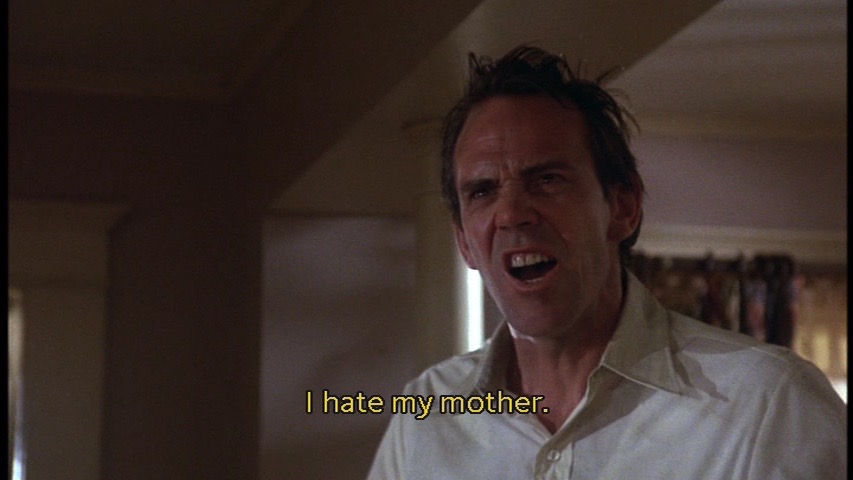
Now, I know what you’re asking. Why, if I am about to review a film from the 1940s, am I sneaking a random Degrassi GIF into this review? Well, unfortunately, the movie that I’m about to review isn’t that interesting and there’s not a whole lot to be said about it. I’ve found some enjoyable and interesting films in the box set — The Black Book, Trapped, the original Jungle Book — but I’ve also found a few that are pretty forgettable. So, why not liven things up with a shout-out to my favorite show?
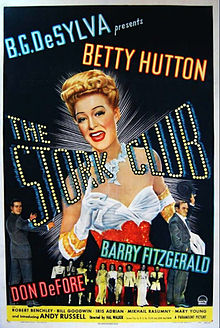
Anyway, the 14th film from The Fabulous Forties Box Set was 1945’s The Stork Club.
When I saw that this film was called The Stork Club, my first thought was that it would be a comedy about pregnancy. But it turns out that I was totally wrong. Apparently, The Stork Club was a very popular New York nightclub in the 1940s and this film was meant to take advantage of that popularity. (That said, according to the imdb, The Stork Club was not filmed at the actual Stork Club but instead on a Hollywood soundstage.)
As for the film’s story — well, this isn’t going to make much sense but here’s what happens. A millionaire named J.B. (charming, Irish-accented Barry Fitzgerald) falls into a pond and nearly drowns. Fortunately, his life is saved by Judy (Betty Hutton).
J.B. wants to reward Judy but, for some reason, he doesn’t want her to know that he’s rich. So, with the help of his lawyer (Robert Benchley), he anonymously arranges for Judy to get both a new apartment and an unlimited credit line at all of New York’s best stores!
But J.B. also wants to keep an eye on Judy and make sure that she’s happy. But he still doesn’t want her to know that he’s a millionaire or that he’s her benefactor. After he finds out that she’s a hatcheck girl at the Stork Club, he arranges to get hired on as a busboy. However, he gets fired after just one night and, believing him to be poor and homeless, Judy invites him to stay at her new apartment.
J.B. agrees and, in the film’s best, non-musical moment, he watches as Judy recklessly spends his money on new clothes. It turns out that Judy thinks that the apartment and the credit line are all gifts from the owner of the Stork Club and she’s offended because she thinks the owner is trying to steal her away from her boyfriend, Danny Wilson (Don DeFore).
Danny is a bandleader but he’s been serving in the U.S. Army. When Danny finally returns home, Judy is excited about arranging for him to get an audition to play at the Stork Club. However, Danny is more concerned about the fact that Judy has a mysterious benefactor and that she’s now living in a luxury apartment with a mysterious old man.
Could Judy be a kept woman!? Both Judy and J.B. insist that she is not but Danny refuses to believe them because Danny is kind of a jerk. Of course, Danny isn’t meant to be a jerk but, by today’s standards, he’s definitely a jerk. Judy could do so much better!
Anyway, the plot’s not really that important. It’s mostly just an excuse for Betty Hutton to sing a few songs and that’s when the movie is at its best. Check out some of Betty’s performances below:
Anyway, The Stork Club was pleasant but not particularly memorable. When it works, it’s largely due to the endless charm of Betty Hutton and Barry Fitzgerald. It may not seem like much today but I’m sure that, for audiences dealing with the contemporary horrors of World War II, The Stork Club presented a nice diversion.
Happy birthday to me! Yes, I share my birthday with such luminaries as Charlie Chaplin, Christine McIntyre, Peter Ustinov, Henry Mancini, and coach Bill Belichick! Seeing as how we here in Massachusetts have a three-day weekend (Patriot’s Day on Monday), I’ll be pretty busy. But before I step away from the blogosphere for a few days, I thought I’d try to find something to share from the year I was born (yes, I’m THAT old!!).
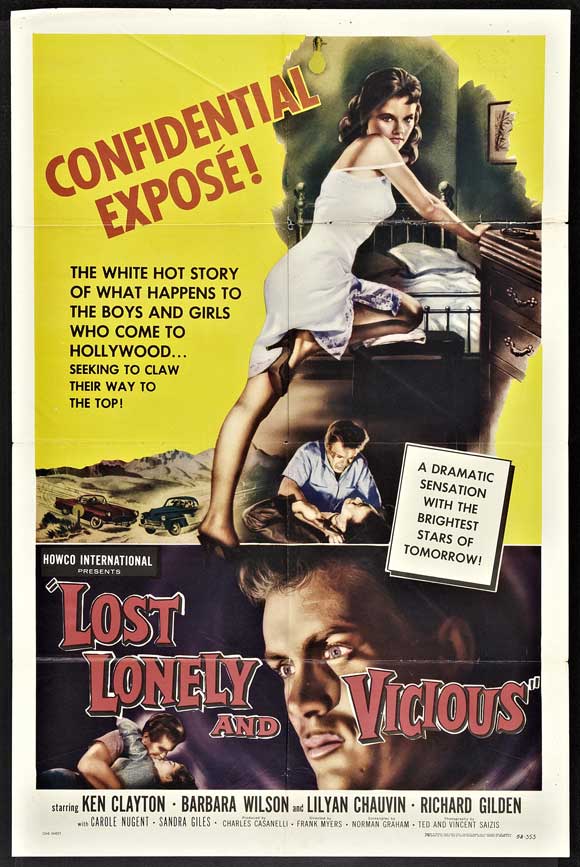
What I stumbled upon was LOST, LONELY, AND VICIOUS, a fictional retelling of the James Dean mystique, right down to the two leads (superficially) resembling Dean and his REBEL WITHOUT A CAUSE co-star, Natalie Wood. It’s the story of Johnny Dennis (initials JD, get it?), a young actor “obsessed with death” on the cusp of stardom. Despite by awful acting and wretched dialogue, I kind of enjoyed it. No accounting for taste, I guess! There aren’t any…
With the Trancers series done, I’ve decided to move onto the Angel series. I honestly had no idea what I was in for here. The box art appears to have a 12 year-old on the cover once as “High School Honor Student by day,” and then “Hollywood Hooker by night.” The DVD has the first three films on it. I’m quite sure that the girl on the cover is neither Donna Wilkes, Betsy Russell, or Mitzi Kapture.
Anyways, as I watched it, I knew this movie reminded me of a film I saw late last year. It took me some time because this movie is so subtle about it. Then it came to me. That movie of course being Crackdown Mission (1988).
Crackdown Mission (1988, dir. Godfrey Ho)
Why not? Might as well have been. That’s the Godfrey Ho movie where he spliced Pierre Kirby into the Taiwanese film Girl with a Gun (1982).
Girl with a Gun (1982, dir. Yao-Chi Chen)
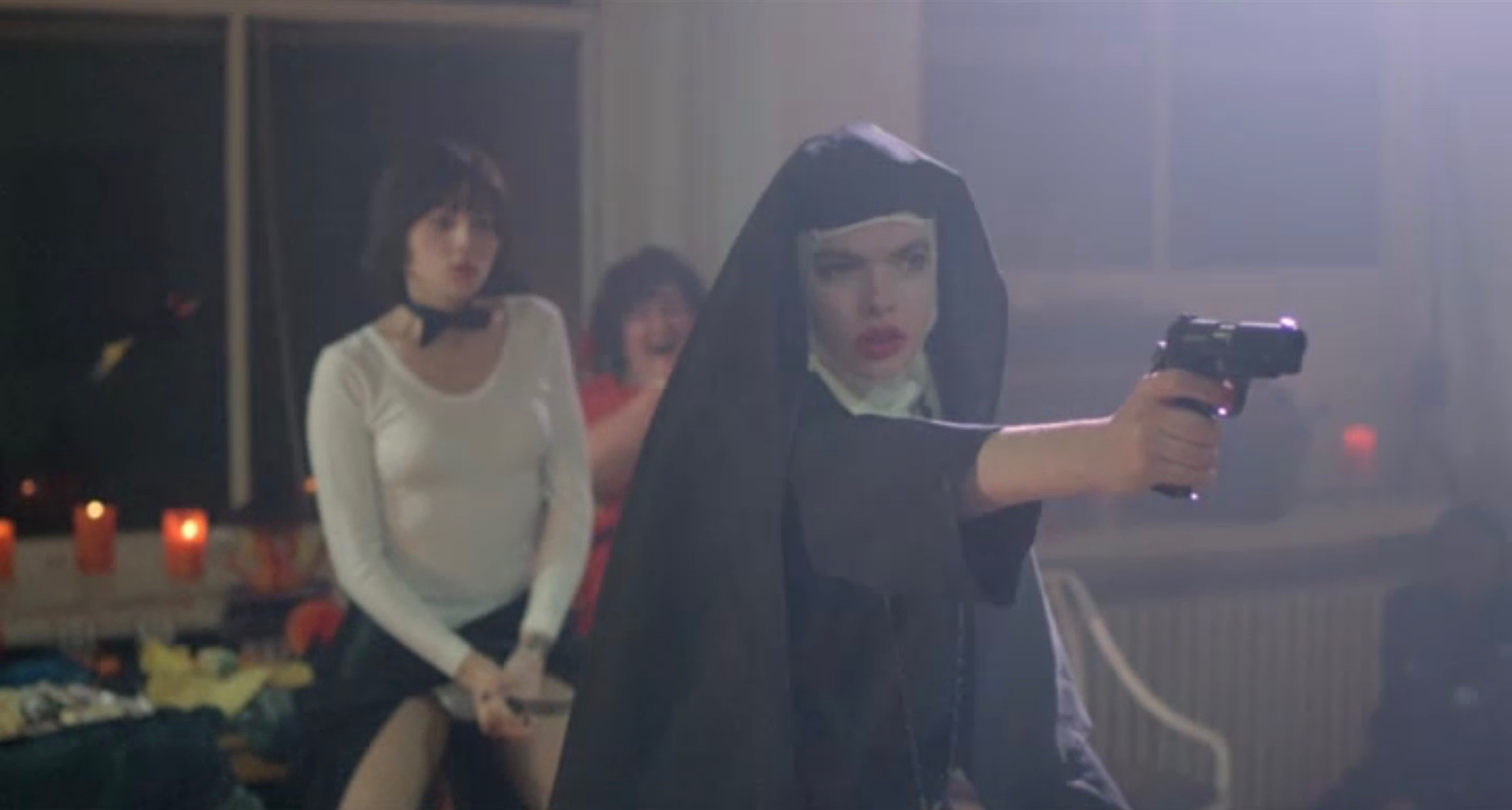
Girl with a Gun was a Taiwanese remake of Ms. 45 (1981).
Ms. 45 (1981, dir. Abel Ferrara)
Ms. 45 being Abel Ferrara’s reworking of Death Wish (1974).
Death Wish (1974, dir. Michael Winner)
Death Wish arguably getting the pivotal opening rape from A Clockwork Orange (1971).
A Clockwork Orange (1971, dir. Stanley Kubrick)
You can go on and on with this. There’s also Rape Squad (1974), Fighting Back (1982), the Death Wish sequels, and so many more of these things. Heck, Death Wish even got a porno version called Sex Wish (1976). We even got the kiddie version, as I recall, of this same thing one year after Angel with The Legend of Billie Jean (1985).
If I got Gary on the line, he could probably take me back even further with movies like Something Wild (1961) or other films I don’t recall. Don’t need to though because this movie takes you back about as far as you can go anyways.
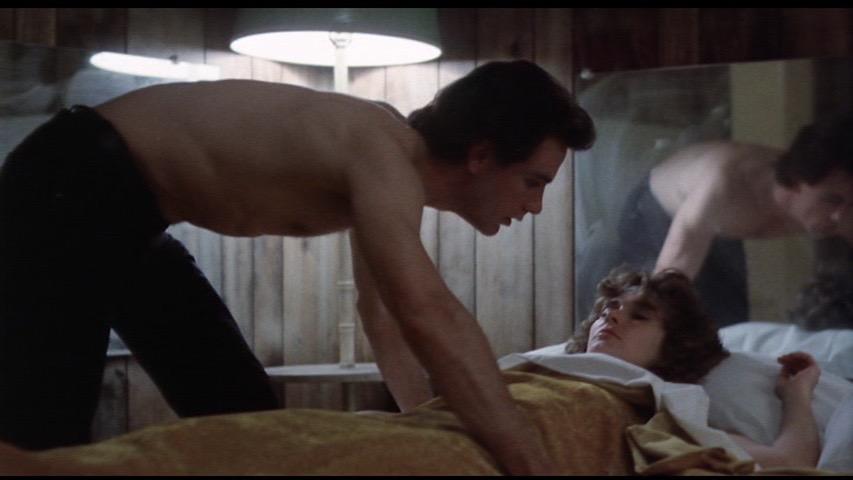
The movie opens up and we meet our lead character Angel, played by Donna Wilkes–and what the hell is that?
I would say that Donna Wilkes playing a 15 year-old at the age of 23 was a product of sleazy 80s movies, but I’d be lying through my teeth because of this.
The Poor Little Rich Girl (1917, dir. Maurice Tourneur)
Mary Pickford was 24 when she played the role of a little girl.
As for the child prostitute bit, let’s get that out of the way too because it goes back almost as far as well.
Baby Face (1933, dir. Alfred E. Green)
That’s the scene where we find out her father has been pimping her out since she was 14 years old. Barbara Stanwyck was 25 when she did Baby Face.
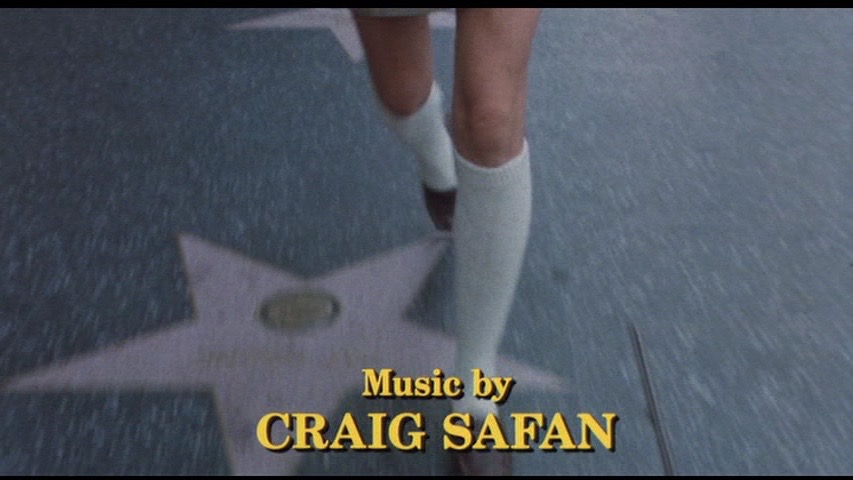
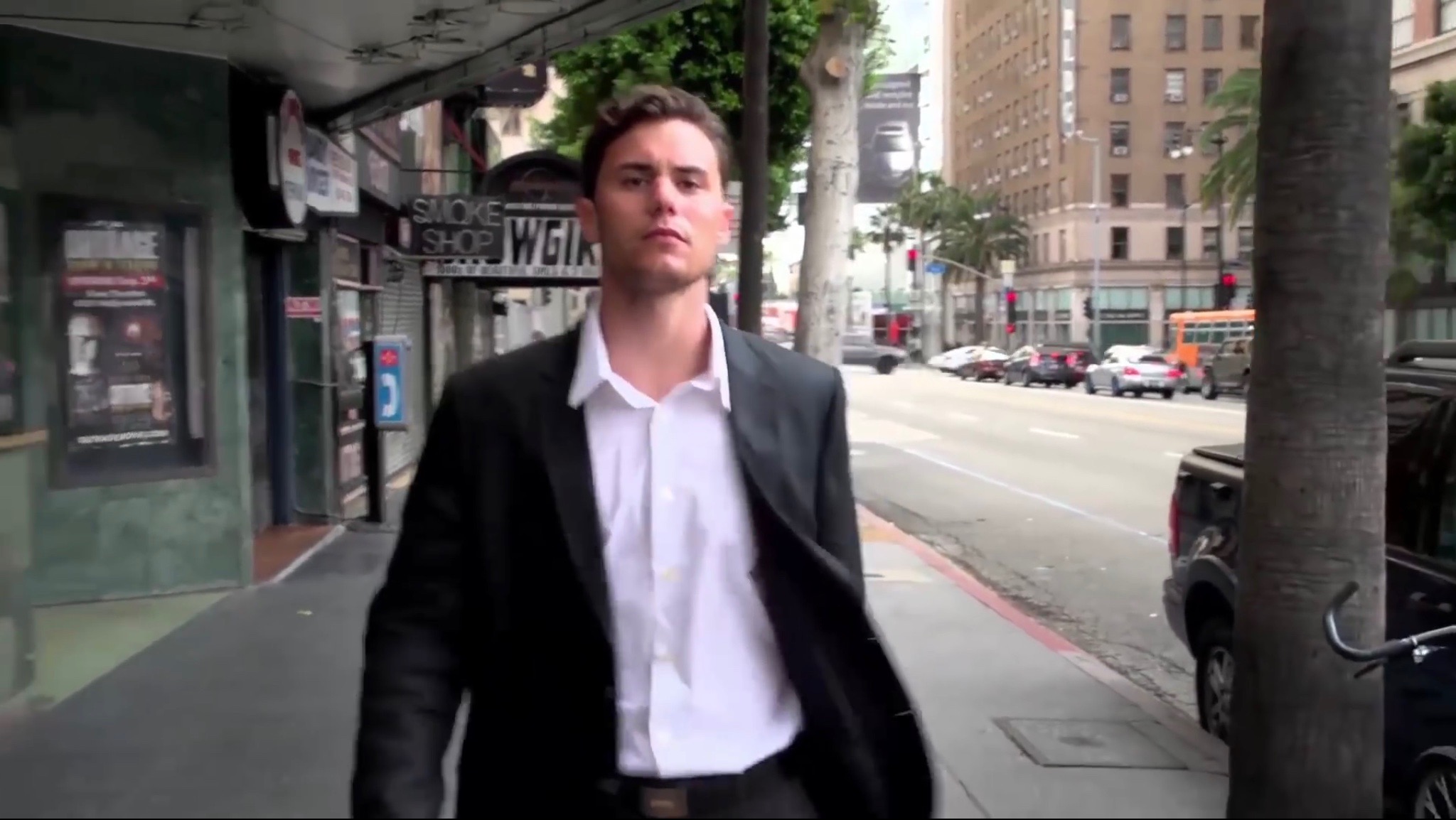
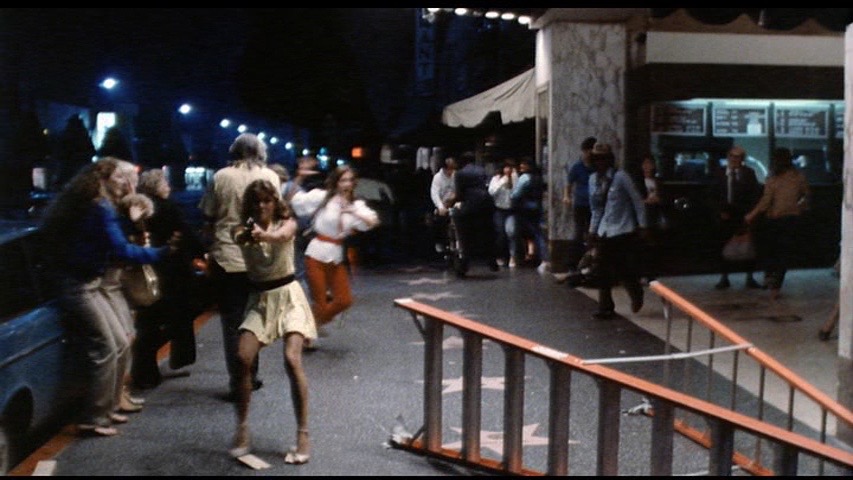
After seeing Angel come out of where she lives, we see her walk part of the Hollywood Walk of Fame.
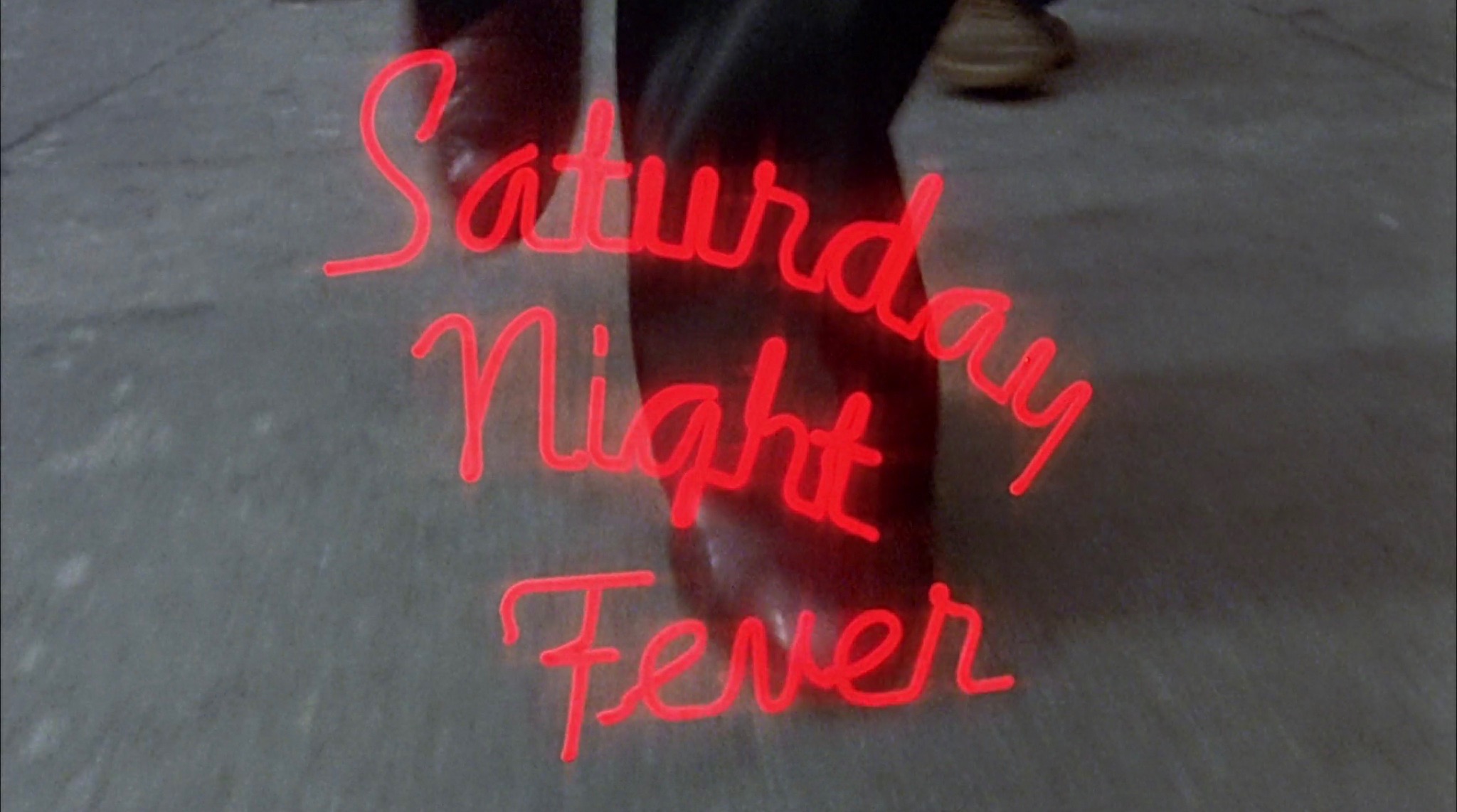
Along with these shots of her feet, we also see her say hi to some people cleaning Rex Allen’s star, fix her hair in a window, and then board a school bus. The music plays sad and tragic. It’s hardly upbeat, but was this meant to be a Saturday Night Fever reference? As I recall, Tony Manero is a similar character to Angel.
Saturday Night Fever (1977, dir. John Badham)
I would say that I wasn’t really sure, but considering the opening walk in Birdemic 2 was intended to be a Saturday Night Fever reference,…
Birdemic 2: The Resurrection (2013, dir. James Nguyen)
then I think I am safe saying it is a reference to that movie.
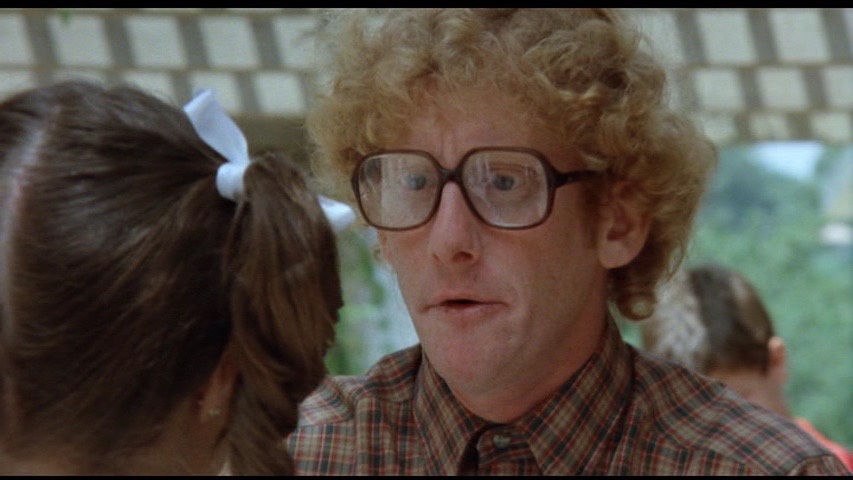
After getting her homework assignment, we meet this guy…
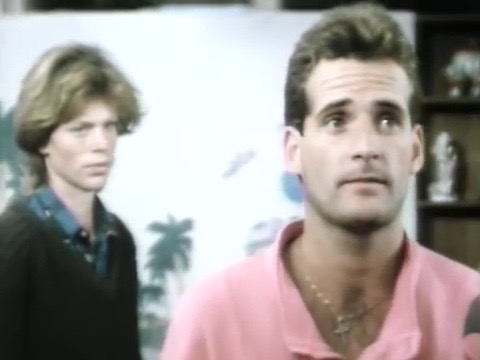
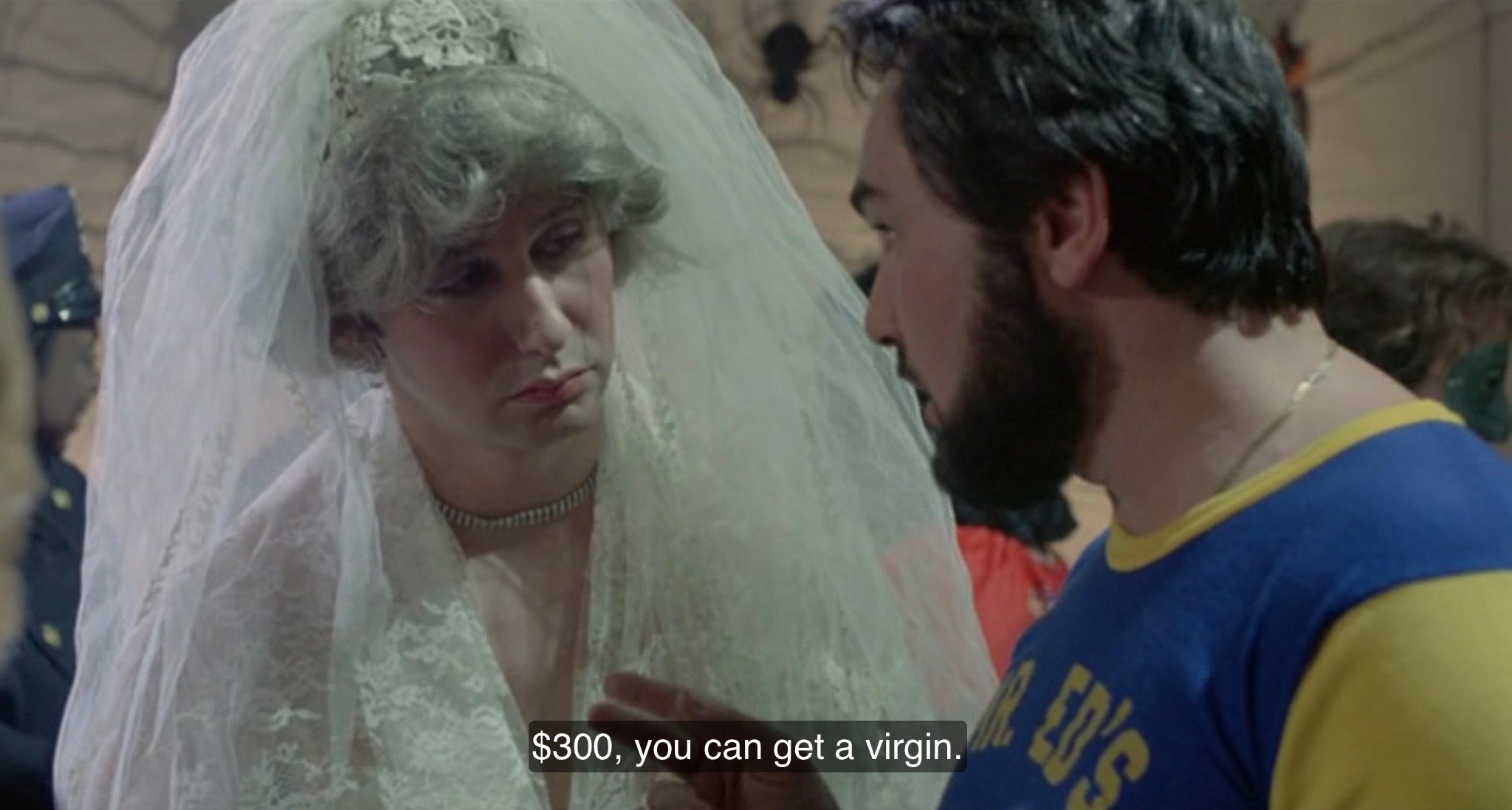
who looks like he got lost on his way to the Revenge of the Nerds (1984) set. He is here to make it clear that Angel is more mature than her age, but that she is keeping up the illusion that she is still very much a little girl. He tries to ask her out, but she turns him down saying her mother doesn’t like her dating. Now without any time wasted, we cut to home, she dolls up, and we’re out to the streets within the first 8 minutes of the movie.
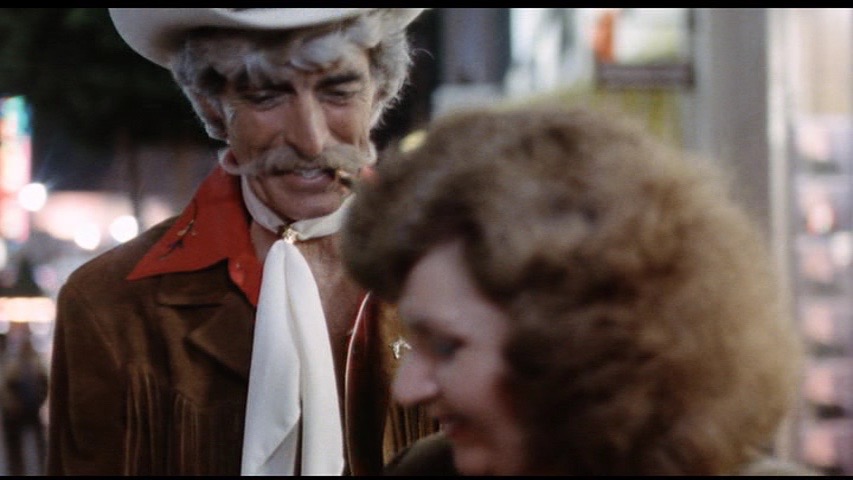
We immediately meet Kit Carson played by Rory Calhoun probably because Bill Williams, who played Kit Carson on TV, had stopped acting in 1981 after making Night of the Zombies (1981) and Goldie and the Boxer Go to Hollywood (1981). Given the titles, and that they starred porn star Jamie Gillis and O.J. Simpson respectively, I’m sure Bill would have done this movie if he could have. Rory Calhoun will be our reference to silent era cowboys for the movie. In particular, Tom Mix. Yes, he brings up Tom Mix so we are sure to get the reference. He also wears the white hat.
You got this so far? Donna Wilkes is Mary Pickford and Rory Calhoun is Tom Mix. Who’s next?
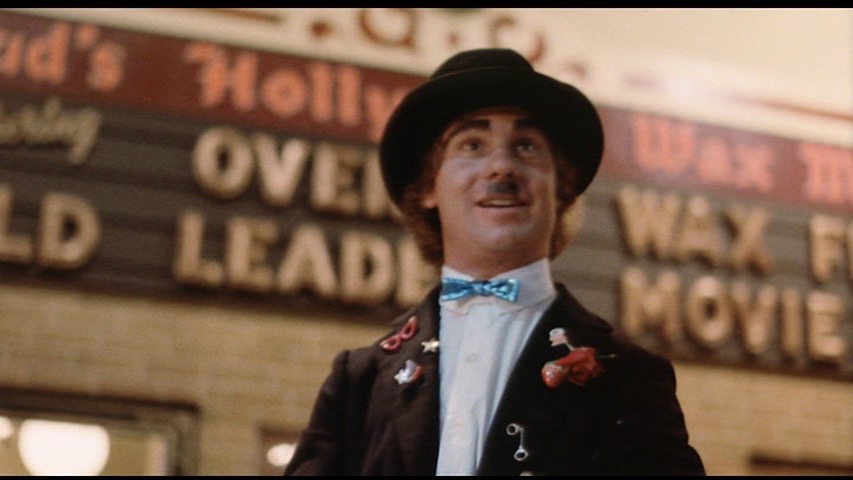
Charlie Chaplin of course!
I believe the movie wants these portions of the film to blur the lines between people peddling sex, and other people peddling Old Hollywood nostalgia. All of this going on while walking on stars for people who are dead, long forgotten, live far from this seedy place, or are going out on sad ends to their careers in their old age.
We see a variety of other colorful characters too. The movie makes sure we hear Kit tell the cops that he has fake bullets in his guns for foreshadowing purposes. A guy who looks like Jim Varney tries to hit on her. Then after turning down one guy, we see Angel riding with a much older guy. However, she sees right through him and figures out he’s a cop. That’s when we meet the another main character of the film named Mae played by Dick Shawn. How are we introduced to him?
He tells Angel not to let “fatso go yet”, sticks his head in the window, and tells him, “Why don’t you go home now and spank your monkey numb nuts!” That way know right off the bat that he is very protective of Angel.
Next we are introduced to Lt. Andrews…
played by none other than Cliff Gorman. Emory from The Boys in the Band (1970).
The Boys in the Band (1970, dir. William Friedkin)
It’s no coincidence that they introduce Mae back to back with Lt. Andrews seeing as Mae and Emory are similar characters.
You want to hear something really odd? Maud Adams’ first role listed on IMDb is an uncredited appearance in The Boys in the Band.
The Boys in the Band (1970, dir. William Friedkin)
The odd part is that Maud Adams is the villain in the third Angel movie.
Angel III: The Final Chapter (1988, dir. Tom DeSimone)
There’s one more connection here that’s worth mentioning. One of the movies Dick Shawn did in between It’s a Mad, Mad, Mad, Mad World (1963) and Penelope (1966) was a film called A Very Special Favor (1965). A Very Special Favor starring who else but Rock Hudson. The Rock Hudson movie where he actually says this.
A Very Special Favor (1965, dir. Michael Gordon)
Andrews is here to tell us about a killer on the loose who is murdering hookers. He gives us some info about him like he’s probably bisexual, a necrophiliac, and other things. Honestly, that stuff will barely play into this movie at all. It certainly won’t add anything material to the film. Now we cut to said killer played by John Diehl.
Most people probably remember him from Miami Vice. I’ve never watched the show though. I know, tsk tsk to me. He plays every serial killer from every 80s and early 90s movie ever made that had such a character in it. I’ll show you just how much of a stereotype he is later on. You’d think Mae was the major stereotype of the film, but it’s the killer.
Now we get a tender moment between Chaplin, who is called Yo-Yo Charlie (Steven M. Porter), and the soon to be dead hooker named Crystal (Donna McDaniel). According to IMDb, Yo-Yo Charlie will make a return in the sequel. That’s not good. Anyways, he gives her a spinning top, she is soon picked up literally and figuratively by the killer, and then stabbed in the back. I actually like what they did here. In any other movie her death would have started the film to be the opening kill, which also would have established there’s a killer on the loose. Here her death has meaning, still kicks off the plot, and foreshadows a much more important death later in the film that bookends this opening kill. We also have warmed up to her in the short time we have known her so the silent stab in the back actually has some bite and we feel for Charlie when he finds out she’s dead. It helps to set a different tone for the movie than a slasher film.
Then we see the killer with her body.
That will be the last time you see any reference to the necrophilia thing. It’s one of those things in here that makes me feel the movie was rushed because it will suddenly have amnesia about something that seems like it would be pretty important.
Then we cut back to the streets so we can hear Rory Calhoun drop some more names. He mentions Ken Maynard, Buck Jones, and I believe he is about to say William S. Hart when Angel sticks her finger in his back so I can make a reference to Field of Dreams (1989).
Field of Dreams (1989, dir. Phil Alden Robinson)
Field of Dreams (1989, dir. Phil Alden Robinson)
We have one final major character to be introduced to at this point. That’s why Mae and Angel go back to where they live so we can meet the landlord named Solly played by Susan Tyrrell. Mae accuses her of making the movie Truth (2015), but…
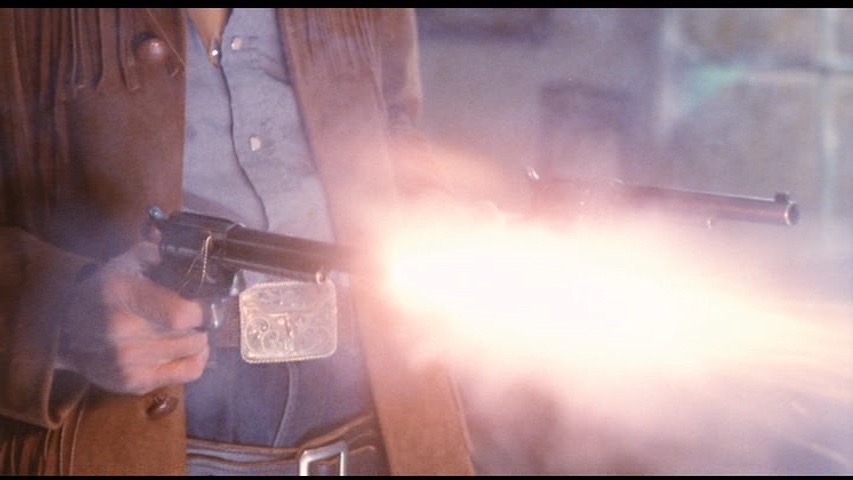
it turns out she is simply doing foreshadowing by numbers. She calls it Fruit With Gun. Mae calls it “shit.” Solly also has a gun about half the size of Angel for later plot convenience.
Now we get a couple of short scenes of Angel at home to start to reveal her background that will explain why her mother and father aren’t around. It’s also there so that we know that both Angel and the killer have troubled backgrounds when it comes to their parents. Except they have dealt with it in completely different ways, but ways that have both lead them to the streets. That’s when we get this scene.
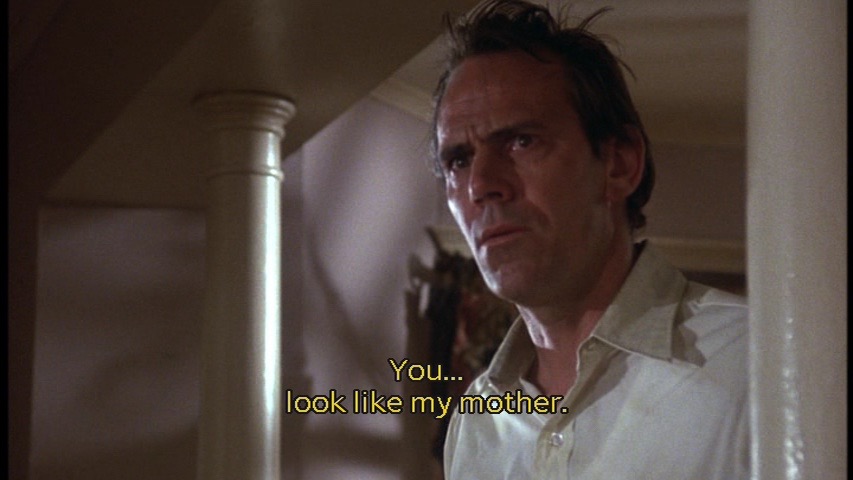
Yep, he makes out with an egg while a creepy picture of him and his mother hangs in the background till he crushes the egg, then kisses the picture. This movie came out in 1984. By 1986 they were already making fun of this exact kind of character.
Ruthless People (1986, dir. Jim Abrahams, David Zucker, & Jerry Zucker)
Ruthless People (1986, dir. Jim Abrahams, David Zucker, & Jerry Zucker)
Ruthless People (1986, dir. Jim Abrahams, David Zucker, & Jerry Zucker)
Ruthless People (1986, dir. Jim Abrahams, David Zucker, & Jerry Zucker)
Might as well be the Bedroom Killer from Ruthless People (1986).
At this point we are about 25 minutes into the movie so it’s like it all of a sudden wakes up and remembers she’s supposed to be a high school student so we better cut back there now. Sometimes there’s an actual reason, and other times it is just there to work naked ladies into the movie because they could have done the scene without having them there. This time around we meet Ric who will be our Biff Tannen for the movie except with little to no plot significance.
You might recognize actor David Underwood if you owned a Sega CD back in the day.
Sewer Shark (1992, dir. John Dykstra)
It’s a shame he didn’t overact this part like he did Ghost in Sewer Shark.
We also meet Patricia Allen played by Elaine Giftos who works for Angel’s school.
She’s here so that the film will have a way of having Angel’s secret about not having her parents around anymore come out and give the last kill an extra punch to the stomach. Throughout this movie I kept thinking I had seen her in something else. Apparently that place was a single episode of Magnum P.I.
Magnum P.I.
I’m not sure what that says about me other than I must like that show more than I thought I did.
Now we finally come around so that our characters can discover the hooker from the beginning has been murdered. Charlie is quite broken up about it. He’s even holding the top he gave her, which is now covered in blood. Mae, Angel, and Kit have a run in with Andrews about their friend being murdered. But with no wasted time at all, we are reintroduced to another unimportant hooker friend from the beginning who runs right over to the killer and leaves with him. In short order she’s dead.
We see Angel arrive with a client who has a Quebec license plate?
Your guess is as good as mine about that one. He finds the dead hooker, then Angel finds her too. The movie cuts to the killer bare ass naked scrubbing himself. The scene seems to go on forever. You’d think this is some sort of I need to wash myself clean thing, but just like the necrophilia bit, it doesn’t amount to anything. At times it feels like there was originally a script for this movie that didn’t include his character because he almost feels like an afterthought. That, or there was a script that did have more for his character, but was cut so this film would only get an R rating.
Now we get one of several scenes in this movie that seem to only exist to remind us that Cliff Gorman, Dick Shawn, Rory Calhoun, and Susan Tyrrell are good actors. Say what you will about the movie, Donna Wlikes, and the fact that Lisa hasn’t reviewed her comeback film 90210 Shark Attack (2014), but they surrounded her with quality.
After Angel gets harassed by Sewer Shark, we cut to the locker room to see cheerleaders getting dressed. It’s weird because it suddenly feels like you’ve slipped out of Angel and into Debbie Does Dallas (1978).
We get a scene of our killer at a porno theater to remind us that Taxi Driver (1976) exists. Would have made my day if he were watching Bat Pussy (1973). He’s arrested and brought in for a lineup so that he can break free to nearly kill Angel and Andrews. This is when the movie gets on the fast track to its conclusion. This is only at about the halfway point, but the remainder of the film will be everything unraveling till Angel is pushed past the tipping point and decides to go Ms. 45 on the streets to get the killer.
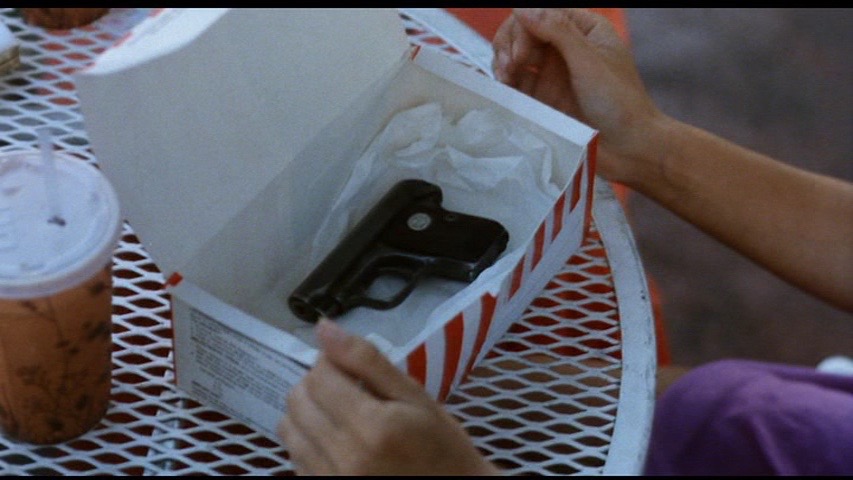
After we find out that Angel has been on the street since she was 12, the next important scene is between Mae and Angel. Angel buys a gun…
so that we can then see her visit a church and nearly drop it in the “Offerings” box. She comes close, but puts some money into it instead. Then empowering music plays as we get a long shot of her walking from the back to the front of the church.
Angel pays a visit to Kit’s place now. Not really so we can see her get a shooting lesson, but so that we can setup the ending by making us aware that Kit does indeed know how to shoot. He carries fake bullets when he works the streets, but the guns are real.
Now Angel gets kidnapped by Sewer Shark and his gang just so that we know that she not only has the gun and has been shown how to use that gun, but is willing to fire it if necessary. It’s a minor scene that doesn’t have much importance to the film in the end. Unlike the next scene when it cuts to naked women in the locker room showering. Actually this scene does serve a purpose beyond naked women. It’s there so that we can overhear that Sewer Shark has spread rumors about her, which ultimately leads Patricia to find Angel’s gun. To toss an extra cherry on top of her trauma, the Andy Dick looking guy from earlier actually tries to buy her services. It’s all enough that she now goes to Andrews to talk to him about what’s going on.
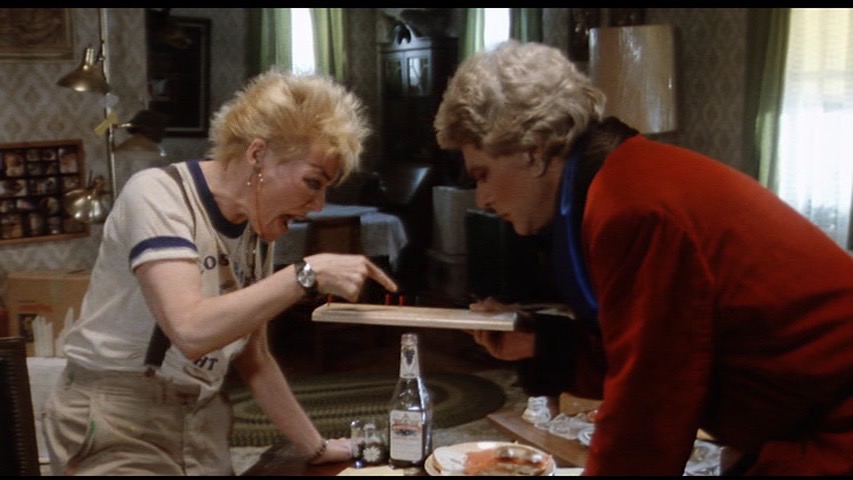
Now the film loops us back to the death of Crystal. It starts with Mae and Solly arguing over a game of cribbage like an old married couple. They are funny in this scene. Just like I could go for a TV Show made up of Bea Arthur tending bar from The Star Wars Holiday Special, I could also go for a whole movie with these two.
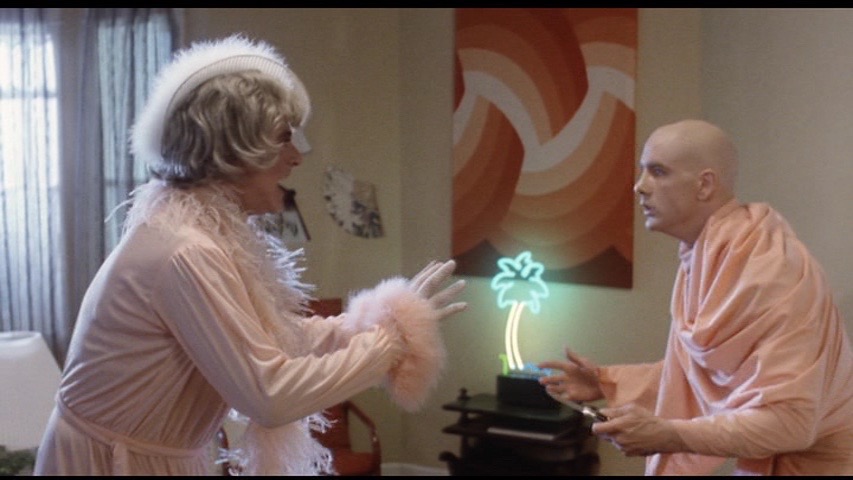
This scene is the equivalent of Charlie giving the girl his spinning top. We also get a scene where Mae tries to cover for Angel when Patricia comes to visit by pretending to be her mother. That works about as well as trying to convince the killer who now comes for Mae that it matters that he is a guy.
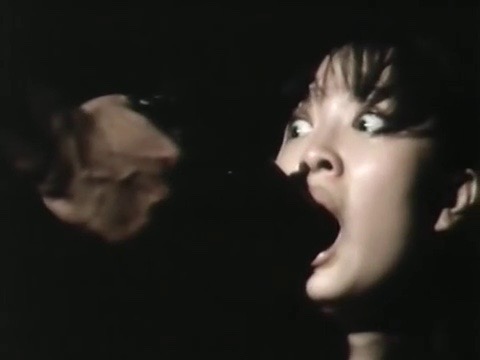
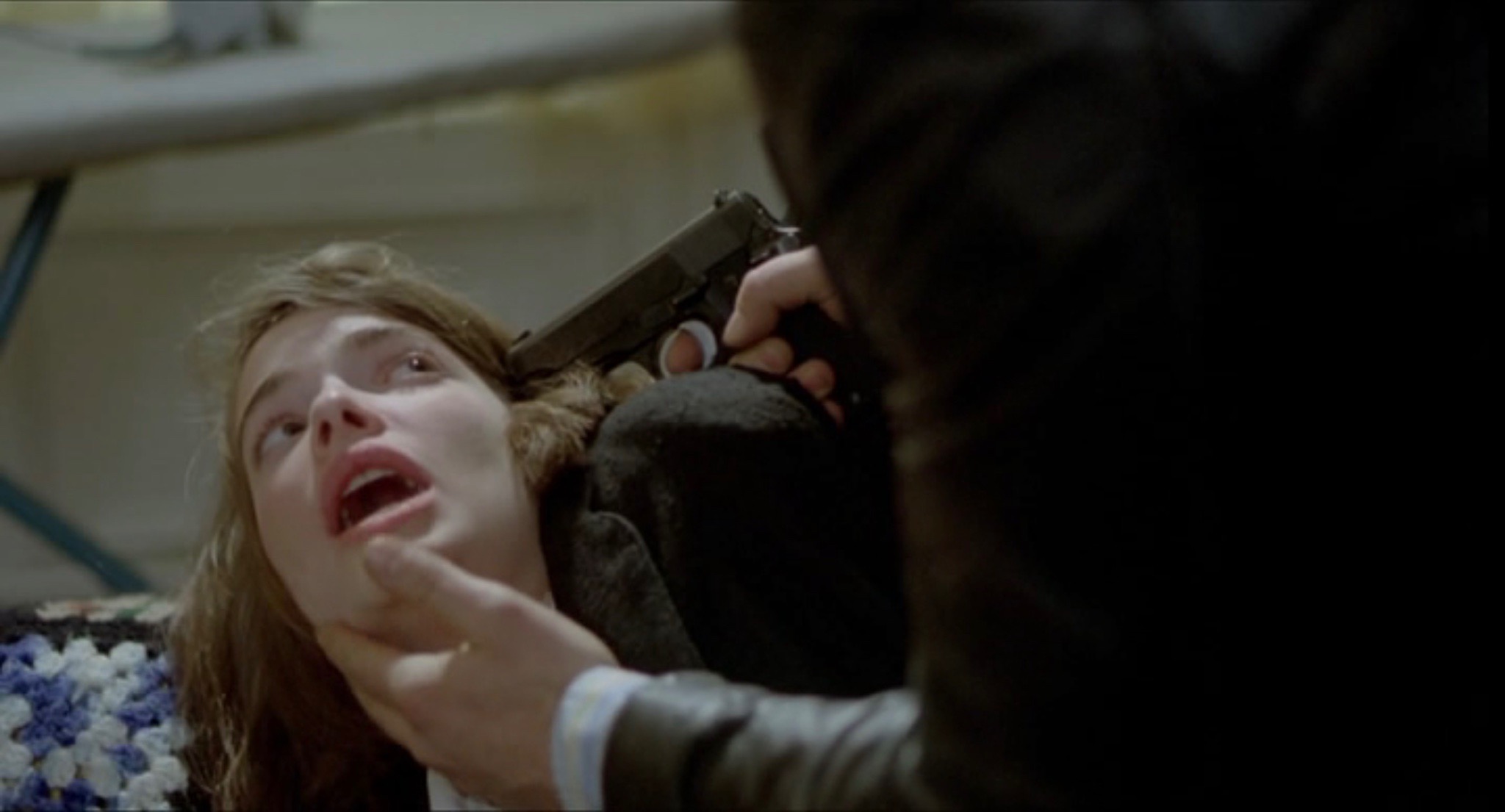
Look familiar?
Ms. 45 (1981, dir. Abel Ferrara)
Ms. 45 (1981, dir. Abel Ferrara)
They both die, but the difference is that they stuck in the conversation with Patricia here to remind us that Mae doesn’t deserve this whereas Ms. 45 edges in this one-sided conversation…
Ms. 45 (1981, dir. Abel Ferrara)
so that we know it’s okay that he was shot and killed. That’s most likely why we first met Mae looking like that guy in this movie.
You could even make an argument that the character of Mae and the casting of Cliff Gorman is the LGBTIQ response to that final scene where she guns down the man dressed as a woman, then adds on that she is shocked when a genetic girl (a betrayer of the cause?) stabs her in the back. This movie even won Best Feature at the San Francisco International Lesbian & Gay Film Festival so it’s not reaching too much on my part.
This is the last straw for Angel. She takes Solly’s giant gun to the streets in order to chase down the killer. They do it complete with repeating the opening scene, except with her walking us following her from behind, at night, in her night clothes, and armed.
Her already fractured innocence now gone.
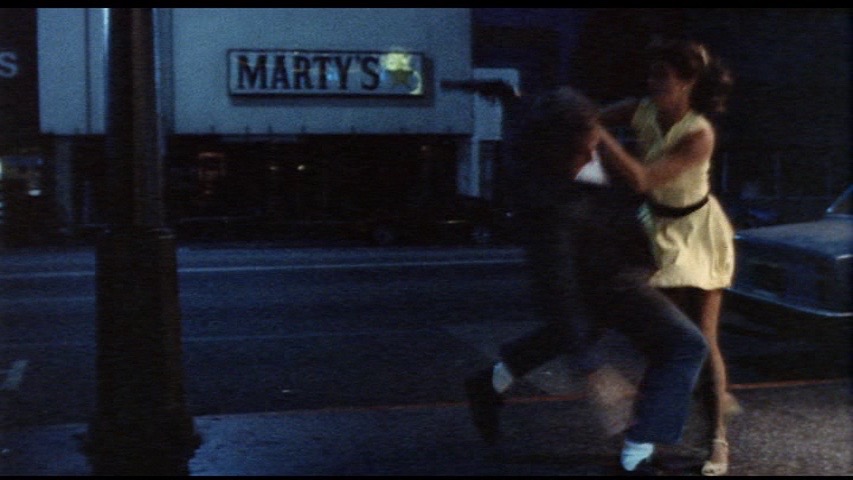
He probably would have gotten away hiding amongst the Hare Krishnas, but he comes out and tries to attack her with his knife. All the while, Andrews chasing after both of them along with Kit. There is a goof during this chase. She shoots at him here.
However, when they cut to this shot, she appears to have teleported away.
Then they cut back there to show she is indeed still around.
This is one of those parts where the film again reminds you it was probably made quickly.
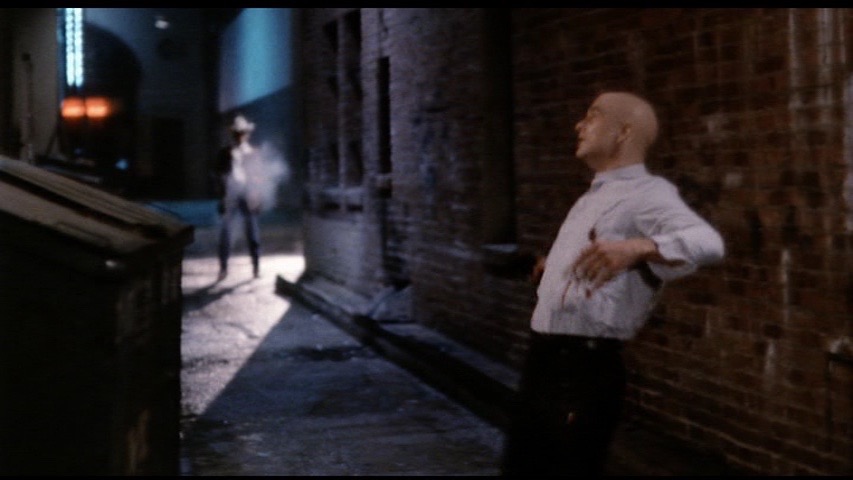
Seeing as it is the 80s, there is always a secluded alleyway or parking lot for the movie to go. We see Kit shot down before Andrews comes in to take shots at the bad guy and check on Kit. Kit tells him to go after Angel. The chase continues into another alleyway where the film comes its conclusion. Andrews calls to Angel, but she ignores him. The killer grabs Angel and shoots Andrews in the arm. She breaks free, causing Andrews to cover her to take any bullets, but doesn’t have to because Kit rises to the occasion to save both of them.
That’s when the movie essentially has its version of the ending of Targets (1968). Kit and Andrews look at him perplexed as the killer dies saying “It hurts. It hurts.”
With the plot finished, and a cowboy in the picture, they walk off into the not sunset of a neon lit alleyway end.
That’s the first Angel movie. Apparently, Ross Hagen was in here somewhere as “Urban Cowboy.” I have no idea where he was in this film.
The movie as a whole isn’t too bad. They certainly knew what they were doing when they picked the references, the shots they used, the casting, and surprisingly good main song for the movie. I also love the street life shots. I’m a sucker for movies that do that. I also liked the way they juxtaposed innocence in Angel with those who have lost theres to one degree or another while having Angel’s character make that journey herself walking down the Walk of Fame as a schoolgirl to a hooker with a gun. It seems that now days when I write one of these long looks at movies that probably don’t deserve this kind of attention, I either find they are much worse than I thought like Trancers 6 or much better than I thought like with this movie.
It is very much a movie of its time. The world had just come out of two decades of turmoil and was suddenly thrown into one that seemed to want to pretend the previous twenty years didn’t happen. It was also a time when you had a new breed of youth still co-existing with people who were from a time very far removed from the 80s as represented by Kit. To give you an example, Lillian Gish who was born in 1893, was not only alive when this came out, but made two more movies after it before dying in 1993. Mary Pickford had only died 3 years prior to this in 1979. Charlie Chaplin died 7 years prior in 1977.
Movies too had strayed for two decades into cinema the likes of which hadn’t been seen in the United States since movies like Baby Face an other pre-codes of the early 30s. However, after The Godfather and Star Wars films were so successful, the studios returned to the kind of films they made prior to the lifting of the production code. The difference being that they were no longer bound by such a code, but by the purse strings of whoever was funding the picture. That, and on occasion the clout of people working on the film, such as a directors like Tarantino.
Overall, I’d recommend seeing Angel. Especially as a counterpart to Ms. 45 (1981). Just fair warning again, it will feel rushed at times. I have a feeling that, just as with Trancers, this series will drop to watchable next, dreadful with the third film, and unbelievably bad with the fourth film which my “Angel Collection” triple feature doesn’t even acknowledge exists.
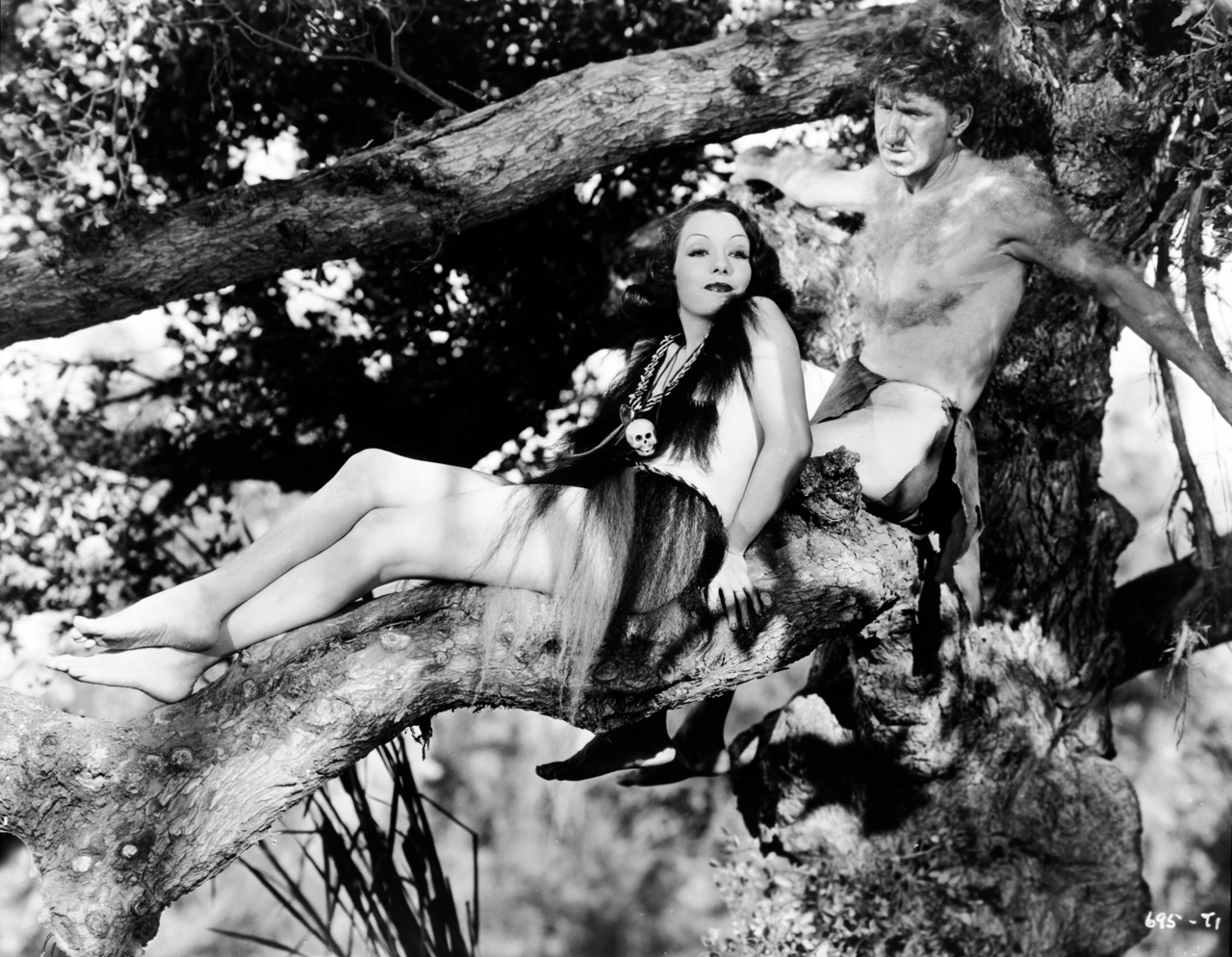
One of the most bizarre films of the Pre-Code (or any) era is HOLLYWOOD PARTY. This practically plotless hodgepodge stars Jimmy Durante as jungle movie hero Schnarzan, whose films are tanking at the box office. The public has grown tired of his battles with “moth-eaten, toothless lions”, so his producer decides to buy new ones from the adventurer Baron Munchausen (radio star Jack Pearl doing his schtick). Schnarzan throws a big Hollywood party for the Baron, hoping to win his favor, but screen rival Liondola (dialect comic Georges Givot), disguising himself as the Grand Royal Duke of Peloponnesia, crashes the bash and tries to buy the lions for himself with the help of Oklahoma oil baron Harvey Crump (the perpetually perplexed Charles Butterworth).
All this is just an excuse for a series of unrelated comic bits featuring some of the era’s top funnymen. Durante, as the nominal star, gets the bulk of the material…
Let me start by stating the obvious. I have seen a lot of horror movies. I love horror as a genre and, in fact, it was my love of horror that first led to me becoming a film blogger in the first place. I have seen a lot of scary and shocking images onscreen. I know the experience of watching a movie and screaming. I also know the experience of watching a horror movie and being bored out of my mind.
I have also seen a lot of home invasion movies. The home invasion genre is not a complicated one. A group of people are isolated and trapped in their home while, outside, some terrible menace tries to enter the house. Night of the Living Dead is a home invasion film. The final 20 minutes of Straw Dogs (both the remake and the original) are home invasion films. Michael Haneke made two of the ultimate home invasion films with two separate versions of Funny Games. And, of course, we can’t talk about the home invasion genre without mentioning the brilliant You’re Next.
The home invasion genre works so well because, at its center, is a very real fear: the fear that, even within our own home, we are not safe. When I get home, I am practically obsessive about checking to make sure that I always close and lock the door behind me but really, what good would that really do if someone was determined to get in? Like everyone, I chose to believe that things like a locked door or a closed window is going to keep me safe but, honestly, if someone wants to get in, they’re probably going to find a way. Locks and alarms and calls to 911 can only do so much. Perhaps for that reason, home invasion movies always frighten me. I can watch a zombie graphically devour someone in an Italian horror film and it doesn’t bother me at all. But a well-directed home invasion movie?
That’ll keep me up for a week!
(And I know what you’re saying: “Lisa, if home invasion movies scare you so much, why do watch them?” It’s a legitimate question and it’s something that I’ve often wondered myself. I think, ultimately, it comes down to this: the only way to conquer our fears is to face them.)
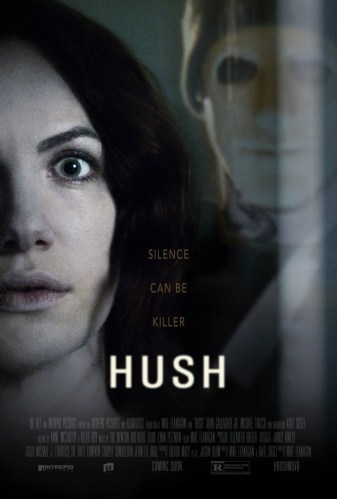
With all that in mind, allow me to now come to the point of this review. Last night, I watched Hush, which was just recently released by Netflix. Hush is a home invasion movie. Kate Siegel (who also co-wrote the script) plays Maddie, a writer who has been deaf and mute since she was 13 years old. Still dealing with the a bad break-up, Maddie lives in an isolate cabin in the wilderness. By day, she works on her second novel and occasionally visits with her neighbor. And by night — well, on this particular night, she finds herself being watched by a man.
The Man (who is played by John Gallagher, Jr.) wears a white mask that gives him a permanent smile. He carries a crossbow with him, a crossbow that has 8 notches on it. When we first meet the man, he’s stabbing Maddie’s neighbor, Sarah (Samantha Sloyan), to death. And now, he’s turned his attention to Maddie…
I say this without hyperbole: Hush is one of the scariest home invasion movies that I’ve ever seen. The plot may occasionally seem familiar but director Mike Flanagan keeps things moving at an almost unbearably intense pace and he creates an atmosphere of such dread that you never feel truly safe assuming that anyone is going to survive the movie. John Gallagher, Jr, who speaks with a deceptively soft voice, is terrifying as the Man. The fact that he has no motives beyond his own sadism makes him all the more frightening.
But, ultimately, the reason the film works so well is because of Kate Siegel. Kate Siegel gets an introducing credit in this film. According to the imdb, Hush is not her first film but that introducing credit still feels appropriate. Siegel is wonderful in the role of Maddie, giving a performance of such ferocity and empathy that Hush announces that a major talent has arrived and that Kate Siegel is a force to be reckoned with.
Hush is not always an easy film to watch. The violence is visceral, the often spurting blood looks real and, when bones were snapped, it sounded disturbingly authentic. Throughout the entire film, I found myself wondering what I would do if I was Maddie. I cheered whenever it appeared that she might be able to escape the Man and I screamed whenever it became clear that she would not. This is an intense and frightening home invasion film and one that all horror fans should see. Hush captures our most primal fears and makes us wonder if we have what it takes to conquer them.
Hush will undoubtedly give me nightmares but I’ll take them.
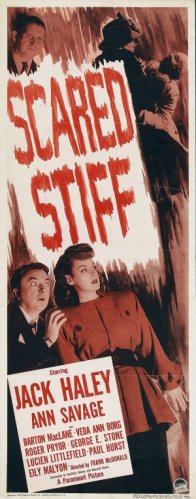
Last night, as a gentle rain fell outside, I watched the 13th film in Mill Creek’s Fabulous Forties box set, 1945’s Scared Stiff. (The version in the box set appeared under the title Treasure of Fear, which was what the title was changed to when the film was later re-released. However, the film was originally entitled Scared Stiff and that’s the title that I’m going to use. Scared Stiff is just a better title and I happen to like the Scared Stiff film poster, featured above. So, just remember that if you ever find yourself watching an old movie called Treasure of Fear, you’re actually watching Scared Stiff.)
As I attempted to watch Scared Stiff, I was reminded of some of the problems that occasionally come with watching a film that has slipped into the public domain.
On the one hand, the public domain is great because it makes it a lot easier to watch old movies. And while it’s true that many public domain films aren’t exactly classics, there are a few gems to be found. For instance, since I started watching the movies in the Fabulous Forties box set, I’ve discovered The Black Book, Trapped, and Jungle Book.
On the other hand, being in the public domain means that virtually anyone can duplicate and sell a copy of the film. As a result, many of these films are available (and frequently viewed) in versions that are of an extremely poor quality and which have often been haphazardly edited.
That’s one reason why it’s going to be difficult for me to review Scared Stiff. The version that I saw was, even for a public domain B-movie, rough. The picture was slightly fuzzy and the sound quality was not the greatest. I don’t think you can ever truly understand that importance of a clean soundtrack until you listen to a scratchy one.
As for Scared Stiff itself, it’s a comedic murder mystery and thankfully, it’s only 65 minutes long. Jack Haley plays a reporter who covers chess tournaments for his uncle’s newspaper. Unfortunately, Haley’s not a very good reporter so his frustrated uncle orders him to go to Grape City so that he can cover a beauty contest, apparently believing that there’s no way that Haley could possibly screw that up.
However, Haley manages to do just that. He gets off the bus at Grape Center, instead of Grape City. He finds himself stranded at an inn that’s run by two twins (both played by Lucien Littlefield). The twins hate each other for reasons that aren’t clear. However, they do possess a chess set that was once owned by Marco Polo! One twin owns the white pieces while the other owns the black pieces! Haley wants to buy all the pieces but things get complicated when it turns out that a gang of thieves are also in town and they want to steal the set for themselves.
But that’s not at all! One of the passengers on the bus is found murdered and he has a chess piece in his hand. Of course, everyone suspects Haley. So, Haley has to get the chess pieces, clear his name, and hopefully get to Grape City before his uncle fires him.
Scared Stiff is way too frantic for its own good and I have a feeling that I would feel the same even if I had seen a version that didn’t sound scratchy or often look fuzzy. That said, it is interesting to see Jack Haley, who is best known for being The Tin Man in The Wizard of Oz, play a human being. Also of interest, to film noir fans, was that Haley’s girlfriend was played by Detour‘s Ann Savage. Both Haley and Savage gave good performances but it was not enough to save this misbegotten little film.
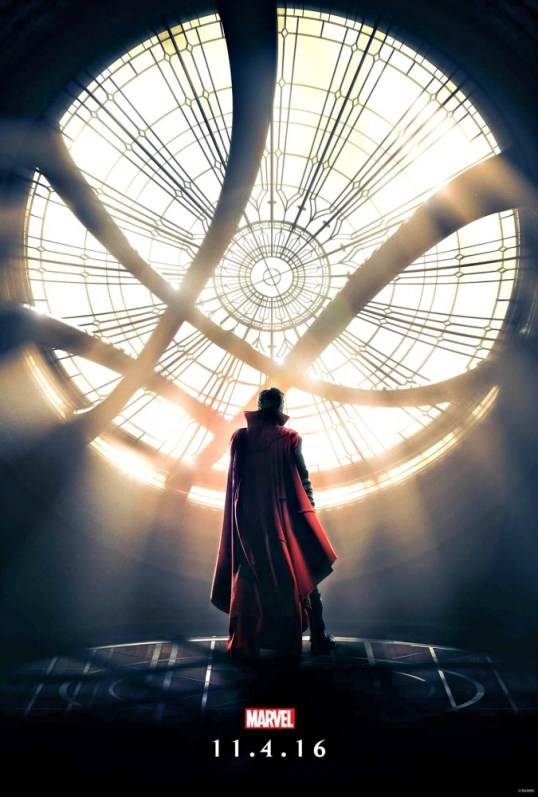
This coming November sees the arrival of not just another new character from the Marvel Comics pages onto the big-screen, but the parting of the curtains to give the Marvel Cinematic Universe it’s first glimpse at the mystical and magical.
The MCU has been mostly about advanced technology, techno-thrillers and a corner or two of the cosmic, but Feige and company has never truly explored the esoteric and occult side of the Marvel Cinematic Universe. With the release of tonight’s teaser trailer for Doctor Strange we will finally get a glimpse into this unseen corner of the MCU.
Doctor Strange is set for a November 4, 2016 release date.
Here’s the latest trailer for A Monster Calls, which is based on a book that I absolutely adore and which everyone needs to read! The trailer looks pretty good and if anyone was born to voice a tree monster, it’s Liam Neeson!
A Monster Calls is coming out this fall, presumably just in time for Oscar season.
Here’s the trailer for the upcoming thriller, Our Kind of Traitor! I have to admit that, having watched the trailer, I have mixed feelings. I love Ewan McGregor but I am so sick of movies featuring Russian mobsters.
My love for Ewan will be put to the test on July 1st!
THE BEGUILED was the third of five collaborations between star Clint Eastwood and director Don Siegel. It’s definitely the most offbeat, a Gothic Western set during the Civil War. Clint plays John McBurney, a wounded, half-dead Yankee found in the woods by one of the girls from Miss Martha’s Seminary for Young Ladies. What unfolds from there is unlike anything the duo ever did before or after, a tale of sexual desire and vengeance that’s one of the most unusual entries in the Western canon.
Clint Eastwood has one of his most unsympathetic roles as McBurney. Although we feel bad about the condition he’s in, we soon realize what an amoral, manipulative scoundrel he is. Flashbacks reveal his lies about his role in the Union Army. Even as he suffers some major “misery” (hint, hint) at the hands of Miss Martha, Clint’s McBurney isn’t a likeable figure. This offbeat casting probably contributed to the…