1989’s The ‘Burbs takes place in …. well, it’s right there in the title.
Welcome to the suburbs! It’s place with big houses, green lawns, and neighbors who often don’t have much to do other than watch each other and gossip. Ray Peterson (Tom Hanks) lives with his wife, Carol (Carrie Fisher), and is friends with Art Weingartner (Rick Ducommun) and Mark Rumsfield (Bruce Dern). Ricky Butler (Corey Feldman) is the local teenager. It’s a nice neighborhood …. at least, until the Klopeks move in.
The Klopeks are viewed with suspicion from the minute they show up. They’re from a different country, they always seem to be burying something in their backyard, and Dr. Werner Klopek (Henry Gibson) is oddly stand-offish. When Walter Seznick (Gale Gordon) disappears and the the Klopeks are seen around Walter’s house and with Walter’s dog, Ray and his friends start to suspect that their new neighbors might be ritualistic murderers!
Oh, how I love The ‘Burbs. The film’s portrait of the suburbs as being a hotbed of paranoia may be a familiar one but it doesn’t matter when you’ve got actors like Tom Hanks and Bruce Dern throwing themselves into their roles. As always, Hanks is the glue that holds the film and its disparate parts together, giving a likable performance as a man who goes from being the voice of reason to being convinced that his neighbors are cannibals. Bruce Dern gleefully sends up his own image as a paranoid Vietnam vet but there’s also a sweetness to Dern’s performance that really makes it stand out. Dern’s character might be a little crazy but he does truly care about his neighbors.
Just as he did with Piranha and The Howling, Dante balances humor with suspense. He does such a good job of telling the story and getting good performances from his cast, that even the film’s big twist works far better than one might expect. It’s an 80s film so, of course, a few things explode towards the end of it. The film’s character-based humor is replaced with some broader jokes but no matter. The Burbs is an entertaining trip to the heart of suburban paranoia.
As the saying goes, just because you’re paranoid, that doesn’t mean that they aren’t out to get you.
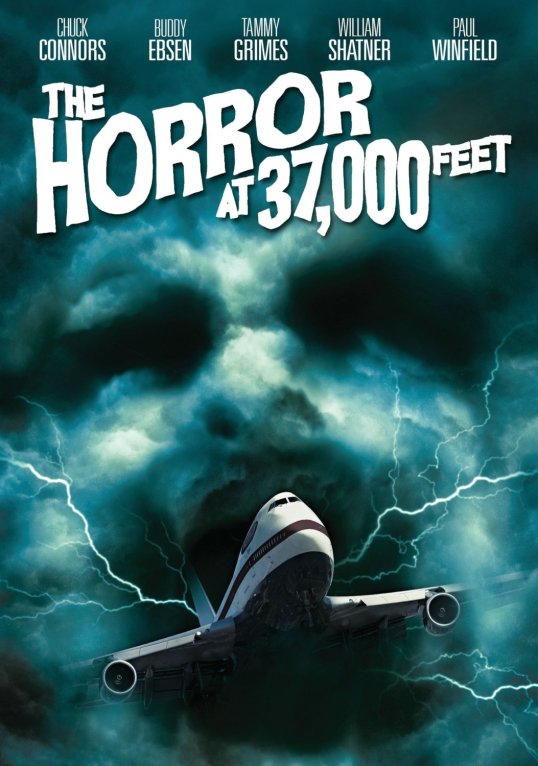
I imagine that it should go without saying that, if you’re on an airplane and you’re flying high above the ground, the last thing that you want to deal with is a bunch of angry ghost druids.
And yet, that’s exactly what happens in this made-for-TV horror film from 1973.
The ghost druids are upset because two architects (played by Roy Thinnes and Jane Merrow) have traveled to England, specifically so that they can supervise the deconstruction of ancient druid altar. Now, they’re flying the pieces of the altar back over the ocean so that the altar can be reconstructed in the United States. The spirits of the ancient druids aren’t happy about being moved so they start doing everything they can to make the journey difficult.
First, they attempt to freeze the plane. When that doesn’t work, they decide to rip it in half. One of the passengers, Mrs. Pinder (Tammy Grimes), suggests that maybe the druids will settle down if they’re offered a sacrifice. When the druids reject an offer of a doll, the passengers start to wonder if maybe the spirits would be happier with a human sacrifice.
Although some of the passengers are reluctant to buy into the whole sacrifice thing, a few of them do start to come around. For instance, there’s a perpetually angry businessman who is played by Buddy Ebsen. Once he realizes that the druids aren’t going anywhere, he has no problem with the idea of a human sacrifice. There’s also a cowboy played by Will Hutchins. If sacrificing a human is what he has to do to have another chance to ride the range, that’s what he’s going to do. Paul Winfield plays a distinguished doctor who tries to keep everyone calm while Chuck Connors is stuck in the cockpit, trying to keep the plane in the air while his passengers and crew debate the ethics of human sacrifice.
And then there’s William Shatner.
Shatner plays a former priest who has lost his faith. From the minute he gets on the plane, he starts drinking and he doesn’t stop for almost the entire movie. It doesn’t matter what’s happening on the plane, Shatner always has a glass in his hand. Playing a character who never has anything positive to say, Shatner smirks through the entire film. Shatner delivers all of his lines in his standard halfting and overdramatic fashion and it’s something of a wonder to behold. Shatner has said that The Horror At 37,000 Feet may be the worst movie in which he ever appeared and just one look at his filmography will show why this is such a bold statement.
The Horror at 37,000 Feet is definitely a film of its time. The plane comes complete with a swinging cocktail lounge, William Shatner wears a turtle neck, and all of the flight attendants wear boots and miniskirts. Everything about this film screams 1973. It’s an incredibly silly but undeniably fun movie. With a running time of only 73 minutes, the pace is fast and the druids don’t waste any time getting down to business. The film’s on YouTube so check it out the next time you’ve an hour and 13 minutes to kill.
The 1978 film, Attack of the Killer Tomatoes, opens with a title card that would make James Nguyen proud. It informs us that people laughed when they first watched a film called The Birds. Then, years later, a flock of birds went mad and started attacking people. No one is laughing now.
As for the rest of the film, it opens with a housewife being menaced by a giant tomato and then it just keeps rolling on from there. Something is causing normal, everyday tomatoes to go on a rampage and no one can figure out what. The government is powerless. (The government’s competence is best exemplified by a scene where a helicopter crashes. Reportedly, the helicopter crash was not scripted but the film’s director decided to keep the scene anyway.) The president puts Mason Dixon (David Miller) in charge of defeating the tomatoes.
The film is one gag and one song after another. Mason has a group of eccentric people working for him, including a superstar gymnast and a man who is always dragging a parachute behind him. The streets are soon running red with tomato juice while clueless teenagers continue to listen to absolutely terrible song called Puberty Love….
In the past, I’ve struggled to define how a pleasure can be guilty but I think Attack of the Killer Tomatoes is actually one of the rare films that truly can live up to the label. It’s a pleasure because it’s just so silly and cheerfully stupid that it’s hard not to smile at it. It’s guilty because, premise aide, the film itself is never really as funny as you want it to be. Comedy — even when its something as silly as this film — is all about timing and Attack of the Killer Tomatoes never nails the timing of its gags. Instead, it plays out like a stoned daydream, amusing to talk about but a bit boring to actually witness.
That said, the film deserves some sort of award for its title and also for going on to inspire not only a few sequels but also a cartoon series. Producer Stephen Peace went on to have a successful career in California politics. Good for him.
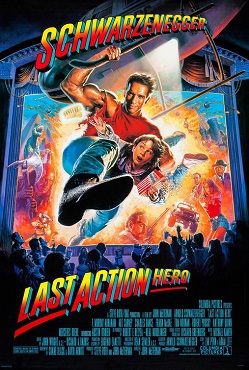
Ever since this film was first released in 1993, it’s usually held up as an example of a Hollywood fiasco. The script was originally written to be a modest satire of action films. The screenwriters wrote the character of Jack Slater, an movie action hero who comes into the real world, for Dolph Lundgren. Instead, the film became an Arnold Schwarzenegger extravaganza and the studio ended up tossing a ton of money at it. When the film was originally released, the reviews were mixed and the box office was considered to be disappointing. (That it went up against the first JurassicPark was definitely an underrated issue when it came to the box office.) Ever since then, The Last Action Hero has had a reputation for being a bad film.
Well, I don’t care. I like TheLastActionHero. Yes, it’s a bit overproduced for a comedy. (It breaks my own rule about how no comedy should run longer than two hours.) Yes, it gets a bit sentimental with ten year-old Danny Madigan (Austin O’Brien) using a magic, golden ticket to enter the film world of his hero, Jack Slater. If you want to argue that the film should have devoted more time to and gone a bit deeper into contrasting the film world with the real world, I won’t disagree with you. But I will also say that Sylvester Stallone starring as TheTerminator in Jack’s world was actually a pretty funny sight gag. Danny knowing better than to trust a character played by F. Murray Abraham made me laugh. Danny’s fantasy in which Arnold Schwarzenegger played Hamlet was made all the better by the fact that his teacher was played by Laurence Olivier’s wife, Joan Plowright. Danny DeVito as Whiskers the Cartoon Cat makes me laugh as well, even if it is perhaps a bit too bizarre of a joke for this particular film. (There’s nothing else about the Jack Slater films that would explain the presence of a cartoon cat.)
When you set aside the idea of the Last Action Hero being a symbol of Hollywood bloat and just watch it as a film, it emerges as an enjoyably goofy action movie, one that captures the joy of watching movies (because who hasn’t wanted to enter a movie’s world at some point in their life), and also one that features a rather charming performance from Arnold Schwarzenegger. (Schwarzenegger, I should add, plays both himself and Jack Slater. One of my favorite jokes is when the real Schwarzenegger is at a premiere and he mistakes the evil Ripper for Tom Noonan, the actor who played him in the previous Jack Slater film.) Yeah, the golden ticket is a little bit hokey but who cares? Underneath all of the special effects and action and money spent on star salaries, LastActionHero is an action movie and comedy with a heart. Danny meets his hero but also gets to become a hero himself. And Jack Slater turns out to be everything you would hope your movie hero would be. In the end, it’s obvious that a lot of the criticism of this film has more to do with the appeal of riding the bandwagon as opposed to what actually happens on screen.
LastActionHero is a movie that I’ll happily defend.
Bruce Campbell is the of Elvis of horror and independent film; in fact, he did play Elvis in “Bubba Ho-Tep”. If you’re into independent filmmaking, genre films, and artistic struggles both of these books “If chins could kill” and “Hail to the chin” are must reads and they are also fantastic audiobooks read by the man himself. Sidenote: I never thought his chin was weird- just manly. I enjoyed these books so much that I read them and then I listened to the audiobooks as well, which allowed me to re-experience the books like a favorite Uncle sharing his adventures with me. His entire life is laid bare in his own words: his successes, struggles, and failures. The second book picks up right after the end of the first one. NB: neither book is ghostwritten- a rarity. Sidenote 2: the audiobook really reveals Bruce’s skill at impersonations- he could do a career just doing that.
Bruce sat down and wrote both of these memoirs and if you’re an “Evil Dead” fan he discusses every single aspect of how the “Evil Dead” films were made. He goes into the same detail with every single show and film he has ever done. It’s not just how the sausage was made, it is the equivalent of discussing the history of the pig breed, how the pigs were raised, the tools they used for slaughtering, when they were made into sausage, the spices used, and the marketing to sell the sausage (Both books are available on Audible). The purpose of this article isn’t to grade these books because it’s just weird to grade a Man’s memories as long as the writing is half-way decent; instead of that very weird thing, I will discuss chronologically the moments that I’ve thought about for years in this uniquely American story.
His early years would be the central casting description of a midwestern “Theater Geek”. I never particularly liked that term, but it’s fairly apt because he lived for the dramatic arts, but NEVER complained or thought any job was beneath him- Refreshing. His entire focus in high school was theater and if he had graduated from college, he would’ve been a drama teacher. Luckily for us, Bruce became a college dropout after 6 months and began working on Evil Dead.
Evil Dead
Evil Dead was created by everyone that any connection to Bruce and his comrades, but there were also guilt feelings. Family members helped, parents helped, law firms helped, and probably even the Easter Bunny contributed to making “Evil Dead”. In the filming, everyone on the film was everywhere all the time and lived like they were quasi-homeless in the abandoned house that any horror fan would recognize. It was amazing to me how they had power to run their equipment. The way he describes it has all the intensity of a man remembering in perfect detail that he knew in his soul that this moment would be life-defining. He was right.
One thing that stood out to me was the guilt that Bruce had for asking his father, who was going through a divorce, for funds for the film. As a dad, I can tell that we want our children to be happy and that doesn’t end because you’re getting divorced, sickness, or even death- we always want our children to succeed. Can parental support get out of hand and make us annoyed? Yes, but this was well within the normal limits for a dad. If Bruce reads this article, I hope that he knows that his dad cherishes every dollar he contributed to his son’s dream. Unless of course, you had a dad like mine- in which case, how is it in the fire/police department, EMT, or Armed Forces these days?
Evil Dead 2 and 3
When he described Evil Dead 2 and 3, it was different because he had become a man. He was married and soon to be divorced. He described the work and the filmmaking the way a master carpenter describes his experience and steps making a $10,000 walnut table from a single piece of wood. Neither Bruce’s nor Sam Raimi’s careers had taken off yet and like many of us facing defeat – they went home. Home was of course with the old crew to make Evil Dead 2. Evil Dead over the years on a budget of $375,000 made $30 million….WHOA, but it was clear that Hollywood didn’t understand what they had- this was decades before Blair Witch and Paranormal Activity. It seems that Army of Darkness solidified Bruce as a name. One moment I remember about his memories of Army of Darkness was how he tried to mentor the extras about the importance of never complaining and hustling on the set. They didn’t listen. In fact, two of the extras defiled the set by having coitus in their costumes between takes…..ew. Maybe they were the first furries…. double ew. Or maybe the extras misunderstood the term “Hustling”?
The 90s
The 90s was Bruce Campbell’s decade. Hollywood finally realized with the success of the X-Files and Pulp Fiction that the audience for off kilter actors and stories was not just large- it had money to spend. Bruce found three things: steady work with Hercules and Xena, his soulmate- his second wife Ida Gearon, and his best friend – Lucy Lawless (Xena). He describes his friendship with Lucy like a brother describes the love and pride he has in a sister who made valedictorian. The Bruce/Lucy friendship spans decades and I hope they become neighbors one day. He describes it with such fondness and admiration; it proves that men and women can have platonic and beautiful friendships that last a lifetime. I’m not crying, you’re crying….leave me alone.
2000s through Burn Notice Bruce had come into his own and was getting cast in A LOT of genre films. He had become a bona fide working actor. I will note that he gets into thorough detail about every single film that he made during this time period. However, I think that many Gen-Z and Millennials discovered him through Burn Notice and if you’re thinking he spills the tea about any on set drama- HE DOES NOT. He talks about how he enjoys dive bars and the different bartender pours. He describes in detail his experience with the show. I enjoyed the second book a lot, but it got personal for me because he convinced his Co-Star Jeffrey Donavan to visit the troops in Iraq. I give them both a lot of credit for that out of all of the great moments in the second book that’s what I think about the most often.
I am a fan of Bruce Campbell’s obviously, but what stood out to me in this uniquely American story is that you really can be anything here if you work at it.
1979’s Meteor is about a big rock that is tumbling through space. Earth is directly in its path and, if it hits the planet, it could be an extinction-level event. Unfortunately, little bits of the rock keep breaking off and crashing into Earth, destroying cities and fleeing extras. Goodbye, Hong Kong. Goodbye, Switzerland, which is destroyed via stock footage lifted from Avalanche. Goodbye, New York, which blows up in such spectacular fashion that the scene was later re-used in The Day After.
It might seem like the planet is doomed. The meteor is unstoppable. Bruce Willis hasn’t become a star yet. But fear not! Some of the brightest faces of the 70s have been recruited to stop the meteor. Natalie Wood, in one of her final films, plays a translator and gets covered in muddy river water. Sean Connery wears a turtleneck and curses in that Scottish way of his. Karl Malden wears a hat and tells people to calm down while he calls the President. Brian Keith plays a Russian with all the grace and skill of a cat trying to rip open a bag of treats. Martin Landau is the military official who doesn’t think that the scientist know what they’re talking about. Henry Fonda is the president. That’s a lot of balding men for one movie and it’s hard not to notice that both Malden and Keith often seem to be wearing a hat whenever they share a scene with Connery. My personal theory is that the production, having spent all of their money on blowing up New York, couldn’t afford more than two toupees so everyone had to take turns wearing them. (The few scenes where Malden is hatless while in Connery’s presence are often oddly filmed, with either Connery on Malden standing with their back to the camera, almost as if the scenes were actually done with a stand-in.)
We’re supposed to breathe a sigh of relief when we see that Henry Fonda is playing the President but I’ve seen FailSafe and I remember him allowing the Russian to nuke New York City. Interestingly enough, New York gets destroyed in this film too. Why didn’t President Fonda care about New York City? Of course, the scientists and the military folks are all located in a control center that’s located under the city. Malden mentions that they’re right next to the Hudson River. It doesn’t seem to occur to anyone that this is a bad idea but, then again, they also elected Henry Fonda president again.
My late friend and colleague Gary Loggins described Meteor as being a “crashing bore.” I have to admit that this is one of the few times that I have ever disagreed with Gary. Meteor is a tremendous amount of fun, as long as you’re watching it with a group of people and nobody takes it seriously. (The first time I saw it was at one in the morning while I was in college. Jeff and I watched it in the lounge of one of the dorms. We may be the only two people to have romantic memories of Meteor.) Meteor features a cast of champion scenery chewers. Karl Malden, Sean Connery, Martin Landau, Brian Keith, none of them were exactly subtle actors and giving them an excuse to argue about how to deal with a meteor allows for a lot of very enjoyable overacting. As well, the special effects are so cheap and obviously fake that it’s hard not to laugh out loud whenever the film cuts to that shot of the meteor rolling through space or the incredibly shiny American and Russian missiles slowly heading towards it.
Meteor’s a lot of fun, even if it is one of those movies where no one points out that our heroes inevitably seem to make every situation worse with their own stupidity. It’s very much at the tail-end of the 70s disaster boom. Watch it for the stars. Watch it for the rock. And watch it for the hairpieces.
As Guilty Pleasures go, The Shadow is a movie that has absolutely everything you need for a fun, campy ride. An Al Leong cameo, alongside James Hong? Check. Heroes and Villains taking time out to discuss their wicked plans (and how they’ll be stopped) over a glass of fine American Bourbon? Check. Early 90s Era CGI? Mark it down. Duel Wielding Pistol shooting action? Got it. Tim Curry just being there? Sweet.
After the wild success of Tim Burton’s Batman in 1989, Hollywood was scrambling to squeeze what they could out of the Superhero Movie. The Punisher, with Dolph Lundgren, would come out the same year. We’d end up with The Rocketeer (one of my personal favorites), BarbWire, Dick Tracy,The Crow, The Mask, and The Phantom, among others leading into the mid-90s. Among these was 1994’s The Shadow, based off the 1930’s character from Walter B. Gibson. Pre-dating all of the before mentioned characters (including DC’s Batman by almost a decade), The Shadow started as a series of radio stories before moving on to other forms of media. The movie didn’t do very well on it’s original release. Much like the magic that clouds men’s minds, audiences were more enraptured with The Crow months before and The Lion King. Some may remember a Shadow movie was made, but it was eclipsed by more popular films at the time.
At the same time, there were major advances happening in audio technology, thanks to a tiny Universal film called Jurassic Park. Jurassic Park helped to usher in an update in sound quality known as The Digital Experience (which we now know as DTS for short). As theatres coverted to the new sound system, various films in the early to mid nineties would make use of it, such as The Crow, The Mask, Timecop and The Shadow. By the time my family picked up their first Laserdisc player, DTS quality sound was available at home. My dad had a series of speakers lined around the living room of our house so that regardless of where you sat, the sound would move around you. One of the best tests of it was with John Carpenter’s The Thing, where Blair is standing off against the crew. The gunfire from his pistol would richochet from the front to the rear speakers, making the kids duck down.
The Shadow also made of use of this in certain areas, particularly with the way voices carried in a room. The part with Shiwan Khan’s voice moving over the city at night was amazing to hear with the right sound system. Just about any scene where The Shadow spoke had this sweet spatial effect that I loved.
The Shadow is the tale of Ying Ko (Alec Baldwin, The Getaway), a.k.a. Lamont Cranston. Living high in the Opium Fields of Tibet, he is a man of darkness, having inflicted great evil over time. Kidnapped and brought to a Tulku (a wise man) who has decided it’s time for redemption, Cranston is taught to cloud men’s minds, bending people to his will and to hide every aspect of himself save for one thing, his Shadow. He then returns seven years later to that “most wretched lair of villainy we know as” New York City, for we all know that the weed of crime bears bitter fruit.
Cranston spends most of his nights at The Cobalt Club with his Uncle Wainwright (Jonathan Winters, It’s a Mad, Mad, Mad, Mad World), who also happens to be the Police Commissioner. It allows him to keep up appearances while making sure the police don’t put The Shadow in their spotlight. When he meets the beautiful Margot Lane (Penelope Ann Miller, The Relic), he’s not only smitten, but finds her ability to read minds a dangerous threat to him.
When a metal casket from Tibet arrives at the New York Museum of Natural History, it reveals Shiwan Khan (John Lone, The Last Emperor), the last descendant of Genghis Khan. Gifted with the same abilities as Cranston, Khan has plans for the city and the world. He would rather have Cranston join him than to kill him. This turns the story into a classic Bond-like cliche where the hero and villain spend the bulk of the movie explaining their plans.
Enjoying the successes of Death Becomes Her and Jurassic Park, writer David Koepp was on a roll. The Shadow doesn’t take itself too seriously. Koepp and director Russell Mulcahy (Highander) splash moments of light comedy at just about every turn, mostly through the witty banter between characters. Some are over the top, particularly with Tim Curry’s character, while others are more subtle, like with Ian McKellan (The Lord of the Rings). If you’re looking for a serious drama in your superhero film, this isn’t it. Additionally, there are one or two elements that make no sense whatever. Mongol warriors walking around in full armor that no one ever seems to notice and taking rides in taxicabs (unless we assume they’re masked by Khan’s magic).
Most of the movie was filmed on the Universal Studios New York backlot, which explains why some scenes look like they were borrowed from Walter Hill’s Streets of Fire (that also used it years before). The mystical Tibetan Phurba dagger that echoes the disposition of its owner was a variant of the one used in Eddie Murphy’s The Golden Child in the late 80s.
if the movie’s climax between The Shadow and Khan feels a bit abbreviated, it’s because of a last minute change in filming. The original plan for the ending involved a series of mirrors, but an earthquake earlier in the year caused damage to the props the production team planned to use. So, what we get is a quicker scene, still falling in line with Mulcahy’s penchant for glass shattering, but leaving the audience to partially wonder what we could have had if everything worked out.
Finally, the real gem in all this is Jerry Goldsmith’s score. Although out of print, you can still find most of the tracks on YouTube, and the songs keep the immersion flowing. While I don’t see the film getting any kind of remakes in the near future, it’s nice to know everything came together (as well as it could) for this entry. Then again, who knows?
With the season already underway, football players are going on strike! They want better contracts. They want more money. They want …. well, they want a lot of stuff. Meanwhile, the fans just want to know who is going to make the playoffs. There are only four games left in the season and the Washington Sentinels need to win three of them to make it into the playoffs. The owner of the team (Jack Warden) recruits burned-out coach McGinty (Gene Hackman) to take over a team that will be made up of replacement players. McGinty says that he wants to pick his own players and he doesn’t want any interference from the team’s owner. Anyone want to guess how long that’s going to last?
McGinty’s team is made up of the usual collection of quirky misfits who show up in movies like this. Tight End Brian Murphy (David Denman, who later played Roy on The Office) is deaf. One of the offensive linemen is a former SUMO wrestler. Orlando Jones plays a receiver who has a day job at a grocery store. The kicker (Rhys Ifan) is a Welsh soccer player. (Okay, a footballer, I don’t care, call it whatever you want.) Jon Favreau plays a berserk defender who is a member of the police force. Leading them on the field is Shane Falco (Keanu Reeves), a quarterback with a confidence problem. Cheering for them from the sidelines and falling in love with Shane is bar owner-turned-head-cheerleader Annabelle (Brooke Langton). Backing up Annabelle is a cheer squad made up of former strippers, the better to distract the other teams.
It’s not often you see a film where the heroes cross a picket line but that’s what happens with The Replacements. Then again, it’s not like the folks on strike are driving trucks or unloading freight for a living. They’re multi-millionaires who want even more money and don’t even care about whether the team wins or loses. When the replacement players actually start to win games and become beloved in the city, the striking players react by starting a bar brawl. In the end, striking quarterback Eddie Martell (Brett Cullen) doesn’t even stick with his principles. He crosses the picket line and creates a quarterback controversy, just in time for the last game of the season.
The Replacements is thoroughly predictable but also very likable. The cast gels nicely, with Hackman especially standing out as the gruff but caring coach. Keanu Reeves is not totally believable as a quarterback with a confidence problem. You take one look at Reeves and you don’t believe he’s had an insecure day in his life. But, as an actor, he’s so likable that it doesn’t matter. The same goes for the entire cast, whether they’re on the playing field or singing I Will Survive in jail. I don’t particularly care much about football but I did enjoy The Replacements.
Some films are so ludicrous and self-aware of their absurdity that you can’t help but love them and that’s certainly the case with 1991’s Point Break.
Consider what Point Break offers us:
First, you’ve got Keanu Reeves playing a former college football star who, after blowing out his knee, ended up joining the FBI. Keanu, who looks like he’s barely out of high school in this film, plays a character with the wonderful name of Johnny Utah. Keanu gives a relaxed performance. You can tell that he’s having fun in this movie and Johnny Utah’s enthusiasm is infectious. Personally, I prefer Johnny Utah to John Wick.
Secondly, you’ve got Patrick Swayze as Bodhi, the ruthless bank robber who is also a surfer. Much like Reeves, Swayze could occasionally be a stiff actor but in this film, you can tell he’s having fun and again, it’s hard not have fun watching him as he spouts his surfer philosophy, jumps out of planes, and dreams of dying while mastering a 50-foot wave. Swayze is so charismatic as Bodhi that you totally buy that Johnny Utah would like him despite all the times that Bodhi tries to kill him.
You’ve got Bodhi’s bank-robbing gang, who call themselves the Ex-Presidents. Bodhi wears a Ronald Reagan mask. Other members of the gang wear LBJ, Nixon, and Carter masks. “I am not a crook!” Nixon says. The wonderful thing about the Ex-Presidents is that they seem to truly enjoy robbing banks. Of course, they also enjoy surfing.
Gary Busey plays a character who is not Gary Busy. Instead, he’s Johnny’s partner. Everyone in the FBI laughs at him when he says the bank robbers are surfers but guess who knows what he’s talking about! Seriously, though, it’s always interesting to see Gary Busey in the years when he was still a somewhat serious actor.
John C. McGinley does the uptight boss thing. Lori Petty is the waitress who teaches Johnny Utah how to surf. The surf footage is beautifully shot. A soaked Johnny give the camera a thumbs-up. Director Kathryn Bigelow keeps the action moving quickly and, just as she did with Near Dark, uses the film’s genre trappings to explore the bond that holds together a group of outsiders.
It’s an over-the-top and cheerfully absurd film and it’s impossible not to love it. I haven’t felt the need to watch the remake. Why would I? The original has everything I need.
In this 1986 melodrama, Kate (Meredith Baxter) has a secret. She may look like healthy and young and blonde. She may have a beautiful house and a handsome husband (Ben Masters). She and her fitness instructor best friend (Shari Belafonte) may spend their time making fun of how fat everyone else. But deep down, Kate is convinced that she’s overweight. She gets on the scale and that declaration of 120 pounds feels like a slap in the face.
How does Kate lose weight? She exercises frequently. And she spends a lot of time staring at herself in the mirror, as if trying to mentally burn away the pounds. Mostly, though, Kate just binges on food whenever she gets stressed and then she throws up. Kate has a lot of reasons to be stressed and they are almost entirely due to her mother (Georgann Johnson), who rarely has a nice word to say to Kate and who constantly tells Kate that she’s going to lose her husband to his assistant (Leslie Bevis).
(Who does everyone always assume that assistants are going to be homewreckers?)
Now, to be clear, eating disorders are a serious thing. I know more than a few people who have had eating disorders. During my first semester of college, I got very used to the sound of the girl in the room next to mine throwing up every morning. There’s nothing funny about the idea of someone having an eating disorder. However, there is something funny about an overwritten movie about an eating disorder that features Meredith Baxter literally attacking a chocolate cake then blaming the mess in the kitchen on the dogs. This is one of those well-intentioned programs that takes a real problem and then goes so overboard in portraying it that it’s more likely to make you snicker than feel horrified. You might not feel good about laughing but the crazed look in Meredith Baxter’s cake-filled eyes will make it difficult not to. Hence, the term guilty pleasure.
As always happens in these type of movies, Kate ends up in a treatment center where a doctor (Edward Asner) tries to reach her and the other patients are all either extremely nice or extremely rude. Kate’s roommate (Tracy Nelson) is a model with anorexia. Another patient (Mindy Seeger) harps on Kate’s “perfect life.” Meanwhile, poor Deyna (Mackenzie Phillips) freaks out when someone moves the garbage can. It’s all very well-meaning but also very over-written and overacted to the point that, once again, it’s more likely to illicit a guilty laugh than anything else.
In the end, Kate realizes that it’s all her mother’s fault. That was kind of obvious from the first time her mother told Kate that her husband was obviously planning on leaving her. “I’m getting better,” Kate says as the credits roll. Yay, Kate!