Why Paranormal Activity: The Marked Ones Nearly Made Me Sick


Paranormal-Activity-The-Marked-Ones

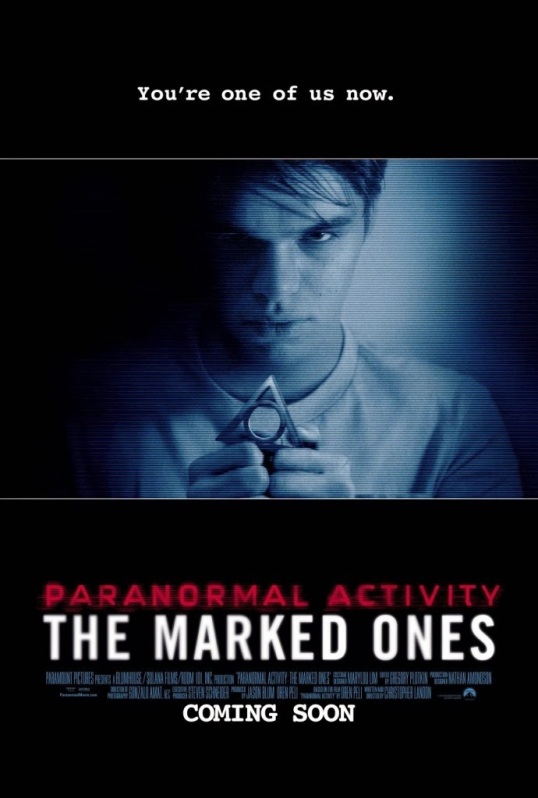
The latest Paranormal Activity film nearly made me sick.

Now, I know what you’re saying.  “Oh my God, Lisa — we all know the Paranormal Activity films aren’t great but was it really that bad!?”

No, actually it wasn’t that bad.  In fact, by the standards of the found footage film genre, I would say it was about average.  It had everything that you’d expect from a Paranormal Activity film.  There were bumps in the darkness.  There were amazingly stupid characters who continually said things like, “Are you filming?” and “Did you hear that?”  Most importantly, there were the shout-outs to the previous films in the series.  Old VHS tapes labeled “Katie and Kristi” are found in a closet.  One character talked about having a dream where he was on a farm surrounded by old women.  Katie and Micah showed up yet again. 

(You have to wonder how Micah Sloat feels about having a film career that is pretty much based on being murdered by Katie Featherstone in film after film after film…)

Listen, it’s easy to criticize the Paranormal Activity films.  God knows that I’ve certainly criticized them a lot.  But the fact of the matter is that they give the audience exactly what the audience is expecting.  After five of these films, we all know exactly what we’re going to get when we go see a movie with the words Paranormal Activity in the title.  You know that you’re going to jump a few times, you’re going to wonder how the characters can always be so stupid, and, if  you’re so inclined, you can have fun spotting the references to previous films.  If you’re going into a Parnormal Activity film expecting to see something brilliantly original or good, you’re doing it wrong.  These films are the equivalent of the silly, but still scary, ghost stories that are best told in the middle of a dark, stormy night by someone with a flashlight pointed at her face.

In other words, Paranormal Activity: The Marked Ones is exactly what you would expect it to be.

So, why did it make me sick?

Like the other films in the series, The Marked Ones is told using “found footage.”  However, whereas those previous films at least found an excuse to make use of a stationary camera, The Marked Ones is almost entirely hand-held.  In other words, it’s shaky cam time and, for me at least, it was also nearly motion sickness time.  Unfortunately, the hand-held work doesn’t really add any sort of immediacy to the film.  Instead, it just makes you wonder why the character of Hector (Jorge Diaz) is still filming even while he’s running for his life.  Sometimes, you just have to drop the damn camera.  (Then again, it is a Paranormal Activity film…)

The Marked One is being sold as not a sequel but spin-off from the original Paranormal Activity films.  As opposed to the other films, which all took place in the haunted homes of upper middle class white people, The Marked Ones takes place in a California housing complex where the majority of the residents are working class Latinos.  The filmmakers are to be commended for both trying to open up the material with a new setting and for trying to give the film an authentic Latin flavor but ultimately, this is a Parnormal Activity film and it really doesn’t matter where you live or what your ethnicity is, the same old shit is going to keep happening to you. 

Recent high school graduates Jesse (Andrew Jacobs) and Hector taunt an old witch who lives in the apartment downstairs.  Shortly after Jesse awakes one morning to discover a strange bite on his arm, the witch is murdered and Jesse starts to act possessed.  It’s up to Hector to try to figure out why his friend is acting so strange and to hopefully save him from the same witches who have popped up in every other Paran0rmal Activity film.  Will Hector succeed or will he just keep filming?

Listen, Paranormal Activity: The Marked Ones isn’t really a very good film.  It’s predictable, the characters act in ways that no normal person would act, and even the expected scares — while occasionally jump-worthy — are no where close to being as effective as they were in the previous films.  But you already knew that because it’s a Parnormal Activity film.  If you enjoyed the previous films in the series, you’ll probably find something to enjoy about The Marked Ones.  And if you didn’t enjoy the previous films, you wouldn’t be watching The Marked Ones to begin with.
paranormal_activity_the_marked_ones_ver2_xlg-690x1024

44 Days of Paranoia #38: Z (dir by Costa-Gavras)


(SPOILERS!)

For today’s entry in the 44 Days of Paranoia, we take a look at the 1969 political thriller, Z.

Though Z is based on events that actually happened in Greece and features a  soundtrack of Greek music that manages to be both haunting and lively at the same time, the film itself takes place in an unnamed, European country.  While the country is officially a democracy, it’s actually controlled by a cabal of politicians and military leaders who use fear and intimidation to maintain power.

As the film opens, The Deputy (played by the charismatic Yves Montand) and his aides arrive in a small city.  That night, the Deputy is scheduled to speak a rally for nuclear disarmament.  As we’re shown from the start of the film, the outspoken Deputy is considered to be a threat by both his country’s government and the United States as well.  Despite having received word that an attempt is going to be made on his life, the Deputy speaks at the rally.  After the rally, as the Deputy walks across the street, a truck comes out of nowhere.  A man in the back of the truck strikes the deputy with a club, killing him.  The official story is that the Deputy was simply hit and killed by a drunk driver but the Deputy’s followers know otherwise.

Realizing that the Deputy has the potential to be an even more powerful symbol in death than he was when he was alive, the government assigns the Magistrate (Jean-Louis Trintignat) to investigate the Deputy’s death.  Since the Magistrate is known to have political ambitions of his own, it’s assumed that he’ll simply rubber stamp the government’s story.  However, the Magistrate surprises everyone by turning out to be a man of integrity.  Working with a journalist (Jacques Perrin), his investigation uncovers a conspiracy and leads to the indictment of several high level military officials.  In a scene that will be familiar to anyone who has ever seen a movie, the Deputy’s wife (Irene Pappas) is told that the men responsible for her husband’s murder will be held responsible…

And this is where you would normally expect the film to end.

However, Z goes on for another few minutes and it’s those final minutes that elevate this film from just being a well-made thriller to being one of the most effective political films ever made.  The film’s narrator informs us that the government was subsequently overthrown by the military.  The indictments were dismissed.  The Magistrate was reassigned to other duties.  The “drunk drivers” who were officially held responsible for the Deputy’s death were given light sentences.  As for the Deputy’s loyal aides, some were forced into exile while another was killed while running from police.  Finally, we’re told:

“Concurrently, the military banned long hair on males; mini-skirts; Sophocles; Tolstoy; Euripedes; smashing glasses after drinking toasts; labor strikes; Aristophanes; Ionesco; Sartre; Albee; Pinter; freedom of the press; sociology; Beckett; Dostoyevsky; modern music; popular music; the new mathematics; and the letter “Z”, which in ancient Greek means “He is alive!”

As the film ends, a long list of everything and everyone that has been banned rolls up the screen.  It’s a devastating scene, one that firmly establishes that the greatest enemy of dictatorship (as well as the first victim) is freedom of thought.

However, even before that ending, Z had already established itself as a powerful film.  I usually dread watching politically themed films because, for the most part, I find them to be drearily heavy-handed.  Well, make no doubt about it,  Z is a very political film and it’s also a very heavy-handed film.  However, it’s so well-acted and well-directed that I hardly minded the fact that the film was essentially trying to indoctrinate me.  It’s rare that you find a polemical film that also works as entertainment but Z is one of those rare films.

Z made history in 1970 when it was the first film to be nominated by the Academy for both Best Foreign Language Film and Best Picture of the Year.  Watching it today, it’s easy to understand why Z was so honored.  It remains an exciting thriller, a powerful political statement, and a bold call to action.

Z, incidentally, won the Oscar for Best Foreign Language Film.  However, best picture was won by Midnight Cowboy.

Other Entries In The 44 Days of Paranoia 

  1. Clonus
  2. Executive Action
  3. Winter Kills
  4. Interview With The Assassin
  5. The Trial of Lee Harvey Oswald
  6. JFK
  7. Beyond The Doors
  8. Three Days of the Condor
  9. They Saved Hitler’s Brain
  10. The Intruder
  11. Police, Adjective
  12. Burn After Reading
  13. Quiz Show
  14. Flying Blind
  15. God Told Me To
  16. Wag the Dog
  17. Cheaters
  18. Scream and Scream Again
  19. Capricorn One
  20. Seven Days In May
  21. Broken City
  22. Suddenly
  23. Pickup on South Street
  24. The Informer
  25. Chinatown
  26. Compliance
  27. The Lives of Others
  28. The Departed
  29. A Face In The Crowd
  30. Nixon
  31. The Hunger Games: Catching Fire
  32. The Purge
  33. The Stepford Wives
  34. Saboteur
  35. A Dark Truth
  36. The Fugitive
  37. The Day of Jackal

Lisa Marie Picks The Best 26 Films of 2013


UpstreamColor_KrisJeffEscalator_3000x1277

2o13 was an unusually good year in film.  While there was never any doubt what my number one film would be, it took me considerably longer to narrow down my other favorites to just 25 movies.

Also complicating matters is that a film that I’m very much looking forward to, Spike Jonze’s Her, is not going to be opening here until next weekend.  Because I haven’t seen it, I could not consider it for this list.  If, after I do see it, I feel that it belongs in the top 26, I will add it.

(Update: I have since seen Her and I have modified my original list. — LMB, 1/1o/14)

You may be asking, “Why 26 films?”  Lisa doesn’t do odd numbers, that’s why.

Without further ado, here’s the list!

  1. Upstream Color
  2. American Hustle
  3. Frances Ha
  4. Her
  5. Before Midnight
  6. Blue Is The Warmest Color
  7. Spring Breakers
  8. 12 Years A Slave
  9. Fruitvale Station
  10. Inside Llewyn Davis
  11. The Wolf of Wall Street
  12. Warm Bodies
  13. The Counselor 
  14. Gravity
  15. Blue Jasmine
  16. The Spectacular Now
  17. Much Ado About Nothing
  18. Dallas Buyers Club
  19. The Conjuring
  20. Drinking Buddies
  21. Iron Man 3
  22. Nebraska
  23. The Place Beyond The Pines
  24. At Any Price
  25. The Hunger Games: Catching Fire
  26. All Is Lost
  27. The Iceman
  28. Frozen

Upstream Color

(Now that you’ve seen my favorites of 2013, check out my picks for 2010, 2011, and 2012!)

Other Entries In TSL’s Look Back At 2013:

  1. Lisa Marie’s 12 Favorite Novels of 2013
  2. Lisa Marie’s 12 Favorite Non-Fiction Books of 2013
  3. Semtex Skittle’s 2013: The Year in Video Games
  4. 20 Good Things Lisa Marie Saw On Television in 2013
  5. 10 0f Lisa Marie’s Favorite Songs of 2013
  6. Lisa Marie’s 16 Worst Films of 2013
  7. Necromoonyeti’s Top 10 Metal Albums of 2013
  8. Things That Dork Geekus Dug In 2013
  9. Lisa Marie’s Best of 2o13 SyFy

44 Days of Paranoia #36: The Fugitive (dir by Andrew Davis)


For our latest entry in the 44 Days of Paranoia, let’s take a look at the 1993 best picture nominee, The Fugitive.

We’re all familiar with the saying, “You just had to be there.”  We usually hear it as an excuse that’s uttered when a storyteller realizes that his audience isn’t as fascinated by his tale as he is.  It’s a way of assuring us that we would also be fascinated if only we had been present when the story actually took place.

I think the same holds true of a lot of movies.  You simply had to be there when the film was originally released to theaters, before it’s impact could be diluted by repetition and imitation, to understand why that movie was successful or why certain critics continue to speak so fondly of it.

Case in point: The Fugitive.

Based on an old television series, The Fugitive was a huge hit when it was first released in 1993.  It was critically acclaimed, it featured an Oscar-winning supporting performance from Tommy Lee Jones, and the film itself was even nominated for best picture of the year.  The Fugitive is still regularly cited as being one of the best action movies ever made.

And yet, last month, when I watched The Fugitive for the first time, I was left distinctly underwhelmed.

The film opens with Chicago surgeon Richard Kimble (Harrison Ford) arriving home and discovers that his wife has been murdered by a one-armed man (Andreas Katsulas).  Kimble struggles with the assailant but the man still manages to escape into the night.  The police don’t believe Kimble’s story and he ends up being arrested and subsequently convicted of his wife’s murder.  It was at this point that I shouted out, “What about DNA!?” but then I remembered that this film was probably made before DNA became a regular part of the criminal justice system.  You just had to be there…

While Kimble is being transported to death row, a fight breaks out that causes the prison bus to crash and gives Kimble a chance to escape.  Kimble is now a fugitive, trying to track down the one-armed man and clear his name.  Pursuing him is the charismatic and rather manic U.S. Marshal Sam Gerard (Tommy Lee Jones).

Every review that I’ve ever read about The Fugitive always praises two scenes.  One is the bus crash that gives Kimble his opportunity to escape.  The other is the scene where Gerard first catches up to Kimble.  Standing at the edge of a storm drain, Kimble says that he’s innocent.  Gerard calmly  replies, “I don’t care.”  Kimble then proceeds to jump over the edge and into the raging waters below.  Realistically, the fall really should have killed him but, if it had, there would be no movie.

Those two scenes are genuinely exciting and well-done.  Unfortunately, the rest of the film isn’t quite as memorable.  Kimble spends the rest of the movie running around Chicago while Gerard chases after him.  It’s all shot well enough and Tommy Lee Jones is a lot of fun to watch (the film comes to life in the scenes where Gerard interacts with the other members of his team) but, at the same time, it all feels rather predictable.  For all the scenes of Ford looking intense and running through the city, I was more excited about the chance to say, “Hey, isn’t that Julianne Moore!?” when she showed up as a sympathetic doctor.

Worst of all, the solution to the film’s mystery literally comes out of nowhere.  However, that solution does feature a Big Evil Corporation which, if nothing else, qualifies The Fugitive for inclusion in the 44 Days of Paranoia.

Watching The Fugitive, I could see how the film had influenced other action films and I think that was a large reason why the film didn’t work for me.  What was once undoubtedly seen as being thrilling and surprising now seemed rather mundane and predictable.

That’s why I imagine that, in the case of The Fugitive, you just had to be there.

Other Entries In The 44 Days of Paranoia 

  1. Clonus
  2. Executive Action
  3. Winter Kills
  4. Interview With The Assassin
  5. The Trial of Lee Harvey Oswald
  6. JFK
  7. Beyond The Doors
  8. Three Days of the Condor
  9. They Saved Hitler’s Brain
  10. The Intruder
  11. Police, Adjective
  12. Burn After Reading
  13. Quiz Show
  14. Flying Blind
  15. God Told Me To
  16. Wag the Dog
  17. Cheaters
  18. Scream and Scream Again
  19. Capricorn One
  20. Seven Days In May
  21. Broken City
  22. Suddenly
  23. Pickup on South Street
  24. The Informer
  25. Chinatown
  26. Compliance
  27. The Lives of Others
  28. The Departed
  29. A Face In The Crowd
  30. Nixon
  31. The Hunger Games: Catching Fire
  32. The Purge
  33. The Stepford Wives
  34. Saboteur
  35. A Dark Truth

Lisa Marie Picks The 16 Worst Films of 2013


A lot of people are saying that 2013 was a great year for movies.  And I guess it was.  An unusually large number of memorable films were released last year.

However, by that same token, a huge number of truly terrible films were released in 2013 as well.  With that in mind, here are my personal picks for the 16 worst films of 2013.  Why 16?  Because Lisa doesn’t do odd numbers, that’s why.

16) Carrie

15) Getaway

14) After Earth

13) Broken City

12) The Company You Keep

11) See Girl Run

10) Would You Rather

9) Lee Daniels’ The Butler

8) Identity Thief

7) Movie 43

6) Disconnect

5) A Dark Truth

4) Freeloaders

3) Unhung Hero

2) Tyler Perry’s Temptation

And finally, my pick for the worst film of 2013…

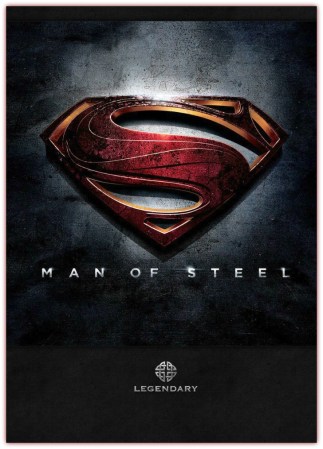
1) Man of Steel

It’s only been recently that I’ve come to realize that Man Of Steel was the worst film of 2013.  When I first saw it, I thought it was bombastic and rather silly but I also thought it was just another mediocre action film.  However, the more that I’ve thought about the film, the more I’ve come to realize that Man of Steel truly represents everything that I dislike about mainstream film.  Beyond the fact that it took itself way too seriously, Man of Steel spent millions of dollars to celebrate the destruction of a major city but couldn’t find five minutes to devote to character development or memorable dialogue.  Two years ago, a lot of people disagreed with me when I announced that Zack Snyder’s Sucker Punch was one of the best films of 2011.  I wonder how those same people feel about Man of Steel.

ManofSteel

Tomorrow, I’ll continue my look back at the year that was with my 10 favorite songs of 2013.

(You can see my picks for the worst films of 2010, 2011, and 2012 by clicking on the links in this sentence.)

Film Review: Love and Honor (dir by Danny Mooney)


Love and Honor tells a simple but effective story.

Taking place in 1969 and opening with footage of the launch of Apollo 11, Love and Honor tells the story of two soldiers, Wright (Liam Hemsworth) and Joyner (Austin Stowell).  Wright and Joyner are serving in Viet Nam together and, even as the war grows more and more unpopular in the U.S., both of them remain true believers.

Shortly before they’re scheduled to take a week of R&R in Hong Kong, Joyner receives a break-up letter from his girlfriend, Jane (Aimee Teargarden).  Joyner decided to use his R&R time to fly back to the U.S. and ask Jane to marry him.  As Joyner explains it, as long as he returns to his unit at the end of the week, he won’t be charged with going AWOL.  Wright impulsively decides to accompany him.

What happens next shouldn’t surprise anyone who has ever seen a film set in the 60s.  Wright and Joyner returns to the U.S. and discover that Jane has fallen in with a bunch of activists — led by the smug Peter (Chris Lowell) — who spend all of their time organizing rallies and publishing an underground newspaper.  While Joyner pursues Jane, Wright falls in love with Candace (Teresa Palmer).  In order to impress Candace, Wright claims that he and Joyner are actually deserters as opposed to just being two soldiers on R&R.  While Wright’s lie impresses Jane’s new friends, it also proves to be a lot of trouble once Peter starts to get jealous.

Love and Honor, which came and went without much notice last March, is a surprisingly sweet and likable film.  Liam Hemsworth and Teresa Palmer have a lot of chemistry and Austin Stowell is so likable as Joyner that it’s easy to overlook the fact that his character’s story arc doesn’t really make much sense.  Finally, Chris Lowell is properly hissable as the film’s self-righteous villain.

I imagine that some politically minded viewers might be a bit annoyed with the fact that all of the film’s political activists are portrayed as being shallow, flaky, and hypocritical.  (Then again, some would argue that this was the most realistic part of the entire film…)   Love and Honor uses the politics of the 60s as a plot device but it never explores any of those issues in any sort of depth.  But, to be honest, who cares?  Sometimes, a romance is just a romance and we, as viewers, are all the better for it.

2013 In Review: The Best of SyFy


It’s been quite a year for the SyFy network, even if the network’s most widely-seen original film, Sharknado, was actually one of their weaker offerings.  As a proud member of the Snarkalecs and a Snarkies voter, I’ve certainly enjoyed watching, reviewing, and live tweeting all of the films that SyFy and the Asylum have had to offer us this year.

Below, you’ll find my personal nominees for the best SyFy films and performances of 2013.  (Winners are listed in bold.)

End of the World

Best Film

Battledogs

Blast Vegas

*End of the World

Flying Monkeys

Ghost Shark

Zombie Night

Best Actor

Neil Grayston in End of the World

*Greg Grunberg in End of the World

Anthony Michael Hall in Zombie Night

Frankie Muniz in Blast Vegas

Corin Nemec in Robocroc

Tom Everett Scott in Independence Daysaster

Best Actress

Maggie Castle in Blast Vegas

Lacey Chabert in Scarecrow

Kaitlyn Leeb in Grave Halloween

*Maika Monroe in Flying Monkeys

Ariana Richards in Battledogs

Mackenzie Rosman in Ghost Shark

Best Supporting Actor

Barry Bostwick in Blast Vegas

William B. Davis in Stonados

Brad Dourif in End of the World

Dennis Haysbert in Battledogs

John Heard in Sharknado

*Richard Moll in Ghost Shark

Best Supporting Actress

*Shirley Jones in Zombie Night

Nicole Munoz in Scarecrow

Jill Teed in Independence Daysaster

Jackie Tuttle in Flying Monkeys

Dee Wallace in Robocroc

Kate Vernon in Battledogs

Best Director

Griff Furst for Ghost Shark

Robert Grasmere for Flying Monkeys

John Gulager for Zombie Night

W.D. Hogan for Independence Daysaster

*Steven R. Monroe for End of the World

Jack Perez for Blast Vegas

Best Screenplay

Shane Van Dyke for Battledogs

Joe D’Ambrosia for Blast Vegas

*Jason C. Bourque and David Ray for End of The World

Silvero Gouris for Flying Monkeys

Paul A. Birkett for Ghost Shark

Rick Suvalle for Scarecrow

Flying Monkeys

Best Monster

*Skippy from Flying Monkeys

The Shark from Ghost Shark

Robocroc from Robocroc

The Scarecrow from Scarecrow

The Tasmanian Devils from Tasmanian Devils

The Zombies from Zombie Night

Battledogs

Tomorrow, I will continue my look back at 2013 with my picks for the 16 worst films of 2013!

44 Days of Paranoia #35: A Dark Truth (dir by Damian Lee)


For the latest entry in the 44 Days of Paranoia, we take a look at one of the more obscure films of 2013.  A Dark Truth was briefly released last January and it didn’t get much attention.  Having recently watched the film, I can understand why.

A Dark Truth (subtle name, no?) opens with a lengthy and disturbing scene of men, women, and children being chased through the jungle by machine gun-wielding soldiers.  As we eventually learn, the people fleeing are the citizens of a village in Ecuador and the soldiers are there on a mission to kill every single one of them.  It’s such a disturbing and well-shot sequence that I watched it with a sinking feeling because I knew that there was no way the rest of the film would be able to live up to it.

And it turns out I was right.  Director Damian Lee seemed to realize this as well because he revisits the footage every time his film starts to drag.  Unfortunately, the more we see these violent images, the less powerful they become.  By the end of the film, that whole opening sequence has lost whatever power it had simply because we’ve seen it one too many times.

It turns out that the soldiers were working for a — wait for it! — Big Evil Corporation.  It seems that this Canadian water purification company accidentally poisoned the village’s water and this led to several villagers getting sick.  An executive, who is so villainous that he’s played by Kim Coates, ordered that all the villagers be executed.  Among the few that escaped was a veteran political activist (Forest Whitaker) and his wife (Eva Longoria).

Meanwhile, in Canada, corporate executive Deborah Kara Unger finds out what the company did in Ecuador.  Wracked with guilt, she hires former CIA Agent-turned-talk radio host Andy Garcia to go down to Ecuador and rescue Whitaker.

A Dark Truth, which obviously aspires to be something more than just a conventional action thriller, is a film that starts with an exciting bang but then ends with a whimper that, even if you have managed to stay awake while watching it, you’ll barely hear.  This is one of the slowest films ever made (it certainly feels longer than 105 minutes) and the excessively stylized direction can’t make up for the fact that the film’s plot and dialogue are both painfully predictable.  About the only thing that The Dark Truth has going for it is that, while Longoria is painfully miscast, the film does feature good performances from Garcia, Whitaker, and Coates.  Best of all is Kevin Durand, who plays a hired assassin here.  Durand doesn’t get to say much  but he’s such an intimidating physical presence that he doesn’t need to say much.

Seriously, somebody needs to give Kevin Durand his own action franchise.

Other Entries In The 44 Days of Paranoia 

  1. Clonus
  2. Executive Action
  3. Winter Kills
  4. Interview With The Assassin
  5. The Trial of Lee Harvey Oswald
  6. JFK
  7. Beyond The Doors
  8. Three Days of the Condor
  9. They Saved Hitler’s Brain
  10. The Intruder
  11. Police, Adjective
  12. Burn After Reading
  13. Quiz Show
  14. Flying Blind
  15. God Told Me To
  16. Wag the Dog
  17. Cheaters
  18. Scream and Scream Again
  19. Capricorn One
  20. Seven Days In May
  21. Broken City
  22. Suddenly
  23. Pickup on South Street
  24. The Informer
  25. Chinatown
  26. Compliance
  27. The Lives of Others
  28. The Departed
  29. A Face In The Crowd
  30. Nixon
  31. The Hunger Games: Catching Fire
  32. The Purge
  33. The Stepford Wives
  34. Saboteur

44 Days of Paranoia #34: Saboteur (dir by Alfred Hitchcock)


For today’s entry in the 44 Days of Paranoia, we take a look at the 1942 Alfred Hitchcock film, Saboteur.

Saboteur opens at an aircraft factory in Glenda, California.  Co-workers Barry Kane (Robert Cummings) and Ken Mason (Virgil Summers) notice a stand-offish new guy named Frank Fry (Norman Lloyd, who appropriately looks something like a rodent).  When a fire breaks out at the factory, Fry hands Barry a fire extinguisher which Barry then hands off to Ken.  The extinguisher, however, is full of gasoline, both causing the fire to turn into an inferno and killing Ken.

When questioned by the FBI, Barry explains that Fry handed him the extinguisher, just to then be informed that no one named Fry worked at the plant and that no one saw Fry — or anyone else — hand Barry the extinguisher.  Realizing that Fry has framed him and also remembering the address on an envelope that Fry was carrying, Barry runs.  With the FBI and police pursuing him, Barry tries to track down the real saboteur.  Along the way, he discovers a friendly rancher (Otto Kruger) who is actually a Nazi agent and gets some help from a group of circus freaks, a blind man, and the blind man’s model daughter (Peggy Cummings).  He also discovers that the U.S. is crawling with Nazi double agents who hide behind a veil of respectability and are plotting to destroy historic landmarks across the country.  It all eventually leads to a genuinely exciting climax atop the Statue of Liberty.

Saboteur doesn’t get as much attention as some of the other films that Hitchcock directed in the 40s and perhaps that’s not surprising.  It’s not as technically audacious as Notorious nor is it as thought-provoking as Shadow of the Doubt or as flamboyant as Spellbound.  While Robert Cummings and Priscilla Lane make for perfectly likable leads, they certainly don’t generate the chemistry of Cary Grant and Ingrid Bergman.  When one looks at the masterpieces that Hitchcock directed in the 40s, it’s easy to dismiss Saboteur as being a well-made B-movie.

And yet, I love Saboteur.  The film is pure non-stop melodrama and, over 70 years since it was first made, it remains an exciting and entertaining film.  Despite the fact that some critics may not hold Saboteur in as high regard as some of Hitchcock’s other films, Saboteur is full of moments of the director’s trademark ambiguity and irony.  This is one of Hitchcock’s wrong man films, where innocent men are chased across a shadowy landscape by the forces of law and order who, in many ways, are portrayed as being just as menacing as the film’s nominal villains.  Meanwhile, the Nazi agents hide behind warm smiles and friendly words, their evil only apparent when it’s too late to stop them.  Despite his rather fearsome reputation, Hitchcock’s sympathies always lay with the powerless and the wrongly accused.

It’s those sympathies that make Saboteur into far more than just another B-movie.

Instead, it’s one of Hitchcock’s best.

Other Entries In The 44 Days of Paranoia 

  1. Clonus
  2. Executive Action
  3. Winter Kills
  4. Interview With The Assassin
  5. The Trial of Lee Harvey Oswald
  6. JFK
  7. Beyond The Doors
  8. Three Days of the Condor
  9. They Saved Hitler’s Brain
  10. The Intruder
  11. Police, Adjective
  12. Burn After Reading
  13. Quiz Show
  14. Flying Blind
  15. God Told Me To
  16. Wag the Dog
  17. Cheaters
  18. Scream and Scream Again
  19. Capricorn One
  20. Seven Days In May
  21. Broken City
  22. Suddenly
  23. Pickup on South Street
  24. The Informer
  25. Chinatown
  26. Compliance
  27. The Lives of Others
  28. The Departed
  29. A Face In The Crowd
  30. Nixon
  31. The Hunger Games: Catching Fire
  32. The Purge
  33. The Stepford Wives

44 Days of Paranoia #33: The Stepford Wives (dir by Bryan Forbes)


For our latest entry in the 44 Days of Paranoia, let’s take a look at the sci-fi social satire, The Stepford Wives.

Now, don’t panic.  I’m not talking about that terrible Nicole Kidman comedy that came out in 2004.  No, I’m talking about the original Stepford Wives.  This film originally came out in 1975.  I recently saw it on TCM and I was shocked to discover that, despite the fact that the film is undeniably dated in that fascinatingly weird way that most films from the 70s are, The Stepford Wives holds up rather well.

Joanna (Katharine Ross) and her husband, Walter (Peter Masteron) leave dangerous New York City and move to the idyllic suburb of Stepford, Connecticut.  Walter is immediately invited to join the exclusive Stepford Men’s Association but Joanna finds it far more difficult to fit in with the citizens of Stepford.  As Joanna discovers, all of the women of Stepford are oddly submissive and obsessively domestic.  When Joanna and her friend Bobbie (Paula Prentiss) attempt to hold a consciousness raising meeting, they quickly discover that the other women of Stepford would rather talk about cleaning products than women’s lib.

The more that Joanna investigates the social structure of Stepford, the more convinced she becomes that something sinister is being done to keep the Stepford Wives from desiring a life outside of pleasing their husbands.  The more disturbed Joanna is by Stepford, the more Walter loves it…

One of the many reasons why I love my boyfriend is because he knows that I’m not perfect.  He knows that I’m often a neurotic mess.  He knows that I’m just as obsessively insecure about my big nose as I’m obsessively vain about my red hair.  He knows that I tend to take on too much and that I get defensive whenever I’m told that I need to slow down.  He knows that I can be emotional and silly.  He also knows how much I value my independence.  He’s knows that I need to have a life of my own and, instead of being threatened, he has always been there to encourage me, to cheer for me when things go right and to hold me when things go wrong and, most importantly, to never judge me regardless of whether I succeed or fail.  He knows that I’m not perfect and that I’ll never be perfect and he loves me anyway.

That hasn’t always been the case with some of the guys that I’ve gone out with in the past.  For the longest time, I always thought I was the only girl who had a hundred men trying to change her but I’ve discovered that my experiences were hardly unique.  All of my friends have stories about men who have tried to change them.  There seems to be something inherent in the mentality of many men that leads them to assume that they can make any woman into a robot.

Perhaps that’s why The Stepford Wives resonated with me.  Most husbands may not be able to literally turn their wives into robots but it’s certainly not for lack of trying.  The Stepford Wives is a flawed film — the pace often drags and the performances are uneven — but it’s one that rings true for many women.

(And don’t worry, boys!  The men in this film are such pigs that there’s no way you won’t look better by comparison.)

Other Entries In The 44 Days of Paranoia 

  1. Clonus
  2. Executive Action
  3. Winter Kills
  4. Interview With The Assassin
  5. The Trial of Lee Harvey Oswald
  6. JFK
  7. Beyond The Doors
  8. Three Days of the Condor
  9. They Saved Hitler’s Brain
  10. The Intruder
  11. Police, Adjective
  12. Burn After Reading
  13. Quiz Show
  14. Flying Blind
  15. God Told Me To
  16. Wag the Dog
  17. Cheaters
  18. Scream and Scream Again
  19. Capricorn One
  20. Seven Days In May
  21. Broken City
  22. Suddenly
  23. Pickup on South Street
  24. The Informer
  25. Chinatown
  26. Compliance
  27. The Lives of Others
  28. The Departed
  29. A Face In The Crowd
  30. Nixon
  31. The Hunger Games: Catching Fire
  32. The Purge