12 Reasons To Love 12 Angry Men


Everyone already knows that the 1957 Best Picture nominee 12 Angry Men is a classic.  We all know the film’s story — a teenage boy is on trial for murdering his family.  11 jurors want to convict.  1 juror doesn’t.  Over the next few hours, that one juror tries to change 11 minds.  Some of the jurors are prejudiced, some of them are bored, and some of them just want to go home.  And, as the film reminds us, all 12 of them have a huge  responsibility.  You don’t need me to tell you that this is a great movie.  Therefore, consider this to be less of a review and more of an appreciation of one of the best movies ever made.

1) The film is the feature debut of director Sidney Lumet.  As any student of American film can tell you, Sidney Lumet was one of the most important directors in the history of cinema.  After beginning his career in television, Lumet made his film directing debut with 12 Angry Men and he was rewarded with a much deserved Oscar nomination for best director.

2) The film’s story is actually a lot more complex than you might think.  12 Angry Men is such an influential film and its story has been imitated so many times that it’s easy to forget that the film’s plot is a lot more nuanced than you might think.  Despite what many people seem to think, Juror Number 8 never argues that the defendant is innocent.  Instead, he argues that the state has not proven its case beyond a reasonable doubt and, as a result, the defendant cannot be convicted.  That’s an important lesson that is too often forgotten.

3) The movie celebrates the power of one person determined to do the right thing.  Again, that’s a lesson that remains very relevant today.

4) As Juror Number Eight, Henry Fonda makes human decency believable.

5) As the angry and bullying Juror Number Three, Lee J. Cobb is the perfect antagonist.

6) As Juror Number Ten, Ed Begley makes Cobb seem almost reasonable.  To be honest, the scene where Begley’s racist ranting causes all of the other jurors to stand up and turn their back on him feels a bit too theatrical.  But it’s still undeniably effective.  Alone among the jurors, Juror Number Ten is the only one without any hope of redemption.  It’s a bit of a thankless role but Begley does what he has to do to make the character believable.

7) E.G. Marshall makes the wealthy Juror Number Four into a worthy opponent of Fonda without crossing the line into prejudice like Cobb and Begley.  In many ways, Marshall’s role is almost as important as Fonda’s because Marshall’s performance reminds us that not all disagreements are the product of ignorance or anger.

8) As the Jury Foreman, Martin Balsam is the epitome of every ineffectual authority figure.

9) As Juror Number Seven, Jack Warden is hilariously sleazy.

10) As Juror Number Nine, Joseph Sweeney grows on you.  The first time I saw the film I thought that Sweeney went a bit overboard but, on more recent viewings, I’ve come to appreciate Sweeney’s performance.

11) As Juror Number Twelve, Robert Webber is hilariously shallow.  Juror Number Twelve is in advertising and Webber seems like he was right at home on Mad Men.

12)  Though they don’t get as much of a chance to make an impression, John Fiedler, Jack Klugman, Edward Binns, and George Voskovec all do good work as the other jurors.  If there’s ever been a film that proves the value of a great ensemble, it’s 12 Angry Men.

Film Review: My Name Is ‘A’ By Anonymous (dir by Shane Ryan)


One of the best things about being an independent film critic is that I occasionally get a chance to take a risk and recommend a film that audiences might not otherwise get a chance to discover.  Even better is when I get the opportunity to defend a work of art that I know some other critics will dismiss out of hand simply because they either don’t appreciate or understand the film’s subject matter.

Case in point: My Name Is ‘A’ By Anoynmous.

My Name Is ‘A’ is inspired by a disturbing true story.  In 2009, a nine year-old girl named Elizabeth Olten was brutally murdered in Missouri.  The police investigation eventually led to the arrest of Elizabeth’s 15 year-old neighbor, Alyssa Bustamante.  Alyssa confessed to the crime, explaining that she simply wanted to know what it felt like to kill someone.  After having killed Elizabeth, Alyssa wrote in her diary: “It was ahmazing. As soon as you get over the ‘ohmygawd I can’t do this’ feeling, it’s pretty enjoyable. I’m kinda nervous and shaky though right now. Kay, I gotta go to church now…lol.”  Alyssa later pled guilty to 2nd degree murder and is currently serving a life sentence with the possibility of parole.

When we read about the crimes of Alyssa Bustamante, our natural instinct is to look for a reason why.  There’s been speculation that she was sexually abused.  Needless to say, some people have decided that she was a part of some sort of Satanic cult.  As a former cutter, I immediately focused on the red marks on her wrist that were visible in some of the pictures that she posted online before committing the murder.  As observers, we need a reason because, in theory, a definite reason would also mean that there is a definite solution as well.  What we do not want to hear is that Alyssa Bustamante killed Elizabeth just because she felt like it.

Told in a deliberately disjointed fashion, My Name Is A follows four teenage girls in the days leading up to the death of Elizabeth.

Alex Damiano plays a bulimic who rails angrily against both the father who abandoned her and a God that she doesn’t believe in.  Damiano gives perhaps the film’s bravest performance and both she and director Shane Ryan deserve a lot of credit for the realistic way that they present and deal with bulimia.

Teona Dolnikova dreams of being a star but, instead, has to deal with her own sexually abusive stepfather.  About halfway through the film, Dolnikova gets an opportunity to star in a surrealistic music video.  It’s an unexpected moment but one that works.

And finally, there’s Alyssa (Katie Marsh) and her mostly silent friend, played by Demi Baumann.  In many ways, Alyssa and her friend seem like normal teenagers.  They spend a lot of time playfully giving each other a hard time, making silly videos with their phone, and generally just trying to find something interesting to do.  Indeed, during the film’s first few scenes, it’s easy for the viewer to relate to Alyssa.  (Not surprisingly, that’s why some viewers are going to have issues with My Name Is A.)  It’s only as the film progresses that we start to catch glimpses of what lies behind Alyssa’s facade of normalcy.

Who the girls are in relation to each other and how their separate stories will eventually lead to a shocking murder is the question that lies at the heart of My Name Is A.  To his credit, Shane Ryan doesn’t provide any easy answers.  He provides plenty of clues but it’s up to the audience to find those clues and to put the pieces of the puzzle together and then to decide whether any of those pieces can properly explain the actions of an Alyssa Bustamante.  In this way, My Name Is A reminded me a lot of Gus Van Sant’s Elephant, another film about teenage murderers that provided clues but was smart enough to avoid giving the audience the comfort of an easy answer.

The film’s director has described My Name Is A as being a “love it or hate it” film.  I can understand why.  My Name Is A refuses to give audiences the easy answers that they’ve come to expect and, even more  dangerously, suggests that monsters can also be human.  My Name Is A is not always an easy movie to watch but it is a movie that dares us to think and consider questions that we might not otherwise consider.

What more can you ask from a movie?

Film Review: The Monuments Men (dir by George Clooney)


Remember when The Monuments Men was everyone’s pick for the best film of 2013?

It may be hard to remember now, especially now that the film has actually been released and dismissed by most critics.  But, during the summer of 2013, all of the people at Goldderby and AwardsDaily were convinced that The Monuments Men would be a major player at the Oscars.  Sure, the thinking went — 12 Years A Slave and August: Osage County would be major contenders but the surest bet for a win was The Monuments Men.

With the benefit of hindsight, it’s easy to laugh but, at the time, the logic behind this assumption seemed sound.

After all, The Monuments Men not only tells a true story but it also takes place during the only good war, World War II.  It’s directed by George Clooney, who is the epitome of a star..  The film features supporting performances from Matt Damon, Cate Blanchett, Bill Murray, Jean Dujardin, Bob Balaban, Hugh Bonneville, and John Goodman.  The film also has a valuable message about the importance of culture and how tyrants always try to control and suppress the imagination.

So, who can really blame all the usual suspects for deciding, without having actually seen the movie, that The Monuments Men would be great?  Even when the film’s release date was moved from December of 2013 to February of 2014, it was assumed that it was only being moved because 12 Years A Slave was such a great film that no movie — not even The Monuments Men — could hope to compete with it for the title of best film of 2013.

“The Monuments Men?” they all said, “It’ll be the best film of 2014…”

And then, finally, The Monuments Men was released and we all got a chance to see it and…

Well, it turns out The Monuments Men was not quite what everyone was expecting.  It’s not quite bad but, at the same time, it’s also not quite good.  Instead, it simply is.

To its credit, The Monuments Men attempts to tells a worthy story.  During the final days of World War II, Frank Stokes (played by George Clooney) leads a seven-man team of art historians who are tasked with both recovering art stolen by the Nazis and keeping allied soldiers from accidentally destroying Europe’s culture while trying to save it.  Stokes and his team find themselves forced to deal with both soldiers who resent being told what they can and can not blow up and with a competing team of Russians who are eager to take as much art as they can back to Moscow.

The film makes a very relevent point about both the importance of art and why it must be preserved and protected for future generations.  As the proud recipient of a degree in art history, I really wanted to like The Monuments Men.  Especially considering what our President recently had to say about those of us who majored in art history, this is a film that I wanted to see succeed.

Unfortunately, The Monuments Men does not succeed.  It’s an almost painfully old-fashioned film, one that features every single wartime film cliché imaginable and which never manages to be as interesting as the story its trying to tell.  We like the monuments men because they’re played by actors like Bill Murray and John Goodman but we never get to know any of them as individuals and, as a result, their story falls flat.

A lot of the blame has to rest with the director.  As I watched The Monuments Men, I found myself thinking about the other films that George Clooney has directed.  Confessions of A Dangerous Mind is memorable largely for Sam Rockwell’s lead performance but, otherwise, the film tries way too hard to be wacky.  Good Night and Good Luck is sincere but rather simplistic.  Leatherheads is a comedy that’s not that funny.  And finally, there’s The Ides of March, a film which thinks it’s a lot smarter than it actually is.  I think, when it comes to George Clooney, there’s a tendency to be so blinded by his charisma that we tend to assume that he can do anything, including direct.  However, if one can manage to ignore Clooney the star while considering Clooney the filmmaker, it becomes obvious that he’s actually a rather unimaginative director whose good intentions often times disguise the fact that he’s not much of a story teller.

That, ultimately, is the main problem with The Monuments Men.  The film is full of effective scenes and charismatic actors but they never quite gel to form a compelling narrative.  At one point in the film, Bill Murray and Bob Balaban are sent to one part of Europe while Goodman and Dujardin are sent to another.  We get a handful scenes featuring each team.  Murray and Balaban bond with a scared German.  Dujardin and Goodman deal with a teenage sniper.  Suddenly, in the next scene, Clooney drives up to an army camp in a jeep and there’s Murray, Balaban, Goodman, and Dujardin all standing outside a tent, waiting for him.  How did they all get back together?  Where is the camp located?  Did either team accomplish what they were sent out to do?  The film never tells us.

(Meanwhile, the less said about a lengthy subplot featuring a lot of awkward interaction between Matt Damon and Cate Blanchett the better.)

As I said before, it’s not that The Monuments Men is a bad film.  It’s just such a disappointing one.

What Lisa Watched Last Night #99: The Good Mistress (dir by Terry Ingram)


Last night, I finally watched the latest Lifetime “original” film, The Good Mistress.

Why Was I Watching It?

When the Good Mistress originally aired, I was in Austin celebrating Valentine’s Day.  As a result, the film had been sitting on my DVR for four days before I finally got a chance to watch it last night.

As for why I recorded it in the first place — well, you know I can’t ever resist the temptation of a good Lifetime film.

What Was It About?

Recovering alcoholic Sandy (Annie Heise) is looking to start a new life after being involved in a tragic car accident.  She moves to a small town where her best friend from high school, Karen (Kendra Anderson), get her a job.  Sandy also meets handsome and smooth politician David (Antonio Cupo).  After Sandy sleeps with David, she discovers that he also happens to be Karen’s husband!  And, it turns out, the women he has sex with have a habit of turning up dead.

Can Sandy still start her new life and expose David without losing Karen’s friendship and giving into the temptation to start drinking again?

Will David respond to everything Sandy says with a devilish smirk?

Will the nice and well-meaning sheriff fall in love with Sandy?

Most importantly, will there be a huge twist at the end?

If you’ve ever watched a Lifetime film, you already know the answer.

What Worked?

This was pretty much your typical Canadian-made Lifetime movie.  A woman with a past moves to a small town, reconnects with an old friend, sleeps with a handsome man, and then discovers that he’s married and her life is in danger.  It happens at least three times a day on Lifetime.  Yes, it’s totally predictable and rather silly but, to quote Icona Pop, I don’t care.  I love it.

Was the Good Mistress a good movie?  No, not really.  However, it was an enjoyable and entertaining way to waste two hours of my life.  It was a Lifetime movie and that was good enough for me.

What Did Not Work?

The film’s title, while obviously meant to make viewers like me associate this film with The Good Wife, is totally incorrect.  First off, just because you accidentally have a one-night stand with a married man that does not make you a mistress.  If it did, there’d be a lot more mistresses in the world.

Secondly, even if Sandy could be considered a mistress, she could hardly be considered a good mistress.  After all, she not only threatened to reveal David’s infidelity but accused him of murder as well.  If anything, she would be a very bad mistress.

“Oh my God!” Just Like Me Moments

Since it’s been a while since I last stood outside a bar and had trauma-induced flashbacks or unintentionally slept with a married man, I worried that I would not be able to relate to Sandy.  However, then I saw the scene where Sandy — in a grocery store parking lot — gets distracted and loses control of her shopping cart.  The same thing happened to me the last time I was at Wal-Mart.  Unlike Sandy, no cute guys jumped out of nowhere to catch the cart for me.

Wal-Mart sucks.

Lessons Learned

Sometimes, it’s better to be bad.

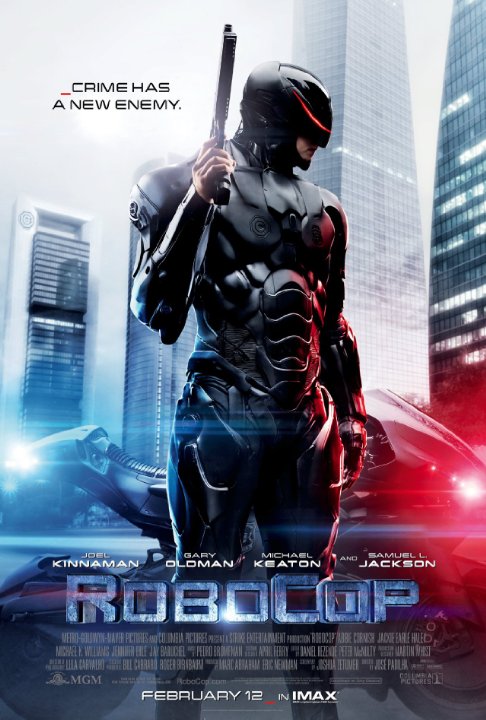
Robocop 2014


robocopposter

Boom.

So, I did, in fact, see Robocop 2014. It was suggested that some of our readers might have heard about this one. I will tell you right now that my own take on the film is… largely unbiased. The original Robocop never entrenched itself in my lexicon as an ‘essential’ film. I generally considered it to be a fun film, very watchable, fairly standard 80’s action fare… and, really, with the fingerprints of noted Dutch filmmaker Paul Verhoeven all over it. I definitely remember it fondly, but I’m by no means a Robocop purist. The puzzling direction the series took after the original (Robocop 2, in particular, strikes me as one of the worst films I can recall seeing, and 3 is somehow less memorable. I’m sure that does not mean good things). One thing probably anyone would tell you about the original film is that it was violent. Controversially so. Or perhaps that it is infested with foul language? To the point where the f-bombs seem to become their own point. Well, to start with, 2014’s Robocop went for the path of least creativity, and stuck itself in a PG-13 body that is actually pretty teen-friendly. More on that in a minute. But between the absence of Verhoeven’s style, the infusion of 201X’s powerful visual effects, the over the top violence and language, and the absence of any 80s camp, this film bears very little resemblance to the original.

If you wish to appreciate this film at all, you will be forced to do so on its own merits. Looking at it through the prism of the original film will probably not satisfy you, though I may be mistaken. I suppose it depends on how much you loved the first iteration.

2014’s incarnation of Robocop is directed by José Padilha, directing his first English language film. He is best known for his work on the Elite Squad films. His background is in action, and his style is not one that we’ve been down that road before with. I suspect that if this film had been helmed by a Michael Bay, it might have been disastrous. Instead, the result is surprisingly gritty at times, especially during an early shootout between Detroit police detectives and a hit squad sent to eliminate them to cut off their investigation of a local gunrunner. Obviously, the film has plenty of antiseptically clean sets, and the sophisticated visual effects involved give us lots of clean lines and gleaming, metallic surfaces… so it was, in a way, grounding to see some sequences in an experienced hand. Sadly, this style does not hold true through the entire picture, which features some predictably infuriating shaky cam work where our ability to understand and process the action is limited by the way in which it is shot. Some would probably argue this is realistic, and that if I were actually in a gun battle, I could only understand a tiny part of it even afterward… but as an action film viewer, it turns me off like few other things do.

The ED-209 has certainly never looked better.

The ED-209 has certainly never looked better.

The plot is a significant variation on the 1987 original, though it does have some pieces of the framework still intact. The year is 2028, and the United States is now projecting its power worldwide through the use of formidable robotic drones provided by Omnicorp (a division, we learn, of the original film’s OCP. Unlike the original film, in which the ED-209 is clearly the shoddy work of a corporation trying to make money by sending to the lowest bidder, it seems that the ED-209 is an extremely efficient and deadly enforcer and peacekeeper. Its primary flaw, that it cannot reason like a human, and does not know right from wrong, is central to the questions that the film posits. To the extent that it posits anything, that is. As with the original 1987 film, 2014 is introduced to us by a nationwide news broadcast… except, this time, instead of a simple evening news program, we’re treated to an extremely high production news opinion show (something like The O’Reilly Factor, perhaps) starring Pat Novak, a highly opinionated right-wing security lobbyist (a well cast Samuel L. Jackson delivers an energetic performance). Pat Novak wants to know why these drones aren’t keeping America’s streets safe, too.

The answer, of course, is that Americans want their protectors to have a soul. The film does make it clear, incidentally, that the United States has not asked other parts of the world if they’d prefer this same consideration… and this is where the film’s satire lies… in pumping up world peacekeeper thinking until it explodes.

With the realization that public opinion has to change or Omnicorp will never be able to deploy its products to the American market, the company’s executives, Marketing Director Tom Pope (Jay Baruchel) and, Legal Department Chair Liz Kline (Jennifer Ehle) and the CEO Raymond Sellers (Michael Keaton) decide to try and create exactly what their market wants: a man inside of a machine. Using the revolutionary cybernetics developed by Dr. Dennett Norton (Gary Oldman, in a very wistful, emotional role) they scour the country’s cops debilitated in the line of duty in search of the perfect candidate – an emotionally balanced cop with the reason and the desire to get back in the game.

Enter Alex Murphy (Joel Kinaman, from AMC’s “The Killing”), grievously injured, with wife Clara (Abbie Cornish) and son David (John Paul Ruttan) desperate not to let him go. Using Dr. Norton’s technology, Omnicorp rebuilds him into the ultimate crime fighting machine… where things go from there is, frankly, fairly predictable. Throughout the narrative, Pat Novak’s show continues to break in, stitching the narrative exposition together with both more of Novak’s bluster and with interviews with other major players like CEO Sellers and the Senator who is leading the opposition to Omnicorp’s technology, Hubert Dreyfuss (Zach Grenier). You will no doubt anticipate the conclusion of the film well before it reaches those final moments, and so aside from a couple of exceptionally well crafted sequences, this film does not exactly break new ground.

What does stand out, and I apologize for stuffing those last couple paragraphs full of as many names as possible (and I still missed plenty!), is the casting, and the acting, that are on display in this film. Everyone involved stands more or less head and shoulders above what’s being asked of them. I particularly enjoyed Michael Keaton in the role of the film’s villainous CEO, who gives a very reserved performance. There is very little evil mania from Keaton, who instead comes off exactly as coldly off-putting as I would expect from a sociopath in his position, going from decision to decision with an eye for the company’s financial future. The more scenery chewing villainy is left up to Jackie Earl Haley as Omnicorp’s in-house military QC, Rick Mattox, and from some villains scattered about the mean streets of 2028’s Detroit.

The original Robocop had a kind of wry humour to it that is entirely absent this reproduction. Curiously, the film is also almost entirely without meaningful visual violence, and almost totally absent of profanity (the traditional single use of ‘fuck’ for a PG-13 film is, in fact, bleeped, since it’s delivered by Pat Novak on his live TV show), and instead feels more like playing a modern Call of Duty or Battlefield video game in its depiction of Robocop battling his foes. This film coasts by absolutely safely at a PG-13 level (seriously, this is not the film you need to be worried about protecting your kids from).

While elements of the film are certainly a visual feast, these sumptuous visuals are actually mostly confined to the laboratory in which Robocop is built and maintained, and in the sophisticated battle armor that the titular supercop wears. The sequences on the ground, so to speak, feel a little more real. I suppose it’s the same faint sense of grittiness that the director’s hand gives this movie, which only rarely becomes a victim of its own visual effects. This is largely a good thing, as I think we’ve all developed a little bit of special effects fatigue over several heaping courses of Michael Bay’s “Transformers”, “Star Wars” prequel films, and other overblown projects. This film struck a fair balance, I felt, between taking advantage of the visual effects available, and trying to substitute them for any kind of substance. There is something going on at the core of this film. Unfortunately, I ultimately felt that it was not enough to satisfy, but plenty to entertain. Your own mileage will, of course, vary.

For those purists out there who are decrying the necessity of this remake (there was none) and the wisdom of doing so anyway… in perfect honesty, this is a film that simply wouldn’t have been made this way in 1987. In saying that, please, let’s admit that the 1987 film would also never have been made that way today. People’s outlook has changed. They look for, fear, and hope for, different things out of the world. Robocop 2014 is by no means a perfect – or even great – film… but it is a much better film for the post 9/11 world than the original one is. It fits its era. Between that, and a slew of excellent performances, you may just find this film to be above your expectations. It certainly surpassed my own.

Lisa Marie Reviews The Oscar Nominees: Battleground (dir by William Wellman)


I love February.

Why?  Well, first off, we all know that February is the most romantic month of the year.  February is Valentine’s Day, romantic movies, flowers, lingerie, and chocolate.  February is also the month when, in a lead up to the Oscars, TCM devotes a good deal of its programming to showing Oscar nominees of the past.

As I’ve mentioned in the past, one of my dreams is to watch and review every single film that has ever been nominated for best picture. Now, realistically, I’ll never be able to accomplish this goal because the 1929 Best Picture nominee The Patriot is currently a lost film.  But, even if it does mean that I’ll only be able to see 510 out of the 511 nominated films, it’s still a dream that I’m pursuing and, with the help of TCM and the month of February, it’s a dream that’ll come true.

Take, for instance, Battleground.  This 1949 Best Picture nominee (it lost All The King’s Men) recently aired on TCM.  I’m not exactly a fan of war films but, since it was a best picture nominee, I still made sure to DVR and watch it.

Set during the final days of World War II, Battleground follows one platoon of soldiers as they fight and attempt to survive the Battle of the Bulge.  The platoon is made up of the type of characters that we usually expect to find in a WWII film but, fortunately, they’re played by an ensemble of likable actors who all bring their familiar characters to life.  There’s Jim Layton (Marshall Thompson), the newest member of the platoon who nobody wants to run the risk of getting close to.  There’s Holley (Van Johnson), the cheerful soldier who is unexpectedly thrust into a position of leadership that he might not be right for.  Roderiques (Ricardo Montalban) is from Los Angeles and is amazed by the sight of snow.  “Pops” Stazak (George Murphy) is the type of older soldier who you would totally expect to be nicknamed “Pops.”  Bettis (Richard Jaeckel) is scared of combat.  Kippton (Douglas Fowley) spends nearly the entire film looking for his lost teeth.  And finally, of course, there’s the hard-boiled but warm-hearted Sgt. Kinnie (James Whitmore).

In some ways, Battleground is a very conventional film and it’s easy to wonder how it ended up getting nominated for best film of the year.  (Among the eligible films that were not nominated: The Bicycle Thief, Champion, The Fountainhead,  On The Town, Sands of Iwo Jima, She Wore A Yellow Ribbon, They Live By Night, and White Heat.)  However, the film’s nomination makes a bit more sense when you consider that it was released just four years after the end of World War II.  It was a film that appealed both to the veterans who were able to relate to the film’s story and to the patriotic spirit of a country that had just defeated the greatest evil of the 20th Century.

Battleground did not exactly make me a fan of war movies but it’s still a well-made and effective film. As opposed to a lot of other war films, Battleground never makes war look like fun.  For the most part, the emphasis is less on strategy and combat and more on the soldiers who are simply trying to survive from day-to-day.  The end result is a film that serves as a moving tribute to the soldiers who fought in World War II.

Film Review: Raze (dir by Josh C. Waller)


I have always had trouble working in a group with other women.

I wish that wasn’t true because it really is such a cliché, this idea that a group of women can’t get along for more than a few days or that we’re all always in some sort of passive aggressive competition with each other.  And I still don’t think that’s true for all women but it’s certainly been true for me.  For whatever reason, I seem to bring out the cattiness in certain people and, being the Irish lass that I am, it’s next to impossible for me to truly let anything go.  I remember every smirk, every eye roll, and every piece of innuendo that I’ve ever suspected was whispered behind my back.  It probably doesn’t help that I tend to be ultra-competitive about — well, about everything.  That’s why I’m sometimes jealous of the way that men can apparently compete each other without taking any of it personally or even that seriously.  Men can compete and remain friends with no hard feelings and I have to admit that I’ve never quite understood how they manage to do that.  Again, I wish that wasn’t true because it really does play into the stereotypes and clichés that men have used to keep us “in our place” for centuries.

I found myself thinking a lot about my competitive nature as I watched Raze, the debut film of director Josh C. Waller.

In Raze, a centuries-old secret society has kidnapped 50 women and imprisoned them in an underground prison.  As the leaders of the organization — the cadaverous Joseph (Doug Jones) and the deceptively maternal Elizabeth (Sherilyn Fenn) — explain, the women will spend the next two weeks fighting each other.  Each fight will be to the death until only one is left alive.  If the women refuse to fight, their loves ones will be murdered.  If one of the women loses her fight, her loves ones will be murdered.  The only way for the women to save their loves ones is to be the lone survivor.

Since the movie opens with the tournament in progress, we only get to meet a handful of the women who are literally fighting for their lives.  Jamie (Rachel Nichols) was kidnapped from a bar after she made the mistake of telling a handsome stranger that she wanted to be a kickboxer.  Teresa (Tracie Thomas) is fighting to save her husband’s life.  Cody (Bailey Anne Borders) spends all of her time in her cell crying but still turns out to be a surprisingly efficient killer.  Pheobe (Rachel Marshall) is a sociopath who, alone of all the women, is actually enjoying the tournament.  And then there’s Sabrina (Zoe Bell), a former soldier and POW who is fighting to protect the daughter that she’s never met.

Probably the first thing that I should tell you about Raze is that it’s a violent film.  It’s not just that there’s a lot of fights in the film.  It’s the fact that those fights are so well-choreographed and the film’s cast so throws themselves into both their characters and the action on-screen that the violence feels real in a way that most film violence does not.  I don’t think I’ve ever winced as much and as often as I did while watching the fights in Raze because I found myself feeling each blow and each kick.  There are a lot of fights in Raze but they never feel repetitive because the viewers has an emotional stake in each and every one of them.

Thematically, Raze makes an attempt to turn the tournament into a metaphor for the battles that women have to fight every single day.  Elizabeth and Joseph both assure the women that the tournament’s champion will come out of the ordeal as a stronger and more independent woman.  It’s an idea that the film doesn’t explore as thoroughly as I would have liked but it’s still an interesting concept that made Raze a bit more thought-provoking than the usual genre piece.

Personally, I like films where women get to kick ass.  That’s why I’ve been always been willing to watch the Underworld and Resident Evil films, despite the fact that most of them kinda sorta suck.  That said, I prefer films where women get to beat up men and zombies to films where women beat each other to death.  On the surface, Raze has a lot in common the “women in prison” films that Roger Corman produced back in the 70s.  The main difference is that, in the Corman films, characters like Sabrina and Cody would never have consented to killing another woman.  Instead, they would have teamed up with Pam Grier and taken down the Man.

Raze is a lot better than you might expect but it still definitely could have used Pam Grier.

44 Days of Paranoia #42: The Manchurian Candidate (dir by Jonathan Demme)


For our next entry in the 44 Days of Paranoia, we take a look at the 2004 remake of The Manchurian Candidate.  (You can read my review of the original by clicking on this sentence.)

During the first Gulf War, when a platoon of soldiers is attacked by Iraqi forces, their lives are saved by Sgt. Raymond Shaw (Liev Schrieber).  Raymond receives the congressional medal of honor and is eventually elected to the U.S. House of Representatives.  In many ways, Shaw is continuing the family business.  Not only was his father a Senator but so is his powerful and calculating mother (Meryl Streep).  As the film opens, Raymond Shaw has just been nominated for the vice presidency.  A strife-torn America looks to Shaw to save the country.  After all, he’s a war hero.

Or is he?

Major Ben Marco (Denzel Washington), who was a member of Shaw’s platoon, has spent the last few years having nightmares in which he and the other members of the platoon — including Shaw — were captured, brainwashed, and had implants inserted into their bodies.  When Marco discovers that the other members of his platoon have been having the exact same nightmare, he starts to investigate on his own.

When I first started watching this version of The Manchurian Candidate, my initial response was to go, “Bleh!  Remake!”  There’s a reason why most film bloggers automatically despise any and all remakes.  Usually, they add little to the original version and they rarely improve over what was previously there.  Even worse, remakes often times seem to be directed by some of the worst hacks in Hollywood.  What’s more insulting — to have your movie remade or to have it remade by Brett Ratner?

However, Jonathan Demme is not your typical Hollywood hack and that became quickly obvious as I watched his remake of The Manchurian Candidate.  Both Demme’s direction and the screenplay by Daniel Pine and Dean Georgaris show a lot of respect for the original while also providing a few surprises of their own.  Demme creates a convincing portrait of a society that has been consumed by secrecy and is now running the risk of collapsing under the weight of conspiracy.

Unfortunately, the remake doesn’t quite capture the satiric bite of the original.  One of the things that made the original Manchurian Candidate so memorable was the fact that both sides of the ideological divide were ultimately portrayed as being empty, shallow, and ultimately destructive.  The ultimate message was that neither the left nor the right should be trusted.  The remake is a lot more specific about who the villains are and what they believe in and, as a result, its attempts at social and political commentary are a lot more predictable.  The original Manchurian Candidate could both entertain you and make you think.  The remake is very entertaining but never quite thought-provoking.

While it can’t hope to improve on the original, the remake of The Manchurian Candidate is a well-made and compelling action film that features a trio of great performances from Denzel Washington, Liev Schrieber, and especially Meryl Streep.  As her performance here shows, Meryl really should be playing more villains because her performance here is not only impressive but also fun to watch.

Other Entries In The 44 Days of Paranoia 

  1. Clonus
  2. Executive Action
  3. Winter Kills
  4. Interview With The Assassin
  5. The Trial of Lee Harvey Oswald
  6. JFK
  7. Beyond The Doors
  8. Three Days of the Condor
  9. They Saved Hitler’s Brain
  10. The Intruder
  11. Police, Adjective
  12. Burn After Reading
  13. Quiz Show
  14. Flying Blind
  15. God Told Me To
  16. Wag the Dog
  17. Cheaters
  18. Scream and Scream Again
  19. Capricorn One
  20. Seven Days In May
  21. Broken City
  22. Suddenly
  23. Pickup on South Street
  24. The Informer
  25. Chinatown
  26. Compliance
  27. The Lives of Others
  28. The Departed
  29. A Face In The Crowd
  30. Nixon
  31. The Hunger Games: Catching Fire
  32. The Purge
  33. The Stepford Wives
  34. Saboteur
  35. A Dark Truth
  36. The Fugitive
  37. The Day of Jackal
  38. Z
  39. The Fury
  40. The Manchurian Candidate (1962)
  41. Shattered Glass

A Death-Defying Quickie With Lisa Marie: Rollercoaster (dir by James Goldstone)


Recently, despite my longstanding fear of heights and my refusal to ever ride one in real life, I watched a film called Rollercoaster.  First released in 1977, Rollercoaster recently made its debut on TCM.  I was hesitant about watching it but then Robert Osborne assured me that it was an entertaining film and, seriously, who can say no to Robert Osborne?

An unnamed bomber (Timothy Bottoms) is going from amusement park to amusement park and blowing up roller coasters.  He wants money and, even more importantly, he wants the money to be delivered to him by safety inspector Harry Caulder (George Segal).  Will the FBI back off long enough for Harry to deal with the bomber?  Will the bomber ever smile?  Finally, will Harry be able to save the day while, at the same time, trying to quit smoking and bond with his daughter?

Roller Coaster is about 30 minutes too long and it’s never quite as exciting as it should be.  My mind kept wandering during the climax, which is not a good thing when the film is supposed to be a race against time.  However, at the same time, when taken on its own dated terms, Roller Coaster is a lot of fun.  Even if director James Goldstone (who also directed the far more surreal Brother John) struggles a bit with keeping the action moving at a steady pace, he still directs with a good eye for detail and gets good performances out of the majority of the film’s cast.

Since I best know George Segal for playing cantankerous father figures on about a thousand different sitcoms, it took me a few minutes to get used to the idea that he was the main character here.  While Segal does have several funny lines in Rollercoaster, he is also totally convincing and likable as the film’s hero.  Timothy Bottoms is equally convincing as the unnamed bomber.  The fact that we learn little about the bomber’s motivations or background just serve to make Bottoms’s cold performance all the more chilling.

As for the supporting cast, Henry Fonda is the biggest distraction, snarling his way through his role as Segal’s jerk of a boss.  Oddly enough, Fonda showed up in a lot of disaster films in the 70s, usually playing authority figures and usually only appearing in two or three scenes.  Whenever Henry Fonda shows up in a film like this, overacting and looking somewhat humiliated, it’s best just to close your eyes and think of 12 Angry Men and then realize that even great actors sometimes just needed a paycheck.  Richard Widmark is far more convincing, playing the stuffy FBI agent who doesn’t have much use for George Segal.  Finally, for those of you who enjoy spotting future Oscar nominees in unlikely roles, 13 year-old Helen Hunt makes her film debut here as Segal’s daughter, who just wants to ride the rollercoaster one time.

Ultimately, the best recommendation that I can give to Rollercoaster is to say that it’s a quintessentially 70s films and hence, it’s a piece of history.  Not only is the film full of 70s fashion, 70s hair, and 70s stereotypes (just check out the long-haired teenagers joking about getting high while unknowingly sitting on top of a bomb) but the film also features a performance from a band called Sparks that is so 70s that the cast of Dazed and Confused might as well have been watching them in the audience and going, “Alright, alright, alright…”

(I have to admit that I had never heard of Sparks before I saw this film.  I looked them up on Wikipedia and I discovered that not only is the band still performing but that the lead singer claims that appearing in Rollercoaster was the band’s biggest regret.  Personally, I think he’s being too hard on both the band and the film.  Sure, they seem painfully out-of-place but I dare anyone to get the borderline annoying sound of “Big Boy” out of their head.)

For those of us who were born a few decades too late to experience it firsthand, Rollercoaster is our chance to spend two hours living in the 70s.

A Psychedelic Quickie With Lisa Marie: The Big Cube (dir by Tito Davison)


I recently discovered that I have about 66 movies recorded on my DVR.  A few of these, like Bend it Like Beckham and Thirteen, are films that I always make it a point to watch whenever they show up on television.  But the majority of them are movies that I just happened to spot while going through the guide and I thought they looked intriguing.  These are movies that I have not been in any hurry to watch but, at the same time, I’m still glad to know that they’re waiting for me whenever I do feel like watching them.

Well, that time has come.  In the month of February, TCM is going to be showing a lot of old Oscar nominees which means that I need to make some space on the DVR.  For the past week, I’ve been going through all of my recorded films and watching them.  While many of them turned out to be rather forgettable, I’ve also come across quite a few that, regardless of quality, made me happy I had taken the time to set them to be recorded.

Case in point: The Big Cube.

What makes The Big Cube such a memorable film?

Four words: Lana.  Turner.  On.  Acid.

The Big Cube was first released in 1969, a fact that’s obvious during every minute of the film.  Lana Turner plays Adriana Roman, a famous stage actress who, following the final performance of a hilariously (and unintentionally) bad play, announces that she is retiring from the theatre so that she might marry the fabulously wealthy Charles Winthrop (Dan O’Herlihy).

Charles has a daughter, a spoiled brat named — wait for it — Lisa (Karin Mossberg).  Interestingly enough, despite the fact that Charles speaks with a pronounced Irish accent, Lisa speaks with a thick Swedish accent that makes the majority of her dialogue almost impossible to understand.  (Adding to the film’s general strangeness is that all of Mossberg’s dialogue is dubbed, which makes you wonder why the film’s producers didn’t, at the very least, hire a voice-over actress who could have at least sounded somewhat believable as Charles’s daughter.)  Lisa is resentful of Adriana, viewing her as competition for both her father’s affection and his money.

Since this movie was made in 1969, Lisa also spends all of her time hanging out with hippies who, in this film, are presented as being the equivalent of pure evil.  They hang out at a “hip” nightclub known as Le Dream where they spend their time secretly slipping sugar cubes laced with LSD into the drinks of strangers.  Or, as one random hippy puts it, “I’m going to cube that mother!”

The source of all of this LSD is Johnny (George Chakiris), a medical student who ends up dating Lisa and conspiring to drive her stepmother insane.  Each night, they secretly slip Adriana LSD, which leads to Lana Turner bugging out her eyes while multi-colored spiral graphs appear on the walls around her.  (And again, we’re reminded that this film was made in 1969, when all you needed to do to let the audience know someone was having a bad trip was to make excessive use of a zoom lens and color filters.)

Eventually, all of this leads to Adriana being struck with amnesia.  How can her mind be fixed?  Could the solution possibly be for Adriana’s playwright friend (Richard Egan) to write a play that reveals the conspiracy against Adriana and then to cast Adriana in the lead role?  And is it possible that along with restoring Adriana’s mind, this play will also allow her to return to the stage and discover that Egan is secretly in love with her?

The Big Cube deserves to be seen just because it’s such a weird and over-the-top film but, beyond that, it’s fascinating as a piece of history.  In 1969, mainstream Hollywood filmmakers were still struggling to figure out how to deal with the counterculture and, even more importantly, how to continue to appeal to young filmgoers who no longer had much in common with the establishment.  The end result were a collection of films that either tried desperately and earnestly to prove that, despite all appearances to contrary, the Hollywood studios really did understand and sympathize with the disaffected youth of America or films like The Big Cube in which old school movie stars like Lana Turner were menaced by long-haired men and amoral girl in miniskirts.

Perhaps not surprisingly, the evil hippy films are a lot more fun than the good hippy films and, as far as evil hippy films are concerned, The Big Cube is one of the more entertaining, even if most of the film’s pleasures are unintentional.  Not only do you get to watch some of the most evil hippies in history but you also get the once-in-a-lifetime experience of seeing Lana Turner on acid!

Seriously, what better way is there to spend 90 minutes?

(Even better, by watching The Big Cube, I could finally delete it from DVR and make some room for the next episode of Downton Abbey….)