With the release of the new American reboot/remake/sequel of the classic 1954 Godzilla by Ishirō Honda, I thought it was high time I shared one of my guiltiest of all film pleasures growing up.
Godzilla and everything kaiju I ate up as a wee lad growing up during the 80’s. There really wasn’t anything on Saturday morning and afternoon tv other than reruns of badly dubbed Japanese monsters flicks and anime. One such film was Ishirō Honda’s very own King Kong vs. Godzilla. Yes, you read that correctly. The King of All Monsters fought the Eight Wonder of the World to decide once and for all who was the greatest giant monster of all-time.
The film itself wasn’t that great when I look back on it. Hell, even I had a sort of understanding even as an 8-year old kid that King Kong vs. Godzilla was a pretty bad film, but I still had a blast watching it. The film lacked in coherent storyline and important themes of man vs. nature and the psychological impact of the two atomic bombings of the US on Japan to end World War II wasn’t at all evident in this monster mash-up.
What the film had was King Kong fighting Godzilla. It was like watching two of the greatest icons of youths of my generation duking it out for our pleasure. It didn’t need to have a story or worry about whether it’s depiction of the natives on King Kong’s island was even remotely racist (it was so racist). All it needed to do was show everyone the very fight they’ve been waiting for. Fans of both monster wouldn’t have to wait forever to see the fight happen. This wasn’t going to be a dream fight never to happen like Mayweather vs. Pacquiao.
So, while King Kong vs. Godzilla was never one of the good entries in the Godzilla filmography (I think it was probably the worst) it more than made up for being one of the most campiest and entertaining entries in the Big Guy’s decades long history.
If there ever was a film from my youth that needs to be remade it would be King Kong vs. Godzilla and only Guillermo Del Toro should be chosen to direct it.
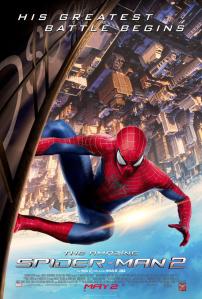
One would think The Amazing Spider-Man 2 would be a hit right out of the ballpark. You have a follow up to the highly successful film & one of Marvel’s flagship characters and tons of back story the movie can work with. It’s filmed right in New York – I saw part of the setup at Times Square myself. Perhaps I caught the film at a bad time, or my mindset wasn’t proper, but I had a tough time feeling anything for the film. Perhaps because this is a sequel to a film that rebooted another movie that was only a decade old. Maybe the time has come for Disney/Marvel to knock on Sony’s door and tell them they want their baby back. My only regret is that I didn’t get this review out soon enough to save people from spending money on this. I should have done more.
With Great Power really does come Great Responsibility.
The film picks up some time after the end of the first film and does manage to handle a few story related elements well. Writers Alex Kurtzman and Roberto Orci (Transformers, Star Trek), along with two other writers created a script that connected to the first film. The audience is given some closure when it comes to Peter Parker’s parents and the secrets they were guarding. For long time comic fans, they’ll get a Spider-Man that cracks tons of jokes while taking down the bad guys.
Okay, let’s focus on the good before the bad.
It’s Andrew Garfield and Emma Stone’s chemistry that keep the moments between Peter Parker and Gwen Stacy real. You can tell there’s a good connection between them in any scene they share. You might as well be watching a reality series based on their relationship, really. Additionally, Garfield continues to give Spider-Man all the razor sharp wit he deserves, feeling very much like the comics. Credit also goes out to Sally Field as Aunt May. For a character that is usually in the background, her scenes were the memorable ones – the ones that I’d start a conversation with “Hey, you remember that part when…” Even Dane DeHaan’s Harry Osborne was pretty good for the most part, I suppose.
I can’t complain about the way it was shot or the effects that were used. Spider-Man’s swinging is pretty on point, and the in air acrobatics are as cool as they’ve ever were. Some scenes tend to move a little slow – particularly the Gwen / Peter ones – but it helps to establish where they’re going. It’s more or less a necessary evil.
And that’s about it. I don’t really have much else to say on the good elements to this movie. It’s a shame really, because making movies aren’t easy with restrained budgets and producers breathing down your neck to get the product in the theatre.
Now the Bad:
Let’s start with Electro. While I thought the Electro powers were great and all, I had a problem with the reason behind his existence. It’s almost a page taken out of Batman Forever – literally, that was the first movie that came to mind on watching Oscorp technician Max Dillion’s (Jamie Foxx) Spider-Man fandom blossom into jealousy and then hatred. Foxx does what he can with it, and I’ll admit that once he has that Electro-suit on, it’s kind of cool. The argument could be made that because the character meets his hero and is then shunned by him, this causes him to become a villain – as evidenced by the schizophrenia-like voices that accompany Electro’s theme (“He lied to me, They hate me, they’re using me, He’s dead to me.”) during his fights. My reasoning here is that if the character was a fan of Spider-Man, having witnessed him stop all these crimes, wouldn’t it make sense for Spider-Man to try to stop you if you’re inadvertently disturbing the peace? It’s not even like Dillon had a beef with any of the Oscorp workers who may have mistreated him here. I had a serious disconnect with Electro as a character with justifiable motives for his actions. Granted, this is coming from someone who isn’t as familiar with Electro as many who’ve read the comics. It’s altogether possible that he is working within the comic’s defined role, and if that’s the case, many may find it refreshing. It just seemed a little off to me.
DeHaan has similar issues. As Harry Osborn, he’s great. As the Goblin (you’ve been looking at the posters, it’s not exactly a spoiler), I found myself feeling like the only reason he was there was to push a story arc. Imagine someone watching a fight and then suddenly running in and saying “Aha, now you face me!” It was just about the same setup here. The collective theme of the movie seems to be..”You know what? Let’s hate Spider-Man, because we can. We’ll figure out a detailed, legitimate reason later.”
On Paul Giamatti, I would dare to call his appearance a cameo, but it feels tacked on. I thought it would we better to never mention him at all marketing wise and then surprise audiences with where he goes. That’s all I really have to say about him in this.
One other thing was a standout – the music. The music, though a great change from Horner’s Rocketeer sounding score, almost overpowers the film. I was a little shocked to find out that Hans Zimmer worked on it (Along with friends Johnny Marr and Pharrell Williams), but some of the tracks felt phoned in. If you asked me who did the music before showing me the credits, I would have sworn it was maybe Henry Jackman, or maybe Tyler Bates. That isn’t to say that either of them are bad composers, by the way.
Let me put it this way: You could have switched this score out with the one from Despicable Me and I don’t think anyone would have known the difference. I almost put my hands in my face on hearing “The Itsy Bitsy Spider” in the middle of a track. Zimmer might as well have just went with his “Point of No Return” score here.
Overall, The Amazing Spider-Man 2 was so-so for me. I don’t see myself trying to ever see it again, but depending on what you’re looking for, you may get a different experience from it. I’m hoping that Sony just shelves the Webhead for a while.
“Hell, I’m just trying to keep this thing interesting. You can’t write me off like that. You’re just a voice, pal! You don’t know a damn thing about racing!” — Sweet JP
Anime has long distinguished itself from Western animation through its embrace of hyperkinetic imagery—an intensity of motion and visual energy that often prioritizes sensation over realism. While Western animation traditionally leans toward fluidity and physical believability, anime frequently pushes beyond those constraints, opting instead for exaggerated speed, explosive movement, and stylized impact. This difference isn’t just aesthetic; it reflects a broader philosophical divide in how motion itself is perceived. In anime, movement isn’t always about replicating reality—it’s about amplifying it.
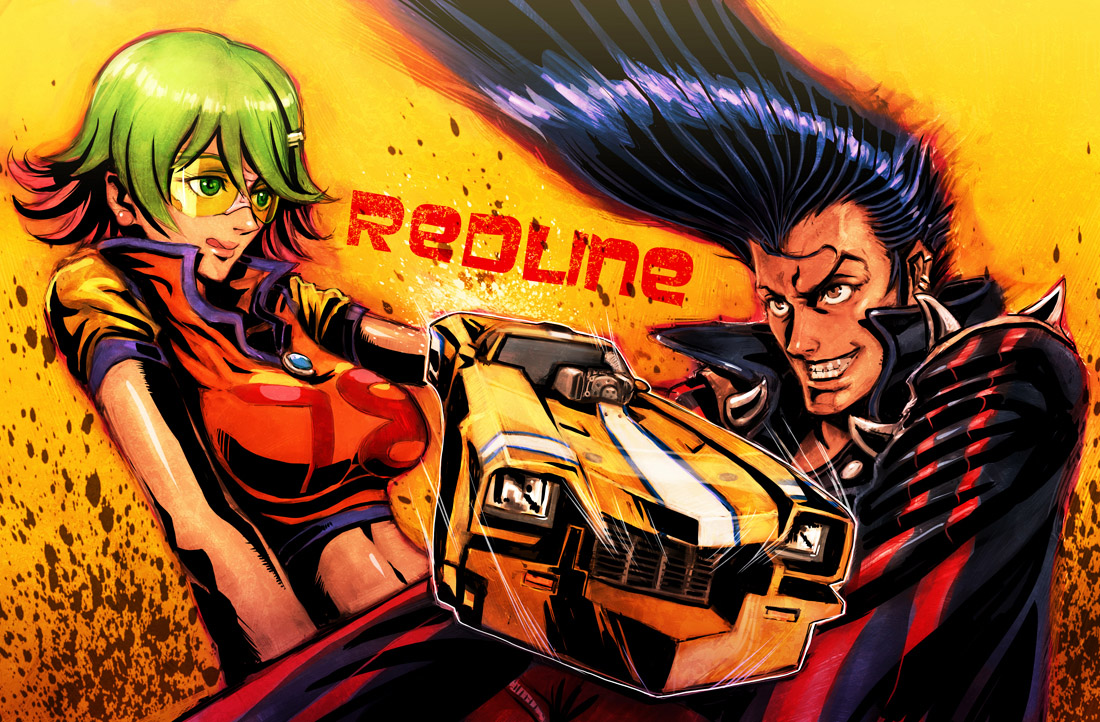
Few films embody this ethos as completely as Madhouse’s 2009 OVA Redline, a project that takes anime’s penchant for excess and turns it into a full-blown artistic manifesto. Directed by Takeshi Koike, Redline is less a conventional narrative film and more a sustained audiovisual adrenaline rush—a sci-fi racing spectacle that fuses breakneck pacing with meticulous hand-drawn craftsmanship. The production history of Redline is almost as legendary as the film itself: Koike and his team spent seven years bringing the project to life, pouring millions of dollars and an extraordinary amount of labor into its creation, with over 100,000 hand-drawn frames used in the final product. The result is a visual texture that feels both raw and impossibly refined—so detailed and fluid at times that it borders on looking computer-generated, despite being entirely handcrafted.
Koike’s influences are unmistakable throughout. There’s a clear lineage connecting Redline to the work of his mentor, Yoshiaki Kawajiri, particularly in the sharp character designs and kinetic action choreography reminiscent of Ninja Scroll and Vampire Hunter D. At the same time, the film borrows heavily from Western graphic aesthetics, most notably the thick linework and heavy shadowing associated with Frank Miller. This fusion creates a visual identity that feels globally informed yet uniquely its own—an anime that doesn’t just borrow from other traditions but aggressively remixes them.
Narratively, Redline is deceptively simple, and for some viewers, that simplicity borders on a flaw. The film centers on a futuristic intergalactic race—one that deliberately rejects advanced hover technology in favor of visceral, ground-based machines, giving the world a gritty, almost rebellious edge. At its core, the story follows Sweet JP, a daredevil racer with a towering pompadour and retro greaser aesthetic, as he competes in the titular race—the most dangerous and prestigious competition in the galaxy. His journey is framed through familiar tropes: the underdog striving for victory, the thrill of competition, and a romantic subplot involving his rival Sonoshee, who is both a love interest and a formidable racer in her own right. JP and Sonoshee are given just enough backstory and personality to be engaging, but they never evolve beyond archetypes, and the film never pretends otherwise.
And yet, this simplicity isn’t necessarily a weakness—it’s a deliberate trade-off. Redline understands exactly where its strengths lie, investing nearly all its creative energy into delivering a sensory experience rather than a deeply layered narrative. The characters function less as psychological studies and more as conduits for momentum, existing primarily to carry the viewer from one explosive set piece to the next. What truly sets Redline apart is the sheer density of its animation: every frame feels alive with motion, detail, and intent. Backgrounds pulse with activity, vehicles tear through space with exaggerated force, and the action sequences are so relentless and visually packed that they almost demand multiple viewings, as it’s nearly impossible to absorb everything in a single pass.
This overwhelming kinetic energy is where Redline transcends its narrative limitations. It creates a kind of visual immersion that few animated films—Western or otherwise—have managed to achieve. Watching it feels less like observing a story and more like being strapped into the driver’s seat of a machine hurtling toward collapse. Some critics have compared Redline to the Fast & Furious franchise, particularly its later, more exaggerated entries. On the surface, the comparison makes sense: both celebrate speed, spectacle, and a kind of reckless bravado encapsulated by the mantra “ride or die.” But the relationship feels less like equivalence and more like inversion—if anything, Fast & Furious comes across as a live-action attempt to capture the kind of unrestrained energy that Redline achieves effortlessly through animation. Where Fast & Furious is still tethered, however loosely, to physics, Redline operates in a space where those limits don’t exist and doesn’t need to justify its excess—it revels in it.
Despite its relatively modest reputation compared to more narratively complex anime films, Redline has earned a cult status among fans who appreciate animation as an art form. It prioritizes craft, motion, and sensory impact above all else, achieving something rare: a pure expression of animation’s potential. That’s why Redline remains such an essential watch. It may not offer the emotional depth of a Studio Ghibli film or the intricate plotting of a Satoshi Kon work, but it delivers something equally valuable—a reminder of what animation can do when pushed to its absolute limits.
For the best experience, Redline deserves to be seen on the largest, highest-quality screen possible. Its dense visuals and explosive color palette benefit immensely from high-resolution displays, particularly modern 4K screens that can fully capture the detail of its hand-drawn artistry. While it’s accessible through streaming platforms like YouTube, watching it on a premium setup transforms it from a great film into a full sensory event. In the end, Redline isn’t just a movie—it’s a showcase, a flex, and a love letter to animation itself, proving that sometimes style isn’t just substance—it is the substance.
Is it possible that the iconic American independent filmmaker Jim Jarmusch is a fan of the late and beloved French film director Jean Rollin?
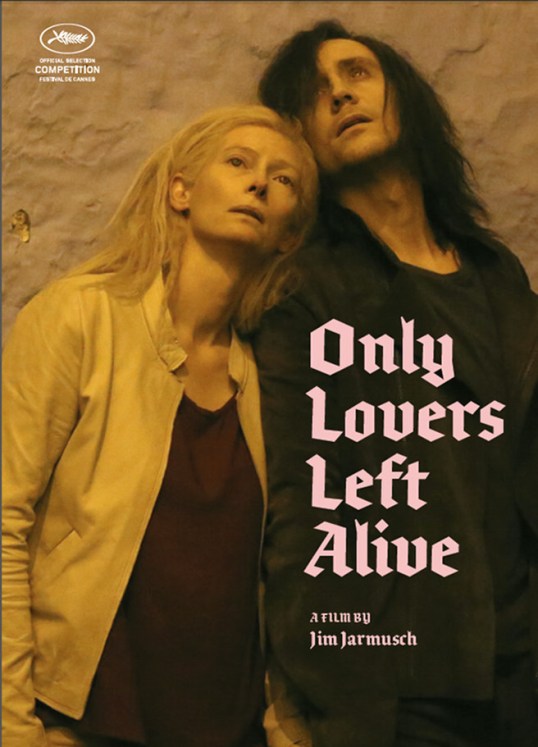
I ask this question because Jarmusch’s latest film, Only Lovers Left Alive, is one of the most Rollinesque films to have ever been made by a director other than Jean Rollin.
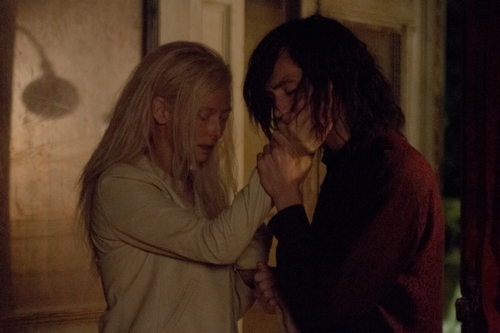
The most obvious similarity between Jarmusch’s film and much of Rollin’s work is that they both deal with vampires. Rollin was the visual poet of vampire cinema and, if nothing else, Only Lovers Left Alive is a very poetic film. The film tells the story of three vampires — ennui-stricken Adam (Tom Hiddleston), Adam’s wife Eve (Tilda Swinton), and Eve’s hedonist sister Ava (Mia Wasikowska), all of whom would be perfectly at home in any of Rollin’s vampire films.
But, to be honest, the horror genre has reached the point where ennui-stricken and decadent vampires are hardly unique. What distinguished both Only Lovers Left Alive and the best films of Jean Rollin is the way that they both use and defy the conventions of the vampire genre to explore issues of sexuality, religion, politics, and artistic expression. Much like Rollin, Jarmusch understands what the audience expects from a vampire film and he makes his larger points by manipulating, defying, and occasionally even confirming those expectations.
In other words, Only Lovers Left Alive is no Twilight and we’re all better off for it.
There are other similarities between Only Lovers Left Alive and the best films of Jean Rollin. Much like Rollin, Jarmusch tells his story through a collection of sensual and increasingly dream-like images. Even Rollin’s trademark lingering shots of empty beaches and ancient castles are duplicated, in Only Lovers Left Alive, with haunting shots of the empty streets in Detroit and Tangiers. When, towards the end of the film, two hungry vampires find themselves searching for blood in an ancient city, it was impossible for me not to think of a similar scene in Jean Rollin’s Two Orphan Vampires.
Now, I’m sure that some of you are probably saying, “That’s great, Lisa, but can you just tell me whether the film is worth watching or not?”
To answer your question, it is. It’s not a flawless film. There’s a few comedic scenes involving a doctor played by Jeffrey Wright that aren’t quite as entertaining as they could be. And while it’s an interesting idea to have Christopher Marlowe show up as a vampire, John Hurt’s performance did not quite work for me. But, whenever the film concentrates on the chemistry between Hiddleston, Swinton, Wasikowska, and Anton Yelchin (who plays a hilariously naïve human), it works brilliantly.
So yes, definitely — see Only Lovers Left Alive.
See it for the scenes in which Adam and Eva drive through the ruins of Detroit, looking for Jack White’s house (“Oh! I love Jack White!” Eve exclaims) and discussing Adam’s belief that the “zombies” (his term for the rest of us) are on the verge of destroying themselves. Adam serves as the film’s philosophical and political mouthpiece and often times, his dialogue runs the risk of being a bit too on-the-nose perfect but Tom Hiddleston is such a charismatic performer that it doesn’t matter. Wisely, Hiddleston delivers his most portentous lines with just a hint of self-mockery, as if to let us know that even Adam knows he’s being overdramatic.
See it for the amazing sequence in which Adam plays music in Detroit while Eve dances to it in Tangiers. If Katharine Hepburn had been turned into a vampire, she would have been a lot like Tilda Swinton’s Eve.
See the film for Mia Wasikowska’s hilarious turn as a petulant and immature brat who just happens to be vampire. The scenes in which she goes out of her way to annoy the dour Adam left me convinced that, if I ever become a vampire, I’ll probably be a lot like Ava.
See it because the White Hills appear as themselves, playing in a club and absolutely killing it.
See it because it’s one of the few vampire films to strike a perfect balance between humor and drama.
Most of all, see it because it’s a good and unique movie and, so far this year, we’ve had a bit of a shortage where those are concerned.
As for me, if I ever meet Jim Jarmusch, I’m going to ask him for the title of his favorite Jean Rollin film.
If nothing else, it should be an interesting conversation.
As I’ve mentioned previously on this site, I love old educational films. Not only do they serve as valuable time capsules but they’re also often so melodramatic and over-the-top that I can’t help but appreciate them.
After all, there’s a reason why one of my favorite DVDs is entitled Driver’s Ed Scare Films Volume Five.
And one of my favorite films on that compilation is 1980’s The Last Prom. Taking place in the small town Indiana and featuring a ghostly choir wailing away on the soundtrack, The Last Prom tells the tale of Sandy, a junior who makes the mistake of going to the prom with a senior who owns a van. Needless to say, the entire film is a bit of a downer but its worth watching just to see all of the old clothes and the old haircuts (not to mention the Sandy spinning around in circles montage).
Having watched this film several times, I have to say — in Bill’s defense — that tunnel was way too narrow. But, seriously, don’t drink and drive.
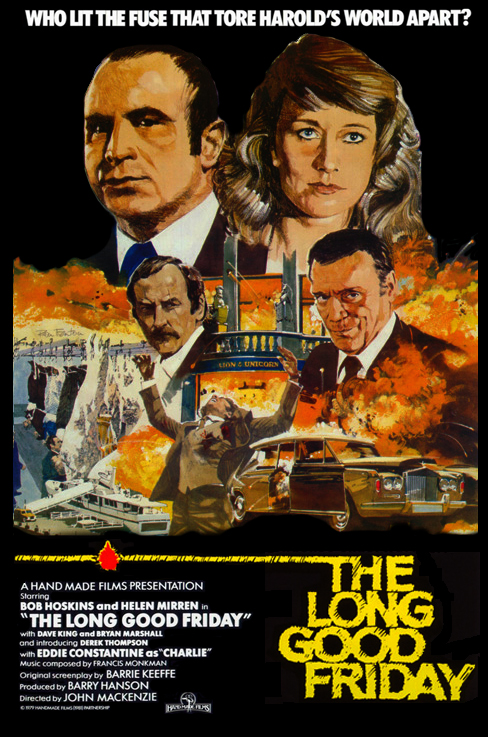
Today, the film community woke up to the news that British actor Bob Hoskins passed away on the 29th. He was 71 years old. Over the course of his career, he appeared in over 100 films and is well-remembered for performances in everything from Brazil to Who Framed Roger Rabbit? to Spiceworld to Felecia’s Journey to Made in Dagenham. However, perhaps his best performance is to be found in a film that’s still not very well-known here in the States.
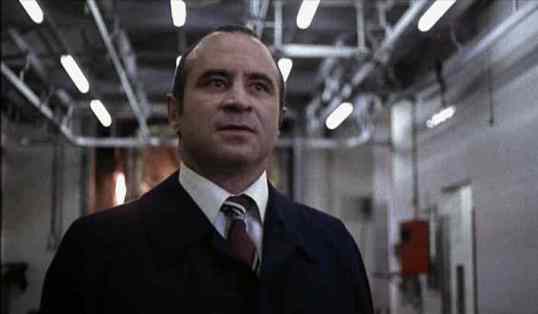
In 1980’s The Long Good Friday, Bob Hoskins plays Harold Shand. Harold is a crude, violent, and ruthless London gangster who, at the same time, remains oddly likable. Perhaps his likability is due to the fact that, for all of his sociopathic tendencies, Harold does seem to be genuinely devoted to his girlfriend Victoria (Helen Mirren). Or perhaps it’s because Harold is a fighter, a man who refuses to surrender and, as a result, has managed to make something of himself in one of the most rigidly class-conscious countries in the world. Say what you will about his methods, gangster Harold is still more honest than your typical businessman.
However, ultimately, the main reason we root for Harold is because he’s played by Bob Hoskins. Hoskins turns Harold into a true force of a nature, playing him as manic, charismatic, and — as the film progresses — more and more desperate. The genius of Hoskins performance isn’t that he suggests that Harold isn’t as smart as he thinks he is. The genius is that Hoskins lets us know that, despite all of his bluster, Harold understands that he’s not as smart as he’s pretending to be.
As the film opens, Harold is the most powerful man in the London underworld and is on the verge of staking his claim on the legitimate world as well. All he has to do is convince an American gangster (played by Eddie Constantine) to agree to partner with him on a real estate deal.
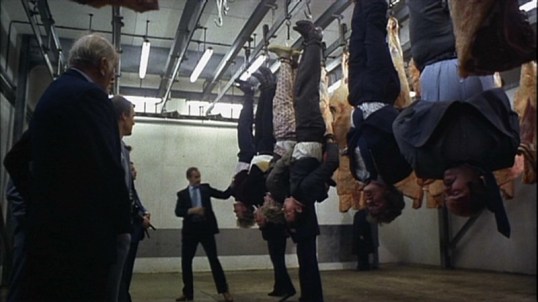
However, two assassins (one of whom is played by a silent and devilishly handsome Pierce Brosnan) are killing his associates. Somebody is blowing up his businesses. Even as Harold desperately tries to impress his American guests, he finds himself under siege by an unknown enemy. At first, Harold assumes that a rival gangster is coming after him but, as the day progresses, it becomes evident that there’s a new threat to Harold’s power.
Without Bob Hoskins’ performance, The Long Good Friday is an entertaining gangster film, one that is distinguished by John MacKenzie’s sure direction, Francis Monkman’s energetic and powerful score, and an absolutely perfect final scene. With Hoskins’ performance, The Long Good Friday is one of the best gangster films ever made.
And, as today, it’s a tribute to a truly talented actor.
Are you feeling sad? Does the world seem to be oppressive and overwhelming? Do you just need a break from all of the nonstop bullshit that seems to be the price that we pay for every day of our existence?
If you answered yes, all I can say is that I know where you’re coming from. Seriously, I’ve spent this entire month feeling depressed and overwhelmed. Whenever I feel this way, I’m glad that — nearly 60 years ago — a director named Nathan Juran made a movie called The Brain From Planet Arous.
Seriously, I defy anyone — ANYONE — to remain depressed after having watched this movie. It’s just so wonderfully ludicrous and silly. The Brain From Planet Arous is just that, a gigantic floating brain that comes to Earth from a planet called Arous. The brain, incidentally, has a name and it is Gor. Gor, it seems, is a criminal, and he’s hiding out on Earth. He possesses a scientist named Sam (John Agar) and spends most of his time trying to force himself on Sam’s fiancée (Joyce Meadows). Fortunately, another brain from planet Arous has come to Earth. Its name is Val and it possesses Sam’s dog and…
Look, the plot is not important. What is important is that this film features two giant brains floating around and arguing. It also features an adorable dog and some atomic weapon testing stock footage. It’s not good but it’s a lot of fun.
Sadly, I’ve read that director Nathan Juran thought so little of this film that he was credited under a fake name. That’s a shame because you know what? The Brain From Planet Arous makes me happy and it’ll make you happy too.
Hi there and welcome to another edition of Lisa Marie Watches An Obscure Film Via On Demand And Then Reviews It.
Last week, I watched and reviewed a 2001 guilty pleasure called Tart.
This week, I watched another film from 2001, Instinct to Kill.
Instinct to Kill begins with homicide detective Jim Beckett (Tim Abell) sitting outside a suburban house and secretly filming Tess (Missy Crider) as she dresses. As Jim watches, Tess joins her parents for dinner. Tess’s father strikes her mother. In case we needed anymore reason to hate him, Jim chuckles.
A day later, Tess is at cheerleader practice and again, she is being watched. Sitting in the bleachers, Jim films her until he finally approaches her and strikes up a conversation. Jim may be creepy but he’s also charming. Agck!
The film jumps forward 3 months. Tess and Jim are getting married. Jim and his partner Lance (Kadeem Hardison) spend the reception filming the bridesmaids and leering over all the cleavage. Bad Jim, bad!
And again, the film moves forward by 3 months. As all too often happens, the daughter of an abusive father has ended up with an abusive husband. As Jim attempts to murder Tess, Lance rushes into the house with his gun drawn. Jim is arrested and sent to prison.
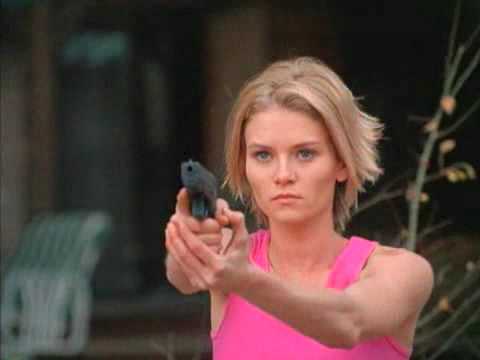
3 months later, Jim escapes from prison and, after retrieving a disguise kit from his own abusive father, Jim starts to stalk his ex-wife, her family, and her friends. As Lance attempts to track down his former friend, Tess gets a bodyguard and a self-defense instructor in the form of J.T. (Mark Dacascos).
According to the imdb, Instinct to Kill was rated R for featuring “brutal violence and strong sexual content” and yes, it certainly had both of those. However, to be honest, if you toned down the violence and edited out all of the boob shots, Instinct to Kill would be an almost prototypical Lifetime movie. After all, it has all the classic Lifetime elements: a sociopathic ex-husband, a sensitive guy who teaches self-defense, and a female protagonist who comes out of it all newly empowered and confident. Fortunately, I happen to love Lifetime movies and maybe that’s why, somewhat to my surprise, I actually found Instinct to Kill to be an effective B-movie.
Some of that may also be due to the fact that Instinct To Kill’s executive producer was Mark L. Lester, who has directed some of the best B-movies of all time. (He also directed The Ex, which has become a bit of a staple on the Lifetime Movie Network.) I don’t know how involved Lester actually was with the production of this film but it feels much like a Lester film — the villain is flamboyant, the action moves quickly, and the end result packs much more of an emotional punch than you would expect.
Instinct to Kill may have a generic title but it’s definitely not a generic film. Tim Abell makes for a genuinely scary villain and Mark Dacascos is the epitome of strength and sensitivity. That said, the film’s best performance comes from Missy Crider, who believably transforms from being a helpless victim to an empowered warrior over the course of the film and, as a result, elevates the entire film.
Last night, my BFF and I were searching for a movie to watch. As we were looking through what was available on demand, we came across a film from 1987 called Someone To Watch Over Me. The film was described as being a romantic thriller about a “happily married cop who becomes infatuated with the wealthy and beautiful woman he’s been assigned to protect from a death threat.”
“This sounds like it might be good,” I said, “Plus, it’s directed by Ridley Scott and he’s good … sometimes.”
“Who’s in it?” my BFF asked.
“Tom Berenger.”
“Who?”
“He was in Inception.”
“Who did he play in Inception? Was he the rich guy or was he one of Leonardo DiCaprio’s friends?”
“Neither. He was just kinda there.”
Anyway, whether it was the Inception-connection or the fact that my friend was tired of listening to me obsessively read the description of every single film that was available on demand, we decided to watch Someone To Watch Over Me.
And you know what?
It’s noInceptionbut Someone To Watch Over Me is still a fairly entertaining little film.
In Someone To Watch Over Me, a youngish Tom Berenger plays Mike Keegan, a New York cop who has just been promoted to detective. When wealthy socialite Claire Gregory (Mimi Rogers) witnesses a murder, Mike is among the detective assigned to guard her. Though the resolutely blue-collar Mike and the sophisticated Claire come from different backgrounds, they both find themselves attracted to one another. For Mike, Claire represents the type of lifestyle that he can only dream of. For Claire, Mike is the opposite of the pretentious and vapid men that usually surround her. Unfortunately, a sinister gangster is attempting to kill Claire and Mike’s down-to-earth wife Ellie (played by Lorraine Bracco) will kill him if she ever finds out.
Now, let’s make one thing clear. The plot of Someone To Watch Over Me is just as predictable as you think it is. As you read my summary, you probably guessed every single thing that happens in the film. There are no surprises and there are no twists. Everything in the movie plays out exactly the way that you’re expecting it too.
And yet, as predictable as it was, I still enjoyed Someone To Watch Over Me. One reason was because of a scene in which Ellie reacts to Mike’s self-serving apologies by punching him in the face. Lorraine Bracco — who is great in this film — throws that punch as if the fate of every woman on the planet’s self-respect depended upon it. When she strikes out at her husband, it changes the film. It’s no longer a film about romance. Instead, it becomes a film about adultery. Even while the film itself tries to play up the romance between Claire and Mike, both Ellie and Lorraine Bracco refuse to be pushed to the side. After sitting through so many films that feature women nobly stepping aside so that their significant other can find happiness with his “true love,” it was refreshing to see Ellie call Mike out on his sanctimonious bullshit.
Secondly, I enjoyed Someone To Watch Over Me because it truly is a time capsule of the time when it was made. I was born in 1985, which perhaps is why I’ve always been fascinated by 80s films. If nothing else, they give me a chance to see what was going on in the rest of the world while I was busy learning how to walk. Someone To Watch Over Me was released in 1987 and everything about it — from the fashion to the celebration of wealth and glamour to Ridley Scott’s artfully composed shots of New York at night to the vaguely cokey vibe given off by some members of the supporting cast to the landline phones — made me feel as if I had stepped into my own personal time machine.
So, in the end, Someone To Watch Over Me is not exactly a great or even a memorable film. However, I’m still glad we watched it.
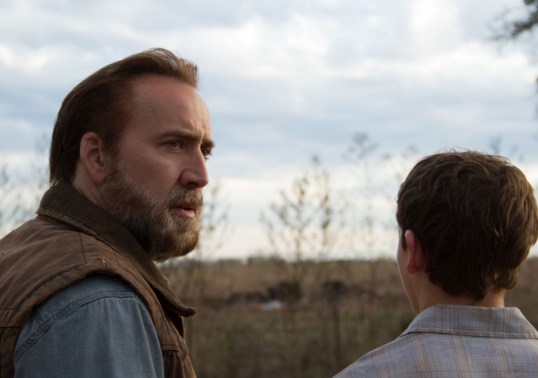
A lot of people have given up on Nicolas Cage. I’m not one of them but I can understand the sentiment. After all, it was hard not to feel a bit frustrated watching an obviously talented actor continually give performances in films that were so obviously beneath his ability. For every Bad Lieutenant: Port of Call New Orleans, there seemed to be a dozen generic action films in which Cage seemed to be mostly concerned with positioning himself to get a supporting role in the next Expendables film. To many viewers, the conventional wisdom seemed to be that Nicolas Cage just didn’t care anymore.
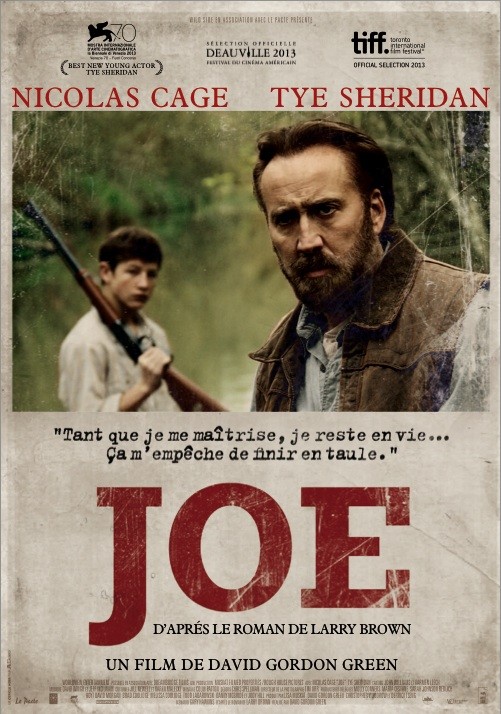
Well, for everyone out there who has given up on Nicolas Cage, I recommend that you make the effort to track down and watch a film called Joe.
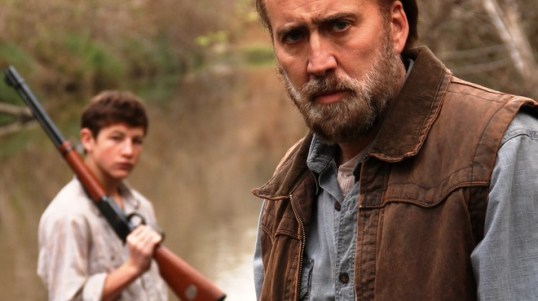
Cage plays Joe Ransom, an ex-con who is struggling to stay out of trouble. As the film quickly makes clear, that’s not always easy in Joe’s case. Joe is in alcoholic with a quick temper and a thing for prostitutes. He’s been arrested enough times that he’s on a first name basis with every single cop in the backwoods Southern town that he calls home. Interestingly enough, the film doesn’t go into the details of Joe’s past. Even when he explains how he ended up in prison in the first place, both the script and Cage’s performance gives us reason to believe that he might be lying. In many ways, Joe remains an enigma throughout the entire film but Cage gives a performance of such power and focus that we feel like we know who the character is even if we don’t always fully understand him. One need only look at Cage’s haunted expression or watch the brilliantly acted scene where a drunk Joe searches for his dog to understand both the character’s demons and his heart.
Joe is in charge of a group of laborers who, under the direction of the local lumber company, spend their days poisoning old trees and planting news ones in their place. As the film makes clear, Joe may be a fuckup in his personal life but “professionally,” he’s a hard worker and a good boss. When Joe hangs out with the members of his work crew (all of whom are played by nonactors, which brings a good deal of authenticity to the film), he’s confident and responsible in a way that he can never be in the “real” world.
When 15 year-old Gary (Tye Sheridan) and his alcoholic father Wade (Gary Poulter) join the crew, Joe starts to find it difficult to maintain his usual detached attitude. Despite his attempts to remain aloof, Joe becomes a bit of a mentor towards Gary. Once he discovers that the alcoholic Wade is both beating his son and prostituting his daughter, Joe is forced to take matters into his own hands.
As good as Nicolas Cage is, the rest of the cast deserves a lot of credit as well. Gary Poulter turns Wade into a pathetic but frightening monster, a man who shows hints of his former humanity even while doing some truly disturbing and viscous things. Wade is a terrifying villain because he’s real. When, halfway through the film, Wade commits one of those most shocking (and pointless) acts of violence that I’ve ever seen, it’s effective because we all know that there are countless real-life Wades out there right now. Gary Poulter, himself, was a homeless street performer who was recruited off the streets of Austin. He made his film debut in Joe and sadly, he died before the film was released. Those who assume that Poulter was just playing himself are doing both him and the film a great disservice. Regardless of how much his background may or may not have mirrored Wade’s, it takes genuine talent to give a performance as effective and thought-provoking as Gary Poulter’s work in Joe.
Gary Poulter in Joe
Joe was directed by David Gordon Green, who comes from my hometown and who obviously has a feel for and an understanding for the type of rural community that most film directors either ignore or treat with the usual yankee combination of condescension, fear, and loathing. As directed by Green, Joe is a moody and atmospheric southern character study. It’s also one of the best films of 2014 so far.