Embracing the Melodrama #11: All About Eve (dir by Joseph L. Mankiewicz)


Bette Davis

“Fasten your seat belts, it’s gonna be a bumpy night!” — Margo Channing (Bette Davis) in All About Eve (1950)

If you’re a lover of classic films or even if you’re just someone who occasionally watches TCM, chances are that you already know All About Eve.  It’s one of those films that is endlessly quoted and it features at least two performances — Bette Davis’s turn as aging Broadway diva Margo Channing and George Sanders’ acidic theater critic Addison DeWitt — that serve as frequent inspiration for professional impersonators.  It’s the film that was named best picture of 1950 and it continues to hold the record for both the most Oscar nominations overall and it’s the only film in Oscar history to receive four female acting nominations.

Even more importantly, it’s a film that everyone already knows it great.

So, that brings up the question that every film blogger dreads: how do you review a classic film that everyone already knows about?  I’ve often said that it’s easier to review a bad film than a great one.  It’s easy to pinpoint why a film fails but when it comes time to explain why a film is great, it’s often difficult to put to words the intangible qualities that elevate it.
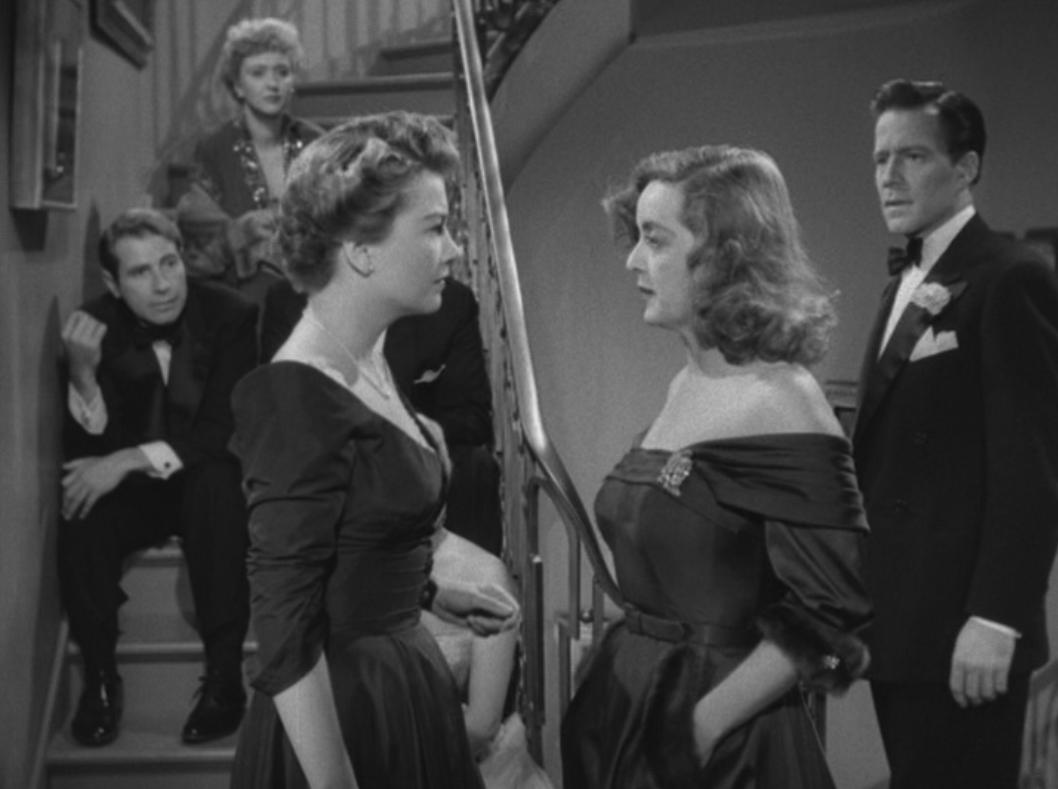
Eve and Margo

For instance, I could tell you that the film has a fascinating plot but that barely only begins to scratch the surface of everything that’s going on underneath the glossy and melodramatic surface of All About Eve.  The movie tells the story of how scheming young actress Eve Harrington (Anne Baxter) becomes a star with the help of Addison DeWitt and at the expense of the talented but aging Margo Channing.  In telling Eve and Margo’s stories, All About Eve explores issues of female friendship and competition, sexuality, and why older men are celebrated while older women are constantly at risk of being pushed to the side for a newer model.  The complexity and power of All About Eve’s storyline can be summed up by the fact that right now, when I watch the film, I relate to Eve but I imagine that  twenty years from now, I’ll rewatch and I’ll relate to Margo.

I could tell you that this is a film that is full of bigger-than-life characters and iconic performances but that doesn’t even begin to scratch at the surface of how well-acted and perfectly cast this film is.  Even boring old Hugh Marlowe is a perfect choice for playing boring old playwright Lloyd Richards.  (His wife is played by Celeste Holm.  Reportedly Bette Davis hated working with Celeste Holm but onscreen, their friendship feels very real and poignant and leads to some of the best scenes in the entire film.)  Gary Merrill, who later married Bette Davis, is likable as Margo’s boyfriend and Thelma Ritter is great as Margo’s outspoken assistant, largely because she’s Thelma Ritter and she was always great.  Marilyn Monroe famously makes the most of her minor role in All About Eve, playing an aspiring actress who has a very good reason for calling the butler a waiter.  And then there’s Bette Davis and George Sanders, both of whom are simply brilliant.

My favorite scene from All About Eve

My favorite scene from All About Eve

But to me, the best performance in All About Eve comes from Anne Baxter.  Baxter plays Eve as a perpetually smiling schemer and one of the great pleasures of the film is watching as Eve wrecks passive-aggressive havoc through Margo’s circle of friends.  Just watch the scenes where she deftly manipulates Celeste Holm.  All About Eve is usually referred to as being a vehicle for Bette Davis but if you actually watch the film, you see that the title is absolutely appropriate.  The film really is all about Eve.

And I could always tell you about how wonderfully sardonic the dialogue is but you already know that.  There’s a reason why even people who have never seen the film still quote Margo’s suggestion that everyone fasten their seat belts!

Bette Davis 2

So, in the end, what can I tell you about All About Eve?  Well, all I can really tell you is that it’s a great film and, if you haven’t seen it, you need to make time to learn all about Eve.
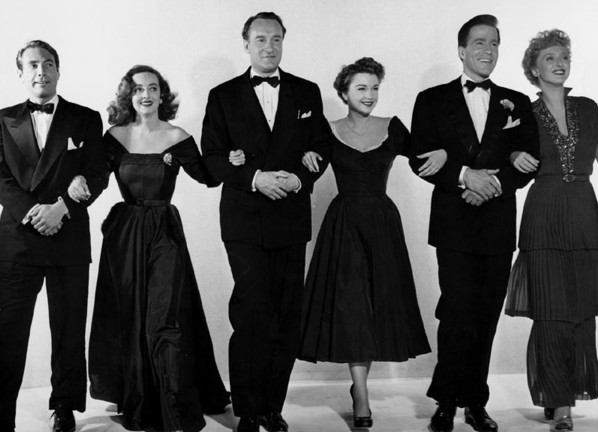
AllAboutEvecastpromo

Embracing the Melodrama #10: All The King’s Men (dir by Robert Rossen)


All The King's Men

“The people are my study.” — Governor Willie Stark (Broderick Crawford) in All The King’s Men (1949).

We close today’s embrace of melodrama by taking a look at one of the best political films ever made, the 1949 best picture winner All The King’s Men.

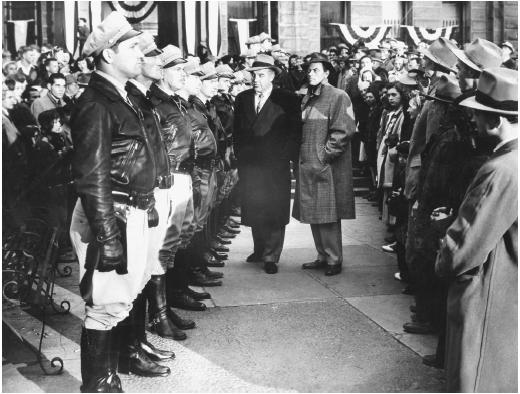
All the King’s Men tells the story of a demagogue named Willie Stark (Broderick Crawford, who deservedly won an Oscar for his powerful and intimidating performance here).  When we first meet Willie, he’s a poor farmer and political activist whose attempts to run for a minor office in an unnamed southern state are defeated by the state’s corrupt political machine.  Instead of being intimidated, Willie is instead inspired to go to law school and become a lawyer who fights for the people.  When an elementary school fire escape collapses and kills several children, Willie sues the construction company that built the school.

This also brings Willie to the attention of cynical political operative Sadie Burke (Mercedes McCambridge, who also won a very deserved Oscar for her performance).  Sadie works for the state’s governor, who happens to be locked in a tight election campaign with a political reformer.  Sadie is dispatched to convince Willie to run for governor, with the idea being that Willie will take votes away from the reform candidate and therefore allow the governor to be reelected.

Everyone originally assumes that Willie is just a hick who will be easily manipulated.  And, at first, Willie proves to be an uninspiring campaigner.  It is only after he over hears his aide Jack Burden (John Ireland) talking to Sadie that Willie realizes that he’s being set up.  Willie responds by going to a country fair, dramatically ripping up his prepared speech, and then launching into a spell-binding speech in which he tells the people at the fair that, since they’re all hicks, they’ll only have power once they elect another hick to the governor’s office.  Newly energized and angry, Willie is nearly elected governor.

Four years later, Willie is back and he’s running for governor again.  He’s still giving loud populist speeches but, as Burden notes in his voice over narration, the difference is that Willie is now the establishment candidate.  He may be giving speeches promising hope and chance and attacking the rich but Willie will still take their money and watch out for their interests if that’s what he has to do to get elected.  (Sound like any Presidents that we might know?)

Once Willie is elected governor, he runs his state like a dictator, engaging in blackmail, demagoguery, and maybe even murder to get everything he wants.  He may still claim to be a hick but, as both Burden and Sadie realize, Willie has become exactly what he originally claimed to be against.  However, after Willie’s son (John Derek) kills a girl in a drunk driving accident and Burden discovers that the woman he loves has become Willie’s mistress, it starts to become apparent that Willie’s corruption has created a world that is spinning even out of Willie’s control.

All The King’s Men may be a political film but it feels more like a gangster film, with Willie Stark coming across less as a politician and more like a crime lord.  Director Robert Rossen directs in a style that owes a lot to film noir and the entire film is full of shadowy figures and secret plotting.  Though the film starts out on almost a comical note, with a lot of emphasis being put on Willie Stark’s simple ways, it eventually reveals itself to be a truly disturbing portrait of what happens when one man is overwhelmed by his lust of power.  Rossen is aided by a uniformly excellent cast.  While I already specifically mentioned Crawford and McCambridge, it would be very wrong to review All The King’s Men without mentioning an actor named Walter Burke.  Burke played Willie’s bodyguard.  He said, at most, maybe 3 sentences over the course of the entire film but Burke had such a memorable and intimidating presence that his unsmiling face is one of the defining images of the film.

The short, scary man smoking the cigarette?  That's Walter Burke.

The short, scary man smoking the cigarette? That’s Walter Burke.

Finally, not surprisingly, All the King’s Men remains just as relevant today as when it was first released.  We love our demagogues in America, especially when they pretend to be “just like us.”  (And if anyone doubts that, I suggest they spend a few minutes listening to all of the potential Presidential contenders bragging about how they’ve been dead broke, how they’re known as Average Joe, and how much they hate the very political system that they continue to perpetrate.)   We love to condemn our Willie Starks but, at the same time, we also love to keep electing them.

All The King's Men 2


Embracing the Melodrama #9: Kings Row (dir by Sam Wood)


Kings Row“Where’s the rest of me!?” — Drake McHugh (Ronald Reagan), upon waking up to discover that his legs have been amputated, in Kings Row (1942)

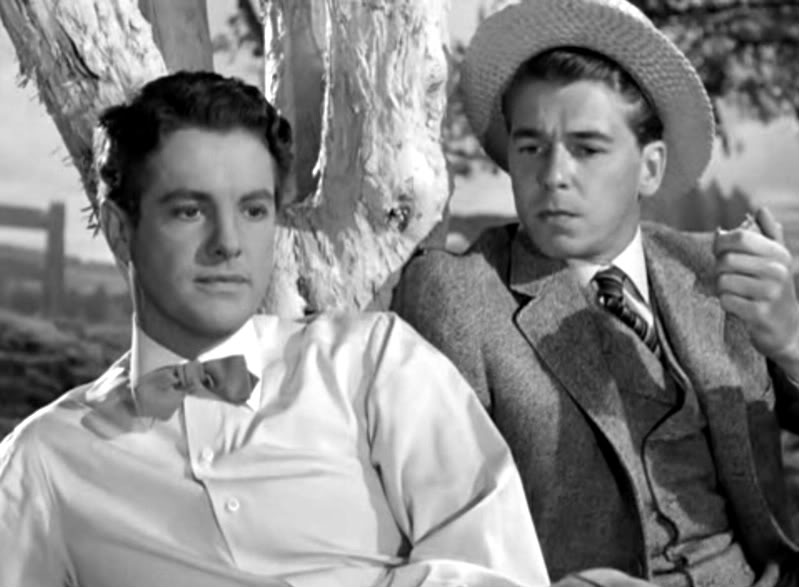
It is with that line that the 1942 best picture nominee Kings Row earns its place in film history.  The formerly carefree and rich Drake had lost all of his money due to a crooked banker.  However, instead of feeling for himself, Drake got a job working for the railroad and finally started to show that he was capable of acting like a mature, responsible adult.  However, when Drake was injured in a boxcar accident, he had the misfortune to be taken to the sadistic Dr. Gordon (Charles Coburn).  Gordon felt that it was his duty to punish those who he considered to be wicked and that’s exactly how he felt about about Drake.  So, despite the fact that Drake had once been in love with Gordon’s daughter, Gordon proceeded to chop of Drake’s legs.

It’s just another day in Kings Row.

Of course, to an outsider, Kings Row looks like your typically calm and pleasant community.  But behind closed doors, this small town is full of sordid secrets.  Only those who have grown up in Kings Row understand the truth.  Only they can understand how Drake McHugh could end up losing his legs.

When they were both growing up at the turn of the century, Drake’s best friend was Parris Mitchell (Robert Cummings).  While Drake was pursuing Dr. Gordon’s daughter, and being loved from afar by Randy Monaghan (Ann Sheridan), Parris was studying to be a doctor under the tutelage of Kings Row’s other doctor, Dr. Alexander Tower (Claude Rains).  While Dr. Tower appeared to be a much nicer man than Dr. Gordon, he definitely had his eccentricities.  For instance, there was the wife who was reportedly confined somewhere in the house and never allowed to leave.  And then there was Dr. Tower’s daughter, Cassandra (Betty Field).  Dr. Tower was very protective of Cassandra, perhaps too protective.  How would Dr. Tower react when Parris, his best student, started to develop romantic feelings towards Cassandra?

Again, it’s just another day in Kings Row.

So, by now, it should be pretty obvious that Kings Row is one of those films that deals with big secrets in small towns.  That, of course, is a theme that was explored by films that were made long before Kings Row.  What made Kings Row unique is that it was perhaps the first film to actually portray that evil as specifically existing and thriving because of the repressive nature of a small town.  Whereas other films had featured outsiders bringing bad habits to an otherwise innocent and idyllic community (and be sure to watch Hitchcock’s Shadow of a Doubt if you want a perfect example of this), Kings Row suggested that the very nature of its setting is what led to all of the melodrama.  The film suggests that evil men like Dr. Gordon can specifically thrive in a town like Kings Row because his fellow townspeople aren’t willing to risk the placid surface of their existence by exposing him.  As such, Kings Row serves as a template for all of the sin-in-a-small-town films and TV shows that have followed.

Beyond the film’s historical importance, Kings Row holds us pretty well as entertainment.  As the film’s hero, Robert Cummings is a bit on the bland side but, fortunately, he’s surrounded by an excellent cast of character actors.  It’s a bit of a cliché to say that Claude Rains was perfectly cast because, seriously, when wasn’t Claude Rains perfectly cast?  But, in the role Dr. Tower, Claude Rains is perfectly cast.  Charles Coburn makes for a perfectly terrifying villain.  Ann Sheridan is likable and sympathetic as the woman who tries to help Drake recover after Dr. Gordon takes away his legs.  And finally, you’ve got future President Ronald Reagan in the role of Drake McHugh.  Reagan is usually dismissed a being a pretty boring actor (and I really haven’t seen enough of his films to say one way or the other) but he gave a great performance in Kings Row.

And that’s why, even beyond its historical significance, Kings Row is still a film that is more than worth watching.

KingsRowFRIENDS-1

Embracing The Melodrama #8: Dark Victory (dir by Edmund Goulding)


Dark-Victory

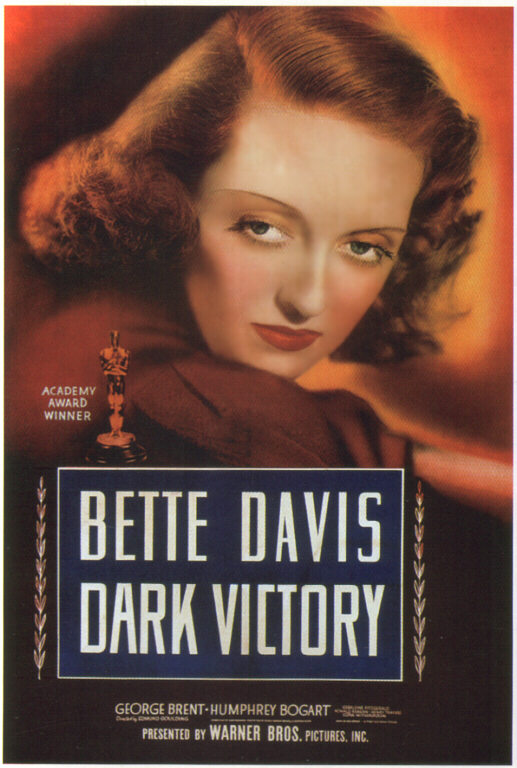
For our next melodrama, we take a look at the 1939 best picture nominee, Dark Victory.

Well, with a name like Dark Victory, you can probably guess that the story told be this film isn’t going to be a cheerful one.  Bette Davis plays Judith Taherne, a spoiled and self-centered socialite whose life revolves around hanging out with her constantly inebriated friends (one of whom is played by future President Ronald Reagan) and riding horses.  When Judith starts to suffer from double vision and headaches, she initially ignores the problem but, as her condition worsens, she finally agrees to see a doctor.

Well, as you can probably guess, the news is not good.  Dr. Parsons (Henry Travers, who is best known to us classic film lovers as Clarence Oddbody, the angel from It’s A Wonderful Life) refers her to Dr. Steele (George Brent), a brilliant neurosurgeon.  At first, Steele is reluctant to treat Judith.  He, after all, had been planning on giving up his New York medical practice so he can move to Vermont and spend his time doing research.  Judith, for her part, resents having to see him and treats him rudely.  However, when Dr. Steele discovers that Judith has a malignant brain tumor, he decides to put off moving to Vermont so that he can treat her (and, needless to say, fall in love with her as well).

After getting Judith to agree to surgery to remove the tumor, Steele discovers that the entire tumor cannot be removed and that Judith has only a few months to live.  Though Judith won’t feel any pain, she will die shortly after experiencing total blindness.  Hoping to make Judith’s last few days pleasant, Dr. Steele tells her that the surgery was a complete success and he also conspires with Judith’s loyal secretary, Ann (Geraldine Fitzgerald), to not allow Judith to find out about her terminal condition.

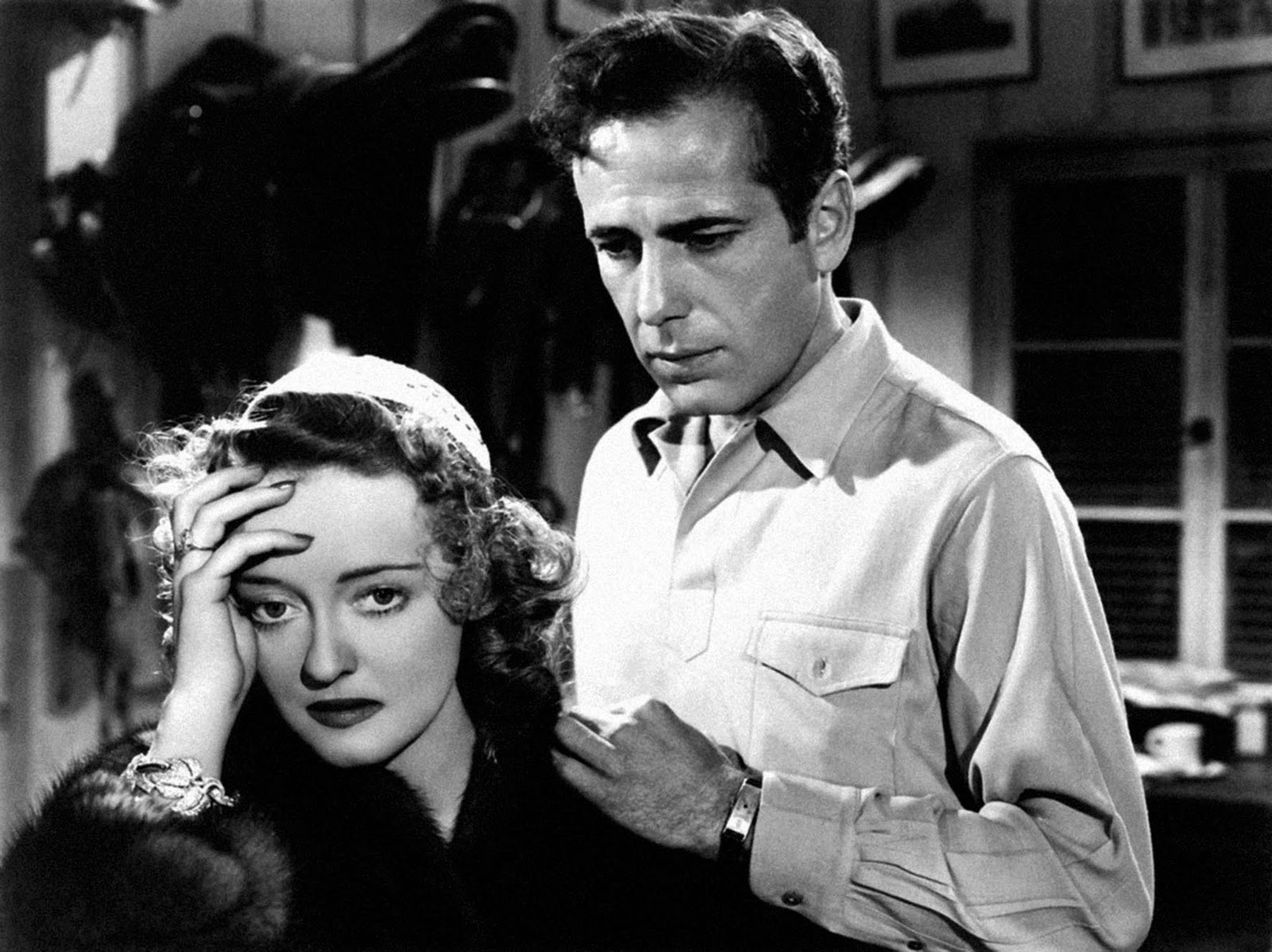
Steele also asks Judith to marry him and move to Vermont with him.  Judith agrees but, when she discovers Steele and Ann’s deception, she breaks off the engagement and returns to her decadent and wild ways.  Can her Irish stablehand (played by Humphrey Bogart) talk some sense into Judith before it’s too late?

If you want to nitpick, you certainly could do that with a film like Dark Victory.  Yes, the film is predictable and yes, Humphrey Bogart is a bit miscast and yes, this film probably did set a precedent for movies about independent women being both punished and redeemed by terminal illness.  Nitpick away but none of it really matters because Dark Victory works almost despite itself.

Whatever flaws the film may have, it also has Bette Davis delivering one of her best performances and making even the most overdramatic of events feel plausible and real.  Bette Davis gives a performance that runs the gamut from A to Z and then keeps running until it discovers letters that you didn’t even know existed.  (Okay, I didn’t come up with that description on my own.  A reviewer named DJ Kent said it on the IMDB but it was such a perfect description for what Bette Davis does here that I simply had to repeat it.)  Dark Victory is often described as being a “tear jerker” and, by the end of the film, I was in tears.  If even as lively and strong a character as Judith Taherne can’t beat death, what hope do the rest of us have?

But, at the same time, the film is not just about the dark.  There’s also a victory to be found in the darkness and that victory comes from the fact that even if Judith can’t beat death, she can at least face it under her own terms.  By the end of the film, you’re sad because Judith is going to eventually die but you’re also happy because she lived.

Dark Victory 3

Embracing The Melodrama #7: Reefer Madness (dir Louis Gasnier)


Reefer Madness

“The motion picture you are about to witness may startle you. It would not have been possible, otherwise, to sufficiently emphasize the frightful toll of the new drug menace which is destroying the youth of America in alarmingly increasing numbers. Marijuana is that drug – a violent narcotic – an unspeakable scourge – The Real Public Enemy Number One!” — The opening crawl of Reefer Madness (1936)

“”I’ll buy you a soda!” — Drug Dealer Jimmy

“I never drink the stuff!” — Future Drug Addict Bill

Yes, everyone, it’s time to tell your children and maybe light one up because te 8th entry in our series devoted to embracing the melodrama is none other than the 1936 “educational” film, Reefer Madness!

Reefer Madness opens with Dr. Carroll (Josef Forte) talking to a PTA meeting about the dangers of marijuana use among the youth of America.  Dr. Carroll can tell that the PTA doesn’t understand just how dangerous marijuana is so he tells them that he’s going to tell them a story.  Yes, he says, he knows that they’ve probably already read about this story in the newspapers.  But he’s going to tell them all the details that were intentionally left out of the newspapers.  (Damn liberal media….)

As principal of the local high school, Dr. Carroll has noticed some strange things happening.  Some of the students are failing to give 100% in athletic competitions.  Meanwhile, former honors student Bill has been spotted giggling in class while discussing Shakespeare.  Watching all of this, Dr. Carroll can only assume that every student in his high school must be smoking marijuana!  (What Dr. Carroll never seems to mention — or find strange — is that all of the high school’s students appears to be in their 30s and 40s.)

Well, Dr. Carroll is right!  Weed, reefer, marijuana — call it what you will, it has taken over the formerly clean-cut, all-American students and now they’re all a bunch of giggling and murdering addicts.  Perhaps not surprisingly, this leads to murder, tragedy, and unwed pregnancy.  Over the course of 67 minutes, life after life is ruined by marijuana.  Most chillingly, Dr. Carroll informs us that “the next tragedy may be that of your daughter’s… or your son’s… or yours… or yours…or yours!”

According to Reefer Madness, smoking weed will cause you to have an utterly psychotic break from reality, transforming you automatically into a hyperactive, sex maniac who neglects your studies, runs over people in the street, and plays the piano while bugging out your eyes.  All it takes is one little toke to get hooked for life.  As Reefer Madness shows us, addicts can be spotted by the heavy cloud of smoke that forms around their head as they madly puff on their marijuana cigarettes.  In fact, marijuana is such a powerful drug that the addicts in Reefer Madness don’t even have to actually inhale to be effected.  In perhaps the film’s most infamous scene, a hallucinating marijuana addict demands that his piano-playing girlfriend play “faster…faster….FASTER!”

No wonder they call marijuana the “Weed with roots in Hell!”

Obviously, if you’ve ever smoked weed, then you know that Reefer Madness gets it all wrong.  However, the lasting power and appeal of Reefer Madness lies in the fact that even someone who has never smoked weed before in his or her life will watch this film and know that it gets it all wrong.  Reefer Madness is perhaps the most inept and inaccurate portrayal of drug use to ever appear on screen and, as a result, it almost defies criticism.  Yes, the film is thoroughly over-the-top and terrible but its terrible in its own oddly unique way.  As a result, it’s one of those films that simply has to be seen to be believed.

And here’s your chance!

And remember — there’s no hope with dope!

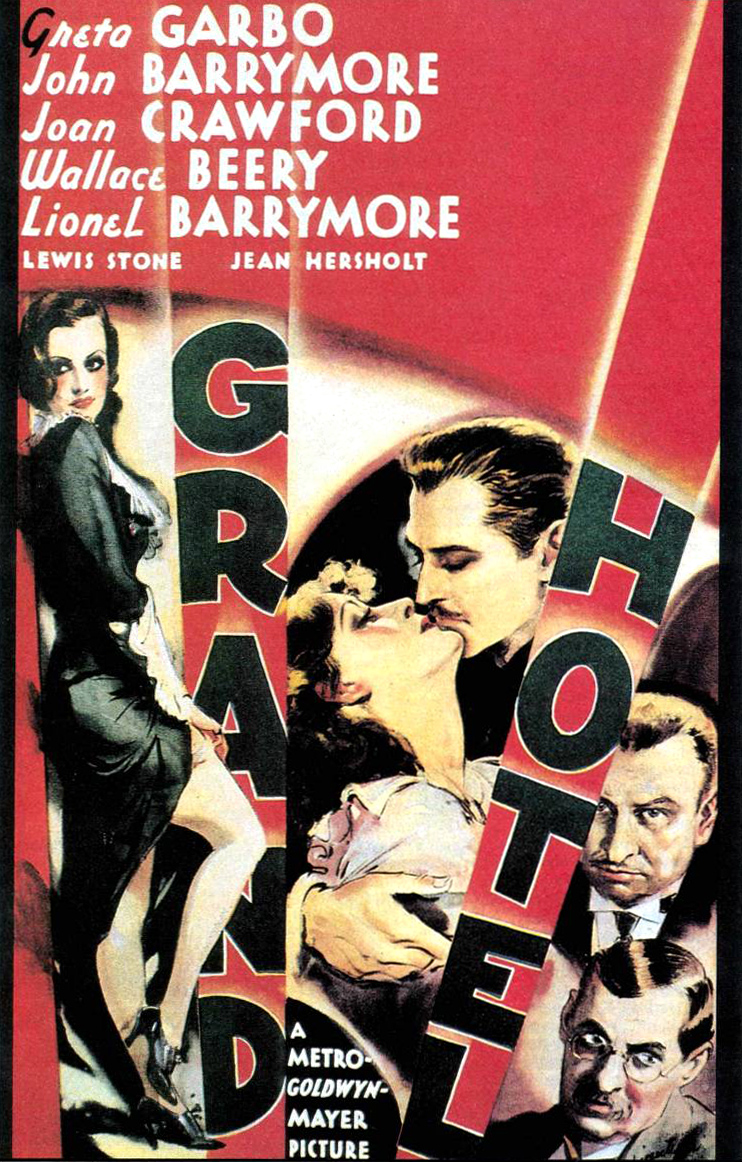
Embracing the Melodrama #6: Grand Hotel (dir by Edmund Goulding)


Poster - Grand Hotel_03

Today, we continue to chronologically embrace the melodrama by taking a look at one of the earliest examples of what would become a Hollywood mainstay, the big budget, all-start soap opera.  Today, we start things off by considering the 1932 best picture winner, Grand Hotel.

Grand Hotel follows five separate people as they all check into Berlin’s Grand Hotel.  They all have their own lives, their own secrets, and their own dreams.  As the film plays out, these five people will wander in and out of each other’s stories.  Seeing as how this was an MGM film and MGM always promoted itself as being the most glamorous studio in 1930s Hollywood, it’s not surprising that these five characters are played by five of the biggest stars that the studio had under contract.

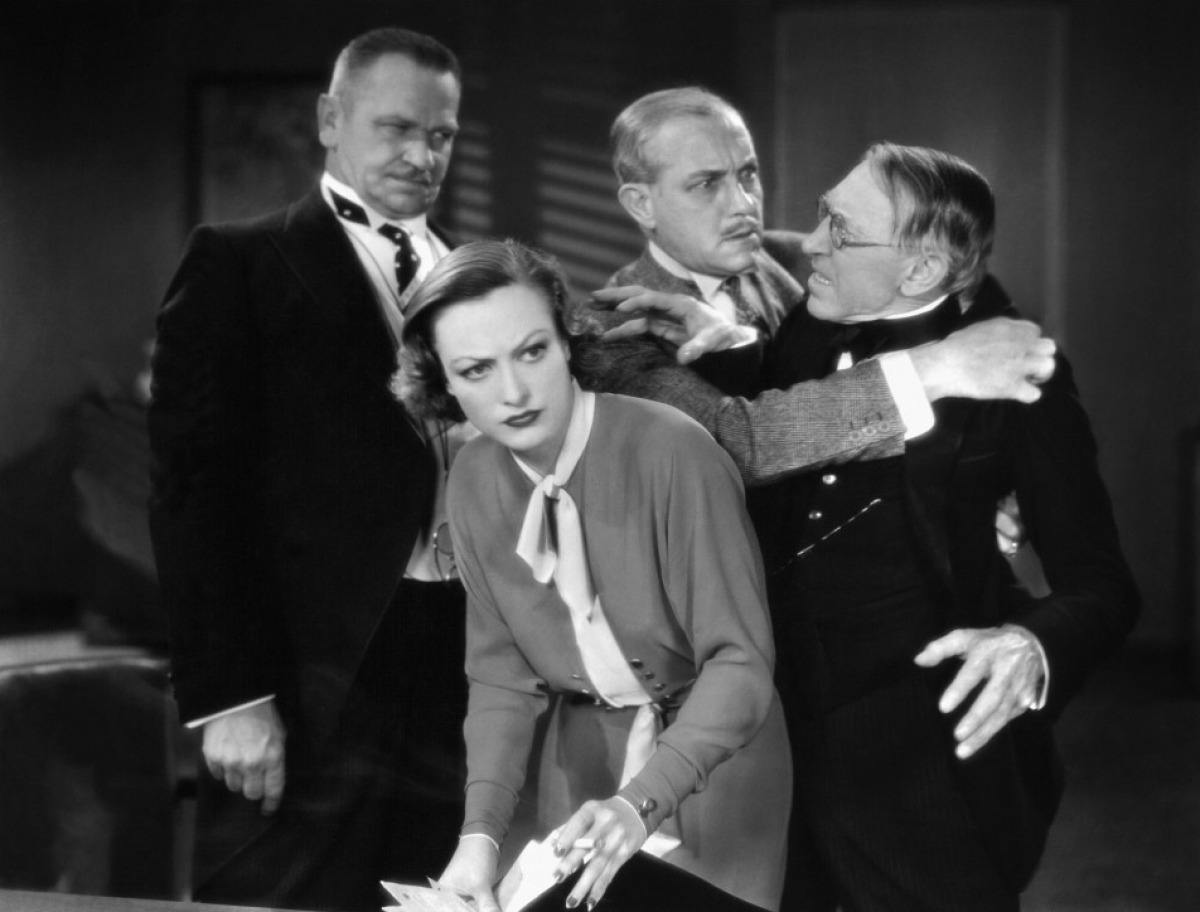
There’s Flaemmchen (played by Joan Crawford), an aspiring actress who, when we first meet her, appears to be willing to do anything in order to advance her career.  Whenever I watch Grand Hotel, I’m also surprised by how good Joan Crawford is here.  Crawford has become such an iconic character of camp that we tend to forget that she actually was a pretty good actress.  In Grand Hotel, she is perfectly cast as someone who is not quite as amoral as she wants the world to believe.

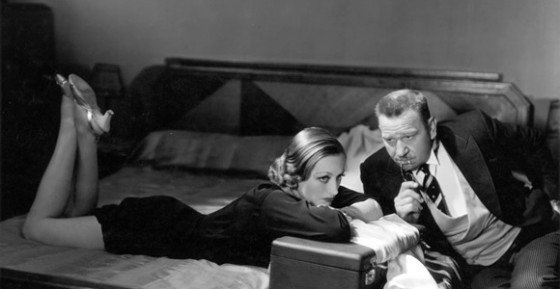
There’s Preysing (played by Wallace Beery), a greedy industrialist who hires Flaemmchen to be both his administrative assistant and his mistress as well.  Considering that the film is set in Germany, its’ easy to view Preysing as a symbol of the fascism that was sweeping across Europe in the 30s.  I don’t know if that was the intention of the filmmakers but it’s impossible to deny that Preysing is a pretty unlikable character, the type of greedy brute who inspires otherwise intelligent people to do things like run off and join Occupy Wall Street.

Crawford and Beery

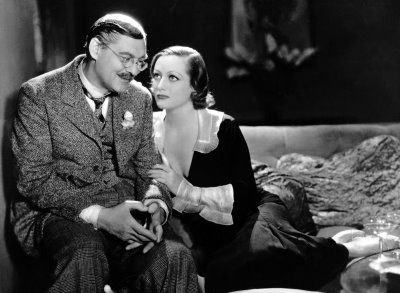
Far more likable is Otto Kringelein (Lionel Barrymore), a meek accountant who used to work for Preysing.  Kringelein is terminally ill and has basically come to the Grand Hotel so that he can at least enjoy a little bit of luxury before he dies.  At the hotel, he meets and falls in love with Flaemmchen.  Lionel Barrymore is so likable here that it’s hard to believe that he would later be best known for playing evil Mr. Potter in It’s A Wonderful Life. 

Barrymore and Crawford

Otto also meets Baron von Giegern (John Barrymore), a penniless nobleman who supports himself as a gambler and an occasional jewel thief.  If you needed proof that this film was made before the enforcement of the strict Production Code began, just consider that the Baron, despite being a criminal, is also the moral center of the film.  John Barrymore gives a charismatic and wonderfully theatrical performance.  The scenes where he and his brother Lionel play off of each other are some of the best in Grand Hotel.

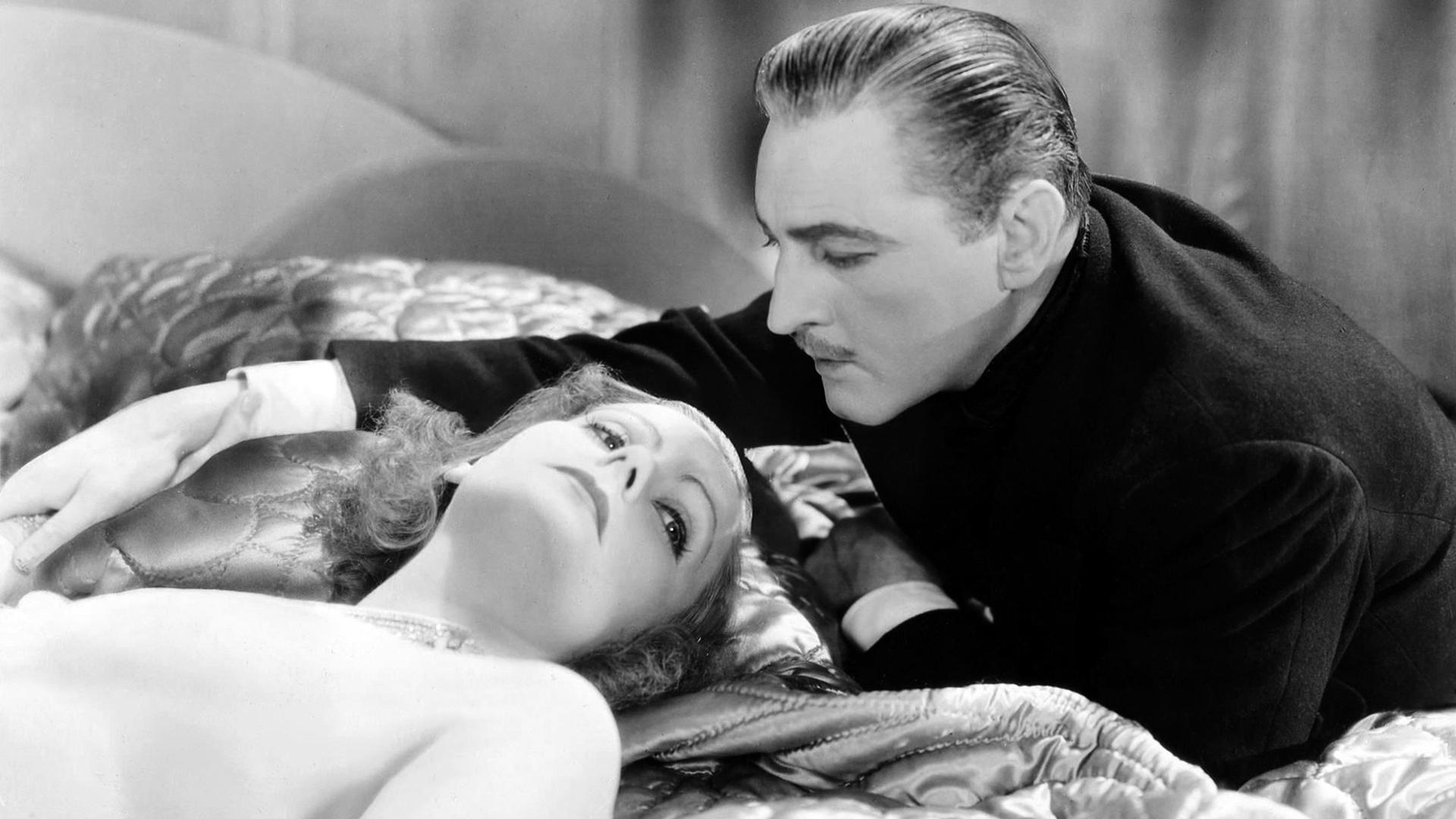
And finally, there’s my favorite of all the characters — Grusinskaya (Greta Garbo), the Russian ballerina who famously says, “I want to be alone.”  She checks into the hotel to try to escape the world and during her stay, she meets and falls in love with the Baron.  Grusinskaya is the character that I most related to, because we’re both dancers and I sometimes want to be left alone as well.

Barrymore and Garbo

I love Grand Hotel!  How couldn’t I?  The costumes, the sets, the actors, the glamour, the melodrama … what’s not to love!?  Incidentally, compared to a lot of other film melodramas from the early 30s, Grand Hotel actually holds up as pure entertainment.  The film moves quickly, much of the dialogue is still sharp and witty, and all of the actors are perfectly cast.  Curiously, Grand Hotel only received one Oscar nomination, for best picture.  However, it’s not surprising that it also won the only award that it was nominated for.

Grand Hotel has been described as being the first ensemble film.  I don’t quite agree with that because, even though it features a large cast and several intersecting storylines, you never forget the fact that you’re essentially watching a bunch of film stars sharing scenes with other film stars.  Eight decades after the film was made, the star power of Garbo, the Barrymores, Joan Crawford, and even Wallace Beery still continues to shine through and, to a large extent, your reaction to the film’s characters is pretty much the same reaction that audiences in the 1930s had to the public personas of the actors playing them.  But, and here’s the thing — it doesn’t really matter.  MGM made Grand Hotel to celebrate star power and, when you’ve got stars like these, can you blame them?

Grand-Hotel-4

Embracing The Melodrama #5: Merrily We Go To Hell (dir by Dorothy Arzner)


Merrily We Go To Hel

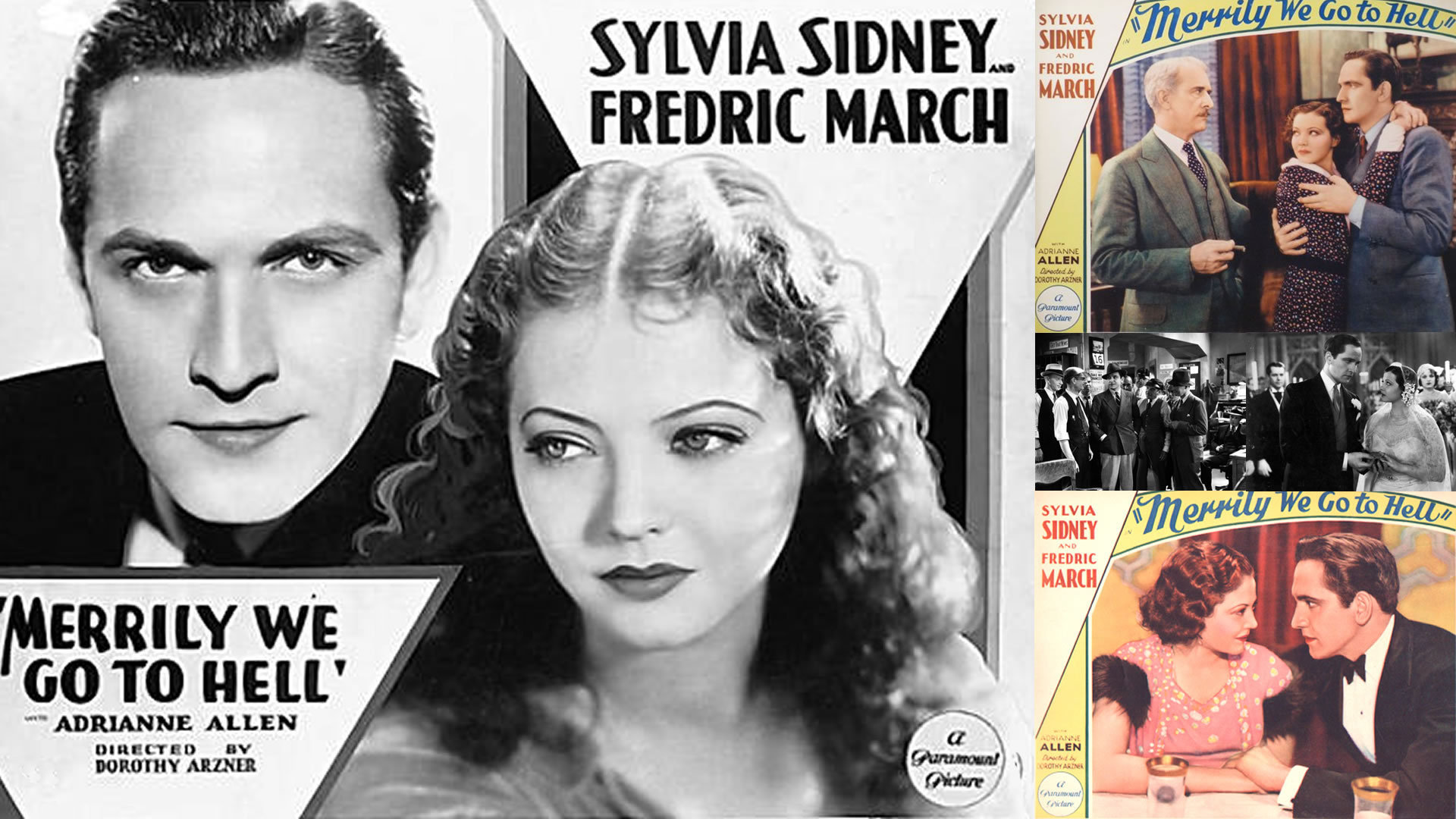
We conclude today’s melodramatic embrace by taking a look at another Pre-Code film.  Released in 1932, Merrily We Go To Hell takes a look at one of the institutions that the Production Code was meant to save: marriage.  It also takes a look at alcoholism, overprotective fathers, and what goes on backstage during a Broadway production.  In many ways, this movie is a comedy but, at heart, it’s a melodrama through and through.

Everyone should have a catchphrase.  Myself, for example, I tend to say “Stay Supple” a lot.  It drives some people crazy but I like the way it sounds and I also happen to think that it’s a pretty good expression of how I view life.  Alcoholic newspaper reporter Jerry Corbett (Fredric March) has a catch phrase of his own.  Every time he takes a drink, he toasts with, “Merrily, we go to Hell.”  Jerry has been haunted ever since he was dumped by his beautiful girlfriend, actress Claire Hempstead (Adrienne Ames), and he now spends all of his time drinking and dreaming of being a playwright.

However, things start to look up for Jerry when, at one of those decadent rooftop parties that always seem to show up in pre-Code films, he meets an innocent young heiress named Joan (Sylvia Sidney).  Jerry and Joan fall in love and, despite the reservations of Joan’s disapproving father (George Irving), they marry.  With Joan’s help, Jerry stops drinking and writes his play.  It’s called “When Women Say No” and despite the creepy and misogynistic title, it becomes a huge success.   Oh, did I say despite?  I meant to say because of.

(For those you sitting at home, I am currently dramatically rolling my eyes and shaking my head.)

However, there’s a problem.  Guess who is cast as the play’s leading lady?  That’s right — Claire!  Jerry may love Joan but he’s obsessed with Claire.  Having again fallen under her spell, Jerry is soon drinking again and neglecting his wife.  However — and this is what distinguishes Merrily We Go To Hell from even most films made today — Joan doesn’t just silently accept Jerry’s infidelity or sit around obsessing on how she can get her husband back.  Instead, she decides that if he can do it, she can do it.  And who can blame her when Charlie Baxter is around?  Not only is Charlie suave and handsome but he’s played by none other than Cary Grant!

Merrily we go to Hell indeed!

Merrily We Go To Hell is available as a part of the Pre-Code Hollywood Collection and I think it makes for a good double feature with The Cheat.  (The people who put together the Pre-Code Hollywood Collection obviously agreed with me because they put both films on the same disc.)  While Merrily We Go To Hell is, at heart, a very serious movie, it begins with a deceptively light touch.  Fredric March was such a charming actor and seems to be having so much fun playing Jerry as a charming and well-meaning fuckup, that you actually are surprised when the film reveals just how desperate a character he really is.  This is the epitome of the type of film that makes you laugh at the start just so it can make you cry at the end.

Incidentally, Merrily We Go To Hell was directed by Dorothy Arzner, one of the only female directors to work in Hollywood during the studio era.  As a director, she understands that, at heart, Merrily We Go To Hell is Joan’s story.  Whereas a male director would probably have focused almost exclusively on Jerry and used Joan as a mere plot device, Arzner is more interested in exploring why Joan marries Jerry in the first place and how she deals with the inevitable discovery that there’s actually less to Jerry than first met the eye.  It’s that perspective that ultimately elevates Merrily We Go To Hell above the level of being a mere domestic dramedy and makes it worth watching 82 years after it was first released.

Sylvia Sidney

Embracing The Melodrama #4: The Cheat (dir by George Abbott)


cheat-title-stillIn 1930, in response to claims that its movies were corrupting the youth of America (The more things change, the more they remain the same and all that…), Hollywood adopted the infamous Production Code.  In the days before ratings, the Code told studio filmmakers what they could and could not put on screen.  The Code told Hollywood that all crime must be punished, the only good sex was unseen married sex, that the clergy must be respected, and that the American way of life must be celebrated.  Audiences could get rest assured that, if a film had managed to pass the Code, then that film was safe for impressionable minds.

Though the code was written out in 1930, it was not enforced in 1934.  During those four years (known as the Pre-Code era), filmmakers responded to the looming reality of censorship by directing some of the most outlandishly sordid films that were ever made.  Knowing that they would soon be forced to “play nice,” filmmakers decided to embrace as much sex, violence, suggestive dialogue, and as many tawdry situations as possible.  The end results may have scandalized contemporary audiences but, for those of us today, these Pre-Code films can both be a lot of fun and continue to surprise us with just how far some of them went when it came to embracing the melodrama.

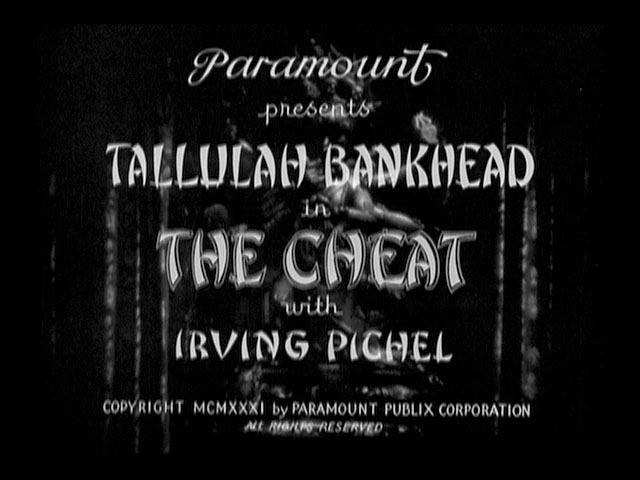
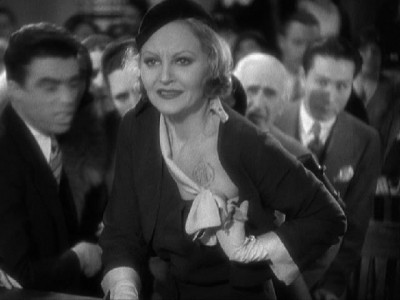
Take for example 1931’s The Cheat.  Tallulah Bankhead plays Elsa Carlyle.  Elsa is married to a boring but decent man named Jeff (Harvey Stephens).  Jeff makes money and then Elsa spends it.  Elsa is also a compulsive gambler and, after making one ill-fated bet at a local casino, Elsa finds herself owing more than she can pay.

That’s when the wonderfully sinister Hardy Livingstone (Irving Pichel) steps into the picture.  Livingstone is a rich man who has spent the last few years living in Japan.  As Livingstone explains after inviting Elsa back to his shadow-filled mansion, he is obsessed with Japanese culture, especially the idea of having his own personal geisha.  (Admittedly, the film itself promotes the simplistic western assumption of just what exactly a geisha is.  The truth is far more nuanced but — in the film’s defense — the brutish Livingstone doesn’t exactly come across like someone who would be smart enough to perceive or appreciate things like nuance.)  Hardy agrees to pay Elsa’s debt if Elsa agrees to become his personal sex slave.  Rather than tell her husband that she lost their money, Elsa agrees.

However, once Elsa returns home, she discovers that one of Jeff’s business deals has paid off.  They’re rich!  And Elsa now has more than enough money to pay back her gambling debts.  Elsa goes back to Hardy and tells him that the deal is off.  Hardy responds by declaring that Elsa is now his property and, to prove it, he literally brands her in a scene that is all the more disturbing because it is seen almost entirely in silhouette.

(Seriously, this was a pretty intense scene!  Eli Roth has nothing on George Abbott!)

As often happened in the 1930s, all of this leads to Elsa shooting Hardy and Jeff confessing that he did it and being put on trial for attempted murder.  The trial itself is pretty much a standard courtroom drama but it is memorable for the scene in which a bunch of courtroom observers are so offended by one witnesses’s testimony that they spontaneously respond by beating the crap out of the accused.

You can find The Cheat (along with 5 other films) on one of my favorite DVDs, the Pre-Code Hollywood Collection.  It’s a film that I highly recommend to anyone who wants to see just how sordid a Pre-Code Hollywood film could truly be.  Along with appealing to our historical curiosity, The Cheat also features an excellent lead performance from the legendary Tallulah Bankhead and a perfectly villainous turn from Irving Pichel.  Finally, like many Pre-Code films, The Cheat serves as an interesting walking tour through the usually hidden recesses of the American psyche.  In short, it’s a valuable portrait of the type of worldview that the Production Code was supposed to banish from existence.

The Cheat

Embracing the Melodrama #3: Body and Soul (dir by Oscar Micheaux)


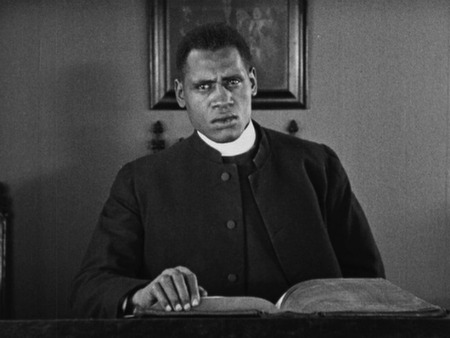
Paul Robeson in Body and Soul

Let’s continue to embrace the melodrama with the 1925 silent “race” film, Body and Soul.

Body and Soul was directed by Oscar Micheaux, who may not be a household name but who is still a very important figure in the development of American film.  Though he may be forgotten today, Micheaux was the first major African-American filmmaker.  At a time when the major studios were only willing to use black actors as comic relief, Micheaux made films that attempted to seriously deal with race relations and provide a realistic portrait of black life in America.  As a result, Micheaux’s films serve as a historical record of a community that, for most of the 20s, was either ignored or condescended to by the majority of American films.  While Micheaux is believed to have directed 26 silent films, only 3 are known to have survived.  Of those three, Body and Soul is the best known and the most acclaimed.

In Body and Soul, Paul Robeson plays an escaped prisoner who, upon finding himself in the predominantly black town of Tatesville, Georgia, takes on the false identity of the Rt. Rev. Isaiah T. Jenkins.  While the majority of the citizens in town take one look at Jenkins’s collar and assume that he must actually be a man of God, Jenkins spends his private time drinking and coming up with schemes to swindle his congregation out of their money.  Jenkins also pursues a member of his congregation, Isabelle (Julia Theresa Russell), despite the fact that Isabelle is in love with the poor but decent Sylvester (who also happens to be Jenkins’ brother and who is also played by Robeson).  It all leads to tragedy, death, murder.  Indeed, for a film that was made and released in 1925, Body and Soul is surprisingly critical of organized religion.  Or, at least, it is until the awkwardly uplifting ending, which is best ignored.

For those of us who were raised on special effects and sweeping camera movements, there’s always a moment of adjustment that comes whenever we start to watch a silent film.  We tend to take cinematic magic for granted and, as a result, we are often surprised by the largely stationary camera, the minimal sets, and the overly theatrical style of performance that largely typifies the silent era.  All of these elements are present in this film but, once you adjust to the style of a different era, Body and Soul actually hold up fairly well.  If nothing else, the film’s portrait of a corrupt and decadent clergy is just as relevant today as it probably was in 1925.  But, to be honest, the film is mostly worth watching for Paul Robeson’s wonderful lead performance.  While he’s a bit on the dull side as Sylvester (but, then again, Sylvester is a dull character), Robeson turns Rev. Jenkins into a charismatic and magnetic force of corruption.  Whereas a lot of other actors (especially in the silent era) would have gone far too overboard with Jenkins’ villainy, Robeson plays up the reverend’s sinister charm.  As a result, Body and Soul remains both a valuable piece of cinematic history and a watchable melodrama.

Watch it below!


Embracing the Melodrama #2: Manslaughter (dir by Cecil B. DeMille)


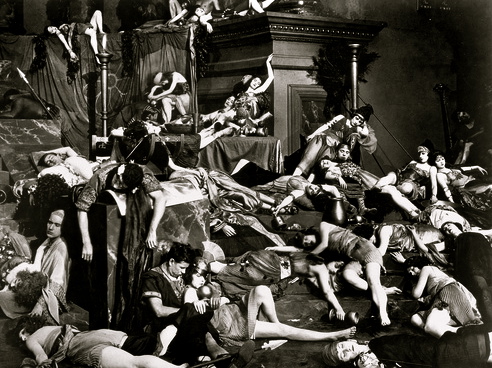
Manslaughter Orgy

Manslaughter Orgy

You really can’t talk about film melodrama without talking about Cecil B. DeMille.

From a modern perspective, we tend to dismiss DeMille as simply being the director of the fun but undeniably campy version of The Ten Commandments that pops up on TV every Easter.  Those of us who know our Oscar history are usually quick to roll our eyes over the fact that DeMille’s film The Greatest Show On Earth won best picture over High Noon, The Quiet Man, Moulin Rogue, and such unnominated films as Singin’ In The Rain and The Bad and the Beautiful.  For those who know the history of the blacklist, DeMille is a convenient villain — a director who supported the blacklist while other more critically admired directors like John Huston and John Ford spoke out against it.  In fact, it sometimes seems that the only positive thing you hear about Cecil B. DeMille is that, when he showed up playing himself in Sunset Boulevard, he came across as being a nice man.

But, when you actually study the history of American film, it becomes obvious that — even if he’ll never be a critical favorite — Cecil B. DeMille is one of the most important figures in the history of American film.  Starting in 1913, DeMille directed movies for over 43 years.  In many ways, he was one of the first directors to truly understand how to best exploit the commercial possibilities of a good melodrama.  DeMille understood that audiences enjoyed watching sin at the start and during the middle of a film as long as a healthy dose of salvation was present at the end.  That salvation allowed audiences to embrace the sin without having to deal with guilt.  With his early silent films, DeMille established the formula that is still used in cinematic melodrama to this day.

Consider, for example, DeMille’s 1922 film Manslaughter.

Manslaughter tells the story of Lydia (Leatrice Joy), a wealthy young woman who — much like me — likes to drive fast and dance.  As we’re told in one of the opening title cards, “Her proud boast is that life has never stopped her!”  When we first meet Lydia, she’s in her car and she’s racing alongside a train.  When a cop pulls her over for speeding, Lydia nonchalantly bribes him with an expensive bracelet.  (Myself, I always just cry whenever I get stopped for speeding.  It’s just as effective and far less expensive.)

Lydia has a boyfriend, a rather self-righteous district attorney named Daniel O’Bannon (played by Thomas Meighan, a familiar face to those of us who enjoy silent melodrama).  We are informed that Daniel loves Lydia for the “girl he thinks she could be, not for the girl she is.”  Apparently, that’s meant to be romantic.  I don’t know — if a guy ever said that to me, I’d probably slap him.  And then I’d get my boyfriend to beat him up…

As Daniel watches Lydia drink and dance her way through a decadent Christmas celebration (which is captured, in loving and fascinating detail, by DeMille), he tells her, “Don’t you think you better put on the brakes before life does it for you?”

“Modern girls don’t sit home and knit!” Lydia replies.  (You go, Lydia!)

Eventually, Daniel finds himself musing that “we’re no different than Rome.”  He then proceeds to visualize all of the party goers taking part in a massive Roman orgy… (Daniel also visualizes what is reportedly one of the first same sex kisses to ever appear in a mainstream American film.)

Anyway, as you might be able to guess from the title, Lydia eventually kills someone with her reckless driving and guess who ends up prosecuting her in court?  None other than Daniel, who links Lydia’s irresponsible behavior to — you guessed it — the collapse of ancient Rome.  While Lydia find salvation in prison, Daniel starts to embrace the very sin that he originally railed against…

Manslaughter has got a reputation for being one of DeMille’s weaker silent films.  It’s definitely heavy-handed in its moralizing and Meighan, as good as he may have been in films like The Racket, is actually pretty boring here.  However, I still enjoyed Manslaughter, or I should say that I enjoyed the scenes in Manslaughter that unapologetically celebrated the decadence of Lydia’s life.  Leatrice Joy gives a fun and likable performance in those scenes and how can you not enjoy watching people get wild in the 1920s?

Watch Manslaughter below!