‘Interstellar’ Trailer #3


tumblr_n5og0iDbkk1rhmne4o2_500

(Trailer pulled from the official website where it can also be accessed with code: 7201969)

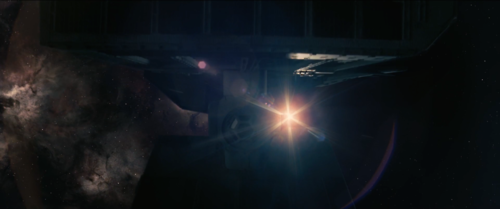
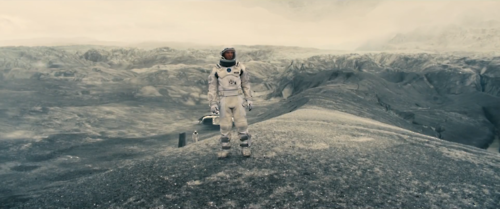
‘Interstellar’, directed by Christopher Nolan (‘Inception’, ‘The Dark Knight’), stars Matthew McConaughey, Jessica Chastain, Anne Hathaway, Casey Affleck, Michael Caine and many others. It is set in a not so distant future in which resources on earth are running low and a group of astronauts/explorers blast off to utilize “wormholes” to find habitable and resource rich planets outside of our solar system. The music is by Nolan’s go-to composer Hans Zimmer, and the cinematography by Hoyte Van Hoytema (‘Her’, ‘Let The Right One In’).

tumblr_n9jgn01DWX1sjygc4o1_500

tumblr_n9jgn01DWX1sjygc4o3_500

tumblr_n9jgn01DWX1sjygc4o5_500

I personally love astronomy and astrophysics. I love space, and have a mild obsession with Saturn. So when I say I am excited for ‘Interstellar’ it isn’t just because I am a fan of Nolan, or I am wrapped up in the wave of hype that tends to surround his films. I have a genuine personal interest in the science and themes involved here and so my expectations for this, even with all the confidence I have in its (amazing) cast and crew, are probably higher than any other release in 2014. Luckily the first full length trailer was beautifully made and was exactly what I wanted to see; and now this new trailer (which showed at Comic-Con) expands on the first, offering us even more of a glimpse as to what we are to expect…and boy oh boy does it look amazing. It has a genuine ‘Inception’ meets ‘2001: A Space Odyssey’ tone and look to it; and I can not wait to see those visuals in IMAX. Sadly it doesn’t hit theaters until November 6th…but until then I’ll be sitting here, with the trailer on loop *cries*.

tumblr_n5og0iDbkk1rhmne4o3_500


‘Mad Max: Fury Road’ Comic-Con Trailer!


Above is the new trailer for ‘Mad Max: Fury Road’ which finds George Miller returning to “reboot” the ‘Mad Max’ trilogy he wrote and directed almost three decades ago. The film stars Tom Hardy as Max (previously played by Mel Gibson), and the most recent official synopsis is below:


Haunted by his turbulent past, Mad Max believes the best way to survive is to wander alone. Nevertheless, he becomes swept up with a group fleeing across the Wasteland in a War Rig driven by an elite Imperator, Furiosa (Charlize Theron). They are escaping a Citadel tyrannized by the Immortan Joe, from whom something irreplaceable has been taken. Enraged, the Warlord marshals all his gangs and pursues the rebels ruthlessly in the high-octane Road War that follows.


This thing has been in production since forever and so I for one am SO excited that it is finally here. The ‘Mad Max’ trilogy is my second favorite action franchise behind ‘Lethal Weapon’.  The footage has a very visceral high octane tone and the plot and destruction seems on par with ‘The Road Warrior’. The best part of it all of course are the practical effects. Last I heard there were a couple hundred cars and bikes created and destroyed during the films lengthy production, and there is very little CGI (compared at least to most blockbusters).

Pretty safe to say that this is near the top of my most anticipated films of 2015 list. Screw all that DC and Marvel nonsense…GIVE ME ‘FURY ROAD’!


Trash Film Guru Vs. The Summer Blockbusters : “Hercules”


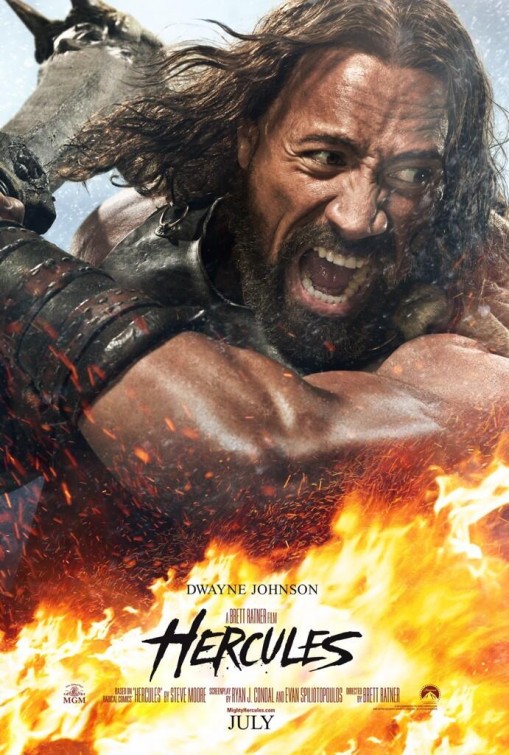
hercules-rock-poster1

It’s been a weird week at the movies for yours truly, my friends : first off, I went to the theater three times this week, which almost never happens anymore (what do you think I am, rich?), and secondly, while I enjoyed The Purge : Anarchy about as much as I expected to (which is to say quite a bit), the other two flicks I saw both took me by surprise for different reasons : I was far less impressed with Richard Linklater’s much-celebrated Boyhood than I expected to be, and I ended up liking Brett Ratner’s new take on Hercules waaaaaayyyy more than I figured I was going to.

Though not because of anything Ratner himself did. But we’ll get to all that in a minute.

Full disclosure : I only went to see Hercules because my dad wanted to check it out. He’s a sucker for this kind of thing (he absolutely loves the old Kevin Sorbo TV series), and my mom wouldn’t touch a movie like this with a ten-foot pole, so when he mentioned he was hoping to check it out, I said I’d go with him. We’ve all gotta spend time with our parents while they’re still with us, right? But it’s fair to say, given Ratner’s involvement with this thing, that I wasn’t expecting much.

And ya know? He doesn’t deliver much — the direction here isn’t actively bad by any means, but it’s pretty straightforward stuff : the numerous “big battle” scenes are handled competently, and the actors by and large turn in decent enough performances, but there’s no real unique authorial stamp on any of the proceedings, and frankly, a  lot of the CGI is several rungs below what we’ve come to expect from these mega-budget summer popcorn flicks. All in all, technically speaking, it’s a fairly mixed bag.

Why, then, did I find myself pleasantly surprised by this latest (and third so far this year alone, by my count) take on Greek mythology’s most famous demi-god warrior? Simply put, the script offers a neat revisionist take on the hero, and is smart, intelligent, engaging, and surprising — it’s entirely unlike any iteration of the character we’ve seen before, and for my part, I really dug it.
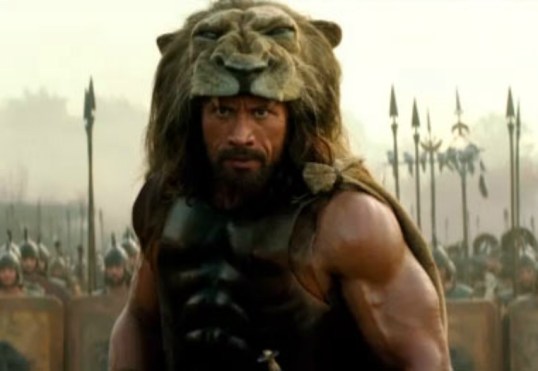
hercules-dwayne-johnson1

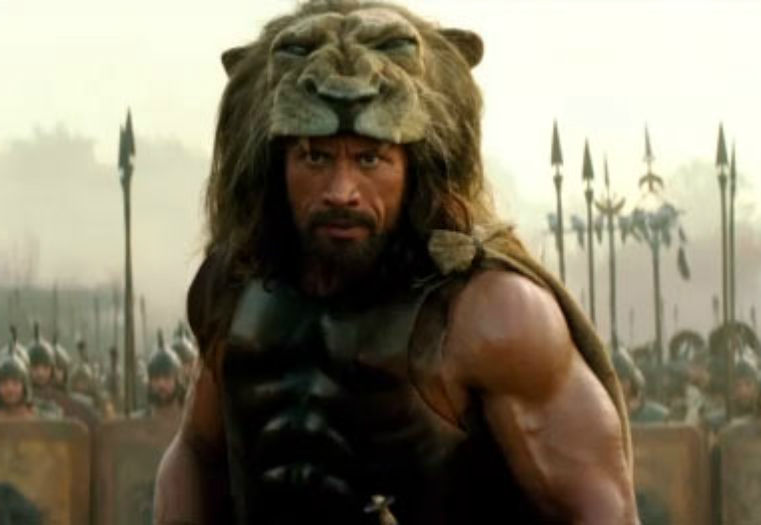
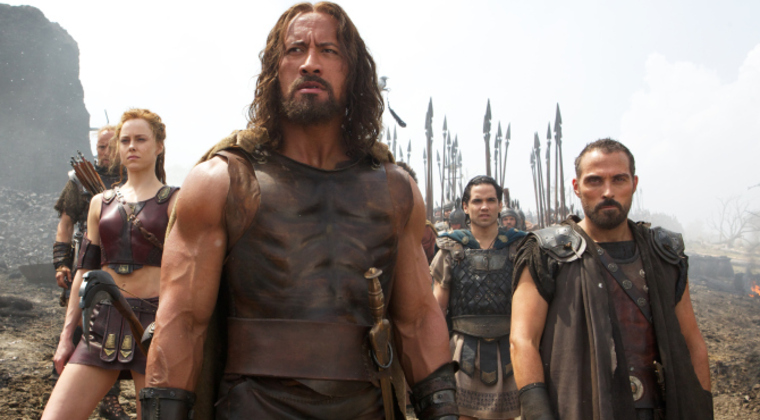
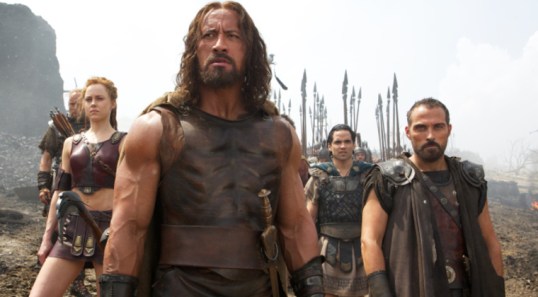
Before I give all of the (or even any) credit to screenwriters Ryan Condal and Evan Spiliotopoulos for this film’s suceess, though, let me state for the record that Dwayne “The Rock” Johnson is perfectly likable in the title role, and while he may be a pretty conservative casting choice, that’s okay — he’s more or less pitch-perfect and his supporting actors (including Ian McShane, Rufus Sewell, and Ingrid Bolso Berdal as members of his mostly-merry mercenary band and John Hurt and Joseph Fiennes as the film’s principal villains) do their jobs well, too. So kudos to everyone for putting in an honest day’s labor all the way through here. But let’s get back to the novel new twist on the whole legend/premise here, shall we?

This Hercules is radically different to his predecessors not just because he can actually talk (something Arnold Schwarzenegger, Lou Ferrigno, and Steve Reeves really weren’t so great at when they tackled the role), but because he a) may not actually be the son of Zeus; b) is leader of a group of freelance soldiers-for-hire; and c) was driven from his home after having name dragged through the mud for supposedly killing his own family. Told’ja this was a new set-up, didn’t I?

There are also some intriguing moral complexities woven into the story that I won’t give away here — hey, I want to keep things at least nominally “spoiler-free” when and where I can — and the interpersonal relationships between Hercules and his fellow travelers — as well as those they lend/sell their services to along the way — have considerably more depth than any reasonable human being would expect from action movie fare such as this. I was both mightily impressed by this intriguing series of twists, and frankly taken more than just a little aback by them. It wasn’t until the end credits rolled that my “aha!” moment came and I realized I shouldn’t have been shocked at all, if only I’d done a little bit of homework beforehand.
images

As it turns out, Ratner’s film is an adaptation of a comics series (well, two comics series, actually) penned by the late, great Steve Moore. I don’t know much about the publisher of these books, an outfit called Radical Comics , but I do know plenty about Steve Moore, and you should, too. Moore, who passed away from natural causes at his home earlier this year, is probably best known to comics fans as Alan Moore’s best friend (no relation despite sharing the same last name), and was a genuinely remarkable talent and, by all accounts, a genuinely remarkable human being. His comics work was sporadic, but he was at the forefront of the “British Invasion” of the early 1980s with works such as the criminally-underappreciated Laser Eraser And Pressbutton, and outside the field of comics he was a regular contributor to Fortean Times magazine as well as being a part-time musician and experienced occultist. He lived his entire life in the house he was born in and apparently carried on a decades-long erotic/romantic relationship with a moon goddess entity known as Cybele. All in all, then, a thoroughly interesting guy, as well as being an insanely talented creative force.

I wish I’d known about his Herclues comics when they came out — I don’t know if they just didn’t get very good US distribution or what (the cover of the first issue is pictured above), but I honestly don’t recall ever seeing a single copy of any of them out on the shelves at my local comic shop, and I’m there every week. A quick search on Amazon shows that two trade paperback collections of the series are available, but one is out of print and commanding rather high prices. Oh well, think I’ll probably order it up anyway.

Here’s the kicker, though — as much as I enjoyed this flick, now I feel kinda bad for  having shelled out any cash on it. Why, you ask? Because Steve Moore’s surviving family isn’t getting a dime off it. A quick Google search shows that Alan Moore has been absolutely up in arms about how his recently-deceased friend (and, in many respects, mentor) has been screwed over by the producers of the film, and he’s called for a boycott of it. I know, I know — Moore’s got a reputation for being a curmudgeon and for telling people not to buy, well, anything, but the damn thing is, more often than not, he’s absolutely right. The cinematic adaptation of The League Of Extraordinary Gentlemen was, in fact, every bit as horrendous as he claimed it was going to be, the Before Watchmen comics were by and large positively awful, and the V For Vendetta movie was an atrocious dumbing-down of his far superior original work. Yeah, he was none too pleased about the Watchmen film, either, but I won’t use that as an example of him being correct because by and large I kinda liked that one. Still, his criticisms are spot-on more often than not.
HERCULES

So here’s what I’m thinking knowing what I know now : Ratner’s Hercules is, in fact, a far superior effort than I felt sure it would be going in, yes — but it’s probably nowhere near as good as the comics it was based on, and the fact that Steve Moore got swindled — even (and especially) after death — from seeing so much as a penny from a big-budget adaptation of his work is positively unconscionable. Again, I haven’t read any of these comics yet, but it’s a safe bet that anything good that survived the translation from the printed page to the screen is only there because Steve Moore put it there in the first place. In short, he’s the main reason this movie is actually pretty damn good, and that makes perfect sense when you think about it because you know full well Ratner isn’t capable of delivering the goods on his own. We all remember Red Dragon, don’t we?

Okay, fair enough — I’ve tried my best to put that out of my mind, too.

So in the end I guess I’m left with something of an ethical conundrum here — I liked Herclues. I really did. But mostly for its unique and original story. And now that I know the story behind that story (whoops, I’m being repetitious here, sorry), I sorta wish I’d never seen the thing. Okay, on that note. I’m off to Amazon to order up these books.

 

‘Lucy’ Review (dir. Luc Besson)


650_1000_lucy-poster

You should probably be forewarned – ‘Lucy’ is nothing like the film the marketing would make you believe. It requires one to go in with an open mind…just also be prepared for that mind to be set of fire and stomped into a mush…for better or worse.

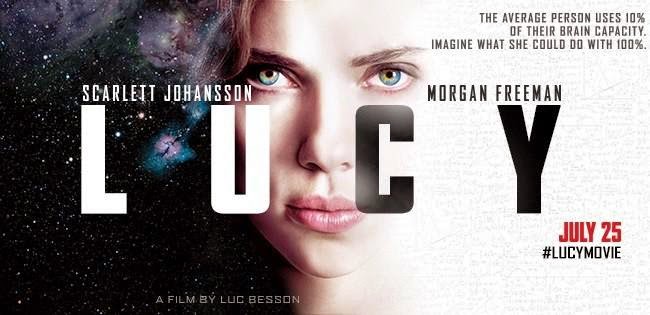
The film stars Scarlett Johansson as Lucy, a young American student in Taiwan, who is kidnapped and forced to be a drug mule. The drug she must transport is a new one named CPH4, derived from the chemicals that a mother’s body sends its developing baby, which is surgically placed into her lower abdomen. During the transport she is beaten, causing the bag holding it to puncture, and the drug to be released into her system. The drug begins to change her at a cellular level giving her access to more of her brains potential.

I think it needs to be said that the film is not trying to say we only use 10% of the physical brain (which is the debunked myth) but rather that we only utilize 10% of its potential. Think of it not as an engine only using 10% of its parts, but rather an engine that uses 100% of its parts but only outputs 10% of the power it should and can produce. Then think of the drug, like a more powerful engine fuel, allowing the brain to generate 100% power.

As her knowledge and cerebral capacity grows the film takes some really weird turns as it plays around with the idea of what exactly the human mind could achieve once its full potential is unlocked. Could we control all the cells in our body? Could we control others? Could we feel and manipulate matter and energy? Once you can control both, can you then control time? She begins to be able to see through people, enter their memories, see the energy output of cells, change her hair color, control radio waves…and a whole lot of other crazy stuff. To better understand what is happening to her, and to help pass on the knowledge she is beginning to learn, she sets out to meet a professor who studied and theorized the very changes she is undergoing.

Lucy 1

During all this Lucy is also being hunted by the gangsters who want their drug back. This is where the film is arguably at its worst. It leads to some ridiculous shoot outs – and one somewhat out of the blue car chase – which don’t really add much to the overall film. They do create a slight feeling of suspense, but once you get into the scientific and philosophical areas that ‘Lucy’ ventures into, then all the cliché action movie stuff just seems to get in the way.

Luckily none of that really matters as the film’s end approaches and it goes straight past ludicrous speed right into plaid as Lucy, now able to control time, cycles through the history of the earth, right past its creation all the way up to the big bang and beyond. To what end? Perhaps it is to better understand the universe or maybe it is just because she (and Luc Besson) can…there is a lot here that will make you scratch your head. The film definitely tries to be a lot smarter than it is and is built on theories based on theories based on pipe dreams. Still, it never gets any more ridiculous than most superhero-esque films.

Lucy 2

The thing that drives it all ( and really keeps it all together) is Scarlet Johansson’s performance. She once again proves to me that she is one of the most interesting actors working right now. She has chosen so many diverse roles in recent years; and as weird as it may sound there are few actors working right now who can express so much through being so completely expressionless in the way she can. She brought more life and emotion to a computer A.I. than most actors did in live action roles last year; and here, as in ‘Under the Skin’, there is quite a lot going on behind her seemingly blank stare.

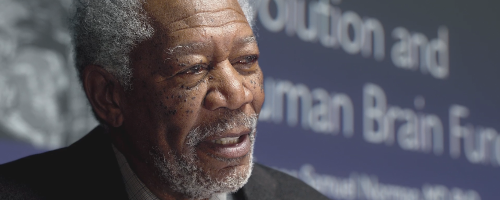
Her co-star Morgan Freeman sadly does little more than offer exposition. He plays a professor who studies neuroscience and evolution and spends most of the film explaining how and why particular things are happening to Lucy. Freeman seems to be the go to for this sort of role. But that voice really is the only thing that can make this sort of pseudoscience seem convincing.

lucy 3

I have to say it truly is amazing that the film works at all. ‘Lucy’ manages to be just as dumb at times as it is smart. But I was able to overlook the silliness of much of it simply for the fact that the film does attempt to ask some interesting questions, even if they don’t make much sense. From start to finish the film travels down such a fun and exciting tongue in cheek rabbit hole of explosions and trippy visuals and I loved every minute of it. It gets so crazy that at one point Benjamin Franklin’s head literally explodes. It is a mishmash of so many ideas and themes, done with such excitement and ambition, that it is hard to hate any of it. As some critics have mentioned, it really is a Besson action film smashed together with ‘2001: A Space Odyssey’ and parts of ‘The Tree of Life’. Even better is that ‘Lucy’ has a fast enough pace and short enough running time to never leave you bored. It is entertainment, definitely not at its best, but surely at its purest and I highly recommend it.

———

More of my nonsense on Twitter.

Trailer: The Imitation Game


Benedict Cumberbatch seems like one of those actors who is destined to eventually get at least one or two Oscar nominations over the course of his career.  Last year, a lot of people thought he might end up getting nominated for The Fifth Estate but then the film came out and promptly bombed.  In 12 Years A Slave, his supporting performance was overshadowed by Michael Fassbender’s more traditionally villainous turn.  If they awarded an Oscar for voice over work (and they really should), then Cumberbatch would have probably picked up the award for bringing Smaug to life in The Hobbit.  

So, Cumberbatch still awaits his first nomination but he might not have to wait too much longer.  In the upcoming Imitation Game, Cumberbatch plays Alan Turing, who was responsible for cracking Germany’s secret code during World War II.  After the war, Turing was prosecuted under the UK’s anti-gay laws.  This is one of those true stores that would seem to be the right film at the right time to be a potential Oscar contender.

A trailer — which focuses on Turing’s work during World War II and only hints at the persecution that would define the rest of his life — was released earlier today.  And you can watch it below!

Wasted Youth : Richard Linklater’s “Boyhood”


MV5BMTYzNDc2MDc0N15BMl5BanBnXkFtZTgwOTcwMDQ5MTE@._V1_SX640_SY720_

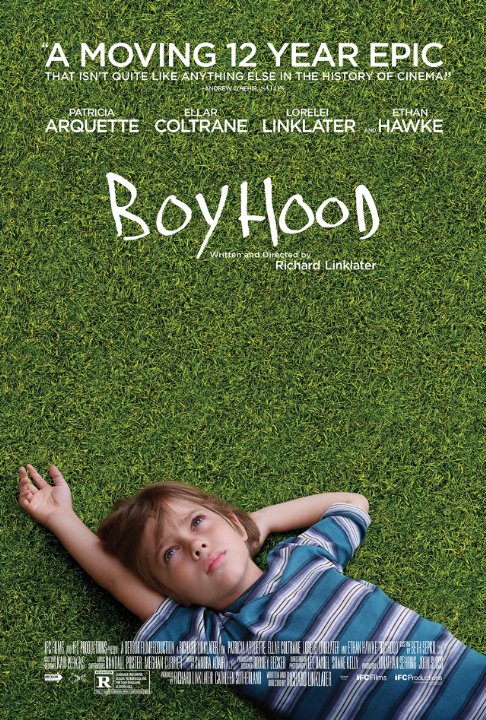
It’s safe to say that there’s no film other film in 2014 that I was more predisposed toward liking before ever having seen in that Richard Linklater’s Boyhood. Anyone who follows my “byline” at any of the various sites I write for (please! Get something better to do with your time!) even occasionally will know that I’m a tremendous fan of the director’s other works — from his superb animated efforts such as A Scanner Darkly  and Waking Life to his honest and heartfelt live-action films such as Bernie, School Of Rock, Fast Food Nation, Dazed And Confused, and his breakthrough hit, Slacker (which I just recently reviewed through decidedly rose-tinted nostalgic lenses),  the guy just has the magic touch, in my opinion. Heck, even his Bad News Bears remake was kinda fun, if you ask me.  And, of course, the three films in his hopefully-still-ongoing “Before” series aren’t just great movies, but flat-out events in my life when they come out. I love ’em to pieces and make no apologies for it. Jesse and Celine may not be real people, but they’re still my fucking friends, goddamnit.

And yet for one reason or another it seems Linklater always flies below the radar. Maybe it’s because his naturalistic, unforced style doesn’t command attention. He’s not one to overpower you with sentimentality or melodrama, and the almost nonchalant nature of his work trusts the audience to be smart enough to make up its own collective mind about the stories he’s bringing to the screen. I like that. I think we need more filmmakers who aren’t out to either manipulate our emotions or “wow” us with their technique. Linklater goes about his business with respect for his stories, his characters, and his viewership — and while that may not win him a ton of awards, it certainly earns him my respect.

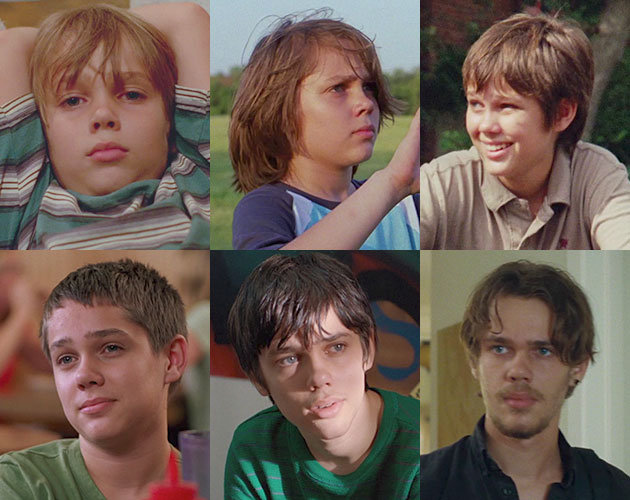
All that’s changing now, though. After over two decades operating, for the most part, on the margins (not that he doesn’t have a devoted fan base, it’s just not a terribly large one, comparatively speaking), the finished result of his grand 12-year-epic centered on young actor Ellar Coltrane as he ages from 7 to 19, Boyhood (originally titled 12 Years but re-named at the last minute to avoid confusion with recent Academy Award best picture winner 12 Years A Slave) is finally here, and Linklater’s richly-deserved moment in the spotlight has finally arrived. He’s made it to the to the top of the mountain. He’s the talk of the town. The man of the hour. The toast of Hollywood.

And ya know what? He deserves to be. I’m just not so sure he deserves it for this particular film.

b42cc340-cc96-11e3-8c33-07445b2e2595_boyhood-main

Don’t get me wrong — Boyhood is pretty good stuff in many respects. What Linklater’s pulled off here is certainly remarkable — getting essentially the same cast together year in and year out (the principle players being Coltrane as growing boy Mason, Patricia Arquette and Ethan Hawke as his divorced-from-the-film’s-outset parents, and the writer/director’s own daughter, Lorelei, as older sister Samantha) to make a series of short films that would eventually be assembled into one “grand work” is ambitious and bold and frankly just plain tough to work out logistically. So my hat’s off to to him for even realizing a project of this scope and magnitude.

I just wish the finished product were anywhere near as powerful, affecting, and awe-inspiring as we’re being told it is by the paid dictators of consensus opinion out there. The exploration of aging and the different stages we go through on, to sound unbearably pompous for a moment, life’s journey aren’t even particularly new themes for Linklater to explore — as a matter of fact, it’s what the “Before” series is all about, and they tackle the subject much better than this flick does. So maybe the folks who make their living telling us all what to think are just making up for lost time by showering accolades all over Boyhood after largely ignoring last year’s Before Midnight. Or maybe they honestly just like this one better because their taste isn’t all that great, I dunno.

In any case, I’ve still got a few good things to say about this before I lay out my gripes, so let me say that Linklater is to be commended for the smooth, easy flow with which he transitions from one scene to the next, and for letting events in the story take their time and “breathe” a bit without resorting to strict formulas of, say, 15 minutes per year or somesuch. Each and every actor is also to be congratulated for their work here, as the performances are quite simply astonishing. Yeah, Coltrane is obviously the star of the show, and watching him grow up in front of our eyes is every bit the amazing experience everyone makes it out to be, but all the other major players turn in terrific work, as well, as do many of the minor ones (Marco Perella deserves special mention here for his role as Mason’s troubled — and troubling — stepfather-for-a-time). So kudos to everybody involved for some truly great work.

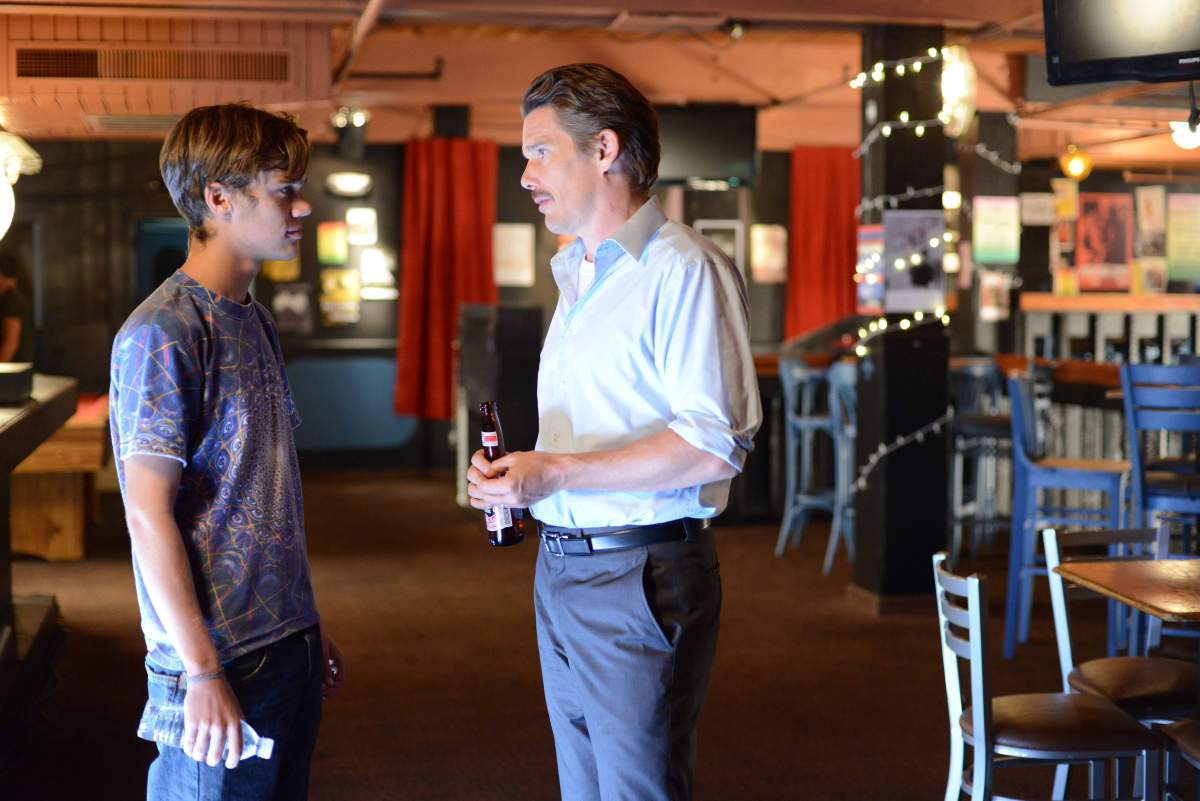
Here’s the rub, though (you knew it was coming) — the material they’ve got to work with just ain’t all that hot. Linklater has taken his non-manipulative approach (you know, the one I was just praising him for) to  near-pathological extremes here and the end result is a film that feels almost clinically removed from its own subjects. Add in the disappointing fact that many of his characters are one-note ciphers — Mason’s mother gets an education and improves her economic and social standing over the years but still can’t help but marry one alcoholic loser after another, while his father  laregely remains a go-nowhere “slacker” for ages (Hawke spends the first half of the film essentially playing Jesse Wallace) before undergoing an instant transformation and getting a new wife, new baby, new mustache, and, apparently, his shit together all at the same time — and what we wind up with is a movie that never transcends its origins as a cinematic experiment,  as well as one that’s populated not by leaving, breathing people so much as specimens floating around in a celluloid petri dish.

Boyhood Image

I’m not foolish enough to think that unfairly-high expectations going in didn’t have something to do with why I left the theater feeling so flat after this one — shit, a 99% score on Rotten Tomatoes is flat-out unheard of — but even if this had been made by somebody I’d never heard of and landed on our screens out of nowhere, I’d still be less than awestruck by the finished product. I fully appreciate everything Linklater was trying to do here, sure, but what he’s ended up doing is completing what amounts to a 12-year-long sociological study that’s so concerned with preserving the integrity of its ground rules (don’t force anything, adhere to faux-documentary stylings at all costs, let things play out as absolutely naturally as you can possibly manage given you’re still working from a script, etc.) that it forgets it has an audience to win over. I admire Linklater for protecting his characters from directorial heavy-handedness, to be sure, but it’s a shame he wasn’t able to find a way to share their story that would have let us in while still keeping the melodrama and schmaltz out.

richard-linklaters-boyhood-movie-film-still-ellar-coltrane

So yeah, Boyhood definitely came up short for this armchair critic, despite the fact that I was rooting for it as hard as anyone. Walling off your characters to prevent Lifetime-movie-of-the-week-style syrup from oozing into their protective membrane is  one thing, but walling them off from from genuine viewer involvement results in a film that feels oddly disconnected, even divorced, from events that could be so much more effectively communicated if given even an ounce of immediacy. We want to care about Mason and his family beyond the level that Linklater allows us to , but he never lets us, or himself, get that close, and its  for that reason that Boyhood will always remain much more interesting for what it does than for what it actually is. Maybe he’ll give us another installment in 2026 that corrects the mistakes he made here?  Chuckle at the idea all you want, but no one saw a sequel to Before Sunrise coming, either.


Film Review: Deliver Us From Evil (dir by Scott Derrickson)


Deliver_Us_from_Evil_(2014_film)_posterI had high hopes for Deliver Us From Evil, largely because it was directed by Scott Derrickson who, in 2012, gave us the wonderfully atmospheric and disturbing Sinister.  Unfortunately, having now seen Deliver Us From Evil, I can only call it the anti-Sinister.  Whereas Sinister took the viewers by surprise, Deliver Us From Evil is predictable.  Whereas Sinister was full of genuinely disturbing moments, Deliver Us From Evil is full of jump scenes that are scary for a few seconds but then swiftly vanish from the memory.  Whereas Sinister was fascinating for featuring a morally ambiguous hero, Deliver Us From Evil features a hero who is so mundanely heroic that you find yourself hoping that he’ll fail just as punishment for his smug hubris.

Perhaps the only way that Deliver Us From Evil tops Sinisteris that it features none other than the King of Television Snark, Joel McHale.  As someone who loves both The Soup and Community, I’m always happy to see Joel but he’s oddly cast here, playing a muscle-bound, adrenaline junkie cop.  It’s not that Joel does a bad job.  In fact, he’s probably the most likable and compelling character in the entire film.  It’s just that you can’t look at him on screen without asking, “Joel, why are you here!?”

Anyway, Deliver Us From Evil is pretty much your standard demonic possession/cop thriller hybrid.  Mysterious murders are being committed.  The murderers speak in a weird language and, it soon turns out, all of them are linked both to the discovery of ancient tomb in Iraq and to a painting company that was started by a group of returning veterans.  It’s up to cops Ralph Sarchie (Eric Bana) and Parker (Joel McHale – why, Joel, why!?) to solve the crime.  Helping them along the way is a former drug addict priest named Mendoza (Edgar Ramirez).  If you’re guessing that the whole thing leads to a violent exorcism on a stormy night – well, you’re definitely on the right track.

Scott Derrickson does the best that he can with the material but he’s hampered by the fact that the film is based on a book that was written by the real-life Ralph Sarchie.  Perhaps as a result, the film’s Ralph is such an upright and moral hero (though he does yell at his daughter in one unpleasant moment but even that is excused as simply being evidence of how personally Ralph takes his job) that he’s also not that interesting of a character.  Eric Bana, who is actually a pretty good comedic actor, struggles to find some sort of depth to Ralph but ultimately, it’s just not there.  And since 90% of horror is psychological, Deliver Us From Evil cannot recover from revolving around such a flat protagonist.

As a result, Derrickson has little option but to fill the film with standard horror movie scenes.  The scenes, as themselves, work well enough but the story is so predictable that they don’t make much of an impact.  The end result is a film that you’ve seen a hundred times before.

The only difference, of course, is that this version features Joel McHale dancing around with a knife.

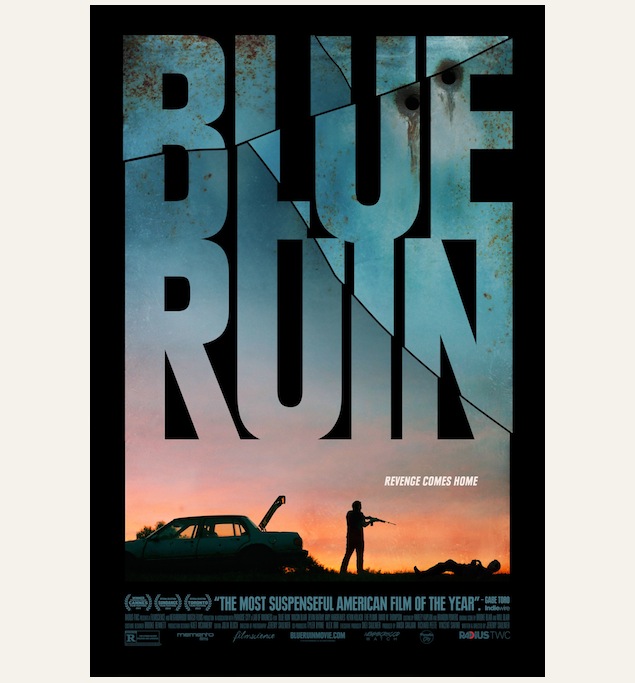
Embracing the Melodrama #60: Blue Ruin (dir by Jeremy Saulnier)


Blue Ruin

Well, all good things must come to an end and here it is.  This is the final entry in a little series that I like to call Embracing the Melodrama.  For the past two weeks, I’ve been reviewing, in chronological order, 60 of the most and least memorable melodramas ever filmed.  We’ve looked at everything from films that were nominated for (and occasionally won) Oscars to films that played in a few grindhouses and drive-ins before disappearing into obscurity.  We’ve reviewed big budget spectaculars and movies that were apparently filmed for less money than I typically spend during a weekend shopping spree.  I hope that you’ve enjoyed reading these reviews as much as I’ve enjoyed writing them.  If I’ve introduced you to a film you previously did not know or if I’ve inspired you to track down and watch an old classic, then I’ve accomplished what I set out to do and I’m happy.  We started this series by looking at a film from 1916 and now, we end it with a movie that was released into theaters just a few months ago.

That film is Blue Ruin and, if you haven’t seen it yet, you really should.

Now, I want to be careful just how much I tell you about Blue Ruin‘s story because, much like the thematically similar Cold In July, Blue Ruin may start out like a standard thriller but it soon moves in unexpected and surprising directions.  It’s not so much that the film’s plot is unpredictable (in fact, one of the film’s strengths is that the story told is essentially a simple one) as much as it’s the fact that the film adds an element of ambiguity to that plot that forces you to reconsider all of your preconceived notions.  Blue Ruin is a revenge film for people who like to think.

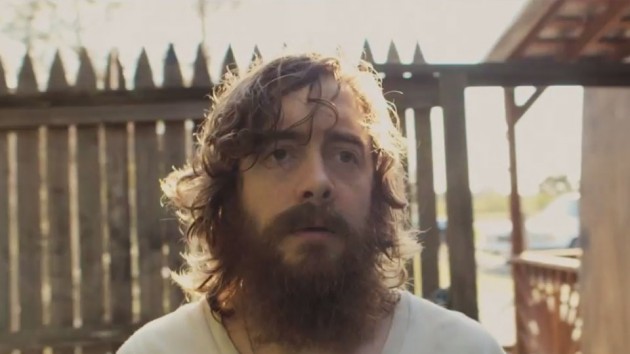
Blue Ruin opens with the bearded and clearly unstable Dwight (Macon Blair) going through trash cans and dumpsters in search of food.  Dwight lives in his filthy car and it quickly becomes obvious that, despite Dwight’s disheveled appearance, he’s not really much of a threat to anyone.  Instead, he simply wants to be left alone.  However, one day, Dwight is approached by a friendly police officer who tells him that a man named Wade Cleland has been replaced from prison.  The suddenly motivated Dwight responds by driving his car to the prison and watching as Wade is released.  Dwight than manages to get a knife (after first trying to steal a gun and failing so completely that you can’t help but feel sorry for him) and goes to the small country bar where Wade and his family are celebrating his freedom.  Dwight manages to get into the club and, after a brutal fight, fatally stabs Wade in the temple.

Macon Blair in Blue Ruin

Macon Blair in Blue Ruin

The rest of the film deals with both the reasons behind and the consequences of Dwight’s actions and it would not be right for me to spoil the film any more than I already have.  Let’s just say that neither Dwight nor the Clelands turn out to be quite who we believed them to be.  The crimes of the past aren’t quite as clear-cut as either Dwight or the Clelands initially assumed.  All that is clear is that now that Dwight has taken his revenge, the Clelands now feel the need to take their own revenge.  It’s an endless cycle that’s made all the more complicated by the fact that neither Dwight nor the Clelands are as good at this whole revenge thing as they think.

Chances are that you’ve never heard of Macon Blair.  I hadn’t heard of him until I saw him in this movie.  But, obscure or not, that doesn’t change the fact that, in the role of Dwight, Macon Blair gives one of the best performances of the year so far.  He turns Dwight into a sort of mentally unstable everyman and, as a result, Dwight is a truly memorable and unexpectedly poignant lead character.

It’s interesting that 2014 has seen the release of several films that feature unlikely and morally ambiguous protagonists dealing with violence, revenge, and secrets in the South.  Blue Ruin joins Cold In July and Joe as one of the best films of 2014.  And it also provides a high note for which to close out Embracing the Melodrama.

Blue Ruin 2

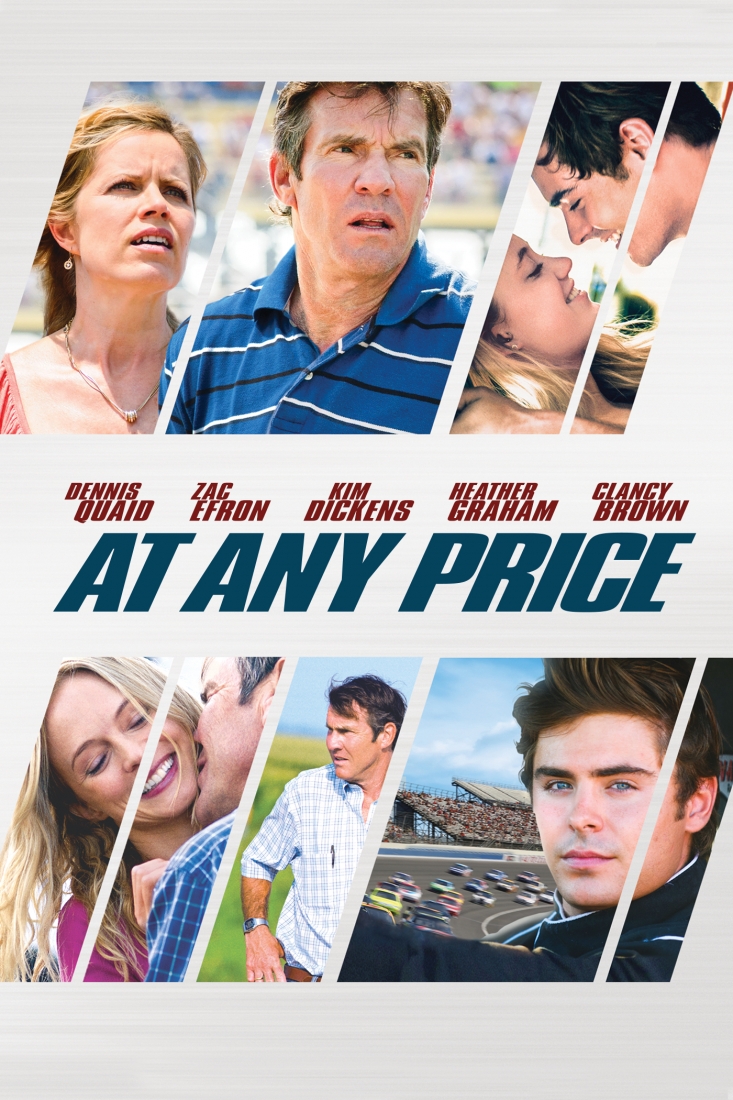
Embracing the Melodrama #59: At Any Price (dir by Ramin Bahrani)


at-any-price-poster-big

With Embracing the Melodrama coming to a close (only two more reviews to go, including this one!), I want to take this opportunity to tell you about a good film from last year that didn’t get quite as much attention as it may have deserved.  The Iowa-set At Any Price is a look at greed, family secrets, and even murder in rural America.  It’s not a perfect film but it features a perfect lead performance from Dennis Quaid and it’s worth taking a chance on.

Dennis Quaid plays Henry Whipple, an Iowa farmer who also works as a sales representative for the Liberty Seed Company.  Henry sells genetically modified seeds and one thing that this film gets absolutely right is just how cut-throat the seed business truly is in the heartland.  Henry is very proud to be the top seed salesman in the county, with only Jim Johnson (Clancy Brown) coming close to matching him.  The film’s best scenes are the ones that follow Henry as he travels along his route, selling seeds, giving away candy bars, and always flashing his wide grin.  It’s only as the film progresses that we start to notice how desperate that grin really is.  Henry, we soon realize, is motivated mainly by greed and fear.  He’s the type of farmer who will go to a stranger’s funeral just to try to buy the deceased’s land.  Henry is also the type of guy who is willing to cut ethical corners to sell seeds as well.  As far as Henry is concerned, he’s only doing what he has to do to make sure that he has a successful business to pass on to his family.

Henry is all about his family and, while that may be his redemption, it’s also his family’s curse because Henry is something of a control freak.  Henry’s loyal wife (Kim Dickens) turns a blind eye to Henry’s mistress (Heather Graham).  Meanwhile, his oldest son has fled Iowa and moved down to South America.  Henry’s remaining son, Dean (Zac Efron), is more interested in pursuing a career in NASCAR than on the family farm.  Eventually, as the result of a shocking and almost random act of violence, Dean is forced to pick his future.

With both Neighbors and That Awkward Moment, Zac Efron has been reinventing himself as a skilled comedic actor.  Before that, however, he appeared in a series of movies that were meant to show his dramatic range, films like The Paperboy, Parkland, and this one.  These films ranged in quality from terrible to good but, in all of them, Zac Efron felt miscast.  Efron is the weak link in At Any Price.  Dean is supposed to be a character driven by both anger and a need to win (at any price — we have a title!) but when we look at Efron’s pretty blue eyes, we’re left with the impression that there’s not much going on behind them.

Far more effective is Dennis Quaid.  Quaid is so likable in the role that it takes a while to realize that Henry is essentially a monster.  And yet, you never totally lose your sympathy for him.  He has his own demons, demons that he’s passing down to his son.  The power of Quaid’s performance is that you can tell he knows he’s wrong but he just can’t stop himself.

At Any Price is a good farmland melodrama, full of beautiful landscapes and carefully observed details.  It’s not a perfect film but it is one worth watching for anyone who is wondering whatever happened to the American dream.

at-any-price-father-son


Embracing the Melodrama #58: The Place Beyond The Pines (dir by Derek Cianfrance)


The-Place-Beyond-The-Pines

First released in 2013, the underrated (and, as far as end-of-the-year awards ago, underappreciated) The Place Beyond The Pines is actually three cinematic melodramas in one.  Much like a great novel, this movie is split into multiple pieces with each part telling a different part of a larger story.  It’s an interesting and ambitious concept, the type that we sometimes fear that audiences are no longer capable of appreciating.

The first third of the story centers on Luke Glanton (Ryan Gosling), a motorcycle stuntman who performs at state fairs.  During one such fair in upstate New York, he meets and has a brief affair with Romina (Eva Mendes, giving an excellent performance).  When he returns to New York a year later, Luke discovers that he is now a father.  Luke quits the fair and decides that he wants to be a part of his son’s life but Romina, who is now in a stable relationship with a good man named Kofi (Mahershala Ali), asks him to stay away.  Determined to be part of his son’s life and also looking to win back Romina, Luke stays in town and gets a job working with Robin (the always excellent Ben Mendelsohn).  Robin owns an auto garage and, as he explains to Luke, he also used to be a bank robber.  Soon, with Robin’s help, Luke is robbing banks and sending the money to Romina.

Place

Luke’s story is probably the strongest in the film.  Ryan Gosling is charismatic as the dangerous yet likable Luke and he and Eva Mendes have a lot of on-screen chemistry.  Ben Mendelsohn brings yet another one of his trademark burned out characters to life and Mahershala Ali is sympathetic as Kofi, a man, who despite being good and responsible, is simply no Ryan Gosling.

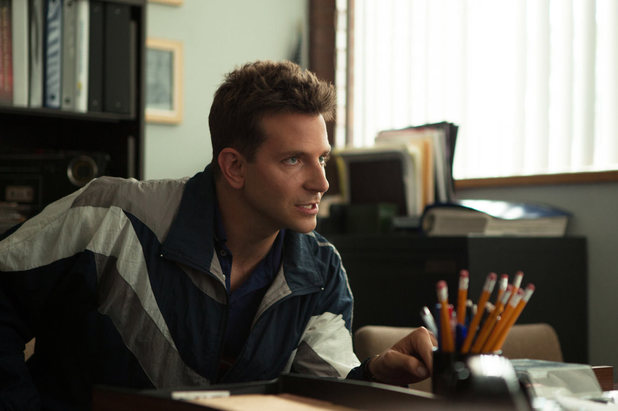
The second part of the story deals with Avery Cross (Bradley Cooper), the cop who chases Luke after one of his bank robberies.  Avery is the politically ambitious son of a former judge (Harris Yulin) and, much like Luke, he also has newborn son.  When Avery is originally hailed as hero for his pursuit of Luke, Avery’s feelings are far more ambivalent.  It gets even more difficult for him when he catches some of his fellow cops (led, of course, by Ray Liotta) stealing the money that Luke sent to Romina.  When Romina rejects Avery’s attempt to return the money to her, Avery is left with little choice but to try to take down the crooked cops himself.  It’s the only way for him to clear his conscience.

movies-the-place-beyond-the-pines-still-7

And, finally, in the third part of the story, teenager Jason Cankham (Dane DeHaan) meets and befriends Avery’s son, AJ (Emory Cohen).  What neither one of them realizes is that Jason is Luke’s son.  The interesting thing here is that the two sons have, on the surface at least, turned out to be the exact opposites of their father.  Jason is the good kid while AJ is probably one of the most despicable movie teenagers of all time.  When Jason learns the truth about both of their fathers, he has to decide whether he’s his father’s son or if he is his own human being.

the-place-beyond-the-pines03

As you might be able to guess from the above plot description, The Place Beyond the Pines is a big epic of a film and, perhaps not surprisingly, the end results are intriguing if occasionally uneven.  The film starts out so strongly with Ryan Gosling roaring down empty roads on his motorcycle that it’s hard for the rest of the movie to live up to that opening’s promise.  And yet somehow, the film manages to do just that.  Even the parts of the film that didn’t particularly intrigue me — like the whole subplot with the corrupt cops — were saved by the efforts of a perfectly chosen cast.  The third and final part of the film provides the perfect climax, helping us to both understand the legacy of Luke Glanton and Avery Cross but also to understand why both of their stories are important, both as individual tales and as parts of a greater whole.

The Place Beyond The Pines may not be perfect, not in the way that a film like Winter’s Bone is perfect.  However, we should still be glad that films like it are being made.

Place-Beyond-the-Pines