What Lisa and the Snarkalecs Watched Last Night #105: Zodiac: Signs of the Apocalypse (dir by W.D. Hogan)


Last night, my friends, the Snarkalecs, and I watched the latest SyFy original film, Zodiac: Signs of the Apocalypse!  So, was Zodiac as good as Sharknado 2, as underrated as End of the World, as overrated as Invasion Roswell, or as bad as Heebie Jeebies?  Or was it just somewhere in between?  Let’s find out!

Zodiac

Why Was I Watching It?

Why were we watching it?  Because I’m a snarkalec and that’s what we do!  We watch original films on SyFy, we tweet along, and we do our best to try to get things to trend.  My hope was that Zodiac would eventually become a trending topic on California and end up freaking out a lot of people who would naturally assume that the legendary Zodiac Killer had finally been caught.  Unfortunately, last night, we were competing with football and this is America.  Nothing beats football.

What Was It About?

Good question.  It was a SyFy movie so naturally, the world was on the verge of ending.  And somehow, the upcoming apocalypse involved the signs of the zodiac and an ancient stone that was found in a deserted mine.  There was a bad business guy named Woodward (Aaron Douglas) or maybe he was a government guy.  But, for some reason, he wanted to get the stone so he could do evil things with it.  Luckily, there were three scientists (Joel Gretsch, Andrea Brooks, and Emily Holmes) and one scientist’s son (Reilly Dolman) who were attempting to save the world.  And Christopher Lloyd was in it, playing yet another scientist who had apparently invented holograms or something like that.  There was also a guy named Marty (Ben Cotton) who was a survivalist and lived in a really spacious bunker.

And let’s see, what else happened?  Fire rained from the sky.  Raging floods soaked the Earth.  Woodward flew around in a helicopter.  The scientists spent a lot of time driving around in an SUV.  A lot of stuff happened.  How it was all related was not always easy to follow but, then again, we all know that if you’re tying to make logical sense out of a SyFy film, you’re doing it wrong.

What Worked?

You know what?  I always think that when people criticize SyFy films, they’re missing the point.  SyFy films are supposed to be silly, the special effects are supposed to be cheap, and the performances are supposed to be melodramatic.  Occasionally — like with Sharknado 2 for instance — these elements come together perfectly.  And then other times, like with Zodiac, the end results are fun for two hours and quickly forgotten about afterward.  Zodiac was no Sharknado 2 but it gave us everything that we typically want from our SyFy films, it was a fun movie to tweet along with, and it gave the viewers a few laughs.

Perhaps not surprisingly, Zodiac was a Canadian film and Canada certainly looked pretty.

What Did Not Work?

For a film that was sold as being about the signs of the apocalypse destroying the world, the greatest sign of all — Scorpio — was sadly underused.  I kept expecting a scorpion-shaped cloud to form in the sky but it never happened!  Speaking as a Scorpio, I was very let down.

“Oh my God!  Just like me!” Moments

My favorite character was Sophie (Andrea Brooks), the kickass scientist who survived being buried alive in a mine, not to mention Aquarius, Capricorn, and Sagittarius!  And she did it all while rocking the traditional SyFy scientist outfit of tank top and tight jeans.  She also had great hair!  If I wasn’t already planning on being the Black Widow, I’d be Sophie for Halloween.  She was the best!

WDH-ZODIAC-2014-Andrea-Brooks-2-compressor

Lessons Learned

Don’t mess with the Zodiac.

Film Review: Nineteen Eighty-Four (dir by Michael Radford)


Nineteen-Eighty-Four

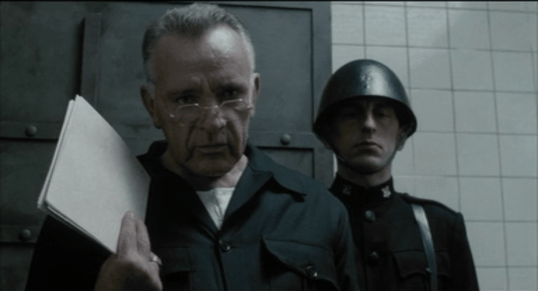
Yesterday, as I was flipping through the channels, I came across a documentary that was being shown on This TV.  The documentary was called Nineteen Eighty-Four and it told the story of a low-level British bureaucrat named Winston Smith (who bore a strong resemblance to a youngish John Hurt)  who, after having a secret affair with a free-spirited woman, was charged with committing “thought crimes” against the state.  As a result, he was tortured by a man named O’Brien (who looked a lot like Richard Burton) until Winston finally came to love the government above all else…

What’s that?

Okay, you caught me.

This movie was not a documentary.  Instead, it was an adaptation of George Orwell’s famous novel about a dystopian future Britain (quite cleverly renamed Airstrip One in both the book and the film) where the citizens spend their time giving thanks to Big Brother, a leader who may or may not actually be a fictional creation of the ruling party.  It’s a world where everyone knows that “Big Brother is watching you” and every day is scheduled around the “two-minute hates” that are directed towards Big Brother’s enemy, Emmanuel Goldstein (who, much like Big Brother, may or may not actually exist).  It’s a world dominated by three separate superstates that are in a state of perpetual war, though we’re also given reason to suspect that the war is just as fictional as Big Brother and Goldstein might be.  It’s a world where order is kept by the Thought Police and history is regularly changed for the benefit of the ruling party.  It’s a world where people can become unpersons and cease to exist and where all good citizens understand that one plus one equals three if the government says that it does.

So, no, it’s not a documentary.

It just feels like one.

Richard Burton 1984

As I watched Nineteen Eight-Four, it was impossible for me not to compare Orwell’s vision of the future (which is faithfully visualized in the film) with our present world.  Even though the book was written in 1948 and this film was shot and released in 1984, it was hard not to feel as if Nineteen Eighty-Four could have just as easily been made yesterday.  Beyond the obvious NSA-as-Big-Brother comparisons that everyone makes, it was hard not to compare the brainwashed citizens waiting to hear from Big Brother with the people today who slavishly repeat whatever talking points they hear on MSNBC or Fox News.  How different, I wondered, was Big Brother railing against Goldstein from our President continually telling us that we’re at war with the “forces of cynicism” and that anyone who disagrees with him is not just expressing an opinion but instead is being unpatriotic?  When O’Brien explained how the Party stayed in power by keeping the people perpetually angry at unseen enemies, he might as well have been talking about our own elected officials.  And, when the Thought Police finally arrested Winston and Julia, it brought to mind the images of the militarized police force of Ferguson, Missouri.

And that, I think, is why Nineteen Eighty-Four remains so powerful as both a book and a film.  We live in a world where we are told more and more often that, regardless of what it does, the government is in charge and must be obeyed.  We live in a world where we are currently told that good citizens must obey the law simply because it is the law.  We’re told not to question why a police force needs to resemble an invading army.  We’re told not to question why a member of the police force might happen to shoot an unarmed black teenager multiple times.  We’re told not to question the official history.  Instead, we’re just supposed to live in a state of blind obedience and accept, on faith alone, that those in charge are always right.  We’re supposed to “respect authority” and not think about the specifics.

Thought Police or the Ferguson PD?

Thought Police or the Ferguson PD?

In short, we’re living in the world of Nineteen Eight-Four whether we realize it or not.

As for the film itself, it’s a powerful and surprisingly faithful adaptation of Orwell’s novel.  John Hurt is perfectly cast as Winston Smith and Suzanna Hamilton is sympathetic as Julia.  The two of them have a very real chemistry in this film and it makes the inevitable final scenes all the more disturbing and tragic.  This was also Richard Burton’s final film.  After years of alcoholism, Burton died shortly after filming ended and he looks ill throughout Nineteen Eighty-Four.  But his obvious ill-health actually works to the role’s advantage.  As played by Burton, O’Brien becomes the perfect embodiment of the morally corrupt ruling Party.  The scenes where O’Brien tortures Hurt as difficult to watch, as they should be.  But both Hurt and Burton give such committed performances that you can’t look away even when you want to.  Finally, Nineteen Eighty-Four was an early job for the great cinematographer Roger Deakins and the film has a memorably bleak look to it.  The drabness of Air Strip One perfectly mirrors the empty life of its citizens and it serves as a perfect contrast to the lushness of Winston’s fantasies.

Nineteen Eighty-Four is not an easy film to watch but it’s one that everyone should track down and see.  Watch it and ask yourself how different 1984 is from 2014.

1984-john-hurt

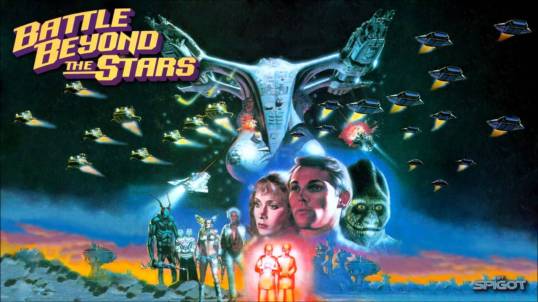
Guilty Pleasure No. 22: Battle Beyond the Stars (dir. by Jimmy T. Murakami)


maxresdefault

Two of my favorite films of all-time happen to be very similar. In fact, one could say that they’re pretty much the same films. I’m talking about Akira Kurosawa’s Seven Samurai and it’s Western-remake by John Sturges, The Magnificent Seven. Kurosawa’s film is one of the greatest films of all-time and it’s no wonder that many have taken the film’s story of the downtrodden hiring a band of misfits, rogues, but still honorable men to help them fight against huge odds.

One such film that tries to add onto Kurosawa film’s legacy was the Roger Corman-produced scifi-adventure film Battle Beyond the Stars. This 1980 film was one of Corman’s many attempts to cash-in on the Star Wars phenomena, but in his usual low-budget style.

For a low-budget scifi film, Battle Beyond the Stars happened to have quite a cast one doesn’t usually see in such productions. While it had such grindhouse and exploitation regulars as John Saxon and Sybil Danning, it also starred the wholesome Richard Thomas from The Waltons and George Peppard (who would later become famous with a new generation as Hannibal Smith of The A-Team). The film would be directed by Jimmy T. Murakami, but from watching the film one could see Corman’s fingerprints all over the production from the script which was pretty lean and cut to the basic outline of Kurosawa’s original film. There’s not much fluff to bog down the pacing of the film.

This film has always been a guilty pleasure of mine because it so resemble Seven Samurai and The Magificent Seven, but adds in it’s own unique style and look to a well-worn and well-trodden plot. It was much later that I found out that James Cameron had a major hand in the special effects work in the film. Think about that for a moment. The self-proclaimed “King of the World” who literally breaks film budget records every time he begins work on a film did FX work on battle Beyond the Stars whose effects budget probably wouldn’t buy a day’s worth of crafts table eating for his most modestly budgeted films.

Lisa Marie always loved to say that grindhouse and exploitation films are some of most honest films out there. There’s no bullshit to what we see on the screen. It’s filmmakers forced to be daring and inventive because the lack of resources forces them to think outside the box. Battle Beyond the Stars might be seen as a mediocre attempt to cash-in on a scifi cultural phenomena, but it does so with a go for broke mentality that makes it such a fun film to watch. It’s not the greatest thing Corman has ever produced and some would even call it a very bad film, but once one looked past it’s rough and flawed surface then one could see a gem in the rough hidden beneath.

Oh, this remake of the remake of the original also happened to star one Robert Vaughn who was one of original Magnificent Seven.

  1. Half-Baked
  2. Save The Last Dance
  3. Every Rose Has Its Thorns
  4. The Jeremy Kyle Show
  5. Invasion USA
  6. The Golden Child
  7. Final Destination 2
  8. Paparazzi
  9. The Principal
  10. The Substitute
  11. Terror In The Family
  12. Pandorum
  13. Lambada
  14. Fear
  15. Cocktail
  16. Keep Off The Grass
  17. Girls, Girls, Girls
  18. Class
  19. Tart
  20. King Kong vs. Godzilla
  21. Hawk the Slayer

Now Showing On The Shattered Lens: Flight to Mars (dir by Lesley Selander)


Flight_to_mars

Are you lucky enough to have an extra 70 minutes free today?  Why not spend them watching an entertaining little B-movie called Flight to Mars?

First released in 1951, Flight to Mars is reportedly the first American film to ever be made about traveling to the red planet.  At the start of the film, a rather phallic spaceship is launched into space.  Aboard the ship are cynical reporter Steve (Cameron Mitchell), brilliant scientist Jim (Arthur Franz), token female scientist Carol (Virginia Huston), and a few other scientists who all kind of blend together.  Steve is attracted to Carol but Carol is more interested in Jim.  However, Jim isn’t interested in anything other than his work.  When the spaceship does reach Mars, it turns out that Mars is a lot like Earth and the Martians are a lot like us.  The main difference between humans and Martians appears to be that Martian women wear miniskirts.  Among those Martian women is Alita (Marguerite Chapman), who falls in love with Jim.  The rest of Mars, however, is not quite as infatuated with their intergalactic visitors…

Flight to Mars is definitely a product of its time.  This is one of those films where the men are all blatantly sexist and the women are usually just happy to be noticed.  Carol, for instance, is overjoyed to discover that they have kitchens on Mars and, while the men spend all of their time making plans, Carol usually just stands in the background, eating Martian snacks and pining for Jim.  Of course, Jim only has eyes for Alita, who, upon meeting the virile males of Earth, has absolutely no problem betraying her entire planet.  Beyond the sexist attitudes, Flight to Mars is also distinguished by presenting space travel as being the equivalent of a long flight on a small airplane.  This is definitely a low-budget B-movie that has absolutely no relation to science fact (or, for that matter, any other type of fact).

And, to be honest, that’s why I like the film.  It truly is such a time capsule that just watching it will make you wonder if Eisenhower is still in the White House.  I’ve always felt that the best way to learn about history is to experience it personally and one of the best ways to do that is to watch a movie that could only have been made during a certain period of time.  And trust me, Flight to Mars is pure 1951.  As for the film’s low budget — well, this film proves that you don’t need CGI to create an alien world.  Sometimes, cardboard and colorful costumes work just as well.  And, as for the film’s science — well, facts are boring.  That’s one reason why good people have often turned to science fiction.

So, if you’ve got 70 minutes to kill, why not experience Flight to Mars?

Enjoy!

Film Review: Into the Storm (dir by Steve Quale)


Forgettable.

If I had to sum up Into the Storm in just one word, that’s how I would do it.  It’s only been a few hours since Jeff and I sat through Into the Storm and, as I sit here now trying to write this review, I am surprised by just how little of an impression this film made on me.  Even the special effects, which did impress me while I was watching the film, are good without exactly being memorable.   There is only one scene that I can remember almost perfectly, in which a veteran storm chaser (Matt Walsh, who is wonderful on Veep) takes advantage of a small moment of calm to look at nature and allows himself one quick smile before Oklahoma gets hit by another tornado.  It’s probably the only genuinely human moment in the entire movie.  Unfortunately, it’s only a few seconds in an 89-minute film.

Into the Storm is a found footage film, in which the small town of Silverton, Oklahoma is struck by a few dozen tornadoes, which all eventually merge into one big tornado.  Fortunately, everyone in the film has an excuse to justify continually running towards the tornadoes while holding up their cell phones and shouting, “Are you getting this!?”

For instance, there’s Pete the storm chaser who needs to get some amazing footage of tornado mayhem, otherwise the whole storm  “season” will have been a waste for him.  Accompanying Pete are the usual gang of doomed cameramen and a meteorologist (Sarah Wayne Callies) who has left behind her five year-old daughter so she can chase wall clouds across the southwest.  And then there’s two dumbass rednecks (Jon Reep and Kyle Davis), who desperately want to be YouTube sensations.  And, of course, let’s not forget the graduating class of Silverton High School.  SHS’s principal (Scott Lawrence) is a dead ringer for Barack Obama, which is perhaps why he proves to be totally ineffectual when it comes to dealing with natural disasters in Oklahoma and Texas.  The vice-principal (Richard Armitage) is the father of two sullen teenagers (Jeremy Sumpter and Nathan Kress) and you better believe that the whole experience makes them into a stronger family unit…

None of the characters are particularly interesting or even likable but that’s really not supposed to matter, is it?  This is the type of film where you’re supposed to be so pleased with the special effects that you’re willing to overlook the bad dialogue and predictable plot, right?  Well, if that’s the case, then why does it take so long for the tornadoes to actually show up?  Why do we spend so much time getting to know these thoroughly vapid and uninteresting characters?  And why, oh why, does this film have to end with the survivors looking over the ruins of their city and talking about how this whole experience has inspired them to embrace life?  It seems like they could have just as easily learned the same thing from reading a greeting card.  Was it really necessary for a tornado to come down and probably kill 60% of the town just so they could be taught such an obvious lesson?

Trust me, I grew up and I live in Tornado Alley.  Not a year has passed that I haven’t had to spend at least one day stuck inside and waiting for word as to whether or not a tornado is going to dip down into my part of the world and potentially kill me and everyone I love.  (Just a few months ago, I literally spent an hour and a half huddled underneath a desk while listening to the mournful wail of the tornado sirens going off outside.)  I’ve also seen firsthand the unbelievable damage that tornadoes can do.  Walk up to real tornado survivors and tell them, preferably while they’re standing in front of the rubble that used to be their home, that their misfortune has inspired you to enjoy every day of your life.  Just see how they react.

The film is directed by Steve Quale, who first came to prominence working under James Cameron.  Perhaps we shouldn’t be surprised, therefore, that he seems to be more comfortable with CGI than with actual human beings.  But still, Quale’s debut as a director — Final Destination 5 — was actually a pretty effective little horror film that featured some surprisingly witty and clever moments.  Little of the skill that Quale displayed in Final Destination 5 is on display here in Into The Storm.  I’m not a huge fan of the whole found footage thing to begin with (occasionally you get a Devil’s Due but most found footage films are more like Paranormal Activity The Marked Ones) but if you are going to make a film in that style, at least play by the rules.  As directed by Quale, the majority of the film is directed to look like found footage and, hence, it suffers from all of the problems that we tend to associate with found footage.  But, jarringly and almost at random, Quale occasionally abandons the whole found footage conceit and suddenly, we’re just watching an ordinary film.  For found footage to work as a genre, you can’t remind the audience that it’s essentially a gimmick that’s often used to make excuses for sloppy filmmaking.  And, for too often, that’s exactly what this film does.

Now, don’t get me wrong.  I guess Into The Storm is okay for what it is.  After all, the film wasn’t advertised as being a great film.  It hasn’t been mentioned as a potential Oscar nominee or anything.  The commercials promised footage of tornadoes destroying a town and that’s what this film eventually gets around to showing.  Plus,  it didn’t feature any talking turtles and that’s definitely a plus.  But, at the same time, I think those of us in the audience are justified in occasionally asking for something more than merely okay.

hr_Into_the_Storm_5

Trailer: The Theory of Everything


Here’s the trailer for the Stephen Hawking biopic, The Theory of Everything.  The trailer pretty much speaks for itself so I’ll just say that it certainly looks like it could be a very powerful film.  Based on what I’ve seen here, I’ll be shocked if Eddie Redmayne doesn’t get an Oscar nomination for his performance here.

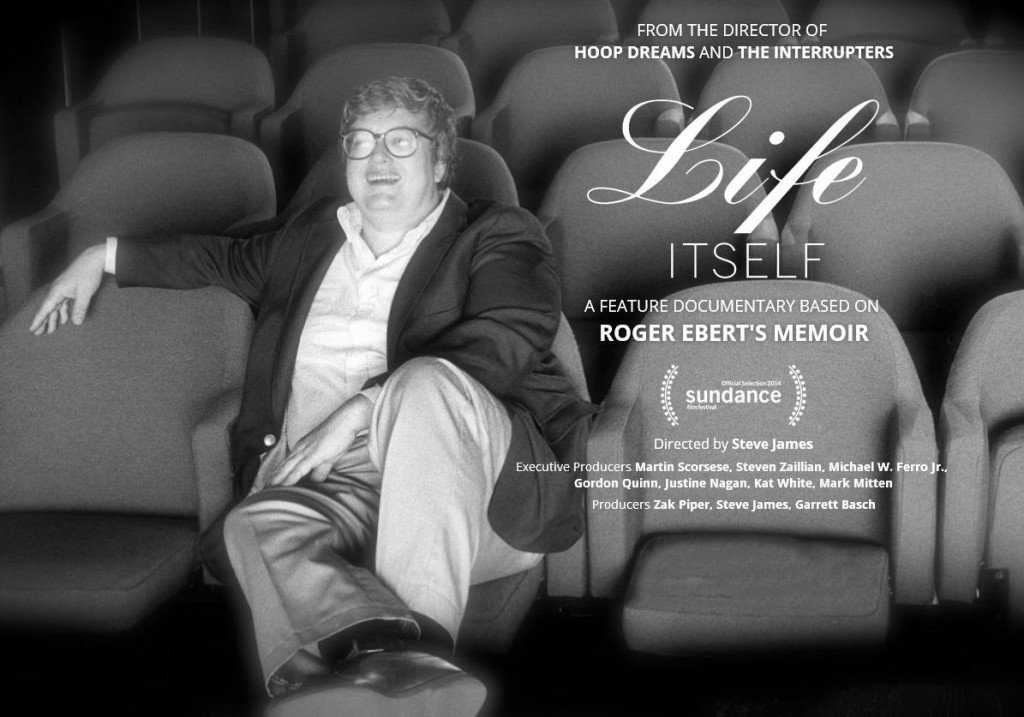
‘Life Itself’ Review (dir. Steve James)


Life-Itself-poster-1024x7171

“We all are born with a certain package. We are who we are: where we were born, who we were born as, how we were raised. We’re kind of stuck inside that person, and the purpose of civilization and growth is to be able to reach out and empathize a little bit with other people. And for me, the movies are like a machine that generates empathy. It lets you understand a little bit more about different hopes, aspirations, dreams and fears. It helps us to identify with the people who are sharing this journey with us.” – Roger Ebert

I’ve enjoyed film for pretty much all my life, but I didn’t truly come to appreciate and love it as an art form – as something more than simply entertainment – until my first year of college (I know, how cliché). I didn’t just come to love watching film, but (as you can obviously see as I write this) I came to love reviewing and discussing the medium with others as well. The first critic who introduced me to film criticism was Roger Ebert. His reviews were the first to really click with me. It wasn’t because I always agreed with him (because I definitely didn’t); but it was because I truly, truly admired his love of film. It was a contagious sort of love, a passion I never knew could be had for motion pictures. Following his example I too began writing about films and discussing them on forums and blogs. These discussions opened up the door really, and I charged head first, exploring the medium more deeply than I ever imagined I could.

It became a journey that I can honestly say made me the person I am today. Film was, and always will be, what I turn too when I am happy, bored and most importantly when I am sad. The best example I have of this was when my grandfather passed away years ago. It was a special sort of hurt, and no discussions with family or friends could do much to quell that pain. I remember sitting down the night it happened, alone in my dark room, and deciding to watch ‘Amelie’. It is a film I adored, one of the few films that truly moved me with every viewing. When it ended, as it had done many times before, I had a huge smile on my face. It did it again. Film did it again; it was once again one of the few things in my life that could heal, or overshadow, any hurt I happened to be feeling. I don’t think I would have known about or adored ‘Amelie’ if not for the journey my love for film had created – a love that wouldn’t have blossomed without the analysis and discussions I had about them – discussions I would never have started if I hadn’t read Roger’s reviews religiously and decided to start writing some myself.

That is why I was deeply saddened when Roger Ebert passed away. He is one of those rare people for me who although I never actually met or spoke with him, he still managed to have a profound effect on my life. An effect that still moves me, as I learned today as I finally watched ‘Life Itself’. I shamefully had put it off for far too long, partly because I think I knew the sort of emotional response I would have towards it. But as the quote I began this posts says, film helps us “identify with the people who are sharing this journey with us”, and it was about time I took a look at the journey that was the life of Roger Ebert.

And boy, was it rough. It did bring me to the verge of tears, as I expected, but I loved every minute of it. ‘Life Itself’ is an honest and in depth portrait of a man who wasn’t without his faults. But no matter what battles he encountered – either with alcohol, his colleagues, or cancer – he still faced everyday ready for what came next. He had a passion for life that was reflected in his passion for film – or maybe the other way around. This for me is what shined through the documentary, handled with such care and attention by Steve James. It is an affectionate tribute to a man who moved so many, generating the very same empathy that Ebert himself loved about film, and for that I think it deserves two big thumbs up.

———–

More of my nonsense on Twitter.

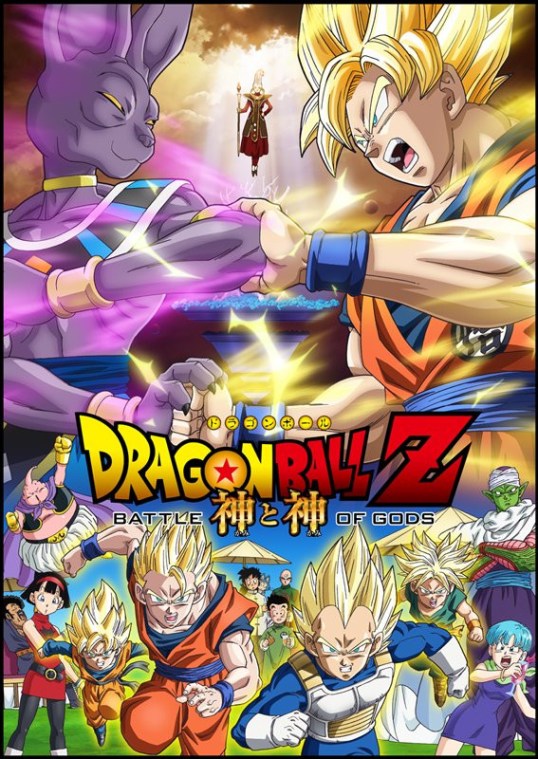
Dragon Ball Z: Battle of Gods


Dragon-Ball-Z-Battle-of-Gods-Poster

Yes, my friends, while the rest of you were off seeing high flying summer blockbusters with nearly universally positive reviews I took a slightly different approach… and saw one of the very few showings available in my area of Dragon Ball Z: Battle of Gods. You know, the first Dragon Ball Z film in 17 years to receive a theatrical release? That particular fact doesn’t really mean anything aside from highlighting the fact that Battle of Gods was, in fact, released theatrically. Depending on your location, you may still have a few days to see it. Let me get this out of the way right now: If you were – or are – a fan of Dragon Ball Z, you should see this movie.

Why? Well, let’s talk about the film a bit.

Events open with the introduction of Lord Beerus, also called Beerus the Destroyer. He’s smarmy and wicked, and he ordered Freeza to destroy the Saiyan world of Vegeta 39 years ago, before taking a nap. Now that he’s awakened, he is surprised to learn of Freeza’s death, and even more surprised to learn that it was at the hands of a Saiyan warrior. Abruptly, he recalls a prophecy he was interested in once about a “Super Saiyan God” (the film’s dialogue itself makes fun of this title. Don’t worry!). These opening scenes also give us a good sense of the tone of the film: Despite the fact that are no doubt headed to some mighty Dragon Ball Z action sequences later, the film is largely comic in tone.

First, our villain pays a visit to King Kai’s planet, where Goku is training. Most of this sequence is played for laughs, and it’s fairly brief, but Beerus does demonstrate to us his power by effortlessly defeating Super Saiyan 3 Goku in two almost delicate blows.

Disappointed by Goku, Beerus and his servitor, Whis, head to Earth to try and find the other remaining Saiyans, and this Super Saiyan God. Upon arriving, they interrupt Bulma’s birthday party. In a pleasant bit of fan service, all of the characters from the series are there. All of the fighters of course, like Piccolo and Tien Shinhan, but also supporting cast like Master Roshi, Mr. Satan, and Videl. The film runs only about 85 minutes, so most of these characters aren’t given a ton to do, but the middle part of the movie takes place primarily at this party. Here’s where things had the potential to really slow down and drag… because despite Lord Beerus arriving and demanding to meet his Super Saiyan God rival, he soon takes a shine to the buffet table instead. In no time, he and Whis are chowing down on Earth delicacies at Bulma’s invitation.

Meanwhile, a subplot involving a character from the original Dragon Ball anime (one whom I had to Google, but I’m sure there are fans who will better appreciate his appearance in the film). He’s there to steal the seven titular Dragon Balls, which Bulma has collected to give away as a prize on her birthday. Everyone should have a friend like her, I guess, because that’s quite the gift.

Lord Beerus eventually gets into a fight with Buu over pudding cups, and things start to head in the direction we always knew they were going to go: Beerus ultimately is here to challenge his new potential rival for fun and for profit, and unless the Super Saiyan God can prove stronger than he, he’s going to destroy the Earth. As you would expect, the lesser fighters all bounce off of him to no great impact, and even the mighty Vegeta is no match for Beerus, even after going berserk. Luckily, Goku arrives to save the day. Some complicated stuff happens that doesn’t really need a full rehashing. Suffice to to say that with the Saiyan characters pool their energy together, they literally transform Goku into a God in order to battle Beerus.

While I personally found a lot of the nonsense in the middle of the film to be very funny, I suspect it won’t play as well later on small screens as it did in what was actually a fairly crowded theater. What will play nicely on any high definition screen are the battle sequences that make up the last part of the film between Beerus and Vegeta and then, of course, between Beerus and Goku. One compliment that I would not pay to the original run of Dragon Ball Z was to its animation quality. Even the very coolest fights in Dragon Ball Z (say, some of the later ones against Perfect Cell) absolutely pale in comparison to what we get here.

Using modern animation techniques like blending some CGI in with the animation, incredible 3-D angles, and modern computer colouring, the battle sequences are awe-inspiring. Instead of endless series of rapid-fire punches and kicks that leave more to the imagination than we actually see, most of the battles play out with clear, decisive movements. Punches and kicks feel real and powerful. Energy blasts were given a little help from the CGI and seemed to crackle on the screen. Even if you found the central part of the movie a total slog (which would be a shame!) it’s probably worth it in the end!

I’ve seen other reviews cite the ending as underwhelming or disappointing, but I actually thought it was very suitable. While it’s true that the appeal of Dragon Ball Z wasn’t it’s complicated characters or sensible plotting, the spirit of the show and the characters is alive and well in this film, and to see the original voice cast return in so many different roles was pretty impressive… not to mention jumping up and down pretty hard on my nostalgia button. I remember when I used to be frustrated every afternoon by this show’s interminable filler episodes on the Cartoon Network. Battle of Gods might have been the way I’ve most enjoyed it since; in a single, digestible chunk that gave me a little of everything that ever made the show appealing.

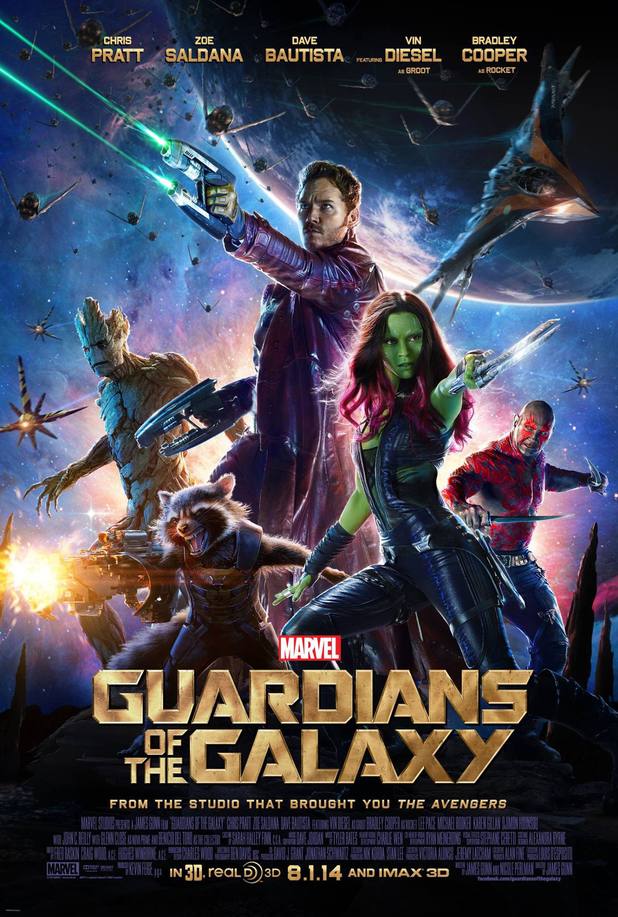
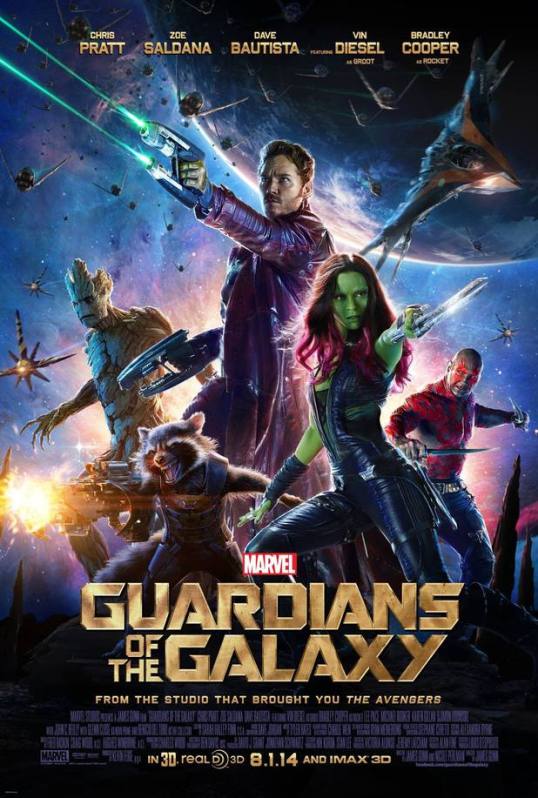
Trash Film Guru Vs. The Summer Blockbusters : “Guardians Of The Galaxy”


guardians

Here’s a question I can’t see any rational human being asking themselves, but apparently someone did : what would happen if you took bog-standard Marvel Studios super-hero fare, threw in a couple dozen extra jokes, and scooped a heavy layer of incredibly lame ’70s “power-pop” numbers like “Please Go All The Way” and “Escape (The Pina Colada Song)” on top?

The answer, of course, is director James Gunn’s newly-released Guardians Of The Galaxy, and if I’d been that hypothetical irrational person I just alluded to maybe I’d be a couple million bucks richer thanks to this film rather than sitting at home writing a review of it. So kudos to you, whoever you are, for your idea to bring this C-grade (at best) team of also-rans from their frequently-cancelled printed pages (there have been, what? Four or five Guardians  series to this point, and none has lasted more than a couple of years) to the big screen and making DisMar — a studio that has apparently entered “too big to fail” territory — hundreds of millions in box office receipts. I hope they compensate you handsomely, though given their track record I wouldn’t bet on it.

As for the rest of us, well — if you like this sort of thing, then this will be the sort of thing you like, but if you don’t, you won’t find much here over and above what you’ve already come to expect, despite the best efforts of Gunn (who also co-wrote the script with Nicole Perlman) to inject a little bit of personality into the proceedings. Any Troma alumnus who makes it to the big leagues like this (which reminds me, be on the lookout for a “blink and you’ll miss it” cameo from Lloyd Kaufman — oh, and one from Rob Zombie, too — and one from Nathan Fillion — and one from — well, you get the point here) deserves a pat on the back, to be sure, but there’s only so much our intrepid former low-budget maestro can do in the face of Marvel’s juggernaut-by-the-numbers style of production. Truth of the matter is, take out those couple dozen extra jokes and horeshit songs I mentioned and this thing is completely indistinguishable from its peers like Iron Man, The Avengers, or Captain America. Not that many folks seem to mind — but we’ll get to the sociological implications of this flick in due course.
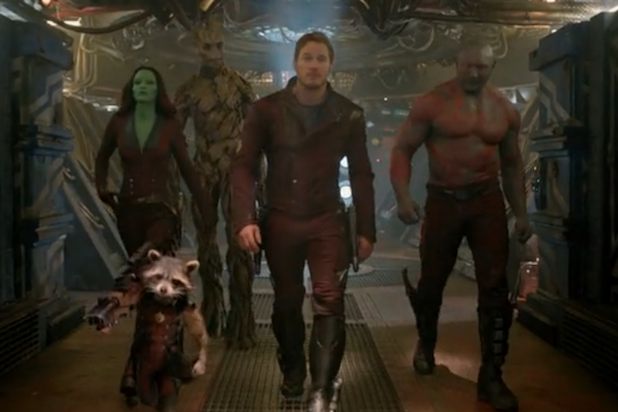
Guardians-of-the-Galaxy-gang

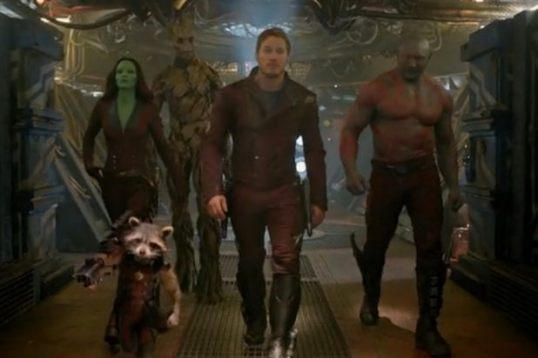
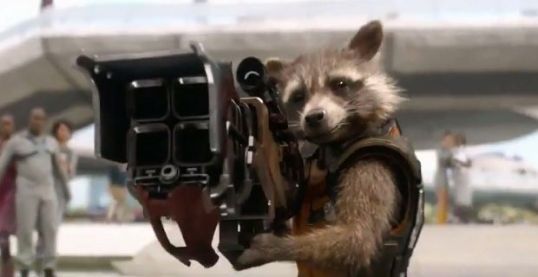
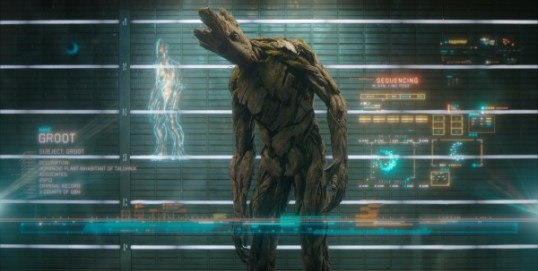
First off, credit where it’s due : Chris Pratt has displays admirable “regular-guy charisma” as Peter Quill, the self-proclaimed “Star Lord,”  leader of our planet-hopping mercenary crew; Zoe Saldana continues to her series of impressive acting turns as Gamora (and looks damn good in green body paint);  pro wrestling star Dave Bautista showcases a surprising level of humanity for a bulky alien brute;  and Bradley Cooper brings a fair degree of enthusiasm to his voice-over work for Rocket Raccoon. Vin Diesel could probably be said to do a decent enough job as Groot, the living tree, as well, but I think he just recorded one line that they play over and over again in an endless loop, so let’s not go too overboard in praising his efforts.

Anyway, the cast is good — even if its two most accomplished members, Glenn Close and John C. Reilly, are given precious little to do — but the material they have to work with is positively atrocious, and you know the old line about trying to make a silk purse from a sow’s ear. By and large the “humor” in this film feels forced and pre-planned (“okay, it’s been two minutes — time for another semi-snappy one-liner”), and when Gunn tries to play it straight, the emotional “beats” he’s going for fall flat and and hit the ground with a thud. Some of the pseudo-momentous dialogue in the “important, character-defining” scenes is so strained I literally had to wince. Ladies and gentleman, this script is just plain bad.

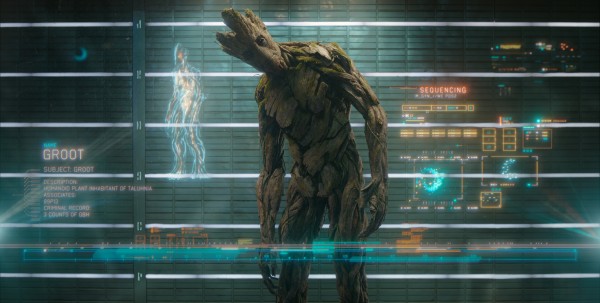
It’s also incredibly simple and, frankly, hackneyed. At the end of the day all we’ve got going on here is a regulation-issue “misfits forced by circumstances to work together and find their inner heroism”-type story, with a dash of “keeping a dangerous object out of the hands of the wrong people” thrown in for good measure. All the CGI in the world (and frankly some of that is surprisingly half-assed given this flick’s enormous budget) can’t cover that fact up, nor can all the precisely-timed melodrama, cribbed-from-a-greeting-card catch phrases, or mega-noisy battle sequences. I give Gunn props for trying to bluff his way to being the last guy at the table, but in the end he can’t do much about the fact that Marvel has dealt him an empty hand. Shoot — his two most interesting characters are pieces of computer animation that aren’t even really fucking there.
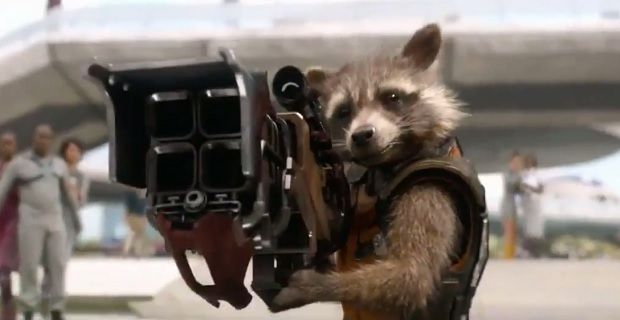
Guardians-of-the-Galaxy-rocket-with-gun

I do believe the director and his cast tried their best to incorporate some heart into their beast — the kind of heart that Rocket’s creator, Bill Mantlo (and please, I implore you, do what I did and donate the same amount of money you paid for a ticket to this movie to help pay for Mr. Mantlo’s continued medical care by visiting gregpak.com/love-rocket-raccoon-please-consider-donating-to-writer-bill-mantlos-ongoing-care/ —- last I heard, Marvel’s not giving this guy a dime) always brought to his scripts — but the “Marvel Method” for films is as set in stone as it always has been for comics : give the punters the illusion of something different, but for heaven’s sake, whatever you do, make sure you’re not actually doing anything truly different at all.
Guardians_of_the_Galaxy_43350

I’m slowly coming to a depressing conclusion, though — maybe the problem isn’t everyone else, maybe it’s me. The entire goddamn world is part of the Merry Marvel Marching Society now, and try as I might, I just can’t get on board. When Gunn shows Stan Lee behaving like a lecherous old creep in Lee’s studio-mandated cameo this time around, the audience in the theater howled with laughter and all I could think was  “hey, wait a minute, don’t they get it? This is what the guy is really like!”

And then it occurred to me — maybe they do get it, they just don’t care. Yeah, Lee is a rather slimy individual who takes a lot more credit that he deserves for pretty much everything, and yeah,  he’s left a trail of destitute and broken actual creators in his wake, and sure,  he even stole the idea for “his” Stiperella TV show from an honest-to-goodness stripper who he regularly spent all that money he earned from other people’s labor on, but — Stan Lee “won.” And American society loves a winner, right? We barely blink an eye when Wall Street scumbags fleece us out of trillions of dollars in order to save them from a mess they created by dint of their own greed and hubris, but when poor single mothers get  a paltry $200 a month, we’re up in arms. We even have the temerity to call them “takers,” while referring to those just-mentioned white-collar crooks as “the productive class.”

Yeah, they’re so “productive” that they can’t even run banks that make a profit while getting free money from the rest of us in one hand and charging us interest with the other. But I digress. America is no longer a nation that roots for the underdogs, or the “have-nots” — we’re too busy giving everything we’ve got the the “already-haves.” And maybe it’s high time I learned to check my brain in at the door and play along. It would save me a lot of grey hair and I’d probably find it really easy to make new friends.

What kind of friends would I be making, though? The folks in the theater I saw Guardians Of The Galaxy at laughed at every one of those cookie-cutter one-liners I was bitching about earlier. They got lumps in their throats at all the plastic-passioned “emotional turning points.” They hooted and hollered at the pre-determined outcomes of every generic battle. They did exactly what they were supposed to do, exactly when they were supposed to do it — and all I wanted to do was stand up and scream at the top of my lungs : “Dear God, is this really all you fucking people want?”

Apparently, it is.
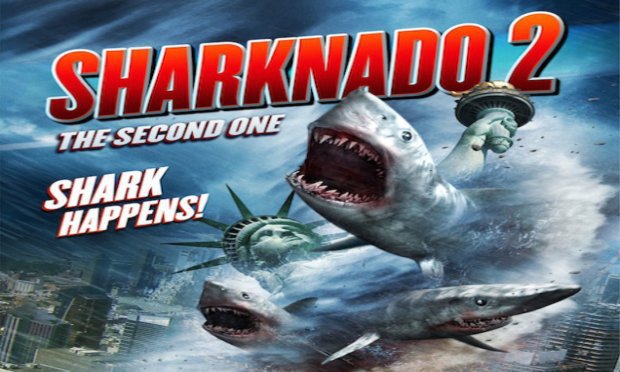
10 Reasons Why Sharknado 2 Was Sharktastic!


sharknado-2-poster

Unless you’ve been living in total and complete isolation, you know that Sharknado 2 premiered on SyFy last night.  And of course, I watched and live tweeted it.  Now, when it comes Sharknado 2, it seems like everyone has one question: Was it better than Sharknado?

The answer?

Yes.  Yes, it was.

Here are 10 reasons why Sharknado 2 was sharktastic!

1) Action!  Action!  Action!

Sharknado 2 didn’t waste any time getting to the point.  From the minute the film started with Ian Ziering and Tara Reid sitting in an airplane that’s hit some sharknado-related turbulence, Sharknado 2 was all about sharks falling from the sky.  The film didn’t waste any time revisiting the events of the previous film or trying to explain, for a second time, how a bunch of sharks ended up in a tornado.  And you know what?  If you were worry about the logic of the situation then you really weren’t the right audience for this film.  Sharknado 2 was a movie for those of us seeking nonstop shark mayhem and it delivered!

2) Plenty of New York Attitude

When the first sharknado hit Los Angeles, we were presented with a portrait of a town that deserved to be destroyed.  I mean — really, Los Angeles?  A little bad weather and a few sharks and your entire population is screaming and fleeing?  New York, however, knows how to handle a sharknado.  It didn’t matter how many sharks fell from the sky — the citizens of New York refused to allow it to stop them from enjoying baseball games, visiting the Statue of Liberty, and seeking out a good slice of pizza.  New York, you’re the tops!

3) Tara Reid Showed Us How To Handle Losing A Hand

I don’t know about you but if a shark fell out of the sky and bit off my hand, I would probably freak out.  Having watched Sharknado 2, I can say that I am definitely not as strong as Tara Reid.  Though she may have lost her hand early on in this movie, she never let it slow her down.  Not only did she defiantly walk out of the hospital but she also managed to drive a fire truck with only one hand!  I’ve got two hands and I don’t think I could do that.  Finally, as a perfect example of how to make lemonade out of lemons, she even replaced her missing hand with a radial saw that, as it turns out, was perfect for fighting sharks.  You go, girl!

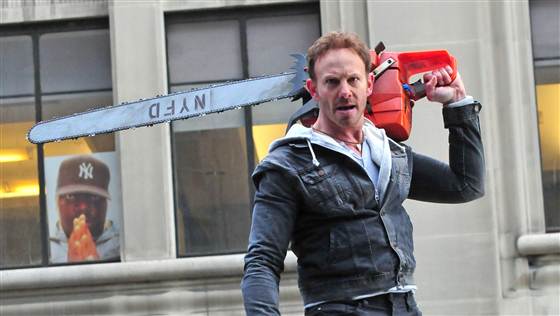
4) Ian Ziering Gave It All He Could

In the first Sharknado, Ian seemed almost annoyed to be there.  You got the feeling that he felt that somehow, by appearing in a movie about flying sharks, he was somehow damaging his career.  In Sharknado 2, however, Ian brought a lot of conviction to his role.  Though it may be hard to understand if you haven’t seen the actual film, I’ll just say that you looked at and listened to Ian and you believed that this man had indeed been inside of a shark.

IZ in Sharknado 2


5) The Statue Of Liberty Lost Her Head

And you better believe that head went rolling down the streets of New York.  I am a little bit disappointed that Ian never found a moment to stare up at headless Lady Liberty and shout, “You blew it up!  Damn you to Hell!” but oh well.

6) Cameos Galore!

Seeing as how the first Sharknado became a bit of a pop cultural phenomena, we should probably not be surprised that a lot of celebrities agreed to do cameos in the sequel.  What should surprise, however, is just how well the cameos were integrated into the film.  Whether it was Kelly Osbourne getting eaten by a shark or Matt Lauer and Al Roker arguing over the proper name for the storm (eventually, Matt did call it a sharknado and you can see just how happy Al was; it was a touching moment), all of the cameos worked brilliantly and, even more importantly, they didn’t distract from all of the shark mayhem.

7) The Live Tweeters Were On Fire Last Night!

Especially me!  Seriously, Sharknado 2 brought out the best in me.

8) Ian Wasn’t The Only Actor Giving It His All

To be honest, the entire cast brought their A game to Sharknado 2.  Everyone from Vivica A. Fox to Mark McGrath to Kari Wuhrer to Tara Reid to Judd Hirsch to well, everyone seemed to understand that for this material to work, they had to be willing to say some of the most ludicrous lines imaginable with a straight face.  If a single member of the cast had tried to wink at the audience or play up the film’s inherent campiness, the entire film would have fallen apart.  Instead, everyone brought a lot of conviction to their roles.  Instead of mocking the film and their dialogue, you could tell that they were instead having fun with it and, as a result, the audience had a lot of fun as well.

9) Kelly Ripa Stamped On The Head Of A Hammerhead Shark

Proof positive that high heels can be a girl’s best friend.

10) Everyone Watched it!

And you know what that means:  SHARKNADO 3!

Sharknado 2