Embracing the Melodrama Part II #92: Stealing Beauty (dir by Bernardo Bertolucci)


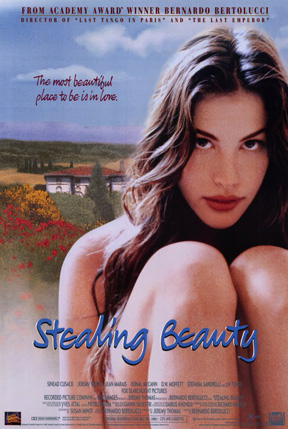
Stealing_Beauty_PosterI love Italy.

Some of that’s because I happen to be a fourth Italian.  And a lot of it is because many of my favorite filmmakers are Italian.  However, Italy is also place of which I have a lot of wonderful memories.  I spent the summer after my high school graduation in Italy and it was amazing.

Venice was full of sensual mystery (and, to be honest, some pretty obnoxious tourists as well).  Naples was dangerous and exciting.  Pompeii made me feel like I was living history.  Rome was full of handsome men and temptation.  When I walked through the Vatican, my inner Catholic girl suddenly woke up and I just had to stop and stare.  And Tuscany — oh my God, Tuscany!  That summer, as far as I was concerned, Tuscany was the most beautiful and romantic place on Earth.  I can still remember standing in the street of Florence and seeing the dome of the Cattedrale di Santa Maria del Fiore in the distance and, for a minute, I almost felt like I was in a painting.  And I actually started to get light-headed and dizzy, I was so overwhelmed by it all.

(That’s right.  Stendhal Syndrome isn’t just a Dario Argento film.)

At it’s best, the 1996 film Stealing Beauty made me think about that wonderful summer that I spent in Italy.  And, at its worse, Stealing Beauty made me happy that I made that trip with my sisters and not Lucy Harmon.

Lucy Harmon is the main character in Stealing Beauty.  Played by a young Liv Tyler, Lucy is the teenage daughter of a poet who has recently committed suicide.  Lucy is a poet herself.  Among her poems: “The dye is cast/ The dice are rolled/ I feel like shit/ you look like gold” and “I wait/ I wait so patiently/ I’m as quiet as a cup/ I hope you’ll come and rattle me/ Quick!/ Come wake me up.”  That’s right — Lucy writes the same type of crap that I used to write when I was 17 and trying to impress everyone with the depth of my mind.  The only difference is that Lucy is rich and privileged so her poetry doesn’t actually have to be any good.

Anyway, Lucy comes to Tuscany for three reasons.  First off, she wants to be sculpted by one of her mother’s friends, who lives in a villa.  Secondly, she wants to lose her virginity to an Italian boy who, years before, kissed her.  And, finally, she wants to learn the identity of her father, who she believes to be one of the residents of the villa.

The film’s great when it concentrates on the beauty of Tuscany.  It’s a beautiful film to look at and, as its best, it captures the romance of being young and having your entire life ahead of you.  In that way, the film brought back a lot of good memories and it made me want to revisit Italy.

But then, whenever I was fully content to just enjoy the sight of Tuscany, the film had to try to focus on Lucy and the other people living in the villa and … bleh.  For all of their talk about art and political posturing, they all basically came across as being a bunch of self-righteous fakes, the equivalent of the millionaire with a Che poster in his office.  In the end, there are only two adults that you end up liking.  You like writer Alex Parris (Jeremy Irons) because he’s dying and, as a result, doesn’t feel the need to try to impress anyone.  And, despite the film’s intentions, you end up liking the local fascist, Carlo Lisca (Carlo Checchi), because he doesn’t apologize for or try to rationalize his narcissism.  You like Carlo because all of the other characters dislike him.

In the role of Lucy, Liv Tyler is obviously beautiful and gives as good a performance as the script will allow.  At the same time, as a character, Lucy got on my last nerve.  Judging from what we see of her work, Lucy is not a particularly talented poet.  In fact, Lucy appears to often be an amazingly vapid person.  (Her much-commented on virginity only serves to confirm that Lucy is largely meant to be a male fantasy.)  But, at the same time, she’s rich and she’s got a famous mother and, as a result, the film seems to be telling us that it’s not important that she’s not really that interesting.

So, plotwise, Stealing Beauty did not really work for me.  But the scenery was truly beautiful.
Embracing the Melodrama Part II #91: A Reason to Believe (dir by Douglas Triola)


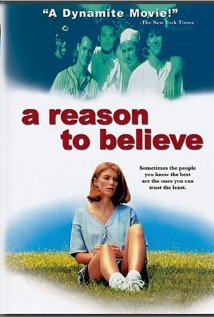
A Reason to BelieveThroughout the late 90s, a rather obscure film from 1995 called A Reason To Believe used to show up on Cinemax fairly frequently. I was 11 when I first saw it.  At the time, I was indulging in my rebellious streak by secretly staying up past my bed time and sneaking into the living room, where I would watch whatever forbidden sordidness what being aired.  Because I didn’t want to wake anyone up, I would watch with the volume turned almost all the way down.  Hence, when I first saw A Reason To Believe, I literally had to sit less than an inch away from the TV just so I could hear the dialogue.

And I remember that, at the age of 11, A Reason To Believe really blew me away.  I thought it was one of the greatest films that I had ever seen.  The fact that the film involved college students made me feel like I was both watching a movie for adults and getting a preview of what life would be like when I was older.  All of the sex and the language made me feel like I was getting away with something while I was watching it.  At one point, there was a shot of Sharon (played by Holly Marie Combs) putting a condom on Wesley’s (Danny Quinn) erect penis and I found myself glancing over my shoulder, convinced that at any minute a responsible adult was going to enter the living room and say, “WHAT ARE YOU WATCHING!?”

So, when I recently rewatched A Reason To Believe, I did so wondering how the film would hold up now that I’m an adult.  Not surprisingly, a good deal of the film now seemed to be heavy-handed.  For every good line in the script, there was a line that was way too obvious.  Characters who were funny when I was 11 — like dorky stoner Potto (Keith Coogan) — now seemed to be annoying.  And, of course, my more experienced eyes immediately realized that Holly Marie Combs was putting that condom on a prosthetic penis.

And yet, A Reason To Believe is still fairly effective and probably deserves to be better known than it actually is.  Usually, I refuse to give extra credit for good intentions but I’m willing to make an exception for A Reason To Believe because the film deals with a subject that, now more than ever, needs to be dealt with.

Charlotte (Allison Smith) is a student at an unnamed generic university.  When her boyfriend, Wesley (Danny Quinn), has to go away for the weekend, he asks Allison not to go to Viking, an annual party thrown by his fraternity.  Charlotte promises that she won’t but then goes anyway.  At Viking, she hangs out with Wesley’s best friend, Jim (Jay Underwood).  Jim is also dating Allison’s friend, Judith (Kim Walker).  Realizing that she’s had too much to drink, Allison attempts to leave the party but instead, Jim leads her into his bedrom.  He kisses her.  She says no but Jim forces himself on her.  Repeating all the old bullshit excuses (i.e., Charlotte was flirting with him, all girls say no when they mean yes, and all the rest) Jim seems to truly believe that the sex was consensual.  Charlotte knows it was rape.

At first, Charlotte doesn’t want to face what happened.  When she finally does go to the university administration and reports what happened, the frat — including her boyfriend — comes together to protect Jim.  Charlotte’s friends — like Judith — abandon her.  Her only supporter is Linda (Georgia Emelin), an anti-fraternity campus activist who is more interested in Charlotte as a means to an end than as a human being.

A Reason To Believe held up fairly well.  Yes, it’s heavy-handed and a lot of the dialogue is too spot-on and literal.  I could have done without the scenes featuring Obba Babatunde as a bombastic professor.  However, Allison Smith and Jay Underwood both gave excellent performances in the two lead roles and the film deserves a lot of credit for not shying away from just how misogynistic the fraternity/sorority culture can truly be.  Ultimately, flaws and all, it’s a valuable, realistic, and angry portrayal of rape culture and it deserves to be seen for that reason.

It can currently be viewed on YouTube.

Gloriously Insane Action That Is Kung Fury


Kung FuryThe Insanely Glorious Action That Is Kung Fury
I grew up during the 1980’s and I do remember how it was a decade dominated by martial arts films and cop action films. Even looking back through rose-tinted goggles, I will admit that for a majority of films released under those two genres most were quite bad. Yet, they were bad and enjoyable in their own clumsy and low-budget way.

The short comedy action film Kung Fury arrives on the web today. Why a short film and not a full-length? Well, while it’s kickstarter campaign more than passed it’s goal of $200,000 dollars it failed to reach a stretch goal of $1,000,000 to turn the film into a full-length feature film. While I believe a full-length film would’ve been nice to see, I think this film works best in it’s short film format.

Kung Fury (written, directed and starring David Sandberg) is a pastiche of all the over-the-top action beats action film fans love about the genre during the 1980’s. It throws everything it could think of onto the screen and blends them together with no thought in mind of how ridiculous and insane it turned out. It’s a film that’s a homage and a parody of those very 80’s action and martial arts films that we know and love so much.

Yet, for all the insanity that occurs in the film there’s actually a weird logic to the film’s narrative that reaches a nice pay-off in the end that screams and begs for a sequel. What better way to end a film that’s a love letter to all things 1980’s action than making sure it ends in a blatant cliffhanger that screams sequel and franchise building.

If there’s one film you should see this weekend that doesn’t involve costumed superheroes, post-apocalyptic marauders, acapella throwdowns, and the next disaster porn then it should be the 30-minutes of insane martial arts, time-traveling, police action film called Kung Fury.

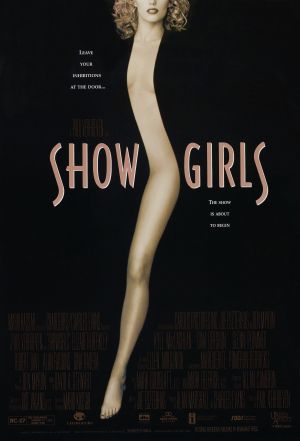
Embracing the Melodrama Part II #90: Showgirls (dir by Paul Verhoeven)


ShowgirlsWell, this is it!

Showgirls in the 1995 film that, 20 years after it was first released, is still held up as the standard by which all subsequent bad films are judged.  The story behind the production is legendary.  Screenwriter Joe Ezsterhas was paid a then-record sum to write a script that ripped off All About Eve and featured lines like, “Come back when you’ve fucked some of that baby fat off,” and “You’re the only who can get my tits poppin’ right!”  (And let’s not forget the heroine’s oft-repeated catch phrase, “It doesn’t suck.”)  A major studio specifically hired Paul Verhoeven with the understanding that he was going to give them an NC-17 rated film.  And finally, the lead role was given to Elizabeth Berkley, an actress whose previous experience amounted to co-starring on Saved By The Bell.

(And, let’s be honest, the only reason Jessie Spano was a tolerable character was because she wasn’t Screech.)

Berkley plays Nomi Malone, a sociopath who wants to be a star.  She hitchhikes her way to Las Vegas where, as is destined to happen to anyone who shows up in Vegas or New York with a clunky suitcase, she is promptly robbed of all of her possessions.  “Fuck!  Fuck!  Fuck!  Fuck!” she yells, showing off the very expensive dialogue that was written for her by Joe Ezsterhas.  Eventually, Nomi starts to take her frustration out on a random car.  The car, it turns out, belongs to sweet-natured Molly (Gina Revara), who is a seamstress for a tacky Vegas show called Goddess.  

(Seriously, Goddess makes Satan’s Alley from Staying Alive look like a work of quiet genius.)

Soon, Nomi is living in Molly’s trailer and working as a stripper at the Cheetah Club.  The Cheetah Club is owned by Al, who is amazingly sleazy but who is also played by Robert Davi.  Robert Davi is one of those actors who knows how to make terrible dialogue interesting and it’s instructive to watch him perform opposite Elizabeth Berkley and the rest of the cast.  Whereas the majority of the cast  always seems to be desperately trying to convince themselves that their dialogue is somehow better than it actually is, Davi knows exactly what he’s saying.  Watching his performance, it’s obvious that Davi understood that he was appearing in a bad film so he figured that he might as well enjoy himself.

The same can be said of Gina Gershon, who plays Cristal Connors, the star of Goddess.  Sexually voracious Cristal is basically a male fantasy of what it means to be bisexual.  Cristal hires Nomi to give a lapdance to her sleazy boyfriend, Zack (Kyle MacLachlan, giving a good performance despite having to spend the entire film with hair in his eyes) and then arranges for her to be cast in the chorus of Goddess.  There’s absolutely nothing subtle about Gershon’s performance and that’s why it’s perfect for Showgirls.  It’s been argued that Showgirls is essentially meant to be a huge in-joke and, out of the huge cast, only Gershon, Davi, and occasionally MacLachlan seem to be in on it.

Certainly, it’s apparent that nobody bothered to tell Elizabeth Berkley.  Berkley gives a performance of such nonstop (and misdirected) intensity that you end up feeling sorry for her.  She’s just trying so hard and she really does seem to think that she can somehow make Nomi into a believable character.  And it’s actually a bit unfair that Elizabeth is always going to be associated with this film because I doubt any actress could have given a good performance in a role as inconsistently written as Nomi.  One second, Nomi is a wide-eyed innocent who is excited about living in Las Vegas.  The next second, she’s screaming, “FUCK OFF!” and threatening strangers with a switch blade.  She may be a survivor (and I imagine that’s why we’re supposed to root for her) but she’s also humorless, angry, and apparently clinically insane.

Hilariously, we’re also continually told, by literally everyone else in the movie, that she’s a great dancer, despite the fact that we see absolutely no evidence of this fact.  Check out this scene below, where Nomi dances with a lot of enthusiasm and little else.

Once Nomi is cast in Goddess, she promptly sets out to steal both the starring role and Zack from Cristal.  Nomi’s cunning plan, incidentally, amounts to fucking Zack in his pool and shoving Cristal down a flight of stairs.  Nomi’s finally a star but when a Satanic rock star named Andrew Carver (William Shockley) comes to town, Nomi is confronted with the sordid truth about Las Vegas and, because this long film has to end at some point, Nomi must decide whether to take a stand or…

Well, you can guess the rest.

(Incidentally, I like to assume that Andrew Carver was meant to be a distant cousin of the great short story writer Raymond Carver.)

There seems to be two schools of thought when it comes to Showgirls.

Some critics claim to Showgirls is just crap.  They say that it’s a terrible film with bad dialogue, bad acting, and terrible direction.  These critics view Joe Eszterhas as being the villain of this tale, a misogynist who conned the studios into paying two million dollars for a terrible script.

And then other critics claim that Showgirls is crappy on purpose.  They claim that Verhoeven meant for the film to be a satire of both American culture and Hollywood showbiz dramas.  For these critics, Verhoeven used Eszterhas’s terrible script and Elizabeth Berkley’s inexperience to craft a subversive masterpiece.

Myself, I fall somewhere in between.  Based on Verhoeven’s other films — Starship Troopers comes immediately to mind — I think his intent with Showgirls probably was meant to be satirical and subversive.  But, at the same time, I would argue that Verhoeven’s intent doesn’t change the fact that Showgirls is a surprisingly boring film.  For all the sex and the nudity and the opulent costumes and sets and all of the over-the-top dialogue, Showgirls is never really that interesting of a film.  It barely even manages to reach the level of being so-bad-that-it’s-good.  Instead,  it’s slow, it’s draggy, and — satiric or not — the bad performance, the bad dialogue, and the nonstop misogyny get a bit grating after a few minutes.

Of course, that’s why you should never watch Showgirls alone.  Showgirls is a film that you have to watch as a part of a group of friends so that you can all laugh together and shout out snarky comments.  The first time I ever saw Showgirls was at a party and it was a lot of fun.  But, for this review, I rewatched the film on Netflix and I was surprised by how much of a chore it was to sit through the entire running time.  This is one of those films — like Birdemic and The Room — that you have to watch with a group.  You watch for the experience, not the film.

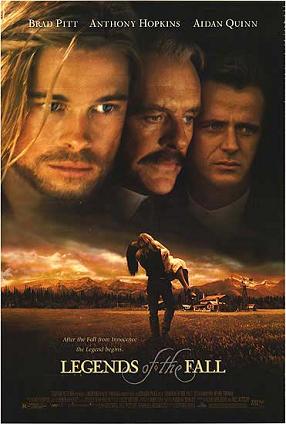
Embracing the Melodrama Part II #89: Legends of the Fall (dir by Ed Zwick)


LegendsoffallposterWhen I first started to watch the 1994 film Legends of the Fall on Encore, I was a little bit concerned when I discovered that it was directed by Ed Zwick.  After all, Zwick also directed Love and Other Drugs, which is one of the worst and most insulting films of all time.  In fact, I nearly stopped watching when I saw Zwick’s name.  But, largely because I want to finish up this series of melodramatic film reviews at some point in the near future, I decided to go ahead and watch the film.

And it turned out that Legends of the Fall is not a bad film.  I probably would have enjoyed it more if I had seen it in a movie theater as opposed to on television but, considering that it was directed by Ed Zwick, Legends of the Fall is definitely watchable.  If nothing else, it’s better than Love and Other Drugs.

Legends of the Fall tells the story of the Ludlows, a family that lives on a Montana ranch at the start of the 2oth Century.  Starting with the final days of the Indian wars and proceeding through World War I and prohibition, Legends of the Fall covers a lot of historical events but does so in a very Hollywood way, which is to say that all of the main characters dress like they’re from the past but they all have very modern social attitudes.  In this case, Col. William Ludlow (Anthony Hopkins) may be a wealthy white military veteran but he’s also totally pro-Native American.  And, of course, all the local Native Americans love him, despite the fact that he’s a representative of the institutions that have destroyed their way of life.

Anyway, Col. Ludlow has three sons.  The oldest, Alfred (Aidan Quinn), is serious and responsible. The youngest, Samuel (Henry Thomas), is naive and idealistic.  And the middle child is Tristan (Brad Pitt), who is wild and rebellious and looks like Brad Pitt.  You have to wonder how the same gene pool could produce both Aidan Quinn and Brad Pitt.

As the film begins, Samuel has returned from studying at Harvard.  With him is his fiancée, Susannah (Julia Ormond, who has really pretty hair in this movie).  Though she loves Samuel, Susannah finds herself attracted to Tristan, largely because Tristan looks like Brad Pitt.  Tristan is also attracted to Susannah but he would never betray his younger brother.  In fact, when Samuel announces that he’s enlisted in the Canadian army so that he can fight in World War I, Tristan and Alfred soon do the exact same thing.

War is Hell, which is something that Samuel discovers when he’s gunned down by a bunch of German soldiers.  Tristan responds by cutting Samuel’s heart out of his body and sending it back to Montana.  He then proceeds to go a little crazy and when we next see Tristan, he’s uniform is decorated with the scalps of dead Germans.

Meanwhile, Alfred has been wounded in battle and is sent back to Montana.  Eventually, he ends up married to Susannah.  And then Tristan comes back home and…

Well, a lot of stuff happens after Tristan returns.  In fact, you could even argue that too much happens.  Zwick obviously set out to try to make Legends of the Fall into an old school Hollywood epic but far too often, it seems like he’s mostly just copying scenes from other films.  There’s a hollowness at the center of Legends of the Fall and the end result is a film that’s visually gorgeous and thematically shallow.

And yet, you should never underestimate the importance of looking good.  Legends of the Fall is a beautiful film to look at and so is Brad Pitt.  I wouldn’t necessarily say that Brad gives a particularly good performance here because, to be honest, Tristan is such an idealized character that I doubt anyone could really make him believable.  But the Brad Pitt of 1994 looked so good and had such a strong screen presence that it didn’t matter that he wasn’t as good an actor as the Brad Pitt of 2015.  Legends of The Fall is one of those movies that can get by on pure charisma and fortunately, Brad Pitt is enough of a movie star to make the film work.

Legends of the Fall is not a great film but it’s still not a bad way to waste 120 minutes.  (Of course, the film itself lasts 133 minutes but still…)

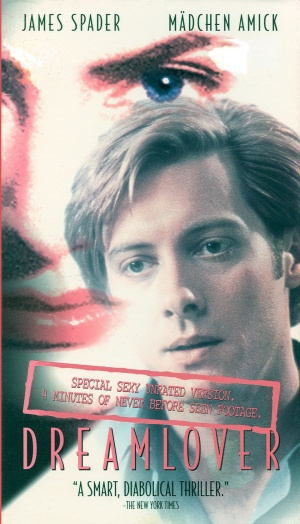
Embracing the Melodrama Part II #88: Dream Lover (dir by Nicholas Kazan)


Dream_Lover_FilmPosterThe 1994 film Dream Lover is almost as strange as Zandalee.

Dream Lover opens with Roy Reardon (James Spader, giving a very James Spaderish performance) in the process of getting divorced.  Sitting in court, he announces that he’s fired his attorney and that he’s no longer contesting the divorce.  The judge informs him that, if he did contest the divorce, the final judgment would be in his favor.  Roy says that doesn’t matter.  He doesn’t want to contest the divorce.

In the next scene, Roy’s ex-wife tells him that he’s a great guy and that it’s too bad that they couldn’t make the marriage work.  They agree that they were just too different.  She apologizes for cheating on him.  Roy apologizes for hitting her.  They agree that Roy has trust issues.

Over the next few minutes of the film, we follow Roy over the course of his new single life.  We discover that Roy is a successful architect who is always attracted to brunette artists with troubled backstories.  We also discover that Roy’s best friend is an obnoxious yet strangely likable guy named Norman (Larry Miller, who brings some unexpected depth to an obnoxious character).  Norman begs Roy for money.  Roy refuses to give it to him.  Norman invites Roy to an art gallery and offers to set him up with a woman he knows.  Roy agrees.  And, seriously, the first 20 minutes of the film are so dominated by Norman that you’re kind of surprised when the film moves on and he’s no longer in every scene.

(But then again, that’s the type of film that Dream Lover is.  Characters appear and vanish at random.  Plot points are raised and then abandoned.)

Anyway, Roy’s date is disastrous.  (“You don’t like me,” the woman says as tears stream down her face.)  However, during the date, Roy meets Lena (Madchen Amick).  When first they meet, they fight.  Then they run into each other again at the grocery store and they hit it off.  They go to dinner and, despite having a good time, Lena makes a point of not inviting Roy up to her apartment.  The next night, Roy shows up unannounced and Lena does invite him up.  At first, she’s cold towards him.  Then they’re making love.  And then they’re getting married.  And then the clowns show up…

Oh yes, there are clowns in this movie.  Roy is haunted by visions, where he’s at a carnival and random clowns pop up and say cryptic things to him.  “How’s the family?” one asks.  Another one continually reminds him that he doesn’t know much about Lena.

Years pass by.  Lena and Roy have two children but it continues to nag at Roy that he doesn’t know anything about her.  He worries that she’s cheating on him.  He fears that the children are not his.  Roy’s friends tell him that he’s being paranoid.  Roy argues that paranoia is just a heightened form of consciousness.

Roy starts to investigate Lena’s past and here’s where I really laughed out loud.  Roy finds out that Lena is from North Texas and goes down to her hometown.  As Roy arrives in this tiny country town, the camera reveals a huge mountain in the background.  Really, Dream Lover?  A mountain in North Texas?

Anyway, for me, this film never really recovered from that mountain but, if you can overlook that geographic mistake, Dream Lover is occasionally enjoyable because it is such a weird film.  James Spader is hot, Madchen Amick is beautiful, and the entire film features one of those huge and improbable twists that you simply have to see for yourself.

And you can see it because it’s currently available on Netflix!

Embracing the Melodrama Part II #87: One False Move (dir by Carl Franklin)


One_false_moveWho doesn’t love Bill Paxton?

Seriously, he’s just one of those actors.  He’s appeared in a countless number of films and he’s played a lot of different characters.  He was a psycho vampire in Near Dark.  He was the underwater explorer who got stuck with all of the worst lines in Titanic.  In Frailty, he was a father who was driven to murder by heavenly visions.  He was the sleaziest of sleazes in Nightcrawler.  And, of course, in Big Love, he was an unrepentant polygamist.  In all of these roles, Paxton showed the quirkiness that has made him so beloved to film lovers like me.  Much like Kevin Bacon, it doesn’t matter what role Bill Paxton is playing.  You’re going to like him and you’re going to be happy to see him onscreen.

And yet, considering just how many popular films that he’s appeared in, it’s interesting to note that Bill Paxton’s best performance can be found in a film about which not many people seem to have heard.  That film is the 1992 Southern crime drama, One False Move.

Actually, it does the film a disservice to refer to it as merely being a crime drama.  I mean, it is a drama and it even has a properly dark ending to prove that fact.  And it is about criminals and police officers.  But ultimately, the film’s plot is just a starting point that the film uses to examine issues of culture, race, and guilt.  In the end, One False Movie is an unexpectedly poignant and penatrating character study of 5 very different people.

We start out with three criminals.  Ray (played by Billy Bob Thornton, who also co-wrote the script) is a career criminal, a white trash redneck who is not particularly smart but who is dangerous because he’s ruthless and he’s willing to whatever he need to do to survive.  (If you’ve lived in the country, you will recognize Ray’s type as soon as you see him.)  Ray’s girlfriend is Fantasia (Cynda Williams), a beautiful but insecure woman.  And finally, there’s Ray’s partner and former cellmate, Pluto (Michael Beach).  Of the three of them, Pluto is the most menacing, a knife-wielding sociopath with an IQ of 150.  Even though he’s working with Ray and Fantasia, Pluto always makes it clear that he considers himself to be both separate from and better than both of them.

Ray, Pluto, and Fantasia have just brutally murdered 6 people in Los Angeles, all of whom were friends of Fantasia’s.  Now, they’re making their way to Houston, planning on selling stolen cocaine.  Pursuing them are two LAPD detective, Cole (Jim Metzler) and McFeeley (Earl Billings).  When Cole and McFeeley come across evidence that the three criminals might have a connection with the tiny town of Star City, Arkansas, they call up the local sheriff.

And that’s where Bill Paxton shows up.

Paxton plays Sheriff Dale Dixon.  Dale’s nickname is Hurricane and it’s soon obvious why.  Like a hurricane, Dale never stops moving.  He’s a well-meaning but hyperactive good old boy who has a talent for saying exactly the wrong thing.  When he first talks to Cole and McFeeley over the phone, he amuses them with his enthusiastic bragging and briefly offends them with his casual racism.

Cole and McFeeley eventually end up taking a trip to Star City, so that they can investigate how the three criminals are connected to this tiny town.  When Dixon meets up with them, he asks them if they could help him get a job with the LAPD.  The two cops initially humor Dixon and laugh at him behind his back.  When Dixon’s wife (a wonderful performance from Natalie Canerday) asks Cole to keep Dixon safe, Cole assures her that Ray, Fantasia, and Pluto are probably not even going to come anywhere near Star City.

However, Dixon soon reveals to the two cops that Fantasia’s name is Lila and that her family lives in Star City.  What he doesn’t tell them, however, is that he and Lila have a personal connection of their own…

One False Move is a twisty and intense thriller, one that’s distinguished by strong performances from the entire cast.  (Even Metzler and Billings bring unexpected shadings to Cole and McFeeley, who, in any other film, would have been portrayed as being stock characters.)  But the film is truly dominated by Bill Paxton.  When we first meet Dixon, he seems like a joke.  We’re sure that he’ll somehow end up being the film’s hero (because that’s what happens in movies about small town sheriffs being underestimated by big city cops) but what we’re not expecting is that Dale is going to turn out to be such a multi-layered and fascinating character.  Just as Dale eventually starts to lower his defenses and reveal who he truly is, Paxton also starts to reign in his initially overwhelming performance and reveals himself to be a subtle and perceptive actor.  It’s a great performance that elevates the entire film.  Al Pacino won the 1992 Oscar for Best Actor for his performance in Scent of a Woman.  That award should have gone to the unnominated Bill Paxton.

It wouldn’t be fair to reveal One False Move‘s secrets.  It’s a film that you really should see for yourself.

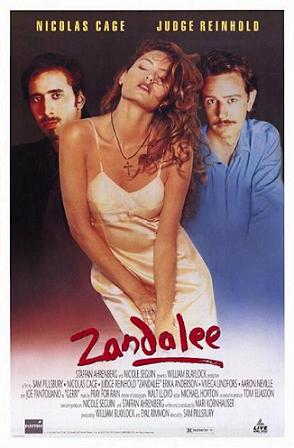
Embracing the Melodrama Part II #86: Zandalee (dir by Sam Pillsbury)


Zandalee

“I want to shake you naked and eat you alive…”

— Johnny (Nicolas Cage) in Zandalee (1991)

As you can probably guess from the quote above, Zandalee is a crazy little movie.

Zandalee takes place in New Orleans, which means that there’s a lot of rain, a lot of jazz, a lot of flamboyant accents, and a lot of sweat.  Zandalee (Erika Anderson) owns a boutique and spends most of her time jogging across the city.  (Zandalee has reddish hair, comes from a Catholic background, and runs a lot so naturally, I related to her.)

During one of her runs, Zandalee happens to pass a thief who is being chased by the police.  The thief flirts with her even while he’s being arrested.  The thief, interestingly enough, is played by a surprisingly hot Steve Buscemi.  Even more interesting is that, though his character makes a dramatic entrance and gets a lot of good lines, Buscemi doesn’t appear again until near the very end of the movie.  There’s really no point to Buscemi being in the film but somehow, it just seems right for him to suddenly be there.

And really, that’s the type of film that Zandalee is.  Odd characters pop up and then disappear.  Plot points are raised and then abandoned.  Events play out almost at random, as if Zandalee’s morning runs are taking her further and further into a dream world.

(It’s all a bit like Lost River, except for the fact that Zandalee is actually memorable in its weirdness, as opposed to just being annoying.)

Zandalee is married to Thierry (Judge Reinhold), a former poet who has abandoned his literary ambitions and taken over the family business.  Now, he’s mostly a figurehead who spends all of his time hanging out with drunk and uninteresting Philistines.  Thierry is so guilt-ridden over giving up poetry that he’s been rendered impotent.  Try as he might, he cannot make love.  As he puts it, while standing naked and staring out into the dark night, he is “a paraplegic of the soul.”

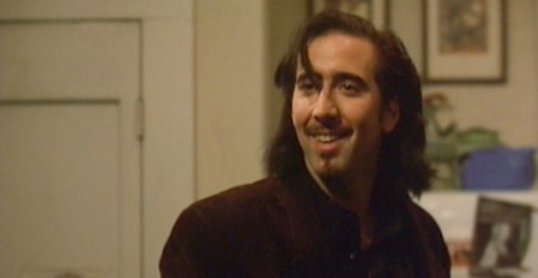
And then Johnny (Nicolas Cage) shows up.  Johnny was Thierry’s childhood friend.  Johnny is a painter and, from the minute he arrives, he’s giving Thierry a hard time for selling out.  Johnny also has long, stringy hair and a mustache and goatee.  He speaks in Nicolas Cage’s trademark muffled monotone, muttering lines of philosophical pretension.  When we first meet Johnny, he’s with Remy (Marisa Tomei, who much like Steve Buscemi, pops up and then vanishes and yet somehow it still seems totally appropriate that she’s in the film) but soon, Johnny has decided that he wants Zandalee.

Or, as he tells her when he approaches her during one of her runs, “I like it when you don’t wear anything underneath….”

Soon, Johnny and Zandalee are having a passionate affair.  Much as Zandalee once inspired Thierry’s poetry, she now inspires Johnny’s art.  Of course, Johnny is also inspired by cocaine.  Along with selling it and snorting it, Johnny also mixes it with olive oil and dips his fingers in it before fingering Zandalee.  And, as effective as some of these Johnny/Zandalee scenes are, it’s still impossible to watch all of this without thinking, “What the Hell, Nicolas Cage!?”

(Even by the standards of Nicolas Cage, Zandalee is a strange film.)

Anyway, eventually, Zandalee breaks it off with Johnny and Johnny’s paintings starts to suffer.  Thierry realizes what has been going on and it all leads to the scene below.

And, believe it or not, that all happens during the first hour!  Even after that epic dance off, there’s still another half hour of melodrama to go!  Zandalee is a seriously odd movie.

Zandalee can be viewed, in its uncensored entirety, on YouTube.  Usually, I’d embed the film at the bottom of this review but Zandalee is so extremely NSFW that it’s probably safer if you just go to YouTube and search for it yourself.

niccagezandaleeSeriously, Nic Cage wants you to do it.

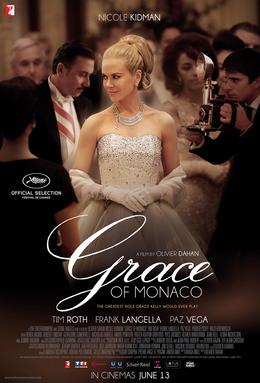
So, I Finally Watched Grace of Monaco…


Grace_of_Monaco_PosterWell, I finally saw Grace of Monaco and…

Oh God.

Seriously, I am sitting here right now and I am just thinking to myself, “Oh God, do I really have to try to think up something interesting to say about this movie?”  Grace of Monaco is not a good movie but, at the same time, it’s bad in the worst way possible.  It’s not so bad-that-its-entertaining.  Instead, it’s just a dull misfire.

In fact, probably the only really interesting thing about Grace of Monaco is that it is the first film to go from opening Cannes to premiering on Lifetime.  Though it may seem impossible to believe now, there was a time in 2013 when everyone was expecting Grace of Monaco to be a major Oscar contender.  It seemed like everyone was saying that Nicole Kidman was a lock for a best actress nomination and maybe more!

Then the film’s American release date was moved from November of 2013 to June of 2014.  Rumor had it that the infamous Harvey Weinstein was chopping up the film and destroying the vision of director Olivier Dahan.  “Bad Harvey!” we all said.  (Of course, having now seen the film, I can understand why Harvey may have had some concerns…)

Okay, we told ourselves, Grace of Monaco probably won’t be a best picture contender.  But surely Nicole Kidman can get a nomination.  Surely the costumes and the production design will be honored…

And then the film played opening night at the Cannes Film Festival and it was greeted with less than appreciate reviews.  In fact, the reaction to the film was so negative that it has since become somewhat legendary.

And so, the American premiere was canceled.  The film opened in Europe, where it made little money and received scathing reviews.  But it was destined to never play in an American theater.  Instead, Grace of Monaco was sold to the Lifetime network.

And, after all of the drama and the waiting, I finally got to see Grace of Monaco tonight and … well, bleh.

Don’t get me wrong.  It’s a pretty movie.  I loved looking at what everyone was wearing.  I enjoyed looking at the ornate settings.  Whenever Grace Kelly stopped to look out at the view from the palace, I appreciated it because it was a beautiful view.  If I had hit mute and simply enjoyed the film as a look at beautiful people wearing beautiful clothes and living in beautiful houses, I probably would have enjoyed it a lot more.

But, unfortunately, Grace of Monaco has a plot that gets in the way.  The evil French, led by Charles De Gualle (played by Andre Penvern, who gives a performance that would probably be more appropriate for a James Bond film), want to take over Monaco because the citizens of Monaco don’t pay any income tax.  (I was totally Team Monaco as far as this was concerned.  Everyone should stop paying their taxes.  If we all do it, we’ll be fine.  They can’t prosecute all of us!)  Only Princess Grace Kelly can stop them but first, she has to convince her headstrong husband, Prince Rainier (Tim Roth), to listen to her opinions.  She has to convince her subjects that she’s more than just an opinionated American.

But Grace doesn’t just want to keep the French out of Monaco!  She also wants to return to her film career.  Alfred Hitchcock (Roger Ashton-Griffiths) wants her to star in Marnie.  (Hitchcock is always filmed as being slightly out-of-focus.)  Rainier doesn’t want her to return to acting.  And neither does a priest played by Frank Langella…

What was Frank Langella doing in this movie?  I have no idea.  He was some sort of advisor.  I understand that he’s based on a historical figure but honestly, the film was so boring that I can’t even bring myself to go on Wikipedia to find out who exactly he was.

But really, the main issue with Grace of Monaco is that it tells us absolutely nothing about Grace Kelly.  The film doesn’t seem to know who she was or what it wants to say about her.  And Nicole Kidman is a good actress and I hope that I look as good as she does when I’m 47 and after I’ve given birth to two children but seriously, she seems to be totally lost in this film.  Olivier Dahan fills the film with close-ups of Kidman’s face but for what reason?  Never for a minute do we believe we’re looking at the face of the star of High Noon, Rear Window, or To Catch A Thief.  Instead, we’re always aware that we’re looking at Nicole Kidman and she doesn’t seem to be sure just what exactly she’s supposed to be doing.  We learn nothing about Grace, Monaco, France, royalty, or movies.

And it’s a shame really.  Because the story of Grace Kelly would make a great film.  But Grace of Monaco doesn’t really tell you anything about her life.

It’s just boring and a film about an actress like Grace Kelly has absolutely no right to be boring.

Late To The Party : “Ouija”


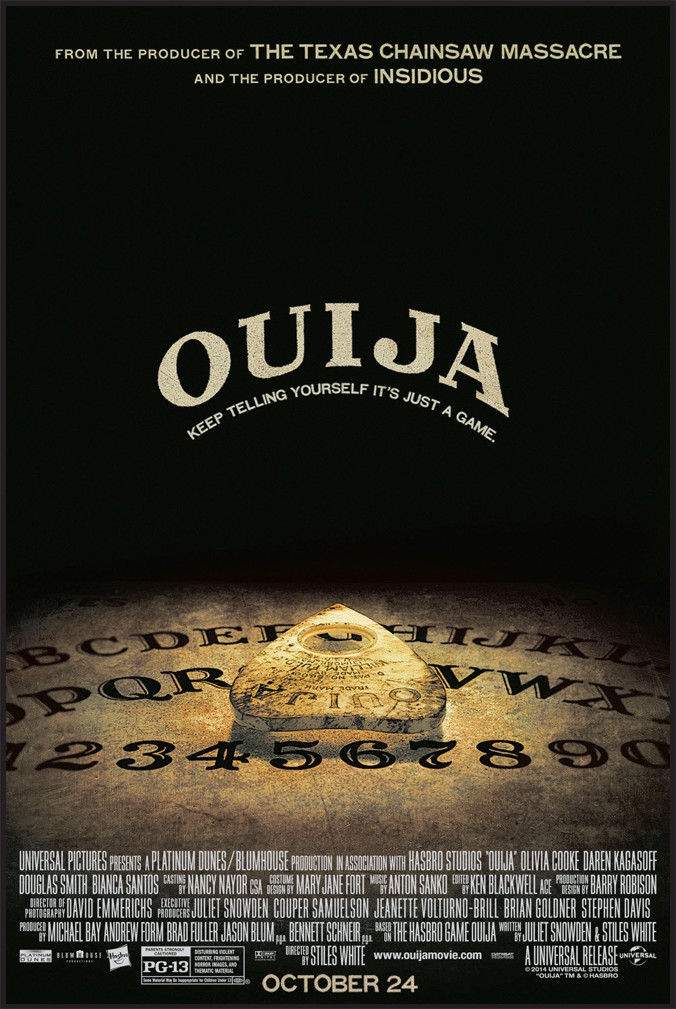
ouija-movie-poster


I was thinking of sub-titling this review “What To Expect When You’re Expecting Nothing,” or something equally less-than-clever, but it just seemed too damn obvious — I mean, how many of us were expecting 2014’s Ouija to actually be any good?

Let’s face it — Hasbro inking a deal with Michael Bay’s Plantinum Dunes to make a series of movies based on their various board games is probably a pretty stupid idea for a number of reasons — not the least of which is that Clue probably just plain can’t be topped in the “best-board-game-movie-of-all-time” category — but what can I say? While there was no way in hell I was going to spring to see Ouija when it was out in theaters, I added it to my Netflix DVD queue when it came out simply because I like to punish myself from time to time by sticking my head into the toilet bowl of PG-13 “horror.” I guess I’m just masochistic like that.

All that being said, director Stiles White (who co-wrote the film’s screenplay along with Juliet Snowden) manages to under-perform here even though the bar was set exeptionally low. We’ve all seen the “malignant spirit haunts teenagers” trope done to death, to be sure, but rarely is everyone so clearly and plainly going through the motions as they are in Ouija. It’s like somebody figured out how to put celluloid on Xanax and then sat back to see what the end result would be.

download (1)

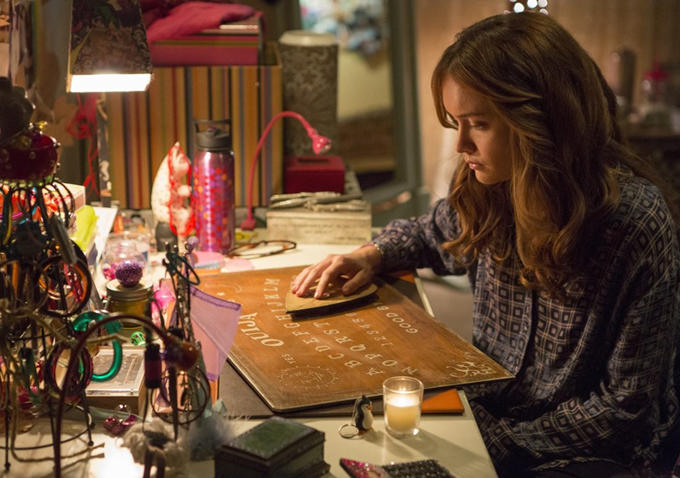
Speaking of Xanax,  Olivia Cooke, of sleazy prime-time soap Bates Motel, certainly looks and acts like she’s on it — she absolutely can’t carry a film, as she ably demonstrates in her starring turn here as nominal heroine Laine Morris. She has precisely one facial expression — the “concerned as shit” look — and can’t even manage to get away from it entirely when she’s supposed to be smiling and looking happy. Not that she’s got a whole lot to be happy about, mind you, given that her best friend, Debbie Galardi (Shelley Hennig) apparently just killed herself after playing around with a Ouija board (hint to Hasbro, by the way — if the primary goal of your newfound motion picture enterprise is to move more of your product, as I’m assuming it is, suggesting that said product actually works in terms of conjuring up evil ghosts maybe isn’t the smartest idea). So, like any intrepid young protagonist, the charisma-free zone that is Laine decides that she’ll get her boyfriend, Trevor (Daren Kagasoff), their friend Isabelle (Bianca A, Santos), and dead Debbie’s (now ex-, I suppose) boyfriend,  Pete (Douglas Smith) together to hold a seance at the scene of the crime. When her perpetual-pain-in-the-ass younger sister, Sam (Ana Coto), proves once again that she can’t be left home alone while their dad is out of town, she gets dragged along to the party, as well.

I fucked around with Ouija boards plenty when I was younger, but one thing this flick taught (a term I use very loosely, I assure you) me is that if you look through the plastic-coated hole in the center of the planchette, you’re supposed to be able to see whatever ghost it is you’ve disturbed from their slumber. Laine certainly sees one, and from there on out, our plucky young crew is put through the dullest, most un-involving “living hell” you’re ever likely to see play out before your eyes — suffice to say, the haunted shit they’re all being subjected to ties in to a (yawn!) ghastly crime committed at Debbie’s house many years ago. And in order for the spirits to rest, they’ve gotta (yawn again!) put things right.

ouija-movie-1-720x380

Further details are probably pointless here, but that’s okay — so is the movie itself. I’ve been sitting here scratching my head trying to think of one thing Ouija has to recommend in its favor, but I gotta be honest — I’m drawing a complete blank. The acting’s bad, the story’s stupid and predictable, the “scares” are anything but scary, and the whole thing is a rancid mess.

That may sound harsh, but trust me when I say that, if anything, I’m actually underselling how genuinely lame this thing is. I almost didn’t even bother to review it because it was too easy a target, but I figured that if I could warn off at least one other person from seeing it, then I could chalk it up as my good deed for the day.Sure, the picture and sound quality on the DVD are both fine (I can’t really comment on the extras because the disc I got from Netflix was one of those “bare-bones” rental versions, sorry), but so what? It’s a brand new movie, the technical specs should be flawless.

olivia-cooke-in-ouija-movie-7

So — what do you get when you go into a movie expecting nothing? In the case of Ouija, precisely that.