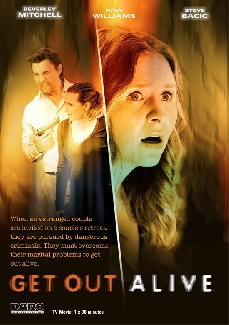
After I finished up with The Perfect Daughter, it was time to continue cleaning out the DVR by watching Get Out Alive. Get Out Alive originally aired on March 27th on the Lifetime Movie Network and it is quite possible the silliest movie that I’ve ever seen on Lifetime.
Now, that’s not necessarily meant as a complaint. Part of the appeal of the movies that premiere on Lifetime and LMN is often the very fact that they are so silly and melodramatic. Get Out Alive is a film that not only embraces the melodrama but practically drapes itself in it. And while the naysayers may complain that Get Out Alive doesn’t make much sense, they’ll be missing the point. It’s not about making sense. It’s about being entertaining.
Or, at the very least, memorable.
Or, at the very, very least, it’s about going totally batshit crazy during the second half of the movie. Get Out Alive started slow. For the first hour, I was unimpressed. But then it went totally batshit crazy during the second hour and I said to myself, “This is why we watch Lifetime movies!”
Get Out Alive tells the story of a young married couple. On the outside, they look perfect. But, once you start to dig and actually look under the surface, you discover that they are on the verge of breaking up. Lucy (Beverely Mitchell) is organized and practical to a fault. She is not spontaneous. She does not take risks. For some reason, she wears absolutely no makeup, which she really could have used in a few scenes. (She also could have benefited from doing something with her hair.) Meanwhile, husband Greg (Ryan Williams) is all about taking risks and living life to the fullest. Their marriage has become so strained that Greg was even briefly tempted to cheat.
Well, what better way to fix things than to go to a marriage retreat? They’re invited by another couple, both of whom swear that the retreat will work miracles. And, at first, everything seems fine. The retreat is located in a beautiful wilderness. The cabins are nice. There’s an older, friendly couple who immediately befriend Lucy. Sure, the guy in charge (played by Vincent Gale) is a little creepy but who are we to judge, eh?
(Did I mention that, like most good Lifetime films, Get Out Alive is a Canadian production?)
However, there are a few things that make Lucy suspicious. For instance, there are guards wandering all over the compound. The old couple vanishes. At one point, Lucy tumbles down a hill. Greg suggests that maybe she just tripped but Lucy is convinced that she was pushed!
So, what’s happening here? Well, as I watched Get Out Alive, I came up with two theories.
My first theory is that the whole thing was just a big trick to make Lucy think that she was in danger. Seeing Lucy frightened would cause Greg to realize how much he loved his wife and then the movie would end with the guy in charge emerging and revealing the hoax. “You saved our marriage!” Greg would happily proclaim.
That was one theory. My other theory was that the retreat was actually an elaborate ruse to steal Lucy and Greg’s internal organs and sell them to the highest bidder.
Which theory was right? You’ll have to watch the movie to find out! I’m sure it’ll show up on Lifetime again at some point in the near future. Lifetime is pretty good about continually rerunning their movies.
But anyway, my point is that Get Out Alive is totally ludicrous and kind of silly but that’s kind of the film’s charm. It makes so little sense and takes place so far outside of the realm of probability that it becomes oddly fascinating. Add to that, the film’s title doubles as good advice.
After I finished watching Anne of the Thousand Days, the next film on my DVR was The Perfect Daughter. The Perfect Daughter originally aired on March 26th on Lifetime. According to the imdb, it was originally called The Carpenter’s Daughter but I imagine Lifetime changed the title so that it could fit in with films like The Perfect Teacher.
(Add to that, The Carpenter’s Daughter sounds like it should be another one of those films where Tom Hanks argues that Jesus survived the crucifixion and ran off with the Magdalene.)
Anyway, the perfect daughter of the title is Natalie Parish (Sadie Calvano). Natalie seems to have a great future in front of her. She’s pretty, she’s smart, and she’s responsible. She has the grades to get into the Ivy League college of her choice. On top of all that, despite being shy, she has just been elected student council president!
Oh sure, not everything is perfect for Natalie. She doesn’t have a boyfriend. She’s frequently insecure. She idolizes a mother that she’s never met and her father, Martin (Brady Smith), may be a hunky blue-collar type of guy but he’s also extremely over protective. He worries that Natalie will grow up to be like her mother, who apparently was not the saint that Natalie believes her to be.
Martin grows even more concerned when, while driving home one night, he comes across his daughter in the middle of the road. She went to a party, she got drunk, and she had sex with popular jock Sam Cahill (Reiley McClendon)! Martin freaks out and takes his daughter to the hospital, causing her nonstop embarrassment at school. He also demands that Sam be arrested for raping his daughter.
Of course, what Martin is overlooking is that Sam did not rape his daughter. As Natalie tells him, the sex was consensual. Martin is shocked but he’ll be even more shocked when Natalie reveals that she’s pregnant.
Complicating matters is that Martin is working for Sam’s father, the snobbish Bruce Cahill (Parker Stevenson). The film also suggests that Martin may be in love with Bruce’s wife, Julie (Meredith Salenger).
What I was wondering, as I watched the film, is why Natalie was chasing after Sam when Martin’s business partner, Nick (Johann Urb), was so much hotter. And he was also single! Seriously, Sam was a nice guy and everything but Nick epitomized this sort of sweaty, manly glory, the type of sexy that otherwise seems to be limited to the guys that you see in pickup truck commercials.
ANYWAY — The Perfect Daughter may sound like a typical Lifetime film but actually, it’s not. Though there is a little bit of melodrama towards the end, The Perfect Daughter is more of a character study of an overprotective father struggling to accept that his daughter is growing up. The story has a bit more nuance than the typical Lifetime story but, at the same time, the decision to tone down the melodrama comes at a cost. The Perfect Daughter is a well-acted and intelligent film but it’s not a particularly fun movie.
In the end, it’s okay but it’s no Perfect Teacher.
Wicked Deeds is much like Carnal Wishes (2015) in that it takes a familiar film noir and/or noirish elements and adds explicit sex. However, unlike Carnal Wishes, it screws up in my opinion. Also, I doubt that my review of Wicked Deeds will end up being a part of a political scandal like it was when Ted Cruz pulled that attack ad of his. She didn’t even have a sex scene in the movie, but only made a cameo appearance at the end of the film. That didn’t stop the law firm Rick Santorum once worked for from paying a visit to my review.
I’m not really surprised that somebody at K&L Gates looked at my review. What I am surprised at is that I didn’t do any hacking to get that image. I was looking at our site’s stat section when I saw a weird URL so I clicked on it. What should have just been an internal network message from some sort of edge router to the person coming to my review from a computer at the firm was actually at a publicly accessible URL. I’ve seen this one other time on another one of my late night cable reviews. I don’t know why ScanSafe thought this was a good idea.
I also don’t know why the filmmakers of Wicked Deeds thought it was a good idea to take an otherwise decent porno noir and extend the sex scenes so long that any pacing is broken. At least they were kind enough to give me a title card that I didn’t have to black box in any way.
The movie begins like slasher movies do. Except instead of someone getting killed, two people have sex. The two people are a married couple. She is named Kira (Anna Morna). Luckily, we are getting An Erotic Tale of Ms. Dracula (2014) Anna Morna rather than Lolita from Interstellar Space (2014) Anna Morna. The husband is Roy (Chad White). He too was in both An Erotic Tale of Ms. Dracula and Lolita from Interstellar Space. You may remember him as playing Van Helsing. I will give the sex scenes in this movie one thing. They tend to be more intimate and erotic, then the usual stuff you see. That’s why I don’t mind this opening sex scene so much, but them reusing the length of this scene for all of them, becomes a problem. This sex scene should have been the longest to establish intimacy between the married couple, while the later sex scenes should have gotten shorter and shorter to go along with the building of suspense in the film.
Something else to mention here is that this is another one of these that was shot by Lex Lynne Smith. So, no matter what, it is well shot for these movies. Usually that’s something you say almost as an insult to a film, but after seeing some of these shot on video sex late night cable movies like Monster of the Nudist Colony (2013), I mean it genuinely.
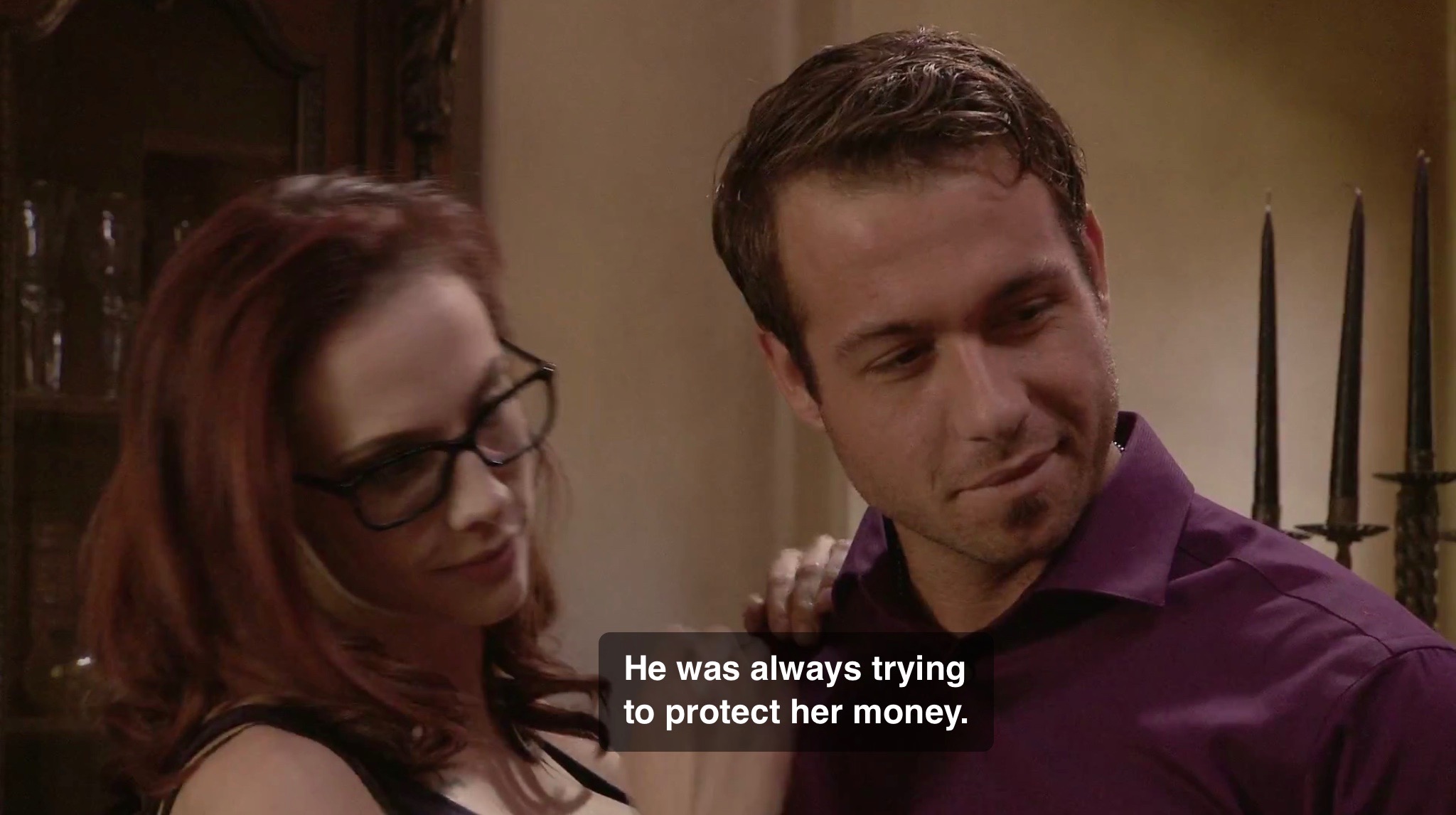
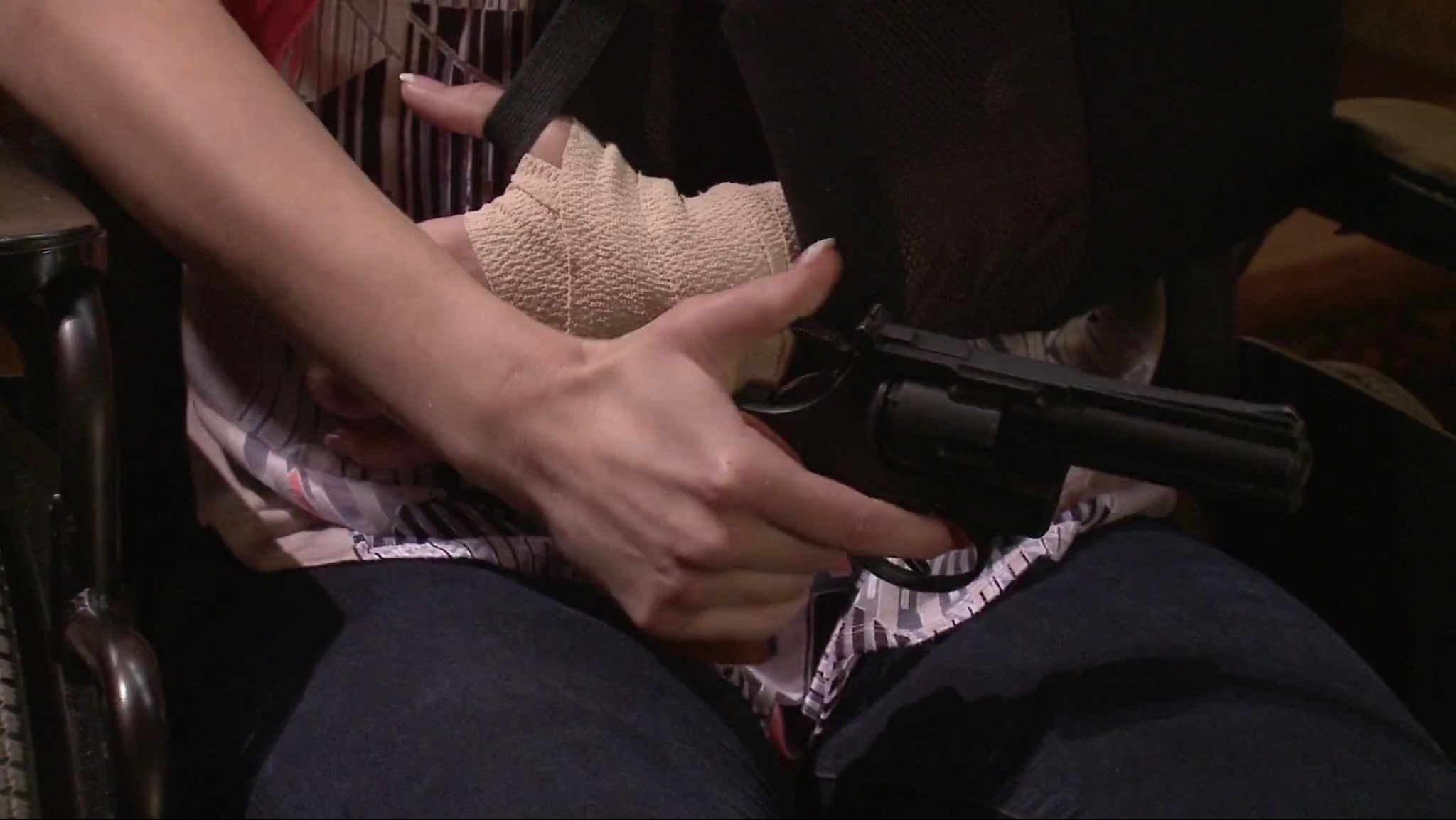
After they are finished, we get a scene almost like the one from Carnal Wishes. At the end of the married couple’s sex scene he just got up and left for a late night meeting. Here, we find out that he is going out of town to do some survey work. She kind of wants to come along, but he tells her that they both know she doesn’t like the jungle heat. She brings up that the hotel probably has a nice spa so that he has an excuse to bring up that he finally heard back from the handyman who is going to fix their spa. It’s not only part of the setup for the film, but also an obvious reference to the stereotype that all porn begins with a woman inviting over a pizza deliveryman for sex. She also mentions that she would feel more comfortable if she had a gun in the house also as a setup for something later in the film. He says absolutely not, and that having guns in the house means it’s just an accident waiting to happen. Funny how some these porno films seem to have more progressive politics than a lot of mainstream cinema.
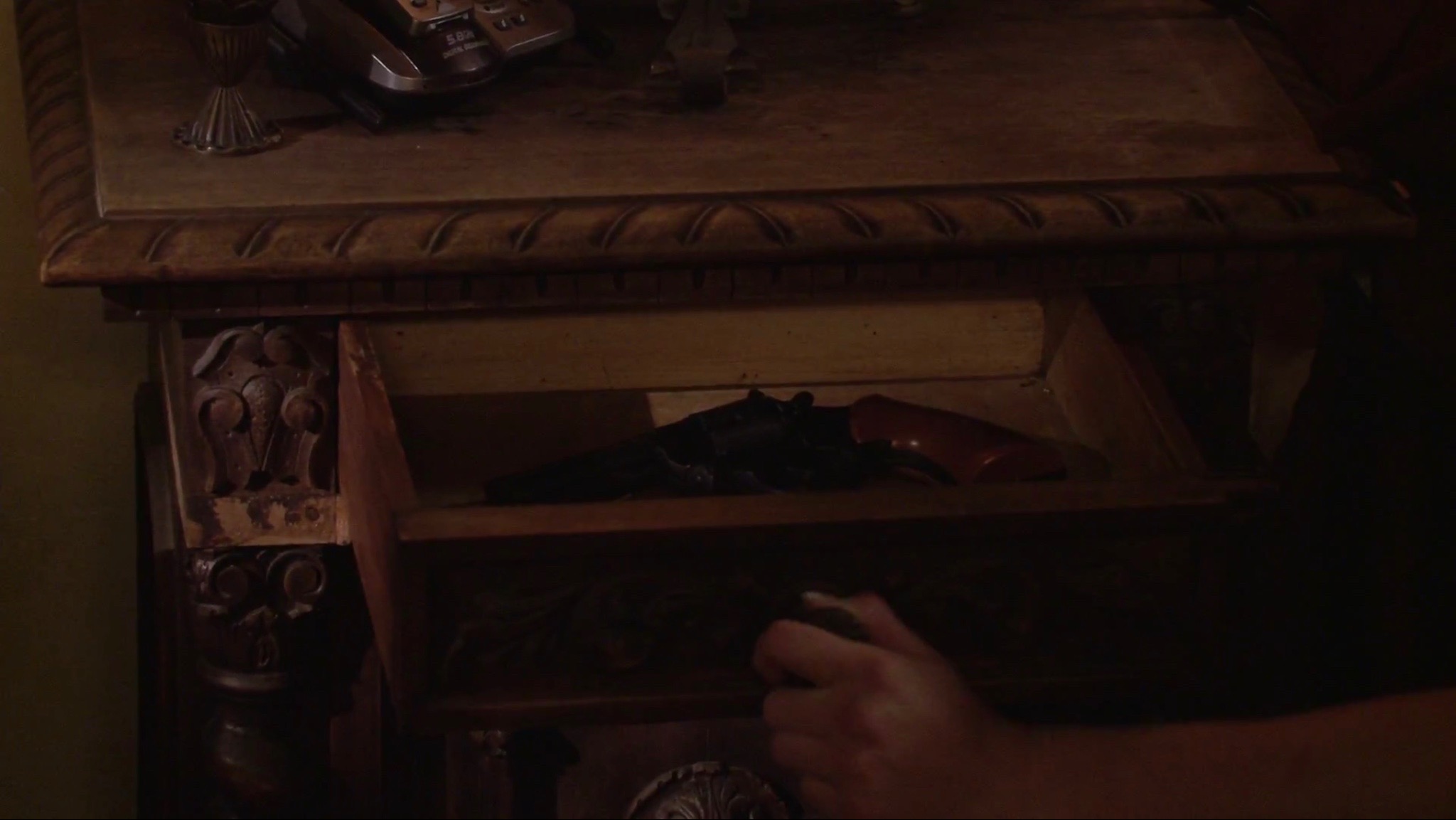
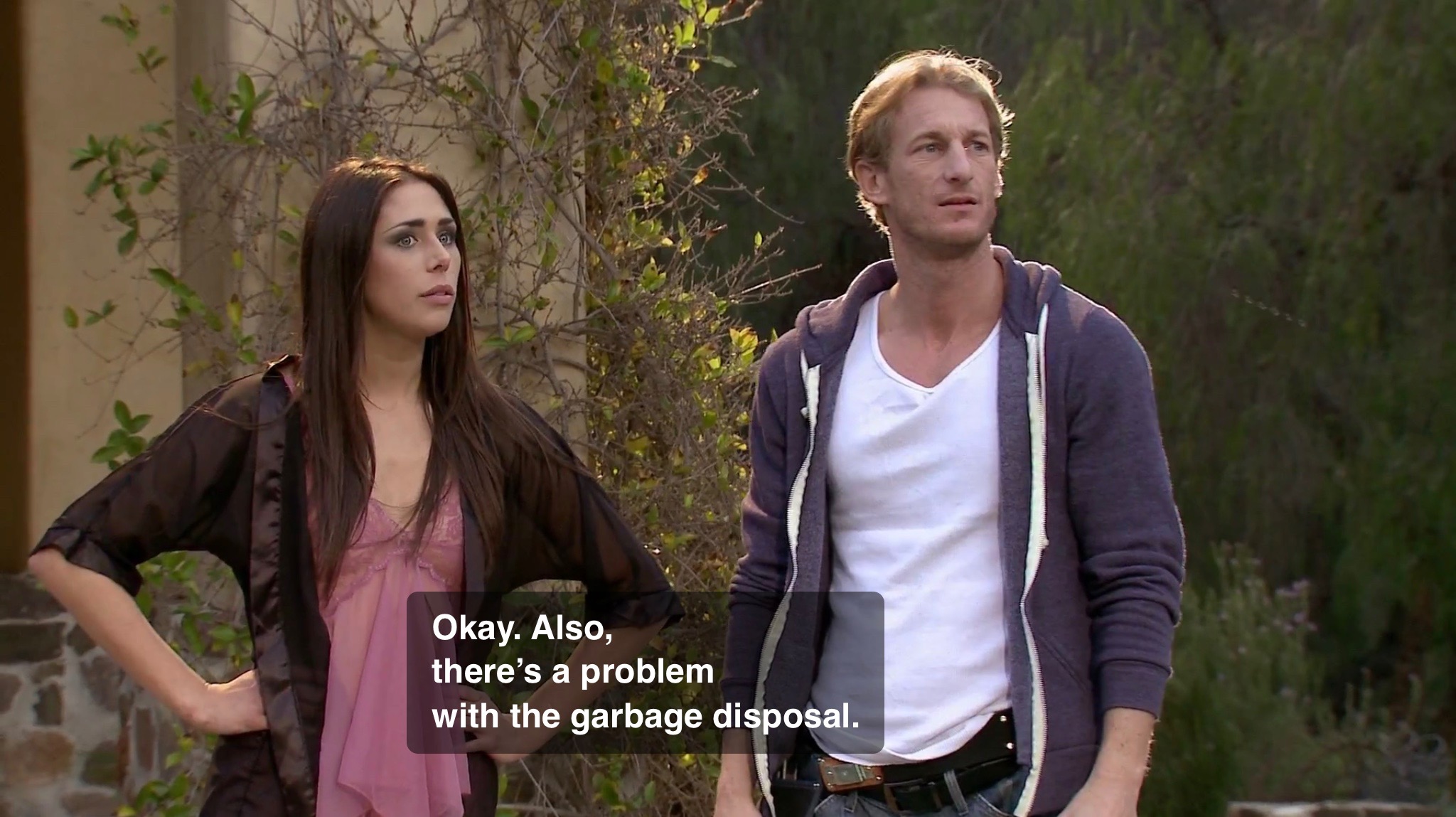
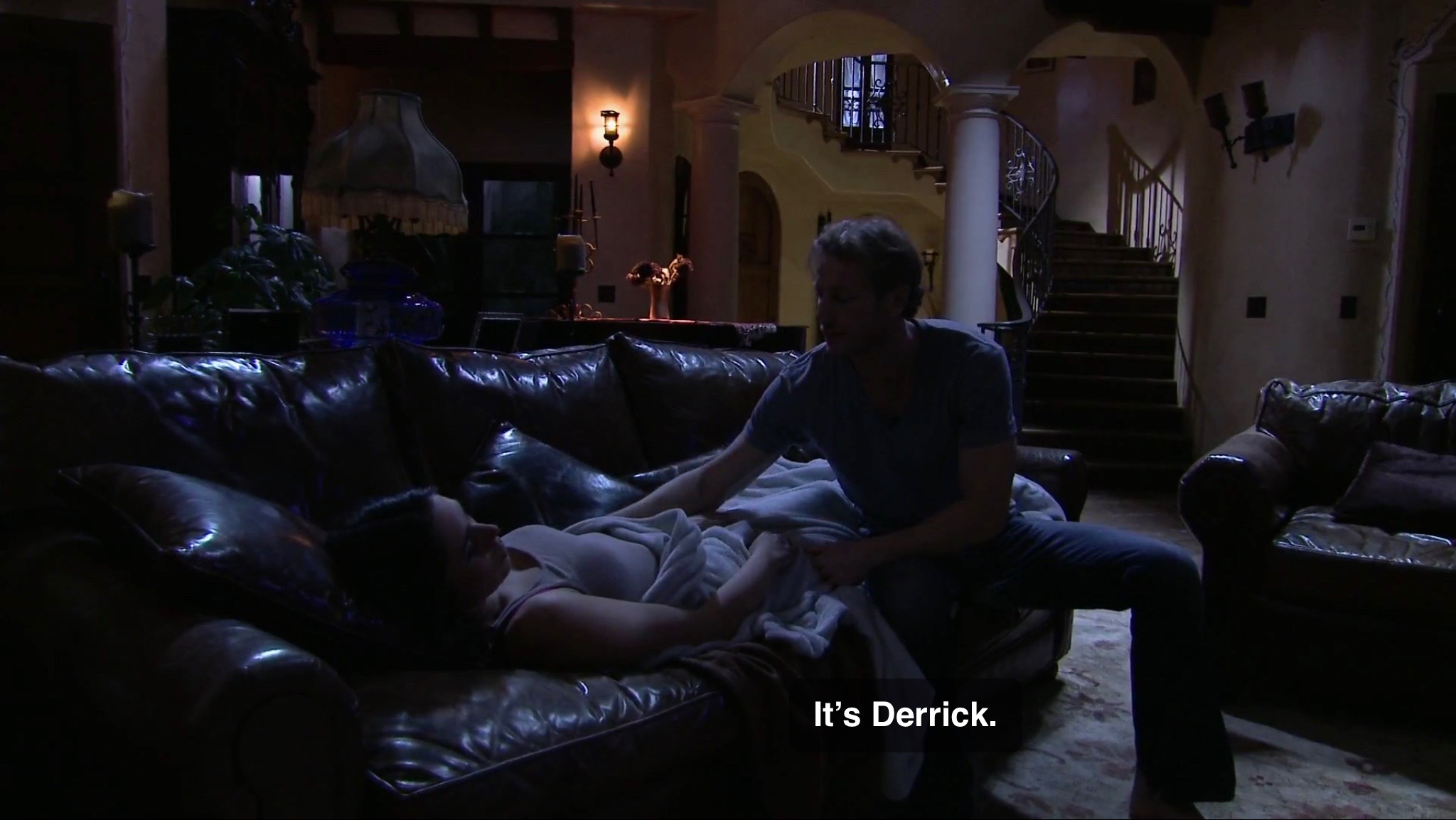
Anyways, you can see that there is a gun in the house. It’s in his night table, but even having watched the whole film, I still don’t know if it was a gun he or she was keeping in secret. She wakes up to find that not only has her husband left a rose on his pillow for her, but the handyman named Derrick (Ryan McLane) has arrived. You may remember Ryan McLane as the toughest scientist to convert in Vixens from Venus (2016).
She goes back inside the house and receives a mysterious phone call asking her who the killer was in the first Friday the 13th movie. That, or something about telling her that her husband needs to stay out of Mexico. She tries to get in touch with him, but no such luck. She calls her sister-in-law Rose (Chanel Preston). She comes over to try and calm her down. I don’t know where you might know Chanel Preston from, but she did play Marilyn Chambers in Night at the Erotic Museum (2015). That reminds me that I will have to get around to reviewing Behind the Green Door (1972). Not because it was a landmark film of the genre, but because an early childhood friend of mine was the daughter of parents who managed the Mitchell brother’s empire. Neither of us was told by our parents till we were older.
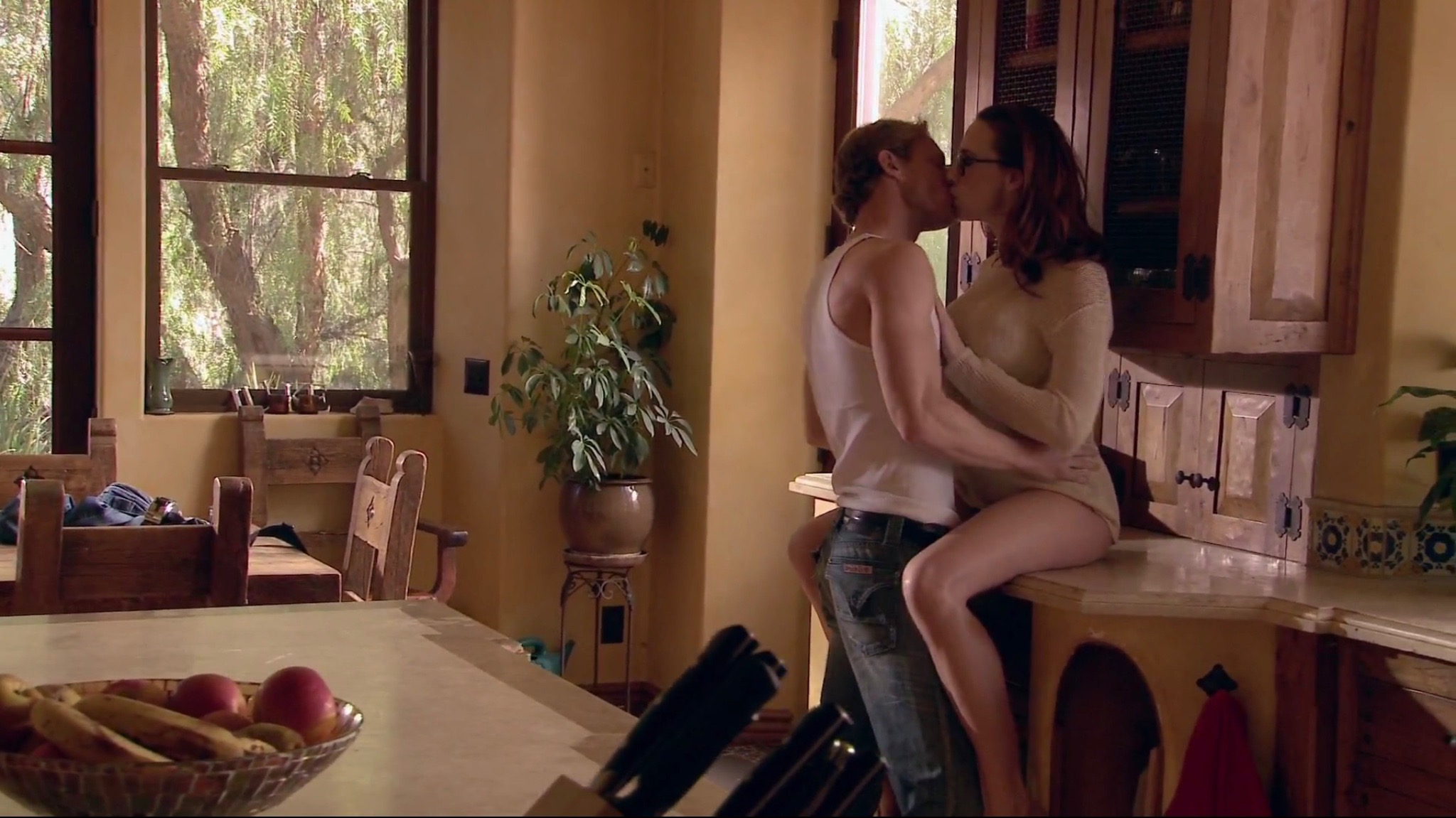
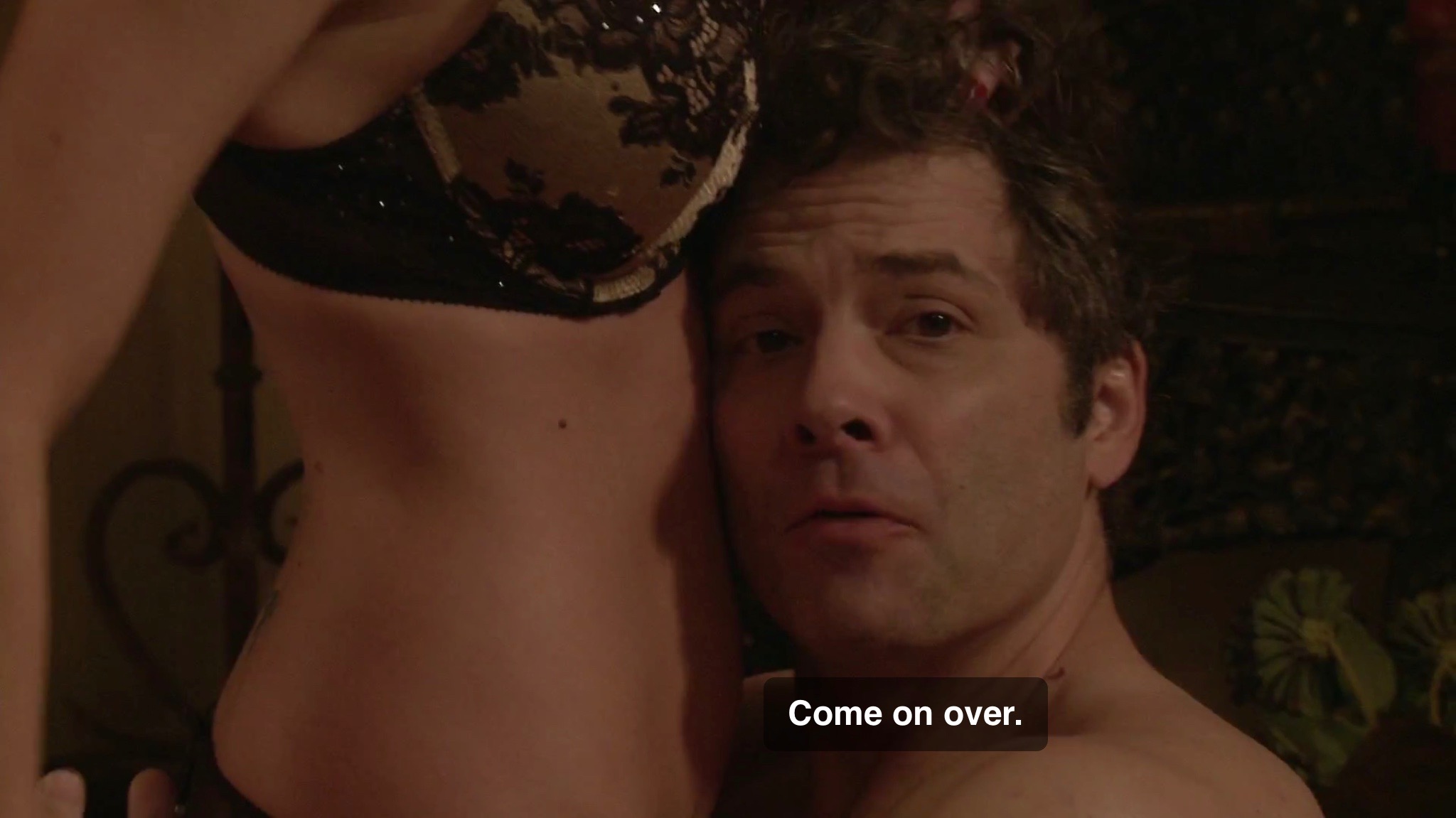
Kira goes to take a shower or something and comes back to find this.
It’s another joke about the whole pizza deliveryman cliche. This is also where the film starts to get strange because Kira talks with her sister shortly afterwards and she denies it ever happened. At this point, Kira just chalks it up to her sister being embarrassed to have hooked up with a handyman she has never met before. But the weirdness doesn’t stop here. It only grows. I think it’s safe to say that the film is going for the Gaslight (1944) type thing here. It’s not really a spoiler because I am going to explain the whole thing anyways.
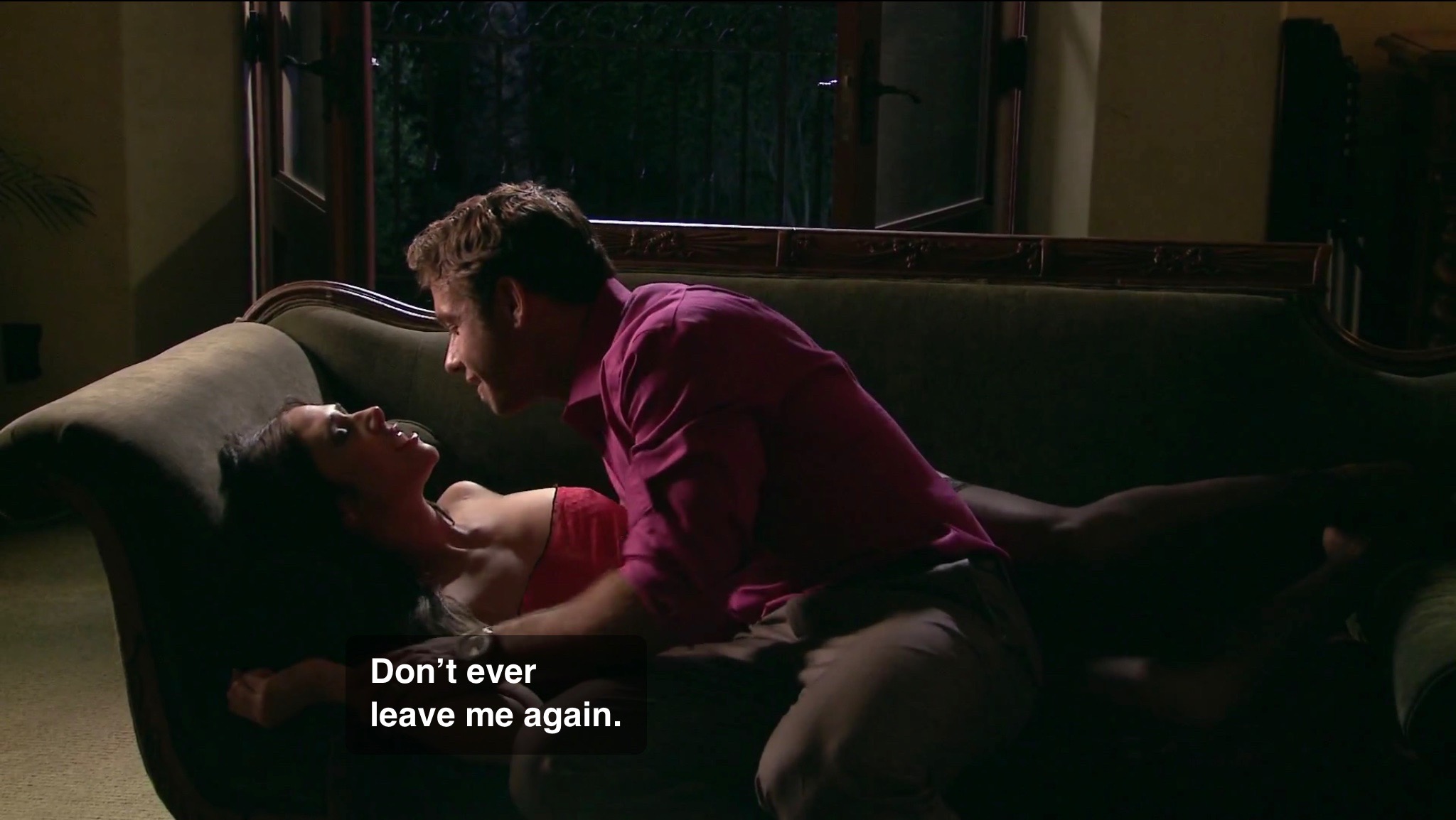
After talking with her sister, Kira lies down and appears to go to sleep. Then we are treated to a sex scene between her and the handyman. Interestingly, she wakes up suddenly from it in her bed rather than on the couch where she was lying down before the scene started or at the pool where the scene occurred. It goes without saying that she still can’t reach her husband.
Sis continues to try and calm her down, which is precisely why she invites her friend Tracy over so that actress Silvia Saige can get her fifth acting credit on IMDb. Once again, it’s a sex scene that goes on way too long. It’s there because it’s another thing that Kira needs to witness to further push her into a perceived insanity when everyone acts like it didn’t happen.
Even the pictures/video she takes with her not-iPhone will end up magically disappearing later on. After that scene finally ends, we get a reappearance of Mister New Jersey Show Me State from Scared Topless (2015). That being Billy Chappell making an appearance as another handyman there to fix the spa. He even has a text that he claims was sent by Kira to him.
Kira finds that the pictures are missing and everyone denies anything she has seen. She goes up to bed, which apparently means the couch where her husband appears out of nowhere.
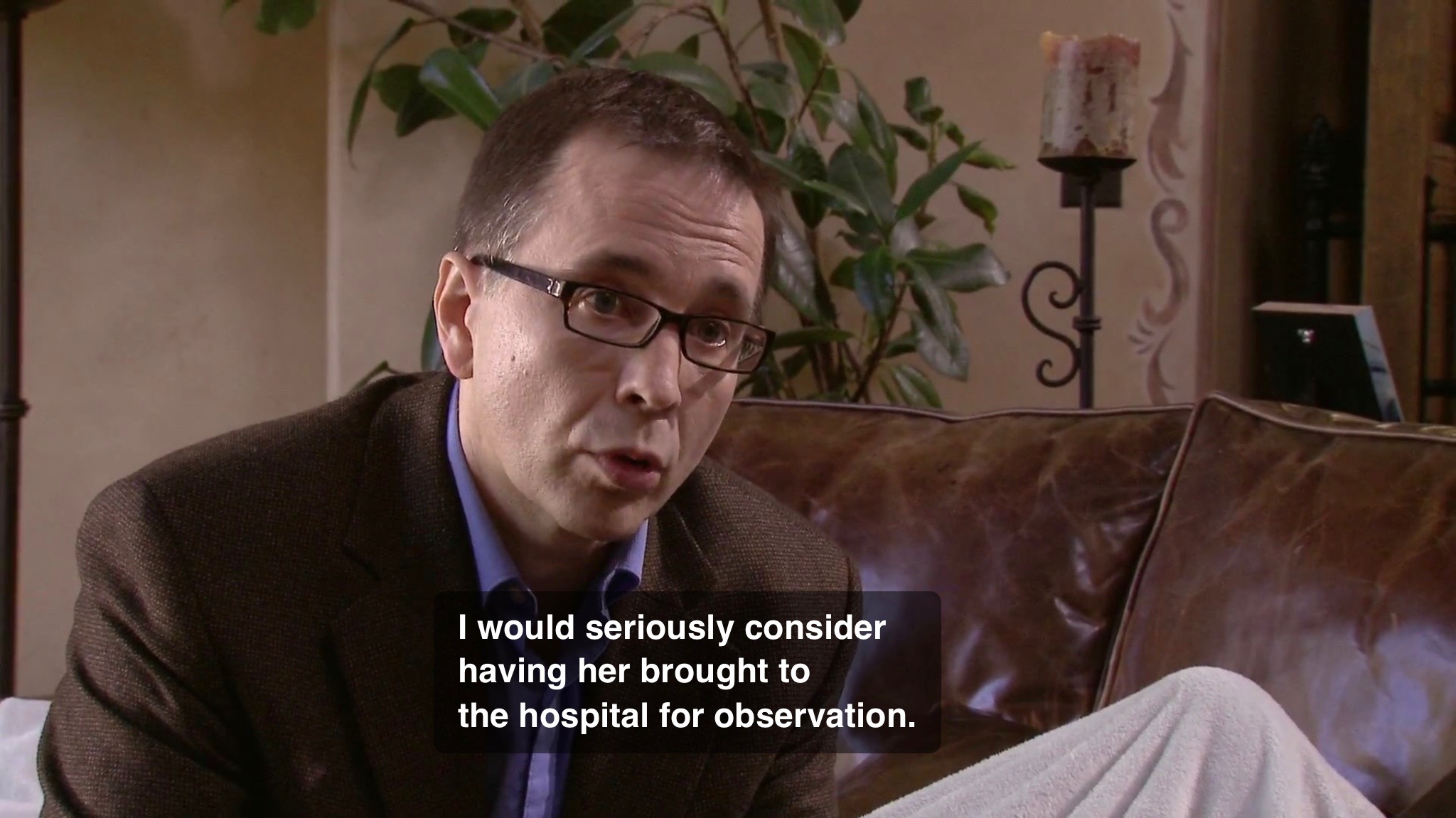
The scene of course goes on too long again. The next morning she finds the rose on his pillow, but when she gets Roy on the phone he says he’s still in Mexico. Kira’s sister is very concerned and brings in a doctor played by Robert Baldwin.
It’s not likely, but you may have seen Baldwin in something like the Fred Olen Ray film Illicit Dreams 2 (1998). As you can see, he is very concerned for Kira. Again, she goes to sleep and again, she is visited for another sexual encounter. This time it’s the original handyman.
This is when things really start to spin out of control. I say that because even my iPad decided this scene needed a Dutch tilt.
Kira confronts the handyman about taking advantage of her while she was drugged by the doctor. She cuts him with a knife and he flees. She then tells her sister that she thinks she might have been raped. Then the handyman comes downstairs and doesn’t remember any of it. In fact, he’s not even cut.
Kira kicks both her sister and the handyman out of the house, but finds blood on the floor. She comes into her living room to head upstairs and sees the other handyman with Tracy.
This is a perfect example of why this film ultimately doesn’t work. This should immediately lead to her going upstairs to discover this.
This scene should also be followed immediately by her passing out and falling down the stairs, which then leads us to our dramatic reveal and ending. But in both cases, they lead to long sex scenes. It completely ruins the suspenseful atmosphere that should be present in this part of the film. It leads me to believe that on the one hand they wanted to do this Gaslight style story, but on the other hand they were obligated to have a certain number of sex scenes that were required to be of a certain length. It’s like watching an action movie where foot or car chases go on so long that you are no longer caught up in the moment. Too bad cause I like the ending.
It turns out that the husband and the sister-in-law arranged this whole thing to drive Kira crazy. The doctor even performed ECT on her. The idea was that the only way Roy could get around the prenup that Kira’s brother had him sign was to get her committed.
But what about that gun from earlier?
Cut to black, and we hear gunshots.
If they had just trimmed down the sex scenes so that they moved from long and intimate to short almost glimpses as her mind spiraled more out of control, then this could have been one of the best of these I’ve seen so far. Sadly, it doesn’t do that. It’s one of these films that I call a missed opportunity.
Seriously, I’ve seen a lot of horror films, including the first Conjuring (which I absolutely loved). I’ve seen ghosts, vampires, demons, werewolves, psycho killers, and threats in the shadows. I’ve seen cats jump out of closets. I’ve seen ghostly faces suddenly appear in the darkness. I’ve heard screams and chants and howls. I’ve seen limbs severed in every possible way. I’ve seen a lot of cinematic horror and, as a result, I tend to feel that there is nothing that can scare me.
Well, it turns out that’s not true because The Conjuring 2 scared the Hell out of me.
In many ways, The Conjuring 2 tells a familiar story. Once again, the film begins with an opening crawl that informs us that what we’re about to see is based on a true story. Once again, a loving but chaotic family is being haunted by evil spirits and the Church has asked paranormal investigators Ed and Lorraine Warren to investigate.
The setup may sound familiar but director James Wan manages to keep the scares compelling. Over the past few years, Wan has emerged as one of our greatest genre filmmakers. Whether he’s directing an Insidious film or the latest Fast & Furious installment, James Wan knows how to hold an audience’s attention and how to make the potentially predictable compelling. In The Conjuring 2, Wan creates and maintains such an atmosphere of dread that even the expected scares (bumps in the dark, voices in the shadows, slamming doors, and faces suddenly appearing in the background) take on an ominous intensity. From the very first shot, Wan leaves the audience with a profound feeling of unease. I was not alone in covering my eyes during a few scenes. I was also not alone is occasionally looking around the darkened theater, just to make sure that there weren’t any ghosts creeping up on me.
That said, we all already know that James Wan is a master of horror. We know that he can tell a ghost story and, from the minute we saw the first trailer, we all knew that The Conjuring 2 was going to be scary. What sets The Conjuring 2 apart is the same thing that made the first Conjuring so special. (For that matter, it’s the same thing that made Wan’s Furious 7 so special.) Wan fills the screen with horror and spectacle but he also finds the time to celebrate his character’s humanity.
There’s a scene that occurs about 90 minutes into The Conjuring 2. Ed (Patrick Wilson) and Lorraine (Vera Farmiga) are visiting with the haunted family. The family has been shaken by both the supernatural and the fact that so many people refuse to believe that they are actually being haunted. Ed spies a guitar sitting in the corner of the room. He grabs it and, with the haunted children gathered around them, he launches into a surprisingly good Elvis impersonation. He sings I Can’t Help Falling In Love With You, all the while glancing over at Lorraine standing in the doorway.
(What makes this especially touching is that Lorraine has been having premonitions of Ed’s violent death and is terrified that she’s going to lose him before they finish investigating this case.)
It’s a totally unexpected scene and yet it works perfectly. Some of it is because Patrick Wilson and Vera Farmiga have this great chemistry that makes you believe that they actually have been married for years. But it’s also because the scene reminds us that The Conjuring 2 is about more than just ghosts and scares. It’s also about love and family. The haunting is threatening to end Ed and Lorraine’s love story. The haunting is threatening to destroy a loving family. Ed and Lorraine aren’t just investigating a ghost but they’re also saving a family. They’re not just fighting against the supernatural. They’re fighting for love.
And, in our cynical times, that may sound corny or silly or old-fashioned. Well. you know what? The Conjuring was an old-fashioned film and, in a way, so is The Conjuring 2. But who cares? Horror works best when it’s mixed with humanity. The Conjuring 2 may be a horror film but it’s also a celebration of humanity, love, and family.
You may have noticed that I haven’t go into many specifics about the plot of The Conjuring 2. I don’t want to spoil it for you. This is a film that you should experience with fresh eyes. I could tell you about the scariest scene in this film but, if I did, you would not get the full experience. I’ll just say that I’ve seen a lot of scary movie nuns but none of them can compare to The Conjuring 2.
The Conjuring 2 is the best supernatural horror film that I’ve seen this year so far. It will scare you and it will touch your heart. See it.
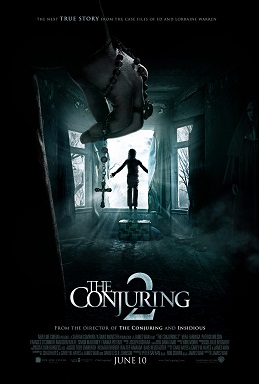
Also, be sure to stay for the end credits, which feature a lot of genuinely creepy snapshots of the actual locations where the film’s haunting is said to have occurred. Not only are the pictures scary but they also show the care with which The Conjuring 2 recreated 1970s London. Is the picture below a scene from the film or is it a picture that was taken during the actual haunting? You’ll have to see The Conjuring 2 to find out!
After I finished writing my review of Rolling Thunder, I continued the process of cleaning out my DVR by watching the 1969 film, Anne of the Thousand Days. How does a film like Anne of the Thousand Days compare to a film like Rolling Thunder?
They might as well have been conceived, written, directed, and released on different planets.
I recorded Anne of The Thousand Days off of TCM on March 26th. The main reason that I set the DVR to record it was because Anne was a best picture nominee. It may seem strange to think that this rather conventional film was nominated the same year as Butch Cassidy and the Sundance Kid, Z, and Midnight Cowboy. It gets even stranger when you consider what wasn’t nominated that year: Medium Cool, If…, Last Summer, They Shoot Horses, Don’t They?, Alice’s Restaurant, The Wild Bunch, Once Upon A Time In The West, and a long list of other films. In fact, if I wanted to, I could probably spend this entire review listing all of the 1969 films that feel like a more appropriate best picture nominee than Anne of the Thousand Days.
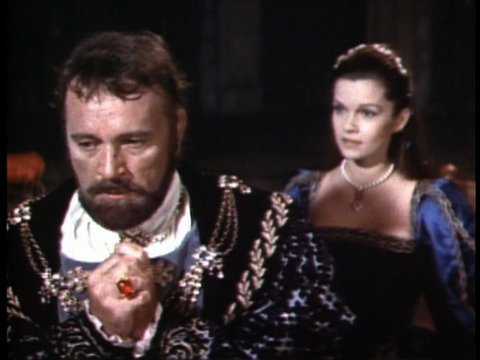
And yet, Anne was nominated for best picture. In fact, it received a total of 10 Oscar nominations, the most of any film that year. Tellingly most of the nominations were in the technical categories and the only Oscar that it won was for its costumes. Genevieve Bujold received a nomination for playing the title character and Richard Burton became the third actor to receive a nomination for playing King Henry VIII.
As for the film, Anne of the Thousand Days tells the oft-told story of King Henry VIII and his marriage to Anne Boleyn. Told in flashback as both Henry and Anne wait for her to be executed on charges of adultery, the film shows us how middle-aged Henry VIII first met and fell in love with 18 year-old Anne Boleyn. Standing in the way of Henry’s pursuit of Anne was the fact that 1) Anne intensely disliked him, 2) Anne was already engaged, 3) Anne’s sister was already Henry’s mistress, and 4) Henry was already married to Catherine of Aragon (Irene Papas).
Fortunately, Henry happens to be king and being king comes with its perks.
For instance, as king, he can order Anne and her fiancée to break up. As king, he can casually dismiss his former mistress. And, as king, Henry has the power that Anne finds to be the ultimate aphrodisiac. At first, Anne merely loves the fact that Henry is obsessed with her. But slowly, she comes to love Henry as a man as well…
The only problem is that Henry is still married and Catherine is still popular with the people. Even after Henry divorces her and marries Anne, the common people refuse to accept Anne as their queen. When Sir Thomas More (William Squire) refuses to recognize Anne as queen, Anne demands that More be executed. When Henry initially shows reluctance, Anne announces that she will not sleep with him until More is dead.
Needless to say, Thomas More is quickly executed.
However, Henry’s attention has already moved on to Jane Seymour (Lesley Paterson) and, desperate to get Anne out of his life, he arranges for Cardinal Cromwell (John Colicos) to frame Anne on charges of adultery and incest. With Anne facing a humiliating trial and the possibility of execution, Henry makes her an offer. If she agrees to an annulment, he’ll free her. However, their daughter — Elizabeth — will lose her claim to the throne…
It’s telling that Charles Jarrott did not receive an Oscar nomination for his work as Anne of the Thousand Day‘s director. There are a lot of technically good things about Anne of the Thousand Days but, despite all of the melodrama and sex and historical detail to be found in Anne, it never comes to life as a movie. The costumes are to die for, the sets are impressive, and the cast is full of talented British character actors but the whole movie just feels oddly flat. Try as it may, it can never convince us that either Henry VIII or Anne Boleyn is worth all the trouble.
Anne of the Thousand Days was obviously a big production, which probably explains all the Oscar nominations. But otherwise, it’s one of the more forgettable best picture nominees.
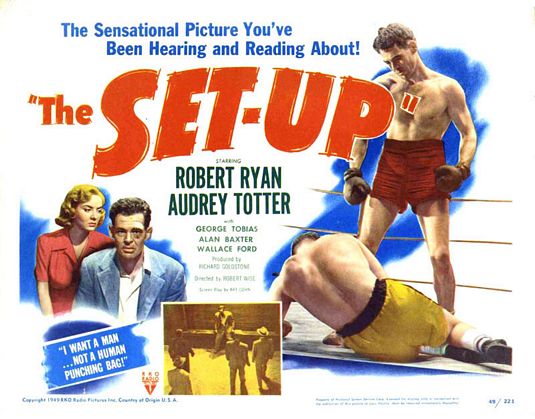
The seedy worlds of professional boxing and film noir were made for each other. Both are filled with corruption, crime, and desperate characters trapped in situations beyond their control. Movies like CHAMPION, BODY AND SOUL, and THE HARDER THEY FALL expose the dark underbelly of pugilism. One of the best of this sub-genre is THE SET-UP, Robert Wise’s last film for RKO studios. He doesn’t fail to deliver the goods, directing a noir that packs a wallop!
THE SET-UP follows one night in the life of aging, washed up fighter Stoker Thompson ( Robert Ryan ). Stoker’s 35 now, ancient in boxing terms, but still has delusions of making the big time. Wife Julie (Audrey Totter ) is tired of going from one tank town to the next, and fears for Stoker’s safety. She refuses to go to tonight’s fight, a matchup with up and coming young contender Tiger…
I just finished watching Weiner, the new documentary about Anthony Weiner, the very creepy former Congressman from New York.
I know it may seem strange for me, the girl who launches into at least one “I’m sick of hearing about politics” rant a day, to watch Weiner but this documentary has been getting considerable acclaim. In a year when very few Oscar contenders have yet to emerge, Weiner has already been declared by many to the be the front-runner for this year’s Oscar for Best Documentary Feature Film. So, really — what choice did I have but to watch?
Then again, even if it wasn’t a potential Oscar contender, I would probably still want to watch Weiner. Anthony Weiner’s story is a fascinatingly awful one and how people react to it seems to largely depend on whether they lean to the right or to the left. To those on the left, Anthony Weiner is almost a tragic figure, a forceful advocate who was undone by his personal weaknesses. To those on the right, Weiner is a symbol of liberal hypocrisy. And, for those in the apathetic middle (like me), he’s a creepy and somewhat pathetic perv who used to serve in Congress and who is now lucky if he can get a cameo in a Sharknado sequel.
Of course, when it comes to Anthony Weiner, the thing that we can all agree on is that, regardless of what happened, it was all his fault. Weiner opens with a montage of Antony Weiner’s rise and fall. We see him screaming on the house floor and taunting Republicans on a news program. We then see him being asked if he posted a picture of his “bulge” on twitter. We watch as Weiner denies posting the picture and then admits to posting the picture. Weiner says he will never resign from Congress. Obama pops up for a second to tell an interviewer that he thinks Weiner should resign. And then, Weiner does resign.
The documentary picks up two years later. Anthony Weiner is running for Mayor of New York and, despite lingering questions about his online activities, Weiner has emerged as the front runner. In fact, Weiner is so confident that he’s going to win the Democratic nomination that he even invites a documentary film crew to follow him during the campaign. It’s obvious that, initially, both Weiner and the documentarian believe that this documentary is going to be a story of redemption.
And so, we follow Weiner as he campaigns. We see his enthusiastic volunteers, all talking about why they want Anthony Weiner to be the next mayor of New York. We meet Weiner’s wife, Huma Abedin, and we listen as people gush about how close she is to Hillary Clinton. Everything seems to be perfect…
…And then, suddenly, things change. It turns out that Weiner has not stopped his online activities. Instead, it appears that he’s become even more reckless than before. The press discovers that Weiner’s online name was “Carlos Danger.” One of Weiner’s sexting partners, Sydney Leathers, emerges as a celebrity. Thought Huma stands with her husband in public, the documentary cameras catch her in private, often sitting alone and looking like she can’t believe that, out of all the available men in D.C., she ended up married to someone who thought Carlos Danger sounded like a plausible name.
And through it all, Anthony Weiner seems blissfully unaware. He continues to campaign for mayor and cannot seem to understand why people keep asking him about the scandal. He gets angry. He snaps at hecklers. Suddenly, nobody is returning his phone calls. Nobody is taking him seriously as a candidate. And yet, Weiner still seems to be convinced that he’s going to win. One of the documentary’s best scenes takes place on election night, when Weiner watches the results and realizes that, in a matter of days, he’s gone from being the front runner to coming in dead last. Making matters even worse, of course, is that both the press and Sydney Leathers have gathered outside of Weiner’s campaign headquarters, waiting for him and Huma to emerge so that they can literally pounce on them.
It makes for a fascinating documentary, though perhaps not in the way that the documentarians originally intended. As much as the film attempts to paint Weiner as being a tragic character, a talented man brought down by his own mistakes, the real Anthony Weiner comes across as being a shallow narcissist who, through a combination of arrogance and stupidity, actually thought it would be a good idea to have a documentary crew follow him around despite knowing that there was a potential scandal hanging over his head. It makes for a memorable portrait of what happens with ambition meets compulsion.
The film’s getting a lot attention because it provides a behind-the-scenes look at Huma Abedin. With Hillary Clinton pretty much guaranteed to be our next President, Huma is also guaranteed to soon become one of the most powerful people in the country. Unlike Weiner, who sometimes comes across as being almost compulsive in his need to be the center of attention, Huma is a far more reticent figure. Whereas Weiner frequently talks straight to the camera and answers questions from the filmmakers, Huma is usually seen in the background, smiling when Weiner is doing well and glaring when he’s not. There’s not a single scene in the movie where she doesn’t seem to have up her guard but then again, can you blame her? Unlike her husband, Huma instinctively understands that there’s no coming back from being outed as Carlos Danger. When Huma eventually leaves Weiner’s campaign so that she can travel with Hillary Clinton, you feel almost relieved for her. At least she won’t have to put up with Anthony’s bullshit for a while.
Weiner may have originally be envisioned as tale of redemption but instead, it became a story of how a narcissist self-destructed. Whether that narcissist deserves a third or fourth chance to live up to his potential is a question that the audience will have to answer for themselves.
I’m currently in the process of watching the 36 films that I’ve recorded on my DVR since March. Last night, I was extremely excited as I looked up the 7th film on the DVR and I discovered that I was about to watch the 1977 revenge classic, Rolling Thunder!
Among those of us who love old grindhouse and exploitation film, Rolling Thunder has achieved legendary status. Based on a script by Paul Schrader (though I should point out that Schrader’s script was rewritten by Heywood Gould and Schrader himself has been very critical of the actual film) and directed by John Flynn, Rolling Thunder is quite literally one of the best revenge films ever made. It’s also a great Texas film, taking place and filmed in San Antonio. Quentin Tarantino has frequently cited Rolling Thunder as being one of his favorite films and he even used the name for his short-lived distribution company, Rolling Thunder Pictures.
Rolling Thunder also has one of the greatest trailers of all time. In fact, if not for the trailer, I probably would never have set the DVR to record it off of Retroplex on March 25th. The Rolling Thunder trailer is included in one of the 42nd Street Forever compilation DVDs and, from the minute I first watched it, I knew that Rolling Thunder was a film that I had to see.
Watch the trailer below:
Everything about that trailer — from the somewhat portentous narration at the beginning to the way that Tommy Lee Jones calmly says, “I’ll get my gear,” at the end, is pure genius.
But what about the film itself? Well, having finally seen the film, I can say that Rolling Thunder is indeed a classic. It’s also one of the most brutal films that I’ve ever seen, containing scenes of truly shocking and jarring violence. In fact, the violence is so shocking that it’s also, at times, rather overwhelming. This is one of those films that you will probably remember as being far more violent than it actually is. Because, while Rolling Thunder features its share of shoot-outs and garbage disposal limb manglings, it’s actually a very deliberately paced character study.
When we first meet Maj. Charles Rane (William Devane), he’s sitting on a plane and looking down on San Antonio. He’s in full military dress uniform. Setting across from him, also in uniform, is John Vohden (Tommy Lee Jones). The year is 1973 and Rane and Vohden have both just spent the past seven years as prisoners in a Vietnamese camp. While they were prisoners, they were tortured every day. Now, they’re returning home and neither one of them is quite sure what’s going to be waiting for them.
Over the imdb, you can find a few complaints from people who feel that Rolling Thunder gets off to a slow start. And it’s true that it takes over 30 minutes to get to the pivotal scene where Maj. Rane loses both his hand and his family. But that deliberate pace is what makes Rolling Thunder more than just a revenge flick with a kickass name. That first half-hour may seem to meander but what it’s actually doing is setting both Rane and Vohden up as strangers in their own country.
The film gets a lot of mileage out of comparing Rane to Vohden. Rane is good with words. When he gets off the plane, he gives a perfect (and perfectly empty) speech about how the whole war experience has made a better American out of him. Rane knows how to fool people but it quickly becomes apparent that, on the inside, Rane feels empty.
Vohden, meanwhile, is not an articulate man. He’s not invited to give a speech when the plane lands. Vohden cannot fake the emotions that he does not feel. At first, Rane and Vohden seem to be complete opposites (and the film wisely contrasts Jones’s trademark taciturn style of acting with Devane’s more expressive technique) but eventually, we learn that they’re actually two sides of the same coin. Both of them have been left empty as a result of their wartime experiences and, in the end, Vohden is the only one who can truly understand what’s going on in Rane’s head while Rane is the only one who can understand Vohden. When Rane needs help getting revenge, Vohden is the one that he turns to. It’s not just because Vohden knows how to kill. It’s also because John Vodhen is literally the only man to whom Charles Rane can relate.
Why does Rane need revenge? After the local bank awards him with 2,000 silver dollars (“One silver dollar for every day you spent in the Hell of Hanoi!,” he is told at the presentation), Rane returns home to discover that a group of men have broken into his house. One of them, known as the Texan (an absolutely chilling performance from James Best), demands that Rane tell them where the silver dollars are hidden. When Rane responds by giving only his name, rank, and serial number, Slim (Luke Askew) reacts by forcing Rane’s arm into the kitchen sink and then turning on the garbage disposal. (A scene was apparently shot that literally showed Rane’s hand getting ripped off by the garbage disposal but it was judged to be too graphic even for this grim little movie.) Even as the disposal mangles Rane’s arm, Rane refuses to tell them where the money is. Instead, he just flashes back to being tortured at the camp and we realize that Rane’s experiences have left him immune to pain.
Of course, the Texan doesn’t realize this. Instead, he glares at Rane and mocks him by declaring him to be “one macho motherfucker.”
When Rane’s wife and son walk in on the men, Slim and the Texan murder them and leave Rane for dead. However, Charles Rane isn’t dead. He survives but he claims that he can’t remember anything about the men who attacked him. It’s only after Rane is released from the hospital and starts to practice firing a shotgun with the hook that has replaced his hand that we realize that Rane does remember. Recruiting a local waitress who also happens to be an amateur beauty queen (Linda Haynes, giving the type of great performance that makes me wonder why I’ve never seen her in any move other than Rolling Thunder) to help, Rane sets out to track down “the men who killed my boy.”
Linda Hayes in Rolling Thunder, giving a great performance in a somewhat underdeveloped role
It’s very telling that Rane continually says that he’s after the men who “killed my boy” but he never mentions his wife. When Rane first arrived home, he had one conversation with his wife. He complained that she had changed her hair and that she wasn’t wearing a bra. “Nobody wears them anymore,” She replied before telling him that, during his seven year absence, she had fallen in love with another man, Cliff (Lawrason Driscoll). And, up until she’s murdered by the Texan, that’s the last conversation that we see Rane have with his wife. Rane still lives in the house and he still tries to talk to his son (even though his son seems more comfortable around Cliff than around Rane) but Rane becomes a stranger to his family. While his wife sleeps in the house, Rane insists on staying out in the garage and continuing to go through the daily routine of calisthenics that he used to maintain his sanity while he was a prisoner.
(When Cliff asks Rane what it was like to be tortured, Rane literally forces Cliff to pull back on his arms in the same way that his Vietnamese captors had to. As I watched these scenes, I was reminded that 2008 presidential candidate John McCain cannot lift his arms above his shoulders as a result of the torture he suffered while a POW.)
When Rane goes to El Paso to recruit Vohden for his mission of revenge, we notice that Vohden also appears to be incapable of speaking to his wife. When Vohden leaves, he says goodbye to his father but not his wife. It’s probably not a coincidence that, when Vohden and Rane find Slim and the Texan, they’re at a brothel, a place where men are in charge, women are subservient, and primal needs are satisfied without the risk of emotional attachment. (It’s also probably not a coincidence that Slim is also identified as having recently returned from Vietnam. He complains that, unlike Rane and Vohden, he was never captured by the enemy and, as a result, he didn’t get a parade when he came back home.) Rolling Thunder is a film about emotionally stunted men who are incapable of interacting in any way other than violence. By the end of the film, you’re left wondering whether Rane’s mission was about revenge or about his own need to destroy.
And what an ending! When I say that the violence in Rolling Thunder is overwhelming, I’m talking about two scenes in particular. There’s the scene where Rane loses his hand and watches as The Texan casually executes his wife and son. And then there’s the ending. The final shootout was quick but it was also so brutal that I was literally shaking by the end of it.
(The scenes leading up the final shootout also featured one of the few humorous moments to be found in this otherwise grim film. When Vohden — who is inside the brothel with a prostitute — starts to put his rifle together, the prostitute asks him what he’s doing. “Oh,” Vohden says, in that perfectly weary way that only Tommy Lee Jones can do, “just going to kill a bunch of folks.”)
I mentioned earlier that Paul Schrader is reportedly not a fan of Rolling Thunder. Apparently, in his original script, Charles Rane was portrayed as being a poorly educated racist, a bit of a prototype for the character that Robert De Niro played in Taxi Driver. Ranes’s final rampage was meant to be an example of the war in Vietnam coming home and it was made much clearer that Rane’s violence was as much fueled by his own racism as by a desire for revenge. Schrader has said that his anti-fascist script was turned into a fascist movie.
A scene from Paul Schrader’s original script
With all due respect to Mr. Schrader (who I think is a very underrated filmmaker), Rolling Thunder is anything but a fascist movie. Instead, it’s a brutal and somewhat disturbing character study of a man who will never truly escape the war in which he fought. The fact that Rane is played by super smooth William Devane (as opposed to the redneck that Schrader apparently envisioned) only serves to make the film’s critique of hyper masculinity all the more disturbing. It’s interesting to note that, on their own, Rane and Vohden are never presented as being particularly likable or heroic. Instead, we root for them because the people who have hurt them are even worse.
This was how Schrader envisioned Johnny and Rane.
Though it may be far different from what Paul Schrader originally envisioned, John Flynn’s Rolling Thunder is a film that works on every level. It is both a visceral revenge film and a character study of a disturbed man. It’s a powerful film that will leave you shaken and it’s one that I will probably never erase from my DVR.
There are some movies that you just don’t dare delete.
Continuing the process of cleaning out my DVR, I watched an odd little film from 1975 called Lemora. I recorded Lemora on March 25th, when it aired as a part of TCM Underground.
Lemora opens with an odd scene that appears to be set in the 1920s. A man dressed up like a stereotypical movie gangster (think Edward G. Robinson in Little Caesar) guns down another man with his tommy gun and then races off in his car. After he crashes, he crawls into a dark forest where he is apparently captured by a mysterious, black-clad woman.
Suddenly, we cut to 13 year-old Lila Lee (Cheryl Smith), singing in church. Lila is blonde, innocent, and has an almost heavenly singing voice. Everyone listens to her with almost worshipful attention. When the Reverend (played by the film’s director, Richard Blackburn) steps up to the pulpit, he announces that he knows what some people are saying about Lila and her father but that she is pure and innocent.
It turns out that the gangster is Lila’s father. Lila hasn’t had much contact with her father. Instead, she has been raised in the church by the Reverend. However, Lila receives a letter from her father. The letter claims that he’s dying and that he wants to see Lila and ask for forgiveness before he passes. The letter also says that her father is in the town of Astaroth.
(You would think that, having been raised in the church, Lila would know that Astaroth is also the name of a legendary demon.)
Knowing that the Reverend would never allow her to go, Lila sneaks out of the house. She stows away in the back of a couple’s car and listens as the couple gossips about her relationship with the Reverend, suggesting that the Reverend is just waiting for Lila to “turn legal.” After she gets out of the car, she takes a bus the rest of the way to Astaroth. Sitting on the dark bus, just her and the somewhat creepy driver, Lila listens as the driver tells her that the people of Astaroth have a certain look.
When she arrives at Astaroth, Lila finds herself being pursued by seemingly deformed vampires but she’s rescued by the mysterious Lemora (Lesley Gilb). Or is she? Lemora is the same woman who found Lila’s father in the forest and it soon becomes obvious that Lemora has plans for Lila as well…
Meanwhile, the Reverend discovers that Lila has run away and his reaction leads us to suspect that there may have been more than a little bit of truth to the conversation that Lila previously overheard in the car. The Reverend sets out to track down and rescue Lila but, at this point, the viewer trusts him even less than they trust Lemora.
It’s a very strange movie and a difficult one to describe. It’s a movie that creates its own unique and odd reality. Lemora expects the viewer to conform to its style as opposed to conforming to the audience’s expectations. Lemora‘s full name is Lemora: A Child’s Tale Of The Supernatural and it really does play out like a particularly nightmarish fairy tale. Though the film was definitely low-budget, it’s full of strikingly surreal images. The entire movie feels like a dream — everything from the almost campy, gangster-film opening to Lila’s strange journey on the dark bus to Lemora’s hypnotic stare to the sudden and shocking conclusion of the Reverend’s relationship with Lila. The film has one of those endings that forces you to reconsider everything that you previously witnessed.
Much like Messiah of Evil, Lemora is one of those surrealistic and low-budget horror films that almost defies conventional criticism. It’s a surreal dream of dark and disturbing things and one that everyone should see for themselves. You may love it, as I did. You may hate it. But you will never forget it.
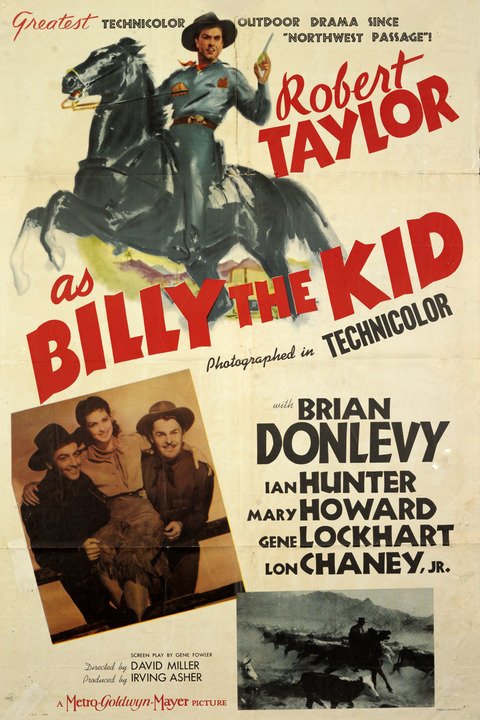
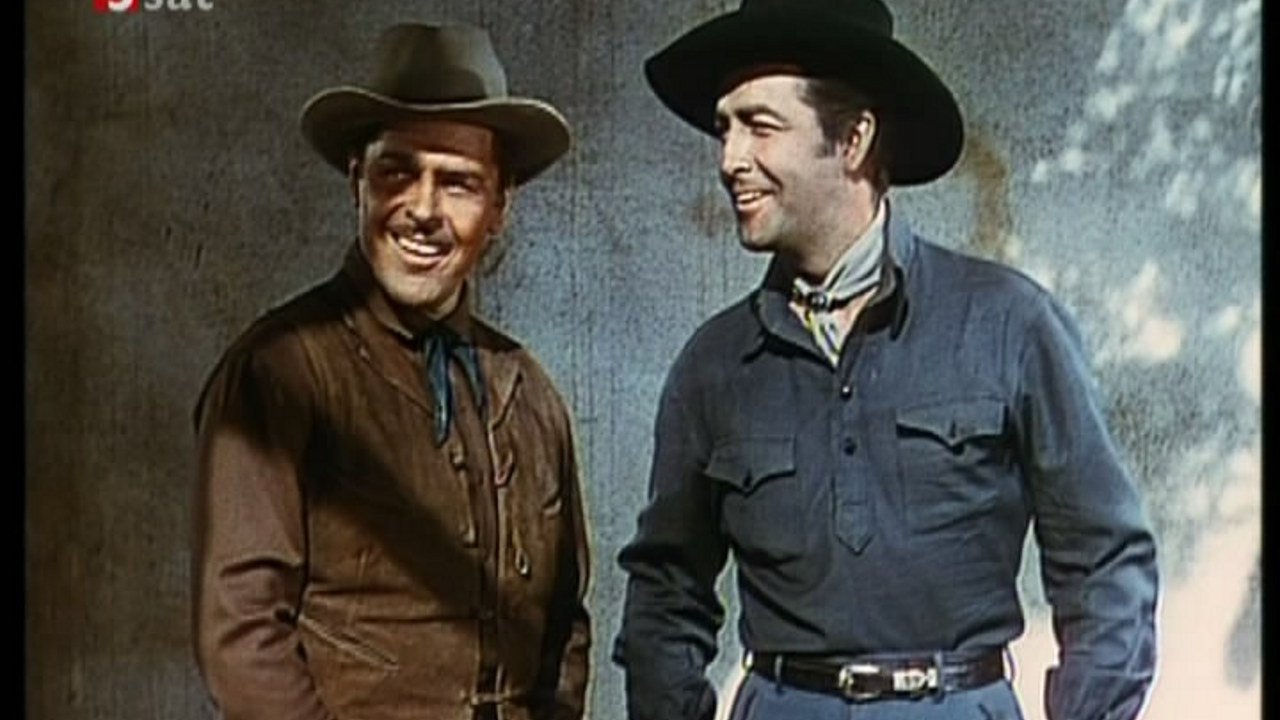
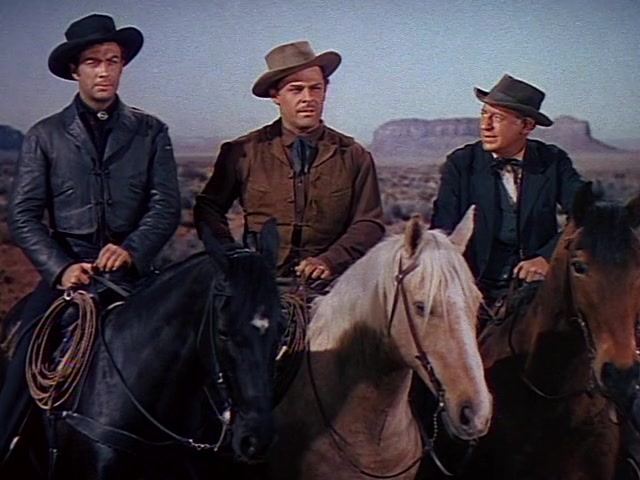
What kind of topsy-turvy world is this? Perennial bad guy Brian Donlevy is on the side of the law, loveable Gene Lockhart is the villain, and almost 30 Robert Taylor is BILLY THE KID. This 1941 Technicolor horse opera has only a passing resemblance to reality, and was actually a remake of a 1930 film starring Wallace Beery and Johnny Mack Brown, which depicted the outlaw’s legend a bit more truthfully… but not much!
In this version, Billy joins up with ruthless cattleman Hickey, who’s out to takeover Lincoln County. They start a stampede of rival Keating’s cattle, and during the commotion Billy encounters childhood friend Jim Sherwood, now working for Keating. Billy and his pal Pedro switch sides, and Pedro takes a bullet for it. The Kid is out for revenge, but Keating’s cooler head prevails, and he sets out to seek help from the territorial governor.