Cleaning Out The DVR, Again #6: Lemora (dir by Richard Blackburn)


Lemora_dvd_cover

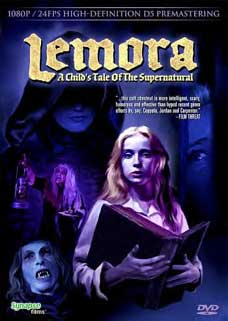
Continuing the process of cleaning out my DVR, I watched an odd little film from 1975 called Lemora.  I recorded Lemora on March 25th, when it aired as a part of TCM Underground.

Lemora opens with an odd scene that appears to be set in the 1920s.  A man dressed up like a stereotypical movie gangster (think Edward G. Robinson in Little Caesar) guns down another man with his tommy gun and then races off in his car.  After he crashes, he crawls into a dark forest where he is apparently captured by a mysterious, black-clad woman.

Suddenly, we cut to 13 year-old Lila Lee (Cheryl Smith), singing in church.  Lila is blonde, innocent, and has an almost heavenly singing voice.  Everyone listens to her with almost worshipful attention.  When the Reverend (played by the film’s director, Richard Blackburn) steps up to the pulpit, he announces that he knows what some people are saying about Lila and her father but that she is pure and innocent.

It turns out that the gangster is Lila’s father.  Lila hasn’t had much contact with her father.  Instead, she has been raised in the church by the Reverend.  However, Lila receives a letter from her father.  The letter claims that he’s dying and that he wants to see Lila and ask for forgiveness before he passes.  The letter also says that her father is in the town of Astaroth.

(You would think that, having been raised in the church, Lila would know that Astaroth is also the name of a legendary demon.)

Knowing that the Reverend would never allow her to go, Lila sneaks out of the house.  She stows away in the back of a couple’s car and listens as the couple gossips about her relationship with the Reverend, suggesting that the Reverend is just waiting for Lila to “turn legal.”  After she gets out of the car, she takes a bus the rest of the way to Astaroth.  Sitting on the dark bus, just her and the somewhat creepy driver, Lila listens as the driver tells her that the people of Astaroth have a certain look.

When she arrives at Astaroth, Lila finds herself being pursued by seemingly deformed vampires but she’s rescued by the mysterious Lemora (Lesley Gilb).  Or is she?  Lemora is the same woman who found Lila’s father in the forest and it soon becomes obvious that Lemora has plans for Lila as well…

Meanwhile, the Reverend discovers that Lila has run away and his reaction leads us to suspect that there may have been more than a little bit of truth to the conversation that Lila previously overheard in the car.  The Reverend sets out to track down and rescue Lila but, at this point, the viewer trusts him even less than they trust Lemora.

It’s a very strange movie and a difficult one to describe.  It’s a movie that creates its own unique and odd reality.  Lemora expects the viewer to conform to its style as opposed to conforming to the audience’s expectations.  Lemora‘s full name is Lemora: A Child’s Tale Of The Supernatural and it really does play out like a particularly nightmarish fairy tale.  Though the film was definitely low-budget, it’s full of strikingly surreal images.  The entire movie feels like a dream — everything from the almost campy, gangster-film opening to Lila’s strange journey on the dark bus to Lemora’s hypnotic stare to the sudden and shocking conclusion of the Reverend’s relationship with Lila.  The film has one of those endings that forces you to reconsider everything that you previously witnessed.

Much like Messiah of Evil, Lemora is one of those surrealistic and low-budget horror films that almost defies conventional criticism.  It’s a surreal dream of dark and disturbing things and one that everyone should see for themselves.  You may love it, as I did.  You may hate it.  But you will never forget it.

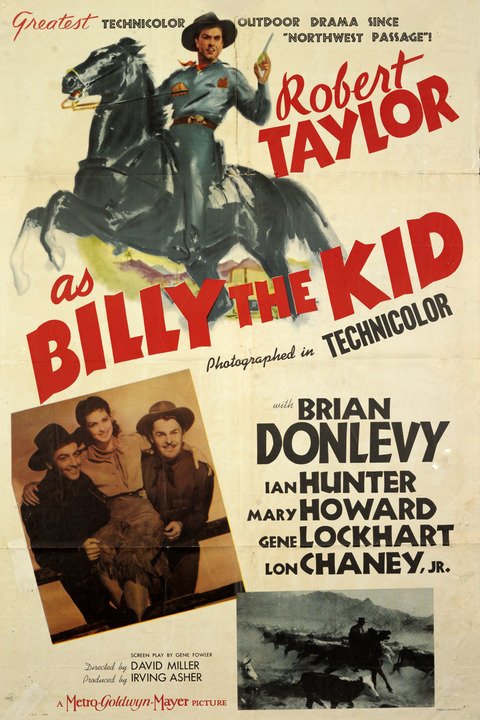
Saddle Sore: BILLY THE KID (MGM 1941)


gary loggins's avatarcracked rear viewer

billy1

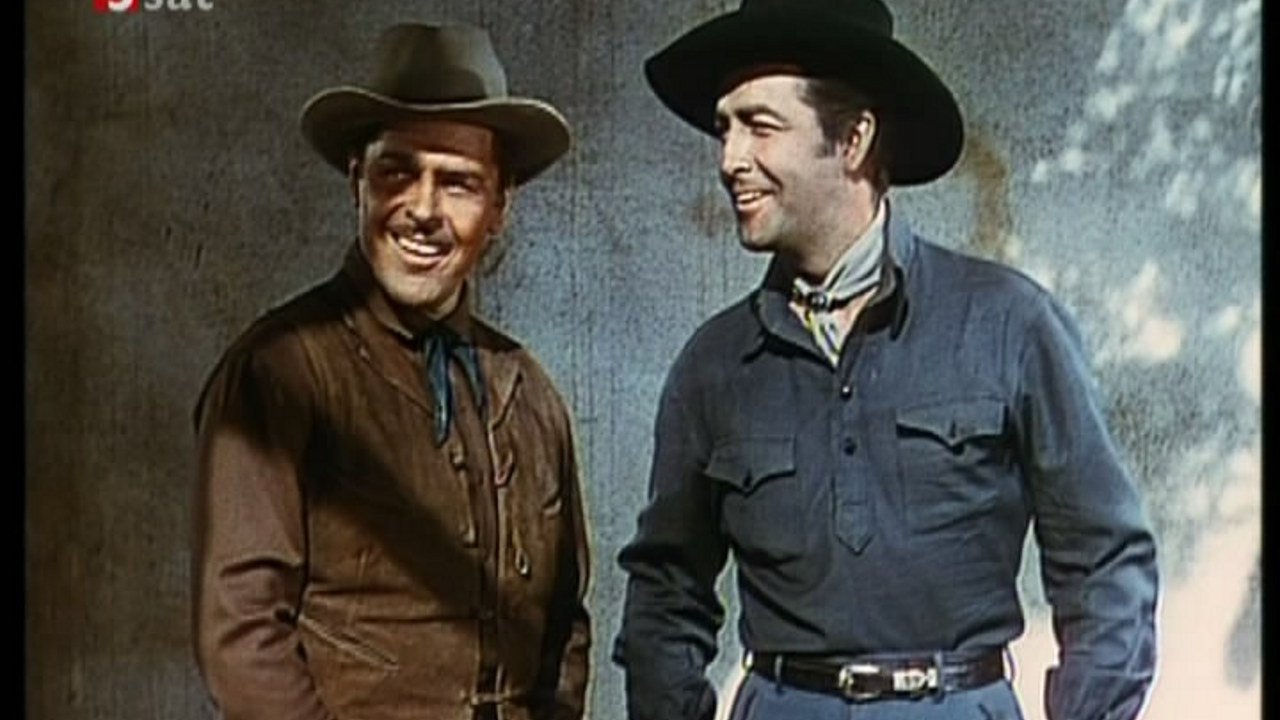
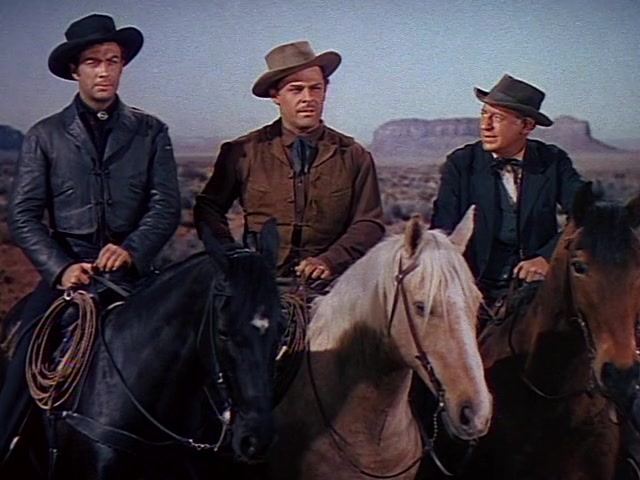
What kind of topsy-turvy world is this? Perennial bad guy Brian Donlevy is on the side of the law, loveable Gene Lockhart is the villain, and almost 30 Robert Taylor is BILLY THE KID. This 1941 Technicolor horse opera has only a passing resemblance to reality, and was actually a remake of a 1930 film starring Wallace Beery and Johnny Mack Brown, which depicted the outlaw’s legend a bit more truthfully… but not much!

billy2

In this version, Billy joins up with ruthless cattleman Hickey, who’s out to takeover Lincoln County. They start a stampede of rival Keating’s cattle, and during the commotion Billy encounters childhood friend Jim Sherwood, now working for Keating. Billy and his pal Pedro switch sides, and Pedro takes a bullet for it. The Kid is out for revenge, but Keating’s cooler head prevails, and he sets out to seek help from the territorial governor.

billy3

But Keating doesn’t make it, as we…

View original post 534 more words

Cleaning Out The DVR, Again #5: We Are Still Here (dir by Ted Geoghegan)


1-we-are-still-here

The fifth film on my DVR was the 2015 haunted house film, We Are Still Here.  I recorded We Are Still Here off of the SyFy channel on March 20th.  Sad to say, I really can’t remember what I was doing or watching on March 20th while my DVR recorded one of the best horror movies of the previous year.  I was probably watching something pn Lifetime.  That usually seems to be the case.

But anyway, let’s talk about We Are Still Here.

As a self-professed lover of both horror and old grindhouse exploitation films, there is really no excuse for it to have taken me this long to see We Are Still Here.  We Are Still Here is one of those wonderfully low-budget indie films that mixes a traditional genre — in this case, the haunted house film — with a far less traditional view of humanity.  With its mix of bump-in-the-dark horror and cynicism about human nature, We Are Still Here feels like a mix of the Coen Brothers and H.P. Lovecraft.

Anne (Barbra Crampton, a veteran of horror films like Castle Freak and You’re Next) and Paul (Andrew Sensenig, who played the mysterious antagonist of Upstream Color) are a married couple who are struggling to deal with tragedy.  Their son, Bobby, was recently killed in a car wreck.  Anne is trapped in a prison of depression, while Paul just wants to move on with their lives.  Hoping that it will help them to forget their sadness, Paul and Anne buy a house in New England.

(New England, not coincidentally, was also the home of H.P. Lovecraft, as well as being the setting for some of his best-remembered stories.)

But, of course, the house proves to be anything but therapeutic.  From the minute they move in, Anne is convinced that they are not alone.  With every mysterious sound and strange happening within the house, Ann becomes more and more convinced that the spirit of Bobby is with them.

If you’re a horror fan, you will not be surprised to learn that they are not alone.  There is a presence in the house but is it Bobby or is it something far more sinister?  Shortly after moving in, Anne and Paul meet their new neighbors.  As friendly as they may be, there is definitely something off about Dave (Monte Markham) and his wife, Cat (Connie Neer).  Dave tells them that the house was originally a funeral home an about how it was owned by the mysterious Dagmar family.  The Dagmars were reportedly forced to leave town after it was learned that they were selling the bodies brought to them for burial and burying empty coffins.  Could this have anything to do with the strange vibe that Anne and Paul both get from the house?

Despite Paul’s skepticism, Anne invites her friends, May (Lisa Marie) and Jacob (Larry Fessenden), to come for a visit.  May and Jacob are both spiritualists and Anne hopes that they can contact Bobby’s spirit.  Again, it’s not a spoiler to reveal that they do contact something.  The surprise comes from what they contact and what happens as a result.

We Are Still Here is a chilly and dream-like film, one that wisely devotes as much time to creating and maintaining a properly creepy atmosphere as it does to all the expected scare scenes.  When the presence in the house is finally revealed, it’s a scary moment but for me, the most haunting scenes in the film are the shots of the snow-covered landscape surrounding the house.  The icy roads are as cold and unforgiving and as potentially dangerous as anything that might be living in the old Dagmar house.  And, just as the weather cannot be controlled, neither can the paranormal.

We Are Still Here is a deliberately paced film.  In fact, it’s probably a bit too deliberate to really be effective when viewed with commercial interruptions.  We Are Still Here works because it creates an atmosphere of foreboding and certain doom and it’s hard to maintain an atmosphere when, every 20 minutes or so, the action has to stop for a commercial about Tide pods.  To best appreciate this film and what it has to say about loss, faith, and delusion, it’s necessary to watch the story unfold without any pause to the narrative.

Fortunately, this intelligent and well-acted horror film is currently available on Netflix, where it can be viewed without commercial interruption!  If you’re a horror fan, you owe it to yourself to watch.

We-Are-Still-Here

Cleaning Out The DVR, Again #4: The Talk of the Town (dir by George Stevens)


The_Talk_of_the_Town_dvd_cover

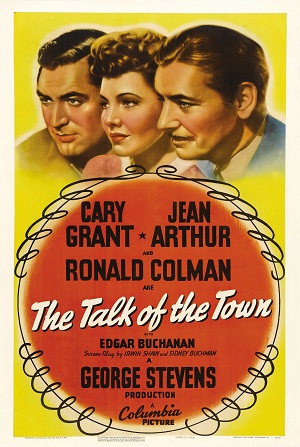
The fourth film on my DVR was the 1942 film, The Talk of the Town.  The Talk of The Town originally aired on TCM on March 20th and I recorded it because it was a best picture nominee.  As some of our regular readers undoubtedly know, it’s long been a goal of mine to watch and review every single film nominated for Oscar’s top prize.

The Talk of The Town is an odd little hybrid of comedy, melodrama, and a civics lecture.  Michael Lightcap (Ronald Colman) is a brilliant attorney and legal professor.  He’s been shortlisted for the Supreme Court and he’s also a widely read author.  In fact, he’s even rented a house for the summer, so that he may work on a book.  The owner of the house — teacher Nora Shelley (Jean Arthur) — will also be acting as his secretary.

As well-read as Prof. Lightcap may be, he’s also rather stuffy and out-of-touch with what’s going on outside of the world of academia.  He knows how the law should work but he has little understanding of how the law actually does work.  Fortunately, he gets a lesson in reality when he arrives at the house and eventually meets the gardener, Joseph (Cary Grant).  Joseph turns out to be surprisingly intelligent and very passionate about politics.  Lightcap and Joseph have many debates about whether or not the American legal system actually protects the working man.

What Lightcap doesn’t know is that Joseph is actually Leopold Dilg.  Leopold is a labor activist, the type who you always see in old documentaries, standing on a street corner and preaching about unions.  Leopold is also a fugitive.  He was accused of setting fire to a mill, a fire that apparently led to the death of the foreman.  Despite the fact that he loudly proclaimed his innocence, Leopold was arrested and prosecutors announced that they would seek the death penalty.  Convinced that he would never get a fair trial, Leopold escaped from jail and fled to Nora’s house.

Nora and Leopold went to school together.  They love each other, even though circumstances — mostly his political activism — conspired to keep them apart.  When Lightcap moves into the house, Nora and Leopold’s attorney, Sam (Edgar Buchanan), hope that they can convince him to take on Leopold’s case.  However, they also have to not only convince Leopold to reveal his true identity but also convince Lightcap to put his supreme court appointment at risk by defending a politically unpopular defendant.  Their solution is to trick Lightcap into falling in love with Nora and then convince him to take on the case for her.

However, Nora soons finds herself falling in love with Lightcap for real.  Who will she choose in the end?  Cary Grant or Ronald Colman?  Today, it seems like a pretty easy decision but apparently, in 1942, Columbia Pictures actually shot two different endings for the movie.

The Talk of The Town is an odd little movie.  For the most part, it’s a drama.  But it also has plenty of comedic elements, mostly dealing with the attempts to keep Leopold’s identity a secret.  In the end, it’s a little bit too preachy to really work as either a drama or a comedy.  That said, I still liked The Talk Of The Town because it made a strong case for the importance of due process, which is a concept that a lot of people take for granted.

(At the same time, The Talk of the Town was made in 1942 so you never have any doubt that Lightcap’s belief in the American legal system will eventually be vindicated.  With America having just entered World War II, 1942 was not a time for cynicism.  If Talk of the Town has been made in the 30s, it probably would have been a very different movie.)

Probably the best thing about Talk of the Town is the cast.  It may not be a great film but, when you’ve got Cary Grant and Jean Arthur in a scene together, it almost doesn’t matter.

The Talk of the Town was nominated for best picture but it lost to Mrs. Miniver.

Cleaning Out The DVR, Again #3: Mommy’s Little Girl (dir by Curtis Crawford)


Mommy's Little Girl

After I finished up The Other Wife, I continued to clean out my DVR by rewatching Mommy’s Little Girl.

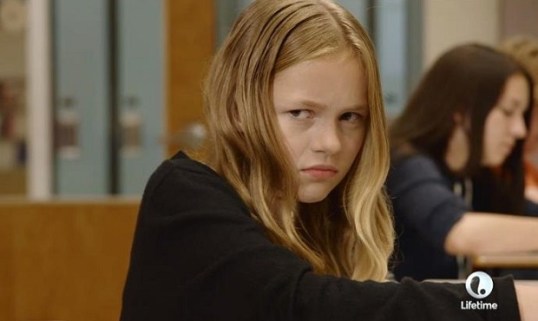
Mommy’s Little Girl, was premiered on Lifetime on March 19th, is a crazy little kid movie.  How crazy?  Well, the film is also known as Mommy’s Little Murderer and for good reason!  Speaking for myself, I always enjoy a good crazy kid movie because this entire genre is built around an uncomfortable truth: Children are creepy!  They’ve got those squeaky voices and they’re always staring and they don’t have a filter so you never know what they’re going to say to you.  Even worse, it’s somehow considered socially unacceptable to snap at a stranger’s child, even if it’s obvious that stranger has no idea how to raise their children.

Plus, you have to consider that every serial killer was a child at some point.  If a child did decide to kill you, he’d probably get away with it.  You wouldn’t think to be cautious if you were alone with him because everyone assumes that children always have the best intentions.  No investigator would give serious consideration to the possibility that you were murdered by a child.  Even if the kid was arrested, he’d only be charged as a minor.  He would ultimately end up with a clean record while you just ended up as some sort of dumbass ghost haunting the landfill where he dumped your body.

Seriously, people need to think about this stuff before they deal with children.

Consider Sadie Connell (Emma Hentschel), the title character of Mommy’s Little Girl.  Sadie is only 11 years old and, as cute and innocent-looking as she may be, when we first meet her, she’s already killed at least one person.  She arranged for her abusive grandfather to take a nasty tumble down a flight of stairs.  In fact, not only did she kill her grandfather but she also stole his lighter.  She claims that it’s a magic lighter and, despite being a non-smoker, Sadie finds many uses for that flame.  For instance, she can use the lighter to threaten her dolls.  And when a classmate bullies her, she uses the lighter to punish his prized action figures.

Over the course of the movie, Sadie commits a few more murders.  She pushes people off cliffs.  She poisons their food.  At one point, she even places her hands over one unfortunate victim’s mouth and helps to suffocate her.  Sadie is definitely a little bit psycho and yet, as a viewer, I couldn’t help but feel some sympathy for her.  Both her grandparents treated her so badly that you can’t blame Sadie for being a little bit bitter.  As for her classmate with his precious action figures — well, nobody likes a bully.

At the start of the film, Sadie is finally reunited with her mother, Theresa (Fiona Gubelmann), who has issues of her own when Sadie was born and, as a result, allowed her daughter to be raised by her parents.  However, Theresa now has her life together and is ready to raise her daughter!  Sadie is so excited to finally have a family but she’s also extremely paranoid of losing that family.  Some of the film’s best scenes come when Sadie fears that she’s about to be rejected and sent back to her grandmother.  Sadie never becomes a one-dimensional villain.  The end result is a Lifetime film that actually makes you think.

Keep an eye out for Mommy’s Little Girl!


Soda Pop Cops: THE SEVEN-UPS (20th Century Fox 1973)


gary loggins's avatarcracked rear viewer

su1

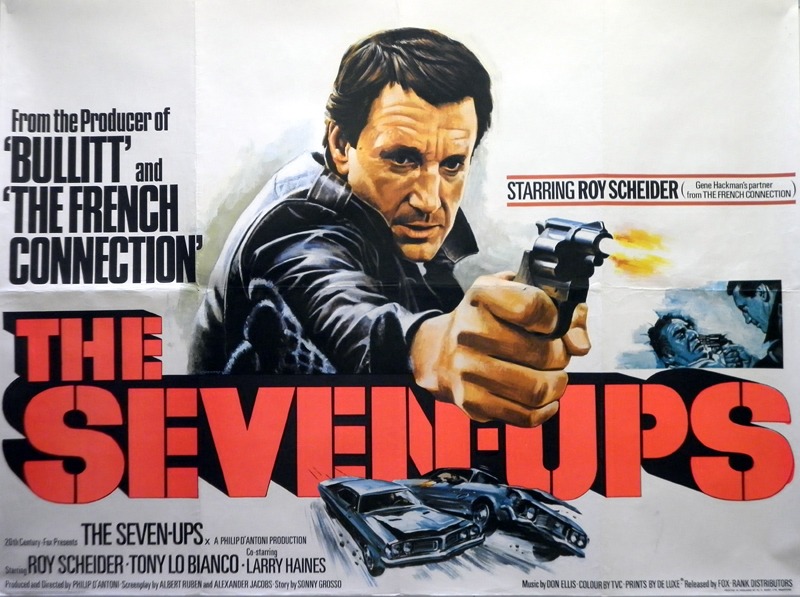
Theater screens of the 70’s were awash in blue as the “tough guy cop” film put a chokehold on Hollywood. DIRTY HARRY Callahan took on punks in a series of action flicks, SERPICO took down corruption in New York, and L.A. detective Joseph Wambaugh’s novels were adapted into big (and small) screen features.  Producer Philip D’Antoni helped usher in this modern take on film noir with 1968’s BULLITT starring Steve McQueen, followed by the Oscar-winning THE FRENCH CONNECTION , with Gene Hackman as brutal cop Popeye Doyle.

su2

D’Antoni decided to direct his next effort, 1973’s THE SEVEN-UPS. CONNECTION costar Roy Scheider gets his first top-billed role as Buddy Manucci, head of an elite “dirty tricks” squad that takes down perps whose felonies will land them seven years and up in jail (hence the title; it has nothing to do with the lemon-lime soda!). Manucci’s childhood pal Vito Lucia (Tony LoBianco) is…

View original post 369 more words

Cleaning Out The DVR, Again #2: The Other Wife (dir by Nick Lyon)


Tonight, after I watched the 18th season premiere of Big Brother (that’s right, I love reality TV almost as much as I love Italian horror films, almost being the word to remember), I continued to clean out the DVR by watching The Other Wife.

The Other Wife, which premiered on the Lifetime Movie Network on March 13th, is another thriller from our friends at The Asylum.  The film opens on a fairly suspenseful note, with Kate Jennings (Kimberly Hewes) preparing to take a shower when she heard someone walking around her house.  At first, she assumes that it’s her husband, Billy (George Stumpf).  However, she then gets a text from Billy informing her that he’s on his way.

And seriously, that is such a HOLY SHIT moment that it carries the first hour of the entire film.  Seriously, there is nothing scarier than suddenly realizing that you are not only not alone but that you have no idea who the other person is.  That’s the type of nightmare fuel that gives birth to grisly urban legends!

Kate looks around the house and suddenly spots a hulking, bald man (Nick Principe) searching Billy’s office.  Though Kate doesn’t know it, that bald man is named Ed Warwick and he’s very dangerous.  He chases her through the house until she can call the police and he leaves her so terrified that she doesn’t even notice that he somehow knows her first name.

When the police arrive, they accidentally arrest Billy and Ed escapes.  After getting things sorted out with the cops, Billy assures Kate that Ed was just a random burglar and that everything will be okay.  But, if that’s true, why does Kate come home the next day to discover that Billy has hung himself?

With her husband dead, Kate’s seemingly perfect life falls apart.  She discovers that Billy was in debt when he died and her credit has been destroyed.  Even worse, she discovers that Billy was apparently seeing a woman named Deb (Tonya Key).

In many ways, Deb is Kate’s exact opposite.  Kate is polite and refined.  Deb is the type who will stand outside and scream at a delivery driver.  Kate has been unable to get pregnant.  Deb is pregnant.  In fact, it would seem that the only thing that Deb and Kate have in common is that they were both married to Billy.

That’s right — Billy was a bigamist!  He was also a bigamist who owed a lot of money to the mob.  The mob has hired Ed to get their money.  Ed delivers an ultimatum to both Billy’s wives.  If he doesn’t get the money that Billy owed, Ed will murder Deb and frame Kate.  From totally different world and linked only by their husband’s treachery, Deb and Kate will have to work together to get out of this mess.

There’s a great moment in The Other Wife where a police detective is talking to Deb and Kate.  “Mrs. Jennings,” the detective said.  Both Deb and Kate looked up at the same time and say, “yes?”  In many ways, that scene epitomizes The Other Wife.  Despite the announcement, during the opening credits, that what we’re watching is based on a true story, The Other Wife is not a movie that is meant to be taken all that seriously.  The Other Wife is silly entertainment in the style of most Asylum films, featuring a likable cast and an enjoyably melodramatic storyline.  Tonya Key especially seems to be having fun in the role of the outspoken Deb.  That said, the real star of the film is Nick Principe, who is thoroughly menacing as the psycho hit man.

The Other Wife was directed by Nick Lyon, who also did the enjoyably pulpy They Found Hell.  He does a good job here of keeping the action moving and encouraging the audience not to worry too much about any holes in the plot.

All in all, it’s another enjoyable melodrama from The Asylum!

The Other Wife

Cleaning Out The DVR, Again #1: The Stepchild (dir by Roma Roth)


Two weeks ago, I finally finished my Fabulous Forties series of reviews!  Yay!

I was so excited and I could not wait until I could move onto the Nifty Fifties box set from Mill Creek.  However, before doing that, I decided to check the status of my DVR and guess what?

I discovered that I only had 10 hours of space left!

Basically, stating in March, I recorded so many movies that I am now nearly out of space.  So, before I do anything else, it’s time for me to, once again, clean out the DVR!  I have 36 films to watch and review before I can truly declare that my DVR has been cleaned out.  Fortunately, I’ve recorded a good variety of films — everything from Lifetime movies to horror films to Oscar nominees.  Watching and reviews all of them should be fun!

So, let’s get started!  Because you know what?  If I don’t hurry up and get this done, my DVR’s going to start automatically deleting my older recordings.  And that means that I’m running the risk of losing not only Jesus Christ Superstar, Bend It Like Beckham, and American Anthem but the final six episodes of Saved By The Bell: The College Years as well!

The first film that I watched was The Stepchild, which premiered on Lifetime on March 12th!

The Stepchild

As you probably tell from the picture above, The Stepchild is a movie about secrets, lies, murder, tears, and possible insanity.  In short, it has everything that we have come to expect from a Lifetime movie!  Even better, it has a Degrassi connection.  (Degrassi, as our regular readers should be aware at this point, is my favorite Canadian TV show.)  The Stepchild stars Sarah Fisher, who played a somewhat unbalanced Christian named Becky Baker on Degrassi.  Becky was perhaps one of the most annoying characters in the history of Degrassi but Sarah Fisher always did a good job playing her and she does a pretty good job in The Stepchild as well.

The Stepchild opens with Ashley (played by Fisher) in a mental hospital.  She spends her time talking to her therapist and occasionally having brightly-lit flashbacks to the night that she found her father’s dead body and dropped — in a slow motion, naturally enough — a snow globe on the floor.  Not only is Ashley shaken over the demise of her father, but she also fears that she may have inherited her dead mother’s schizophrenia.  And again, it bears repeating that Sarah Fisher does a really good job in the role of Ashley, making her a character whose outward fragility disguises more inner strength than even she realizes that she possesses.

When Ashley is finally released from the hospital, she goes to live with her stepmother, Beth (Lauren Holly).  Ashley is upset because it’s obvious that, in just the short time after her father’s death, Beth has rather quickly moved on to a new man, John (Paul Johansson).  John was Ashley’s father’s business partner and, like Ashley, we are immediately suspicious of him.  This is largely because he’s played by Paul Johansson and anyone who has ever seen One Tree Hill knows better than to trust any character played by Paul Johansson.

Ashley is convinced that John or someone else murdered her father.  But did he?  Or could it be that Ashley is having another nervous breakdown?  (It’s a testament to Sarah Fisher’s performance that, even though the answer is obvious, the viewer still is never totally sure.)  With the help of her boyfriend, Michael (Keenan Tracy), Ashley attempts to solve the mystery.

There’s nothing really original about The Stepchild.  If you’ve ever seen a Lifetime film before, you’ll be able to guess what’s going to happen.  That said, their inherent predictability is part of the appeal of Lifetime films in general and The Stepchild is an entertaining-enough diversion.  Lauren Holly and Sarah Fisher both do good with their ambiguous characterizations and Paul Johansson always does a good job when he’s playing a jerk.  The film has a few nicely shot dream sequences and, as we all know, dream sequences are always fun!

The Stepchild may not be a classic but it’s a perfectly enjoyable way to waste two hours.

(For those keeping track of my progress in cleaning out the DVR, that’s one down and thirty-five to go!)

Happy Birthday Errol Flynn: DESPERATE JOURNEY (Warner Brothers 1942)


gary loggins's avatarcracked rear viewer

desp1

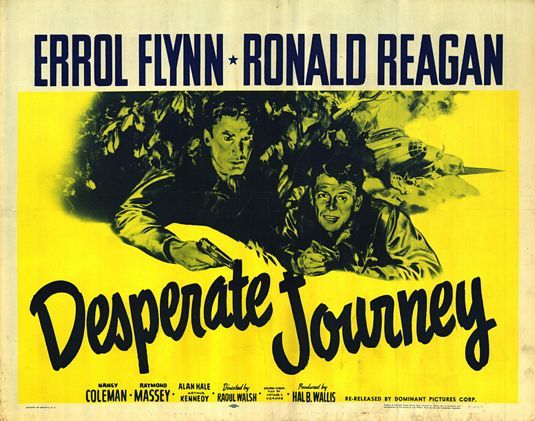
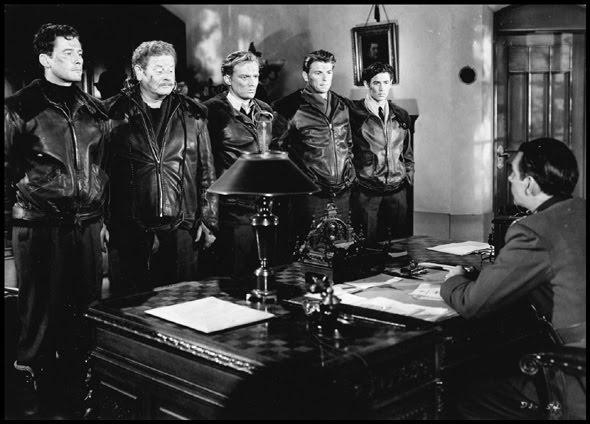
The actor known for his “wicked, wicked ways”, Errol Flynn was born June 20, 1909 in Hobart, Australia. The dashing Flynn skyrocketed to fame with a series of swashbuckling exploits: CAPTAIN BLOOD , THE SEA HAWK, and most notably THE ADVENTURES OF ROBIN HOOD. He was also featured in some of the great Westerns of the era (THEY DIED WITH THEIR BOOTS ON, SANTA FE TRAIL). Like all stalwart screen heroes, during the 1940’s Flynn made a number of wartime propaganda films to boost morale for the masses. One of these was DESPERATE JOURNEY, a totally improbable but highly exciting action yarn from the two-fisted, one-eyed Raoul Walsh, director of such macho fare as THE ROARING TWENTIES, HIGH SIERRA, and WHITE HEAT.

desp2

An RAF bomber squad is sent on a dangerous mission behind enemy lines to take out a train depot. They accomplish the task, but are shot down by Nazi heavy artillery. Forced to…

View original post 795 more words

Film Review: Mother, May I Sleep With Danger (dir by Melanie Aitkenhead)


mother_may_i_sleep_with_danger_still

Earlier tonight, I turned over to Lifetime and I watched the much hyped remake of Mother, May I Sleep With Danger?  Having watched, what can I say about it?

*sigh*

Seriously, I had such high hopes.  My hopes for this film were almost as high as I was the day I graduated from high school.  That’s pretty freaking high!

And really, can you blame me?  First off, the film was a remake of one of my favorite Lifetime films.  And, while I usually hate remakes, the original Mother, May I Sleep With Danger was so over-the-top and melodramatic that it practically demanded a Deadly Adoption-style remake.  The idea of mixing the original’s stalker plot with lesbian vampires just sounded so promising!  And, on top of that, James Franco was involved!

Up until I saw the movie tonight, I was under the assumption that James Franco would actually be directing the remake.  Well, he didn’t.  Mother, May I Sleep With Danger was directed by Melanie Aitkenhead and, considering that this was her feature debut, she actually did a pretty good job.  The film is full of atmospheric shots and Aitkenhead gets a surprising amount of mileage out of simply showing the movie’s vampires moving across the screen in slow motion.

Instead of direcing, James Franco served as executive producer and is credited with coming up with the film’s “original story.”  (The actual screenplay is credited to Amber Coney, who also plays one of the vampires.)  Franco also plays a theater professor who directs a production of Macbeth.  In his production, Macbeth is played by a woman and you know what?  That’s a great idea!  In fact, there were times that I found myself thinking that, if I had to choose between watching Mother, May I Sleep With Danger? and James Franco’s Macbeth, I would definitely pick Macbeth.

As for the rest of the film — well, it actually has absolutely nothing in common with the original Mother, May I Sleep With Danger.  The original film’s stars — Tori Spelling and Ivan Sergei — both show up in different roles but it would have been a lot more interesting if they had been playing the same roles.  What if Sergei’s psycho stalker actually didn’t drown at the end of the original and ended up teaching a college class on Victorian literature?  And what if his favorite student just happened to be the daughter of his former obsession (played, of course, by Tori Spelling)?  That would have been interesting!  Instead, Sergei is playing just any professor and Spelling is playing just any mother.

The majority of the film deals with Spelling’s daughter, Leah (Leila George), attempting to work up the courage to tell her mom that 1) she’s a lesbian and 2) she has a new girlfriend, named Pearl (Emily Meade).  What Leah doesn’t know is that Pearl is actually a vampire and is being pressured by her blood-sucking friends to turn Leah into a vampire too.  As well, nerdy and creepy Bob (Nick Eversman) has an unrequited crush on Leah.  When Bob discovers that Leah has a girlfriend, he starts plotting to break them up.

And there’s a lot that I liked about Mother, May I Sleep With Danger.  I liked that the film, unlike a few other Lifetime films that I’ve seen, was unapologetic about being sex positive.  I liked that the film presented an unambigiously positive portrayal of a same-sex couple.  I liked that the vampires were all stylish and enjoyed hanging out in cemeteries.  The film’s best scenes featured the vampires infiltrating frat parties and feeding on the date rapists within.  These were hugely satisfying scenes and I would have been happy if the entire movie had just been scene after scene of vampires attacking Brock Turner.

But despite all that worked about the movie, Mother, May I Sleep With Danger left me feeling disappointed.  After all the hype and the raised expectations and the commercials promising us a masterpiece from “the twisted mind of James Franco,” there was really no way not to be disappointed by the final product.  Unlike last year’s A Deadly Adoption, Mother, May I Sleep With Danger never managed to establish a consistent tone.  It didn’t seem to be sure whether it wanted to be a comedy, a drama, a horror film, or an elaborate send-up of the Lifetime aesthetic.  Whereas A Deadly Adoption was clearly a labor of snarky love, I couldn’t help but feel that Mother, May I Sleep With Danger had probably been made by people who don’t particularly like Lifetime films.  As such, it worked as neither an homage nor a parody.  Instead, it was just another movie about vampires and not a particularly original one at that.

And, hey, I like movies about vampires!  I’ve seen a few hundred of them.  I’ve certainly seen enough to know that Mother, May I Sleep With Danger didn’t bring anything new to the genre.

That said, I still love James Franco!  Seriously, how can’t I?

8e617481e3a3ca90c8d70a0bbb6844fc