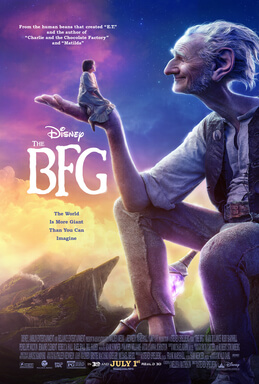
Playing Catch-Up: The BFG (dir by Steven Spielberg)


the_bfg_poster

I heard so many negative things about Steven Spielberg’s latest film, The BFG, that I was really expecting it to be terrible.  When it came out this summer, a lot of critics seemed to take an almost perverse delight in talking about its flaws and some people actually seemed to be thrilled over the fact that it flopped at the box office.

And I have to admit that the commercials that I had seen didn’t really fill me with much desire to actually sit through the movie.  Mark Rylance looked vaguely grotesque as the giant.  Add to that, I spent several months convinced that BFG stood for “Big Fucking Giant.”  Once I was reminded that he was actually a Big Friendly Giant, I was kinda like, “But wouldn’t my way be more fun?”

But anyway, I finally watched The BFG last night and it’s actually not terrible.  Don’t get me wrong.  It’s not great.  In many ways, this movie is Spielberg at his most sentimental.  Imagine if every triumphant musical cue in Lincoln was stretched out for two hours and you might have an idea as to how he approaches The BFG.  At times, I had a hard time following the film’s storyline, largely because the pacing was totally off.  As a director, Spielberg never seems to be quite sure if he’s making a film exclusively for kids or if he’s trying to make a film that adults can appreciate with their children.  It’s a tonal mess.

And yet, for all those weaknesses, The BFG has enough sweet moments that it feels a little bit churlish to be too critical of it.  Spielberg’s heart seems to be in the right place, even if he is struggling to figure out how to express himself.  As I watched the film, I felt bad about being so dismissive of what I had seen of Rylance’s performance in the commercials leading up the actual film.  Rylance gives a heartfelt and warm performance, playing a giant who, because he is so nice, is bullied by even bigger giants.

As I said, I struggled to follow the film’s story.  I knew that BFG had been forced to abduct an orphan named Sophie (Ruby Barnhill) because she saw him and he couldn’t risk her accidentally revealing his existence to the rest of the world.  I also understood that BFG also had protect her from the other giants because the last child he befriended was eaten by those other giants.  But then there was all this stuff about dream time and eventually, Queen Elizabeth II showed up and declared war on the evil giants and I was just so confused.  For once, Spielberg’s skills as a story-teller fail him.  It’s hard to believe that they same director who did the simple and economical Duel also did The BFG.

To be honest, the folks at Pixar, with their trademark mix of sentiment and subversion, would have been the ideal team to take on The BFG.  Spielberg’s instincts are so resolutely mainstream that he doesn’t seem to understand how to best approach some of the story’s more “out there” elements.  But that said, The BFG isn’t terrible.  Mark Rylance does a really good job as the giant and, as you would expect from any Spielberg film, the film is undeniably visually impressive.

The BFG may not be great but it’s not awful.
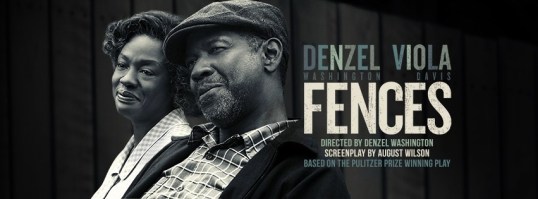
Playing Catch-Up: Fences (dir by Denzel Washington)


Well, 2016 is officially over and soon, it will be time for me to start posting my picks for the best of the year!  I’ve still got a lot of movies that I need to review (and, in some cases, watch) before making out that last so let’s not waste any time!  It’s time to start playing catch up!

fences

In Fences, Denzel Washington plays Troy Maxson.  When the film begins, Troy is 51 years old and lives in Philadelphia in the 1950s.  He’s a proud, charming, and often angry man.  He’s the type of man who can tell a wonderful story and who can make you laugh but, at the same time, you’re always aware that he could explode at any minute.  It’s hard not to like Troy Maxson but, at times, it’s hard not to be a little scared of him.

Troy is a garbage man, apparently destined to spend the rest of his working life hanging onto the back of a garbage truck because his union does not allow black to drive the trucks.  Troy has recently complained about the lack of black drivers and, as he tells his best friend, Bono (Stephen McKinley Henderson), he’s now expecting to be disciplined.  However, to his great surprise, he is instead reassigned to be a driver, making him the first black man to work as a driver for the Philadelphia Sanitation Department.

And that may not seem like much today but, as the film makes clear, that was a huge deal in the 1950s.

Troy, of course, didn’t grow up wanting to be a garbage man.  As he tells his son, Troy left home when he was just a teenager and made his living as a mugger.  During one robbery, he accidentally killed a man and spent the next decade in prison.  It was in prison that he first met and befriended Bono.  It was also in prison that Troy discovered that he was a pretty good baseball player.  Upon his release, he played for the Negro League.  Though everyone agrees that Troy was a good player (and Troy is always quick to claim that he was the best), he never played for the Major Leagues.  The film suggests that, after the league was integrated, Troy tried out but was rejected.  His wife, Rose (Viola Davis), says that Troy was rejected because, at the age of 40, he was too old.  Troy says it was because of the color of his skin.

As I said, it’s hard not to admire Troy.  He’s a man who stands up for himself and he seems to sincerely love his wife.  When his oldest son, a musician named Lyons (Russell Hornsby), comes by to ask for money, it’s hard not to laugh with and appreciate the style with which Troy shows his irritation.  Troy is so charming that, it’s only after Lyons leaves, that you realize that Lyons practically begged his father to come see him play and Troy pretty much blew him off.

And then there’s Troy’s youngest son, Cory (Jovan Adepo).  Cory is in high school.  He’s a football player and he’s recently been scouted by a college.  Troy tells Cory that he’s wasting his time and that no black man will ever be given a fair chance in the NFL.  He tells Cory that he needs to get a real job, like he did.  And as Troy continues to yell at Cory, you start to understand Troy’s jealousy.  Cory has an opportunity that Troy will never have, not due to any difference in talent as much as to the fact that Troy grew up at a time when segregation was the unquestioned law of the land whereas Cory is coming of age the beginning of the civil rights era.

At one point, Cory asks his father, “Why don’t you like me?”

“I don’t have to like you,” Troy replies and the words sting.

Troy is a character about whom you’ll have mixed feelings.  Beyond his anger at his son, he’s also exploiting his mentally impaired brother, Gabe (Mykelti Williamson).  Gabe has a metal plate in his head, the result of his service in World War II.  Gabe receives a monthly disability check and Troy has been using that money to support his family.

Through it all, Rose remains by his side, listening to him when he’s angry and, whenever she can get a word in, acting as his conscience.  But then, Bono asks Troy about his relationship with Alberta, the new girl at work and Troy confesses what the audience suspected.  Not only is Troy cheating on his wife but Alberta is pregnant….

Troy is a great character and Denzel Washington gives perhaps his best film performance in the role.  (Washington already played the role on stage.)  In many ways, Troy is a monster but, at the same time, it’s impossible not to feel for him.  His anger is real.  His selfishness is all too real.  But his pain and his (legitimate) frustrations are very real, as well.  Troy Maxson is a character who, like everyone, struggles to maintain his balance as he walks the line between right and wrong.  He makes several mistakes but he’s never less than fascinating and Washington’s volcanic performance is never less than enthralling.  Matching Washington every step of the way is Viola Davis, giving a powerful performance as the loyal but outspoken Rose.

In fact, the entire film is a master class of great acting.  (If Mykelti Williamson occasionally goes a bit overboard as Gabe, that has more to do with the character than the performer.)  Though the film is dominated by Washington and Davis, I think special mention has to be made of Stephen McKinley Henderson, who brings a lot of understated wisdom to the role of Bono.

Denzel Washington also directed Fences and, unfortunately, he’s not as good a director as he is an actor.  While he goes get brilliant performances from his cast, Fences never really breaks free from its theatrical origins.  It’s very much a filmed play as opposed to a cinematic work of art and, the few scenes that attempt to “open up” the play feel somewhat awkward.  In the end, Fences is best as a record of incredible acting.

A Movie A Day #3: The Firm (1989, directed by Alan Clarke)


the-firm1The Firm, which should not be confused with the John Grisham novel or the Tom Cruise film adaptation, was a 70-minute film about football hooliganism that was made for the BBC’s Screen Two in 1989.  In the United States, it has never really been understood just how big a problem football hooliganism was in the United Kingdom in the 1980s.   That’s because, despite the best efforts of ESPN, most Americans don’t care about soccer.  In America, “soccer riot” sounds like the punchline of a bad joke.  But in Europe, it was a very real problem.  If you want to understand why some people call football hooliganism “the English Disease,” The Firm is the film to see.

Clive “Bex” Bissell (Gary Oldman) has a nice home, a well-paying job as an estate agent, a loving wife (played by Lesley Manville, who actually was married to Oldman at the time), a newborn son, and a large circle of friends.  He’s also the head of the Inner City Crew, a violent group of football hooligans (known as a firm) who follow West Ham United across Britain and pick fights with other firms.  (Bex is actually a second-generation football hooligan and his father is constantly complaining that the new generation isn’t tough or violent enough.)  Bex does it for the buzz.  As another member of the ICC puts it, after listening to a fatuous television commentator going on about how football hooligans are actually searching for some sort of larger meaning in their lives,  “Why doesn’t he just say that we like hitting people?”  With the 1988 European Championships coming up, Bex wants to unite all the regional firms into one national organization, with himself in charge.  To do that, he’ll have to defeat two rival firm leaders, Oboe (Andrew Wilde) and Yeti (Phil Davis).

For a film about people about who are willing to kill over association football, very little soccer is actually seen in The Firm.  The ICC plays a game, which is interrupted by Yeti driving across the field.  Later, Yeti and his lieutenants walk through a stadium, looking for a fight and ignoring the match being played in front of them.  Bex’s childhood bedroom is covered with newspaper clippings about West Ham United but Bex is more interested in the buzz than in football.

The Firm is full of classic scenes, from Bex initiating the newest member of the ICC to the disturbing moment that Bex’s son gets a hold of his knife to the final bar brawl.   For me, my favorite scene is when the three rival firms hold a meeting in a posh hotel room:

Along with featuring one of Gary Oldman’s best performances, The Firm was also the last film to be directed by the great Alan Clarke.  Making good use of the steadicam walking shots that he was famous for and taking an unflinching approach to the story’s violence, Clarke not only directed the definitive film about football hooliganism but also provided a portrait of life in the final years of Margaret Thatcher’s Britain.

For tomorrow’s movie a day, we stay in Britain as Anthony Perkins fights terrorists in The Glory Boys.

the-firm

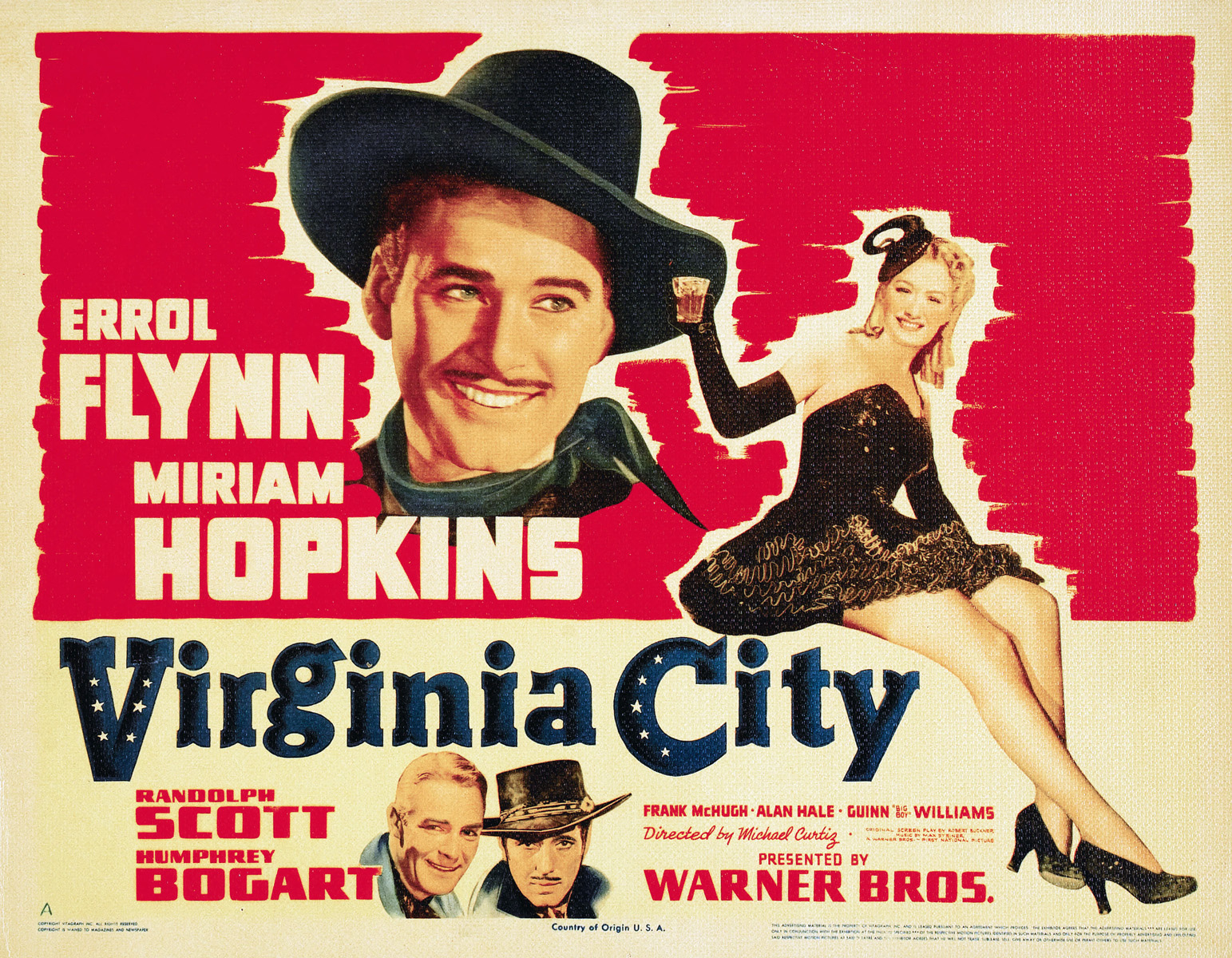
Rally ‘Round The Flag: Errol Flynn in VIRGINIA CITY (Warner Brothers 1940)


gary loggins's avatarcracked rear viewer

vc1

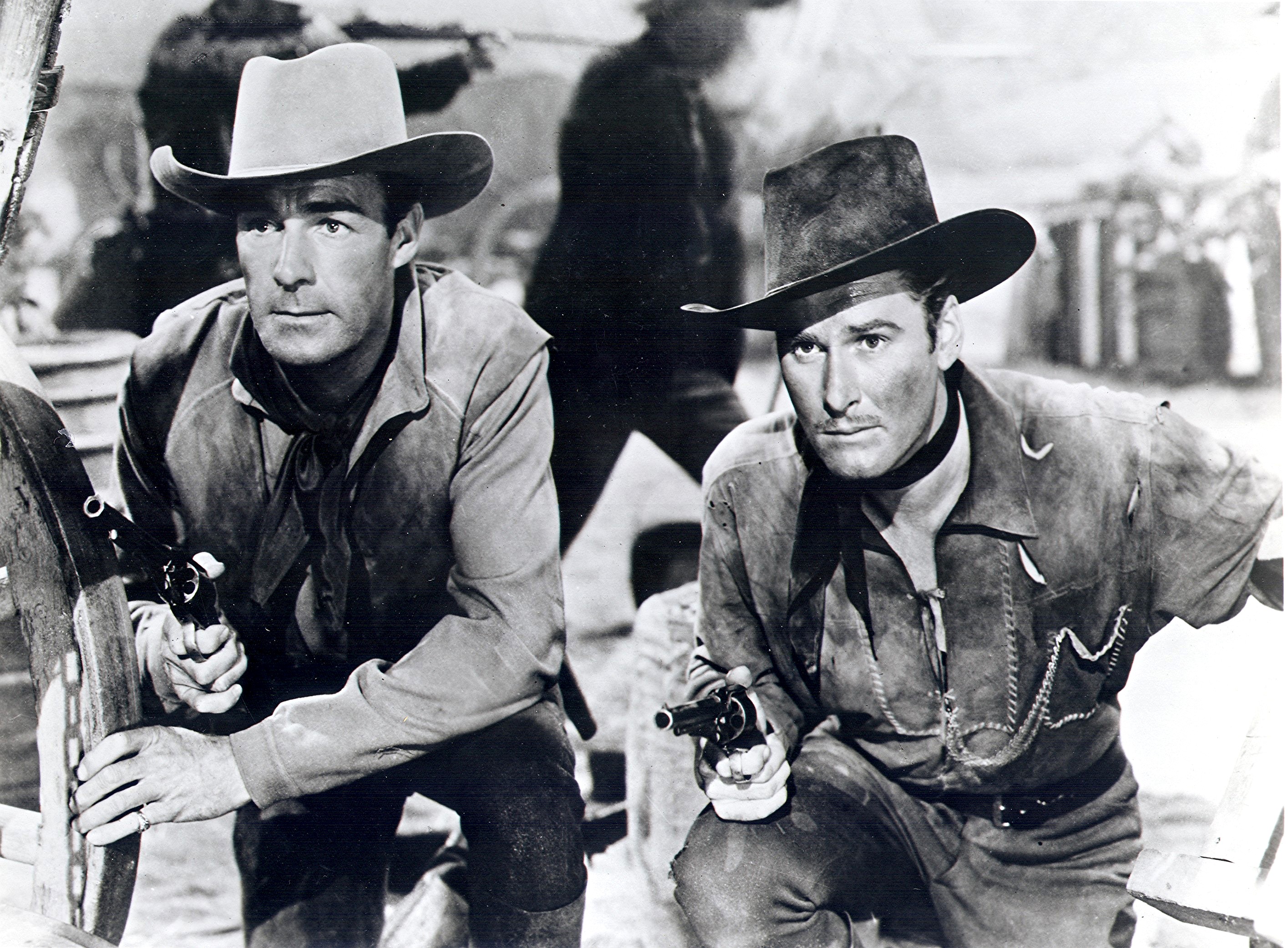
VIRGINIA CITY is a big, sprawling Western, filled with action, humor, and star quality. It’s the kind of movie they used to show around these parts every afternoon at 4 O’clock on DIALING FOR DOLLARS (George Allen was the local host), helping to spark my interest in classic films past, a flame which still burns bright today, two hours of pure entertainment, with square-jawed Errol Flynn going against square-jawed Randolph Scott backed by a Civil War setting and yet another sweepingly epic Max Steiner score.

vc2

We’re told “only the characters are fictional… The story is true” as we watch Union Captain Kerry Bradford (Flynn) and his two buddies Moose and Marblehead (Errol’s frequent co-stars/offscreen drinking compadres Alan Hale Sr and Guinn ‘Big Boy’ Williams) attempt to tunnel their way out of Libby Prison, aka ‘The Devil’s Warehouse’, when they’re caught by commanding Captain Vance Irby (Scott). He tells them Confederate troops…

View original post 689 more words

A Movie A Day #2: Blue Chips (1994, directed by William Friedkin)


blue_chips_movie_posterBlue Chips is a movie that will always make me think of England.

When I was a kid, I would spend every summer over in the UK.  When I flew over for the summer of ’94, the in-flight movie was Blue Chips.  I can still remember sitting in the back of the plane, trying to watch the movie on that tiny screen.  At the time, I did not pay much attention to Blue Chips.  It was about basketball, which was not something that I was interested in.  It also starred Nick Nolte, who, over the years, starred in a lot of the movies that I saw while flying over the Atlantic Ocean.  Try as I might, I could not understand a word that Nolte was saying.  It was impossible to separate his gravely voice from the drone of the plane’s engines.  I didn’t care much about Blue Chips.

Two months later, I was sitting in the back of my return flight when the flight attendant announced, “Our in-flight movie will be Blue Chips, starring Nick Nolte.”  Still not caring about basketball and still unable to understand a word that Nick Nolte was saying, I sat through Blue Chips for a second time.  What else was I going to do?  Step outside and go for a walk?

Looking back, I can understand why Blue Chips would be shown on a plane.  There’s nothing unconventional or controversial about Blue Chips.  It’s not going to start any fights or leave anyone offended.  Nick Nolte plays Pete Bell, a college basketball coach who, coming off of his first losing season, resorts to unethical measures to recruit three star players.  Ricky Roe (Matt Nover) is a farmboy from Indiana and his racist father wants the college to buy him a new tractor.  Penny Hardaway plays Butch McRae, whose mother (Alfre Woodard) wants a new house.  Neon Bordeaux (Shaq!) doesn’t want anything but still gets a new Lexus.   The corrupt head of the school’s booster club is named Happy and is played by J.T. Walsh.  Other than Happy Gilmore, has there ever been anyone in a movie named Happy who hasn’t turned out to be bad news?

Blue Chips was directed by William Friedkin, though you’d never guess that this by the numbers movie was from the same director who did The French Connection, The Exorcist, or To Live And Die In L.A.  In his autobiography, The Friedkin Connection, he devoted just a few words to Blue Chips, saying, “It’s hard to capture, in a sports film, the excitement of a real game, with its own unpredictable dramatic structure and suspense. I couldn’t overcome that.”

Friedkin’s right but I’m always happy whenever I come across Blue Chips on cable because it reminds me of that long-ago summer in England.

For tomorrow’s movie a day, it’s another sports-related film that always makes me think about Britain: Alan Clarke’s The Firm.

blue-chips-nick-nolte

A Movie A Day #1: Stop Making Sense (1984, directed by Jonathan Demme)


stop_making_sense_poster_originalA pair of immaculate white sneakers, being worn by the lead singer of The Talking Heads, David Byrne, walk out onto a bare stage while an unseen audience applauds.  Byrne places a radio on the stage beside him and says, “I have a tape I want to play for you.”  Accompanied only by a drum machine and an acoustic guitar, Byrne launches into a performance of Psycho Killer that ends with him lurching across the stage like a marionette that is losing its strings.

So begins the greatest concert film of all time, Stop Making Sense.

As Psycho Killer comes to an end, Byrne is joined on stage by bassist Tina Weymouth.  While Byrne and Weymouth perform Heaven, the black-clad stage crew sets up a drum kit behind them.  Drummer Chris Frantz comes out for the third song, Thank You For Sending Me An Angel.  The fourth member of the Talking Heads, Jerry Harrison, appears on stage for Found A Job and is then followed by several touring members of the band, including legendary keyboardist Bernie Worrell, guitarist Alex Weir, percussionist Steve Scales, and backup singers, Lynn Mabry and Ednah Holt.  It’s not until the concert’s sixth song, Burning Down The House, that the entire band is on stage.

Pieced together from three separate shows performed at the Pantages Theater in Los Angeles, Stop Making Sense showcases one of the most important bands of the 80s at their absolute best.  Eschewing any candid footage of the band backstage and only occasionally showing any shots of the audience, Jonathan Demme keeps the focus on the music and David Byrne’s amazing showmanship.  Even more than the music, what really makes Stop Making Sense stand out is Byrne’s physicality.  During one instrumental passage, Byrne even runs around the stage in circles before jumping back to his microphone without missing a beat.

Though the entire band is in great form, Byrne is almost always the focus of attention.  The only time he’s not is when he goes backstage during a performance of Genius Of Love by Weymouth and Frantz’s side project, The Tom Tom Club.  During that time, Byrne is changing into the “big suit,” the costume that continues to define the Talking Heads to this day.

Along with Burning Down The House, highlights include Life During Wartime,

Swamp,

Once in a Lifetime,

and Stop Making Sense‘s most famous moment, David Byrne performing Girlfriend is Better while wearing the iconic “big suit.”

Stop Making Sense is a fun, exhilarating, and sometimes exhausting concert film and, given all the bad feelings that exist between Byrne and the other three members of the band, it’s probably as close as any of us will ever get to experiencing The Talking Heads live.

For tomorrow’s movie a day, I’ll be explaining why Blue Chips always makes me think of England.

Film Review: Finding Dory (dir by Andrew Stanton)


finding_dory

Finding Dory, the latest film from Pixar, tells the story of Dory (Ellen DeGeneres), a regal blue tang (for our readers in Vermont, that’s a fish) who suffers from short-term memory loss.  You may remember her from Pixar’s previous movie about fish, Finding Nemo.  In that movie, she helped a clownfish named Marlin (Albert Brooks) find his son, Nemo (voiced, in Finding Dory, by Hayden Rolence).  In the sequel, it’s Marlin and Nemo who are now helping Dory to find her parents.

Dory has spent years searching for her parents.  Of course, it would be easier if she didn’t suffer from short-term memory loss.  It seems that every time she sets out to track her parents down, she ends up getting distracted and forgets what she was doing.  However, while helping to teach a class about migration, Dory has a sudden flashback to her parents (voiced, quite charmingly, by Eugene Levy and Diane Keaton).  She sets out once again, determined to find her parents.  This time, Marlin and Nemo are accompanying her.  As Dory continually frets, she’s can’t do it alone because she can’t remember directions.

Though her memories are fuzzy and her flighty nature leads to some conflict with Marlin (who is just as cautious and overprotective of Nemo as he was in the first film), Dory eventually finds her way to where her parents were last seen.  And, in doing so, Dory discovers that she and her parents originally lived at a water park, the California Marine Life Institute.

(One of my favorite parts of the film is that apparently, Sigourney Weaver recorded several greetings and other messages that are played continuously over the Institute’s PA system.  “Hello, I’m Sigourney Weaver and welcome to the Marine Life Institute.”  Dory becomes convinced that Sigourney Weaver is some sort of God-like being who is leaving personal messages for her.  At one point, Dory exclaims, “A friend of mine, her name’s Sigourney, once told me that all it takes is three simple steps: rescue, rehabilitation, and um… one other thing?”)

Since this is a Pixar movie, Dory meets the usual collection of oddball and outcast sealife at the Institute, all of whom help her out while overcoming their own insecurities, providing properly snarky commentary, and hopefully bringing a tear or two to the eyes of even the most jaded of viewers.  Finding Dory is full of familiar voices, everyone from Idris Elba to Bill Hader to Kate McKinnon.  But, for me, the most memorable of all the voices (with the exception of Ellen DeGeneres herself) was Ed O’Neill’s.  O’Neill brought Hank, the bitter but ultimately good-hearted seven-legged octopus, to poignant life.  I imagine that, should there be another sequel, it will be called Finding Hank.

Finding Dory continues the annual tradition of Pixar films making me cry.  Finding Dory is an incredibly sweet and truly heartfelt movie but, at the same time, it’s also an extremely witty comedy.  This is one of those Pixar films where the joy comes not only from looking at the amazing animation but also from listening to truly clever dialogue being delivered by some of the best voice actors around.  DeGeneres does such a great job bringing Dory to life that, as the movie ended, my first instinct was to run out and buy a regal blue tang of my very own.  But then I read an article on Wikipedia, which explained why I shouldn’t do that.

(Basically, blue tangs may look cute but they have big, scary spikes that can cut up your hand.  As well, they don’t do well in captivity.  So, if you’re planning on getting a Dory of your very own, you might be better off just rewatching this movie…)

It’ll make you laugh.  It’ll make you cry.  Finding Dory is another great film from Pixar.

Film Review: American Honey (dir by Andrea Arnold)


american_honey_poster

You would probably be justified in thinking that there’s no way that a great film could be made about those weirdos who occasionally show up at your front door and pressure you to buy a dozen magazine subscriptions (the better to help them win a trip to Europe or go to drug rehab or get a college education) but Andrea Arnold has managed to do just that with American Honey.

American Honey features several scenes of the film’s characters swarming through neighborhoods, knocking on doors and launching into their sales pitch.  We see how the group’s top salesman, Jake (Shia LaBeouf, for once playing a role that makes perfect use of his “permanently full of shit” image), changes his approach from house to house and we listen as he explains his selling technique.  When the smarmy but charming Jake knocks on a door and then starts to flirt with the teenage girl who answers, I immediately started to have flashbacks to when I was going to college and, every summer, the magazine people would descend on Denton, looking for gullible students.  I once opened the door of my apartment and got trapped into a long conversation with a cute but annoyingly hyper guy who ended every sentence by holding up his hand and going, “High five!”  He very well could have been Jake.

We also watch as Krystal (Riley Keough), the group’s somewhat frightening manager, gives everyone their assignments and constantly pressures her crew to bring in as much money as possible.  Though the film never quite becomes an expose, it doesn’t shy away from the fact that the whole door-to-door magazine subscription industry is essentially an unregulated scam that largely survives by exploiting people who don’t have anywhere else to go.  As Krystal puts it, if someone can’t make their sales, that person can easily just be left on the side of the road.

That said, American Honey isn’t really about selling magazines.  What is it about?  It’s about many things.  It’s a road movie, one that lasts nearly three hours and which features a narrative that at times seems to meander almost aimlessly.  (Of course, that randomness is deceptive.  Andrea Arnold knows exactly what she’s doing.)  It’s a tour of what has been termed flyover county, with the crew invading neighborhoods both wealthy and poor.  (When they arrive in a poor South Dakota town, Krystal announces, “I got a lot of relatives here!”)  It’s a celebration of youth and impulsiveness because, even though the magazine crew is being exploited, they’re also having a really good time.  Most of the members of the crew were played by nonactors and they bring a rough authenticity to their roles.  They may be outcasts but, if just for a little while, they’ve formed their own family.  (Albeit a family that lives in vans, cheap motels, and occasionally a deserted farmouse…)

Ultimately, the film is coming-of-age story.  When we first meet Star (Sasha Lane), she’s 18 and she’s living in Oklahoma.  Star was born in Texas and her meth-addict mother died when she was young.  Now that she’s in Oklahoma, she’s working as some sort of live-in nanny, taking care of two children while their mother dances at a redneck bar and their father continually gropes her.  When she sees Jake and the magazine crew dancing in a supermarket (and getting thrown out by security), she’s immediately drawn to them.  When Jake offers her a position with the crew, it’s a chance to both escape and to belong.  Krystal asks if Star is 18.  Star says that she is.  Krystal asks if anyone is going to miss Star after she leaves.  Star says no one will.

And soon, Star is in the back of a van, being driven across the country.  Krystal doesn’t like or trust her.  Jake may or may not be using her.  But, for the first time, Star has a family.  For the first time, she belongs.

And, she soon finds herself discovering and seeing things that she would never have had a chance to see otherwise.  One morning, she sits out on a hill and watches as an equally curious bear approaches her.  When she and Jake attempt to sell in a rich neighborhood, she watches with barely disguised jealousy as a spoiled teenager celebrates her birthday.  In one of the film’s best scenes, she ends up attending an impromptu barbecue with three cowboys and we find ourselves, much like her, trying to figure out just how much she can trust these seemingly friendly men.  In one of film’s saddest scenes, she stops at a house and discovers three neglected children and a junkie mother.  And, in one of the film’s most disturbing scenes, an oil rig worker says he doesn’t want any magazines but he’ll pay her $1,000 for a hand job.

Through it all, we watch as Star approaches each new situation with equal doses of fear and hope, confidence and doubt.  And like her, we find ourselves wondering how far she should go and who she should trust.  Sasha Lane is in every scene of the film and gives an amazingly good performance, one that is all the more remarkable for the fact that this was her first movie.  Much like Katie Jarvis in Arnold’s Fish Tank, Sasha Lane was discovered by the director.  (Jarvis was famously discovered after yelling at her boyfriend on a train platform.  Lane was discovered under somewhat less contentious circumstances, while sunbathing on the beach.)   Sasha Lane gives a brave and unflinchingly honest performance.  At times, I found myself cringing because I could totally understand what Star was feeling and what she was going through.  (Though I never ended up selling magazines, I went through my lost phase.)  There was not a single false note to be found in Lane’s performance.

Special mention should also be made of Riley Keough’s work as the manipulative Krystal.  Keough alternates between being harsh and being strangely likable with such skill that it’s impossible not to share both Star’s fear and her occasional admiration of her.

Ultimately, though, this is Andrea Arnold’s film.  The British director approaches the so-called heartland of America with an outsider’s view and she captures some of the most unexpected and strikingly beautiful images of 2016.  American Honey is a powerful, demanding, and occasionally enigmatic movie, one that feels almost like the type of film that Terrence Malick would make if Malick could curb his tendency to descend into self-parody.  American Honey is one of the best of the year.

Film Review: Hell or High Water (dir by David Mackenzie)


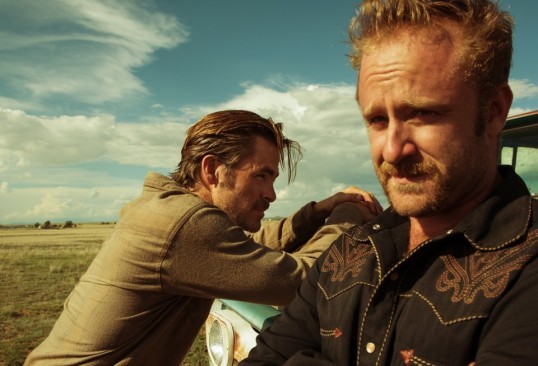
The Texas-set film Hell or High Water features four excellent lead performances.  There’s Chris Pine and Ben Foster, playing brothers and robbing banks.  And then there’s Jeff Bridges and Gil Birmingham, as the two Texas Rangers who are attempting to hunt the brothers down.

But for me, my favorite character was the waitress who, during the latter half of the film, serves lunch to the two Texas Rangers.  When Bridges asks her how she’s doing, she replies, “Hot and not in the good way.”  When the two Rangers start to order their food, she stops them and tells them that everyone who comes in the diner orders the same thing except for one “asshole from New York” who tried to order a trout.  “We ain’t got no goddamn trout!”  It’s a short scene but it’s one of my favorites because, if you’ve ever spent any time in West Texas, you know that this scene is probably the most realistic in the entire film.

My second favorite character was a banker teller played by the great Dale Dickey.  When the Rangers ask her if the men who robbed her bank were black, she replies, “Their skin or their souls?”  You just have to hear the way that she delivers it.  In theory, that should be an awkward line but Dale Dickey makes it sound totally natural.

In fact, everything about Hell or High Water seems totally natural.  For a film about bank robbers, it’s actually a deceptively low-key film, one that is as memorable for its quiet moments as its shoot outs.  When the violence does come, it’s all the more jarring because the movie has spent so much time focusing on the tranquil stillness of the West Texas landscape.

(That said, I should point out that the film was actually shot in New Mexico.  But, quite frankly, New Mexico is pretty much just West Texas with more Democrats.)

Hell or High Water is a film that’s all about the little details.  The film opens with a bank robbery and, as the camera gracefully circles the bank, we catch a glimpse of graffiti announcing that the artist did 4 tours in Iraq and that “bailouts (are) for banks, not for me.”  At its heart, Hell or High Water is about the many people who have been left out of this so-called “economic recovery,” in which we’re all supposed to have such faith despite having seen little evidence of its existence.  While the rich get richer, the struggle of the people in Hell or High Water is ignored by everyone but them. And so, the people do what they can to survive.  For some, that means robbing banks.  For others — like a wonderfully snarky group of witnesses in a diner — that means refusing to admit that they saw anything happen.  If you want to see a realistic portrait of economic uncertainty and populist revoltuon, don’t waste your time with the cutesy bullshit and bourgeois Marxism of The Big Short.  Watch Hell or High Water.

Of course, not everyone is willing to turn a blind eye to the bank robbing brothers.  Hell or High Water is not just about economic anxiety.  It’s also about the unique struggle of being a bank robber in a part of the country where literally everyone has a gun.  (During one robbery, Pine asks an old customer if he has a gun on him.  “Damn right I got a gun on me!” the old man snaps back.)  As opposed to so many other films, Hell or High Water gets West Texas right.

(It’s probably not a coincidence that we’re told the brothers robbed a bank in Archer City, the home of legendary Texas writer, Larry McMurtry.)

As for the film’s cast, Jeff Bridges and Ben Foster get the two “showiest” roles.  Jeff Bridges plays a Texas Ranger who is only a few days away from retirement and who enjoys needling his partner.  (One of the main delights of the film is the comedic interaction between Bridges and Gil Birmingham.)  Ben Foster is the more reckless of the two brothers, an ex-con who declares that everyone is his enemy but, at the same time, shows himself to be willing to do anything to protect his brother.  Both Bridges and Foster give excellent performances and Foster, in particular, reminds us that he’s one of the most exciting actors working today.

And yet, for me, the true anchor of the film is Chris Pine.  Chris Pine, of course, is best known for starring in the last three Star Trek films.  And while he was always an adequate lead in those films and he gave a wonderfully self-aware performance in Into The Woods, none of his past films prepared me for just how good a job he does in Hell or High Water.  Pine gives a quiet and rather subtle performance and, when we first see him, we automatically assume that he’s been dragged into the criminal life by his more flamboyant brother.  But as the film progresses, we start to realize that there’s more to both the character and to Chris Pine as an actor.  By the end of the film, we’re forced to reconsider everything that we previously assumed about everyone.

Speaking of end of the film — let’s just say that Hell or High Water has one of the best final scenes of 2016.  Like the film itself, it’s deceptively low-key but it leaves you reeling.

It took me a while to see Hell or High Water but I’m glad I did.  Come Hell or high water, you should see it too.

Film Review: Moonlight (dir by Barry Jenkins)


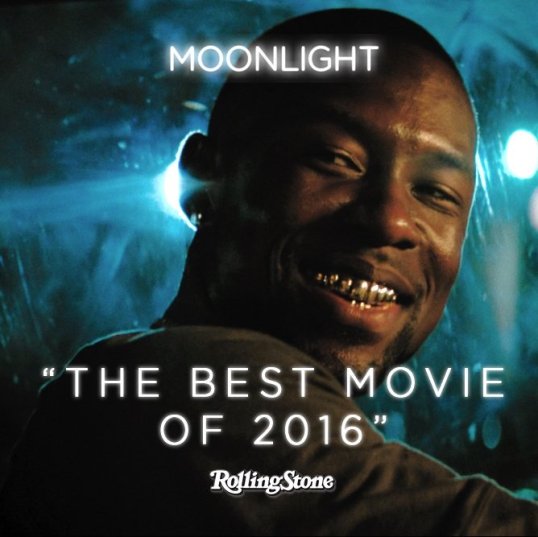
moonlight

I’m going to start this review of Moonlight by affirming something that you’ve either heard or, if you’ve seen the film, that you already know.

Moonlight is one of the best films of 2016.  Many critics have declared it to be the best.  When the Academy Award nominations are announced next month, Moonlight will receive several of them.  Barry Jenkins will not only be the fourth black filmmaker to be nominated for best director but he may very well be the first to win.  Personally, I would rate Arrival and Kubo and the Two Strings higher than Moonlight but I certainly won’t complain if Moonlight wins every Oscar that it’s nominated for.  It’s a powerful and personal film, one that might make you cry and will definitely make you think.  It sticks with you, from the brilliant opening to the powerful closing shot.  In a weak year for films, Moonlight stands one of the few legitimately great releases of 2016.

Moonlight is a film in three parts, all dealing with the life of Chiron.  Though he rarely speaks and often keeps his feelings hidden behind a wall of pain and deception, Chiron is one of the most fascinating characters that you’ll ever get to know.  Growing up in Miami, he seems to be destined to be forever on the outside.  In a country that protects whiteness and celebrates wealth, he’s black and he’s poor.  In a social environment that values being hard and demands an almost cartoonish masculinity, Chiron is sensitive and gay.

When we first meet Chiron, he’s a child nicknamed Little and he’s played by Alex Hibbert.  When we first see him, he’s fleeing both school bullies and a homelife that’s dominated by his abusive, crack-addicted mother, Paula (Naomie Harris, giving a brave and raw performance that reminds you of just how wasted she was in the role of Moneypenny in SPECTRE).  The only positive influence in Chiron’s life is a Cuban drug dealer named Juan (Mahershala Ali, who gives a performance of amazingly subtle power) and Juan’s girlfriend, Teresa (Janelle Monae).  Juan is the one who teaches Chiron how to swim.  He’s the one who tells Chiron that he can be more than he realizes.  Juan is the one who encourages Chiron to be himself, regardless of what the rest of the world demands that he be.  And yet, Juan is also the one who sells the drugs that are destroying Chiron’s mom.

We also see Chiron as an awkward and withdrawn teenager and this time, he’s played by Ashton Sanders.  Chiron struggles with his attraction to his best friend, Kevin (Jharrel Jerome) and does his best to avoid a terrifying bully named Terrel (Patrick Decile).

And finally, we meet Chiron as a muscular and sometimes menacing adult and he’s now played by Trevante Rhodes.  It’s when we meet the adult Chiron that we suddenly understand why the film was structured the way that it was.  As intimidating and noncommunicative as adult Chiron may be, we know who he really is.  We know that he’s still the same kid who we first saw hiding inside an abandoned apartment.  When Chiron received an unexpected phone call from Kevin (now played, quite poignantly, by Andre Holland), he’s forced to confront who he truly is.  It leads to … well, I don’t know how to tell you what it leads to without spoiling the film for you.  I will say that the film ends with a haunting image, one that will stick with you long after the film ends.

Moonlight is a heartfelt and incredibly moving film, one that will challenge all of your preconceived notions and one that will stick with you long after you see it.  Brilliantly directed and acted, Moonlight is a film full of beautiful, haunting, and often dream-like images.  (Cinematographer James Laxton is almost as important to the film’s success as director/screenwriter Barry Jenkins.)  And you definitely should see it if you haven’t.

It’s one of the best of 2016.

moonlight-620x360