Last Monday, I watched the Lifetime premiere movie, My Baby Is Gone! I should have reviewed it on Tuesday but, to be honest, I spent all of last week trying to figure out if Carrie was actually Laura Palmer and if Dale Cooper ever actually escaped the Black Lodge or not. So, this review is a week late and for that, I apologize even though I think anyone who would require an apology is kind of a jerk.
Why Was I Watching It?
Seriously, what’s been going on with Lifetime lately? It used to be that every Saturday night saw the premiere of a new Lifetime film. Live tweeters across the country would look forward to every new Lifetime film. We transformed several of those films into trending topics. We did our part.
But, for some reason, this year has seen a different Lifetime. More often than not, Lifetime airs an old movie on Saturday and saves the premiere for Sunday. Sorry, Lifetime. I love you but if I have to choose between a new movie and Twin Peaks, Game of Thrones, The Walking Dead, The Deuce, Big Brother, and almost everything else that I can watch on Sunday night, anything that Lifetime premieres on Sunday is probably going to end up sitting on my DVR for a while before I actually watch it.
However, My Baby is Gone! did not premiere on Sunday. It premiered on Labor Day, so, for the first time in what seemed like forever, I was actually able to watch and live tweet the movie as it aired. Seriously, Lifetime, get it together. Nobody wants to watch a Lifetime premiere on Sunday.
What Was It About?
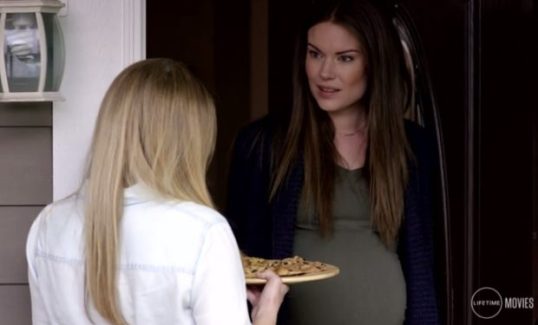
Emily (Elisabeth Harnois) is 8 months pregnant. Her husband (Ryan S Williams) seems to be a good guy but he works too hard and sometimes, he misses Emily’s checkups. Her best friend (Nicole LaPlaca) is supportive but she also works with Emily’s husband so, of course, it’s reasonable to assume that they’re probably sleeping together. This is a Lifetime movie, after all. After you’ve seen enough Lifetime movies, you know there’s no way that men and women can ever just be co-workers.
(Unless, of course, they’re cops. In that case, they’re just ineffectual and inevitably end up arresting the wrong person.)
Luckily, someone new has moved in across the street! Kelly (Anna van Hooft) is super-friendly and helpful and — oh my God! — she’s eight months pregnant too! Kelly says that she’s just staying in the house until her aunt returns. What no one knows, of course, is that Kelly’s actually got her aunt tied up in the basement.
Oh, and it turns out that Kelly isn’t really pregnant, either. She’s just wearing a fake belly. It’s actually kind of obvious but, at first, everyone just takes Kelly at her word.
Soon, Kelly is drawing Emily away from her husband and her best friend. She even convinces Emily to decorate the nursery with flamingos instead of butterflies!
What could Kelly’s nefarious plan be?
What Worked?
Uhmm… I’m thinking about it…
Actually, I had a lot of fun live tweeting this film. My Baby is Gone! is one of those movies that literally brings out the best in a snarky audience. There’s just so many implausible developments and none of the characters are likely to be mistaken for a member of Mensa. It’s a fun movie to watch if you’re looking for an excuse to spend two hours wondering how people can be so stupid.
Anna Van Hooft did a great job as Kelly. If you’re going to play a character who is batshit crazy in a Lifetime film, you might as well go all out. When you’re in a movie with a title like My Baby is Gone!, the time for subtlety is over.
What Did Not Work?
Even by the standards of Lifetime, the plot was just too implausible to work. I mean, the whole fake belly thing was a lot more convincing when it used in A Deadly Adoption.
“Oh my God! Just like me!” Moments
My favorite character was Pam (Amelia Burstyn), who was Emily’s doctor’s administrative assistant and who showed absolutely no hesitation about sharing the details of another patient’s visit. It may not have been the best example of professional ethics but sometimes, you have to break the rules.
Lessons Learned
Butterflies are better than flamingos.


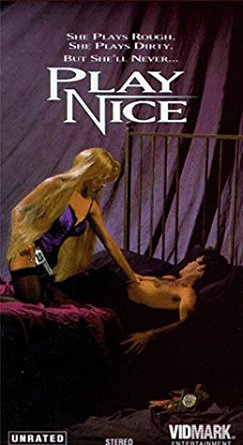 Homicide Detective Jake “Mouth” Penucci (Ed O’Ross) is the most hated man on the police force. His partners hate him. His ex-wife hates him. His daughter will hate him once she is old enough. Penucci is obnoxious, tells terrible jokes, and is haunted by his abusive childhood. The only person that does not hate Penucci is Jill (Robey), who works in the records office. Jill and Penucci are soon an item but it turns out that Jill has some kinky tastes, which make even Penucci nervous. She wants him to beat her during sex and sometimes ask him to pretend that she’s a little girl. At the same time that Penucci is trying to figure out how to have a normal relationship with Jill, he has been assigned to catch Rapunzel, a female serial killer who only targets men who have been accused of sexually abusing their daughters. Could it all be connected?
 Bloodsport is one of Jean-Claude Van Damme’s earliest films and it is Damme good!

 After Tom Logan (Jack Nicholson) and his gang of rustlers (played by Randy Quaid, Frederic Forrest, and Harry Dean Stanton) rob a train, Logan uses the money to buy a small ranch. Their new neighbor is Braxton (John McLiam), a haughty land baron who considers himself to be an ambassador of culture to the west but who is not above hanging rustlers and hiring gunmen. One such gunman is the eccentric Robert E. Lee Clayton (Marlon Brando), a “regulator” who speaks in a possibly fake Irish brogue, is a master of disguise, and uses a variety of hand-made weapons. Braxton hires Clayton to kill Logan and his men, despite the fact that his daughter (Kathleen Lloyd) has fallen in love with Logan.
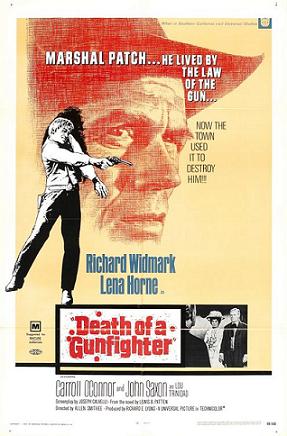 At the turn of the 20th century, the mayor and the business community of Cottonwood Springs, Texas are determined to bring their small town into the modern era. The Mayor (Larry Gates) has even purchased one of those newfangled automobiles that have been taking the country by storm. However, the marshal of Cottonwood Spings, Frank Patch (Richard Widmark), is considered to be an embarrassing relic of the past. Patch has served as marshal for 20 years but now, his old west style of justice is seen as being detrimental to the town’s development. When Patch shoots a drunk in self-defense, the town leaders use it as an excuse to demand Patch’s resignation. When Patch refuses to quit and points out that he knows all of the secrets of what everyone did before they became respectable, the business community responds by bringing in their own gunfighters to kill the old marshal.
 Joe Louis, also known as the Brown Bomber, is generally agreed to have been one of the greatest heavyweight boxers of all time. Despite the barriers put up by both poverty and racism, Louis held the world heavyweight championship from 1937 to 1949 and successfully defended his title in 26 fights (ranking him second to only Julio Cesar Chavez, who had 27 title defenses). In 1938, he defeated German Max Schmelling, disproving Nazi claims that a black man could not defeat an Aryan and making Louis, along with Jesse Owens, one of the first African-American athletes to achieve nationwide hero status in America.
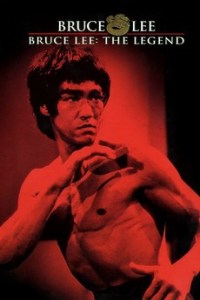 From Golden Harvest comes this tribute to their biggest star, Bruce Lee.
 Through the Shattered Lens