Cleaning Out The DVR: Four Christmases And A Wedding (dir by Marita Grabiak)


(Hi there!  So, as you may know because I’ve been talking about it on this site all year, I have got way too much stuff on my DVR.  Seriously, I currently have 193 things recorded!  I’ve decided that, on January 15th, I am going to erase everything on the DVR, regardless of whether I’ve watched it or not.  So, that means that I’ve now have only have a month to clean out the DVR!  Will I make it?  Keep checking this site to find out!  I recorded Four Christmases and a Wedding off of Lifetime on December 2nd!)

It’s all pretty much right there in the title.

Four Christmases and A Wedding was one of the handful of original Christmas films to premiere on Lifetime this holiday season.  As you can guess from looking at the title, it takes place over the course of four Christmases and it also involves a wedding.  Can you guess who ends up getting married and when?  If you’ve ever seen a Lifetime or Hallmark holiday film, you can.

It’s actually a sweet film, even if it is rather predictable.  But, as I’ve said before, predictability is one reason why people love movies like this.  There’s something very reassuring about knowing exactly what is going to happen in a movie like this before you watch it.  Many of us spend an entire year hoping for a pleasant holiday.  If you’re not lucky enough to get one in real life, you can always get one in the movies.

Or, in this case, you can get four.

Chloe (Arielle Kebbel) is an event planner who is lucky in Christmas but unlucky in love.  When a small town hires her to plan their Christmas festival, Chloe is overjoyed.  As she tells her mom (Markie Post), she’s given up on ever finding love.  At least she can find professional success!  But then, at the first festival, she meets Evan (Corey Sevier) and it’s love at first sight!  There’s only one problem.  Evan is about to go overseas.

The years pass.  Evan returns each Christmas.  Sometimes, he has a girlfriend.  Sometimes, Chloe has a boyfriend.  Every time, there is something to keep Chloe and Evan apart.  Everyone knows that Chloe and Evan are meant to be together, especially Chloe’s mom.  Will Evan and Chloe ever get together or will the wedding be for someone else?

Four Christmases and a Wedding is a sweet movie.  There’s nothing surprising about it but Arielle Kebbel and Corey Sevier make for a cute couple, even when they’re not together.  The idea of spreading the film out over several years is an interesting one and director Marta Grabiak does a good job of subtly suggesting the passage of time.  This is a predictable movie but it’s a lot of fun and I look forward to watching it next Christmas as well.

Playing Catch-Up With The Films of 2017: The Book of Henry (dir by Colin Trevorrow)


In the movies, child geniuses inevitably turn out to be little creeps at that’s certainly the case with The Book of Henry.

Henry (Jaeden Lieberher) is an 11 year-old with an exceptional IQ, which essentially means that it’s supposed to be cute when he talks down to people and treats them like shit.  In fact, Henry is such a genius that he’s managed to make a lot of money on the stock market and he also invents stuff.  He practically raises his younger brother, Peter (Jacob Tremblay, who is as authentic as Lieberher is overbaked).  He also takes care of his mom, Susan (Naomi Watts).  Susan’s a waitress because it’s a rule of movies like this that the single parent of a child genius will always either be a waitress or a physicist.  There’s really no middle ground.  Anyway, Susan appears to be destined to be forever single but she says that’s okay because Henry is the only man she needs in her life.

(Cringe)

Anyway, Henry lives next door to the Sickleman family.  You know that’s going to be a problem because, in the movies, good people never have names like Sickleman.  Glenn Sickleman (Dean Norris) is not only the police commissioner but he’s also not a very good neighbor.  He’s the type of neighbor who complains if the leaves from your tree gets in his yard.  He’s also not really comfortable living next door to a child genius.  It’s probably because Henry is kind of a condescending jerk.

Henry suspects that Glenn is abusing his stepdaughter, Christina (Maddie Ziegler, who is best known for Dance Moms).  However, before Henry can do anything about it, he has a seizure dies.  Uh-oh, turns out that Henry had a brain tumor!  A genius killed by his own brain.  So.  Much.  Irony.

However, before he died, he left behind a book and recorded instructions for Susan.  It turns out that Henry knew he was going to die because Henry was a super genius who could see the future.  (At least, I assume that’s what happened.)  So, he decided that his mother should murder Glenn and he even came up with some helpful instructions for how she could do it and not get caught.

Now, let me ask you a question.  If you discovered that your recently deceased son spent the last few days of his life plotting how to murder his neighbor would you…

a) Destroy all the evidence and pretend you never saw it

b) Shrug and decide to grant his last wish by following his instructions and killing the neighbor?

I mean, let’s think about this.  By all evidence, it would appear that Henry was a sociopath.  Even if you accept the idea that he had to kill Glenn to save Christina, you still also have to accept the idea that he coldly and methodically plotted out the perfect way to commit a murder and then, realizing he was going to die, he decided that his mom should commit the murder instead.

This is the type of material that a director like David Fincher, Michael Haneke or Lars Von Trier could have a lot of fun with.  However, The Book of Henry was directed by Colin Trevorrow and he takes this weird sentimental approach to the material.  Instead of freaking out over having raised a sociopath, Susan immediately starts to follow all of his instructions.  What’s amazing is that, even in the recording he made for his mom to listen to after his death, Henry is still a condescending little jerk.  At one point, from beyond the grave, Henry directs his mom to take a right turn.  Then he adds, “No, your other right.”

But what really gets me about this movie is that, after all the build up, Henry’s big genius plan is for Susan to get a rifle and shoot Glenn.  That’s it.  I mean, anyone could have thought of that!  If you’re going to make a movie like this, at least have Henry come up with some big complicated scheme!  At least give us that!  I mean, honestly, Susan could have come up with Henry’s plan on her own.

Does Susan follow through with the plan?  I’m not going to tell you.  But I will tell you that the film’s climax features a school talent show.  Maddie Ziegler gets to dance.  Jacob Tremblay gets to perform a magic trick.  They’re both really talented.  Sparkle Motion does not perform and that’s a shame.  Sometimes, I doubt Colin Trevorrow’s commitment to Sparkle Motion.

Anyway, to say that The Book of Henry is a bad film doesn’t quite do justice to just how ill-conceived this film really is.  Someone decided to make a heartwarming and rather humorless film about a child ordering his mother to commit a murder.  You may think it’s a parody at first but no, it’s a real movie.  It’s The Book of Henry.


Playing Catch-Up With The Films of 2017: Power Rangers (dir by Dean Israelite)


So far, on this Christmas Day, I have posted three reviews for films that featured plots that made little to no sense to me.  Well, here’s a fourth one.

Power Rangers is a cinematic reboot of the old Mighty Morphin Power Rangers television show from the 90s.  It deals with five teenagers who meet in detention and, though a series of events that I really don’t feel like wasting my time recounting, end up in an old gold mine where they find five coins, which allow them to turn into … well, I guess they’re Power Rangers.

There’s Jason (Dacre Montgomery), who was a star football player until he stole a car as part of a prank and ended up crashing it.  (The initial car crash is entirely filmed inside the automobile, which adds some deceptive excitement to the film.)  And then there’s Kimberly (Naomi Scott), who is the mean girl who actually has a good heart.  She’s in detention because she’s a cyber bully.  Billy (RJ Cyler) is the genius, which means that he’s the type of socially awkward student who accidentally blows up his locker.  And then there’s Trini (Becky G) and Zack (Ludi Lin), who are both just kind of there.  Every good group of three has to have two extra people to get in the way and that’s pretty much the function of Trini and Zack.

Anyway, after they discover the Power Coins and share a few moments that feel as if they were lifted from Chronicle, the new Power Rangers are trained by a robot named Alpha 5 (Bill Hader) and a former Power Ranger named Zordon (Bryan Cranston) who died at around the same time as the dinosaurs.  Apparently, finding the power coins has allowed the ancient evil of Rita Repulsa (Elizabeth Banks) to be reborn and now she’s threatening to destroy either Earth or the universe.  Actually, I was never quite sure what Rita was trying to do.  But the Power Rangers have to set aside their differences, learn to work as a team, and come together to defeat her.

Or something like that.  Honestly, this film featured a lot of exposition about people with names like Zordon and Rita Repulsa and Goldar and my eyes pretty much glazed over while I was trying to listen to it all.  Listen, I am a fidget spinner-carrying member of the Severe ADHD Club.  The minute they started explaining the lengthy history of the Power Rangers, my mind pretty much started looking for anything else to focus on.  It would have been different if the film has some sort of epic scope or if it made it look like it would actually be fun to be a Power Ranger.  Instead, it just turned into another franchise-opening action film.  Basically, it felt like The Fantastic Four movie, with one extra member of the team.

I should admit that I’ve never seen an episode of Mighty Morphin Power Rangers.  Perhaps if I had, I would have gotten more out of this movie.  The five actors playing the Power Rangers are all talented and charismatic and I look forward to seeing what they do in the future.  But this confusing mess of a movie just left me with a headache.

Playing Catch-Up With The Films of 2017: Ingrid Goes West (dir by Matt Spicer)


We start with a wedding.  The bride is beautiful.  The groom is handsome.  Everything looks so perfect that you’re almost relieved when Aubrey Plaza suddenly shows up.

Seriously, why wouldn’t you be?  We all know Aubrey Plaza from her role as the apathetic and sarcastic April Ludgate on Parks and Recreation.  If anyone’s going to bring this potentially bland wedding to life, it’s going to be Aubrey Plaza!

Aubrey Plaza walks up to the bride and starts screaming at her … wait a minute, that’s not typical Aubrey Plaza behavior … where’s the deadpan snarker that we were all expecting…

Suddenly, Aubrey is pulling out mace and spraying the bride in the face.  The bride is writing in pain while Aubrey screams at her…

So begins Ingrid Goes West.

Aubrey Plaza, of course, plays the title character.  Ingrid spends some time in a mental hospital after crashing that wedding.  She explains to both her doctors and the bride that she was just acting out because she was upset over her mother’s recent death.  Ingrid seems to feel that she and the bride were good friends but, as we quickly learn, they actually barely knew each other.  The bride just made the mistake of commenting on one of Ingrid’s social media posts, leading to Ingrid deciding that they were actually best friends.

Using the money that she inherited from her mother, Ingrid heads out to Los Angeles.  She has a new obsession, Taylor Sloane (Elizabeth Olsen).  Taylor is a paid social media influencer, famous for being famous.  Ingrid left a comment on one of Taylor’s pictures and Taylor left an innocuous reply.  It’s the type of thing that happens every day on social media but to Ingrid, it means that she and Taylor are destined to be BFFs.

And, amazingly, it all seems to work at first.  Online, Taylor shares just enough about her life to allow Ingrid to come up with a plan to meet her.  Ingrid not only gets to know Taylor and her husband, a painter named Ezra (Wyatt Russell), but she is briefly allowed to enter into Taylor’s world.  Of course, Ingrid fails to notice that no one in that world seems to be very interested in her.  To Ingrid, everything is perfect.  Or, at least it is until Taylor’s obnoxious, junkie brother (Billy Magnussen) shows up and starts to call Ingrid out…

Ingrid Goes West really didn’t get as much attention as it deserved when it was released earlier this year.  Unfortunately, it was advertised as being some sort of wacky comedy when, in fact, it’s a deeply unsettling and, at times, rather disturbing movie.  Yes, there is humor but very little of it is of the “laugh out loud” kind.  Instead, it’s the type of humor that makes you pause the movie so you can make sure all of the doors and windows are locked.  Ingrid Goes West eventually goes to a very dark place.  In some ways, it’s a Taxi Driver for the social media age.

Holding the film together is Aubrey Plaza, giving a performance that is both bracingly vulnerable and frighteningly angry.  Plaza makes Ingrid both sympathetic and annoying at the same time.  Your heart cries for her but you still wouldn’t necessarily want her to live next door.  Ingrid Goes West is not a perfect film.  At times, it’s hard to believe that Taylor wouldn’t know better than to invite a complete stranger into her life and some of the scenes with her brother are a bit too over the top.  But Aubrey Plaza’s brilliant lead performance makes up for all of those flaws.

Definitely see Ingrid Goes West.  Just expect to be paranoid for a week afterward.

Playing Catch Up With The Films of 2017: Valerian and the City Of A Thousand Planets (dir by Luc Besson)


Valerian and the City Of A Thousand Planets is another film, much like The Dark Tower and this year’s Transformers movie, that I watched in a state of total and thorough confusion.

More than once, I asked myself, “What the Hell’s going on?  Who are those people?  Why are they blowing stuff up?  Why are they shooting at each other?  Who’s fighting who?  Wait, is he a good guy or a bad guy?  Is Valerian human or alien?  WHAT’S GOING ON!?”

But I have to admit that it really didn’t bother me that Valerian and the City of A Thousand Planets is an almost totally incoherent movie.  After all, Valerian is a Luc Besson film and Besson has always been a supreme stylist above all else.  That’s not to say that there’s nothing going on underneath the glossy visuals of a Besson film.  It’s just to say that Besson is one of the rare directors where the subtext is usually less interesting than what’s happening on the surface.

Take Valerian and the City of a Thousand Planets.  It takes place in the far future, on Alpha.  Alpha used to be the International Space Station but now it’s become a floating city where the inhabitants of a thousand different planets mix and socialize.  It’s a very cosmopolitan city, one where the only disturbance comes from obnoxious human tourists who are all either extremely British or extremely American.  Now, you could argue that Besson is making the argument that Alpha is meant to represent France but, if you spend too much time doing that, you’re going to miss just how amazingly Alpha has been visualized.  It’s not just that everyone in the movie says that Alpha is home to a million different creatures.  It’s that when the film travels to Alpha, you take one look at the screen and you believe it.

The film’s plot … well, this is where it gets difficult. It gets off to a truly brilliant beginning, with an intergalactic summit that takes place while David Bowie’s Space Oddity plays in the background.  After that, the film’s visuals were so amazing that I have to admit that I was usually too busy taking it all in to pay much attention to what was actually going on.  Valerian (Dane DeHaan) and Laureline (Cara Delevigne) are members of the special police force that has been created to protect Alpha and apparently the rest of the universe as well.  Valerian has strange dreams about a primitive race of people who live on a beach.  Laureline frets about Valerian’s recent proposal of marriage.  They’ve both been assigned to track down a creature, the last of its species, that is currently being sold in a black market.  It all links back to some secrets concerning their superior (Clive Owen) and a plot involving intergalactic refugees.

And, obviously, if you’re someone who insists on finding political subtext in every movie that you watch, there’s a lot to be found in Valerian‘s story about space refugees and government cover-ups.  But, honestly, none of that is as interesting as the effort that Besson has put into making his flamboyant universe come to life.  Valerian may be narratively incoherent but visually, it come close to proving Lucio Fulci’s theory of “absolute film.”  The plot is less important than the film’s visuals and how you, as the viewer, reacts to those visuals.  Even Dane DeHaan and Cara Delevingne seem to have been cast less for any acting ability they may have and more because the boyishly rugged DeHaan and the achingly pretty Delevingne both compliment the film’s visual scheme.  Valerian and the City of a Thousand Planets is cinematic pop art.

Playing Catch-Up With The Films of 2017: The Hero (dir by Brett Haley)


It’s too bad that The Hero didn’t get that much attention when it originally released because, towards the end of the film, Sam Elliott has a scene that features some of the best cinematic acting that I’ve ever seen.

I’m not going to spoil the scene, because I think you should experience it for yourself.  I’ll just say that it’s a scene that will take you totally by surprise and force you to reconsider everything that you had previously assumed about both the film and the lead character.  I’m not ashamed to say that the scene brought tears to my mismatched eyes.  When you hear Elliott say, “I’ve wasted your time,” it will bring tears to your eyes too.

And that’s all I’m going to say about that scene.

As for the rest of the film, it’s a character study of an actor.  Sam Elliott plays Lee Hayden, who we’re told was one of the top actors in the world in the 70s.  He specialized in westerns, films and TV shows in which he always played the hero.  Of course, that was a while ago.  Lee is 70 years old now and both westerns and heroes are out of date.  At this point, Lee’s only steady work comes from doing the voice over for a series of steak commercials.  He spends most of his time smoking weed with his best friend, Jeremy (Nick Offerman).

It’s not a bad life though Lee certainly has his regrets.  For instance, he hasn’t always been the best father.  His daughter (Krysten Ritter) doesn’t seem to want much to do with him.  He misses acting.  As is made clear in the film’s opening scene, doing 6 different takes for a commercial voice over isn’t exactly the most challenging or rewarding way for a former star to spend his semi-retirement.  But he has his one friend and he has marijuana and what else does he need?

But then one day, Lee is told that he might have cancer.  He might be dying.  Lee starts to think about his life and his legacy.  He tries to reconnect with his daughter.  He accepts a lifetime achievement award from the Western Hall of Fame and, just when you think both the film and Lee are about to get snarky, they surprise you by treating the award and Lee’s aging fans with a poignant respect.  Lee also pursues a relationship with a much younger stand-up comedienne (Laura Prepon) and while I did arch an eyebrow at the huge age difference between them, the film itself actually addresses the issue in an unexpected way.

It’s not the most tightly constructed film.  Darren Aronofsky’s The Wrestler was an obvious influence but The Hero never quite matches that film’s fatalistic glory.  But no matter!  The Hero is mostly about celebrating Sam Elliott, an underrated actor who shows that, much like Lee, he’s capable of much more than most viewers assume.  Elliott gives a poignant, wonderfully human performance as a flawed man who still deserves to be known as The Hero.

Playing Catch Up With The Films of 2017: The Glass Castle (dir by Destin Daniel Cretton)


The Glass Castle, which some people expected to be an Oscar contender until they actually sat through the damn thing, is a film that nearly inspired me to throw a shoe at my television.

Seriously, I was curled up on the couch and watching the movie on TV.  On the screen, Woody Harrelson was playing an obnoxious, selfish alcoholic who resented both his daughter’s success and her boyfriend.  According to the alcoholic who was living in a trash-strewn hovel with his wife, success meant selling out and money was the root of all evil and blah blah blah.  Anyway, the drunk ended up punching his son-in-law.  The very next scene featured the son-in-law whining about getting punched and that’s when I realized that the film somehow expected us to be on the side of the drunken asshole.

I reached down and picked a shoe up from the floor.  I was just about to throw it at the television when my sister Erin reached out from behind me and grabbed my hand.

“Lisa Marie,” she said, “you are not throwing your shoe at the TV.”

“But Errrrrrrrin,” I whined, “this movie really sucks!”

“Well, then write a review about how much it sucks.  But you’re not going to throw another shoe at the TV.”

Reluctantly, I dropped the shoe.  Though I may have been annoyed at the time, I see Erin’s point.  The Glass Castle is not worth losing a shoe over.

The Glass Castle is based on a powerful memoir by Jeannette Wells.  It tells the story of how she and her siblings were raised by an alcoholic father and an artist mother.  It’s a story that’s full of adventure and pathos and everything else that you could hope for from a family memoir.  It’s also a memoir that works because Walls refuses to idealize her life.  Though she writes about how her childhood seemed like a grand adventure when she was actually living it, she’s also very honest about the fact that it really wasn’t.  Though her love for her family comes through on every page, she never shies away from the darker aspects of growing up as American vagabonds.

The film largely takes the opposite approach to the material.  As played by Woody Harrelson and Naomi Watts, Walls’s parents are portrayed as being somewhat lovable eccentrics.  Early on, when her mother’s carelessness leads to young Jeannette being burned and permanently scarred in a fire, there’s a scene where Harrelson compares it to the fire that burns inside of the entire family.  When I realized that we were supposed to be moved by this asinine comparison, I ended up rolling my eyes so hard that the world literally looked like it was upside down for five minutes.  “ARE YOU FUCKING KIDDING ME!?” I yelled at the movie.

This was followed by another scene where, at a public pool, Harrelson attempts to teach Jeanette to swim by repeatedly tossing her into the deep end and nearly drowning her.  And while the film acknowledged that this wasn’t exactly the best parenting technique, it was hard not to feel that we were supposed to think that Harrelson had a point when he said that he was preparing Jeannette to be a strong and independent person who would be able to survive being plunged into the deep end of existence.  “NO!”  I shouted at the TV, “YOU JUST NEARLY DROWNED YOUR DAUGHTER, YOU PRICK!”

(Full disclosure: My Dad once tried the same thing with me.  Fortunately, he only nearly drowned me once — as opposed to Jeannette’s father who just keeps dunking her in the deep end.  Still, it was frightening enough to not only leave me with with an obsessive fear of drowning but it also kept me from ever really learning how to swim.)

When Jeannette grows up, she’s played by Brie Larson, who does a passable Virginia accent and gives about as good a performance as anyone could, considering the script and the direction.  Her husband, David, is played by Max Greenfield.  David is a good, responsible person who doesn’t drink much and who makes a lot of money.  Jeannette’s father looks down on him for those two reasons and the film seems to expect us to do so as well.  But why?  David hasn’t done anything wrong.  He’s certainly not the one who tried to drown his own daughter or who came up with some bullshit explanation about why it was a good thing that she was allowed to burst into flame.  But, if we accept that David’s not a bad guy then we also have to accept that Jeannette’s father is being an asshole.  The film’s not sure how to handle that so instead, we’re just supposed to laugh at David because he gets the worst lines in the script.

It’s a very dishonest film.  Unlike the memoir on which it’s based, it has no interest in honestly examining what it’s like to grow up with an alcoholic.  Instead, it’s too busy giving us Woody Harrelson playing yet another redneck with a drinking problem.  Harrelson does a good enough job but fuck it.  If I want to spend time watching a drunk Woody Harrelson, I’ve got The Hunger Games on Blu-ray.

The Glass Castle ends with footage and pictures of Jeannette’s actual family and, as I watched them, it occurred to me that I would happily watch a documentary about the Walls family.  That would presumably have the honesty that is so lacking in The Glass Castle.

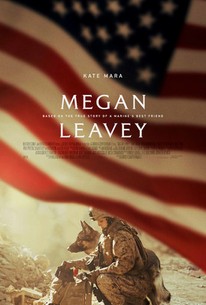
Playing Catch-Up With The Films of 2017: Megan Leavey (dir by Gabriela Cowperthwaite)


One of the best (and, in my opinion, overlooked) films of 2017 was Megan Leavey.

Based on a true story, Megan Leavey tells the true story of … well, Megan Leavey.  When the film starts, Megan (played, in one of the best performances of 2017, by Kate Mara) is living a somewhat directionless life in upstate New York.  Her parents are divorced and she’s closer to her father (Bradley Whitford) even though she has more contact (and shares a much more strained relationship) with her mother (Edie Falco).  Speaking as a child of divorce, the scenes of Megan trying to navigate the mine field between her parents rang painfully true at times. I spent the entire movie waiting for Megan and her parents to have some sort of big moment where, in typical artificial movie fashion, all conflicts would be solved and everything would suddenly be okay.  To the film’s credit, that moment never comes.

Instead, Megan enlists in the Marines.  She finds herself assigned as a Military Police K9 handler.  What that means is that Megan finds herself in Iraq, working with a dog named Rex.  Rex’s job is to sniff out explosives and other threats.  One wrong move by either Megan or Rex will result in not only their deaths but also the deaths of everyone around them.  Remember how tense some of the scenes in The Hurt Locker were?  Well, that’s nothing compared to the intensity of the bomb-sniffing scenes in Megan Leavey.  After all, in The Hurt Locker, we only had Jeremy Renner to worry about.  Megan Leavey, however, features a truly adorable dog.

When Megan returns home from serving two tours in Iraq, she struggles with PTSD and the adjustment to civilian life.  Rex is assigned to a different handler and continues his duties, leaving Megan without the one creature that she felt she could trust.  And again, Megan Leavey deserves a lot of credit for not offering up any easy or pat solutions for Megan’s difficulties to adjusting to life back in the States.  It’s too honest a film and has too much respect for it audience to cheapen its narrative with easy or manipulative sentiment.

When Rex develops facial paralysis, he is retired from active duty.  With the help of her U.S. Senator, Megan adopted Rex and gave him a home until he passed away in 2012.  That senator was Chuck Schumer and thankfully, Megan Leavey resisted the temptation to cast Chuck Schumer as himself.  Instead, when Megan approaches her Senator on the Capitol steps, the senator is played by a professional-looking character actor who looks and sounds absolutely nothing like Chuck Schumer.  By making this simple casting decision, the film keeps the focus off of the politicians and on Megan and Rex, where it belongs.

Did Megan Leavey make me cry?  You better believe it did.  However, it earned every one of these tears.  This is a wonderfully sweet and moving film, one that works largely because it refuses to overemphasize the sentimental aspects of the story.  Instead, Megan Leavey always remains rooted in reality.  It’s a gritty film about a dog and a soldier who survived being sent to one of the most dangerous places n the world.  It’s the story of how Rex saved Megan’s life and how Megan returned the favor by saving Rex’s.  It’s a sweet, straight forward story that can be appreciated even by people, like me, who prefer cats.

Playing Catch-Up With The Films of 2017: Paris Can Wait (dir by Eleanor Coppola)


Anne (Diane Lane) is the wife of Michael (Alec Baldwin).  Michael is an internationally renowned film producer.  As is established early on, their marriage is not perfect.  Michael is consumed with work and, at one point, Anne spots him deep in conversation with a young actress.  Anne’s reaction tells us all we need to know about Michael’s history as a husband.  While Michael obsesses on making the latest deal, Anne takes pictures of inanimate objects.  None of the pictures are particularly good but everyone in the movie raves about them.  I imagine that has something to do with the fact that Anne is based on Eleanor Coppola, who wrote and directed Paris Can Wait.

When the film opens, Anne and Michael are at Cannes.  Michael has spent the entire festival making deals but he’s promised Anne a Paris vacation afterward.  However, the day that they’re vacation is supposed to begin, Michael gets a call!  He’s needed in Budapest!  And Anne can’t fly because she has an ear infection…

No worries!  Their friend Jacques (Arnaud Viard) is willing to drive Anne to Paris and keep her company while she waits for Michael to return.  And so, while Michael flies off to Budapest, Anne and Jacques head off for Paris.  However, Anne soon finds herself questioning Jacques’s intentions.  Is he being flirtatious or is he just French?  When he stops off at every restaurant along the way and uses Anne’s credit card to pay the exorbitant bills, is he taking advantage of her or is he just being French?  When Anne isn’t doubting Jacques’s intentions, she’s questioning her marriage.  Is Michael really in Budapest to work on a movie or is he having an affair?

One of the good things about being rich is that you occasionally get to make a movie about how difficult it is to be rich.  That certainly seems to be the case with Paris Can Wait, which was written and directed by Eleanor Coppola, the wife of Francis Ford Coppola and the mother of Sofia and Roman Coppola.  Paris Can Wait is said to be autobiographical, which would seem to suggest that Eleanor and Francis aren’t particularly interesting human beings.

There are some positive elements to the film, of course. Diane Lane gives about as good a performance as one can when you’re playing an idealized version of a film’s director.  Also, Alec Baldwin manages to make it through the entire movie without bellowing.  In fact, Baldwin’s barely in the movie and that’s not a bad thing.  The French countryside looks beautiful but, quite frankly, it’s impossible for the French countryside not to look beautiful.  On the negative side, it just doesn’t add up to much.  You never really care whether or not Michael and Anne stay together.  You’re just thankful that you’ll never get stuck beside them on an airplane.

I think the main problem is that, as a director, Eleanor Coppola doesn’t really seem to know what she’s trying to say with her film.  For instance, I could imagine Sofia Coppola taking the exact same material and creating a movie that would be achingly poignant and full of ennui.  But, with Eleanor, it’s just another travelogue to nowhere.

Playing Catch-Up With The Films of 2017: Transformers: The Last Knight (dir by Michael Bay)


So, I’m just going to be honest here.

I did watch Transformers: The Last Knight.  I didn’t see it at the theaters, of course.  To date, I’ve only seen one Transformers movie on the big screen.  It was the fourth one and not only did I get motion sick but when I left the theater, I discovered that I was having trouble hearing.  Even though I watched Transformers: The Last Knight on a small screen, I still made sure to take some Dramamine beforehand.  That may have been a mistake because this movie somehow drags things out for 2 hours and 30 minutes.  That’s a lot of time to spend trying to stay awake while watching something that doesn’t even try to make sense.

So, yes, I did watch Transformers: The Last Knight but I’m not really sure what I watched.  I know that there was a lot of camera movement.  There was a lot of stuff blowing up.  Robots would fly into space.  Robots would return to Earth.  Robots turned into cars.  All of the robots spoke in these gravelly voices and half the time, I couldn’t really understand what they were saying.  Mark Wahlberg was around and he spent the entire movie with this kind of confused look on his face.  His Boston accent really came out whenever he had to deliver his dialogue.  One thing I’ve noticed about Wahlberg is that the less he cares about a movie, the more likely he is to go full Boston.  To be honest, if I just closed my eyes and listened to Wahlberg’s accent and tuned out all of the explosions and robot talk, I probably would have thought I was watching Manchester By The Sea.

Anthony Hopkins was also in the movie, playing a character who might as well have just been named “Esteemed British Person.”  It’s always fun to see Hopkins in a bad movie, just because he knows that his deserved reputation for being a great actor isn’t going to suffer no matter how much crap he appears in.  He always goes through these movies with a slightly bemused smirk on his face.  It’s almost as if he’s looking out at the audience and saying, “Laugh all you want.  I’ll still kick anyone’s ass when it comes to Shakespeare…”  Anyway, Hopkins is mostly around so that he can reveal that the Transformers have been on Earth since time began.  Why, they even saved King Arthur!

The plot has to do with a powerful staff that can be used to bring life back to the Transformers’s home planet.  The problem is that using the staff will also destroy all life on Earth or something like that.  So, of course, the good Transformers are trying to save Earth and the bad Transformers are like, “Fuck Earth, let’s blow stuff up.”  Or something like that.  The main good Transformer — Optimus Prime, I guess — gets brainwashed into becoming an evil Transformer.  Of course, since Anthony Hopkins is in the movie, the majority of the film takes place in England and that can only mean a trip to Stonehenge!

And…

Look, I’ve exhausted myself.  I’m not going to say that Transformers: The Last Knight is a terrible movie because, obviously, someone out there loves this stuff.  I mean, they’ve made five of these movies so someone has to be looking forward to them.  They’re not for me, though.

Some day, I hope Micheal Bay directs a Fifty Shades of Grey movie.  I look forward to watching Christian and Ana discuss consent while the world explodes behind them.