Horror Film Review: Let’s Scare Jessica To Death (dir by John D. Hancock)


In the 1971 film, Let’s Scare Jessica To Death, Zohra Lampert played Jessica, a woman who is struggling to remain sane.

As the film begins, Jessica has just been released from a mental institution.  As Jessica explains it, she’s been hearing voices ever since her father died.  She struggles with depression and sometimes, she gets paranoid.  Her husband, Duncan (Barton Heyman), has just purchased a farm in Connecticut, a place where he believes that Jessica can find some peace.  Their friend, Woody (Kevin O’Connor), will be moving out to the farm with them.  Woody is a bit of a hippie.  Some people would say that Jessica and Duncan are hippies as well but honestly, both of them seem to be more like people who desperately want other people to believe that they’re hippies as opposed to genuine members of the counterculture.

Upon arriving at their new farm, Jessica is shocked to discover a woman named Emily (Mariclare Costello) standing in their farmhouse.  When the shocked Jessica calls out for Duncan, he immediately assures her, “I see her, too!”  Emily explains that she’s spent the last few months living in the deserted farmhouse.  Though Emily offers to leave, Jessica insists that Emily have dinner with them and spend the night.  When it becomes obvious that Woody likes Emily, Jessica suggests that Emily should be allowed to live with them.

Duncan agrees to let Emily stay and, much like Jessica, you immediately start to wonder about his motives.  Is he merely letting Emily stay to keep Woody happy?  Or is he agreeing with Jessica because he’s scared that disagreeing with her will cause her have another breakdown?  Or is it possible that he’s attracted to Emily himself?

As the days pass, Jessica struggles to adjust to life in the middle of nowhere.  The location is beautiful but, because it’s so remote, it’s menacing as well.  The people in the nearby town are strangely hostile and they always seem to be wearing bandages on their necks.  Jessica starts to hear voices in the distance, taunting her and telling her that she has no place out in the country.  Are they real or is it just her imagination?  Is Jessica trying so hard to convince everyone that she’s okay that she’s actually pushing herself to a relapse?  And what about the mysterious blonde girl that keeps appearing in the distance, watching Jessica but running away whenever Jessica tries to approach her?

And then there’s the picture that Jessica finds in an antique shop.  It appears to be a picture of Emily but the shop’s owner assures her that the picture is over 100 years old….

Apparently, the script for Let’s Scare Jessica To Death was originally called It Drinks Hippy Blood and it’s intent was satirical.  You wouldn’t be able to guess that from watching Let’s Scare Jessica To Death, which is one of the creepiest and most dream-like horror films that I’ve ever seen.  Unfolding at a leisurely pace and featuring hazy but gorgeous cinematography, Let’s Scare Jessica To Death keeps both Jessica and the audience off-balance.  You’re never quite sure if Jessica is right about Emily and the town or if she’s relapsed and is drowning in a sea of her own paranoia.  Duncan and Woody both treat Jessica as if she might fall apart at any second.  At times, Duncan and his constant concern is so suffocating towards her that you feel that, if Emily hadn’t been there waiting for them, Jessica would have had to create her.  As frightening as Emily may be, only Emily can set Jessica free from her domineering husband.

More than being just a character study of a woman struggling to remain above water, Let’s Scare Jessica To Death is also a portrait of the death of counterculture idealism.  Jessica, Duncan, and Woody appear to have a chance to live the ideal hippy life on their Connecticut farm but that dream collapses under the weight of all the petty human emotions and foibles that they wrongly thought they could escape.  Duncan treats Jessica like a child, gaslighting her whenever she questions anything that’s going on.  Woody seems like a good guy but he’s so laid back that he refuses to stand against the tide.  Jessica is betrayed by everyone around her.  In the end, not even the mysterious blonde girl is willing to actually warn Jessica about what’s happening.

Zohra Lampert gives a wonderfully empathetic performance as Jessica and Mariclare Costello and Gretchen Corbett are well cast as the enigmatic strangers that Jessica can’t seem to escape.  Let’s Scare Jessica To Death is a creepy and atmospheric dream of dark and disturbing things and it’s definitely one to see.

I Want My R-TV: Spellcaster (1992, directed by Rafal Zielinski)


Give Charles Band a castle and a D-List celebrity and he’ll give you a movie!

In Spellcaster, which Band produced in 1988 but didn’t release until 1992, the castle is in Italy and there’s not one but three D-list celebrities.  British DJ Richard Blade plays Rex, who is a VJ on R-TV, a cable station that only shows music videos.  (A music station that actually plays music?  Imagine that!)  Bunty Bailey, who was the hot girl in Aha’s Take Me On video, is Cassandra, an alcoholic rock star.  Finally, Adam Ant is Signor Diablo, who owns the castle.

The plot of the movie is that R-TV is hosting a contest where the winners get to go to Diablo’s castle and not only meet Rex and Cassandra but also search for a million dollar check.  The contest winners are a snooty British woman, a sex-obsessed Italian, a sexy French woman, an overweight New Yorker, a blonde vegan, and a brother and a sister who could really use the money.  They are a collection of clichés and none of them are very interesting, sympathetic, or smart.  Not even the Italian notices that their host is named Mr. Devil.

The search for the money is a bust because the guests keep dying.  For instance, the overweight New Yorker eats a stuffed pig, turns into a pig himself, and then gets shot by the snooty British woman, who just happened to bring a rifle with her because all snooty Brits enjoy hunting.  Another person ends up getting eaten by a chair that has a lion’s head carved into it.  When the lion comes to life and chomps down its jaws, the teeth are obviously foam rubber.  It all has to do with Signor Diablo’s crystal ball, where he’s building a collection of souls.

With the casting Adam Ant and Bunty Bailey, Spellcaster tried to be a horror movie for the MTV generation but it came out several years too late.  By the time Spellcaster was released, grunge had taken over MTV and both Adam Ant and the Take Me On video seemed like relics from another age.  The film itself is a mostly dull affair, one that will be best appreciated by people who are nostalgic for the type of bad movies that used to show up on late night cable.

“Horror” Scenes That I Love: The Birds Attack in Birdemic


To be honest, when it comes to bad movies, 2010’s Birdemic is kind of overrated.

I mean, yes — it is such an amazingly inept film that you do have to watch it at least once.  And yes, I do occasionally still find myself singing that “hanging out with my family” song to myself.

But compared to something like The Room or April Rain, Birdemic is actually a pretty dull film.  I’ve watched it maybe four or five times and it’s always been with a bit of reluctance.  The Room, on the other hand, is a film that you can watch over and over again.

(Or, at least you could until The Disaster Artist came out.  As brilliant as The Disaster Artist was, I kinda lost interest in The Room after watching it.  Incredibly, I haven’t gone to one showing of The Room this year.  Actually. now I’m feeling guilty about that.  I guess I’ll have to watch The Room sometime tonight.  Anyway….)

That said, there are a few scenes from Birdemic that are always good for a laugh.  Personally, I enjoy this one.  Just watch those birds attack!

Halloween Havoc!: THE MUMMY’S GHOST (Universal 1944)


gary loggins's avatarcracked rear viewer

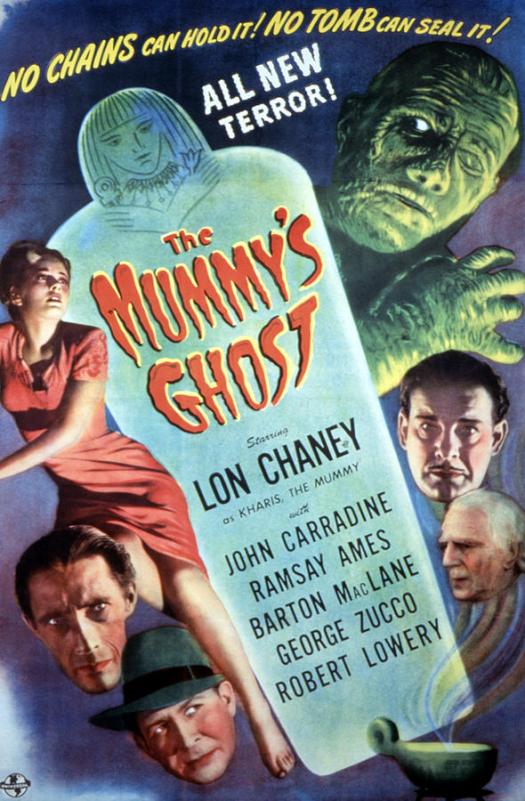
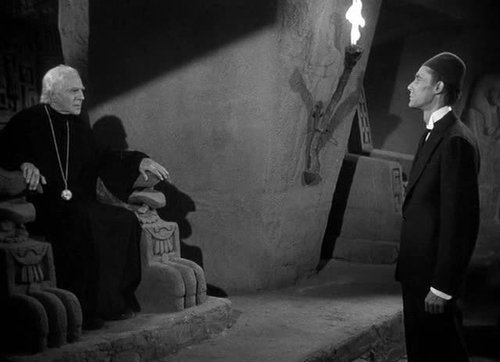
THE MUMMY’S GHOST, Kharis the killer mummy’s third time around, finds the plot wearing a bit thin in this rehash, as once again the High Priests of Arkham… wait, what? Arkham? What happened to Karnak? Did the High Priests suddenly change religions? Just another example of continuity shot to hell in this series, though we do get an upgrade in the High Priest department with John Carradine boiling the tanna leaves instead of Turhan Bey .

At least George Zucco as Andoheb is still around to brief Yousef Bey (Carradine) on the plot up til now, dispatching him to Mapleton to fetch back Princess Ananka and Kharis to the temple, though the usual tanna leave spiel is upped from three to nine. There are no more Bannings in Mapleton, but still plenty of victims for Kharis to kill. Frank Reicher is back too, as Professor Norman, giving a lecture on…

View original post 435 more words

The TSL’s Horror Grindhouse: Diary of the Dead (dir by George Romero)


I have to admit that I was a little bit hesitant about watching the 2007 film, Diary of the Dead.

It wasn’t that I don’t like zombie movies.  In fact, it was the complete opposite.  I love zombie films and Night of the Living Dead is one of my favorites.  George Romero, of course, went on to make several sequels to Night of the Living DeadDawn of the Dead, Day of the Dead, and Land of the Dead are certifiable horror classics.  However, I had heard mixed things about the two zombie films that Romero directed after Land of the Dead.  Seeing as how Diary of the Dead was Romero’s second-to-last film before he passed away in 2017, I was worried that I would watch the film and discover that I hated it.  I didn’t want experience anything that would tarnish Romero’s cinematic legacy.  It didn’t help my expectations that Diary of the Dead is a found footage film and the conventions of the found footage genre tend to get on my last nerve.

(Seriously, nothing makes me throw a shoe at a screen quicker than the sound of someone in a horror movie saying, “Are you filming this?”)

But you know what?

I did watch Diary of the Dead and it’s actually not bad.  It may not reach the heights of Romero’s other zombie films but it’s definitely a worthwhile companion piece.  It opens with news reports about the start of the zombie apocalypse, meaning that Diary of the Dead is meant to take place at roughly the same time as Night of the Living Dead.  (Never mind that Diary of the Dead is full of references to YouTube and blogs and other things that most people probably couldn’t even imagine when Night of the Living Dead first came out.)  A group of film students are in the woods, filming a terrible mummy movie when they first hear reports of the dead coming back to life.  Some say that there’s no way it could be true.  Others say that something must be happening but surely the dead aren’t actually coming back to life.  They soon discover that the dead have indeed returned.

We follow the students as they travel across Pennsylvania, trying to find a place that’s safe from the Dead and discovering that there’s literally no such place left in America.  Along the way, they also discover that the government has no intention of telling the people the truth about what’s happening.  In fact, a group of national guardsmen turn out to be just as dangerous as the zombies.  In their efforts to survive, the students are forced to rely on an underground network of bloggers and video makers.

Diary of the Dead has all of the usual zombie mayhem that you would expect from a film like this but, at the same time, it’s got a lot more on its mind than just the dead returning to life.  Much as he did with Land Of The Dead, Romero uses Diary of the Dead to comment on the state of America under the Patriot Act.  With the government using the zombie apocalypse as an excuse to suspend civil liberties and increase their own power, the film’s characters are forced to depend on new and independent information sources.  It’s not hard to see the parallel that Romero is making between the War on the Living Dead and the War on Terror.  As well, making all of the characters film students allows for some discussion about whether or not horror films should simply concentrate on being scary or whether they should also attempt to deal with real-world issues.  The film leaves little doubt where Romero came down on that issue.

On the negative side, Diary of the Dead struggles a bit to overcome the limitations of its low budget and none of the characters are as compelling as Ben in Night of the Living Dead or Fran in Dawn of the Dead.  At times, you find yourself wishing that Diary of the Dead featured just one actor who was as into their role as Duane C. Jones or Ken Foree were in Night of the Living Dead and Dawn of the Dead, respectively.  But Diary of the Dead still features enough zombies and enough of Romero’s trademark political subtext to be an acceptable addition to Romero’s vision of the apocalypse.

Rebel Days: All-American Murder (1991, directed by Anson Williams)


Artie Logan (Charlie Schlatter) is a wannabe James Dean who keeps getting kicked out of school because he is such a rebel.  His father, a judge, gives Artie one more chance.  Artie can either enroll at Fairfield College or he can go to jail.  Artie chooses Fairfield, where he meets and falls for the beautiful and popular Tally Fuller (Josie Bissett).  However, no sooner does Artie show up for their first date than someone sets Tally on fire and crashes through a window.  Artie is the number one suspect but Detective P.J. Decker (Christopher Walken) still gives him 24 hours to solve the murder and clear his name.  Artie investigates and discovers that Tally was not the innocent, all-American girl that everyone thought she was.  This leads to a nudity-filled flashback that explains why All-American Murder was an HBO mainstay in the 90s.  It also leads to other people being murdered by snakes and hand grenades.

Despite some bloody murders and the presence of Walken and Joanna Cassidy in potentially interesting supporting roles, All-American Murder fails because it asks us to accept Charlie Schlatter as being a charismatic rebel.  When Joanna Cassidy tells him that he’s a “renegade,” not even she sounds like she believes it.  The murder mystery is intriguing but Artie is so obnoxious that you want him to go to prison whether he’s guilty or not.

All-American Murder was directed by Anson Williams, who is best known for playing Potsie on Happy Days.  The Fonz could have framed Ralph Malph for this murder in half the time that it takes Artie to solve it.

Halloween Havoc!: THE INVISIBLE MAN’S REVENGE (Universal 1944)


gary loggins's avatarcracked rear viewer

Jon Hall is back as The Invisible Man, but not the same one he played in INVISIBLE AGENT . Like all the Invisible Man movies, THE INVISIBLE MAN’S REVENGE features a new protagonist, as Hall plays Robert Griffin, an escaped mental hospital patient who comes to London seeking his share of a diamond mine after being left for dead in the African jungle by partners Sir Jasper and Irene Herrick. Griffin has returned to get what’s coming to him, and he does… Irene dopes him, and the couple throw the rascal out. Disoriented, Griffin stumbles into a nearby river, where he’s saved from drowning by shady Cockney Herbert Higgins.

Higgins and his disreputable attorney pal try to shake down Jasper, but are confronted by the local chief constable. Griffin’s left to fend for himself, when he stumbles upon the home of Dr. Drury, a scientist experimenting with invisibility on animals…

View original post 403 more words

Italian Horror Showcase: Ghosthouse (dir by Umberto Lenzi)


You have to love the utter shamelessness that was often displayed by the Italian horror directors of the 70s and 80s.

Consider this:

In Italy, both Sam Raimi’s Evil Dead and Evil Dead 2 were huge hits.  Evil Dead was released under the name Las Casa so, of course, Evil Dead 2 was called La Casa 2.

Now, imagine that you’re Umberto Lenzi, a veteran Italian filmmaker who has directed everything from thrillers to westerns to war movies to gangster dramas.  Over the decades, you’ve followed the trends.  Whatever genre was popular at the time is the genre that you worked in.  It’s now the late 80s and, even though the Italian film industry is in decline, Italian horror movies are still popular enough to make money.  So, that’s what you now make.  You’ve made cannibal films.  You’ve made giallo films.  You’ve made zombie films.  Now, it’s time to make a haunted house film.

And how do you make sure that people will spend their money to see your haunted house film?

You call it La Casa 3.

Sure, your film has close to nothing to actually do with either one of the Evil Dead films.  I mean, there is a deserted house and a scary basement and a message on a tape recorder but otherwise, your film is definitely not a part of the Evil Dead universe.   For that matter, your own rather staid directorial style is absolutely nothing like Sam Raimi’s.

Who cares?  Just call your movie La Casa 3 and make some of that Evil Dead money for yourself!

Of course, when the film is released in other countries, the name is going to have to be changed.  After all, no one outside of Italy knows the significance of La Casa.  In some territories, La Casa 3 is actually released under the name Evil Dead 3!  However, in the United Sates, it’s known as Ghosthouse.

As for the film itself, it opens with a murder and ends with a lesson about why you should be careful when crossing the street.  The film deals with a guy who spends all of his time in his apartment, listening to radio frequencies.  He hears someone screaming for help so he drags his girlfriend with him in a search for the source of the scream.  When she suggests that maybe it was a prank, he says, “That wouldn’t be ethical!”

Anyway, their search eventually leads them to an abandoned house in New England.  If the house looks familiar, it’s because it’s the exact same house that Lucio Fulci used for The House By The Cemetery.  It’s a pretty good location, too.  Almost all of Ghosthouse’seerie moments are due to the fact that the house is just naturally spooky.  Anyway it turns out that the house was the scene of a brutal murder.  If you enter the house, you might run into a little girl who is holding a scary clown doll.  As quite a few characters discover over the course of this film, the little girl will kill you just as soon as look at you.

As prolific as Umberto Lenzi was, he never really developed a signature style.  As opposed to the work of other Italian genre directors — like Dario Argento, Mario and Lamberto Bava, Lucio Fulci, Sergio Martino, Anthony Margheriti, and so many others — it’s rare that you ever watch an Umberto Lenzi film and think to yourself, “That is such an Umberto Lenzi moment.  Only Umberto Lenzi could have made this film work.”  As a result, Lenzi’s filmography tends to be a bit more uneven than the work of some of his contemporaries.

If you accept a film like Nightmare City as being an example of Lenzi at his most memorable and something like The Hitcher In The Dark as being Lenzi at his most forgettable, Ghosthouse is somewhere in the middle, between those two extremes.  It has lots of atmosphere and those looking for gore will get what they’re looking for.  At the same time, it doesn’t really add up to much beyond random people coming to the house, seeing something weird, and then dying.  If you’re a fan of horror that doesn’t demand much from the audience, Ghosthouse is a diverting enough waste of time.  If you’re looking for something deeper, I’d suggest rewatching The House By The Cemetery.

Horror Film Review: Poltergeist (dir by Tobe Hooper)


The 1982 film Poltergeist tells the story of the Freeling family.

There’s Steven the father (Craig T. Nelson) and Diana the mother (JoBeth Williams).  There’s the snarky teenager daughter, Dana (Dominique Dunne), who has a surprisingly good knowledge of the local motel scene.  There’s the son, Robbie (Oliver Robins), who is scared of not only a big ugly tree but also a big ugly clown doll that, for some reason, sits in his bedroom.  And then there’s the youngest daughter, Carol Ann (Heather O’Rourke).

They live in a planned community in Orange County, sitting just a few miles away from the cemetery.  (Or so they think….)  They’ve got a nice house.  They’ve got nice neighbors.  They’ve got a nice dog.  They’re getting a pool in the backyard.  There are hints that Steven and Diana may have once done the whole rebellion thing.  They still occasionally get high, though they do it with a smugness that somehow manages to make marijuana seem less appealing.  But, for the most part, Steven and Diana are happy members of the establishment.  Steven sells real estate and is a favorite of his boss, Mr. Teague (James Karen).  Diana is a stay-at-home mom who doesn’t get upset when some unseen spirit rearranges all the furniture in the kitchen (seriously, that would drive me crazy).  They’re the type of family that falls asleep in front of the TV at night, which is a bit of a mistake as Carol Ann has started talking to the “TV people.”

Strange things start to happen.  As mentioned earlier, furniture starts to rearrange itself.  Whenever Carol Ann sits down in the kitchen, an unseen force moves her across the floor.  Diana, for whatever reason, thinks this is the greatest thing ever.  Then, on the night of a big storm, the big ugly tree tries to eat Robbie and Carol Ann goes into a closet and doesn’t come out.  Though Carol Ann has vanished, the Freelings can still hear her voice.  Apparently, she’s been sucked into another dimension and she’s being encouraged to go into the light.

Of course, this leads to the usual collection of paranormal researchers moving in.  The house decides to pick on one unfortunate guy and he ends up not only eating maggot-filled meat but also imagining his face falling apart over a sink.  A medium named Tangina (Zelda Rubinstein) comes by and reprimands Steven and Diana for not doing exactly what she says.  Of course, it turns out that Tangina isn’t quite as infallible as she claims to be….

To me, Poltergeist is the epitome of a “Why didn’t they just leave the house” type of film.  Don’t get me wrong.  I understand that once Carol Ann vanished, Diana and Steven had to stay in the house to rescue their daughter.  I’m talking about all the stuff that went on before the big storm.  Seriously, if a ghost started moving furniture around in the kitchen, I’m leaving the house.  At the very least, I’m not going to take my youngest daughter and invite the ghost to push her around the kitchen.  Even stranger is that, at the end of the film, the Freelings still don’t leave the house even though the situation with Carol Ann has been resolved.  They hire a moving truck and make plans to leave but, instead of spending a night in a hotel, they instead decide to spend one more night in a house that’s apparently possessed by Satan.

Poltergeist is famous for bringing together two filmmakers who really seem like they should exist in different universes.  Steven Spielberg produced while Tobe Hooper directed.  It seems like it’s impossible to read a review of Poltergeist without coming across speculation as to how much of the film should be credited to Spielberg and how much should be credited to Hooper.  It must be said that the film does occasionally feel like it’s at war with itself, as if it can’t decide whether to embrace Spielberg’s middle class sensibilities or Hooper’s counter-culture subversiveness.  On the one hand, the emphasis on special effects and the early scenes where the Freelings watch TV and Steven gets into a remote control fight with his neighbor all feel like something Steven Spielberg would have come up with.  On the other hand, the obvious joy that the film takes in tormenting the Freelings feels more like Tobe Hooper than Steven Spielberg.  Or take the film’s finale, where the special effects are pure Spielberg but the scene of Diana getting assaulted in bed and then thrown around her bedroom feels like pure Hooper.  Really, it’s the mix of two sensibilities that make the film compelling.  Poltergeist’s planned community is appealing but it’ll still kill you.

Anyway, I like Poltergeist.  I certainly prefer the original to the remake.  It’s a silly film in many ways but it’s still effective.  Once you get over how stupid Diana acts during the first part of the film, JoBeth Williams gives a strong performance as a mother determined to protect her children.  And Craig T. Nelson gives a classic over the top performance, especially towards the end of the film.  Just listen as he screams, “Don’t look back!”  That said, my favorite performance comes from James Karen, who is perfectly sleazy as the outwardly friendly, cost-cutting land developer.

Poltergeist is still a good, scary film.  And, if anyone wants to play a lengendary prank this Halloween, show it to someone who has a fear of clowns.

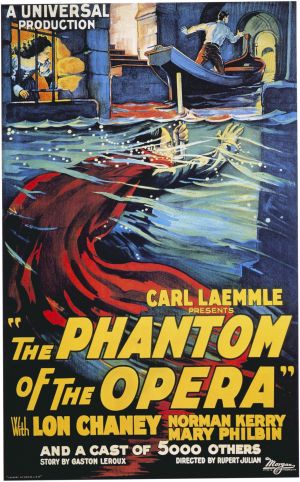
Horror on the Lens: The Phantom of the Opera (dir by Rupert Julian)


Today’s horror movie on the Shattered Lens is both a classic of silent era and one of the most influential horror films ever made.  It’s one that I previously shared in 2013, 2015, and 2106 but it’s such a classic that I feel that it is worth sharing a second (or fourth) time.

First released in 1925, The Phantom of the Opera is today best known for both Lon Chaney’s theatrical but empathetic performance as the Phantom and the iconic scene where Mary Philbin unmasks him. However, the film is also a perfect example of early screen spectacle. The Phantom of the Opera was released during that period of time, between Birth of the Nation and the introduction of sound, when audiences expected films to provide a visual feast and Phantom of the Opera certainly accomplishes that. Indeed, after watching this film and reading Gaston Leroux’s original novel, it’s obvious that the musical was inspired more by the opulence of this film than by the book.

This film is also historically significant in that it was one of the first films to be massively reworked as the result of a poor test screening. The film’s ending was originally faithful to the end of the novel. However, audiences demanded something a little more dramatic and that’s what they got.