Cinemax Friday: Night Fire (1994, directed by Mike Sedan)


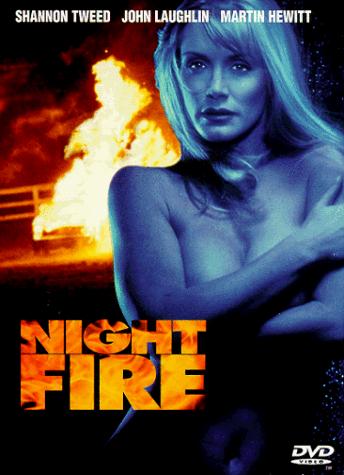
Night Fire is yet another 90s neo-noir starring Shannon Tweed.

In this one, Tweed plays Lydia.  Lydia is a work-obsessed millionaire who is unhappily married to Barry (John Laughlin).  Lydia and Barry’s sex life has come to a halt.  Lydia wants romance.  Barry wants to tie her up in bed and run a knife over her body.  Even though they have retreated to an isolated ranch house to try to fix their marriage, Lydia simply cannot bring herself to leave her work behind.

One day, while Barry is attempting to drown Lydia in the hot top, two drifters suddenly show up and claim that they’re having car trouble.  Cal (Martin Hewitt) and Gwen (Rochelle Swanson) are wild and uninhibited and everything that Lydia is not.  Lydia is uncomfortable with the idea of them staying at the house while Barry just wants to watch the two of them have sex.  Eventually, the expected mate swapping does occur but there’s a twist.  Barry hired Cal and Gwen to show up at the ranch and help him turn on his wife.  But it turns out that Barry has another, more sinister motive for wanting Cal and Gwen to spend the weekend.

Night Fire is typical of the type of films that used to show up on late night Cinemax.  The plot is mostly just an excuse to get everyone naked and most viewers will be able to see the big twist coming from a mile away.  From the very first scene, it’s obvious that Barry is not to be trusted.

On the plus side, Night Fire features one of Shannon Tweed’s best performances.  Tweed, who has always been a better actress than most critics give her credit for being, gives a smart and believable performance as Lydia.  The script often forces Lydia to do things that fly in the face of logic and it seems to take her forever to figure out that there’s something strange going on.  Lydia would probably seem unbearably daft if she wasn’t played by Shannon Tweed, who is capable of keeping the audience on her side even when she’s playing a role that, on paper, shouldn’t make any sense.  Tweed is smart enough not to play Lydia as being frigid but instead as someone who is just frustrated that her immature husband has invited two complete strangers to spend the weekend with them.  Rochelle Swanson and Martin Hewitt are impressive as the two drifters while John Laughlin is sabotaged by dialogue that reveals him to be untrustworthy from the first minute that he shows up.

Night Fire may not be perfect but it should keep fans of 90s-era Shannon Tweed happy.


Lisa Reviews An Oscar Nominee: The Lives of a Bengal Lancer (dir by Henry Hathaway)


The 1935 adventure film, The Lives of a Bengal Lancer, is a film that probably could not be made today.

Of course, that’s true of a lot of films from the 30s.  In some cases, that’s a good thing and, in some cases, that’s a bad thing.  The Lives of Bengal Lancer is an entertainingly old-fashioned adventure story but it’s also a shameless celebration of the British Empire.  The fact that it was made in Los Angeles and featured all-American Gary Cooper in the lead role doesn’t diminish the fact that it’s pretty much a celebration of British colonialism.

Gary Cooper plays Lt. Alan MacGregor, a Scottish-Canadian who serves in British Calvary.  He’s a member of the Lancers and is currently serving in India, which, at the time that this movie was set (and made), was still under British control.  When the film begins, MacGregor is greeting the new arrivals.  Among those arrivals are Lt. John Fosythe (Franchot Tone) and Lt. Donald Stone (Richard Cromwell).  Lt. Forsythe is an experienced officer who has been sent to India as a replacement for another officer who managed to get himself killed while out on a patrol.  Meanwhile, Lt. Donald Stone is a newly commissioned officer who is desperate to win the approval of his father (and McGregor’s superior), Col. Tom Stone (Guy Standing).  Unfortunately, Donald quickly discovers that winning the approval of his father isn’t going to be easy.  Col. Stone, after all, has a lot to deal with.

For instance, there’s Mohammed Khan (Douglas Dumbrille).  Kahn is a local prince and he boasts that he has got an Oxford education.  He pretends to be an ally of the British but instead, he is plotting a revolution.  The first step in that revolution is to intercept a convoy of British weapons but how can Kahn discover the convoy’s route?  Maybe he could kidnap a lancer who is close to the unit’s commanding officer?  With the help of a Russian femme fatale named Tania (Kathleen Burke), Khan is able to capture Donald.  When MacGregor and Forsythe defy the colonel’s orders and attempt to rescue Donald on their own, they end up getting captured as well!

“We have ways to make men talk!” Khan declares and soon, the three men are having their fingernails ripped out and the skin underneath burned with fiery bamboo.  It’s a shocking act of sadism, one that caught me by surprise in 2020.  I can only imagine how audiences in 1935 reacted to Gary Cooper and Franchot Tone being so graphically tortured on the big screen.  Though the men swear that they will not reveal the location of the convoy, how much torture can they take before they break?

As I said at the start of this review, The Lives of a Bengal Lancer is an old-fashioned film and, with its depiction of savage rebels and heroic colonizers, it would probably cause a riot if it were released today.  However, if you can set aside the whole pro-imperialist theme of the film, this is a fairly entertaining film.  It gets off to a slow start and, to modern eyes, some of the acting is bit creaky but Gary Cooper is, not surprisingly, well-cast as the film’s hero and he’s ably supported by Tone and Cromwell.  Douglas Dumbrille and Kathleen Burke are entertainingly campy villains and the film’s final battle is well-done.

A box office success, The Lives of a Bengal Lancer was nominated for Best Picture but it lost to an even bigger hit (and a film that was a bit more critical of the British Empire), Mutiny on the Bounty.

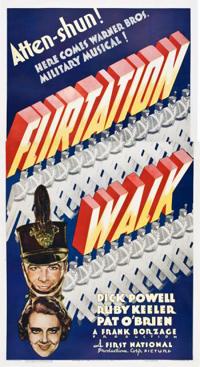
Lisa Reviews An Oscar Nominee: Flirtation Walk (dir by Frank Borzage)


In the 1934 Best Picture nominee, Flirtation Walk, Dick Powell plays a soldier who is constantly trying to go AWOL.

It’s not that Richard “Dick” Palmer Grant Dorcy Jr. dislikes the army.  In fact, he’s actually getting a pretty good deal out of his enlistment.  He’s been stationed in Hawaii, where he gets to go to luaus and hang out on the beach.  He has a wonderful friend and mentor in the person of Sgt. Scrapper Thornhill (Pat O’Brien).  Since this film was made in 1934, he’s not going to have to worry about going to war for another 7 years.  He’s known as The Canary because he loves to whistle and sing.  Everyone like Pvt. Dick Dorcy and that includes Kit Fitts (Ruby Keeler).

Unfortunately, Kit’s father is General Fitts (Henry O’Neill) and he’s none too amused about his daughter having a romance with an irresponsible enlisted man.  He would much rather that Kit marry his aide, Lt. Biddle (John Eldredge).  After he’s told to stay away from Kitt, Dick makes plans to desert so he can run off with her.  Fortunately, Scrapper finds out what Dick is planning and he goes to Kit and warns her that Dick’s about to throw away his life for her.  Not wanting him to get into trouble, Kit pretends that she never felt anything for Dick.  When a broken-hearted Dick wonders why Kit rejected him, Biddle smugly informs him that he’s neither “an officer nor a gentleman.”

Stung, Dick decides to fix that problem.  In order to become an officer, he applies for admission to West Point and gets in.  Dick leaves Hawaii for the mainland and he does very well at West Point.  He’s even put in charge of producing, writing, and directing West Point’s annual theatrical production.  However, things get complicated with Gen. Fitts arrives to serve as superintendent.  Coming with Gen. Fitts are both Kit and Lt. Biddle.

Deciding to express his angst through art, Dick writes a show about a female general.  Since Kit is the only female at West Point, guess who gets the lead role?  Though Kit is still in love with Dick, she can’t get him to listen to her explanation for why she rejected him.  Will a stroll along West Point’s famed Flirtation Walk help fix things?

Well, it is a Dick Powell musical….

Flirtation Walk is a pleasant but forgettable movie.  Dick Powell and Ruby Keeler make for a cute couple but neither one of them gives a particularly interesting performance and the bland songs don’t make much of an impression either.  Those who are into military history might enjoy the fact that the film was actually filmed on location at West Point but, for the rest of us, this is a nice but not particularly memorable musical romance.  For me, the most interesting part of the film was that it didn’t even attempt to be realistic when it came to Dick’s theatrical production.  It’s a huge production, if never coming close to being as much fun as the one from 42nd Street.

Why was Flirtation Walk nominated for Best Picture?  I imagine it was because it was a hit at the box office.  It only received one other nomination, for Best Sound Recording.  Regardless of why it was nominated, it lost to the far more memorable It Happened One Night.

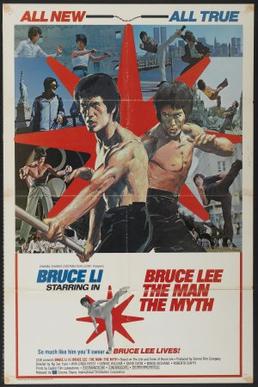
Bruce Lee: The Man, The Myth (1976, directed by Ng See-yuen)


In 1958, a Hong Kong teenager named Bruce Lee (played by Ho Chung-tao, credited under the name Bruce Li) is upset that his mother is forcing him to go to college in America.  His martial arts instructor assures Bruce that he is meant for great things and encourages him to bring his philosophy of life to all of the people of the world.

In America, Bruce finds fame as a martial arts instructor and he pursues a career as an actor.  However, everywhere he goes, he’s told that no major American studio would ever be willing to invest money in an “unknown Chinese actor.”  Bruce finds brief fame with a supporting role on The Green Hornet but his Hollywood prospects sputters when he announces that he refuses to play any demeaning stereotypes.  Taking control of his own career, Bruce returns to Hong Kong and produces his own films.  He becomes an international superstar before dying under mysterious circumstances at the age of 32.

Following the death of the real-life Bruce Lee, there were hundreds of martial arts films released that featured look-alike actors who were credited with names like Bruce Ly, Bruce Lei, Bruce Lai, and Bruce Le.  These films often featured Lee either fighting the Tongs or some other sort of international conspiracy.  Many of them also speculated about the cause of his death or flat out presented Lee as having faked his death in order to escape from his enemies.  (Typically, these films would feature at least some footage of Lee’s funeral and the real Bruce Lee lying in his coffin.)  So many of these films were released that they eventually were grouped under their own genre, Bruceploitation.

Of the faux Bruces who appeared in Bruceploitation films, Ho Chung-tao was the most successful.  Credited as Bruce Li, he not only bore a strong physical resemblance to Bruce Lee but he was also one of the few Bruce imitators to have any on-screen charisma as well.  Bruce Li may not have been Bruce Lee but, of the imitators, he was the best.  (He was also one of the most frequently frustrated, retiring from acting at the age of 40 because he was sick of only being allowed to play Bruce Lee.)

Bruce Lee, The Man, The Myth is a generally straight-forward biopic.  It covers all of the big events of Lee’s life and, unlike a lot of other Bruceploitation films, it mostly sticks to the facts.  That doesn’t mean that there aren’t a lot of fights to be found in this film.  Lee is constantly getting into fights but, for the most part, they’re just with people who want to challenge the great Bruce Lee and see if he’s really as impressive as everyone says that he is.  Other than a strange but fun scene where Bruce is approached by the daughter of a mafia boss, this film does not portray Lee as being a crime fighter or a secret agent.  Like many Bruceploitation film, this movie hints that Lee faked his own death but, in the version I saw, a narrator dismisses the reports of Lee’s survival as just being rumors.  (The narrator also says that if Bruce is still alive, he’ll emerge from hiding in 1983.  Draw your own conclusions.)

Bruce Lee, The Man, The Myth is an entertaining biopic.  When it comes to a Bruceploitation flick, all that most people really ask for is that the Bruce imitator be convincing and that the fights be exciting.  On both counts, Bruce Lee, The Man, The Myth delivers.

Rabid (1977) – (dir. by David Cronenberg)


Great films are loved by all, read Gary’s take on Rabid before starting this one.

What a strange film. I don’t have a whole lot to say about it, save that I enjoyed what I saw.Rabid-1977-movie-Chambers-cronenberg-3

I accidentally stumbled on to Rabid. I woke up with the tv on late at night to some guy trying to console a nearly nude and upset patient in her bed.

“Wait a minute….” I say, rubbing my eyes and trying to wake up fully. “Okay, this isn’t Lifeforce. What is this?” My hands start looking for the remote, but by the time I’m able to grab it, the guy howls in pain. Blood starts running down his side while in the patients arms.

“What the what? Hell am I watching?” My hands search for the remote.

I bring up the info on the film and sigh with a smile…”Oh. Cronenberg. I should have known.”

I jumped to the In Demand station and watched it from start to finish. I was always under the impression that Scanners was David Cronenberg’s first film, so Rabid was a nice surprise. I also learned that Ivan Reitman was a producer both for this and some of Cronenberg’s earlier works, much like Mel Brooks was for The Fly. My mind is blown. What is with comedy makers turned Horror Producers?

When Rose (Marilyn Chambers) suffers major injuries in a motorcycle accident, a local medical center takes her in and performs some strange new surgery on her. She’s kept for some time, while her boyfriend Hart (Frank Moore) is sent home. It’s during her stay that the madness starts. As she recovers, Rose finds she has a craving for blood, Leave it to Cronenberg to find the strangest way to do it. Rabid is the kind of film that teaches horror fans. Watching it, I was able to see how it was the source for films like James Gunn’s Slither, Tobe Hooper’s Lifeforce, George Romero’s The Crazies and Hal Barwood’s Warning Sign. Anyone watching Rabid would get an idea of where Slither could have gotten the stinger from, which is interesting to see.

Those bitten by Rose begin to suffer from an advanced case of rabies, and this spreads like wildfire. It happens to be one of the best elements of the film. The terror in Rabid comes from both Rose as a carrier, who is compelled to find someone to drink from/infect and her victims, who are left foaming and violent.  Bart spends the bulk of the film trying to track down Rose and piece together what’s occurring while facing some guilt. Not a terrible thing, given the entire situation and the fact that it was his motorcycle they crashed.  As the story progresses, the danger escalates for everyone involved. By the second half of the film, the city is almost under Martial Law as they try to contain the virus. As a result, the pacing for Rabid is even for a film from the 70s. It doesn’t feel like it drags on at all.

From an acting standpoint, everyone’s parts were okay. Chambers’ Rose is a mixture of innocence, quiet sexuality and a little ruthlessness. I particularly liked Joe Silver (Shivers, another early Cronenberg film) as the investor who watches the hospital kind of unravel. Frank Moore (who reminds me a lot of Christopher Walken) has this tortured soul quality to him that I enjoyed.

The effects and makeup work were great. There’s quite a bit of blood and foamy mouths, of course it’s what anyone would expect from Cronenberg. The blood doesn’t look entirely real, but considering that this was about 40 years ago, it seems to hold up okay.

Overall, Rabid is a great late night movie worth catching if you can. At the time of this writing, the film is available on Amazon Prime.


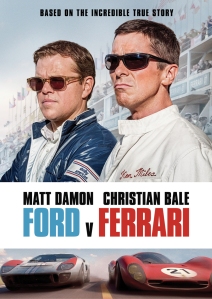
Ford v Ferrari (dir. by James Mangold)


fordvferrari posterIt’s rare for me to say that I enjoyed a film so much that I didn’t want it to end, but James Mangold’s Ford v. Ferrari hits all the right notes. A fantastic cast, impressive visuals on the races, scenes that flow without any time wasted and sound that begs to be heard on a surround system. It’s no surprise that the film earned Four Oscar Nominations – Best Sound Editing, Best Sound Mixing, Best Film Editing and Best Picture, all of which are well deserved. If the lineup this year wasn’t so stacked, I’d say that Ford v Ferrari would score quite a bit. It can go any way, but It may end up like The Shawshank Redemption – A great film that could be eclipsed by giants.
Based on a true story, Ford v. Ferrari focuses on the Ford Motor Company in the mid 60’s, down on its luck and looking for a way to stay ahead of the game. Henry Ford II, played by a scene stealing Tracy Letts (August: Osage County), asks his workers to come up with an idea. A young Lee Iacoccoa  (Jon Bernthal, The Punisher) feels the best way to do so is to attempt to win the famed 24 hour race at Le Mans in France. The LeMans is dominated by Ferrari, who hand manufactures their machines to be legends in the racing circuit. If Ford could win, it would put them in a better light to consumers, but winning requires more than just a fast car.

Ford enlists the help of Carroll Shelby (Matt Damon, The Martian), along with his brash and skillful driver, Ken Miles (Christian Bale, 3:10 to Yuma), Ken has a few issues getting along with others, but his knowledge of cars is brilliant. Shelby continuously goes to bat for Miles, who isn’t exactly poster boy material in the eyes of Ford.  Together, they work on building a competitive vehicle. The poster may suggest the story is about the cars, but at its heart, I felt that Ford v. Ferrari was more about the friendship between Shelby and Miles than anything else. Their mutual love of cars and racing is what ties it all together.

When it comes to the technical points of racing, Ford v Ferrari’s script doesn’t ask you to know much about cars going in. Just about everything you need to about the LeMans and the abilities of the cars is explained through the characters over time. Car gurus may find areas where liberties are taken, but casual watchers should find themselves entertained.

Kudos goes out to the casting for Ford v. Ferrari. Josh Lucas (Poseidon) plays the heavy in the film as a Ford businessman who would love to see Miles out of the spotlight. Caitriona Balfe (Starz’ Outlander) has some good moments with Bale as Miles’ wife, Mollie, though she happens to be the only woman in the film with many lines. Given that the story takes place in the 1960s and its guys building cars, it made sense. Playing Miles son, Peter, Noah Jupe (Honey Boy, A Quiet Place) is that character that helps the audience understand the nuances of racing. I kind of wish Bernthal had more to do here, but he’s cool when he’s on screen and carries his weight easily.

The film belongs to Damon and Bale, though. Damon’s Shelby is full of attitude. He knows what he wants to get done, what needs to happen and just does it. Damon carries this with ease, and it’s easy to forget that the actor is there at times (for me, anyway). Bale does the same, but is on a different level, with his Ken Miles being both focused and a little wild, perhaps even cynical. There’s a great mix of comedy and drama between the two actors.

The sound quality of Ford v. Ferrari is amazing. If you had the chance to see it in the cinema, consider yourself lucky. The rev of the engines are crisp, the shifting the of gears sublime. I’d be somewhat shocked if the film doesn’t walk away with the Sound Mixing / Sound Editing Oscars. From a visual standpoint, the races themselves offer some nice tracking shots, though there may be one or two scenes that particularly stand out.

Mangold and Phedon Papamichael (his Director of Photography for Walk the Line) perform some interesting tricks with the camera. With the races themselves, the cuts are smooth. You have dynamic tracking shots of cars  in some cases while others are lit enough to be comfortable. One of my favorite scenes involves a play on shadows that makes it appear like you’re watching a race, complete with the sound of the cars in the background. It’s subtle touches like that make me wonder why it wasn’t nominated for Best Cinematography. I should also note that for a 2:30 minute film, it flies by. I found very few (if any) moments where I felt a scene wasn’t particularly needed to push the narrative along. You can thank Jez and John-Henry Butterworth (Edge of Tomorrow) for that screenplay.

I can’t say I have any real problems with Ford v Ferrari. Overall, it’s an entertaining film right from the start that gets you into the story and behind the wheel.

Original Gangstas (1996, directed by Larry Cohen)


Original Gangstas opens with shots of the deserted streets and burned-out store fronts of Gary, Indiana and narration telling us how a once great American city came to be in such disrepair.  The steel plant closed and put much of the city out of work.  While the politicians and the police looked the other way, violent street gangs rose up and took over entire neighborhoods.  Now, Gary is a shell of its former self.  Even the local movie theater has closed down.  The narrators tells us that the last movie to play at the theater was Star Wars.

Led by Spyro (Christoper B. Duncan) and Damien (Eddie Bo Smith, Jr.), the Rebels are the most feared and powerful gang in Gary.  They rule through violence and intimidation.  Talk to the police and your business is liable to get torched and you’re likely to get shot.  However, Spyro and Damien have finally gone too far and now, two men who previously escaped from Gary are returning to town to dish out some justice.

John Bookman (Fred Williamson) is a former football player who wants to avenge the shooting of his father.  Jake Trevor (Jim Brown) is a boxer who once killed a man in the ring and who wants revenge for the death of his son.  When they were young men, John and Jake were the original Rebels and now they’re getting the old gang back together again.  With the help of Laurie (Pam Grier), Bubba (Ron O’Neal), and Slick (Richard Roundtree), the original gangstas are going to take back the streets of Gary.

Original Gangstas was released at a time when, largely thanks to the influence of Quentin Tarantino, people were just starting to feel nostalgic for the old blaxploitation movies.  The main appeal of the film, not surprisingly, is that it brings together so many of the great blaxploitation stars and sets them loose in what was then the modern era.  (Jim Kelly is missed.)  When John and Jake talk about how they’re responsible for the Rebels, they could just as easily be talking about how they’re responsible for both all of the independent crime films that came out in the wake of Reservoir Dogs and Pulp Fiction.

Original Gangstas is a tribute to both the Blaxploitation genre and the oversized personalities that made that era so memorable.  Neither Fred Williamson, Jim Brown, nor Richard Roundtree were particularly good actors but they all had so much screen presence and such an innate sense of cool that it didn’t matter whether they could convincingly show emotion or not.  (Original Gangstas gives all of the big dramatic scenes to Pam Grier, who was not only naturally cool but a damn good actress to boot.)  The minute Fred Williamson lights his cigar, he control the entire movie.  He and Jim Brown make a good team and Original Gangstas is an entertaining and violent trip down memory lane.

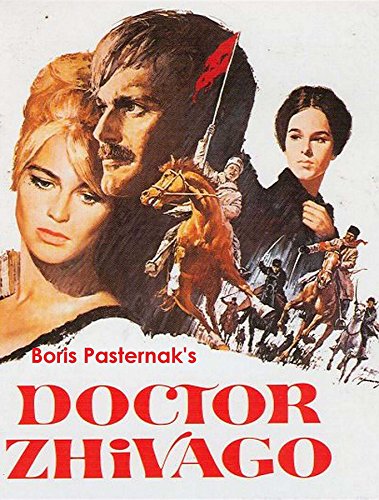
Lisa Reviews An Oscar Nominee: Doctor Zhivago (dir by David Lean)


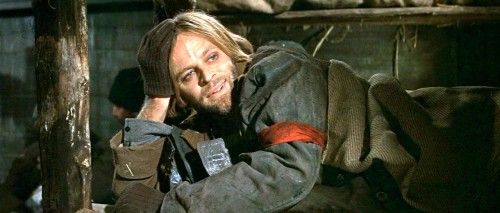
Klaus Kinski is the main reason to watch the 1965 film, Doctor Zhivago.

The legendarily difficult and erratic Mr. Kinski shows up about halfway through this 3-and-a-half hour film.  He plays a cynical and unstable prisoner on a train.  The train is full of passengers who are escaping from Moscow and heading for what they hope will be a better and more stable life in the Ural Mountains.  (The film takes place during the Communist revolution and the subsequent purges.)  That Kinski taunts everyone on the train is not a surprise.  Both Werner Herzog and David Schmoeller (who directed Kinski in Crawlspace) have made documentaries in which they both talked about how difficult it was to work with Kinski and how several film crews apparently came close to murdering Klaus Kinski several times throughout his career.

Instead, what’s surprising about Kinski’s performance is that he’s even there to begin with.  Doctor Zhivago is an extremely long and extremely stately film.  It’s one of those films where almost every actor gives a somewhat restrained performance.  It’s a film where almost every shot is tastefully composed and where the action often slows down to a crawl so that we can better appreciate the scenery.  It’s a film that stops for an intermission and which opens with a lengthy musical overture.  In short, this is a film of old school craftsmanship and it’s the last place you would expect to find Klaus Kinski luring about.

When he does show up, you’re happy to see him.  Even though he’s only onscreen for about five minute, Kinski gives the film a jolt of much-needed energy.  After hours of watching indecisive characters talk and talk and talk, Kinski pops up and basically, “Screw this, I hate everything.”  And it’s exciting because it’s one of the few time that Doctor Zhivago feels unpredictable.  It’s one of the few times that it feels like a living work of art instead of just a very pretty but slightly stuffy composition.

Just from reading all that, you may think that I don’t like Doctor Zhivago but that’s actually not the case. It’s a heavily flawed film and you have to be willing to make a joke or two if you’re going to try to watch the whole thing in just one sitting but it’s still an interesting throwback to a very specific time in film history.  Doctor Zhivago was designed to not only be a spectacle but to also convince audiences that 1) TV was worthless and that 2) Hollywood craftsmanship was still preferable to the art films that were coming out of Europe.  At a time when television and independent European cinema was viewed as being a real threat to the future of the film industry, Doctor Zhivago was a film that was meant to say, “You can’t get this on your black-and-white TV!  You can only get this from Hollywood where, dammit, people still appreciate a good establishing shot and treat the production code with respect!”  Even today, some of the spectacle is still impressive.  The beautiful shots of the countryside are still often breath-taking.  The scenes of two lovers living in an ice filled house are still incredibly lovely to look at.  The musical score is still sweepingly romantic and impressive.

It’s the story where the film gets in trouble.  Omar Sharif plays Yuri Zhivago, a doctor and a poet who falls in love with Lara (Julie Christie) while Russia descends into chaos.  The Czar is overthown.  The communists come to power and prove themselves to be just as hypocritical as the Romanovs.  The revolutionary Pasha (Tom Courtenay, bearing a distracting resemblance to Roddy McDowall) is in love with Lara and helps to bring about the revolution but is then declared an enemy of the people during the subsequent purges.  The craven Komarovsky (Rod Steiger) also wants to possess Lara and he’s so corrupt that he manages to thrive under both the Czar and the communists.  Alec Guinness plays Yuri’s half-brother and is the most British Russian imaginable.  Doctor Zhivago is based on a Russian novel so there’s a lot of characters running around and they’re all played by a distinguished cast of international thespians.  However, none of them are as interesting as the scenery.

As for the two main actors, Omar Sharif and Julie Christie convince you that they’re in love but not much else.  Sharif is never convincing as a poet and he feels miscast as a man who spends most of his time thinking.  Reportedly, Lean’s first choice for the role was Peter O’Toole and it’s easy to imagine O’Toole in the part.  But O’Toole had already done Lawrence of Arabia with Lean and didn’t feel like subjecting himself to another year of Lean’s notoriously prickly direction.  So, the role went to O’Toole co-star, Sharif.   Julie Christie turned down Thunderball to do both this film and Darling, for which she would subsequently win an Oscar.

(Speaking of the Oscars, Doctor Zhivago was nominated for Best Picture and, though it won five other Oscars, it lost the big prize to The Sound of Music, of all things.  1965 really wasn’t a great year for the Oscars.  The only 1965 Best Picture nominee that still feels like it really deserved to be nominated is Darling.  Of the other nominees, Ship of Fools is ponderous and A Thousand Clowns is almost unbearably annoying.  And The Sound of Music …. well, I prefer the Carrie Underwood version.)

Doctor Zhivago is a big, long, epic film.  It’s lovely to look at and it has a few nice scenes mixed in with a bunch of scenes that seem to go on forever.  In the conflict between the state and the individual, it comes down firmly on the side of the individual and that’s a good thing.  (The communist government attempts to suppress Yuri’s love poems because they celebrate the individual instead of society.  And though the government might be able to destroy Yuri’s life, they can’t destroy his spirit.  Again, it’s a message that would have worked better with a more thoughtful lead actor but still, it’s a good message.)  It’s a flawed film but watch it for the spectacle.  Watch it for Klaus Kinski.

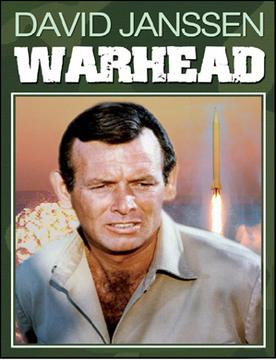
Warhead (1977, directed by John O’Connor)


Somehow, a nuclear bomb falls out of an American airplane that happens to flying over the border between Israel and Jordan.  Luckily, the bomb doesn’t explode but now it’s just sitting out in the desert where anyone can stumble upon it.  CIA operative Tony Stevens (David Janssen) just happens to be on vacation in the Middle East so he’s recruited and sent off to find the bomb before anyone else finds out about it.

At the same time, a group of Israeli soldiers, led by Captain Ben-David (Christopher Stone) and Lt. Liora (Karin Dor), are searching for a group of Palestinian terrorists, led by Malouf (Tuvia Tavi).  As soon as Tony finds the bomb, he is captured by Malouf.  He is then rescued by Ben-David but now Tony has to deal with two interested parties who want the bomb for themselves.

Warhead is a confusing movie that seems like it is trying to say something about the Middle East and America’s role as an international policeman.  Captain Ben-David feels that the Americans are being selfish with their refusal to allow other countries to develop their own nuclear missiles while Tony argues that the world would be plunged into war if everyone had the bomb.  (Remember, this film is from the 70s and was made at a time when the U.S. and the Russians were pretty much the only nuclear super powers.)  The film ends on a nihilistic note, with almost everyone either dead or disillusioned but why?  The acting is so bad and the production is so shoddy that it’s hard to figure out what this movie is trying to say.  Is Ben-David right about American arrogance or is Tony right to argue that deterrence is the only way to keep the world safe?  The movie doesn’t seem to know.  David Janssen was usually the ideal actor to play grizzled tough guys but, in this movie, he was clearly just collecting a paycheck and hopefully enjoying the chance to do some sight-seeing in the Holy Land.  The most intriguing character in the movie is a beautiful Israeli sniper played by Joan Freeman but she is killed off early and forgotten.

Warhead premiered on TV but was obviously originally intended for a theatrical release.  There’s a very gratuitous rape scene that is so awkwardly edited that it’s easy to see that it was cut down once it became apparent the movie was never going to play in theaters.  (The scene could have just as easily been removed from the film without effecting the narrative but I guess the networks wanted to give all of the dads and teenage boys a reason to not change the channel.)  According to the information I’ve found online, Warhead was filmed in 1973 but sat on the shelf for four years.  Watching the movie, it’s easy to see why.

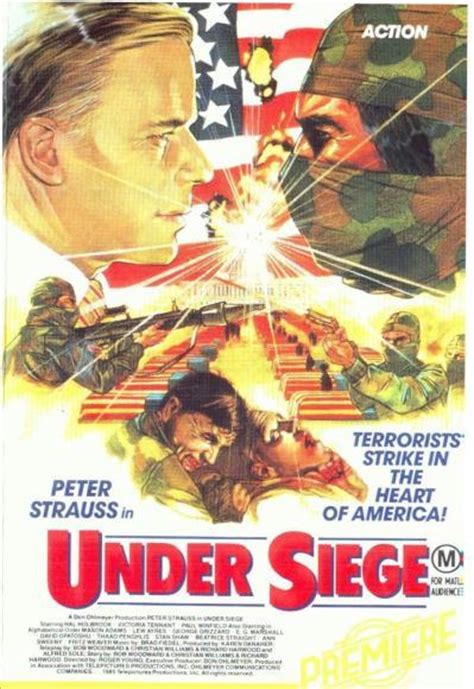
Under Siege (1986, directed by Roger Young)


Let’s say that you are the governor of Arkansas and, once again, your state is running out of money and will soon not be able to afford to pay its bills.  What do you do?

That was the problem facing Governor Bill Clinton in 1986.  His solution was to allow a big Hollywood production to come down to Little Rock and film someone throwing explosive devices at the state capitol.  The capitol building at Little Rock looks like a smaller version of the capitol building in Washington D.C.  The producers of Under Siege needed to shoot a scene where terrorists attempt to blow up Congress.  Even though the state capitol wasn’t actually blown up in the film, the dome did end up with extensive burn marks that were visible for years afterwards.  Many people in Arkansas were not amused that they had to allow a film crew to set their capitol on fire just to pay the bills.  Still, if Bill Clinton hadn’t agreed to blow up the state capitol building, Arkansas could have gone bankrupt and then he probably would have lost his reelection bid in 1986.  If Bill Clinton wasn’t reelected, he never would have been elected to the presidency in 1992, Hillary Clinton would never have been elected to the Senate in 2000 and, in 2016, the Democrats wouldn’t have been stuck with the only possible nominee who could have actually lost to Donald Trump.  When you look at it that way, Under Siege is one of the most significant films ever made.

As for the film, it’s a 3-hour, made-for-TV movie about what happens when Islamic extremism hits home.  Notorious terrorist Abu Ladeen (Thaao Penghlis) has managed to sneak into the United States and is hiding out in Detroit.  He directs a series of attacks on beloved American institutions.  Not only is the Capitol Building bombed but a mall is also attacked.  While President Maxwell Monroe (Hal Holbrook, who was born to play presidents) tries to keep America from falling apart, his hawkish advisers tell him that now is the time to launch a strike against Iran, despite Iran claiming to have nothing to do with the attacks.  Only the director of the FBI, John Garry (Peter Strauss), and the Secretary of Defense, Andrew Simon (Paul Winfield), argue that the president should exercise caution.  Garry is convinced that the attacks are the result of homegrown, domestic extremism and not an international conspiracy.  Garry is a very hands-on FBI director.  He’s the type of FBI director who will chase a terrorist down a street in Washington D.C.  Let’s see James Comey do that shit.

Under Siege probably seemed outlandish in 1986 but it seems prophetic today.  The film’s depiction of both terrorism and the government’s shady response to it turned out to be accurate.  That doesn’t mean that it’s a very good movie.  It was co-written by Bob Woodward of Watergate and Washington Post fame, so of course John Garry is righteous beyond belief and the solution to all of America’s problem begin with contacting a newspaper editor and blowing the whistle.  America may be under siege but a strongly-worded editorial is here to save the day.

Under Siege used to regularly show up on late night television and the DVD was popular overseas.  (In France, it was called Au Revoir, America.)  Not surprisingly, after 9-11, it vanished from circulation.  If you can find a copy, watch it and ask yourself, “Would I blow up my state capitol just to pay the bills?”