Horror Film Review: It Conquered The World (dir by Roger Corman)


“Man is a feeling creature, and because of it, the greatest in the universe….”

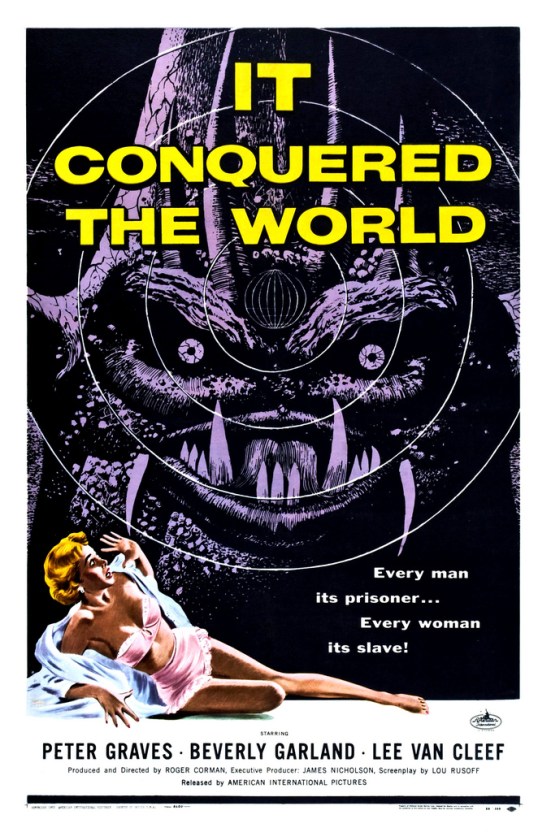
So says scientist Paul Nelson (Peter Graves) towards the end of 1956’s It Conquered The Universe.  Paul may be a scientist but he understands the importance of emotion and imagination and individuality.  He knows that it’ll take more than just cold logic to save humanity from destruction.

Unfortunately, Paul’s best friend, Tom Anderson (Lee Van Cleef), disagrees.  Tom worked at Los Alamos.  Tom helped to develop the atomic bomb.  Tom is convinced that humanity will destroy itself unless a greater power takes over.  Tom feels that he has discovered that greater power.  Tom has recently contacted a Venusian and invited it to come to Earth.  Upon arriving, the Venusian promptly disrupts all electrical power on Earth.  It sends out bat-like creatures that inject humans with a drug that takes control of their minds and turns them into a compliant slaves.  Paul tells Tom that robbing people of their free will is not going to save the Earth but Tom remains committed to the Venusian, even as it becomes obvious that the Venusian’s main concern is with its own survival.

It Conquered The World is very much a film of the 1950s.  Along with tapping into the era’s paranoia about nuclear war and UFOs, it also features Peter Graves delivering monologues about freedom and the inherent superiority of the human race.  When Paul confronts Tom, he not only accuses Tom of selling out the Earth but he also attacks Tom’s patriotism.  When Tom’s wife, Claire (Beverly Garland), confronts the alien and orders it to leave her plant along, she does it while wearing high heels and a tight sweater and holding a rifle.  The one female scientist (played by Karen Kadler) spends most of her screentime being menaced while wearing a white slip and there’s a platoon of bumbling but unbrainwashed soldiers hanging out in the woods.  If one looked up 1956 in the dictionary, there’s a very good chance this film would be the definition.

At the same time, the film’s story feels like a metaphor for modern times.  When the Venusian-controlled police turn authoritarian and start threatening to punish anyone who questions their orders, we’re reminded of the excesses of the COVID lockdowns.  When the editor of the town’s newspaper is shot by a policeman who says that words are no longer necessary in the new world, it’s hard not to think of all the writers, commentators, artists, and ordinary citizens who have run afoul the online cancellation brigade.  When Paul is reduced to riding a bicycle from place to place, it’s hard not to think of the environmental Luddites, with their hatred of anything that makes life more convenient.  When Tom rationalizes his activities by saying that humanity must be saved from itself, he’s expressing an opinion that is very popular among several people today.  Tom’s embrace of cold logic feels very familiar.  Of course, today, people don’t need a Venusian to order them to accept authoritarianism.  Instead, they’re more than happy to do on their own.

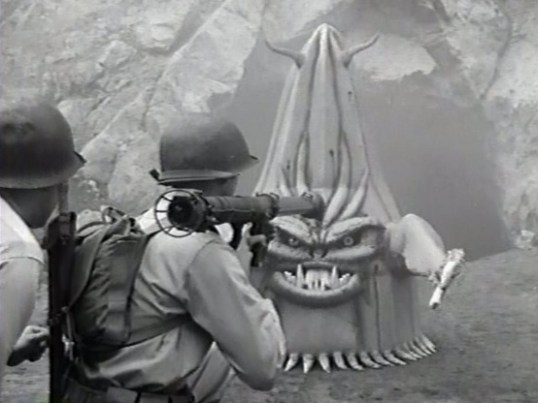
It Conquered The World was directed by Roger Corman.  It was his eighth film as a director and it remains one of his most entertaining.  As one might expect from a low-budget sci-fi film, It Conquered The World produces it’s share of laughs.  It’s hard not to smile at the sight of the extremely serious Peter Graves peddling his bicycle from location to location.  (It doesn’t help that Graves never takes off his suit or loosens his tie.)  And the Venusian simply has to be seen to be believed:
At the same time, It Conquered The World holds up well.  Lee Van Cleef and Beverly Garland both give performances that transcend the material, with Van Cleef especially doing a good job of paying a man struggling to rationalize his bad decisions.  It Conquered The World holds up today, as both a portrait of the 50s and 2024.

Horror on the Lens: The Little Shop of Horrors (dir by Roger Corman)


Hi!  Welcome to Horrorthon!  It’s a tradition around these parts that we offer up a classic (or not-so-classic) horror film for our readers to watch every day in October.  As we have just lost the great Roger Corman, it seems appropriate to start things off with one of his best films.

And so, without further ado….

Enter singing.

Little Shop…Little Shop of Horrors…Little Shop…Little Shop of Terrors…

For the 2024 Horrorthon’s first plunge into the world of public domain horror films, I’d like to present you with a true classic.  From 1960, it’s the original Little Shop of Horrors!

When I was 19 years old, I was in a community theater production of the musical Little Shop of Horrors.  Though I think I would have made the perfect Audrey, everybody always snickered whenever I sang so I ended up as a part of “the ensemble.”  Being in the ensemble basically meant that I spent a lot of time dancing and showing off lots of cleavage.  And you know what?  The girl who did play Audrey was screechy, off-key, and annoying and after every show, all the old people in the audience always came back stage and ignored her and went straight over to me.  So there.

Anyway, during rehearsals, our director thought it would be so funny if we all watched the original film.  Now, I’m sorry to say, much like just about everyone else in the cast, this was my first exposure to the original and I even had to be told that the masochistic dentist patient was being played by Jack Nicholson.  However, I’m also very proud to say that — out of that entire cast — I’m the only one who understood that the zero-budget film I was watching was actually better than the big spectacle we were attempting to perform on stage.  Certainly, I understood the film better than that screechy little thing that was playing Audrey.

The first Little Shop of Horrors certainly isn’t scary and there’s nobody singing about somewhere that’s green (I always tear up when I hear that song, by the way).  However, it is a very, very funny film with the just the right amount of a dark streak to make it perfect Halloween viewing.

So, if you have 72 minutes to kill, check out the original and the best Little Shop of Horrors

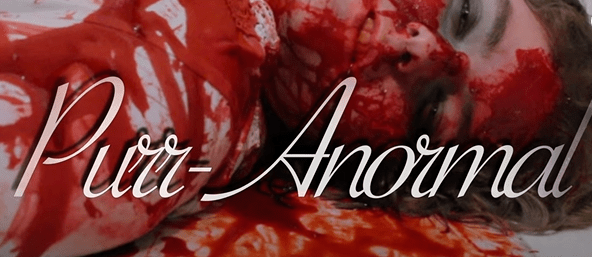
“Purr-Normal” Dir.: Noah Randle, Short Film Review, by Case Wright


Happy Horrorthon! This could be a rough start. I would normally be really rough with a short like this, BUT he’s got <500 subs and he’s definitely young. So, I’m gonna play nice.

Noah hear me, I get that you have a love for film, especially weird esoteric film. Here is your MAIN PROBLEM: there is no real story here that is identifiable outside of your own description. A short film needs a beginning, middle, and an end. What makes short-films a special artform is that they create: story, character, and suspense in an instant. They can make you laugh, jump, or cry- if they are done with intentional care.
Other than the make up, there is no character here. It is unclear the lady’s motivation, fear, hope, or even psychosis. The cat is a stranger in the film and it just gets gory for its own sake at the end. I hope you cleaned up after filming and thanked your amazingly patient and lovely parents for letting you do this.

There is NO STORY here. You need a story. You need character. You need for us to care about your protagonist or this is just you messing around with a camera. It is good to have an interest in film, but it’s like you’re trying to fly an airplane before you’ve learned how to walk. Come up with a SIMPLE STORY and get it right; then, go all weird, but even then, you still need a story and character or NO ONE will care about your characters or what happens. I am not doing a plot summary for this because there isn’t one.

I don’t want to be too hard on Noah here, but he’s missing the point of this art. There’s short films on YouTube that are barely a minute long that establish: Story, Character, and Stakes. This is not that, but Noah MIGHT be able to get there if he tries again and starts EXTREMELY small and tells a small story well.

Musical Film Review: Let It Be (dir by Michael Lindsay-Hogg)


Hey, it’s the Beatles!

The 1970 documentary Let It Be, which is now streaming on Disney+ after being impossible to see for decades, follows the Beatles as they record music, occasionally argue, occasionally laugh, collaborate on songs, and ultimately play the famous rooftop concert that was eventually ended by the London police.  Paul McCartney smiles and laughs and jokes but he also obsesses over every little musical detail and often seems to be talking in order to keep anyone else from getting a cross word in.  John Lennon dances with Yoko Ono and occasionally smiles but often seems like his mind is elsewhere.  George Harrison smiles whenever he know that the camera is on him but, when glimpsed in the background, he doesn’t seem happy at all.  Ringo patiently waits for his chance to perform, sometimes bored and sometimes amused but always the most likable of the bunch.  He and George work on Octopus Garden and it’s a charming moment, if just because it’s obvious that both men would rather be there than in the studio.

Even if you haven’t seen Peter Jackson’s The Beatles: Get Back (which was constructed out of material that was shot for but not used in this documentary), Let It Be is often time one of the most depressing behind-the-scenes documentaries ever made.  The more the individual members of the Beatles smile and perform for the camera, the more one can see the cracks that have formed in their relationships.  With Lennon spending most of his time with Yoko, it’s Paul who dominates the documentary.  Paul comes across as being charming and talented but his habit of nonstop talking gives the impression of someone who is desperately trying to hold together a sinking ship.  At one point, George snaps that he’ll play the guitar however Paul tells him to and it’s obvious that, for George and probably the others as well, being the world’s most popular band has gone from being a thrill to just being another job.  When Paul and John talk about how much fun they had when they first started playing live in  Hamburg, it’s obvious that the conversation is at least partially staged to set up the rooftop concert but there’s a genuine sadness to their voices.  Even as they write and record new songs, they’re realizing that all things must pass.

But then the Beatles give a rooftop concert and they bring London to a halt and, for a few minutes, it seems like everything is going to be alright.  Standing on the roof and performing a wonderful version of Get Back, the Beatles are suddenly a band just having fun and it’s delightful to see.  Later, John Lennon gets a devilish gleam in his eyes as he sings the raunchy (for 1969) lyrics for I’ve Got A Feeling.  Even George looks happy for a few moments.  People gather in the street below to watch and the camera is quick to show us that both young and old love the Beatles.  Of course, eventually, the police show up and shut down the show.  (Of course, being British police, they’re very polite about it.  One has to breathe a sigh of relief that the Beatles didn’t try to do their rooftop show in New York or Los Angeles.)  It’s a reminder that nothing lasts forever.  Eventually, every concert comes to an end.

It’s interesting to compare Let It Be to another 70s documentary about a famous British rock band.  In Gimme Shelter, the Altamont Free Concert ends with a murder as Mick Jagger pleads with the crowd to stop fighting and just sit down.  In Let It Be, things end with a random joke from John Lennon, who would himself be murdered in just ten years.  Both Gimme Shelter and Let It Be are about the end of an era and both are full of regret and a longing for a simpler and more idealistic era.  For those of us who want to understand history, they’re essential.


Lisa Marie’s Early Oscar Predictions For September


It’s that time of the month again!

It’s time for me to share my latest round of Oscar predictions.  Thanks to the summer festival season, the Oscar race is starting to become a bit clearer.  That said, there really don’t seem to be any overwhelming favorites right now.  There are contenders but there are no front runners.  So, I imagine we’ll see some surprise contenders emerge as the precursor season approaches.

You’ll notice that, unlike a lot of Oscar bloggers, I don’t have Gladiator II amongst my predictions.  That’s based on the fact that, every year, there’s a new Ridley Scott film that everyone predicts will be a contender and, with the exception of The Martian, it never happens.  The Academy just does not seem to have the burning desire to honor Ridley Scott that a lot of film bloggers do.  As well,  I’m just not convinced that a sequel starring an actor who has yet to prove he can shoulder the weight of a blockbuster is going to be the film that’s going to win Ridley Scott a Best Director statuette.  Remember that a few years ago, those same Oscar bloggers were insisting that Martin Scorsese’s Silence was going to be not only a contender but also the winner up until the end of November.

(For that matter, let’s not forget that Scorsese’s Killers of the Flower Moon was expected to be a winner as opposed to an also-ran.  Fact of the matter is that, as much as I hate to resort to that overused quote from William Goldman, no one knows anything.)

Do I really think that Pamela Anderson is going to receive a Best Actress nomination?  She’s receiving a lot of acclaim for her role in The Showgirl but, at the same time, she’s Pamela Anderson.  There’s maybe a 2% chance that she’ll get nominated but I always like to throw in a few candidates who go against the conventional wisdom.  So — what the Hell?  Why not?  Pamela Anderson for Best Actress!

Be sure to check out my predictions for April, May, June, July, and August!

Best Picture

Anora

The Apprentice

The Brutalist

A Complete Unknown

Dune Part Two

Emilia Perez

Maria

The Piano Lesson

Saturday Night

Sing Sing

Best Director

Jacques Audiard for Emilia Perez

Sean Baker for Anora

Brady Corbett for The Brutalist

Jason Reitman for Saturday Night

Denis Villeneuve for Dune Part Two

Best Actor

Adrien Brody in The Brutalist

Timothee Chalamet in A Complete Unknown

Daniel Craig in Queer

Colman Domingo in Sing Sing

Ralph Fiennes in Conclave

Best Actress

Pamela Anderson in The Showgirl

Karla Sofia Gascon in Emila Perez

Angelina Jolie in Maria

Mickey Madison in Anora

Demi Moore in The Substance

Best Supporting Actor

Yura Borslav in Anora

Kieran Culkin in A Real Pain

Samuel L. Jackson in The Piano Lesson

Guy Pearce in The Brutalist

Jeremy Strong in The Apprentice

Best Supporting Actress

Monica Barbaro in A Complete Unknown

Danielle Deadwyler in The Piano Lesson

Selena Gomez in Emilia Perez

Felicity Jones in The Brutalist

Zoe Saldana in Emilia Perez

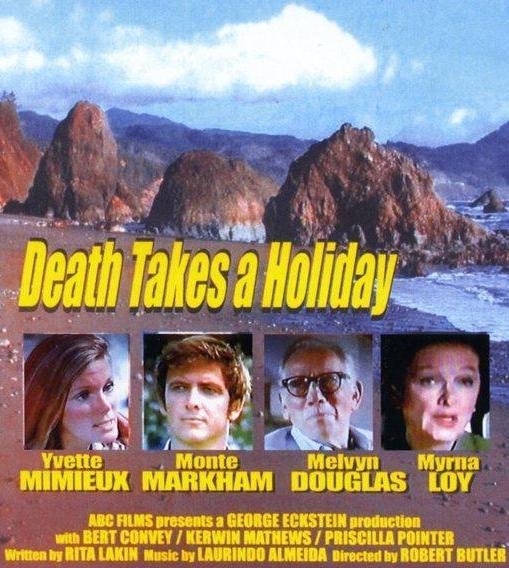
Retro Television Review: Death Takes A Holiday (dir by Robert Butler)


Welcome to Retro Television Reviews, a feature where we review some of our favorite and least favorite shows of the past!  On Sundays, I will be reviewing the made-for-television movies that used to be a primetime mainstay.  Today’s film is 1971’s Death Takes A Holiday!  It  can be viewed on YouTube.

For a few days in 1971, no one dies.

The Vietnam War continues but there are no casualties.  There are natural disasters but no one loses their life.  Doctors are stunned.  World leaders start to panic.  An emergency session of the UN is called to debate what to do about living in a world where no one is dying.  One gets the feeling that the world’s leaders prefer it when people are dying in wars and disasters.

Death has taken a holiday.

Death (Monte Markham) has become confused as to why humans so desperately want to live despite the fact that the world in which they exist is not always a happy one.  He is particularly confused by the elderly Judge Earl Chapman (Melvyn Douglas), who has suffered multiple strokes and other ailments and yet has always resisted whenever Death has come for him.  Death decides to take his holiday on the isolated beach where the Judge and his family are spending their weekend.  Though Death introduces himself as being David Smith, the Judge recognizes him.  It turns out that the Judge was always aware of death lingering around him and his family.

Death, for his part, has fallen in love with the Judge’s headstrong and rebellious daughter, Peggy (Yvette Mimieux).  In fact, Peggy was meant to die on the beach but, as soon as Death saw her drowning, he decided not to take her and instead allowed her to wash up back on the beach.  Death explains to the Judge that he can only spend so much time on vacation and that soon, people will start dying again.  Death says that he’ll be taking Peggy to the afterlife after the weekend ends.  The Judge tries to change his mind but Death is in love and he wants Peggy to be with him.

An adaptation of a play that inspired both 1934’s Death Takes A Holiday and 1998’s Meet Joe Black, the 1971 version of Death Takes A Holiday is a well-acted and intelligent made-for-television movie, one that eschews heavy-handed drama in favor of being a rather low-key meditation on what it means to both live and to die.  Melvyn Douglas and, as his wife, Myrna Loy both give poignant performances and Douglas even manages to sell the potentially maudlin moment where he explains why he has always clinged to life.  Monte Markham may not be the first actor who comes to mind when you think of someone to cast as the human form of Death but he does a good job in the role and he and Yvette Mimieux have a wonderful chemistry together.  The beach scenery is lovely and the story is an interesting one.  Clocking in at just 73 minutes, this version of Death Takes A Holiday is the best of all of them.

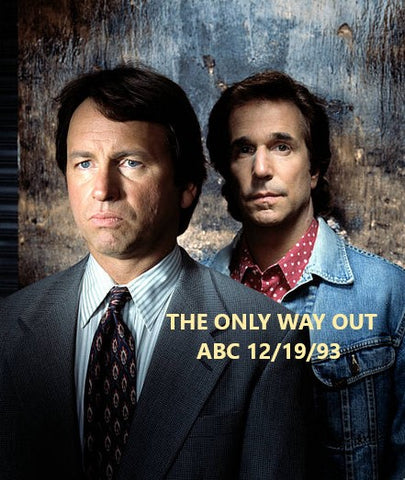
Retro Television Review: The Only Way Out (dir by Rod Hardy)


Welcome to Retro Television Reviews, a feature where we review some of our favorite and least favorite shows of the past!  On Sundays, I will be reviewing the made-for-television movies that used to be a primetime mainstay.  Today’s film is 1993’s The Only Way Out!  It  can be viewed on YouTube.

“I’ll kill you before I let you go,” Tony (Henry Winkler) says to his terrified girlfriend, Lynn (Stephanie Faracy).

Agck!  Those are frightening words and they are certainly not something that you would expect to hear from a character played by notorious Hollywood nice guy Henry Winkler.  And, indeed, it would probably shock most of the characters in the film if they knew how Tony talked to Lynn.  Tony is a grad student who has worked at any number of jobs.  While some people might say all of those jobs prove that Tony has a hard time sticking to anything, Tony has obviously learned how to convince people that he’s actually a just a determined man working his way through grad school and taking whatever job will help to pay the bills.  Tony is friendly and romantic and given to grand gestures.  He’s the type who shows up unexpectedly at Lynn’s place of employment with flowers.  He’s the type of guy that strangers applaud while those close to him look for any way to escape.

Lynn knows all about the other side of Tony.  Tony is controlling, obsessive, and abusive.  He hits her.  He barks orders at her kids.  When she tells him that she wants him out of her life, he refuses to go and blames her for all of their problems.  He’s someone who can quickly go from being everyone’s friend to being a monster.  He preys on insecurity and, whenever anyone stands up  to him, he plays the victim.  Tony is a classic abuser and the fact that he’s played by the likable Henry Winkler makes him all the more disturbing.  Like most abusers, Tony knows how to turn on the charm.  He knows the power of a smile and a few complimentary words.

Lynn is in the process of getting divorced from an architect named Jeremy (John Ritter).  It’s been a remarkably amicable divorce, with Jeremy and Lynn agreeing on joint custody and apparently not bearing any ill feelings towards one another.  The only problem is that Lynn cannot bring herself to actually sign the divorce papers.  Jeremy wants to marry Susannah (Julianne Phillips) and Susannah is not happy about the long wait.  She’s even less happy when Jeremy takes it upon himself to try to protect Lynn from Tony.  Soon, Tony is stalking Jeremy and Jeremy finds himself considering a particularly extreme solution to his problem.

It’s John Ritter vs Henry Winkler and the casting of two of Hollywood’s best-known nice guys as violent rivals works surprisingly well.  Winkler is memorably unhinged while Ritter plays a guy who is struggling to hold onto a life that, until Tony shows up, seemed to be perfect.  In the end, it’s not just Tony who catches us by surprise by just how far he’s willing to take things.  The film’s ending took me by genuine surprise.  Featuring excellent dramatic turns from two actors best known for their comedic skills, The Only Way Out is a superior melodrama.


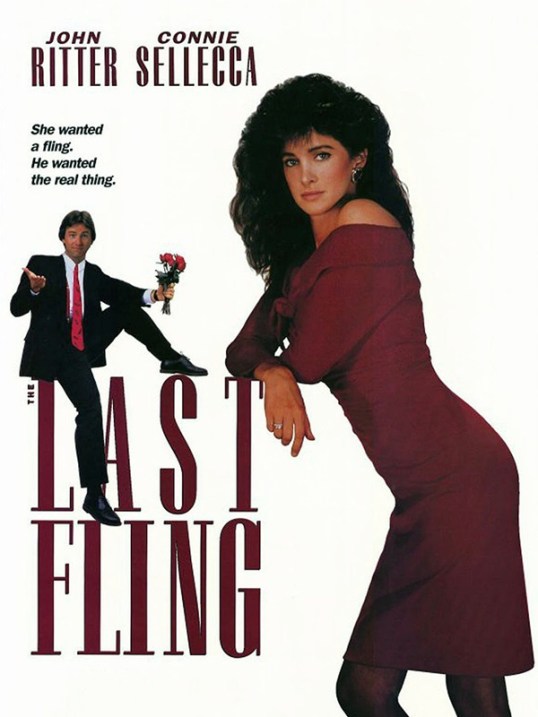
Retro Television Review: The Last Fling (dir by Corey Allen)


Welcome to Retro Television Reviews, a feature where we review some of our favorite and least favorite shows of the past!  On Sundays, I will be reviewing the made-for-television movies that used to be a primetime mainstay.  Today’s film is 1987’s The Last Fling!  It  can be viewed on YouTube and Tubi.

Phillip Reed (John Ritter) is an attorney who has never gotten married, despite all of his friends trying to set him up with single women.  Even his law partner (Scott Bakula) worries about how Phillip’s love life is going.  Phillip’s married best friends (Paul Sand and Kate Zentall) think that Phillip is scared of commitment.  Phillip’s mother (Paddi Edwards) thinks he’s gay.  Joanne Preston (Shannon Tweed) enjoys sleeping with him but she owns a lot of cats that make him sneeze.  And since he’s played by John Ritter, you better believe that every sneeze is more dramatic than the last.

Gloria Franklin (Connie Selleca) is engaged to marry Jason Elliot (John Bennett Perry) but she worries that her rigidly controlled lifestyle has caused her to miss out on enjoying her time as a single person.  When she finds out that Jason is going to go to Las Vegas for a wild bachelor party, she decides to have one last fling of her own.

Phillip and Gloria meet each other at the zoo.  (Again, because Phillip is played by John Ritter, there are multiple shots of him making monkey noises while looking at the gorillas.)  Gloria tells Phillip that her name is Marsha Lyons.  Their meeting leads to Phillip and Gloria/Marsha spending the weekend in Mexico together.  (A very young, pre-Saved By The Bell Mario Lopez shows up as the kid who gives them their renal car.)  Despite an unseen mishap that causes their car to catch on fire, Phillip and Gloria spend a romantic night at a villa.  When Phillip wakes up the next morning, he’s convinced that he’s finally found the woman with whom he wants to spend the rest of his life.  However, Gloria is already gone.  She leaves behind a video confession, in which she tells Phillip that she’s going to be getting married.

Phillip returns to Los Angeles, determined to track down the mysterious Gloria and stop that wedding.

The Last Fling is an uneven romantic comedy.  It starts out as an amiable and sweetly funny film, with both Connie Sellecca and John Ritter giving likable performances.  But once Phillip returns from Mexico and starts searching for Gloria, it gets a bit too manic for its own good.  Instead of being a funny movie about two human beings looking for love, it instead becomes a live-action cartoon with John Ritter running from one location to another while being chased by Gloria’s husband-to-be.  The movie ends up getting so frantic that it actually becomes a bit annoying, which is a shame considering how things started.  By the end of the movie, Phillip is so obsessive that it’s hard not to feel that Gloria would be better off just staying single and maybe spending the next weekend in Mexico with Scott Bakula.

The director of The Last Fling played Buzz in Rebel Without A Cause.  Fortunately, no one plays chicken in this movie.

Happy Friday the 13th From The Shattered Lens


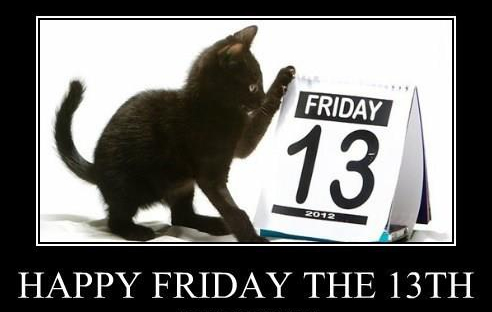
Happy Friday the 13th!

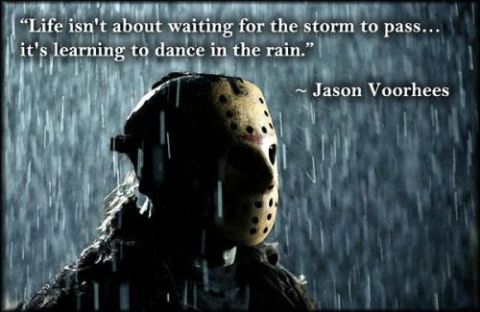
Today is the greatest Friday of the year because today is not only the 13th but it’s also only a month until October 13th!  Some people consider Friday the 13th to be unlucky but those people have obviously never been the only “good girl” at a weekend party up at Camp Crystal Lake.  Ask any of them and they can tell you just how lucky Friday the 13th can be.

To our readers who are currently struggling today, we make the following suggestion: Turn off twitter.  Turn off MSNBC.  Definitely turn off CNN.  Block ABC from your memory.  And why not just sit back and enjoy the antics of those fun-loving kids up at Camp Crystal Lake?

In fact, in case you need help picking which movie to watch, I hve reviewed every single Friday the 13th! here on the Shattered Lens!  I personally recommend that you watch parts 1, 2, and 4 but it’s totally up to you!  Here’s some links to my reviews:

Friday the 13th

Friday the 13th Part 2

Friday the 13th Part 3

Friday The 13th: The Final Chapter

Friday the 13th: A New Beginning

Friday the 13th: Jason Lives

Friday the 13th Part VII: A New Blood

Friday the 13th Part VIII: Jason Takes Manhattan

Jason Goes To Hell: The Final Friday

Jason X

Freddy vs Jason

Friday the 13th: The Pointless Remake

And then be sure to check out: 12 Thing You May Not Have Known About Friday the 13th and my review of Camp Crystal Lake Memories!

The world will still be here when you get back, we promise.

Happy Friday the 13th everyone!  Horrorthon ’24 is just a two weeks away!

Retro Television Review: Money to Burn (dir by Robert Michael Lewis)


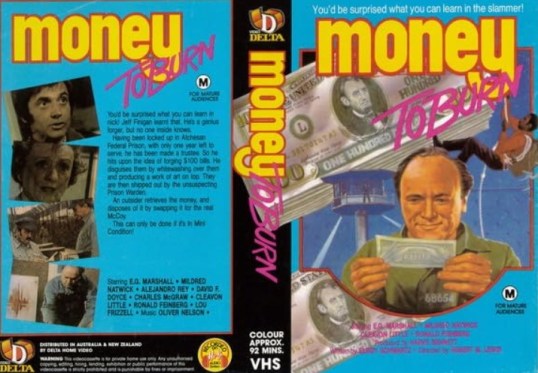
Welcome to Retro Television Reviews, a feature where we review some of our favorite and least favorite shows of the past!  On Sundays, I will be reviewing the made-for-television movies that used to be a primetime mainstay.  Today’s film is 1973’s Money To Burn!  It  can be viewed on YouTube.

For someone who has spent the past few years in prison, Jed Finnegan (E.G. Marshall) sure is a nice old man!  He runs the prison print shop and all of the other prisoners love him.  The guards trust him.  The warden (David Doyle) is really impressed with Jed’s watercolors and is interested in helping Jed launch a career as an artist after he gets out of prison.  Every weekend, Jed’s wife, Emily (Mildred Natwick), comes up to the prison with a picnic basket and she has lunch with her husband.  Jed admits that his wife is not a particularly good cook but it’s obvious that he really looks forward to her visits.

Emily’s sweet nature keeps a lot of people from noticing that she is just as cunning and clever a criminal as Jed ever was.  She knows that Jed had printed up one million dollars in counterfeit bills and she is looking forward to helping him exchange the fake money for real money.  Jed’s plan is to steal the payroll of the local army base and just leave the fake money in place of the real money.  However, Jed’s been in prison for so long that he doesn’t know that the military no longer pays anyone in cash.  Everyone’s paying everyone by check!

(This film is very much from the 70s.  While Jed and Emily were shocked to discover that people were no longer being paid in cash, I was shocked to discover that they were being paid by check.)

Working with two recently released ex-cons (played by Cleavon Little and Alejandro Rey), Emily tries to find a new way to switch out the money.  She discovers that there’s an incinerator nearby where the government burns the currency that it no longer needs.  But it won’t be easy to break in and make sure that the right money get burned….

And that’s not even mentioning the trouble of getting the fake money out of the prison in the first place!

Money to Burn is likable mix of comedy and (very mild) action.  It’s a film about criminals but they’re very likable criminals who go out of their way not to hurt people.  Emily is even happy about the idea of not only stealing a million dollars but also helping the government out by taking the old currency off their hands.  Marshall, Natwick, Little, and Rey all give such warm and cheerful performances that you can’t help but hope that they get away with their scheme.  The film, which deftly balances comedy and drama, clocks in at a brisk 73 minutes and it has an absolutely wonderful twist ending.  This is definitely a heist film that deserves to be better known.